0 MASTER THESIS
EVALUATING CLASSROOM OF THE
FUTURE
IN
SUPPORTING
THE
IMPLEMENTATION
OF
IN-CLASS
ACTIVE LEARNING ACTIVITIES IN
ENGINEERING CLASSES: CASE STUDY
STUDENT: THI KIM NGAN NGUYEN (S1924591)
MSc. EDUCATIONAL SCIENCE AND TECHNOLOGY
SUPERVISOR: DR. JAN VAN DER VEEN
MSC. MARJOLEINE DOBBLELAER
10 DECEMBER 2018
1
Evaluating Classroom of the Future in Supporting the
Implementation of In-class Active Learning Activities in
Engineering Classes: Case Study
Author Note
Correspondence concerning this article should be addressed to Thi-Kim-Ngan Nguyen, Faculty of
Behavioral, Management and Social Sciences, University of Twente, P.O. Box 217, 7500 AE Enschede,
The Netherlands. Phone: 0649260054; E-mail: [email protected]
Master of Science in Educational Science and Technology
University of Twente, Netherlands
Student Name: Thi Kim Ngan Nguyen
1st Supervisor: Dr. Jan van der Veen
2 Table of Contents
Acknowledgement ... 3
Summary ... 4
Introduction ... 5
1. Context ... 6
2. Research Problem ... 10
2.1. Problem statement ... 10
2.2. Research questions ... 11
2.3. Scientific and practical relevance ... 12
3. Theoretical framework ... 13
3.1. Space in innovative learning space ... 13
3.2. Furniture in innovative learning space ... 13
3.3. Interactive screen in innovative learning space ... 14
3.4. Pedagogy, technology and innovative learning space ... 15
4. Evaluation Framework ... 17
5. Methods ... 19
5.1. Cross-case research design ... 19
5.2. Participants... 21
5.3. Instruments... 21
5.4. Procedure ... 22
5.5. Data analysis ... 23
6. Results ... 25
6.1. Information letter analysis ... 25
6.2. Case 1 ... 25
6.3. Case 2 ... 30
6.4. Case 3 ... 34
6.5. Cross-case comparison ... 38
7. Discussion... 42
8. Conclusion and recommendations ... 46
Reference ... 50
Appendix A ... 55
Appendix B ... 57
Appendix C ... 59
3 Acknowledgement
I had a long hard time figuring out who I was and what my purpose in this life was. However, since I came to the University of Twente to follow the Master of Science in Educational Science and Technology, I had many chances to meet inspiring people and see the world, through which, I also know more about myself and what I want to pursue in my life. Therefore, this thesis is not only the final project of my Master program, but also the milestone that marks the end of the journey, in which, I learnt, grew, and gained back confidence in myself. Now that I have almost finished the program, I am thankful for all the experiences that the EST program and the University of Twente offered me as a student. These valuable experiences and knowledge will definitely be helpful to me in my future career as well as personal life.
This thesis is also an exciting adventure, where I made the decision to try something brand new to me, with the belief that a new field would come with unexpected amazing things. Trying new things also means more challenges due to lack of experience. Luckily, I had the best supervisor, Prof. Dr. Jan van der Veen, who was always highly responsible, thoughtful and enthusiast in helping me with every little issue during the completion of this project. Nothing can express my great gratitude to him. Thanks also to the second supervisor, Marjoleine Dobbelaer, for taking the time to read my thesis and suggesting ways to make it better. Thank you, Dr. Frank Kresin, Miriam Illiohan, Wytze Koopal, Charlotte Oude Alink and Dream Team. Without your support and valuable information, I could not have completed my final project.
Furthermore, I would really like to thank my Vietnamese friends in Enschede: Đạt, Mai, Tuấn, Việt Anh, Nghĩa, anh Hải, chi Hòa, anh Thành…, who helped me to overcome the difficulties during my stay here and contributed to my wonderful memory in the Netherlands. Thanks also to all my friends in Vietnam: Sơn, Uyên, Đoàn Hiên… who listened to my troubles and cheered me on through hardship. I especially thank Như, my roommate and little sister, who took care of me and loved me ‘unconditionally’.
4 Summary
In engineering classes, active learning is considered superior because this method increases students’ learning result and improves their social skills. Keeping in mind the advantages of active learning, it is necessary to support teachers and students to implement active learning activities in classes. The University of Twente created an innovative learning space called Classroom of the Future, which is favorable for implementing in-class learning activities. Yet, the effectiveness of the Classroom of the Future has not been evaluated and confirmed. Therefore, this study aims to investigate in what ways the Classroom of the Future facilitates active learning and what hinders the effectiveness of the Classroom of the Future. This study is a cross-case study research, which involved information from the Classroom of the Future, interviews with teachers, surveys with students and class observations. The results of this study provide recommendations to improve the effectiveness of the Classroom of the Future, specifically in supporting the implementation of in-class active learning activities. The results can also be an important input for designing future learning spaces.
Key words:
5 1. Introduction
Classroom of the Future at the University of Twente is an innovative learning space created to facilitate active learning. The Classroom of the Future is a test ground for technology in education. The success of this project can be what the University of Twente would look like in a few years. Therefore, to ensure that precise decisions are made in future campus design, it is necessary to evaluate the effectiveness of the Classroom of the Future to determine which elements should be improved, which features should be changed, or which facilities should be supplemented.
The project evaluation includes the assessment of how the Classroom of the Future has been supporting teaching and learning, the analysis of stakeholders’ needs and the cooperation with University Innovation Fellows to explore new interventions. As part of the evaluation of the Classroom of the Future, this research aims at investigating to what extent the Classroom of the Future facilitates or hinders the implementation of active learning activities, targeting engineering teachers and students.
6
1. Context
Classroom of the Future was initiated in February of 2015 by Professor Jos van Hillegersberg at the University of Twente, as a 'collaborative educational space influenced by technology' for interactive education (de Kuyper, 2015). The Classroom of the Future was designed and created with the goal to optimize the usage of modern and effective didactical methods in education to enhance team collaboration. Classroom of the Future was created in line with The Twente Education Model (TEM) for all undergraduate programs, which emphasizes on project-based work and student-driven learning. The model seeks to combine perspectives from sciences and social sciences, which respect to the conceptual development of students as well as developing skills and attitudes (“Classroom Of The Future,” n.d.).
From July of 2018, the ownership and management of Classroom of the Future was placed with DesignLab, after three years of operation under LISA (Kuipers, 2018). To mark this new milestone and to move on to the next phase, a plan to improve the effectiveness of this innovative learning space in supporting teaching and learning has been launched. To reach that end, an evaluation serving as a basis for the development plan has been conducted since the beginning of the academic year 2018.
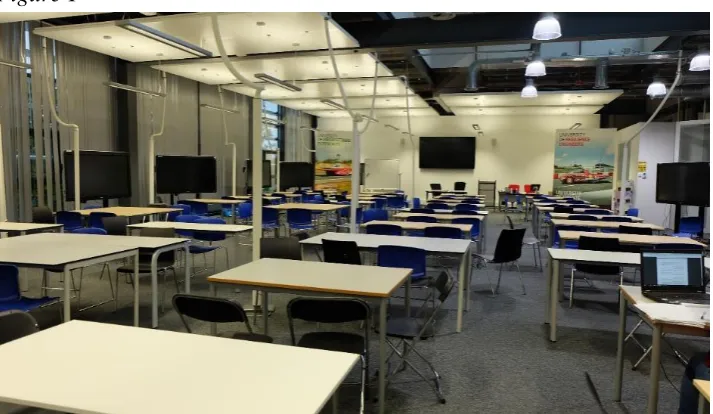
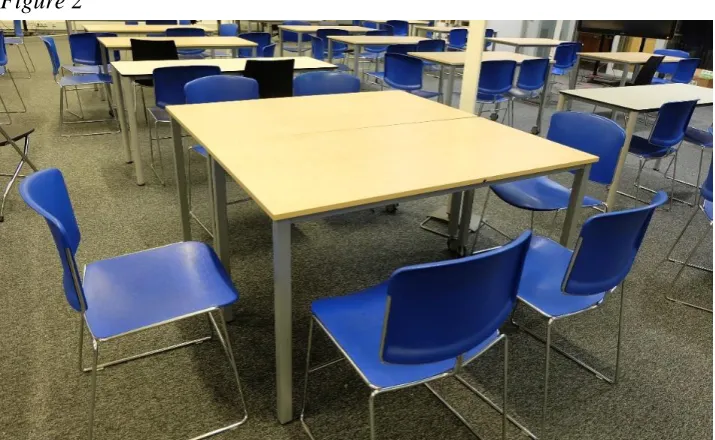
[image:7.595.74.431.538.745.2]Description of the Classroom of the Future. The Classroom of the future offers room for about 120 students. There are forty tables. Twenty of the tables with two wheels each, together with 120 light chairs that can be moved easily. With flexible furniture and spacious space, the room can be changed to suit different learning purposes and scenarios, from plenary space for whole class learning (see figure 1) or group space for six students in each group (see figure 2).
Figure 1
7 Figure 2
Setup for groupwork in the Classroom of the Future
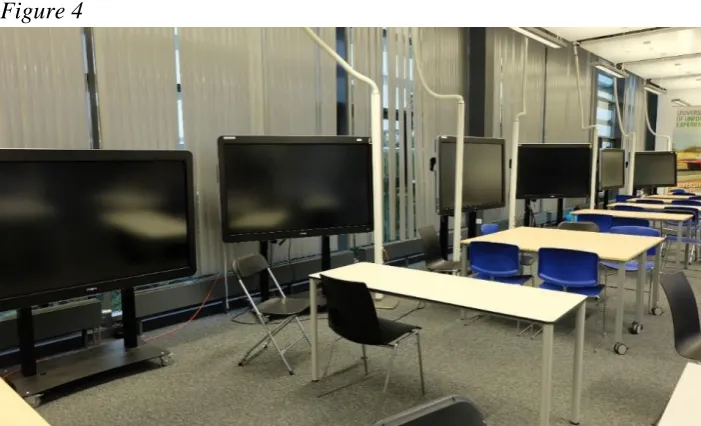
The technology in Classroom of the Future includes a main LED screen for presentations or showing videos (see figure 3), sixteen 65-inch interactive screens that can be moved around the classroom (see figure 4). The interactive screens can be connected to the main LED screen to show the presentation simultaneously. These interactive screens can also be connected to students’ laptops for students to create and share their products between group members or with teachers and other groups.
Figure 3
[image:8.595.73.428.481.694.2]8 Figure 4
The movable interactive screens in the Classroom of the Future
As part of the Classroom of the Future, an information letter (see appendix A) is sent via email to every teacher who registered to use the Classroom of the Future prior to their classes. The information letter is a two-page document, in which, the purpose, setup and, technology of the Classroom of the Future is briefly described. First, it is stated that the Classroom of the Future is aimed at stimulating active (group) learning, by facilitating student interaction, interaction among students in a group (collaboration) and interaction between/among groups. Second, the interactive screens and main LED screen are listed among the technology that the teachers can use in the Classroom of the Future. Technical assistance is also available when the teachers need to use the screens. Finally, pictures of two different setups of the room, including whole class learning and group work, are included.
Similar projects in technical universities
Classroom of the Future is inspired by the LKCS studio classroom, located in Stanford University, with comparable setup and gadgets (see figure 5). LKCS studio classroom is a large, flat-floored space, which can be divided and is equipped with moveable tables and chairs and multiple screens around the room to support team-based and small-group learning (“Medscheduler”).
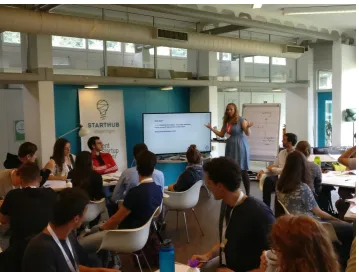
9 project to the Classroom of the Future can be found at Wageningen University under the name StartHub (see figure 6). StartHub Wageningen is the incubator for start-ups of qualified Wageningen (PhD) students. It offers flexible and interactive working space for workshops and events to develop students’ entrepreneurial skills (“Student Incubator,” n.d.).
Figure 5
LKCS studio classroom at the Stanford University
Figure 6
[image:10.595.70.430.475.747.2]10 2. Research problem
2.1. Problem statement
In the search for the effective way of learning, Biggs (2003); Najafi, Motaghi, Nasrabadi, and Heshi (2016) believed that students acquired their knowledge best by approaching actively to learning. In addition, LoPresto and Slater (2016) suggested that students gained greater learning when they engaged in activities. As a result, active approach will result in students’ better learning achievement compared to regular lecture (Ralston, Tretter, and Kendall-Brown, 2017). In other words, it was implied that active learning was a scenario favorable for students to acquire knowledge. According to Felder and Brent (2009), “active learning is anything course-related that all students in a class session are called upon to do other than simply watching, listening and taking notes” (p. 2). Collaborative learning, cooperative learning, and problem-based learning are all categories of active learning (Hyun, Ediger, and Lee, 2017). More specifically, students can learn actively by participating in various in-class active learning activities (IALA), such as quiz or poll (Steadman, 2015), problem-solving tasks (Wismath and Orr, 2015), presentation (Lagares and Reisenleutner, 2017), debate (Najafi et al., 2015), discussion (Seechaliao, 2017), jigsaw project (Karacop, 2017), etc.
Particularly in engineering programs, IALA are proven to bring critical benefit (Wiggins, Eddy, Grunspan, and Crowe, 2017). IALA increase engineering students’ motivation to learn compared to regular lecture (Knight, Carlson, and Sullivan, 2007). As a result, students gain greater learning (Lopresto and Slater, 2016) and achieve higher in exam activities (as cited in Wiggins et al., 2017). Besides, IALA are the most appropriate strategy in preparing engineering students for the future career (Gol and Nafalski, 2007) because IALA give students opportunities to improve interpersonal interactions, self-esteem, attitudes, and social skills (Ralston et al., 2017). Therefore, engineering students should be given more opportunities to engage in active learning.
11 Among the reasons which hinder its implementation, it was reported that teachers needed more time and effort to design activities considering the fixed setup of traditional classrooms (Hyun et al., 2017). Therefore, teachers prefer classrooms which support learners to engage actively with their learning and to collaborate with the others (Pedro, 2017). To that end, innovative learning spaces have been designed to make it easier for teachers and students to implement IALA.
There has been evidence that innovative learning spaces are crucial in implementing IALA. Chiu (2016); Granito and Santana (2016); Hyun, Ediger, and Lee (2017) explained that innovative spaces encouraged collaboration and interactions. Consequently, students having IALA in innovative spaces were reported to perform better than in a traditional classroom (Brooks, 2012). As a result, students view the innovative learning environment as advantageous (Ünal and Çakir, 2017) and prefer innovative learning space to traditional classroom when they implement IALA (Dori and Belcher, 2005; Beichner et al., 2007). To conclude, Stoltzfus and Libarkin (2016) suggested that learning space is an important factor influencing the implementation of IALA. Nevertheless, there are conflicting opinions about whether innovative learning spaces facilitate IALA. Stoltzfus and Libarkin (2016) found no significant difference between innovative learning space and traditional classroom in the impact on students’ actual performance. Smith, Higgins, Wall, and Miller (2005) suspected if the benefits were from uncritical bandwagon effect.
Similarly, the Classroom of the Future was designed to support active learning at the University of Twente, a technical university in the Netherlands. Yet, the effectiveness of the Classroom of the Future remained unclear. Therefore, this research aims at providing insight on how the Classroom of the Future supports the implementation of IALA in engineering classes. This goal was achieved by observing classes, interviewing teachers and conducting survey on students. Based on the results, suggestions were made on further supports so that teachers and students can use the Classroom of the Future effectively when implementing IALA.
2.2. Research questions
This research attempts to answer the research question “How to improve the effectiveness of Classroom of the Future in supporting the implementation od in-class active learning activities in engineering classes?”
12 1. In what ways does the Classroom of the Future facilitate the implementation of IALA in engineering classes?
2. What hinders the effectiveness of the Classroom of the Future in supporting the implementation of IALA in engineering classes?
2.3. Scientific and practical relevance
This research is important because of several reasons. In terms of scientific relevance, although more attention has been paid on learning spaces which facilitate active learning since technology witnessed massive change (Parsons, 2017), the influence of innovative learning space is still a relatively new field of study (Sawers, Wicks, Mvududu, Seeley, and Copeland, 2016). There were few researches on impact of learning spaces on teaching and learning (Granito and Santana, 2016), and most of them focused on how innovative learning space impacted teaching and learning, rather than how teachers and students experienced and commented on the innovative learning space (Granito and Santana, 2016), Therefore, this research examined teachers and students’ attitudes towards the innovative learning space to contribute to the ground knowledge of this topic.
13 3. Theoretical framework
3.1. Space in the innovative learning space
To facilitate IALA, teachers are expected to give students freedom and act as a guide by giving advice, feedback, maintaining close contact, monitoring progress in active learning (Gol and Nafalski, 2007; Knight et al., 2007). To do that, teachers should be able to move close to students and walk freely around the classroom to engage with individual students without physical obstacles (Chiu, 2016). Therefore, the front instructor area, as well as the physical barrier should be eliminated so that teacher could approach freely to each student in class for guidance and support during group work (Chiu, 2016; Granito and Santana, 2016).
Moreover, the opened workspace in the classroom is important. To students, the space should allow them to spread out instead of being cramped because of too many tables. To teachers, the space should be wide enough for them to walk around to check on students (Granito and Santana, 2016). Therefore, innovative learning space should offer a spacious workspace for both teachers and students (Sawers et al., 2016).
Space in the Classroom of the Future is spacious with only students’ small tables and single chairs in the classroom, which allows teachers to move freely and interact with students. Therefore, the space in the Classroom of the Future is hypothesized to allow free interaction between teachers and students.
3.2. Furniture in the innovative learning space
14 because it allows eye contact, hand gestures, nonverbal communication which are essential for exchanging information between students, and allows immediate feedback (Parsons, 2017).
Instead of long and heavy tables, tables in the Classroom of the Future are light and small for two people. Moreover, twenty of the tables have two wheels each, which makes them easy to be moved around for different learning purposes. When putting two tables together, a bigger table for six to eight people to sit around is created. Therefore, the flexible furniture in the Classroom of the Future is hypothesized to enable peer interactions.
3.3. Interactive screen in the innovative learning space
To support intra-group interaction, the interactive screen can be used to share information between group members (Hyun et al., 2017). For instance, some students can work at the screen while others work from the laptop to contribute to the same product (Bell, 2002), making the interactive screen an effective tool for students to collaborate and discuss (Beauchamp and Parkinson, 2005). In addition, at the end of the activity, the result of the groupwork can be printed, distributed or saved for future work (Bell, 2002).
To promote inter-group interaction, the interactive screen can support communication and productive talk (Kershner, Mercer, Warwick, and Staarman, 2010). It is because the interactive screen can be used as a wireless presentation screen offering an interactive, visual experience, and a ‘dialogic space’ in which diverse opinions, perspective, products are presented (de Silva, Chigona, and Adendorff, 2016), which means different groups can show their presentation on the interactive screens at the same time.
15 To sum up, interactive screen in the Classroom of the Future is hypothesized to enable easy information sharing intra-group, intergroup and between teachers and students.
3.4. Pedagogy, technology and innovative learning space
Innovative learning space includes advanced and specialised features. Among them, the interactive screen was the least familiar, or even the only unfamiliar tool, to teachers, compared to space, furniture or main LED screen; Therefore, the interactive screen might pose more difficulties for teachers and students. Since resources are active only as they are used (Cohen and Ball, 2001), the presence of the interactive screens does not guarantee that they will be used in a proper way to serve the learning purposes.
Among the external and internal factors influencing the use of technology, Ertmer, Ottenbreit-Leftwich, and York (2006); Ertmer, Ottenbreit-Leftwich, Sadik, Sendurur, and Sendurur (2012) found that teachers’ own attitudes and beliefs were the most influential factor.
More particularly, teachers should have beliefs towards the relevance of technology in education (Gobel and Kano, 2013) and belief that technology will benefit their teaching and their students’ learning (Habibu, Abdullah-Al-Mamun, and Clement, 2012). Gilakjani (2013) explained that attitudes and beliefs served as motivation for teachers to devote extra time and
effort to integrate technology in teaching and learning. In contrast, teachers’ resistance to use new technology would be a significant problem in integrating new tool in education (Habibu et al., 2012). To that end, the best way to promote teacher’s belief towards technology is increasing teacher’s knowledge of how technology can be used to benefit teaching and learning
(Ertmer et al., 2012). Tambunan (2014) emphasized that teacher’s understanding of the technology was a critical factor to achieve the desired outcome. Similarly, without proper understanding how interactive screen should be used, the interactive screen could reduce the amount of students’ dialogue or amount of group work (Holmes, 2009).
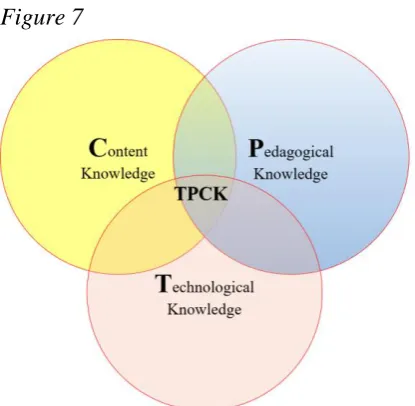
16 technology as central to good teaching (see figure 7). They explained that the relationship between content, pedagogy and technology was complex, hence, it was inappropriate to isolate one aspect from the others. TPCK implies that knowing how to use technology alone does not mean knowing how to teach with it (Mishra and Koehler, 2016). Specifically, the interactive screen would be least effective when teachers do not have a new pedagogy approach (Armstrong et al., 2005). Therefore, knowledges about the technology, in relation with content and pedagogy should be provided to help teachers know how, when and why to use the technology in classroom, so that technology could be used in accordance with the purpose of utilization (Burke, 2005), and thus, decide the effectiveness of technology in classroom (Johnson, Jacovina, Russell, and Soto, 2016).
[image:17.595.72.280.340.543.2]Based on this, it is hypothesized that teachers’ lack of technological-pedagogical-content knowledge would be a factor that hinders the effectiveness of Classroom of the Future.
Figure 7
Technological Pedagogical Content Knowledge (Mishra and Koehler, 2006)
Based on the theoretical framework. The following hypotheses are established for the research questions:
Research question 1: In what ways does the Classroom of the Future facilitate the implementation of IALA in engineering classes?
Hypothesis 1: Space in the Classroom of the Future allows free interaction between teachers and students.
17 Hypothesis 3: Interactive screen in the Classroom of the Future enables easy information sharing.
Research question 2: What hinders the effectiveness of the Classroom of the Future in supporting the implementation of IALA in engineering classes?
Hypothesis 4: Teachers’ lack of technological-pedagogical-content knowledge would hinder the effectiveness of the Classroom of the Future.
4. Evaluation framework
[image:18.595.72.530.500.685.2]McKenney and Reeves (2012) proposed a process of educational design research, which includes three core phases: Analysis, Design, Evaluation. This process is iterative because the result of one phase can be used to feed into the others. More specifically, with the result from the ‘Analysis’ phase, the intervention or project is designed and then constructed. The product of the ‘Design’ phase gives context and input for ‘Evaluation’. In return, the conclusion and recommendation of the ‘Evaluation’ phase can be used as input to improve the design and mature the intervention. The whole process is visually illustrated as the Generic model for conducting design research in education (shown in figure 8). Accordingly, this research is at phase three: Evaluation. The outcome of this research will fuel the redesign of the Classroom of the Future so that the project can be improved.
Figure 8
Generic model for conducting design research in education (McKenney and Reeves, 2012)
18 and Reeves (2012), within the ‘Evaluation’ phase, this research is of ‘Beta’ testing, which tests the project’s use in context. In ‘Beta’ testing, the evaluation focuses on local viability and institutionalization. While ‘local viability’ investigates how the project survives in the immediate context, how the project performs and the factors that influence its implementation, ‘institutionalization’ focuses on how the project becomes absorbed within the broader educational context. An overview of the three testing phases of the ‘Evaluation’ can be found in table 1. The main questions to ask during ‘Beta’ testing (McKenney and Reeves, 2012) are:
• How relevant and usable do practitioners perceive and experience the project? • What intended and unintended processes are engendered by the project? • What makes embodiments of certain mechanisms more resilient than others?
Table 1
Phase and Focus of Evaluation
Phase Focus
Alpha testing
Functionality of initial intervention prototypes are tested
Soundness
Feasibility
Beta testing
Functionality of the project and its interaction in context are studied
Local viability
Institutionalization
Gamma testing
Final or highly stable version of the project is tested
Effectiveness
Impact
19 to collect data instead of the validated instruments, in order to suit the specific design and function of features of the Classroom of the Future and the purpose of this thesis.
Table 2
Pedagogy – Space – Technology framework on Implementation and Operation Stage
(Radcliffe, 2009)
Focus Implementation and Operation
Overall Is the facility considered to be a success? Why? What is the evidence?
Does this relate to the original motivation or intent?
What lessons were learned for the future?
Pedagogy What type(s) of learning and teaching took place?
Space Which aspects of the space design and equipment worked, and which
did not?
What were the unexpected impacts (positive and negative) of the space
on teaching and learning
Furniture Which aspects of the furniture worked, and which did not?
What were the unexpected impacts (positive and negative) of the space
on teaching and learning
ICT What technologies were effective at enhancing learning and teaching?
What were the unexpected (unintended) impacts (positive and negative)
of the technology on learning and teaching?
5. Methods
5.1. Cross-case research design
20 (Yin, 2014). Hence, cross-case study method is consistent with the goals of this research and was used to guide the design of this research.
In the cross-case study, methodological and data source triangulations allow the research to have constructive validity and reliability (Lee and Chavis, 2012). Therefore, each sub-research question in this study was answered by multiple data sources, particularly from the information letter from the Classroom of the Future, interviews with teachers, surveys with students and observation from the researcher, and thus, produced both qualitative and quantitative data. A full measurement framework was created to clarify the different methods and data sources necessary for triangulation. The measurement framework can be found in table 3.
Table 3
Measurement framework
Component Data collection Indicator and measure
1. How
Classroom of the
Future facilitates
IALA
• Students’ survey • Interviews
with teachers • Researcher’s
observation
• Space is suitable for both individual
and group learning
• Space eliminates physical barrier
between teacher and students • Furniture can be shifted easily • Furniture can be used to form
round-table
• The interactive screen can be used to search for information
• The interactive screen can be used to share information and product
• Furniture and the interactive screen can be used without major difficulties
2. What
hinders the use of
Classroom of the
Future
• Information
letter
• Researcher’s
observation • Interviews
with teachers
• Information on how the interactive screen can benefit the
implementation of IALA
21 • Students’
survey
• Difficulties in using the Classroom of
the Future
5.2. Participants
The three teachers are from engineering programs at the University of Twente. They registered to use the Classroom of the Future in the first quartile of the academic year 2018-2019 to deliver the lesson to undergraduate classes. They are fluent in English, which is the instructional language, and can use the tools and software supporting teaching and learning process, such as laptops, PowerPoint, web browsers. The students are from the corresponding undergraduate engineering programs at the University of Twente. The total number of students as participants was 200. The students have basic computer skills and are fluent in English. No distinctions were made in the gender or ethnicity of the participants.
5.3. Instruments
Survey
The survey was aimed to collect students’ opinion regarding features of the Classroom of the Future. The survey contained 17 items. The first three questions gathered crucial background characteristics of students, including educational level, gender, and age. In the next nine questions, students were asked to give their opinions in Likert scale, ranging from totally disagree (1) to totally agree (5), on the usability and effectiveness of space, furniture and interactive screen of the Classroom of the Future in supporting the implementation of IALA. More specifically, item four asked for students’ overall review about the Classroom of the Future. Item five asked for asked for students’ review about the space in the Classroom of the Future. Items six and seven asked for students’ review about features of the furniture in the Classroom of the Future. Items eight and nine asked for students’ review about features of the interactive screen in the Classroom of the Future. Items ten and eleven asked for students’ review about the usability of the furniture and interactive screen. The last six open questions asked students to elaborate for their opinions, suggest the benefits which have not been mentioned, listed the difficulties and give suggestions on additional support so that space, furniture and interactive screen can be more effective. The online survey can be found in appendix B.
Semi-structured interview framework
22 used to record teachers’ opinions. The semi-structured interview was divided into six sections, using Radcliffe’s (2009) framework. The ‘Pedagogy’ section was about the teachers’ initial purpose when using the Classroom of the Future and whether they achieved their goal. The ‘Space’ and ‘ICT’ sections covered teachers’ experience in using the space and ICT in the Classroom of the Future, the perceived benefits, difficulties when using them and the knowledge and belief towards their function. The ‘Additional factors’ part of the interview was about the support, guidance and information teachers receive before and during class on how to use Classroom of the Future; and teachers’ viewpoint toward active learning method. The ‘Overall’ section asked for teachers’ comparison between the Classroom of the Future and regular classrooms. Finally, in the ‘Suggestion’ section, teachers were asked for their recommendation on further support and guidance, the learning activities which might (not) be suitable with Classroom of the Future and other facilities which might benefit the implementation of IALA. Besides the planned questions, additional questions were asked to help clarify teachers’ ideas. The interview framework can be found in appendix C.
Class observation checklist
Non-participant observations were conducted to create the description of each class and was added to the triangulation of data. Moreover, observation allows the researcher to see what teachers and students do, rather than what they say they do (Morgan, Pullon, Macdonald, McKinlay, and Gray, 2017). Therefore, observation allowed researcher to see what the participants did not realize about their behaviours in class and the situation they were in. The class observation checklist was created based on Radcliffe’s (2009) framework. Notes were taken as well. There were five main parts in the checklist, namely ‘Pedagogy’, ‘Space’, ‘Furniture’, ‘ICT’ and ‘Overall’. In the ‘Pedagogy’, the structure of the lesson, detail of the learning activities was described. In the ‘Space’, ‘Furniture’ and ‘ICT’, whether and how teacher and students used space, furniture and ICT, the additional support provided or needed were recorded. The ‘Overall’ explored the reaction, attitudes of the students during class and the researcher’s impression of the whole class. The class observation checklist can be found in appendix D.
5.4. Procedure
23 permission before class observations and semi-structured interviews were conducted. All respondents were asked for consent and informed of the purpose of the study.
Three weeks prior to the start of the academic year 2018-2019, eight teachers who registered to use Classroom of the Future in the first quartile of the academic year 2018-2019, were invited to participate in the research. Due to busy schedule, most of the teachers did not reply to the first invitation. Reminders were sent to the teachers one week after the first letter. Eventually, three teachers replied with the acceptance to participate in this research. One week prior to each class, a reminder of the class observation was sent to the teacher.
The total time of the study was 480 minutes. With the permission from three teachers as respondents, the researcher observed one class of each teacher. The first class lasted for 90 minutes, excluding break time, from 13:45 to 15:30. The second class lasted for 165 minutes, excluding break time, from 8:45 to 12:00. The third class lasted for 165 minutes, excluding break time, from 13:45 to 17:30.
After the class, all students of classes one and two were asked to fill in the online survey. Because classes two and three shared the same students, hence, the students were asked to fill in the survey once in class two. To help students focus on only one class, the announcement of the survey was made right after the class two, and the link to the survey was provided only in the folder of class two on Canvas. The survey took five to seven minutes to complete. The online survey was created using the Qualtrics online survey tools provided by the University of Twente and was distributed to students through Canvas, the official learning management system of the University of Twente. Respondents’ anonymity was guaranteed and mentioned as part of the instruction given prior to the completion of the survey. After one week, 70 completed surveys were returned. The response rate was 35%. Data were inserted in SPSS for data analysis, which was carried out by the researcher over a period of seven working days.
The teachers were contacted to arrange the appointment for the interview after their class in the Classroom of the Future. There were three interviews in total. Each interview lasted for approximately 20 minutes. The interview with the teacher of the first class was conducted in the teacher’s office at the University of Twente. The interviews with two other teachers were conducted in the Classroom of the Future. The interviews were conducted in a formal style. There were one interviewer and one interviewee present in each interview. The interviews were voice-recorded.
5.5. Data analysis
24 Background characteristics. Descriptive statistics were used to describe basic features and simple summary about data on gender, age and educational level in each case.
Students’ ranking on the usability and effectiveness of space, furniture and ICT. First, mean of each item was found. Second, the score means of ‘furniture’ and ‘interactive screen’ were computed. Score mean of ‘furniture’ was equivalent to the mean of items six and seven. Score mean of ‘Interactive screen’ was equivalent to the mean of items eight and nine. Then, the feature score means of ‘overall’, ‘space’, ‘furniture’, ‘interactive screen’, ‘furniture usability’, and ‘interactive screen usability’ were computed. If the mean or feature score mean is lower than 2.55, the students disagreed with the statement. If the mean or feature score mean is between 2.55 and 3.55, the students had neutral idea about the statement. If the mean or feature score mean is higher than 3.55, the students agreed with the statement. The means, along with students’ elaboration, teacher’s interview and researcher’s observation showed if and how each feature of the Classroom of the Future was beneficial and used in each case.
Cross-case comparison. The Wilcoxon Rank Sum test was used to compare review on the score of ‘overall’, ‘space’, ‘furniture’, ‘interactive screen’, ‘furniture usability’, and ‘interactive screen usability’ between case 1 and 2. Wilcoxon Rank Sum test was used because the scores in Likert-typed items were not continuous, but were integer values, and the distribution of the two cases were not equal. Based on the result, it will be concluded whether the difference between cases were significant.
5.5.2. Qualitative data
Information letter. The information letter was analysed using Burke’s (2005) criteria. More particularly, the letter was checked whether the information about why, when and how to use the interactive screen and main LED screen was presented to the teachers.
Semi-structured interview. Recorded interviews were transcribed by the researcher. The qualitative data was coded following Gordon’s (1998) basic steps in coding. First, the coding scheme was created. The main categories within the coding scheme included pedagogy, space, furniture, ICT, suggestion and off topic. Second, category symbols were assigned. Third, information from the interviews was classified according to the coding scheme. Transcribed interviews were consulted for understanding or gaining insights in the results when needed.
25 Class observations. The data was first used to describe the case and later directly interpreted and referenced in the final result of each case and of the overall study.
6. Results
After the data was analyzed, the results of the information letter and each case were demonstrated. The comparison of the three cases was presented at the end of this section.
6.1. The information letter analysis
The information letter was the only material the teachers received before and during their classes at the Classroom of the Future. The analysis result showed that the only information that matched Burke’s (2005) criteria was how to use the main LED screen. More particularly, it was stated in the introduction letter that ‘You can bring your own laptop and plug it to the screen’. Other necessary information regarding when, why and how to use the interactive screens, as well as when and why to use the main LED screen was absent. The summary of the analysis can be found in table 4.
Table 4
Introduction letter analysis result
When to use Why to use How to use
Interactive screen
Main LED screen ✓
✓ = present; = absent
6.2. Case 1
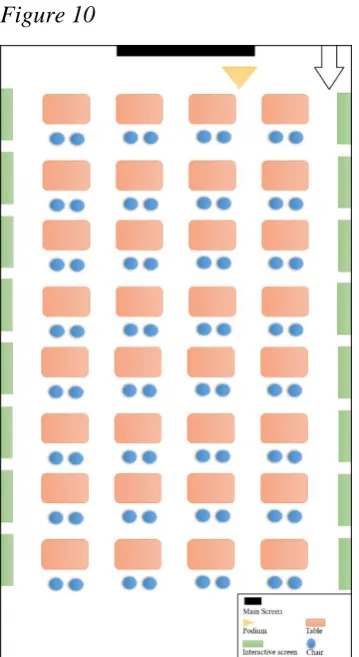
26 screens, which were mirrored from the main LED screen at the front. After the 15-minute break, the class resumed at 15.00. The main teacher gave a short instruction on what students had to do next. No instruction was given on how the interactive screen could be used. After that, students gathered around the table in groups of five to six people to discuss their project. The students did not share their information with other groups or share the result with teachers. One group used the whiteboard to make notes. However, there was only one whiteboard in the class, hence, the other groups used their laptops and notebooks instead to view information and make note. During the discussion, the main teacher and guest teachers walked around the class to give additional help when students were in need. The main teacher reminded the students of the next step in the process which groups had to follow before wrapping up the class at 15.30.
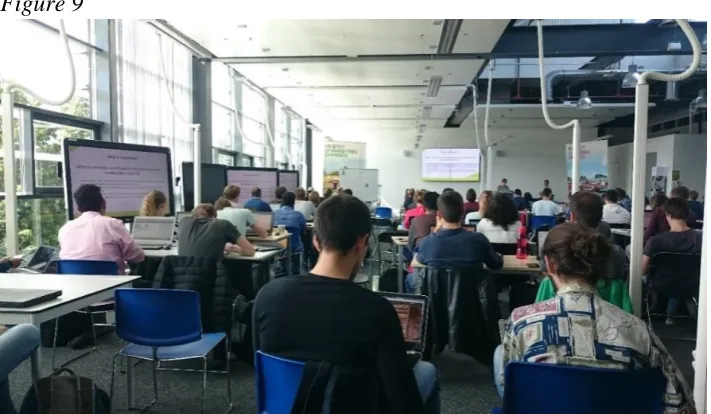
[image:27.595.72.428.471.678.2]To sum up, according to the observation, there was one IALA, namely intra-group discussion, in this class. Space was spacious enough for teachers to approach students and for the students to discuss without disturbing other groups with noise. The furniture could be shifted, which was useful for students to form groups. On the other hands, the interactive screens were used only in the lecture and not during the intra-group discussion. Although the interactive screens assisted the students to keep track with the presentation, they were less helpful for students who sat at the two rows in the middle than those who sat at the two rows outside because of the distance.
Figure 9
27 Figure 10
The setup of the Classroom of the Future at the beginning of the class
Figure 11
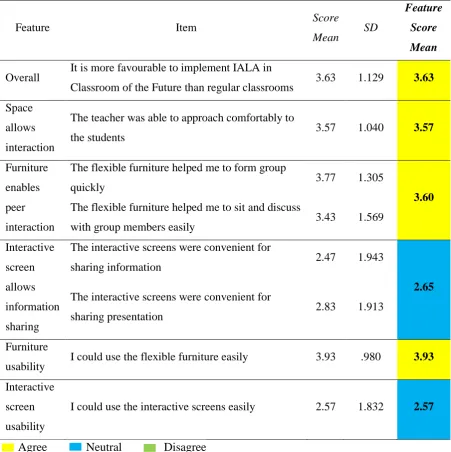
[image:28.595.73.427.449.655.2]28 Students’ survey.
[image:29.595.72.524.196.649.2]There were 30 respondents (response rate 33.3%), in which 18 were male (60%) and 12 were female (40%), aged 19 to 22 years old (M = 20.4, SD = 0.77). Detailed results from the quantitative data analysis of case 1 are presented in table 5.
Table 5
Result of students’ opinions in case 1 (N = 30)
Feature Item Score
Mean SD
Feature
Score
Mean
Overall It is more favourable to implement IALA in
Classroom of the Future than regular classrooms 3.63 1.129 3.63
Space
allows
interaction
The teacher was able to approach comfortably to
the students 3.57 1.040 3.57
Furniture
enables
peer
interaction
The flexible furniture helped me to form group
quickly 3.77 1.305
3.60 The flexible furniture helped me to sit and discuss
with group members easily 3.43 1.569
Interactive
screen
allows
information
sharing
The interactive screens were convenient for
sharing information 2.47 1.943
2.65 The interactive screens were convenient for
sharing presentation 2.83 1.913
Furniture
usability I could use the flexible furniture easily 3.93 .980 3.93
Interactive
screen
usability
I could use the interactive screens easily 2.57 1.832 2.57
Agree Neutral Disagree
29 Space. The students agreed that the space allows free interaction between teachers and students (M = 3.57, SD = 1.040). Students described the space as ‘spacious’ and ‘open’. However, with the current number of students, the space ‘was completely full’. Besides, there were some minor concerns with the space set up, particularly the presence of socket poles and interactive screens made the space setup ‘messy’ or ‘distracting’.
Furniture. The students agreed that the furniture was favourable for IALA (M = 3.60). Students also agreed that the furniture was easy to use (M = 3.93, SD = 0.980). Nevertheless, most of the drawbacks of the furniture related to the lack of tables for 120 students when the students sat individually facing the main LED screen for the lecture. Furthermore, due to the large number of students, ‘Moving tables and other stuff was hard’.
Interactive screen. The students had neutral idea about whether interactive screen enabled easy information sharing (M = 2.65). This was because students acknowledged that although the screen ‘helped the teacher reaching the whole class’ by ‘allowing easy screen sharing’, they ‘were not properly used in IALA’. Notably, students required ‘more white boards’ for sharing plan, notes, ideas among group members. Concerning the ease of use the interactive screens, students also had neutral idea (M = 2.57, SD = 1.832). Some difficulties regarding the use of interactive screen included ‘they reflected the sunlight’ and ‘could not be seen from the middle rows’. Additional feedback regarding ICT was that ‘the main screen cannot be seen from certain seats’.
Teacher’s interview.
Analysis of interview with the teacher in case 1 showed that 86.6% of the utterances were on task. Example of off-topic utterance includes ‘I had some lecture at IDEATE but it did not work at all’. The interview was explored for further insights into the results, with the main focus on on-topic utterances. In general, the teacher in case 1 was satisfied with the experience in the Classroom of the Future. He registered to use Classroom of the Future because it is ‘big enough for 110 students’ and ‘allows students to work in group’. He considered the experience at Classroom of the Future ‘a nice opportunity’.
30 In terms of ICT, the teacher acknowledged the advantage of interactive screen in ‘allowing students to follow the presentation’. However, in intra-group discussion, he thought the students ‘used the laptop as the group is not so big, so looking at one laptop screen is also visible’. Besides, the teacher considered the ‘inability to use the pointer’ and ‘a cross on the slides’ as some disadvantages in using the main LED screen.
Regarding the understanding about the technology in the Classroom of the Future, the teacher confirmed that the information letter was the only material he received from DesignLab. The teacher said that he was shown in the letter ‘that the setting is flexible, there are big screens to show students presentation but also to use as separation parts’. Information about function, special features or how to use the interactive screen was not provided by any other sources. Therefore, when asked why he did not use the interactive screen, the teacher said he was ‘not sure the interactive screens are necessary’. Apart from that, the teacher praised the technical support as ‘well organised’ because ‘there’s always help available if there are any problems’. Besides, although the teacher understood the benefits of active learning, what prevented him from taking more advantage of this method was the lack of experience. Therefore, he suggested that ‘it would be nice to have support and suggestions of the examples on how you can organize it, how you can approach it, how you can implement it, how to use the interactive screens and facilities. So, you can choose the suitable method for your lecture’, and the ‘suggestion should be in a video’.
6.3. Case 2
31 teacher used the whiteboard, which could not be seen from the back. That was why some students had to stand up. It could be the reason why some students did not focus on the lesson or left the class after the break. The teacher asked several problem-solving questions during the lecture. The students raised their hands to answer but it was difficult to hear from the back. The lesson went on until 11.30. After that, the students were free to leave or do the assignment. The students could go to the teacher’s desk to ask their questions.
To sum up, according to the observation, there were several IALAs, namely Mathematics problem-solving, in this class. However, students mainly worked individually. They were also not required to share their answers; hence the special features of space, furniture and interactive screens were not taken advantage of. The condition of the ICT was not favourable for the lecture, as there were technical problems with all the screens. The use of the whiteboard to replace the main LED screen was absolutely not suitable with such a long classroom because students at the back could not see anything written by the marker on the board.
Students’ survey.
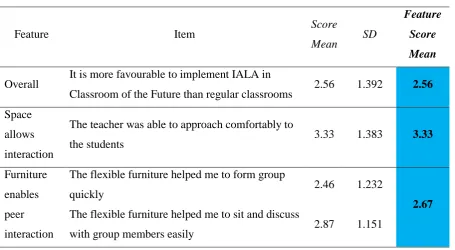
[image:32.595.73.529.500.750.2]There were 39 respondents (response rate 39%), in which 20 were male (51.3%) and 19 were female (48.7%), aged 19 to 24 years old (M = 20.4, SD = 0.97). Detailed result from the quantitative data analysis of case 2 is presented in table 6.
Table 6
Result of students’ opinions in case 2 (N = 39)
Feature Item Score
Mean SD
Feature
Score
Mean
Overall It is more favourable to implement IALA in
Classroom of the Future than regular classrooms 2.56 1.392 2.56
Space
allows
interaction
The teacher was able to approach comfortably to
the students 3.33 1.383 3.33
Furniture
enables
peer
interaction
The flexible furniture helped me to form group
quickly 2.46 1.232
2.67 The flexible furniture helped me to sit and discuss
32 Interactive
screen
allows
information
sharing
The interactive screens were convenient for
sharing information 1.28 1.075
1.55 The interactive screens were convenient for
sharing presentation 1.82 1.355
Furniture
usability I could use the flexible furniture easily 2.92 1.036 2.92
Interactive
screen
usability
I could use the interactive screens easily 1.44 1.165 1.44
Agree Neutral Disagree
Overall. The result from the survey showed that students had neutral idea about whether Classroom of the Future was more favourable to implement IALA than regular classrooms (M = 2.56, SD = 1.392). Students explained that they had ‘negative experience with a normal lecture being conducted here’, although some of them could see that the ‘facilities are favourable for active learning’, which made Classroom of the Future ‘has some potential’. One student emphasized ‘teachers do have to know what the possibilities of the room are and how to implement these in their lectures’. Meanwhile, some students even thought ‘a regular classroom is more favourable’. One student summarised ‘the room has more facilities to implement active learning activities, but it is less favourable for normal lectures than a regular classroom’, therefore, ‘this classroom could be favourable compared to regular classrooms if suitable learning methods would be used’. Activities which were suggested to be suitable with Classroom of the Future included ‘tutorial’, ‘presentation’, ‘brainstorm’, ‘workshop’, ‘project work’, ‘programming’.
Space. The students had neutral idea about whether the space allowed free interaction between teachers and students (M = 3.33, SD = 1.383). Students described the space as ‘spacious’ and ‘available for both group work and lecture’. However, there was a considerable amount of comments about the ‘distracting setup’, and that the room was ‘too crowded’ for 100 students.
33 opinion about the special features of the furniture. However, if they had done that, ‘the furniture could not be moved because the classroom was too full’. Also, there were eight times which students said ‘there was not enough table’ for 100 students.
Interactive screen. The students strongly disagreed that the interactive screen enables information sharing (M = 1.55). Students explained ‘the interactive screens aren't used to their full possibility’ because ‘they didn’t ask us to use the interactive screens’ and ‘nobody explained what we can do with the screens’, hence ‘most things have to be done on our own laptops’. Finally, they completely disagreed that they could use the interactive screen easily (M = 1.44, SD = 1.165). Students explained that they ‘could not get the interactive screens to work’, ‘they are too complicated’, and ‘people from DesignLab did not even know how to use them’.
Many comments were given on how the presentation was difficult to see from the main LED screen because the screen ‘is too small’, ‘has a big cross which cut the important texts’, and ‘not located at easily visible places’. Students also strongly criticized the use of the whiteboard, because it ‘could not be seen from the back’ and ‘not sufficient for mathematics-oriented subjects’. Thus, they suggested ‘using interactive whiteboard’.
Teacher’s interview
Analysis of the interview with the teacher in case 2 showed that 86.5% of the utterances were on-topic. Example of off-topic utterance includes ‘I can see from the exam that they know how to remember things and they can apply it and they can solve problem’. The interview was explored for further insights into the results, with the main focus on on-topic utterances. In general, the teacher in case 2 was not pleased with his experience in the Classroom of the Future. He considered it as his ‘least favourite’, because ‘this room is very much not suitable for Mathematics class’ and ‘it doesn’t really suit my need or my teaching method’. The reason he chose to use Classroom of the Future was ‘this was the only available classroom that is large enough to hold all the students’.
34 In respect of the ICT, the teacher thought the interactive screens were not handy to use as he reported the technical issues ‘were pretty terrible’ because too many technical problems occurred with the main LED screen, the interactive screens, and the sound system in this class, which caused lesson disruption, and made the teacher to use the white-board to give the information to students.
Regarding the understanding about the technology in the Classroom of the Future, the teacher said that before the class, he received the introduction letter by email. There was also a paper folder on the teacher’s desk. However, the paper folder was the introduction of DesignLab, with information about different rooms and spaces there. To sum up, the teacher received the information about how to get the screens to work and how to fix them, yet, he ‘did not get any specific instruction’. Therefore, when asked why he did not use the interactive screen, the teacher said, with the IALA as solving Mathematics problem in his class, he thought ‘the facilities are not necessary’. The teacher suggested that besides the manual, he ‘would like to have a half-hour instruction before the start of the module’. In addition, when he had technical problems, ‘they could not help me with that’ leading to his negative experience with Classroom of the Future. Besides, regarding the IALA, the teacher ‘did try to give the students small problems to work on’ and had some ideas on how it could be implemented, for example, by ‘having somebody to give their solution’ on the interactive screens, ‘short quizzes’, ‘discussion’. Yet, there were not many IALA in this class because of two main reasons. First of all, the teacher believed that ‘the current method works’, and his course ‘is simply Maths. So, interactive activity wouldn’t have to be with them’. The second reason was he doubted it would work for 120 students, thus, he supposed ‘smaller groups would be easier to have some of them do it’.
6.4. Case 3
35 Team came to turn on the interactive screens. When the class resumed, the teacher used the webcam on his laptop to show the students a small detail of the machine. The students focused on the interactive screen. After the second break from 15.40 to 16.00, the students started to work with the assignment in groups of four to six (see figure 2). Each group had a model machine placed at the centre of the table. The students in one group sat around the tables with their laptops in front of them. The teacher moved around to give help when the students were in need. The group work went on until the class ended at 17.30.
[image:36.595.74.428.534.744.2]To sum up, according to the observation, there was one IALA, namely group programming, in this class. Space enabled teachers to interact comfortably with student groups while the furniture helped students to form groups quickly. However, there were tables of different sizes in the Classroom of the Future (see figure 12). When the students put two tables of small width together, the space between the students in one group was appropriate for discussion (see figure 13). Meanwhile, when the two tables of big width were put together, the space between group members was too big, which forced the students to lean forward and stand to listen to each other (see figure 14). Moreover, the students used their individual laptops although the laptops prevented them to see the model system placed at the middle of the group. Some students had to lean forward or lean on one side to see the model. The laptops were also not favourable for sharing information when three to four students had to stand up and look at one small screen (see figure 15). These two problems could have been solved if the students had used the interactive screens. Unfortunately, the interactive screens were used only in the lecture and not during the IALA.
Figure 12
36 Figure 13
[image:37.595.74.427.368.628.2]Two tables of smaller width made an appropriate group space
Figure 14
Two tables of larger width made wide gap, which forced the students stand on one side of the
37 Figure 15
Many students had to stand to look at the small laptop screen while the big interactive screen
behind them was not used.
Teacher’s interview
Analysis of interview with the teacher in case 3 showed that 98.0% of the utterances were on-topic. Example of off-topic utterance includes ‘There are enough power outlets’. The interview was explored for further insights into the results, with the main focus on on-topic utterances.
In general, the teacher in case 3 had a neutral opinion about the Classroom of the Future. He considered it ‘similar to other classrooms’ because ‘there’s no reason it’s harder or less hard here than in the other rooms’. The reason he registered to use Classroom of the Future was ‘there were no other rooms that could fit this number of students’. Space in the Classroom of the Future was praised as the teacher ‘had enough space to approach and interact with students’. However, the teacher recognised that ‘there seems to be not enough table’. In contrast, the ICT brought not much value to the teacher. Particularly, according to his opinion, the main screen ‘is made out of 4 screens. Often large important part is at the boundary between the two screens and it’s hard to see’.
38 it? Is there anything they could do with this touch screen that they cannot do on paper? Can they take their stuff home? I don’t know about that’. Concerning IALA, the teacher was not interested in incorporating activities in his class ‘because I just want to do a normal lecture’. He clarified that he has ‘already given this lecture last year and it worked well so, there’s no need to change it, or improve it or do other things’. Besides, IALA ‘would have taken too much time’, while he ‘couldn’t think of any way how this could improve the lesson’. Last but not least, if he could be shown how to use features in the Classroom of the Future, he preferred having the instruction incorporated in a short video.
6.5. Cross-case comparison
The three cases in this research were all undergraduate engineering classes, with similar number of students. In all three cases, the Classroom of the Future was chosen by the teachers only due to the number of seats available, instead of the special features it provided. The three classes occurred in a similar format, with lecture in the first half or two third of the class, followed by IALA at the end of the class. Each case had a different IALA, which was intra-group discussion in case 1, individual Mathematics problem-solving in case 2, and intra-group programming in case 3. The activities occurred during IALA of each case, which could be supported by special features of the Classroom of the Future, can be found in table 7.
Table 7.
Activities during IALA of three cases
Teacher – student interaction
Intra-group interaction
Inter group interaction
Group form
Search information
Share information
Case 1 ✓ ✓ ✓ ✓ ✓
Case 2 ✓
Case 3 ✓ ✓ ✓ ✓ ✓
✓ = present; = absent
By comparing data from three cases, the review regarding each feature was described below. The Wilcoxon Rank Sum Test result can be found in table 8.
39 Space. The space was agreed to be favourable for interaction in case 1. Meanwhile, the same issue was neither agreed or disagreed in case 2. Yet, the difference in students’ review between case 1 and 2 was found not significant (p > .05). The students of all classes also reported the same problems that the setup of the space was distracting because there were too many elements, such as socket poles and screens, in the space. Moreover, there were not enough tables and the room was too crowded for 90 students or more.
Furniture. The benefit of furniture in IALA was inconsistent between cases. While the furniture was agreed to facilitate interaction in case 1, the same issue was neither agreed or disagreed in case 2. The difference was found significant (p ≤ .0001). Also, the furniture was agreed to be easy to use, which was significantly different (p ≤ .001) compared to the neutral idea in case 2. Yet, all teachers and students reported the lack of tables for 100 students
Interactive screen. The interactive screen in appreciated in case 1 and 3 for being able to mirror the presentation from the main screen during the lecture. Nonetheless, interactive screens were not used in intra-group discussion in case 1 or group programming in case 3. Therefore, the interactive screen was neither agreed or disagreed to be helpful in sharing information. In contrast, the interactive screens were not used in lecture as well as in the Mathematics problem-solving task in case 2. Therefore, the interactive screen was disagreed to be favorable for IALA. The difference between case 1 and 2 was significant (p ≤ .0001). Furthermore, students in case 1 had neutral opinion about whether the interactive screens were easy to use, while the students in case 2 disagreed because they experienced technical problems when they tried to make the interactive screens work in lecture. The difference was significant (p ≤ .0001). Opinions towards the difficulties in using the interactive screen were diverse. In case 1, the students sitting in the middle row could not see the interactive screens, while the students in case 2 found the interactive screens too complicated to use.
Regarding the main LED screen, in three cases, it was reported with the same problem of the cross on the screen, which made it difficult for students to see the whole content of the slides. Furthermore, the teacher is case 1 could not use the pointer on the LED screen. While students thought the main screen should be at higher position for students at the back of the room to see properly.
40 IALA, although from observation, it was found that many activities could have been supported better with the help from interactive screens. For example, when students in case 1 and 3 had difficulties while sharing information with group members, or when students in case 2 could not share their answer for the problem-solving tasks with teacher and other students for feedback. To improve the current situation, the teachers had different requirements. The teacher in case 1 wished to receive a video instruction of examples and suggestion on how to use Classroom of the Future in implementing IALA. Teacher in case 2 did not think IALA was beneficial and doable in such a big class, yet, he would join an introduction session to know how to use the classroom better. Last, the teacher in case 3 thought IALA would take a lot of time to prepare and was not suitable for his class, however, if there was additional guidance to be provided, he would want it in the form of a short video.
Table 8.
Wilcoxon Rank Sum Test result of difference between case 1 and 2.
Case 1 Case 2 p
1. It is more favourable to implement IALA in
Classroom of the Future than regular classroom 3.63 2.56 .000***
2. The space allows free interaction 3.57 3.33 .329
3. Furniture is enables peer interaction 3.60 2.67 .000***
4. Interactive screens enable easy information sharing 2.65 1.55 .001***
5. The furniture can be used easily 3.93 2.92 .000***
6. The interactive screens can be used easily 2.57 1.44 .008**
Agree Neutral Disagree
*p ≤ .05 **p ≤ .01 ***p ≤ .001
From the results, the research questions and hypothesis could be answered as followed: Research question 1: In what ways does the Classroom of the Future facilitate the implementation of IALA in engineering classes?
Hypothesis 1: Space in the Classroom of the Future is confirmed to allow free interaction between teachers and students.
Hypothesis 2: Flexible furniture in the Classroom of the Future is confirmed to enable peer interaction
41 Research question 2: What hinders the effectiveness of the Classroom of the Future in supporting the implementation of IALA in engineering classes?