141
An Encoder with non-Sequential Dependency for
Neural Data-to-Text Generation
Feng Nie1∗ Jinpeng Wang2 Rong Pan1 Chin-Yew Lin2 1Sun Yat-Sen University 2Microsoft Research Asia
1[email protected], 1[email protected]
2{jinpwa, cyl}@microsoft.com
Abstract
Data-to-text generation aims to generate de-scriptions given a structured input data (i.e., a table with multiple records). Existing neu-ral methods for encoding input data can be di-vided into two categories: a) pooling based encoders which ignore dependencies between input records or b) recurrent encoders which model only sequential dependencies between input records. In our investigation, although the recurrent encoder generally outperforms the pooling based encoder by learning the se-quential dependencies, it is sensitive to the or-der of the input records (i.e., performance de-creases when injecting the random shuffling noise over input data). To overcome this prob-lem, we propose to adopt the self-attention mechanism to learn dependencies between ar-bitrary input records. Experimental results show the proposed method achieves compara-ble results and remains stacompara-ble under random shuffling over input data.
1 Introduction
Data-to-text generation, one classic task of natu-ral language generation, aims to produce a piece of texts that adequately and fluently describes its structured input data (i.e., tables) (Kukich,1983;
Reiter and Dale,1997;Barzilay and Lapata,2005;
Angeli et al., 2010; Kim and Mooney, 2010;
Perez-Beltrachini and Gardent, 2017). Tradition-ally, it is divided into two subtasks: content selec-tion (i.e.,what to say) and the surface realization (i.e.,how to say) (Reiter and Dale,1997;Gatt and Krahmer, 2018). Recent neural generation sys-tems ignore the distinction of these two subtasks using a single encoder-decoder model (Sutskever et al.,2014) with attention mechanism (Bahdanau et al.,2015;Mei et al.,2016;Duˇsek and Jurcicek,
2016;Kiddon et al.,2016;Chisholm et al.,2017).
∗
Contribution during internship at Microsoft.
Input
Birth name Johnny Allen Hendrix
Born November 27, 1942
Seattle, Washington, U.S. Genres Rock, psychedelic rock,
hard rock, blues, R&B Occupation Musician, songwriter, producer Instruments Guitar, vocals Reference
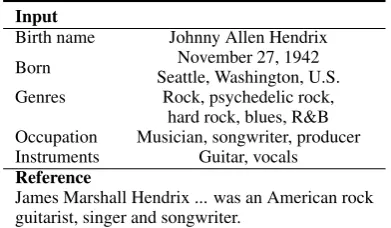
[image:1.595.319.515.223.337.2]James Marshall Hendrix ... was an American rock guitarist, singer and songwriter.
Table 1: An example of generating descriptions from the input data.
The encoder-decoder architecture first encodes the input data (e.g., a table) into a dense represen-tation, where the input contains a set of records. Then descriptions are produced based on the input representation. The appropriate encoding method of input structured data remains an open ques-tion. Existing encoding methods for an input table can be decomposed into two stages: 1) converting each record in the table to a record vector, 2) com-bining the record vectors using a pooling method or a recurrent neural network (RNN) to represent the input table. In this paper, we investigate these two types of neural encoding methods over several data-to-text datasets. The empirical results show that RNN based methods outperform simple pool-ing methods in terms of BLEU evaluation.
The major difference between pooling and RNN based methods lies in the fact that pooling meth-ods treat records in the input table independently while RNN based methods model the relationships among the records by treating the input records as a sequence. As a result, it is common that two records in the input data are relevant. For exam-ple, as shown in Table1, the input record “Instru-ments: Guitar, vocals” is related to “Occupation: Musician, songwriter, producer”.
pooling methods suggest that capturing dependen-cies among the input records is helpful. How-ever, RNN based methods capture only the se-quential relationships among the input data, which is sensitive to its input order. Given an input table, intuitively, permutations over the records should make no change to input representations, while we observe large performance decrease of RNN based methods when injecting the random shuffling noise over input data. To address this undesired nature of RNN, we propose using a self-attention mechanism to capture the depen-dency and enable the encoding to be less sensi-tive to any permutation noise. The experimen-tal results on several datasets show self-attention based encoder achieves comparable results than RNN based methods and is more robust handling the input shuffling noise.
2 Method
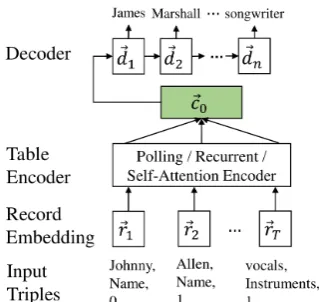
The neural data-to-text generation is based on the encoder-decoder architecture. As shown in Fig-ure1 , there are multiple choices of table encod-ing that affect the generation decoder. We briefly introduce the backbone of the neural generation method in Section 2.1and then introduce the de-tails of three types of table encoders in Section2.2.
2.1 Base Model
Given a set of records S = {rj}K
j=1, the goal of
data-to-text generation is to produce a description
y = y1, ..., yT. Usually, the encoder-decoder
ar-chitecture consist of a table encoder and a recur-rent neural network based decoder segmented with attention (Bahdanau et al.,2015) and conditional copy (See et al.,2017) mechanism. Firstly, each input recordrj is encoded into a hidden vectorhj
using a specified table encoder, which is the focus of this paper and three encoders will be introduced in Section2.2. Then, for the generated description
y, the decoder generates the word yt at the t-th
time step based on the previously generated words
y<t and the input hidden vectors H = {hj}Kj=1.
Specifically,
P(yt|y<t,H) = softmax(f(dt, yt−1,ct)) (1)
where f(.) is a tanh function and dt =
LSTM(dt−1, yt−1, ,ct−1) is the hidden state of
the decoder at step t. ct in Eq. 1 is the context
[image:2.595.335.495.60.211.2]vector at timestept, computed as a weighted sum
Figure 1: Overview of encoder-decoder architecture with different encoding methods.
of input hidden vectorshj:
ct= K
X
j=1
αt,jhj (2)
where we use the attention model introduced in (Bahdanau et al., 2015) to compute the attention weightαt,j.
2.2 Table Encoder
Record Vectors: The input table can be viewed as a set of field-value records, where values are se-quences of words corresponding to a certain field (Liang et al.,2009;Lebret et al.,2016;Yang et al.,
2017). For instance, in the Table 1, the word “William” has the field “Birth name” and it is the first word in this field. Every word in the field is a record r and is presented as triple (rv, rf, rpos), where rv, rf and rpos refer to the value (e.g., William), the field name (e.g., Birth name), the relative position in its field (e.g., 0). We map each recordr ∈ S into a vectorrby concatenat-ing the embeddconcatenat-ing ofrv,rf andrpos, denoted as
r = [ev,ef,epos], whereev,ef,epos are trainable word embeddings ofrv,rf andrpos.
Pooling Based Encoders: The pooling based en-coder treats input records independently, there-fore, it first applies a feed forward neural network layer over every record vector rj and yields the
input hidden vectorhj = tanh(Wrj), where W
is a trainable parameter. The initial context vec-torc0 in Eq.1is calculated by the following
max-pooling layer.
c0 = max([h0, ...,hT]T) (3)
E2E WIKIBIO
#Train 42061 582695 #Validation 4672 72831
#Test 4693 72831 Average field number 5.4 19.7
Average input length 20.1 53.1
Table 2: Statistics of two datasets.
dependency among the records by treating the set of record vectorsr1, ...,rT as a sequence. The
quence of records are fed into a RNN yielding a se-quence of input hidden vectorsh1, ...hT. We adopt
a bidirectional LSTM by following (Mei et al.,
2016). The initial context vector is set as the last hidden vector of the sequencec0=hT.
Self-Attention Encoders: For data-to-text gen-eration, input records are order invariant as in-put data should convey the same information re-gardless of the order of input records. The input records is a set, while the recurrent encoder makes strong hypothesis and treats it as a sequence.
Therefore an ideal table encoder has two de-sired properties: a) enable to capture relationships among the input records and b) is also order invari-ant. Recently proposed self-attention mechanism (Vaswani et al.;Wang et al.,2017) is able to learn interactions between arbitrary records and there-fore is also irrelevant to the order of the records. For this purpose, we adapt the multi-layer self-attention mechanism for the encoding. Each layer has two sub-layers: one layer is for multi-head self-attention and the other one is a position wise feed-forward neural network with layer normal-ization (Vaswani et al.). Specifically,
si,j =
Qlihli(Kjlhlj)T
√ dk
;βi,j =
esi,j
PT
n=1esi,n
(4)
hli=
T
X
j=0
βi,j(Vjlhlj);hli+1 =f(h l
i+g(hli)) (5)
where Ql, Kl, Vl are trainable parameters for
layer l, dk is the dimension of K, and the first
layer of the hidden vectorh0i refers to the record vector ri. To represent the full table, we apply
max-pooling in Eq.3using the last layer of hidden vectors similarly.
Method E2E WIKIBIO Template - 19.8
StructAware - 44.89
Slug2Slug 66.19
-MaxEnc 66.05 43.19
RnnEnc 66.11 44.93
SelfAtt 66.29 45.02
Table 3: Experimental results of different encoding methods and other systems over three datasets.
3 Experiments
3.1 Datasets and Evaluation Metrics
We conduct experiments on two datasets.
E2E(Novikova et al.,2017) is a dataset for task-oriented language generation in the restaurant domain with 50,000 samples, the validation and test data are multi-reference; WIKIBIO (Lebret et al., 2016) contains 728,321 articles from En-glish Wikipedia. It uses the first sentence of each article as the description of the corresponding infobox. The detailed statics of two datasets are listed in Table 2.
For evaluation metrics, we use BLEU-4 ( Pap-ineni et al.,2002) to assess the generation quality automatically.
3.2 Implementation Details
We tune all hyparameters according to the per-formance on the separated validation set. The di-mension of trainable embeddings and hidden units in LSTMs are all set to 600. For the multi-layer and head architecture, 3 layers and 4 multi-attention heads are used. During training, we reg-ularize all layers with a dropout 0.1. For optimiza-tion, we use Adam with learning rate 0.0002. The gradient is truncated by 1. All experiments use beam size of 5 in decoding. We use pytorch ver-sion of OpenNMT (Klein et al.,2017) for imple-mentation.
3.3 Performance
The results of different input encoding methods along with other competing systems on the test sets of three datasets are shown in Table 3. We compare three types of encoders (i.e., Pooling based encoders refer to MaxEnc, Recurrent en-coders refer to RnnEnc, and self-attention en-coders refer SelfAtt) introduced in Section
Methods Training E2E WIKIBIO Original Shuffle Original Shuffle
MaxEnc Original 66.05 66.05 43.19 43.19
Shuffle 66.17 66.17 43.21 43.21
RnnEnc Original 66.11 42.74 44.93 28.56
Shuffle 64.08 65.40 43.95 43.59
SelfAtt Original 66.29 66.29 45.02 45.02
[image:4.595.153.446.64.180.2]Shuffle 66.29 66.29 44.47 44.47
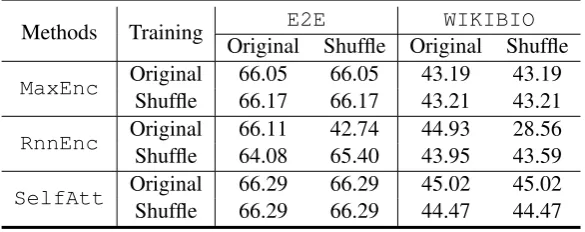
Table 4: Experimental results of different encoding methods trained and tested on different input settings
Template is a method that replaces the words occurring in both the table and the training sen-tences with a special token reflecting its field. (2)
StructAware (Liu et al., 2018) is a structure-aware encoder-decoder architecture which using a modified LSTM unit and a specific attention mechanism to incorporate the attribute informa-tion. (3) Slug2Slug is an ensemble neural method that re-ranks several neural outputs during inference.
From table 3, the results show that three encoders achieves comparable results on E2E
dataset, as the input ofE2Eis relatively short and simple. For WIKIBIO, the simple max-pooling encoder MaxEnc performs worse than the bidi-rectional LSTM encoderRnnEnc. The proposed method SelfAtt which capture the dependen-cies between arbitrary records yields better re-sults compared toMaxEnc, and achieves compa-rable results with respect toRnnEnc. The result suggests modeling the dependencies among input records can yield better performance when the in-put is long and complex. More importantly, re-current encoders only capture sequential depen-dencies, which is sensitive to the order of input records. To investigate the robustness of differ-ent table encoders, we design random shuffling noise over input data. For example, the original order of the input is “Birth name; Genres; Occupa-tion; Associated Acts”, and the order after random shuffling can be “’Geners; Birth name; Associated Acts; Occupation’. Note that we do not change the order of content inside a field. We apply such ran-dom shuffling noise on both training and testing stages. For model training, there are two choices: training on original input dataOriginalor data with input random shuffling noiseShuffle. For testing, the trained model can be applied to the original input data or the shuffled version.
From the Table 4, We observe that the
per-MaxEnc RnnEnc SelfAtt ReSAtt ESPN 14.01 16.32 13.93 16.43
Table 5: Results of different encoding methods over ESPNdataset
formance of RnnEnc drops dramatically when the input ordering information during training is different from the testing (i.e., the model trained on the original drops more than 15 BLEU scores when testing on input with random shuffling noise). In a slight difficult setting compared to original input, where both the input of training and testing are randomly shuffled, the perfor-mance of RnnEnc also decreases (i.e., 0.71 and 1.34 BLEU score decrease onE2EandWIKIBIO
respectively). On the contrary, both MaxEnc
andSelfAttare less sensitive to the change of record ordering information, and the performance of both models under different shuffling noise are more stable thanRnnEnc. The experimental re-sults further confirms that using order invariant en-codingSelfAtt is stable and suitable for table encoder.
3.4 Limitations of Self-Attention Mechanism
The self-attention table encoder achieves compa-rable performance with respect to recurrent table encoders on E2E andWIKIBIO datasets. How-ever, the input of these two datasets are relatively short. To investigate the performance of self-attention mechanism on capturing long range de-pendencies, we conduct SelfAtt on a recently proposed NBA dataset ESPN (Nie et al., 2018), where the average input length 165.9 and aver-age field number is 134.2. The results on ESPN
et al., 2018), where we limit the self-attention mechanism to capture dependencies within a fixed window size (set to 10 in the experiments), the re-sult ofReSAttperforms comparable with respect toRnnEnc, despite this type of method is not or-der invariant. Handling long range dependencies for input data that is non-sensitive to the order of input data is a potential future work.
4 Conclusion
In this paper, we analyze several existing encod-ing methods for neural data-to-text generation. We find that modeling the dependency among the input records can yield better generation re-sults. However, current recurrent table encoders can only model the sequential dependencies which is sensitive to the input order. We propose using self-attention for table encoder that can capture the dependencies and remains stable at the same time. In the future, we will analyze the explicit depen-dencies that lies in the input data, and improve the performance of encoding methods.
5 Acknowledgement
We thank the anonymous reviewers for helpful comments. The contact author of this paper, ac-cording to the meaning given to this role by Sun Yat-Sen University, is Rong Pan.
References
Gabor Angeli, Percy Liang, and Dan Klein. 2010. A simple domain-independent probabilistic approach to generation. InEMNLP, pages 502–512.
Dzmitry Bahdanau, Kyunghyun Cho, and Yoshua Ben-gio. 2015. Neural machine translation by jointly learning to align and translate. ICLR.
Regina Barzilay and Mirella Lapata. 2005. Collective content selection for concept-to-text generation. In EMNLP, pages 331–338.
Andrew Chisholm, Will Radford, and Ben Hachey. 2017. Learning to generate one-sentence biogra-phies from wikidata. CoRR, abs/1702.06235.
Ondˇrej Duˇsek and Filip Jurcicek. 2016. Sequence-to-sequence generation for spoken dialogue via deep syntax trees and strings. InACL.
Albert Gatt and Emiel Krahmer. 2018. Survey of the state of the art in natural language generation: Core tasks, applications and evaluation. J. Artif. Intell. Res., 61:65–170.
Chlo´e Kiddon, Luke Zettlemoyer, and Yejin Choi. 2016. Globally coherent text generation with neu-ral checklist models. InEMNLP, pages 329–339.
Joohyun Kim and Raymond J. Mooney. 2010. Gen-erative alignment and semantic parsing for learning from ambiguous supervision. In COLING, pages 543–551.
Guillaume Klein, Yoon Kim, Yuntian Deng, Jean Senellart, and Alexander M. Rush. 2017. Open-NMT: Open-source toolkit for neural machine trans-lation. InProc. ACL.
Karen Kukich. 1983. Design of a knowledge-based re-port generator. InACL, pages 145–150.
R´emi Lebret, David Grangier, and Michael Auli. 2016. Neural text generation from structured data with application to the biography domain. In EMNLP, pages 1203–1213.
Percy Liang, Michael I. Jordan, and Dan Klein. 2009. Learning semantic correspondences with less super-vision. InACL, pages 91–99.
Tianyu Liu, Kexiang Wang, Lei Sha, Baobao Chang, and Zhifang Sui. 2018. Table-to-text generation by structure-aware seq2seq learning. In AAAI, pages 4881–4888. AAAI Press.
Hongyuan Mei, Mohit Bansal, and Matthew R. Walter. 2016. What to talk about and how? selective gener-ation using lstms with coarse-to-fine alignment. In NAACL, pages 720–730.
Feng Nie, Jinpeng Wang, Jin-Ge Yao, Rong Pan, and Chin-Yew Lin. 2018. Operation-guided neural net-works for high fidelity data-to-text generation. In EMNLP, pages 3879–3889. Association for Compu-tational Linguistics.
Jekaterina Novikova, Ondˇrej Duˇsek, and Verena Rieser. 2017. The E2E dataset: New challenges for end-to-end generation. In Proceedings of the 18th Annual Meeting of the Special Interest Group on Discourse and Dialogue, Saarbr¨ucken, Germany. ArXiv:1706.09254.
Kishore Papineni, Salim Roukos, Todd Ward, and Wei-Jing Zhu. 2002. Bleu: a method for automatic eval-uation of machine translation. InACL, pages 311– 318.
Laura Perez-Beltrachini and Claire Gardent. 2017. Analysing data-to-text generation benchmarks. In INLG, pages 238–242.
Ehud Reiter and Robert Dale. 1997. Building applied natural language generation systems. Natural Lan-guage Engineering, 3(1):57–87.
Ilya Sutskever, Oriol Vinyals, and Quoc V. Le. 2014. Sequence to sequence learning with neural net-works. InNIPS, pages 3104–3112.
Ashish Vaswani, Noam Shazeer, Niki Parmar, Jakob Uszkoreit, Llion Jones, Aidan N Gomez, Ł ukasz Kaiser, and Illia Polosukhin. Attention is all you need. In Advances in Neural Information Process-ing Systems 30.
Wenhui Wang, Nan Yang, Furu Wei, Baobao Chang, and Ming Zhou. 2017. Gated self-matching net-works for reading comprehension and question an-swering. InProceedings of the 55th Annual Meet-ing of the Association for Computational LMeet-inguistics (Volume 1: Long Papers), pages 189–198. Associa-tion for ComputaAssocia-tional Linguistics.
Yizhong Wang, Sujian Li, and Jingfeng Yang. 2018. Toward fast and accurate neural discourse segmen-tation. In Proceedings of the 2018 Conference on Empirical Methods in Natural Language Process-ing, pages 962–967. Association for Computational Linguistics.