HHU at SemEval-2017 Task 5: Fine-Grained Sentiment Analysis on
Financial Data using Machine Learning Methods
Tobias Cabanski, Julia Romberg, Stefan Conrad
Institute of Computer Science Heinrich Heine University D¨usseldorf
D-40225 D¨usseldorf, Germany [email protected]
{romberg,conrad}@cs.uni-duesseldorf.de
Abstract
In this Paper a system for solving SemEval-2017 Task 5 is presented. This task is divided into two tracks where the sentiment of microblog messages and news headlines has to be predicted. Since two submissions were allowed, two dif-ferent machine learning methods were de-veloped to solve this task, a support vec-tor machine approach and a recurrent neu-ral network approach. To feed in data for these approaches, different feature extrac-tion methods are used, mainly word rep-resentations and lexica. The best submis-sions for both tracks are provided by the recurrent neural network which achieves a score of0.729in track 1 and0.702in track 2.
1 Introduction
Analysing texts from the finance domain is a task that can help market traders to make important decisions because research has shown that senti-ments and opinions can affect market dynamics (Goonatilake and Herath, 2007). In the mean-time, the internet contains a huge corpus of fi-nance news from news websites or social media platforms. Natural language processing methods can be used to analyse this data as, for instance, sentiment analysis. To improve the understand-ing of the special characteristics of the domain, SemEval-2017 provides Task 5.
2 Related Work
In the task of sentiment analysis, machine learning methods are widely used. One approach is shown in (Agarwal et al.,2011) where a sentiment anal-ysis on twitter messages is performed by combin-ing different features. It was found out that the use
of multiple features processed by a support vector machine leads to good classification scores.
The work of (Yadav,2016) shows that recurrent neural networks can provide a good performance for this task. A powerful system can be created even with doing only a little preprocessing on the text data.
3 Task Description
The SemEval-2017 Task 5 is divided into two tracks which each consider a different data basis (Cortis et al.,2017). The objective of both tracks is the prediction of a sentiment score with refer-ence to a company or a stock in a given piece of text. The sentiment score is a number within the interval[−1,1] with −1 denoting a very bearish sentiment and +1 denoting a very bullish senti-ment.
Track 1 is focused on microblog messages about stock market events. The data corpus consists of 1710annotated messages taken from StockTwits1 and Twitter2, whereas a cashtag and the related spans are given in each case.
Track 2 refers to financially relevant news head-lines. The annotated data given for the system’s training comprises 1156 headlines. For every headline-score pair the corresponding company name is specified. Spans are not given.
4 System Description
Below, the system is outlined. In doing so, pre-processing steps, feature selection, and the used machine learning techniques are described.
4.1 Preprocessing
Preceding the feature extraction, the texts are pro-cessed by first expanding contractions and
remov-1https://stocktwits.com/ 2https://twitter.com/
ing URLs in the text.
Emotions generally take an important part in the microblog domain and it was shown that the con-sideration of punctuation and bracket characters can improve the score because they can express special meaning like facial expressions (Agarwal et al., 2011). After the revision of the data, it shows that these characters rarely occur in the data of track 1 and apparently never occur in the track 2 data. Therefore, these characters are removed.
Furthermore, character strings of multiple white spaces are normalized to length1and case insen-sitivity is introduced. Additional tokenization is done using SpaCy.3
4.2 Features
Two different types of features are examined for the construction of the system. In the first fea-ture set the preprocessed data is transformed into a numerical word representation. The second fea-ture set consists of multiple sentiment lexicon re-sources.
4.2.1 Text Representations
Textual input has to be transformed into a machine-readable representation. For this, the en-suing two approaches are selected.
Word2vec (Mikolov et al., 2013) generates a vector space based representation for a word in the text. Each unique word in the corpus is rep-resented by a feature vector having similar words being positioned near each other in the space. A pre-trained Levy and Goldberg dependency-based model (Levy and Goldberg,2014) from SpaCy is used as well as a self-trained model which is con-structed using gensim4. In contrast to the pre-trained model, the self-pre-trained model contains the whole input vocabulary, but bases on a smaller corpus.
4.2.2 Lexica
Since there is only a small amount of training data, it was decided to bring additional information into the system by using different lexica.
SentiWordNet (Baccianella et al., 2010) con-sists of WordNet’s synset corpus (Fellbaum, 1998). Every synset term has a positive and a neg-ative score between zero and one named PosScore and NegScore. It is also possible to calculate the
3https://spacy.io/
4https://radimrehurek.com/gensim/
objectivity of a word by subtracting one from the sum of PosScore and Negscore. Since a word can have more than one score according to different meanings, the final score for a word is the mean of all found scores in the SentiWordNet.
VADER lexicon (Hutto and Gilbert, 2014) is a gold-standard sentiment lexicon that is geared to social media platforms. Hence, words and sym-bols that are not included in conventional lexical resources are contained and scored with continu-ous values.
Opinion Lexicon (Hu and Liu, 2004) is a re-source that is constantly being updated since 2004. The words in this lexicon are classified binary as positive or negative. Like in the VADER lexicon, this resource was also trained on social media data.
MaxDiff Twitter Sentiment Lexicon (Kir-itchenko et al.,2014) is an additional lexicon that delivers a continuous score for words. This corpus is mainly trained on Twitter data.
Financial Sentiment Lexicon As word polari-ties might depend on a specific domain, a lexi-con based on the training data from the respective track is created. The Financial Sentiment Lexi-con is built from the training data: First, the score of a short message is assigned to all words of the message. Then a vocabulary of all distinct words is built and the scores of identical words are av-eraged. In the final pruning step words with oc-currence less than0.1%in the data are removed to prevent that very infrequent words have an impact on the score. Also words with occurrence greater than10%in the data are removed so that very fre-quent words like stop words don’t influence the score.
4.3 Regression Methods
On the one hand, support vector regression is ap-plied. This regression method bases upon a sup-port vector machine (SVM) which is a widely used machine learning method and which delivers good results for various tasks. The implementation of it is realized by the python package Scikit-Learn.5
The other regression method that is used is a re-current neural network (RNN) using a Long Short-Term Memory Cell (Hochreiter and Schmidhuber, 1997). This is an improvement of a standard RNN in which the network is able to keep information
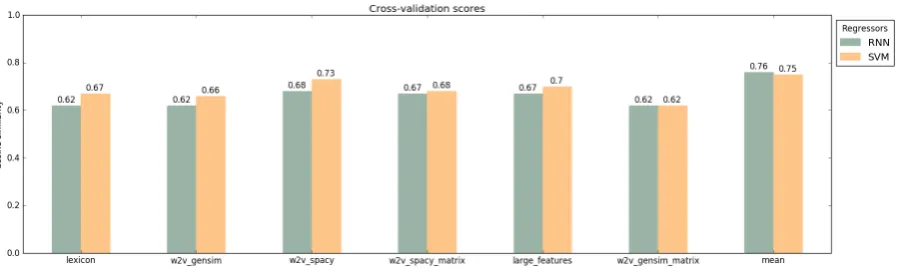
Figure 1: Results of the cross validation of Track 1
over a larger amount of time steps. Unlike the SVM, the RNN can process a message sequen-tially observing the sentence structure. The imple-mentation is realized by the python package Ten-sorFlow.6 The model consists of two LSTM cells and a layer count of 10.
5 Results
For every track, the support vector regression and the RNN approach are tested on the testing data using the depicted features. The predicted values are rated by the cosine similarity between the gold standard and the predicted sentiment score. For evaluation of the system, cross-validation is used by creating five subsets out of the training data set.
5.1 Track 1
The results for track 1 are presented in Figure1. The Figure shows the results of the regression of the features, which are determined by a recurrent neural network and a support vector machine. The presented combination of features has delivered the best result when the average score was formed. Thelexiconfeature is the sentiment score of ev-ery single word in a message, aggregated to the mean for the whole message. w2v gensim relates to the word2vec representation through gensim that has been described in chapter 4.2.1. All word vectors of a short message are averaged to a sin-gle feature vector. w2v spacyrefers to the second word2vec model named in chapter 4.2.1 which bases on SpaCy. Like described for w2v gensim, the definite feature vector of a message consists of the average of every word’s representation vec-tor. The two matrix features w2v spacy matrix and w2v gensim matrix are created in the same way as the word vector features describes before,
6https://tensorflow.org
but they don’t average the single word vectors to one vector. Instead, every word vector is repre-sented by a line of a matrix with a fixed count so that every matrix for a message has the same shape. This representation is optimized for the recurrent neural network because it can process one line at a single time step. To use the matrix features in a support vector machine, the matrix will be reshaped to a vector where all word vec-tors are concatenated to one single vector. The large featuresare further matrix features, where a word representation is concatenated to the lexicon scores of a single word. For that, a 50-dimensional word vector is created by gensim and then a five-dimensional vector is built by looking up the score for the word in the lexica. This feature has a ma-trix representation with a fixed line count as in the matrix features described before.
All feature combinations were tested. Figure 1 shows the similarity scores obtained by the in-dividual features and the mean score of all sin-gle feature predictions. As the figure shows, this aggregation leads to a cosine similarity which is higher than all single features. The combinations, that are not explicitly presented, did not lead to better results.
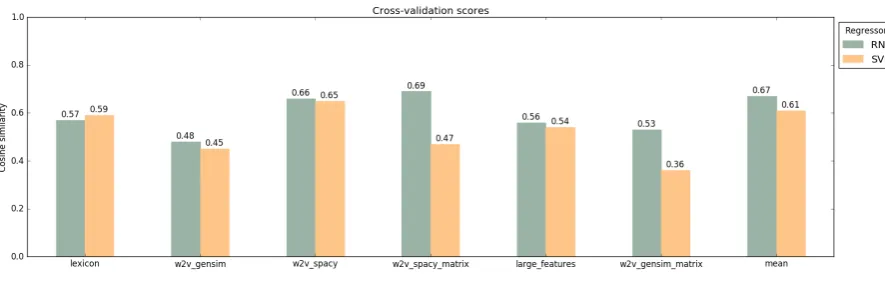
Figure 2: Results of the cross validation of Track 2
perform better when processed by a SVM. This could be caused by the length and structure of the data in track 1. Since the data only contains short snippets of the full message text, which is often only one word, the step-wise data processing of the RNN offers no advantage.
5.2 Track 2
The results of the cross-validation of track 2 are shown in Figure2. The same features as in track 1 were used to make the results comparable. The mean over all single feature predictions has also been approved as best and been used for the final score.
In comparison to the first track, the cosine simi-larity is lower for most of the features. This might be due to the fact that, unlike track 1, the full text of a headline is delivered so that the average mes-sage length is higher and more words influence the score.
Another fact that is show in figure2is that the RNN outputs better results over most of the sin-gle features and also over the mean. This can be explained by the structure of the data. Since the full headline text has to be processed, a message consists of more words than in track 1. The three matrix features keep most of the information of the words in a message and the step-wise process-ing of the feature matrix by the RNN shows much better results than reshaping the matrix to a single vector and processing it by a SVM.
5.3 Official results
In this project, the prediction of the mean-feature-SVM approach and of the mean-feature-RNN ap-proach were each chosen to be submitted.
The official evaluation for track 1 has resulted in a better score for the RNN approach with an
overall rank of 6 and a score of0.729. The SVM approach has a slightly worse result with a score of
0.720. In track 2, also the RNN approach reached a better score than the SVM with a rank of 7 and a cosine similarity of0.702. The SVM achieved a similarity of0.655. The official evaluation con-firms the cross-validation results by the better per-formance of the RNN over the SVM.
6 Conclusion and Future Work
It has been shown that the extraction and aggrega-tion of multiple features can lead to a score that performs better than every single feature score. The best single scores are represented by the word vectors where the cosine similarity is near the mean score for track 1 and in one case better than the mean score in track 2. It can also be empha-sized that the RNN outputs better scores on longer messages than the SVM, especially when the step-wise procedure is used with the matrix-shaped fea-tures.
To further improve the results it is possible to weight the single features before averaging them. To learn the weights, a neural network can be used which takes all single feature scores as input and outputs one value as the sentiment prediction.
References
Apoorv Agarwal, Boyi Xie, Ilia Vovsha, Owen Ram-bow, and Rebecca Passonneau. 2011. Sentiment Analysis of Twitter Data. In Proceedings of the Workshop on Languages in Social Media. Associ-ation for ComputAssoci-ational Linguistics, pages 30–38. Stefano Baccianella, Andrea Esuli, and Fabrizio
Sebas-tiani. 2010. SentiWordNet 3.0: An Enhanced Lex-ical Resource for Sentiment Analysis and Opinion Mining. InProceedings of the Seventh International Conference on Language Resources and Evaluation (LREC’10). European Language Resources Associ-ation, pages 2200–2204.
Keith Cortis, Andr´e Freitas, Tobias Dauert, Manuela Huerlimann, Manel Zarrouk, Siegfried Handschuh, and Brian Davis. 2017. SemEval-2017 Task 5: Fine-Grained Sentiment Analysis on Financial Microblogs and News. In Proceedings of the 11th International Workshop on Semantic Evalu-ation (SemEval-2017). Association for Computa-tional Linguistics, pages 517–533.
Christiane Fellbaum. 1998. WordNet: An Electronic Lexical Database. Bradford Books.
Rohitha Goonatilake and Susantha Herath. 2007. The Volatility of the Stock Market and News. Interna-tional Research Journal of Finance and Economics
3(11):53–65.
Sepp Hochreiter and J¨urgen Schmidhuber. 1997. Long Short-term Memory. Neural computation
9(8):1735–1780.
Minqing Hu and Bing Liu. 2004. Mining and Sum-marizing Customer Reviews. In Proceedings of the Tenth ACM SIGKDD International Conference on Knowledge Discovery and Data Mining. ACM, pages 168–177.
Clayton Hutto and Eric Gilbert. 2014. VADER: A Par-simonious Rule-based Model for Sentiment Analy-sis of Social Media Text. In Eighth International AAAI Conference on Web and Social Media. Associ-ation for the Advancement of Artificial Intelligence, pages 216–225.
Svetlana Kiritchenko, Xiaodan Zhu, and Saif M Mo-hammad. 2014. Sentiment Analysis of Short In-formal Texts. Journal of Artificial Intelligence Re-search50:723–762.
Omer Levy and Yoav Goldberg. 2014. Dependency-Based Word Embeddings. In Proceedings of the 52nd Annual Meeting of the Association for Compu-tational Linguistics (Volume 2: Short Papers). As-sociation for Computational Linguistics, pages 302– 308.
Tomas Mikolov, Kai Chen, Greg Corrado, and Jef-frey Dean. 2013. Efficient Estimation of Word Representations in Vector Space. arXiv preprint arXiv:1301.3781.