What 16,384-word core memory has a complete cycle time of 1 microsecond?
AMPEX LZ
There you have it: the fastest large core memory
today. The Ampex LZ. Its cycle time: 1
micro-second. Its capacity: 4096 to 16,384 words. It can
handle word lengths of 18 to 72 bits, in 2-bit
incre-ments. It can read-restore and clear-write. And it
offers twice the capability of the largest memory
previously available. Yet occupies
appro~imatelyhalf the space. Power requirements are also
reduced - by 50%. Second in a series of
high-speed Ampex memories, the LZ is packaged in a
new tri-sectional cabinet for easier accessibility.
It's made by Ampex Computer Products
Com-pany, Culver City, California. A division of the only
company providing' recorders, tape and core
memory devices for every application: Ampex
Corporation,
934
Charter Street, Redwood City,
California. Sales and service
1.9{
il
AMPlEX
I
engineers throughout the world.
I
CIRCLE 1 ON READER CARD
o (
o
o
Fastest
real
time .
mediummsize
clOmPlOJJterr
The DDP-19 Digital Data Processor handles complex on-line engineering data faster than comparable machines. Off-line too. Typical operation times, including instruction, operand access times: ADD . .
MULTIPLY DIVIDE ,
DOUBLE PRECISION ADD
10 microseconds 39 microseconds 66 microseconds 60 microseconds flOATING POINT - 37 BIT MANTISSA, 10 BIT EXPONENT:
ADD 220 microseconds
MULTIPLY. •
MEMORY CYCLE TIME MEMORY ACCESS TIME
347 microseconds
5 microseconds 3 microseconds
Computation speeds such as these are backed by a strong command structure with multiply, divide, and multiple precision commands, plus easy float-ing point operation. Indexfloat-ing, of course.
RELIABLE. DDP-19 modules, 3C's standard. S-PACs, have passed 800,OOOth PAC-hour of life test with no failures.
iN-OUT VARIETY. Program controlled data transfer. Multichannel interrupt with character buffers, word buffers, parallel transfer. Asynchronous full inter-rupt channels with 200,000 word/sec transfer rate. Fully buffered input-output channels with 200 kc word transfe~ rate - 3.8 million bits/sec.
EXPANDABLE. A full range of peripheral equipment, . including magnetic tape units, is available. DDP-19
modular construction allows internal expansion.
PROGRAMMING AIDS. Algebraic compiler, symbolic assembler, and comprehensiv~ subroutine library.
BASICS. DDP-i 9 Digital Data Processor is binary, parallel, single address. Core memory (4096 to 16,384 words), indexing, fixed point arithmetic, choice of 19, 22, or. 24 bit word. Solid state. Brochure and applications portfolio available.
@
COMPUTER CONTROL COMPANY, INC.
For additional information, COl'1tact,Uan Mason ~
esc
ServiC(~ Bureau M j~ntlf~er;i .•. · .• ·.·· .••. ··.··· •• ? •.••.•.•.••...o
o
Why so many computer users prefer the, Control Data 1604/1604-A
... and five 'reasons why it will pay you to know!
The Control Data 1604/1604-A Computer, demonstrated a leader in a competitive and demanding field, continues to prove its ability to scientists and engineers' as the com-puter to solve their problems, and to management as the computer to help maintain their profit. Here are the rea-sons why!
RELIABILITY-An unusual history of "uptime'~ that sets a high standard of performance.
SERVICES-Programming Assistance • Programmer and Operator Training • Programming Systems Improve-ment • Installation Check Out - Post Installation Assist-ance - On-Site Customer Engineering.
APPLICATIONS-Real-time, on-line data reduction/data acquisition, large-scale problem-solving, large-scale data processing, biomedical and institutional research, weather prediction, oceanography, petroleum reservoir analysis, and flight simulation.
SOFTWARE-Pert, Cobol*, Codap, Co-op Monitor, Linear Programming, Algol *, Fortran 62, Fortran 63. *
LOW COST-The Control Data 1604/1604-A is available to-day at an amazingly low cost. With its proven performanc~, programming systems and services, the Control Data 1604/1604-Aoffers the most computer for the least dollars spent.
These are the main reasons why so many computer users prefer the Control Data 1604/1604-A. The names of these users are available to you. To learn more about how the 1604j1604-A can solve your computing problems now, contact the Control Data representative nearest you. *Available in early 1963
Offices: Albuquerque • Beverly Hills
• Birmingham • Boston - Chicago • Cleveland - Dallas - Dayton. Denver - Detroit - Honolulu· Houston - Ithaca • Kansas City. Minneapolis - Newark -Norfolk - Orlando. Palo Alto - Philadelphia • San Francisco
CONTROL DATA
CORPORATION I
4
-1
elimin
r
.r
tricti
s
The new Potter MT-120 Magnetic
Tape Transport features high
per-formance in a COMPLETELY
STANDARD, LOW COST PACKAGE.
An evolutionary development of the
reliable M906II tape deck, the MT -120
incorporates a patented tape handling
system
*
that eliminates program
restrictions. This unique engineering
achievement permits Start/Stop,
Re-verse/Stop or Forward/Reverse
oper-ation at up to 200 commands per
second and at tape speeds to 120 ips
without external program delays.
The MT-120 delivers extremely high
data transfer rates. Using the Potter
Contiguous Double Transition** High
Density recording technique, rates of
1.6 x lOG information bits per second
are obtained. And with standard
7-channel format, 556 bits per inch are
provided at speeds of 120 ips.
To learn more about the MT-120 and
its unprecedented l-year warranty of
reliability, write to our Director of
Marketing today . ..
*Potter Patent No. 9,016,207 **Potter Patent No. 2,853,357 (other patents pending)
.~
POTTER INSTRUMENT CO., INC.151
Sunnyside Boulevard • Plainview, New York
T.M.
CIRCLE 6 ON READER CARD
DATAMATION
o
o
o·
- - - -
._-_
.. _-volume
8,
number1
;2~'
" -',
Staff
Publisher FRANK D. THOMPSON
Vice President & Gene'ral Manager
GARDNER F. LANDON
Vice President & Publication Manager
RICHARD W. NIELSON
Acting EdiMr R. L. PATRICK
HA~OLD BERG$TEIN,
Editor
MaJaging Editor & Art Director
CLEVE MARIE BOUTELL
Assistant Editor IRWIN SCHORR
News Editor VALERIE ROCKMAEL
Contributing Editor
H. R. J. GROSCH
Technical Consultant DON B. PRELL
Production Manager
MARILEE PITMAN
Cir(:ulation Mgr. ALGENE TRAINA
Editorial Advisers
DANIEL D. McCRACKEN ROBERT L. PATRICK
Eastern District Manager
& Vice President
RICHARD W. NIELSON 141 E. 44th St., 'New York 17, N.Y. fAUrray Hill 7-511io
New England. District Manager
WARREN A. TIBBETTS 112 West Haven Rd., Manchester, N.H., NAtional 5-9498
Midwest District Manager
JOHN BRENNAN 201 N. Wells St., Chicago 6, III. Financial 6-1026
Western District Manager & V ice President
, HAMILTON S. STYRON 1830 W. Olympic Blvd., Los Angeles 6,Cal. 385-0474
Southeastern Representative
GUS KRIMSIER 495 Dogwoo~ Valley Drive, N.E., Atlanta 5, Ga.
NEW ADDRESS EFFECTIVE DEC. 26, ,1962 EDITORIAL OFFICES
1830 WEST OLYMPIC BLVD. LOS A N GEL E S, 6, CAl'I F .
the automatic handling of information
Feature Articles
18 The U. S. Standards Effort
19 A Bibliography of Glossaries
20 How Much of What Kind of Time, by E. H., Coughran
21 A Kludge Komputer Lexikon, by Karrol Korluth
25 New Computers for Aerospace Operations
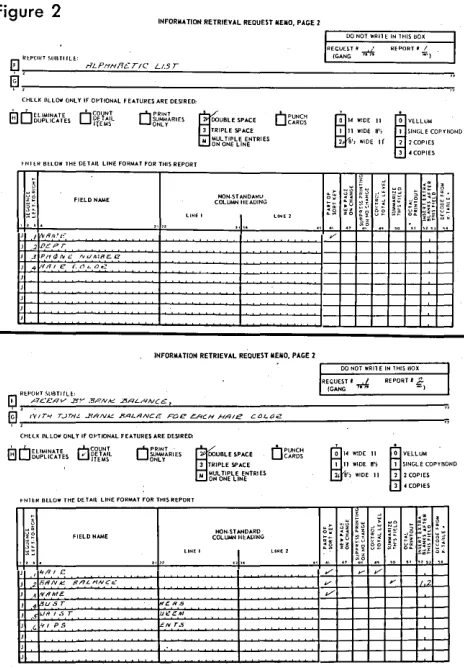
22 Generalized Information Retrieval and Listing System,
by John A. Postley and T. Dwight Buettell
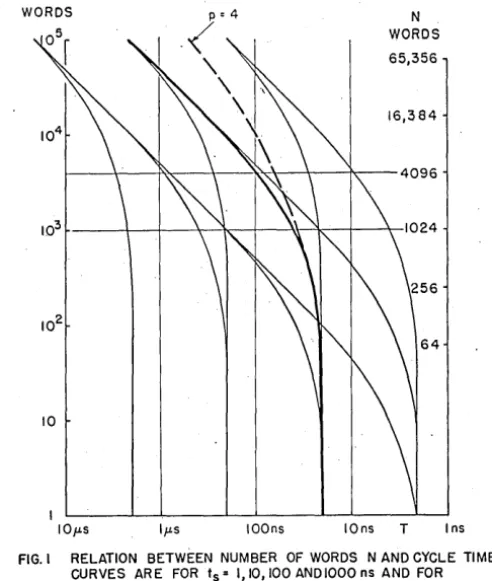
26 A Survey of Computer Memories, by Jan A. Rajchman
35 The TRW 230
35 Annual Bash Set
36 The California Compiler Circuit
39 A Guide to Testmanship, by R. W. Rector
Departments '
8 Important Dates in Datamation
10 Letters to the Editor
13 Datamation in Business and Science
17 The Editor's Readout
46' News Briefs in Datamation
59 New Products in Datamation
63 People in Datamation
65 New Literature in Datamation
68 Advertisers' Index
THIS ISSUE -
44,829 COPIES
(over
Selection of the appropriate key to standards for the computer industry is the problem that Art Director Cleve Boutell has presented in graphic f9rm for this month's cover. The key that allows the reader to vault the th.reshold will be found on page 17, via the Editor's Readout.
Circulation audited by Business Publications Audit
Member, National Business - Publication.
DATAMATION is publl.hed monthly on or about the tenth day of every month by F. D. Thompson Publica· tions, Inc., Frank D. Thompson, president. Executive Circulation and Adverthlng offices, 141 East 44th St., New York 17, N.Y. (MUrray Hill 7·51aO). ,Edi· torial offices, 10373 West Pico Blvd., Los Angeles 64, Calif. (BRadshaw 2.0817). Published at Chicago, III. Accepted as controlled circulation at Columbus, 0.' Form 3579 to be sent to F. D. Thompson Publications, Inc., 201 N. Wells St., Chicago 6, - III. Copyright 1962, P. D. Thompson 'Publications, Inc.
"Why
we
chose the
NCR
390 Computer."
-CITY OF PORT ARTHUR, TEXAS "We chose the NCR Data Processing Systembecause it provides us with a complete system for automated municipal record-keeping. Start-ing with NCR Cash Control· Machines, punched paper tape is prepared as an automatic by-product of controlling the city's money. This tape is us~d for feeding data into our NCR 390 Computer. Thus, without duplication, we have the media for high-speed electronic proc-essing' of detail Income and Revenue accounts.
"All departments continue to function as separate units, but have at their disposal the
NCR 390, a new concept in computers, with which to process their work. Processing is super-vised by each department's own personnel and not by one highly trained technician who might not necessarily be familiar with the intricacies of the department work or its problems.
"The NCR 390 combines a human language record with one that can be processed elec-tronically by the computer. A complete chron-ological record of any account or department is always immediately available without dis-turbing the work being done on the Computer
at a given time. This is extremely important to us for reference, audit, examination, and analy-sis work. The face of the ledger contains in-formation we can read, while' electronic data relative to the account is encoded on the back. This greatly facilitates processing the prepara-tion of various reports."
Kirby Lilljedahl, Finance Officer City of Port Arthur, Texas
NC.R PROVIDES TOTAL SYSTEMS - FRc;;w1 ORIGINAL ENTRY TO FINAL
REPORT-THROUGH ACCOUNTING MACHINES, CASH REGIS*dRS OR ADDING MACHINES, AND DATA PROCESSING
The National Cash Register Co .• l,133 offices in 120 countries.78 years of helping bUSiness save money
INlclRI
CIRCLE 7 ON READER CARD6 DATAMATIDN
o
c;
,Io
o
u
El§ ti~i ;§i i~g. .
. . "'." •. ' '" h ... '91
'* ll> "'''' ... \
3 1II':'%h'm,::~ /I'
..
~.-..
OUR SPECIALTY
Since
7952,
EAI plotting equipment has been applied to a steadily lengthening list of data reduction applica.
tions - from simple, manual point plotting to high-speed magnetic tape input contour plotting. Again and
again, the flexibility, speed and extreme accuracies of EAI plotters have dictated their selection over compet·
ing instruments.
0EAI standard plotters include II"x
77", 30"x30", and 45"x60" boards. Operation
canbe
either off-line from punched cards, punched tape and magnetic tape, or Oil-line with various computers. Output
modes incfude point, line, symbol, and contour plotting. Plotting speeds up
to4500
line segments per minute
can
be provided. Reliability is assured by solid-state circuitry and superior mechanical design.
0You
candraw
upon EAI's wide application and des'ign knowledge
by describing your requirements. Write for information,
detailing your needs, today.
I ,
\
,
.
'
, , \ \" I , , \. \. \
. . I \ \ •
\ \
,
,
'
•
\,
\I'! I
\
~
\ \
'
, I , , \ ','
,
.
.
.
'.'
'
,
,
•
.
.
,\
"
,
,t!
1.1'.
t \ ,
1
I'I'
I I•
,
, I
t •
t.
• I•
•
•
•
\ ' \ ' \
I
' I I\ \ \ , I
I
I
~ ~
I ' ' . . '•
,
•
~\\, ~ " I I ' I I , I I.
.. ,',"" , ~ I # I I
. ,
~
""" '" . . " I I I "I
I
8
, .,.., ... _... ~'." ~ ~ , I I
"
"
, Argonne National Laboratory, the largest midwestern research and " , development Laboratory of its kind, has rapidly increasing needs for creative electronics and electrical engineers in its Particle Accelerator and Electronics Divisions. Argonne is located in the suburban Chicago area, 25 miles southwest of the Chicago Loop.
. B.S., M.S; and Ph.D. electrical engineers with three or more years' experience in one or more of the following areas required: .
Scintillation and Solid State Spectrometry
• Analog devices such as linear amplifiers and gates • Pulse multipliers and other particle identification devices • Analog to digital converters
• Fast analog storage devices
• Multichannel and multi-dimensional analyzers • Very low and/or very high level counting equipment • Compact lightweight spectrometric devices
Nanosecond Devices
• Gas, liquid and solid scintillation counters and chambers, Cerenkov counters, solid state counters, spark chambers, and other imaging devices
• Multi-fold coincidence.;.anticoincidence circuits. • Amplifiers, discriminators, fan outs, mixers and scalers • Time-to-pulse height converters
• High .voltage pulsers and oscillographic devices • Electron ballistics devices
• Hodoscopes and other counter arrays
Ultra Precise and Stable Nuclear Electronic Devices
• Programmable and manually variable high voltage and magnet current supplies
• Mass spectrometer instrumentation .
• Electrometer and other low level measuring, indicating and control devices
• Reactor and accelerator control and safety devices
• Transducers and instruments for the measurement of diverse physical and chemical properties
• Function generators and feedback control devices
Data Processing and Recording
• Logic circuitry design and implementation
• Ferrite core, aperture, thin film and other memories for processing of data in complex nuclear physics experiments
• Electro optical and electromechanical devices • Data transmission devices
• Adjunct equipment for multichannel and multi-dimensiQnal analyzers • Multi-scalers and time analyzers
• Analog computers
Other Areas
• High voltage (500 KV) rectifiers and/or components • Analog arid digital pulse circuit design
• Transistor data transmission, processing and recording devices • Feedback measurement, indicatihg, and control devices • Wide-band and low noise amplifiers
• Radiation detectors and associated instruments • High stability high voltage devices
. ;/r!lonne
< : T l O N A L . ; .... A _ O R A T O R Y
( J
Operated by the University of Chicago under contract with the United States Atomic Energy CommissionPROFESSIONAL PLACEMENT, 9700 SOUTH CASS AVENUE, e-4, ARGONNE, ILLINOIS
An Equal Opportunity Employer
CiRCLE 75 ON READER CARD
\ t
,
•
•
,
• The Association of Data Processing Service Organizations will hold a Sym-·posium in San Francisco on January
21. Hotel for the meeting to be
an-oo~rea .
• The IEEE Winter General Meet-ing, Jan. 27-Feb. 1, will feature spe-cial sessions on Artifispe-cial Intelligence. The meeting is scheduled for the
Stat-ler in New York City. .
• The IEEE International Confetence on Nonlinear Magrietics will be held at the Shoreham Hotel, Washington, D.C., April 17-19.
• The 1963 Spring Joint Computer Confetence will be held May 21, 22 and 23rd at the Cobo Hall, Detroit, Michigan.
• The Fourth Joint Automatic Con-trol Conference will be held at the University of Minnesota, Minneapolis, ori June 19-21. Sponsors are the Amer-ican Institute of Chemical Engineers, IEEE, and American Society of Me-chanical Engineers.
• The annual International Data Processing Conference and Business Exposition, sponsored by the Data Processing Management Association, wili be held June 25-28, at CObo Hall, Detroit, Michigan.
• The i963 ACM 'National Confer-ence . will be held Aug. 28, 29, and 30th in Denver, Colorado.
• The 1963 Fall Joint Computer Con-ference will be held in the Las Vegas, Nev., Convention Center, Nov. 12-14.
• The Fifth International Automation
Congress & Exposition has been
sched-uled for November 19-21 at the Sher-aton Hotel, Philadelphia.
• The 1964 Spring JOint Computer
Conference
will
be held at theWash-ington Hilton Hotel, WashWash-ington, D.C., May 26-28 ..
• The 1964 ACM National Confer-ence will be held in Philadelphia,
Penna., Aug. 25~28.
• The IFIP Congress· 65 is scheduled for New York. City iIi May, 1965. It is the first International Congress scheduled for the United States.
DATAMATION
o
o
!o
o
This Control Data 160-A peripheral processing package was successfully demonstrated throughout the week of October 22, 1962.
Lower cost, higher off-line output with
Control Data's new peripheral processing package
Many users are searching for an inexpensive method for
processing an extremely large, daily volume of card and
listing operations-one that does not require two, three,
even four small-scale computer systems. A single
desk-size Control Data 160-A Computer is the answer.
BASIC
SYSTEM-The Control Data 160-A Computer can
function as an off-line control unit in a processing
pack-age which operates four printers at a rate of up to 4000
lines/minute while simultaneously performing card-to-tape
, operations at the maximum rate of the card reader.
With the Control Data 160-A Computer, the entire
process is under continuous program control without the
need for an operator at the computer console. All
tape-to-printer, card-to-printer pairs will operate continuously as
determined by their "ready" conditions.
Ifat any time
one pair is receiving operator attention (for instance,
changing tape, supplying additional cards, loading paper,
or maintaining equipment), the remaining pairs continue
to operate. In brief, the peripheral processing package
will continue to operate at full capability as long as
information exists to be processed.
Here's an inexpensive, efficient, high-speed way to
accomplish daily listing without tying up the time and
capability
o~your large-scale computer.
This peripheral processing package features:
• Simultaneous, full-speed operation (up to 4000 lines
per minute; single line spacing).
• Operation without console supervision.
• IBM
tape format compatibility:
High 556 bits/in. and/or low 200 bits/in. densities.
• Automatic parity checking, automatic re-read on parity
error (errors indicated on "hard copy").
• Continuous operations-all equipment operating
when-ever data exists and equipment is "ready."
• High "turn around."
• Blocked or unblocked print records.
• Expandability allows up to eight or more tape-to-printer
pairs with simultaneous dual card-to-tape or
tape-to-card operations.
EXPANDED
SYSTEM-An expanded version of the basic
peripheral, processing package includes the Control Data
169 Auxiliary Memory Unit. This system allows a
combi-nation of any two card-to-tape or tape-to-card operations
while driving from one to eight or more tape-to-printer pairs.
From a programming point of view, the expanded
sys-tem utilizing the auxiliary memory unit can handle blocked
print records of any number of lines per print record
because of the external buffer channel and additional
core storage.
If you need fast, daily servicing of your large-scale
computer output, but have been processing this data at
the expense of productive computer time, check Control
Data's new peripheral processing package. Write today
for publication #BR9 (11-62) or contact your nearest
Control Data representative.
Co
CONTROL DATA
Offices: Albuquerque • Beverly Hills • Birmingham • Boston • Chicago • Cleveland. Dallas. Dayton. Denver • Detroit. Honolulu. Houston. Ithaca • Minneapolis • Newark • Norfolk
• Orlando • Palo Alto • San Diego CORPORATION
• San Francisco • Washington, D.C.
10
How you can avoid three
costly lJIistakes in the
selection
of a
scientific
or engineering cOlJlputer
And the one sure way
to find the computer that suits you best
Selecting a computer can be one of the most important decisions an execu-tive can make. Almost any computer can reduce costs by solving problems, and saving time, but some are far more efficient than others.
This then should lead to a careful study of available computers. And the study must avoid becoming overconcerned with "nuts and bolts" and con-centrate instead on overall suitability and purpose.
Basically, the decision. has to depend on finding the computer that best' serves your needs. The Recomp® line of solid-state scientific and engineer-ing computers has been found ideal for many leadengineer-ing companies. Perhaps it could best meet your needs. The following common mistakes may offer some guidance in your choice.
(1) "Get the cheapest computer"
Just as there is no such thing as a cheap pair of shoes, there is no "cheap" computer. Scientific problem-solving computers sell from $40,000 and up. They lease from $1,000 and up a month. But, much more important than initial cost is how much a computer will save you over a period of time.
A computer feasibility study showed that a Recomp computer could save almost $70,000 more than a lower-pr.iced competitor in a year on a given project. In addition, Recomp offers a .broad price range. The Recomp III computer is ideal for small-scale needs. And you can lease one for $1,495, complete. For medium-scale needs, Recomp II starts at $2,495. A complete line of peripheral equipment is available for both computers.
(2) "Buy the fastest one"
Naturally, speed is important. But computer operating speed is just a small part of the story. Save a few microseconds here and there and you haven't saved much. More important is .total problem solving time.
The Recomp line of small and medium scale computers mark their savings in terms of hours ... not microseconds. Recomp computers can save hours in problem solving time because they're simple to program, easy to operate, and have an exceptionally large memory.
(3) "Hire specialized computer personnel"
Not always necessary. Some computers do demand specialized program-ming personnel to operate them. However, others are so simple to use that engineers can program their problems directly. This ease of programming saves time and increases computer use.
One of the easiest computers to program and operate is Recomp. Engi-neers with less than eight hours instruction are able to use Recomp com-puters profitably.
The one sure way to select a computer
The computer requirements of every company are unique. The best way to find the computer that fits your own specialized requirements-without making costly mistakes- is through a computer feasibility study. This is the only way to know exactly what computer suits you and your com-pany best. .
Put Recomp side by side with any comparable computer on the market. Let the facts speak for themselves. You'll see why no computer feasibility study is complete without Recomp. . ,
We'll be glad to help you get the facts. Write today for a "Management Guide to a Computer Feasibility Study."
. RecolJlp
Recomp is a product of Autonetics Industrial Products Autonetics is a Division of North American Aviation
r---~---~---l
I Recomp I
I Dept. 512,3400 East 70th St., Long Beach, California I
I Please send me a "Management Guide to a Computer Feasibility Study." I
I I
I I
I NAME I
I I
I POSITION I
I I
I COMPANY I
I I
I I
I ADDRESS I
I I
I CITY ZONE _ _ _ STATE I
I I
L _ _ _ _ _ _ _ _ _ _ _ _ _ _ _ _ _ _ _ _ _ _ _ _ _ _ _ _ _ _ _ _ _ _ _ _ _ _ _ _ _ _ _ _ _ _ _ _ _ ~
CIRCLE 9 ON READER CARD
0 0 0 0 0 0
0
0 0 0 0
0 0 0
0 0
solving the knockwurst problem
S~:
.
The October, 1962, issue of DATA-MATION included an article entitled "The Konscience of a Komputer Kon-servative," by 1. V. Goody. The arti-cle was an excellent summary of some of the difficulties in implementing the proper use of computers.
However, the situation at the Kon-solidated Knockwurst Kompany be-came so konfused that even the au-thor, Mr. Goody, lost track of the original problem. The original prob-lem arose when one of the technical people wanted to use a linear pro-gram. Toward the end of the article the author states "the technical people refused to use the Kludge on their LP problem" and "were agitating to get a computer of their own."
The real story is that the technical people finally went to the Komputer Konsulting Kompany to get their LP problem solved. The Komputer Kon-suIting Kompany rents time on its Kludge Komputer, K-9000, at a kost of 0.5 kilobucks per hour plus kon-suIting fees.
The technical people are happy. They are able to tr::tvel back and forth to the Komputer Konsulting Kompany which is located in another city. The financial people are happy. They have their komputer.
H. D. ApPLEQUIST Euclid 32, Ohio
algol limitations
Sir:
I differ with Mr. Cantrell in his opinion (DATAMATION, Aug. '62) that the ALGOL character set is too extensive and that it is doubtful that more than half this set will ever be implemented on any computer hardware. Quite the contrary, one of the major limitations of nearly all algorithmic compilers is the linear nature of their character set, which instead of being extensive is, in fact, quite restrictive and cum-bersome, e.g., the requirement that subscripts or superscripts be written on the same line as the quantity sub-scripted or supersub-scripted. That such a restriction can be obviated is in-dicated by the recent announcement
of the subscripting-superscripting type-
0
writer-key-punch in use at Los Alamos (Program Announcement WPM 13. 1, ACM Conference, Sept. 1962). I be-lieve that it is not a relatively difficult
DATRMRTION
(
o
\
/
o
task to, implement - hardware-wise-a more flexible typewriter-like input device that would code an even more extensive (and more useful) character set than that specified in ·ALGOL.
The point that I am trying to
es-tablish
IS
that a good deal of thepresent concern with the design and . structure of compiler language ari,ses from a confusion between hard ware and software problems. Consider a device that could either read or print and code an equation in a form closely allied to normal mathematical usage,' e.g., a string (but not restricted to
one line) of operators, operands,
sub-scripts, supersub-scripts, constants, etc.
Then most of the source-language
de-sign problems would disappear - at
least for the user! In fact, the problem
will have been shifted to where it be-longs, away from the user and to the designer of the compiler· Thus, in a fundamental sense, the user need is a hardware need, i.e., the hardware
that would permit a simply structured
but highly powerful operator
lan-guage to be effective.
Naturally, the professional compiler writer will be concerned with the so-phisticated problems that arise in gen-erating the procedures that are «called for" by the use of "operator-charac-ters," but we have abundant faith that he will rise magnificently to meet his task.
MELVIN KLERER
Hudson Laboratories Columbia University Dobbs Ferry, N. Y.
requests for terms glossary
Sir:
Earlier this year a task committee was formed by the American Water Works
Assn. for t~e purpose of updating a
glossary of water and sewage con-trol engineering terms. The glossary is under the joint sponsorship of the American ·Public Health Assn., the American Society of Civil Engineers, the American Water Works Assn. and the Federation of Sewage Works Assns. The last glossary published was dated 1949.
It occurred to me that you would
have in your possession some type of a glossary on automation or you would know where I could obtain a glossary
which is now in existence. If you do
have any, information regarding this subject, I would appreciate very much your sending it to me.
V. A. ApPLEYARD,
Executive Manager
Chester Municipal Authority, Chester, Pa.
(Editor's Note: The preceding letter
appeared in the November issue of
Control Engineering.)
The new Model CTP Friden Com-putyper® is the world's most versa-tile billing machine. (It reads and punches tape or cards, and writes a complete invoice in one operation!)
But because it can do so many jobs
automatically, it is really an
auto-mation work-center.
Examples?
BILLING: The Computyper writes and computes your invoices auto:. matically. Then, by reading its own by-product punched-paper tape, it prepares an accounts receivable reg-ister or other statistical reports. By-product cards from this operation enable the CTP (or tabulating -ma-chines) to prepare statements auto-matically.
INVENTORY: While doing your billing, the Computyper automati-cally updates your inventory figures.
PURCHASE ORDERS: The Com-putyper writes your purchase orders, then it uses its own by-product tape to prepare voucher checks, re-ceiving reports, purchase commit-ment analyses-all automatically.
SALES ORDERS: The Computyper prepares your sales orders, then-controlled by its own by-product tape-it produces work orders, bills of lading, shipping memos ... auto-matically, of course.
There are other applications, too. And all the operator has to do to switch jobs is to change program panels. This takes only seconds be-cause the programming is already done for you by Friden.
, Get the full story on how the CTP
Computyper can smooth, out your
data processing problems. Call your local Friden Systems inan, or write: Friden, Inc., San Leandro, Calif.
THIS IS PRACTIMATION:
prac-tical automatioll by Fridcn- for business and industry.
Friden
Sales. Service alld Ills/ruc//on Throughou//he U. S. and World
Decision-Making:· Hostile
or not Hostile?
A few years ago this decision was relatively
simple. The action that followed was
rela-tively simple. Today the consequences of
this type of decision-making can be
enor-mous, affecting world-wide forces and
events. The decision itself may trigger an
incredibly complex series of interacting
decisions and controls. In making these
compressed-time decisions, commanders
use man-machine systems which provide
information processing assistance. The
de-velopment of these large systems is the
work of scientists, engineers and computer
programmers at System Development
Cor-11·246
12
poration. The system is their concern, not
the actual design of hardware.
Specifi-cally, they contribute in these key areas:
defining the requirements of the system,
synthesizing the system, instructing the
computers within the system, training the
system, evaluating the system. Throughout
they seek to optimize man-computer
rela-tionships and to develop a system which grows and changes with the needs of the
decision-makers who use it. Computer
prog~ammers, human factors scientists,
operations research scient~sts and
sys-tems-oriented engineers interested in
joining a close interdisciplinary effort are
invited to write concerning new positions
in this expanding field. Address Mr. A. D. Granville, Jr., SOC, 2401 Colorado Ave.,
Santa Monica, California. Positions are
open at SOC facilities in Santa Monica;
Washington, D.
c.,
Lexington, Massachu-setts; Paramus, New Jersey; and Dayton,Ohio. "An equal opportunity employer."
~SDC
System Development Corporation
Systems that help men make decisions and exercise control
CIRCLE 76 ON READER CARD
DATAMATION
o
-l
-jQ 16 12 18 )3 )7COMPUTER
RESEARCH
ENGINEERS &
o ,. LOGICAL
DESIGNERS
Rapid expansion of the Computer Laboratory nat Hughes-Fullerton has created severaloattractive profes-sional opportunities for qualified Computer' Research· Engineers and Logical Designers. These positions require active participation in bre>ad computer R&D activities in con-nection with Army/Navy computer
~stems and new large-scale, general-purpose computers. These multiple processor computers utilize advanced solid-state circuitry, gating and reso-lution times in the millimicrosecond regions; combine synchronous and asynchronous techniques for' maxi-mum speed and reliability.
These professional assig n ments involve broad areas of logical design, programming and system conception. Fields of interest include:
• Distributed computers. Ad-vanced arithmetic processing techniques. Mechanized design ."Asynchronous design tech-niques. Utilization of parame-trons in computers. Studies in the utilization of multiple proces-sor computers.
These professional assignments involve. such R&D areas as: - Solid state digital circuitry involving millimicrosecond logic - Microwave carrier digital circuits . _ Sub-microsecond core 0 memory
- Thin film storage techniques - Functional circuit concepts - Micro-miniaturization concepts - Tunnel diodes - Microwave pa-rametrons - Circuit organization for maximal-speed computing. Located in Southern California's Ofange County (the nation's fastest growing electronics center), Hughes-Fullerton offe~s you:' a stimulating working environment; private or semi-private offices; long-term stability. CALL COLLECT TODAY! For complete information on these challenging assignments, call us col-lect today! Ask for:
Mr. J. E. TENNEY at: TRojan 1-4080, ext. 3741. Or, airmail reSume to: HUGHES-FULLERTON R&D, P. O. Box 2097, Fullerton 1, Californ ia.
An equal opportunity employer.
p---,
HUGHES
L _ _ _ _ _ _ _ _ _ _ _ _ _ _ . _ _ _ _ _ I
hUGHES AIRCRAFT COMPANY
DATAMATION
c: : : 0i
t
_ L ~
BUSINESS
&
SCIENCE
PROGRESS IS
~RELATIVE THING
As generaly recognized, international agreements are
the result of long, tedious negotiations. The United
States, the country with largest usage, is striving
to obtain agreements without overwhelming the other
negotiators. The second meeting of the ISO committee
TC97 on international information processing was
held in Paris on October 17 and 18. After reading the
published press release of the session, one has
grave doubts that the existing rate of progress is
sufficient to give any direction to the domestic field
for years to come.
The single accomplishment of note was the
"accept-ance for comment" of a draft proposal for six and
seven bit codes for information interchange (could
this be a character set?). The other work was related
to a realignment of its sub-committee structure.
The topics under consideration and the countries
to whom the computing industry looks for leadership
are of interest. The sub-committees now functioning
include: glossary, under Netherlands' leadership;
character sets and coding, France; character
recogni-tion, U. S.; digital data transmission, U. S.; and
problem description and analysis, Netherlands.
The United States will host the next meeting in the
summer of 1964!
THE IBM FAMILY GROWS
Coming hard on the heels of the 1440 (See DATAMATION,
pp. 17 and 76, Nov., 1962) IBM has unveiled its 7010.
Allowing for user growth starting with the 1401,
moving up to the 1410, and finally to the 7010, the
key to this succession is programming compatability for
the 7010 with the 1410, and as an optional feature,
O
for most 1401 programs.
Advertised internal processing speeds are up to 3.5
43 leading computer manufacturers include Anelex Printer Systems as standard equipment for a combination of reasons ... speed, reliability and print quality. No other printer, for example, is capable of delivering 1000 lines of good, clean copy every .minute . . . hour after hour, day after day, for months and years with so little downtime.
The fact is that wherever there are computers, there are Anelex High Speed Printers. That's because these printers are versatile. In commercial, scientific, governmental and military installation . . . in this country and abroad . . . almost every possible type of requirement is being fulfilled by an Anelex system . . . a standard model or a special purpose printer. Shouldn't your next printer be built by Anelex? Write for further information
ANELEX CORPORATION
155 Causeway St., Boston 14. Mass.
SYMBOL OF QUALITY
CIRCLE 29 ON READER CARD
14 DATRMRTION
('---" / '
\ ... -. . / ~
COMPUTER
PROGRAMMERS
FOR:
mathematical analysis and pro-gramming for a wide range of scientific problems on large-scale digital computers. Appli-cations include problems related to reactor and accelera-tor design, atomic physics, high energy physics, chemistry and radiological research.
FOR:
development of mathematical subroutines and programming systems including assemblies, compilers and operating systems.
B.S. or B.A. degree in mathe-matics required. Preferred mathematical training includes the study of numerical analysis, differential equations, partial differential equations, modern algebra and real and complex variable theory.
Argonne is located about 25 . milesfrom the heart of Chicago.
)
It is a center for the nation's atomic energy research and offers a stimulating environ-ment, excellent benefits, attrac-tive salaries.
/r!lonne
G T I O N . A L . L..AEJOR.ATORV
Ope,,'ed by 'ho Unlversl'y 01 Chleago under
contract with the United StllU Atomic Energy Commission
Direct inquiries to: Professional Placement, g-2
9700 South Cass Avenue Argonne, Illinois
AN EQ UAL OPPORTUNITY EMPLOYER
CIRCLE 77 ON READER CARD
For AE Electronics CIRCLE 84 ON READER CARD
-
N TICI
A
C
--
PRI-1-10 19 28 37 46 55 64 73
~--
NA TITCO AC
CIT
--
PROI
10 I 19 2 28 2 37 3 46 4 55 5, 64 6 73 7
-) 0
)
o.
- --- ---
-IlUSINESS l1t SCIENCE
RECIPROCAL TRADE
THE UPS AND DOWNS
OF SPERRY RAND
A CORRECTION
a new 1442 card reader, Modei 3, which reads 80
column cards at up to 400 cpm. Memory capacity is from
40K to lOOK positions of core storage. A typical
sys-tem will rent for $19,175 monthly and will sell for
$945,900. First deliveries are scheduled for the
first quarter of 1964.
Elliott Brothers of London, a manufacturer of NCR 315s
in England, is exporting 503s to New-York. A New
York firm, E-A Industrial Corp., will market the
ma-chine in the United States. The mama-chine is single
address, has 8K of 3.5 usec core and a variety
of I/O devices.
A minimum system rents for $5,500. An average
sys-tem rents for $13,000. To quote from Elliott's
description of the computer: "Input to the 503 is by
means of punched tape, generally recognized as the
easiest method of rec6rding information."
Sperry Rand Corporation reports that although sales
for the six months ending Sept. 30 were up, net
in-come dropped to $6,905,492, from $9,695,026 recorded
during the same period a year ago. According to S-R
president Harry F. Vickers, one of the reasons behind
the decline in earnings was the heavy outlay for
UNIVAC Division's new line of large-scale computers,
now being delivered to customers.
Apologies are extended by'DATAMATION to the
investing
public for inadvertently omitting a zero from IBM's
net earnings for the first six months of 1961, as
reported in the October issue. The figure should have
read $100,859,439. To further alleviate the threat
of financial panic, the balance of the figures stated
in the DATAMATION news report are correct, as
re-ported to the press by IBM.
PUSH THIS BUTTON ...
and you can send mountains
of business data from coast to coast in less time
than it takes you to read your l110rning newspaper I
It's Bell System DATA-PHONE service. Enables business machines to talk by tele-phone. Let one of our Communications Consultants show you how this new service
o
can boost efficiency and profits for you. Just call your Bell Telephone Business Office.
0
BELL TELEPHONE SYSTEM'
CIRCLE lION READER CARD
DATAMATION
D
~.
.
) 0
O~EDITOR'S
READOUT
)
o
c=:.--'--"" ---.:---=::-.\-.~---:::.--:::::.~. --_... . ... . ... -... __ ... ~ ... , .~.::-.
-.===---=::-:----.-:--::-:-::::--... -.-.-.::-...
:,::,=::.-::---:~-=.1THE KEY TO STANDARDS
Here is ~ nice non-controversial statement:
"It is definitely believed that our combiner efforts can achieve an ac-cepted . . . standard glossary of programming terminology as well as a . . . glossary of computer terminology during the coming year." The statement is dated September, 1960, under the letterhead of the ACM
Sub-Committee on Programming Technology (SCOPT). .
There are several glossary efforts currently underway. SCOPT held the record for tenure, 26 months. The IFIP crew is working to achieve interna-tional agreement. The British have scooped us. Their BSI glossary has been published as a British standard. BEMA is also in the act. Several U. S. cor-porations and innumerable government agencies are also publishing.
For many months DATAMATION has watched developments aimed at a, standard glossary of terms for our field. With great sadness we noted the demise of SCOPT (DATAMATION, November '62, pg. 79). How did it happen? Why did it have to go?
And why worry? We all know what the words mean, don't we? Of course
we do. A computer is "a device capable of accepting, processing, and
re-porting information." (IBM glossary.) There must be a million of them in
this country, counting the gas pumps. Random access is "a feature of certain
internal memory systems, particularly magnetic drum type." (Sperry Rand.)
Maybe we'd better not leave our definitions to the manufacturers.
Perhaps we could fall back on the last official ACM glossary (1954). We wouldn't learn much about words like "sequence," "index register," or "coded switch," ('cause they aren't there) but we would find a fascinating definition of "time, no charge, non-machine fault" (that's one entry).
How can we possibly communicate in this field (with each other, with the public, and with legislative bodies) without defining our terms? One solution
(the only one available today) is to have each person append his own
glos-sary to his writings. Thus, each ~ew book in the field contains a glossary in
the back. They are all incomplete, of course; some are inconsistent; some are simply funny or fatuous. For the curious, a partial bibliography of glos-saries appears on page 19 for ready reference.
Perhaps the full story of the untimely demise of SCOPT' will never be told. We have watched the officials come and go. We knew agreement was nearer when we were permitted to view glossary galley proofs. Using these very pages we have encouraged this effort. True, from time to time we have teased a little, or heckled a lot, but we feel that a standard accepted glossary is the cornerstone of all standardization and the very foundation of continued growth of our industry, At one time we heard that a date had been chosen and that space in the COMMUNICATIONS was being held for initial publi-cation. We have purposely declined to subvert this venture and have withheld publication of any conRicting definitions.
There are six important steps to establishing a standard glossary: (1) The first draft by a working group; (2) The review and approval by the full committee; (3) The initial publication for general review; ( 4) The adoption of a date by inRuential parties when such a glossary should see official use; (5) The revision of the initial publication by an appelate body and the printing of a working glossary; and ( 6) the mechanism whereby the working glossary is iteratively revised to keep pace with the field.
The now defunct SCOPT committee took 26 months and did not success-fully attain 'the third plateau. Perhaps the fault lay in the voluntary, part-time nature of the endeavor. PARTIAL SUPPORT IS WORSE THAN NONE AT ALL. Perhaps the manufacturers should have used their own agency, taxed themselves, and had BEMA produce it. Perhaps some government agency, non-profit, or philanthropic foundation should be approached to
It occurred to Datamation that perhaps all of our readers
do not fully appreciate the breadth and scope of the stand-. ards effort in the United Statesstand-. The computing profession
gets credit for many unique and creative concepts. In ad-dition, we take 'credit for many more.
The material below is abstracted from a Department of Commerce book entitled, "Standardization Activities in the United States," by Sherman F. Booth, Misc. Pub!. 230, Supt. of Documents, $1.75, Aug., 1960. We quote from the in-troduction.
THE
a voluntary and cooperative undertaking
u.
S.
STANDARDS
EFFORT
D
The. national technical societies of the United Statesof America are the very backbone of its standard-ization achievements. This fact sets our· country apart from others wherein the results of standardization stem from a mandatory rather than a voluntary basis.
In this country, there is a standardization society for most all widely known product areas, such as textiles, paper, leather, ceramics, plastics, electrical equipment, rubber, cement, etc. These completely autonomous societies operate from paid memberships and without Government interfer-ence. The membership of a society usually consists of per-sons whose daily activities are concerned awith the product area covered by the society, and of representatives of firms doing business in that commodity area. They also attract students, young technologists, and others who seek to en-hance their professional stature by being abreast and a part of the standardization work in the area of their choosing.
Meetings are held regularly and subjects for proposed standards are accepted for assignment to committees for consideration. Within a committee there is a free and thorough exchange of ideas, expedences, data, and other information which is educational and broadening to the participants. Thus each person has the benefit of the knowl-edge of his colleagues.
Standardization does not alone treat with the quality of
products although this is frequently of prime importance. It
also extends to other fields where it is intended to pursue or adopt a uniform material, method, technique, size, nomen-clature, service, etc. Anything or any practice, abstract or concrete, concerning which it is expected to limit, regulate, specify, control- to the degree that it is intended to be habitually compounded, performed, mentioned, observed in an orthodox manner - is a standard even though it may not be documented. This definition suggests the enormous
18
breadth and scope of standardi~ation and the limitless fields
in which it may be practiced or undertaken.
Standards are not static. As the rudiments of techno-logical aspects of problems become commonplace, as greater knowledge of the chemical and physical chara'cterstics of products are more widely known and accepted, a commit-tee may again be activated to reconsider and modernize or improve a previously issued standard. Such improvements are regular, frequent, almost r'outine. There are relatively few documented standards that have never been revised. Thus, standardization agencies find themselves engrossed in the problems of revising standards as well as developing new standards, and to about the same degree.
Standardiza-tion is dynamic. It must necessarily follow closely upon the
heels of science, research, invention, and creation if it is to
serve its intended purpose.
Standardization activities of the members of the technical societies are carried forward on an extracurricular basis.
Each of the persons in a society who contrib~tes to the
de-velopment of standards is usually a scientist or technician who is otherwise employed full time. His contributions are frequently made at the expense of his leisure. Accordingly, under this voluntary system, standards development and production are not as great or speedy as one might expect. Because of the wide latitude in the overall responsibility which the Congress has entrusted to the Bureau, its daily work encompasses many scientific fields. Some of its activ-ities are suggested by the organizational area into which its work is divided: Electricity and Electronics, Optics and Metrology, Heat, Atomic and Radiation Physics, Chemistry,
Mechanics, Organic and Fibro~s Materials, Metallurgy,
Mineral Products, Building Technology, Applied Mathe-matics, Data Processing Systems, and Radio Propagation ..•
DATAMATION
o
(I \ ....
) 0
o
A
BIBLIOGRAPHY
, . .order
wha~
you need
OF GLOSSARIES
A Brief Glossary of Data Processing Terms, by G. D. Roth, 1959, IBM Data Processing Div., White Plains, N. Y. ACM Committee on Nomenclature, 1957, Association for
Computing Machinery, New York, N. Y.
A Dictionary of Documentation Terms, by Frank S. Wagner, Jr., 1960, American Documentation ADP Glossary, 1961, Interagency Automatic Data
Process-ing Committee, WashProcess-ington, D. C.
AlEE Subcommittee on Logic and Switching Circuit Theory, 1960, American Institute of Electrical Engi-neers, NewYork;N. Y.
Basic IBM Applied Programming Teaching Glossary, by
L. Ellsworth, 1960, IBM Data Systems Div., Applied
Programming, New York, N. Y.
Bell Telephone Laboratories, Murray Hill, N. J.
Bendix Computer Div., The Bendix Corp., Los Angeles, Calif.
Business. Equipment Manufacturers. Association" New
York, N. Y. .
Communications Dictionary, by James F. Holmes, 1962, John F. Rider Publisher, Inc., New York, N. Y. Computer Applicatioris in the Behaviorial Sciences, Harold
Borko, editor, 1962, Prentice-Hall, Inc., Englewood
Cliffs, N. J. .
ComputerProgra~ming Handbook, by Robert Nathan and Eliz~beth Hanes, 1962, Prentice-Hall, Inc.,
Englewood Cliffs, N.
J.
Dictionary of Automatic Control, by Robert
J.
Bibbero,1960, Reinhold Publishing Co., New York, N. Y. Electronic Computers: Fundamentals, by Paul von Handel,
editor, 1962, Prentice-Hall, Inc., Englewood Cliffs, N.
J.
Fundamentals of Digital Computers, by Matthew Mandl,
1958, Prentice-Hall, Inc., Englewood Cliffs, N.
J.
Glossary for Data Processing Machines, 1959, IBM Wash-ington Education Center, WashWash-ington, D. C.
Glossary for Data Transmission Study Group, by D. E.
Hannum, Northrup Aviation, Downey, Calif.
Glossary for Information Processing, IBM Corp., 1962,
White Plains, N. Y. .
Glossary 'of Computer and Programming Terminology, by Mandalay Grems, 1960, IBM Corp., Corporate Div.,
White Plains, N. Y.
Glossary of Computer and Programming Terms, by O .. W. Perry, 1959, IBM Corp., Poughkeepsie, N. Y. Glossary of Computer Engineering and Programming
Terminology, by Martin H. Weik, 1957, Ballistic Re-search Labs., Aberdeen Proving Ground, Md.
Glossary of Computer Terminology, Computer Depart-ment, General Electric Co., Phoenix, Arizomi.. Glossary of Programming and Computer Technology, by
D. L. Mordy, 1960, IBM Data Systems Div., Applied
Programming, New York, N. Y.
Glossary of Programming Terms, by M. Bolsky, 1961, System Development Corp., Santa Monica, Calif.
Glossary of Terms, By R. M. Herron, 1960, IBM ASD
Div., White Plains, N. Y.
Glossary of Terms in Computers and Data Processing, by
Edmund C. Berkeley and Linda L. Lovett, 1960,
Berkeley Enterprises, Inc., Newtonville, Mass. Glossary-Terms Used in Computer Programming and
Engi-neering, by W. O. Bormann, 1960, IBM Data Systems Div., Poughkeepsie, N. Y.
Guide to IBM 1401 Programming, by Daniel D.
Mc-Cracken, 1962, John Wiley & Sons, Inc., New York,
N. Y.
Handbook of. Automation, Computation, and Control, Vol.
2;
1959, John Wiley & Sons, Inc., New York, N.Y~Installing Electronic Data Processing Systems, by Richard
G. Canning, 1957, John Wiley & Sons, Inc., New
York, N. Y.
IRE Standards on Electronic Computers-Definitions of Terms, . 1956, Institute of Radio Engineers, New York, N. Y.
The Language and Symbology of Digital' Computer Sys-tems, 1959, RCA Service Co,', Camden, N. J. NOMA Giossary of. Automation Terms, 1961, National
Office Management Association, Willow Grove, Pa. Operating System Description Standard Definitions, by Doris Rhine and D. Brandon, 1961, System Develop-ment Corp., Santa Monica, Calif.
Pocket Dictionary of Computer Terms, 1962, Howard W. Sams & Co., Indianapolis, Ind.
Programming Business Computers, by D. D. McCracken,
H. Weiss, and T. Lee, 1961, John Wiley & Sons,
Inc., New York, N. Y.
Programming for Digital Computers, by J. Jeenel, 1959, McGraw-Hill Book Co., New York, N. Y.
Programming for Digital Computers, by M. H. Wrubel, 1959, McGraw-Hill Book Co., New York, N. Y. Sandia Corporation, Albuquerque, New Mexico.
Share Glossary of Terms, by D. E. Eastwood, 1960, Bell
Telephone Laboratories, Murray Hill, N. J.
Systems Design and Programming Terminology, 1960, UNIVAC Div., Sperry Rand Corp., Philadelphia, Pa. Understanding Digital Computers, hy Paul Siegel, 1961,
HOW MUCH OF
WHAT KIND
OF TIME
by E. H. COUGHRAN, Executive Vice President, Advance Data Systems Corp., los Angeles, Calif.
The loth Anniversary meeting of the Digital Computers Association was held recently. This event in itself is not likely to change the course of
his-tory. It is probably not even necessary
for you, if you missed the gala affair,
to begin to think up excuses to give your grandchildren for not having at-tended. The significance of this event . . lies in the fact that ten years ago it was possible to gather most of the world's supply of those men and women knowledgeable in the use and application of computers into one medium-sized dining room. As everyone is aware, the computer and data processing business has proliferated at a rabbit-dizzying rate. That there are N new jobs in an industry that barely existed ten years ago, or that there are current needs for M new
math-ematicians and programmers are well publicized, if poorly
understood; numbers.
I would like to direct my attention to a smaller group of men who will have a profound effect on the next five years of data processing. I am addressing the executives who have top-level responsibility for information and data processing.
It should be fairly obvious that the 30 or so people
who made up the early DCA could not possibly fill
a
hundred times that many executive positions even if they
were all so inclined. Most of the executives charged with responsibility for data processing have a sincere interest in learning what kind of bear is on the other end of the tail. Since data processing is primarily a service, it is measured in hours - but what kind of hours and what do they mean.
To gain some perspective and back away from the "microsecond mumbo-jumbo" that frequently surrounds computing or data processing systems, let us consider the system as a piece of productive machinery. (Ignoring for purposes of this article whether it is appropriately or profitably employed).
First, it should be recognized that the data processing system is probably its own best customer. Just as an electric generating plant uses 25 - 30 per cent of the power generated to run its own boiler-water feed pumps, forced and induced draft fans, and other auxiliary equip-ment, about 25% of the usable time of a data processing system is' consumed by assembling, compiling, debug-ging, and program checkout necessary to support the
system and keep it running smoothly. This is not
neces-sarily bad or a symbol of poor performance; it is fre-quently a vcry healthy symptom, but should be evaluated in each illstallation and over a period of time.
An even morc difficult task is to measure the actual productivc lise of the system. In one fairly exhaustive study, an averagc of only 75% of the elapsed time be-tween pressing the start button and the end.:.of-job-halt was the system or any of its components actually in
oper-20
do you
have a watch?
ation. Twenty-five percent of the supposed production time was spent in manual intervention: manual input, card or tape handling, readying units or error analysis. This area of actual operational techniques and the efficiency of use of an expensive piece of equipment may well be a fertile area for cost cutting.
Almost all EDP installations operate on a "service center" principle. That is to say they charge their cus-tomers for services rendered at some appropriate rate. The usual basis for charges is equipment hours required
to perform a given job at a rate that ~ill amortize· the
expenses of the service center. With the· exception of the independent service bureaus who strive to make a
profit, most installations establish charges that
will
washout expenses. Under the service center concept, it is important that charges be consistent between different customers and different runs of the same j<'Jb.
Since systems hours form a basis for charges (and, incidentally, for equipment rental payments), the need for accurate time recording should be obviOlJs. This is especially true since system hours may cost up to $450 each for equipment rental alone. Other costs will
approxi-mately ~qual the rental.
It should come as no great shock that time records kept manually are subject to error. In this case, the errors that are most expensive are not the occasional mistakes of incorrect logging, but those of correct logging done
too later .
The actual system use time terminates with the end-of-job-halt and not at the time the operator completes removing tapes or returns from his coffee break. The job time and accumulated usage records should reRect this fact. I am not suggesting that the operator be pro-hibited from a cup of coffee, a trip to the rest room, operating several pieces of equipment simultaneously, or any other activity that might preclude his being in front of a particular machine, job card in hand, at the precise millisecond that the machine reaches an end-of-job-halt. In fact, this is not the operator's primary responsibility. He is charged with production of the jobs scheduled to be done on his shift.
Time totalizers of several types are available which will automatically accumulate usage time.iOn the more sophisticated end of the scale are real time clocks that keep time in milliseconds, can be addressed by the com-puter, and can be used as interval timers either by re-peated access or by initiating a trap.
These time totalizers normally appear to the system as a data channel or tape drive. The computer can then keep job time· statistics.. One other interesting use for this type of totalizer is on iterative calculations. The
progra~mer is requested to estimate the time to a solution. The monitor keeps track of the elapsed time and where the actual time exceeds the estimate,
non-con-vergence is assumed and t~e job stopped. This procedure
DATAMATION.