Review
Development of generic core
competences of health professionals in
rheumatology: a systematic literature
review informing the 2019
EULAR recommendations
George E Fragoulis ,1 Lisa Edelaar,2,3 Theodora P M Vliet Vlieland ,2
Annamaria Iagnocco,4 Valentin Sebastian Schäfer ,5 Catherine Haines,6,7
Jan Schoones,8 Elena Nikiphorou ,9,10 on behalf of the EULAR Task Force
To cite: Fragoulis Ge, edelaar L, vliet vlieland TPM, et al. Development of generic core competences of health professionals in rheumatology: a systematic literature review informing the 2019 eULAR recommendations. RMD Open 2019;5:e001028. doi:10.1136/ rmdopen-2019-001028
►Additional material is published online only. To view please visit the journal online (http:// dx. doi. org/ 10. 1136/ rmdopen- 2019- 001028).
GeF and Le are joint first authors.
Received 7 June 2019 Revised 8 August 2019 Accepted 11 October 2019
For numbered affiliations see end of article.
Correspondence to Dr elena Nikiphorou; enikiphorou@ gmail. com © Author(s) (or their employer(s)) 2019. Re- use permitted under CC BY- NC. No commercial re- use. See rights and permissions. Published by BMJ.
AbstrAct
Objective To identify generic competences on the desired knowledge, skills and of health professionals in rheumatology (HPRs) to inform the respective eULAR recommendations.
Methods A systematic literature review was performed on the generic core competences (defined as knowledge, skills or attitudes) of HPRs (nurses, physical therapists (PTs) or occupational therapists (OTs)). Literature was obtained from electronic databases, published eULAR recommendations and via personal communication with representatives of national rheumatology societies and experts in the field. Qualitative, quantitative and mixed methods studies were included, and their methodological quality was scored using appropriate instruments.
Results From 766 references reviewed, 79 fulfilled the inclusion criteria. Twenty studies addressed competences of multiple HPRs: 15 were of qualitative design, 1 quantitative, 1 mixed- methods, 2 systematic reviews and 1 opinion paper. The methodological quality of most studies was medium to high. Five studies concerned the development of a comprehensive set of competences. Key competences included: basic knowledge of rheumatic diseases, holistic approach to patient management, effective communication with colleagues and patients and provision of education to patients. The proposed competences were confirmed in studies focusing on one or more specific competences, on a rheumatic disease or on a specific profession (nurses, PTs or OTs).
Conclusion Generic competences were identified for HPRs. Data were mostly derived from qualitative studies. All identified studies varied and were at national level, highlighting the need for the harmonisation of HPR competences across europe. These findings underpin the development of eULAR recommendations for the core competences of HPRs.
InTROduCTIOn
Health professionals play an important role in the care for people with rheumatic and
musculoskeletal diseases (RMDs). This is through input and support on optimisation of disease outcomes1 and often through being
Key messages
What is already known about this subject?
► Health professionals in rheumatology (HPRs) play an important role in the care for people with rheumatic and musculoskeletal diseases, and continuous ed-ucation is necessary to assure the delivery of high- quality care.
► A set of generic core competences for HPRs across europe is currently lacking.
What does this study add?
► This review demonstrates that there is varying, yet adequate evidence, mainly from qualitative studies, regarding the generic knowledge, skills and atti-tudes of HPRs.
► Key competences identified in multiple sets of com-petences included: having basic knowledge and un-derstanding of rheumatic diseases and adopting a holistic approach to patient management based on a biopsychosocial model.
► evidence is mainly from northern european coun-tries, so that generalisability to other european countries may be limited.
How might this impact on clinical practice?
► The results of this systematic literature review rein-force the message that achieving certain standards in terms of the core competences of HPRs is cru-cial for the optimal care of people with rheumatic diseases.
► This systematic review has formed the basis of eULAR recommendations for the core competences of HPRs.
► A set of core competences for HPRs may form the basis for a postgraduate curriculum at european as well as national level.
on May 7, 2020 by guest. Protected by copyright.
http://rmdopen.bmj.com/
RMD Open: first published as 10.1136/rmdopen-2019-001028 on 23 October 2019. Downloaded from
on May 7, 2020 by guest. Protected by copyright.
http://rmdopen.bmj.com/
RMD Open: first published as 10.1136/rmdopen-2019-001028 on 23 October 2019. Downloaded from
on May 7, 2020 by guest. Protected by copyright.
http://rmdopen.bmj.com/
the key players and coordinators of the multidisciplinary team that cares for this patient group.2–5 To assure the delivery of high- quality care, continuous education of health professionals in rheumatology (HPRs) is needed. The development of educational offerings serving this purpose should ideally be based on clearly described core competences for HPRs involved in the management of diseases of people with RMDs. This formed the rationale for the constitution of a task force to develop EULAR recommendations for the generic core competences of HPRs, informed by a systematic review of literature as well as expert opinion.
Currently, a number of defined sets of competences for HPRs have been described in the literature, both for HPRs of multiple professions and for a HPRs with a specific background such as nurses,6 7 yet a
comprehen-sive overview of competencies of HPRs reported in the literature is missing. The aim of this systematic review is to identify the desirable generic competences of HPRs with a particular focus on nurses, occupational thera-pists (OTs) and physical therathera-pists (PTs). Ultimately, the goal is to inform the EULAR recommendations for the generic core competences of HPRs.8
Methods
The results of this systematic literature review (SLR) under-pinning the EULAR recommendations for the generic core competences of HPRs were reported according to the Preferred Reporting Items for Systematic Reviews and Meta- Analyses guidelines by the Cochrane group.9 Thirteen main themes translated into research questions (online supplementary material 1) were formulated by consensus during the first EULAR Task Force meeting. These core questions formed the basis for the subsequent systematic search of literature and informed inclusion and exclusion criteria.
Literature search
Literature was obtained from a systematic search using three main sources: (1) electronic medical or health- related databases; (2) literature suggested after personal communication with representatives of national HPR societies, profession- specific organisations and experts in the field of HPRs and their education; and (3) EULAR recommendations or guidelines that specifically address or are relevant to HPRs. An additional search in Google Scholar and electronic educational databases was also performed.
electronic databases
A search strategy was defined in collaboration with a trained librarian (JS). The research questions formed the basis for a broad search strategy encompassing various search terms for competences; major RMDs and HPRs; multiple profes-sions of HPRs or nurses, PTs or OTs specifically (online supplementary material 2). Additional key words were used in accordance with the specific research questions.
The following databases were searched with a specific time frame from 1 January 1990 to 20 February 2018: PubMed/Medline, Embase, Cochrane library, CENTRAL, Emcare, PsycINFO, Academic Search Premier and Web of Science.
Key publications used to pilot- test the validity of the first output of the search strategy included Erwin et al,10
selected as an example of a study addressing comprehen-sive sets of competences for HPRs of multiple professions and Zangi et al11 as an example of EULAR
recommen-dations addressing a specific competence (eg, patient education) for HPRs of multiple professions. After the completion of the above- mentioned search, a similar search strategy was also followed for Google Scholar and educational databases, namely ERIC and National Science Digital Library. This aimed to check the findings of the initial search.
Representatives of eULAR member national HPR organisations, profession-specific organisations and experts
The national presidents of the 25 EULAR HPR member associations, liaison persons of non- member national HPR organisations, EULAR HPR study group leaders and the HPR vice president, the standing committee chair and chair- elect were invited to complete a short ques-tionnaire (online supplementary material 3) about their familiarity with sets of competences for HPRs, suggesting relevant literature, if any. Thirty- five national presidents and liaison persons and six members of the EULAR HPR study groups were invited to provide input. Results from questionnaires and personal contacts were gathered until 15 April 2018.
eULAR recommendations or guidelines
Published EULAR recommendations or points to consider for the management of osteoarthritis, rheuma-toid arthritis, spondyloarthritis or interventions delivered by HPRs in general or nurses, PTs or OTs specifically were screened for relevant information on HPR compe-tences.7 11–14
Study selection
For this SLR, competences were defined as a ‘A set of knowledge, skills and attitudes that concern the consistent and appropriate use of communication, knowledge, skills, clinical reasoning, emotions, values and reflec-tion on practice, for the benefit of people with RMDs and the community’. In line with this definition, studies were included if they concerned: competences or roles, knowledge, attitudes, skills or educational needs relevant for the management of people with RMDs, of HPRs in general, or specifically of nurses, PTs or OTs, at a post-graduate level. Studies were excluded if they concerned: HPRs’ competences regarding patients with RMDs ≤18 years old; conditions other than RMDs including comor-bidities concurring in people with RMDs (eg, hip fracture in patients with arthritis); extended roles of HPRs; a very specific clinical intervention either or not in connection
on May 7, 2020 by guest. Protected by copyright.
http://rmdopen.bmj.com/
with a clinical trial or an intervention clearly attributable to only one profession (eg, provision of supervised exer-cise therapy) or related to an extended role; the compe-tences of professionals other than HPRs, including those of physicians; the competences concerned HPRs at undergraduate level; and if the study was in a language other than English or Dutch or published before 1990. In addition, papers describing RMDs and their treat-ment or concerned merely personal beliefs and views of patients or HPRs were excluded. The reviewers (LE, TPMVV, GEF and VSS) screened independently all titles and abstracts to identify potentially eligible studies that were then reviewed in full text. Any disagreements were discussed between the authors and consensus reached. Full- text papers fulfilling the inclusion criteria were then proceeded to data extraction. For all excluded records and full- text papers, the reason(s) for exclusion were recorded. The reasons for exclusion were not recorded for the records obtained through the educational data-base search, as more than 99% of the records did not meet the inclusion criteria.
data extraction
Data extraction was performed systematically and inde-pendently by two of the reviewers (LE and TPMVV). The following data were extracted from the studies: first author, year of publication, country where the study was performed and professions of HPRs addressed (nurses, PTs, OTs or combinations). Every piece of information related to HPR competences was noted, extracted and then assigned to one or more of the predefined research questions, according to the target group(s).
Comprehensive sets of competences or single compe-tences that HPRs of multiple professions (including nurses and/or PTs and/or OTs) have in common were considered as the most appropriate evidence to answer the research questions. Documents comprising the same elements but addressing only one profession (nurse, PT or OT) were used to validate the results from the documents addressing multiple professions. Compe-tences of a specific profession were only extracted if they were potentially generalisable to other professions, for example, basic knowledge about RMDS or the provi-sion of patient education and self- management support were considered to be generic competences, whereas the administration of intramuscular injections (nurses) or the provision of supervised exercise therapy (physical therapists) was not. After the extraction was completed, a third person (GEF) independently extracted 10% of the data. The latter was achieved as follows: a number was assigned in the selected full documents placed in alphabetical order (based on first author’s name). Subse-quently, an online random digit generator ( Random. org) was used to select a number equalling 10% (n=8) of the total number of selected documents from the list. Results of data extraction, in terms of the research ques-tions that were addressed by each study, were compared between the first two reviewers and the third reviewer.
Any discrepancies were openly discussed with coauthors, and consensus was reached.
Methodological quality appraisal of the included studies Studies retrieved from the SLR were categorised as qual-itative, quantitative or mixed- methods in terms of their design. The methodological quality of studies addressing multiple professions of HPRs was rated using appropriate tools, depending on the type of study. In detail, the meth-odological quality of qualitative studies was assessed using a modified version of the 12 criteria reported by Harden et al15,15 performed by a task force member (GEF) or
the fellow (LE) and the methodologist (EN). Each item was scored as not present (0) or present (1). The sum of the 12 item scores constituted the final methodological quality score, presented as low, medium or high quality (online supplementary material 4). For reviews, A MeaS-urement Tool to Assess systematic Reviews (AMSTAR criteria) was used with the score being defined as crit-ically low, low, moderate and high quality.16 For
quan-titative studies or for studies using mixed methods, methodological quality was evaluated using the Mixed Methods Appraisal Tool (MMAT) score, with the final score expressed as a percentage [(number of ‘presence’ responses divided by the number of ‘relevant criteria’) × 100].17 Opinion papers were not scored. Any differences
in rating between the assessors were openly discussed with coauthors, and consensus was reached.
ReSuLTS
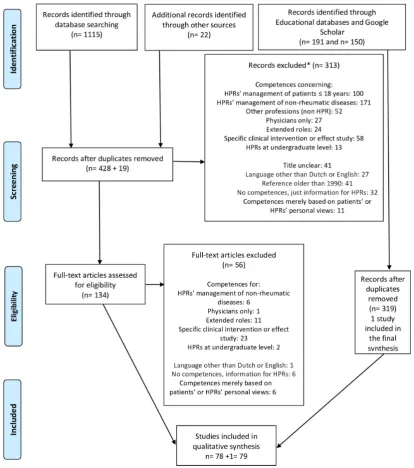
The initial literature in the medical or health- related electronic databases search yielded 1115 references (428 unique). In addition, 22 records were suggested by representatives of national HPR organisations or experts or concerned relevant EULAR recommendations. No records were obtained from profession- specific organi-sations. The additional search in the educational data-bases and Google Scholar yielded 191 and 150 refer-ences, respectively (319 unique). Figure 1 describes the selection processes. Main reasons for exclusion were that the competences did not concern adult patients, RMDs or HPRs or were about competences related to a very specific HPR intervention, either or not related to a clin-ical trial.
Finally, 79 papers were included 20 of which concerned competences of multiple HPRs,3 4 10 11 18–33 43
compe-tences of nurses,2 5–7 34–72 12 of physical therapists73–84 and
4 of OTs.85–88 Agreement between the reviewers in the
screening process and in the validation of data extraction was 90% and 93%, respectively.
Methodological quality
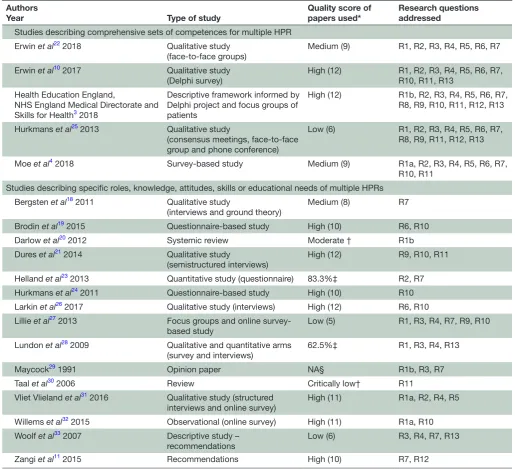
Of the 20 studies that concerned competences that HPRs of multiple professions have in common, 15 had a qualitative design, 2 were systematic reviews, 1 concerned a quantitative study, 1 was a mixed- design study and another study was an opinion paper. Table 1 shows the results of the evaluation of the methodological quality. Overall, the methodological
on May 7, 2020 by guest. Protected by copyright.
http://rmdopen.bmj.com/
Figure 1 Diagram depicting the screening process performed that led to the identification of the studies included in the systematic literature review. Other sources are records that were suggested by representatives of national HPR organisations or experts or concerned relevant EULAR recommendations. *Reasons for exclusion exceed number of excluded records, because multiple reasons could exist per record. HPRs, health professionals in rheumatology.
quality of the majority of the 15 qualitative studies was high3 11 19 21 22 24 26 31 32 or medium.4 10 18 Regarding the two
systematic reviews, the quality of one was scored as moderate20
and one as critically low,30 according to the AMSTAR criteria.
Agreement between the assessors was 94.1% (score given as categorical value, eg, medium or high in 16/17 qualitative studies and reviews). The MMAT score of the quantitative paper was 83.3%23 and of the mixed- method paper 62.5%.28
There were no differences in the scores given by the reviewers. The opinion paper was not appropriate for scoring.
Key findings from studies assessing competences of multiple HPrs
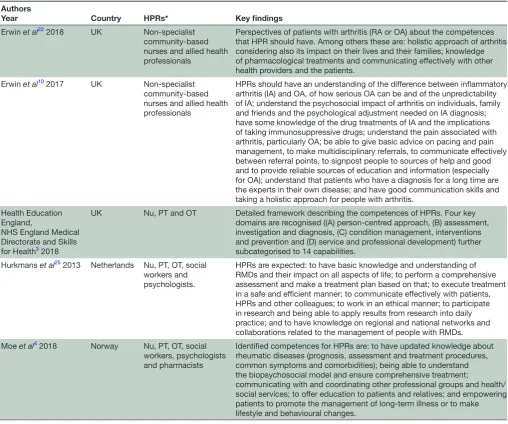
Table 2 describes the competences as extracted from the five studies focusing on comprehensive sets of
competences that HPRs of multiple professions have in common.3 4 10 22 25 Despite differences in the
catego-risation of the areas of competences, the wording and level of detail, there were many similarities concerning the domains: basic knowledge and understanding of rheumatic diseases, holistic approach to the patient in the context of the biopsychosocial model, performing a comprehensive assessment, communicating effec-tively with patients and other HPRs or other professions, making appropriate referrals and providing education to patients on how to self- manage their disease. Some differences were also identified, for example: the extent to which HPRs should actively participate in research and formulate research questions or whether HPRs should be
on May 7, 2020 by guest. Protected by copyright.
http://rmdopen.bmj.com/
Table 1 Methodological quality assessment of the 20 studies addressing the competences of multiple HPRs (nurses, physical therapists and occupational therapists)
Authors
Year Type of study Quality score of papers used* Research questions addressed
Studies describing comprehensive sets of competences for multiple HPR Erwin et al22 2018 Qualitative study
(face- to- face groups) Medium (9) R1, R2, R3, R4, R5, R6, R7 Erwin et al10 2017 Qualitative study
(Delphi survey)
High (12) R1, R2, R3, R4, R5, R6, R7, R10, R11, R13
Health Education England,
NHS England Medical Directorate and Skills for Health3 2018
Descriptive framework informed by Delphi project and focus groups of patients
High (12) R1b, R2, R3, R4, R5, R6, R7, R8, R9, R10, R11, R12, R13
Hurkmans et al25 2013 Qualitative study
(consensus meetings, face- to- face group and phone conference)
Low (6) R1, R2, R3, R4, R5, R6, R7,
R8, R9, R11, R12, R13
Moe et al4 2018 Survey- based study Medium (9) R1a, R2, R3, R4, R5, R6, R7,
R10, R11 Studies describing specific roles, knowledge, attitudes, skills or educational needs of multiple HPRs
Bergsten et al18 2011 Qualitative study
(interviews and ground theory) Medium (8) R7
Brodin et al19 2015 Questionnaire- based study High (10) R6, R10
Darlow et al20 2012 Systemic review Moderate † R1b
Dures et al21 2014 Qualitative study
(semistructured interviews)
High (12) R9, R10, R11
Helland et al23 2013 Quantitative study (questionnaire) 83.3%‡ R2, R7
Hurkmans et al24 2011 Questionnaire- based study High (10) R10
Larkin et al26 2017 Qualitative study (interviews) High (12) R6, R10
Lillie et al27 2013 Focus groups and online survey-
based study Low (5) R1, R3, R4, R7, R9, R10
Lundon et al28 2009 Qualitative and quantitative arms
(survey and interviews)
62.5%‡ R1, R3, R4, R13
Maycock29 1991 Opinion paper NA§ R1b, R3, R7
Taal et al30 2006 Review Critically low† R11
Vliet Vlieland et al31 2016 Qualitative study (structured
interviews and online survey) High (11) R1a, R2, R4, R5
Willems et al32 2015 Observational (online survey) High (11) R1a, R10
Woolf et al33 2007 Descriptive study –
recommendations Low (6) R3, R4, R7, R13
Zangi et al11 2015 Recommendations High (10) R7, R12
The research questions that are relevant to the studies are recorded in the last column.
*Scoring of qualitative studies was performed using a modified version of the criteria presented in Harden et al.15 Quality is being scored
as low, medium or high. Score values (range: 1–12) are reported in brackets.
†Scoring of reviews was performed using the AMSTAR criteria.16 Quality is being scored as critically low, low, moderate and high.
‡MMAT score was used for the quality assessment for quantitative studies or for studies of mixed methods (Pluye et al.17 Int J Nurs
Stud, 2009;46:529–546). The final score was expressed as a percentage [(number of ‘presence’ responses divided by the number of ‘relevant criteria’) × 100].
§This source has not been scored as this is an opinion paper. HPRs, health professionals in rheumatology; R, research question.
able to develop treatment plans or they just need to have basic knowledge and ability to give advice on various ther-apeutic approaches.
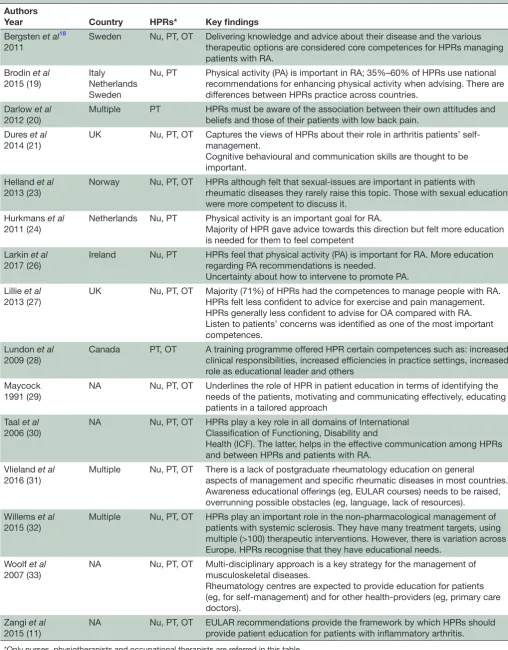
Aside from the main areas that were included in the comprehensive sets of competences, there were 15 papers addressing specific topics or a limited number of compe-tences, knowledge areas, skills, attitudes or educational
needs11 18–21 23 24 26–33 (table 3). In general, the findings
from these papers confirmed the results of the studies on comprehensive sets of competences of HPRs. There were a few topics that were specifically addressed, for example, physical activity, a topic that concerns many people with musculoskeletal diseases. Many studies highlight the role of HPRs in giving advice and promoting physical activity,
on May 7, 2020 by guest. Protected by copyright.
http://rmdopen.bmj.com/
Table 2 Key findings of the papers underpinning the development of comprehensive sets of competences that HPRs of multiple professions have in common
Authors
Year Country HPRs* Key findings
Erwin et al22 2018 UK Non- specialist
community- based nurses and allied health professionals
Perspectives of patients with arthritis (RA or OA) about the competences that HPR should have. Among others these are: holistic approach of arthritis considering also its impact on their lives and their families; knowledge of pharmacological treatments and communicating effectively with other health providers and the patients.
Erwin et al10 2017 UK Non- specialist
community- based nurses and allied health professionals
HPRs should have an understanding of the difference between inflammatory arthritis (IA) and OA, of how serious OA can be and of the unpredictability of IA; understand the psychosocial impact of arthritis on individuals, family and friends and the psychological adjustment needed on IA diagnosis; have some knowledge of the drug treatments of IA and the implications of taking immunosuppressive drugs; understand the pain associated with arthritis, particularly OA; be able to give basic advice on pacing and pain management, to make multidisciplinary referrals, to communicate effectively between referral points, to signpost people to sources of help and good and to provide reliable sources of education and information (especially for OA); understand that patients who have a diagnosis for a long time are the experts in their own disease; and have good communication skills and taking a holistic approach for people with arthritis.
Health Education England,
NHS England Medical Directorate and Skills for Health3 2018
UK Nu, PT and OT Detailed framework describing the competences of HPRs. Four key domains are recognised ((A) person- centred approach, (B) assessment, investigation and diagnosis, (C) condition management, interventions and prevention and (D) service and professional development) further subcategorised to 14 capabilities.
Hurkmans et al25 2013 Netherlands Nu, PT, OT, social
workers and psychologists.
HPRs are expected: to have basic knowledge and understanding of RMDs and their impact on all aspects of life; to perform a comprehensive assessment and make a treatment plan based on that; to execute treatment in a safe and efficient manner; to communicate effectively with patients, HPRs and other colleagues; to work in an ethical manner; to participate in research and being able to apply results from research into daily practice; and to have knowledge on regional and national networks and collaborations related to the management of people with RMDs. Moe et al4 2018 Norway Nu, PT, OT, social
workers, psychologists and pharmacists
Identified competences for HPRs are: to have updated knowledge about rheumatic diseases (prognosis, assessment and treatment procedures, common symptoms and comorbidities); being able to understand the biopsychosocial model and ensure comprehensive treatment;
communicating with and coordinating other professional groups and health/ social services; to offer education to patients and relatives; and empowering patients to promote the management of long- term illness or to make lifestyle and behavioural changes.
HPR, health professional in rheumatology; Nu, nurses; OA, osteoarthritis; OT, occupational therapists; PT, physiotherapists; RA, rheumatoid arthritis; RMD, rheumatic and musculoskeletal diseases.
especially in patients with inflammatory arthritis. It appears, however, that there is a need for more education on this matter.24 26 Another topic concerned addressing sexual
issues23 32 and competences regarding RMDs and their
treat-ment options other than the most common ones like rheu-matoid arthritis.20 32
Additionally, other competences addressed in the litera-ture, although covered to a lesser extent, included educa-tional leadership and mentorship in the field of RMDs and competence in practice setting and service development.3 28
Key findings from studies specifically addressing competences of nurses, physiotherapists or OTs
Nurses
Most of the studies addressing competences of HPRs of a single profession focus on nurses.
Overall, the potentially generic competences addressed in the identified nurses’ studies2 5–7 34–72 confirm those
resulting from the studies describing desired compe-tences for HPRs from multiple professional backgrounds. However, there are some competences in the nurses’ literature that are potentially generic yet stressed to a lesser extent in the literature addressing multiple HPRs. These include acting as the liaison person of the multi-disciplinary team2 38 44 64 70 coordinating also the services
provided.48 59 69 A limited number of studies referred also
to the need of nurses to understand the cost- effectiveness association of the medications used7 58 and a leadership
role in education and in developing as well as managing services.62
Physical therapists
Most of the literature about the competences that PTs working with people with RMDs should have, derived from studies referring to management of RA patients.75 77 79 81 82 Overall, the literature is in line with
on May 7, 2020 by guest. Protected by copyright.
http://rmdopen.bmj.com/
Table 3 Key findings of the papers addressing specific topics regarding the competences that HPRs of multiple professions have in common
Authors
Year Country HPRs* Key findings Bergsten et al18
2011
Sweden Nu, PT, OT Delivering knowledge and advice about their disease and the various therapeutic options are considered core competences for HPRs managing patients with RA.
Brodin et al 2015 (19)
Italy Netherlands Sweden
Nu, PT Physical activity (PA) is important in RA; 35%–60% of HPRs use national recommendations for enhancing physical activity when advising. There are differences between HPRs practice across countries.
Darlow et al
2012 (20) Multiple PT HPRs must be aware of the association between their own attitudes and beliefs and those of their patients with low back pain. Dures et al
2014 (21) UK Nu, PT, OT Captures the views of HPRs about their role in arthritis patients’ self- management. Cognitive behavioural and communication skills are thought to be important.
Helland et al
2013 (23) Norway Nu, PT, OT HPRs although felt that sexual- issues are important in patients with rheumatic diseases they rarely raise this topic. Those with sexual education were more competent to discuss it.
Hurkmans et al
2011 (24) Netherlands Nu, PT Physical activity is an important goal for RA.Majority of HPR gave advice towards this direction but felt more education is needed for them to feel competent
Larkin et al 2017 (26)
Ireland Nu, PT HPRs feel that physical activity (PA) is important for RA. More education regarding PA recommendations is needed.
Uncertainty about how to intervene to promote PA. Lillie et al
2013 (27) UK Nu, PT, OT Majority (71%) of HPRs had the competences to manage people with RA.HPRs felt less confident to advice for exercise and pain management. HPRs generally less confident to advise for OA compared with RA. Listen to patients’ concerns was identified as one of the most important competences.
Lundon et al
2009 (28) Canada PT, OT A training programme offered HPR certain competences such as: increased clinical responsibilities, increased efficiencies in practice settings, increased role as educational leader and others
Maycock 1991 (29)
NA Nu, PT, OT Underlines the role of HPR in patient education in terms of identifying the needs of the patients, motivating and communicating effectively, educating patients in a tailored approach
Taal et al
2006 (30) NA Nu, PT, OT HPRs play a key role in all domains of InternationalClassification of Functioning, Disability and
Health (ICF). The latter, helps in the effective communication among HPRs and between HPRs and patients with RA.
Vlieland et al
2016 (31) Multiple Nu, PT, OT There is a lack of postgraduate rheumatology education on general aspects of management and specific rheumatic diseases in most countries. Awareness educational offerings (eg, EULAR courses) needs to be raised, overrunning possible obstacles (eg, language, lack of resources).
Willems et al 2015 (32)
Multiple Nu, PT, OT HPRs play an important role in the non- pharmacological management of patients with systemic sclerosis. They have many treatment targets, using multiple (>100) therapeutic interventions. However, there is variation across Europe. HPRs recognise that they have educational needs.
Woolf et al 2007 (33)
NA Nu, PT, OT Multi- disciplinary approach is a key strategy for the management of musculoskeletal diseases.
Rheumatology centres are expected to provide education for patients (eg, for self- management) and for other health- providers (eg, primary care doctors).
Zangi et al
2015 (11) NA Nu, PT, OT EULAR recommendations provide the framework by which HPRs should provide patient education for patients with inflammatory arthritis. *Only nurses, physiotherapists and occupational therapists are referred in this table.
HPR, health professional in rheumatology; NA, not applicable; Nu, nurses; OA, osteoarthritis; OT, occupational therapists; PT, physiotherapists; RA, rheumatoid arthritis.
on May 7, 2020 by guest. Protected by copyright.
http://rmdopen.bmj.com/
the generic competences as described for multiple HPRs.3 4 10 11 18–33 A potentially generic competence
described in the literature on PT competences concerns the knowledge and skills to use new technologies, like wearable tools, which could provide significant input for monitoring and making decisions about treatment.81
There are fewer data supporting the role of PTs in having a leading role in the practice evaluation and improve-ment,73 in participating in clinical research and in
under-standing and providing guidance in specific domains, for example, sexual dysfunction in people with RMDs.77
Occupational therapists
Although there are many studies highlighting the central role of OTs in the care of patients with RMDs, the literature on their desired core competences is scarce. Apart from the substantiation of generic compe-tences for HPRs in general, a leading role in practice evaluation and subsequent quality improvement85 and
in providing advice about sexual issues arising in the context of RMDs87 is stressed in particular in the OT
literature.
dISCuSSIOn
This work demonstrates that there are relatively many studies in the literature addressing the desired compe-tences of HPRs that are involved in the care of people with RMDs. The identified studies, of which the majority had a qualitative design, underpinned a range of HPR desired core competences, including having basic knowl-edge and understanding of rheumatic diseases, adopting a holistic approach to patient management in the context of the biopsychosocial model, performing a comprehen-sive assessment, communicating effectively with patients and other HPRs or other professions, making appro-priate referrals and providing education to the patients on how to self- manage their disease.
Despite the similarities, the identified sets varied largely with respect to their process of development, the types of HPRs being addressed, the categorisation of the compe-tences and the level of detail. The differences observed in HPRs’ competences and practice between countries19
is a matter that needs to be addressed, possibly through educational programmes by international organisations.31
Overall, the desired generic core competences as recognised from the five studies examining comprehen-sive sets of competences for multiple professions were confirmed in the literature that addressed a specific topic or RMD yet concerned multiple professions or described profession- specific competences (nursing, OT or PT). Nevertheless, there were some (potentially) generic competences that were highlighted only in one or a limited number of studies, such as the promotion of physical activity, addressing sexual issues or the ability to monitor and improve the quality of one’s own practice. As for the literature on the competences of nurses, PTs or OTs specifically, the literature search revealed a higher
number of papers on nurses’ competences compared with papers for PTs or OTs. Although nurses play a pivotal role in the care for people with RMDs, relatively large proportions of patients with RMDs also have contact with PTs or OTs during the course of their disease.89 90 The
extent to which professional organisations of PTs or OTs support specialisation in the area of RMDs may play a role in this respect.
Most of the studies identified in this SLR were based on a qualitative methodology. Qualitative studies can be very efficient in addressing questions of specific nature, like policy making for educational and research issues.91
Furthermore, with qualitative studies, there is a possi-bility to modify the framework as new data come in and revise the direction of the research questions accord-ingly.91 In terms of the specific topic under study, it was
not surprising that qualitative research formed the bulk of the studies retrieved from the search.
The methodological quality of the studies was carefully assessed as part of this SLR, in view of its potential impact on the determination of level of evidence and strength of recommendations for the EULAR Task Force to develop recommendations for the generic core competences of HPRs.8 Although there are many tools developed for
the assessment of the methodological quality of qualita-tive studies,92 we opted to use an adapted version of the
‘tool’ provided by Harden et al.15 Apart from the latter
being a validated tool, it was considered both appro-priate and easily interpretable and subsequently also proved its feasibility and high agreement between study reviewers. As for the methodological quality assessments of quantitative and mixed methods studies, we used the open source MMAT,17 which represents one of the most
consistent methods to evaluate different study types.93
The AMSTAR criteria16 were used for reviews,94 95 while
one opinion paper that was included in this SLR was not scored for its methodological quality as, to the best of our knowledge, there are no validated tools for that purpose. Studies addressing competences that HPRs of multiple professions have in common were used as a basis to form the answer to the research questions and subse-quently formulate the recommendations, while studies for specific HPRs (eg, nurses) were used to reinforce the findings of the former. Therefore, we opted to assess the methodological quality of the studies regarding compe-tences of multiple professions, the majority being of medium to high quality.
We acknowledge that our SLR has certain limita-tions. First, it was mainly focused on desired compe-tences for HPRs in general or specifically for nurses, PTs or OTs. The search was not extended to other HPRs (eg, podiatrists and psychologists). However, this decision was based on a clearly defined focus, on the key HPR groups, right at the start of the SLR and with consensus from the group of experts involved in the specific EULAR Task Force (for more details please, see ref 8). Second, we found that for some research questions evidence was more robust and supported by
on May 7, 2020 by guest. Protected by copyright.
http://rmdopen.bmj.com/
more studies (eg, research questions 1–4). However, this could not lead directly to the conclusion that some of the competences are more relevant than the others. Of note, the task force formulated the research ques-tions, without hierarchy regarding their importance. In addition, for some of the research questions, there was not enough evidence in the existing literature. For example, one of the research questions pertained to HPRs’ competences regarding the cost- effectiveness of pharmacological and non- pharmacological care (online supplementary material 1, research question 13). Since too little evidence was found, we could not expand on this, although we identified the need for further studies to draw firm conclusions relating to cost- effectiveness. Finally, with the data extraction of the literature on a specific profession, the decision as to what extent a described competence was potentially generic may be arbitrary. However, agreement between the reviewers during the screening process and valida-tion of data extracvalida-tion exceeded 90%. The same applies for the exclusion of studies addressing extended roles of HPRs. This, could have led to lack of description of some advanced competences required for specific professions (eg, nurses). The development of discipline specific competences in relevance to the unique role of HPR in the multidisciplinary team was discussed during the task force meeting and was captured in the research agenda of the recommendations.8 The observation that
the majority of the studies were of qualitative design is noteworthy. This finding was inevitable due to the nature of the topic, where the conduct of quantita-tive studies underpinning the effecquantita-tiveness of specific competences is unlikely. Studies with qualitative meth-odology are however increasingly employed and as outlined above can have certain advantages when used appropriately. It should also be noted that the method-ological quality of most of the studies included in this SLR was medium or high.
COnCLuSIOn
It is recognised that HPRs play a fundamental role in the holistic management of patients with RMDs. Although there is literature describing the desired competences of HPRs with some countries already producing rele-vant guidelines at national level, there is a lack of pan- European guidance on a set of core competences for HRPs. The latter would allow for a more harmonised training of HPRs and approach to the care of people with RMDs. This SLR highlights this unmet need and has been used to inform ‘2019 EULAR recommendations for the generic core competences of Health Professionals in Rheumatology’.8
Author affiliations
1institute of infection, immunity and inflammation, University of Glasgow School of
Medicine, Glasgow, UK
2Department of Orthopaedics, Rehabilitation and Physical Therapy, J11, Leiden
University Medical Center, Leiden, The Netherlands
3Amsterdam Rehabilitation Research Center, Reade, Amsterdam, The Netherlands 4Scienze Cliniche e Biologiche, Università degli Studi di Torino, Rome, italy 5Medical Clinic iii, Department of Oncology, Hematology and Rheumatology,
University Hospital Bonn, Bonn, Germany
6eULAR, Zurich, Switzerland
7Department of Clinical education, King's College London, London, UK 8walaeus Library, Leiden University Medical Center, Leiden, The Netherlands 9Rheumatology Research, Academic Department of Rheumatology, King's College
London, London, UK
10Applied Health Research, University College London, London, UK
Twitter elena Nikiphorou @elenaNikiUK
Acknowledgements we would like to thank all the task force members for
their contribution in formulating the research questions and the gathering and appreciation of the literature.
Collaborators eULAR Task Force for the Development of generic core
competences of Health Professionals in Rheumatology. Apart from the authors of this manuscript, the Task Force members were: Margôt Bakkers, (People with Arthritis and Rheumatism) PARe representative, The Netherlands; Lurdes Barbosa, Nurse, Serviço de Reumatologia (Hospital Dia Reumatologia - 6º Piso), Hospital Garcia de Orta, ePe, Almada, Portugal; Professor Nada Cikes, Rheumatologist, UeMS european Board of Rheumatology, University of Zagreb School of Medicine, Croatia; Dr Mwidimi Ndosi, Nurse, epidemiologist, University of the west of england, Bristol, UK; Jette Primdahl, Nurse, Associate Professor at the University of Southern Denmark, King Christian X's Reuma Hospital and Hospital of South Jutland (eSNO), Denmark; Dr Yeliz Prior, Occupational Therapist, epidemiologist, University of Salford, Salford Mid Cheshire NHS Trust, UK; Polina Pchelnikova, PARe representative, Russia; valentin Ritschl, Occupational Therapist, data analyst, Medical University of vienna, Austria; Hana Smucrova, Occupational Therapist, institute of Rheumatology, Prague, Czech Republic; inger Storrønning, Physical Therapist, University of Oslo, Diakonhjemmet Sykehus, Norway; Professor Marco Testa, Physical therapist, University of Genova Department of Neuroscience, Rehabilitation and Ophthalmology, Genetics, Maternal and Child Health Campus of Savona, italy; Dieter wiek, PARe representative, Germany.
Contributors Study design: TPMvv, eN, GeF and Le. Performed the systematic
literature review: JS, Le, GeF and vSS (supervised by TPMvv and eN). Quality assessment and methodology: eN, TPMvv, GeF, Le and vSS. Manuscript drafting: GeF, Le and JS. revising manuscript and supervision: eN, CH and TPMvv.
Funding The task force would like to thank eULAR for financial support of this
work.
Competing interests None declared.
Patient consent for publication Not required.
Provenance and peer review Not commissioned; externally peer reviewed.
data availability statement No data are available.
Open access This is an open access article distributed in accordance with the
Creative Commons Attribution Non Commercial (CC BY- NC 4.0) license, which permits others to distribute, remix, adapt, build upon this work non- commercially, and license their derivative works on different terms, provided the original work is properly cited, appropriate credit is given, any changes made indicated, and the use is non- commercial. See: http:// creativecommons. org/ licenses/ by- nc/ 4. 0/.
ORCId ids
George e Fragoulis http:// orcid. org/ 0000- 0003- 4932- 7023
Theodora P M vliet vlieland http:// orcid. org/ 0000- 0001- 6322- 3859
valentin Sebastian Schäfer http:// orcid. org/ 0000- 0002- 6591- 5936
elena Nikiphorou http:// orcid. org/ 0000- 0001- 6847- 3726
RefeRences
1 Venkatachalam S. Role of allied health professionals in rheumatology. Indian J Rheumatol 2010;5:85–8.
2 Cottrell JED, Jonas M, Bergsten U, et al. The nurse's role in addressing unmet treatment and management needs of patients with rheumatoid arthritis: Delphi- based recommendations. Int J Nurs Knowl 2013;24:66–76.
3 Health Education England NEaSfH. Musculoskeletal core capabilities framework for first point of contact practitioners. Getaway reference:
082896. 082896. NHS England Publications, 2018.
4 Moe RH, Fongen C, Sand- Svartrud A. Professional- specific and interdisciplinary core competence in Norwegian rheumatology 2018.
on May 7, 2020 by guest. Protected by copyright.
http://rmdopen.bmj.com/
5 Ryan S. Defining the role of specialist nurse. Nurs Stand 1996;10:27–9.
6 Beauvais C, Gossec L, Mulliez A, et al. FRI0622- HPR What Competencies for Rheumatology Nurses? Results of a Multicentric Survey Among Health Professionals and Nurses in France. Ann Rheum Dis 2015;74:1326.3–7.
7 van Eijk- Hustings Y, van Tubergen A, Boström C, et al. EULAR recommendations for the role of the nurse in the management of chronic inflammatory arthritis. Ann Rheum Dis 2012;71:13–19. 8 Edelaar L, Nikiphorou E, Fragoulis GE, et al. 2019 EULAR
recommendations for the generic core competences of health professionals in rheumatology. Ann Rheum Dis 2019. doi:10.1136/ annrheumdis-2019-215803. [Epub ahead of print: 09 Aug 2019]. 9 Higgins JPT GS. Cochrane Handbook for systematic reviews of
interventions version 5.1.0, 2011.
10 Erwin J, Edwards K, Woolf A, et al. Better arthritis care: patients' expectations and priorities, the competencies that community- based health professionals need to improve their care of people with arthritis? Musculoskeletal Care 2018;16:60–6.
11 Zangi HA, Ndosi M, Adams J, et al. EULAR recommendations for patient education for people with inflammatory arthritis. Ann Rheum Dis 2015;74:954–62.
12 Braun J, van den Berg R, Baraliakos X, et al. Update of the ASAS/ EULAR recommendations for the management of ankylosing spondylitis. Ann Rheum Dis 2010;2011:896–904.
13 Fernandes L, Hagen KB, Bijlsma JWJ, et al. EULAR
recommendations for the non- pharmacological core management of hip and knee osteoarthritis. Ann Rheum Dis 2013;72:1125–35. 14 Geenen R, Overman CL, Christensen R, et al. EULAR
recommendations for the health professional's approach to pain management in inflammatory arthritis and osteoarthritis. Ann Rheum Dis 2018;77:797–807.
15 Harden A, Brunton G, Fletcher A, et al. Teenage pregnancy and social disadvantage: systematic review integrating controlled trials and qualitative studies. BMJ 2009;339.
16 Shea BJ, Reeves BC, Wells G, et al. AMSTAR 2: a critical appraisal tool for systematic reviews that include randomised or non- randomised studies of healthcare interventions, or both. BMJ 2017;358.
17 Pluye P, Gagnon M- P, Griffiths F, et al. A scoring system for appraising mixed methods research, and concomitantly appraising qualitative, quantitative and mixed methods primary studies in mixed studies reviews. Int J Nurs Stud 2009;46:529–46.
18 Bergsten U, Bergman S, Fridlund B, et al. "Delivering knowledge and advice": Healthcare providers' experiences of their interaction with patients' management of rheumatoid arthritis. Int J Qual Stud Health Well- being 2011;6. doi:10.3402/qhw.v6i4.8473
19 Brodin N, Hurkmans E, DiMatteo L, et al. Promotion of health- enhancing physical activity in rheumatoid arthritis: a comparative study on healthcare providers in Italy, the Netherlands and Sweden. Rheumatol Int 2015;35:1665–73.
20 Darlow B, Fullen BM, Dean S, et al. The association between health care professional attitudes and beliefs and the attitudes and beliefs, clinical management, and outcomes of patients with low back pain: a systematic review. Eur J Pain 2012;16:3–17.
21 Dures E, Hewlett S, Ambler N, et al. Rheumatology clinicians' experiences of brief training and implementation of skills to support patient self- management. BMC Musculoskelet Disord 2014;15:108.
22 Erwin J, Edwards K, Woolf A, et al. Better arthritis care: what training do community- based health professionals need to improve their care of people with arthritis? A Delphi study. Musculoskeletal care
2018;16:48–59.
23 Helland Y, Garratt A, Kjeken I, et al. Current practice and barriers to the management of sexual issues in rheumatology: results of a survey of health professionals. Scand J Rheumatol 2013;42:20–6. 24 Hurkmans EJ, de Gucht V, Maes S, et al. Promoting physical activity
in patients with rheumatoid arthritis: rheumatologists' and health professionals' practice and educational needs. Clin Rheumatol 2011;30:1603–9.
25 Hurkmans EJ, Verhoef J, Arts- Sanders MA. Competenties en scholingsbehoeften van health professionals werkzaam in
de reumatologie. Nederlands: Tijdschrift voor Reumatologie,
2013: 56–63.
26 Larkin L, Gallagher S, Fraser A, et al. If a joint is hot it's not the time: health professionals' views on developing an intervention to promote physical activity in rheumatoid arthritis. Disabil Rehabil 2017;39:1106–13.
27 Lillie K, Ryan S, Adams J. The educational needs of nurses and allied healthcare professionals caring for people with arthritis: results from a cross- sectional survey. Musculoskeletal Care 2013;11:93–8.
28 Lundon K, Shupak R, Reeves S, et al. The advanced clinician practitioner in arthritis care program: an interprofessional model for transfer of knowledge for advanced practice practitioners. J Interprof Care 2009;23:198–200.
29 Maycock JA. Role of health professionals in patient education. Ann Rheum Dis 1991;50 Suppl 3:429–34.
30 Taal E, Bobietinska E, Lloyd J, et al. Successfully living with chronic arthritis. Clin Rheumatol 2006;25:189–97.
31 Vliet Vlieland TPM, van den Ende CHM, Alliot- Launois F, et al. Educational needs of health professionals working in rheumatology in Europe. RMD Open 2016;2:e000337.
32 Willems LM, Redmond AC, Stamm TA, et al. Content of non- pharmacological care for systemic sclerosis and educational needs of European health professionals: a EUSHNet survey. Clin Exp Rheumatol 2015;33:S153–9.
33 Woolf AD, The European Union of Medical Specialists Section of Rheumatology. Health care services for those with musculoskeletal conditions: a rheumatology serviceHealthcare services for those with musculoskeletal conditions: a rheumatology service. recommendations of the European Union of medical specialists section of Rheumatology/European board of rheumatology 2006.
Ann Rheum Dis 2007;66:293–301.
34 (ARHP) AoRHP. Role of the clinical nurse specialist in the management of rheumatic disease.
35 Arvidsson B, Jacobsson L, Petersson IF. Rheumatology care in Sweden – the role of the nurse. Musculoskeletal Care 2003;1:81–3. 36 Arvidsson SB, Petersson A, Nilsson I, et al. A nurse- led rheumatology
clinic's impact on empowering patients with rheumatoid arthritis: a qualitative study. Nurs Health Sci 2006;8:133–9.
37 Beauvais C, Gossec L, Mulliez A, et al. SAT0627- HPR Educational Needs of French Rheumatology Nurses Are Not Limited To Inflammatory Arthritis Management. Results of The Multicentric “Caire” Survey. Ann Rheum Dis 2015;74:1326.
38 Burbage G. Detecting and managing rheumatoid arthritis. Practice Nursing 2008;19:26–30.
39 Candelas G, Villaverde V, García S, et al. Benefit of health education by a training nurse in patients with axial and/or peripheral
psoriatic arthritis: a systematic literature review. Rheumatol Int 2016;36:1493–506.
40 Cornell P. Management of patients with rheumatoid arthritis. Nurs Stand 2007;22:51–7.
41 Crofts P, D’Cruz D. Systemic lupus erythematosus Part 2: the role of the nurse. Nursing Standard 1997;11:40–4.
42 Daly M. Osteoarthritis: diagnosis, treatment and the nurse’s role.
World of Irish Nursing and Midwifery 2012;20:39–40.
43 Dziedzic KS, Healey EL, Main CJ. Implementing the NICE osteoarthritis guidelines in primary care: a role for practice nurses. Musculoskeletal Care 2013;11:1–2.
44 Goh L, Samanta J, Samanta A. Rheumatology nurse practitioners' perceptions of their role. Musculoskeletal Care 2006;4:88–100. 45 Grahame R, West J. The role of the rheumatology nurse practitioner
in primary care: an experiment in the further education of the practice nurse. Rheumatology 1996;35:581–8.
46 Hall A- M. A nurse- led service to provide information on osteoarthritis. Nurs Times 2005;101:38–9.
47 Healey EL, Main CJ, Ryan S, et al. A nurse- led clinic for patients consulting with osteoarthritis in general practice: development and impact of training in a cluster randomised controlled trial. BMC Fam Pract 2016;17:173.
48 Hill J. The expanding role of the nurse in rheumatology. Br J Rheumatol 1997;36:410–2.
49 Juhola H, Kukkurainen ML, Suominen T. Rheumatology nurses' work- related empowerment. Musculoskeletal Care 2007;5:91–7. 50 Mäkeläinen P, Vehviläinen- Julkunen K, Pietilä A- M. Rheumatoid arthritis patients' education - contents and methods. J Clin Nurs 2007;16:258–67.
51 Newman AM. Arthritis and sexuality. Nurs Clin North Am 2007;42:621–30.
52 Nolan M, Nolan J. Arthritis and rehabilitation: developments in the nurse's role. British J Ther Rehab 1998;5:608–15.
53 O’Donovan J. Managing rheumatoid arthritis: the role of nurse in a multidisciplinary team. Primary Health Care 2001;14:30–2. 54 Oliver S. Understanding the needs of older people with rheumatoid
arthritis: the role of the community nurse. Nurs Older People 2009;21:30–7.
55 Hill J, Pointer W, Williams PL. The expanding role of the nurse in rheumatology. Br J Rheumatol 1997;36:410–2.
56 Primdahl J, Ferreira RJO, Garcia- Diaz S, et al. Nurses' role in cardiovascular risk assessment and management in people with inflammatory arthritis: a European perspective. Musculoskeletal Care 2016;14:133–51.
on May 7, 2020 by guest. Protected by copyright.
http://rmdopen.bmj.com/
57 Repping- Wuts H, Hewlett S, van Riel P, et al. Fatigue in patients with rheumatoid arthritis: British and Dutch nurses' knowledge, attitudes and management. J Adv Nurs 2009;65:901–11.
58 Riley L, Harris C, McKay M, et al. The role of nurse practitioners in delivering rheumatology care and services: results of a U.S. survey. J Am Assoc Nurse Pract 2017;29:673–81.
59 Robbins L, Kulesa MG. The state of the science in the prevention and management of osteoarthritis: experts recommend ways to increase nurses' awareness and knowledge of osteoarthritis. Hss J 2012;8:151–8.
60 Ryan S. The role of the nurse in the management of scleroderma. Nurs Stand 1996;10:39–42.
61 Ryan S, Hassell A, Thwaites C, et al. Exploring the perceived role and impact of the nurse consultant. Musculoskeletal Care 2006;4:167–73.
62 Ryan S, Browne A, Home D, et al. Benchmarking the nurse consultant role in rheumatology. Nurs Stand 2006;20:52–7. 63 Ryan S, Stevenson K, Hassell AB. Assessment of clinical nurse
specialists in rheumatology using an OSCE. Musculoskeletal Care 2007;5:119–29.
64 Ryan S, Hassell A, Carpenter E. Characterizing the clinical practice and professional behaviour of rheumatology nurse specialists: a pilot study. Musculoskeletal Care 2010;8:136–42.
65 Ryan S, Packham JC, T Dawes P, et al. The impact of a nurse- led chronic musculoskeletal pain clinic on healthcare utilization. Musculoskeletal Care 2012;10:196–201.
66 Ryan S, McCabe CS, Adams J. The current knowledge and confidence of rheumatology nurses in providing advice on pain management. Musculoskeletal Care 2016;14:62–6.
67 Schoofs N. Caring for women living with Sjögren's syndrome. J Obstet Gynecol Neonatal Nurs 2003;32:589–93.
68 Swanson KI, Pfenning S. The nurse practitioner's role in the management of rheumatoid arthritis. The Journal for Nurse Practitioners 2011;7:858–70.
69 Walker J. Rheumatoid arthritis: role of the nurse and multidisciplinary team. Br J Nurs 2012;21:334–9.
70 Watts RA, Mooney J, Barton G, et al. The outcome and cost- effectiveness of nurse- led care in the community for people with rheumatoid arthritis: a non- randomised pragmatic study. BMJ Open 2015;5:e007696.
71 Wheeler T. Systemic lupus erythematosis: the basics of nursing care. Br J Nurs 2010;19:249–53.
72 Antonelli MC, Starz TW. Assessing for risk and progression of osteoarthritis: the nurse's role. Am J Nurs 2012;112:S26–31. 73 (ARHP) AoRHP. What does the physical therapist do? Available:
www. Rheumatology. org
74 Andersson SF, Bergman S, Henriksson EW, et al. Arthritis management in primary care - A study of physiotherapists' current practice, educational needs and adherence to national guidelines. Musculoskeletal Care 2017;15:333–40.
75 Briggs AM, Fary RE, Slater H, et al. Disease- Specific knowledge and clinical skills required by community- based physiotherapists to co- manage patients with rheumatoid arthritis. Arthritis Care Res 2012;64:1514–26.
76 Grimmer K, Kumar S, Gilbert A, et al. Non- Steroidal anti-
inflammatory drugs (NSAIDs): physiotherapists' use, knowledge and attitudes. Aust J Physiother 2002;48:82–92.
77 Josefsson KA, Gard G. Sexual health in patients with rheumatoid arthritis: experiences, needs and communication with health care professionals. Musculoskeletal Care 2012;10:76–89.
78 Li LC, Hurkmans EJ, Sayre EC, et al. Continuing professional development is associated with increasing physical therapists' roles in arthritis management in Canada and the Netherlands. Phys Ther 2010;90:629–42.
79 Mihai B, van der Linden S, de Bie R, et al. Experts' beliefs on physiotherapy for patients with ankylosing spondylitis and assessment of their knowledge on published evidence in the field. Results of a questionnaire among international ASAS members. Eura Medicophys 2005;41:149-53.
80 Page RL, Scherer SA, Smith MB. Physical therapists' knowledge, attitudes, and professional use of nonprescription analgesics. Am J Health Syst Pharm 2005;62:1440–1.
81 Papi E, Murtagh GM, McGregor AH. Wearable technologies in osteoarthritis: a qualitative study of clinicians' preferences. BMJ Open 2016;6:e009544.
82 Spitaels D, Hermens R, Van Assche D, et al. Are physiotherapists adhering to quality indicators for the management of knee osteoarthritis? an observational study. Musculoskelet Sci Pract 2017;27:112–23.
83 Westby MD, Klemm A, Li LC, et al. Emerging role of quality indicators in physical therapist practice and health service delivery. Phys Ther 2016;96:90–100.
84 Verhoef J, Oosterveld FGJ, Hoekman R, et al. A system of networks and continuing education for physical therapists in rheumatology: a feasibility study. Int J Integr Care 2004;4:e19.
85 (ARHP) AoRHP. What does the occupational therapist do? Available: Www. rheumatology. org
86 Dubouloz CJ, Vallerand J, Laporte D, et al. Occupational performance modification and personal change among clients receiving rehabilitation services for rheumatoid arthritis. Aust Occup
Ther J 2008;55:30–8.
87 Hammond A. What is the role of the occupational therapist? Best Pract Res Clin Rheumatol 2004;18:491–505.
88 Niedermann K, Hammond A, Forster A, et al. Perceived benefits and barriers to joint protection among people with rheumatoid arthritis and occupational therapists. A mixed methods study. Musculoskeletal Care 2010;8:143–56.
89 Iversen MD, Chhabriya RK, Shadick N. Predictors of the use of physical therapy services among patients with rheumatoid arthritis. Phys Ther 2011;91:65–76.
90 Smink AJ, Dekker J, Vliet Vlieland TPM, et al. Health care use of patients with osteoarthritis of the hip or knee after implementation of a stepped- care strategy: an observational study. Arthritis Care Res 2014;66:817–27.
91 Anderson C. Presenting and evaluating qualitative research. Am J Pharm Educ 2010;74:141.
92 Hannes K. Chapter 4: Critical appraisal of qualitative research. In: Noyes JBA, Hannes K, Harden A, et al, eds. Supplementary guidance for inclusion of qualitative research in Cochrane systematic
reviews of interventions version 1. Cochrane Collaboration
Qualitative Methods Group, 2011.
93 Taylor E, Hignett S. Evaluating evidence: defining levels and quality using critical appraisal mixed methods tools. HERD 2014;7:144–51. 94 Lorenc A, Feder G, MacPherson H, et al. Scoping review of
systematic reviews of complementary medicine for musculoskeletal and mental health conditions. BMJ Open 2018;8:e020222. 95 Pollock M, Fernandes RM, Hartling L. Evaluation of AMSTAR
to assess the methodological quality of systematic reviews in overviews of reviews of healthcare interventions. BMC Med Res
Methodol 2017;17:48. on May 7, 2020 by guest. Protected by copyright.
http://rmdopen.bmj.com/
Correction
: Development of generic core competences of
health professionals in rheumatology: a systematic
literature review informing the 2018
EULAR recommendations
Fragoulis GE, Edelaar L, Vliet Vlieland TPM, et al. Development of generic core competences of health professionals in rheumatology: a systematic literature review informing the 2018 EULAR recommendations. RMD Open 2019;5:e001028.
The article has been corrected since it was published online. The title of the article has been updated to ‘Development of generic core competences of health professionals in rheumatology: a systematic literature review informing the 2019 EULAR recommendations’.
Open access This is an open access article distributed in accordance with the Creative Commons Attribution Non
Commercial (CC BY- NC 4.0) license, which permits others to distribute, remix, adapt, build upon this work non- commercially, and license their derivative works on different terms, provided the original work is properly cited, appropriate credit is given, any changes made indicated, and the use is non- commercial. See: http:// creativecommons. org/ licenses/ by- nc/ 4. 0/.
© Author(s) (or their employer(s)) 2019. Re- use permitted under CC BY- NC. No commercial re- use. See rights and permissions. Published by BMJ.