Paragraph-level Neural Question Generation
with Maxout Pointer and Gated Self-attention Networks
Yao Zhao Xiaochuan Ni Yuanyuan Ding Qifa Ke
Microsoft AI & Research Sunnyvale, California
{yaozhao, xiaon, yuand, qke}@microsoft.com
Abstract
Question generation, the task of automatically creating questions that can be answered by a certain span of text within a given passage, is important for question-answering and con-versational systems in digital assistants such as Alexa, Cortana, Google Assistant and Siri. Recent sequence to sequence neural models have outperformed previous rule-based sys-tems. Existing models mainly focused on us-ing one or two sentences as the input. Long text has posed challenges for sequence to se-quence neural models in question generation – worse performances were reported if us-ing the whole paragraph (with multiple sen-tences) as the input. In reality, however, it often requires the whole paragraph as context in order to generate high quality questions. In this paper, we propose a maxout pointer mechanism with gated self-attention encoder to address the challenges of processing long text inputs for question generation. With sentence-level inputs, our model outperforms previous approaches with either sentence-level or paragraph-level inputs. Furthermore, our model can effectively utilize paragraphs as in-puts, pushing the state-of-the-art result from 13.9 to 16.3 (BLEU 4).
1 Introduction
Question generation (QG), aiming at creating questions from natural language text, e.g. a sen-tence or paragraph, is an important area in natural language processing (NLP). It is receiving increas-ing interests in recent years from both industrial and academic communities, due to the booming of Question-and-Answer (QnA) and conversation systems, including Alexa, Cortana, Google Assis-tant and Siri, the advancement of QnA or machine comprehension technologies together with the re-leases of datasets like SQuAD (Rajpurkar et al.,
2016) and MS MARCO (Nguyen et al., 2016),
and the success of language generation technolo-gies for tasks like machine translation (Wu et al., 2016) and text summarization (See et al., 2017) in NLP. A conversational system can be proactive by asking the user questions (Shum et al.,2018), while a QnA system can benefit from a large scale question-answering corpus which can be created by an automated QG system (Duan et al.,2017). Education is another key application where QG
can help with reading comprehension (Heilman
and Smith,2010).
In NLP, QG has been mainly tackled by two
ap-proaches: 1) rule-based approach, e.g. (Heilman
and Smith,2010;Mazidi and Nielsen,2014;
Lab-utov et al.,2015) 2) neural QG approach:
end-to-end training a neural network using the sequence to sequence (also called encoder-decoder) frame-work, e.g. (Du et al.,2017;Yuan et al.,2017;Song
et al.,2017;Zhou et al., 2017). In this paper, we
adopt the second approach.
More specifically, we focus on an answer-aware QG problem, which takes a passage and an answer as inputs, and generates a question that targets the given answer. It is also assumed the answer is comprised of certain spans of the text from the given passage. This is the exact setting of SQuAD, and similar problems have been addressed in, e.g.
(Zhou et al.,2017;Yuan et al.,2017;Wang et al.,
2017a).
A paragraph often contains much richer con-text than a sentence, as shown in Figure 1. (Du
et al.,2017) pointed out that about 20% questions
1 Paragraph: carolina suffered a major setback whenthomas davis, an 11-year veteran who had already overcome three acl tears in his career , went down with a broken arm in the nfc championship game .despite this , he insisted he would still find a way to play in the super bowl. his prediction turned out to be accurate
Human generated: what game didthomas davissay he would play in , despite breaking a bone earlier on ?
Sentence-level QG: what sports game did spielberg decide to play in ?
Paragraph-level QG: what competition didthomas davisthink he would play in ?
2 Paragraph: walt disney and his brother roy contacted goldenson at the end of1953for abc to agree to finance part of the disneyland project in exchange for producing a television program for the network .walt wanted abc to invest$500,000 and accrued a guarantee of$4.5 million in addi-tional loans , a third of the budget intended for the park .around 1954 , abc agreed to finance disneyland in exchange for the right to broadcast a new sunday night program , disneyland , which debuted on the network on october 27 , 1954 as the first of many anthology television programs that disney would broadcast over the course of the next 50 years
Human generated: how much did walt disney want abc to invest in dis-neyland ?
Sentence-level QG: how much money did walt wanted to invest ?
Paragraph-level QG: how much money did walt wanted to invest in1953 ?
3 Paragraph: following the peterloo massacre of 1819 , poetpercy shelley wrote the political poem the mask of anarchy later that year , that begins with the images of what he thought to be the unjust forms of authority of his timeand then imagines the stirrings of a new form of social action .it is perhaps the first modern [ vague ] statement of the principle of nonviolent protest .a version was taken up by the author henry david thoreau in his essay civil disobedience , and later by gandhi in his doctrine of satyagraha . gandhi ’s satyagraha was partially influenced and inspired by shelley ’s nonviolence in protest and political action . in particular , it is known that gandhi would often quote shelley ’s masque of anarchy to vast audiences during the campaign for a free india
Human generated: his poem is considered the first kind of what type of protest ?
Sentence-level QG: what is the principle of the protest ?
Paragraph-level QG: what type of protest didpercy shelleywrite ?
4 Paragraph: thevictoria and albert museum( often abbreviated as the v & a ) , london , is the world ’s largest museum of decorative arts and design , housing a permanent collection of over 4.5 million objects .it was founded in 1852 and named after queen victoria and prince albert.
the v & a is located in the brompton district of the royal borough of kens-ington and chelsea , in an area that has become known as “ albertopolis ” because of its association with prince albert , the albert memorial and the major cultural institutions with which he was associated . these include the natural history museum , the science museum and the royal albert hall . the museum is a non-departmental public body sponsored by the department for culture , media and sport . like other national british museums , en-trance to the museum has been free since 2001
Human generated: when was thevictoria and albert museumfounded ?
Sentence-level QG: when was prince albert and prince albert founded ?
Paragraph-level QG: when was thevictoria and albert museumfounded ?
Figure 1: Examples where paragraph-level
infor-mation is required to ask right questions.
Sen-tences contain answers are in italic font, while
answers are underscored. QG results are
gener-ated by models2s-a-ct-mp-gsa.
only a sentence as context, e.g. (Du et al.,2017;
Song et al.,2017;Zhou et al.,2017); when applied
to paragraph-level context (Yuan et al.,2017) we observed large gaps compared to state-of-the-art results achieved by using sentence-level context.
In this paper, we extend previous sequence to sequence attention model with a maxout pointer mechanism and a gated self-attention encoder which outperforms existing neural QG approaches with either sentence or paragraph as inputs.
Fur-thermore, with paragraph-level inputs, it outper-forms the results of previous approaches with sentence-level inputs, improving state-of-the-art result from 13.9 to 16.3 (BLEU 4). This is the first model that demonstrates large improvement with paragraph as input over sentence as input. In addition, our model is more concise compared to most of existing ones, e.g. (Yuan et al.,2017;
Song et al.,2017). Techniques like incorporating
rich features (Zhou et al.,2017) and policy gradi-ent (Song et al., 2017; Yuan et al., 2017) are or-thogonal to ours and can be leveraged for further performance improvement in the future.
2 Our Model
2.1 Problem Definition
We usePandAto represent input passage and an-swer respectively, and useQto represent the gen-erated question. ”Passage” in this section can rep-resent either a sentence or a paragraph. The task is to findQ¯that:
¯
Q= argmax
Q
P rob(Q|P, A)
where passage is comprised of sequence of words:P ={xt}M
t=1, answerAmust be sub spans
of the passage. Words generated inQ= {yt}K t=1
are either from the input passage,{xt}Mt=1, or from
a vocabularyV.
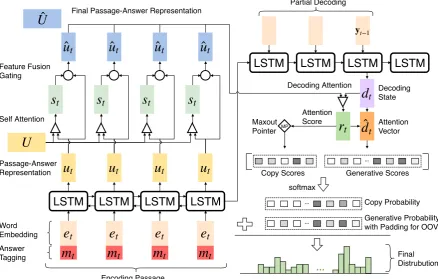
Figure 2 illustrates the end-to-end structure of our model proposed in this paper.
2.2 Passage and Answer Encoding
Different types of encoders are designed for vari-ous domains (Chung et al., 2014;Hochreiter and
Schmidhuber,1997). We are agnostic to the form
of the encoder and simply use recurrent neural net-work (RNN) to present the encoding process:
ut=RN NE(ut−1,[et,mt]) (1)
Answer Tagging. In Eq. 1, utrepresents the
RNN hidden state at time step t, et is the word
embedding representation of word xt in passage
P.mtis the meta-word representation of whether
word xtis in or outside the answer. [a,b]
U
Û
yt−1
d
tr
td̂
tMP
Encoding Passage Word
Embedding
Answer Tagging Passage-Answer Representation Self Attention Feature Fusion Gating
Final Passage-Answer Representation
Partial Decoding
Decoding State
Attention Score Decoding Attention
Attention Vector Maxout
Pointer
Copy Scores Generative Scores
softmax
Generative Probability with Padding for OOV Copy Probability
Final Distrubution
LSTM LSTM LSTM LSTM
LSTM
u
te
tm
ts
tû
tLSTM
u
te
tm
ts
tû
tLSTM
u
te
tm
ts
tû
tLSTM
u
te
tm
ts
t [image:3.595.80.519.72.351.2]û
tFigure 2: End-to-end diagram for the model with answer tagging, gated self-attention and maxout pointer mechanism.
If RN NE is bi-directional, u is the
concate-nated representation of the forward and backward passes:U={[−→ut,←u−t]}Mt=1.
Gated Self-attention. Our gated self-attention mechanism is designed to aggregate information from the whole passage and embed intra-passage dependency to refine the encoded passage-answer representation at every time step. It has two steps: 1) taking encoded passage-answer representation uas input and conducting matching against itself
to compute self matching representation; (Wang
et al., 2017b) 2) combining the input with self
matching representation using a feature fusion gate (Gong and Bowman,2017).
ast=sof tmax(UTWsut) (2)
st=U·ast (3)
Step 1. In Eq. 2,Ws is a trainable weight
ma-trix. In Eq.3,stis the weighted sum of all words’
encoded representation in passage based on their corresponding matching strength to current word att. s ={st}Mt=1is the final self matching
repre-sentation.
ft=tanh(Wf[ut,st]) (4)
gt=sigmoid(Wg[ut,st]) (5)
ˆ
ut=gtft+ (1−gt)ut (6)
Step 2. The self matching representation st is
combined with original passage-answer represen-tationutas the new self matching enhanced
rep-resentationft, Eq. 4. A learnable gate vectorgt,
Eq. 5, chooses the information between the orig-inal passage-answer representation and the new self matching enhanced representation to form the final encoded passage-answer representation uˆt,
Eq.6, whereis the element-wise multiplication.
2.3 Decoding with Attention and Maxout Pointer
In the decoding stage, the decoder is another RNN that generates words sequentially conditioned on the encoded input representation and the previ-ously decoded words.
dt=RN ND(dt−1,yt−1) (7)
In Eq.7,dtrepresents the hidden state of the RNN
at timetwhered0 is passed from the final hidden
state of the encoder. yt stands for the word
gen-erated at timet. The bold fontyt is used to
rep-resentyt’s corresponding word embedding
repre-sentation. In Eq.8, first an affine layer projectsdt
to a space with vocabulary-size dimensions, then asof tmaxlayer computes a probability distribu-tion over all words in a fixed vocabularyV . WV is a trainable weight matrix.
Attention. Attention mechanism (Bahdanau
et al., 2014; Luong et al., 2015) has been used
to improve sequence to sequence models’ perfor-mance and has became a default setting for many applications.
We use Luong attention mechanism to compute raw attention scoresrt, Eq. 9. An attention layer,
Eq. 12 is applied above the concatenation of
de-coder statedt and the attention context vectorct
and its output is used as the new decoder state.
rt=UˆTWadt (9)
adt=sof tmax(rt) (10)
ct=Uˆ ·adt (11)
ˆ
dt=tanh(Wb[dt,ct]) (12)
Copy/Pointer. Copy mechanism (Gu et al., 2016) or pointer network (See et al.,2017;Vinyals
et al., 2015) was introduced to allow both
copy-ing words from input via pointcopy-ing, and generatcopy-ing words from a predefined vocabulary during decod-ing.
Similar to (Gu et al.,2016), our pointer mecha-nism directly leverages raw attention scoresrt =
{rt,k}M
k=1over the input sequence which has a
vo-cabulary ofχ. Words at every time step (a pointer) are treated as unique copy targets and the final score on one word is calculated as the sum of all
scores pointing to the same word, Eq. 13, where
xkandytstand for word vocabulary indices of the
kth word in input and the tth word in decoded
sequence respectively. The scores of the nonoc-curence words are set to negative infinity which
will be masked out by the downstreamsof tmax
function.
sccopy(yt) =
X k,where xk=yt
rt,k, yt∈χ
−inf, otherwise
(13)
We then concatenate sccopyt with the
gener-ative scores (from Eq. 8 before sof tmax),
[scgent ,sccopyt ], which has dimension: |V|+|χ|.
Then we perform sof tmaxon the concatenated
vectors and sum up the probabilities pointing to
same words. Taking sof tmax on the
concate-nated score vector enforces copy and generative modes to compete with each other due to the shared normalization denominator. Another
pop-ular solution is to do sof tmaxindependently to
the scores from each mode, and then combine their output probabilities with a dynamic weight which is generated by a trainable network (See et al.,
2017). We have tested both and didn’t find
sig-nificant difference in terms of accuracy on our QG task. We choose the former copy approach mainly because it doesn’t add extra trainable parameters.
Maxout Pointer. Despite the outstanding per-formance of existing copy/pointer mechanisms, we observed that repeated occurrence of words in the input sequence tends to cause repetitions in output sequence, especially when the input se-quence is long, e.g. a paragraph. This issue exac-erbates the repetition problem which has already been commonly observed in sequence to sequence models (Tu et al.,2016;See et al.,2017). In this paper, we propose a new maxout pointer mecha-nism to address this issue and improve the metrics
for QG task. Related works (Goodfellow et al.,
2013) have explored MLP maxout with dropout.
Instead of combining all the scores to calcu-late the probability, We limit the magnitude of scores of repeated words to their maximum value, as shown in Eq. 14. The rest remains the same as in the previous copy mechanism.
sccopy(yt) =
( max k,where xk=yt
rt,k, yt∈χ
−inf, otherwise
(14)
3 Experiments
In our experiments, we study the proposed model on the QG task on SQuAD (Rajpurkar et al.,2016)
and MS MARCO (Nguyen et al., 2016) dataset,
demonstrate the performance of proposed compo-nents on both sentence and paragraph inputs, and compare the model with existing approaches.
3.1 Dataset
SQuAD
BLEU 1 BLEU 2 BLEU 3 BLEU 4 METEOR ROUGE-L
Model Sen. Par. Sen. Par. Sen. Par. Sen. Par. Sen. Par. Sen. Par.
s2s 30.41 28.49 12.68 10.43 6.33 4.70 3.44 2.38 11.98 10.69 29.93 27.32
s2s-a 34.46 31.26 18.07 14.37 11.20 8.02 7.42 4.80 14.95 12.52 34.69 30.11
s2s-a-at 40.57 40.56 24.30 24.23 16.40 16.33 11.54 11.46 18.35 18.42 40.76 40.40
s2s-a-at-cp 42.15 41.66 26.28 25.52 18.35 17.48 13.37 12.43 18.02 17.76 41.97 41.30
s2s-a-at-mcp 43.65 44.22 28.23 28.56 20.33 20.57 15.23 15.43 19.19 19.55 43.60 43.65
s2s-a-at-mcp-gsa 43.47 45.07 28.23 29.58 20.40 21.60 15.32 16.38 19.29 20.25 43.91 44.48
Table 1: Performance of our models onSplit1with both sentence-level input and paragraph-level input.
Sen.means sentence, whilePar.means paragraph.
provided to the questions, which are spans of to-kens in the articles.
Following (Du et al.,2017;Zhou et al., 2017;
Song et al.,2017), our experiments are conducted
using the accessible part of SQuAD: train and de-velopment (dev*) sets. To be able to directly com-pare with their works, we adopt two types of data split: 1)Split1: similar to (Du et al.,2017), we use dev* set as test set, and split train set into train and dev sets randomly with ratio 90%-10%. The split is done at article level. However, we keep all sam-ples instead of only keeping the sentence-question pairs that have at least one non-stop-word in com-mon (with 6.7% pairs dropped) as in (Du et al., 2017). This makes our dataset harder for training and evaluation. 2)Split2: similar to (Zhou et al., 2017), we split dev* set into dev and test sets ran-domly with ratio 50%-50%. The split is done at sentence level.
MS MARCO
MS MARCO datasets contains 100,000 queries
with corresponding answers and passages. All
questions are sampled from real anonymized user queries and context passages are extracted from real web documents. We picked a subset of MS MARCO data where answers are sub-spans within the passages, and use dev set as test set (7k), and split train set with ratio 90%-10% into train (51k) and dev (6k) sets.
3.2 Implementation Details
We used 2 layers LSTM as the RNN cell for both encoding and decoding. For encoding, bi-directional LSTM was used. The cell hidden size was 600. Dropout with probability 0.3 was applied
between vertical LSTM stacks. For word
em-bedding, we used pre-trained GloVe word vectors
with 300 dimensions (Pennington et al., 2014), and froze them during training. Dimension of an-swer tagging meta-word embedding was 3. Both encoder and decoder shared the same vocabulary of the most frequent 45k GloVe words. For
op-timization, we used SGD with momentum (Qian,
1999;Nesterov,1983). Learning rate was initially
set to 0.1 and halved since epoch 8 at every 2 epochs afterwards. Models were totally trained with 20 epochs. The mini-batch size for param-eter update was 64. After training, we looked at the 4 models with lowest perplexities and selected the one which used the most number of epochs as final model. During decoding for prediction, we used beam search with the beam size of 10, and stopped decoding when every beam in the stack generates the EOS token.
3.3 Evaluation
We conduct automatic evaluation with metrics:
BLEU 1, BLEU 2, BLEU 3, BLEU 4 (Papineni
et al., 2002), METEOR (Denkowski and Lavie,
2014) and ROUGE-L (Lin, 2004), and use
eval-uation package released by (Sharma et al.,2017) to compute them.
4 Results and Analysis
4.1 Comparison of Techniques
Table 1 shows evaluation results for different
models on SQuAD Split1. Results with both
sentence-level and paragraph-level inputs are in-cluded. Similar results also have been observed on SQuAD Split2. The definitions of the models under comparison are:
s2s-a-at-mp:s2s-a-at+ maxout pointer mechanism s2s-a-at-mp-gsa:s2s-a-at-mp+ gated self-attention
Attention Mechanism
s2s-avs. s2s: we can see attention brings in large improvement on both sentence and paragraph in-puts. The lower performance on paragraph indi-cates the challenge of encoding paragraph-level information.
Answer Tagging
s2s-a-at vs. s2s-a: answer tagging dramatically boosts the performance, which confirms the im-portance of answer-aware QG: to generate good question, we need to control/learn which part of the context the generated question is asking about. More importantly, answer tagging clearly reduces the gap between sentence and paragraph inputs, which could be explained with: by providing guid-ance on answer words, we can make the model learn to neglect noise when processing a long con-text.
Copy Mechanism
s2s-a-at-cpvs.s2s-a-at: as expected, copy mecha-nism further improves the performance on the QG task. (Du et al., 2017) pointed out most of the sentence-question pairs in SQuAD have over 50% overlaps in non-stop-words. Our results prove that sequence to sequence models with copy mecha-nism can very well learn when to generate a word and when to copy one from input on such QG task. More interestingly, the performance is lower when paragraph is given as input than sentence as input. The gap, again, reveals the challenge of leveraging longer context. We found that, when paragraph is given, the model tends to generate more repetitive words, and those words (often entities/concepts) usually appear multiple times in the context, Fig-ure 3. The repetition issue can also be seen for sentence input, but it is more severe for paragraph.
Maxout Pointer
s2s-a-at-mpvs.s2s-a-at-cp: Maxout pointer is de-signed to resolve the repetition issue brought by
the basic copy mechanism, for example Figure3.
The maxout pointer mechanism outperforms the basic copy mechanism in all metrics. Moreover, the effectiveness of maxout pointer is more signif-icant when paragraph is given as the model input, as it reverses the performance gap between models
Paragraph: a problem is regarded as inherently difficult if its solution requires significant resources , whatever the algorithm used . the theory formalizes this intuition , by introducing mathematical models of computation to study these problems and quantifying the amount of resources needed to solve them , such as time and storage . othercomplexitymeasures are also used , such as the amount of communication ( used in communicationcomplexity) , the number of gates in a circuit ( used in circuitcomplexity) and the number of processors ( used in parallel computing ) .one of the roles of computational complexitytheory is to determine the practical limits on what computers can and can not do
Human generated: what unit is measured to determine circuitcomplexity?
Basic copy QG: what is an example of a circuitcomplexityincomplexity complexity?
[image:6.595.312.524.235.341.2]Maxout Pointer QG: what is another name for circuitcomplexity?
Figure 3: Example for maxout pointer vs. basic copy/pointer.
s2s s2s-a at s2s-a-at-cp
s2s-a-at-mp
s2s-a-at-mp-gsa
4 6 8 10
12 Paragraph(left)
Sentence(right)
Figure 4: Word duplication rates of QG on Split1, duplication rate on human generated question is
3.53.
trained with sentence and paragraph inputs, Table
1.
To demonstrate that maxout pointer reduces repetitions in generated questions, we present the word duplication rates in generated questions for various models in Figure4. Word duplication rate was computed by counting the number of words which appear more than once, and then taking a ratio of them over the total word counts. As shown in Figure4, both the attention mechanism and the basic copy mechanism introduce more repetitions, although they improve overall accuracy according to Table1. For models trained with paragraph in-puts, where the duplication rates are much higher, maxout pointer reduces the duplication rates to half of their values in the basic copy and to the same level as model trained with sentence inputs.
Such repetition issue was also observed in other sequence to sequence applications, e.g. (See et al.,
2017) who proposed a coverage model and
carolina suffered
a
majorsetbackwhenthomasdavis, an 11-year veteranwho hadalready
overcome
threeacltearsin hiscareer
,
went down withabrokenarmin the nfc
championship
game
.
despitethis , he
insisted
he
wouldstill find
a
waytoplayinthesuperbowl.his predictionturned
out to be
accurate
carolina sufferedamajor setbackwhen thomas davis,an 11-year veteranwho had already overcomethree acl tearsinhis career,went down witha broken arminthe nfc championship game. despite this,he insistedhe wouldstill finda wayto playinthe
superbowl
. his predictionturned outto be accurate
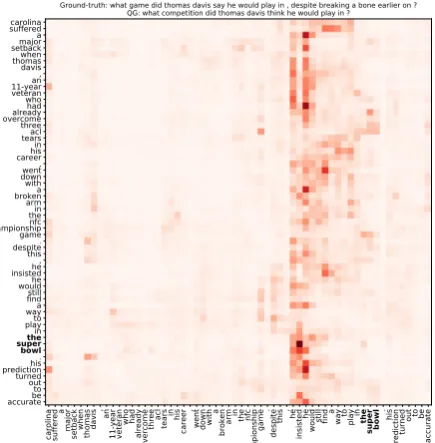
[image:7.595.307.535.63.188.2]Ground-truth: what game did thomas davis say he would play in , despite breaking a bone earlier on ? QG: what competition did thomas davis think he would play in ?
Figure 5: Self-attention alignments map: each row represents an alignment vector of self-attention.
Gated Self-attention
s2s-a-at-mp-gsa vs. s2s-a-at-mp: the results demonstrate the effectiveness of gated self-attention, in particular, when working with para-graph inputs. This is the first time, as we know, taking paragraph as input is better than sentence for neural QG tasks. The observation is consistent across all metrics. Gated self-attention helps re-fine encoded context by fusing important informa-tion with the context’s self representainforma-tion properly, especially when the context is long.
To better understand how gated self-attention works, we visualize the self alignment vectors at each time step of the encoded sequence for one
ex-ample, in Figure5. This example corresponds to
the example 1 in Figure1. We can see the align-ments distribution concentrates near the answer sequence and the most relevant context: ”thomas davis” in this example. Such alignments in turn would help to promote the most valuable informa-tion for decoding.
Beam Search
Beam search is commonly used for decoding for
predictions. Existing neural QG works, e.g. (Du
et al., 2017; Zhou et al., 2017), evaluated their
models with beam search decoding. However, so far, none of them have reported the comparison be-tween beam search decoding with greedy decod-ing. In this paper, we give such comparison for our
best model: s2s-a-at-mp-gsa with both sentence
Beam Search Greedy
Metric Sen. Par. Sen. Par.
BLEU 1 43.47 45.07 42.25 43.48
BLEU 2 28.23 29.58 26.36 27.67
BLEU 3 20.40 21.60 18.35 19.64
BLEU 4 15.32 16.38 13.28 14.50
METEOR 19.29 20.25 18.25 19.17
ROUGE-L 43.91 44.48 42.58 43.62
Table 2: Comparison of beam search and greedy
decodings for models2s-a-ct-mp-gsaon Split1.
and paragraph inputs in Table 2. We can clearly
see beam search decoding boosts all metrics for both sentence and paragraph inputs. The effective-ness of beam search has also been demonstrated for other tasks, like neural machine translation in
(Wu et al.,2016).
4.2 Comparison with Existing Neural Question Generation Works
On SQuAD dataset, we compare the BLEU,
ME-TEOR, ROUGE-L scores of our best model,
s2s-a-at-mp-gsa, with the numbers in the existing
works in Table 3. Comparison with (Du et al.,
2017) and (Song et al., 2017) is conducted on
SQuAD data Split1, while comparison with (Zhou
et al.,2017) and (Song et al., 2017) is conducted
on data SQuAD split2. Because (Song et al.,2017) had results on both splits, we compare with both of them.
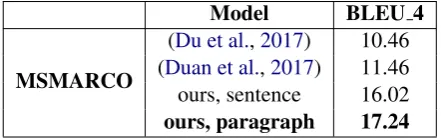
On MS MARCO dataset, we compare the BLEU 4 scores reported by (Duan et al.,2017) in Table4.
Our model with maxout pointer and gated self-attention achieves the state-of-the-art results in QG. Note that all those existing works in SQuAD encoded only sentence-level information, the re-sults from our model surpass them on the same sentence input while achieving much higher num-bers when working with paragraph.
4.3 Case Study
In Figure 1, we present some examples for
[image:7.595.73.291.67.289.2]Model BLEU 1 BLEU 2 BLEU 3 BLEU 4 METEOR ROUGE-L
Split1
(Du et al.,2017) 43.09 25.96 17.50 12.28 16.62 39.75
(Song et al.,2017) x x x 13.98 18.77 42.72
ours, sentence 43.47 28.23 20.40 15.32 19.29 43.91
ours, paragraph 45.07 29.58 21.60 16.38 20.25 44.48
Split2
(Zhou et al.,2017) x x x 13.27 x x
(Song et al.,2017) x x x 13.91 x x
ours, sentence 44.51 29.07 21.06 15.82 19.67 44.24
[image:8.595.73.535.63.187.2]ours, paragraph 45.69 30.25 22.16 16.85 20.62 44.99
Table 3: Comparison of results on SQuAD dataset.
Model BLEU 4
MSMARCO
(Du et al.,2017) 10.46
(Duan et al.,2017) 11.46
ours, sentence 16.02
ours, paragraph 17.24
Table 4: Comparison of results on MSMARCO dataset.
instead of sentences.
In example 1 and 3, name ”thomas davis” and ”percy shelley” appear in the paragraphs not the sentences contain the answers.
In example 2, paragraph-level QG can gener-ate richer description ”in 1953” from the para-graph, although human generated is ”disneyland”. Both generated questions lack one relative impor-tant piece of information ”wantabcto invest”.
In example 4, paragraph-level QG correctly identifies ”it” is referring to the museum which is out of the sentence.
5 Related Work
QG has been mainly tackled with two types of ap-proaches. One is built on top of heuristic rules that creates questions with manually constructed tem-plate and ranks the generated results, e.g. (
Heil-man and Smith,2010;Mazidi and Nielsen,2014;
Labutov et al., 2015). Those approaches heavily
depend on human effort, which makes them hard to scale up to many domains. The other one, which is becoming increasingly popular, is to train an end-to-end neural network from scratch by using sequence to sequence or encoder-decoder frame-work, e.g. (Du et al.,2017;Yuan et al.,2017;Song
et al.,2017;Zhou et al.,2017). The second one is
more related to us, so we will focus on describing those approaches.
(Du et al., 2017) pioneered the work of
auto-matic QG using an end-to-end trainable sequence to sequence neural model. Automatic and human evaluation results showed that their system
outper-formed the previous rule-based systems (Heilman
and Smith, 2010;Rus et al., 2010). However, in
their study, there was no control about which part of the passage the generated question was asking about.
Answer-aware sequence to sequence neural QG systems (Zhou et al., 2017; Subramanian et al.,
2017; Yuan et al., 2017) encoded answer
loca-tion informaloca-tion using an annotaloca-tion vector
cor-responding to the answer word positions. (Zhou
et al., 2017) utilized rich features of the passage
including answer positions. (Subramanian et al., 2017) deployed a two-stage neural model that de-tects key phrases and subsequently generates ques-tions conditioned on them. (Yuan et al., 2017) combined supervised and reinforcement learning in the training of their model using policy gradi-ent techniques to maximize several rewards that measure question quality. Instead of using an an-notation vector to tag the answer locations, (Song
et al., 2017) proposed a unified framework for
QG and question answering by encoding both the answer and the passage with a multi-perspective matching mechanism.
(Tang et al.,2017;Wang et al.,2017a) proposed
joint models to address QG and question answer-ing together. (Duan et al.,2017) conducted QG for improving question answering. Due to the mixed objectives including question answering, their ap-proaches’ performance on QG were lower than the state-of-the-art results.
6 Conclusion and Future Work
[image:8.595.71.292.234.303.2]self-attention encoder and a maxout pointer decoder to address the answer-aware QG problem for long text input. We demonstrated the model can ef-fectively utilize paragraph-level context, and out-performed the results with sentence-level con-text. The new model exceeded state-of-the-art ap-proaches with either paragraph or sentence inputs. We would like to discuss some potential chal-lenges when applying the QG model in practice. 1) Answer spans aren’t provided as input. One straight-forward method is to extract entities or noun phrases and use them as potential answer spans. A neural entity selection model can also be leveraged to extract good answer candidates to
im-prove the precision as proposed in (Subramanian
et al.,2017). 2) An input passage does not contain
any eligible answers. In such case, we do not ex-pect the model to output valid questions. We could remove questions with low generation probability, while a better approach could be running entity se-lection or quality detection model before question generation step to eliminate ineligible passages. 3) An answer could be shared by different questions. We could output multiple questions using beam search. However, beam search does not guaran-tee to output diversified candidates. We would need to explicitly model diversity among candi-dates during generation, for example, leveraging the approach described in (Li and Jurafsky,2016). Our future work lands in the following
direc-tions: incorporate rich features, such as POS
and entity, in input passages; directly optimize sequence-level metrics with policy gradient; re-lax the constraint on answer to accept abstractive answers; jointly model question generation and question answering; ask multiple questions simul-taneously with diverse perspectives.
References
Dzmitry Bahdanau, Kyunghyun Cho, and Yoshua Ben-gio. 2014. Neural machine translation by jointly learning to align and translate. arXiv preprint arXiv:1409.0473.
Junyoung Chung, Caglar Gulcehre, KyungHyun Cho, and Yoshua Bengio. 2014. Empirical evaluation of gated recurrent neural networks on sequence model-ing. arXiv preprint arXiv:1412.3555.
Michael Denkowski and Alon Lavie. 2014. Meteor universal: language specific translation evaluation for any target language. InProceedings of the Ninth Workshop on Statistical Machine Translation. Asso-ciation for Computational Linguistics.
Xinya Du, Junru Shao, and Claire Cardie. 2017. Learn-ing to ask: Neural question generation for readLearn-ing comprehension. InProceedings of the 55th Annual Meeting of the Association for Computational Lin-guistics, pages 1342–1352.
Nan Duan, Duyu Tang, Peng Chen, and Ming Zhou. 2017. Question generation for question answering. InProceedings of the 2017 Conference on Empirical Methods in Natural Language Processing.
Yichen Gong and Samuel R Bowman. 2017. Ruminat-ing reader: ReasonRuminat-ing with gated multi-hop atten-tion. arXiv preprint arXiv:1704.07415.
Ian J Goodfellow, David Warde-Farley, Mehdi Mirza, Aaron Courville, and Yoshua Bengio. 2013. Maxout networks. arXiv preprint arXiv:1302.4389.
Jiatao Gu, Zhengdong Lu, Hang Li, and Victor OK Li. 2016. Incorporating copying mechanism in sequence-to-sequence learning. arXiv preprint arXiv:1603.06393.
Michael Heilman and Noah A Smith. 2010. Good question! statistical ranking for question genera-tion. InHuman Language Technologies: The 2010 Annual Conference of the North American Chap-ter of the Association for Computational Linguistics, pages 609–617. Association for Computational Lin-guistics.
Sepp Hochreiter and J¨urgen Schmidhuber. 1997. Long short-term memory. Neural computation, 9(8):1735–1780.
Igor Labutov, Sumit Basu, and Lucy Vanderwende. 2015. Deep questions without deep understand-ing. InProceedings of the 53rd Annual Meeting of the Association for Computational Linguistics and the 7th International Joint Conference on Natural Language Processing, page 889898. Association for Computational Linguistics.
Jiwei Li and Dan Jurafsky. 2016. Mutual information and diverse decoding improve neural machine trans-lation.arXiv preprint arXiv:1601.00372.
Chin-Yew Lin. 2004. Rouge: A package for auto-matic evaluation of summaries. InStan Szpakowicz Marie-Francine Moens, editor, Text Summarization Branches Out: Proceedings of the ACL-04 Work-shop. Association for Computational Linguistics.
Minh-Thang Luong, Hieu Pham, and Christopher D Manning. 2015. Effective approaches to attention-based neural machine translation. arXiv preprint arXiv:1508.04025.
Yurii Nesterov. 1983. A method for unconstrained con-vex minimization problem with the rate of conver-gence o (1/kˆ 2). InDoklady AN USSR, volume 269, pages 543–547.
Tri Nguyen, Mir Rosenberg, Xia Song, Jianfeng Gao, Saurabh Tiwary, Rangan Majumder, and Li Deng. 2016. Ms marco: A human generated machine read-ing comprehension dataset. InProceedings of 30th Conference on Neural Information Processing Sys-tems (NIPS).
Kishore Papineni, Salim Roukos, Todd Ward, and Wei-Jing Zhu. 2002. Bleu: a method for automatic eval-uation of machine translation. In Proceedings of 40th Annual Meeting of the Association for Compu-tational Linguistics. Association for CompuCompu-tational Linguistics.
Jeffrey Pennington, Richard Socher, and Christopher Manning. 2014. Glove: Global vectors for word representation. In Proceedings of the 2014 Con-ference on Empirical Methods in Natural Language Processing (EMNLP), pages 1532–1543. Associa-tion for ComputaAssocia-tional Linguistics.
Ning Qian. 1999. On the momentum term in gradi-ent descgradi-ent learning algorithms. Neural networks, 12(1):145–151.
Pranav Rajpurkar, Jian Zhang, Konstantin Lopyrev, and Percy Liang. 2016. Squad: 100,000+ questions for machine comprehension of text. InProceedings of the 2016 Conference on Empirical Methods in Nat-ural Language Processing (EMNLP).
Vasile Rus, Brendan Wyse, Paul Piwek, Mihai Lin-tean, Svetlana Stoyanchev, and Cristian Moldovan. 2010. The first question generation shared task eval-uation challenge. In Proceedings of the 6th Inter-national Natural Language Generation Conference, pages 251–257. Association for Computational Lin-guistics.
Abigail See, Peter J Liu, and Christopher D Man-ning. 2017. Get to the point: Summarization with pointer-generator networks. arXiv preprint arXiv:1704.04368.
Shikhar Sharma, Layla El Asri, Hannes Schulz, and Jeremie Zumer. 2017. Relevance of unsupervised metrics in task-oriented dialogue for evaluating nat-ural language generation. CoRR, abs/1706.09799.
Heung-Yeung Shum, Xiaodong He, and Di Li. 2018. From eliza to xiaoice: challenges and oppor-tunities with social chatbots. arXiv preprint arXiv:1801.01957.
Linfeng Song, Zhiguo Wang, and Wael Hamza. 2017. A unified auery-based generative model for question generation and question answering. arXiv preprint arXiv:1709.01058.
Sandeep Subramanian, Tong Wang, Xingdi Yuan, and Adam Trischler. 2017. Neural models for key phrase detection and question generation. arXiv preprint arXiv:1706.04560.
Duyu Tang, Nan Duan, Tao Qin, Zhao Yan, and Ming Zhou. 2017. Question answering and ques-tion generaques-tion as dual tasks. arXiv preprint arXiv:1706.02027.
Zhaopeng Tu, Zhengdong Lu, Yang Liu, Xiaohua Liu, and Hang Li. 2016. Modeling coverage for neural machine translation. InAssociation for computation linguistics.
Oriol Vinyals, Meire Fortunato, and Navdeep Jaitly. 2015. Pointer networks. InNeural Information Pro-cessing Systems.
Tong Wang, Xingdi (Eric) Yuan, and Adam Trischler. 2017a. A joint model for question answering and question generation. InLearning to generate natu-ral language workshop, ICML 2017.
Wenhui Wang, Nan Yang, Furu Wei, Baobao Chang, and Ming Zhou. 2017b. Gated self-matching net-works for reading comprehension and question an-swering. InProceedings of the 55th Annual Meet-ing of the Association for Computational LMeet-inguistics (Volume 1: Long Papers), volume 1, pages 189–198.
Yonghui Wu, Mike Schuster, Zhifeng Chen, Quoc V. Le, Mohammad Norouzi, Wolfgang Macherey,
Maxim Krikun, Yuan Cao, Qin Gao, Klaus
Macherey, Jeff Klingner, Apurva Shah, Melvin Johnson, Xiaobing Liu, ukasz Kaiser, Stephan Gouws, Yoshikiyo Kato, Taku Kudo, Hideto Kazawa, Keith Stevens, George Kurian, Nishant Patil, Wei Wang, Cliff Young, Jason Smith, Jason Riesa, Alex Rudnick, Oriol Vinyals, Greg Corrado, Macduff Hughes, and Jeffrey Dean. 2016. Google’s neural machine translation system: Bridging the gap between human and machine translation. CoRR, abs/1609.08144.
Xingdi Yuan, Tong Wang, Caglar Gulcehre, Alessan-dro Sordoni, Philip Bachman, Sandeep Subrama-nian, Saizheng Zhang, and Adam Trischler. 2017. Machine comprehension by text-to-text neural ques-tion generaques-tion.arXiv preprint arXiv:1705.02012.