IBM Cloud Computing Reference Architecture
(CC RA 2.0)
G S Pradeep Ghantasala1, Himanshu Thanna2
1,2
Department of computer science and engineering, Galgotias University
Abstract: The allocation of conveyed registering into the Federal Government and its utilization depend on a variety of specific and non-particular components. A focal reference point, in perspective of the NIST importance of Cloud Computing, is required to depict a general framework that can be used broad. This report demonstrates the NIST Cloud Computing Reference Architecture (RA) and Taxonomy (Tax) that will give the pieces and offerings of dispersed handling.
Keywords: cloud computing, IBM CCRA, CCMP, OSS, BSS, VM-aaS
I. INTRODUCTION TO CLOUD COMPUTING
Cloud computing is a general term for the conveyance of facilitated benefits over the web.
It gives administrations like—servers, stockpiling, databases, organizing, programming, examination and that's just the beginning. Organizations offering these registering administrations are called cloud suppliers and regularly charge for distributed computing administrations in light of use, like how you are charged for water or power at home.
II. EVOLUTION OF CCRA
The National Institute of Standards and Technology (NIST) took an early leadership role in standardizing the definitions around cloud computing. This happened just as cloud technology was making inroads into the U.S. federal government.
IBM is an active participant in defining and driving private and hybrid cloud standards adoption. It’s also committed to helping evolve the NIST definition into an implementable reference architecture that not only considers the what and why of cloud, but also how operational integration with existing enterprise systems.
IBM's Cloud Computing Reference Architecture(CC RA) is a powerful tool for talking about the structures, prerequisites and operations of distributed computing, it is a non-specific abnormal state applied model.
IBM cloud computing model defines a set of functions, actors and activities which can be used in the process of developing cloud computing architectures and also relates to a companion cloud computing taxonomy.
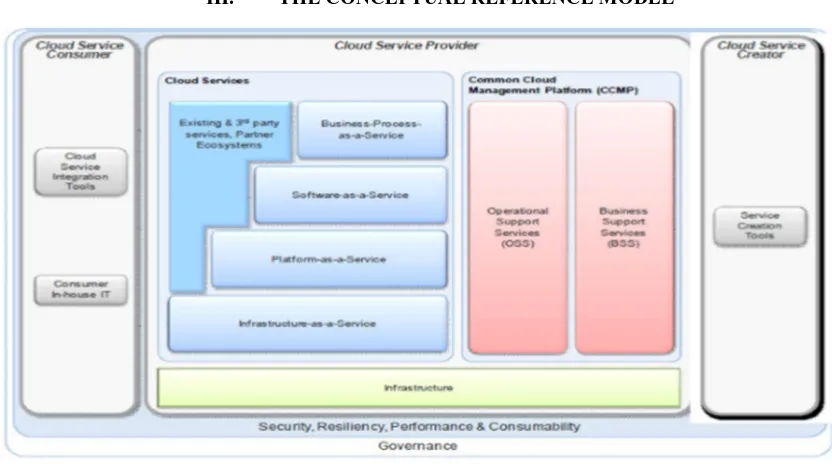
[image:1.612.95.511.484.716.2]A. IBM CC RA Roles
The IBM Cloud Computing Reference Architecture defines three main roles: Cloud Service Consumer, Cloud Service Provider and Cloud Service Creator.
Each role can be fulfilled by a single person or can be fulfilled by a group of people or an organization. The roles defined here intend to capture the common set of roles typically encountered in any cloud computing environment. Therefore it is important to note that depending on a particular cloud computing 1scenario or specific cloud implementation, there may be project-specific sub-roles defined.
B. Cloud Service Consumer
A cloud Service Consumer is an association, an individual or an IT framework that devours (i.e., demands, utilizes and oversees, e.g. changes quantities for clients, changes CPU limit doled out to a VM, builds most extreme number of seats for a web conferencing cloud benefit) benefit cases conveyed by a specific cloud benefit. The administration customer might be charged for all (or a subset of) its communications with cloud benefit and the provisioned benefit instance(s).
A service consumer can also be viewed as a kind of super-role representing the party consuming services. For example, in case a credit card company is using some cloud services, the company as a whole is a service consumer relative to the provider. Within the service consumer role more specific roles may exist, such as a technical role responsible for making service consumption work from a technical perspective; and there might be a business person on the consumer side who is responsible for the financial aspects. Of course, in more simplified public cloud scenarios all of these consumer-centric roles could be collapsed into a single person, but the roles still exist.
C. Cloud Service Provider
The Cloud Service Provider has the duty of giving cloud administrations to Cloud Service Consumers. A cloud specialist co-op is characterized by the responsibility for normal cloud administration stage (CCMP). This proprietorship can either be acknowledged by genuinely running a CCMP without anyone else's input or devouring one as an administration. Albeit characterized as a different part, it would likewise be conceivable that a Cloud Service Provider has Cloud Service Creators in a similar association, i.e. it isn't essential that Cloud Service Provider and Cloud Service Creator are in isolated associations.
D. Cloud Service Creator
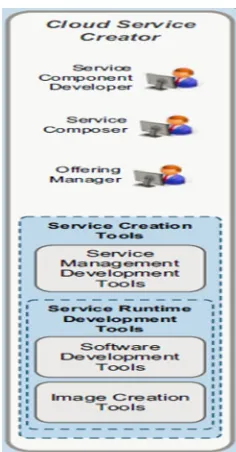
The Cloud Service Creator is in charge of making a cloud benefit, which can be controlled by a Cloud Service Provider and by that presented to Cloud Service Consumers. Ordinarily, Cloud Service Creators manufacture their cloud benefits by utilizing usefulness which is uncovered by a Cloud Service Provider. Administration usefulness which is generally required by Cloud Service Creators is characterized by the CCMP design. A Cloud Service Creator plans, executes and keeps up runtime and administration curios particular to a cloud benefit. Just like the Cloud Service Consumer and the Cloud Service Provider, the Cloud Service Creator can be an organization or a human being.
IV. ARCHITECTURAL ELEMENTS
A. Cloud Service Integration Tools
From the point of view of a Cloud Service Consumer, it is critical to have the capacity to coordinate cloud administrations with their on-commence IT. The usefulness of Cloud Service Integration Tools is particularly significant with regards to half and half mists, where consistent coordinated administration, utilization and interoperability of cloud benefits in combination with on-introduce IT is basic.
B. Consumer In-house IT
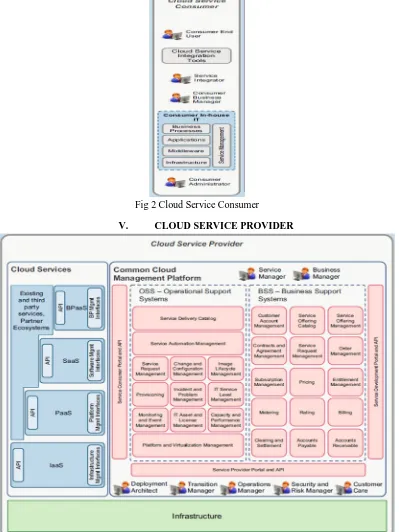
Fig 2 Cloud Service Consumer
[image:3.612.109.508.84.616.2]V. CLOUD SERVICE PROVIDER
Fig 3. Shows different levels of cloud service providers
A. Cloud Services
B. Common Cloud Management Platform (CCMP)
The Common Cloud Management Platform uncovered an arrangement of business and operational administration centred administrations (BSS and OSS). These BSS and OSS capacities must be misused by Cloud Services to keep running inside the setting of the individual cloud specialist organization (and the comparing CCMP establishment). Other than OSS and BSS, the CCMP likewise incorporates User Interfaces serving the three principle parts characterized in the CC RA – a Service Consumer Portal to be utilized by Cloud Service Consumers for self-benefit conveyance and administration (the genuine cloud benefit cases are utilized by means of a cloud benefit particular UI, a Service Provider Portal serving Cloud Service Provider inward clients and chairmen for day by day operations and a Service Development Portal utilized by Cloud Service Creators. CCMP usefulness is open by means of APIs uncovered by the CCMP-inside segments. Note that the design portrayed in this work item is freethinker to the real programming items used to execute this engineering.
The CCMP is defined as a general purpose cloud management platform to support the management of any category of cloud service across I/P/S/BPaaS. The CCMP is split into two main elements – the Operational Support Services (OSS) and Business Support Services (BSS).
C. Business Support Services
Business Support Services represents the set of business-related services exposed by the CCMP, which are needed by Cloud Service Creators to implement a cloud service.Like some other part of the CCMP, the BSS is bland over all cloud benefit composes and can be arranged to act fittingly with regards to the oversaw cloud administrations. For instance, the charging administration of the CCMP BSS must be usable to do charging for the utilization of virtual machines (IaaS), a multi-tenure skilled middleware stage and for cooperation administrations like LotusLive (SaaS). This drives the requirement for a legitimate stage level meaning of all BSS segments and abuse antiques empowering cloud benefit makers to prepare of each BSS segment in a cloud benefit particular design.
D. Operational Support Services
Operational Support Services speaks to the arrangement of operational administration/specialized related administrations uncovered by the CCMP, which are required by Cloud Service Creators to actualize a cloud benefit. Many management domains shown in the OSS can also be encountered in traditionally managed data centres (e.g. monitoring & event management, provisioning, incident & problem management, etc.) while other components are new and pretty specific to the degrees of automation and efficiency associated with clouds (e.g. service automation, image lifecycle management). Particularly for the ‘traditional’ management domains it is important to note that conceptually they are the same in the cloud world and in the traditional world, whereas in a cloud world these domains are generally implemented in radically different ways taking advantage of the high degrees of homogeneity in a cloud.
[image:4.612.246.364.494.720.2]E. Cloud Service Creator
F. Service Development Tools
Administration Development Tools are utilized by the Cloud Service Creator to grow new cloud administrations. This incorporates both the advancement of runtime ancient rarities and administration related viewpoints (e.g. checking, metering, provisioning, and so forth.). "Runtime relics" alludes to any ability required for running what is conveyed as-a-benefit by a cloud organization. Illustrations are JEE undertaking applications, database diagrams, investigation, brilliant ace virtual machine pictures, and so forth. With regards to a specific foundation or stage as-a-benefit offering, there may likewise be tooling to create antiquities which are particular to the specific cloud benefit. For instance, with regards to a VM-aas-benefit offering, it is conceivable to utilize picture creation apparatuses for creating pictures that can be conveyed with regards to the VM-aaS cloud benefit. As another case, with regards to a stage aaS cloud benefit there might be application advancement tooling to build up an application which can be conveyed on the individual stage.
CC Reference Architecture: Architectural Principles and Related Guidance:
The following top-level architectural principles guide the definition of any cloud implementation, with a focus on delivery & management of cloud services. The architectural principles in this chapter are focused on the CCMP element of the overall architecture as this element is required consistently, independent of which cloud service is implemented, delivered & managed:
1) Design for Cloud-scale Efficiencies: When realizing cloud characteristics such as elasticity, self-service access, and flexible sourcing, the cloud design is strictly oriented to high cloud scale efficiencies and short time-to-delivery/time-to-change. (“Efficiency Principle”)
2) Support Lean Service Management: The Common Cloud Management Platform fosters lean and lightweight service
management policies, processes, and technologies. (“Lightweightness Principle”)
3) Identify and Leverage Commonalities: All commonalities are identified and leveraged in cloud service design.
(“Economies-of-scale principle”)
4) Define and Manage generically along the Lifecycle of Cloud Services: Be generic across I/P/S/BPaaS & provide ‘exploitation’ mechanism to support various cloud services using a shared, common management platform (“Genericity”).
REFERENCES
[1] http://ieeexplore.ieee.org/document/7527835/?reload=true
[2] https://cloudcomputing.ieee.org/images/files/education/studygroup/Cloud_Computing_Definition_Reference_Architecture_and_General_Use_Cases.pdf [3] https://ws680.nist.gov/publication/get_pdf.cfm?pub_id=909505
[4] https://www.nist.gov/publications/nist-cloud-computing-reference-architecture [5] https://www.ibm.com/blogs/cloud-computing/2018/03/managed-kubernetes-bare-metal/
[6] https://www.nist.gov/sites/default/files/documents/itl/cloud/NIST_SP-500-291_Version-2_2013_June18_FINAL.pdf [7] https://pdfs.semanticscholar.org/66aa/7b06ee617d5831affca0514ab51f35c5d521.pdf