A Policy–driven Trading Framework for Market–based Spectrum Assignment
Patroklos Argyroudis, Tim Forde, Linda Doyle and Donal O’Mahony
Centre for Telecommunications Value–chain Research
University of Dublin, Trinity College, Ireland
{
Firstname.Lastname
}
@tcd.ie
Abstract
We present a policy–driven trading framework for market–based spectrum assignment. Our work allows spec-trum consumers to get exclusive access rights through pay-ment of a fee, for a given period of time, and for a given fre-quency band and location. The key motivation behind our proposal stems from the increased complexity of new spec-trum management strategies and the need for extracting the maximum benefit from the available spectrum. In this paper we demonstrate that a policy–driven solution is applicable for the management of spectrum markets, and we present a decentralised and lightweight framework for implementing such markets in networked environments.
1
Introduction
The field ofdynamic spectrum accessfocuses on new and very dynamic methods for managing spectrum that move away from the traditionalcommand and control means of regulation. Dynamic spectrum access promises greater spec-tral efficiency, wider access to spectrum and aims to pro-mote more technologically innovative and economically ef-ficient uses of the spectrum. There are many approaches to dynamic spectrum access varying from opportunistic usage regimes [9], [1] to commons models [13], to exclusive us-age rights schemes [6], [8]. The U.S. Federal Communica-tions Commission (FCC) has recently proposed the removal of regulatory barriers to facilitate the development of sec-ondary markets in exclusive spectrum usage rights [7]. This allows broader access to spectrum resources through the use of leasing arrangements.
In this paper, we propose a novel policy–based trading framework to facilitate the assignment of exclusive spectrum usage rights through payments. Our work differs from previ-ous proposals in that usage rights of specific spectrum blocks are assigned through payment of a fee by employing the well–established technology of electronic payments. Buy-ers are issued credentials that verify their purchases allowing the policing of spectrum use. The operation of the market is managed using policy mechanisms that take into
consid-eration its economic and technical requirements. Since the framework aims to be deployed in environments with var-ious performance requirements, it has to avoid unnecessary overhead and operate in a disconnected way with no reliance on global trusted entities.
The rest of this paper is structured as follows. Section 2 describes the complexities behind spectrum markets for ex-clusive usage rights. Section 3 presents the design of our policy–driven trading framework, its components and the participating entities. In section 4 we discuss our prototype implementation. Finally, we compare our work to previous related proposals in section 5, and we conclude in section 6 by summarising our contributions while presenting some details of ongoing work.
2
Spectrum Markets
The commodities that are traded on spectrum markets are exclusive usage rights. When we refer to the buying and selling of spectrum in the context of a market it is taken to mean the buying and selling of exclusive spectrum usage rights. The notion of usage rights is introduced to clarify that the spectrumitselfis not bought and sold, but rather the right to its exclusive use.
Defining the rights associated with exclusive usage of spectrum is a challenging problem. There has been a range of interesting papers that have discussed this issue in the past number of years. Hatfield [8] does an excellent job of sum-marising many of the main contributions to this debate and traces the development of the definition of spectrum usage rights through from Coase [4], to De Vany [6] and to Math-eson [14], before going on to further the discussion himself. In the main, in all these papers, the approach has been to at-tempt to define the parameters associated with some kind of packet/bundle/blockof spectrum with the end aim of making the definition tight enough
1. so that the user of the packet/bundle/block has a clear set of entitlements,
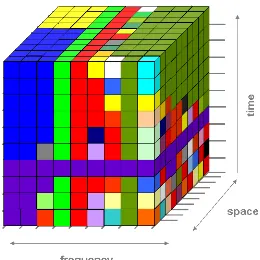
Figure 1. Completely disaggregated market– based assignments.
Irrespective of how the block is defined the aim is to treat spectrum as a commodity. One means of visualising this is to use what we term theradio spectrum rights continuum as a three-dimensional model: space, time and frequency. We propose that such a continuum should be quantised into discrete packets/bundles/blocks. Each packet/bundle/block represents a unique assignment of spectrum rights at a par-ticular place, for a parpar-ticular frequency and at a fixed time.
At its most extreme, our proposal for a flexible market would facilitate a radical form of disaggregation of the RF spectrum, which could have a similar effect on the wireless telecommunications industry. This is illustrated in Figure 1. The Rubik’s cube–like illustrations represent an area of the spectrum rights continuum in which there has been com-plete disaggregation of assignments over frequency, space and time.
Each block in the Rubik’s cube–like figure represents a unique spectrum assignment and each colour represents a uniquespectrum consumer. We have chosen the term spec-trum consumer to convey the point that we do not wish to pre–empt the nature of future spectrum users or businesses built around fluid spectrum. Rather, we consider that some agent will want to acquire spectrum for some, possibly still unforeseen, use. We currently would understand such a mar-ket actor in terms of entities such as cellular network opera-tors, TV companies and wireless broadband providers.
In a very fluid and flexible market spectrum consumers can freely buy and sell the exclusive rights to the cubes of spectrum that are illustrated in Figure 1. The services that owners of the usage rights deliver and the technologies used to deliver those are not proscribed, i.e. there is total liber-alisation of the spectrum. There are no limits or rules as to what blocks can be neighbours and what services can be delivered by neighbouring blocks.
[image:2.612.106.259.77.230.2]In such a very fluid system, the individual blocks of course may be aggregated to form larger assignments. This
Figure 2. Aggregation of spectrum blocks.
Figure 3. The subletting process.
is depicted in Figure 2. Aggregations in this situation occur because of market drivers and not because of limitations due to the system for acquiring access to spectrum. Figures 1 and 2 therefore attempt to capture the fluidity of reaction to market forces that would characterise our framework.
Continuing along the lines of the technological influ-ences on the block size, there are some communication system technological limits to realising each of the fre-quency/space/time dimensions. Any consumer of a block may deem to divide and sublet that block and undoubtedly technological barriers will be encountered at some stage of that division process. Figure 3 attempts to capture the sub-letting concept.
[image:2.612.317.542.237.372.2]from the environment that affect the operation of the mar-ket must be taken into consideration when an entity has to reach a trade decision. For example, an offer for a particu-lar spectrum block may not be as appealing if an emergency situation gives precedence to a different entity at the current time and location.
3
Policy–driven Spectrum Trading
3.1 Design Rationale
The main objective of our policy–driven trading solution is to tackle the complexities of spectrum markets as pre-sented in the previous section. A rich and robust policy model such as the one defined by the Internet Engineering Task Force (IETF) [15] is able to describe the market re-quirements as well as the related socioeconomic and techni-cal issues. Since the model allows us to assign roles to spe-cific policies we are able to define different spectrum blocks for the needs of different markets. Conflict resolution is also handled by the IETF model by assigning priorities to poli-cies.
3.2 Market Entities
The market entities that participate in our spectrum trad-ing framework are the followtrad-ing:
Clearing house. This entity facilitates the selling and purchasing of spectrum rights through a range of offerings it hosts. Apart from the above, and some form of compen-sation it should receive for providing such hosting services, it is not involved in spectrum purchases. Although we refer to it as a single conceptual entity, it can also operate in a distributed way.
Spectrum consumer. A spectrum consumer makes of-ferings and purchases on the market; it plays the roles of buyer and seller in different transactions. Depending on the granularity of the traded spectrum blocks (see Figure 3), spectrum consumers may range from operators of wireless services to end users.
Bank. This entity is responsible for turning real–world money into tokens that can be exchanged over a networking protocol between spectrum consumers. It also handles the opposite operation, i.e. turning tokens into money deposited into accounts.
The clearing house and the spectrum consumers share monetary trust relationships with the bank. The former two also have one–to–one market trust relationships.
[image:3.612.329.531.77.207.2]The spectrum consumers and the clearing house mar-ket entities runmarket agentsthat implement policy man-agement functions; their components are shown in Fig-ure 4. The context manager is responsible for gathering data regarding the demands of the specific market, tech-nical/hardware issues, as well as environment conditions. These are interpreted and formatted; they are used to resolve
Figure 4. Components of the market agents running on the market entities.
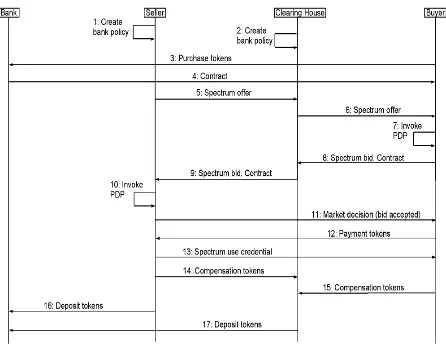
Figure 5. Sequence diagram for the open–cry spectrum auction model.
possible conflicts by assigning priorities to existing policies and as input to thepolicy decision point(PDP). The PDP reaches market decisions by utilising existing policies, input market data (offers, bids) and context data.
3.3 Auction Models
In our current design we support two different auction models; namelyopen–cryandsealed bid. In the open–cry model buyers openly submit bids for spectrum offers found at the clearing house. These bids are made public; each buyer has access to the bids submitted by a rival buyer and has a limited time to respond with a higher counter–bid [10]. The seller collects the bids, invokes their PDP and reaches a market decision (see Figure 5).
[image:3.612.319.542.260.433.2]In both auction models monetary compensations are handled by electronic payments.
4
Prototype Implementation
Our initial prototype addresses markets on which small spectrum sublet blocks are traded. Since frequent low– valued exchanges take place in such markets we rely on mi-cropayments. Macropayments and money transfers can be used to facilitate the trading of larger spectrum blocks.
We use the KeyNote trust management system [2] to im-plement a subset of the IETF policy model and the real–time hash chain micropayment scheme proposed in [16] to han-dle monetary exchanges. Furthermore, we have extended the work presented in [3] to allow the management of the chosen hash chain micropayment scheme via KeyNote credentials. Our context manager component is responsible for creating theaction attribute setthat the KeyNote PDP utilises to de-scribe the details of policy requests.
As an example of the operation of the market according to the open–cry auction model consider the following. Ini-tially, a spectrum seller needs to define a policy statement that specifies which banks they trust to provide micropay-ment tokens and have an account with (public keys and sig-natures are truncated for readability):
comment: which banks does the seller trust? authorizer: "POLICY"
local-constants: seller = "rsa-hex:3048024100cc02..." bank_1 = "rsa-hex:3048024100bf78..."
bank_2 = "rsa-hex:3048024100da71..." licensees: (bank_1 || bank_2) && seller
conditions: app_domain == "spectrum market" -> "true";
A spectrum buyer needs to have a contract with a bank that allows them to spend micropayment tokens. The buyer generates a random number that is then used to generate a hash chain by applying a hash function on it 100 times. This random number is the root element of the chain and is dis-closed to the bank when the contract is issued. The following policy encodes a contract betweenbuyerandbank 1for a hash chain of length 100 and a value of 0.1 monetary units for each element of the chain:
comment: buyer’s contract with bank_1
local-constants: buyer = "rsa-hex:3048024100aa88..." bank_1 = "rsa-hex:3048024100bf78.."
authorizer: bank_1 licensees: buyer
conditions: app_domain == "spectrum market" && @date <= 20070912 &&
amount == "0.1" && @number <= 100 -> "true"; signature: "sig-rsa-sha1-hex:26d7da6725..."
The spectrum seller specifies in a signed policy statement an offer which is sent to the clearing house. The statement specifies the terms of the offer and the signature binds the seller to these terms. The following example encodes in a KeyNote credential the details of the offered spectrum usage rights, the expiration date of the offer, and that a bid should be greater or equal to 3.0 monetary units:
comment: seller’s offer
local-constants: seller = "rsa-hex:3048024100cc02..." authorizer: seller
conditions: app_domain == "spectrum market" && &frequency <= 236.0 && &frequency >= 232.0 && frequency_unit = "MHz" &&
channel_bw == "1.75" && channel_bw_unit == "MHz" && &transmit_power <= 1.0 && power_unit == "W" && &latitude <= 51.15656 && &latitude >= 51.14949 && &longitude >= 2.99228 && &longitude <= 3.01011 && @date >= 20070417 && @date <= 20070418 && @time >= 100000 && @time <= 220000 && &amount * &number >= 3.0 -> "true"; signature: "sig-rsa-sha1-hex:81a0e2520f..."
When a buyer finds an offer at the clearing house they pass it to their PDP along with data from their context man-ager and local policies. If the PDP reaches a positive de-cision then a bid policy is created for the offer. The policy includes the anchor of the hash chain that the buyer commits to the bid:
comment: buyer’s bid
local-constants: buyer = "rsa-hex:3048024100aa88..." seller = "rsa-hex:3048024100cc02..."
authorizer: buyer licensees: seller
conditions: app_domain == "spectrum market" && &frequency <= 236.0 && &frequency >= 232.0 && frequency_unit = "MHz" &&
channel_bw == "1.75" && channel_bw_unit == "MHz" && &transmit_power <= 1.0 && power_unit == "W" && &latitude <= 51.15656 && &latitude >= 51.14949 && &longitude >= 2.99228 && &longitude <= 3.01011 && @date >= 20070417 && @date <= 20070418 && @time >= 100000 && @time <= 220000 && commitment == "b80e336f22b733e4692e270" && amount == "0.1" && number == "30" -> "true"; signature: "sig-rsa-sha1-hex:59295c356d..."
When a seller finds a bid they first need to verify that the buyer can indeed deliver the payment and that all mar-ket/context/technical terms are satisfied by the given bid. This is accomplished by passing the above credentials to the KeyNote PDP along with their local policies and the context data from their context manager. If the buyer has a valid contract with a bank that the seller trusts and the offer terms are met by the proposed bid then their PDP authorises the transaction. Therefore, the seller is sure that they are going to be paid for the provided spectrum usage rights. When the seller informs the buyer that they accept the bid, the latter releases the required number, in the above case 30, of to-kens to the former. At that point, the seller issues a signed KeyNote policy statement to the buyer that includes the pur-chased spectrum usage rights as specified in the initial offer. We call this thespectrum use credential. It can be used by the buyer as a proof of the spectrum assignment facilitating the operation of policing schemes.
The seller collects tokens and periodically contacts the is-suing bank to translate them into monetary units and deposit them to their account.
5
Related Work
for their operation. While these studies clearly demonstrate the complexity of the problem they do not provide any struc-tured framework for solving it. To our knowledge we are the first to suggest a flexible policy–driven market for the as-signment of spectrum, or indeed any other, access rights.
Kumar and Feldman propose a detailed software archi-tecture for the operation of Internet–based auctions in [10]. A similar system is presented in [5]. These studies have been valuable to us in designing the protocols of our trad-ing framework and identifytrad-ing key differences between tra-ditional and network–based spectrum auctions. We believe that policy mechanisms can be successfully applied to the problem of managing digital trading, especially when the target application environment is characterised by dynamic parameters.
The KeyNote trust management system is used in [3] to implement an offline micropayment protocol without the re-quirement of trusted hardware. In this paper we have ex-tended this idea in two key aspects; instead of relying on digital cheques we use a lightweight hash chain micropay-ment scheme, and instead of buying and selling the resources themselves we trade access rights for using the resources (spectrum blocks in our case).
6
Conclusion and Ongoing Work
We have presented our ongoing work on a policy–driven trading framework for evolving market–based spectrum assignment regimes. Our system is able to address the social, economic and technical requirements of different spectrum markets while taking in consideration contextual information from the environment to support trade deci-sions. Such complexities prohibit the reliance on static assignment processes and make our policy–based solution an attractive choice. While our prototype implementation is far from complete it demonstrates the feasibility of our approach. Our ongoing work is focused on a complete implementation of the context manager component and the IETF policy model.
Acknowledgements – We would like to thank the anonymous reviewers for their helpful comments. This ma-terial is based upon works supported by Science Foundation Ireland under grant number 03/CE3/I405.
References
[1] I. Akyildiz, W. Lee, M. Vuran, and S. Mohanty. Next Gen-eration/Dynamic Spectrum Access/Cognitive Radio Wireless Networks: a Survey.Computer Networks: The International Journal of Computer and Telecommunications Networking, 50(13):2127–2159, 2006.
[2] M. Blaze, J. Feigenbaum, and A. Keromytis. The KeyNote Trust Management System (Version 2). RFC 2704, 1999. [3] M. Blaze, J. Ioannidis, and A. Keromytis. Offline
Micropay-ments without Trusted Hardware. InProceedings of 5th
In-ternational Conference on Financial Cryptography (FC’01), pages 21–40, 2001.
[4] R. Coase. The federal Communications Commission. Jour-nal of Law & Economics, 2(2):1–40, 1959.
[5] K. Davidson and Y. Kawatsura. Digital Signatures for the v1.0 Internet Open Trading Protocol (IOTP). RFC 2802, 2000.
[6] A. De Vany. Implementing a Market–based Spectrum Policy. Journal of Law & Economics, 41(2):627–646, 1998. [7] Federal Communications Commission. Secondary
Markets Initiative. http://wireless.fcc.gov/ licensing/secondarymarkets/, 2003.
[8] D. Hatfield and P. Weiser. Property Rights in Spectrum: Tak-ing the Next Step. InProceedings of 1st IEEE International Symposium on New Frontiers in Dynamic Spectrum Access Networks (DySPAN’05), 2005.
[9] S. Haykin. Cognitive Radio: Brain–Empowered Wireless Communications. IEEE Journal on Selected Areas in Com-munications, 23(2):201–220, 2005.
[10] M. Kumar and S. Feldman. Internet Auctions. In Pro-ceedings of 3rd USENIX Workshop on Electronic Commerce (EC’98), pages 49–60, 1998.
[11] E. Kwerel and J. Williams. Moving Toward a Market for Spectrum.Regulation, 16(2):53–62, 1993.
[12] E. Kwerel and J. Williams. Free the Spectrum: Market– Based Spectrum Management, pages 101–111. Washington, DC: Cato Institute, 1998.
[13] B. Lehr and J. Crowcroft. Managing Shared Access to a Spectrum Commons. InProceedings of 1st IEEE Interna-tional Symposium on New Frontiers in Dynamic Spectrum Access Networks (DySPAN’05), 2005.
[14] R. Matheson. Tutorial A: Flexible Spectrum Use Rights – ISART 2005. InProceedings of 2005 International Sym-posium on Advanced Radio Technologies (ISART’05), pages 157–167, 2005.
[15] B. Moore, E. Ellesson, J. Strassner, and A. Westerinen. Pol-icy Core Information Model – Version 1 Specification. RFC 3060, 2001.