Selection of our books indexed in the Book Citation Index in Web of Science™ Core Collection (BKCI)
Interested in publishing with us?
Contact [email protected]
Numbers displayed above are based on latest data collected. For more information visit www.intechopen.com Open access books available
Countries delivered to Contributors from top 500 universities
International authors and editors
Our authors are among the
most cited scientists
Downloads
We are IntechOpen,
the world’s leading publisher of
Open Access books
Built by scientists, for scientists
12.2%
108,500
1.7 M
TOP 1%
154
Adaptive Automation and the Third Pilot
Joan Cahill, Tiziana C. Callari, Florian Fortmann,
Stefan Suck, Denis Javaux, Andreas Hasselberg and
Sybert Stroeve
Additional information is available at the end of the chapter
http://dx.doi.org/10.5772/intechopen.73689
© 2016 The Author(s). Licensee InTech. This chapter is distributed under the terms of the Creative Commons Attribution License (http://creativecommons.org/licenses/by/3.0), which permits unrestricted use, distribution, and reproduction in any medium, provided the original work is properly cited.
Joan Cahill, Tiziana C. Callari, Florian Fortmann,
Stefan Suck, Denis Javaux, Andreas Hasselberg and
Sybert Stroeve
Additional information is available at the end of the chapter
Abstract
Currently, automation does not take into consideration the cognitive and emotional state of the crew. Rather, automation provides assistance based on explicit and static task assignments, with no adaptive capabilities, even though it is capable of providing higher or lower levels of support depending on the crew state and/or complexity of the operational situation. This chapter presents a new adaptive automation concept which
ofers an innovative ‘team’ centred approach to solving crew awareness/workload man
-agement problems and enhancing light safety. Partnership underpins the ‘Third Pilot’ approach. The crew (pilot lying and pilot monitoring), automation and the ‘Third Pilot’
are in charge together. Overall, partnership is proposed. This replaces existing paradigms involving dynamic changes in control function, where changes can be autonomously controlled by the system. Moreover, a new multimodal cockpit concept is advanced pro-viding enhanced assessment of crew state/workload.
Keywords: adaptive automation, teamwork, workload, human factors, situation awareness, pilot decision making, stakeholder evaluation, cockpit
1. Introduction
Crew task support and information needs vary according to the crew composition, the crews own
experience (i.e. familiarity with type, knowledge of the route), the speciic light situation (i.e. traf
-ic and weather), and the crew state (i.e. fatigue, confusion) [1, 2]. With increasing duty time and
traic growth, pilots can beneit from an ‘experience aid’. Ideally, the crew and the ‘experience aid’ (or assistance system) comprise a cooperative system [1, 2]. This cooperative system approach
follows the cognitive systems engineering frameworks, as advanced by Hollnagel and Woods [3].
In its current form, automation does not take into consideration the pilot’s cognitive and emo -tional state. Rather, automation provides assistance based on explicit and static task assign-ments, with no adaptive capabilities, even though it is capable of providing higher or lower levels of support depending on the crew state and/or complexity of the operational situation
[1, 2, 4]. It is argued that safety is optimised when human and automated systems adapt both
to each other and to the speciic operational context. This guarantees luent and cooperative
task achievement—maintaining safety at all times.
This research was undertaken as part of the Applying Pilots’ Model for Safer Aircraft (A-PiMod) project, funded by the European Commission (Framework Programmes for Research and Technological Development) [1]. The aim of this project was to demonstrate a
new approach/concept (and associated technologies) for an adaptive automation and multi
-modal cockpit which might mitigate and/or reduce human error. The project commenced in September 2013 and inished in September 2016.
2. Background
2.1. Automation
Currently, Pilots share responsibility for diferent light tasks with cockpit systems. As deined by Kaber and Prinzel, adaptable systems are systems which require human delegation of task and ‘function authority’ to automation during real-time operational performance (i.e. the task distribution is controlled by the user) [5]. This is diferent to adaptive automation (AA), which allows for dynamic changes in control function allocations between a machine and human
operator based on states of the collective human–machine system’ [6, 7].
Human factors problems with automation have been cited as contributory factors in many
air accidents. This includes: Flight Air France 447 (2009) [8], Flight Spanair 5022 (2008) [9],
Flight Helios Airways HCY 522 (2005) [10], Flight China Airlines 140 (1994) [11], and Flight
Air Inter 148 (1992) [12]. The air accident reports highlight several human factors issues such as automation surprises, reduced situation awareness, workload problems and over-reliance
on automation [1].
2.2. Crew errors
Errors are deined as ‘actions or inactions by the light crew that lead to deviations from organisational or light crew intentions or expectations’ [13]. Unmanaged and/or
misman-aged errors frequently lead to undesired aircraft states. Flight crew errors reduce the mar
-gins of safety and increase the probability of adverse events [13]. As documented by the
International Civil Aviation Organisation [14], human error is a causal factor in between
60%-80% of accidents and serious incidents. It is stated in the ‘Flightpath 2050, Europe’s Vision for aviation’, that ‘the occurrence and impact of human error’ will be ‘signiicantly
reduced through new designs and training processes and through technologies that support
2.3. Theoretical starting point
In line with a cooperatives systems approach, the question of automation status/communica
-tion and its role in the execu-tion of the light, should to be framed from a team perspective
and linked to a risk assessment of the mission and the selection of a course of action. Thus, the
theoretical starting point for addressing human factors issues with automation (speciically,
teamwork, task distribution, authority, situation awareness, error detection and workload
management), is the assessment of the crew/automation/aircraft/environment state in rela
-tion to the achievement of the mission level goal (i.e. mission level risk assessment), and the identiication of a suitable task distribution at cockpit/agent level, to achieve this [1, 2]. So con
-ceived, automation has a role in relation to (1) real-time risk assessment, (2) the identiication of a course of action, (3) the selection and subsequent implementation of a course of action, and (4) the identiication of an appropriate task distribution based on the crew state [1, 2].
Further, it is argued that there is relationship between addressing human factors issues with auto
-mation (speciically, teamwork, situation awareness, task distribution, authority, error detection and workload management) and improving crew interaction with cockpit systems. The provi
-sion of a multimodal concept can support the above. In addition to (1) allowing for lexible inter
-action with cockpit systems and (2) providing a means to communicate with the crew in relation to crew state and decision support, the multimodal cockpit has a role in relation to (3) supporting the beter assessment of crew state/workload (information inputs re crew activity/interactions).
2.4. Methodological background
Stakeholder involvement in programme evaluation has been recognised as one of the most efective approaches to enhancing the use of evaluation indings, and ensuring the validity of the evaluation activities [16]. Stakeholder involvement is deined as the participation of (programme) stakeholders in any phase of an evaluation [17]. Stakeholder involvement can vary with regard to diversity in stakeholder selection for participation, the control of
techni-cal evaluation decisions and the depth of stakeholder participation in the programme/project evaluation process [18]. Stakeholders are conceived as invaluable source of knowledge, per -spectives, information on context and needs. Drawbacks of stakeholder involvement are also
reported. This includes the feasibility of implementing a successful participative study. For example, time, cost, involvement from (disadvantaged) groups and skills required from an evaluator in facilitation and ‘good listening’ [19].
The involvement of stakeholders to accomplish given tasks by participating in common
activi-ties has been central to ‘Community of Practice’ concepts [20]. ‘Community of Practice’ members
engage in a set of relationships over time around some particular area of technical knowledge
or skill associated with the given tasks. This allows the members of a speciic ‘Community of Practice’ to generate a sense of joint enterprise and identity by sharing a practice—doing things together, developing a sense of place, common goals. In Wenger’s analysis, three characteristics are crucial to deine a ‘Community of Practice’: (1) the ‘domain’—which speciies the identity of COPs with the speciic competence and commitment the stakeholders engage; (2) the ‘commu
a repertoire of resources (experiences, stories, tools, ways of addressing recurring problems) which help forming the practice with time and sustained interaction [20].
3. Research design
3.1. Objective
The aim of the A-PiMod project was to demonstrate a new adaptive automation concept (and associated technologies) enabled by a hybrid of three elements: (1) multimodal pilot interaction, (2) operator modelling and (3) real-time risk assessment. It is anticipated that the
introduction of this new automation concept will reduce human error—making substantial
progress in relation to aim of reducing the accident rate by 80%. Table 1 below provides a
description of the high level project goals
3.2. Overview
The overall design/evaluation methodology combines formal HMI design/evaluation activi
-ties (i.e. interviews and simulator evaluation), informal HMI design/evaluation approaches (i.e. participatory design activities), along with an integrated stakeholder approach to evalu
-ation [4]. Overall, 23 COP sessions and two phases of simulator evaluation have been under
-taken. The irst phase of simulator evaluation involved eight participants, while the second phase involved 12 participants. This has been reported in more detail in [1, 2].
3.3. Community of practice
The concept of ‘Community of Practice’ as proposed by Wenger [20] underpins the A-PiMod ‘Community of Practice’ approach. The A-PiMod ‘Community of Practice’ involved stake -holders who shared technical knowledge and skills associated with relevant functions in the
Air Traic Management (ATM system), and broader aviation related domain. Overall the role of participants in the A-PiMod ‘Community of Practice’ concept was characterised as a ‘participatory’ approach. Members engaged in a range of validation/evaluation activities on a continuous/regular basis, through the run-time of the project.
The panel of stakeholders in A-PiMod included both ‘primary users’ (i.e. internal stakeholders representative of each project partner), and ‘all legitimate groups’ (i.e. external stakeholder
No A-PiMod high level project goals
1 To reduce accident rate by 80%
2 To achieve a substantial improvement in the elimination of and recovery from human error 3 To mitigate the consequences of survivable accidents
4 To support smart pilot assistance
representative of the aviation-related industry and Flight operational system). Stakeholder par -ticipation involved consultative interaction along with engagement in technical research tasks.
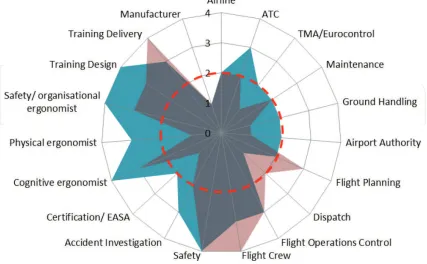
Figure 1 below depicts the composition of the community of practice – with atention to the levels of expertise of both internal and external stakeholders. Internal stakeholders are repre
-sented in blue. External stakeholders are repre-sented in amaranth. The overlapping levels of expertise are indicated by the red doted line.
3.4. Simulator evaluation
Two sets of simulator evaluation were undertaken. In both cases, the evaluation involved a
mixed-method approach with the administration of semi structured interviews, simulator
obser-vations, collaborative workshop sessions and questionnaires. Each set of evaluations involved
two crew members and elapsed over 2 days. Overall, a scenario-based evaluation approach
was adopted. Simulator evaluation involved the use of the DLR simulator—the GECO system. In day 1, participants were irst briefed about the overall procedures, consent was obtained,
and proile information was elicited. Then participants undertook a semi-structured inter
-view regarding the current state of automation and HF still-open issues. After this both
participants obtained training, in relation to interacting with the new adaptive automation multimodal concept/technologies in the simulator. The training was delivered with the sup-port of slides, software training tools, and some hands-on training in the simulator (i.e. using
the A-PiMod user interface displays such as the MC-M Display and the MultiModal ND). Then, hands-on training in relation to using the GECO simulator was provided. After this training session, participants undertook the speciic simulator evaluation session, addressing
the adaptive automation and multimodal concept/technologies. After the simulator sessions,
participants were asked to complete a questionnaire evaluating the adaptive automation and multimodal concept and technologies. Further, a speciic simulator session was undertaken with a focus on the interaction with the MultiModal ND. This involved a collaborative session
to evaluate the operational and safety aspects pertaining to the multimodal cockpit.
In day 2, participants were asked to evaluate the adaptive automation and multimodal con -cept and technologies. This involved individual post evaluation individual semi-structured interviews. Then a collaborative workshop session was undertaken. This focussed on three
distinctive scenarios (i.e. (1) supporting routine operations, (2) avoidance of conlict of taxi/ way or apron, (3) Incapacitation (VETO)) and to what extent A-PiMod could support the Pilots in relation to workload management, error identiication, situation awareness, team -work, and how this would have an impact on the error reduction. After this, the participants
completed an individual questionnaire related to beneits analysis.
3.5. Assessment of beneits/safety impact
In order to assess the potential safety impact of the new automation concept (and allied multi
-modal cockpit), a systematic approach was applied. This involved the elicitation of structured feedback from pilots and experts, using the Total Aviation Risk model [21]. Speciically, struc -tured feedback was cap-tured in relation to potential change factors for base events in this risk
model [21]. The total aviation system risk model contains 425 base events and 51 end states.
The particular structure of an event sequence diagram and its connected fault trees depends
on the scenario considered. The probability change factors of all impressionable base events are determined in the safety assessment on the basis of information gathered in multiple
workshops with members of the Community of Practice (COP). In the workshops the par -ticipants discussed the kinds of mechanisms facilitated by the innovative concept which may
increase or decrease the probability of a particular base event in a scenario. The speciic details of the quantiication of safety impact have been reported in another paper [22].
4. Proposed adaptive automation concept
Overall, the objective is to provide assistance to the light crew when and if required.
Automation acts as a third crew member providing information and task support to crew
–safeguarding the mission level goal [1, 2].
The third pilot approach involves providing (1) decision/information support, and (2) work -load support. This follows from the hypothesis that information underpins good decisions,
which in turn results in safe aircraft states. Further, it follows the philosophy that if there in
The overall approach involves continuously monitoring the operational situation and the allied crew/automation state, to determine the best distribution of task activity between
the crew and automation [1, 4]. It is anticipated that this will ensure the safe completion
of the light. If there is an increase in workload, certain functions will be shifted to auto -mation, to reduce the cognitive/physical burden on the crew. Also, automation is used to support information management tasks (i.e. information gathering and information
assessment). This in turn has an impact on safety. Real-time feedback is provided to the Flight Crew via a cockpit user interface (i.e. HMMI Interaction Manager), so that the crew at all times understand the status of (1) the operational situation, and (2) the joint crew
automation system. This ensures full situation awareness, which in turn impacts on mis-sion safety. All of the above ensures that the aircraft remains in a safe state. This in turn
has consequences at a process level (i.e. both single and multiple light levels).
The team comprises the Flight Crew (namely the Pilot Flying and the Pilot Monitoring), the ‘Third Pilot’ and automation. Accordingly, the third pilot is conceived as a virtual team-member [1, 2, 4]. All team members co-operate in relation to making and executing mission level decisions. Mission level decisions are enacted at the mission level and translated into new cockpit level tasks that have to be distributed between the crew and automation, and then performed by them. The system continuously monitors the operational situation and the allied crew/automation/aircraft state, to determine the tasks the team has to perform together, and how to best distribute them between the crew and automation.
The new cockpit technology (i.e. automation and associated systems) allows us to answer the following questions:
• Is the joint crew/automation system in a safe state?
• Is there a potential for a safety critical aircraft state (i.e. now and/or the near future)? • Do the crew (Pilot Flying and Pilot Monitoring) require support in terms of increased levels
of automation?
• Do we need to adjust the level of automation? • Do the crew require information/decision support?
A-PiMod lags potential risks—providing operational guidance in relation to managing those risks. Pilots have inal control, but are responsible and accountable for their decisions and actions [1]. The crew are responsible for assessing the risk status of situation and the
appro-priate course of action. As such, the crew are not required to follow the decision support provided by the third pilot. This decision support is an aid, not a requirement. The crew can over-ride system proposals/decisions, except in certain critical situations (i.e. incapacitation). A-PiMod adopts a team centred approach as opposed to a crew centred approach. Speciically, is assists the Flight Crew in relation to information and workload management (i.e. interven
we are focussing on the outcome. That is, we are considering what is best for the safe and
eicient completion of the mission, as opposed to adapting to human needs. As indicated in the architecture concept (see below), if the Pilot Flying/Pilot Monitoring is overloaded and this threatens the completion of the mission, the task distribution is adapted at the agent level [1, 2]. As reported previously, we propose partnership as opposed to dynamic changes in control
func-tion (such that changes can be managed autonomously by the system) [1]. The A-PiMod architec
-ture describes the means for the adaptive completion of Mission Level tasks and their distribution between the crew and automation. This includes the real-time analyses of both the pilot’s state (situation awareness and workload) and mission risks [1]. Apimod will permanently assess
what has to be done by the cockpit (mission and its context = > cockpit level tasks), distributing it
between the crew and automation, and assessing if these agents are correctly performing the tasks
they have been assigned (i.e. recover from a stall, avoid ground obstacles, etc.). Task distribution is the product of a situation management process [1]. Here, the pilot lying and pilot monitoring, along with other automated processes cooperate to assess the situation, its risks, what has to be
done (cockpit level tasks) and the associated risks [1]. This results in a task distribution.
As described in the architecture concept, in situations where the light crew are overbur
-dened, task distribution is adapted at the agent level [1]. Automation adapts to crew states
and capabilities, so that all required cockpit-level tasks are performed [1]. It is this architec
-ture that guarantees the safe completion of the light.
The proposed automation concept addresses the key decision requirements as deined in the safety case [1, 2, 4]. For more information, please see Table 2 below.
No Decision requirement
How supported by automation
1 Authority Boundaries for automation set in relation to role of Pilot and associated decision authority 2 Information Supports information acquisition and analysis
3 Time Automation provide real time updates as to status of situation (both current and future) so have time to anticipate potential future problems and how might manage them
4 Judgement Automation provides decision assistance – providing feedback on potential course of actions and risk associated with each.
Automation can gather decision support information from actors outside the cockpit – if collaborative/consultative decision
5 Teamwork Human agents/crew and automation are conceived as a team
Beter collaboration between team members – enhance situation awareness and increase
safety
Cockpit as a cooperative system
Support teamwork in terms of information sharing: (1) information sharing between crew and automation, and (2) information sharing between cockpit and agents outside the
cockpit
6 Feedback Automation provides feedback (updated information picture) in relation to the outcome of
decisions taken and next steps
Underpinning the Third Pilot concept is the A-PiMod multimodal cockpit concept [1, 2]. The
multimodal cockpit (1) allows for monitoring of crew interactions with cockpit systems, (2) supports crew communication with automation (i.e. via the MCM Display) and (3), enables voice and touch interaction with cockpit displays [1, 2].
5. Proposed technical architecture
The A-PiMod architecture allows for (1) adapting the mission based on current circumstances and (2) the subsequent organisation of the cockpit (task distribution between the crew and automation) and (3) the circulation of information between the crew and cockpit systems (including automation) to the current and future situation(s) [23]. The starting point in the
architecture is to adapt the mission permanently, and to translate a given mission conigura
-tion (e.g. decision to divert to closest airport) into tasks that have to be executed by the ‘team’. The tasks are then distributed between the team members (crew and automation) based on
[image:10.612.88.498.387.754.2]their current states and capabilities.
Figure 2 below depicts the A-PiMod architecture. This is based on a three layer hierarchy of tasks [23].
The architecture is a ‘control’ architecture; it’s about the distributed control of a given object. In this example, this refers to the overall aircraft state including navigation and trajectory.
Tasks at a given level are translated into the tasks of the level below based on the context
of their execution [23]. At the mission level, the context of execution includes (1) the state of
the aircraft and (2) the traic and environmental context in which the aircraft is lying (i.e. weather, ATC, traic). At the cockpit level, context refers to (1) the status of the cockpit agents (namely pilots and automation) and (2) cockpit equipment (i.e. displays).
As detailed in Table 3 below, this control architecture is elaborated in relation to three levels. This includes the mission level, the cockpit level and the agent level. These levels are hierar-chical—each level is a decomposition of the level above. All actions occur at the agent level.
The upper levels are about deciding what tasks the diferent agents perform, based on the
current contexts, at the mission and cockpit levels.
The key level is the cockpit level. We are trying to see what the cockpit as a whole (i.e., all of
its agents—be they human or machine) has to do at a given point to achieve the Mission Level Tasks (in the current situation). Then, what the cockpit as a whole has to do is distributed
between the agents available in the cockpit.
It should be noted that the broader ATM system level is not explicitly referred to in the archi -tecture. This is because the other aircraft are not under the control of the archi-tecture. They are
part of the context in which the architecture is lying (i.e. achieving its control tasks).
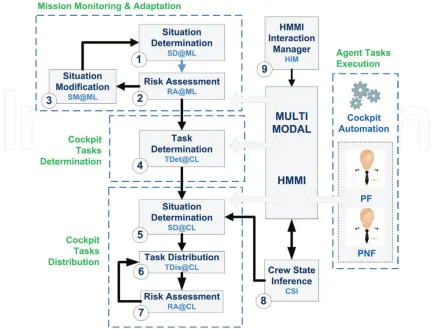
As indicated in Figure 3 below, several technical components have been speciied, linking to
the overall architecture concept.
As outlined in Table 4 below, the A-PiMod architecture consists of seven components and two separate software systems [22].
A key feature of the architecture is the distinction between components and modules:
• A component is a functional unit that performs speciic tasks (e.g. risk assessment at the
mission level). In the A-PiMod architecture a component is always a small cooperative
system made of the crew +1 module.
• A module is a software system that acts with the crew as a team in this speciic functional
unit. The module provides assistance to the crew in the performing the component’s tasks
Level Description
Deinition of mission level
tasks
Single light level—mission phase/sub-phase, context, A/C state—the context the
aircraft is in
Deinition of cockpit level
tasks
Tasks that need to be performed by all (i.e. crew and automation) to achieve mission goals given speciic context elaborated
Deinition of agent level
tasks
Actions undertaken by crew or automation to achieve mission goals in speciic context
Thus regarding risk assessment at the mission level, it will always be performed together by the crew and the dedicated module, acting as a small team for that purpose. Both the crew and the module have the common goal to achieve the function assigned to the component. This
[image:12.612.89.525.90.420.2]is what brings great lexibility to the architecture. It allows each component to be executed
Figure 3. A-PiMod Architecture (Source: Cahill et al. [2]).
Component 1. Situation determination @Mission Level 2. Risk assessment @Mission Level 3. Situation modiication@ Mission Level 4. Task determination @Cockpit Level 5. Situation determination @Cockpit Level
6. Task distribution @Cockpit level
7. Risk assessment @ Cockpit Level
Separate Software Systems 1. Crew state inference
2. HMMI interaction manager
[image:12.612.72.537.472.644.2]exclusively by the crew (‘manual’ mode), e.g. the crew solely assess the risks, by the module (‘automated’ mode), e.g. the module solely assess the risks and the crew has no say in that evaluation, or by both the crew and module (‘mixed’ mode), e.g. the module produces a risk assessment and the crew acknowledge or reject it. This is true for all seven components in the architecture. Each is made of the crew and a dedicated module. Given the crew can par -ticipate to all seven components, the crew superposes the seven functions associated with the individual components, and this is exactly what human pilots do. They perform all these operations permanently, without being aware of that dissociation between seven
elemen-tary functions. They are thus part of the situation assessed by the Situation Determination/ Modiication @Mission Level component. All these tasks are permanently revised, distributed
and executed, based on the context.
In addition, visual analysis of pilots’ behaviour is recorded to infer human operator’s (pilot’s)
mental state, stress level, and general workload. The following instruments/technologies are
used to obtain information about the pilot’s behaviour:
• Eye tracking
• Gesture recognition • Head pose
6. Pilot interaction in the cockpit and associated user interfaces(s)
6.1. Overview
Crew interaction with cockpit systems is simple and user friendly. In addition to traditional
controls, pilots interact with the system using voice and touch. This interaction is tracked by
the system (i.e. what tasks performing, level of fatigue, involvement in activity). This form of tracking is referred to as ‘crew state monitoring’ [1]. Crew feedback is provided via a new
cockpit user interface (Mission and Cockpit Level Management Display—MCMD). This provides information about (1) the risk status of the operational situation (this includes an assessment of the status of joint crew/automation system) and (2) what to do (including the provision of best options/alternatives based on diferent ‘technical’ contributing factors such as fuel remaining, the weather status at alternate airports and so forth) [1, 2]. As noted previ-ously, the crew can over-ride system proposals/decisions, except in certain critical situations such as crew incapacitation.
6.2. The A-PiMod MC-M display
The A-PiMod Mission and Cockpit Management Display (MC-M Display) enables commu
-nication between the Flight Crew and the new adaptive automation technologies [1]. The MC-M Display supports both mission and cockpit management tasks. As depicted in Figure 4
displays [21]. In the cockpit level display, one can see the tasks assigned to the crew and to
automation. The software allows the crew to change that distribution—both manually (crew) or automatically (automation). In keeping with concepts of authority/pilot control, all task
distribution changes have to be approved by the crew before becoming active.
6.3. Multimodal interaction
During the A-PiMod project a multimodal system prototype was developed to explore possibili
-ties of multimodal interaction in context of light deck. From the perspective of human-machine interaction, the light deck interfaces should be able to accommodate large number of diverse tasks while maintaining high level of eiciency, usability and uncompromised safety. In A-PiMod mul
-timodal interaction was demonstrated through the Multi-Modal Navigation Display (ND) [1, 2]. A number of other systems are linked to the crew state estimation and crew task
determi-nation components, for the purpose of inferring (1) the pilot’s mental state, stress level and general workload, and (2) predicting potential errors, missed events and/or overlooked infor
[image:14.612.90.433.85.456.2]-mation. This includes eye tracking, gesture recognition and head pose tracking technology [1].
7. Crew state monitoring
Crew state monitoring (that is, focussing the Pilots atention on their state along with that of their crew member—and on the current and future state of the aircraft) is an important function of the third pilot. If fatigued, pilots may either forget or omit to review all the safe options. The 3rd crew member (automation) will consider all safe options and prompt the crew in regard to possible options, to ensure that a safe decision is made. In this context, a key challenge is how to get the two human crew members to share their ‘current state’ with the 3rd crew member [1]. Such an exchange should be meaningful and informative but not
self-incriminating in any post hoc analysis [1]. Normal human interactions can easily accom
-modate this. For example, such information might be imparted as part of pre-light social
interactions/conversation. However, this is hard to replicate in relation to human/machine
(i.e. third pilot) interaction
The assessment of crew state goes beyond issues of workload. It concerns many factors including crew experience, light hours, crew familiarity with the proposed route and depar -ture/landing airports, training background and so forth. The crew state might be assessed as
less optimal in situations when the two crew members are unfamiliar with the route. From an operational/Pilots perspective, the starting point for crew state monitoring is the crew brief
-ing/light planning. Depending on the crew situation, this might occur a week before the light and/or at the time of the pre-light, light planning and brieing task. In addition, knowl
-edge of the joint crew status is and any issues linked to this is required [1, 2]. Potentially, the
crew might need to report their status/state before the light commences [1, 2]
The means/basis by which crew state information (i.e. eye tracking data, gesture data, voice, and
touch data) is used to assess the crew state needs to be carefully considered. The assessment
of this data depends on what we already know about the crew (for example, location in roster
and expected level of fatigue). For example, if the crew are not looking at the correct area of the screen, and/or are blinking their eyes a lot, it may not be a problem. In this case, the crew might be very familiar with the route and may be more or less fatigued (i.e. location in roster—irst day or last day). However the system might interpret this behaviour diferently if the crew are unfamiliar with the route, and on the last day of their roster (i.e. expect higher level of fatigue) If A-PiMod is to become a trusted (and relied upon) 3rd crew member, it needs to interact with the crew in a manner consistent with ‘normal’ human-human interaction [1]. Potentially,
to be fully integrated in the ‘team’, it needs to engage in some form of ‘social’ interaction, and not only technical interactions [1, 2]. This later issue has not been explored in A-PiMod and
requires further consideration
How emphatic a team member is automation? When and how can it articulate its concerns, and potentially, over-ride the crew member’s decisions? In most (but not all situations), the cockpit crew have the inal authority and can veto automation. This approach relects an ‘adaptable systems’ logic. However, there may be situations (identiied by the crew monitor
-ing technology) where it is necessary for automation to ‘take charge’ to ensure light safety (for example, situations of crew incapacity). Accordingly, three diferent levels of crew state moni
over-ride [1]. In this sense, A-PiMod represents an adaptive automation approach. Arguably, a
fully adaptive automation approach requires modelling and assessment of both the crew and aircraft state [1, 2]. The A-PiMod system represents a signiicant advancement in relation to
the modelling of crew state (i.e. touch, voice, gesture, use of multimodal displays and so forth).
However, aircraft state modelling potentially necessitates integration with aircraft systems
and wider ATM and ground systems. This has not been demonstrated in the A-PiMod project
8. Innovation
It is proposed that the Third Pilot/A-PiMod system (1) relects a mix of the logic associated with adaptable systems and adaptive automation, while (2) also providing something new (i.e. multimodal cockpit concept).
In relation to (1), we are
• Providing a framework for crew-automation cooperation for all activities occurring in the
cockpit involved in the completion of a light
• Extending concepts of assistance (as deined by adaptable systems), where the crew are in conceived to be in control all of the time
• Utilising certain features of adaptive automation—that is, providing task support to the crew following an assessment of crew state (i.e. inferences about crew situation awareness
and workload)
In general, this new automation concept is predicated on concepts of partnership. The crew
and automation are in charge together. As reported previously, in principle, the crew are in
charge (concepts of professionalism and responsibility). However, there will always be par
-ticular safety critical situations when automation can take charge (i.e. fully adaptive).
In terms of (2), a new multimodal cockpit concept has been advanced. This enables improved
assessment of the crew state/workload and provides a means to provide task and decision
support information to the crew. Further, it allows for touch and voice interaction with cock
-pit systems. Evidently, the application of multimodal in the cock-pit is not new. However, the application of crew interaction data (i.e. crew voice and touch interaction in the cockpit), as
an input to crew state monitoring is innovative.
The third pilot has diferent modes of operation. This includes (1) passive monitoring, (2) active monitoring and (3) over-ride. It is anticipated that (1) and (2) will be the most typi -cal operational modes. That is, providing task and decision support to pilots based on an
9. Assessment of beneits and safety quantiication
9.1. Assessment of beneits/impact
The expected beneits/impact were validated through extensive ield research including 27 COP sessions, Validation Cycle 1 (VC1), Validation Cycle 2 (VC2) and evaluation with stake
-holders at a demonstration day event [1, 2]. Overall, validation activities indicate that the
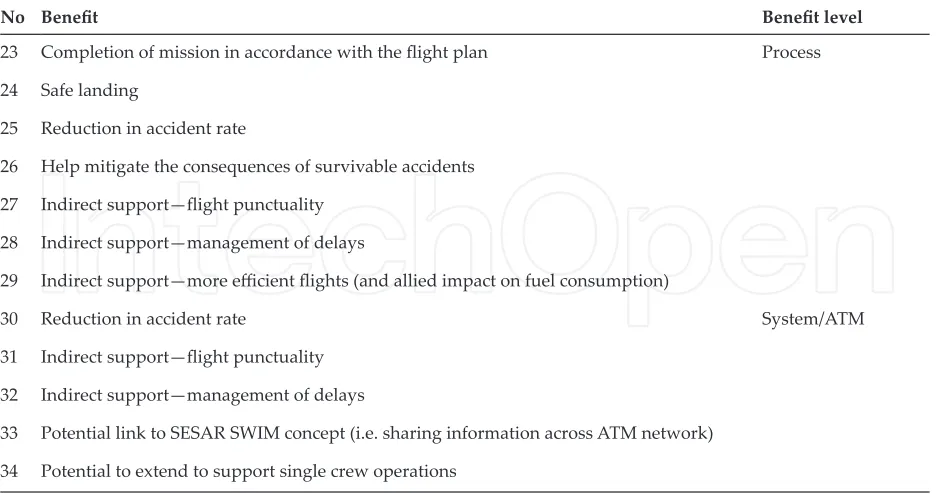
‘Third Crew Member’ may yield many operational and safety beneits. As deined in Table 5
below, these beneits can be grouped at diferent levels (i.e. cockpit, task, process and ATM System). It is anticipated that this third pilot approach will enhance light safety, especially in abnormal
situations. The third pilot will not remove human error. Rather, it will reduce it. This is largely
atributable to improvements in error detection and error management. A cockpit that is designed
No Beneit Beneit level
1 Improved access to information—faster access Cockpit
2 Improved mechanisms to interact with information (i.e. voice, touch and gesture) 3 Provide variability in way of the automation control selection (i.e. via voice, touch and
gesture)
4 Beter interaction between automation and Pilots—clear communication lines, clear understanding of who does what and, when/how transfer work between both
6 Flexible and natural interaction with cockpit systems (MM) Task 7 Decision support—how to proceed in safety critical situation and/or normal situation
8 Provide task support to crew in relation to assessing the situation and deciding on a course of action
9 Reduce workload in complex/high risk situations
10 Pilots always know ‘what is going on’ (i.e. reliable situation awareness)
11 Complementary ways in which to interact with information (i.e. MM interaction) 12 Reduction in workload
13 Improvement in information management—support information acquisition and information analysis
14 Improvement in situation awareness 15 Improvement in situation assessment
16 Provision of new information (i.e. status of operation, status of automation and routing advice)
17 Improvements in the elimination of and recovery from human error 18 Support for error identiication and broader TEM
19 Error reduction 20 Error mitigation
21 Error avoidance—avoidance of safety critical situations
with the A-PiMod approach in mind will extend automation capabilities in an adaptive way, to the extent necessary to support a safer light. Potentially, such an adaptive automation approach might prevent many accidents. In this regard, we might consider the AF 447 accident [8]. As
indicated in the accident analysis research with COP members and VC2 participants, all 19 par
-ticipants indicated that A-PiMod would have played a signiicant role in preventing this accident.
9.2. Safety quantiication
As reported previously, it is expected that the A-PiMod concept might lead to a reduction in the probability of fatal accidents by 43% [1, 21].
The assessment of safety impact concerns what has been advanced from a conceptual
per-spective (i.e. A-PiMod concept), as opposed to the technological progress (set of tools devel
-oped in the A-PiMod project, which relects a particular implementation of the concept) [1, 21]. It is these set of tools that were validated in simulator evaluations [1, 2, 4]. These tools can
be viewed as a irst technical instantiation of the A-PiMod system. The sophistication, scope and integration of the tools can be improved in future research and development [22]. Once implemented, the expected impact might be further assessed.
10. Conclusions
In the perfect world, A-PIMOD would provide an airline with the most experienced team (crew and automation), capable of dealing with any situation (routine, non-routine, safety critical), where skill level is constant, across all weather/routes/airports/time zones. The third Pilot helps avoid dramas. The Third Pilot/A-PiMod will not eliminate human error. Rather, it will reduce error
No Beneit Beneit level
23 Completion of mission in accordance with the light plan Process 24 Safe landing
25 Reduction in accident rate
26 Help mitigate the consequences of survivable accidents
27 Indirect support—light punctuality 28 Indirect support—management of delays
29 Indirect support—more eicient lights (and allied impact on fuel consumption)
30 Reduction in accident rate System/ATM
31 Indirect support—light punctuality 32 Indirect support—management of delays
[image:18.612.72.543.93.340.2]33 Potential link to SESAR SWIM concept (i.e. sharing information across ATM network) 34 Potential to extend to support single crew operations
(human error is a reality and errors will always happen), and help manage them if they occur. In this way, the third pilot approach can be conceptualised in relation to ‘Smart Pilot Assistance’. A-PiMod will enable the automation system to account for pilots’ emotional and cognitive states. For example, normal, tired, stressed, overloaded and incapacitated. Together with a thor
-oughly designed adaptive multimodal cockpit, this new technology will signiicantly improve the safety of light, especially in abnormal situations and during situations of crisis management. It should be noted that the assessment of safety impact has been undertaken for the A-PiMod concept, rather than for its particular implementation as achieved in the A-PiMod project. The A-PiMod concept is an advanced adaptive automation concept for a multi-modal cockpit,
wherein the automation is seen as a third pilot, and crew and automation continuously adapt
to each other and the context, such that safety is maintained. In the course of the A-PiMod project a particular implementation of the concept was achieved by development of a set of
tools, and these tools were used in validation experiments (i.e. validation cycle 1 and
valida-tion cycle 2), in a light simulator context. This set of tools can be viewed as a irst technical instantiation of the A-PiMod system, and the sophistication, scope and integration of the tools
can be improved in future research and development.
Acknowledgements
The research received funding from the European Commission’s Seventh Framework Programme (FP7/2007-2013) under grant agreement N. 605141—Applying Pilot Models for Safety Aircraft (A-PiMod) Project. We would like to thank member of the A-PiMod Project Team for their collaboration in this research. Further, we would like to thanks our COP members (particularly, Paul Cullen, William Butler, Martin Dufy and Stephen Dufy) for
their invaluable input. Critically, the emerging adaptive automation concept is predicated
on extensive feedback in relation to light crew experience with automation (and associated problems).
Author details
Joan Cahill1*, Tiziana C. Callari1, Florian Fortmann2, Stefan Suck2, Denis Javaux3,
Andreas Hasselberg4 and SybertStroeve5
*Address all correspondence to: [email protected] 1 Trinity College Dublin (TCD), Dublin, Ireland 2 OFFIS, Oldenburg, Germany
3 Symbio Concepts and Products, Bassenge, Belgium
References
[1] Cahill J, TC Callari, F Fortmann, S Suck, D Javaux, A Hasselberg, SH Stoeve, BA van
Doorn. Automation and the third pilot: Managing teamwork and workload in an
air-line cockpit. Human Mental Workload: Models and Applications: Proceedings of the First Symposium on HWorkloads, Dublin, June 2017; 2017. htp://www.springer. com/kr/book/9783319610603. Longo, Luca, Leva, M. Chiara (Eds.) pp. 161-174. ISBN 978-3-319-61060-3
[2] Cahill J, Callari TC, Fortmann F, Javaux D, Hasselberg A. A-PiMod: A new approach to solving human factors problems with automation. In: Harris D, editor. Engineering Psychology and Cognitive Ergonomics. EPCE 2016. Lecture Notes in Computer Science. Vol. 9736. Cham: Springer; 2016
[3] Hollnagel E, Woods D. Joint Cognitive Systems: Foundations of Cognitive Systems Engineering. Boca Raton, Florida, USA: CRC Press; 2005, 2005
[4] Cahill J, Callari TC. A novel human machine interaction (HMI) design/evaluation
approach supporting the advancement of improved automation concepts to enhance
light safety. In: de Waard D, Sauer J, Rötger S, Kluge A, Manzey D, Weikert C, Tofeti A, Wiczorek R, Brookhuis K, Hoonhout H, editors. Proceeding of the Ergonomics Society Europe Chapter 2014. Annual Conference “Human Factors in high reliabil
-ity industries” Lisbon, Portugal; 2015. Available from htp://www.hfes-europe.org/
human-factors-high-reliability-industries-2/
[5] Kaber DB, Prinzel LJ. Adaptive and Adaptable Automation Design: A Critical Review of the Literature and Recommendations for Future Research; 2006. NASA/TM-2006-214504 [6] Hilburn BJ, Byrne E, Parasuraman R. The efect of adaptive air traic control (ATC) deci
-sion aiding on controller mental workload. In: Mouloua M, Koonce JM, editors. Human-Automation Interaction: Research and Practice. Mahwah, NJ: Lawrence Erlbaum Associates, Inc; 1997. pp. 84-91
[7] Kaber DB, Riley JM. Adaptive automation of a dynamic control task based on
sec-ondary task workload measurement. International Journal of Cognitive Ergonomics. 1999;3:169-187
[8] Flight AF 447 (2009, June 1). Final Report on the accident on 1st June 2009 to the Airbus A330-203 registered F-GZCP operated by Air France light AF 447 Rio de Janeiro (Published July 2012). Retrieved from Bureau d’Enquêtes et d’Analyses pour la sécu
-rité de l’aviation civile (BEA). htp://www.bea.aero/docspa/2009/f-cp090601.en/pdf/f-cp090601.en.pdf
[10] Flight Helios Airways HCY522. Final Report on the accident on 14th August 2005 involv
-ing a Boe-ing 737-31S registration 5B-DBY operated by Helios Airways at Grammatiko, Hellas (Published November 2006). Retrieved from Air Accident Investigation and Aviation Safety Board (AAIASB); 2005, August 14. htp://www.moi.gov.cy/moi/pio/pio. nsf/All/F15FBD7320037284C2257204002B6243/$file/FINAL%20REPORT%205B-DBY.
[11] Flight China Airlines 140. Final Report on the accident on 26th April 1994 involving an Airbus Industrie A300B4-662R registration B1816 operated by China Airlines at Nagoya Airport (Published July 19, 1996). 1994, April 26. Retrieved from Aircraft Accident Investiga-tion Commission. htp://www.skybrary.aero/bookshelf/books/808.pdf
[12] Flight Air Inter 148. Final Report on the accident on 20th January 1992 involving an Airbus A320 registration F-GGED operated by Air Inter Airlines in Vosges Mountains (near Mont Sainte-Odile). Retrieved from Bureau d’Enquêtes et d’Analyses pour la sécurité de l’aviation civile (BEA). 1992, January 20. htp://www.bea.aero/docspa/1992/f-ed920120/htm/f-ed920120.html
[13] SKYbrary Aviation Safety. 2017. Retrieved From: htps://www.skybrary.aero/index.php/ Human_Error_Types
[14] International Civil Aviation Organisation. Annex 13: Aircraft Accident and Incident Investigation; 2010
[15] European Commission. Flightpath 2050, Europe’s Vision for aviation. Luxembourg: Publications Oice of the European Union; 2011
[16] Brandon PR, Fukunaga L. A review of the indings of empirical studies of stakeholder involvement in program evaluations. American Journal of Evaluation. 2014;35:26-44. DOI: 10.1177/1098214013503699
[17] O'Sullivan RG. Collaborative evaluation within a framework of stakeholder-oriented evaluation approaches. Evaluation and Program Planning. 2012;35:518-522
[18] Cousins JB, Whitmore E, Shulha L. Arguments for a common set of principles for collab
-orative inquiry in evaluation. American Journal of Evaluation. 2013;34(1):7-22
[19] Fizpatrick J, Sanders J, Worthen B. Program Evaluation: Alternative Approaches and Practical Guidelines. 4th ed. New York: Pearson; 2010
[20] Wenger E. Communities of Practice: Learning, Meaning, and Identity. Cambridge: Cambridge university press; 1998
[21] Ale BJM, Bellamy LJ, Cooke RM, Goossens LHJ, Hale AR, Roelen ALC, et al. Towards a causal model for air transport safety—an ongoing research project. Safety Science. 2006;44:657-673
[22] Stroeve S, Van Doorn BA, Cahill J. A safety impact quantiication approach for early
stage innovative aviation concepts: Application to a third pilot adaptive automation
![Figure 2 below depicts the A-PiMod architecture. This is based on a three layer hierarchy of tasks [23].](https://thumb-us.123doks.com/thumbv2/123dok_us/916910.604346/10.612.88.498.387.754/figure-depicts-pimod-architecture-based-layer-hierarchy-tasks.webp)
![Figure 4. The MC-M Display (Source: Cahill et al. [1]).](https://thumb-us.123doks.com/thumbv2/123dok_us/916910.604346/14.612.90.433.85.456/figure-mc-m-display-source-cahill-et-al.webp)