Page 1 of 32
Name of Service Area: Dublin South Central (DSC)
Service Area ID: 100– 207- 312
Dates of inspection: 28/01/2014 - 06/02/2014
No. of Fieldwork days: 6
Lead inspector: Orla Murphy
Support inspector(s): Aoife Lenihan Eva Boyle
Type of inspection: announced unannounced
Inspection ID: 669
Health Information and Quality Authority
Regulation Directorate
Page 2 of 32 About monitoring of compliance
The purpose of monitoring is to safeguard vulnerable children of any age who are receiving foster care services. Monitoring provides assurance to the public that children are receiving a service that meets the requirements of quality standards. This process also seeks to ensure that the wellbeing, welfare and safety of children is promoted and protected. Monitoring also has an important role in driving continuous improvement so that children have better, safer lives.
The Health Information and Quality Authority (the Authority) has, among its functions under section 8(1) c of the Health Act 2007, responsibility to monitor the quality of service provided by the Child and Family Agency (TUSLA) to protect children and to promote their welfare.
The Health Information and Quality Authority (the Authority or HIQA) is authorised by the Minister for Children and Youth Affairs under Section 69 of the Child Care Act, 1991 as amended by Section 26 of the Child Care (Amendment) Act 2011 to inspect foster care services provided by TUSLA and to report on its findings to the Minister for Children and Youth Affairs.
In order to drive quality and improve safety in the provision of child protection and welfare services, the Authority carries out inspections to:
Assess if TUSLA (the service provider) has all the elements in place to safeguard children and young people
Seek assurances from service providers that they are safeguarding children
through the mitigation of serious risks
Provide service providers with the findings of inspections so that service providers develop action plans to implement safety and quality improvements
Inform the public and promote confidence through the publication of the Authority’s findings.
Monitoring inspections assess continuing compliance with the regulations and standards, can be announced or unannounced and take place:
to monitor compliance with regulations and standards
arising from a number of events including information affecting the safety or well-being of children.
Page 3 of 32
Summary of compliance with the Child Care Act 1991 and the
National Standards Foster Care for the Child and Family Agency
(TUSLA)
This inspection report sets out the findings of a monitoring inspection:
to monitor ongoing regulatory compliance with National Standards following receipt of solicited and unsolicited information
following notification of a significant incident or event
The table below sets out the outcomes that were inspected against on this inspection.
Theme 1: Individualised Supports and Care
Services for children are centred on the individual child and his/her care and support needs. Child-centred services provide the right support at the right time to enable children to lead their lives in as fulfilling a way as possible. A child-centred approach to service provision is one where services are planned and delivered with the active involvement and participation of the children who use services.
Theme 2: Effective Services
Effective services ensure that the proper support mechanisms are in place to enable children to lead a fulfilling life. Personal planning is central to
supporting children to identify their goals, needs and preferences and what supports need to be put in place by the service to ensure that each child maximises his/her personal development.
Theme 3: Safe Services
Services promote the safety of children through the assessment of risk, learning from adverse events and the implementation of policies and procedures designed to protect children. Safe services protect people from abuse and neglect and follow policy and procedure in reporting any concerns of abuse and/or neglect to the relevant authorities.
Theme 4:Health and Development
Page 4 of 32
Theme 5: Leadership, Governance and Management
Effective governance in services for children is accomplished by directing and managing activities using good business practices, objectivity, accountability and integrity. In an effective governance structure, overall accountability for the delivery of services is clearly defined and there are clear lines of
accountability at individual, team and service levels so that all people working in the service are aware of their responsibilities and who they are
accountable to.
Theme 6: Use of resources
The effective management and use of available financial and human resources is fundamental to delivering child-centred safe and effective services and supports that meet the needs of children.
Theme 7: Responsive workforce
Each staff member has a key role to play in delivering child-centred, effective and safe services to support children. Children’s services organise and
manage their workforce to ensure that staff have the required skills, experience and competencies to respond to the needs of children. Theme 8: Use of Information
Quality information and effective information systems are central to
improving the quality of services for children. Quality information, which is accurate, complete, legible, relevant, reliable, timely and valid, is an important resource for providers in planning, managing, delivering and
monitoring children’s services. An information governance framework enables services to ensure all information including personal information is handled securely, efficiently, effectively and in line with legislation. This supports the delivery of child-centred, safe and effective care to children.
1. Methodology
As part of this inspection inspectors met with children, parents/guardians, other
agencies and professionals. Inspectors observed practices and reviewed documentation such as child protection plans, relevant registers, policies and procedures, children’s files and staff files.
The aim of on-site inspection fieldwork is to gather further evidence of compliance with the National Standards and Regulations.
During this part of the inspection, the inspectors will evaluate:
quality of care and safe service
foster home is well organised and well managed
the timeliness and management of referrals
the effectiveness of assessment and risk management processes
assessment of foster carers
Page 5 of 32
effectiveness of the Foster Care Committee
the extent of focus on the child or young person’s needs and
the effectiveness of multi-agency.
The key activities of this inspection involved:
the interrogation of data
the review of local policies and procedures, minutes of various meetings and 3 local and regional audits
the review of 30 children’s case files by both tracking and sampling information contained within their files
the review of 22 foster carer’s files by both tracking and sampling information contained within their files
meeting with 12 children and young people, and 12 carers
telephone interviews were conducted with 6 parents and 13 foster carers
meetings with two groups of social workers, one group of child care leaders, access workers and an aftercare worker, two groups of team leaders, the Area Manager and three principal social workers
interview with the chair and the coordinator of the foster care Committee (FCC)
observing staff in their day-to-day work
observing practice in one child in care review meeting and one FCC meeting.
Acknowledgements
The Authority wishes to thank the carers, children and parents/guardians for the openness with which they embraced the inspection process and welcomed inspectors into their homes. Inspectors also wish to acknowledge the cooperation of the members of Child and Family Agency (Tusla/the Agency) and senior managers in the Dublin South Central (DSC) service area (Area).
2. Profile
2.1 Child and Family Agency (TUSLA)
Child and family services in Ireland are now the primary focus of a single dedicated State agency – TUSLA overseen by a single dedicated government Department. The Child and Family Agency Act 2013 (No. 40 of 2013) established TUSLA. The Agency was established with effect from 1 January 2014.
TUSLA have service responsibility for a range of services, including:
Child Welfare and Protection Services, including family support services;
Existing Family Support Agency (FSA) responsibilities;
Existing National Educational Welfare Board (NEWB) responsibilities;
Pre-school Inspection Services;
Page 6 of 32
Services related to the psychological welfare of children.
Child and Family services have been merged into 17 Service Areas (SAs) and are managed under area managers.
Children’s foster care services will be inspected by the Authority at SA level with governance inspected at an area manager level.
2.2 Service Area
The Dublin South Central service area (Area) is providing services to areas in Dublin South City and Dublin West including Dublin south inner city, Rialto, Inchicore and areas west of the city including Ballyfermot, Clondalkin, Rowlagh, Palmerstown, Lucan and Clondalkin. Census figures (2011) show that these areas have a greater number of very young children (0-4 years) than average with the highest number of the population in the 30-34 age group bracket. Irish nationals accounted for the majority of people living in these areas with Polish, UK nationals and Lithuanians being the highest number of non-Irish nationals. South county Dublin also has the second highest number of members of the Traveller community living in the area. The main religion within the area is Roman Catholic followed by Church of Ireland, Islam and Presbyterian. The Pobal 2011 Deprivation Index cited some areas within the catchment as being ‘very disadvantaged’ and ‘extremely disadvantaged’.
At the time of this inspection, according to the information provided by the Agency, there were 370 children living in foster care in Dublin South Central being cared for by 235 foster carers and 135 relative carers, in a total of 358 households. All 370 children (100%) had an allocated social worker. 267 foster carers (75%) had an allocated link worker. The service had placed 60 children (16%) in non-statutory foster care
placements. There were eight children (2%) waiting for foster care placements.
There were waiting lists in the Area for transfers of cases to other areas, assessments and approvals of foster carers, matching of children to long-term placements and for allocation of fostering link workers to foster carers.
Page 7 of 32
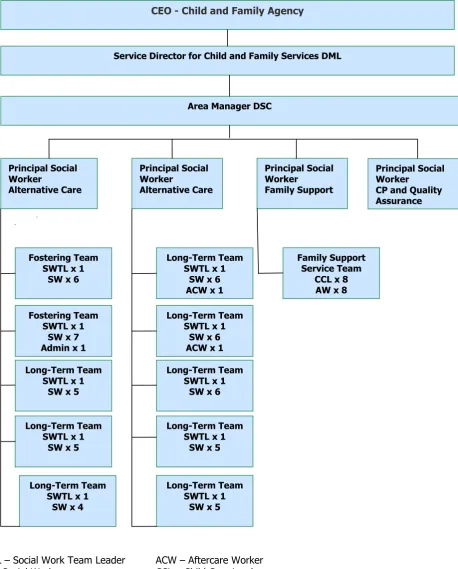
Figure 1: Organisational structure of the Children’s Foster Care Services,
Dublin South Central SA*
SWTL – Social Work Team Leader ACW – Aftercare Worker
SW – Social Worker CCL – Child Care Leader
SP – Senior Practitioner AW – Access Worker
* Source: TUSLA
Service Director for Child and Family Services DML
CEO - Child and Family Agency
Area Manager DSC
Principal Social Worker Alternative Care Principal Social Worker Alternative Care Principal Social Worker Family Support Principal Social Worker CP and Quality Assurance
Fostering Team SWTL x 1
SW x 6
Fostering Team SWTL x 1
SW x 7 Admin x 1
Long-Term Team SWTL x 1
SW x 5
Long-Term Team SWTL x 1
SW x 5
Long-Term Team SWTL x 1
SW x 4
Long-Term Team SWTL x 1
SW x 6 ACW x 1
Long-Term Team SWTL x 1
SW x 6 ACW x 1
Long-Term Team SWTL x 1
SW x 6
Long-Term Team SWTL x 1
SW x 5
Long-Term Team SWTL x 1
SW x 5
Family Support Service Team
Page 8 of 32
3. Summary of Findings
The Child and Family Agency (Tusla/the Agency) has statutory responsibility to promote the welfare of children and protect those who are deemed to be at risk of harm.
Children in foster care require a high quality service which is safe and well supported by social work practice. Foster carers must be able to provide them with warm and
nurturing relationships in order for children to achieve positive outcomes. Services must be well governed in order to produce these outcomes consistently.
The area was an integration of two local health areas (Dublin West and Dublin South City) into one service area, Dublin South Central, in 2013. This integration had led to significant change within the area to regularise work practices, procedures and manage resources, which was still ongoing at the time of this inspection. In addition, the area, along with all child and family services moved from the Health Service Executive (HSE) into the Child and Family Agency on 1 January 2014. This resulted in additional
disruption and change within the area.
Managers provided good leadership in the area, and many aspects of the service were effective and produced good outcomes for children. Managers and staff were
accountable and responsible within their roles and demonstrated a good knowledge of the strengths and deficits of the service. Staff were committed and supported in their roles. There were effective systems in place to manage available resources locally and children received the services they needed in a timely manner. However, there were significant staffing deficits which affected outcomes for foster carers and increased demands on the service. There were deficits in the monitoring of the quality of the service and service planning was not formally developed or informed by any analysis of outcomes for children or foster carers. Systems and oversight in relation to concerns, stakeholder engagement and promoting rights were not at an optimum.
Overall, children in the area’s foster care service received a good quality, child centred service. Individual cases were well managed and the views of children and families were sought and valued. Care planning was of a good quality and involved children and their families. However, there were some delays in the timeliness of reviews. Children were protected and any concerns or allegations were responded to promptly and investigated fully. Aftercare services were under considerable pressure and although young people received a good service when it was delivered, in most cases it was considerably delayed. This affected young people’s preparation for adulthood.
Page 9 of 32
Page 10 of 32
4. Summary of judgements under each standard
Theme National Standards for Foster Care Compliant
Non-compliant –
minor, moderate, major Theme 1:
Individualised Supports and Care
Standard 1: Positive sense of identity Compliant Standard 2: Family and Friends Compliant
Standard 3: Children’s rights Moderate non-compliance
Standard 4: Valuing diversity Compliant
Theme 2: Effective Services
Standard 6: Assessment of Children and
Young People Compliant
Standard 7: Care Planning and Review Moderate non-compliance Standard 8: Matching children with
carers Moderate non-compliance
Standard 13: Preparation for leaving
care and adult life Moderate non-compliance
Standard 14a: Assessment and approval
of foster carers Moderate non-compliance
Theme 5: Leadership, Governance and
Management
Standard 18: Effective policies Moderate non-compliance Standard 19: Management and
Monitoring of Foster Care Services Moderate non-compliance Standard 21: Recruitment and retention
of an appropriate range of Foster Carers Moderate non-compliance Standard 23: The Foster Care
Committee Moderate non-compliance
Standard 24: Placement of Children
through non-statutory agencies Compliant Standard 25: Representation and
Page 11 of 32
5. Findings and judgments
Compliance with the Child Care Act, 1991 and National Standards for Foster Care for the Child and Family Agency
Theme 1: Individualised Supports and Care
Services for children are centred on the individual child and his/her care and support needs. Child-centred services provide the right support at the right time to enable children to lead their lives in as fulfilling a way as possible. A child-centred approach to service provision is one where services are planned and delivered with the active involvement and participation of the children who use services.
References:
National Standards for Foster Care (2003) Standard 1: Positive Sense of Identity
Standard 2: Family and friends Standard 3: Children's Rights Standard 4: Valuing Diversity
Child Care (Placement of Children in Foster Care) Regulations, 1995 Part II, Article 4: Welfare of child
Part III, Article 8: Religion Part III, Article 11: Care plan
Part IV, Article 16: Duties of foster parents
Child Care (Placement of Children with Relatives) Regulations, 1995 Part II, Article 4: Welfare of child
Part III, Article 8: Religion Part III, Article 11: Care plan
Part IV, Article 16: Duties of relatives
Inspection findings
In general, the rights of children were upheld and promoted in their daily lives and in their interactions with the fostering service. Children participated in decision-making and the service valued their views and responded to their individual needs effectively. The majority of children were placed in culturally appropriate placements which met their needs but a full range of these placements were not available. Children had a positive sense of their own backgrounds and identity. All children that met inspectors were aware of their circumstances and case files reflected that social workers explained things to children about their lives, cognisant of their age and understanding.
Page 12 of 32
children. However, limited information was provided to children and families about some of their rights, for example, complaints and access to information, which meant those rights may not be exercised by all.
Children were consulted and communicated with regarding their views about their daily lives and their care. This was evident in case files and in interviews with children and staff. Children from the age of eight years attended their child in care review meeting unless they did not wish to attend. Minutes of reviews reflected that children’s views, wishes and concerns were raised by children themselves and their social workers, parents and foster carers. Children were encouraged to speak about their experiences and their views were respected. Inspectors attended a child in care review meeting and observed that foster carers and relatives effectively communicated the child’s views regarding their care plan. Children also completed child friendly reports for their reviews which were discussed at the review meeting. A number of children had accessed
advocacy services such as EPIC and some children had a court appointed guardian-ad litem to speak on their behalf. This advocacy and efforts of social work staff had helped some children access specialist services. Interviews with social workers reflected they were committed to the children and young people on their caseloads and records on files showed that social workers advocated on behalf of children and families in a variety of ways.
Overall, the foster care service was child centred. Inspectors found that children were facilitated to participate in hobbies and groups in their local communities. Children’s interests such as sports clubs, drama and dance were found to be incorporated into their care plans and placement plans. However, inspectors found deficits in the provision of aftercare services to young people aged over sixteen years.
The area provided very appropriate cultural placements for children from the traveller community but was less successful in sourcing placements for children from new
communities. The population of the area had the second highest number of members of the traveller community in Ireland. Children from this community in the fostering
service had access to culturally appropriate placements through a unique initiative in the area called the Shared Rearing Scheme. This scheme recruited foster carers directly from the traveller community and children from similar communities were placed with them. Inspectors tracked the case of one child placed through the Shared Rearing Service and examined the files of other children using this service. Inspectors found these placements were very positive for these children and that the placements were resilient and sustainable. Outcomes for these children were good and this can be attributed to the appropriateness of these placements which valued and modelled the child’s cultural beliefs and traditions. Parents that spoke to inspectors felt assured that their child’s cultural needs and traditions were being attended to effectively in these placements.
However, the area was consistently challenged in providing appropriate cultural
placements for children from new communities. Inspectors found from interviews with senior managers and social work staff that there was awareness that this area required further development. Efforts had been made in the past to recruit culturally appropriate carers for children from new communities, but these efforts had largely been
Page 13 of 32
where children from a different cultural background had not been placed with carers of the same background. In these cases parents had provided good guidance to foster carers in cultural aspects of the child’s care, and inspectors observed how this had been implemented on home visits to children and their carers. Inspectors found evidence in case files that the spiritual beliefs of children and families were respected and upheld. Children were supported by foster carers to attend places of worship that pertained to their faith. Religious events and milestones were celebrated for children where this was appropriate, and families were involved in these events. However, foster carers had not received specific training in relation to ethnicity within the area and therefore may not always know the appropriate care to provide to children from different cultures or ethnic groups. Information on ethnicity was not systematically gathered and analysed by the area but senior staff did provide accurate data regarding ethnicity for the
purpose of this inspection, and had a good knowledge of the diverse needs of children in the area.
Children with disabilities had additional resources provided by Tusla in order to support their health and care needs. Inspectors found in case files that arrangements such as adapted equipment, respite breaks and specialist therapies supported the foster carers to provide high quality care to the children. Social workers, frequently, successfully advocated on children’s behalf to acquire aids, adaptations and specialist services for these children. Children with communication and literacy needs were also given additional support, for example specialist equipment, additional tuition, special needs assistants, and this was monitored through individual care planning and school liaison.
Children and families were not fully informed about how to make a complaint. None of the children of school-going age visited by inspectors were aware of how to make a complaint. There were a low number of complaints about the service in the year prior to this inspection. The service had a child friendly leaflet about complaints, called “Speak Up, Speak Out”, and there was evidence that some, but not all children had received this leaflet. Inspectors found that individual children’s complaints were listened to and taken seriously by the service. However, in one case inspectors found there was a delay in the investigation of a complaint from a young adult in aftercare and this was raised with the principal social worker for their attention during the inspection. All of the children visited by inspectors could identify a trusted adult they would speak to if they had concerns. For some this was their social worker and for others it was their
parents/carers. Parents generally were aware of how to make a complaint about the service. However, some felt their concerns were not listened to by the service. These issues were brought to the attention of the principal social worker following this
inspection. There was evidence that an appeal process was in operation in the area and some complainants had successfully appealed decisions.
There was a complaints management system. However, it required some development in order that the area manager could be assured that complaints had been
appropriately investigated and the recorded outcome communicated to the
complainant. The area manager worked with the HSE complaints officer to maintain a complaints log. However, there were two parallel systems of recording complaints within the area. One system was administered by the principal social worker for
Page 14 of 32
concerns at this level. The second system, “your service your say” was administered by the HSE complaints officer and a copy of these were forwarded to the area manager who maintained another log. Both logs recorded the name of the complainant, a brief description of the issue and whether it was open or closed. However, it did not provide sufficient information of the investigation, the outcome being communicated to the complainant and their satisfaction with the outcome. Inspectors found that within both systems all complaints were logged and accounted for, but the operation of two
systems had the potential for concerns to be overlooked.
None of the children of school-going age visited by inspectors were aware that they could access their records or how to and therefore there was the potential that children would not know all information about themselves, as appropriate. They had not
received age-appropriate information on the service, their rights or how to make complaints about their care.
Inspectors found that a placement with family members was considered as the first and best option when children were received into care or needed to move placements. This ensured children remained within their wider family network. These efforts were clearly recorded in children’s case files. There were timely emergency assessments made of potential relative carers in order to make a decision if a child could be placed within the extended family or network of family friends. However, these placements were not always suitable, and some children had to be placed in general foster care.
There was evidence that significant efforts were made to place siblings in the same placements where possible, and there were a high number of siblings placed together in their best interests. Informal access arrangements were also in place where siblings were not in the same foster placement, and foster carers made arrangements for children to see each other outside of the formal access plan which supported important connections in children’s lives. These visits often took place within foster carer’s homes.
Several children were placed in foster placements outside of their community, which meant access was more complex for some children and their families. Despite this, there was evidence that the majority of children had regular access with their family and significant efforts were made by the service to ensure this happened. Many access visits were supervised and this was facilitated by a variety of staff. Access visits took place in Tusla facilities as well as in the local community. When access visits were supervised, the reasons for this were clearly recorded. The fostering service
endeavoured to ensure that significant relationships were maintained for children, and in most cases this was successful. However, in a minority of cases some children lost touch with relatives but inspectors saw evidence of contact being pursued and
reinstated where possible.
Interagency working was effective for children and services were coordinated and child centred. The area accessed a range of services for children including psychology
Page 15 of 32
these were attended by various relevant professionals. Meeting minutes and care plans reflected that the views of all professionals associated with the child were considered and recorded.
Standard Judgment
Standard 1Positive sense of identify
Children and young people are provided with foster care services that promote a positive sense of identity for them.
Compliant
Standard 2 Family and friends
Children and young people are encouraged and facilitated to maintain and develop family relationships and friendships.
Compliant
Standard 3 Children’s rights
Children and young people are treated with dignity, their privacy is respected, they make choices based on information provided to them in an age appropriate manner, and have their views, including complaints, heard when decisions are made which affect them or the care they receive.
Moderate non compliance
Standard 4 Valuing diversity
Children and young people are provided with foster care services that take account of their age, stage of development,
individual assessed needs, illness or disability, gender, family background, culture and ethnicity (including
membership of the Traveller community), religion and sexual identity.
Page 16 of 32 Theme 2: Effective Services
Effective services ensure that the proper support mechanisms are in place to enable children to lead a fulfilling life. Personal planning is central to supporting children to identify their goals, needs and preferences and what supports need to be put in place by the service to ensure that each child maximises his/her personal development.
References:
National Standards for Foster Care (2003) Standard 6: Assessment of children and young people Standard 7: Care planning and review
Standard 8: Matching carers with children and young people Standard 13: Preparation for leaving care and adult life Standard 14a. Assessment and approval of foster carers Standard 14b. Assessment and approval of relative carers
Child Care (Placement of Children in Foster Care) Regulations, 1995 Part III, Article 5 (2) (a): Assessment of foster parents
Part III, Article 6: Assessment of circumstances of child
Part III, Article 7: Capacity of foster parents to meet the needs of child Part III, Article 10: Information on child
Part III, Article 11: Care plans Part IV, Article 18: Review of cases Part IV, Article 19: Special review
Part IV, Article 20: Frequent admissions to care
Child Care (Placement of Children with Relatives) Regulations, 1995 Part III, Article 5 (1) (a): Assessment of relatives
Part III, Article 7: Assessment of circumstances of child Part III, Article 9 (1), (2) Contract
Part III, Article 10: Information on child Part III, Article 11: Care plans
Part IV, Article 18: Review of cases Part IV, Article 19: Special review
Part IV, Article 20: Frequent admissions to care
Inspection findings
Children were well cared for and their needs were identified and met through an
Page 17 of 32
carers were not allocated a link social worker to provide them with sufficient supervision and support.
Children’s needs were comprehensively assessed in a timely manner. However, the area did not use a standardised format for the assessment of these needs and this had the potential to lead to inconsistent assessments that may not be comprehensive for all children. In all of the children’s cases examined, inspectors found that needs were assessed in a variety of ways such as initial and further assessments of child protection concerns, medical assessments, interagency strategy meetings, case conferences and care plans. The majority of case files reviewed held comprehensive social work reports or court reports which outlined the child’s background, circumstances and needs in addition to their family attachments and an assessment of potential for reunification in the future. Care plans reflected the assessed needs of children and actions were
identified to meet these needs. A small number of children were waiting for a long-term foster care placement in the area. These children were placed in short-term placements and the availability of suitable placements was monitored by principal social workers and team leaders. Where a child’s needs became more urgent and there was no
suitable placement available, private placements were considered and inspectors found that in some cases children were placed in private foster care to meet their needs. The majority of children had timely access to specialist services based on assessed need. Data provided to the Authority for this inspection reflected that there were a low number of children awaiting specialist services or support such as specific child care work, therapeutic support or educational assessments. These were prioritised by senior staff according to urgency of need. In cases where access to a service was not timely and it was a priority, private services were purchased and these were applied for and agreed by the area manager. In one case inspectors found that access to a highly specialist assessment was delayed significantly and this had a negative impact on the young person’s general wellbeing. The assessment had been completed prior to this inspection, but inspectors raised this case with the principal social worker to highlight the impact of delays of this nature.
The majority of children were in suitable placements that met their needs. However, matching was not taking place in a timely way. A significant number of children (124) in the area were in placements where they had not yet been matched1 to their foster
carers. Some children had been in placements for several years, but no match had occurred. This meant that if the placement was not appropriate for matching, children were remaining there for some time, forming attachments but risking a further
placement move in the future. Senior managers informed inspectors that this was due to the deficiencies in social work staff numbers on the fostering team which had limited the availability of workers to undertake matching assessments in a timely way. From the case files examined and visits to children and foster carers, inspectors found that
1Matching is a process that ensures a placement is suitable to meet the assessed needs of a child. This
usually occurs in general foster care placements, after the child has spent a minimum of 6 months in the placement. Relative care placements differ in that, the match has been identified at the time of
Page 18 of 32
the majority of children were in placements that were suitable and were meeting their needs. Foster carers were committed to the children on a long-term basis. However, inspectors examined a very small number of cases where children, if they had been matched in a more timely way, would have moved placement earlier rather than the placement ending due to it being no longer suitable.
Each child in foster care had an allocated social worker at the time of inspection. Senior managers informed inspectors that the allocation of social workers to all children was considered a priority by the area. Inspectors found from a review of case files that there were some children who were unallocated in the year prior to this inspection due to the long-term leave of some staff but there was evidence on these files that children were monitored by duty social workers. Inspectors found through review of case files and speaking with children that children were being visited in line with regulations and social workers saw children in private during visits. There was evidence in case files of good communication between the child’s social worker and the fostering link social worker regarding any concerns or issues that arose from the placement. Children’s care plans were comprehensive and of a good quality but some were not up-to-date. Data provided to the authority for this inspection showed that 50 children’s care plans were not up-to-date in-line with Regulations. On examination of a sample of case files
inspectors found that these were one to three months overdue and may not be meeting the children’s current needs. The area had put a schedule in place to address this deficit and a significant number of these reviews were scheduled to take place during the inspection and in the next month. Several care plans and reviews were examined by inspectors and these were good quality and comprehensive plans. Care plans addressed children’s needs in areas such as education, health, emotional wellbeing, family and leisure. Children and families’ views were reflected in care plans and social workers, foster carers, children, parents and schools all submitted reports to inform the care plan. Inspectors observed a care plan review meeting as part of the inspection. During this meeting these reports and the child’s progress was discussed by all present and actions were agreed and allocated to named individuals. Decisions were distributed to relevant parties. Foster carers spoken with had received a copy of the up-to-date care plan but not all children spoken with had and there was no evidence in their case file that this had occurred. Inspectors found that in some care plans examined, not all parties had signed the care plan and therefore it was not clear if all parties were in agreement with the plan and knew what was expected of them.
The area had started to inform the FCC of significant events in foster care placements such as placement endings and allegations against foster carers. Prior to this, these events were dealt with individually and there was no oversight of these incidences or any evaluation of the suitability of placements. In the three months prior to this
inspection, the FCC was operating under new national Tusla procedures and allegations and placement endings were being notified to the committee to ensure they had
oversight of placements in the area. The chair of the FCC informed inspectors that this was a change in previous practice and the committee was not satisfied that all
Page 19 of 32
Reviews were carried out following placement breakdowns. Inspectors found that there had been 21 placement endings in the year prior to this inspection. Samples of these were examined and inspectors found that disruption meetings were held in relation to placement endings. Disruption meetings examined the reasons for the ending, deficits in placements, the future plans for the foster carers and child, and involved senior social work staff and others involved in the care of the child. Learning regarding individual placements was gained from this process, such as the suitability of ages of children placed and the mix of children in placements However, there was no overall analysis of placement endings to inform issues such as training for carers or the need for specialist placements.
Inspectors found that the provision of aftercare was a significant pressure point for the service and there were mixed findings in relation to this. Aftercare support, when in place, was effective and of a high standard. Staff recognised the importance of
aftercare and its role in improving outcomes for young people leaving the care system. However, due to a deficit in resources, access to this service was significantly delayed. The area followed the Agency’s Leaving and Aftercare Services National policy and procedure (2011). The area was supporting 73 young adults in aftercare and the
majority of these young people remained in foster care placements. Young people were encouraged to engage in further education and the area was supporting a number of young people in third level education. Inspectors examined some cases of young people aged sixteen to eighteen years regarding their preparation for leaving care and
aftercare provision. The area had a very small team dedicated to aftercare for children in care, which was overseen by an acting principal social worker. This team did not have adequate resources to accept referrals and support young people to transition to adulthood from the age of sixteen. As a result, aftercare support was provided much later than required which did not offer young people adequate preparation for a move towards adulthood. In all cases examined, inspectors found that referral to the aftercare service occurred just prior to the young person’s eighteenth birthday. Between the ages of sixteen and eighteen, the young person’s social worker acted as their aftercare worker. Inspectors found that for all of these young people, their care plans did not address aftercare sufficiently. There was little evidence of planning and preparation for the young people in moving towards adulthood and two young people who spoke to inspectors were unclear about the plan for them moving into adulthood. However, for those close to eighteen years who had received an aftercare plan and worker, their plans were very clear, comprehensive and of a good quality. For those young people, there was evidence of intensive support, interaction and planning by aftercare workers. There were deficits in the provision of aftercare for young people with a disability. Staff told inspectors that young people who left the care system and required the support of adult disability services were not given priority in adult services. The responsibility of funding was also an issue as the area had funded services for these young people but this was not finite as they progressed into adulthood. The area manager reported there was no memorandum of understanding in place with adult services and this meant each case had to be negotiated. Inspectors reviewed minutes of meetings concerning
individual cases of young people with a disability. These negotiations were protracted at times and this had a negative impact on young people, delaying their onward
Page 20 of 32
There were a high number of children living outside the area and they were well
supported. However the inter agency transfer policy had not been implemented in many cases. There were a significant number of children living outside of the area primarily due to socio-economic reasons. Relative foster carers of children from the area were likely to have moved out to the commuter belt outside the city in areas such as Kildare, Meath, Laois and Westmeath. Equally, children who had been placed with carers who had originally lived in the city had moved with these families to the same areas to access more affordable housing and a better quality of life. Placements in the Shared Rearing Service for children from the Traveller community were exclusively outside the city and as far afield as Co. Cavan. Managers told inspectors there had been a
resistance in some former HSE areas to accepting transfers of cases. These areas had cited a lack of resources as the key reason they would not accept transfers, despite the National Policy. Data provided to the Authority for this inspection showed that the area had 158 children placed outside the area, and 45 of these were awaiting transfer. The majority of children living outside the area were in nearby counties, but in the cases of children in private care the placements were much further away, in areas such as Cork and Wexford. Inspectors found that while these children were visited in line with
regulations and supported by social workers, the travel time needed to facilitate access and support these children was significant, and impacted upon the areas resources. Managers were in the process of processing six cases that had been referred for
transfer to the area. Inspectors found from a review of case files that the area accepted referrals from other areas and supported children regardless of the placing area. Inspectors found there were shortfalls in the timeliness of assessments, approvals, reviews and allocation of foster carers in the area due to staffing deficits. Emergency assessments were carried out by the area where children needed to be placed with relatives. These assessments included identifying appropriate potential carers, visits to the carer’s home, interviews with relatives, checks with An Garda Síochána, the local social work department and seeking medical references. A number of relative carers were still undergoing a full foster care assessment at the time of this inspection. All assessments were undertaken on a priority basis, but this was undermined at times where there was a court ordered assessment of carers. Court ordered assessments had to be attended to immediately, and as a result other assessments prioritised by the area were left waiting.
General foster care assessments were comprehensive but not always timely. All general foster carers, where children were placed, were assessed, but those examined had taken up to a year to be completed. Some foster carers informed inspectors that they found the assessment process lengthy at times. Nineteen foster carers were awaiting or undergoing assessment. These potential placements were therefore not available to the area and this impacted upon resources and service planning. Inspectors examined several completed assessments of foster carers and found that the area carried out good quality, comprehensive assessments of these carers. Health and Safety audits were carried out in foster carer’s homes to ensure the environment was age
appropriately safe for the children and a range of vetting checks were undertaken as part of the assessment. Completed assessments were presented to the FCC for
Page 21 of 32
previously, had a significant impact on the rate of assessments being presented to the FCC. Inspectors found evidence on foster carer’s files of assessments commencing and then stopping due to staff going on long-term leave. In some cases, these assessments were resumed quickly by another social worker. However, in other cases, too much time had elapsed to ensure checks were current and valid, and the assessment had to commence from the beginning. This placed additional strain on the service and
seriously impacted the timeliness of the assessment/approval process.
Assessments, once completed, were presented to the committee in a timely manner. They were presented by social workers and foster carers were given the option to attend the FCC to be part of the presentation. A small number of carers had taken this opportunity and the chair of the FCC informed inspectors that the feedback from these carers had informed the way the members engaged with foster carers who attended the panel. No assessments were considered by the panel until all supporting
documentation, vetting and reports were received by the coordinator of the committee which meant that the time at the FCC meeting was used efficiently.
Vetting was not in place for all foster carers and as such, the area could not be assured that all placements were safe. Data provided to the Authority for this inspection showed that 91 foster carers had no Garda vetting on file. Many of these foster carers were long standing carers and had been previously approved by the FCC. The committee has always required Garda vetting in order to approve carers so it is likely that Garda
vetting was sought and received but not placed on file. Nonetheless, the area acknowledged to inspectors that this was a significant risk and the area manager confirmed that vetting was again being sought for all of the foster carers without
vetting on file or where vetting was more than three years old. Vetting was also sought for other adults living in foster carers homes (such as adult children of foster carers). Reviews were not taking place in line with the standards and national Tusla policy. To date, there had been 11 reviews of foster carers in the area. One hundred and ninety carers had not been reviewed. These reviews had been presented to the FCC in recent months in line with the new national procedures. The number of reviews was reported to be low due to the need for assessments and approvals to take priority in the area. As a result, the reviews that were undertaken were done on a prioritised basis with the most at risk placements taking priority over an ongoing programme of reviews for all carers. Inspectors examined some reviews that had been completed and found they were of a good quality with clear recommendations attached. However, without
undertaking reviews, the service did not have sufficient oversight of the quality and the needs of foster carers.
Page 22 of 32
foster carers had attended training and this was an area that needed to be addressed but was not prioritised due to staff deficits. In the year prior to inspection there had been two foundation courses held for new foster carers in addition to a step teen programme and two relative care training courses. The course content for foundation programmes was examined by inspectors and addressed issues such as consent, discipline; managing complex behaviours and notifying the Agency of events in children’s lives. Ongoing training was limited in the area and staff and managers identified that there were not sufficient staff available to facilitate training where assessments, approvals and ongoing support for foster carers had to take priority. However, inspectors found that some placements were in difficulty or struggling to succeed due to issues around behaviour that challenged. Supports were provided, but in some cases it was too late to maintain the placement. This meant that foster carers were not provided with ongoing information, skills and knowledge to support them to address any needs that children may have developed as their placement progressed, and ultimately led to a risk of placement breakdown.
Not all foster carers received sufficient support and supervision as they did not have an allocated link worker. The area had a number of staff vacancies and staff on long-term leave in the fostering team, which had a direct impact on the area’s ability to provide adequate supervision and support to foster carers. Data provided to the Authority for this inspection showed that 91 out of 254 foster care households did not have an allocated link social worker. This had been an ongoing issue for the service in the three years prior to the inspection. Support and supervision was provided intermittently to unallocated carers and this meant that carers were not supported and placements that were under duress or ineffective were at risk of ultimately breaking down. Foster carers that had an allocated link social worker were well supported and supervised. In the six months prior to the inspection, the area had written to and advised all foster carers that it was introducing a more formal system of supervision in line with national standards. It also advised carers of their primary responsibilities around issues such as consent and notifying the service of significant events. Formal supervision had been introduced and inspectors found from an examination of case files that link workers were monitoring placements effectively, providing support and guidance to foster carers and working in partnership with child protection social workers where required. Foster carers informed inspectors that they were aware of their role and what was expected of them by the fostering service. In the previous year the service set up a fostering duty system to provide a more proactive service to unallocated foster carers. Within this system, link social workers were on duty periodically for a total of six to eight weeks per year. The aim of the duty system was to deal with contact from foster carers, to proactively contact ten foster carers each week to check in with them and to undertake home visits, assessments and attend child in care reviews where carers were unallocated. Inspectors reviewed foster carer’s files and found evidence of this contact in the year prior to inspection but in case notes prior to that there was little evidence of proactive contact with carers who were unallocated. Inspectors had contact with some foster carers who had been unallocated during this inspection. The majority of these were satisfied that the fostering team was responsive and available to them if needed.
However, a small number reported feeling unsupported for a considerable period. Some of these carers identified specific issues they needed guidance or support with
Page 23 of 32
issues with the principal social worker during the inspection. There was no support group system set up for foster carers to come together and share their experiences. The support of many individual children with complex needs was good. However, there were no special foster care placements in the area for this purpose. Inspectors found that many foster carers supported young people with complex needs such as behaviour that challenged or emotional and mental health diagnoses. Case files reflected that additional supports such as specialist therapeutic and medical interventions were provided for children and foster carers by the fostering service. Respite care was arranged for some young people in programmes that provided age-appropriate
weekends away. Mentoring and youth work was sourced for young people and the child care leaders associated with the fostering service provided therapies for children and parenting guidance for foster carers. However, there were placements that ended because of behaviour that challenged and this was despite interventions and supports being put in place. There were no specialist foster care placements in the area to place these children and in many cases they were placed in private foster care placements or statutory and private residential placements. Of the cases examined by inspectors, the decision making around their placement planning was child centred and well resourced. Cases of children with complex needs that were at risk of placement disruption were reviewed by managers at a regular meeting. Overall, the support provided was good; however, managers acknowledged that with all foster carers not being allocated a link social worker, placements for children with complex needs could be more at risk than others.
Standard Judgment
Standard 6 Assessment of children and young people
An assessment of the child’s or young person’s needs is made prior to any placement or, in the case of emergencies, as soon as possible thereafter.
Compliant
Standard 7 Care planning and review
Each child and young person in foster care has a written care plan. The child or young person and his or her family participate in the preparation of the care plan.
Moderate non-compliance
Standard 8 matching carers with children and young people
Children and young people are placed with carers who are chosen for their capacity to meet the assessed needs of
Page 24 of 32 the children and young people.
Standard 13 Preparation for leaving care and adult life
Children and young people in foster care are helped to develop the skills,
knowledge and competence necessary for adult living. They are given support and guidance to help them attain
independence on leaving care.
Moderate non-compliance
Standard 14a Assessment and approval of non-relative foster carers
Foster care applicants participate in a comprehensive assessment of their ability to carry out the fostering task and are formally approved by the health board prior to any child or young person being placed with them.
Moderate non-compliance
Standard 14b Assessment and approval of relative foster carers
Relatives who apply, or are requested to apply, to care for a child or young person under Section 36(1)(d) of the Child Care Act, 1991 participate in a comprehensive assessment of their ability to care for the child or young person and are formally approved by the health board.
Page 25 of 32
Theme 5: Leadership, Governance and Management
Effective governance in services for children is accomplished by directing and managing activities using good business practices, objectivity, accountability and integrity. In an effective governance structure, overall accountability for the delivery of services is clearly defined and there are clear lines of accountability at individual, team and service levels so that all people working in the service are aware of their responsibilities and who they are accountable to.
References:
National Standards for Foster Care (2003) Standard 18: Effective Policies
Standard 19: Management and Monitoring Standard 23: Foster Care Committee Standard 24: Non Statutory Agencies
Standard 25: Representation and Complaints
Child Care (Placement of Children in Foster Care) Regulations, 1995 Part III, Article 5: Assessment of foster parents
Part IV, Article 12: Maintenance of a register
Part IV, Article 14: Fostering allowance/financial and other assistance Part IV, Article 15 Support services for foster parents
Part IV, Article 17 Supervision and visiting of children
Part IV, Article 22 (2): Termination of placement by Health Board
Part VI, Article 24: Arrangements with voluntary bodies and other person Part VI, Article 27: Placement of child with person in another area
Child Care (Placement of Children with relatives) regulations 1995 Part III, Article 5: Assessment of foster parents
Part IV, Article 12: Maintenance of a register
Part IV, Article 14: Fostering allowance/financial and other assistance Part IV, Article 15 Support services for foster parents
Part IV, Article 17: Supervision and visiting of children
Part IV, Article 22 (2): Termination of placement by Health Board
Part VI, Article 24: Arrangements with voluntary bodies and other person
Inspection findings
There were clear lines of accountability in the areas fostering service. There was a structured operational line management system with effective two way reporting systems that responded to children’s needs in a timely way. The service was well resourced in response to individual children’s needs. Outcomes for children were monitored individually. However, there were deficits in service planning and the
Page 26 of 32
processes such as recruitment which had a significant and negative impact upon service delivery for children and foster carers.
Managers of the fostering service were accountable and lines of authority were clear to all staff. The management team was made up of team leaders, two principal social workers for alternative care, an acting principal social worker for quality, the area
manager, a data manager and a business manager. The area manager was accountable for the overall service. Two local health areas (LHA’s) had been integrated in the year prior to the inspection into one service area. All social workers reported to team leaders, who in turn reported to principal social workers. Principal social workers reported to the area manager who reported to the service director. A number of staff met with inspectors and all demonstrated a clear understanding of both their roles and responsibilities and the roles of other staff.
Staff were supported in decision making and were confident in the leadership of the management team. Managers were professionally qualified in social work and some managers had undertaken in-service management training. All managers had
undertaken supervision training. Managers demonstrated accountability for the service through their supervision, team meetings and reporting systems, and demonstrated a good awareness of the strengths and needs of the service throughout this inspection. All staff that engaged in this inspection informed inspectors that the leadership provided to them was strong and effective. Staff felt clear about their duties and responsibilities, and felt decision making by managers was transparent and informed. Inspectors found that national policies and procedures were mostly implemented and staff were aware of these procedures and applied them in their daily practice.
Management systems were effective in many respects; however, some systems relating to oversight and risk were not in place. Meeting minutes reflected that two-way
communication was good and priorities were communicated effectively to teams and any concerns raised were listened to and addressed by the management team. There were several systems in place to communicate with and support staff, such as team meetings at various levels, an IT system and formal supervision. There had been
regular departmental meetings, including 14 management meetings, in the year prior to this inspection. Records of these meetings were examined and showed that service challenges, budgets, procedural updates and priorities in service delivery were addressed with staff.
Inspectors found that day to day operational decisions were made by social workers and team leaders. Principal social workers were informed of the progress of cases through supervision and meetings with team leaders. More complex issues were raised with principal social workers who included relevant teams in the decision making process. Inspectors observed that senior staff were accessible to social workers on a daily basis for advice and support. Funding decisions for issues such as private
Page 27 of 32
informed and well supported. Staff and managers felt a key strength of the service was that “the team will go the extra mile”.
A formal risk management framework was in the process of being developed. The area had a risk register in place but this was recently introduced, and was not an effective live document. Only some of the risks identified by the area themselves were recorded on the register; for example the staff vacancies and long-term leave were recorded, as were individual cases of significant concern. Deficits in vetting for carers were not
recorded in the register. Inspectors found that risks were well managed on an individual basis for children but were less effective for organisational risks. Inspectors found evidence of timely responses to risks in individual case files. Interventions were prioritised for placements at risk or under duress and the fostering duty system had been introduced to mitigate some risks. The area manager and all principal social workers met frequently to formally discuss cases of concern or risk, and escalated any action required to address these in line with the national procedures such as the ‘Need to know’ and ‘Measure the pressure’ procedures for measuring and reporting risk. In interviews with inspectors, team leaders and principal social workers demonstrated a very good knowledge of service risks such as unallocated carers, limited placements, and staff deficits. There were initiatives in place to mitigate risks in some ways such as prioritising assessments of foster carers and the fostering duty system, but there were insufficient resources to fully address all service deficits. Reports were submitted from the area manager to regional and national level regarding risks and deficits and these were followed up at regional and national meetings. However, in some respects this was ineffective as although the risk management system identified and reported risks, in respect of issues such as insufficient staffing, the outcome did not improve.
The area and the Child and Family Agency, nationally, did not have service level agreements in place with the private fostering agencies they had used. As a result, there was no formal monitoring of these agencies and the safety, effectiveness and value of the service they provided. The area accessed placements for 60 children in five different private fostering agencies. In the area individual placement agreements were in place with the agencies for each child placed with them. Team leaders and principal social workers met with agencies in relation to individual placements and any concerns were recorded and addressed in this way. Inspectors found from individual case files that individual issues were addressed on an ongoing basis, but this was not
underpinned by corporate agreements with agencies.
The area did not have a formal service plan or regional operational plan in place. Inspectors were informed that these were in the process of being drawn up, and management meeting minutes reviewed by inspectors reflected that this was the case. The service plan was being informed by the areas use of resources, identified priorities, areas of need and a commitment to meet national standards and regulations.
Management and staff meeting minutes reflected that the area had a clear vision of the needs, priorities and challenges of the service and what actions were required to
address these. These were informed by the local and regional audit, budgetary monitoring, case file audits, and the Need to Know and Measuring the Pressure
Page 28 of 32
leave of several staff and directed assessments. These affected service delivery but were issues that were outside the control of the area.
Human resources were depleted in the area and this affected the area’s ability to deliver an adequate service. The area was significantly affected by the long-term leave of staff, such as long term sick leave and maternity leave. At the time of this inspection there were 11 WTE available members of staff on the fostering team, from a
compliment of 17.4 WTE. There was no facility in place for managers to recruit to these posts. This leave restricted the recruitment, supervision and support of foster carers and there were high waiting lists for assessment and approval of foster carers. This meant that there were insufficient placements being created to meet the demand of children coming into care. Managers and staff said that the use of private foster care placements met some of this need but the area’s use of private placements was high and this had an additional financial impact upon the service. The area manager
informed inspectors that the CEO of the Agency had committed to setting up a panel of staff to cover long-term leave exclusively on a national basis, but this was not in place at the time of this inspection.
Managers monitored the operational service needs and moved resources to meet priorities. Managers and staff told inspectors that private placements and assessments had to be applied for and approved at a regional level. Inspectors found that the service in the area was child centred and while resources were carefully considered, the child’s needs were paramount. However, inspectors found that the Court directed assessments for some children and foster carers had an additional impact upon service planning and prioritisation in the area. The management team had identified children and foster carers most in need of a service such as assessments, reviews, aftercare plans and specialist supports. However, if a court ordered an assessment in these areas, this took priority over the priorities of need identified by the area. For example, in some cases reviewed by inspectors, the Court ordered assessments of prospective relative carers to be completed within 12 weeks. As a result, workers had to stop the assessments they were undertaking of carers who had been waiting up to a year to be assessed. Equally, aftercare plans had been court ordered for some young people who had turned 16 years and were in stable placements, and these then took precedence. Other young people who were identified as being in urgent need of an aftercare plan were left waiting.
Managers reported regionally and nationally on the use of resources and reviewed resources on a regular basis. The area manager reported resource planning and deficits to the service director through supervision, regional management meetings and
Measure the Pressure reports. At the time of the inspection the managers were
Page 29 of 32
There was no overall formal system in place to monitor and review the quality of the service but there were informal systems in operation. A quality monitoring system was in early development and an acting principal social worker had been assigned a quality improvement role as part of their overall role in the months preceding this inspection. This role was introduced to identify and develop systems to monitor and analyse
outcomes for children, engage with stakeholders, analyse concerns and ensure that the area was compliant with Regulations and national standards. Inspectors were advised that the Agency was introducing a national quality programme and the local service would be guided and would operate in line with this programme. Inspectors found that teams had examined findings from neglect audits, reviews of serious incidents and inspections in other areas in team meetings and had identified learning from these. Some learning had been applied but there was evidence from reports and meeting minutes that operational priorities had affected the service’s ability to ensure all standards were being met consistently. Inspectors found that there was no internal monitoring of the foster care service in the area which meant there was no regular formal oversight of the service and it’s compliance with Regulations and national standards.
One internal audit of compliance against national standards and Regulations had been carried out and this identified strengths and deficits. This was carried out in the year prior to this inspection and had identified a number of key areas that required
improvement or development. This audit detailed actions with timescales in response to this and while some actions had been addressed, others were still in progress and timescales set by the area had expired. The audit was updated and reviewed at the time of the inspection and more realistic timescales were put in place. A regional audit had also been undertaken which examined the same areas of compliance for several service areas. Case file audits were also being carried out in the area and these examined both statutory information requirements and quality indicators such as ensuring the child’s voice was reflected in documents and looking at timeliness of responses by the service to events. Inspectors found evidence that the area manager and teams were informed of the risks and deficiencies within the service from audits, monitoring of cases and internal reporting; and had agreed prioritised actions which were being progressed at the time of the inspection.
Allegations were well managed and monitored by the area. Samples of investigations of allegations were examined by inspectors and these were found to be comprehensive and complied with the area’s policy. Managers demonstrated good oversight of cases of concern and inspectors found that in all cases, manager’s instigated plans to ensure children at risk were monitored effectively following investigations. Monitoring occurred via increased visits, contact and reviews to ensure that children were safe. Inspectors identified one case that appeared to have a gap in planned monitoring, and this was raised with managers for their attention.