
Analysis of Indirect Influence Relations in
Goal-Oriented Requirements Engineering
Thesis report for the degree of Master of Science in
Computer Science
Graduation Committee:
Dr. Nelly Condori Fernandez
Dr. Ivan Kurtev
Dr. Dick Quartel
Wilco Englesman, MSC
Abelneh Y. Teka
S1070592
III
Abstract
Business environments nowadays are becoming increasingly more dynamic, demanding continuous adaptation in business process designs and realizations. Regardless of their causes, most changes in the business environment have often dramatic consequences upon business processes and supporting/enabling IT systems. In most cases, these changes manifest as alterations in one or more goals of stakeholders of the system. These goal changes will then propagate to the requirements, designs, implementations and test cases of a system development process.
Along with recent trends in using goal-oriented approaches for requirements engineering, various techniques for managing evolutionary goals and requirements are proposed and used by the software engineering community. Enterprise Architecture (EA) models which tie business goals, business processes and supporting IT systems are also expected to have a technique for analyzing changes in goals and requirements.
Unfortunately common Enterprise Architecture (EA) frameworks like The Open Group Architecture Framework (TOGAF) and EA modeling languages like ArchiMate lacks support for analyzing goal and requirement change impacts. This reduces the adaptability of EA in addition to limiting the dynamicity of the organization employing the EA. Furthermore, lack of reasoning support on influence relations on goal models limits the decision-making capability of EA users by reducing the amount of available information about goal change impacts.
This thesis endeavors to fill these gaps by extending a metamodel of an existing requirements modeling language called ARMOR. Our approach proposes well-defined semantics for goal influence relations that can support reasoning on indirect influence relations. Since ARMOR is now part of the motivation aspect of ArchiMate, our approach will be tailored to the context of ArchiMate modeling language.
To leverage existing change impact-analysis techniques, a literature review was conducted on existing goal-oriented requirements engineering techniques. Two types of reasoning techniques are selected from a comparative analysis performed on the results of the literature review: TROPOS-based Qualitative reasoning and Fuzzy-logic based Quantitative reasoning. These two techniques support different levels of reasoning abstractions and help in entertaining different types of users (technical and non-technical). This report also proposes a quantitative-reasoning based approach to model and simulate feedback loops of goal influences relations.
Adapted algorithms as well as tool support for the reasoning techniques are realized and validated on a test case study. The test case study shows that both approaches are applicable to analyze indirect influence relations and they generate reasonably consistent results.
V
Preface
This report is the finishing line of the six months I spent working hard on my thesis. It is also the benchmark to conclude the two years I spent in University of Twente to finish my MSC in Computer Science. But most importantly, this is the point I have been looking for so long.
Looking back the endeavor to reach here, I remember bumpy roads. But the bumps are history now. As the old saying goes "We acquire the strength we have overcome”, I feel that those bumps make me a better person.
I am grateful to many people who help me in writing this thesis. Nelly condor Fernandez, my first supervisor, so many things were impossible without your support. Your comments were always invaluable not only in my thesis work, but also in the papers we write together. Ivan Kurtev, my second supervisor, I always taught I had two first supervisors because you have been like a first supervisor during my thesis work. Dick Quartel, finishing my project on time would have been out of question without your continuous support. Wilco Engelsman and Henry Franken, thanks for giving me the chance to work at BiZZdesign and for your remarks in guiding my thesis work.
I am also truly indebted and thankful to many people who help me to reach this point. Maya Daneva, you were by my side by every respect the past two years. Roel Wieringa, the conferences in Essen and Madrid were possible with your support.
Konjo, I am lucky to have you by my side. Our Skype talks were always mind boosters before I start crunching papers and slides. My friend Addisu, It was always good to have someone to call and visit when feeling down. Your comments were also invaluable to the success of my work.
My family, you were always supporting me in every step to reach this point. I am where I am because of you.
Fellow interns at BiZZdesign, you were the first Dutch students I really acquainted with. It was really fun to work with you.
And of course my Ethiopian friends in Enschede, It was always fun to hang out with you for a little chitchat out of our “prison cells”. I am goanna miss Macandra, Wale’s Doro, Exotic club, Abatu Street and so much more.
Abelneh Yirsaw Teka,
VII
Table of Contents
1. Introduction ... 1
1.1: Project Context: BiZZdesign and EA Modeling ... 2
1.2 Problem Definition ... 3
1.2.1: Problem Statement ... 3
1.2.2: Research Objective ... 3
1.2.3: Research Questions ... 4
1.2.4: Research Scope ... 5
1.3: Research Methodology ... 6
1.4: Significance of the Project ... 7
1.5: Thesis Outline ... 8
2. Background of the study ... 10
2.1: Why Care about Changes and Their Impacts? ... 10
2.2: Causal Diagrams ... 10
2.3: Goal Change Impacts: an Introduction ... 12
2.3.1: Modeling Goal Change Impacts ... 13
2.4: Formal Specification - A Quick Recap ... 14
2.4.1 Formalization and GORE ... 14
2.5: Fuzzy Sets: an Introduction ... 15
2.5.1: Application of Fuzzy Sets ... 15
2.5.2: Membership Functions and Fuzzification ... 16
2.5.4 Fuzzy Inference Engine and Rule Aggregation: ... 19
2.6: Summary ... 22
3: GORE and Formal Definition of Goal Relations ... 23
3.1: Why Do We Need a New Approach to RE? ... 23
3.2: Shifting form Object Orientation to Goal Orientation ... 24
3.4 NFR Framework ... 25
3.4.1 Goal Contribution Types in NFR Framework ... 26
3.4.2: Formal Definition of Contribution types ... 26
3.4.3: NFR Influence Decision Procedure ... 27
3.5: KAOS ... 27
VIII
3.6: i*... 29
3.6.1: Strategic Dependency (SD) Model ... 30
3.6.2: The Strategic Rationale (SR) Model ... 30
3.6.3 i* for Requirement Engineering and Goal Reasoning ... 30
3.7: TROPOS ... 31
3.8 Other Approaches for Managing Goals and Requirements Evolutions ... 31
3.8.1: Change Impact Analysis Based on Formalization of Trace Relations ... 32
3.8.2 DepRVSim: Requirement Volatility Simulation Considering Dependency Relationship ... 32
3.9: Summary ... 33
4. Artifact Design ... 34
4.1: Project Requirements ... 34
4.1.1: Functional Requirements: ... 34
4.1.2: Quality Requirements: ... 35
4.2: Major GORE techniques and Indirect Influence Relations ... 35
4.2.1: NFR and Indirect Influence Relations ... 35
4.2.2: KAOS and Indirect Influence Relations ... 36
4.2.3: i* and Indirect Influence Relations ... 36
4.2.4: TROPOS and Indirect Influence Relations ... 36
4.3: Selecting Desired Approach ... 37
4.3.1: Candidates ... 37
4.3.2: Selection Criteria and Procedure ... 37
4.3.3: Selected Approaches... 39
4.4: Architectural Design ... 39
4.5: Summary ... 41
5: Qualitative Reasoning: TROPOS Based Goal Reasoning ... 42
5.1: TROPOS Software Development Methodology ... 42
5.1.1: TROPOS for Early Requirements ... 42
5.2: TROPOS for Requirements Engineering and Goal Reasoning ... 43
5.2.1: Adapted TROPOS Methodology for Goal Reasoning ... 44
5.2.2: TROPOS Qualitative Reasoning Algorithm ... 46
5.2.3: Pros and Cons of TROPOS based goal analysis ... 48
IX
5.3.1: Qualitative Reasoning Case Study on Goal Models of ArchiSurance ... 49
5.3.2: Qualitative Reasoning Case Study on Goal Models of a Water Company ... 53
5.4: Summary ... 55
6: Quantitative Reasoning: NFR Based Fuzzy Logic Reasoning ... 57
6.1 NFR framework and Goal Reasoning ... 57
6.2 Fuzzy Logic based Inference systems ... 61
6.2.1: Fuzzification of goal and contribution relation values ... 63
6.2.2: Adapting NFR rules for Fuzzy reasoning tools ... 66
6.2.3: Fuzzy Rule application ... 68
6.2.4: Fuzzy Rule Aggregation ... 68
6.2.5: Defuzzification of Fuzzy Rule Results ... 68
6.2.6 NFR based fuzzy reasoning Algorithm ... 70
6.2.7 Benefits of NFR based fuzzy logic analysis ... 71
6.2.8: Limitations of NFR based fuzzy logic analysis ... 71
6.3: Testing the Quantitative Reasoning on Industrial Case Study ... 71
6.3.1: Quantitative Reasoning Case Study on Goal Models of ArchiSurance ... 72
6.3.2: Quantitative Reasoning Case Study on Goal Models of a Water Company ... 74
6.4: Summary ... 77
7. Comparison of Qualitative and Quantitative approaches ... 78
7.1: Comparing results of Water Company Case Study ... 78
7.2: Comparing Results of ArchiSurance Case Study ... 80
7.3: The verdict: Which approach is better? ... 82
7.4 Summary ... 82
8. Goal Feedback Loops and Simulations ... 84
8.1: Goal Cycle Simulation Algorithm ... 84
8.2: Goal Cycles Simulation Algorithm ... 88
8.3: Test Case on Goal Cycle Simulations ... 90
8.3.1: Sample Goal Change Scenario for ArchiSurance Case Study ... 90
8.3.2: Decision support via Indirect Influence Reasoning ... 101
8.4: Summary ... 101
9. Conclusions and Recommendations ... 102
X
9.2: Relevant Findings ... 102
9.3: Relevance of the Study ... 103
9.3.1: Theoretical Significance ... 103
9.3.2: Practical Significance ... 103
9.4: Limitations of the Study ... 104
9.5: Recommendations for Future Work ... 104
10. References ... 106
Appendix A: Top-down Goal Influence Reasoning ... 109
A.2: Simple and Minimum Cost Satisfiability Goal for model ... 111
Appendixes B: Delays and Influence Propagations ... 113
B.1: Delays in Goal Change Impacts ... 113
B.2: Estimating Duration of Delay ... 114
B.3: Possible ways of modeling Delay in BiZZdesign Architect ... 114
Appendix C: Sample Code for Qualitative Reasoning Tool ... 115
C1: Qualitative Rule Application Process ... 115
Appendix D: Sample Code for Interfacing with Excel. ... 117
Appendix E: Sample Code for Quantitative Reasoning Tool. ... 118
E1: Fuzzification Process ... 118
E2: Fuzzy Rule Application Sample Process ... 119
XI
List of Figures
Figure 1.1: Research approach ... 7
Figure 2.1a: a positive causal effect ... 11
Figure 2.1b: A negative causal effect ... 11
Figure 2.2: Positive and negative feedback loops ... 12
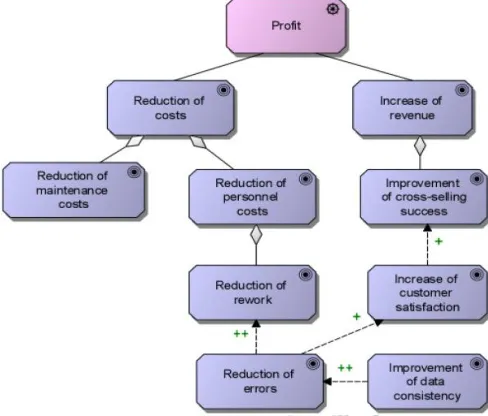
Figure 2.3: Sample Goal model from BiZZdesign Architect. ... 13
Figure 2.4: Fuzzy Logic based reasoning engine ... 16
Figure 2.5 Trapezoidal, Triangular and Gaussian fuzzy sets. ... 17
Figure 2.6 A typical trapezoidal function with four vertices a, b, c and d. ... 17
Figure 2.7: A single temperature value belonging to two different fuzzy sets. ... 18
Figure2.8: Rule aggregation in fuzzy inference engine ... 20
Figure 2.9: Weighted average method to defuzzify two fuzzy sets ... 21
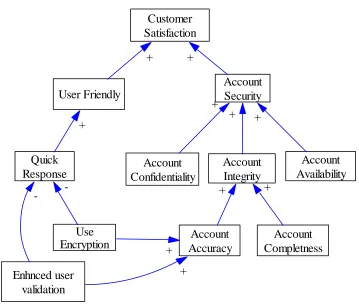
Figure 3.1: Sample Software Interdependency Graph (SIG). ... 26
Figure 3.2: Three levels of KAOS models ... 28
Figure 3.3: DepRVSim structure [43] ... 32
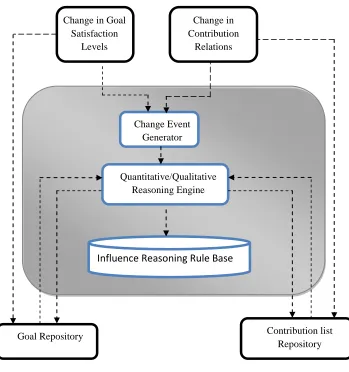
Figure 4.1: Proposed solution structure ... 40
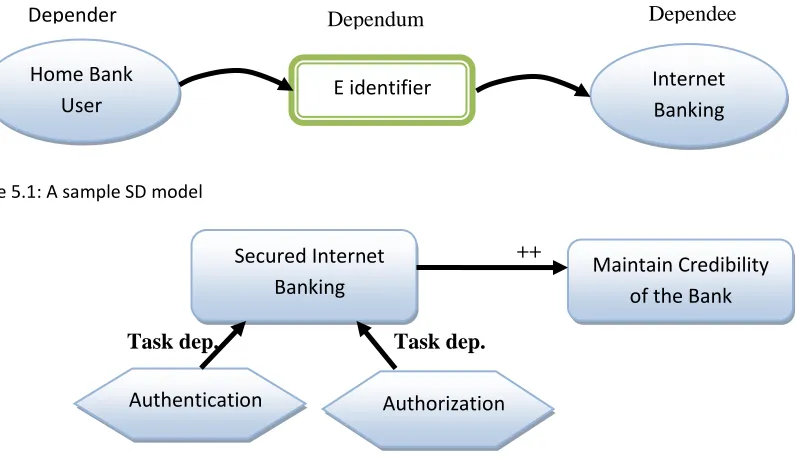
Figure 5.1: A sample SD model ... 43
Figure 5.2: A sample SR model ... 43
Figure 5.3: A simple goal influence diagram with two goals and one influence relation r. ... 45
Listing 5.1: Abstracted TROPOS Algorithm ... 48
Figure 5.4: ArchiSurance goal models ... 50
Figure 5.5: Extended ArchiSurance Goal model ... 51
Figure 5.6: A portion of goal models applied in goal analysis ... 53
Figure 6.1: A typical Software Interdependency Graph (SIG). ... 58
Figure 6.2: A goal, whose satisfaction level belonging to two different fuzzy sets. ... 62
Figure 6.3: A contribution relation, whose satisfaction level belonging to two different fuzzy sets. ... 63
Figure 6.4: A typical trapezoid specified using four vertices. ... 63
Figure 6.5: Identifying the membership functions of a crisp input. ... 65
Figure 6.6: Twenty of the hundred possible rule combinations in NFR based Fuzzy logic reasoning. ... 67
Figure 6.7: Weighted average method to defuzzify two fuzzy sets ... 69
Figure 6.8: Finding the Centroid of a trapezoid ... 69
Listing 6.1: Abstracted fuzzy reasoning algorithm ... 71
Figure 6.9 ArchiSurance goal model. ... 73
Figure 6.10: Goal model of the water company ... 75
Figure 8.1: Simple goal feedback loop for illustrating change impact analysis algorithm... 85
Figure 8.2: Effect of changing “Formal Verification Effort” on “Testing Cost” . ... 86
Figure 8.3: Effect of changing “Testing Cost” on “Formal Verification Effort” . ... 87
Figure 8.4: Simplified ArchiSurance goal Model ... 91
Figure 8.5: Graphical representation of investing on IT budget effects. ... 94
Figure 8.6: Graphical representation of investing on “HR” effects on other goals of the system. ... 97
XII
List of Tables
Table 1.1 Goal relations relevant for indirect influence relations ... 5
Table 3.1: Goal analysis approaches mapped to RE activities ... 25
Table 3.2: Sample contribution relations from the NFR framework [8]. ... 27
Table 4.2: Summary of the comparison criteria values about current GORE methodologies. ... 38
Table 4.4: Quantitative vs. qualitative comparison of existing GORE approaches. ... 39
Table 5.2: Three levels of satisfiability of goals in TROPOS. ... 44
Table 5.3: Adapted influence relation definitions in goal models. ... 44
Table 5.4: Extended TROPOS based Goal Influence reasoning rules. ... 45
Table 5.5: Initial goal assignments for satisfaction levels ... 52
Table 5.6 Goal Analysis Result for ArchiSurance case study ... 52
Table 5.6: Input values for leaf goals satisfiability and deniability values. ... 54
Table 5.8: The result of the TROPOS based goal analysis on satisfaction levels. ... 55
Table 6.1: Goals contribution types and symbols of “AND” and “OR” contribution combinations [8]. ... 58
Table 6.2: Goal satisfaction level descriptions [9]. ... 59
Table 6.3: Contribution impacts reference table ... 61
Table 6.4: Goal satisfaction levels assigned to various trapezoidal fuzzy sets. ... 64
Table 6.5: Contribution types assigned to various trapezoidal fuzzy sets. ... 64
Table 6.6: Sample rules for goal satisfaction levels. ... 67
Table 6.7 Sample inputs for the ArchiSurance goal model ... 72
Table 6.8: ArchiSurance quantitative goal model results ... 74
Table 6.9: Input values for leaf goals satisfaction levels ... 75
Table 6.10: The result of the fuzzy logic analysis on goal satisfaction levels... 76
Table 7.1: Goal value mapping between qualitative and quantitative specifications. ... 78
Table 7.2: Inputs for qualitative and quantitative reasoning approaches of water company case study. 79 Table 7.3: Predicted satisfaction level of goal models for the water company case study. ... 80
Table 7.4: Inputs for qualitative and quantitative reasoning approaches for ArchiSurance cases study .. 80
Table 7.5: Predicted satisfaction level of goal models for the ArchiSurance case study... 81
Table 8.1: Effect of increasing IT budget on the profit of the company. ... 92
Table 8.2: The result of investign on the IT budget of the ArchiSurance Company. ... 93
Table 8.3: Effect of changing the “Maintain current staff size” on other goals of the system. ... 95
Table 8.4: the first 16 iteration results of allocating the budget fully to HR department. ... 96
Table 8.4: Effect of creating more insurance options for customers ... 98
Table 8.6: The first 16 iteration effect as a result of creating more insurance options for customers ... 99
Table 8.7: Effect of each candidate decision on the profit of the company. ... 101
1
1. Introduction
Business environments nowadays are becoming increasingly more dynamic, demanding continuous adaptation in business process designs and realizations. Numerous events can trigger changes that are responsible for the dynamic aspects of business processes and supporting/enabling IT systems. In most cases, these changes manifest as alterations in one or more goals of stakeholders of the system. These goal changes will then propagate to requirements, designs, implementations and test cases of a system development process.
To analyze the impacts of dynamic stakeholder goals and requirements, various change impact analysis techniques are proposed and used by the software engineering community [1], [2]. Enterprise Architecture (EA) models which tie business goals, business processes and supporting IT systems are also expected to have a technique for analyzing changes in goals and requirements of the EA.
Unfortunately common EA frameworks like The Open Group Architecture Framework (TOGAF) [3] and EA modeling languages like ArchiMate[4] lacks support for analyzing impact of goal and requirement changes. The Architecture Development Method (ADM) of TOGAF tries to emphasize requirements management as a central process of EA development cycle but it does not provide an explicit technique to specify the motivation of EA components in terms of stakeholder goals [5].
Stakeholder goals can be added to, deleted from and modified in system goal models depending on the type of change occurring in the business environment. Among these changes, change in the satisfaction level of (soft) goals due to influence relations is the primary reason behind the dynamic aspect of the business environments [6]. In goals related with influence relations, a change in the satisfaction level of a goal affects the satisfaction level of its adjacent goal, which will in turn affect its adjacent goal and so on. Capabilities to reason on these kind of influence relations helps in maintaining continuous satisfaction of stakeholders’ interest by supporting the required adaptability of business processes, products, service and their supporting IT systems.
Unfortunately, current object oriented RE methodologies give negligible attention to the management of influence relations among goals. On the other hand, there are few GORE based attempts to reason on goal satisfaction levels (e.g. [7–9] ). But these recent attempts are not tailored or verified to be applicable in managing adaptable stakeholder goals in EA design contexts.
Recently however, researchers have started publishing promising approaches that include requirement and goal management in EA frameworks and modeling languages (e.g. [10], [11]). These approaches emphasize capturing the rationale why EA components are available by incorporating intentional concepts like stakeholder, goals and requirements in EA designs. Moreover these approaches go one step further by representing goal influence effects among directly related goals via notations like ++ and --.
2
1.1: Project Context: BiZZdesign
1and EA Modeling
BiZZdesign is a company primarily involved in assisting organizations to be stronger by providing the necessary approaches for designing, improving and managing business processes effectively. The approach employed by the company includes proven and easy to use software tools, best practice models, methods, trainings, business consultancy etc [12].
One of the primary expertise’s of BiZZdesign is enterprise architecture (EA) modeling and management. BiZZdesign is also one of the primary contributors and authors of ArchiMate2, an emerging language for enterprise architecture modeling [13]. Even though originated and widely used in Netherlands, ArchiMate eventually became a standard of The Open Group and it is getting more and more worldwide attention these days [13].
BiZZdesign is not only the adopter and contributor of ArchiMate; it is also the first company to develop a tool for ArchiMate by the name BiZZdesign Architect [13]. BiZZdesign architect is a tool that can be used by the majority of EA methodologies; though it is primarily used for The Open Group Architecture Framework (TOGAF) in BiZZdesign projects. It is also one of the EA modeling tools accredited by The Open Group [14].
BiZZdesign has been using ArchiMate as a modeling language and TOGAF’s Architecture development method (ADM) as a methodology in designing EA for its client organizations. As already noted earlier, most EA frameworks used to ignore goal and requirement modeling in EA designs. TOGAF’s ADM is by no means different. Though ADM denotes requirement as a central method for developing an enterprise architecture, little or no attention is paid to represent (explicitly) the motivations or rationale behind the components of the EA. Putting it in other words, the why behind the architectures is not adequately addressed in TOGAF’s ADM [5].
Consequently, the lack of goal and requirement management was an apparent problem in most of the BiZZdesign EA projects. In order to solve this problem, BiZZdesign has developed an extension of ArchiMate language that enables modeling of RE concepts in EA designs.
The new extension enables modeling of business goals, requirements, principles, stakeholders and other intentional elements. It also provides representation of influence relations among goals and requirements via classic influence notations like “++” and “--”. Considering the importance of these intentional elements for EA, The Open Group has incorporated these extensions in ArchiMate 2.0 specification [4].
But this kind of goal influence modeling among directly related goals is not adequate for maintaining the requited adaptability of EA and its sub systems. Instead, EA goal models should support modeling and analysis of influence relations among indirectly related goals. This analysis in turn demands the presence of adequate reasoning techniques on goal influence relations. Consequently, indirect influence reasoning support on goal satisfaction levels is a must to have technique for BiZZdesign to maintain developing adaptable solutions for its client organizations.
1
www.bizzdesign.com 2
3
1.2 Problem Definition
This sub section explains the problem statement in more detail. It also explains the main objective of the research. Four research questions intended to achieve the research objective will also be formulated. Finally, this subsection identifies the scope of this thesis project.
1.2.1: Problem Statement
BiZZdesign and its clients are not the only organizations who realize the importance of goal formalizations and goal change impact analysis. Among others, i* framework for instance uses the notion of ++ and -- to model goal change impacts in requirements, process and Architecture models [15].
A similar approach that emphasizes on goal contribution analysis is the Non Functional Requirements (NFR) framework [8]. NFR tries to formulate various goal achievement levels and contribution types to enable qualitative analysis on goal change impacts. However this kind of qualitative reasoning on goal change analysis may suffer from ambiguous and undetermined levels of goal satisfaction values [16].
Some business goals, especially those termed as soft goals, are difficult to precisely specify their satisfaction levels due to their fuzzy nature. For this kind of goal, qualitative reasoning may seem the best option for describing their satisfaction values. Nevertheless, quantitative reasoning on goal change impacts would have been possible for these fuzzy goals via fuzzy logic reasoning techniques [17].
Goal influence cycles (feedback loops of influence relations) are critical influential factors in shaping the dynamics of system behaviors [6]. However none of the current goal and requirement change impact analysis techniques (e.g. KAOS, i*, NFR) consider effects of feedback loops in their goal contribution relation definitions. An exception to this is the TROPOS methodology which mentions the possibility of cyclic goal influence relations. But it does not explicitly indicate how to determine the long term effect of cyclic goal influences relations.
Consequently, there is no formalized, complete and automatable reasoning technique for stakeholder goal change impact analysis in EA goal designs. This lack in automated reasoning is forcing EA developers and users to analyze goal change impacts using their intuition and past experiences. Obviously, these kinds of practice are incomplete, time consuming, and usually error prone.
1.2.2: Research Objective
The lack of automated goal change impact analysis has been identified as the main research problem in the previous section. To address this problem, the process of analyzing both direct and indirect influence relations among goals should be formalized and automated to the maximum possible extent. Doing so will enable EA users and other stakeholders to assess and estimate the impact of changing a stakeholder goal on other goals of the EA designs.
4 This will lead to the main objective of this research:
Research Objective: Developing of algorithms that enable analysis, reasoning and simulation of direct and indirect influence relations among goals in Enterprise Architecture designs.
1.2.3: Research Questions
In order to achieve the research objective, the following main research question will be answered in this master thesis project.
How can we analyze and simulate the effect of influence relations among goal models in EA designs?
This research question can be decomposed in to four sub research questions outlined below.
RQ1. What are the formalizations of the existing goal-oriented requirements engineering approaches and what kind of reasoning do they allow?
This question involves identification of existing formalization trends in current GORE practices. A detailed literature review on available GORE methods is used to answer this research question. GORE methodologies can have multiple aspects that can be defined formally. Nevertheless the main focus of this research question will be formal definitions of goal satisfaction and goal-to-goal influence relations.
RQ2. Which goal formalization techniques support reasoning on indirect influence relations and change impact analysis for goal models?
Influence relations are not the only types of relations available among goals of EA models. There can also be other relation types like contain, refine etc. This research question helps in identifying formal definitions of influence relations that can be used in analyzing goal contribution and feedback loop effects. The formalization can be used to estimate the impact of changing the satisfaction level of goals.
RQ3. How can we simulate influence relation impacts on goal satisfaction values and how can we visualize the simulation?
BiZZdesign and its client organizations are interested in developing a tool support for indirect influence relations analysis. Hence the technique identified in RQ3, should be formally defined as an algorithm. Moreover a prototype implementation of this algorithm shall be realized as an extension to BiZZdesign Architect.
The prototype will be designed to accept certain goal changes scenarios. It will then use its influence relation reasoning engine to predict the goal satisfaction values. The simulations results will be visualized on the goal models developed in BiZZdesign Architect.
5
RQ4. How can we model, simulate and visualize the effect of feedback loops in goal models?
One of the primary causes of business dynamics are feedback loops [6]. In goal feedback loops, a change in a goal satisfaction level will affect the source of the changing goal itself either positively or negatively. By answering this research question, it will be possible to model, analyze and reason on goal-cycle effects which will add substantial understanding to dynamic business environments.
1.2.4: Research Scope
Goal change impact analysis is not limited to changes in the satisfaction levels Goals. Goals can be added, deleted, modified etc. Even goal model modifications are not limited to changes in the satisfaction level of goals. It can be extended upward to analyze how a change in a goal will affect business processes, enterprise architecture designs and ultimately organizational structures. It can also be extended downward to system requirements, architectures, implementations and other technology artifacts. Analysis of all these change scenarios is too broad to cover in this thesis project. This project will focus only the analysis of change impacts in goal satisfaction levels due to goal-to-goal influence relations.
The reader may argue that influence relations are not the only type of goal-to-goal relations. Yes, there are other type of relations like contains relation where a goal will contain another goal, mean end relations where a number of sub goals are required to realize a higher level goal etc. These kinds of relations can be relevant in designing goal models by decomposing and refining goals and requirements. But they are either of no practical use in dealing with influence relations or they can be reasonably substituted by one of the influence relations stated in table 1.1 below. For instance, “means end relations” and “aggregation relations” can be considered as “AND decompositions” if we are concerned only on influence relations. Table 1.1 shows the types of relations that are relevant for goal indirect influence relations that will be used in this project.
Influence
Relation Name AND OR Break Hurt Help Make
Symbol (G2 G3) G1 (G2 G3) G1 G2 - -G1 G2 - G1 G2 + G1 G2 ++ G1
Table 1.1 Goal relations relevant for indirect influence relations
6
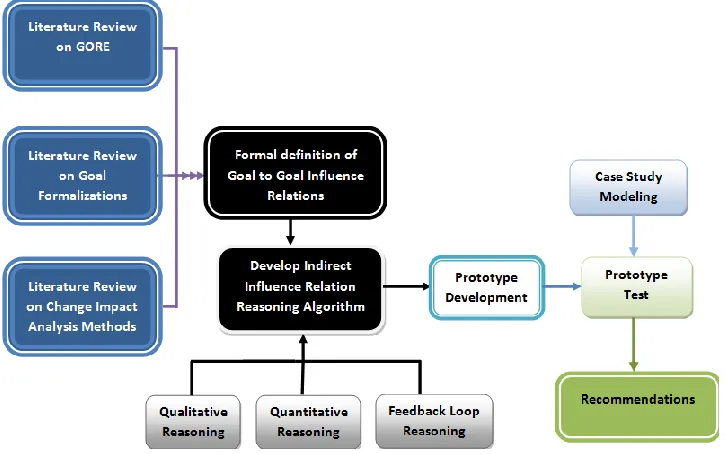
1.3: Research Methodology
This master thesis project will be addressed on the basis of Design Science research guidelines [18]. Design Science research enables understanding of a problem domain and realization of its solutions by building application artifacts like algorithms, formal logics, and even informal language descriptions [18].
In a nutshell, a design science research is about solving a certain problem. Hence the top level problem of any design science research is a practical problem [19]. Correspondingly, the main technical problem of this project will be designing an algorithm for indirect influence relation analysis.
The first step to solve this kind of top-level technical problem is strengthening the understanding of the problem itself [20]. This will lead to the knowledge questions (RQ1 and RQ2) to be answered by acquiring the relevant knowledge from a literature review on existing goal formalization and change impact analysis techniques.
The next step will be formulating the required goal formalization and impact analysis technique that can reason on indirect influence relations. This step may adapt the results from the literature review. Selection of appropriate formalization and reasoning technique will be a vital input to the process of answering the practical problem posed by RQ3.
The third step in this project will be developing the algorithm based on the results of the previous step. This step will lead to building a prototype application as an extension for BiZZdesign Architect tool.
The final step is using case studies to validate both the algorithm and the prototype application. This project conducts two case studies: one real industrial case on a client organization of BiZZdesign and a second case study on hypothetical example from The Open Group [21]. The hypothetical example is adapted to incorporate more complex goal cycles to enable simulation and validation of goal cycle effect.
7 Figure 1.1: Research approach
1.4: Significance of the Project
A number of theoretical and practical contributions are expected from this project. Some of the major contributions are outlined below. The significance of the first three contributions is more of academic, whereas the last two are industrially significant.
The primary significance of this thesis project is its contribution towards semantically reach definitions for influence relations. The semantic is added to the goal relations via formal definitions that will enable reasoning on direct and indirect goal influence relations. An algorithm that utilizes this reasoning to simulate indirect-influence relations will also be developed.
Second, the algorithms developed from this project will support not only qualitative reasoning, but also quantitative reasoning. This will allow goal reasoning at different levels of abstractions for different kinds of users. Higher-level managers and non-technical users can use the qualitative reasoning for more abstracted goal reasoning while RE experts and other technical stakeholders can use the quantitative analysis for more detailed goal analysis. These will enhance the usability of goal models in particular and EA designs in general.
Third, goal change impact analysis is not limited to goal-to-goal relations. Analyzing the impact of changing a certain goal can be extended to higher-level EA components and organizational structures or lower-level software architecture and implementation components. This project can serve as a basis for studying the impacts of goal changes on other components of the EA.
8 Fifth, prototype application for indirect influence relations on goal models will be realized based on the algorithms with formalized relations. The prototype will be developed as an extension of BiZZdesign Architect. An application based on this prototype will enable BiZZdesign to provide automated reasoning on indirect influence relations for its client organizations. The reasoning will allow BiZZdesign Architect tool to provide better and more accurate analysis on goal change impacts. This will improve the dynamicity of the organization by predicting possible change impacts.
Sixth, the project will provide a tool support for predicting goal change impacts, thus greatly enhancing decision-making process. Stakeholders usually have limited resources that need to be invested in a way that can result the maximum possible benefit for the organization. Simulating effects of possible resource allocation scenarios (correspondingly, simulating goal change impacts) will provide the relevant data for deciding which resource should be allocated to which stakeholder goal.
Finally, an immediate consequence of the last two contributions is the enhancement of BiZZdesign Architect functionality. This will enhance its usability and eventually increase the satisfaction of BiZZdesign architect users.
1.5: Thesis Outline
This report is organized in eleven chapters and three appendixes. The major content of important chapters is discussed below:
Chapter 1 : Introduction
Chapter one contains the introduction which provides brief background information, problem statement, research questions, scope and related concepts.
Chapter 2 : Background of the Study
This chapter introduces the basic concepts that are used in the remaining parts of the report. The most important concepts covered are the need for change impact modeling, causal loops, fuzzy logic reasoning and an example case for illustrating goal change impacts.
Chapter 3: GORE and Formal Definition of Goal Relations
This section we will present the result of the literature study on topics related to goal oriented requirements engineering. The topics of the literature study are the reasons behind adopting GORE as a new technique for RE, the kind of formalization techniques employed by major GORE techniques and the type of reasoning the formalizations allow. Four goal oriented approaches are discussed in detail: KAOS, NFR, i* and TROPOS.
Chapter 4: Artifact Design
This chapter presents two vital steps in a design science methodology based research: specification of the requirements and architectural design of the intended system. The requirements and constraints of the system are gathered from discussions with BiZZdesign stakeholders and from the literature review presented in the previous chapter.
9
Chapter 5: Qualitative Reasoning
The first reasoning approach, which is based on TROPOS software development methodology, is discussed in detail. Adapted algorithm, prototype application and result of test case study are presented.
Chapter 6: Quantitative Reasoning
The second reasoning approach, which is based on fuzzy quantitative reasoning engine, is presented in this section. The rules in the fuzzy reasoning engine were adapted from the NFR framework. Just like the previous chapter, adapted algorithm, prototype application and result of test case study is presented.
Chapter 7: Comparison of Qualitative and Quantitative Reasoning
This chapter compares the results of the two reasoning approaches discussed in chapters six and seven.
Chapter 8: Reasoning on Feedback Loops of Goal Models
Feedback loops of influence relations in goal models will be explained here. An algorithm and a prototype application for simulating feedback loops is also presented.
Chapter 9: Conclusion and Future Work
10
2. Background of the study
This chapter introduces the basic concepts to be used in the remaining parts of the report. The most important items to be introduced are the need of analyzing change impacts, causal loops, fuzzy logic reasoning and an example goal model for illustrating upcoming “goal-oriented” sections. This chapter also presents an introduction to some of the formalization techniques employed in GORE activities.
2.1: Why Care about Changes and Their Impacts?
As the old saying goes, change is the only thing that does not change. A peculiar characteristic of the Information Age is the continuous change in our personal, cultural, environmental, political, economical, technical environment. Business processes and their environments are by no means different. Organizations are always under continuous change as a result of policy, strategy, financial, resource, marketing, and other factors. In short, the ability to predict and cope with the inevitable changes is becoming the crucial factor for determining the success of any organization.
Along with the increased dynamicity of business process, the necessity of adaptable systems is also increasing as information systems are migrating from business process supporters to business process enablers [22]. But an adaptable system development is not a one night task. In order to ensure, the required adaptability, every step and artifact of a system development process, starting from the top level goal identification to the realization of the system components should be designed keeping in mind the possibility of change at any time during and after the development process.
But before trying to develop adaptable systems and business processes, anticipating and modeling the possible change scenarios (evolution requirements) is an important prerequisite step. And whenever a change occurs, its influence on other entities of the organization should be identified and modeled. For these and related reasons, the change case, associated scenarios and their impacts should be studied as well.
Change is not something that exists by itself; it is transition of a certain entity from one state into another due to a certain cause usually called an event and it results an outcome that can be referred as an action. Putting it in another way a change in certain entity will always have an effect on some other entity in its environment.
There are a number of ways of representing this cause - effect relationships including casual loops and Ishikawa diagrams. Casual loops are prominent in change impact modeling while Ishikawa diagrams are common in product design, defect and quality modeling. Additionally since BiZZdesign Architect goal and requirement modeling feature resembles casual diagrams; we are going to use causal loops for modeling goals and analyzing change impacts.
2.2: Causal Diagrams
11 In a positive influence, the change in the influencer entity is directly proportional to the change in the affected entity. For instance an increase in the strength of encryption algorithm of customers account will increase the security of the account security data while a weaker encryption algorithm results a lower security standard.
Figure 2.1a: a positive causal effect Figure 2.1b: A negative causal effect
On the other hand, in a negative influence relation, a change in the influencer is inversely proportional to a change in the affected entity. Considering figure 2.1b above, sophisticated encryption algorithms might cause delay in accessing accounts thereby decreasing system performance while employing naïve encryption algorithms may result in faster input output operations.
These relations hold if and only if third entities are kept constant or their effects are ignored. For instance, though a sophisticated encryption algorithm is used, response time may remain constant if a faster machine is used. Hence the above equations will hold if every other entity in the system environment except A and B are ignored or kept constant.
It is also possible to represent these influence relations by using mathematical equations. Assume two entities ‘A’ and ‘B’ are related by an influence relation where ‘A’ is the influencer and ‘B’ is the affected, then if:
As an example let us take the case in figure 2.1b shown above; let A represents the encryption strength and B represents the performance of the system. Assume we increase the encryption strength, then we will have a positive value for ΔA = A2 – A1 due to the increase in the value of encryption strengths. Now assuming every other factor (e.g.: processor speed) remains constant, ΔB = B2 – B1 will result a negative value since the performance measure of the system decreases as a result of the increase in the encryption strength. From the ratio of ΔA to ΔB, we will have then a negative value indicating a negative influence type.
Just like the effect of change in entity ‘A’ can have an effect on B, the resulting changes in ‘B’ can also have an effect on a third entity (entity ‘C’) or even back on the original entity ( entity ‘A’) which causes the change. These change interactions, also called feedbacks are the sources of dynamics in any complex system. And every dynamics in all kinds of systems is as a result of two types of feedback loops; positive (or self-reinforcing) and negative (or self-correcting) loops [6]. As their names imply positive loops tend to intensify the systems change while the negative loops tend to oppose the change thereby attempting to counteract the change.
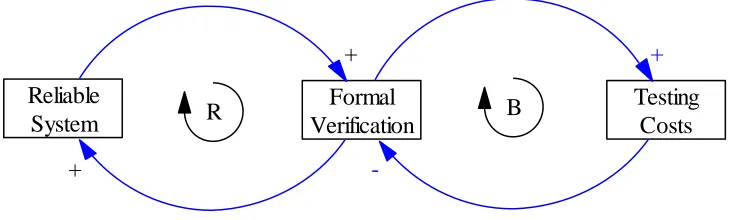
-12 Important loops in casual diagrams are highlighted by a loop identifier using “R” for reinforcing or positive loops and “B” for negative or balancing loops. In figure 2.2 left, In order to increase the reliability of a system to be developed, the formal verification efforts should be increased. And an increase on formal verification will enhance the reliability of the system to be developed there by forming a positive(R) loop. But so much formal verification approach may escalate testing costs which can force developers to decrease the formal verification effort resulting in a negative (B) loop formation.
Figure 2.2: Positive and negative feedback loops
2.3: Goal Change Impacts: an Introduction
In previous subsection, dynamicity of business processes, the needs in adaptability and techniques of modeling change impacts have been discussed. But the reason behind dynamicity of business processes and IT systems were not discussed. We will discuss this reason now and it is going to be short and precise:
There can be numerous causes of changes in business environments. But these changes will be relevant to a system under study if and only if they have a possibility of affecting some stakeholder goal. And these are the types of changes that will determine the dynamics of the business environments.
Putting it in other words, though changes occur frequently, only those changes that are “relevant” to the system stakeholders are influential in governing the business dynamics. A point to remember is that “relevant” does not necessarily mean beneficial to stakeholders. Changes can be constructive where users will encourage them to happen all the time and at the same time changes can be destructive where appropriate remedial are necessary to cope with them.
When these “relevant” changes occur, some of the stakeholders’ goal will be affected either positively or negatively. The affected goal will then affect goal directly related to them and the newly affected goals will affect goals elated to them and the change impact will continue until the change effect reaches the root goal of the goal tree. Sometimes there can be cyclic goal influence loops like the one shown in figure 2.2. A change in one of the goals of a goal loop diagram will then circulate for longer period of time until all the goals in the system reach common satisfaction level.
Adaptability to these “relevant” changes is then the means to maintain the adaptability of the entire system, i.e. failure to manage changes in stakeholders’ goals and requirements poses significant risks to the adaptability of business environments. Consequently, designing of adaptable systems and management of dynamic stakeholder goals are two inseparable processes.
Reliable
System
Formal
Verification
Testing
Costs
+
+
-+
13 2.3.1: Modeling Goal Change Impacts
The notations used in modeling influence relations can be extended in modeling influences between stakeholder’s goals. In order to do so, causal diagrams can be extended with AND/OR decomposition notations and goal conflict representations to model goal change impacts.
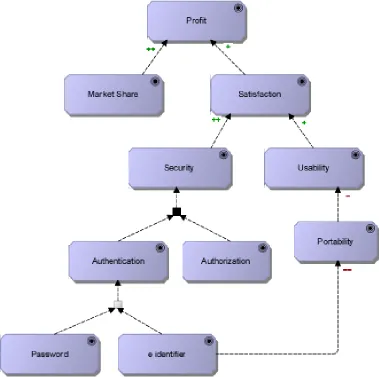
[image:25.612.77.456.251.628.2]To analyze goal change impacts, the influence relations need to have formal definitions that allow reasoning on indirect influence relations among goals. Ultimately, the result of goal change impact analysis will be used as an input in decision making processes and in developing more adaptable systems. Figure 2.3 below shows an example goal model with causal arrows and AND/OR decompositions. The light box represents “OR” decomposition while the dark box represents “AND” decomposition. The formal definitions of goal relations will be covered in detail in the upcoming subsections.
14
2.4: Formal Specification - A Quick Recap
Though the names might seem quite new, formal specifications and languages have been around probably as old as computers; And with or without knowing it, we are using formal languages when we write snippets of codes in Java or C++, when we write first order logic predicates etc.
Just like any other language, a formal language is a set of expressions but of course with some tight constraints. A language is formal if and only if it has well defined syntax and semantic grammar. Programming languages like Java or C++ are formal languages while human languages like English and Dutch are not formal language since expressions on these languages can have vague interpretations.
In system analysis activities, formal languages can be used to write formal specifications. These formal expressions will be then the necessary ingredients for clear, precise and automated analysis and reasoning on system properties.
A formal expression is “an expression, in some formal language and at some level of abstraction, of a collection of properties some system should satisfy”[23]. As an example, the textual (and of course the non formal) goal “The elevator shall deliver a passenger to a specific floor” using temporal logic can be defined formally as:
p
: p.buttonPressed(x) p.Arrive(x)
OpenDoor(x))
Although these kinds of expressions are more abstract and less appealing than their human language form, they provide formal and unambiguous specifications for automated analysis and reasoning processes [23].
Other uses of formal specifications include ability for inferring consequences, generation of concrete scenarios and counter examples, to check and simulate consistency and completeness etc. For the details of this and many more benefits of formal specifications [23] can be refereed.
2.4.1 Formalization and GORE
Though the degree and type of employed formalization may vary, majority of the current GORE techniques employ some sort of formalization in one or more GORE activities like goal elicitation, elaboration, analysis and specification. In fact the literature study conducted by Kavakali et.al identifies that out of the 15 goal oriented approaches identified in a literature study, 14 of them uses one or more formal definitions in at least one of the sub activities of GORE process [24].
To give an example of formalization usage on well known GORE approaches KAOS uses temporal logic for specifying and elaborating goals[7] and a probabilistic based reasoning to reason on partial satisfaction of soft goals [16], i* uses formalized intentional concepts from artificial intelligence [15], [25] in specifying the ability of agents to achieve goals, NFR employs qualitative reasoning for goal contribution analysis [8] and TROPOS uses the i* concepts in first order logic format to reason about requirement analysis [26].
15
2.5: Fuzzy Sets: an Introduction
Members of conventional sets like the set of operating systems, the set of Android phones etc. can have only two possible values: Either they are not a member or members of the given set, just like we use 0 and 1 in the digital world. There is no concept of partial membership in conventional crisp sets. For instance a phone is an android based system or not! It does not make sense to say this phone is partially android.
Crisp sets have competitive advantages in computers, since either “yes” or “no” membership values match the digital world 0’s and 1’s. But there are situations where entities can be a member of a given set partially. Take the set of fast computers in the world, the set of young people in a city or the set of beautiful bitches in South America etc; it is difficult if not impossible to have a consensus on the members of these kinds of sets.
There are other types of sets, called Fuzzy sets that can be applied in these kinds of ambiguous set definitions. Fuzzy sets, proposed by LA Zadeh, use the concept of membership functions to deal with these kinds of vague sets [27], [28]. The membership values will range from 0 to 1, 0 representing no membership value while 1 represents full membership. Any number between 0 and 1 can be used then to specify the degree of membership. It is worthy to mention that conventional sets can be considered as special type of fuzzy sets whose membership values are “0” and “1” only.
2.5.1: Application of Fuzzy Sets
Fuzzy sets are applicable in areas where approximates reasoning is required. Considering the fact that most of mankind reasoning is based on approximation like “if temperature is high then increase fan speed”, fuzzy sets can be used in many approximate reasoning techniques [27].
Humans are experts on approximate reasoning because we can take actions based on common sense. Boolean logic based computers cannot use “common sense” reasoning because the exact meaning of “hot” temperature should be defined to them. But the definition of “hot” temperature is not something that can be agreed by everyone. Different places and even different people at the same place may have different definition for “hot” weather.
When dealing with this kind of vague ideas, different perceptions of the current situations should be taken in to consideration before deciding the desired action. Take a temperature controller as an example: if 20°C is the sensor reading, we can assume the controller will perceive this as 80% moderate temperature and 20% cold. We will see shortly, how these percentage values can be determined for each possible input in section 2.5.2.
The decision of a fuzzy logic controller will be then based on both percentage values. i.e. it increases the temperature of the thermostat (because it is 20% cold) while considering the room temperature is 80% normal. These will clap down the amount the temperature of the thermostat will be raised by a significant portion since the room temperature is 80% normal.
16 Crisp Inputs
example of fuzzy logic controller is Sendai Subway system in Sendai, Japan. Thanks to its fuzzy logic based controller, this subway is one of the smoothest running subway systems in the world [29].
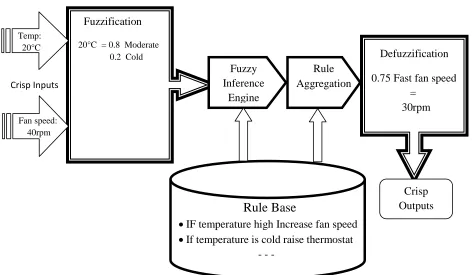
Fuzzy logic based reasoning requires few more steps than the conventional if – else based rule inference systems. The most important steps are fuzzification, Fuzzy rule application, Rule Aggregation and defuzzification processes which are shown in figure 2.4 below. Detailed discussion of each step will follow the figure.
[image:28.612.71.543.218.493.2]
Figure 2.4: Fuzzy Logic based reasoning engine
2.5.2: Membership Functions and Fuzzification
Fuzzification is a process of changing a crisp input to a membership values. As noted earlier some vague concepts may belong to two sets. To what extent these concepts belongs to available fuzzy sets will be determined by membership functions and the process of determining the membership values is the fuzzification process[27], [30]. Assigning a membership value of 20% cold and 80% moderate values for the temperature in the previous section was an example of fuzzification process. To fuzzify a given input value, we need to define membership functions. There are a number of predefined and customizable membership functions like Triangular, Trapezoidal, Gaussian etc [30] as shown in figure 2.5 a, b and c. Looking at the pictures in figure 2.4 a, b and c, it is obvious that the these sets get their names from their respective shapes.
Fuzzification
20°C = 0.8 Moderate 0.2 Cold
Fuzzy Inference
Engine
Rule Base
IF temperature high Increase fan speed If temperature is cold raise thermostat
- - - Rule Aggregation
Defuzzification
0.75 Fast fan speed =
30rpm
Temp: 20°C
Crisp Outputs
17 Figure 2.5 Trapezoidal, Triangular and Gaussian fuzzy sets.
The complete discussion of each of these fuzzy sets is out of the scope of this project. Interested reader can refer [30] for more information. But we’ll elaborate more trapezoidal fuzzy sets here since it will be used extensively in the quantitative reasoning section (chapter seven) of this report. The reason why we choose trapezoidal fuzzy sets for our approach will be discussed in chapter seven.
A trapezoid, as shown in figure 2.6 has four vertices that can be used to specify and identify the trapezoid.
Figure 2.6 A typical trapezoidal function with four vertices a, b, c and d.
From now on, we refer to a trapezoid by its four vertices. Using these four vertices and standard linear equation formula (y = mx + b), the equations of the lines that make the trapezoidal sets can be easily calculated. And from that equation, the membership values can be easily found for any given crisp input.
The following example will clarify the fuzzy set and membership values concept discussed so far.
Let us take the concept of temperature controller. A given temperature can be “Freezing”, “Cold”, “Moderate”, “Warm” or “Hot” which we will take them as fuzzy sets. The question will be then; given a temperature of 12°C, to which fuzzy set will it belong to? It can belong to cold temperature in tropical regions and moderate temperature in Scandinavian counties! If we are using the conventional crisp set concept, we would be forced to choose either cold or moderate temperature but not both!
But if a fuzzy set approach is used, a temperature of 12°C can be a member of two sets (Moderate and Cold) with different degree of membership. Let’s use standard linear line equations to determine these membership degree values. Diagrammatical representations of the two possible membership values are shown in Figure 2.7.
18 Figure 2.7: A single temperature value belonging to two different fuzzy sets.
The values 0.4 and 0.6 are derived using linear equations as follow. From the ranges specified in figure 2.6, an input of 12 °C belongs to a region where both cold and moderate temperatures are defined.
Using points (10, 0) and (15, 1) to find the linear equation of the diagonal line in Moderate region (Green line), we will have:
m (Slope) =
Then the equation of the line, using linear equation formula, will be:
y = mx+b y = 0.02x+ b
To find b, we can use either of the points. Let’s use Point (10, 0).
y = 0.02x+ b 0 = 0.02*10 + b 0 = 0.2 + b b = -0.2
The equation of the line will be then: y = 0.02x – 0.2
Using this equation, the membership value of a temperature (with input level is 12) to the fuzzy set “Moderate Temperature” as shown in figure 5.7 can be determined as:
y2 = 0.02x – 0.2 y2 = 0.05*12 - 0.2 y2 = 0.6 – 0.2 y2 = 0.4.
19 The second membership value, y2, which is the membership value of a goal to the set “Cold” (the red one), can also be shown to be 0.6 using a similar approach.
2.5.4
Fuzzy Inference Engine and Rule Aggregation:
The fuzzy inference engine applies the rules stored in the rule base on the membership values obtained in the fuzzification step. The rules to be applied are specified in terms of “if-else” statements that will be invoked based on the input membership values. Taking temperature controller as an example the following are candidate rules for the rule base.
i. If temperature is cold Turn on heater.
ii. If temperature is Warm AND fan speed is low fan speed should be medium.
iii. If temperature is moderate AND fan speed is average no change to speed of the fan.
There can be rules that can be formed from combination of two or more rules (e.g. Rule ii and iii). In this kind of situations, the “AND” combination takes the minimum of the individual rules. The minimum result will be used as a representant of the AND combination [30]. This kind of reasoning is also used by Mamdani inference engine system which utilizes the Max –min inference system [31].
Consider figure 2.8, next page there are two preconditions, namely “If temperature is Warm” and “IF fan speed is low”. One of the membership values of these preconditions is 0.6 and 0.75 respectively.
According to the AND propagation rule of fuzzy logic, the minimum value of the two will be the aggregated result of both values.
Minimum (0.6, 0.75) = 0.6
If we assume that the three candidate rules are applicable in this case, then Rule ii, will be selected by the fuzzy reasoning engine since it matches the preconditions. The result of applying this rule will belong to the fuzzy set medium according to rule ii and its membership value will be the minimum of 0.6 and 0.75 which will be 0.6.
Figure2.8: Rule aggregation in fuzzy inference engine
2.5.5 Fuzzy Reasoning Output - Defuzzification
The output of the fuzzy rule engine we saw earlier is a membership value to a certain fuzzy set. For instance, in the previous example our output was set the fan speed to medium with a membership value of 0.6. But almost all of today’s machine s accepts only crisp commands like “set the revolution of a motor to 65 rpm”, or “set the temperature to 25 °C”. Hence, membership values and fuzzy set outputs we saw in the previous section have limited use in these machines. This is why we need to change these kinds of fuzzy membership values to crisp outputs to be applied in real machines. The process of changing the membership values to crisp outputs is called defuzzification.
There are a number of defuzzification techniques. Some of the most commonly used ones are “Max membership principle”, “Centroid method”, “Weighted average method” and “Mean max membership” [30]. Of these four defuzzification methods, “Centroid method” is most prevalent and physically appealing technique and “Weighted average method” is the most frequent, efficient and reasonably accurate technique [30].
Since we are going to use “Weighted average method” later in section 7 of this report, we will elaborate it more here. It is formed by weighting each membership function in the output by its respective maximum membership value.
Mathematically this is given as:
Crisp Output =
Where ai is the average value of ith fuzzy set and Mai is the membership value of fuzzy set ai.
Take the picture in Figure 2.9 as an example:
Figure 2.9: Weighted average method to defuzzify two fuzzy sets
Crisp Output = 0.9
0.5
22
2.6: Summary
To maintain adaptability in today’s dynamic business environments, analyzing and predicting the impact of various change scenarios is essential. Causal diagrams are one of the tools used in modeling the dynamic behavior of systems. They use arrows labeled with notations like ++ and – to represent positive and negative influences among system components. The dynamic behavior of goals can also be represented using causal notations. More specifically, a change in the satisfaction level of a goal on other goals of a system can be represented using causal diagrams and AND/OR goal refinements.
To automate analysis and reasoning on goal influences, formal definition of the goal-influence relations is required. First order logic, temporal logic and fuzzy logic are few of the formalization techniques used in defining goal to goal influence relations and satisfaction levels.
Majority of (business) goals are soft goals whose satisfaction level is ambiguous to specify precisely. To reason on these satisfaction levels, fuzzy logic based inference engines can be used. A fuzzy inference engine uses approximate reasoning techniques that resemble human behavior. To do so it uses a special type of sets called fuzzy sets.
3: GORE and Formal Definition of Goal Relations
This chapter presents the result of the related literature study on topics related to goal-oriented requirements engineering. The main focus of the literature study is exploration of current GORE techniques, the kind of formalizations employed by this GORE techniques and the type of reasoning the formalizations allows. But before presenting the result of the literature review, a discussion on why the common object oriented RE approaches are problematic and how the emerging GORE approaches can treat the problems will be presented first.
This chapter also explains four popular goal oriented approaches in detail along with an overview on the type of formalization they support. The four goal oriented approaches to be discussed are: KAOS, NFR, i* and TROPOS. (Almost exhaustive overview of current GORE methods is shown in [24]). In addition to the popular GORE approaches this chapter also covers some of the emerging approaches in requirement and goal change management.
3.1: Why Do We Need a New Ap
pr
oach to RE?
Along with the increase in popularity of object orientation 1980’s, object oriented analysis and requirements specifications have been gaining wide acceptance. These approaches were somehow good for some period of time. But their limitations in modeling early phases RE activities make them inadequate for today’s highly dynamic and complex systems [32]. Various researchers have published a number of reasons why object oriented RE activities are problematic. Some of the limitations as summarized in [22], [32] include:
Limited Scope: Only specifying the software alone. Leaving alone the composite system or the environment of the system. And inability to specify nonfunctional requirements.
Lack of rationale capture: limitations to specify the motive behind the presence of the requirements
Lack of understandability of the system domain
Poor Guidance: OORE was entirely focusing on analysis after requirement elicitation. Constructive and incremental methods for building correct model specifications for complex systems in a systematic way doesn’t exist to adequate extent.
Change resistance and lack of traceability to business objectives
Lack of support for exploration of alternatives: Interchangeability of requirement – software component is not allowed.
24 This will lead us to one conclusion: current RE practices, mostly based on object oriented analysis approaches, are not adequate enough in delivering products that can satisfy stakeholders goals! It is the time to move to another RE methodology that gives a good emphasis on goals of stakeholders.
3.2: Shifting form Object Orientation to Goal Orientation
GORE is an emerging and stakeholder goal driven approach to Requirements Engineering. Different scholars give different but related definitions to goals. Lamsweerde defines a stakeholder goal as “an objective the system under consideration should achieve” [7] while Yu defines a goal as “a condition or state of affairs in the world that the actor would like to achieve” [15]. But these and other goals definitions share one common thing: A goal is a state desired to be achieved by a certain stakeholder which explains the intentions behind developing a system.
Goals can be characterized by goal attributes like name, priority, description etc. They can also be expressed by links with other goals or with other requirement design elements [7]. Furthermore goals can be classified based on various criteria like functional vs. non-functional goal, soft goal vs. hard goal, Achieve vs. maintain vs. optimize goals etc.[32]. Our main focus is on influence relations among goals where soft goals relations are much more important than hard goal relations. Influence relations in hard goal are less important because hard goals satisfaction levels are discrete, either fully satisfied or fully denied.
GORE, in addition to treating traditional RE problems, brings a number of reasons to incorporate goals in to the RE process. The majority of these reasons have been identified in [7] which includes support in identification of requirements, assurance of requirement completeness, avoiding of irrelevant requirements, providing rationale of requirements and management of requirement conflicts.
Moreover, focusing on early phases of RE activities will result in understanding the “why” behind the system requirements, i.e. Having an answer to the “why” questions will not only helps in developing successful systems but also in facilitating the development of cooperation with other systems [22].
The majority of GORE techniques take identification of the stakeholders’ goals as the first step in the RE process. Stakeholders are likely to know at least some of the goals behind the system to be developed. In fact if the current business process and its problem have been studied and documented well, goal identification can be a smooth process. But sometimes the reverse can happen. Goals are implicitly known by the stakeholders forcing system developers to perform goal elicitation activities [32].
Classic goal elicitation starts form analysis of the current system followed by refinement and abstraction through “Why” and “How” questions on the already identified goals [32]. Once the necessary goals are identified, goal modeling is performed for providing an input for a better analysis and support for formal reasoning approaches to be carried out in the requirement engineering process [32].
Figure
Related documents