Chat Virapongse 1,2 Mohammad Sarwar 1
Sultan Bhimani1 Clarence Sasaki3 Robert Shapiro4
This article appears in the July I August 1985 issue of AJNR and the September 1985 issue of AJR,
Received August 23, 1984; accepted after revi-sion December 8,1984.
Presented at the annual meeting of the American Society of Neuroradiology, Boston, June 1984.
, Department of Diagnostic Imaging, Section of Neuroradiology, Yale-New Haven Hospital, New Haven, CT 06510.
2 Present address: Department of Radiology, Veterans Administration Hospital, 1601 Archer Rd., Gainesville, FL 32608. Address reprint requests to C. Virapongse.
3 Department of Surgery, Section of Otolaryn
-gology, Yale-New Haven Hospital, New Haven, CT 06510.
• Department of Radiology, Hospital of S1. Ra-phael, New Haven, CT 06511.
AJNR 6:551-559, JulYIAugust 1985 0195-6108/85/0604-0551 © American Roentgen Ray Society
Computed Tomography of
Temporal Bone
Pneumatization:
1. Normal
Pattern and Morphology
551
The pneumatization of 141 "normal" temporal bones on computed tomography (CT) was evaluated in 100 patients (age range, 6-85 years), Because of the controversy surrounding the sclerotic squamomastoid (mastoid), temporal bones with this finding were discarded. A CT index of pneumatization was based on the pneumatized area and the number of cells seen within a representative scanning section_ Results suggest that squamomastoid pneumatization follows the classic normal distribution and does not correlate with age, gender, or laterality, A high degree of symmetry was found in 41 patients who had both ears examined. In 35% of all temporal bones, the petrous apex was pneumatized, concordant with the findings of other investigators, Pneumatization extending into other regions of the temporal bone corresponded linearly with squamo-mastoid pneumatization_ Air-cell configuration was variable_ Air-cell size tended to increase progressively from the mastoid antrum. The scutum "pseudotumor" appear -ance caused by incomplete pneumatization was seen frequently, and should not be mistaken for mastoiditis or an osteoma. Thick sections producing partial-volume effect may also produce this spurious finding. Therefore, when searching for mucosal thick-ening due to mastoiditis, large air cells should preferably be analyzed.
Despite the inherent limitations, plain firm radiography has in the past played an important role in evaluating termporal bone pneumatization. Because high-resolu-tion computed tomography (CT) is now the major imaging method for the ear, we attempted to define the normal CT morphology of temporal bone pneumatization and its pattern of distribution.
Anatomy of Temporal Bone Pneumatization
Developmental Anatomy
There is no agreement as to when pneumatization occurs. Some claim that pneumatized cells can be seen at 24 weeks of gestation [1-6], while others state that they are present at birth [7-10]. Microscopically, an air cell is lined by a single flat layer of epithelium separated from bone by subepithelial connective tissue. The epithelium and connective tissue constitute the mucous membrane of the air cell. According to Wittmaack [9], the activity of this subepithelial layer is largely respon-sible for air-cell formation. Radiographically (and macroscopically) air cells are not visible until after birth.
552 VIRAPONGSE ET AL. AJNR:6, July/August 1985
CONCEPTION
cJ
BIRTH
INFANTILE I TRANSITIONAL I TYPE I TYPE I
I
MATURE SYSTEM
NORMAL :::>'-___ --,-__ ~---_='
___
~--- ? LAlE SECONDARYFig. 1.-Normal development of air
cells. Diploic system formerly considered
to be similar to sclerotic system is now
thought to be unrelated to inflammation, perhaps a genetic variant. Wittmaack' s
[9] views on sclerotic squamomastoid
seem largely to be accepted .
ABNORMAL
A
GENETICS
CONCEPTION
cJ
GENETICS
ell:ltltrlal
2Z~24WI(
"""'STOID foNT RUM
OEVELO;>S
.
"CELLS DEVELOP
;> VAA!ANI DIPLOIC
BIRTH
t t t t t t
INFLAMMATORY
INSULTS
TYPE
? SCLEROTIC MASTOID
B
Fig. 2.-A, Drawing of left temporal bone in axial view showing distribution of regions, areas, and tracts of pneumatization according to classification of
Allam [17]. B, Drawing of sagittal section of right squamomastoid demonstrating
central tract and surrounding air cells. Note separation of tip cells into two
The development of complete adult pneumatization can be divided into three stages: the infantile, from birth to 2 years of age; the transitional, from 2 to 5 years; and thereafter the adult [14, 15] (fig. 1). In the infantile stage, air cells begin to appear and are readily visible by 2 years. In the transitional stage, the squamomastoid undergoes gradual enlargement, with migration of air cells toward the periphery. Once the adult stage is attained, pneumatization ceases (fig. 1).
Adult Anatomy
The classification of temporal bone pneumatization is com-plex. Because there is no consensus [3, 16-20], Allam's [17] more simple classification will be described.
Pneumatization of the temporal bone may be divided into five regions, which in turn are subdivided into areas. The
Squamous Cells
Medial
groups by inferior petrosquamosal suture (arrowheads). Open arrows indicate
extension of air cells into corresponding accessory region. (A and B reprinted from 119].)
primary regions consist of the middle ear, squamomastoid (mastOid), perilabyrinthine, petrous apex, and accessory (fig. 2). (We prefer the term "squamomastoid" rather than " mas-toid" to stress the dual origin of the mastoid [21].)
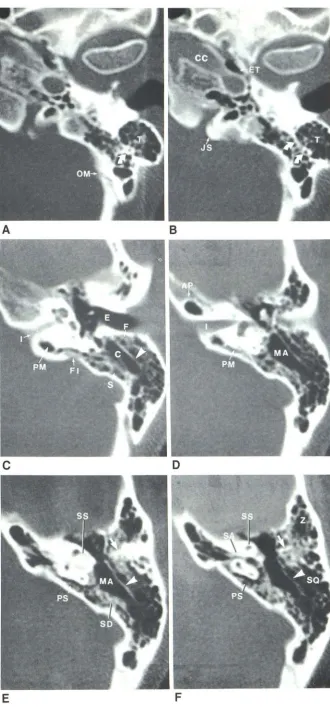
Fig. 3.-Axial scans of left ear from inferior to superior. A and e, Inferior sections below external auditory canal. Infralabyrinthine cells are distributed posteromedial to carotid canal (eG). Air in eusta-chian tube (ET) is seen lateral to carotid canal. Some air cells extend into jugular spine (JS). Tip cells (T) are located in mastoid process subdivided by infe-rior septum (curved arrows). OM = occipitomastoid suture. C, At level of external auditory canal (E),
central tract (G) is seen. Ventral are facial cells (F); dorsal are sinal cells (S). In this patient, large su
-perior septum (arrowhead) is present. Note close relation between posteromedial tract (PM) and fov-eate impression (FI). I = internal auditory canal. 0, At level of internal auditory canal (I), mastoid antrum (MA) is visible. Medially, posteromedial (PM) tract passes anteriorly below internal auditory canal (I). AP = air cell in petrous apex. E and F, Sections through epitympanic recess and mastoid antrum. Posteromedial to mastoid antrum (MA), sinodural
cells (SD) are seen, laterally squamosal cells (SO).
Note "pseudotumor" (arrow). Medially, posterosu-perior tract (PS) is present, passing medial to sem-icircular canals. Subarcuate tract (SA) passes below arch of superior semicircular canal (SS). Both su-pralabyrinthine tracts join to pneumatize petrous apex. Z = zygomatic accessory air cells; arrowhead
=
superior septum.A
c
E
B
o
[image:3.614.223.553.46.752.2]554 VIRAPONGSE ET AL. AJNR:6, July/August 1985
A
8
Fig. 4.-eoronal sections through right posterior temporal bone of dry skull
from posterior to anterior. A, Section through central tract {el. F = facial cells;
sa = squamosal; T = tegmental cells. Band C, Sections through stylomastoid
A
8
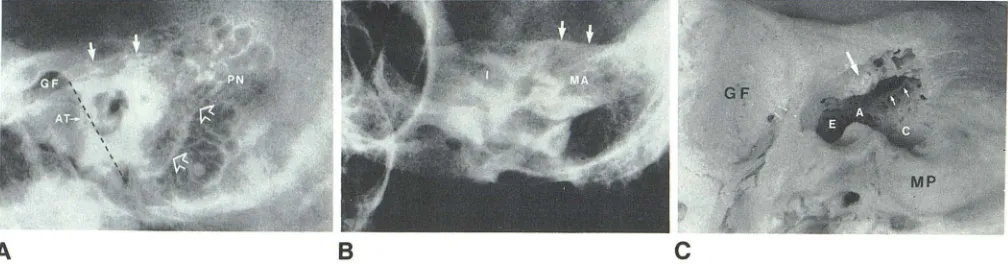
Fig. 5.--Law (A) and Stenvers (B) views of same ear showing extension of
air cells beyond periantral triangle of Schillinger. Line drawn from glenoid fossa
(GF) to parietal notch (PN) forms roof of triangle (solid arrows); line from parietal
notch passing through sinus plate to terminate at lowest pOint of
tympanomas-toid suture represents posterior boundary (open arrows). Triangle is completed
by ventral line (dashed line), which passes through anterior tympanic plate
(AT). Note crisp, well defined margins of normal air cells. On Stenvers view (B),
superior boundary is formed by tegmen (arrows). Note lateral columns of air
4A) and are seen on higher axial cuts at the level of the
topmost arch of the superior semicircular canal. The more
posterior sinodural air cells are located in the posterosuperior
angle of the pyramid, bounded by the dural plate above and
the sinus plate below (fig. 3E). The sinal cells abutting the
sinus plate lie at the level of the external auditory canal and
mastoid process (fig. 3C). Lying ventrally, but separated from
them by the central tract, are the facial cells (fig. 3C), adjacent
to the vertical facial canal and posterior wall of the external
ear canal. More inferiorly, below the central tract, are the tip
cells, in the mastoid process and tip (figs. 3A and 38).
The posterosuperior and posteromedial tracts pass
medi-ally from the antrum to pneumatize the medial pyramid (figs.
30-3F). The posterosuperior tract is seen on "high" sections
through the pyramid at, or above, the level of the lAC (figs.
c
foramen (SM) demonstrating supra- (SL) and infralabyrinthine (IL) air cells. Arrow = scutum pseudotumor; arrowhead = superior septum projecting into mastoid antrum.
c
cells extending from mastoid antrum (MA). I = internal auditory canal. C, Inferior
view of same drilled-out dry skull to demonstrate epitympanic recess (E), aditus (A), and mastoid antrum. Central tract (C) is seen almost en face. Ridge of
bone representing superior septum (small arrows) is observed from below in
mastoid antrum; note size correlation with eT in fig. 4. Scutum is also drilled
out to show incomplete pneumatization (i.e., scutum pseudotumor [arrow)) as
seen in fig. 4. GF = glenoid fossa; MP = mastoid process.
3E and 3F). On CT, it courses ventromedially toward the lAC
from the antrum above, medial in respect to the osseous
labyrinth. The tract may extend above the lAC. More medially, the subarcuate tract arising from the mastoid antrum passes ventromedially below the arch of the superior semicircular
canal (fig. 3F). It often joins the posterosuperior tract as a
ventral extension that pneumatizes the petrous apex (fig. 3F).
The posteromedial tract and the posterosuperior tract
imme-diately below it (fig. 30) are often difficult to differentiate. The
cells of the posteromedial tract lie close to the vestibular
aqueduct (fig. 3C). The paucity of these cells along with a
narrow vestibular aqueduct have been implicated in Meniere
disease, thought to be due to fibrotic labyrinthitis [22]. This
cell tract may also extend far ventrally to contribute to the
[image:4.612.58.560.88.280.2] [image:4.612.57.561.336.468.2]AJNR:6, July/August 1985 CT OF NORMAL TEMPORAL 80NE PNEUMATIZATION 555 IS 1. 13 12 11 10 x w o 8 ;;
7
Q
:.
• ffi ~
10 20 30
en
'"
<t W "-0 0010 . . . .
.'"
Z0 o 010 0 Ml •
40 50 60 70 80 90 100
w 10
'"
90 0
u
en
80 ; t
-8
<t<D
70 0 "'H
...J<t
60 I-<t
0
1-+
50 0 ~(\J
enH
40
W::
4'"
30 <t
'"
w
20 >
<t
10 0
\
o 2 3 4 o 2 3
RGE
SQUAMOMASTOID PNEUMATIZATION SQUAMOMASTOID PNEUMATISATION
(AIl)
A
B
c
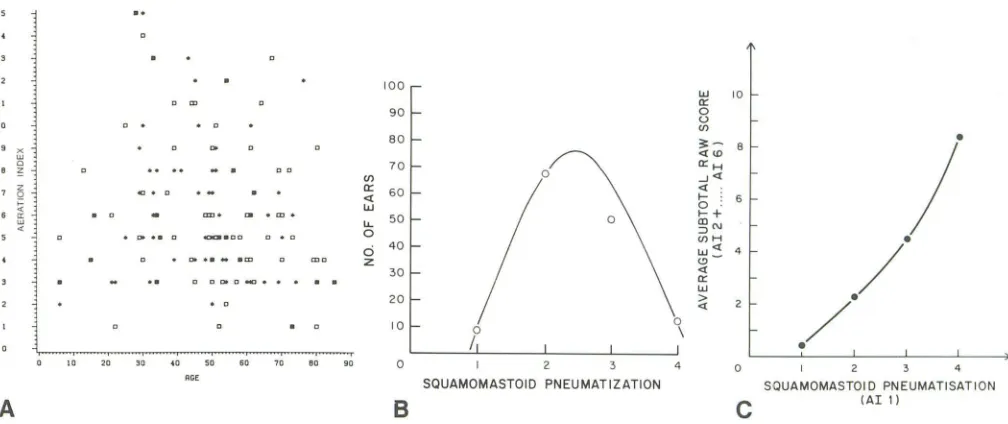
Fig. 6.-A, Random distribution of pneumatization and age. B, Plot of squamomastoid pneumatization score (abscissa) vs. total number of cases (ordinate), suggesting normal (Gaussian) distribution. C, Near-linear relation between squamomastoid pneumatization (abscissa) and rest of temporal bone (ordinate).
The supralabyrinthine region is pneumatized by the poster-osuperior and subarcuate cell tracts (figs. 48 and 4C). The infralabyrinthine region is pneumatized by buds of pneumati-zation from the hypotympanum and by the posteromedial and peritubal tracts (figs. 3A, 38, and 4C).
The petrous apex is more often partly pneumatized by tracts derived from the supra- and infralabyrinthine areas (usually the former) and from the peritubal tract (figs. 3E and 3F). The accessory regions include the squamous, the zygo-maticooccipital, and the styloid. Tegmental cells may pass upward into the squamous temporal or extend into the zy-gomatic arch (fig. 3F). The sinal cells may extend into the OCCipital squama, and the tip cells into the styloid process.
Materials and Methods
We studied "normal" temporal-bone CT of 100 patients subjected to CT scans at Yale-New Haven Hospital and the Hospital of St. Raphael. In all, 141 temporal bones were analyzed. In 41 patients both ears were examined; 68 examinations were of the right ear, and 73 of the left ear. There were 52 male patients, aged 6-82 years,
and 48 female patients, aged 6-85 years.
Scans were obtained on both the Pfizer 0200 and GE CT
IT
8800scanners. The majority (72 scans) were done on the GE scanner. The scanning techniques for the Pfizer have been previously de-scribed [23, 24]. Scanning technique for the GE scanner was 120
kV, 400 mA, and 9.6 sec scanning time. Prospective TARGET reconstruction was performed x 3.0-x 3.6. The images were dis-played on an extended window scale of 4000 H, level 300-400. As a rule, only 0° axial scans were obtained due to limited scanning time.
All scans were initially read by at least one neuroradiologist. Criteria for a normal scan were (1) absence of bony destruction or sclerosis; (2) absence of fluid or mass in any of the temporal bone air spaces;
and (3) the presence of "normal" air cells, defined by the pre-CT radiographic literature as having a sharp, well defined mucoperiosteal margin without septal thickening. The last criterion was difficult to
fulfill because of the large variation in "normal" air-cell morphology on CT. Much of such morphology is difficult to demonstrate by plain radiography or conventional tomography. In view of the pathologic implications of the sclerotic squamomastoid, patients with this finding were excluded.
The degree of pneumatization in each part of the temporal bone was then analyzed by an observer after a scoring system has been devised. The following regions (aeration indices) were considered:
squamomastoid, mastoid process, perilabyrinthine, petrous, peritu-bal, and accessory regions. The latter included squamosal,
zygo-matic, styloid, and occipital. The scoring system was based on a subjective evaluation of an approximate surface area of pneumati-zation and number of air cells on a CT slice that best demonstrated the region. A score of 1 was given to a region occupied by 10 or fewer medium-sized (2-5 mm) cells, a score of 2 given to 11-30 cells, 3 to 31-50 cells, and 4 to 51 or more. Such parametric grading was considered to be most representative of the pneumatic system.
The intraobserver variability was less than 5%. An interobserver variability test was considered unnecessary, since the grading is
based on relative subjective merit. Compared with plain films, a score of 1 for the squamomastoid corresponded to the "diploic" mastoid, and a score of 2-4 to the pneumatized variety.
The score of each aeration index was then tallied to give an overall raw score of pneumatization for that ear. The results were then
compiled by computer.
Results
Statistical Analysis
Temporal bone pneumatization correlated poorly with age (fig. 6A) (r [squamomastoid] = -0.068; r [temporal bone total]
=
-0.151) and gender (r=
0.2). A plot of squamomastoidpneumatization against the number of ears suggested a nor-mal (Gaussian) distribution, consistent with the findings of
Tumarkin [25] and Diamant [26] (fig. 68). The squamomastoid
was diploic (grade 1) in nine ears and well pneumatized
[image:5.612.55.559.78.290.2]pneumati-556 VIRAPONGSE ET AL. AJNR:6, July/August 1985
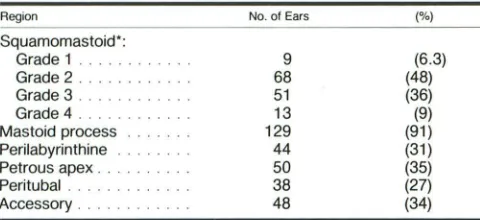
TABLE 1: Regional Distribution of Pneumatization Region
Squamomastoid':
Grade 1 . . .
Grade 2 ..
Grade 3
Grade 4 ..
Mastoid process Peri labyrinthine Petrous apex.
Peritubal Accessory .
No. of Ears
9 68 51 13 129 44 50 38 48 (%) (6.3) (48) (36) (9) (91) (31) (35) (27) (34)
• Grade 1 ~ ,;10 medium-sized (2-5 mm) cells; grade 2 ~ 11-30 cells: grade 3 ~ 31
-50 cells: grade 4 ,,51 cells.
TABLE 2: Regional Symmetry of Pneumatization
Region
Squamomastoid .
Mastoid process.
Perilabyrinthine .
Petrous apex . . . . . . ..
Peritubal . . . .. .
Average Raw Scores·
Right Left
2.52 2.44
1.80 1.69
0.36 0.40
0.49 0.59
0.40 0.25
Accessory . . . .. _ _ _ 0 __ ._5_7 _ _ _ _ _ _ 0_.5_7 _ _ _
Total average . 6.16 5.96
• Note that when area of temporal bone is reduced. so too is score.
zation corresponded closely to pneumatization of the mastoid
process, since the latter is a downward extension of the
squamomastoid. There was absence of mastoid process
pneumatization in only 12 ears. These were associated with
low pneumatization scores in the squamomastoid,
corre-sponding to the poorly pneumatized mastoid type. Whereas
the mastoid process is second to the squamomastoid in
pneumatization, the next best pneumatized regions are the
accessory (particularly the squamozygomatic [r = 0.671]) and
the petrous apex (r = 0.594) (table 1). A high score in the
squamomastoid is usually associated with high scores in other
regions of the temporal bone (fig. 6C).
There was a high degree of symmetry in this study. The
average total raw score for the right ears was 6.16 compared
with 5.96 for the left ears (table 2).
Air-Cell Morphology
The size of air cells varied considerably. Cells in the
perian-tral region were often minute and difficult to distinguish from
one another in well pneumatized ears. On the other hand,
poorly pneumatized ears commonly had larger, more readily
distinguishable cells. Small cell clusters were more often seen
immediately lateral to Korner's septum (figs. 3E and 3F). Air
cells increased progressively in size from the peri antral region,
with the larger cells peripheral in location. Giant air cells (larger
than 1.5 cm) [27] were more often seen in the petrous apex.
On CT, air cells varied in configuration and often had
incomplete osseous walls. Closely abutting small cells «2
mm) with thickened septa were difficult to distinguish from
diseased cells with thickened mucosa. Focal incomplete
pneu-matization was often seen in the scutum, giving a
"pseudo-tumor" appearance (fig. 7). At times this region may contain
considerable unpneumatized bone, giving the appearance of
an osteoma or soft-tissue mass. The pseudotumor can be distinguished from disease by its location and its tendency to merge into the walls of the air cells; also, minute air cells may
be discernible within its matrix (figs. 4C and 7).
The size and configuration of the temporal bone were largely determined by the degree of pneumatization. This was particularly evident in the squamomastoid, the mastoid proc-ess, the squama, and the root of the zygoma. In fact, good pneumatization may be associated with a convex bowing of bone, suggesting that air cells were acting as an expansile mass. This was readily discernible in patients who had CT
scans of both ears, so that a comparison could be made.
However, it is not yet clear whether pneumatization preceded
or followed bone growth.
Discussion
The following functions have been ascribed to the air cells
of the ear: reception of sound, resonance, insulation, air
reservoir action, acoustic dissipation [28], protection from
external violence [29], and lightening of the weight of the skull
[30]. The "air reservoir" function claims that during eustachian
tube dysfunction, squamomastoid pneumatization provides the reserve volume of air that prevents severe negative pres-sure from developing in the middle ear due to mucosal air
absorption [31]. Such negative pressure may predispose to
tympanic membrane retraction and cholesteatoma formation.
In humans, pneumatization of the temporal bone has a
normal (Gaussian) distribution [25, 26] (fig. 68).
Pneumatiza-tion is rarely markedly extensive [32-34] and is often
de-pressed. According to Wittmaack's "environmental" theory
[9,35], otitis (e.g., serous, purulent) causes morphologic and
physiologiC alteration of the mucosal lining, which inhibits
pneumatization. The validity of Wittmaack's work has since
received support from numerous investigators [10, 25,
36-38]. The second theory, propounded by Cheatle [39, 40],
takes into consideration the genetic contribution to
pneuma-tization on the basis of research on parent-offspring, siblings,
and twins [41-45]. Despite the belief that both factors are
important, the relative merit of each is as yet undetermined. We have attempted to synthesize the two concepts as shown in figure 1.
The second controversial point has to do with whether the sclerotic squamomastoid is primary or secondary to otitis. Whereas the early investigators believed that the sclerotic
squamomastoid represented normal development [39, 40],
later authors indicated that it is due to inflammation [9, 10,
19, 36]. Sclerotic new bone has been known to develop in
the postoperative ear, particularly when associated with
post-surgical infection [46].
Radiography has been used extensively [14,26,41,
47-61] to study the development of pneumatization both in
children [53-55, 58] and in adults [25, 56, 59]. Pneumatization
[image:6.612.58.298.97.207.2] [image:6.612.56.299.263.362.2]AJNR:6, July/August 1985 CT OF NORMAL TEMPORAL BONE PNEUMATIZATION 557
Fig. 7.-Axial CT of right ear. Poorly
pneuma-tized area lateral to superior septum (arrowheads) above scutum, giving rise to pseudotumor (arrow)
appearance. Small focal lucencies representing air cells can be seen in matrix.
Fig. 8.-Axial scan of patient with diploic s
qua-momastoid. Air cell development (arrow) extends
into predominantly Gijploic squamomastoid, which is
less dense than cortical bone but slightly denser
than un pneumatized petrous apex. The few air cells
that are formed are well defined.
Fig. 9.-Axial scans of patient with chronic
mas-toiditis. Density of sclerotic bony deposition
corre-sponds closely to density of otic capsule. Following features can be seen: much of bony deposition is in squamosal; very few to no air cells are seen;
antrum is contracted (arrow).
7
have cautioned against the use of plain-film radiography [37, 52, 54, 61, 62] to assess temporal-bone pneumatization. In a study of petrositis, Fowler [57] found plain-film radiography considerably less reliable than histology for demonstrating petrous pneumatization. Even so, previously plain-film radiog-raphy offered the best method, albeit gross, of assessing pneumatization in vivo. All standard plain radiographic views have been used in the past to evaluate pneumatization [14,
16, 48, 56]. Schillinger [14, 48] used the lateral plain film for assessing air cells and attempted to establish simple radi-ographic norms to differentiate the poorly pneumatized from the well pneumatized ear. In the poorly pneumatized ear, air cells are confined to the periantral triangle, whereas air cells extend beyond the triangle in the well pneumatized ear (fig. SA).
Because of the insidious nature and the intracranial com-plications of petrositis (Gradenigo syndrome), previous work-ers have emphasized the need to assess petrous-apex pneu-matization [37, 52, 56, 58, 63-65], which has been found to vary from 11 % to 62% [51, 52, 56, 63, 64, 66, 67]. The frequency of occurrence of petrous-apex giant air cells that,
before CT, could be mistaken for an erosive lesion has been
8
B
reported to be 4% [27]. Our finding of petrous-apex pneu-matization in 35% of all temporal bones corresponds with the data of Schmidt [56], Hagens [67], and Glick [63]. Further, we have established that the probability of petrous-apex pneumatization corresponds directly with the degree of squa-momastoid pneumatization, a view concordant with that of Kraus [52].
Symmetry of pneumatization has been found to occur in 72%-99% of the general population [37, 66]. We also found good symmetry in our series. We therefore conclude that when asymmetric pneumatization is seen on CT, the ear with the depressed system should be suspected of being dis-eased. The morphology of each air cell should be carefully studied for signs of new bone formation or destruction, and
the surrounding bone should be assessed for sclerosis (figs.
8 and 9). In analyzing mucosal thickening, an area of incom-plete pneumatization containing small air cells can be
mis-taken for disease (fig. 7). It is thus prudent to search for
[image:7.614.162.552.84.478.2]558 VIRAPONGSE ET AL. AJNR:6, July/August 1985
spurious septal thickening by partial-volume effect.
The main advantage of CT is that it can evaluate
temporal-bone pneumatization in its entirety with excellent resolution.
Theoretically, the resolution of CT allows air cells as small as
2 mm to be differentiated from marrow bone, limited only by
the voxel thickness. How CT compares to histology has not
yet been determined.
CT identification of the course of petrosal pneumatization
tracts allows presurgical prediction of spread of pus from the
middle ear and mastoid, alerting the surgeon to the need for exploration into the depth of the petrous pyramid [19, 68].
Recognition of mastoid-tip pneumatization is important,
be-cause pus extending from the central tract into the tip cells may break through the bony confine of the mastoid process to present as a Bezold abscess in the neck [18].
REFERENCES
1. Anson BJ, Donaldson JA. Surgical anatomy of the temporal bone,
3d ed. Philadelphia: Saunders, 1981
2. Bast TH, Anson BJ. The temporal bone and the ear, 1st ed.
Springfield, IL: Thomas, 1949: 315-336
3. Bast TH, Forrester HB. Origin and distribution of air cells of the
temporal bone. Arch Otolaryngol 1939;30: 183-205
4. Vasiliu DI. Contributions sur I'embryologenese de I'oreille et la
pneumatisation de la mastoide et du rocher. Int Audiol 1968;7:181-185
5. Williams HL. Developmental variations of the temporal bone that influence the evolution of chronic suppurative otitis media and mastoiditis and medical and surgical treatment of this syndrome.
Laryngoscope 1969;99: 827 -859
6. Shambaugh GE, Glassock ME. Surgery of the ear, 3d Philadel-phia: Saunders, 1980:24-25
7. McMurrich JP. The development of the human body. Philadelphia: P. Blakeston's Sons, 1923:453
8. Warwick R, Williams PL. Gray's anatomy, 35th ed. Philadelphia:
Saunders, 1973: 1142
9. Wittmaack K. Zur Frage der Bedeutung der Mittelohrentzundun-gen des fruhesten Kindesalters fur Spater. Arch Ohren Nasen
Kehlkopfh 1931;129:207-250
10. Paiva T, Paiva A. Size of the human mastoid air cell system.
Acta Otolaryngol (Stockh) 1966;62:237-251
11. Ojala L. Contributing to the physiology and pathology of mastoid
air cell formation. Acta Otolaryngol [Suppl] (Stockh) 1950;86: 1-134
12. Ojala L. Pneumatization of the bone and environmental factors:
experimental studies in chick humerus. Acta Otolaryngol [Suppl]
(Stockh) 1957;133:1-28
13. Beaumont GD. The effects of exclusion of air from pneumatized bones. J Laryngol Oto/1966;80:236-249
14. Schillinger R. Pneumatization of the mastoid. Radiology
1939; 33: 54-67
15. Shapiro R. Radiology of the normal skull. Chicago: Year Book Medical, 1981 :326-340
16. Lindsay JR. Petrous pyramid of temporal bone: pneumatization
and roentgenologic appearance. Arch Otolaryngo/1940;31 :2
31-235
17. Allam AF. Pneumatization of the temporal bone. Ann Otol Rhinol
Laryngol 1969;78:48-64
18. Tremble GE. Pneumatization of the temporal bone. Arch Otolar -yngo/1934;19:172-182
19. Shuknecht HF. Pathology of the ear. Cambridge, MA: Harvard
University Press, 1974: 79-85
20. Meltzer PE. The mastoid cells: their arrangement in relation to the Sigmoid portion of the transverse sinus. Arch Otolaryngol 1934; 19: 326-335
21. Virapongse C, Sarwar M, Bhimani S, Sasaki C, Shapiro R. Computed tomography of temporal bone pneumatization. II:
Petrosquamosal suture and septum. AJNR 1985;6:561-568
22. Hall SF, O'Connor AF, Thakkar CH, Wylie IG, Morrison AW. Significance of tomography in Meniere's disease: periaqueductal pneumatization. Laryngoscope 1983;93: 1551-1553
23. Virapongse C, Rothman SLG, Kier EL, Sarwar M. Computed
tomographic anatomy of the temporal bone. AJR 1982; 139: 739-749
24. Virapongse C, Rothman SLG, Sasaki C, Kier EL. The role of high
resolution computed tomography in evaluating disease of the middle ear. J Comput Assist Tomogr 1982;6:711-720
25. Tumarkin A. On the nature and significance of hypocellularity of the mastoid. J Laryngol Oto/1959;73:34-44
26. Diamant M. Otitis and size of the air cell system. Acta Radiol (Stock h) 1940;21 :543-548
27. Dubois PJ, Roub LW. Giant air cells of the petrous apex: tomo-graphic features. Radiology 1978;129: 1 03-1 09
28. Tumarkin A. On the nature and vicissitudes of the accessory air
spaces of the middle ear. J Laryngol Oto/1957;71 :65-99 29. Eagleton WP. A new classification of bones forming the skull.
Trans Am Acad Ophthalmol Oto/1935;21-58
30. Proetz AW. Observation upon the formation and function of the accessory nasal sinus and the mastoid cells. Ann Otol Rhinol 1922;31 : 1 083-11 00
31. Jackler RK, Schindler RA. Role of the mastoid in tympanic membrane reconstruction. Laryngoscope 1984;94: 495-500
32. Lo WWM, Zapanta E. Pneumatization of the occipital bone as a cause of radiolucent skull lesions. AJNR 1983;4: 1249-1250
33. Madeira JT, Summers GW. Epidural mastoid pneumatocele.
Radiology 1977;122:727-728
34. Parks RE. Unilateral mastoid hypertrophy AJNR 1982;3:
196-197
35. Wittmaack K. The significance of middle ear inflammation of
infancy (abstracted by Keen JA). J Laryngol
Oto/1931;46:782-784
36. Gans H, Wlodyka J. Mastoid pneumatization in chronic otitis
media. Arch Otolaryngo/1966;83:343-346
37. Diamant M. Otitis and pneumatization of the mastoid bone. Acta
Otolaryngol [Suppl] (Stock h) 1940;41 : 1-149
38. Schulter-Ellis FP. Population differences in cellularity of the
mas-toid process. Acta Otolaryngol (Stockh) 1979;87:461-465 39. Cheatle AH. The infantile types of the temporal bone and their
surgical importance. Lancet 1910;1 :491-493
40. Cheat Ie AH. The etiology and prevention of chronic middle ear
suppuration. Acta Otolaryngol (Stockh) 1923;5:283-294
41. Dahlberg G, Diamant M. Hereditary character of the cellular system in the mastoid process. Arch Otolaryngo/1945;33:378-389
42. Boes LR, Younger LI. Abnormal pneumatization of temporal
bone. Ann Otol Rhinol Laryngo/1956;61 :836-849
43. Albrecht W. Zur Frage der Pneumatisation des Mittelohres: his-tolische Untersuchungen im Schlafenbein des Neugeborenen.
Acta Otolaryngol (Stockh) 1930;14:221-228
44. Schwartz M. Untersuchungen zur individullen Histologie des Bindengewebes. Arch Ohren Nasen Kehlkopfh 1931;129: 1-29
45. Dillon IG, Gourevitch lB. Research on the pneumatization of the nasal accessory sinuses and of the mastoid processes and on
the shape of the sell turcica in twins. AJR 1936;35:782-785
46. Ojala K, Lahti R, Paiva A, Sorri M. Postoperative roentgenological
findings and changes after mastoid obliteration. J Laryngol Otol
AJNR:6, July/August 1985 CT OF NORMAL TEMPORAL BONE PNEUMATIZATION 559
47. Schwartz M. Die Bedeutung der hereditaren Anlage fur die
Pneumatization der Warzenfortsatze und der Nasennebenhoh-len. Arch Ohren Nasen Kehlkopfh 1929;123: 161-232
48. Schillinger R. Roentgenologic aspects of mastoiditis. AJR
1938;39: 193-201
49. Lindsay JR. Suppuration in the petrous pyramid. Ann Otol Rhinal Laryngo/1938;47:3-34
50. Lindsay JR. Chemotherapy in the treatment of complications of
acute middle ear suppuration. Ann Otol Rhinal Laryngol
1941;50: 159-178
51. Lindsay JR. Pneumatization of the petrous pyramid. Ann Otol
Rhinal Laryngol 1941 ;50: 11 09-1113
52. Kraus L. Die Pyramidenspitzen-pneumatisation im Roentgenbild.
Arch Ohren Nasen Kehlkopfh 1931;128:307-338
53. Kawamura S, Okabe K, Mogi S, Terao A. The normal develop-ment of the mastoid pneumatic cells. J Otorhinol Soc Jpn
1963;66:909-912
54. Rubensohn G. Mastoid pneumatization in children at various
ages. Acta Otolaryngol (Stockh) 1965;60: 11-14
55. Evans WA. The value of the roentgen study of mastoid disease in children under five. AJR 1923;10:382-385
56. Schmidt G. Uber die Pyramidenspitizenpneumatization. Z Ha/s
Nasen Ohrenheilkunde 1937;2:93-108
57. Fowler EP. The correlation of x-ray and pathologic findings in
suppuration of the petrous pyramid. Trans Am Otol Soc
1935;25: 215-228
58. Jackson CCR. Morphologic and roentgenologic aspects of the
temporal bone: study of 536 bones with special references to
pneumatization. Arch Otolaryngo/1938;28: 561-580
59. Turner AL, Porter WG. The structural type of the mastoid pro
c-ess, based upon the skiagraphic examination of one thousand
crania of various races of mankind. J Laryngol Otol
1922;37:161-175
60. Oku T, Hasegawa M, Watanabe I. Meniere's disease and mastoid
pneumatization. Acta Otolaryngol (Stock h) 1980;89: 118-120
61. Jones MF. Symposium on certain fundamentals in regard to
suppuration of the petrous pyramid. Anat Arch Otol
1935;22:515-516
62. Anson BJ, Wilson JG, Gaardsmoe JP. Air cells of petrous portion
of temporal bone in a child four and a half years old. Arch
Otolaryngo/1938;27: 588-605.
63. Glick HN. Microscopic observations of the petrous apex. Ann Otol Rhinal Laryngo/1933;42: 175-185
64. Belinoff F, Balan M. Uber den Bau der Pyramidspitze. Monatsschr
Ohrenheilk 1930;64: 1185-1188
65. Gradenigo G. Uber die Paralyse des Nervous abducens bei Otitis.
Arch Ohrenheilk 1907;74:149-187
66. Myerson MC, Rubin H, Gilbert JG. Anatomic studies of the
petrous portion of the temporal bone. Arch Otolaryngol
1934;20: 193-210
67. Hagens EW. Anatomy and pathology of the petrous bone based
on a study of 50 temporal bones. Arch Otolaryngo/1934;19:556
-573
68. Williams HL. Latent or dormant disease in the pneumatic cell
tracts of the temporal bone. Trans Am Acad Ophthalmol Otol