warwick.ac.uk/lib-publications
A Thesis Submitted for the Degree of PhD at the University of Warwick Permanent WRAP URL:
http://wrap.warwick.ac.uk/99672
Copyright and reuse:
This thesis is made available online and is protected by original copyright. Please scroll down to view the document itself.
Please refer to the repository record for this item for information to help you to cite it. Our policy information is available from the repository home page.
Network Fault Analysis with Increased
Distributed Generation Penetration and
Evaluation of Solutions to Issues
Caused by Distributed Generation
By
Han Qin
A Thesis Submitted for the Degree of
Doctor of Philosophy
School of Engineering
The University of Warwick
i
Contents
List of Figures ... iv
List of Tables ... x
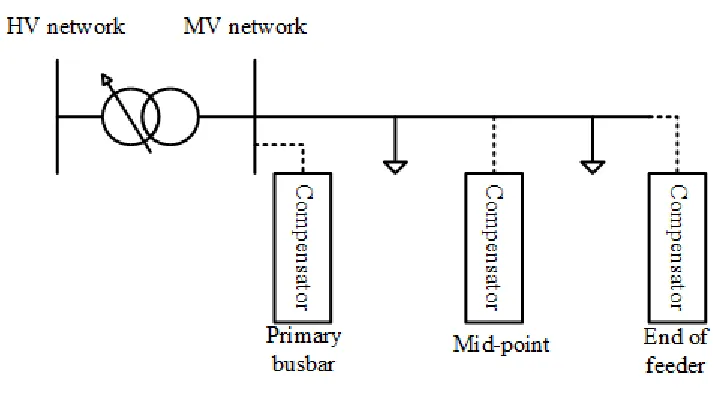
Declaration ... xii
Acknowledgement ... xiii
Abstract ... xv
Nomenclature ... xvi
Chapter 1 Introduction ... 1
1.1 History of Electrical Power System ... 1
1.2 Brief Introduction to Distribution Network ... 3
1.3 Brief Introduction to Distributed Generation ... 5
1.4 Research Objectives and Contributions ... 7
1.5 Outlines of the Thesis ... 10
Chapter 2 Literature Review ... 11
2.1 Review of Distributed Generation ... 11
2.1.1 Technical Impacts of Distributed Generation on the Distribution Network ... 12
2.1.2 Technologies Used in Distributed Generation ... 17
2.1.3 Grid Regulation and Standards Regarding DG Installation ... 27
2.2 Review of Power Electronic Compensators ... 33
2.2.1 Voltage Source Converter ... 34
2.2.2 Static Shunt Compensators ... 35
2.2.3 Series Compensators ... 41
2.3 Review of Fault Current Limiter... 45
2.3.1 Resistive Superconductor Fault Current Limiter ... 48
2.3.2 Saturated Core Fault Current Limiter ... 50
Chapter 3 Fault Current Calculation and Estimation with Dynamic Loads and Effects of DG to the Distribution Network ... 52
3.1 Fault in Power System ... 52
3.2 Short-circuit Current Calculation in Distribution Network ... 55
3.3 Short Circuit Current Calculation and Fault Level Estimation of Dynamic loads in Distribution Network ... 61
3.3.1 Short circuit Current Calculation of Dynamic Load in Distribution Network ... 61
3.3.2 Effects of Transformer Impedance and Cable Impedance to the Load Fault Current Contribution in Distribution Network ... 75
ii
3.4 Effects of DG to the Distribution Network ... 93
3.4.1 Effects of DGs to the Voltage Profile and Fault Level ... 94
3.4.2 Effects of DGs to the Zero-Crossing of Network Fault Current ... 104
3.5 Summary ... 114
Chapter 4 Analysis on the Changes of the Electrical Network in the UK in the Future ... 117
4.1 Analysis on the Upstream Generation ... 117
4.1.1 Network Model of the Sample Substations ... 118
4.1.2 Fault Level Compositions of Different Networks ... 120
4.1.3 Fault Level Changes due to the Increase of DG ... 124
4.1.4 Fault Level Composition Change due to the Increase of DG ... 129
4.2 Analysis on the Downstream Load ... 132
4.2.1 Changes in the Load Composition of the Downstream Load ... 134
4.2.2 Effects of Changes in Downstream Load on the Fault Current Contribution ... 152
4.3 Summary ... 159
Chapter 5 Feasibility Study of the Protection for Series Compensators Using Shunt Thyristor Crowbar ... 162
5.1 Introduction ... 162
5.2 Fault Level Study ... 169
5.3 Fault Detection ... 172
5.4 Transformer Over-voltage ... 176
5.5 Thermal Capability of Thyristor Crowbar ... 184
5.5.1 Thermal model of a thyristor ... 185
5.5.2 Transformation from Foster Model to Cauer Model ... 188
5.5.3 Critical Temperature of Different Types of Thyristor during Surge Current Test ... 191
5.5.4 Thyristor Crowbar Thermal Capability during Fault ... 202
5.6 Summary ... 224
Chapter 6 The Utilisation of Back-to-back VSC in Distribution Network ... 225
6.1 Control of Back-to-Back VSC ... 227
6.1.1 Park Transformation ... 228
6.1.2 The Phase-locked Loop ... 230
6.1.3 The dc Voltage Control Loop ... 233
6.1.4 The Current Control Loop ... 235
6.2 Functions of B2B VSC ... 238
iii
6.4 Summary ... 248
Chapter 7 Loss Study on the Saturated Iron Core Fault Current Limiter in Normal Operation ... 250
7.1 Different Types of Loss of a Transformer ... 251
7.1.1 Eddy Current Loss ... 251
7.1.2 Hysteresis Loss ... 252
7.1.3 Copper Loss and Stray Loss ... 257
7.2 Loss Analysis of the Saturated Iron Core FCL ... 257
7.2.1 Load Loss ... 257
7.2.2 No-load Loss ... 258
7.2.3 Experiment and Results ... 261
7.3 Summary ... 270
Chapter 8 Conclusions and Future Work ... 271
8.1 Conclusions ... 271
8.1.1 Short-circuit Current Calculation and Fault Level Estimation of Dynamic Loads ... 273
8.1.2 Analysis of the Effects of Synchronous Machine to Total Fault Current in Distribution Network ... 274
8.1.3 Analysis of the Network Changes in the UK in the Future ... 275
8.1.4 Feasibility Study on the Protection of SSSC Based SOP Using Shunt Thyristor Crowbar ... 277
8.1.5 Utilisation of Back-to-back VSC Base SOP in Distribution Network ... 278
8.1.6 Loss Study of Saturated Iron Core FCL ... 279
8.2 Future Work ... 279
Reference ... 282
Appendix I The Electricity System in the UK in 2014 ... 291
Appendix II 11kV Primary Substation List in Birmingham Area and the Network Diagram ... 292
Appendix III List of Publications ... 295
Appendix IV Datasheets for Synchronous Machines, Cables and Thyristors Used in the Thesis ... 296
iv
List of Figures
Figure 1. 1 Power system structure……….…3
Figure 1. 2 Diagram of a typical distribution network in radial (open ring) structure…...…4
Figure 2. 1 Voltage variation down a radial feeder……….………...13
Figure 2. 2 Simple two-bus radial distribution network………...….14
Figure 2. 3 Configuration of a gas turbine CHP ………..……..19
Figure 2. 4 Configuration of fuel cell CHP ………..…...20
Figure 2. 5 Fixed speed induction generator wind turbine ………..…..24
Figure 2. 6 Figure 2.6 DIFIG wind turbine ………...24
Figure 2. 7 Figure 2.7 Full power converter wind turbine ……….……25
Figure 2. 8 Figure 2.8 Grid-connected small PV inverter ………..………...26
Figure 2. 9 Diagram of a fault-ride through………..…...31
Figure 2. 10 Topology of a two-level VSC………..………..35
Figure 2. 11 Installation locations of shunt compensator in a power system………..……...36
Figure 2. 12 Diagram of SVC in a power system………..……...37
Figure 2. 13 Site View, Barnstable SVC ………..38
Figure 2. 14 Diagram of a STATCOM………..40
Figure 2. 15 ABB PCS 6000 6-16MVA STACTOM ………...40
Figure 2. 16 Installation locations of series compensator in a power system……….41
Figure 2. 17 (a) GTSC, (b) TCSC and (c) TSSC………42
Figure 2. 18 Diagram of a SSSC………...43
Figure 2. 19 Diagram of a B2B VSC……….45
Figure 2. 20 FCL installation at the primary busbar………..46
Figure 2. 21 FCL installation at the feeder………47
Figure 2. 22 FCL installation at the interconnection between two primary busbars………..47
Figure 2. 23 Drawing and complete 3-phase- FLC 12-800 system after installation in Boxberg, Germany ………...49
Figure 2. 24 Fault current limiting by a RSFCL ………49
Figure 2. 25 Diagram of a three-phase FCL ………50
Figure 2. 26 Fault current limiting of a saturated iron-core FCL ………...51
Figure 3. 1 Common types of fault………53
Figure 3. 2 Short circuit current far-from-generator with constant ac component………….55
Figure 3. 3 Example of fault in a radial network………56
Figure 3. 4 Fault fed from a single source and the equivalent circuit ………..59
Figure 3. 5 Split-phase winding induction motor………..65
Figure 3. 6 Capacitor-start induction motor………..66
Figure 3. 7 Per phase equivalent circuit of induction motor………..67
Figure 3. 8 Torque associated with two revolving fields and output torque of single-phase induction machine ………67
Figure 3. 9 Circuit diagram of the short circuit test equipment………..74
v
Figure 3. 11 Indicative simulation model………..77
Figure 3. 12 Impact of transformer impedance on (a) make and (b) break fault current contributions by loads………...80
Figure 3. 13 Normalised fault current contribution of load………...82
Figure 3. 14 Circuit diagram for simulation………..84
Figure 3. 15 Estimated maximum make fault current compositions………90
Figure 3. 16 Estimated minimum make fault current compositions………..90
Figure 3. 17 Estimated maximum break fault current compositions………91
Figure 3. 18 Estimated maximum break fault current compositions………91
Figure 3. 19 Estimated band of make fault current compositions………..92
Figure 3. 20 Estimated band of break fault current compositions………..92
Figure 3. 21 Initial symmetrical fault current contribution to 400V network of different size synchronous machines………..98
Figure 3. 22 Initial symmetrical fault current contribution to 11kV network of different size synchronous machines………..99
Figure 3. 23 Model of radial distribution network………...101
Figure 3. 24 (a) Voltage variation and (b) fault level caused by DG at different locations in an 11kV network……….103
Figure 3. 25 Short circuit current close to power plant………104
Figure 3. 26 dc and ac components of the short circuit current from a synchronous machine ………106
Figure 3. 27 ac components of synchronous machine short circuit current……….107
Figure 3. 28 Ratio of sub-transient current to total current of synchronous machine ………108
Figure 3. 29 Zero-crossing time of short circuit current for different time constant ratios………...110
Figure 3. 30 Time constant ratios for synchronous generators in different sizes………….111
Figure 4. 1 Single line diagram of the simplified model………..119
Figure 4. 2 Fault level composition of Group 1………...121
Figure 4. 3 Fault level composition of Group 2………...121
Figure 4. 4 Fault level composition of Group 3………...123
Figure 4. 5 Fault level composition of Group 4………...123
Figure 4. 6 Normalized fault level change of Group 1……….124
Figure 4. 7 Normalized fault level change of Group 2……….125
Figure 4. 8 Normalized fault level change of Group 3……….125
Figure 4. 9 Normalized fault level change of Group 4……….126
Figure 4. 10 Fault level composition when DG penetration level is increasing of Group 1 ………130
Figure 4. 11 Fault level composition when DG penetration level is increasing of Group 2 ………130
Figure 4. 12 Fault level composition when DG penetration level is increasing of Group 3 ………131
vi
Figure 4. 14 Predicted power demand changes - Gone Green……….133
Figure 4. 15 Predicted power demand changes - No Progression………134
Figure 4. 16 Domestic lighting technology estimation - Gone Green………..137
Figure 4. 17 Domestic lighting technology estimation - No Progression………137
Figure 4. 18 Average lighting power demand of a single house in the UK………..139
Figure 4. 19 Average power demand of different types of domestic appliance - Gone Green ………140
Figure 4. 20 Average power demand of different types of domestic appliance - No Progression ………141
Figure 4. 21 Average power difference between two scenarios………...141
Figure 4. 22 Working cycle of heat-pump………...143
Figure 4. 23 Estimated UK resident house growth………..144
Figure 4. 24 Estimation of numbers of different types of electrical powered heaters - Gone Green ……….………145
Figure 4. 25 Estimation of numbers of different types of electrical powered heaters - No Progression ………145
Figure 4. 26 Average Electrical Power Demand in House Heating………146
Figure 4. 27 Estimated load composition - Gone Green……….148
Figure 4. 28 Estimated load composition - No Progression………148
Figure 4. 29 Estimated number of electrical vehicle on road ………..150
Figure 4. 30 Percentage of electrical vehicle in total load demand ………151
Figure 4. 31 Indication of electrical vehicle charger circuit………151
Figure 4. 32 Estimated fault level contribution - Gone Green………155
Figure 4. 33 Estimated fault level contribution - No Progression………155
Figure 4. 34 Estimated load composition - Gone Green……….156
Figure 4. 35 Estimated load composition - No Progression……….156
Figure 4. 36 General Load Fault Level Contribution (MVA/MVA) – Gone Green………157
Figure 4. 37 General Load Fault Level Contribution (MVA/MVA) - No Progression ………157
Figure 4. 38 Estimated general load fault level contribution – Gone Green………..158
Figure 4. 39 Estimated general load fault level contribution – No Progression…………..158
Figure 5. 1 Topology 1 using shunt thyristor crowbar in SSSC protection……….167
Figure 5. 2 Topology 2 using shunt thyristor crowbar in SSSC protection………168
Figure 5. 3 SLD for the 11kV distribution network……….170
Figure 5. 4 Total fault current of Topologies 1 and 2………..171
Figure 5. 5 Fault detection using voltage reference………174
Figure 5. 66 Fault detection using current reference………175
Figure 5. 7 Results for fault detection speeds using voltage and current reference………175
Figure 5. 8 Equivalent circuit of a transformer referring to the primary winding…………177
Figure 5. 9 Core magnetic flux density during fault………179
Figure 5. 10 Voltage of the SSSC during fault……….181
Figure 5. 11 Magnetic flux density of the transformer with doubled primary winding leakage inductance and 3.5 km cable length………181
vii
Figure 5. 13 Voltage of the SSSC during fault (protection failure)………183
Figure 5. 14 Calculated magnetic flux density of the transform core during fault (protection failure) ………...183
Figure 5. 15 Foster thermal equivalent circuit model………186
Figure 5. 16 Cauer thermal equivalent circuit model……….186
Figure 5. 17 Structure of the surge current test model………192
Figure 5. 18 Cauer model for thyristor with heat sink………193
Figure 5. 19 Test circuit………..194
Figure 5. 20 Thyristor crowbar surge current test bench……….194
Figure 5. 21 Case temperature during experiment @ 300A RMS………..195
Figure 5. 22 Case temperature simulation vs experiment (Heat sink 2)……….196
Figure 5. 23 Forward voltage during turning on simulation vs experiment………196
Figure 5. 24 Junction temperature in the surge current test……….200
Figure 5. 25 Case temperature in the surge current test………..200
Figure 5. 26 Fault passing through the thyristor crowbar of the SSSC with transformer - Topology 1………..204
Figure 5. 27 Fault current passing through the thyristor crowbar of the transformerless SSSC - Topology 1………204
Figure 5. 28 Tj of forward thyristor (1km cable and 25°C) - Topology 1……….205
Figure 5. 29 Tj of reverse thyristor (1km cable and 25°C) - Topology 1……….205
Figure 5. 30 Tj of forward thyristor (1km cable and 40°C) - Topology 1……….206
Figure 5. 31 Tj of reverse thyristor (1km cable and 40°C) - Topology 1……….206
Figure 5. 32 Tj of forward thyristor (10km cable and 25°C) - Topology 1………207
Figure 5. 33 Tj of reverse thyristor (10km cable and 25°C) - Topology 1………207
Figure 5. 34 Tj of forward thyristor (10km cable and 40°C) - Topology 1……….208
Figure 5. 35 Tj of reverse thyristor (10km cable and 40°C) - Topology 1………208
Figure 5. 36 Tj of forward thyristor (1km cable and 25°C) - transformerless SSSC, Topology 1………..210
Figure 5. 37 Tj of reverse thyristor (1km cable and 25°C) - transformerless SSSC, Topology 1………..210
Figure 5. 38 Tj of forward thyristor (1km cable and 40°C) - transformerless SSSC, Topology 1………..211
Figure 5. 39 Tj of reverse thyristor (1km cable and 40°C) - transformerless SSSC, Topology 1………..211
Figure 5. 40 Tj of forward thyristor (10km cable and 25°C) - transformerless SSSC, Topology 1………..212
Figure 5. 41 Tj of reverse thyristor (10km cable and 25°C) - transformerless SSSC, Topology 1………..212
Figure 5. 42 Tj of forward thyristor (10km cable and 40°C) - transformerless SSSC, Topology 1………..213
Figure 5. 43 Tj of reverse thyristor (10km cable and 40°C) - transformerless SSSC, Topology 1………..213
viii
Figure 5. 45 Fault passing through the thyristor crowbar of transformerless SSSC - Topology
2………..215
Figure 5. 46 Tj of forward thyristor (1km cable and 25°C) - Topology 2………..….216
Figure 5. 47 Tj of reverse thyristor (1km cable and 25°C) - Topology 2………..….216
Figure 5. 48 Tj of forward thyristor (1km cable and 40°C) - Topology 2………..….217
Figure 5. 49 Tj of reverse thyristor (1km cable and 40°C) - Topology 2………..….217
Figure 5. 50 Tj of forward thyristor (10km cable and 25°C) - Topology 2……….218
Figure 5. 51 Tj of reverse thyristor (10km cable and 25°C) - Topology 2……….218
Figure 5. 52 Tj of forward thyristor (10km cable and 40°C) - Topology 2……….219
Figure 5. 53 Tj of reverse thyristor (10km cable and 40°C) - Topology 2……….219
Figure 5. 54 Tj of forward thyristor (1km cable and 25°C) - transformerless SSSC, Topology 2………..220
Figure 5. 55 Tj of reverse thyristor (1km cable @ 25°C)-transformerless SSSC, Topology 2………..220
Figure 5. 56 Tj of forward thyristor (1km cable @ 40°C)-transformerless SSSC, Topology 2………..221
Figure 5. 57 Tj of reverse thyristor (1km cable @ 40°C)-transformerless SSSC, Topology 2………..221
Figure 5. 58 Tj of forward thyristor (10km cable @ 25°C)-transformerless SSSC, Topology 2………..222
Figure 5. 59 Tj of reverse thyristor (10km cable @ 25°C)-transformerless SSSC, Topology 2………..222
Figure 5. 60 Tj of forward thyristor (10km cable @ 40°C)-transformerless SSSC, Topology 2………..223
Figure 5. 61 Tj of reverse thyristor (10km cable @ 40°C)-transformerless SSSC, Topology 2………..223
Figure 6. 1 The 11kV distribution network model……….226
Figure 6. 2 Schematic diagram of the control system of the right-hand side VSC of the B2B……….228
Figure 6. 3 Plane graph of dq0 coordinates system………229
Figure 6. 4 Block diagram of the phase-locked loop………...232
Figure 6. 5 Block diagram of the dc voltage control loop………235
Figure 6. 6 Block diagram of the current control loop……….238
Figure 6. 7 Voltage of load busbar 13 at minimum load with increasing DG penetration………..239
Figure 6. 8 Voltage variation at load busbar 13 with interconnection using a B2B-VSC power electronic controller to transfer power………240
Figure 6. 9 Fault current limiting using B2B-VSC for the interconnection………241
Figure 6. 10 Single line diagram of a network with imbalanced feeder loadings………….245
Figure 6. 11 Total network loss reductions under different DG penetrations……….246
Figure 7. 1 Eddy current………..252
Figure 7. 2 Schematic of the hysteresis curve………254
Figure 7. 3 Schematic of the transformer core with winding current I………..255
ix
Figure 7. 5 Schematic of a saturated iron core FCL……….257
Figure 7. 6 Schematic of B-H curve………259
Figure 7. 7 Test circuit of open circuit test of the transformer core………262
Figure 7. 8 Test circuit of the loss test……….262
Figure 7. 9 Test bench ………263
Figure 7. 10 Transformer core hysteresis loop………264
Figure 7. 11 Hysteresis loop - normal status………266
x
List of Tables
Table 2. 1 Limits for harmonic emission ………..28
Table 2. 2 Settings for long-term parallel operation ………29
Table 2. 3 Settings for infrequent short-term parallel operation ………..29
Table 2. 4 Short circuit parameters ………..32
Table 3. 1 Voltage factor c ………..58
Table 3. 2 Parameters of four single-phase induction motors………73
Table 3. 3 Results of the short circuit current calculation for four single-phase induction motors………...73
Table 3. 4 Typical compositions of domestic, commercial and industrial loads………78
Table 3. 5 Parameters of transformer and induction machines in the model………..78
Table 3. 6 Reference fault current contribution……….81
Table 3. 7 Fitting coefficients for different types of loads……….83
Table 3. 8 Cable parameters………..83
Table 3. 9 Short circuit current with distribution cable………..85
Table 3. 10 Typical composition of general load………...86
Table 3. 11 Sample substation data………...………89
Table 3. 12 Substation specified fault current contribution………..89
Table 3. 13 Mean normalized break FL contributions of synchronous generators to 400V and 11kV networks (MVA/MVA)………97
Table 3. 14 Zero-crossing time of fault current in 11kV network with fault at DG site ………112
Table 3. 15 Zero-crossing time of fault current with different distance between fault and DG ………113
Table 3. 16 Zero-crossing time of fault current contributed by different numbers of generators ………114
Table 4. 1 Average annual power consumption and rated power of different types of lighting ………136
Table 4. 2 Appliances of different types of appliance ………140
Table 4. 3 Normalized fault level contribution of commercial and industrial loads (MVA/MVA) ………153
Table 5. 1 Functions of commonly used power electronic compensators in SOP ………163
Table 5. 2 Construction cost comparison between B2B VSC and STATCOM/SSSC ………..164
Table 5. 3 Comparison between B2B VSC and STATCOM/SSSC ………..165
Table 5. 4 Parameters for 11kV network model……….170
Table 5. 5 Transformer parameters……….179
Table 5. 6 Experiment equipment parameters……….195
Table 5. 7 Ratings of different types of thyristors………198
Table 5. 8 Foster thermal resistance of different type of thyristors………199
xi
Table 5. 10 Case details………...202
Table 5. 11 Thyristor models ………202
Table 6. 1 Network loss reduction (kW) at DG penetration of 20%...246
Table 6. 2 Network loss reduction (kW) at DG penetration of 40%...247
Table 6. 3 Network loss reduction (kW) at DG penetration of 60%...247
Table 7. 1 Permeability of common materials ………260
Table 7. 2 Transformer core parameter………...261
Table 7. 3 Loss test measurements……….264
Table 7. 4 Fitting coefficients ………265
xii
Declaration
This thesis submitted to the University of Warwick in support of the application for the degree of Doctor of Philosophy. Not any parts or in whole has been send to other degree or qualifications at any other university. The work presented in Chapter 3 and Chapter 4 has been written in the deliverables and reported to the Project of FlexDGrid, WPD. Parts of the work in Chapter 3 and Chapter 6 are published by the author in peer reviewed research papers listed. The work described in this thesis is carried out by the author in the School of Engineering of the University of Warwick, unless is commonly understood or referenced in the text.
Han Qin
xiii
Acknowledgement
I would like to give my sincerely thank to all people and organisations who offered help and supports to me during my PhD study. Among them, there are some persons I would like to present my thankfulness individually.
First and foremost, I would like to present my most gratefully and sincerely thanks to my supervisor, Professor Li Ran, for all his help, encouragement, guidance and care during my whole PhD study in the University of Warwick. During this time, he played lots of important roles to me. Firstly, he is a wise and patient supervisor in my academic experience. From the very beginning when I applied the PhD study to the final stage of my thesis writing, Li has always been patient and kind to offer his professional supervision to my work. He is also very strict to my works with high standard. Though I know it is still a long way for me to reach his requirement, I have seen my improvements thanks to Li’s effort. Secondly, he is like a guide in my life. He shares his life experience with me and lead me to the right direction when I feel confused in my life. Finally, he is also a kind elder for all his students. He always cares about all his students’ personal life and treats us like his own children. I would like to thank Li for helping me to overcome the difficulties and challenges in the study.
Secondly, I would like to thank the School of Engineering, University of Warwick to offer me the opportunity to have my PhD study here with all the software and hardware supports in my study. I would also like to send my appreciation to the Western Power Distribution (WPD) for offering me the opportunity to attend the FlexDGrid project and the scholarship for my PhD study.
Also, I would like to thank my second supervisor Dr. Olayiwola Alatise for his help in the FleDGrid project. I would like to thank my colleagues, Dr. Mohamed Abdel Motalab Ali Soli Ahmad and Dr. Qian Zhou for their supports and help in the FlexDGrid project and I really enjoyed working with them. Here I would like to deeply mourn Qian who has passed away due to cancer in 2016.
xiv
Finally, and most importantly, I would like to thank my beloved family and devote this work to them. I would like to send my grateful and sincerely thanks to my mother Xiangdong Han and my father Chaoyun Qin for all the supports, understanding and love to me during my whole study period abroad. They devote all their love to me without anything in return. I am proud to have them and will try to be the proud of them. I wish them to know that I do and will always love them. I would also like to thank my grandparents, uncles, aunts and cousins. Thank them for loving me. Last but not the least, I would like to give my thank to my lovely and beautiful friend, Manyuan Li. Thanks for accompanying and supporting me during the time, and all the happiness and tears we had together.
Han Qin
xv
Abstract
xvi
Nomenclature
ac alternative current
ANSI American National Standards Institute ASHP air source heat pump
B2B VSC back to back voltage source converter BJT bipolar juction transistor
CFL comact fluorescent light CHP combined heat and power
CIGRE Conference on Large High Voltage Electric System CIRED Conference on Electricity Distribution Networks dc direct current
DFIG double fed induction generator DG distributed generation
DNO distribution network operator ER G74 Engineering Recommendation G74
ESQCR Electricity Safety, Quality and Continuity Regulations EU Europe Union
EV electrical vehicle
FCC fault current contribution FCL fault current limiter FES Future Energy Scenarios FL fault level
FLC fault level contribution GDHP ground source heat pump GTO gate turn-off thyristor
HTSFCL high temperature superconducting fault current limiter HV high voltage
HVAC high voltage alternative current HVDC high voltage direct current
IEC International Electrotecnical Commission IGBT insulated gate bipolar thyristor
IGCT integrated gate communicated thyristor LED light-emitting diode
LV low voltage
MPPT maximum power point tracking MV medium voltage
n hatmonic order NGC National Grid Code NGS National Grid System O/f over frequency O/V over voltage pf power factor
PI proportional and integral feedback PL penetration level
PV photovoltaic
xvii RMS root mean square
SP Scottish Power
SPWM sinusoidal pulse width modulation SSSC static series sychronous compensator STATCOM static synchronous compensator SVC static Var compensator
TOUT Time of Use Tariffs U/f under frequency U/V under voltage
VSC vlotage source converter
[xabc] matrix expression of quantities in abc coordinates [xdq] matrix expression of quantities in dq0 coordinates ∆I difference between results from different methods ∆V21 voltage rise at load busbar in per unit system As swept area of rotor disk
As initial value of aperiodic C capacitance of a capacitor c voltage factor
Cp power efficient D stator bore diametre E energy stored in a capacitor Ed.c. energy stored in the d.c. bus eoff turn off loss
eon turn on loss
erec diode reverse recovery energy Etotal total energy loss
f frequency
F(s) square of the d.c. bus voltage FCCref referemce fault current contribution
FLbreak break fault level contribution of sychronous machine FLC normalised fault level contribution
FLC'break normalised fault level cotrinution of sychronous machine through transformer FLCbreak normalised break fault level contribution of sychronous machine
Fref(s) reference voltage input for the d.c. bus voltage control loop g acceleration due to gravity
Gd.c.(s) gains of the PI controller for the d.c. bus voltage control loop GPLL(s) gains of the PI controller for the phase-locked loop H effective head
I phase current at rated output power Ib symmetrical current
Ibreak break fault current ic collector current id d-axis current
Idc dc component of short circuit current If fault current
if diode foreard current
xviii Ifi fault current component
IfM fault current contributed by rotating load Ifup fault current contributed by upstream network Ik'' initial symmetrical short circuit current Im magnetising current
Imake make fault current Ip peak short circuit current
Ip' simulated value of peak short circuit current Ip'' measured value of peak short circuit current iq q-axis current
Ir rated current of small scale induction machine
Isc_break break short circuit current of synchronous machine Isc_subtransient subtransient short circuit of sychronous machine K1 adjacent coeffiecient
K2 adjacent coeffiecient
KId.c. integation gain factor for the d.c. bus voltage control loop KIG integation gain factor for the phase-locked loop
KPd.c. propotional gain factor for the d.c. bus voltage control loop KPG propotional gain factor for the phase-locked loop
L stator length
Lf inductance of the filter P power output
P real power flowing into the d.c. bus P(s) power flowing into the d.c. bus p.u. per unit system
PDG real power output of DG pf load power factor
PL2 real power comsumed by load Pn rated power capacity
Q flow rate
Q reactive power flowing into the d.c. bus QDG reactive power input/output of DG QL2 reactive power consumed by load R cable resistence
R' transient resistance
R1 resistance of the primary winding R2 resistance of the secondary winding Rc core loss resistance
Rf resistance of the filter
Rf Thevenin equivalent resistance of the fault
RL Thevenin equivalent resistance of the transmission line Rm magnitizing resistance
Rr' induction machine per phase rotor winding resistance with respect to the stator winding Rs Thevenin equivalent resistance of the source
Rs induction machine per phase stator winding resistance RT Thevenin equivalent resistance of the transformer s rotor slip
xix Sr rated capacity of sychronous machine
t time
T(θ) transformation matrix of θ tf turn off time
tr turn on time
trr reverse recovery time ud d-axis voltage
Un norminal phase to phase voltage at fault location uq q-axis voltage
Ur rated voltage of sychronous machine v wind velocity
V voltage over the capacitor V1 primary busbar voltage V2 load busbar voltage vabc grid voltage vce on-state voltage vd.c. d.c. bus voltage vfabc voltage of the filter vfabc diode formward voltage vgd d-axis voltage of vabc vgq q-axis voltage of vabc VL norminal line voltage
Vm peak amplitude of the norminal voltage of the grid Vn norminal voltage
vq q-axis component Vφ-n phase to netural voltage Vφ-φ phase to phase voltage X cable reactance X' transient reactance X/R reactance/resistance ratio
X1 reactance of the primary winding X2 reactance of the secondary winding
Xd'' d-axis subtrainsient reactance of sychronous machine
xd'' per-unit d-axis subtransient reactance of sychronous machine xe error of the reference and feedback
Xf Thevenin equivalent reactance of the fault Xkl'' initial positive sequence reactance
XL Thevenin equivalent reactance of the transmission line xL per-unit leakage reactance of the windings
XL leakage reactance
xL per-unit leakage reactance Xm magnetiszing reactance Xm magnetising reactance
xmd per-unit d-axis magnetising reactance
Xr' induction machine per phase rotor winding reactance with respect to the stator winding Xs Thevenin equivalent reactance of the source
xx Z' transient impedance
ZDG Thevenin equivalent impedance of DG Zf Thevenin equivalent impedance of the fault Zload Thevenin equivalent impedance of load Zs Thevenin equivalent impedance of source Zt equivalent transformer impedance
δ ration of a load to the total load η overall efficiency
θ time dependent angle between d-axis and α-axis θ0 angular velocity of Park Trasformation
θref(s) reference angular velocity inputed for the phase-locked loop κ calculation factor
ξ damping factor for the phase-locked loop
ξd.c. damping factor for the d.c. bus voltage control loop ρ density of certain material
τa.c. a.c. time constant of ac component in short-circuit current by sychronous machine φ0 assummed initial angle between d-axis and α-axis
1
Introduction
1
1.1
History of Electrical Power System
The world’s first power station was built at Cragside, England, designed by Lord Armstrong
in 1868. It supplied power to the daily usage for private farm buildings using water powered
Siemens dynamos. In January 1882, the first public power station, Holborn Viaduct
Generating Station, started to operate at London. It was a project of Thomas Edison and the
station supplied power at 100 V driven by a steam engine [1]. The first central generating
station was later built in Pearl Street in New York, also by Thomas Edison in 1882. It
supplied power at 110V using a steam powered generator [2]. All these three stations
2
The first full alternating current (ac) power system in the world was built by William
Stanley in Great Barrington, Massachusetts in 1886 [3]. The first ac station in Great Britain
was opened at Deptford and transmitted at 10kV to customers in London in 1891 [4]. In the
same year, the first three-phase ac transmission system from Lauffen to Frankfurt was built
in Germany by Oskar von Miller. The transmission system was at 40Hz and 15kV, covering
a distance of 109 miles (175km) [5]. Thereafter, centralized generation and three-phase ac
power system have gradually developed into the structure today and been used for electrical
power supply in the world.
In the recent decades, the high voltage dc (HVDC) technology has been studied and
developed by many researchers and engineers. This was driven by [6]:
1) The need to transmit large amount of electricity over a very long distance due to the
energy resources far from the load centres;
2) More cost-effective of long distance HVDC compared to HVAC transmission; and
3) The increasing amount of offshore wind power generation is to be transmitted back
to the in-land load centres.
The development of HVDC accelerates the utilisation of power electronic devices in
the power system. Additionally, the number of distributed generation (DG) is increasing with
3
1.2
Brief Introduction to Distribution Network
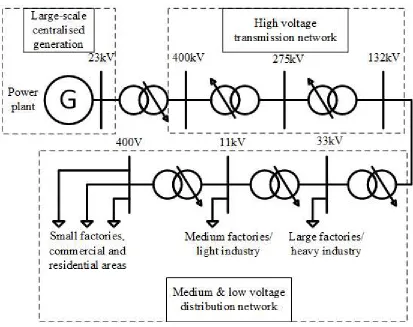
An electric power system consists of three major components: generation system (large
central power plants), transmission system and distribution system. Each component has its
typical voltage level and is connected to another component through step up/down power
[image:25.595.141.554.388.715.2]transformers, the structure is indicated in Figure 1.1.
4
Typically, a distribution network (400V to 33kV phase to phase nominal voltage) starts
from the distribution substation fed by several transmission lines from the transmission
system [7]. The typical primary distribution substation at the bulk supply point uses two to
four 50MVA 132/11kV step-down transformers, depending on the supplied peak load, to
supply an area of 3-6 square miles in the UK [8]. The topology of a distribution network is
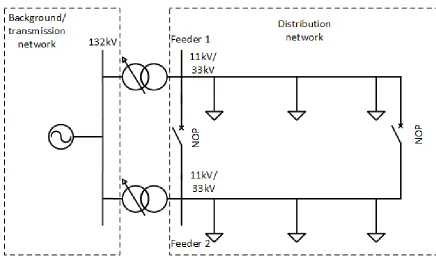
[image:26.595.140.576.355.613.2]typically designed in radial (open ring) structure, as indicated in Figure 1.2.
5
Circuit breakers are used to connect branches that when the circuit breaker closes, the
radial structure can be transformed into a loop structure to improve the reliability in
delivering power to the customers. Fuses and circuit breakers are connected in series in the
network to provide protection against the occurrence of short circuits (faults). The ratings of
the protection equipment are originally designed to withstand short circuit current from both
upstream and downstream dynamic loads without DG in the past. However, with the
increasing energy demand and global climate change, the distribution network nowadays is
adopting more DGs installed by the electrical energy customers. These changes have brought
about a number of issues in network operation and management for the distribution network
operators (DNOs).
1.3
Brief Introduction to Distributed Generation
The arrangement using centralised generation and high voltage transmission has been
adopted in the modern electrical power system development over the past 90 years [9]. This
arrangement has a number of advantages. The centralised large generating units can be made
efficient in the electricity generation with relatively small number of staff in the operation.
The high voltage transmission network allows the generating plants to be dispatched at any
time and limits the electrical losses over long distance transmission. The distribution network
can be designed simply for unidirectional power flow and sized to accommodate customer
6
Since the early 1990s, a revival of interests in connecting generation to the distribution
network has been raised in response to the increasing load demand and global warming. This
type of generation has been named, from different aspects, as [11]:
• Dispersed generation to distinguish it from centralised generation;
• Distributed generation since the generation units are connected in the distribution
network; or
• Embedded generation from the concept of generation embedded in the distribution
network.
These three terms can be considered synonymous and interchangeable. The use of these
terms is mainly regional.
Investigations on DG have been conducted by working groups of both the International
Conference on Large High Voltage Electric System (CIGRE) on 1997 and the International
Conference on Electricity Distribution Networks (CIRED) on 1998 and 1999 [12-14]. The
reports of both working groups pointed out that there is no universally accepted definition
of DG but some common attributes may be listed as:
• Not centrally planned or despatched,
• Sizing between 50kW to 100MW, and
• Connected to the distribution network.
The review of technologies of DG and the impacts of DG on the network is made in the
7
1.4
Research Objectives and Contributions
Due to increasing DG penetration, voltage and fault level issues are caused by DG in the
distribution network. Aiming at eliminating these issues, more accurate estimations of the
network fault level, at present and in the future, are required. Furthermore, solutions are
proposed by employing fault current limiter (FCL) and soft open point (SOP) into the
distribution network. Evaluations to these solutions are also required regarding the operation
loss. Regarding the former issues, the main research objectives are listed as following:
• Investigating the fault level contribution from dynamic load consisting of small
induction machines in the distribution network, which has a considerable effect on
the network fault level;
• Investigating the fault level contribution from small and medium size synchronous
machines;
• Clarifying the effect of DG to the network voltage profile and fault level considering
different DG locations;
• Investigating the potential effect of synchronous machine based DG on the missing
zero-crossing of the total fault current in the distribution network;
• Investigating the distribution network loading conditions due to the increase in the
number of customers and the utilisation of low-carbon technology electrical
8
• Analysing the feasibility of using thyristor crowbar in the protection of series
compensator based SOP which can be used to mitigate the network issues; and
• Evaluating the operational power loss of back-to-back voltage source converter (B2B
VSC) based SOP and saturated iron core FCL in the distribution network.
The original contributions of the thesis to the wider research topics are:
• The short circuit behaviour of small induction machines used in domestic load has
been studied. Regarding to the analysis, improvements have been made to the
calculation methods for the short-circuit current contribution of small induction
machines. With the improvement, load models of domestic and commercial
customers with dynamic load modelled as induction machine are altered accordingly.
With the altered load model, the normalised fault level contributions of domestic,
commercial and industrial loads are obtained for more accurate estimation in DG
connection design studies. These fault level contributions can be used for the fault
level analysis when detailed load composition is not available. A method for
substation specific system fault level estimation is then provided based on the
normalised fault level contribution. This method can be used as a reference for DNOs
in the network operation.
• The short circuit behaviour of small scale synchronous generators has been studied
and the normalised fault level contribution of the small scale synchronous generators
is obtained. Based on the normalised fault level contribution, the effects of increasing
DG penetration to the network voltage profile and fault level increase are clarified
9
• Furthermore, the effects of small and medium size synchronous machines to the
missing zero-crossing phenomenon of fault current in the distribution are analysed.
The results can be used in the management of DG connection in the distribution
network for DNOs.
• The fault level changes due to the displacement of centralised fire powered plants
and increasing downstream distributed generation have been studied using practical
substation data. The results can be used as reference for DNOs in the fault level
management in network operation.
• The load composition estimation due to the changes in the customer behaviour in the
UK power system has been made for the next two decades. And the further changes
in the load fault level contribution is also estimated based on the changing load
composition for the next twenty years, which can be beneficial in the DNOs’ network
management.
• The feasibility of using shunt thyristor crowbars in the protection of series
compensator based SOP is analysed. Further suggestion in the selection of thyristors
for this application is given, making use of the short-term surge current capability of
the devices.
• The effects of using B2B VSC for the SOP in the distribution network are analysed.
Further analysis on the power loss of this application is conducted and different
scenarios are analysed to determine the conditions which can bring benefit to the
10
• A power loss study has been conducted on the saturated iron core FCL. This provides
a reference for the utilisation of this type of FCL in the network operation for DNOs.
1.5
Outlines of the Thesis
The thesis is outlined as follows:
Following this introduction chapter, a literature review of distributed generation,
power electronic compensators and FCLs is presented in Chapter 2. The short-circuit study
of dynamic load is conducted in Chapter 3. Also in Chapter 3, the study on fault current
contribution of small and medium size synchronous machine based DGs during a network
fault is presented, together with a clarification of the effects of distributed generation on the
network voltage profile and fault level. In Chapter 4, the possible scenarios of the electrical
network changes in the UK are analysed. The analysis is conducted separately regarding the
generation changes in the upstream network and the load changes in the downstream network.
Chapter 5 presents a feasibility study on the protection to series compensator based SOP
using shunt thyristor crowbars. In Chapter 6, the benefit of using B2B VSC as the SOP is
analysed. Furthermore, the loss study on the B2B VSC based SOP is presented in Chapter 6.
Chapter 7 is the loss study of the saturated iron core FCL. The conclusion and future work
11
Literature Review
2
2.1 Review of Distributed Generation
The revival of DG in the early 1990s is in response to the global warming issue. The rapid
development of DG over the last decade is mainly motivated by the finical mechanisms of
governments in response to the climate change. In order to reduce the carbon emission, many
governments have set targets to increase the use of renewable energy. For example, the UK
government has developed the 2050 Pathway to achieve the target to reduce the carbon
12
This is achieved by replacing current fossil fuels power plants and installing new
generations using renewable energy and other means [15]. Compared to the fossil fuels, a
renewable energy source has much lower energy density, which means that the generation
plants will be smaller and geographically widely spread. Hence the renewable generation
plants developed by entrepreneurs and large electrical customers are dispatched according
to the energy source or customer location. In general, the benefits of effective DG integration
are [16-18]:
• Reducing central generation capacity;
• Increasing the utilisation of transmission and distribution network capacity;
• Enhancing system security; and
• Reducing overall costs and CO2 emission
2.1.1
Technical Impacts of Distributed Generation on the
Distribution Network
Traditionally, the distribution network has been designed to accept power from the
transmission network and to distribute it to customers. The power flow in the distribution
network is unidirectional. However, with significant penetration of DG, the power flow may
become reversed. The power distribution is no longer a passive circuit but an active system
13
The changes in power flow will cause increase or reduction of network power loss.
Due to changes in power flow, the penetration of DG can also cause voltage variations,
increase the network fault levels and affect the power quality.
2.1.1.1
Network Voltage Changes
DNOs have an obligation to supply their customers at a voltage within specified limits,
typically around ±5%. In the UK, the voltage regulation for distribution network is between
+10% and -6% and DNOs typically adopt ±6% in the practice to avoid confusion in network
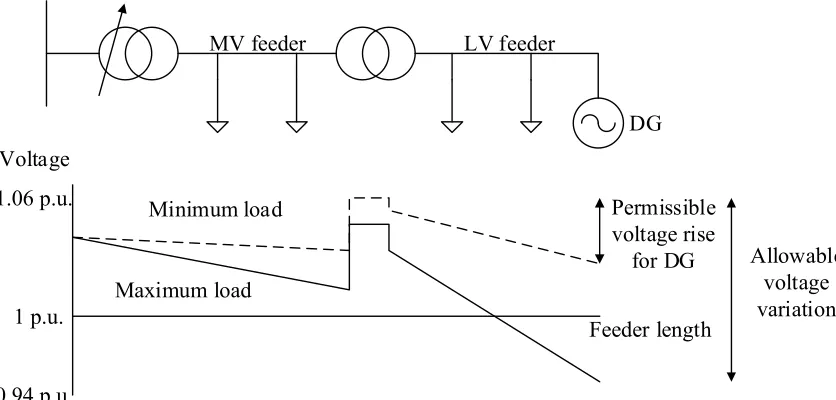
[image:35.595.151.569.514.714.2]operation [20, 21]. The voltage profile of a radial distribution feeder is shown in Figure 2.1.
Figure 2. 1 Voltage variation down a radial feeder
MV feeder LV feeder
DG
Maximum load
Minimum load Permissible
voltage rise
for DG Allowable voltage variation Voltage
1 p.u. 1.06 p.u.
0.94 p.u.
14
As indicated in Figure 2.1, the voltage at the starting point of the MV feeder is held
constant by a tap-changing transformer. The voltage drops along the distribution network
due to line impedance and the load on the feeder. The voltage boost in the middle of the
feeder is due to taps of the MV/LV transformer and the voltage drop on the LV feeder is due
to the low voltage loads [22, 23].
When DG is installed by the customer, it is regarded as being directly connected to the
MV network through a step-up transformer. The output power of DG changes the power
flow in the network and causes voltage variation [24]. An example is given for a simple
two-bus radial distribution network as shown in Figure 2.2.
Figure 2. 2 Simple two-bus radial distribution network
The voltage rises at the load busbar caused by DG in per unit (p.u.) can be
approximately calculated by:
2 2
21 2 1
( DG L ) ( DG L )
R P P X Q Q
V V V
V
− + −
15
where V1 and V2 are the voltages of the primary and load busbars; V is the nominal voltage;
R and X are the circuit resistance and impedance; and PDG-PL2 and QDG-QL2 are the active
and reactive power flowing through the branch. The voltage rise can be controlled by
importing or exporting reactive power from or to the DG. However, in the current practice
of network management by the DNOs, the power factor of DG using rotating generators is
usually required to be set as unity, which means the DG export active power only. This is
due to that it will be difficult for DNO’s to predict the voltage change in the network if DGs
are not operated at unity power factor. This operation strategy may cause significant voltage
violation when the load level changes from high to low.
2.1.1.2
Increase in Network Fault Level
Many types of distribution generation plants use directly connected rotating machines and
these will contribute to the network fault levels. Both induction and synchronous generators
will increase the fault level although their behaviour under sustained fault condition differs.
The rise of fault level depends on the DG capacity and DG location. In urban areas,
the fault level at many of the existing networks is approaching 70% of the switchgear ratings
caused by the additional contribution from dynamic loads [25]. Hence the increase in fault
level by DG connection can cause serious safety issues to the network operation. This can
16
Furthermore, to increase the short circuit rating of distribution network by upgrading
the switchgear and cables can be extremely expensive and difficult particularly in congested
city substations and cable routes. Current practice to increase the DG penetration without
causing serious fault level rise is to introduce a high impedance, such as high impedance
transformer or reactor between the generator and the network. But this solution is at the
expense of increased power loss and voltage variations at the generator. In recent years,
researchers have been applying fault current limiters (FCLs) and power electronic devices
in the protection with DG penetration [26, 27].
2.1.1.3
Power Quality
Two aspects of power quality are usually considered to be important with DG: 1) transient
voltage variations and 2) harmonic distortion of the network voltage [28]. Depending on the
network circumstance, the installation of DG can either increase or decrease the quality of
the voltage received by other users in the network.
The transient voltage variation is caused during the connection and disconnection of
relatively large DG to the network. The transient voltage variation can be limited by careful
design of DG plant. But for directly connected induction generators on weak networks, the
transient voltage rise can be the limitation on increasing DG penetration rather than
steady-state voltage rise. For synchronous generators, the starting inrush current can be negligible
17
However, the disconnection of DG at full output may also lead to significant voltage
drops. Incorrectly designed DG plant with power electronic interface to the network may
inject harmonic currents which can lead to unacceptable network voltage distortions.
2.1.2 Technologies Used in Distributed Generation
The technology available for DG varies widely. It generally has the following characteristics.
Firstly, many of the technologies utilise renewable energy resources. The availability of the
different resources varies significantly in areas and efficiency. Secondly, many of the
technologies have been modularized. For instance, technologies like micro-hydro units,
photovoltaic (PV) arrays, wind turbines and fuel cells consist of a number of small modules.
These modules are manufactured in factories and can be installed at the required location in
a very short time comparing to large centralised power stations. Furthermore, each module
unit can function independently despite the status of the other modules, which means the
failure in one module does not affect the other modules. The effect of module failures on the
total available power output is relatively small as compared to a unit failures in large
centralised power stations. Finally, the adding on or relocation of modules is allowed by the
technologies. An important type is the combined heat and power (CHP) generation. This
technology uses various heat generation technologies to supply heat demand and drive
synchronous or induction generators for electricity. Detailed description of several
18
2.1.2.1
Combined Heat and Power Plants
Combined heat and power is, at present the most significant type of distributed generations.
Generally, the generated electrical power is consumed inside the host premises or industrial
plant of the CHP facility. The heat is either used for the industrial process and/or for space
heating inside the premises or transported for the district heating. The typical overall
efficiency of CHP can be 67% with electrical efficiency of 23% and heat efficiency of 44%
[29]. This would lead to a 35% reduction in the primary energy use compared to electrical
and heat generation from separate power stations and boilers. This further leads to a
reduction in total CO2 emission by over 30%.
The prime movers of CHP units at present predominantly include: gas engine, gas
turbine, fuel cell and domestic boiler system. In the last case, the hot gas firstly drives the
generator to generate electricity through the steam turbine. Afterwards, the gas is passed to
the industrial process or through a heat exchanger for the space heating. The generator,
commonly a synchronous or induction generator, is directly connected to the grid through a
step-up transformer. Due to the capability of reactive power control, synchronous machines
are more preferred than induction machines in the electricity generation of CHP [30, 31].
The grid interface of a fuel cell type of CHP unit is through a power electronic stage
[32]. The fuel cell directly converts fuel energy into heat and electricity without using kinetic
19
Some small scale domestic CHP units use fuel cell or an external combustion engine
such as Stirling engine to drive a rotary or linear permeant magnet generator. These
small-scale CHP units is connected to the single-phase grid through power electronic interfaces.
The basic configuration of a CHP units with gas turbine is illustrated in Figure 2.3. At
present, most of the CHP units in the distribution network operate in the mode of producing
heat as the main output and electricity as by-product by the current power.
For fuel cell CHP units, the connection to the gird is through a power electronic
interface, as shown in Figure 2.4. This can limit the current contribution to a grid fault [32].
Figure 2. 3 Configuration of a gas turbine CHP [33]
Generator
Coupling Step-up Transformer Gas Turbine
Heat Exchanger
Exhaust Gases
Distribution Network Heat Consumer
Fuel
Compressor
20
Figure 2. 4 Configuration of fuel cell CHP [34]
2.1.2.2
Renewable Energy Generation
At present, the distribution of DGs using CHP is mainly determined by the local load and
the operation of CHP is generally controlled in response to the energy demands of the heating
scheme. Similarly, the siting of electricity generation using renewable energy source is
determined by the location of the renewable energy source and their output varies with the
availability of the source [35]. For small DGs using renewable energy resources, it is not
cost-effective to provide large energy storage. This is an important difference compared with
21
2.1.2.2.1
Small-scale Hydro Generation
Hydro generation is a relatively mature technology and the operation of small and medium
sized hydro generating units in parallel with distribution system is well understood [36, 37].
The hydro schemes experience large variation according to availability of the water flow if
significant water storage capacity is not available. This variation is largely affected by the
rainfall, particularly if the catchment is on rocky or shallow soil which lacks vegetation cover
and steep, short streams [38]. Uneven rainfall will lead to a variable hydro resource and it is
interesting to note that the capacity factor for hydro generation in the United Kingdom for
2008 was only some 35%. (Capacity factor is the ratio of annual energy generated to that
which would be generated with the plant operating at the rated output all year).
The power output of a hydro-turbine is given by:
P = Q Hη ρg (2.2)
where P is the output power (W), Q is the flow rate (m3/s), H is the effective head (m), η is
the overall efficiency, ρ is the density of water (1000g/m3) and g is the acceleration due to
gravity (~9.8m/s2). Various forms of turbine are used for differing combinations of flow rate
and head. For small hydro units (<100kW), a cross-flow impulse turbine, where the water
strikes the runner as a sheet rather than a jet, may be used. The typical reasonable efficiencies
22
Generators commonly used in small-scale hydro scheme are induction or synchronous
machines. Considering the safety of turbine-generator when over-speeding due to the loss of
loads, the squirrel-cage induction generator is more preferred than wound rotor synchronous
machine. Due to the operating characteristic of the turbine to the variable flow rates, the
number of variable speed hydro-generator sets in use is increasing. This requires the use of
power electronic interface for the connection to the distribution network.
2.1.2.2.2
Wind Power Plants
The power developed by a wind turbine extracted from the kinetic energy of the passing
wind is:
3 1
2 p a s
P= C ρ v A (2.3)
where Cp is the power efficiency (a measurement of the effectiveness of the aerodynamic
rotor), P is the output power (W), v is the wind velocity (m/s), As is the swept area of rotor
disk (m2) and ρa is the density of air (1250g/m3).
As the developed power is proportional to the cube of wind speed, it is very important
to locate the generation in the area of high mean annual wind speed and the availability of
23
Typically, a 2MW wind turbine has a rotor diameter of 60 to 80 m mounted on a 60 to
90 m high tower. The wind turbine must be designed to withstand large forces during high
winds as the force exerted on the rotor is proportional to the square of the wind speed. The
three-bladed horizontal-axis rotor design gives a good value of power efficiency, which
varies with the relative speed of the rotor and the wind (the tip speed ratio). The maximum
value of Cp in practice is approximately 0.4 to 0.45 [40].
The wind turbine can be operated, in response to the variation of the wind speed, in
fixed or variable speed [41, 42]. For a fixed speed wind turbine, the induction generator is
commonly in use. The schematic representation of a fixed speed wind turbine is shown in
Figure 2.5. The aerodynamic rotor is coupled to the induction generator via a speed
increasing gearbox. The cage rotor induction generator is typically for 690V, 1000 or 1500
rpm. Pedant cables within the tower connect the generator to power factor correction
capacitors and an anti-parallel soft-start unit located in the tower base. The wind turbine is
typically connected into the 11kV or 33kV network in UK through a step-up transformer.
For a variable speed wind turbine, the generator can be either induction or synchronous
generator. The schematics of variable speed wind turbine using induction and synchronous
generators are shown in Figures 2.6 and 2.7. The double fed induction generator (DFIG) uses
a back to back voltage source convertor (B2B VSC) in the rotor circuit. It controls the power
flows when the generator operates above the synchronous speed. If the required speed
operation is in a wide range, the arrangement in Figure 2.7 can be used. The B2B VSC is
24
The generator can be either induction or synchronous generator and the pulse width
modulation (PWM) control is used on the converter bridges. The variable speed operation
[image:46.595.253.442.273.452.2]gives two main advantages: 1) reducing the mechanical loads and 2) smoothing output power.
Figure 2. 5 Fixed speed induction generator wind turbine [43]
[image:46.595.259.437.541.717.2]25
Figure 2. 7 Figure 2.7 Full power converter wind turbine [43]
2.1.2.2.3
Solar Photovoltaic Generation
Photovoltaic generation is a well-established technology with a number of major
manufactures producing related equipment. The physics of photovoltaic energy conversion
has been described by a number of authors [44-46]. Its main application was off-grid for
high value and small electrical load that were far from the nearest distribution network for
many years in the past. In the recent years, stimulated by support through feed-in tariffs its
use as grid-connected distributed generation has increases rapidly particularly in Germany
and Spain [47, 48]. The interests of PV generation in Europe is focused on smaller
26
These small PV installations are connected directly at customers’ premises and so to
the low voltage distribution network. This form of generation is distributed largely in
residential and commercial customers. The schematic representation of a small PV
generation connected to the grid is shown in Figure 2.8. The inverter typically consists of :1)
a maximum power point tracking (MPPT) circuit, 2) an energy storage element, 3) a dc to
dc converter to increase the voltage, 4) a dc-ac convert stage, 5) an isolation transformer and
6) an output filter. Usually PV inverters operate at unit power factor and have a very limited
effect on the network voltage [49, 50].
27
2.1.3 Grid Regulation and Standards Regarding DG
Installation
Embedded generators above 11kVA in MV or LV networks are governed by Engineering
Recommendation G59 (Issue 3, 2013) [52, 53]. The main schemes used in the UK regarding
the aspects mentioned in Section 2.1.1 are as follows.
Voltage limits
Where the generating plant is remote from a network voltage control point, a voltage
range of ±10% of the declared voltage is applied at the connection point. The step voltage
change caused by the connection and disconnection of generating plant from the distribution
system is subject to a typical limit of ±3% for infrequent planned switching events and ±10%
for unplanned outages.
Power quality
The connection and operation of generating plant may cause a distortion of the
distribution system voltage waveform resulting in voltage fluctuations, harmonics or phase
voltage unbalance. The limits on the low order harmonic distortion are set as shown in Table
28
Table 2. 1 Limits for harmonic emission [53]
Harmonic order Maximum permissible harmonic current
n A
Odd harmonics
3 2.3
5 1.4
7 0.77
9 0.4
11 0.33
13 0.21
15≤n≤39 0.15x8/n
Even harmonics
2 1.08
4 0.43
6 0.3
8≤n≤40 0.23x8/n
Protection setting
In order to avoid unnecessary disconnection of generating plant during distribution
network faults or switching events and the consequent disruption to generators and
29
Table 2. 2 Settings for long-term parallel operation [53]
Protection Function
Small Power Plant①
Medium Power Plant②
LV③ Protection HV④ Protection
Trip Setting Trip Delay Time (s) Trip Setting Trip Delay Time (s) Trip
Setting Trip Delay Time (s)
U/V stage 1 Vϕ-n⑤
-13% 2.5 Vϕ-ϕ
⑥
-13% 2.5 Vϕ-ϕ⑥
-13% 2.5
U/V stage 2 Vϕ-n⑤
-20% 0.5
Vϕ-ϕ⑥
-20% 0.5
O/V stage 1 Vϕ-n⑤
+14% 1
Vϕ-ϕ⑥
+10% 1 Vϕ-ϕ⑥
-13% 1
O/V stage 2 Vϕ-n⑤
+19% 0.5
Vϕ-ϕ⑥
+13% 0.5
U/f stage 1 47.5Hz 20 47.5Hz 20 47.5Hz 20
U/f stage 2 47Hz 0.5 47Hz 0.5 47Hz 0.5
O/f stage 1 51.5Hz 90 51.5Hz 90
51.5Hz 0.5
O/f stage 2 52Hz 0.5 52Hz 0.5
Loss of Mains
(Vector Shift) K1⑦ x 6 degrees K1⑦ x 6 degrees Inter-tripping expected Loss of Mains
(Rate of Change
of Frequency) K2
⑧ x 0.125 Hz/s K2⑧ x 0.125 Hz/s Inter-tripping
[image:51.595.114.555.190.527.2]expected
Table 2. 3 Settings for infrequent short-term parallel operation [53]
Protection Function
Small Power Plant①
LV③ Protection HV④ Protection
Trip Setting Time (s) Trip Setting Time (s)
U/V stage 1 Vϕ-n⑤ -10% 0.5 Vϕ-ϕ⑥ -6% 0.5
O/V stage 1 Vϕ-n⑤ +14% 0.5 Vϕ-ϕ⑥ +6% 0.5
U/f stage 1 49.5Hz 0.5 49.5Hz 0.5
![Figure 2. 4 Configuration of fuel cell CHP [34]](https://thumb-us.123doks.com/thumbv2/123dok_us/9460391.452771/42.595.271.428.156.402/figure-configuration-of-fuel-cell-chp.webp)
![Figure 2. 6 Figure 2.6 DIFIG wind turbine [43]](https://thumb-us.123doks.com/thumbv2/123dok_us/9460391.452771/46.595.253.442.273.452/figure-figure-difig-wind-turbine.webp)
![Figure 2. 7 Figure 2.7 Full power converter wind turbine [43]](https://thumb-us.123doks.com/thumbv2/123dok_us/9460391.452771/47.595.250.445.181.359/figure-figure-power-converter-wind-turbine.webp)
![Table 2. 1 Limits for harmonic emission [53]](https://thumb-us.123doks.com/thumbv2/123dok_us/9460391.452771/50.595.191.479.186.428/table-limits-harmonic-emission.webp)
![Table 2. 3 Settings for infrequent short-term parallel operation [53]](https://thumb-us.123doks.com/thumbv2/123dok_us/9460391.452771/51.595.114.555.190.527/table-settings-infrequent-short-term-parallel-operation.webp)