A Thesis Submitted for the Degree of PhD at the University of Warwick
Permanent WRAP URL:
http://wrap.warwick.ac.uk/85062
Copyright and reuse:
This thesis is made available online and is protected by original copyright. Please scroll down to view the document itself.
Please refer to the repository record for this item for information to help you to cite it. Our policy information is available from the repository home page.
The Vutivi study
Understanding the potential role for appropriate digital
technological solutions in the innovation of health
system design, implementation and normalisation in
rural South Africa for both patients and health-workers:
A critical exploratory analysis
Jocelyn Olivia Todd Anstey Watkins
BA. Hons (Dunelm), MSc (Oxon)Thesis Submitted in Fulfilment of the Requirements for the
Degree of Doctor of Philosophy in Health Science
University of Warwick
Warwick Medical School
This thesis is dedicated to
Granny Joy, Robb, Stella, Jono and Jasper
Mama Miriam and Mama Matlala
Table of Contents
Table of Contents iii
List of Tables xii
List of Figures xv
List of Boxes xviii
List of Photos xix
List of Appendices xxi
Acknowledgments xxii
Declaration xxvi
Abstract xxviii
List of abbreviations and acronyms xxix
Chapter 1 : Vutivi study introduction and outline 2
1.1 Introduction to the Vutivi study thesis ... 2
1.2 Overview of Chapter 1 ... 5
1.3 Problem statement ... 5
1.4 Overall research aim ... 6
1.5 Research questions ... 6
1.6 Study objectives ... 8
1.7 My research motivations ... 8
1.8 Study design ... 10
1.9 Thesis contribution to knowledge ... 11
1.10 The researcher’s epistemological positioning ... 11
The realist approach ... 11
1.11 Theories used to inform the Vutivi study ... 13
Normalisation theory ... 17
Health Systems Framework used by the South African National Department of Health ... 19
1.12 The Vutivi study’s theoretical framework ... 21
1.13 Overview of the Vutivi study thesis ... 23
Chapter 2 : Background to the South African health system, eHealth and mHealth and national policies: a narrative review 25 2.1 Overview of the narrative review in Chapter 2 ... 25
2.2 General introduction to South Africa’s health system ... 25
Disease burden in South Africa ... 28
Maternal health in South Africa ... 31
2.3 eHealth and mHealth in LMICs ... 33
2.4 eHealth and mHealth in South Africa ... 38
2.5 South African policy relating to digital communication and its use for health ... 41
The National eHealth Strategy 2012–2017 ... 42
The National mHealth Strategy (2015-2019) ... 43
National Health Normative Standards Framework for Interoperability (2014) ... 45
The National Integrated ICT Policy Green Paper (2014) ... 45
The South African Connect Broadband Strategy (2013) ... 46
National Health Insurance (NHI) Green Paper (2011) and White Paper (2015) ... 46
National Development Plan (NDP) 2030 ... 49
Overview of the policies presented ... 50
2.6 eHealth and mHealth policy implementation barriers ... 51
2.7 Summary of the narrative review ... 51
Chapter 3 : The role of mobile text and voice communication in the monitoring of chronic disease management within public primary healthcare in resource-poor low- and middle-income country settings: a systematic realist review 54 3.1 Introduction to Chapter 3 ... 54
3.2 Study design for this review ... 60
3.3 Review a) mHealth interventions for the management of chronic diseases in LMICs: a narrative review of reviews ... 61
Methodology and methods for the narrative review of reviews ... 61
Results for Review a ... 64
Conclusion for Review a ... 85
3.4 Review b) mHealth interventions for monitoring of chronic diseases in LMICs: a realist review ... 89
Introduction to the realist review ... 89
The realist review methodology ... 89
Methods for the realist review ... 92
Results for Review b ... 97
3.5 Realist review novel theoretical framework ... 131
3.6 Review discussion ... 134
3.7 Chapter 3 review conclusion ... 139
Chapter 4 : Methodology and methods of the Vutivi study 142 4.1 Overview of Chapter 4 ... 142
4.2 a) The broad methodological approach ... 142
Overview of the Vutivi study research design of primary data collection ... 142
Description of methods used in the empirical data collection ... 146
Mixed-methods research design ... 151
4.3 b) Study setting ... 152
Research location ... 152
4.4 c) Qualitative methods procedures: Phases 1-8 ... 160
Phase 1: Formative phase - fieldwork preparation and data entry ... 161
Vutivi participant list ... 166
Phase 2. Patients with chronic disease ... 168
Phase 4: Health professionals: nurses and doctors ... 177
Nurses ... 177
Doctors ... 178
Phase 5: Additional health-workers ... 179
Phase 6: Community members ... 179
Phase 7: Policy-makers ... 181
Phase 8: eHealth and mHealth experts ... 182
4.5 Quantitative method procedure ... 184
4.6 d) Fieldworker, ethics and research challenges ... 185
Fieldworker’s role within the Vutivi study ... 185
Ethical considerations ... 187
4.7 Fieldwork challenges ... 189
4.8 e) Methodological strengths and limitations ... 191
Methodological strengths of the Vutivi study ... 191
Methodological limitations of the Vutivi study ... 191
4.9 f) Analysis strategy of primary qualitative data ... 192
Qualitative analysis techniques ... 193
Analysis strategy of secondary quantitative data ... 195
4.10 g) Research dissemination ... 196
Dissemination of Vutivi research findings ... 196
Chapter 5 : Contextual results – Description of patients’ lives, health-workers’ work roles and primary care environment 200 5.1 Overview of the three results chapters ... 200
Structure of Chapter 5: broad contextual results ... 201
5.2 Section 1: Quantitative contextual results of patients and health-workers ... 201
5.3 Section 2: Contextual results of patients’ lives and health-workers’ work roles ... 210
5.4 Section 3: Contextual findings of the South African public healthcare
system as general context to the Vutivi study ... 218
Clinic context ... 218
Patient health education from health facilities ... 221
District hospital context and description of facility challenges ... 229
Types of patients using the public health facilities ... 230
5.5 Rural health system challenges in clinics and hospitals... 234
Hospital processes and antagonisms ... 234
Additional external issues that create challenges to the public health system ... 249
5.6 Conclusion of Chapter 5 ... 253
Chapter 6 : Results – How patients and health-workers are using phones and computers in relation to health 256 6.1 Overview of Chapter 6 ... 256
Structure of the results of Research Question 2 ... 258
6.2 Results for Research Question 2: Current digital technology use.... 259
The general use of mobile phones and computers by patients in everyday life ... 259
Social reasons for using mobile phones ... 269
Health-related uses of mobile phones ... 272
Current digital communication between patients and health-workers ... 273
6.3 Macro-themes around mobile phone use for health utilisation by patients ... 275
Theme 1: Phones used to support chronic disease management ... 275
The Nkateko mobile phone call/text-message reminder intervention for hypertensive patients ... 281
mHealth reminder to support chronic disease management summary ... 286
Health-related social media and Internet use by patients ... 290
Patients’ informal digital health use summary ... 297
6.4 Macro-themes for health-workers’ current use of mobile phones and computers ... 298
Health-workers’ use of mobile phones for calls and text-messages for social and work purposes ... 299
Theme 3: Web-literacy of patients and health-workers ... 302
Health-workers’ use of the Internet summary ... 310
Theme 4: Phones used to support health-workers’ work practices .... 311
Phones used to support health-workers’ work practices summary .... 314
Theme 5: Local digital innovation by doctors ... 316
Local digital innovation by doctors summary ... 319
Theme 6: Digital solution to drug stock-outs ... 322
Solution to drug stock–outs summary ... 324
6.5 Health-workers’ current informal digital health use of technology . 325 Conclusion of Research Question 2 ... 327
6.6 Results for Research Question 3: Potential future digital technology use ... 328
Structure and background to Research Question 3 ... 328
6.7 Patients’ future use of digital health ... 329
Theme 7: Patient education ... 329
Health-workers’ opinions about the potential future use of eHealth and mHealth for patient care ... 334
Sources of patient education: clinics and alternatives ... 335
Theme 8: Nurses’ use of computers ... 338
Nurses’ future use of computers summary ... 344
Theme 9: Future use of eHealth and mHealth ... 346
Conclusion of Research Question 3 ... 352
6.8 Summary of Chapter 6 ... 353
6.9 Conclusion of Chapter 6 ... 360
6.10 Strengths and limitations of the Vutivi results ... 363 Chapter 7 : Results – Policy and national issues around eHealth and
7.1 Introduction and structure of Chapter 7 ... 369
7.2 General context of the eHealth and mHealth ecosystem in South Africa ... 371
Policy-makers’ and eHealth and mHealth experts’ work roles ... 371
Policy environment in South Africa: documentary analysis of polices described in the background narrative review ... 373
Policy development: conception of the eHealth Strategy ... 373
Government budget for eHealth and mHealth in South Africa ... 376
Relevant policy: interoperability standards ... 378
eHealth and mHealth projects in South Africa ... 380
Private eHealth and mHealth initiatives ... 384
7.3 Landscape of eHealth and mHealth in South Africa ... 390
Adoption, uptake and implementation of government eHealth and mHealth programmes ... 394
7.4 The adaption of the four health system dimensions from the government’s ‘Health Systems Framework’ in relation to eHealth and mHealth ... 395
Government Stewardship: strategic leadership and learning environment ... 397
Organisational systems: capacity for implementation and culture of information use ... 401
Technological systems: usability, interoperability, privacy and software ... 404
Financial systems: sustainable funding and cost-effectiveness ... 407
7.5 Policy debate by policy-makers and experts around the barriers and enablers of the future of eHealth and mHealth in South Africa ... 421
Summary of the enablers to eHealth and mHealth ... 425
7.6 Developing a health systems healthcare delivery framework for decision-making around eHealth and mHealth ... 428
Explanation of the healthcare delivery model ... 430
7.7 Conclusion of Chapter 7 ... 432
8.2 Introduction to the thesis discussion ... 436
8.3 Synthesis of final research findings with recommendations ... 437
Final Vutivi model of synthesised results ... 439
Lack of accessible digital health information for patients and health-workers ... 441
Street-level bureaucrats’ implementation of policy and programmes 445 Local opportunistic implementation of the use of eHealth and mHealth ... 452
Current issues of management of resources and failure to maintain equipment ... 459
Health system dimensions as enablers and barriers to implementation ... 463
8.4 Summary of the research findings presented in Chapter 8 ... 465
8.5 Overall strengths and limitations of the Vutivi study ... 466
Strengths of the Vutivi study ... 466
Limitations of the Vutivi study ... 472
8.6 Implications for public health practice and policy ... 476
8.7 Future research recommendations ... 480
8.8 Research contribution ... 484
8.9 The Vutivi thesis conclusion ... 486
Appendices 493
List of Tables
Table 1. WHO (2006:9) quality healthcare outcome dimensions ... 15
Table 2. Explanation of the Health Systems Framework: Health systems dimensions required for scaling up mHealth for community-based health services (Leon & Schneider, 2012:6) ... 20 Table 3. Typology about mHealth for assisting with chronic disease’ monitoring (Typology adapted from Marshall et al. (2013:7)) ... 58
Table 4. Databases, search terms and inclusion and exclusion criteria common to both Review a and b ... 59 Table 5. Search terms and inclusion criteria for Review a ... 62 Table 6. Data Extraction of interventions in the reviews and outcomes, the key results and the first theme - an overall interpretation of intervention effectiveness (Review a) ... 66 Table 7. Gaps in the research evidence for mHealth used for chronic disease management ... 84 Table 8. High-level concepts from a tele-monitoring review by Vassilev et al. (2015:23), adapted in this review to be used for mHealth interventions
Table 11. Theory and mechanisms from empirical studies (resource and response to intervention) – patient capacity to monitor chronic disease using mobile health communication ... 121 Table 12. COM-B domains: capability, opportunity, motivation for mobile monitoring interventions based on findings from the 11 empirical studies ... 126 Table 13. Review summary of the high-level theoretical concepts, domains and theories related to monitoring mechanisms from the 11 empirical studies ... 128
Table 14. Extract from field notes during preparation for fieldwork (October, 2013) ... 162
Table 22. Household asset status of linked study participants compared to study site population ... 208 Table 23. The percentage of study site population with various assets by SES index ... 209
Table 24. Sources of patient education and explanation from the participants ... 226 Table 25. Micro-themes and an explanation of phone and computer use by patients ... 261 Table 26. The use of social media for health-related reasons by patients.. 290 Table 27. Examples of online searching using Google ... 293 Table 28. Summary of the results themes related to Labrique’s taxonomy of eHealth and mHealth solutions, presented in Chapter 6 ... 355 Table 29. Summary of key issues of improved digital communication, access to information and continuity of care and mains themes supported by CMOc ... 358 Table 30. Demographics of experts’ organisation types ... 372
Table 33. Summary of suggested eHealth and mHealth opportunity for service delivery interventions and overall health system strengthening to guide scale-up with Vutivi study examples ... 477 Table 34. Presentation of three main key research contributions relevant for each participant group ... 485
List of Figures
Figure 1. ‘Health Systems Framework’ diagram for decision-making about mHealth for community-based services (Leon et al., 2012:5) ... 19 Figure 2. Vutivi study theoretical framework to guide the analysis ... 22 Figure 3. South African ICDM model including the component of ‘mobile technology’ in the bottom right hand blue box (Asmall & Mahomed, 2014:11) ... 31
Figure 4. Maternal mortality data in facility ratio by province 2014/15 from the District Health Information System (van Shaik, 2015:69) ... 32 Figure 5. Key barriers to consider when implementing mHealth solutions by the GSMA (2014:12) ... 37 Figure 6. ‘12 Common mHealth and ICT Application Framework’ by (Labrique et al., 2013:168) ... 38
Figure 9. Flow diagram of review of reviews search and selection process (Review a) ... 65 Figure 10. COM-B model for understanding behaviour (Michie et al., 2013:4)
... 96
Figure 11. Flow diagram of the realist review search and selection process (Review b) ... 98 Figure 12. Refined Context–Mechanisms–Outcome configuration (CMOc) for patients with chronic disease in LMICs receiving/sending mHealth interventions by text or voice (layout adapted from Dalkin et al. (2015:4)) ... 117
Figure 13. Diagram to illustrate an example CMO pathway from the health-worker to the patient... 119 Figure 14. Novel theoretical-conceptual realist framework for mHealth interventions for the monitoring of chronic diseases in LMICs, informed by high-level theory, domains and concepts ... 132 Figure 15. Research design summarising the methods and design used in Stage 2 of data collection ... 143 Figure 16. Map of the Agincourt HDSS field site, Mpumalanga, South Africa (Sartorius, 2013:29) ... 153
Figure 18. The comparative age categories between study sample and study site population ... 206 Figure 19. Percentage of households owning mobile phones in the Agincourt HDSS study site (Agincourt, 2014a) ... 209 Figure 20. Percentage of household asset status by SES status ... 210 Figure 21. Diagram to illustrate the different sources that patients can gain health information from ... 221 Figure 22. Diagram to illustrate the different methods of remembering to take medication or attend a clinic appointment ... 276
Figure 23. Vutivi eHealth and mHealth landscape in South Africa, illustrating the payers (purple), producers (blue), providers (red) and consumers (turquoise) ... 391 Figure 24. South Africa mHealth stakeholder high-level overview* (NDOH, 2015c) ... 393 Figure 25. Hexagon to show institutionalisation with different key actors with the patient at the centre when moving mHealth projects to scale (Wilson, 2014:16) ... 394
Figure 27. Model of overall results inclusive of the overarching themes/issues, key discussion examples, barriers/benefits and recommendations ... 441 Figure 28. National Integrated Digital Health Systems: 2015-2020
(HealthEnabled, 2015:1)... 464
Figure 29. Thesis frameworks and diagrams with links indicated ... 467 Figure 30. A model of mHealth solutions delivered across the continuum of care designed by UNICEF (2015:1) ... 481
List of Boxes
Box 1. Categories of mHealth technologies described by the South African government (NDOH, 2015c:8)... 4 Box 2. Five factors to be considered for rollout of mHealth by Donner and Mechael (2012:142) ... 35
Box 3. mHealth Strategy Roadmap with priority areas and challenges encountered (NDOH, 2015c:11) ... 44 Box 4. A summary of the stages of a realist review guided by mapping process of a realist review as described by Pawson et al. (2004:29) and Rycroft-Malone et al. (2012:3)... 93
Box 8. List of the three census variables and their descriptions from the HDSS dataset ... 184 Box 9. Summary of basic patient and health-workers demographics from the Vutivi study ... 202
Box 10. Description of the procedure of the Nkateko mHealth component ... 282 Box 11. The reasons for the drug stock-outs (Stop-Stock-outs, 2015) ... 323
List of Photos
Photo 1. Mama Matlala outside of her rural home (January, 2016) ... ii Photo 2. Mama Miriam in her kitchen on her phone ... xxvii Photo 3. Mama Matlala outside her home (November, 2013) ... 1 Photo 4. Mama Matlala outside her home in Limpopo province (August, 2014) ... 10 Photo 5. Mama Miriam outside of her family home (November, 2013) ... 24 Photo 6. Mama Matlala’s great-great-grandchild playing on his mother’s phone (November 2013) ... 53 Photo 7. Mama Matlala sitting with family members outside ... 141
Photo 11. Photo of Nkateko employed LHW phoning a patient to remind them
to come to their next appointment ... 173
Photo 12. Mobile phone advertisement above a market in town on periphery of study site ... 199
Photo 13. Stallholder selling fruit at a study site village... 212
Photo 14. Storage of patient files at a primary healthcare clinic ... 237
Photo 15. Image of a hand-written patient file ... 242
Photo 16. Example of drugs stored at the clinic pharmacy ... 245
Photo 17. Airtime for sale outside a community member’s house in the study site ... 255
Photo 18. Mama Miriam and Mama Matlala in their home, using a mobile phone to set their phone alarm ... 278
Photo 19. Nkateko patient holding her phone and patient file ... 285
Photo 20. An adolescent using her phone to look up HIV information online ... 292
Photo 21. The consulting room with hand-drawn graphs by the nurses, indicating monthly indicators ... 340
Photo 22. Airtime seller in the town ... 368
Photo 23. Two Shangaan women walking home from the clinic in the study site ... 435
Photo 25. Mama Matlala outside of her home (January, 2016) ... 572
List of Appendices
Acknowledgments
Nelson Mandela is my hero. I stood with my parents, aged eight, on the day of elections in 1994 in Johannesburg for them to vote for this man, our new leader, ‘Madiba’. During the start of fieldwork in December 2013, Mandela passed away. We sang the national anthem, Nkosi Sikelel’ iAfrika together, all colours and creeds, hand-in-hand outside of his house in Houghton. He once said, ‘A winner is a dreamer, who never gives up’ and it is these words that I have always carried with me.
This study would not have been possible without the 231 people I interviewed and the many more I conversed with over 12-months. They all generously gave their time and opinions, knowing that my research was unlikely to help them directly, but may have impact upon other people like them one day.
experience. I am still grateful for the serendipity in which this doctoral opportunity arose.
I am grateful to the Agincourt HDSS field team for providing invaluable staff, resources and office space that made the Vutivi fieldwork possible. In particular, Rhian Twine, Nyiko Audrey Khosa and Simon Khoza from the LINC team who acted as vital gatekeepers and were a source of invaluable knowledge throughout the fieldwork. To the Data Science Team Afo, Nkothnathi and Cho and the admin team, Floidy, Ngoni, Vicky and Mama Vi at the Wits Tintswalo office for their excellent support. Also thanks to the quality checkers, Thulani and Katie for their time and enthusiasm.
To my fieldworker, Sizzy, who dedicated her interviewing skills, local knowledge and commitment to the qualitative research. She also taught me so much about Shangaan life and culture. Also to Charity, for speaking to the community members and making me try KFC for the first time in the local town. My gratitude extends to the family in the study site who let me stay at their home during some of the interviews.
skills for supporting me at the Three Minute Thesis competition, along with Adair Richards.
With thanks to the generosity of my PhD funders, the Economic and Social Research Council (ESRC) and GE Healthcare Ltd.
Declaration
I, Jocelyn Olivia Todd Anstey Watkins, declare that this thesis is my own work and that it has not been submitted for any other degree at another university.
This thesis is the result of my own work. I was responsible for all data analysis. This study was solely undertaken by the author, under Warwick Medical School at The University of Warwick, UK, in collaboration with the Wits Centre for Health Policy and the MRC/Wits Rural Public Health and Health Transitions Research Unit (Agincourt) in association with Department of Public Health, University of the Witwatersrand (Wits), South Africa. The research was approved by both of the universities ethics committees, the Department of Health (Mpumalanga Province and Bushbuckridge sub-district) and the MRC/Wits Rural Public Health and Health and Transitions Unit.
All photographs in this thesis are copyright to J. Watkins. Permission has been granted from all individuals in the photos to use them in this thesis. No participants feature in any of the photos and they are all people I know personally. All definitions are within the text in brackets.
There were no conflicts of interests in undertaking this research. This study is a collaboratively funded studentship by the ESRC and GE Healthcare Ltd.
Date: 10th November 2016
Signed:
Abstract
Background: In South Africa, 81 per cent of the population are dependent on the
public health system. The country faces a complex burden of a combination of chronic infectious illness and non-communicable diseases and high maternal mortality, 310 deaths per 100,000 live births. These and many other systemic health challenges have meant the government is starting to invest in digital solutions to strengthen health services delivery and public health; due to their ease of use, broad reach and wide acceptance. Digital communication systems are an intriguing possibility for delivering healthcare in low-resource settings. This thesis considers how mobile (mHealth) and non-mobile communication technologies are currently and potentially being used by patients and health-workers within the rural South African health system. Health system dimensions are also analysed at the macro-level to define the enablers and barriers to mHealth.
Methods: This qualitative exploratory study was a case study design guided by
theory-driven realist methodology. Mixed-methods research triangulated in-depth individual interviews, focus group discussions, prolonged engagement in non-participant observations and documentary analysis from a diverse range of participants (community members, patients, health-workers, policy-makers and experts) operating at different tiers within the country (community, facility, district, provincial and national). A realist review of patient mobile monitoring of chronic disease was conducted to determine hypotheses to inform the interpretation of empirical data and refine theory from the Context-Mechanism-Outcome configurations. These were supported by high-level theories of access, normalisation and the capability approach.
Results: Supportive government policy combined with patient and health-workers’
informal mHealth use can act as enablers to the uptake of digital communication systems, particularly with improved maintenance and management strategies. Access to health information is a barrier to care, which may be overcome with an evidence-based health website though inequities may still remain. Likewise, digital reminders may support chronic disease management particularly for patients with hypertension. Poor patient referrals and remote diagnosis can be overcome by digital communication as smartphone ownership increases and mobile data prices reduce. Local digital innovation relies on government backing for greater scale.
Conclusion: Informal digital communication solutions for health used by patients
List of abbreviations and acronyms
ADHS Attention Deficit Hyperactivity Disorder ADSL Asymmetric Digital Subscriber Line AIDS Acquired Immunodeficiency Syndrome ART Antiretroviral TreatmentBP Blood Pressure
CHW Community Health-worker
CMOc Context-Mechanism-Outcome Configuration DOC Department of Communication
DOH Department of Health ECG Electrocardiogram
ESRC Economic and Social Research Council eHealth Electronic Health
EMS Emergency Services FGD Focus Group Discussion
GSMA Groupe Speciale Mobile Association
HDSS Health and Demographic Surveillance Site (Agincourt) HIV Human Immunodeficiency Virus
HPCSA Health Professionals Council South Africa HPSR Health Policy and Systems Research
LINC Learning, Information Dissemination and Networking with the Community
LHW Lay Health-worker
LMIC Low- and middle-income countries mHealth Mobile Health
MDG Millennium Development Goal MRC Medical Research Council NCD Non-communicable Disease NDOH National Department of Health NHI National Health Insurance
NHS National Health Service (UK) OPD Outpatient Department PHC Primary Healthcare
SIM Subscriber Identity Module SMS Short Message Service TB Pulmonary Tuberculosis UN United Nations
UHC Universal Health Coverage
Chapter 1
Chapter 1: Vutivi study introduction and outline
1.1 Introduction to the Vutivi study thesis
This thesis is called the ‘Vutivi study’ (Vutivi means ‘knowledge’ in Xitsonga). It represents a large body of empirical and theoretical work. The overall aim is to understand the potential role for digital communication solutions in health systems from micro, meso and macro perspectives.
In this thesis, rural South Africa is the case study where the use of digital communication technologies within the care cycle of patients by all cadres of health-workers is examined. A particular focus is on how it is used to overcome the challenges of the ‘health system’. A health system is defined as the combination of organisations, institutions and individuals ‘directly and indirectly involved in the provision and delivery of health services to the national population’ (NDOH, 2011:5). This research focuses predominately on mobile phones and their potential to improve the performance of health systems.
Explanation of common terms used
The term mobile health (mHealth) is a sub-set of electronic health (eHealth). eHealth is defined as ‘the use of Information and Communication Technologies (ICT) for health’ (WHO, 2011:1) to support the functions and delivery of healthcare. An example of eHealth is the communication of patient data via patient electronic records. ICT includes a range of technologies, applications and services used to produce, process, distribute and transform information including telephones, mobile phones, and computers, as well as access to the Internet, social media and communication platforms (UN, 2012).
mHealth is commonly used to describe the delivery of health-related services via mobile digital communication. Kay et al. (2011) refer to mHealth as medical and public health practices supported by mobile devices, such as smartphones, patient-monitoring devices, personal digital assistants and tablets. The capabilities of these technologies to create, store, retrieve and transmit information between users can improve the delivery of healthcare (Akter & Ray, 2010).
describes the South African government’s categories of mHealth technologies.
Mobile devices include smartphones, patient monitoring devices, personal digital assistants and digital tablets that have functionalities, such as messaging platforms, apps, websites and social media.
Mobile digital communication can be used for the following purposes:
Emergency response systems
Disease surveillance and control
Human resource co-ordination, management and supervision
Synchronous and asynchronous mobile telemedicine diagnostic and decision-support for clinicians at point-of-care
Remote patient monitoring and clinical care
Health extension services, health promotion and community mobilisation
Health services monitoring and reporting
Health-related mobile learning for the general public
Training and continuing professional development for health-workers
Box 1. Categories of mHealth technologies described by the South African government (NDOH, 2015a:8)
1.2 Overview of Chapter 1
Chapter 1 provides an overview of the Vutivi study by describing the problem, overall aim, research questions and objectives and my research motivations. The study design is presented with an explanation of theories that guided the development of the theoretical framework and thesis.
1.3 Problem statement
healthcare and district hospital services (Pillay, 2004). In the South African primary healthcare model, clinics are nurse-led and are the first point of entry into the health system. These facilities are the cornerstone of care and provide integrated, preventive, promotional, curative and rehabilitation services. Despite national and local efforts to transform the health system, rural communities continue to face barriers in accessing quality healthcare (Goudge et al., 2009).
The question was whether delivery of care could be strengthened by the use of digital communication technology, particularly for patients with chronic disease and pregnant women. This research explores the possibilities of implementing digital systems for primary care considering the social, infrastructural, political, economic and environmental barriers and enablers.
1.4 Overall research aim
The overall aim was to understand the potential for digital communication solutions, particularly mobile devices, to improve public healthcare delivery in rural South Africa.
1.5 Research questions
What is the role of mobile phone communication in the monitoring of chronic disease management within public primary healthcare in resource-poor low- and middle-income country settings?
(Answered in Chapter 3)
Research Question 2.
How are digital communication technologies currently being used by patients and health-workers to enhance the delivery of primary healthcare within rural South Africa?
(Answered in Chapter 5)
Research Question 3.
What is the potential for the use of digital communication technologies to enhance primary healthcare delivery in rural South Africa?
(Answered in Chapter 6)
Research Question 4.
1.6 Study objectives
Objective 1. To undertake a realist review on the role of mobile phone communication in the monitoring of chronic disease management within public primary healthcare in resource-poor low- and middle-income country settings.
Objective 2. To explore patients’ and health-workers’ current and future use of digital communication technologies within rural South African primary healthcare.
Objective 3. To explore with national policy-makers and eHealth and mHealth experts, the potential for harnessing digital communication to improve primary healthcare in rural South Africa.
1.7 My research motivations
enthusiasm for digital communication can potentially improve process and health outcomes and whether they can be realised in this context.
Coupled with this intrigue, my motivation and postionality has stemmed from a personal story harboured from experiences growing up as a child in rural South Africa. The story is about my ‘Mama Matlala’, a 97-year-old Sotho woman, who cared for me during my formative years from birth (Photo 3). I wanted to critically understand why Mama and her daughter Miriam (Photo 2 and 4) still have poor access to healthcare and basic medication in their very rural village. For decades, the nearest clinic has struggled with persistent shortages of blood pressure tablets, needed to stabilise her hypertension. Of particular interest was how Mama’s basic mobile phone could enable her to manage her hypertension in the remote part of the Limpopo province, where she lives. To understand this predicament fully, interviewing a cohort of people with chronic disease also living in a rural area, was necessary.
Photo 4. Mama Matlala outside her home in Limpopo province (August, 2014)
1.8 Study design
community members, patients, health-workers, policy-makers and experts. I undertook a secondary analysis of quantitative data from the Agincourt Health and Demographic Surveillance System (HDSS) census data in order to contextualise and aid the interpretation of the qualitative findings.
1.9 Thesis contribution to knowledge
This thesis contributes to knowledge by providing a synthesis of findings, presented in four frameworks. These determine whether the public health system is ready to adopt digital communication solutions for patients and health-workers and where they are likely to work. Findings will contribute to public health policy and practice, and inform future eHealth and mHealth interventions. This thesis does not set out to evaluate whether digital communication improves health outcomes.
1.10 The researcher’s epistemological positioning
The realist approach
to work towards a closer understanding of what causes change. Wong (2012) implies that realism assumes that there is a ‘real world’ and that our knowledge of it is processed through human senses, languages and culture. The task of a realist is to generate theories that explain the social world and identify mechanisms that explain outcomes. The key question is ‘what works for whom, in which conditions’. This thesis considers social programmes as social systems. Pawson and Tilley (1997) suggest that social systems comprise of the interplay of individuals and institutions, of agency and structure, and of micro- and macro-processes. Realism paints a complicated picture of the world made up of unobservable underlying mechanisms and structures. Danermark (2002) clarifies that, for realists the ultimate aim of science is explanation of observed phenomena in terms of deeper-level generative mechanisms. This is a two-staged process: 1) conceptualising the causal mechanisms that give rise to events 2) describing how different mechanisms manifest under specific conditions.
The realist philosophy and subsequent theorists (Pawson & Manzano-Santaella, 2012; Wong et al., 2010) have developed distinctive approaches to social research called realist synthesis and evaluation. This research followed the two axioms of realism (Pawson & Tilley, 1997):
1. What are the mechanisms for change triggered by a programme and how
2. What are the social and cultural conditions necessary for change and
how are they distributed within and between programme contexts?
The principles of a realist inquiry were used in the realist synthesis of literature in the systematic review (Chapter 3). The realist approach was then extended in the final analysis of empirical data by using the hypotheses from this review to inform and interpret the qualitative Vutivi findings.
1.11 Theories used to inform the Vutivi study
Theory occupied a central role in this study in the formulation of interview questions and analysis of data. The development of theory ahead of data collection is a core feature of case study design (Lincoln & Guba, 1985).
Health policy and system research theory
A wider health system perspective may offer an opportunity to embed digital communications in the emerging debate around complex adaptive systems and their applications in health. Johnston and Finegood (2015) suggest that systems thinking is about causes and solutions of a complex problem such as,
lack of access to healthcare. Koon et al. (2013:1) argue that by embedding health policy and systems research into the ‘decision-making’ process, this
can strengthen the validity of technical decisions for LMIC health systems.
This may apply to the decision-making process in the field of eHealth and
mHealth. If healthcare delivery models are based on health policy and
systems research these can account for the complexity of health systems by
integrating issues such as, access to healthcare to optimise health outcomes.
Access to healthcare theory
mHealth can be described as the method of moving data from one place to another to improve the channel of communication to provide healthcare access. Access is central to the performance of healthcare systems and remains a complex notion. Access can be defined as ‘the opportunity to reach and obtain appropriate healthcare services in situations of perceived need for care’ (Levesque et al., 2013:4). Levesque’s et al. (2013) framework of access to healthcare includes five abilities of populations: 1.) Ability to perceive, 2.) Ability to seek, 3.) Ability to reach, 4.) Ability to pay and 5.) Ability to engage. A WHO document called ‘Right to Health’ (WHO, 2007:4) has been used by academics researching access to healthcare (McIntyre et al., 2009; Goudge et al., 2009) as it includes the terms availability, accessibility, acceptability and quality. The WHO (2006) ‘quality dimensions’ describe the building blocks for identifying tools and strategies for health outcome improvement (Table 1).
Table 1. WHO (2006:9) quality healthcare outcome dimensions
Quality Dimension and Definition
Effective, delivering healthcare that is adherence to an evidence base and results in improved health outcomes for individuals and communities, based on need
Efficient, delivering healthcare in a manner which maximises resource use and avoids waste
Acceptable/patient-centred, delivering healthcare which takes into account the preferences and aspirations of individual service users as the cultures of their communities
Equitable, delivering healthcare which does not vary in quality because of personal characteristics such as, gender, race, ethnicity, geographical location, or socioeconomic status
Safe, delivering healthcare which minimizes risks and harm to service users.
These dimensions are at the level of policy-makers, service providers and consumers across the whole health system (Peiris et al., 2014). For example, the quality dimension of ‘accessible’ is defined as the timely delivery of care, where skills are appropriate to medical need. All six dimensions can be applied to digital communication technologies. Levesque et al. (2013) extend the dimensions of accessibility to include approachability, availability, affordability and appropriateness. These are explored in this thesis.
The Capability Approach theory
concern (their freedom to lead a life they value), then social inclusion and the ability to participate in the ICT driven ‘e-society’ is important. The idea that ICT is intrinsically desirable and beneficial to society is prevalent and is likely to continue (Zheng & Walsham, 2008).
Warschauer (2003:44) proposes that ‘access for ICT must not rest on providing devices or conduits alone’. The promotion of social inclusion must involve a range of factors such as, physical, digital, human and social resources. The perspective of social exclusion in the e-society is multi-dimensional and varies across societies, cultures and communities. Social exclusion in the e-society is often relational and results from types of capability failure rather than the deprivation of technological usage (Zheng & Walsham, 2008; Braa & Hedberg, 2002). The impact of technology needs to be understood within a rural context (Kleine, 2010) and this can become a focus of public policy along with how normalisation develops.
Normalisation theory
Implementation: The social organisation of bringing a practice into action.
Embedding: The process by which a practice becomes or does not become
routinely incorporated in everyday work of individuals and groups.
Integration: The process by which a practice is reproduced and sustained
among the social matrices of an organisation.
May et al. (2007) recognise that establishing new ways of delivering and organising healthcare can be problematic. The theory synthesises what people have do in order to make a complex intervention workable and integrated into ‘normal’ practice. This thesis will explore the likely policy barriers to the normalisation of innovative digital solutions in healthcare using May’s (2006) framework.
Health Systems Framework used by the South African National Department of Health
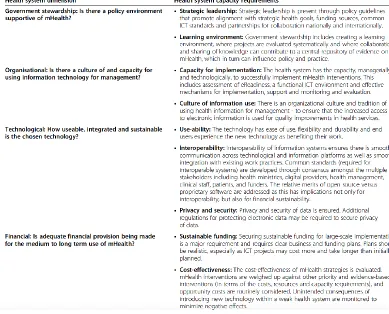
The NDOH’s (2015a) ‘Health Systems Framework’ was published in their mHealth Strategy. It is used as a theory in this thesis related to ‘health policy and systems research theory’. It was originally developed by Leon et al. (2012) with the intention to guide decision-making by policy-makers and managers on mHealth implementation in South Africa. The Health Systems Framework is made up of four dimensions; Government Stewardship, Organisational, Technological and Financial systems (Figure 1).
[image:50.595.127.489.371.638.2]Leon’s et al. (2012:5) framework links four interconnected health system dimensions to health system capacity requirements (further described by Leon in Table 2). She argues these should be addressed when making decisions about mHealth implementation.
Table 2. Explanation of the Health Systems Framework: Health systems dimensions required for scaling up mHealth for community-based health services (Leon & Schneider, 2012:6)
Leon’s framework will be adapted in Chapter 7 using the findings from the Vutivi study to appraise, update and reiterate the opportunities and challenges to effective implementation of mHealth at scale in health systems.
1.12 The Vutivi study’s theoretical framework
Epistemology and theory-driven method
Perspectives related to healthcare
High-level theory related to social processes
Theory related to technology
Figure 2. Vutivi study theoretical framework to guide the analysis
This framework summarises the theory that informed the analysis. The realist review in Chapter 3 and empirical results in Chapter 6 and 7 uses realism to identify how causal mechanisms are shaped and constrained by social context. Realism as a theory-driven method, guide the development of the programme theory, Context-Mechanisms-Outcome configurations and consolidated theories. Theories related to healthcare including health systems perspective, access to healthcare, capability and normalisation are used to guide the interpretation of results and discussion in Chapter 8. Finally, the
Realism
Health systems perspective Access to healthcare
Normalisation Capability
Government health system dimensions
Health Systems Framework is used as theory and revised in light of the Vutivi findings and used to develop the healthcare delivery model in Chapter 7.
1.13 Overview of the Vutivi study thesis
Chapter 2
Chapter 2: Background to the South African health system,
eHealth and mHealth and national policies: a narrative review
2.1 Overview of the narrative review in Chapter 2
Chapter 1 presented an outline of the Vutivi study. This chapter provides a narrative literature review to give an overview of the field of study to situate the research results. First I provide an introduction to South Africa, and its health system, chronic disease burden and maternal mortality trends. I then give a general outline to eHealth and mHealth, followed by an introduction to the digital communication landscape within South Africa. I will refer back to these topics in the course of the results and final discussion.
2.2 General introduction to South Africa’s health system
South African politics and economy
2012). The extent of poverty has changed little since democracy, when the African National Congress (ANC) party came to power. South Africa’s ‘well developed system of social security’ (Booysen, 2004:45) has been deployed as ‘an anti-poverty tool’ (Marais, 2011:3). Social protection in the form of grants includes state pension, child support, disability and foster care grants (Woolard & Leibbrandt, 2013). Cleary et al. (2013:38) suggest that social grants can alleviate ‘out-of-pocket payments for district healthcare’. In 2014 unemployment figures were at 24.3 per cent of the total population (StatsSA, 2015). South Africa has a widespread shortage of skills partly as ‘a legacy of apartheid and the continued dysfunctionality of the South African education system’ (Edigheji et al., 2010:25).
South Africa’s expenditure on healthcare
South Africa is a democracy still in its infancy, with a history of oppressive colonisation and apartheid. This has affected the social determinates of health (Coovadia et al., 2009). Health outcomes are not in line with expenditure. South Africa spends 8.7 per cent of Gross Domestic Product on health, more than any other African country (Badiee, 2008).
South Africa’s current public sector healthcare provision
services are free at the point-of-care. The country is ‘undergoing a major health system restructure in an attempt to improve health outcomes and reduce inequities in access’ (Versteeg et al., 2013:119). The on-going healthcare reforms provide an opportunity to incorporate issues of complexity associated with chronic disease into the strategic objectives of the government’s primary care re-engineering. This revised system operates in clinics, district hospitals and community health centres (Coovadia et al., 2009). The provision of these services is hampered by the shortfall of human resources, poor management and supervision of staff, which can affect health-worker performance (Scott et al., 2012; Wringe et al., 2010; Rowe et al., 2005) and morale (Kleinert & Horton, 2009). There are often ‘stock-outs’ of essential drugs, budget constraints, an absent recall system for non-attenders and inadequate patient records (Levitt, 2008).
Rural healthcare provision
away from households therefore transportation costs and distance are key access barriers (Harris et al., 2011).
The South African health system’s challenges
The South African health system has a backdrop of poor governance, management and accountability and resource-poor primary healthcare with ‘inadequate access and quality care’ (Leon & Schneider, 2012:9). The health system has struggled to overcome the legacy of apartheid and the consequent inequitable distribution of resources based on factors such as, race, class and geographic location (McIntyre et al., 2002). The challenges in rural contexts where historical neglect and high levels of material deprivation exist are also hindered by lack of infrastructure and equipment and human resource challenges (Schneider et al., 2006).
Disease burden in South Africa
The general disease burden for the South African population includes 30 per cent of 20-24 year olds infected with HIV/AIDS causing 43 per cent of adult deaths (Mayosi et al., 2009:8).
patient participation through treatment literacy and patient support groups (Schneider et al., 2006). Adherence to medication is often sub-optimal and insufficient attention is paid to the burden of co-morbidities (Thorogood et al., 2014) known as the ‘collision of disease epidemics’ (Coovadia et al.,
2009:817; Levitt et al., 2011).
Sub-Saharan Africa is in the midst of a rapidly evolving economic and epidemiological transition (Thorogood et al., 2007; Tollman et al., 2008). This is especially due to the rising burden of non-communicable diseases (NCD) (Mensah & Mayosi, 2013) and comorbidities (Ebrahim et al., 2013). The mode of healthcare delivery has had to change to best cope with situation. For example, growing numbers of people living with HIV/AIDS and/or TB also struggle to cope with one or more NCDs (Geneau & Hallen, 2012). Treating patients with co-morbidities is challenging for low-resource health systems because of the complexity of patient care required (Bates et al., 2015). The quality of clinical management for people with long-term disease is dependent on the variation in how well primary care functions. To improve the continuum of care, the NDOH is shifting from acute episodic care to a chronic care model.
Figure 3. South African ICDM model including the component of ‘mobile technology’ in the bottom right hand blue box (Asmall &
Mahomed, 2014:11)
Maternal health in South Africa
[image:62.595.116.500.112.563.2]The national maternal mortality average was 133 deaths per 100,000 births in 2014 (van Shaik, 2015:69). In the area where the fieldwork for this thesis was undertaken, the mortality rate due to obstetrical causes in 2012 was 252 deaths per 100,000 births (Garenne et al., 2013). This is higher than the provincial average for Mpumalanga (MP), at 149.1 deaths per 100,000 births in 2013, and 115.4 per 100,000 in 2014 (Figure 4).
Figure 4. Maternal mortality data in facility ratio by province 2014/15 from the District Health Information System (van Shaik, 2015:69)
care often due to a chronic shortage of equipment and service providers (Duminy & October, 2005). More recently, Clouse et al. (2013) found that pregnant women with HIV can be at heightened risk of loss to follow-up for their antenatal visits. The government’s strategy for improving maternal and perinatal healthcare has been to focus on capacity building of health-workers and advancing the competence and skills of mid-wife nurses (Gilstad, 2012).
A major reason for untreated pregnancy and childbirth complications that lead to large numbers of maternal deaths, particularly in rural communities, is the limited access to basic maternity information (Destigter, 2012). Other barriers to accessing antenatal care include the lack of or cost of transport to the health facility (Chopra et al., 2009). Traditionally there has been a trend of ‘women seeking antenatal care late in pregnancy in rural South Africa’ (Myer & Harrison, 2003:268). The reasons included the perception that pregnancy was not a health threat and that one antenatal care visit was adequate.
2.3 eHealth and mHealth in LMICs
The availability and uptake of eHealth and mHealth in high-income countries has been cited and evaluated in the literature (Vodopivec-Jamsek et al., 2012; Black et al., 2011). This has ignited interest into the potential implementation of digital solutions to enhance healthcare in LMICs (Blaya et al., 2010; Lewis et al., 2012). The rapid proliferation of mHealth projects in LMICs has
generated considerable enthusiasm among governments, donors, and implementers of public health programmes. Though many mHealth pilot projects have not materialised into impact-generating programmes (Donner & Mechael, 2012).
capacities for digital technology utilisation at all levels of the health system, in pursuit of public health objectives.
It is argued that the potential for digital communication to significantly change and irrevocably improve the delivery of healthcare services and patient care in rural communities should be explored (Ruxwana, 2007; UN, 2012). However, there is still a deficit of evidence for how mHealth may be impacting on quality and efficiency in terms of improving service delivery processes, strengthening health systems and improving health outcomes (Mechael et al., 2010). There is a need for robust evaluation of quality, safety, cost implications and acceptability before large-scale rollout of mobile-based systems (Car et al., 2008).
Donner and Mechael (2012:142) propose that the rollout of mobile phone technology for health has to consider five aspects presented in Box 2.
1. Low literacy levels in rural Africa can mean that the end-user of a SMS may not be able to read the message.
2. Mobile phone operators seek a win-win market situation so pilot projects are often subsidised by a commercial partner so the end-user do not pay for the services, however there are issues of feasibility in the long-term. 3. Low rural mobile penetration remains a factor.
4. Frequently mobile phones are shared in one household unit with ownership bound to the male (suggesting cultural/traditional power relations/social norms).
These factors can be further developed to include the adaption of current technologies to be context specific. Technology developers are beginning to focus more on adapting rather than designing new technologies. ‘Frugal technologies’ (Howitt et al., 2012:1) are specifically designed to meet the needs of LMICs. Howitt et al. (2012:3) believe that technology by its self ‘is rarely sufficient to improve health outcomes’ otherwise there may be unintended negative consequences from introducing new technologies into a system. Often when ‘technological fixes’ have been imposed on communities, abandoned equipment, incompatible computer programmes and ineffective policies have resulted (Fong & Harris, 2015:438). The WHO (2011) suggest that eHealth can use valuable resources and potentially cause harm if implementation is not guided by evidence. Fuchs and Horak (2008:99) warn of the ‘Digital Divide and Africa’ and the potential for mobile phones to contribute to inequalities to access and ‘usage and usage benefit’.
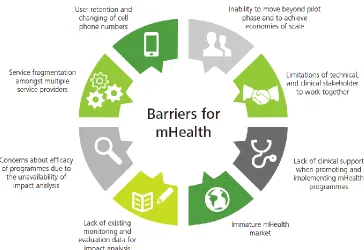
Figure 5. Key barriers to consider when implementing mHealth solutions by the GSMA (2014:12)
Figure 6. ‘12 Common mHealth and ICT Application Framework’ by
(Labrique et al., 2013:168)
This thesis does not specifically focus on any one mHealth solution listed in the framework. The aim of the explorative nature of this research is to give a generalised overview of what is currently available or has the potential to work in this context.
2.4 eHealth and mHealth in South Africa
South Africa has a positive political environment for eHealth and mHealth implementation because as Leon and Schneider (2012) suggest, there is a high prevalence of mobile phones, a well-developed ICT industry and government support. South Africa currently has the largest telecommunications market in Africa (GSMA, 2013). The country’s low uncapped mobile prepaid broadband pricing is among the highest compared to ten other African countries (Gillwald et al., 2012). The GSMA (2013) suggests that the three major South African network providers cover 90 per cent of the country although the rollout of 3G, remains largely in urban areas.
In South Africa 84.2 per cent of households own a mobile phone (Gillwald et al., 2012:49). The South African census only measures household use of
mobile phones and not individual use. There is little difference between phone ownership in urban and rural areas and between people with the greatest wealth and those living on the basic poverty line (R432 per month) (StatsSA, 2011; NPC, 2011).
possible, especially in rural areas where infrastructure is limited (Chetty et al., 2013:1). The most predominant means of Internet access is via a mobile
phone (NPC, 2011). The use of the Internet via mobile devices is expected to increase as access to low-cost Internet-enabled devices rises. However in the 2011 census survey 61.6 per cent of rural people said they do not know what the Internet is (Gillwald et al., 2012:66). A total of 60.8 per cent of rural respondents were signed-up to a social network such as, Facebook, Mxit (a popular South African social media network) or Twitter (Gillwald et al., 2012:61). The use of social networks and the Internet as a source of health information is very unknown amongst the general public who access the government health system. Hampshire et al. (2015) has found that South African adolescents were already using mHealth informally via their phones such as, using social networks and consulting the Internet to obtain health advice about specific symptoms and medicines.
In the public health sector in 2013, only 13 per cent of rural health facilities were connected to broadband (DOC, 2013). This figure is rapidly changing, as the NHI pilot districts are already connecting all clinics to broadband. In the Limpopo district of Vhembe, 90 out of its 123 primary health clinics are already connected to Broadband as part of this pilot (Wolmarans, 2015).
2.5 South African policy relating to digital communication and its use for health
During the Vutivi study there was policy debate about the implementation of eHealth and mHealth in South Africa.
The following national policies are relevant to eHealth and mHealth implementation.
The National eHealth Strategy (2012–2017)
The National mHealth Strategy (2015-2019)
National Health Normative Standards Framework for Interoperability in eHealth in South Africa (2014)
The National Integrated ICT Policy Green Paper (2014)
The South African Connect Broadband Strategy (2013)
National Health Insurance Green Paper (2011) & White Paper (2015)
District Health Management Information System Policy
The National Health Act (2003)
The National eHealth Strategy 2012–2017
The National mHealth Strategy (2015-2019)
A sub-component of the eHealth Strategy is the mHealth Strategy published in 2015. The government’s mission is to apply mHealth as an integral part of delivery of healthcare services in order to ‘empower patients with information, improving access to health services and real-time data management to assist in addressing the current inefficiencies in service delivery’ (NDOH, 2015a:6). South Africa lacks an overarching legal framework for eHealth and mHealth necessary to govern and regulate when
and how technology is utilised. Nevertheless, South Africa has legislation to
protect patients’ health records (The National Health Act 61 of 2003) that
includes the electronic transmission of personal medical information
networks (Broomhead, 2015). The Protection of Personal Information Act (POPI) (NDOH, 2013) supports this.
mHealth Strategy Roadmap
In order to deliver the mHealth implementation plan, the government has set out ten interdependent priority areas and foreseeable challenges of mHealth projects.
7. Capacity and Workforce
8. eHealth and mHealth Foundations
9. Applications and Tools to support Healthcare Delivery 10. Monitoring and Evaluation of the mHealth Strategy
Challenges encountered in mHealth projects:
Lack of alignment and integration of the interventions into health
plans, strategies and systems
Absence of government leadership and coordination
Poor documentation and learning from best practices
Lack of use of open-source options
Absence of practical approaches to privacy and security
Lack of interoperability
Absence of a single framework within which to evaluate the role
of mHealth and eHealth tools in strengthening the health system
Box 3. mHealth Strategy Roadmap with priority areas and challenges encountered (NDOH, 2015a:11)
Government mHealth initiative: MomConnect
have been able to register 383,354 pregnant women. It is regarded as the largest number in the world’ (Motsoaledi, 2015:1).
National Health Normative Standards Framework for Interoperability (2014)
A response to the lack of interoperability listed in the mHealth Roadmap in Box 3, is the ‘National Health Normative Standards Framework for Interoperability’. Those standards include issues such as, data security, access control, safe guards and confidentiality. ‘An interoperable mHealth system needs to ensure that various routine and other information systems are able to connect, communicate and share information’ (Leon et al., 2012:10). The NDOH (2014a) advocated that implementing an open architecture and interoperability framework collaboratively between the public and private health sectors will have benefits. These include ensuring health messaging is consistent and harmonized at the national level, while being adapted and extended for local environments. Another aim of the framework is to align the different service providers to current NDOH objectives such as, primary healthcare strengthening and maternal and child health initiatives.
The National Integrated ICT Policy Green Paper (2014)
Strategy. Both are not directly used in this thesis as they relate to ICT beyond the public health sector.
The South African Connect Broadband Strategy (2013)
The Broadband strategy is called ‘South Africa Connect: Creating
Opportunities, ensuring Inclusion’ (DOC, 2013). The Minster of
Communication said ‘the greatest challenge is how to approach infrastructure development in rural areas where it is clear that the private sector does not show interest to invest in infrastructure capability for Internet connections and high-speed access to data’ (DOC, 2013:21).
One of the reasons the eHealth Strategy has fallen behind schedule is due to poor broadband connectivity. This remains a critical challenge in primary healthcare facilities in rural areas. Telkom and Sentech (state-owned companies) both quoted over five hundred million Rand to provide connectivity to all primary healthcare clinics. Masilela (2014:22) states that exorbitant services charges was ‘a key impediment’ to implementation’. He suggested that the solution is to share costs with other government departments who will also benefit from the required infrastructure.
National Health Insurance (NHI) Green Paper (2011) and White Paper (2015)