INTERACTION, CORRECTIVE FEEDBACK, AND THE DEVELOPMENT OF LEXICAL STRESS
Özgür Parlak, M.A.
The Department of Linguistics and English Language Lancaster University
Statement of Ownership
I, Özgür Parlak, confirm that the research presented in this thesis is my own and it has not been submitted for the award of a higher degree elsewhere. I also confirm that information obtained from other sources has been acknowledged.
INTERACTION, CORRECTIVE FEEDBACK, AND THE DEVELOPMENT
OF LEXICAL STRESS
Özgür Parlak, M.A. October, 2018
ABSTRACT
Recasts are probably the most commonly studied type of correct feedback by second language acquisition (SLA) researchers and there is substantial evidence that they facilitate different types of L2 development (Li, 2010; Mackey & Goo, 2007; Sheen & Ellis, 2011). However, to date, their impact on learners’ phonological
development has received relatively little attention. In order to fill this gap, the current study examined the effects of recasts on the development of lexical stress in L2
English. Following a pretest-posttest design, 68 L1 Arabic speakers were randomly assigned to intervention and control groups. The pre- and posttests comprised
sentence-reading and decision-making tasks that contained three-syllable words with stress on the second syllable as the target vocabulary. All learners participated in an interactive role-play task, with learners in the intervention group receiving a recast following misplaced primary stress during the role-play task and learners in the control group not receiving any form of corrective feedback.
Acoustic analyses of learners’ primary stress placement focused on syllable duration, pitch, and intensity because of their established role as the main correlates of stress in English (Beckman, 1986; Cutler, 2008; Lieberman, 1960). Results
productions, whereas the control group did not show any gains. Furthermore, acoustic analyses of the target words produced by the intervention group showed that the gains were limited to the words that received a recast. In sum, the findings showed a
positive effect for recasts on the development of primary stress using acoustic
ACKNOWLEDGEMENTS
I consider my PhD journey to be the outcome of a concerted effort by several people. First and foremost, I am truly grateful to my dissertation committee, Sam Kirkham, Alison Mackey, and Jenefer Philp, for their guidance and encouragement during every step of this research project. I have been blessed with three enthusiastic mentors who have always been there for me when I need their advice and support. It goes without saying that the writing of this dissertation would not have been possible without their inspiring mentorship and belief in me.
I would like to thank my dear friend Dr. Nicole Ziegler of the University of Hawaiʻi at Mānoa for our discussions and her invaluable input during the piloting stage of this dissertation. I would also like to extend my heartfelt thanks to Dr. Kim McDonough of Concordia University for instilling the love of SLA in me; and Dr. Doug Biber, Dr. Bill Grabe, Dr. Okim Kang, Dr. Randi Reppen, and Dr. Fredricka Stoller of Northern Arizona University for helping me expand my knowledge in Applied Linguistics and encouraging me to pursue a doctorate.
I am thankful to the American University of Sharjah for providing me with a stimulating academic environment, giving me the time I needed to work on this dissertation, and funding my overseas conference presentations that discussed different aspects of this research project. The support I have received from my department and college has been instrumental in completion of this dissertation.
TABLE OF CONTENTS
ABSTRACT ... 1
ACKNOWLEDGEMENTS ... 3
LIST OF TABLES ... 6
LIST OF FIGURES ... 8
CHAPTER 1: INTRODUCTION ... 10
CHAPTER 2: THE INTERACTION APPROACH ... 17
2.1. Input ... 18
2.2. Output ... 21
2.3. Noticing and attention ... 23
2.4. Salience ... 26
2.5. Corrective feedback ... 30
2.6. Recasts... 36
CHAPTER 3: PHONOLOGY AND SLA ... 43
3.1. Theory driven L2 phonology studies ... 47
3.2. Pronunciation instruction studies ... 52
3.3. Interactionist L2 phonology studies ... 58
3.4. The case for recasts and lexical stress ... 63
CHAPTER 4: LEXICAL STRESS ... 70
4.1. Segmentals and suprasegmentals ... 70
4.2. Accent and stress ... 70
4.3. Lexical stress in English and Arabic ... 77
4.4. Importance of lexical stress for L2 learners ... 82
CHAPTER 5: THE PILOT STUDY... 90
5.1. Method ... 90
5.1.1. Research questions ... 90
5.1.2. Participants ... 90
5.1.3. Language tasks ... 91
5.1.4. Target words ... 96
5.1.5. Procedure ... 97
5.2. Acoustic analysis ... 99
5.2.1. Coding ... 99
5.2.3. Mixed-effects models ... 100
5.2. Results of acoustic analyses ... 100
5.3. Auditory analyses ... 101
5.4. Discussion and changes for the main study ... 102
CHAPTER 6: METHODS AND STUDY DESIGN ... 105
6.1. Research questions ... 105
6.2. The context ... 105
6.3.2. Listeners ... 110
6.4. Instruments ... 112
6.4.1. Language tasks ... 112
6.4.2. Target words ... 113
6.4.3. Exit survey ... 117
6.4.4. Listener judgment experiment ... 117
6.5. Study design ... 118
6.6. Procedure... 123
6.6.1. Data collection from learners ... 123
6.6.2. Data collection from listeners ... 126
6.7. Acoustic analysis ... 129
6.7.1. Coding of acoustic measures ... 129
6.7.2. Statistical analysis of acoustic measures ... 138
6.7.3. Model fitting for acoustic analysis 1 ... 144
6.7.4. Model fitting for acoustic analysis 2 ... 148
6.7.5. Calculation of goodness-of-fit measures ... 151
6.7.6. Pairwise comparisons ... 155
6.8. Analysis of listener judgments ... 156
CHAPTER 7: RESULTS ... 157
7.1. Acoustic analysis 1 ... 157
7.1.1. Duration ... 157
7.1.2. Intensity ... 167
7.1.3. Pitch ... 175
7.2. Acoustic analysis 2 ... 183
7.2.1. Duration ... 183
7.2.2. Intensity ... 187
7.2.3. Pitch ... 190
7.3. Summary of acoustic analyses ... 193
7.4. Listener judgments ... 203
7.5. Exit survey ... 204
CHAPTER 8: DISCUSSION AND CONCLUSION ... 209
8.1. Summary of answers to research questions ... 210
8.2. Discussion of findings ... 212
8.2.1. Changes in acoustic correlates... 212
8.2.2. The benefits of recasts for the development of lexical stress ... 216
8.2.3. Listener judgments ... 220
8.2.4. Pedagogical implications ... 226
8.2.5. Limitations and future directions... 231
REFERENCES ... 243
LIST OF TABLES
Table 2.1 Single-move recasts ... 39
Table 2.2 Multi-move recasts... 40
Table 5.1 Target words used in the pilot study ... 97
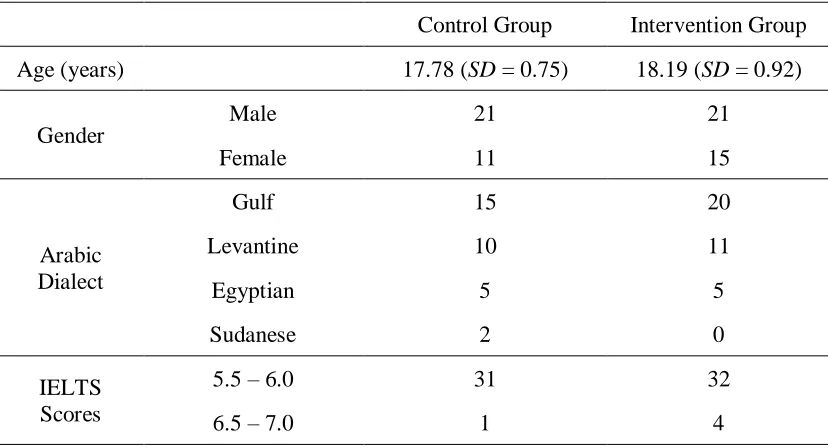
Table 6.1 Learner demographics by group ... 110
Table 6.2 Listener demographics ... 112
Table 6.3 Target words ... 116
Table 6.4 Syllable boundaries of the target words ... 130
Table 6.5 Comparison of R2 values obtained for Acoustic Analysis 1 ... 154
Table 6.6 Comparison of R2 values obtained for Acoustic Analysis 2 ... 154
Table 7.1 Descriptive statistics for proportional difference in duration by experimental condition ... 157
Table 7.2 Linear mixed-effects model estimates for proportional difference in duration by experimental condition ... 158
Table 7.3 Predicted pretest and posttest means for proportional difference in duration by experimental condition ... 159
Table 7.4 Pairwise pretest-posttest contrasts for proportional difference in duration by experimental condition ... 159
Table 7.5 Descriptive statistics for proportional difference in intensity by experimental condition ... 167
Table 7.6 Linear mixed-effects model estimates for proportional difference in intensity by experimental condition ... 168
Table 7.7 Predicted pretest and posttest means for proportional difference in intensity by experimental condition ... 168
Table 7.8 Pairwise pretest-posttest contrasts for the proportional difference in intensity by experimental condition ... 169
Table 7.9 Descriptive statistics for proportional difference in pitch by experimental condition ... 175
Table 7.10 Linear mixed-effects model estimates for proportional difference in pitch by experimental condition ... 176
Table 7.11 Predicted pretest and posttest means for proportional difference in pitch by experimental condition ... 176
Table 7.12 Pairwise pretest-posttest contrasts for proportional difference in pitch by experimental condition ... 177
Table 7.13 Descriptive statistics for proportional difference in duration by feedback provision ... 184
Table 7.14 Linear mixed-effects model estimates for proportional difference in duration by feedback provision ... 184
Table 7.16 Pairwise pretest-posttest contrasts for proportional difference in
duration by feedback provision ... 185
Table 7.17 Descriptive statistics for proportional difference in intensity by feedback provision ... 187
Table 7.18 Linear mixed-effects model estimates for proportional difference in intensity by feedback provision ... 188
Table 7.19 Predicted pretest and posttest means for proportional difference in intensity by feedback provision ... 188
Table 7.20 Pairwise pretest-posttest contrasts for proportional difference in intensity by feedback provision ... 188
Table 7.21 Descriptive statistics for proportional difference in pitch by feedback provision ... 191
Table 7.22 Linear mixed-effects model estimates for proportional difference in pitch by feedback provision ... 191
Table 7.23 Predicted pretest and posttest means for proportional difference in pitch by feedback provision ... 191
Table 7.24 Pairwise pretest-posttest contrasts for proportional difference in pitch by feedback provision ... 192
Table 7.25 Comparison of gains by group and by feedback provision... 199
Table 7.26 Cohen's Kappa analysis of stress placement judgments ... 203
LIST OF FIGURES
Figure 2.1 Model of interaction and learning ... 31
Figure 6.1 Dialects of Arabic spoken by learners ... 108
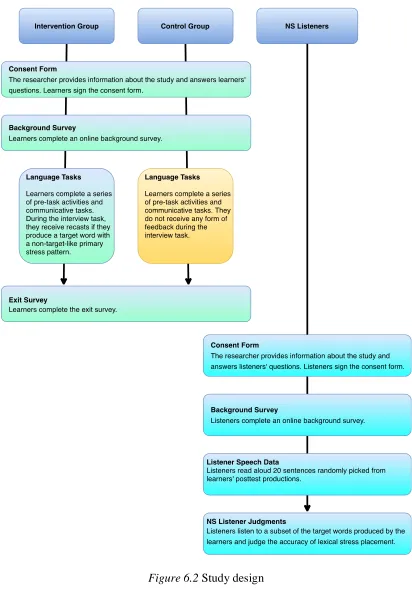
Figure 6.2 Study design ... 119
Figure 6.3 The procedure for data collection from learners ... 124
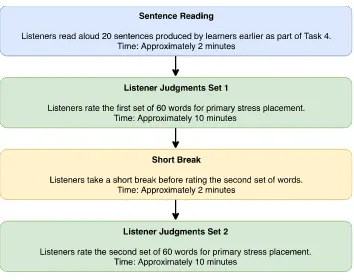
Figure 6.4 The procedure for data collection from listeners ... 128
Figure 6.5 Marking of syllable boundaries ... 133
Figure 7.1 95% confidence intervals for the proportional difference in duration by experimental condition ... 159
Figure 7.2 Pretest (left) and posttest (right) distributions of duration measures by learners in the intervention group ... 161
Figure 7.3 Pretest (left) and posttest (right) distributions of duration measures by learners in the control group ... 162
Figure 7.4 Pretest (left) and posttest (right) distributions of duration measures at the word level by learners in the intervention group ... 164
Figure 7.5 Pretest (left) and posttest (right) distributions of duration measures at the word level by learners in the control group ... 165
Figure 7.6 Comparison between NS and NNS productions of proportional difference in duration by experimental condition... 166
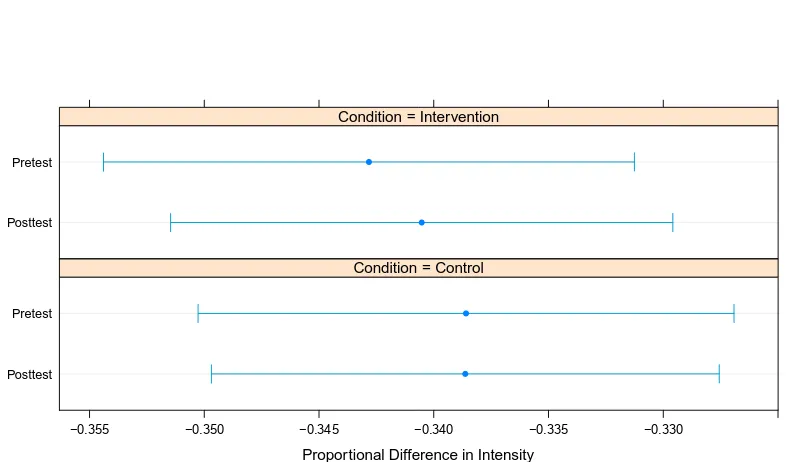
Figure 7.7 95% confidence intervals for proportional intensity difference by experimental condition ... 169
Figure 7.8 Pretest (left) and posttest (right) distributions of intensity measures by learners in the intervention group ... 170
Figure 7.9 Pretest (left) and posttest (right) distributions of intensity measures by learners in the control group ... 171
Figure 7.10 Pretest (left) and posttest (right) distributions of intensity measures at the word level by learners in the intervention group ... 172
Figure 7.11 Pretest (left) and posttest (right) distributions of intensity measures at the word level by learners in the control group ... 173
Figure 7.12 Comparison between NS and NNS productions of proportional difference in intensity by experimental condition ... 174
Figure 7.13 95% confidence intervals for proportional difference in pitch by experimental condition ... 177
Figure 7.14 Pretest (left) and posttest (right) distributions of pitch measures by learners in the intervention group ... 178
Figure 7.15 Pretest (left) and posttest (right) distributions of pitch measures by learners in the control group ... 179
Figure 7.17 Pretest (left) and posttest (right) distributions of pitch measures at the
word level by learners in the control group ... 181
Figure 7.18 Comparison between NS and NNS productions of proportional difference in pitch by experimental condition ... 182
Figure 7.19 95% confidence intervals for proportional difference in duration by feedback provision ... 185
Figure 7.20 Comparison between NS and NNS productions of proportional difference in duration by feedback provision ... 186
Figure 7.21 95% confidence intervals proportional intensity difference by feedback provision ... 189
Figure 7.22 Comparison between NS and NNS productions of proportional difference in intensity by feedback provision... 190
Figure 7.23 95% confidence intervals for proportional difference in pitch by feedback provision ... 192
Figure 7.24 Comparison between NS and NNS productions of proportional difference in pitch by feedback provision ... 193
Figure 7.25 Correlation between word frequency and gains in duration ... 197
Figure 7.26 Confidence intervals for Acoustic Analysis 1 ... 199
Figure 7.27 Confidence intervals for Acoustic Analysis 2 ... 200
Figure 7.28 Learners’ responses to the item “During the interview task, I focused on pronunciation” by group ... 204
Figure 7.29 Learners’ responses to the item “The interviewee gave me feedback when I made pronunciation mistakes” by group ... 205
CHAPTER 1: INTRODUCTION
Second Language Acquisition (SLA) is a dynamic scientific discipline that investigates questions related to the human capacity to learn a language in addition to one’s native language. The SLA field has its roots in the scholarly work that was published around 1950s, which aimed to form a new theory of language learning that was particularly inspired by structural linguistics and behaviorist psychology.
Drawing on Skinner’s (1957) seminal work on operant conditioning and his view that language learning is a form of habit formation, Lado (1957) introduced contrastive analysis, a method for identifying linguistic difficulties that learners face when learning a second/foreign (L2) language based on the premise that the difficulties faced in L2 are the result of learners’ first language (L1) habits. As a result of the interest in contrastive analysis at the time, research effort was directed toward
producing structural comparisons between various language pairs with the intention of mapping out which L1 features, or habits, could hinder acquisition in L2; and in the same way, which similarities between the L1 and the L2 could facilitate L2
acquisition. Contrastive analysis, or behaviorist and structuralist approaches in general, did not consider learners themselves as a factor that impacts the language learning process. However, SLA approaches that considered learners as an empty slate did not last long. Corder (1967) was one of the earliest L2 researchers to suggest that L2 learners may have a build-in syllabus similar to the one that children have during the early stages of L1 acquisition and argued that “the key concept in both cases is that the learner is using a definite system of language at every point in his
stages as well as cognitive learning mechanisms. The shift from behaviorism to cognitive approaches developed further by Selinker’s (1972) proposal of
interlanguage, “a separate linguistic system based on the observable output which results from a learner’s attempted production of a TL norm” (p. 214). Over the past four and a half decades, the SLA field has seen a number of major developments and SLA researchers today employ cognitive approaches to a great extent (for a detailed review, see Larsen-Freeman, 2007). The past couple of decades have also been productive in terms of advancements in research methodology and building clearly defined constructs. Methodological advancements have allowed researchers to investigate research questions pertaining to various aspects of L2 learning. So far, SLA researchers have explored issues related to L2 learners’ comprehension, interlanguage development, and production from various different perspectives including linguistic (e.g., Gregg, 1996; L. White, 1989), sociocultural (e.g., Lantolf, 2000; Swain & Lapkin, 2002) and cognitive (e.g., Bates & MacWhinney, 1981; DeKeyser, 2001; Gass, 1997; Long, 1983; Pica, 1994) approaches. The substantial amount of research output and key findings produced by countless studies have helped SLA become an established scientific field that contributes to the body of knowledge that guides our understanding of L2 development in naturalistic as well as
instructional environments.
Krashen’s (1977, 1982, 1985) comprehensible input hypothesis by acknowledging the role of input but at the same time suggesting that it would not be enough on its own for successful L2 development. The ideas presented by Hatch and Long resonated well with other SLA researchers who contributed to this new research agenda by investigating various aspects of the interaction hypothesis resulting in findings that underscored the role of pushed output (Swain 1985, 1995), negotiation for meaning (Pica, 1996a, 1996b; Varonis & Gass, 1985), and attention that triggers noticing the gap between the target language form and learners’ erroneous production (Gass, 1997; Schmidt, 1990; Schmidt & Frota, 1986). In an effort to account for new evidence and findings that shed light on different aspects of the relationship between interaction and language learning, Long (1996) revised his initial proposal and redefined the
interaction hypothesis as “negotiation for meaning, and especially negotiation work that triggers interactional adjustments by the native speaker or more competent interlocutor, facilitates acquisition because it connects input, internal learner capacities, particularly selective attention, and output in productive ways” (pp. 451-452). The revised interaction hypothesis stood on four key elements that take place during meaning-oriented communication: input, interaction, feedback, and output. These seminal ideas gave birth to a brand-new strand within the SLA field and have shaped the interactionist research agenda over the past two decades. Currently, it is generally accepted by SLA researchers that the type interaction described by Long is a fundamental component of L2 acquisition (Ellis, 2008; Gass & Mackey, 2006, 2015; Kim, 2017; Spada & Lightbown, 2009). This view is also supported by a number of meta-analyses that have shown that interaction that provides opportunities for
Wa-Mbaleka, 2006; Li, 2010; Lyster & Saito, 2010; Mackey & Goo, 2007; Russell & Spada, 2006). As a result of the significant amount of empirical evidence that had been produced by early 2000s, the interaction hypothesis was no longer just a hypothesis but a complex web of constructs that aims to explain how humans, children or adult, learn a second language. SLA researchers have adopted different terminology when referring to this web of constructs, including theory (Carroll & Swain, 1993) and framework (Mackey, Abbuhl, & Gass, 2011). More recently, Gass and Mackey (2015) explained that the interaction hypothesis is not a complete theory of SLA but at the same time, in light of the accumulating research findings that
support the usefulness of interaction, it is not a hypothesis either. Thus, they suggested using the interaction approach when referring to the body of research that investigates the intricacies of the relationship between communicative interaction and L2
acquisition. Following their lead, the term interaction approach will be adopted throughout this dissertation.
& Hama, 2014), past tense in French (Ayoun, 2001), Spanish gender agreement (Gass & Alvarez-Torres, 2005; Leeman, 2003), question formation in English (Mackey & Philp, 1998; McDonough & Mackey, 2006, 2008), that-trace filter in English (Goo, 2012), Japanese aspectual form -te i-(ru) (Ishida, 2004), Spanish adverb placement (Long, Inagaki, & Ortega, 1998), Japanese locative-initial construction (Iwashita, 2003), English articles (Sheen, 2007, 2008), and French grammatical gender (Lyster, 2004). It is quite clear from these examples, which by no means represent a complete list, that the efficacy of interaction for L2 learning has been put to test through
showed that corrective feedback facilitated improved perception on both immediate and delayed posttests. Although these studies adopted an interactionist approach when exploring development of L2 phonology, they did not examine the effects of
corrective feedback on L2 speech production. In fact, there are only a handful of studies that specifically focused on L2 phonological development using an interactionist approach. In an attempt to explore this understudied area, Saito and Lyster (2012a) investigated the effects of form-focused instruction and corrective feedback on the development of the approximant /ɹ/ in L2 English. The group of L1 Japanese speakers that received form-focused instruction and corrective feedback showed significant acoustic gains at the posttest in their production of /ɹ/,which was measured against a native-speaker baseline. On the other hand, the group that received form-focused instruction without corrective feedback and the control group did not show any improvement. In another paper that reported the results on the development of /æ/, Saito and Lyster (2012b) observed that instruction coupled with pronunciation-focused recasts led to more native-like production of the high-front vowel /æ/. In a subsequent study, Saito (2015a) found that form-focused instruction alone was able to promote L1 Japanese learners’ perception and production of /ɹ/; however, form-focused instruction coupled with recasts helped L1 Japanese learners achieve
conclusions. In an attempt to bring the issue to attention, SLA researchers have emphasized that whether interaction facilitates the acquisition of phonology is still a question waiting to be answered (Cenoz & Lecumberri, 1999; Mackey, Abbuhl, & Gass, 2012; Mackey et al., 2000). The current study is an attempt to address this call by being one of the early contributions toward filling this gap.
The main objective of this thesis is to investigate whether recasts promote the development of lexical stress placement in L2 English. It uses the following layout in order to accomplish this goal. Chapter 1, which you have just read, provides a brief history of the SLA field by focusing on the interactionist approach and highlights the need for more interactionist studies that investigate the development of L2 phonology. Chapter 2 provides operationalizations of the key SLA terms that are pertinent to the current thesis. Chapter 3 provides an overview of L2 phonology studies and makes a case for adopting an interactionist approach when studying the development of L2 phonology. Chapter 4 provides operationalizations of the key phonology and
CHAPTER 2: THE INTERACTION APPROACH
The interaction approach is a multi-dimensional approach that allows researchers to study L2 acquisition from a communicative and meaning-based perspective. The studies that adopt the interaction approach examine the relationship between L2 development and various aspects of interaction that focuses on meaning. These interactions can occur in different modes (e.g., oral, text-based) and through different mediums (e.g., face-to-face, computer-mediated). Gass (2003) explains that the interaction approach “takes as its standing point the assumption that language learning is stimulated by communicative pressure, and examines the relationship between communication and acquisition and the mechanisms (e.g., noticing, attention) that mediate between them” (p. 224). SLA researchers began to consider
conversational interaction as a potential venue for learning upon the introduction of two influential positions. The first position was that communicative interactions are not merely an opportunity to practice what has been learned but they are also an opportunity for new learning to occur (Hatch, 1978; Long, 1981). In Hatch’s (1978) words “one learns how to do conversations, one learns how to interact verbally, and out of this interaction syntactic structures are developed” (p. 404). The second position was introduced by the seminal works of Ferguson (1981) and Long (1981, 1983) who argued that verbal communication that takes place between native speakers and non-native speakers, particularly non-proficient ones, is different from the verbal communication that takes place between two adult native speakers. Their work introduced the concept of foreigner talk and drew attention to the syntactic, grammatical, and lexical simplifications in native speakers’ language during
and clarification requests. In Long’s (1983) words, comprehension checks help native speakers “assess whether they are succeeding in communicating with [non-native speakers]” and confirmation checks “tell them whether they are understanding what the [non-native speakers] are trying to communicate to them” (p. 182). This seminal body of work allowed SLA scholars to consider conversational interaction as a venue that promotes L2 acquisition. After more than three decades that have yielded research findings and numerous meta-analyses in support of the interaction approach, it is accepted that there is a robust relationship between interaction and L2 learning (Gass & Mackey, 2015). This strong relationship has been established upon careful
examination of hypotheses developed around the key components that form the interaction approach, namely, input, output, noticing, attention, and corrective feedback, which facilitate L2 development in different ways.
2.1. Input
In its most common form as used in the field of SLA, the term input refers to language that is available to learners in auditory or visual form in naturalistic as well as instructional settings. Smith (1993) defines input as “potentially processible language data which are made available, by chance or by design, to the language learner” (p. 167). The role of input in facilitating language acquisition is fundamental for theories of both L1 and L2 acquisition. It is commonly agreed that input is
as age, socio-economic factors (e.g., a university student vs. an immigrant worker), and the context (e.g., foreign-language context vs. second-language context). As the focus of the current study is L2 development, this section will briefly explain the role of input from an SLA perspective.
Krashen’s (1983, 1985) proposal of the monitor model, affective filter, and input hypothesis was highly influential in shaping the research agenda during the early years of SLA. Krashen defined comprehensible input, also referred to as i+1, as language input that is slightly beyond the learner’s current level of linguistic competence. He argued that the only way for L2 learners to acquire new target language forms would be through exposure to comprehensible input when they have low affective filter, which he defined as a mental block that prevents comprehensible input from being processed by the learner’s cognitive mechanism. His views were aligned with the views of L1 researchers who argued that children learn their native language from positive evidence alone (e.g., Braine, 1971; Marcus, 1993; Pinker, 1989), that is, well-formed models of the target language. As comprehensible input is a form of positive evidence, Krashen’s proposition that comprehensible input is sufficient for successful language acquisition also meant that negative evidence, which is feedback by a more competent speaker on the learner’s non-target-like production, does not make a major contribution to L2 acquisition. The usefulness of comprehensible input was accepted by other SLA researchers; however, there was also criticism in terms of a) what i+1 really means, and b) the role of comprehensible input as the only condition necessary for language learning.
automatically processed by the learner. Corder (1967, 1982) addressed this problem by distinguishing between input and intake. He defined input as “what is available for going in” and intake as “what goes in” (Corder, 1967, p. 165). In a similar vein, Gass (1988) proposed a model for L2 acquisition that incorporated two types of input: apperceived input and comprehended input. She defined apperceived input as what learners notice in the ambient speech, highlighting that not all input is noticed by learners. According to Gass’s model, apperceived input precedes comprehended input, which she defined as the amount of apperceived input that learners comprehend. Gass also distinguished comprehended input from comprehensible input explaining that the former implies that the learner is in charge of the act of comprehending as opposed to the latter which disregards learner control over input. Another difference between these two types of input is that, unlike comprehensible input, comprehended input is not a dichotomous term. According to Gass’s model, input can be comprehended in a number of different ways as in overall utterance meaning or at a metalinguistic level such as phonological or syntactic features.
The other issue with Krashen’s model was the lack of emphasis on the role of negative evidence in L2 acquisition. As one of the earliest critics of Krashen’s
became a topic that drew researchers’ interest (e.g., Brock, Crookes, Day, & Long, 1986; L. White, 1991; Long, 1990; Varonis & Gass, 1985;), and as the SLA field continued to evolve, negative evidence has become a core construct that led to the birth and investigation of other core constructs such as attention, noticing, and various types of corrective feedback.
In sum, language input in SLA may refer to positive evidence or negative evidence, the first being error-free models of the target language and the latter any indication that the learner’s production was erroneous. Chapter 2.5 discusses the types of negative evidence in more detail.
2.2. Output
Another complement to Krashen’s comprehensible input hypothesis was Swain’s (1985, 1995) comprehensible output hypothesis. Upon studying the language development of learners in French immersion settings at Canadian schools, a context known for abundant opportunities for receiving comprehensible input, Swain (1985) found that learners were unable to develop in terms of grammatical accuracy. Her findings contradicted Krashen’s (1985, 1994) position that comprehensible input was the driving force behind L2 acquisition. Swain suggested that comprehensible output, in other words learners’ attempt at producing the target language, is also necessary for L2 acquisition. Swain (1995) claimed that output allows noticing of the gap between “what [learners] want to say and what they can say” (emphasis in original, p. 126). In this sense, the comprehensible output hypothesis draws on the noticing hypothesis (Schmidt, 1990; Schmidt & Frota, 1986), and as such, it highlights the role of
their own production, and reflect on those elements which would potentially lead to the unlearning of errors. A number of empirical studies have provided evidence for these three functions (e.g., Adams, 2003; Izumi, 2002; Izumi & Bigelow, 2000; Mackey, 2002; Philp & Iwashita, 2013; Swain & Lapkin, 1998). In her later works, Swain (2005) also argued that output promotes language fluency.
In its basic form, the comprehensible output hypothesis is mainly concerned with production of language and it posits that output that is produced by the learner for communicative purposes, not necessarily as a response to a clarification request, will create opportunities for noticing the gap in their knowledge. This claim has been supported by research findings (e.g., Philp & Iwashita, 2013; Swain & Lapkin, 1995). Other scholars such as Pica, Holliday, Lewis, and Morgenthaler (1989), however, argued that “especially helpful to the acquisition process is the interaction in which learners are ‘pushed’ to make their output comprehensible” (p. 64.). In this context, pushed output refers to learners’ self-modification of an utterance in response to a signal from their interlocutor indicating that the output has not been fully
comprehended. In a more recent discussion on the role of output, Mackey (2012) refers to pushed output as modified output and defines it as reformulation of “one’s original utterance in response to feedback or self-monitoring” (p. 16). Mackey also highlights various benefits of the process that learners go through when modifying their utterance regardless of whether it is self-initiated or pushed.
In short, both output and modified output are instrumental for L2 acquisition as they provide language learners with opportunities to use the target language
interlocutor. As such, output hypothesis has become a main construct within the interaction approach due to its role as a trigger for a range of developmental processes (Gass & Mackey, 2006).
2.3. Noticing and attention
consciousness relevant to the context of L2 learning: consciousness as intentionality, which refers to whether learning happens deliberately or unintentionally, the latter leading to incidental learning; consciousness as attention referring to a mental state controlled by the channeling of attention toward a particular stimulus; consciousness as awareness, which refers to whether learning happens implicitly or explicitly; and finally consciousness as control, which makes the point that fluency in terms of language performance increases when explicit knowledge is not consciously used during language construction (Schmidt, 1994).
Attention has been a key element in the discussions that surround the noticing hypothesis. Schmidt (1993, 1994) described attention as an essential precursor to noticing that helps with converting input into intake. He also argued for an inverse relationship between attention and fluency when defining fluency as a procedural skill that requires the use of little to no attention by the learner (Schmidt, 1992). Later on, drawing upon theories of learning discussed in the field of psychology, Schmidt (2001) proposed the strong version of the noticing hypothesis with increased emphasis on the role of attention by suggesting that “attended learning is far superior, and for all practical purposes, attention is necessary for all aspects of L2 learning” (p. 3).
Although the strong version of Schmidt’s noticing hypothesis received criticism (e.g., Gass, 2018), the role of attention and noticing are considered two essential factors that are necessary for L2 development.
detection is the actual mental registration of the input that was attended to, which is similar to noticing in Schmidt’s model. However, a major difference between the two models is that for Schmidt (2001) noticing and awareness are directly linked (e.g., “noticing [i.e., becoming aware of] the structural regularities of a language” p. 5), whereas for Tomlin and Villa (1994) detection “does not require awareness” (p. 197).
Apperception is another construct that needs to be mentioned due to its connection to Schmidt’s noticing hypothesis. Gass (1988) introduced a five-step model for L2 acquisition that explains the processes involved in converting input to output, and apperception plays a significant role in this model (see Gass, 2018 for the most recent version of the model). Gass defines apperception as the portion of input that learners notice in ambient speech. She explains that a crucial difference between noticing and apperception is that apperception is driven by past experiences, which could include knowledge of the native language, the existing knowledge of the target language, world knowledge, and so on (Gass, 2018). This means that a learner can only apperceive language stimulus as long as he or she can make connections between that stimulus and a past experience or current knowledge. Apperception encompasses both attention and awareness, which distinguishes Gass’s model from Tomlin and Villa’s model in terms of the role of awareness. Gass’s model is also different from Schmidt’s model in terms of the processes involved in converting input to intake. According to the noticing hypothesis, what is noticed in the input becomes intake; whereas apperceived input needs to be comprehended in order to become intake. Comprehended input, different from Krashen’s comprehensible input, places an emphasis on the learner’s cognitive mechanism rather than simply defining an aspect of the stimulus.
detail attention models in SLA should account for (for a detailed discussion see Leow, 2002; Robinson, 2003), there is a consensus in the SLA field supporting the view that attention to and noticing of target language features in the input are necessary
conditions for L2 development.
2.4. Salience
The established role of noticing and attention in SLA postulates that factors that facilitate noticing and draw learners’ attention to a target language feature would naturally promote L2 development. In this sense, the salience of a linguistic feature becomes a factor that could potentially guide attention toward that particular feature, which would then lead to the possibility of that feature to be noticed. The reasoning behind this conclusion is that salient language features will be attended to, and as a result they will be noticed, and then processed by the learner (N. Ellis, 2016). According to Merriam-Webster Dictionary, one of the definitions of salient (n.d.) is “standing out conspicuously.” Although theoretical definitions of salience are more detailed and varied in comparison to a brief dictionary entry, for the most part, the operationalizations used by interactionist researchers are built around the idea that salient forms stand out in the input due to various structural characteristics that render them more prominent than the surrounding input. For example, according to Loewen and Reinders (2011), “salience refers to how noticeable or explicit a linguistic structure is in the input” (p. 152). This type of salience is also referred to as
the stimulus, such as being brighter or louder, that make it stand out in contrast to surrounding stimuli. Salient associations, on the other hand, are memory or
expectation driven. In other words, prior knowledge of or experience with a particular stimulus can make it stand out among other stimuli during subsequent encounters. Finally, N. Ellis explains that in the case of salience that stems from context and surprisal, a feature of the stimulus that deviates from the ordinary or probable, which is calculated by the learner’s cognitive mechanism, has the potential to catch the learner’s attention and therefore be processed. In summary, the first category that N. Ellis presents is mainly related to physical aspects of the stimulus whereas the other two are shaped by what the learner already knows about language and the world. N. Ellis (2016) refers to the interplay among the stimulus, the context, and the knowledge of the learner to emphasize the complexity of salience as a construct, which makes it difficult to define. Similarly, many SLA scholars have expressed that salience is a construct that evades an easy definition (Leeman, 2003; Mackey, 2012; VanPatten & Benati, 2015). That said, for practical purposes and due to its relevance in the context of the current study, throughout the rest this dissertation the terms salience and salient will be used to refer to what N. Ellis (2016, 2018) defines as psychophysical salience.
substance, in particular stress, as an element that contributes to salience of a linguistic item:
Psycholinguistics have defined salience by referring to particular characteristics that seem to make an item more visually or auditorily
prominent than another. Such characteristics include the amount of phonetic substance (whether the item is a syllable or not); or the stress levels of an item (the amount of emphasis placed on it). (p. 33)
Similarly, Gass (2018) mentioned that “although the learner has to perceive salience, actual salience can be affected by such things as stress and loudness” (p. 57). It has been argued that phonetic or phonological salience can impact acquisition of certain morphological features or function words. For example, N. Ellis (2006) explains that morphological features that have low phonological salience such as the third person singular -s or function words that do not carry stress are more difficult for L2 learners to acquire. N. Ellis refers to a study by Herron and Bates which showed that adult native speakers had a success rate of 50% or less when identifying function words that were cropped from connected speech and presented in isolation (as cited in N. Ellis, 2006, p. 171). Expanding onto this piece of evidence, which shows that lack of phonetic salience can make it difficult for native speakers to identify function words, N. Ellis argued that the lack of salience is one of the reasons why L2 learners struggle with hearing function words in natural speech and learning them.
surrounding input through external manipulation. This type of manipulation is referred to as input enhancement (Smith, 1991, 1993). In its most basic form, input
feature or even a particular form of corrective feedback can have. That said, in the case of recasts, both prosodic emphasis and contingency play an important role.
2.5. Corrective feedback
Linguistic input comes in two forms: positive evidence and negative evidence. Long (1996) notes that positive evidence is “models of what is grammatical and acceptable (not necessarily the same)” (p. 413). In other words, positive evidence refers to exemplars of the target language produced by native or proficient non-native speakers that non-proficient L2 speakers hear or read. Negative evidence, on the other hand, is information about what is not grammatical or acceptable in the target
is different from L2 acquisition because in the case of L2 acquisition learners sometimes make incorrect generalizations based on their L1, which necessitates the provision of corrective feedback to indicate what is structurally possible in their L1 may not be possible in their L2 (L. White, 1991). Therefore, SLA scholars view corrective feedback as a facilitative component in L2 acquisition (for a recent review, see Yilmaz, 2016). Moreover, SLA studies have shown that corrective feedback is a commonly occurring phenomenon in classroom settings (Loewen, 2009; Lyster & Ranta, 1997; Oliver, 2000; Yoshida, 2008) and during interactions between children or adult speaker dyads as well as between a native speaker and a non-native or between two non-native speakers (Mackey, Oliver, & Leeman, 2003; Oliver, 2009). It may be provided by teachers or more competent students in classroom contexts, and by native-speakers or more competent L2 speakers during laboratory research or in naturalistic contexts. SLA scholars have argued that corrective feedback that draws learners’ attention to their non-target-like production is necessary for successful L2 acquisition (Gass, Mackey, & Pica, 1998; Lightbown & Spada, 1990; Long, 1990, 1996; Schachter, 1986, 1991; Schmidt & Frota, 1986). The rationale behind this
argument is that attention and noticing are two key elements that bridge the gap between learner-internal and learner-external factors to facilitate L2 development (Schmidt, 2001) and corrective feedback that signals a problem in the learner’s output has the potential to trigger these two fundamental cognitive functions (see Figure 2.1). In fact, research studies have highlighted the role of attention as an agent that may allow learners to notice the illocutionary force of corrective feedback (Goo & Mackey, 2013; Izumi & Bigelow, 2000; Li, 2010; Mackey, 2006).
The interactionist literature has placed different types of corrective feedback into two main categories called implicit and explicit feedback (R. Ellis, 2007, 2008; Leeman, 2007; Loewen, & Erlam, 2006; Mackey, 2012). Implicit feedback does not directly or openly point at the erroneous output by the learner but rather signals it covertly. On the other hand, explicit feedback is an attempt to directly and overtly draw the learner’s attention to the error. Mackey (2012) explains that although the main function of both types of feedback is to signal a problem with learners’ non-target-like production, “explicit feedback (i.e. indicating a problem with the utterance with a focus on the form) can interrupt the flow of the interaction, whereas implicit feedback (i.e. indicating there is a problem with primary focus on meaning) usually allows for the interaction to continue uninterrupted” (p. 116). Beyond these two main categories, corrective feedback can be categorized depending on the specific function that each feedback type serves. Lyster and Ranta’s (1997) seminal work identified six main types of corrective feedback moves that fall under the implicit-explicit
Explicit correction provides the correct form with an overt indication that the learner’s production was incorrect:
S: One upon a time T: No we say once
S: Once (Oliver & Mackey, 2003, p.524)
Metalinguistic feedback provides comments on what is wrong in the learner’s production without providing the correct form:
Learner: He kiss her
Researcher: Kiss—you need past tense Learner: He kissed (Ellis et al., 2006, p. 353)
Elicitation is a form of corrective feedback that aims to push the learner to provide the correct form by using a question or by pausing before the target form and allowing the learner to fill in the blanks:
Student: …on the street there was a policeman, and she was skipping running. Teacher: I am sorry, she was…?
Student: Skipping running, the thief (Nassaji, 2009, p.429)
Learner: Why does he taking the flowers? Researcher: Pardon?
Learner: Why does he take flowers? (Loewen & Nabei, 2007, p.367)
Repetition is a type of feedback that repeats the learner’s error without any changes but highlights the error using stress and intonation:
Student: La chocolat . . . “(F) Chocolate.” Teacher: La chocolat? “(F) Chocolate?”
Student: Le chocolat. “(M) Chocolate.” (Lyster, 2004, p.405)
Last but not least, recasts are a type of feedback that provides a target-like reformulation of the learner’s non-target-like production:
Learner: And I saw a boy next to the bar. I think he was with his girlfriend. They talking to each other.
Researcher: They were talking to each other. (Révész, 2012, p. 94)
2011). Loewen and Nabei (2007) offered a categorization of the six types of corrective feedback moves based on whether they are input-providing or output-prompting mapped on an implicit-explicit continuum. According to their
categorization, explicit correction and recasts are both input-providing feedback moves with explicit correction being the explicit type and recasts being the implicit type; metalinguistic feedback, elicitations, repetitions, and clarification requests are the output-prompting moves, with metalinguistic feedback on the explicit end of the continuum and clarification requests on the implicit end.
Meta-analyses so far have indicated a positive effect of corrective feedback on language development (Goo, Granena, Yilmaz, & Novella, 2015; Li, 2010; Lyster & Saito, 2010; Mackey & Goo, 2007; Russell & Spada, 2006). A great amount of SLA research has attempted to tease apart the overall effectiveness of different corrective feedback moves and answer the question of whether implicit feedback is better than explicit feedback or vice versa. While some researchers have argued that explicit feedback may be more beneficial than implicit feedback (Ellis et al., 2006; Lyster, 1998a; Lyster & Ranta, 1997; Lyster & Saito, 2010; Sheen, 2007), others have argued that implicit feedback, particularly recasts, are more effective (e.g., Long, Inegaki, & Ortega, 1998; Long, 2007). There have been also studies that found no significant difference between explicit and implicit feedback in terms of their level of
developmental readiness (Mackey & Philp, 1998), working memory capacity or language analytic ability (Yilmaz, 2013). As such, due to the amount of
methodological variability among corrective feedback studies, caution should be exercised when coming to conclusions about which type of feedback is better than the other. It is also important to note that meta-analysis studies have shown that the effect of explicit feedback can be observed immediately, while the effect of implicit
feedback is usually delayed (e.g., Li, 2010; Mackey & Goo, 2007). Therefore, these meta-analyses warned against hasty conclusions and comparisons between implicit and explicit feedback. Due to the existence of a multitude of factors that mediate the effectiveness of corrective feedback making the interpretation of comparative studies difficult, Goo and Mackey (2013) suggested that it would be more fruitful to direct research efforts toward investigating how various types of corrective feedback impact different target-language features in different contexts.
2.6. Recasts
A corrective recast may be defined as a reformulation of all or part of a learner’s immediately preceding utterance in which one or more non-target like (lexical, grammatical, etc.) items is/are replaced by the corresponding target language form(s), and where, throughout the exchange, the focus of the interlocutors is on meaning, not language as an object. (emphasis in original, Long, 2007, p. 77)
A response to an error in learners’ oral production that involves the
reformulation of the incorrect linguistic element while maintaining the overall meaning of the utterance. (Loewen & Reinders, 2011, p.148)
…teacher’s reformulation of all or part of a student’s utterance, minus the error. (Lyster & Ranta, 1997, p. 46)
…a form of feedback in which learners are provided with more target-like versions of their immediately preceding non-target-like utterance. (Mackey, 2012, p.14)
of corrective feedback that will inevitably disrupt the natural flow of communication. In fact, teachers utilize recasts frequently and during research studies SLA researchers provide recasts on learners’ erroneous utterances despite being able to understand the actual content of the message. This type of recasts is called didactic recasts defined as “reformulations of erroneous utterances that occur even in the absence of a
communicative problem” (R. Ellis, 2017, p.18). SLA scholars who argue that recasts can be implicit or explicit depending on the context consider didactic recasts as an explicit form of corrective feedback (e.g., Ellis & Sheen, 2006; Sheen & Ellis, 2011). Recasts, including the ones that are didactic, are meaning-focused in that they do not interrupt the natural flow of communication with metalinguistic explanations or by requiring the learner to fix his or her erroneous production before continuing with the conversation. This is one of the main advantages of recasts as a form of corrective feedback because they allow learners to focus on meaning and communication while providing them with negative evidence. When it comes to immediacy of recasts, it allows learners to juxtapose their ill-formed production with the target-like production provided by the interlocutor allowing cognitive comparison of two contrasting forms (Doughty, 2001). This characteristic of recasts has been discussed as part of the contrast theory in L1 acquisition literature (e.g., Saxton, 1997) and it has been referred to as contingency in L2 acquisition literature (e.g., Long, 2007).
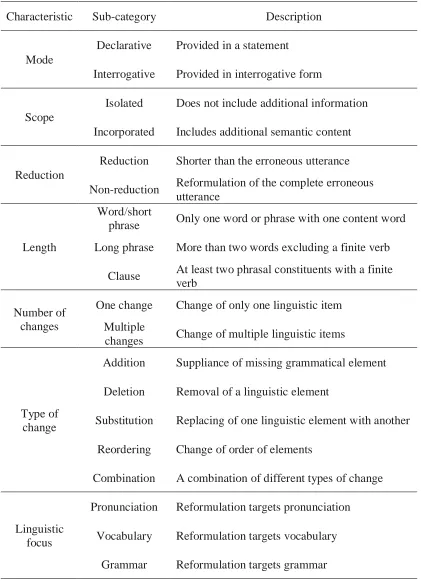
Table 2.1
Single-move recasts
Characteristic Sub-category Description
Mode
Declarative Provided in a statement Interrogative Provided in interrogative form
Scope
Isolated Does not include additional information Incorporated Includes additional semantic content
Reduction
Reduction Shorter than the erroneous utterance Non-reduction Reformulation of the complete erroneous
utterance
Length
Word/short
phrase Only one word or phrase with one content word Long phrase More than two words excluding a finite verb
Clause At least two phrasal constituents with a finite verb
Number of changes
One change Change of only one linguistic item Multiple
changes Change of multiple linguistic items
Type of change
Addition Suppliance of missing grammatical element Deletion Removal of a linguistic element
Substitution Replacing of one linguistic element with another Reordering Change of order of elements
Combination A combination of different types of change
Linguistic focus
Pronunciation Reformulation targets pronunciation Vocabulary Reformulation targets vocabulary
Table 2.2
Multi-move recasts
Characteristic Description
Corrective recasts Preceded by repetition of the error Repeated recasts Partial or complete repetition of recasts
Combination recasts Occur with other corrective feedback types except explicit correction
Adapted from Sheen (2006)
recast, which is a correct reformulation of “all or part of the utterance with raising intonation and no additional meaning;” an incorporated declarative recast, which is a “correct reformulation of all or part of a learner’s utterance into a longer statement”; and finally, incorporated interrogative recast, which is a “correct reformulation of all or part of a learner’s utterance into a question” (pp. 58-59). Later, Philp (2003) identified the length of a recast as well as the number of changes in a recast as two key characteristics that have direct implications in terms of working memory load and learners’ attention sources, hence learners’ ability to notice the corrective force of recasts. Drawing on these research findings, Sheen (2006) proposed a rather detailed taxonomy based on various unique characteristics that recasts have, which is
summarized in Table 2.1 and Table 2.2.
Student: It’s good to start reading /ɾidɪŋ/ something. Teacher: Reading /ɹidɪŋ/.
Student: Reading /ɹidɪŋ/ something. Even it is comic books or novels. (Saito, 2015b, p.277)
The taxonomy provided by Sheen (2006) encourages researchers to consider various aspects of recasts, which is helpful for operationalization of recasts at the study design stage as well as coding and analysis of data in the subsequent stages. It also shows that recasts are not a single form of feedback but come in multitude of forms. The multifaceted nature of recasts also has implications in terms of the implicitness and explicitness debate. Although recasts have been identified as a form of implicit feedback in the past (e.g., Long, 2007; Lyster, 1998a), many SLA scholars have argued that recasts are rather on an implicit-explicit continuum as some types of recasts are easier to notice (Ellis & Sheen, 2006; Erlam & Loewen, 2010; Loewen & Philp, 2006; Lyster, Saito, & Sato, 2013; R. Ellis, 2008).
An important issue concerning recasts has been how they measure up compared to other types of corrective feedback and whether they are useful for
learners or not. Despite a number of studies that found recasts to be less effective than other types of corrective feedback, particularly metalinguistic feedback, and the following discussions that are skeptical about the usefulness of recasts (e.g., Ammar & Spada, 2006; Ellis et al., 2006; Lyster, 1998a; Lyster & Ranta, 2013; Lyster & Saito, 2010), there are also studies that did not find a significant difference between metalinguistic feedback and recasts in terms of their effectiveness (Goo, 2012;
CHAPTER 3: PHONOLOGY AND SLA
In first language acquisition, speech precedes writing. Children learn how to speak before they learn how to write. Apart from the case of children, oral
communication has an important role in daily interactions between people of all ages whether it is a face-to-face conversation, or an exchange over the phone or through a video-conferencing software. Despite these facts and the obvious communicative value of pronunciation, research that focuses on L2 pronunciation and phonological development has received relatively less attention in comparison to other areas of SLA research (Derwing & Munro, 2005). According to Foote and Trofimovich (2018), one of the possible reasons for marginalization of pronunciation research is the lack of theoretical framework and models that pronunciation research can build on. They also emphasize that existing SLA theories are rarely applied to pronunciation research. What is more, Derwing and Munro (2015) point out that most research on L2 speech does not focus on the impact of instruction on development, and as a result, does not provide implications for the language classroom. Other reasons for the lack of interest in pronunciation research had been discussed earlier in Leather’s (1983) seminal review on L2 pronunciation studies. Leather explained that the problem of setting the wrong goals for L2 pronunciation, that is aiming for native-like production, had led to research endeavors being perceived as unproductive use of time. Another reason for the minimal interest in teaching pronunciation and the skepticism about its teachability was the dissatisfaction with a process that was perceived to be
unrealistic goal of helping learners achieve native-like pronunciation and they were far from being meaning-based activities. Following this period was the rise of communicative language teaching partially motivated by Krashen’s (1977, 1985) comprehensible input hypothesis. Following Krashen’s views on language acquisition, it was thought that learners would be able to improve their pronunciation through the comprehensible input they receive during communicative activities. Also, during this period, the goal of teaching was to help learners improve their communicative
competence (Hymes, 1972). Therefore, unless absolutely necessary such as in the case of a communication breakdown, feedback on pronunciation was seen as a hindrance that prevents learners from improving their fluency and communicative competence. Consequently, there was a period of time during which teachers either ignored pronunciation or did not know how to deal with it. However, research on
and the recent increase in interest in phonological development in L2, the research on the acquisition of L2 pronunciation still falls behind when compared to SLA research that focuses on morphology or syntax. This is particularly true in the case of SLA studies that adopt the interaction approach to language development.
theories such as the role of universal markedness and the influence of L1 on L2 production (e.g., Broselow, Chen, & Wang, 1998; Eckman, 1981; Eckman & Iverson, 2013; Major & Faudree, 1996). The extensive focus on segmental features and setting the native-speaker model as a developmental goal, at least until recently, also led to an interest in the effects of maturational constraints on foreign accents. A common finding put forward by studies that focused on phonological development and
Rossiter, 2002; Field, 2005; Hahn, 2004; Munro & Derwing, 1999). Yet, despite the potential benefits of suprasegmentals on L2 speech, a relatively small group of studies have explored questions related to the acquisition of suprasegmentals by L2 learners which has been highlighted in the past by various scholars (e.g., Piske, Mackay, & Flege, 2001; Trofimovich & Baker, 2006). The situation has not improved
substantially since then. What is more, there are even fewer studies that have explored development of L2 phonology from an interactionist perspective including the pilot study for this dissertation (Parlak & Ziegler, 2017; Saito, 2015a, 2015b; Saito & Lyster, 2012a, 2012b). Therefore, more studies are needed to explore questions that focus on the development of suprasegmentals from an SLA perspective, particularly following the interactionist approach.
3.1. Theory driven L2 phonology studies
A considerable number of L2 phonology studies conducted during the early years of the SLA field were theory-driven. The influence of behaviorism and
contrastive analysis on the SLA field, which at the time placed a greater emphasis on syntax and morphology, was also observed in research that focused on L2 phonology. Lado’s (1957) seminal book introduced the contrastive analysis hypothesis (CAH) in the following words:
The application of the CAH to predict acquisition patterns in L2 phonology followed the assumption that L2 sounds that are different from L1 sounds are more difficult to acquire. For example, the voiceless bilabial stop /p/ is not a part of the phonological inventory of Arabic but the English phonological inventory includes this particular consonant. Therefore, according to the CAH, speakers of Arabic would have difficulty producing English words with the sound /p/. For example, they would pronounce public as /bʌb.lɪk/. Lado (1957) also argued that separating two allophones in the learner’s L1 into two distinct phonemes in the L2 would be the greatest
challenge. Much of the earlier pronunciation research motivated by the CAH focused on a point-by-point comparison between various L1 and L2 phonological inventories in order to predict potential learner errors (e.g., Hammerly, 1982). However, the popularity of the CAH did not last long. Many researchers argued that the CAH lacked predictive power, and therefore, questioned its usefulness (e.g., Oller & Ziahosseiny; 1970; Wardhaugh, 1970; Whitman & Jackson, 1972). One of the
oral vowels showed that the frequency of nasal vowels in a language is always lower than the frequency of oral vowels in that language. Therefore, he explained that oral vowels would be unmarked, mainly basic, and nasals vowels would be the marked form. It is important to note that markedness is a unidirectional and systematic concept. That is to say, if a language has the voiceless bilabial stop /p/, the marked form, then it will have the voiced bilabial stop /b/, the unmarked form. However, when a language has /b/, it may not have /p/, as it is the case for Arabic. In short, marked forms can be used to predict the presence of unmarked forms but not the other way around. According to the MDH, there are three main levels of difficulty for a language learner:
(a) Those areas of the target language which differ from the native language and are more marked than the native language will be difficult.
(b) The relative degree of difficulty of the areas of the target language which are more marked than the native language will correspond to the relative degree of markedness;
(c) Those areas of the target language which are different from the native language, but are not more marked than the native language will not be difficult. (Eckman, 1977, p. 321)
individual was not a part of these hypotheses.
In order to address the role of the learner in within the context of L1 influence, Flege (1995, 2003) introduced the speech learning model (SLM). There are three important characteristics of the SLM. The first is that it is a model that puts perception before production. According to the SLM, L2 learners need to create distinct
perceptual categories for target language sounds to be able to produce them. In other words, accurate perception is necessary for accurate production. In Flege’s (1995) words, “without accurate perceptual ‘targets’ to guide the sensorimotor learning of L2 sounds, production of the L2 sounds will be inaccurate” (p. 238). That said, the model still treats perception and production as separate mechanisms and acknowledges the possibility that some production errors will occur regardless of accurate perception. Secondly, the model claims that L2 phonemes that are perceptually similar to the L1 phonemes, whether it is a single L2 phonemes or two L2 phonemes that are
that Flege does not deny the influence of maturational constraints on L2 acquisition. One of the hypotheses of the SLM is that “the likelihood of phonetic differences between L1 and L2 sounds, and between L2 sounds that are non-contrastive in the L1, being discerned decreases as [age of learning] increases” (Flege, 1995, p. 239).
Subsequent work by Flege and his associates also confirms the role of maturational constraint in the SLM (e.g., Guion et al., 2000; Munro et al., 1996). Yet, according to the SLM, it may still be possible to overcome maturational constraints as an adult.
difference being that “PAM-L2 addresses equivalence not only at the phonetic level addressed by the SLM, but also at the phonological level” (Best & Tyler, 2007, p. 27).
In summary, earlier hypotheses such as the CAH and the MDH treat sounds in a language as a set of objects to be analyzed ignoring the learner-related factors. These earlier approaches to L2 speech development are not useful from an SLA perspective as empirical studies have shown that “language learning is variable in its outcome” due to learner-related factors (Van Patten & Williams, 2015, p. 10). The PAM and the SLM, on the other hand, are perception-based and process-oriented approaches that at least acknowledge the learner as a factor. Therefore, as Derwing and Munro (2015) have also pointed out, the implications from these two recent models have the potential to be more useful for language learners and teachers. Yet, it should also be noted that both SLM and PAM mainly focus on segmental features, that is consonants and vowels, and they do not provide any implications regarding the acquisition of suprasegmental features such as stress and intonation.
3.2. Pronunciation instruction studies
In addition to research that pursued investigation of theory-driven hypotheses, L2 phonology studies have also explored the impact of various factors such as
perceptual training or explicit pronunciation instruction on L2 learners’ phonological development. To begin with studies that focused on the relationship between
which showed that perceptual training can have an impact on production accuracy. These studies mainly focused on the perception and production of contrast between various consonants and vowels such as the English /r/-/l/ by native speakers of Japanese (Bradlow, Pisoni, Akahane-Yamada, & Tohkura, 1997), Spanish /p/-/b/ by native speakers of English (Zampini, 1998), French /ə/-/ø/ by native speakers of
English (Brosseau-Lapré, Rvachew, Clayards, & Dickson, 2013), French nasal vowels
/ɔ̃, ɑ̃, ɛ̃/ by native speakers of English (Inceoglu, 2016), American English mid and low vowels /æ, ɑ, ʌ, ɔ, ɜ/ by native speakers of Japanese (Lambacher, Martens, Kakehi, Marasinghe, & Molholt, 2005), andCanadian English vowels /i, ɪ, e, ɛ, æ, ɒ, ʌ, o, ʊ, u/ by native speakers of Mandarin (Thomson, 2011). Although less common, there were also studies that focused on the perception and the production of phonemic
contrasts based on tones such as Mandarin tone contrasts by native speakers of
English (e.g., Wang, Jongman, & Sereno, 2003). There were two main findings that
were shared by the majority of these studies. The first one was that perceptual training
helped learners to perceive the contrasts between the target phonemes. Secondly,
perceptual training also led to an improvement in learners’ production of the target
phonemes. These findings were supported by other studies that mainly investigated
the relationship between perception and production without an element of training yet
found a link between the two (e.g., Bion, Escudero, Rauber, & Baptista, 2006; Flege, 1993; Flege et al., 1997). Although the majority of the studies mentioned above
argued for a connection between perception and production, there were also studies
that did not find a relationship between the two skills and argued that they develop
separately (e.g., Zampini, 1998). Baker and Trofimovich (2006) pointed out that the
There are also pronunciation studies that investigated improvements in
learners’ speech development as a result of explicit instruction. A quick glance at these studies show that there is a considerable amount of variation in methodology. For example, Couper (2003) provided pronunciation instruction that focused on a range of segmental and suprasegmentals features (e.g., phonemes, word stress, sentence stress, joining sounds) to L2 learners of English in New Zealand from a variety of L1
that received suprasegmental instruction outperformed the group that received
segmental instruction as well as the control group. However, Akita (2005) mentioned that in addition to differences in instruction, there was also an element of corrective feedback as well as “explicit information regarding what is ungrammatical” (p. 18). From the details provided in the article, it is not clear how explicit instruction and corrective feedback were provided. There is also no elaboration on the link between grammar and development of segmentals or suprasegmentals. In another study that tested the effect of computer-assisted training on the development of prosody, Hardison (2004) found that L1 English learners of French not only benefitted from training but they were able to generalize the improvement to segmental features and novel sentences. The training required participants to read sentences into a
microphone connected to a computer, which would then provide visual and auditory feedback by comparing prosodic patterns produced by participants to those produced by native speakers of French. Learners’ pretest and posttest productions of segmental and suprasegmental features were rated by native speakers of French using 7-point rating scales. As can be seen from these examples, there is a wide range of
methodological differences among L2 pronunciation studies including what constitutes as training and how development is measured.