A REVIEW OF FACTORS INFLUENCING PARTICIPATION IN PHYSICAL ACTIVITIES AND USE OF A DANCE SIMULATION VIDEO GAME AMONG A COHORT OF 7-8 YEAR OLD NORTH CAROLINIAN
CHILDREN
Sadye Paez
A dissertation submitted to the faculty of the University of North Carolina at Chapel Hill in partial fulfillment of the requirements for the degree Doctor of Philosophy in the School of
Medicine, Curriculum in Human Movement Science.
Chapel Hill 2008
Approved by: Advisor: Angela M. Rosenberg, DrPH, PT Reader: Carol Guiliani, PhD, PT Reader: Deborah E. Thorpe, PhD, PT, PCS
Abstract
SADYE PAEZ: A Review of Factors Influencing Participation in Physical Activities and Use of a Dance Simulation Video Game among a Cohort of 7-8 Year Old North Carolinian Children
(Under the direction of Angela M. Rosenberg)
The epidemic of pediatric obesity stems from multiple factors, including decreased
participation in physical activities. Despite national health agendas and prevention goals for recommended amounts of physical activity, few North Carolinian youth meet these
To: Angela
For believing in me from the first to the last…
To: Keith
For putting up with “the Bear”…
“The use of body movement, particularly dance, as a cathartic and ‘therapeutic’ tool is
perhaps as old as dance itself.”
ACKNOWLEDGEMENTS
I am very grateful to my many supporters without whom the pursuit of my Doctoral degree would not have been possible. In particular I want to thank Angela M. Rosenberg in the Curriculum in Human Movement Science in the Department of Allied Health Sciences, School of Medicine and the Clinical Center for the Study of Development and Learning (CDL) at the University of North Carolina at Chapel Hill (UNC-CH). I am grateful to Drs. Maloney, Bethea, Marks, and Kelsey for their collaboration, and the
partnership with the Departments of Nutrition and Child and Adolescent Psychiatry at UNC-CH.
Several additional funding sources reserve special recognition. The Maternal and Child Health Bureau, North Carolina – Leadership Education in Neurodevelopmental and Related Disabilities Program and the Division of Physical Therapy at the CDL were
TABLE OF CONTENTS
LIST OF TABLES………...ix
LIST OF FIGURES………...x
LIST OF ABBREVIATIONS………...xi
CHAPTER I INTRODUCTION………...1
Background………2
The DANCER Study………..5
Dissertation Theoretical Framework………..6
Purpose………...7
Outcome Measures………...7
Manuscript One………..8
Manuscript Two………...9
Manuscript Three………...9
Operational Definitions………10
References………16
II FIRST MANUSCRIPT: Associations between PreviousPhysical Activity Exposure and Self-Perception of Physical Competence with Physical Activity among Children Participating in an Active Dance Video Game………...21
Abstract………22
Introduction………..24
Results………..39
Discussion………41
Tables and Figures………...49
References………53
III SECOND MANUSCRIPT: Parental and EnvironmentalFactors Associated with Physical Activity Among Children Participating in an Active Dance Video Game……….57
Abstract………58
Introduction………..60
Methods………64
Results………..71
Discussion………73
Tables and Figures………...83
References………92
III THIRD MANUSCRIPT: Design and Implications of Motor Learning-Based Coaching for Children Participating in an Active Dance Video Game……….95
Abstract………96
Introduction………..98
Methods………...102
Results………110
Discussion………..112
Tables and Figures………...121
IV SYNTHESIS………..…..130
Summary of Major Findings………..131
Significance of Findings………....135
Strengths and Weaknesses………...136
Future Research………...137
References………..139
APPENDICES Literature Review………...140
Theoretical Framework: PRECEDE planning model………166
Modified-GEMS Activity Questionnaire (M-GAQ)………...167
Parent Activity Learning and Child Learning Questionnaire………170
Basic Home Environmental Screen………...175
Enhanced Intervention Home Visitation Record………...177
Basic DDR Training Module………...………..179
DDR Tip Sheet………...182
LIST OF TABLES
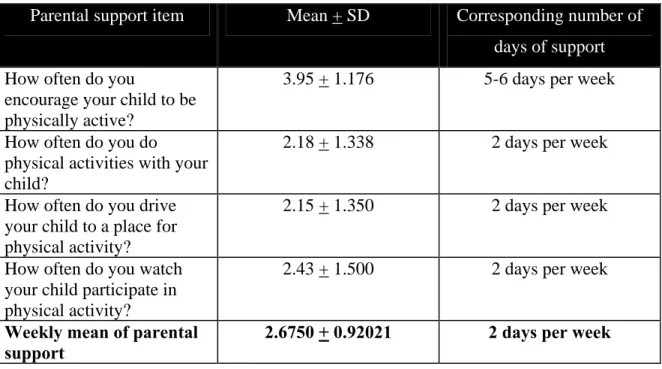
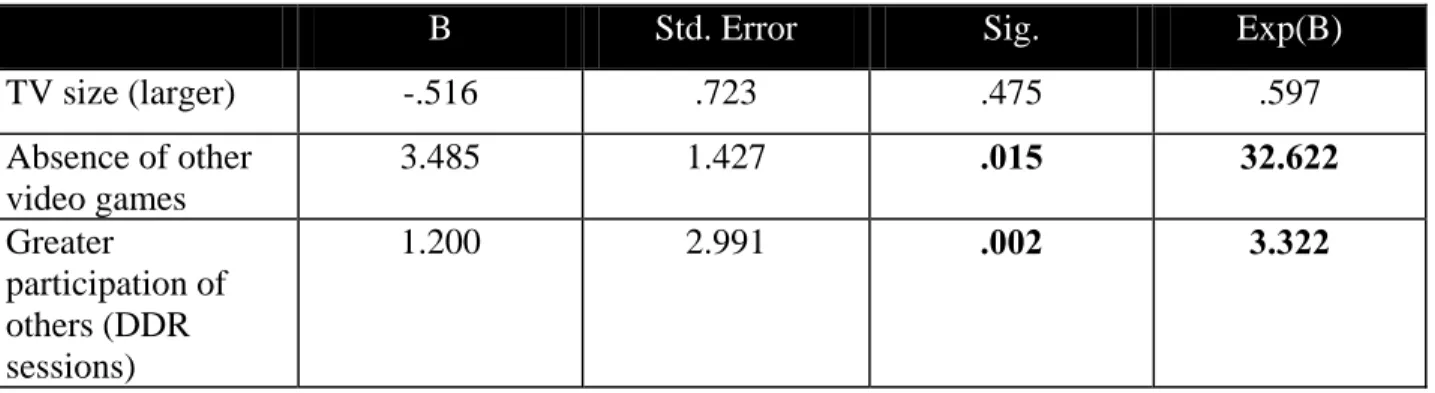
Table 2.1: Statistical analyses (Manuscript 1)………...49 Table 2.2: Sample characteristics (Manuscript 1)………...51 Table 2.3: M-GAQ physical activity frequencies (Manuscript 1)…………..………..…52 Table 3.1: Statistical analysis (Manuscript 2)………...…83 Table3. 2: Sample characteristics (Manuscript 2)………...……..…85 Table 3.3: Parental support at baseline (Manuscript 2)……….……....86 Table 3.4: Logistic regression for DDR-specific environmental support predictors
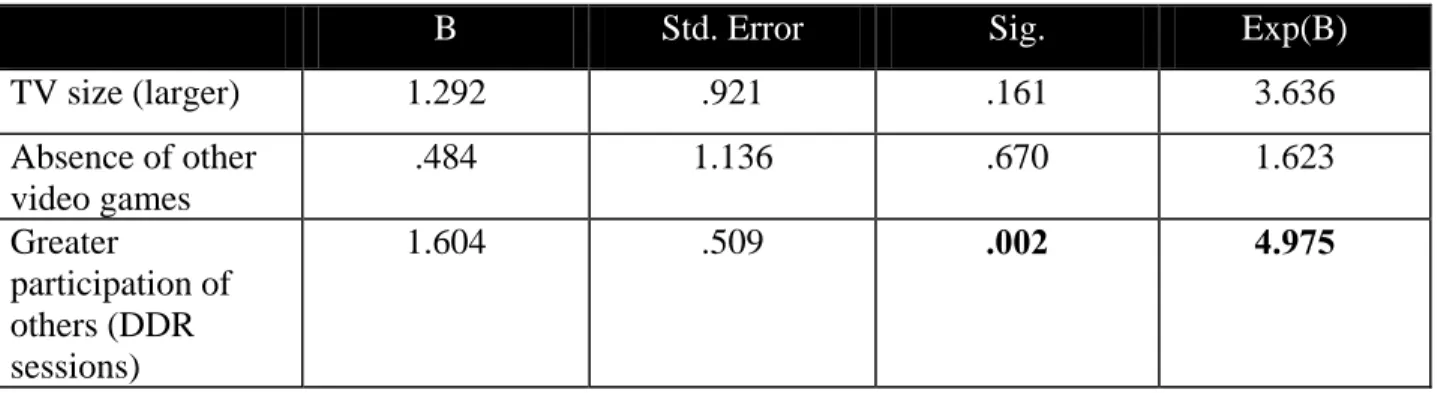
and physical activity as measured by DDR log at baseline (Manuscript 2)………....87 Table 3.5: Logistic regression for DDR-specific environmental support predictors
LIST OF FIGURES
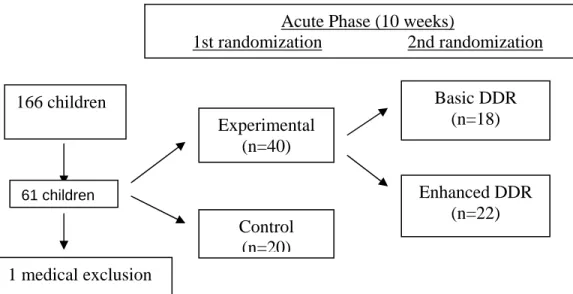
Figure 2.1: Schematic of study design (Manuscript 1)………...50
Figure 3.1: Schematic of study design (Manuscript 2)……….……..84
Figure 4.1: Schematic of study design (Manuscript 3)………...……..123
LIST OF ABBREVIATIONS
BMI body mass index
BP blood pressure
CDL Clinical Center for the Study of Development & Learning
DDR Dance Dance Revolution
EM Expectation Maximization algorithm
GAQ GEMS Activity Questionnaire
GEMS Girls health Enrichment Multi-site Studies
METs metabolic equivalents
M-GAQ Modified-GEMS Activity Questionnaire MPA moderate physical activity
MTI/CSA Actigraph® accelerometer model
MVPA moderate and vigorous physical activity
PA physical activity
PAL Parent Activity Learning and Child Learning questionnaire
PRECEDE Predisposing, Reinforcing, and Enabling Constructs in Educational Diagnosis and Evaluation (planning model)
SCT (Bandura’s) Social Cognitive Theory
SD standard deviation
SE standard error
Background
Brief historical perspective of overweight and obesity in the United States:
The epidemic of pediatric overweight and obesity was not considered to be a serious health problem in the United States until the later 1960’s [1]. Since then, research has focused on defining and establishing guidelines on the prevalence, etiology, and treatment of overweight and obesity for both adult and pediatric populations. Although there is a greater understanding today of the causes and possible therapies for child and adolescent overweight and obesity, overall knowledge on the causes of this condition, as well as the best
interventions, are still greatly limited [2].
Prevalence and costs of childhood overweight and obesity
The occurrence of childhood overweight and obesity is at endemic proportions and is only increasing [3]. The 1999-2000 National Health and Nutrition Examination Survey (NHANES) reported that over 15% of children and adolescents between the ages of 6-19 years and over 10% of children between the ages of 2-5 years were obese [4]. Concurrent with childhood overweight and obesity is a trend in escalating medical and economic costs. Pediatric overweight and obesity has numerous medical consequences that may manifest in adulthood [5-7]. In addition, the costs of treating childhood obesity has more than tripled from $35 million in 1997 to over $127 million in 1999 [8].
Activity related causes of childhood overweight and obesity
modification, decreasing sedentary activity, parent involvement and changes in the school food environment have shown equivocal results; however, some of the more successful interventions to reduce pediatric overweight and obesity have focused on the incorporation of enjoyable types of physical activity [10, 11].
In general, participation in physical activities is important for child growth and development [7, 12]. Before pubescence, children are naturally active and tend to be the most active segment of the population; however, by age six, physical activity levels begin to decline, especially during adolescence, when school, work and leisure activities become more prominent [13]. Although national health agendas and prevention goals recommend 60 minutes of daily participation in physical activities for children and adolescents [12, 14-16], only 35.8% of American youth report having met this criteria on at least five or more of days per week [17].
New strategies are needed
Reviews have shown that an increase and maintenance of participation in physical activities is a viable and feasible option to prevent and moderate pediatric overweight and obesity [18-21]. In order to address this problem, children must have an increased
opportunity to engage in fun, economical, and easily accessible modes of physical activities [22-24].
children ages 2-7 years old have at least one television in their home and 52% have a video console [27]. Moreover, this same study indicated that the number of households with video consoles increases to 82% for children ages 8-13 years old, further suggesting that
videogame use is an enduring behavior and increases as children get older.
Dance Dance Revolution (DDR)
Dance Dance Revolution (DDR), a long running series of arcade games with enthusiastic followings in Japan, Korea, and parts of Europe, represents one of several videogames that utilizes “active” play. In 1999, Konami released an arcade version in the United States that now has more than 10 separate DDR versions, many of which are available for the 100 million Playstation, Playstation 2, and Xbox game consoles in American homes [28]. (See Operational Definitions for further explanation of DDR).
North Carolina
Increased involvement in physical activity may be of particular importance in North Carolina. The 2001 North Carolina Nutrition and Physical Activity Surveillance System (NC NPASS) conveyed a prevalence of obesity between 20-25% for children and adolescents between the ages of 5-18 years [29], an additional 5-10% above the national prevalence level. Further, a 2005 summary report indicated that unhealthy lifestyle choices, including physical inactivity, cost North Carolinians more than $24 billion each year; for an overweight young adult in North Carolina, this adds up to more than $22,000 in direct medical care expenses by the midpoint of their working years that can be attributed to excess weight alone [30].
The DANCER study
DANCER was one of eight pilot projects funded under the Linking Interventions for Children (LINC) project at the University of North Carolina at Chapel Hill (UNC-CH). LINC is a series of childhood obesity prevention pilot projects funded by Get Kids in Action, a four-year, $4 million partnership initiated in 2001 between UNC-CH and the Gatorade Corporation. The purpose of this partnership was to develop and evaluate strategies to prevent childhood obesity through promotion of physical activity and healthy diet using education, outreach, and research, ultimately linking primary care and family-based
Dissertation theoretical framework
The DANCER study aims included investigation of the interrelationships among physical activity, sedentary behavior, environmental factors, and social and behavioral functioning of children exposed to regular DDR activity. Using an adaptation of the
Predisposing, Reinforcing, and Enabling Constructs in Educational Diagnosis and Evaluation (PRECEDE) planning model [31], this dissertation will focus upon the potential role of predisposing, reinforcing and enabling factors to promote participation in moderate and vigorous physical activities and DDR for North Carolinian children participating in the DANCER study (see Appendix B).
The predisposing factors that were considered in the DANCER study were each child’s previous physical activity exposure and self-perception in physical competence. Prior exposure to physical activities was hypothesized to promote participation in moderate and vigorous physical activity and DDR through experiential learning [32-34] of critical elements inherent to this activity, such as timing and rhythm. Perceived physical competence has been established as a predictor of moderate and vigorous physical activity [35-40] and may be an important indicator of which children will sustain participation in DDR over the ten-week period of the intervention.
Evidence-based literature [41-43] and anecdotal reports (for example,
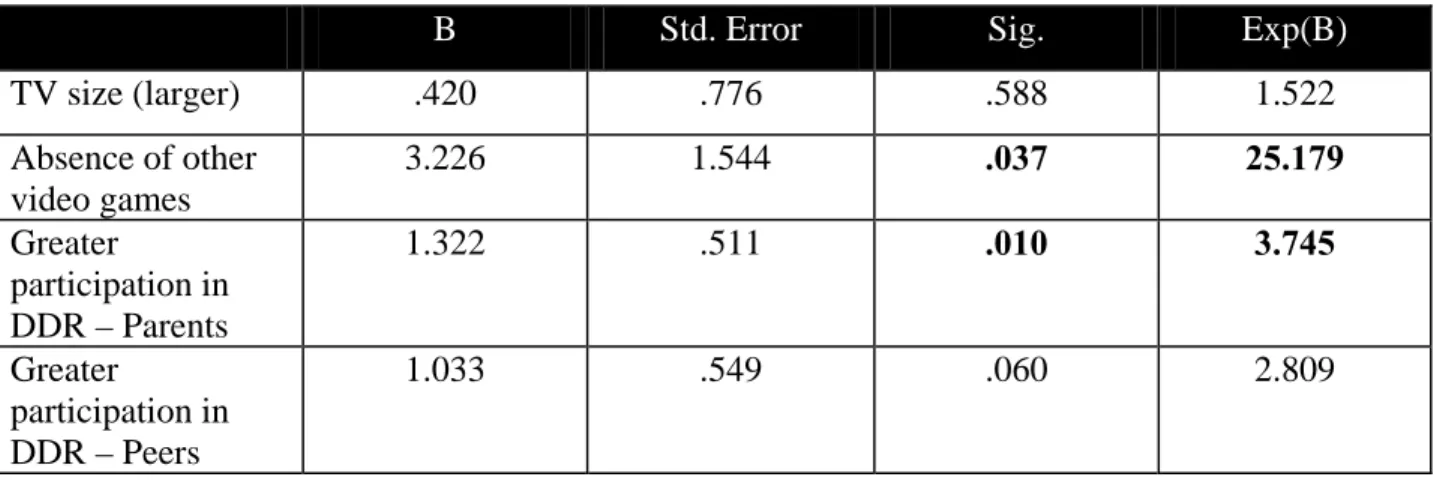
size of television, 2) other videogames in home, 3) location of DDR, and 4) DDR participation by others.
In the case of DDR, challenging parameters, such as the complexity of arrows, are intrinsic to the activity, and coaching holds the potential to facilitate a child’s speed of learning and accuracy of movement [44, 45] by promoting a specific DDR skill set based on motor learning principles [46, 47]. “Coaching” versus “no coaching” was considered as the enabling factor.
Purpose
The purpose of this dissertation is to describe and identify the strength of association between predisposing, reinforcing, and enabling factors and children’s participation in moderate and vigorous physical activity and Dance Dance Revolution.
Outcome Measures
Participation in physical activity was based on two outcome variables, accelerometer data and DDR compliance. Change in total physical activity was measured by accelerometer data at weeks 0 and 10. Moderate physical activity was set a priori to be readings between 1,160 – 5,200 counts per minute; vigorous physical activity was set a priori to be readings above 5,200 counts per minute. Participation in DDR was measured by a self-report log between weeks 1 and 10. Data was reported as the average daily minutes of participation in DDR.
Carolina. Data were collected during the execution of this ten week intervention between September 2004 and December 2004. The UNC-CH Biomedical Institutional Review Board (IRB # 04-PSYCH-476) reviewed and approved this study.
Factors associated with participation in moderate and vigorous physical activity and Dance
Dance Revolution among children in the DANCER study will be described in a series of
three manuscripts.
Manuscript one: Associations between previous physical activity exposure and self-perception of physical competence with physical activity among children participating in an active dance video game
Aims:
a) To describe predisposing factors (i.e., previous physical activity exposure and self-perception in physical competence) for children participating in the DANCER study b) To identify the strength of association between these predisposing factors (i.e.,
Manuscript two: Parental and environmental factors associated with physical activity
among children participating in an active dance video game Aims:
a) To describe the reinforcing factors (i.e., direct parental support and DDR-specific environmental support) for children participating in the DANCER study
b) To identify the strength of association between reinforcing factors (i.e., direct parental support and DDR-specific environmental support) with participation in moderate and vigorous physical activities and DDR at 1st and 10th week of intervention of the DANCER study
Manuscript three: Design and implications of motor learning-based coaching for children
participating in an active dance video game Aims:
a) To describe the development of a motor learning-based DDR coaching protocol for children participating in the DANCER study
OPERATIONAL DEFINITIONS
Appraisal support: “the provision of information that is useful for self-evaluation purposes,” [48].
Behavioral factors: those “behaviors or lifestyles of the individuals at risk that contribute to the occurrence and severity of the health problem” [49]
Bemani: Konami’s music video game division, named in honor of Konami’s first and most successful game, Beatmania (www.wikipedia.com).
Dance Dance Revolution (DDR): Conceptually, DDR is a simple game. DDR measures the precision of the dance steps and encourages the individual to earn points and sustain
combinations of footwork. The machine provides auditory (“Boo!, “Great!”) and visual feedback, tracks scores over time, and tracks total time on the machine. The machine sets thresholds for advancing to the next difficulty level such as increasing the density of foot movements and unlocks new songs (games) as users improve [50].
and complexity affectionately referred to as “maniac” or “catastrophic” in DDR lingo. [51-53]
Ecological model: models proposing that behaviors are influenced by intrapersonal, sociocultural, policy, and physical-environmental factors; these variables are likely to interact, and multiple levels of environmental variables are described that are relevant for understanding and changing health behaviors [54]
Enabling factors: antecedents to behavior that allow a motivation to be realized;” [31] refers to the skills, resources or programs that can indirectly or directly influence the attainment of specific behaviors [31, 49].
Environmental factors: “social and physical factors external to the individual, often beyond his or her personal control, that can be modified to support the behavior or influence the health outcome” [49].
Environment: the space outside the person, contrasted with intrapersonal variables [54]
informational support: “provision of advice, suggestions, and information that a person can use to address problems” [48]
MET: the unit of the estimated amount of oxygen used by body during PA; 1 MET is the energy used by the body sitting quietly
Overweight status in children: An NIH convened Expert Panel on Obesity in the late 1990’s determined that body mass index (BMI) would be the most appropriate method to use to identify an adult as being overweight or obese [56]. BMI, an expression of weight in relation to height, is easy and rapid to calculate, inexpensive, and correlates well to body fat for the majority of people (ACSM reference?). In adults, this method is quite reliable. However, this method is not appropriate for children and adolescents. Instead, BMI-for-age is used to determine status of overweight [57]. BMI-for-age uses CDC height and weight charts based on the child’s gender and age (2-20 years) to account for normal developmental differences in body fat distribution [58, 59]. The following established percentile cutoff points have been identified to determine overweight in children:
Normal: BMI-for-age 5th percentile to < 85th percentile
At risk of overweight: BMI-for-age 85th percentile to < 95th percentile
Overweight: BMI-for-age > 95th percentile
There is no definition for overweight or for obesity based on health risks. Further, the terms “overweight” and “obesity” are used most commonly in place of “at risk of
for simplicity of reading, although note the proper definitions and use of terminology as above when referring to a pediatric population (ages 2-20 years).
Physical activity: any bodily movement produced by skeletal muscles that results in an expenditure of energy with a range of activities, such as occupational work, household chores, and leisure time activities [55]
Moderate:
• Talk test: should be able to carry on a conversation comfortably while engaging in the activity
• Target heart rate: 50-70% of max heart rate (220 – age; typically used for ages 20+)
• Borg’s perceived exertion: 11-14 (6 is no exertion – 20 max exertion)
• Metabolic Equivalent (MET) Level: 3-6 METs or 3.5-7 kcal/min Vigorous:
• Talk test: individual becomes winded or too out of breath to carry on a conversation
• Target heart rate: 70-85% max heart rate
• Borg’s: 15 or greater
• MET: > 6 METs or > 7 kcal/min Recommended amounts of physical activity:
• CDC Recommendations for young people: at least 60 minutes of moderate intensity PA most days of the week, preferably daily [61]
• National Association of Sports and Physical Education (NASPE): infants, toddlers, and pre-schoolers should engage in at least 60 min of PA daily and should not be sedentary for more than 60 min. at a time except when sleeping; for children 5 to 12 years of age, recommends accumulating 60 min., and up to several hours of PA per day; activity can be accumulated in bouts of 15 minutes or more each day [63]
• Healthy People 2010: A national health promotion and disease prevention initiative which is the basis for coordinated public health action; publishes national health goals and objectives for the years 2001-2010 designed to identify preventable threats to health and to establish goals to reduce these threats [64]
Two goals: 1) increase quality and years of healthy life, and 2) eliminate health disparities
These goals illuminate the vision of a healthy nation by providing the leadership and motivation for a systematic approach to health improvement through focus areas, of which “PA and Fitness” and “Overweight/Obesity” are leading health indicators
22.6 Increase the proportion of adolescents who engage in moderate PA for at least 30 minutes on 5 or more of the previous 7 days; target is 35% (currently 27%, YRBSS)
22.7 Increase the proportion of adolescents who engage in vigorous PA that promotes cardiorespiratory fitness 3 or more days per week for 20 or more minutes per occasion; target is 85% (currently 65%, YRBSS)
22.11 Increase the proportion of adolescents who view television 2 or fewer hours on a school day; target is 75% (currently 57%, YRBSS)
19.3 Reduce the proportion of children and adolescents who are overweight or obese; target is 5% (based on NHANES 1994 prevalence of 11% - note that 1999 prevalence is over 15%)
Predisposing factors: “antecedents to behavior that provide the rationale or motivation for the behavior” [31]; any characteristic of a person or population that motivates behavior prior to the occurrence of the behavior [31], may include an individual’s knowledge, attitudes, beliefs, personal preferences, existing skills, self-efficacy beliefs [49], cultural beliefs and readiness to change [60]
References
1. Caballero, B., Obesity prevention in children: Opportunities and challenges. International Journal of Obesity, 2004. 28: p. S90-S95.
2. Jackson, Y., et al., Summary of the 2000 Surgeon General's Listening Session: Toward a national action plan on overweight and obesity. Obesity Research, 2002.
10: p. 1299-1305.
3. Strauss, R.S., Childhood obesity. Pediatric Gastroenterology and Nutrition, 2002.
49(1): p. 175-201.
4. Ogden, C.L., et al., Prevalence and trends in overweight among US children and adolescents, 1999-2000. Journal of the American Medical Association, 2002.
288(14): p. 1728-1732.
5. Koplan, J.P., C.T. Liverman, and V.I. Kraak, Preventing childhood obesity: Health in the balance: Executive summary. Journal of the American Dietetic Association, 2005.
105(1): p. 131-138.
6. Dietz, W.H., Health consequences of obesity in youth: Childhood predictors of adult disease. Pediatrics, 1998. 101: p. 518-525.
7. Styne, D.M., Childhood and adolescent obesity: Prevalence and significance. Pediatr Clin North Am, 2001. 48: p. 823-854.
8. Wang, G. and W.H. Dietz, Economic burden of obesity in youths aged 6 to 17 years: 1979-1999. Pediatrics, 2002. 109: p. 81-86.
9. Racette, S.B., S.S. Deusinger, and R.H. Deusinger, Obesity: Overview of prevalence, etiology, and treatment. Physical Therapy, 2003. 83(3): p. 276-288.
10. Flores, R., Dance for health: Improving fitness in African American and Hispanic adolescents. Public Health Reports, 1995. 110: p. 189-193.
11. Mo-Suwan, L., et al., Effects of a controlled trial of a school-based exercise program on the obesity indexes of preschool children. Am J Clin Nutr, 1998. 68: p. 1006-1011. 12. Dietary Guidelines Advisory Committee, Nutrition and your health: Dietary
guidelines for Americans. 2005, USDA.
13. Malina, R.M., Tracking of physical activity and physical fitness across the lifespan. Research Quarterly for Exercise and Sport, 1996. 57: p. 48-57.
15. US Department of Health and Human Services, The Surgeon General's call to action to prevent and decrease overweight and obesity. 2001, US Department of Health and Human Services, Public Health Service, Office of the Surgeon General.
16. Office of Disease Prevention and Health Promotion, Healthy People 2010. 1979, U.S. Department of Health and Human Services.
17. National Center for Chronic Disease Prevention and Health Promotion, YRBSS: Youth Risk Behavior Surveillance System. 2005, Centers for Disease Control and
Prevention.
18. Summerbell, C.D., et al., Interventions for treating obesity in children. The Cochrane Database of Systematic Reviews, 2003(3).
19. Kumanyika, S.K. and E. Obarzanek, Pathways to obesity prevention: Report of a National Institutes of Health Workshop. Obesity Research, 2003. 11(10): p. 1263-1274.
20. Jelalian, E. and B.E. Saelens, Empirically supported treatments in pediatric
psychology: Pediatric obesity. Journal of Pediatric Psychology, 1999. 24(3): p. 223-248.
21. Campbell, K.J., et al., Interventions for preventing obesity in childhood. A systematic review. Obesity Reviews, 2001. 2: p. 149-157.
22. Sothern, N.S., Obesity prevention in children: Physical activity and nutrition. International Journal of Epidemiology, 2004. 30: p. 1136-1137.
23. Barlow, S.E., et al., Treatment of child and adolescent obesity: Reports from
pediatricians, pediatric nurse practioners, and registered dietitians. Pediatrics, 2002.
110: p. 229-235.
24. Taylor, W.C., et al., Childhood and adolescent physical activity patterns and adult physical activity. Med. Sci. Sports Exerc., 1999. 31(1): p. 118-123.
25. Montgomery, K.C., Digital Kids: The New On-line Children's Consumer Culture. Handbook of Children and Media. 2001, Thousand Oaks: Sage Publications. 26. LaFerla, C., S.M. Edwards, and W. Lee, Teens' use of traditional media and the
29. N.C. Department of Health and Human Services, Eat Smart, Move More...North Carolina. 2006.
30. Be Active North Carolina Inc., The Economic Cost of Unhealthy Lifestyles in North Carolina Summary Report. 2005: New Bern, NC.
31. Green, L.W. and M.W. Kreuter, Health Promotion Planning: An Educational and Environmental Approach. 2nd ed. 1999, Mountain View, Calif: Mayfield.
32. Telama, R., et al., Physical activity in childhood and adolescence as a predictor of physical activity in young adulthood. American Journal of Preventive Medicine, 1997. 13: p. 317-323.
33. Garcia, A.W., et al., Changes in physical activity beliefs and behaviors of boys and girls across the transition to junior high school. Journal of Adolescent Health, 1998.
22: p. 394-402.
34. Sallis, J.F., J.J. Prochaska, and W.C. Taylor, A review of correlates of physical
activity of children and adolescents. Med. Sci. Sports Exerc., 2000. 32(5): p. 963-975. 35. Whitehead, J.R., A study of children's physical self-perceptions using an adapted
physical self-perception profile questionnaire. Pediatric Exercise Science, 1995. 7: p. 132-151.
36. Fox, K.R., The physical self and processes in self-esteem development, in The physical self: From motivation to well-being, K.R. Fox, Editor. 1997, Human Kinetics: Champaign, IL. p. 111-140.
37. Ross, J.G. and R.R. Pate, The national children and youth fitness study II: A summary of findinngs. Journal of Physical Education, Recreation and Dance, 1987. 58: p. 51-56.
38. Biddle, S.J. and N. Armstrong, Children's physical activity: An exploratory study of psychological correlates. Social Science and Medicine, 1992. 34: p. 325-331. 39. Crocker, P.R., R.C. Eklund, and K.C. Kowalski, Children's physical activity and
physical self-perceptions. J Sports Sci, 2000. 18(6): p. 383-94.
40. Hagger, M., B. Ashford, and N. Stambulova, Russian and British children's physical self-perceptions and physical activity participation. Pediatric Exercise Science, 1998.
10: p. 137-152.
42. Vilhjalmsson, R. and T. Thorlindsson, Factors related to physical activity in children: A study of adolescents. Social Science and Medicine, 1998. 47(5): p. 665-675.
43. Davison, K.K., T.M. Cutting, and L.L. Birch, Parents' activity-related parenting practices predict girls' physical activity. Med. Sci. Sports Exerc., 2003. 35(9): p. 1589-1595.
44. Knowles, Z., A. Borrie, and H. Telfer, Towards the reflective sports coach: Issues of context, education and application. Ergonomics, 2005. 48(11-14): p. 1711-1720. 45. Mageau, G.A. and R.J. Vallerand, The coach-athlete relationship: A motivational
model. Journal of Sports Sciences, 2003. 21: p. 883-904.
46. Schmidt, R.A., A schema theory of discrete motor skill learning. Psychological Review, 1975. 82: p. 225-260.
47. Fitts, P.M. and M.I. Posner, Human Performance. 1967, Belmont, CA: Brooks/Cole. 48. Heaney, C.A. and B.A. Israel, Social networks and social support, in Health Behavior
and Health Education, K. Glanz, B.K. Rimer, and F.M. Lewis, Editors. 2002, Jossey-Bass: San Francisco, CA. p. 185-209.
49. Gielen, A.C. and E.M. McDonald, Using the PRECEED-PROCEED planning model to apply health behavior theories, in Health Behavior and Health Education: Theory, Research, and Practice, K. Glanz, B.K. Rimer, and F.M. Lewis, Editors. 2002, Jossey-Bass: San Francisco, CA. p. 409-436.
50. Wikipedia, t.f.e., Dance Dance Revolution. 2006. 51. Bemani Style. 2004.
52. DDR Zone. 2005, GNU Free Documentation License and WideOpenDoors.net. 53. DDR Maniax. 2006.
54. Sallis, J.F. and N. Owens, Ecological Models of Health Behavior, in Health Behavior and Health Education, K. Glanz, B.K. Rimer, and F.M. Lewis, Editors. 2002, Jossey-Bass: San Francisco, CA. p. 462-484.
55. Division of Nutrition and Physical Activity and Centers for Disease Control and Prevention, Physical Activity for Everyone. 2005.
57. Division of Nutrition and Physical Activity and National Center for Chronic Disease Prevention and Health Promotion, Body Mass Index for Children and Teens. 2005. 58. Hammer, L.D., et al., Standardized percentile curves of body-mass index for children
and adolescents. American Journal of Disease of Child, 1991. 145: p. 259-263. 59. Pietrobelli, A., et al., Body mass index as a measure of adiposity among children and
adolescents: A validation study. Journal of Pediatrics, 1998. 132: p. 204-210.
60. National Cancer Institute, Theory at a glance: A guide for health promotion practice. 2003. p. 36.
61. U.S. Department of Health and Human Services and U.S. Department of Agriculture, Dietary guidelines for Americans, 2005. 2005: Washington, DC.
62. U.S. Department of Health and Human Services, Public Health Service, and Office of the Surgeon General, The Surgeon General's call to action to prevent and decrease overweight and obesity. 2001, U.S. Department of Health and Human Services: Rockville, MD.
63. AAHPERD, NASPE National Association for Sport & Physical Education.
CHAPTER II
MANUSCRIPT ONE: ASSOCIATIONS BETWEEN PREVIOUS PHYSICAL ACTIVITY EXPOSURE AND SELF-PERCEPTION OF PHYSICAL COMPETENCE WITH PHYSICAL ACTIVITY AMONG CHILDREN
Abstract
Purpose: Previous physical activity exposure and self-perception in physical competence were
explored as potential predisposing factors for moderate and vigorous physical activity and use of a dance simulation video game, Dance Dance Revolution (DDR), among a cohort of 7-8 year old children participating in the DANCER study. Method: Sixty children (7.5 ± 0.5 years) were randomized in a 2:1 ratio to receive DDR or to a wait-list control group (10 week delay). Physical activity was measured objectively with accelerometry (at baseline and week 10) and DDR participation logs signed by parents (weeks 1 through 10). A modified Girls Health
Enrichment Multi-site Studies Activity Questionnaire was used to assess the quality and quantity of previous physical activity exposure (frequency of participation over the past year) prior to participating in DANCER. Self-perception in physical competence was evaluated in 7- and 8-year old children in the DANCER study using the Pictorial Scale of Perceived Competence and Social Acceptance for Young Children and the Self-Perception Profile for Children, respectively (at baseline). Results: At baseline, previous physical activity exposure was not significant for differences in participation in moderate and vigorous physical activity or DDR. At follow-up, previous physical activity exposure explained differences for participation in vigorous physical activity, but not for participation in moderate physical activity or DDR. Self-perception in physical competence was not significant for differences in participation in moderate and vigorous physical activity or DDR at baseline or follow-up. Qualitative findings suggest that DDR was well received by the children in this cohort (95%). Additionally, the majority of children reported that they felt they became more active during the DANCER study (91%) and felt that they had achieved a level of proficiency by week 10 of the intervention (71%).
self-perception in physical competence do not predict participation in physical activity or DDR. However, participation in vigorous physical activity was associated with previous physical activity exposure at follow-up and may be indicative of habitual tendencies in youth. Qualitative findings also suggest that dance movement is an enjoyable form of physical activity. Further study is needed to evaluate the role of these factors to motivate and promote children’s participation in physical activity.
Introduction
Over the past three decades the prevalence of overweight has more than doubled for adolescents ages 12 to 19 years and has nearly tripled for children ages 6 to 11 years [1].
Moreover, the National Longitudinal Survey of Youth indicates that the prevalence of childhood overweight has increased annually by 6.2% in the South, a significantly higher rate than has been observed in other U.S. regions [2, 3].
Child and adolescent overweight and obesity are associated with a host of medical and psychosocial health outcomes, such as non-insulin dependent diabetes, sleep apnea, negative body image and depression [4, 5]. Negative financial consequences are also associated with overweight and obesity, with direct obesity-related hospital costs in 6 to 17 year old children and adolescents reaching yearly sums of over $127 million in 1999 alone [6]. In addition, several studies indicate that childhood overweight tends to track into adulthood [7-9] and is additionally associated with numerous medical conditions ranging from heart disease to osteoarthritis and cancer (endometrial, breast, colon) to stroke [10]. This lifespan of overweight and obesity and associated co-morbidities further highlights the significance of this problem, as well as the prolific costs.
Moreover, American youth ages 2-7 and 8-18 spend an average of 2.5 and 4.5 daily hours, respectively, watching television [13]. Children and adolescents also expend significant amounts of recreational time using computers and video games. Among a cohort of children and adolescents (age 8-18 years), recreational computer time was found to increase substantially with age, with the majority spending most of that time playing computer games [14]. This same study reported that 52% of the cohort also played some kind of sedentary video game each day,
averaging 49 minutes daily. Adding to this trend is a report by Stettler and colleagues [15] which noted a nearly two-fold increased risk for obesity among European children ages 6.5 to 10 years for each daily hour spent playing sedentary or traditional video games.
Dance Dance Revolution (DDR) is an active dance videogame that has shown possibility as a medium to increase physical activity in children. DDR uses a game console that links to dance pad sensors to measure whether each individual player is dancing the correct steps in the correct sequence with proper timing. The resultant DDR feedback reports the accuracy of the dance steps, encouraging the individual to earn points by sustaining footwork precision. The machine provides auditory (“Boo!, “Great!”) and visual feedback and tracks scores and total time on the machine. DDR has gained broad appeal among youth and among some, has lead to
significant weight loss, as evidenced through non-peer reviewed testimonials at
www.getupmove.com.
considerable increased energy expenditure compared to sedentary screen time [16] and playing tennis [17]. However, a six-month study using DDR as a weight management intervention for obese children and adolescents reported that playing DDR in isolation may not sufficiently motivate youngsters to sustain their use of DDR [18]. Data from this study suggested that peer or family support, competitions, a greater variety of music, and group participation may be associated with increased DDR use, however, these and other potential contributing factors have not been rigorously studied.
A number of theories and models have postulated the potential role of factors that may act to influence health behavior change. One model that has been widely used to describe the variables surrounding changes in health behavior is the Predisposing, Reinforcing, and Enabling Constructs in Educational Diagnosis and Evaluation (PRECEDE) planning model. The
PRECEDE planning model suggests that predisposing factors are any existing characteristics of a person or population that motivates behavior prior to the occurrence of a particular behavior [19]. Predisposing, or motivating, factors can thus act to influence any particular health behavior, including participation in physical activity.
According to Harter [26], self-perception of physical competence is defined as global belief in one’s ability to perform physical activities, including sports and outdoor games. In general, self-perception has been shown to be an important indicator of motivation and psychological well-being [27]. More specifically, physical self-perception is related to
performance, self-confidence and involvement with physical activity [28, 29] and has been found to discriminate between active and inactive children [28, 30-32]. Perceived physical competence has a profound influence on children’s participation in physical activities [33].
The aims of this study were to explore the role of predisposing factors, previous physical activity exposure and self-perception in physical competence, in promoting participation in moderate and vigorous physical activity and DDR. It was hypothesized that children with more previous physical activity exposure prior to DANCER would participate in moderate and vigorous physical activity and DDR at greater levels than children with less previous physical activity exposure. It was also hypothesized that children with a higher self-perception of physical competence would participate in moderate and vigorous physical activity and DDR at greater levels than children with a lower self-perception of physical competence.
Methods
Study Population
distributed in post offices, community centers, and shopping malls throughout Raleigh, Durham, and Chapel Hill.
Enrolled children all lived within a 30-mile radius of UNC-CH. Potential participants were screened for the following inclusion criteria, 1) boys and girls between the ages of 7 and 8 years 10 months, 2) any ethnic or racial group, 3) any weight or BMI, 4) guardian willing to give medical release for their child’s participation, 5) guardian willing to record DDR sessions for the child. Exclusion criteria included individuals with significant somatic or mental illness that precluded regular use of DDR (i.e., photosensitive epilepsy, broken bones, exercise-induced asthma, etc.) or individuals with extensive prior experience with DDR, Stepmania, or other forms of Bemani videogames. Extensive experience with DDR was operationalized as any child who had played DDR more than twice prior to enrollment in the DANCER study.
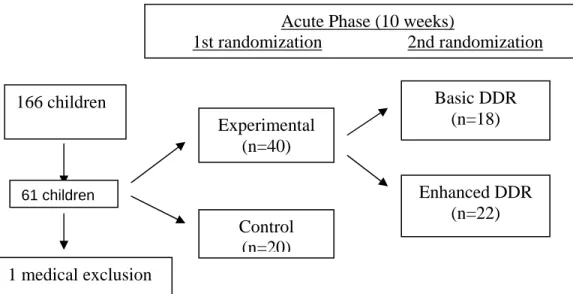
Following a phone screening for inclusion and exclusion criteria as detailed above, one hundred and sixty-six (166) children were screened for participation in the DANCER study. Of these, sixty-one (61) children attended a baseline assessment at the UNC Clinical Center for the Study of Development & Learning (CDL), Chapel Hill, NC. Parent(s) provided written
informed consent and children gave verbal assent, after which extensive demographic,
environmental, and physical data was acquired. The UNC-CH Biomedical Institutional Review Board reviewed and approved this study.
Study Design Overview
to receive either Basic DDR (no coaching) or Enhanced DDR (coaching), however, all statistical analyses controlled for this second randomization by analyzing Basic and Enhanced DDR groups as one experimental group.
Phase 2, the Maintenance phase allowed for a semi-structured, long-term (16 week) follow-up of children exposed to DDR during the Acute phase. In addition, children initially assigned to the control condition were offered DDR equipment and the same initial training as the experimental group during the Maintenance phase of the study. This design guaranteed that all children would gain access to DDR during the study period.
This manuscript will focus on Phase 1, the Acute phase, to explore the association between children’s previous exposure to physical activity and self-perception in physical competence with participation in moderate and vigorous physical activity and DDR. Randomization
Comparable treatment groups were generated through a computer randomization schedule. The presence of sibling pairs required a slight modification. Sibling pairs were randomized as a single child to avoid confounding influences; however, analysis of results will treat all study participants as individuals. Twenty (20) children were randomized to the control group and forty (40) children were randomized to the experimental group1. A randomized wait list delay controlled study design was integral to provide rigor to minimize biased sampling from a small sample size and provide information regarding the occurrence of adverse events.
DDR module
Families were supplied with all equipment necessary to play DDR in the home. The primary items provided were the PlayStation2 game console (Sony Corporation of America,
1
New York, NY), DDRMAX2 game (Konami of America, Redwood City, CA), and two padded dance mats. Each child and his/her parent(s) were instructed to designate one dance pad for use only by the child participating in DANCER. These materials were obtained commercially and are available from multiple vendors.
Acute Phase Experimental Group
Each child in the experimental group and his/her parent(s) were provided with the necessary DDR equipment (as detailed above) during an initial standardized training session (approximately 45-60 minutes) in their home. The initial training session included a detailed, personalized tutorial introducing all the necessary machinery to connect and maintain the Playstation2 console and an explanation of the DDR game. In addition, study staff provided DDR instructions (a DDR Tip Sheet) and an opportunity for the child to participate in accessing and navigating the various components of the DDR tutorial and game menus. Ample time was provided for further questions from child and parent(s).
Each child and their parent(s) were “prescribed” 120 minutes per week of DDR,
Acute Phase Control Group
Children and parent(s) randomized to the control group were asked to wait 14 weeks to begin the DDR intervention and to withhold engaging in DDR in any setting during this period. They were not given any other prescriptions regarding physical activity or diet. After the 14-week waiting period was completed, the control group received the Basic DDR intervention with the same initial training and prescription for 120 minutes of DDR activity each week. The DANCER staff was available by pager to address any equipment malfunctions. This phase of the intervention was provided to encourage participation in the study and to provide additional exploratory data. Children in this group were not involved in a maintenance phase due to time and financial constraints of this pilot study.
Technical assistance
The DANCER research team set up the majority of the Playstation2 systems to minimize installation problems. After initial installation, families received ongoing technical support via a dedicated pager, email, and telephone. Hardware and software problems were typically resolved within 48 hours. No direct assistance was provided with regard to game play during these visits but in the case of any reported problems, children and their parent(s) were directed to review the game tutorials and the DDR Tip Sheet.
Study Measures Demographic data
The About You form used for this study consisted of 21 questions which detailed
included questions about the number of TVs, VCRs, and DVD players in the home and whether the study participant had these in his/her bedroom.
Physical exam
A licensed medical doctor performed a brief physical exam comparable to the pre-participation health examination screen for school-aged sports. The primary purpose of the physical exam was to exclude children with health contraindications to participate in the study.
Basic anthropometric data was also collected during the physical exam. The Tanita TBF-310 (Tanita Corporation of America, Arlington Heights, IL) provided weight, bioelectric
impedance body fat percentage, and calculated BMI. The Tanita-derived BMI percentiles were later matched against age-specific tables published by the Centers for Disease Control (CDC 2000). The Omron 938 (Omron Healthcare, Kyoto, Japan) is an automated, wrist
sphygmanometer which yielded heart rate and blood pressure for the majority of children. A small percentage of the children needed manual determinations of blood pressure and heart rate because the sphygmanometer did not compute these measures automatically.
Outcome Variables
Accelerometer-determined physical activity
The primary outcome measure was total counts of activity over a seven-day period detected by the MTI/CSA Actigraph® accelerometer (CSA; MTI Health Systems, Ft. Walton Beach, FL) acquired at Baseline (Week 0), Week 10, and Week 26. The Actigraph
and running in children ages 10-14 (r-0.87) [35]. The CSA was used to capture the intensity of physical activity in 1-minute epochs, logging intensity, duration, and total physical activity.
Participants were instructed to wear the activity monitor above the iliac crest of the right hip during waking hours for seven consecutive days. Monitors were affixed by way of a
comfortable belt to the child’s right hip by a trained technician who gave instructions to the child and parent to remove the monitor during showering, water sports, and at bedtime. If removed, the time of removal and reattachment should have been noted on the log form. The minimum acceptable wearing time was set a priori at 80% of waking hours for at least 4 weekdays plus one weekend day during each 7-day monitoring period.
DDR-determined physical activity
The daily DDR log was a self-report tool used in order to obtain a rough estimate of total minutes played each week. Parents counter-signed this log in order to increase accuracy of reported play time.
Factor Variables Physical activities
The GEMS Activity Questionnaire (GAQ) was designed by the Girls health Enrichment Multi-site Studies(GEMS) team [36] as a self-report checklist of activities, each depicted with a small picture, comparing how much each activity was performed by the child “yesterday” and how much each activity is “usually” performed by the child. With the assistance of a parent, each child is instructed to complete the GAQ checklist [29 active items (e.g., sports, chores, etc) and 7 non-active items (e.g., homework, computer games, etc)].
if a few activities are performed with higher frequency than if many activities are performed at a lesser frequency; thus, this scoring attempts to differentiate between very active and less active participants [38]. Reliability for the GAQ for physical was r=0.80, p < 0.0001. Validity
between the MTI/CSA accelerometer and “yesterday” and “usual” GAQ activity scores was low (r=0.27, p = 0.003 and r=0.29, p = 0.02, respectively).
The Modified-GEMS Activity Questionnaire (M-GAQ) used for this pilot captured the quality and quantity of some specific activities that are common in most child cohorts:
basketball, soccer, dance, gymnastics, and martial arts. The M-GAQ was used to minimize subjectivity by allowing parents to respond on a more precise, objective scale. The purpose of the questionnaire was to determine prior physical activity exposure by measuring frequency of participation for each child over the past year as reported by the parent. Parents completed this form for the specified activities, but were also able to report any additional physical activities that the child participated in within the past year2. A total summary score for the M-GAQ was determined using similar methods as for the GAQ.
Child self-perception
The Self-Perception Profile for Children [26] and the Pictorial Scale of Perceived Competence and Social Acceptance for Young Children [39] are instruments that tap children’s domain specific judgment of their perception. While the former is administered to eight-year olds and the latter for seven-year olds, both of these scales measure self-perception using a variety of subscales, including physical competence3, content related to sports and outdoor
2
Note : Only activities included on the GAQ were scored on the M-GAQ.
3
games. Each subscale is scored on a scale of 1-4, with 1 being “low” perceived competence or the “least adequate” self-judgment and 4 being “high” perceived competence or the “most adequate” self-judgment, to determine a subscale mean. Cronbach’s alpha for the physical competence subscales on the Self-Perception Profile and the Pictorial Scale averaged .8275 and .57, respectively [26, 39].
In the DANCER study, eight-year old children were administered three subscales, social acceptance, physical competence, and physical appearance, from The Self-Perception Profile for Children [26] using a standardized interview format. The Pictorial Scale was administered to seven-year old children as outlined by Harter and Pike [39] using a similar standardized interview format accompanied by gender-specific pictures.
Rater Standardization
Staff received extensive training (11-12 sessions, each lasting approximately 45 minutes) comprising all aspects of DANCER. Trainings consisted of detailed explanations,
demonstration, and practice of all assessment measures. Staff members were tested on all methods until able to consistently perform as indicated on the protocols. In addition, to further insure uniformity, specific measures were collected by the same staff member at each specific time point (baseline at week 0 and follow-ups at weeks 10 and 26).
Statistical Analysis
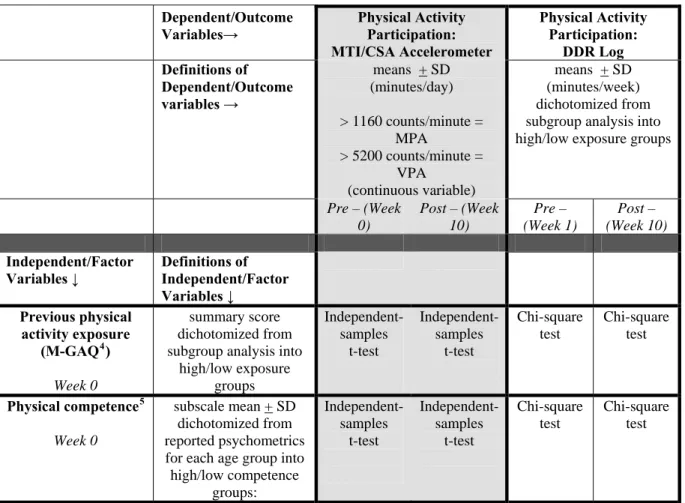
Participation in physical activity was based on two outcome variables: CSA data at weeks 0 and 10 and DDR log records at weeks 1 and 10. Factor variables were collected using the M-GAQ and self-perception scales at week 0 (Table 2.1).
CSA Data Reduction
At the end of each assessment week, the Actigraph monitors’ stored activity counts were downloaded into a computer for subsequent data reduction and analysis. Minute by minute activity counts were used to determine daily total minutes of physical activity and minutes of moderate-to-vigorous physical activity (MVPA) during each 30-minute segment of the seven day monitoring period at weeks 0 and 10.
Accelerometer readings were processed using methods similar to those reported by Puyau and colleagues [40] which reported data as means + SD (activity counts/day). Readings between 1160 to 5200 counts per minute were considered as moderate physical activity, a threshold that corresponds to 3.0 metabolic equivalents (METs) using a calibration equation developed by Treuth and colleagues [36]. This equation was based on regression lines for MET score versus accelerometer counts: MET = 2.01 + 0.000856 (counts 60s-1). Vigorous physical activity was defined as readings greater than 5200 counts/minute, a threshold that corresponds to 6.0 METS.
For this pilot, minute by minute activity counts were used to determine daily minutes of moderate to vigorous physical activity during 30-minute segments of each day in the week-long monitoring period at week 0 and at week 10. Activity counts were then summed between the hours of 6am to midnight to provide the outcome variable, total minutes of physical activity per day. It was assumed that the child was not wearing the device if 20 minutes of consecutive zeroes were obtained.
Method of Imputation of missing CSA data
Missing accelerometer data within a 7-day monitoring period were replaced via
study, the EM algorithm used observed data for each child to predict activity levels for segments of the day when the activity monitor was not worn; summary statistics were then estimated from this “pseudo-complete” data set. If data was missing for 20% of waking hours or if there were no available data from a least one weekend day, imputation procedures were not performed. Instead, all accelerometer data were disregarded as missing from that time point.
DDR Compliance
Data were initially reported as means + SD minutes/day playing DDR at weeks 1 and 10. Based on subgroup analysis, the outcome variable of DDR exposure was dichotomized at week 1 and at week 10 as an average of 127.95 and 61.69 minutes, respectively, into high versus low exposure groups for DDR compliance at each week.
Individual Factor Variables
The M-GAQ used a similar method as the GAQ [36] to determine a previous physical activity exposure summary score:
When your child is participating in this activity, about how often do they participate? • 1x/week = 0 points
• 2x/per week = 1 point • 3x+/week =10 points
About how much time does your child spend in this activity each time they participate? • A little (30 minutes per practice) = 0 points
• Average (31-60 minutes per practice) = 1 point • A lot (over 60 minutes per practice) = 10 points
Using this method, a M-GAQ total previous physical activity exposure summary score was determined for each child by summing the total points of each reported activity to
total previous physical activity exposure summary scores were dichotomized based on the group’s mean total previous physical activity exposure summary score of 11.26.
Physical competence was first reported as subscale means, with 1 being low perceived competence and 4 being high perceived competence. Subscale means for the experimental group at week 0 were dichotomized into high and low perceived competence categories for further analyses based on reported psychometrics for 8 year olds (2.8450) and 7 year olds (3.5) on the Self-Perception Profile for Children [26] and the Pictorial Scale of Perceived Competence and Social Acceptance for Young Children [39], respectively.
Data treatment
Data was compiled in an Access database for subsequent analysis in SPSS (v.14.1, Chapel Hill, NC). Descriptive statistics were used to summarize characteristics of the factor variables. Given the sample size, DDR compliance, M-GAQ previous physical activity exposure summary scores, and self-perception in physical competence were dichotomized (as previously described) to maximize differences in further analyses. Independent-samples t-tests were computed between previous physical activity exposure and participation in moderate and vigorous physical activity as measured by the CSA accelerometer at weeks 0 and 10.
Independent sample t-tests were also computed between self-perception in physical competence and participation in moderate and vigorous physical activity as measured by the CSA
accelerometer at weeks 0 and 10. Chi-square tests were calculated between previous physical activity exposure and participation in DDR as measured on the DDR logs at weeks 1 and 10. Chi-square tests were also calculated between self-perception in physical activity and
Results
Sample Characteristics
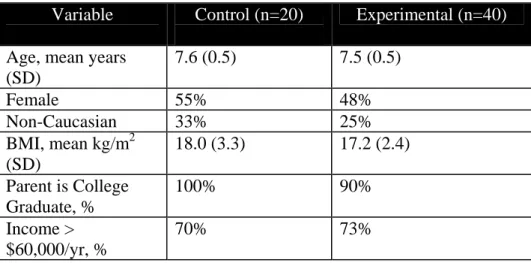
One hundred twenty two prospective participants were screened to participate in DANCER, of which 60 participants were enrolled (Figure 2.1). The experimental and control groups were similar in age, sex, race, physical measurements, and family characteristics (Table 2.2).
Descriptive Statistics
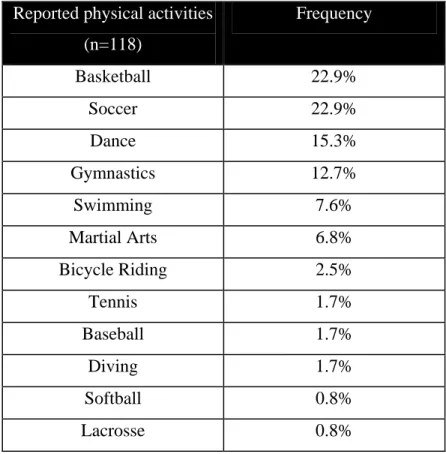
One-hundred percent of parents in the experimental group completed the M-GAQ at baseline. Physical activity summary scores on the M-GAQ ranged from 0 to 53 with a mean of 12.30 + 11.469. The most frequently reported physical activities within the past year for this cohort were basketball and soccer (22.9% each); Table 2.3 shows the frequencies of all reported physical activities.
The age-appropriate subscale for self-perception in physical competence was
administered to each child in the experimental group (n=18 for 8 year olds, n=22 for 7 year olds) at baseline. Subscale values for physical competence in 7 and 8 year olds ranged from 2.83-4.00 and 1.50-4.00, respectively. Seven year old children (n=22) had a mean of 3.47 + 0.37 and 8 year old children (n=18) had a mean of 2.97 + 0.67.
Accelerometers were worn by 100% of participants for each 7-week monitoring period. Mean wearing times were 90% and 73% of waking hours at weeks 0 and 10, respectively. DDR participation logs were returned at rates of 75% and 55% at weeks 1 and 10, respectively. Hypothesis Test Results
demonstrate higher levels of participation in moderate and vigorous physical activities than children with less previous physical activity exposure. At baseline (week 0), mean differences between previous physical activity exposure and moderate and vigorous physical activity were not significant [tmpa(37) = .817, p = .419; tvpa(37) = .594, p = .556]. Post-intervention (week 10),
mean differences between previous physical activity exposure and moderate physical activity were not significant [tmpa(36) = -.897, p = .375]. However, mean differences between previous
physical activity exposure and vigorous physical activity was significant [tvpa(36) = 2.446, p =
.019].
Chi square tests were conducted to evaluate the hypothesis that children with more
previous physical activity exposure would have greater DDR participation than children with less previous physical activity exposure. The variables were: DDR minutes (high, low) with M-GAQ previous physical activity exposure summary scores (high, low). At baseline (week 1),
differences in previous physical activity exposure as measured by M-GAQ was not significant for differences in participation in DDR (X2 (1, N=40) = .082, p = .775). At week 10, previous physical activity exposure as measured by M-GAQ did not account for differences in DDR participation either (X2 (1, N=40) = .123, p = .726).
Independent samples t-tests were conducted to evaluate the hypothesis that children with a higher self-perception in physical competence would demonstrate higher levels of participation in moderate and vigorous physical activities than children with a lower self-perception in
self-perception in physical competence were not significant for differences in participation in moderate and vigorous physical activity [tmpa(34) = .944, p = .352; tvpa(34) = .193, p = .848].
Chi square tests were conducted to evaluate the hypothesis that children with a higher self-perception in physical competence would participate in DDR at greater levels than children with a lower self-perception in physical competence. The variables were DDR minutes (high, low) with self-perception in physical competence subscale means (high, low). At baseline (week 1), there were no significant differences for DDR minutes as measured by self-perception in physical competence (X2 (1, N=38) = .001, p = .973). At week 10, there were also no significant differences for participation in DDR as measured by self-perception in physical competence (X2 (1, N=38) = .473, p = .492).
Qualitative Findings
Nearly 95% of children reported that they liked DDR. Several themes emerged,
however, “fun” was the primary reason stated for enjoying this mode of physical activity. Other reasons included: enjoyment of dance, movement, and the DDR music, and opportunities to socialize and/or compete with family and friends. Roughly 91% and 66% of children and parents, respectively, stated that they felt the child participating in DANCER became more active during the period of the study. Further, 71% of children reported that they felt they had reached “advanced” and “expert” levels of playing DDR; the majority of the remaining children (24%) felt they were “solid beginners”.
Discussion
participation in moderate and vigorous physical activity and Dance Dance Revolution (DDR) among a cohort of children age 7-8 years living in North Carolina.
The M-GAQ previous physical activity exposure summary scores demonstrated
considerable variance for previous physical activity exposure and frequency of participation over the year preceding the start of the DANCER study. Scores ranged from no exposure to physical activities (summary score of 0) to participation in four physical activities at a frequency of at least 2x/week for at least 30 minutes/session for each reported physical activity (summary score of 53). Although this cohort was relatively homogenous in their demographics, the M-GAQ range indicates that at baseline, participation in physical activity, and perhaps skill level in physical activities, was heterogeneous.
Children who had more previous physical activity exposure as measured on the M-GAQ before the DANCER study did exhibit greater participation in vigorous physical activity at follow-up. Further, subjective reports by parents and children also indicated that they perceived that the child in the DANCER study became more active as a result of being in the study. Several studies add credence to this finding. A 5-year population-based study of children and adolescents (mean age 10.55 years) reported that physical fitness and physical activity through puberty were predictors of continued participation in physical activities in later years [42]. Other studies reported that participation in school and community Physical Education and recreation [24, 43] and persistent participation in sports [44] were also predictors of future activity patterns.
children’s physical activity in field settings (at 6 days, stability was R = 0.81-0.84 [45]), reported validity between accelerometers and activity checklists, such as the GAQ, is low to moderate (r = 0.3-0.9) [35, 36, 45, 46]. In a previous study by Treuth and colleagues [36] examining the
relationship between the GAQ and accelerometry, the authors reported social desirability effects (the child completed the activity questionnaire) and a short time frame of accelerometer
monitoring (3 days) as possible confounders to their findings. The current study attempted to overcome these confounders by having parents complete the M-GAQ for the year preceding the DANCER study. However, it is possible that the same effects reported by Treuth and colleagues [36] occurred in this study. Recall bias may have unintentionally occurred as parents attempted to remember the specificity and frequency for which their child performed certain physical activities over a year and may be an additional confounder in this study. Although the authors believe that the modifications to the GAQ strengthened the reliability of the GAQ, the M-GAQ likely has flaws, in particular with respect to duration of recall. The M-M-GAQ may be further strengthened by decreasing the recall timeframe and by conducting validity and reliability testing for additional cohorts.
Specific to participation in DDR, another plausible explanation for the lack of association between the M-GAQ and participation in DDR is that DDR requires precise eye-foot
difficult stages of play, and thus, slowed down their actual movements as they cognitively processed the information.
However, the current study did not examine the association between sport-associated eye-foot coordination and participation in DDR. One area for future study would include testing for transfer of skills gained from previous motor learning experiences that emphasize eye-foot coordination, such as soccer and tap dancing. Several studies indicate that positive transfer of learning occurs between similar gross motor tasks [20, 21]. Similarly, if children playing DDR can acquire or improve their eye-foot coordination in a safe and relatively controlled
environment, then DDR may have a role as an instructional medium for children wanting to learn how to then play a different but related activity, such as soccer, without as great of a risk of failure.
Despite the lack of statistical findings between the M-GAQ and participation in DDR, the majority of children and over half of the parents perceived that the child became more active during the 10 weeks of the DANCER study. In addition, Maloney and colleagues (in press, Obesity 2008) reported a primary finding from the DANCER study of children in the experimental group reporting a significant decrease in sedentary activity of over 4 hours per week as compared to the control group. Pediatric obesity has been linked to both decreased participation in physical activity and decreased participation in sedentary activities [11-15]. The current findings provide support for DDR as a plausible medium to prevent and treat pediatric obesity by influencing both participation in physical and participation in sedentary activity.
7-year old children indicating that overall, they had higher self-perception in physical
competence than 8-year old children. However, statistical findings did not show associations between self-perception in physical competence and participation in moderate and vigorous physical activity or DDR. This finding was contrary to other studies. Physical self-perception has been associated with physical activity among children and adolescents [47-50]. These findings have suggested that a child’s self-perception influences how each child is motivated and thus, may be important for professionals to understand when planning content and difficulty of physical activity programs [43, 47].
Although statistical findings do not imply association, the majority of children (95%) in the DANCER study felt that they had achieved proficiency in playing DDR, perhaps indicative of high self-perception in physical competence for DDR. Although this study did not show a direct association between self-perception in physical competence with Dance Dance
Revolution, it is probable that the duration of the study was too narrow and statistical power was too low to capture statistical changes. Further, the Self-Perception Profile for Children [26] and the Pictorial Scale of Perceived Competence and Social Acceptance for Young Children [39] capture global self-perception of physical competence, the belief that one can be physically active, including sports and outdoor games; however, these measures were not designed to capture feelings of proficiency specifically for DDR. Children may have perceived becoming more proficient at DDR through an association of enjoying DDR. The majority of children reported that DDR was “fun” and children may have associated this enjoyment of dance,