Social Problem Solving in Adolescents Engaging in Non-Suicidal Self-Injury Compared with Adolescent Suicide Attempters
Shayna M. Cheek
Abstract
The aim of the present study was to examine social problem solving skills among adolescents engaging in various self-injurious behaviors. Previous research has supported the claim that deficits in social problem solving skills are associated with engagement in non-suicidal self-injury (NSSI) and suicide attempts, but no research has been done comparing the two self-self-injury groups together. Data was collected from 176 adolescent females with history of mental health problems measuring their self-injurious behaviors and social problems solving skills. After answering various questions regarding their social problem solving skills over four social
Social Problem Solving in Adolescents Engaging in Non-Suicidal Self-Injury Compared with Adolescents Suicide Attempters
Non-Suicidal Self-Injury (NSSI) refers to the deliberate and direct harm of oneself without suicidal intent. Common behaviors associated with NSSI are cutting, hair pulling,
burning one’s own skin, and suffocation for a short period of time. A recent systematic review of the literature indicates that 16-18% of adolescents injure themselves purposefully at least once in their lifetimes, which makes it especially important to identify who might be at risk for this behavior (Muehlenkamp, Claes, Havertape, & Plener, 2012). The negative consequences reach beyond physical pain. Those who engage in NSSI are also at higher risk for suicide and
Preliminary research has shown that adolescents who report engaging in NSSI are more likely to have poor social problem solving skills (Andrews, Martin, Hasking, & Page, 2013; Andrews, Martin, & Hasking, 2012; Baetens, Claes, Muehlenkamp, Grietens, & Onghena, 2012). Problem solving skills are defined as the “cognitive-behavioral-affective process by which people identify discover, or invent effective or adaptive coping responses for specific
problematic situations” (Grover, Green, Pettit, Monteith, Garza, & Venta, 2009). When solving social problems, adolescents use social information processing to make sense of their
environment and formulate ways of handling social situations. If an adolescent experiences maladaptive cognitive or emotional processes during the decision making process, he or she could encounter difficulties that inhibit identification or implementation of effective solutions to social problems. This could then lead to selecting self-harm behaviors to regulate affect or accomplish a social goal. For example, in the response access or construction stage of social information processing – the stage where an adolescent would come up with a number of possible responses to the social problem, feelings of depression or hopelessness might result in accessing fewer or less effective responses to the current social situation (Crick & Dodge, 1994). This social problem solving deficit could then lead an adolescent to feel overwhelmed and engage in NSSI to regulate affect. Social problem solving deficits could be present at any stage of the social information processing model, leading to increased likelihood of self-injurious behaviors.
Research has tested the relationship between NSSI and social problem solving skills comparing different groups, and using different measures of social problem solving. Studies have compared social problem solving skills in groups of adolescents engaging in NSSI with
2013). Andrews et al. (2013) found that within a group of adolescents who had never engaged in NSSI behaviors, poor problem solving skills predicted the onset of those behaviors a year later even after adjusting for socio-demographic factors. Further research in a non-clinical
community sample indicates that adolescents engaging in NSSI report more social problems and decreased levels of social competence than adolescents who do not engage in NSSI (Baetens et al., 2012). Although this study did not directly test social problem solving skills, these results indicate that adolescents engaging in NSSI might perceive more social problems and, because of deficient social competence, believe they have an inadequate ability to solve these problems. Another study assessing social problem solving skills in adolescents engaging in NSSI compared an NSSI group with psychiatric controls (Nock & Mendes, 2008). Results suggest that
adolescents engaging in NSSI behaviors are less adept at choosing the most effective response to a hypothetical social problem (Nock & Mendes, 2008). They also rate themselves as having lower self-efficacy in regards to carrying out the most effective response than psychiatric controls (Nock & Mendes, 2008). This study used the Social Problem Solving Task (SPST) to measure social problem solving. This measure is designed to assess social problem solving skills at several points through adolescent social information processing by presenting participants with a series of hypothetical social dilemmas and asking them to answer several questions about how they would interpret and handle those dilemmas. The SPST differs from other measures used to assess the association between NSSI and social problem solving in that it does not rely merely on self-report, and therefore has increased external validity. The evidence for a
On the other hand, social problem solving skills as a risk factor for suicide attempts is more thoroughly explored. An overwhelming amount of evidence supports the claim that poor social problem solving skills are associated with adolescent suicide attempts (Linehan, Camper, Chiles, Strosahl, & Shearin 1987; McAuliffe, Corcoran, Keeley, Arensman, Bille-Brahe, & de Leo, 2006; McLaughlin, Miller, & Warwick, 1996; McLeavey, Daly, Murry, O'Riordan & Taylor, 1987; Milnes, Owens, & Blenkiron, 2002; Speckens & Hawton, 2005). When compared to non-psychiatric controls and non-psychiatric controls, adolescent self-poisoning patients demonstrated worse problem solving skills (McLeavey et al., 1987). This study used an exhaustive list of valid and reliable self-report and behavioral measures to examine social problem solving
Evidence for associations between social problem solving and suicide attempts is strong, but there are some mixed results in studies investigating whether problem solving deficits predict suicide attempts. Some evidence suggests that problem solving deficits predict recurring suicide attempts (Hawton, Kingsbury, Steinhardt, James, & Fagg, 1999), while other evidence finds no prospective association between the two (Grover et al., 2009). Despite finding that social problem solving was not a predictor of suicide attempts alone, Grover et al. (2009) found that problem solving skills moderated the effect of life event stress on suicide attempts. These results suggest that social stressors must be present for social problem solving deficits to predict future suicidal behaviors. Another study revealed that the association between life event stress and suicidal behaviors was less strong at high and average levels of effective problem solving (Linda, Marroquín, & Miranda, 2012). This suggests that given the presence of life stress, low social problem solving skills are more likely to predict future suicidal behaviors.
NSSI and suicide attempts are both shown to be associated with social problem solving deficits, but no existing research has compared the problem solving skills of adolescents engaging in only NSSI with those who have attempted suicide at least once in their lifetime. Research indicates that adolescents engaging in NSSI alone and adolescents who harm themselves with lethal intent show distinct differences in various preventative factors
suicide attempt show distinct psychosocial characteristics from those who have also attempted suicide suggesting that problem solving abilities could differ between these groups.
Further support for this claim is presented by research examining the differences between adolescents with one suicide attempt and those with multiple attempts. Studies have found that adolescents who have attempted suicide multiple times show more impairment in social problem solving abilities than adolescents who have attempted suicide only once (Dieserud, Røysamb, Braverman, Dalgard, & Ekeberg, 2003; Hawton et al., 1999; McAuliffe, Corcoran, Hickey, & McLeavey, 2008; McAuliffe et al., 2006).
In a sample of 836 patients admitted for deliberate self-harm (DSH), 56% reported repeating a suicide attempt in the year following the index episode (McAuliffe et al., 2006). A factor analysis revealed that passive-avoidant problem solving, a dimension associated with avoidance of problems and feelings of helplessness towards problems, was the problem solving dimension most strongly associated with repeated attempts (McAuliffe et al., 2006). Evidence indicates that more severe deficits in social problem solving are associated with an increased risk in repetition of suicide attempts in the future. Consequently, the severity of social problem solving deficits may be associated with severity of self-harm behaviors. It reasonably follows that adolescents engaging in NSSI, a self-harm behavior not as severe as a suicide attempt, might demonstrate less severe social problem solving deficits than suicide attempters.
A systematic review of the literature on social problem solving skills and suicide attempts indicates that in many studies, effects are not statistically significant after controlling for
suggests that hopelessness mediates the relationship between problem solving appraisal and suicidal ideation (Dixon, Heppner, & Rudd, 1994). However, this research measured suicidal ideation and not self-injurious behaviors. Furthermore, research has found that adolescents with depression have a more impaired baseline level of social problem solving skills than adolescents not suffering from depression (Becker-Weidman, Jacobs, Reinecke, Silva, & March, 2010). Roškar, Zorko, Bucik, and Marušic (2007) found no significant differences in social problem solving between a group of depressed adolescents, and adolescents who had engaged in suicidal behaviors. On the other hand, Pollock and Williams (2004) found that the association between problem solving and suicidal behavior was significant after controlling for depression and hopelessness; however, this study was done with adults, so the effects may not apply to the population of interest. The attenuation of effects after controlling for depression and hopelessness could be better explained by a number of different limitations in the existing research (Pollock & Williams, 1998).
Methodological issues in the existing research could account for several inconsistencies in findings. Problems with the methodology including the use of many different constructs to measure self-injurious behaviors, and a number of different measures assessing social problem solving could explain this result. As Pollock and Williams (1998) noted, it is difficult to compare the research in this area because of methodological differences. This difficulty is still evident in the literature.
First, there is no standardized definition of self-injurious behaviors. The research on suicidal behavior examines constructs such as suicide attempts, parasuicide, and DSH. Although each has a similar definition, the definitions are not standardized, therefore potentially
assessing who qualifies as having attempted suicide, which can have major implications on results. For example, in examining prevalence rates of NSSI in an adolescent population, rates almost double when NSSI is assessed using behavioral-based assessments as opposed to using a single-item questionnaire (Muehlenkamp et al., 2012). This slight change in how to assess NSSI is associated with drastically different outcomes. Additionally, DSH in some studies includes adolescents that have engaged in self-harming behaviors without assessing whether or not suicidal intent was present. Because there are discernible differences between adolescents that engage in self-harm without lethal intent and those who are attempting suicide, the results of these studies might not accurately generalize to adolescent suicide attempters. There may also be participants in psychiatric control groups that engage in NSSI, which could confound the suicide attempter group’s social problem solving scores and mask potentially significant results.
In addition to differences in how to define and assess self-harm behaviors, most of the existing research varies on how to assess social problem solving skills. A large variety of measures are used to measure social problem solving skills. Some measures, such as the Social Problem Solving Inventory (SPSI), Adolescent Coping Scale (ACS), and SRPS rely on
scenarios that had not been validated masked the effects of problem solving on suicidal behaviors.
Although each measure assesses social problem solving in general, each targets a different step in the social information processing model. In other words, while the Optional Thinking Task might best evaluate response generation, the MEPS might better evaluate the response decision step of the model (Crick & Dodge, 1994). Certain steps of this processing model might be more strongly associated with self-injurious behaviors than others, so while a measure of social problem solving might be valid, it may not be evaluating the most relevant part of social problem solving. This could explain many inconsistencies found between studies.
Age must also be considered in studying differences in social problem solving skills among adolescent self-injurers. Visits to the ER due to suicide attempts are most common between the ages of 15-19 (Ting, Sullivan, Boudreaux, Miller, & Camargo, 2012), but most adolescents who have engaged in NSSI reported starting from 13-15 (Muehlenkamp & Gutierrez, 2007). Older adolescents may be better able to solve social problems than their younger counterparts. Therefore, differences in the age of adolescents who endorse having engaged in self-injurious behaviors might confound results of previous studies.
very clear by defining NSSI as injury without suicidal intent and suicidal behaviors as self-injury with the intent to die. Furthermore, using the SPST, this study evaluates multiple aspects of social information processing in adolescence that might contribute to increased likelihood of self-injury. This measure of social problem solving is a behavioral test of social problem solving that does not merely rely on self-report which increases generalizability of the results as
oftentimes an adolescent might not be aware of how he or she solves various social problems.
This study will also make an important addition to the literature in measuring an adolescent’s problem solving under stressful conditions. In adolescence, the decision making process occurs much differently under conditions of low arousal and conditions of high arousal. In the presence of strong affective input, adolescents’ decisions are riskier (Smith, Chein, & Steinberg, 2013). Further, research has shown that adolescents engaging in NSSI experience heightened physiological arousal following a stressful event (Nock & Mendes, 2008). It is likely that when a participant is asked to describe their social problem solving strategies in a
“hot” condition (i.e. high arousal) while also measuring the increases or decreases of social problem solving scores after the stressful task for each self-injury group.
Lastly, no previous studies have compared social problem solving in adolescents engaging in NSSI with those injuring for suicidal purposes. This study will combine the two separate bodies of literature to determine if social problem solving deficits are a feature of self-injurious behaviors such as NSSI and suicide attempts, or if they are merely a feature of
Methods
Participants
Participants included 176 adolescent females with a history of mental health concerns (e.g. mood disorders, anxiety disorders, substance use disorders) in the previous two years. They ranged in age from 12-16 years old (M = 14.13, SD = 1.40). In this sample, 61.6% identified as Caucasian, 26.1% as African-American, 2.2% as Latino American, 1.4% as Asian-American and 8.7% as belonging to mixed or other ethnic groups.
Participants were recruited from local inpatient units (approximately 40%) and
community advertisements (e.g. flyers, commercials, e-mails). All potential participants were screened via a phone interview with a trained post-baccalaureate research assistant. Inclusion criteria consist of being 12-16 years of age and of the female gender, and having a caregiver able to take part in the study and a history of mental health concerns in the past two years. These inclusion criteria were intended to recruit a sample of adolescents with higher risk of self-injurious behaviors. Potential participants were excluded if they reported any active psychosis, mental retardation or pervasive developmental disorder because participants experiencing those conditions may have different responses to social stressors therefore compromising results. Participants were paid 175 dollars for their participation in this portion of the study.
Procedures
completed baseline data. Some participants (n = 44) were excluded due to missing data leaving a sample of 176 adolescents. Analyses reveal no significant differences on main study variables between the participants that completed all the measures and those left out of the analyses due to missing data.
Adolescents were invited to the laboratory to complete a series of interviews and questionnaires at an initial baseline assessment. All participants were welcomed and consented by a team of trained research assistants who described in detail how the lab visit would proceed. Participants were then administered a semi-structured interview by a trained post-baccalaureate research assistant that assessed self-injurious thoughts and behaviors. After a series of
questionnaires, the adolescents were invited into an observation room where they completed measures of social problem solving. A trained research assistant presented each participant with social scenarios and asked them a series of questions regarding their thoughts, potential
behaviors, and self-efficacy in each scenario (see Measures). After completing the first four social problem solving scenarios, adolescents completed a modified Trier Social Stressor Task (TSST; Kirschbaum et al. 1993).
delivered her speech. She was told that the male judge would be present in the room to evaluate the quality of her performance. During the speech, the male judge would tell the participant that she still had time and to please continue after every fifteen seconds of silence. The participant received no feedback for her performance on this task.
Almost immediately after completing the speech, the remaining four scenarios of the social problem solving task were administered. The order of which four scenarios were administered before or after the TSST was counterbalanced.
Measures
Self-injurious behaviors. Self-injurious behaviors were identified in this study using the Self Injurious Thoughts and Behaviors Interview, a semi-structured clinical interview (SITBI; Nock et al., 2007). This interview is designed to examine the self-injurious thoughts and behaviors of adolescents. The SITBI was used to determine whether adolescents have ever engaged in NSSI (e.g. Have you ever done something to purposefully hurt yourself without intending to die?) or attempted suicide (e.g. Have you ever made an actual attempt to kill yourself in which you had at least some intent to die?). Adolescents were then categorized as having engaged in NSSI only, engaged in NSSI and attempted suicide, attempted suicide but never engaged in NSSI, and never taken part of any of these behaviors. These made the groups for comparison in this study. The psychometrics of this measure had been previously established (Nock et al., 2007). The SITBI is widely used in community and clinical samples to measure self-injurious behaviors.
age (MFQ; Costello & Angold, 1988). The measure contains 33 items describing depressive symptoms in the past 2 weeks. Participants were told to indicate how true (0 = not true, 1 = sometimes, 2 = mostly true) each statement (e.g. “I felt miserable or unhappy”) was to them. The MFQ has shown good psychometric properties in both clinical and non-clinical samples (Daviss, Birmaher, Melhem, Axelson, Michaels, & Brent, 2006). For the purposes of this study, the total score was calculated as the mean score across all 33 items.
Social problem solving. The SPST, a performance based measure, was used to measure social problem solving skills in the adolescents of this sample (SPST; Nock, 2006). This measure evaluates social problem solving skills in four social domains across eight scenarios. During the SPST, a trained research assistant reads social scenarios involving potential problems with a romantic partner, peers, a teacher/boss, and a parent. They are then told to perform various problem solving tasks that examined different phases of social information processing. For example, participants were told to generate as many potential responses to the scenario as
possible in 30 seconds (response generation), and to choose the one they would most likely select (response selection). The SPST also evaluates self-efficacy of a model response on a 5 point Likert scale (0-4). Participants’ responses were coded by a team of trained coders blind to
research, this coding scheme has revealed adequate inter-rater reliability for each construct examined (Nock & Mendes, 2008).
Data Analytic Plan
Preliminary Analyses. Preliminary analyses included computing primary variables, descriptive statistics, and correlations. Pre-stress and post-stress variables for each facet of problem solving were created by averaging the mean score across four scenarios before the stressful task and after the stressful task. For example, for response generation, the number of responses given by the adolescent for each scenario was averaged across four scenarios before the stressful task to create the pre-stress response generation variable. For self-efficacy, the reported self-efficacy was averaged across the four scenarios after the stressful task to create the post-stress self-efficacy variable. Response content was created by finding the mean score of all responses reported by the adolescents for the four scenarios before the stressful task, and the four scenarios after the stressful task to create a pre-stress and post-stress variable. Lastly, for
avoidance behavior, the number of times an avoidant behavior was coded within the adolescents’ chosen response for each scenario was averaged across all four scenarios before and after the stressful task to create two pre- and post-stress avoidance behavior variables.
Social Problem Solving Skills between Groups. To test the hypothesis that before a stressful task, the means between self-injurious groups will not be significantly different, I ran four way ANOVAs with each of the four social problem solving facets. I also ran four one-way ANOVAs with each of the four post-stress problem solving variables to test the hypothesis that the means between self-injurious groups would be significantly different. The ANOVAs were then all run again adding both age and depressive symptoms as covariates to test if the results held controlling for these important variables. Lastly, to test the exploratory hypothesis regarding differences between groups in either increases or decreases in social problem solving skills after the stressful induction task, repeated measures mixed ANOVAs were run. I used repeated measures to test whether problem solving deficits become worse under conditions of high arousal in those who self-injure whereas in those who do not, the stress might not affect social problem solving scores. A repeated-measures mixed ANOVA compared within subject differences by between group differences. I ran four repeated measures mixed ANOVA tests to measure each facet of social problem solving.
Results
Preliminary Analyses
only eight reported attempting suicide without having engaged in NSSI. These adolescents were left out of the subsequent analyses.
An ANOVA was conducted to examine potential differences in age between the three self-injury groups, and statistically significant differences in age were found, F(2,173) = 7.58, p =.001. A Tukey HSD post-hoc test revealed that those who reported having engaged in NSSI only (M = 14.96, SD = 1.34) and those who reported having attempted suicide as well (M = 15.20, SD = .93) were older than the adolescents who reported no self-injurious behaviors (M = 14.30, SD = 1.45). However, no differences were found among each of the self-injury groups.
Another ANOVA was conducted to examine differences in depressive symptoms between the suicide attempt, no self-injury, and NSSI only groups. Results indicated that depressive symptoms differed significantly among self-injury groups, F(2,173) = 33.45, p = .001. A Tukey HSD post-hoc analysis revealed that more depressive symptoms were reported for adolescents who had attempted suicide (M = .87, SD = .41) than those who had only engaged in NSSI (M = .55, SD = .36) or had never engaged in any self-injurious behaviors (M = .34, SD = .31). Furthermore, adolescents with no history of self-injury reported less depressive symptoms than adolescents with a history of NSSI.
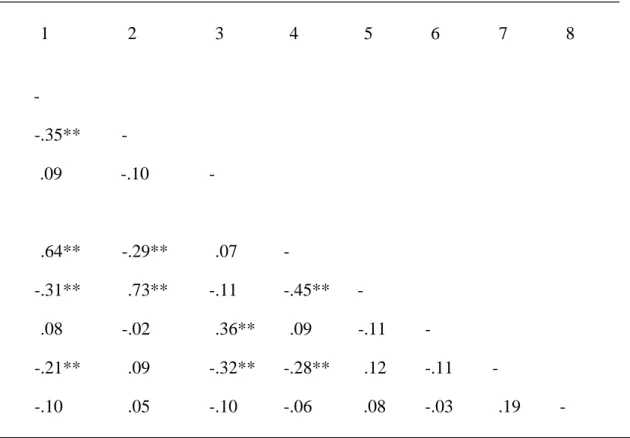
Correlations were conducted to determine the relationships between all primary variables (see Table 2). As expected, results revealed significant relationships between the primary social problem solving variables pre- and post-stress. Pre-stress response content was strongly
abilities are most inconsistent after the stress induction. Response content was related to response generation such that higher scores on response content were associated with a lower number of responses generated. Response content is not associated with self-efficacy at a statistically significant level. The same relationships between these variables are seen pre- and post-stress. This suggests that while these variables all assess aspects of social problem solving, they are measuring distinct constructs.
Age was not associated with any of the primary social problem solving variables. Depressive symptoms, on the other hand, had a negative association with response content and self-efficacy before the stressful speech task, but were not related to response generation. After the stressful task, adolescents’ depressive symptoms were not associated with their self-efficacy.
Social Problem Solving Differences Between Self-Injurious Groups Before the Stress
Induction
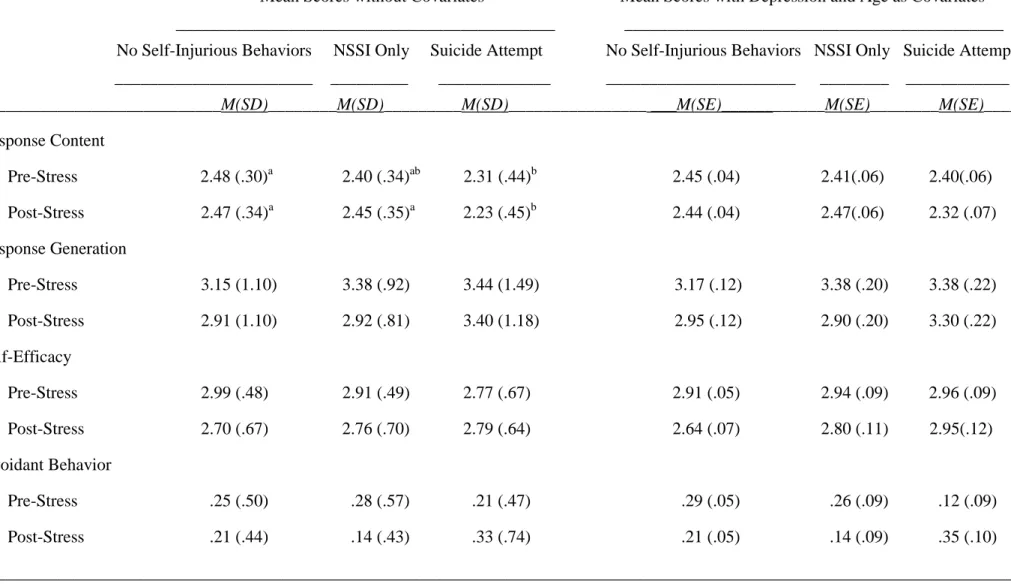
A one-way ANOVA was conducted for each of the primary social problem solving variables to examine the mean differences between no self-injury, NSSI only, and suicide attempt groups before the speech task (see Table 3). Results revealed significant between group differences in response content, F(2,176) = 3.67, p = .02. A post-hoc test revealed that
engage in any self-injury, but their scores were not significantly different from adolescents who have engaged in NSSI but have not attempted suicide. After controlling for adolescents’
depressive symptoms, significant differences on response content scores between groups disappeared, F(2,175) = .46, p = .62. Therefore, after taking into account the relationship between depressive symptoms and response content, participants engaging in self-injurious behaviors did not differ significantly from participants who had never engaged in NSSI or suicide attempts.
There were no significant differences between groups in number of responses generated (F(2,177) = 1.54, p = .22) or perceived self-efficacy (F(2,177) = 2.46, p = .09); however, results reporting the mean differences in self-efficacy revealed a non-significant trend in the predicted direction. Participants who had previously attempted suicide reported that they would be less effective in implementing a positive problem solving strategy than all other participants, but differences in self-efficacy scores did not quite reach significance (p = .07).
Social Problem Solving Differences Between Self-Injurious Groups After the Stress
Induction
In order to test the effect of self-injury group on social problem solving variables after the stressful speech task, one-way ANOVAs were conducted. Mean scores for response content were significantly different between groups after the stressful task, F(2,174) = 6.33, p < .001. A post-hoc test suggested that adolescents who attempted suicide reported significantly lower scores on response content than both adolescents who engaged in NSSI only (p = .03) and adolescents who reported no self-injurious behaviors (p < .01). The content scores of adolescents who had
self-injurious behaviors, p = .96. This suggests, similar to results pre-stress, that adolescents who had attempted suicide performed worse on the social problem solving task than adolescents who had never injured themselves. However, adolescents who had attempted suicide also performed significantly worse than adolescents who had engaged in NSSI. This difference was not found before the stressful induction task. After including depressive symptoms and age as covariates, mean differences among all self-injury groups were not significant, F(2,174) = 1.57, p = .21.
There were no significant mean differences in scores of self-efficacy between self-injury groups, and in contrast to the pre-stress findings, there was not a non-significant trend in the predicted direction, F(2,171) = .30, p = .74. However, for post-stress response generation,
although the mean number of responses were not significantly different among self-injury groups (F(2,171) = 2.69, p = .07), results revealed a trend in the opposite direction than was predicted. Adolescents who had attempted suicide gave more potential responses to the scenario than adolescents who had not engaged in any self-injurious behavior although this finding did not reach significance (p = .07). Another one-way ANOVA was conducted controlling for depressive symptoms and age. With the inclusion of those two covariates, there were no significant
differences or non-significant trends in the number of responses generated between the self-injury groups, F(2,171) = 1.12, p = .33.
Social Problem Solving Differences Between Self-Injurious Groups Over Time
content, results revealed no significant interaction between self-injury group and time, F(2,173) = 2.00 , p = .14. Similarly, time did not seem to differentially affect response generation
F(2,173) = 1.63, p = .20, avoidance behavior, F(2,174) = 1.79, p = .17, or self-efficacy (F(2,173) = 2.48, p = .09) among groups at a statistically significant level. However, a non-significant trend was revealed for self-efficacy suggesting that adolescents who had attempted suicide reported greater increases in self-efficacy scores after the stressful task compared to the NSSI only or no self-injury groups.
After adding depressive symptoms as a covariate, the interaction between time and self-injurious groups remained non-significant for response content (F(2,171) = 1.74, p = .18) and response generation (F(2,171) = 2.02, p = .14) and the trending significance for self-efficacy was attenuated (F(2,171) = 1.25, p = .29). Once adolescents’ depressive symptoms and age were taken into account, there were no significant differences in scores before and after the stressful speech task depending on what kind of self-injurious behaviors, if any, the adolescent endorsed. However, most interestingly, after controlling for age and depressive symptoms, avoidance behavior showed a significant interaction between self-injurious groups over time, F(2,171) = 3.23 p = .04. Adolescents who have attempted suicide showed higher increases in avoidant responses after the stressful task compared to the other groups whose mean scores declined slightly (Table 3).
Discussion
social problem solving between a group of adolescents who had engaged in NSSI only, and adolescents who had attempted suicide. It also was unique in including a “hot” and “cold” condition. The goal was to integrate two separate but similar bodies of research that investigate the relationship of social problem solving skills with either NSSI or suicide attempts in
adolescence, and add to the understanding of proximal risk factors of self-injurious behaviors. A better understanding of the relationship that social problem solving skills play in self-injurious behaviors provides a more informed basis to any potential prevention or treatment.
Findings suggest that adolescents who reported having attempted suicide displayed increases in the number of avoidant strategies they report in response to a stressor as compared to adolescents who reported having engaged in NSSI only or those who reported never having engaged in injurious behaviors. Furthermore, adolescents who had never engaged in self-injury and those who had only engaged in NSSI endorsed less avoidant strategies after the stressful task. Most importantly, this finding persists after controlling for levels of depressive symptoms and age. This outcome suggests that avoidant behavior strategies are attributable to the type of self-injury an adolescent endorses as opposed to how depressed they are. One
interpretation of this finding is that in a stressful interpersonal context, those who have attempted suicide are more likely to employ avoidant problem solving strategies compared to other
theoretical conceptions of suicidal behavior that explain suicide as a mechanism to avoid and escape negative affect. This avoidance of negative affect may be present before the ultimate decision to attempt, and could be prevalent in other cognitive tasks such as social problem solving. Prevention and treatment efforts may focus on encouraging the adolescents to be more proactive in solving social problems despite their increased levels of stress. It is important to consider that there were no significant mean differences among groups in the hot or cold condition. While suicide attempters showed significantly larger increases in choosing avoidant strategies in response to stressful social scenarios after the stress induction, the number of avoidant strategies chosen was statistically no different than non-suicidal self-injurers or controls. Future research should explore avoidant problem solving strategies in adolescent suicide attempters further using a more extensive measure of avoidant problem solving strategies.
Consistent with prior research, more severe social problem solving deficits were seen in adolescents who had attempted suicide compared to adolescents who had never injured
many aspects of social problem solving were explored in this study. However, higher increases in avoidant chosen responses were found in the suicide attempt group even after controlling for depressive symptoms. Avoidant strategies might be an important factor to consider in prevention efforts and treatment options for adolescents displaying risk for suicidal behaviors.
Adolescents who had engaged in NSSI only showed no significant differences in social problem solving skills from adolescents who had no history of self-injury. These results are inconsistent with prior research, and do not support the hypotheses (Nock & Mendes, 2008). Even prior to controlling for age and depression, the means between the psychiatric control group and the NSSI only group are very similar. This implies that in past studies comparing adolescents having engaged in NSSI to community samples or psychiatric controls, the
differences in social problem solving skills might be significant because of the inclusion in their NSSI sample of adolescents that had attempted suicide. When eliminating from the sub-sample of adolescent suicide attempters and isolating only adolescents that reported engaging in NSSI, results reveal remarkable similarity to the control group. This is striking because, consistent with prior research, adolescents who reported engaging in NSSI only reported higher levels of
to the inclusion of adolescents engaging in suicidal behaviors and their extremely elevated depressive symptoms than NSSI behaviors themselves.
While the inclusion of suicide attempters within NSSI samples designed to measure the social problem solving skills between groups explains the inconsistencies within the research studying adolescents engaging in NSSI, the inclusion of NSSI within samples purporting to measure suicidal adolescents might diminish the results, and create inconsistencies in that body of literature. Yet, as this study and the systematic review of the literature seem to suggest, social problem solving deficits between self-injurious groups did not remain after controlling for depression (Speckens & Hawton, 2005). This does not undermine the importance of teaching more effective problem solving skills to severely depressed adolescents in stressful conditions. While social problem solving deficits might not be uniquely related to self-injury, they are found in adolescents displaying severe suicidal behaviors, and need to be addressed in treatment.
in non-suicidal versus suicidal self-injury and despite the substantial sample size, the social problem solving measure used was not designed to focus on avoidant behaviors. Further research is needed to explore passive-avoidant problem solving particularly, and uncover potential
mediators in the relationship between avoidant problem solving strategies and self-injurious behaviors. Another limitation in the measure of the SPST is that practice effects might occur after the stressful induction as participants have already completed four scenarios. Also, the participants might answer some questions, such as the self-efficacy or chosen response questions, based on what they believe the researcher wants to hear. However, measuring the content of responses might circumvent this effect. This study has other limitations due to a lack of statistical power. First, the statistical analyses did not use an adjusted alpha rate. Also, it would be
beneficial in a follow up study with more participants per self-injury group to measure ethnic differences. The study’s design using only females increased the chances of finding adolescents engaging in suicidal behavior, but also limits the generalizability of the results. The design was beneficial for the purposes of this study – a preliminary analysis between self-injury groups was examined. However, future research may also use a longitudinal design to determine whether avoidant problem solving strategies predict subsequent self-injurious behaviors, and include a more diverse and larger sample of adolescents to increase statistical power and the
generalizability of the results.
References
Andrews, T., Martin, G., & Hasking, P. (2012). Differential and common correlates of non-suicidal self-injury and alcohol use among community-based adolescents. Advances in Mental Health, 11(1), 55-66. doi:10.5172/jamh.2012.11.1.55
Andrews, T., Martin, G., Hasking, P., & Page, A. (2013). Predictors of onset for non-suicidal self-injury within a school-based sample of adolescents. Prevention Science,
doi:10.1007/s11121-013-0412-8
Baetens, I., Claes, L., Muehlenkamp, J., Grietens, H., & Onghena, P. (2012). Differences in psychological symptoms and self-competencies in non-suicidal self-injurious Flemish adolescents. Journal of Adolescence, 35(3), 753-759.
doi:10.1016/j.adolescence.2011.11.001
Becker-Weidman, E., Jacobs, R. H., Reinecke, M. A., Silva, S. G., & March, J. S. (2010). Social problem-solving among adolescents treated for depression. Behaviour Research and
Therapy, 48(1), 11-18. doi:10.1016/j.brat.2009.08.006
Brausch, A. M., & Gutierrez, P. M. (2010). Differences in non-suicidal self-injury and suicide attempts in adolescents. Journal of Youth and Adolescence, 39(3), 233-242.
doi:10.1007/s10964-009-9482-0
Crick, N. R., & Dodge, K. A. (1994). A review and reformulation of social
information-processing mechanisms in children's social adjustment. Psychological Bulletin, 115(1), 74-101. doi:10.1037/0033-2909.115.1.74
Daviss, W. B., Birmaher, B., Melhem, N. A., Axelson, D. A., Michaels, S. M., & Brent, D. A. (2006). Criterion validity of the Mood and Feelings Questionnaire for depressive episodes in clinic and non‐clinic subjects. Journal of Child Psychology and Psychiatry, 47(9), 927-934. doi:10.1111/j.1469-7610.2006.01646.x
Dieserud, G., Røysamb, E., Braverman, M. T., Dalgard, O. S., & Ekeberg, Ø. (2003). Predicating repetition of suicide attempt: A prospective study of 50 suicide attempters. Archives of Suicide Research, 7(1), 1-15. doi:10.1080/13811110301571
Dixon, W. A., Heppner, P. P., & Rudd, M. D. (1994). Problem-solving appraisal, hopelessness, and suicide ideation: Evidence for a mediational model. Journal of Counseling
Psychology, 41(1), 91-98. doi:10.1037/0022-0167.41.1.91
Evans, E., Hawton, K., Rodham, K., & Deeks, J. (2005). The prevalence of suicidal phenomena in adolescents: A systematic review of population-based studies. Suicide and
Life-Threatening Behavior,35(3), 239-250. doi:10.1521/suli.2005.35.3.239
Grover, K. E., Green, K. L., Pettit, J. W., Monteith, L. L., Garza, M. J., & Venta, A. (2009). Problem solving moderates the effects of life event stress and chronic stress on suicidal behaviors in adolescence. Journal of Clinical Psychology, 65(12), 1281-1290.
doi:10.1002/jclp.20632.
Hawton, K., Kingsbury, S., Steinhardt, K., James, A., & Fagg, J. (1999). Repetition of deliberate self-harm by adolescents: The role of psychological factors. Journal of Adolescence, 22(3), 369-378. doi:10.1006/jado.1999.0228
Linda, W. P., Marroquín, B., & Miranda, R. (2012). Active and passive problem solving as moderators of the relation between negative life event stress and suicidal ideation among suicide attempters and non-attempters. Archives of Suicide Research, 16(3), 183-197. doi:10.1080/13811118.2012.695233
Linehan, M. M., Camper, P., Chiles, J. A., Strosahl, K., & Shearin, E. (1987). Interpersonal problem solving and parasuicide. Cognitive Therapy and Research, 11(1), 1-12. doi:10.1007/BF01183128
McAuliffe, C., Corcoran, P., Hickey, P., & McLeavey, B. C. (2008). Optional thinking ability among hospital-treated deliberate self-harm patients: A 1-year follow-up study. British Journal of Clinical Psychology, 47(1), 43-58. doi:10.1348/014466507X230958
McAuliffe, C., Keeley, H. S., & Corcoran, P. (2002). Problem solving and repetition of parasuicide. Behavioural and Cognitive Psychotherapy, 30(4), 385-397.
doi:10.1017/S1352465802004010
McLaughlin, J., Miller, P., & Warwick, H. (1996). Deliberate self-harm in adolescents: Hopelessness, depression, problems and problem-solving. Journal of Adolescence, 19(6), 523-532. doi:10.1006/jado.1996.0051
McLeavey, B. C., Daly, R. J., Murray, C. M., O'Riordan, J., & Taylor, M. (1987). Interpersonal problem-solving deficits in self-poisoning patients. Suicide and Life-Threatening
Behavior, 17(1), 33-49.
Milnes, D., Owens, D., & Blenkiron, P. (2002). Problems reported by self-harm patients: Perception, hopelessness and suicidal intent. Journal of Psychosomatic Research, 53(3), 819-822. doi:10.1016/S0022-3999(02)00327-6
Muehlenkamp, J. J., Claes, L., Havertape, L., & Plener, P. L. (2012). International prevalence of adolescent non-suicidal self-injury and deliberate self-harm. Child and Adolescent
Psychiatry and Mental Health, 6 doi:10.1186/1753-2000-6-10
Muehlenkamp, J. J., & Gutierrez, P. M. (2004). An investigation of differences between self-injurious behavior and suicide attempts in a sample of adolescents. Suicide and Life-Threatening Behavior,34(1), 12-23. doi:10.1521/suli.34.1.12.27769
adolescents: Results from the national comorbidity survey replication adolescent supplement. JAMA Psychiatry, 70(3), 300-310. doi:10.1001/2013.jamapsychiatry.55
Nock, M. K., & Mendes, W. B. (2008). Physiological arousal, distress tolerance, and social problem-solving deficits among adolescent self-injurers. Journal of Consulting and Clinical Psychology, 76(1), 28-38. doi:10.1037/0022-006X.76.1.28
Pollock, L. R., & Williams, J. M. G. (2004). Problem-solving in suicide attempters. Psychological Medicine, 34(1), 163-167. doi:10.1017/S0033291703008092
Pollock, L. R., & Williams, J. M. (1998). Problem solving and suicidal behavior. Suicide and Life-Threatening Behavior, 28(4), 375-387.
Roškar, S., Zorko, M., Bucik, V., & Marušic, A. (2007). Problem solving for depressed suicide attempters and depressed individuals without suicide attempt. Psychiatria Danubina, 19(4), 296-302.
Speckens, A. E. M., & Hawton, K. (2005). Social problem solving in adolescents with suicidal behavior: A systematic review. Suicide and Life-Threatening Behavior, 35(4), 365-387. doi:10.1521/suli.2005.35.4.365
Ting, S. A., Sullivan, A. F., Boudreaux, E. D., Miller, I., & Camargo, C. R. (2012). Trends in US emergency department visits for attempted suicide and self-inflicted injury, 1993–2008. General Hospital Psychiatry, 34(5), 557-565. doi:10.1016/j.genhosppsych.2012.03.020
Wilcox, H. C., Arria, A. M., Caldeira, K. M., Vincent, K. B., Pinchevsky, G. M., & O'Grady, K. E. (2012). Longitudinal predictors of past-year non-suicidal self-injury and motives among college students. Psychological Medicine, 42(4), 717-726.
doi:10.1017/S0033291711001814
Table 1. Sample-wide Means (and standard deviations) for Primary Variables
M (SD) Range
___________________________________________________________________________
Social Problem Solving (Pre-Stress)
Response Content 2.43 (.35) (1.60 - 3.00)
Self-Efficacy 2.93 (.55) (1.50 - 4.00)
Response Generation 3.29 (1.21) (1.25 - 7.50)
Avoidant Behavior .25 (.51) (.00 – 2.00)
Social Problem Solving (Post-Stress)
Response Content 2.42 (.38) (1.40 - 3.00)
Self-Efficacy 2.76 (.67) (.00 - 4.00)
Response Generation 3.00 (1.18) (1.00 - 8.00)
Avoidant Behavior .22 (.51) (.00 – 3.00)
Depression .49 (.34) (.00 - 1.93)
Age (Rounded) 14.63 (1.38) (12.00 - 17.00)
Table 2 Bivariate Associations Among Primary Variables
_________________________________________________________________________________________________________
1 2 3 4 5 6 7 8
Social Problem Solving (Pre-Stress)
1. Response Content -
2. Response Generation -.35** -
3. Self-Efficacy .09 -.10 -
Social Problem Solving (Post-Stress)
4. Response Content .64** -.29** .07 -
5. Response Generation -.31** .73** -.11 -.45** -
6. Self-Efficacy .08 -.02 .36** .09 -.11 -
7. Depressive Symptoms -.21** .09 -.32** -.28** .12 -.11 -
8. Age -.10 .05 -.10 -.06 .08 -.03 .19 -
Table 3. Social Problem Solving Means Pre- and Post-Stress Among Different Self-Injurious Groups with and without Depression and Age as Covariates
Mean Scores without Covariates Mean Scores with Depression and Age as Covariates
____________________________________________ ____________________________________________
No Self-Injurious Behaviors NSSI Only Suicide Attempt No Self-Injurious Behaviors NSSI Only Suicide Attempt
_______________________ _________ _____________ ______________________ ________ ____________
____________________________M(SD)________M(SD)_________M(SD)________________ ___M(SE)____________M(SE)________M(SE)____
Response Content
Pre-Stress 2.48 (.30)a 2.40 (.34)ab 2.31 (.44)b 2.45 (.04) 2.41(.06) 2.40(.06)
Post-Stress 2.47 (.34)a 2.45 (.35)a 2.23 (.45)b 2.44 (.04) 2.47(.06) 2.32 (.07)
Response Generation
Pre-Stress 3.15 (1.10) 3.38 (.92) 3.44 (1.49) 3.17 (.12) 3.38 (.20) 3.38 (.22)
Post-Stress 2.91 (1.10) 2.92 (.81) 3.40 (1.18) 2.95 (.12) 2.90 (.20) 3.30 (.22)
Self-Efficacy
Pre-Stress 2.99 (.48) 2.91 (.49) 2.77 (.67) 2.91 (.05) 2.94 (.09) 2.96 (.09)
Post-Stress 2.70 (.67) 2.76 (.70) 2.79 (.64) 2.64 (.07) 2.80 (.11) 2.95(.12)
Avoidant Behavior
Pre-Stress .25 (.50) .28 (.57) .21 (.47) .29 (.05) .26 (.09) .12 (.09)
Post-Stress .21 (.44) .14 (.43) .33 (.74) .21 (.05) .14 (.09) .35 (.10)
________________________________________________________________________________________________________________________