THOMAS CLEMMER HOLLOWAY. Determination of the Mutagenicity of
Nitrocarbazole and 2-Hydroxynitrocarbazole Compounds Postulated to Occur
in Ambient Air. (Under the direction of Dr. L. M. Ball.)ABSTRACT
Nitro derivatives of the heterocyclic compounds carbazole and
2-hydroxycarbazole were synthesized and tested in the Ames
plate-incorporation assay in order to evaluate the contribution of these
compounds to the mutagenicity of hazardous pollutants in ambient air and
cigarette smoke. The results obtained in Salmonella typhimurium strain
TA 98 found 3,6-dinitrocarbazole to be the most mutagenic derivative,
followed by 2-hydroxy-l,3,6-trinitrocarbazole and
2-hydroxy-3-nitro-carbazole. 2-hydroxy-l,3-dinitrocarbazole was moderately active, and
1-nitrocarbazole weakly active, with 1,6-di1-nitrocarbazole and
3-nitro-carbazole ranging from weakly to moderately active. Carbazole,
2-hydroxycarbazole and 2-hydroxy-l-nitrocarbazole were completely
non-mutagenic. These varying activities appear to derive from the different
structures of the compounds, mainly the orientation of the nitro group,
the presence of the hydroxy group, and the extent of nitro-substitution,
as well as from the degree of nitroreduction by the "classical"
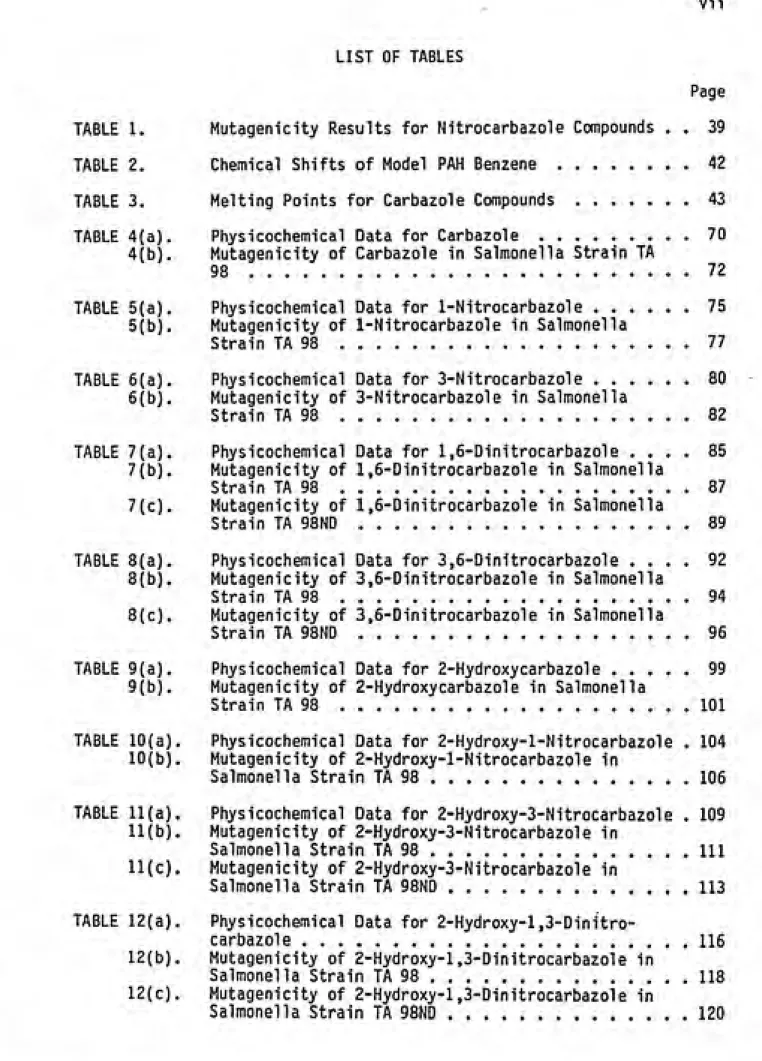
TABLE OF CONTENTS
Page
I. INTRODUCTION ... 1
II. BACKGROUND... 3
2.1. Nitro-PAH in the Environment... 3
2.1(a). Occurrence in the Atmosphere ... 3
2.1(b). Formation in the Atmosphere ... 4
2.1(c). Direct-Acting Mutagenicity of Extracts .... 6
2.1(d). Deposition in the Respiratory Tract ... 7
2.2. Structure-Activity Relationships ... 8
2.3. Genotoxic Activity ... 15
2.3(a). Salmonella Mutagenicity ... 15
2.3(b). Mammalian Cell Genotoxicity ... 18
2.4. Carcinogenic Activity ... 19
2.5. Metabolism and DNA Adduct Formation... 20
2.6. Analytical Techniques ... 24
2.6(a). Nitration ... 24
2.6(b). Adsorption Chromatography ... 28
2.6(c). Electron Impact Mass Spectrometry ... 29
2.6(d). Proton Nuclear Magnetic Resonance ... 30
2.6(e). Melting Point Determination ... 32
2.6(f). Mutagenicity Assay ... 32
III. EXPERIMENTAL... 45
3.1. Materials... 45
3.2. Methods... 47
3.2(a). Synthesis ... 47
3.2(b). Purification ... 48
3.2(c). Identification ... . 49
3.2(d). Mutagenicity Assay ... 49
IV. RESULTS... 52
4.1. Carbazole... 52
4.1(a). Physicochemical Results ... 52
4.1(b). Mutagenicity ... 53
4.2. l-Nitrocarbazo1e ... 54
4.2(a). Physicochemical Results ... 54
4.2(b). Mutagenicity ... 54
4.3. 3-Nitrocarbazole ... 55
4.3(a). Physicochemical Results ... 55
#
Page
4.4. 1,6-Dinitrocarbazole ... 56
4.4(a). Physicochemical Results ... 56
4.4(b). Mutagenicity ... 57
4.5. 3,6-Dinitrocarbazole ... 58
4.5(a). Physicochemical Results ... 58
4.5(b). Mutagenicity ... 58
4.6. 2-Hydroxycarbazole ... 59
4.6(a). Physicochemical Results ... 59
4.6(b). Mutagenicity ... 59
4.7. 2-Hydroxy-l-Nitrocarbazole ... 60
4.7(a). Physicochemical Results ... 60
4.7(b). Mutagenicity ... 60
4.8. 2-Hydroxy-3-Nitrocarbazole ... 61
4.8(a). Physicochemical Results ... 61
4.8(b). Mutagenicity ... 61
4.9. 2-Hydroxy-l,3-Dinitrocarbazole ... 62
4.9(a). Physicochemical Results ... 62
4.9(b). Mutagenicity ... 63
4.10. 2-Hydroxy-l,3,6-Trinitrocarbazole ... 63
4.10(a). Physicochemical Results ... 63
4.10(b). Mutagenicity ... 65
4.11. Summary of Results...65
V. DISCUSSION...129
5.1. Discussion of Results... 129
5.2. Conclusions... 133
5.3. Recommendations... 134
VI. BIBLIOGRAPHY... 136
•
FIGURE 1. FIGURE 2. FIGURE 3. FIGURE 4{a 4(b 4(c FIGURE 5(a 5(b 5(c FIGURE 6(a 6(b 6(c FIGURE 7(a 7(b 7(c 7(d FIGURE 8(a 8(b 8(c 8(d FIGURE 9(a 9(b 9(c FIGURE 10(a). 10(b). 10(c). FIGURE 11(a). 11(b). 11(c). PageActivating and Deactivating Fragments of Nitro-PAH
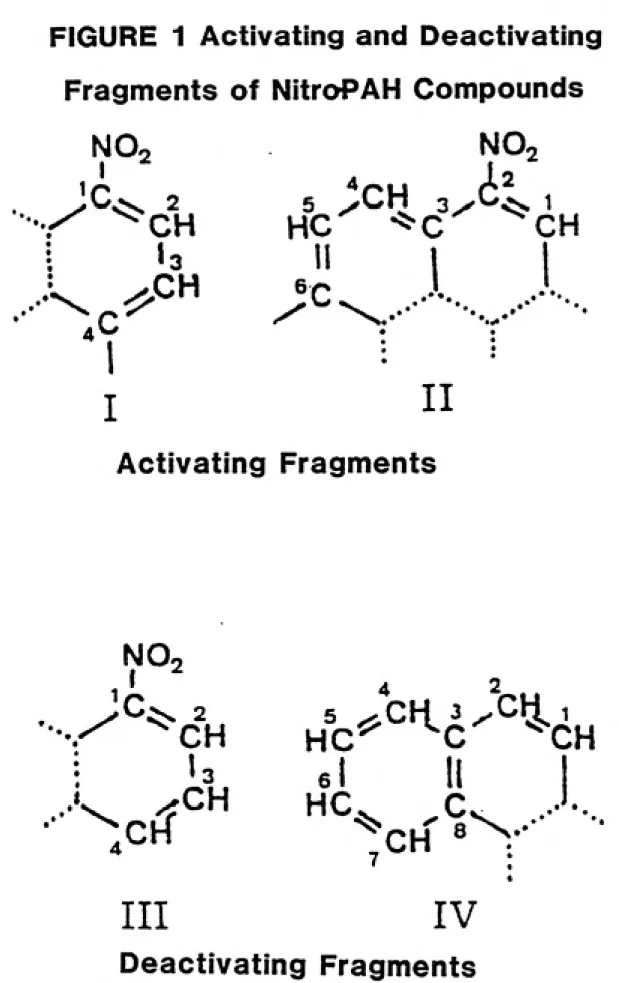
Compounds... 37
Mechanism of Carbazole Nitration ... 40Fragmentation Pattern of Nitrocarbazole Compounds . . 41
Mass Spectrum of Carbazole... 68
NMR Spectrum of Carbazole... 69
Mutagenicity of Carbazole in Salmonella Strain TA
98... 71
Mass Spectrum of 1-Nitrocarbazole ... 73
NMR Spectrum of 1-Nitrocarbazole ... 74
Mutagenicity of 1-Nitrocarbazole in Salmonella Strain
TA 98... 76Mass Spectrum of 3-Nitrocarbazole... 78
NMR Spectrum of 3-Nitrocarbazole ... 79
Mutagenicity of 3-Nitrocarbazole in Salmonella Strain
TA 98... 81
Mass Spectrum of 1,6-Dinitrocarbazole ... 83
NMR Spectrum of 1,6-Dinitrocarbazole ... 84
Mutagenicity of 1,6-Dinitrocarbazole in SalmonellaStrain TA 98... 86
Mutagenicity of 1,6-Dinitrocarbazole in Salmonella
Strain TA 98ND... 88
Mass Spectrum of 3,6-Dinitrocarbazole ... 90 NMR Spectrum of 3,6-Dinitrocarbazole ... 91 Mutagenicity of 3,6-Dinitrocarbazole in Salmonella
Strain TA 98... 93
Mutagenicity of 3,6-Dinitrocarbazole in Salmonella
Strain TA 98ND... 95
Mass Spectrum of 2-Hydroxycarbazole ... 97
NMR Spectrum of 2-Hydroxycarbazole ... 98
Mutagenicity of 2-Hydroxycarbazole in SalmonellaStrain TA 98... 100
Mass Spectrum of 2-Hydroxy-l-Nitrocarbazole ... 102
NMR Spectrum of 2-Hydroxy-l-Nitrocarbazole ... 103
Mutagenicity of 2-Hydroxy-l-Nitrocarbazole inSalmonella Strain TA 98... 105
Mass Spectrum of 2-Hydroxy-3-Nitrocarbazole ... 107
NMR Spectrum of 2-Hydroxy-3-Nitrocarbazole ... 108
Mutagenicity of 2-Hydroxy-3-Nitrocarbazole in
Page
11(d). Mutagenicity of 2-Hydroxy-3-Nitrocarbazo1e in
Salmonella Strain TA 98ND... 112
FIGURE 12(a). Mass Spectrum of 2-Hydroxy-l,3-Dinitrocarbazole . . . 114
12(b). NMR Spectrum of 2-Hydroxy-l,3-Dinitrocarbazole . . . 115
12(c). Mutagenicity of 2-Hydroxy-l,3-Dinitrocarbazole in
Salmonella Strain TA 98... 117
12(d). Mutagenicity of 2-Hydroxy-l,3-Dinitrocarbazole in
Salmonella Strain TA 98ND... 119
FIGURE 13(a). Mass Spectrum of 2-Hydroxy-l,3,6-Trinitrocarbazole . 121
13(b). NMR Spectrum of 2-Hydroxy-l,3,6-Trinitrocarbazole . . 122
13(c). Mutagenicity of 2-Hydroxy-l,3,6-Trinitrocarbazole in
Salmonella Strain TA 98... 124
13(d). Mutagenicity of 2-Hydroxy-l,3,6-Trinitrocarbazole in
TABLE 1. TABLE 2. TABLE 3. TABLE 4{a 4{b TABLE 5(a 5(b TABLE 6(a 6(b TABLE 7(a 7(b 7(c TABLE 8(a 8{b 8(c TABLE 9(a 9(b TABLE 10(a). 10(b). TABLE 11(a). 11(b). 11(c), TABLE 12(a). 12(b). 12(c).
LIST OF TABLES
Page
Mutagenicity Results for Nitrocarbazole Compounds . . 39
Chemical Shifts of Model PAH Benzene ... 42Melting Points for Carbazole Compounds ... 43
Physicochemical Data for Carbazole ... 70
Mutagenicity of Carbazole in Salmonella Strain TA
98...72
Physicochemical Data for 1-Nitrocarbazole ... 75
Mutagenicity of 1-Nitrocarbazole in SalmonellaStrain TA 98...77
Physicochemical Data for 3-Nitrocarbazole ... 80
Mutagenicity of 3-Nitrocarbazole in SalmonellaStrain TA 98...82
Physicochemical Data for 1,6-Dinitrocarbazole .... 85
Mutagenicity of 1,6-Dinitrocarbazole in SalmonellaStrain TA 98...87
Mutagenicity of 1,6-Dinitrocarbazole in Salmonella
Strain TA 98ND...89
Physicochemical Data for 3,6-Dinitrocarbazole .... 92 Mutagenicity of 3,6-Dinitrocarbazole in Salmonella
Strain TA 98...94
Mutagenicity of 3,6-Dinitrocarbazole in Salmonella
Strain TA 98ND...96
Physicochemical Data for 2-Hydroxycarbazole ... 99
Mutagenicity of 2-Hydroxycarbazole in Salmonella
Strain TA 98...101
Physicochemical Data for 2-Hydroxy-l-Nitrocarbazole . 104
Mutagenicity of 2-Hydroxy-l-Nitrocarbazole in
Salmonella Strain TA 98...106
Physicochemical Data for 2-Hydroxy-3-Nitrocarbazole . 109
Mutagenicity of 2-Hydroxy-3-Nitrocarbazole inSalmonella Strain TA 98...Ill
Mutagenicity of 2-Hydroxy-3-Nitrocarbazole in
Salmonella Strain TA 98ND...113
Physicochemical Data for
2-Hydroxy-l,3-Dinitro-carbazole...116 Mutagenicity of 2-Hydroxy-l,3-Dinitrocarbazole in
Salmonella Strain TA 98...118
Mutagenicity of 2-Hydroxy-l,3-Dinitrocarbazole in
TABLE 13(a)
13(b) 13(c)
TABLE 14.
Page
Physicochemical Data for
2-Hydroxy-l,3,6-Trin1tro-carbazole...123
Mutagenicity of 2-Hydroxy-l,3,6-Trinitrocarbazole in
Salmonella Strain TA 98...125
Mutagenicity of 2-Hydroxy-l,3,6-Trinitrocarbazole in
Salmonella Strain TA 98ND...127
#
Concern over the presence of polycyclic aromatic hydrocarbons, or
PAH, in the environment, from industrial and auto emissions and the
danger they pose to public health has heightened in recent years. Of
particular concern are the nitro-PAH, which have been detected and
identified in extracts from ambient air pollution (Talcott and Harger,
1981; Pitts et al., 1983; Nielsen et al., 1984) and diesel exhaust
(Schuetzle et al., 1982; Xu et al., 1982) and found to contribute
significantly to the non-S9 or direct-acting mutagenicity of those
extracts (Wang et al., 1980; Talcott and Harger, 1981; Pitts et al.,
1982b).
As a result, studies have been undertaken to understand the
mechanism of formation of nitro-PAH in the environment during combustion
(Pitts et al., 1982a) or atmospheric (Pitts et al., 1985) processes and
their mutagenic (McCoy et al., 1981; Mermelstein et al., 1981) and
carcinogenic (Hirose et al., 1984; Moller et al., 1989) potential.
While the nitro- and dinitropyrenes have been recognized as
significant contributors to this direct-acting mutagenicity (Salmeen et
al., 1984), the rest of the mutagenicity in these extracts may be spread
among other nitro-PAH compounds, such as nitrocarbazoles, which have
been detected in the environment (Bayona et al., 1988) and found to be
mutagenic (Lavoie et al., 1981).
•
•
ambient air and cigarette smoke and to the potential health risk arising
from exposure.
This objective was approached through the following tasks:
(1) Nitration of the carbazole and 2-hydroxycarbazole compounds using
dinitrogen tetraoxide and nitric acid.
(2) Purification of the resulting nitrated compounds or isomers using
silica gel column chromatography.
(3) Identification of the individual isomers using electron impact mass spectrometry, proton nuclear magnetic resonance, and melting
point determination.
(4) Characterization of their bacterial mutagenicity, with and without
S9 metabolic activation, using the Ames Salmonella typhimurium
•
2.1. Nitro-PAH in the Environment
2.1(a). Occurrence in the Atmosphere
While much of the attention in past years has focused on the PAH as the primary genotoxic agents in ambient air pollution, research in recent years has suggested that nitro-PAH also play an important role.
The presence of nitro-PAH in ambient air particulate matter has been well established (Talcott and Harger, 1981; Pitts et al., 1982b; Nielsen et al., 1983a, 1984). Nitro-PAH have been detected in a number
of sources of air pollution--diesel and gasoline engine exhaust
particulate matter, cigarette smoke condensates, fly ash particles, and emissions from incinerators, residential home heaters and wood-burning
stoves (Rosenkranz and Mermelstein, 1983).
Diesel emissions have become a particular source of concern
because economical diesel-powered vehicles produce significantly more
particulate emissions than gasoline-powered vehicles of comparable
performance. Furthermore, diesel exhaust particles are submicron in size and can deposit in the deepest regions of the respiratory system (Chan, et al., 1981). Many nitro-PAH have been identified in diesel particulate extracts (Pitts et al., 1982a; Schuetzle et al., 1982; Xu et al., 1982; Paputa-Peck et al., 1983; Campbell and Lee, 1984), including
nitrocarbazoles (Wolfbeis et al., 1983; Bayona et al., 1988).
Carbazole, the parent compound of the nitrocarbazoles, has itself
Bender et al., 1964b; Lane et al., 1973; Thomas et al., 1978; Moriske
and Ruden, 1988), diesel fuel (Williams et al., 1986), petroleum (Helm
et al., 1960), tobacco smoke (Hoffman et al., 1968; Hoffman and Wynder,
1971; Lee et al., 1976; Dong et al., 1978; Snook et al., 1978),
combustion products of domestic fuel oil (Leary et al., 1983), tarring
fumes (Sawicki et al., 1962; Bender et al., 1964; Hittle and Slukel,
1976), coke oven emissions (Buonicore, 1979), and waste gas from
aluminum manufacturing (Hung and Bernier, 1983). Carbazole is
especially prevalent, however, in coal tar and coal liquids (Later et
al., 1982; Amateis and Taylor, 1983; Wood et al., 1984; Wright et al.,
1984), which when combusted could release carbazole and any of its
derivatives into the atmosphere as particulate matter.
2-hydroxycarbazole, a possible minor metabolite of carbazole and
possible air pollutant, has also been detected in coal liquids (Bender
et al., 1964a; Nishioka et al., 1985; Allen et al., 1987).
Hydroxy-nitrocarbazoles have yet to be detected, but other hydroxynitro-PAH have
been observed in ambient air (Nishioka et al., 1988) and diesel
particulate matter (Schuetzle, 1983).
2.1(b). Formation in the Atmosphere
Nitro-PAH are readily formed when products of incomplete
combustion or PAH, oxides of nitrogen, and traces of acid are present
simultaneously (Rosenkranz and Mermelstein, 1983). This can occur
during emissions from combustion sources (Pitts et al., 1982a; Schuetzle
et al., 1982), during sample collection (Pitts et al., 1978), or during
transport through the atmosphere by the reaction of PAH adsorbed to
particulate matter with the gaseous pollutants NO2 and HNO3 (Nielsen et
Nitration during transport was tested with the PAH benzo(a)pyrene
and perylene in simulated atmospheres containing 1 ppm NO2 and traces of
HNO3. Directly mutagenic nitro derivatives were formed from both
compounds (Pitts et al., 1978). Carbazole has also been shown to be
susceptible to nitration by NO2, forming two unidentified, directly
mutagenic mononitro isomers, molecular weight 212 (Tokiwa et al., 1981).
Gaseous pollutants such as NO2 and HNO3 are expected to react as
electrophiles with the carbon atoms of highest electron density on the
PAH compound (van Cauwenberghe and van Vaeck, 1983). In the case of
carbazole, the high electron density of the pyrrole ring predisposes it
to nitration, with the resulting 9-nitro compound undergoing
rearrangement to the 1- and 3-nitro isomers (Kyziol and Daszkiewicz,
1984). These isomers were most likely the ones formed by Tokiwa et al.
after exposure of carbazole to NO2.
Oxidized and nitrated compounds, such as the
hydroxynitro-carbazoles, could also be expected to occur in ambient air as a result
of such gas phase reactions, with ozone and peroxyacetylnitrate, or PAN,
as possible photooxidants (Pitts, 1983).
Once the nitro-PAH and hydroxynitro-PAH have been formed, it is
possible that they may photodegrade. Such a reaction has been observed
on soot and airborne particulate matter for some nitro-PAH, such as
6-nitrobenzo(a)pyrene. The photodegradation involves rearrangement of the
nitro-PAH to the corresponding aryl nitrite and subsequent dissociation
into NO and a phenoxy-type radical. Ultimately, a quinone is formed
It has been demonstrated in a number of studies that nitro-PAH are
responsible for a significant portion of the dii^ect mutagenicity in
particulate organic matter extracts (Wang et al., 1980; Talcott and
Harger, 1981; Pitts et al., 1982b). The PAH themselves require
metabolic activation in the Ames mutagenicity assay by the addition of
liver microsomes to produce mutagenicity (Pitts et al., 1982b; Pitts,
1983; van Cauwenberghe and van Vaeck, 1983). The PAH have been found in
the nonpolar fraction of diesel exhaust extract, which contains less
than 5% of the direct-acting mutagenicity. Most of the direct-acting
mutagenic activity was found in chemical fractions containing compounds
of moderate polarity, such as 1-nitropyrene, the major nitro-PAH in
diesel particulate matter (Schuetzle et al., 1982). Sal-neen et al.
(1984) found that 30-40% of the total direct-acting mutagenicity of the
extracts could be attributed to those fractions containing compounds
with retention times similar to those of 1-nitropyrene, 1,3-, 1,6-, and
1,8-dinitropyrene, and 3- and 8-nitrofluoranthene. However, Gibson
(1983) found that only 8-12% of the direct-acting mutagenicity could be
attributed to nitro- and dinitropyrenes.
That nitro-PAH could be significant in the direct-acting
mutagenicity has been indirectly proven by the decrease in mutagenicity
of the moderately polar diesel extracts containing nitro-PAH in
Salmonella typhimurium strains TA 98ND and TA 98/l,8-DNp5. The TA 98ND
strain lacks an enzyme necessary for activating most nitro-PAH, like
1-nitropyrene, to an active form that can interact with the ONA. TA
98/DNPg lacks another enzyme necessary for activating
mutagenicity of extracts from city air disappeared when the extracts
were treated with a reducing agent. Since the aromatic amines derived
from nitroaromatics by reduction reactions are usually nonmutagenic
without microsomal activation, it could be reasoned that the nitro-PAH
were the agents responsible for the direct-acting mutagenicity.
Furthermore, the organic matter extracted from city air was
preferentially mutagenic to Salmonella typhimurium frameshift tester
strain TA 98, as are many nitroaromatic compounds (Talcott and Harger,
1981).
2.1(d). Deposition in the Respiratory Tract
Direct-acting frameshift mutagens, detectable by TA 98, have been
detected in city air on pollutant particles small enough (less than 2
microns) to penetrate into the parenchyma of human lungs (Talcott and
Harger, 1980). Diesel particles are also readily deposited in the
deepest regions of the respiratory system (Chan et al., 1981).
Particles in the. bronchial airways can be removed by mucociliary
action to the oral cavity and then deposited in the gastrointestinal
tract (Chan et al., 1981), where nitroreduction to activated species
could be performed by gut flora (Ball et al., 1984b). Particles
deposited in the alveolar region are effectively removed by the
phagocytic action of pulmonary alveolar macrophages to the ciliated
airways or to the lymphatic system (Chan et al., 1981). It has been
demonstrated in vitro that mutagens such as 1-nitropyrene can be
released from diesel particles in the presence of lung macrophages, and
Vance and Levin (1984) defined four structural determinants of
mutagenic activity for nitro-PAH:(1) Degree of aromaticity of the PAH.
(2) Resonance stabilization of the reactive electrophile, i.e., the
nitrenium ion.
(3) Orientation of the nitro group.
(4) Conformation of the nitro group with respect to the plane of the
aromatic rings.
The number and arrangement of aromatic rings in nitro-PAH has been
found to affect the frameshift mutagenicity of the DNA adduct formed
from nitro-PAH, possibly by influencing the adduct's position relative
to the DNA helix. By observing the change in mutagenic activity with
the progressive addition of five- and six-membered rings to a nitro¬benzene ring, Vance and Levin demonstrated that mutagenic activity was a
direct function of size. The results suggested an optimal length ofthree aromatic rings, as seen in 3-nitrofluoranthene, for mutagenic
potency (Vance and Levin, 1984).Increasing the width of the aromatic nucleus to that of two
aromatic rings, as seen also in 3-nitrofluoranthene, has similarly been found to increase mutagenic activity. The additional ring may help to
stabilize insertion of the aromatic nuclei by increasing the
base-stacking forces (Vance and Levin, 1984).However, any addition of rings beyond this number, as seen in
3-nitrobenzo(k)fluoranthene, may prevent the adduct from being inserted
into the DNA due to the extensive strand separation necessary toits benzo derivative (Vance and Levin, 1984).
Further corroboration of the Vance and Levin results is provided
by Rosenkranz and Mermelstein (1983). They found that activity
increases from the bicyclic to the tetracyclic ring system, with
tetracyclic nitro-PAH the most mutagenic mononitro-PAH reported.
Pentacyclic nitro-PAH show an abrupt decrease in direct-acting
mutagenicity from tetracyclic nitro-PAH (Rosenkranz and Mermelstein,
1983), as Vance and Levin found for 3-nitrobenzo(k)fluoranthene.
The same trend has been discovered in N-heterocyclics as well.
Most of the N-heterocyclic compounds with one to four rings produce no
mutagenicity, report Ho et al. (1981), while five-ring compounds have
been found to produce significant activities.Based on these findings, carbazole and its nitro derivatives would
not be expected to be as mutagenic as their benzo and dibenzo
derivatives.
The differences in mutagenic activity observed for nitro-PAH with
homologous structures can be explained by differences in the second
structural determinant of mutagenic activity outlined by Vance and
Levin, which is resonance stabilization. Protonation of thehydroxylamine metabolite of a nitro-PAH compound can result in
dehydration, with formation of an unstable nitrenium ion. Resonance of
the positive charge from the nitrenium ion around the aromatic ring
produces carbonium ions at the ortho and para positions. Factors that
contribute to the stabilization of this aromatic carbonium ion wouldtend to increase the lifetime of the charged electrophile, thereby
frameshift mutation. As a result, the mutagenic potency of the compound could be increased. An example of this is the greater mutagenic potency of 6-nitroindene over 5-nitroindene due to its ability to further
resonate the positive charge from the benzene ring into the
five-membered ring, resulting in a phenylene-1ike structure (Vance and Levin,
1984).
The presence of electron-donating groups, such as hydroxy groups,
on ring carbons involved in resonance stabilization may effectively
prevent resonance stabilization or reaction of the carbonium ion with a
nucleophile such as DNA (Vance and Levin, 1984). The hydroxy group can contribute a free pair of electrons to resonance stabilize the positive charge and can then readily lose a hydrogen nucleus to restoreelectrical neutrality. As a result, the mutagenic potency of nitro-PAH
possessing this group is reduced (Vance et al., 1985, 1987). Ball et al. (1984a), for example, observed a marked decrease in the direct-acting mutagenicity of 6-hydroxy-l-nitropyrene from that of1-nitro-pyrene in Salmonella strain TA 98. 6-Hydroxy-l-nitro1-nitro-pyrene required S9
metabolic activation to demonstrate its mutagenic activity in TA 98.
Electron-withdrawing groups, such as nitro groups, on the other hand, can increase the mutagenic potency of nitro-PAH, but not because
of resonance stabilization effects. The unmetabolized nitro group
exerts a strong electron-withdrawing effect on the aromatic structure,facilitating the initial reductions of another nitro group on the
compound and increasing the stability of the hydroxylamine metabolicintermediate, both of which may increase the potential for genetic
#
Further confirmation of this is found in the increase in
mutagenicity which accompanies an increase in the nitro-substitution of a PAH compound. Dinitro-PAH, such as 1,8-dinitropyrene and 2,7-di-nitrofluorene, have been observed to be much more mutagenic than their mononitro analogs. Maximal activity has been observed with the
trinitro-substituted compounds, with mutagenic activity falling off with the addition of a fourth nitro group (McCoy et al., 1981; Mermelstein et al., 1981; Rosenkranz and Mermelstein, 1983). According to Vance et al.
(1985, 1987), the reduction in activity may be due to an enzymatic inability to reduce the tetranitro-PAH to its active metabolic
intermediate, the very thing that addition of a second nitro group had
facilitated. Another possibility besides steric hindrance in enzymatic
nitroreduction is steric hindrance in DNA adduct formation due to the
excessive number of nitro groups (Rosenkranz and Mermelstein, 1983).
Additional evidence has been found in mammalian cells. While the addition of a single nitro group caused little change in sister
chromatid exchanges in Chinese hamster ovary (CHO) cells, the number of mutations produced in the CHO/HGPRT assay did increase with an
iacreasing number of nitro groups (Kitchin et al., 1988).
Based on these results, it would be expected that multinitro
derivatives of carbazole would be more mutagenic than mononitro
derivatives, and that the presence of a hydroxy group at the C2 position may reduce the mutagenic potency relative to the nonhydroxylated
nitrocarbazole compounds.
The relative mutagenicities of positional isomers of nitro-PAH may
reflect differences based on the third structural determinant of Vance
or short axis of the molecule. Nitro-PAH with a nitro group oriented
along the long axis were discovered to be more potent mutagens than those with the nitro group oriented along the short axis (Vance and
Levin, 1984).
A good example of this is the dramatic positional effects of the nitro group in the carbazole series. The 2-nitro isomer, which has the nitro group positioned along the long axis, was relatively potent, whereas the 1-nitro isomer, which has the nitro group positioned along the short axis, was completely inactive, according to mutagenicity data from Lavoie et al. (1981). These positional effects are even more
dramatic when dinitro-PAH are examined (Rosenkranz and Mermelstein, 1983).
The differences in mutagenic activity between these positional
isomers may be due to the orientation of the presumptive guanine C8 adduct in the major groove of the DNA helix. Adducts oriented end-on
and perpendicular to the central axis of the helix will facilitate intercalation, whereas adducts which lie broadside will not. The
orientation of the nitro group along the long axis allows the end-on, perpendicular orientation, whereas orientation along the short axis
allows the broadside orientation (Vance and Levin, 1984).
Conformation of the nitro group with respect to the aromatic plane is related to its position on the PAH compound and, therefore, is also important in the determination of mutagenic activity of nitro-PAH. Nitro-PAH with nitro groups sterically forced out of the plane of the
active site of nitroreductase enzymes due to steric interactions. As a
result, they fail to form stable N-hydroxylamine metabolic intermediates
(Fu et al., 1985).
Coplanarity of the nitro groups can be detected by the
characteristic deshielding effect of such groups on neighboring protons in their NMR spectra. (Vance and Levin, 1984; Fu et al., 1985). Nitro
groups forced out of the plane, however, will create a slight upfield shift of neighboring protons (Fu et al., 1985). Since no
carbon-substituted nitro groups in the nitrocarbazole series are located between two peri protons, no such upfield shift should be expected.
Another possible determinant of mutagenicity may be the presence of a nitrogen in the aromatic ring. In general, however, the mutagenic potential of basic type N-heterocyclic compounds, which include the weak
base carbazole, are similar to their aromatic hydrocarbon analogs,
according to Ho, et al. (1981). The presence of a nitrogen may increase the mutagenicity slightly. For example, 3,4- and 5,6-benzoquinoline were found to be more mutagenic than their analog phenanthrene in a mutant fraction of Salmonella typhimurium resistant to 8-azaguanine
(Kaden et al., 1979). However, this effect is not as important as the
number of fused rings, for example, in the determination of mutagenic
activity (Ho et al., 1981).
Klopman and Rosenkranz (1984) reported another method for
determining the relationship between the structure and mutagenic
activity of nitro-PAH by the use of a newly developed
"Computer-Automated Structure Evolution" program, or CASE, using a database of
deactivating fragments in nitro-PAH. To be mutagenic, the nitro-PAH must contain an activating subunit, while nonmutagenic molecules contain
either no activating subunit or both an activating and a deactivating
subunit. The activities of forty-seven of fifty-three nitro-PAH compounds, or 88.7%, were correctly predicted by this procedure. The activating and deactivating fragments described by Klopman and
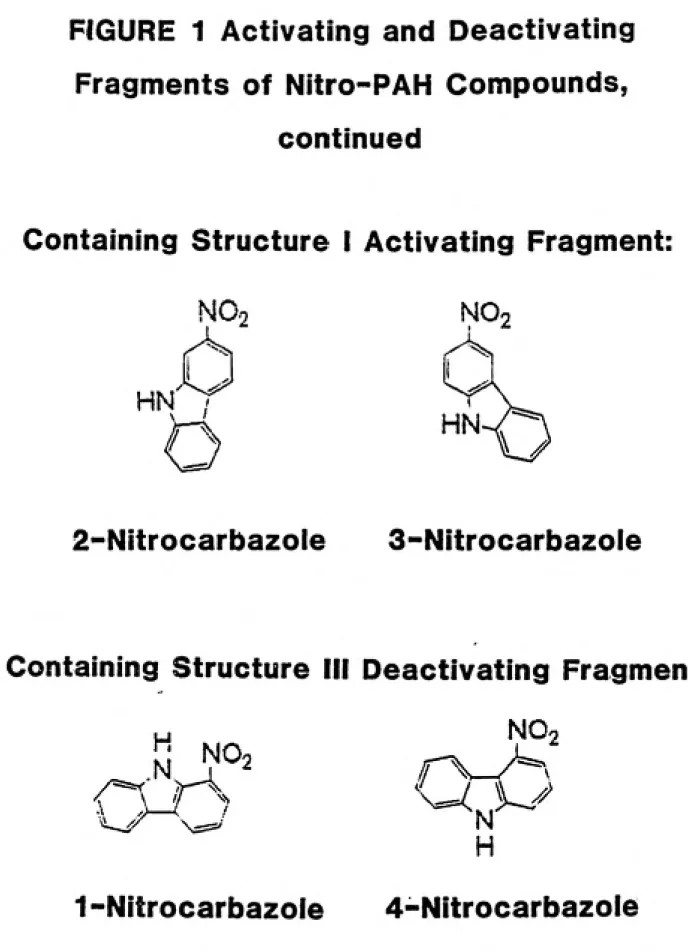
Rosenkranz and their relation to the nitrocarbazoles are shown in Figure
1 on pages 37 and 38.
Substitution at the carbon atom para to the nitro group in
Structure I of Figure 1 is required for mutagenic activity, while the presence of a hydrogen atom at that position in Structure III prevents
activity (Klopman and Rosenkranz, 1984).
This approach is supported by the mutagenicity results of the nitrocarbazoles. Of all the nitrocarbazoles, only 2- and 3-nitro-carbazole were found to contain an activating fragment (Klopman and
Rosenkranz, 1984), and only those isomers possessed any substantial
amount of mutagenicity (Lavoie et al., 1981).
Klopman and Rosenkranz suggested that substitution para to the
nitro group may be necessary for activation of the compound by the nitro group, for substrate recognition by activating nitroreductase enzymes,
or for DNA adduct formation.
The findings of Vance and Levin may support the last explanation. Since the substitution on the carbon occurs para to the nitro group,
this suggests that the nitro group may be oriented along the long axis,
thereby allowing the adduct to be better oriented with regard to the DNATherefore, it should be expected from these structure-activity
relationships that 2- and 3-nitro-carbazole will be the most mutagenic
of the mononitro isomers, with any di- or trinitro isomers being even more mutagenic. If the hydroxy group in any of the 2-hydroxynitro-carbazoles interferes in the resonance stabilization of the resultant
nitrenium ions, those compounds will have reduced mutagenic activity.
2.3. Genotoxic Activity
2.3(a). Salmonella Mutagenicity
Nitro-PAH are believed to contribute significantly to the
direct-acting mutagenicity of air pollution. l-Nitropyrene has been found to be
responsible for a substantial portion of that mutagenicity (Pederson and Siak, 1981a; Schuetzle et al., 1981; Salmeen et al., 1984). Another
major nitro-PAH in air pollution is 2-nitrofluorene, the aromatic
hydrocarbon analog of 2-nitrocarbazole. Its mutagenic potency ranges
from 2.8 to 88 revertants per nanomole without S9 metabolic activation (Rosenkranz and Mermelstein, 1983). The mutagenic potency of nitrated pyrenes (Mermelstein et al., 1981) and nitrated fluorenes (McCoy et al.,
1981) has been found to increase with successive addition of nitro
groups up to the third substitution. Activity then decreases, in accordance with the structure-activity relationships discussed above.
Carbazole, the parent compound of the nitrocarbazoles, has shown no mutagenic activity of its own in a number of Ames Salmonella
mutagenicity studies (Anderson and Styles, 1978; Kaden et al., 1979; Ho
et al., 1981; Tokiwa et al., 1981; Lavoie et al., 1982; Bechtold et al.,
1985) using frameshift tester strains TA 98 and TA 1538 and base-pair
tester strains TA 100 and TA 1535, with and without S9 metabolic
Of the four possible mononitro isomers of carbazole, 2- and
3-nitrocarbazole were active mutagens in TA 98, according to Lavoie, et
al. (1981). The activity of 2-nitrocarbazole was not unlike that of the known carcinogen 2-nitrofluorene, which was used as a positive control
in the assay (Lavoie et al., 1981).
A summary of the results of Lavoie et al., in revertants per
nanomole, is found in Rosenkranz and Mermelstein (1983) and is presented in Table 1 on page 39. According to those results, incorporation of rat-liver homogenate S9 reduced the mutagenic activity of 2-nitro¬ carbazole by more than 50%, while increasing the mutagenic activity of 3- and 4-nitrocarbazole only slightly. 1-Nitrocarbazole remained inactive when assayed in the presence of S9 (Lavoie et al., 1981).
In line with most other nitro-PAH, the nitrocarbazoles were
stronger frameshift mutagens than base-pair mutagens. The mutagenic responses of the nitrocarbazoles in strains TA 1535 and TA 100 were either weak or nonexistent. No mutagenic activity was observed for any
of the nitrocarbazoles in TA 1535 with or without S9. Both 1- and
3-nitrocarbazole were inactive as mutagens in TA 100 in the absence of S9, and 3-nitrocarbazole was only weakly active with the addition of S9, with the 1-nitro isomer remaining inactive. 2-nitrocarbazole was
somewhat active in the absence of S9, but became inactive with the addition of S9. The 4-nitro isomer was the most active mutagen in TA 100 in either the presence or absence of S9, but was still only slightly
mutagenic (Lavoie et al., 1981).
No information has been found in the literature on the bacterial
•
mutagenic potency of nitro-PAH increases with increasing number of nitro
substitutions, up to the third substitution.There is also no information on the mutagenicity of
2-hydroxy-carbazole or any of its nitro derivatives, but the hydroxy group is
expected to reduce mutagenic potency relative to comparable
nitro-carbazole compounds if it interferes with resonance stabilization.
Also, its multinitro derivatives are expected to be more mutagenic than
their mononitro analogs.
According to Rosenkranz and Mermelstein (1983), the mutagenicity
of nitro-PAH is maximal in Salmonella strains containing the pKMlOl
plasmid, which codes for an error-prone DNA repair system, and missing
the uvrB gene, which codes for the DNA excision repair system.
Mutagenic activity for most nitro-PAH in Salmonella also requires the
presence of the "classical" nitroreductase to reduce the nitro compound
to its reactive metabolic intermediate (Rosenkranz and Mermelstein,
1983).
Nitro-PAH have give a variety of responses with the addition of S9
to the assay mixture, ranging from reduction or abolition of
mutagenicity, to lack of any effect, to an absolute requirement for
mutagenic activation. Incubation of nitro-PAH such as 2-nitrofluorene
or 1-nitropyrene with S9 overcomes the block in the
nitroreductase-deficient strain TA 98ND. This either suggests that rat microsomes
contain nitroreductases capable of reducing the nitro compounds to
active intermediates or that they activate the compound by ring
oxidation to an epoxide, which then reacts with the DNA, or a
combination of the two (Pederson and Siak, 1981b; Rosenkranz and
2.3(b). Mammalian Cell Genotoxicity
No information has been found for any of the carbazole compounds
with regard to their in vitro mammalian cell genotoxicity. However,
other nitro-PAH have shown activity in mammalian cells. This activity includes the induction of unscheduled DNA synthesis, sister-chromatid
exchanges (SCE), chromosomal aberrations, gene mutations, and cell transformations (Rosenkranz and Mermelstein, 1983).
In some cases, but not in others, biological activity is dependent
on exogenous activation systems such as S9. For example,
2-nitro-fluorene requires S9 for transformation of the hamster BHK-21 cells but not for the transformation of normal human fibroblasts (Rosenkranz and
Mermelstein, 1985).
Furthermore, some nitro-PAH are devoid of activity in some systems yet active in others. For example, 1-nitropyrene is nonmutagenic in
Chinese hamster lung fibroblasts and demonstrates little or no activity
in CHO cells, but induces significant unscheduled DNA synthesis and DNA damage as well as SCE's in other cells (Rosenkranz and Mermelstein, 1985). Also, several nitrofluorenes significantly increased the SCE rate in CHO cells in the presence or absence of S9, but did not produce any mutations in the CHO/HGPRT assay. All this suggests that there may be a sequence of nitroreductions needed for the formation of the
ultimate mutagens. These nitroreductions cannot be carried out by many
mammalian cells but are readily carried out in bacteria, in which nitro-PAH such as 1-nitropyrene are consistently active (Kitchin et al.,
1988).
1-nitropyrene, 1,8-dinitropyrene, 2-nitrofluorene, and 3-nitrofluoran-thene all demonstrated cell transformation activity in Syrian hamster
embryos (SHE) and normal human fibroblasts as well, no activity at all
was seen in the Mouse Balb 3T3 assay. It appears that nitroreduction
mediates the transformation of normal human fibroblasts as well, since
this enzymatic event was enhanced in the absence of oxygen (Rosenkranz
and Mermelstein, 1985). Positive results in this assay system would be
very significant for nitro-PAH such as these. Transformation of cultured cells into cells which have most of the properties of cancer cells and induce malignant tumors when injected into susceptible animals
is considered highly predictive of the carcinogenic potential of a compound (Rosenkranz and Mermelstein, 1985).
2.4. Carcinogenic Activity
Nit>'o-PAH detected in ambient air pollution have been shown to be mutagenic (McCoy et al., 1981; Mermelstein et al., 1981; Tokiwa et al., 1981; Rosenkranz and Mermelstein, 1983), and some have been shown to be
carcinogenic (El-8ayoumy et al., 1982; Ohgaki et al., 1982, 1984; Hirose et al., 1984). Although no results have been found in the literature on
the carcinogenicity of nitrocarbazoles, there are results for
2-nitro-fluorene, the aromatic hydrocarbon analog of 2-nitrocarbazole, and the
parent compound carbazole. At a level of 1.62 millimoles of 2-nitro¬
fluorene per kilogram of diet in rats, or 342 ppm, 2-nitrofluorene
formed tumors in the forestomach, liver, small intestine, mammary gland
Although earlier tests, summarized by World Health Organization (1983), gave inconclusive results, the parent compound carbazole has been demonstrated to be an animal carcinogen (Tsuda et al., 1982; Ito et
al., 1988). In the study by Tsuda et al. there were significant
increases after 96 weeks in the induction of neoplastic lesions in the
livers and forestomachs of male and female mice given 0.6% carbazole in
the basal diet, or 6000 ppm, as compared to control groups.
The incidence of preneoplastic enzyme-altered focal lesions,
widely accepted as early indicators of neoplastic development, was statistically increased, compared to the control group, in male rats
given 200 ppm of carbazole in the basal diet for 6 weeks (Ito et al., 1988). The carbazole was fed to the rats two weeks after the
administration of a 200 mg/kg, or 200 ppm, intraperitoneal dose of diethylnitrosamine (DEN) to initiate carcinogenesis. Carcinogenic potential was scored by comparing the number and area per square
centimeter of positive foci in the liver with those of the corresponding control group given DEN alone (Ito et al., 1988).
No results have been reported for 2-hydroxycarbazole or any of its nitro derivatives with regard to their carcinogenic activity.
2.5. Metabolism and DNA Adduct Formation
Like most mutagens and carcinogens, nitro-PAH are believed to be
metabolized to reactive electrophiles in order to exert their effects on
the DNA. Based on a comparison with those mutagens and carcinogens, three metabolic pathways are believed possible for nitro-PAH (Howard et
al., 1983; Rosenkranz and Mermelstein, 1983):
(2) Oxidation of the hydrocarbon ring to epoxides (the nature of which
is influenced by the nitro group).
(3) Ring oxidation followed by nitroreduction.
Bacterial systems such as Salmonella typhlmurium appear to rely solely on nitroreduction in the metabolic activation of nitro-PAH such as 1-nitropyrene, since mutation assays conducted with
nitroreductase-deficient strains of Salmonella gave lower histidine reversion
frequencies than those using nitroreductase-proficient strains (Howard et al., 1983). So far, three nitroreductases have been identified in
Salmonella - A, 3, and C, with B, the "classical" nitroreductase,
accounting for 94% of the activity in TA 98 of 1-nitropyrene (Bryant et
al., 1983).
The reactive electrophiles formed in bacterial systems as a result of this nitroreduction have been identified as either hydroxyarylamines
(Howard et al., 1983) oi^ arylnitrenium ions. Arylnitrenium ions form following noo-enzymatic dehydration of the protonated form of the
hydroxyarylamines (Vance and Levin, 1984). These electrophiles are
produced as intermediates in the metabolic pathway of the nitro-PAH and
covalently bind to the DNA at the C-8 position of guanine (Howard et
al., 1983). The resulting bulky adducts displace the guanine to which they are covalently linked and swivel into the plane of the helix, resulting in a frameshift mutation (McCoy et al., 1981). These adducts have been detected as N-(deoxyguanosin-8-yl)-l-aminopyrene in the DNA of
Salmonella frameshift tester strain TA 1538 following incubation with
1-nitropyrene (Howard et al., 1983).
A strong correlation has been found between the extent of DNA
This is supported by the results of Beranek et al. (1982), in which a
linear relationship was discovered between the mutagenicity ofN-hydroxy-2-aminofluorene compounds, the reactive intermediates of
2-nitrofluorene, and total DNA binding.
Reduction of the nitro function to N-hydroxyarylamines can also occur in eukaryotic cells. Mammalian enzymes which exhibit
nitroreductase activity include xanthine oxidase, aldehyde oxidase,
DT-diaphorase, cytochrome P-450, and NADPH-cytochrome P-450 reductase
(Howard et al., 1983).
Xanthine oxidase catalyzes the 2-electron oxidations of
hypoxanthine to xanthine and xanthine to uric acid. The reduced form of this enzyme can, in turn, catalyze the sequential reduction of a nitro compound to nitroso-, N-hydroxy-, and amine derivatives (Howard et al.,
1983).
The N-(deoxyguanosin-8-yl)-l-aminopyrene adducts have been
detected as major adducts in in vitro incubations of l-nitropyrene with calf-thymus DNA using xanthine oxidase (Howard et al., 1983) and rat
liver microsomal enzymes (Djuric et al., 1986) and in vivo in rats (Stanton et al., 1985). The adducts were even detected, although in small quantities, in cultures of respiratory tract tissues, where
oxidation would be considered the major metabolic pathway (Jackson et
al., 1985).
The major pathway of metabolism for PAH in eukaryotic cells,
however, involves ring oxidation reactions, catalyzed mainly by the
cytochrome P-450 mixed-function oxidase system (Ball and Lewtas, 1985).
different DNA-binding strengths observed after nitroreduction by rat
liver cytosol or xanthine oxidase (Djuric et a1., 1986), and with different mutagenicities (Ball et a1., 1984a). K-region epoxides were
also formed as minor products which bind directly to DNA to give
adducts. The ultimate reduced form of 1-nitropyrene, l-aminopyrene, was dlso formed .is •! ninor metabolite (Djuric et al., 1986).
In vivo .netdbolism of 1-nitropyrene in the rat gave a series of
hydroxy-N-acetyl-aminopyrene urinary tnetabolites, which had undergone enterohepdtic circulation, involving ring oxidation in the liver,
nitroreduction in the gastrointestinal tract, and N-acetylation in the liver. The time course of excretion suggested that enterohepatic recirculation was necessary for, and gut flora were involved in, the formation of these metabolites. As mentioned previously, the
gastrointestinal tract constitutes the major site for in vivo reduction of 1-nitropyrene and other nitro-?AH (Ball et al., 1984b).
Ring-oxidized nitro-PAH could be detoxified in the liver by
conjugation with glucuronic acid at the hydroxy group, as in the case of the hydroxynitrofluorenes. While these conjugates have been verified dS nonmutagenic, they could be hydrolyzed by intestinal B-glucuronidase and eventually enter the enterohepatic circulation, exposing both the
intestines and the li\/er to potent mutagenic metabolites (Moller et al.,
1989).
While no information is available on the metabolism of any
nitrocarbazoles or hydroxynitrocarbazoles, the parent compound carbazole
has been shown to be metabolized by ring oxidation to a hydroxy
administration of carbazole. Position-3 hydroxylation is in accordance
with an attack by oxidizing enzymes at the most reactive position of the
carbazole nucleus. Minor metabolites included 3-methoxycarbazole and an unidentified dihydroxycarbazole (Johns and Wright, 1964).
An unidentified hydroxycarbazole metabolite, presumably
3-hydroxycarbazole, was also detected as the major metabolite when female rats were orally administered carbazole. No mutagenicity was detected
by the spore rec assay or the Ames Salmonella assay with strains TA 98 and TA 100 (Hasegawa et al., 1985), but no mention was made whether S9 had been included.
Nitrocarbazoles may be similarly metabolized. Nitrated
2-hydroxycarbazoles are being used as models for any putative 2-hydroxy-X-nitrocarbazole metabolites.
2.6. Analytical Techniques
2.6(a). Nitration
PAH compounds like carbazole and 2-hydroxycarbazole can be
nitrated by a variety of methods, including dinitrogen tetraoxide (N2O4)
in methylene chloride and nitric acid (HNO3) in acetic acid or acetic
anhydride. ^
Nitration of PAH with N2O4 by the method of Radner (1983) is very
clean and rapid and provides under mild conditions almost quantitative
yields of the most electronically favored mononitro-PAH after a simple
work-up procedure that minimizes the handling of those hazardous PAH compounds (Radner, 1983).
The dissolved N2O4 dissociates into NO"^ and NO3" and is in
whether the catalytic effect of N2O4 or NO2 is caused by N2O4, NO2, or
NO"*", but recent experimental data indicate perhaps that dinitrogen
tetraoxide is the real catalytic species (Nielsen, 1984).
No reports have been found in the literature on the nitration of
carbazole or 2-hydroxycarbazole with N2O4.
To form nitre products, PAH are generally nitrated with HNO3 in acetic acid at high temperatures or in acetic anhydride at low
temperatures. Yields from this method are normally good, with a wider
range of isomers possible than with N2O4, especially with acetic
anhydride (Ruehle et al., 1985). However, work-up procedures can be tedious, and polynitration is sometimes encountered (Radner, 1983). The nitrating species is believed to be the protonated form of acetyl
nitrate (Ruehle et al., 1985).
There have been a number of studies of the nitration of carbazole
with HNO3. The isomers formed from the nitration of carbazole with 60%
HNO3 in acetic acid (Ziersch, 1909; Lindemann, 1924; Preston et al.,
1942) and in water (Morgan and Mitchell, 1931) at 80°C include mainly
3-and 1-nitrocarbazole. These compounds were later found to occur in an approximately 7:3 ratio in acetic acid, contaminated with carbazole and
its dinitro derivatives (Kyziol and Daszkiewicz, 1984).
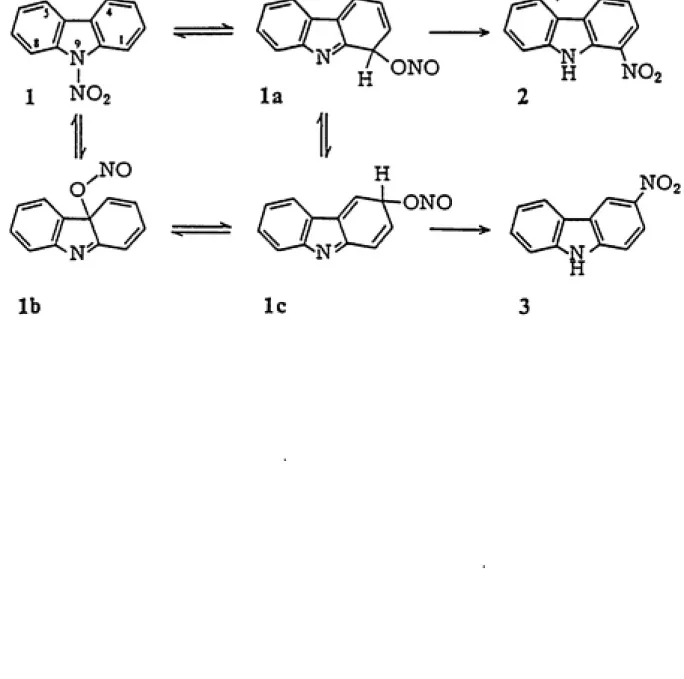
The formation of 3- and 1-nitrocarbazole has been hypothesized by
Kyziol and Daszkiewicz (1984) to be a two-step process involving
formation and intramolecular rearrangement of 9-nitrocarbazole. The
high electron density of the pyrrole ring predisposes the compound to nitration at the 9-position on the pyrrole nitrogen. 3- and 1-nitro¬
carbazole isomers result from 9-nitrocarbazole in a nitramine
reaction is illustrated by Kyziol and Daszkiewicz (1985) in Figure 2 on
page 40.
C-nitrosooxy compounds are formed in the solution rapidly but in a
minute amount and remain in the equilibrium state with the N-nitro form. Transformation of the nitrites (structures la and Ic in Figure 2) into the stable compounds (structures 2 and 3) occurs in the last,
rate-limiting step, and is accompanied by proton expulsion (Kyziol and
Daszkiewicz, 1985).
3- and 1-nitrocarbazole were also the major isomers formed from
the nitration of carbazole with HNO3 in acetic anhydride at 10-15°C
(Preston et al., 1942; Dewar and Urch, 1958). Carbazole reacts 222,000
times faster than benzene with HN03-acetic anhydride, having partial
rate factors of 32,100 at the CI position; 1,100 at the C2 position; 77,600 at the C3 position; and a rate factor too small to measure at the C4 position (Dewar and Urch, 1958). Thus, C3 is the most reactive
position, followed by CI, C2, and C4 in that order.
Because of their low rate factors, 2- and 4-nitrocarbazole are not
formed to any great extent by the simple nitration of carbazole with
HNO3. The presence of a more electron-withdrawing group, such as an
acyl group, on the pyrrole nitrogen, to reduce the aromatic character ofthe central ring, is required for the formation of 2-nitrocarbazole
(Joule, 1984).
According to Joule, the presence of a C3 substituent, whether electron-donating, such as a hydroxy group, or electron-withdrawing,
such as a nitro group, usually leads to further substitution at the C6
position, which is the symmetrical equivalent of the C3 position.
to a mixture of 3,6- and 1,6-dinitro derivatives. The 3,6-dinitro
isomer comprised 50-50% of mixture, and the 1,6-dinitro isomer comprised 30-35% of the mixture.
Furthermore, carbazole, on treatment with 93% HNO3, gave
3,6-dinitrocarbazole at 70-80°C and 1,3,6,8-tetranitrocarbazole at 100°C(Amemiya et al., 1952). 3,6-disubstituted carbazoles normally undergo electrophilic attack at CI or C8 (symmetrically equivalent positions)
and can form 1,3,6,8-tetra-substituted carbazoles under forcing
conditions, such as high HNO3 concentration and very high temperatures
(Joule, 1984).
Carbazole undergoes tetranitration to form 1,3,6,8- and 1,2,6,8-tetranitrocarbazole by sequential treatment of carbazole with hot,
fuming H2SO4 and then hot 93% HNO3. The isomer formed in greatest
quantity was the 1,3,6,8- isomer, with 1,2,6,8-tetranitrocarbazole comprising only 10% of the crude product (Murphy et al., 1953).
Much less is known of the substitution of 1-, 2-, or 4-substituted carbazoles, but an activating group at C2 has been found to lead to substitution at CI and C3, the latter predominating (Joule, 1984), and, as demonstrated above, the presence of a nitro group at CI could lead to further substitution at C6, to form the 1,6-dinitro isomer during
carbazole nitration.
No data is available on the nitration of 2-hydroxycarbazole with
HNO3, but a similar route is probably followed. 2-hydroxycarbazole was
chosen as a convenient route to specific synthesis of 2-hydroxy-X-nitrocarbazoles, possible hydroxylated metabolites and photooxidized
2.6(b). Adsorption Chromatography
Among the methods of adsorption chromatography used for resolving
individual isoners present in a reaction mixture, column chromatography
and thin layer chromatography, or TLC, were chosen. The theory behind
both methods is the same. In column chromatography a glass column is
packed with adsorbent material, such as alumina or silica gel, whereas
in TLC a glass or aluminum support is evenly coated with adsorbent
material, such as silica gel. The adsorbent material contains hydroxy
terminals which can interact with solute molecules from the reaction
in1<tjr9 by hydrogen bonding and London forces (Bailar et al., 1978;
Braithwaite and Smith, 1985). A solvent is used to dissolve and carry the dppliel nixture down the column by gravitation for columnchromatography or up the TLC plate by capillary action for thin layer
chromatoyrdphy. As d result, an equilibrium is established between the
solute In the stationary phase (adsorbed to the adsorbent material) andthe solute in the mobile phase (bound to and moving with the solvent).
As the mixture proceeds down the column or up the plate, new and
different equilibria d-re established as the material encounters fresh
absorbent. Less polar molecules will displace more polar molecules
since they are not as tightly adsorbed to the adsorbent material(Kirchner, 1978). As a result of these different adsorption affinities,
a series of bands are formed on the column, and a series of spots on the
TLC plate, each one correspondinj to a particular isomer with a
different polarity. The more polar an isomer is, the farther up the
column, or the farther down the TLC plate, it will be.located visually or by fluorescence, and assigned an R^ value based on
the distance the spot moved from the origin relative to the distance the solvent front moved from the origin. Although TLC plates can be used to obtain quantitative yields of individual isomers, in this case it wasused to resolve the isomers present in the reaction mixture and also to analyze the purity of the fractions obtained from column chromatography.
2.6(c). Electron Impact Mass Spectrometry
Mass spectrometry can be used to determine the molecular weight and elemental composition of the isomer compound and to provide
structural information from fragmentation patterns of the compound. Electron impact mass spectrometry works by bombarding a vaporized sample of the compound with an electron beam, fragmenting the compound, and thereby producing a beam of positive ions. After collimation, the beam
is accelerated by an electrical potential of variable strength. The ions then pass through a magnetic field of variable strength
perpendicular to their path, the force of which deflects the ions into
curved paths, in which the radius of curvature depends on the mass and
charge of the ions. By varying the accelerating electrical potential and the strength of the magnetic field, ions are directed onto a
detector in the order of their mass-to-charge, or m/z, ratios, forming a
distinctive mass spectrum that is a chemical "fingerprint" of the sample
(Bailar et al., 1978).
#
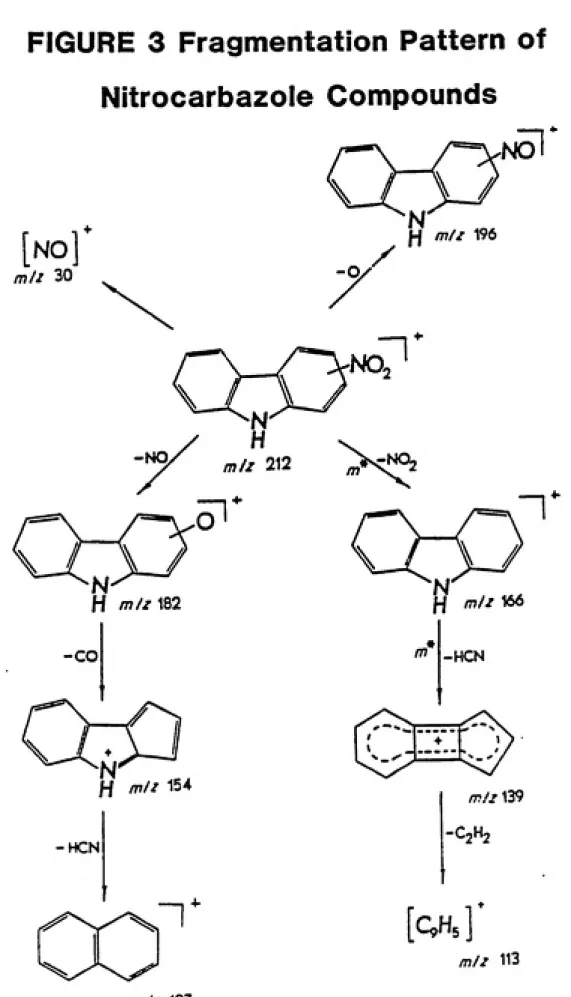
nitro group relative to the pyrrole nitrogen. For example, nitro-nitrite rearrangement, followed by expulsion of NO molecules played a more important role in the fragmentation of 3-nitro- and
3,6-dinitrocarbazole than of 1-nitro- and 1,6-3,6-dinitrocarbazole, suggesting a
quinonoid structure for the intermediate, as illustrated by Kyziol et
al. in Figure 3 on page 41.
No mass spectra have been found on other nitrocarbazoles or any 2-hydroxynitrocarbazoles in the literature.
2.6(d). Proton Nuclear Magnetic Resonance
Proton nuclear magnetic resonance, or proton NMR, can indicate the positions of substituents, such as nitro groups, on a compound based on the resonance frequencies of the protons remaining on the compound.
Protons produce a small magnetic moment as a result of their spinning about their axes, so when they are placed in an external magnetic field, they align, like magnets, parallel or antiparallel to
that field. This alignment can be changed if the protons absorb energy in the radio frequency range of the electromagnetic spectrum (Bailar et
al., 1978).
NMR is measured, therefore, by placing the sample to be analyzed, in solution, in a constant radio frequency field, and varying the
strengths of the applied magnetic field. At the appropriate combination of radio frequency and magnetic field, absorption occurs and is detected
and recorded as a plot of magnetic field strength versus radio frequency
absorption, which appears as a series of peaks (Bailar et al., 1978).
The frequency at which a proton absorbs varies with the chemical
environment, and that variation is called a chemical shift. The
#
absorption and that of the standard tetramethylsilane, or TMS, and is
reported in parts per million and is called delta. The area under each
peak is proportional to the number of protons in that particular
environment (Bailar et al., 1978).
The presence of electronegative groups, such as nitro groups, on a molecule create a chemical shift downfield, to higher delta values, of
the protons near them as a result of their deshielding of the molecule
around them. This decreases the electron density near the nitro group, thereby increasing the magnetic field reaching the nucleus of a proton
nearby. As a result, protons near the nitro group will be shifted downfield on the spectrum (Brescia et al., 1978). The nitrogen present
in the pyrrole ring of carbazole and the pseudo bay region between C4
and C5 have a similar deshielding effect on ring protons.
Hydroxy groups, on the other hand, have the opposite effect. They shield the molecule and shift protons upfield to lower delta values on
the spectrum. Specific chemical shifts at various positions on the
molecule relative to the nitro or hydroxy group are given for benzene by Jackman and Sternhell in Table 2 on page 42.
Splitting of the absorption peak occurs for protons in different
chemical environments as a result of the influence of the magnetic
moment of protons on adjacent atoms (Bailar et al., 1978). If there are
two adjacent protons, the proton's absorption peak will be split twice,
thereby forming a triplet. If there is only one other adjacent proton,
it will be split once, thereby forming a doublet. If no other protons are adjacent, it will not be split, forming only a singlet. There can also be partial splitting of those peaks by protons on atoms in meta
With this information on chemical shift, or resonance, and
splitting patterns, it should be possible to determine the positions of
substituents on compounds such as nitrocarbazoles and hydroxynitro-carbazoles. However, no information has been found in the literature on
the NMR spectra of those compounds. 2.6(e). Melting Point Determination
Because each compound has its own unique melting point, melting
point determination is a good tool for identifying a particular isomer
by comparing its experimental melting point to those found in the
literature. The melting point of a solid compound is defined as the temperature at which the solid and liquid phases of the compound are at
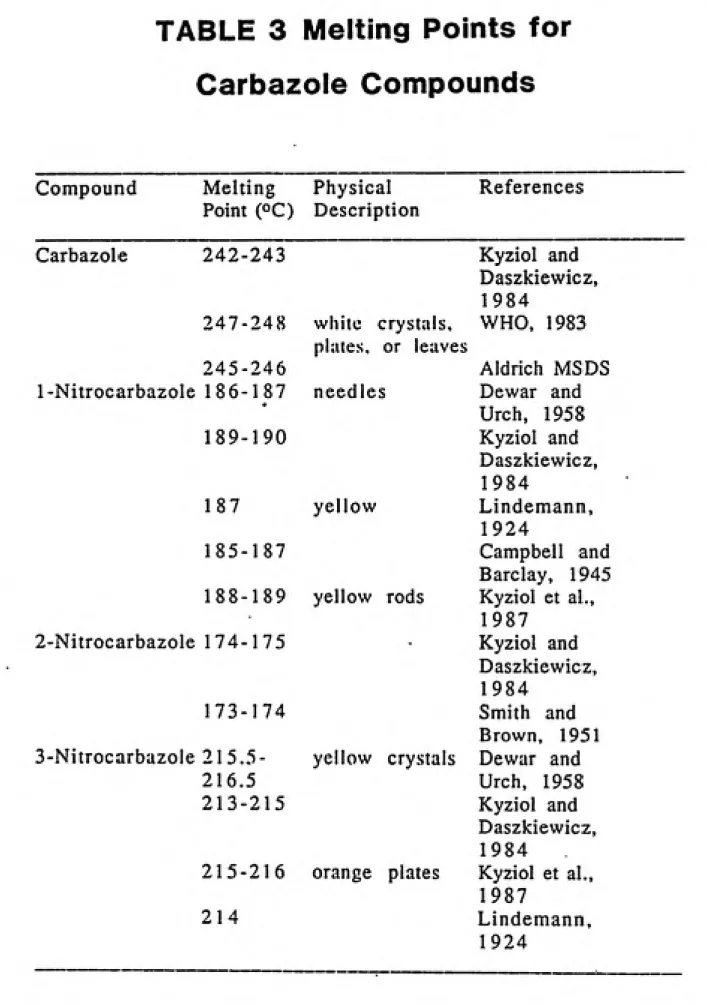
equilibrium (Bailar et al., 1978). A number of melting point
determinations have been done on carbazole and its hydroxy and nitro
derivatives and are listed in Table 3 on page 43. No melting points
have been found of hydroxynitrocarbazole compounds in the literature. 2.6(f). Mutagenicity Assay
The Ames Salmonella mutagenicity assay is considered a rapid,
relatively inexpensive way to screen a wide range of chemicals for
genotoxic activity. Initial validations of this assay (McCann et al., 1975; Purchase et al., 1978; Bartsch et al., 1980), using known
carcinogens, gave correlations of about 90% between carcinogenicity and
the mutagenicity determined in those tests. However, this correlation
began dropping over time, first to 83% (Ames and McCann, 1981) and then
to 62% (Tennant et al., 1987). This may be due to the inclusion of more
compounds for which the carcinogenicities were not well established, or
pesticides (Rinkus and Legator, 1979). Tennant et al, also found correlations around 50% or lower for inarrtnalian cell short-term tests
such as chromosomal aberrations, SCE's in CHO cells, and the mouse
lymphoma L5178Y cell mutagenicity assay, with no significant
complementarity observed between any of those tests, including the Ames
assay, in detecting carcinogens.
For detecting inutagens, the Ames assay uses a set of
histidine-requiring strains, each with a different type of mutation in the
histidine operon, eliminating the strain's ability to synthesize its own histidine for g^-owth (Maron and Ames, 1983). In strain TA 98 there is a -1 frameshift mutation in the histidinol dehydrogenase gene hisD3052
(Isono and Yojrno, 1974). As a result, the reading frame of the gene
necessary for histidine production is shifted, eliminating histidine
synthesis by tiie strain. Frameshift mutagens such as nitro-PAH can restore the correct reading frame by inducing another frameshift
mutation in the gene. As a result, the bacteria revert to the wild type and can grow again. They can form colonies on a minimal histidine agar plate, the number of which is proportional to the mutagenic potency of
the frameshift mutagen. A dose-response relationship can he determined
by using various doses of the compound, and the genotoxic potency can be
calculated from the slope of the linear portion of that dose-response
cut^ve.
The standard tester strains contain two other mutations, in
addition to the histidine mutation, that greatly increase their ability to detect mutagens. One mutation (rfa) causes a partial loss of the
the permeability of the cell wall to large molecules such as
benzo(a)pyrene is increased (Maron and Ames, 1983), Another mutation
(uvrB) deletes the gene coding for the DNA excision repair system,
greatly increasing the sensitivity to detect mutagens. Because, for
technical reasons, this deletion also extends through the bio gene, these bacteria also require biotin for growth (Maron and Ames, 1983).
The strains also contain the R-factor plasmid, pKMlOl, which
enhances an error-prone DNA repair system, allowing the strains to detect a number of mutagens that are detected weakly or not at all with the non R-factor strains TA 1535 and TA 1538 (Maron and Ames, 1983).
Before using the strains to detect mutagens, the presence of the mutations and the plasmid must be verified. Histidine requirement can be tested by determining if bacterial growth occurs on histidine-free agar plates. Since the rfa mutation confers cell wall permeability, the presence of the mutation can be tested by observing if any toxic effect occurs from the intrusion of the large toxic molecules of crystal violet
through the bacterial cell wall. Because one side effect of the uvrB
mutation is the strain's sensitivity to ultraviolet, or uv, light, a good test of this mutation is determining whether any growth occurs on a
plate after exposure to uv light. Finally, since the pKMlOl plasmid
confers ampicillin resistance, the presence of the plasmid can be confirmed by streaking bacteria on plates containing ampicillin and watching for growth (Maron and Ames, 1983).
Nitroreductase-deficient derivatives of TA 98 and other strains
have been isolated by Rosenkranz and Speck (1975, 1976). These strains
metabolized by a family of bacterial nitroreductases to electrophilic
intermediates that an bind to the DNA and cause a frameshift mutation.
For use in the Ames assay, tester strain cultures are obtained
from master plates made from frozen stock and grown in nutrient broth
overnight to a density of 1-2 x 10^ cells per milliliter. Spontaneous
reversion rates and positive mutagenesis controls are then measured for the strains. Each strain reverts spontaneously to histidine
independence at a frequency that is characteristic of the strain (Maron
and Ames, 1983). The spontaneous rates for TA 98 (-59) have been given by Maron and Ames as 30-50 revertants per plate, and by Claxton et al.
(1982) as 15-35 revertants per plate, with slightly higher rates on
plates with S9 (Maron and Ames, 1983).
To qualitatively assess the sensitivity and specificity of the
strains, positive mutagenesis controls are used. Strains respond more easily to some compounds as positive controls than to others (Maron and
Ames, 1983). 2-Nitrofluorene, a potent frameshift mutagen, is used as the positive control for strain TA 98 without S9, and 2-anthramine as
the positive control for TA 98 with S9 (Claxton et al., 1982). They commonly produce 254-356 and 361-809 revertants/plate respectively in
TA 98 (Goldring et al., 1987).
S9 is the 9000 x g fraction obtained from the centrifugation of
liver homogenate from rats induced with the polychlorinated biphenyl mixture Aroclor 1254. By inducing the animals in this way to produce cytochrome P-450 metabolicc enzymes, a wide variety of carcinogens
requiring metabolic activation can be efficiently detected (Maron and
the effect of mammalian metabolic activation on the genotoxicity of a
particular chemical.
While its correlation with carcinogenicity has declined with the addition of more compounds, the Ames mutagenicity assay remains a potent tool for the detection of environmental mutagens, if the limitations of
the assay are known and taken into account.
FIGURE 1 Activating and Deactivating
Fragments of NitroPAH Compounds
NO2
»-<S. 1
CH
I 1
NO.
2
CH
CH
I
5 x^H 3^
HO -^C
li
^C
II
Activating Fragments
NO,
"CH
I3
^CH
erf
..^-^ 2
HC^ ^C ^CH
5 -^CH 3 ^CH 1
ei 11 I
.CH ° r
III IV
FIGURE 1 Activating and Deactivating
Fragments of Nitro-PAH Compounds,
continued
Containing Structure I Activating Fragment:
NO:
HN
/^
NO2
*-^
2-Nitrocarbazole 3-Nitrocarbazole
Containing Structure III Deactivating Fragment:
H
N
NO'
•A A---i /
w..ky
TABLE 1 IVIutagenicity Results for
Nitrocarbazole Compounds
by Lavoie et aL(1981)
Revertants/nanomole
TA 98 TA 100
Compound -S9 +S9 -S9 +S9
FIGURE 2 l\Aechanism of
Carbazole Nitration
40
ONO
I
ONO
NO<
FIGURE 3 Fragmentation Pattern of
Nitrocarbazole Compounds
^ m// 196
/7»// 212
Q^y
H /n//182 N'ͣ
f /n// 166
H /n// 154
-HCN
-HCN
rr?/i 139
/n// 113
TABLE 2 Chemicar Shifts of
Model PAH Benzene
Chemical Shift (ppm)
Group Ortho Meta Para
Nitro +0.95 +0.17 +0.33
TABLE 3 Melting Points for
Carbazole Compounds
Compound Melting
Physical ReferencesPoint (OC) Description
Carbazole 242-243 Kyziol and
Daszkiewicz, 1984
247-248 white crystals,
plates, or leaves
WHO, 1983
245-246 Aldrich MSDS
1-Nitrocarbazole 186-187 needles Dewar and
•
Urch, 1958
189-190 Kyziol and
Daszkiewicz,
1984
187 yellow Lindemann,
1924
185-187 Campbell and
Barclay, 1945
188-189 yellow rods Kyziol et al.,
1987
2-Nitrocarbazole 174-175 Kyziol and
Daszkiewicz,
1984
173-174 Smith and
Brown, 1951
3-Nitrocarbazole 215.5- yellow crystals Dewar and
216.5 Urch, 1958
213-215 Kyziol and
Daszkiewicz, 1984
215-216 orange plates Kyziol et al., 1987
214 Lindemann,