Developing a Novel, Sustainable, and Acceptable Complementary
Feeding Product using Caterpillar Cereal for Infants and Young
Children in the Democratic Republic of Congo
By
Melissa Bauserman, MD
A Master’s Paper submitted to the faculty of The University of North Carolina at Chapel Hill
in partial fulfillment of the requirements for the degree of Master of Public Health in
the Public Health Leadership Program.
Chapel Hill 2012
[Signature] _____________________
Advisor [Printed Name] _____________________
Date
[Signature] _____________________ Second Reader
[Printed Name] _____________________
Table of Contents
Acknowledgements . . . . 4
Abstract . . . . 5
Part I: Research Paper Background . . . 8
Methods . . . 9
Results . . . . 13
Discussion . . . .14
References . . . .17
Tables . . . . 19
Part II: Systematic Review Background . . . . 23
Methods . . . . 24
Results . . . . 26
Discussion . . . 27
References . . . 29
Appendix. . . 31
Tables . . . 32
Index of Tables
Part I: Research Paper
Content of a 30-gram Portion of Caterpillar Cereal . . . . 19
Microbiologic Assay . . . 20
Maternal Acceptability . . . 21
Part II: Systematic Review
Assessment of Bias. . . . 32
Acknowledgements
I would like to acknowledge several people without whom this manuscript would not have been possible. Dr. Carl Bose has spent many dedicated hours providing personal and professional mentorship. I am grateful that he was willing to include me in the development and execution of this project. Drs. Anthony Viera and Margaret (Peggy) Bentley have spent time discussing program strategies and editing this manuscript. I would like to thank my Congolese colleagues, including Drs. Antoinette Tshefu and Adrien Longaka as well as all of the Congolese staff who assure the highest research standards and thereby made this study possible.
ABSTRACT
Background: Adequate nutrition in early life is important for brain development and growth in
infants and young children. Young children in developing countries like the Democratic Republic of Congo (DRC) are vulnerable to poor nutrition after 6 months of age when breast milk is supplemented with complementary foods that provide inadequate protein and micronutrients. The World Health Organization recommends complementary feeding with animal-source foods in order to avoid micronutrient deficient states. Animal-source foods are not readily available in many Central African countries. However, caterpillars are a common staple in adult diets and may be suitable for complementary feeding for infants and young children.
Objectives: Create a macro- and micronutrient-rich cereal made from locally available and
abundant caterpillars to be used for complementary feeding in rural DRC. Test the biochemical properties and acceptability of this cereal.
Design/Methods: We developed a cereal made from dried caterpillars, ground corn, palm oil,
sugar and salt, and measured its macro- and micronutrient content using standard laboratory techniques: Kjeldahl method for analysis of protein content, Soxhlet method for determination of lipid content and spectrophotometry for determination of iron, lead and mercury. We cultured the cereal to determine if it was free from microbiologic contamination. Maternal and infant
acceptability was evaluated among 20 mothers and their 8-month-old infants. Mothers were instructed in the preparation of the cereal and asked to evaluate the cereal in five domains using a five-point Likert scale (1=dislike very much to 5=like very much). During the following week, they fed their infants a 30-gram portion daily. Infant acceptability was based on daily
consumption during the last 4 days of feeding and the occurrence of any adverse signs or symptoms.
Results: We produced a caterpillar cereal that had suitable macro- and micronutrient content
characteristics were: overall impression=4, taste=5, smell=4, texture=4, color=5, and consistency=4. All infants consumed more than 75% of the daily portions, with 5 infants consuming 100%. No serious adverse feeding events were reported.
Conclusions: Caterpillar cereal has appropriate macro- and micronutrient content for
BACKGROUND
In children under five years of age, malnutrition is responsible for 2.1 million deaths annually and 91 million disability adjusted life years (DALYs).1 Stunting, defined as height-for-age Z score 2 standard deviations or more below appropriate World Health Organization standards, is a consequence of chronic poor nutrition and has been
associated with multiple negative health outcomes, including increased mortality, poor cognitive and school performance, delayed motor development, impaired physical performance, reduced income in adulthood and lower birth weight in offspring.2,3 If stunting from malnutrition is not reversed by the age of 2 years, the adverse effects are likely to be permanent.4 The prevalence of stunting varies around the globe, but the developing world is disproportionately affected. In the Democratic Republic of Congo (DRC), the stunting prevalence in children under five years of age is estimated to be greater than 40%.1
Children from 3 months to 36 months are particularly vulnerability to insults affecting linear growth.5 This vulnerable period includes the period after exclusive breast-feeding, when complementary foods are introduced into the diet. Malnutrition from inadequate complementary feeding is a serious problem in many developing countries where complementary foods consist of starch-based cereals or gruel that may provide sufficient energy but inadequate protein and micronutrients.6 Micronutrient deficiencies are associated with stunting of growth and other serious health
consequences including anemia and a greater susceptibility to infection.7
nutrients, specifically iron and zinc, which are not achievable with plant-based diets alone.6,8,9 Animal-source foods are not readily available in many developing countries, including the DRC. Insects have played a critical role in the diet of many people in Central Africa, with 70% of the population of Kinshasa, the capital of the DRC, consuming insects.10,11 Dried caterpillars have a protein and micronutrient content similar to beef.11,12 A cereal made from dried caterpillars may be an alternative to meat as a source of protein and micronutrients. The overall goal of this project is to create a novel cereal made from caterpillars and other locally available ingredients that is an acceptable complementary food for infants in the DRC. This cereal will be
micronutrient-rich to combat the effects of deficiency states, including stunting.
Problems with behavioral and social compliance to feeding interventions limit the efficacy of food supplementation.13-15 Feeding programs have had limited success if little attention was paid to socio-cultural influences on infant feeding, including maternal attitude.16 Both maternal and infant and acceptability of food sources are important indicators of compliance with a feeding intervention and lack of compliance results in errant conclusions about the potential benefits of previous dietary interventions.17 In this paper, we report the results of the biochemical and microbiologic analyses of a cereal made from caterpillars and the investigation of maternal and acceptability of the cereal.
METHODS
Cereal Development
children, the dietary habits of the population and the availability of these products in the local markets of the DRC. We chose corn because it constitutes a basic food source for many populations in the DRC, and its use in infant food is common throughout the country. We chose palm oil as a source of lipids, and the addition of palm oil produced a cereal of a more desirable color. Palm oil also contributes β-carotene, a precursor of vitamin A. We added small amounts of sugar and salt for palatability. Cereal production conformed to international standards on the formulation of foods intended for infants and children up to two years of age outlined in the Codex Alimentarius.18, 19
To make the cereal, we processed each of the cereal components separately and then mixed them together to create the final product.
1) Caterpillar flour: The caterpillars were initially washed and soaked in water for 30 minutes then dried in the sun. Dried caterpillars were crushed in a grinding mill and filtered to a flour of fine granularity and uniform consistency.
2) Corn flour: Kernels were initially filtered in a sleeve with broad mesh to remove foreign material from the corn. Twice, the kernels were soaked in water at room temperature and rinsed. The kernels were dried in the sun, crushed in a grinding mill and filtered to a flour of fine granularity and uniform consistency.
3) Palm oil: Oil required no processing before mixing.
We mixed caterpillar flour, corn flour, salt and sugar in a basin. The proportion of caterpillar flour to corn flour is 1:1. We added palm oil to the mixture and dried the final mixture in an oven at 60° C for 24 hours. We removed the cereal from the oven,
weighed it and placed in plastic sachets, which were hermetically sealed. We assured hygienic production of cereal by cleansing all equipment prior to the cereal production, assuring personal hygiene of all personnel including hand washing, and the required use of masks and hair coverings during cereal production.
Chemical and Microbiologic Testing
We performed chemical analyses on a sample of each batch of cereal. All analyses were conducted at the Research Institute in Sciences and Health in Kinshasa. To measure water content, we dried the cereal at a temperature between 100-105°C followed by cooling in a desiccating chamber. Weights were performed periodically until a standardized weight was achieved. We used the Kjeldahl method for analysis of protein content,20 by digesting the cereal in sulfuric acid at a high temperature using SO4K2 and SO4Cu as catalysts. We added concentrated alkali (NaOH) to the digest to convert ammonium to free ammonia that was distilled, collected and titrated in the presence of an acidic solution. The percentage of nitrogen was calculated from milliequivalents of ammonia per grams of the sample by multiplying by a standard conversion factor then converted to crude protein content by using a second
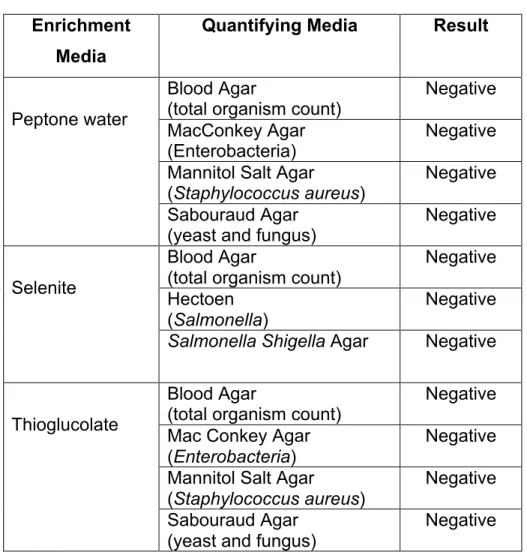
We performed microbiologic analyses on a sample of each batch of cereal to assess for the presence of microbes. We tested for the total organism count, and for the presence of Enterobacteria, Staphylococcus aureus, Salmonella, Shigella, yeast and fungus. A sample was plated on each of the following specific medium cultures: MacConkey, cellulose with blood, Hektoen and Mannitol Salt culture and the media were incubated at 37°C for 24 hours. We suspended any recovered colonies in mediums for identification, including: citrate of Simmons, Kliger, and Mannitol. After incubation, we isolated fungus on Sabouraud cellulose agar. All organisms were identified based on colony morphology.
Maternal and Infant Acceptability
We recruited 5 mother-infant dyads from health centers in each of four communities (Karawa Urbain, Karawa Cite, Bokpasi, Bogon) in the rural Equateur province of the DRC. We enrolled healthy male and female infants between the ages of 8 and 10 months and their mothers. We excluded infants with inter-current illness that may have interfered with oral intake, infants of multiple gestation, infants with congenital anomalies, and infants likely to receive free or subsidized complementary foods.
cereal of 3 or greater and the upper limit of the lowest quartile of equal to or greater than 2. We also defined maternal acceptability as a 90% consent rate to participate in the one-week infant feeding trial.
To assess infant acceptability, we supplied each participating mother with a one-week supply of caterpillar cereal (7 sachets containing 30 grams of dry cereal each), and instructed each woman to feed her infant the cereal daily. Study personnel visited the home three times during the week to reinforce preparation instructions, observe feedings and monitor for signs or symptoms of feeding intolerance. On the eighth day of the trial, study personnel collected all unconsumed cereal from the preceding three days and surveyed mothers about their infant’s health and feeding status during the trial. We based cereal consumption on the amount the infant consumed during the last 4 days of the trial. We defined infant acceptability as 100% of infants consuming greater than or equal to 75% of the cereal allotment during the last four days of the trial and all infants being free from adverse symptoms attributable to cereal consumption.
The Institutional Review Boards at the University of North Carolina at Chapel Hill and Kinshasa School of Public Health approved this study. The trial was registered through clinicaltrials.gov (NCT01258647).
RESULTS
contaminants from Salmonella, Shigella, Enterobacteria, Staphylococcus aureus, yeast, and fungus (Table 2).
Twenty maternal-infant dyads were enrolled in the study to determine cereal acceptability. One dyad voluntarily withdrew after enrollment. On a five-point Likert scale (5=like very much), mothers' median scores for cereal characteristics were: overall impression 4 (range 4-5), taste 5 (3-5), smell 4 (3-5), texture 4 (3-5), color 5 (2-5), and consistency 4 (4-5) (Table 2).
All participating infants consumed more than 75% of the daily cereal portions during the last four days of the trial. Five infants (26%) consumed 100% of the cereal. One infant experienced vomiting during the first day of the study and continued the trial without further symptoms. No other adverse feeding events were reported.
DISCUSSION
We prepared a cereal from locally available constituents that appears to have sufficient macro- and micronutrients for complementary feeding. Lutter and Dewey have proposed an ideal composition for fortified complementary foods.21 They propose quantities of macronutrients in complementary foods for 6-11 month old infants
including 176 kilocalories, 3-4.5 grams of protein, and 4.8 grams of fat. A 30-gram portion of this caterpillar cereal provides sufficient macronutrients to meet these standards.
bioavailable.22 Heme proteins in non-insect animals are usually found in muscle in the form of myoglobin and hemoglobin, but heme is also found in cytochrome and
catalases.23 The primary source of heme iron in caterpillars is in cytochromes, and we presume that its bioavailability is similar to the heme iron of myoglobin and
hemoglobin.23, 24 In addition, insects have iron bound to non-heme molecules, ferritin and holoferritin. Iron associated with these proteins is typically in the ferrous state, which increases its bioavailability, and iron bound to these proteins appears to be more bioavailable than iron in the form of reduced salts. Therefore, it is likely that the
bioavailability of iron in caterpillars is similar to beef, and that the content of iron in our cereal will be sufficient to meet the requirements of infants.
Zinc is critical for cellular growth, and its deficiency is associated with stunting. Our cereal contains 3.8 mg of zinc in a daily portion, which approaches the
recommended range of zinc intake in complementary feeding products for infants of 4-5 mg.25 Although there are no specific quantitative data for the appropriate daily
requirements of B vitamins for infants, caterpillars contain riboflavin, niacin, pantothenic acid, pyridoxine, biotin, folic acid and cobalamins.12
Human sensory testing of complementary feeding products predicts the
products to each other.17, 28 Because this cereal is a novel product made from locally available ingredients, a study comparing caterpillar cereal to a fortified cereal product which was not locally available was deemed unreasonable. Based on our strategy of evaluation, caterpillar cereal was found to be acceptable to mothers and infants.
Caterpillar cereal appears to be a promising strategy for use as complementary feeding; however, we recognize some limitations to this intervention. Although
caterpillar cereal is designed to be easily integrated into existing food practices by using it as an additive to the usual dietary habits of children, the volume of cereal that we used may be a challenge for children at 6-8 months of age to consume. Furthermore, although the iron content of caterpillars is heme-associated, it is not clear if the
absorption of this micronutrient will be sufficient to prevent iron deficiency.
REFERENCES
1. Black RE, Allen LH, Bhutta ZA, et al. Maternal and child undernutrition: global and regional exposures and health consequences. Lancet 2008;371:243-60.
2. Phuka JC, Maleta K, Thakwalakwa C, et al. Postintervention growth of Malawian children who received 12-mo dietary complementation with a lipid-based nutrient
supplement or maize-soy flour. Am J Clin Nutr 2009;89:382-90.
3. Barker DJ, Osmond C, Forsen TJ, Kajantie E, Eriksson JG. Trajectories of growth among children who have coronary events as adults. N Engl J Med
2005;353:1802-9.
4. Dewey KG, Adu-Afarwuah S. Systematic review of the efficacy and effectiveness of complementary feeding interventions in developing countries. Matern Child Nutr 2008;4 Suppl 1:24-85.
5. Frongillo EA, Jr. Symposium: Causes and Etiology of Stunting. Introduction. J Nutr 1999;129:529S-30S.
6. Dewey K. Guiding Principles for Complementary Feeding of the Breastfed Child. Washington D.C.: Pan American Health Organization. World Health Organization; 2003. 7. Bhutta ZA, Ahmed T, Black RE, et al. What works? Interventions for maternal and child undernutrition and survival. Lancet 2008;371:417-40.
8. World Health Organization. Complementary feeding of young children in developing countries: A review of current scientific knowledge. Geneva: World Health Organization; 1998.
9. Hambidge KM, Krebs NF. Zinc deficiency: a special challenge. J Nutr 2007;137:1101-5.
10. Balinga M, Monzambe Mapunzu P, Mussa J-P, N'gasse G. Contribution des insectes de la foret a la securite alimentaire. L'exemple des chenilles d'Afrique Centrale. In: Div. de l"Economique et des Produits Forestiers. Rome, Italy; 2004:107. 11. Latham P. Edible caterpilars and their food plants in Bas-Congo Province, Democratic Republic of Congo. Second ed: United Kingdom Department for International Development; 2005.
12. Kodondi KK, Leclercq M, Gaudin-Harding F. Vitamin estimations of three edible species of Attacidae caterpillars from Zaire. Int J Vitam Nutr Res 1987;57:333-4.
13. Mamiro PS, Kolsteren PW, van Camp JH, Roberfroid DA, Tatala S, Opsomer AS. Processed complementary food does not improve growth or hemoglobin status of rural tanzanian infants from 6-12 months of age in Kilosa district, Tanzania. J Nutr
2004;134:1084-90.
14. Bhandari N, Bahl R, Nayyar B, Khokhar P, Rohde JE, Bhan MK. Food
supplementation with encouragement to feed it to infants from 4 to 12 months of age has a small impact on weight gain. J Nutr 2001;131:1946-51.
15. Lartey A, Manu A, Brown KH, Peerson JM, Dewey KG. A randomized,
community-based trial of the effects of improved, centrally processed complementary foods on growth and micronutrient status of Ghanaian infants from 6 to 12 mo of age. Am J Clin Nutr 1999;70:391-404.
17. Paul KH, Dickin KL, Ali NS, Monterrosa EC, Stoltzfus RJ. Soy- and rice-based processed complementary food increases nutrient intakes in infants and is equally acceptable with or without added milk powder. J Nutr 2008;138:1963-8.
18. World Health Organization, Food and Agriculture Organization of the United Nations. Codex Standard for Processed Cereal-Based Foods for Infants and Young Children. Codex Stan 074-1981, Rev. 1-2006. In: Commision CA, ed. Rome, Italy; 2006.
19. World Health Organization, Food and Agriculture Organization of the United Nations. Recommended International Code of Hygeinic Practice for Foods for Infants and Children. CAC/RCP 21-1979. In: Commision CA, ed. Rome, Italy; 1979.
20. Jones J, Benton J. A Kjeldahl Method of Nitrogen Determination. Athens, GA: Micro-Macro Publishing, Inc.; 1992.
21. Lutter CK, Dewey KG. Proposed nutrient composition for fortified complementary foods. J Nutr 2003;133:3011S-20S.
22. Carpenter CE, Mahoney AW. Contributions of heme and nonheme iron to human nutrition. Crit Rev Food Sci Nutr 1992;31:333-67.
23. Locke M, Nichol H. Iron Economy in Insects - Transport, Metabolism, and Storage. Annu Rev Entomol 1992;37:195-215.
24. Chapman RF. The insects : structure and function. 4th ed. Cambridge, U.K. ; New York: Cambridge University Press; 1998.
25. Rosado JL. Zinc and copper: proposed fortification levels and recommended zinc compounds. J Nutr 2003;133:2985S-9S.
26. Mensa-Wilmot Y, Phillips RD, Sefa-Dedeh S. Acceptability of extrusion cooked cereal/legume weaning food supplements to Ghanaian mothers. Int J Food Sci Nutr 2001;52:83-90.
27. Phuka J, Ashorn U, Ashorn P, et al. Acceptability of three novel lipid-based nutrient supplements among Malawian infants and their caregivers. Matern Child Nutr 2011;7:368-77.
Table 1: Content of a 30-gram Portion of Caterpillar Cereal
Macronutrients Micronutrients
Energy, Kcal ≈ 132 Iron, mg 3.8
Protein, g 6.9 Zinc, mg 3.8
Fat, g 6.3 Magnesium, mg 9.4
Table 2: Microbiologic Assays
Enrichment Media
Quantifying Media Result
Blood Agar
(total organism count) Negative
MacConkey Agar
(Enterobacteria) Negative
Mannitol Salt Agar
(Staphylococcus aureus)
Negative Peptone water
Sabouraud Agar (yeast and fungus)
Negative Blood Agar
(total organism count)
Negative Hectoen
(Salmonella)
Negative Selenite
Salmonella Shigella Agar Negative
Blood Agar
(total organism count)
Negative Mac Conkey Agar
(Enterobacteria)
Negative Mannitol Salt Agar
(Staphylococcus aureus)
Negative Thioglucolate
Sabouraud Agar (yeast and fungus)
Table 3: Maternal Acceptability
Maternal Opinion, n
Cereal
Characteristics
1 Dislike
very much
2 3
Neutral
4 5
Like very much
1. Overall impression 0 0 0 11 8
2. Taste 0 0 1 6 12
3. Smell 0 0 1 9 9
4. Texture 0 0 1 12 6
5. Color 0 1 0 7 11
PART II: Systematic Review of the Literature
BACKGROUND
A child’s growth is usually classified as stunted if his or her height is 2 standard deviations or more below age-appropriate World Health Organization (WHO) Standards. Stunting might be a consequence of chronic poor nutrition and has been associated with multiple negative health outcomes, including poor cognitive and school
performance, delayed motor development, impaired physical performance, reduced income in adulthood and lower birth weight in offspring.1 Stunting may begin during fetal life and early childhood when nutritional requirements are very high to support rapid growth and development.2 Children in infancy (3-6 months) to early childhood (24-36 months) show particular vulnerability to insults affecting linear growth.3 This time period coincides with the time when complementary foods are introduced into the diet, after the typical period of exclusive breast-feeding.
The causes and etiology of stunting are not as well understood as is the timing in which it occurs. The causes are likely to be multi-factorial and include: 1) nutrient deficiencies: energy, macronutrients, micronutrients and toxic factors; 2) infection, including mucosal injury of the gastrointestinal tract and systemic effects of illness; and 3) mother-infant interaction, including maternal nutritional stores at birth and behavioral interactions.3 Several studies have highlighted the importance of micronutrient
deficiencies in growth failure.4
(DRC) is estimated to be greater than 40%.6 The problem of stunting is particularly severe in Africa because few locally available foods are rich in nutrients, available
throughout the year, and accessible to impoverished families. Animal-source foods have better bioavailability of important micronutrients, like iron, than plant based foods, but are in limited supply in developing countries.
General nutrition interventions could prevent 10-15% of stunting in developing nations and prevent one in eight deaths in children under 36 months of age,7 but the best nutrition strategy to prevent stunting in the developing world is largely unknown. A variety of strategies, including single or multiple micronutrient (MMN) supplementation, food-based interventions, and fortification have been used to prevent stunting and other outcomes of infant malnutrition.7 The components of a “one-size-fits all” food based intervention have not been determined and rigorous study about the effects on growth are lacking.8
A systematic review was published in 2008 by Dewey and Adu-Afarwuah examining the efficacy and effectiveness of complementary feeding interventions in developing countries.9 The purpose of this systematic review will be to update the previous review, focusing on randomized control trials (RCTs) or pseudo-RCTs of dietary interventions that supplement the diet of young children in the developing world to reduce stunting of linear growth.
METHODS
(Appendix). I limited the search to include only human studies in children 0-18 years. I focused my search to the time period 2006-2011, because the previously reported systematic review included the time period 1996-2006. I examined the titles and abstracts of all of the retrieved citations for relevance to complementary feeding, micronutrient intake, stunting of growth and developing countries. Only randomized control trials or quasi-randomized control trials using a dietary intervention were
included in the review. In order to be included, linear growth had to be analyzed in the study as either a primary or secondary outcome and height-for-age had to be included among the outcome measures. I excluded trials that did not begin the intervention before three years of age and those that were not available in English.
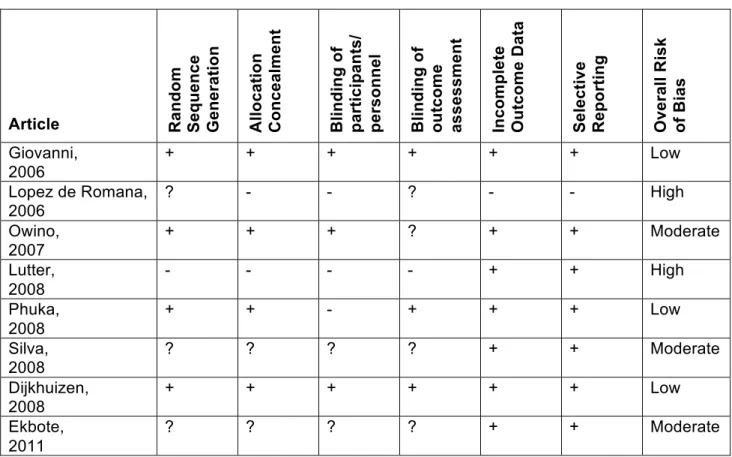
I examined the evidence for potential sources of bias according to the method outlined in the Cochrane Handbook for Systematic Reviews of Interventions.10 I classified bias as selection bias (sequence generation, allocation concealment), performance bias (blinding of participants and personnel), detection bias (blinding of outcome assessment), attrition bias (incomplete outcome data), and reporting bias (selective outcome reporting). An overall ranking of bias risk was assigned as low, moderate or high.
Mean for intervention group – Mean for comparison group
Effect Size (ES) = ________________________________________________
Pooled Standard Deviation (SD) = Average of the SDs for Intervention and comparison groups
The null hypothesis corresponds to an effect size of zero, and a nonzero value indicates the degree of departure from the null hypothesis. Effect size is grossly categorized as small (around 0.2) in which the combined area of the two populations overlaps more than 85.3%, medium (around 0.5) and large (around 0.8) indicating a population so separated that almost half of the areas do not overlap.11 Intervention groups were compared to control groups, if available. If no control group was available, the
intervention was compared to the group that had an intervention that would presumably have the least effect on linear growth.
Results
My initial PubMed Search yielded 462 articles (Figure). After reviewing the titles, 109 abstracts were reviewed for applicability. Fifteen abstracts were selected and the papers were reviewed. Eight studies were included in the analysis12-19. These studies represented a pooled patient number of 4916. The interventions lasted between 3 and 12 months and were conducted in 10 countries. Children from age 6 months to 5 years were included. One trial grouped all children under five years of age in their
addition to a food supplementation. Comparison groups varied in each trial: some compared to placebo while others compared to groups fed an alternative
complementary feeding product.
All of the studies were randomized controlled trials or quasi-randomized
controlled trials. Three of the studies were considered high level of evidence with low risk of bias. Three studies were classified as moderate in quality given some risk of bias and two of the studies had a high risk of bias (Table 1).
The results of the feeding interventions were somewhat inconsistent, 5 showed a positive effect on linear growth and 3 demonstrated a negative effect on linear growth (Table 2). The combined mean effect size for all trials was 0.01 (-0.35 – 0.36) for the outcome of linear growth. The effect size was small in a majority of the studies. None of the studies showed a statistically significant difference between intervention and control groups in regards to growth. However, in a subgroup analysis performed by Dijkhuizen, Winichagoon, Wieringa et. al, children who were initially classified as anemic at baseline and received zinc supplementation in their study, had a statistically significantly higher height-for-age Z-scores than those receiving placebo (p=0.005).19 Only minimal side effects were reported in all of the feeding trials.
Discussion
feeding.9 Although single site trials have shown efficacy with feeding interventions on child mortality, they have had limited effect on linear growth.
A possible explanation for the negative findings in this review could be that many of the trials did not follow patients for a sufficient length of time to assess differences in linear growth. Two of the trials that consisted of interventions greater than 6 months had positive effects on growth, although small in effect size and not reaching statistical significance. Another possible explanation is the trials included interventions that began after a “critical” period of intervention. Most trials began around 6 months of age, after the time period of exclusive breast-feeding, as recommended by the WHO, however, many studies report that exclusive breastfeeding is not practiced in a large number of maternal-infant dyads.20, 21 As a result, mechanisms leading to serious diseases like iron deficiency anemia might already have begun and be irreversible.22
REFERENCES
1. Phuka JC, Maleta K, Thakwalakwa C, et al. Postintervention growth of Malawian children who received 12-mo dietary complementation with a lipid-based nutrient
supplement or maize-soy flour. Am J Clin Nutr 2009;89:382-90.
2. Why Stunting Matters. Washington, DC: Alive and Thrive; 2010.
3. Frongillo EA, Jr. Symposium: Causes and Etiology of Stunting. Introduction. J Nutr 1999;129:529S-30S.
4. Ramakrishnan U, Nguyen P, Martorell R. Effects of micronutrients on growth of children under 5 y of age: meta-analyses of single and multiple nutrient interventions. Am J Clin Nutr 2009;89:191-203.
5. Crookston BT, Penny ME, Alder SC, et al. Children who recover from early stunting and children who are not stunted demonstrate similar levels of cognition. J Nutr 2010;140:1996-2001.
6. Black RE, Allen LH, Bhutta ZA, et al. Maternal and child undernutrition: global and regional exposures and health consequences. Lancet 2008;371:243-60.
7. Bhutta ZA, Ahmed T, Black RE, et al. What works? Interventions for maternal and child undernutrition and survival. Lancet 2008;371:417-40.
8. Perez-Exposito AB, Klein BP. Impact of fortified blended food aid products on nutritional status of infants and young children in developing countries. Nutr Rev 2009;67:706-18.
9. Dewey KG, Adu-Afarwuah S. Systematic review of the efficacy and effectiveness of complementary feeding interventions in developing countries. Matern Child Nutr 2008;4 Suppl 1:24-85.
10. Higgins JPT, Green S (editors). Cochrance Handbook for Systematic Reviews of Interventions. Version 5.1.0 [updated March 2011]. The Cochrane Collaboration; 2011. Available from www.cochrance-handbook.org.
11. Cohen J. Statistical power analysis for the behavioral sciences. 2nd ed. Hillsdale, N.J.: L. Erlbaum Associates; 1988, p 26-27.
12. Giovannini M, Sala D, Usuelli M, et al. Double-blind, placebo-controlled trial comparing effects of supplementation with two different combinations of micronutrients delivered as sprinkles on growth, anemia, and iron deficiency in cambodian infants. J Pediatr Gastroenterol Nutr 2006;42:306-12.
13. Lopez de Romana D, Verona S, Vivanco OA, Gross R. Protective effect of multimicronutrient supplementation against anemia among children, women, and adolescent girls in lower-income areas of Chiclayo, Peru. Food Nutr Bull 2006;27:S143-50.
14. Owino VO, Kasonka LM, Sinkala MM, et al. Fortified complementary foods with or without alpha-amylase treatment increase hemoglobin but do not reduce breast milk intake of 9-mo-old Zambian infants. Am J Clin Nutr 2007;86:1094-103.
15. Lutter CK, Rodriguez A, Fuenmayor G, Avila L, Sempertegui F, Escobar J. Growth and micronutrient status in children receiving a fortified complementary food. J Nutr 2008;138:379-88.
17. Silva DG, Franceschini Sdo C, Sigulem DM. Growth in non-anemic infants supplemented with different prophylactic iron doses. J Pediatr (Rio J) 2008;84:365-72. 18. Dijkhuizen MA, Winichagoon P, Wieringa FT, et al. Zinc supplementation
improved length growth only in anemic infants in a multi-country trial of iron and zinc supplementation in South-East Asia. J Nutr 2008;138:1969-75.
19. Ekbote VH, Khadilkar AV, Chiplonkar SA, Hanumante NM, Khadilkar VV, Mughal MZ. A pilot randomized controlled trial of oral calcium and vitamin D supplementation using fortified laddoos in underprivileged Indian toddlers. Eur J Clin Nutr 2011;65:440-6. 20. Ali S, Ali SF, Imam AM, Ayub S, Billoo AG. Perception and practices of
breastfeeding of infants 0-6 months in an urban and a semi-urban community in Pakistan: a cross-sectional study. J Pak Med Assoc 2011;61:99-104.
21. Oche MO, Umar AS, Ahmed H. Knowledge and practice of exclusive breastfeeding in Kware, Nigeria. Afr Health Sci 2011;11:518-23.
22. Elalfy MS, Hamdy AM, Abdel Maksoud SS, Abdel Megeed RI. Pattern of milk feeding and family size as risk factors for iron deficiency anemia among poor Egyptian infants 6 to 24 months old. Nutr Res 2012;32:93-9.
Appendix: PubMed Search Strategy
(("trace elements"[MeSH Terms] OR ("trace"[All Fields] AND "elements"[All Fields]) OR "trace elements"[All Fields] OR "micronutrient"[All Fields] OR "trace
elements"[Pharmacological Action] OR "micronutrients"[MeSH Terms] OR
"micronutrients"[All Fields] OR "micronutrients"[Pharmacological Action]) OR fortified[All Fields] OR complementary[All Fields] OR ("weaning"[MeSH Terms] OR "weaning"[All Fields]) OR ("dietary supplements"[MeSH Terms] OR ("dietary"[All Fields] AND "supplements"[All Fields]) OR "dietary supplements"[All Fields])) AND (("growth and development"[Subheading] OR ("growth"[All Fields] AND "development"[All Fields]) OR "growth and development"[All Fields] OR "growth"[All Fields] OR "growth"[MeSH
Terms]) OR ("growth disorders"[MeSH Terms] OR ("growth"[All Fields] AND
"disorders"[All Fields]) OR "growth disorders"[All Fields]) OR stunting[All Fields] OR ("body height"[MeSH Terms] OR ("body"[All Fields] AND "height"[All Fields]) OR "body height"[All Fields]) OR ("growth and development"[Subheading] OR ("growth"[All Fields] AND "development"[All Fields]) OR "growth and development"[All Fields] OR
"development"[All Fields]) OR ("nutritional status"[MeSH Terms] OR ("nutritional"[All Fields] AND "status"[All Fields]) OR "nutritional status"[All Fields]) OR ("child nutrition disorders"[MeSH Terms] OR ("child"[All Fields] AND "nutrition"[All Fields] AND
"disorders"[All Fields]) OR "child nutrition disorders"[All Fields]) OR ("infant nutrition disorders"[MeSH Terms] OR ("infant"[All Fields] AND "nutrition"[All Fields] AND "disorders"[All Fields]) OR "infant nutrition disorders"[All Fields])) AND (("developing countries"[MeSH Terms] OR ("developing"[All Fields] AND "countries"[All Fields]) OR "developing countries"[All Fields]) OR ("world health"[MeSH Terms] OR ("world"[All Fields] AND "health"[All Fields]) OR "world health"[All Fields]) OR ("poverty"[MeSH Terms] OR "poverty"[All Fields])) AND ("humans"[MeSH Terms] AND (Clinical
Trial[ptyp] OR Randomized Controlled Trial[ptyp] OR Clinical Trial, Phase I[ptyp] OR Clinical Trial, Phase II[ptyp] OR Clinical Trial, Phase III[ptyp] OR Clinical Trial, Phase IV[ptyp] OR Comparative Study[ptyp] OR Controlled Clinical Trial[ptyp] OR Evaluation Studies[ptyp] OR Journal Article[ptyp] OR Multicenter Study[ptyp]) AND ("infant"[MeSH Terms] OR "child"[MeSH Terms] OR "adolescent"[MeSH Terms]) AND
Table 1: Assessment of Bias
Article Ran
d o m Se q u e n c e Ge n e ra ti o n Al lo c a ti o n Co n c e a lm e n t Bl in d in g o f pa rt ic ipa nt s / pe rs onne l Bl in d in g o f out c om e assessm en t In c o m p le te Ou tc o m e D a ta Se le c ti v e Re p o rt in g Ov e ra ll R is k of B ia s Giovanni, 2006
+ + + + + + Low
Lopez de Romana, 2006
? - - ? - - High
Owino, 2007
+ + + ? + + Moderate
Lutter, 2008
- - - - + + High
Phuka, 2008
+ + - + + + Low
Silva, 2008
? ? ? ? + + Moderate
Dijkhuizen, 2008
+ + + + + + Low
Ekbote, 2011