Mapping Unimarc Fields to FRBR Entities and User Tasks
S. Arastoopoor, Ph.D.
Regional Information Center for Science and Technology, Iran
Corresponding author: [email protected]
R. Fattahi, Ph.D.
Ferdowsi University of Mashhad, Iran Email: [email protected]
Abstract
Frbrizing OPACs is viewed from two different angles: the system approach and the user approach. The first deals with different requirements of a system to be Frbrized automatically. The second regards the user as the integral element which any system attempts to serve. Due to the very huge number of MARC records stored in our OPAC databases, data mining MARC records to find different FRBR entities or user functions has been a dominant approach in Frbrizing systems. An in-depth study in this regard has been conducted on MARC 21 but there is no evident attempt performing the same job on Unimarc or its different national derivations/adaptations. This study aims at mapping Unimarc fields and subfields to FRBR entities (1st group: Work, Expression, Manifestation, Item) and also user functions (Find, Identify, Select, Obtain). For this purpose, Unimarc fields (0XX – 7XX) were mapped to FRBR and those fields relevant for identifying entities or supporting different user tasks were identified. After pointing out some major gaps and also strengths of Unimarc for Frbrization, some concluding remarks have been made.
Keywords: Unimarc, Mapping Study, FRBR, User Tasks, Bibliographic Entities.
Introduction
The MARC bibliographic format helped the library catalog a great deal in retrieval but its flat structure imposed serious constraints on establishing the relationships among different bibliographic entities. Lack of definite relationships establishment caused poor collocation which is assumed to be an important feature of a functional library catalog. To the library society, FRBR, since its development, has been regarded as a solution to this problem. Different studies regarding FRBR use, its alignment with different standards and especially its implementation have been conducted. Skimming latest updates of the FRBR’s Bibliography (FRBR Review Group, 2008) supports the point.
three groups of entities and their relationships (Gr1. Bib. Entities and relations among them; Gr.2. Bib. Entities, their Authorities and the relations among them; and Gr.3. Bib. entities and their content/ subject). One of the main ideas of the FRBR is to develop an abstract model of the bibliographic universe and among the identified entities; the work is an important one. Work is an abstract entity which is created and would only be realized through different expressions of different kinds from vocal to verbal or even pictorial. Every expression would become tangible through embodiment in a distinct manifestation and at last every manifestation comes in different exemplars each of which is called item. Due to its very relational nature it is believed that it can develop an appropriate structure for the flat records stored in our OPAC databases. But the main question begins with HOW!
There are two approaches for answering this question, the first deals with preparing crosswalks for automatic detection of FRBR user tasks, entities and the relationships between them. Most of current systems claim to be frbrized – at least to some extent - do take the advantage of this (tools such as FRBR display tool or systems such as Fiction Finder). The second approach focuses on the user as the real beneficiary of the OPACs. In other words, according to second approach, systems would be frbrized through aligning the model with users’ views toward bibliographic relationships (Arastoopoor, 2010; Niknia, 2010; Pisanski & Zumer, 2010a, 2010b)1. This paper aims at the first approach and attempts to map FRBR 1st group entities and four user tasks on Unimarc.
Review of Literature
FRBR is a conceptual model and its implementation needs some prerequisites. In most of the related studies the main idea is based on the data-mining of MARC fields in order to identify different FRBR entities and its user tasks, but as Maxwell (2008) points out, it has always been difficult to define explicitly that a certain field or subfield corresponds with a definite entity or group of entities. There are a number of studies dealing directly or indirectly with mapping FRBR entities and user tasks to MARC structure. Among them Delsey’s (2002) study on mapping FRBR to MARC 21 and its maintenance by the Network Development and MARC Standards Office (2006) are regarded as the most in-depth documents in the field. Other attempts in mapping FRBR to MARC are to be traced in the works of Riva (2004) and Yee (2005). Hegna and Murtomaa (2002) based a study on Normarc and Finmarc records held by two national bibliographies and prepared hit lists based on FRBR with a glance on user preference. On the other hand from a totally different view, there are other mappings, for instance the mapping of FRBR to ISBD by the ISBD Review Group (2004), or RDA to FRBR mapping (Joint Steering …, 2009)
Research Framework
are the Unimarc fields/subfields each of which expanded by the user tasks defined in the model. Yet the columns are 1st group of FRBR entities (i.e. Work, Expression, Manifestation and the Item). Table 1 presents a sample snip of the main mapping table2 and it shows how the mapping data were entered in the main table.
Table 1
A Sample Snip from the Mapping Table
The mapping was performed based on the different documents on mapping FRBR to the MARC 21 (Delsey, 2002; Riva, 2004; Yee, 2005; Network Development…, 2006) and the mapping of MARC 21 to Unimarc (Network Development…, 2001). The main mapping table was completed based on previous studies on mapping MARC 21 to FRBR. For this purpose the previously mapped fields/subfields of MARC21 were designated according to the literature and then based on the Unimarc to MARC21 mapping tables, entities and tasks of FRBR were mapped on Unimarc.
Skimming this table, one can infer some elemental points. The first point is that the results support the fact that Unimarc fields and subfields are capable of identifying, obtaining, selecting and finding a manifestation respectively (Appendix 1). Given the fact that bibliographic records are based on the item in hand, manifestation attributes are widely present in bibliographic records. What is interesting is that according to Table 2 most of these attributes are capable of identifying the entities directly (by those fields their content is displayed to the user) and indirectly (through fields capable of relating different bibliographic records to each other such as those of 4XX block).
Table 2
The Frequency of Fields/ Subfields Regarding the User Tasks and Four Entities Defined in FRBR
Find Identify Select Obtain
Work 20 (65) 66 (126) 42 (59) 31 (43)
Expression 8 (12) 61 (77) 51 (61) 42 (51)
Manifestation 26 (57) 93 (274) 55 (100) 69 (251)
Item -- 6 (7) 2 (2) 3 (3)
The second interesting point is that between the first two entities i.e. work and expression, it is the work entity which is better supported through the four user tasks. The frequency of subfields reveals that there are a considerable number of fields which are able in identifying the work (Table 2).
(Functional Requirements for…, 1998). Such minimalistic approach makes this inference justifiable.
The last point to make is about the ratio of fields/ subfields regarding each user task (Table 2). If the total number of subfields was fairly equal to the total number of fields, then one could assume that regarding a special task in each Unimarc field, there are less subfields which are capable of supporting that task. This idea is of importance if extended to each single field and its subfields. For instance, the fields 500 and 501 are assumed to have a large number of supporting subfields for the finding tasks in comparison to the other fields in block 5XX (especially in relation to work and expression titles). Knowing which fields are more capable in reflecting the entities helps the automatic detection of those entities.
Discussion
Based on this study and the related literature in the field there are some complementary points to make:
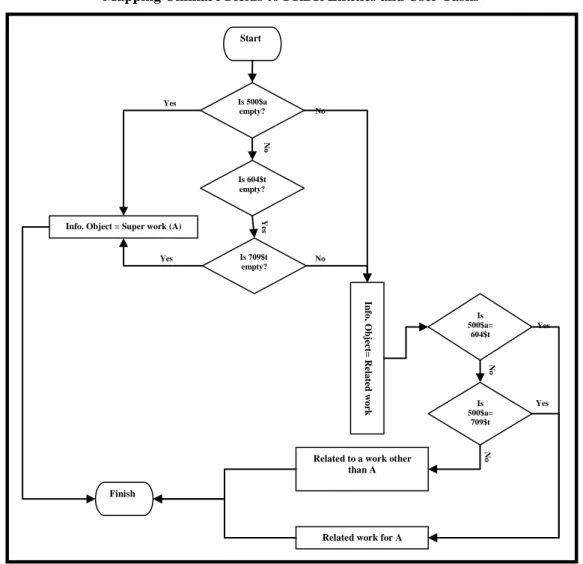
Figure 1: The automatic detection of works and related works based on unimark fields
Another important complementary point is the process of disambiguation. Focusing on Appendix 1, there are fields and also subfields which are capable of presenting attributes of several entities at the same time. This also comes true with user tasks. Although supporting multiple tasks simultaneously could be regarded as an advantage, presenting attributes of multiple entities at the same time leads to ambiguity (see Appendix 1 and Table 3). Migrating from the flat structured MARC-based system to a layered frbrized one automatically requires a clear field allocated crosswalk. Taniguchi (2004) points to this problem regarding MARC 21 and specifically focuses on the disambiguation of MARC fields and their role in representing attributes of the expression entity.
Uniform Titles are more suitable regarding automatic work detection, but due to their ambiguous nature in defining both expression and work, some sort of disambiguating protocols are required. These protocols should allocate each field exclusively, or at least semi-exclusively, to an entity (either work or expression). But there are some complications in this regard. The first is that Uniform titles are not mandatory. Some libraries do record the data associated with the field and some not. The second issue
Start
Is 500$a empty?
Is 604$t empty?
Is 709$t empty?
Is 500$a=
709$t
Info. Object = Super work (A)
Info.
Object=
Related
work
Finish
Yes Yes
Yes
Yes
No
No
No
No
Y
es
No
Is 500$a=
604$t
Related to a work other than A
deals with usual cataloging errors.
Due to their unique role in finding works and expressions and their collocating capability, specialists emphasize on the importance of uniform titles as linking devices (Velluci, 1991; Fattahi & Parirokh, 2002; Weihs & Howarth, 2008; Fattahi, 2010). Thus, disambiguating these fields help the automatic identification of different entities for frbrization. Although 500 and 501 (i.e. uniform titles) are regarded as powerful collocating devises especially in work and expression level, there are other blocks which are more specific with the work entity. Among them the block 7XX and specifically its name-title fields are outstanding.
Table 3 gives a general view about the ambiguity and specificity of blocks for representing 1st group entities. Here those blocks with less repetition in columns are assumed to be more specific in defining different entities. On the other hand, the combination of [604$a, 604$t] and [709$a, 709$t] bear useful data elements regarding work detection specifically (Figure 1 is an instance which supports this idea through a simplistic approach).
Table 3
Two Way Table Designating Supporting Blocks for 1st Group Entities and Also the User Tasks3
Find Identify select Obtain Sum.
Work
2XX 5XX 6XX 7XX
2XX 3XX 4XX 5XX 6XX 7XX
2XX 3XX 4XX 5XX
4
6
14
Sum. 4 6 4 --
Expression
1XX 2XX 5XX
1XX 2XX 3XX 4XX 5XX
1XX 2XX 3XX 4XX 5XX
5
13
Sum. 3 5 5 --
Manifestation
0XX 2XX 5XX
0XX 2XX 3XX 4XX 5XX
0XX 2XX 3XX 4XX
0XX 2XX 3XX 4XX 5XX
5
Find Identify select Obtain Sum.
Sum. 3 5 4 5
Item -- --
--
Sum. -- -- -- --
The block 4XX requires revisiting during the frbrization process. Not really useful in finding, but different fields of this block are suitable for identifying, selecting and obtaining different entities. The very nature of the recorded data elements in this block makes it suitable for revealing the relationships, especially those of work-work or work-expression ones. Due to the nature of the recorded data, series and supplements (fields: 410 - 423) and Preceding and Succeeding entities (fields: 430 – 435 & 440 – 445), these fields are mostly capable of representing work-work relationships, since they relate continuous documents each of which would be a distinct work. Other editions (fields: 451-456), due to the nature of data recorded in them, reflect work-expression and work-expression – work-expression relationships. Whether useful or not for the purpose of data-mining, limited instances of work-work, work–expression and also expression–expression are present in 4XX block. In other words, from all different instances of work- work relationships only series or continuous works are covered here. Other instances of work – work relationships, which their detection is helpful in better collocation of related works, have been disregarded. For instance, there are no specific fields in this block that relate different paraphrases of a work to that work. Also, there are no fields relating a dramatization or performance based on a work.
Last but not least it seems that the valuable attributes for identifying and selecting a work or expression are recorded in 3XX fields, but due to its unstructured and limited search functionality, this block is not suitable for automatic detection of work or expression.
Conclusion
This study claims to be inclusive. In other words, it was our aim to identify every field/ subfield which might have a single limited chance for being mapped to an entity/ user task. Thus, the resulting table (Appendix 1) should be reconsidered if it is to be used for data-mining different systems according to possible specific requirements of each system and the data elements recorded in it.
Currently, there are different national MARCs which have been developed based on the Unimarc. This study aimed to pave the way, to some extent at least, for system developers who work with different derivations of Unimarc in frbrizing systems.
recording the item attributes, need further analysis.
Notes
1. Arastoopoor and Niknia Worked on the Iran-MARC. Yet this study focuses on Unimarc. Also, it must be noted that Niknia focused only on user tasks but this study considers both user tasks and entities.
2. The main table was about 108 pages.
3. To be more concise we did not mention the name of Unimarc fields. You may find all the definitions and names at: http://archive.ifla.org/VI/3/p1996-1/sec-uni.htm
4. Limited repetition of some subfields for both tasks and entities.
References
Arastoopoor, Sh. (2010). Mapping the Iranian MARC to the functional requirements for bibliographic records (FRBR) model and a study of the viewsof the OPAC users
towards the model’s entities. Ph.D. Thesis. Mashhad: Ferdowsi University of Mashhad.
Delsey, T. (2002). Functional analysis of the MARC 21 bibliographic and holdings formats. Washington: Library of Congress. Retrieved on February 21, 2009 from
http://www.loc.gov/marc/marc-functional-analysis/home.html.
Fattahi, R. & Parirokh, M. (2002). Restructuring the Bibliographic Record for Better Management, Organization and Representation of Knowledge in the Global Online Environment: A New Approach. Paper Presented at The 7th ISKO International Conference Held in Granada, Spain 10-13 July 2002.
Fattahi, R. (2010). From information to knowledge: Super-works and the challenges in the organization and representation of the bibliographic universe. Firenze: Casalini Libri.
FRBR Review Group (2008). FRBR Bibliography. Retrieved on March 23, 2009 from http://infoserv.inist.fr/wwsympa.fcgi/d_read/frbr/FRBR_bibliography.rtf.
Functional Requirements for bibliographic Record [Final Report] (1998). IFLA Study Group on the Functional Requirements for Bibliographic Records. Retrieved on July 15, 2000from http://www.ifla.org/VII/s13/frbr/frbr.htm
Hegna, K. & Murtomaa, E. (2002). Data mining MARC to find: FRBR? Paper Presented in 68th IFLA Council and General Conference, August 18 – 24, 2002. Retrieved on August 24, 2010 from http://archive.ifla.org/IV/ifla68/papers/053-133e.pdf.
Joint Steering Committee for Development of RDA (2009). FRBR to RDA mapping. Retrieved on July 30, 2010 from: http://www.rda-jsc.org/docs/5rda-frbrrdamappingrev. pdf.
Maxwell, R. (2008). FRBR: A guide for the perplexed. Chicago: American Library Association.
Network Development and MARC Standards Office, Library of Congress (2001). UNIMARC to MARC 21 Conversion Charts: In Sequence by UNIMARC Fields
Network Development and MARC Standards Office, Library of Congress (2006). Displays for Multiple Version from MARC 21 and FRBR. Retrieved on December 7, 2009 from
http://www.loc.gov/marc/marc-functional-analysis/functional-analysis.html.
Niknia, M. (2010). Mapping MARC data elements to user tasks of FRBR based on the users’ capabilities. M.S. Thesis. Tehran: University of Tarbiat Moddares.
Pisannski, J. & Zumer, M. (2010a). Mental models of the bibliographic universe, part 1: Mental models of description. Journal of Documentation, 66 (5), 643-667.
Pisannski, J. & Zumer, M. (2010b). Mental models of the bibliographic universe, part 2: Comparison task and Conclusion. Journal of Documentation, 66 (5), 668 - 680.
Riva, P. (2004). Mapping MARC 21 linking entry fields to FRBR and Tillett's taxonomy of bibliographic relationships. Library Resources and Technical Services, 48 (2),130-143. Taniguchi, S. (2004). Expression level bibliographic entity record: A trial on creation from
preexisting MARC records. Cataloging & Classification Quarterly, 38 (2), 33-58. The ISBD Review Group (2004). Mapping of ISBD Elements to FRBR Entity: Attributes
and Relationships. Retrieved on December 24, 2009 from http://archive.ifla.org/VII/
s13/pubs/ISBD-FRBR-mappingFinal.pdf.
Vellucci, Sh. (1991). Uniform titles as linking devices. Cataloging & Classification Quarterly, 12 (1), 35-62.
Weihs, J. & Howarth, L. (2008). Uniform titles from AACR to RDA. Cataloging & Classification Quarterly, 46 (4), 363-384.
Appendix 1. A two way mapping table for the 1st group entities and user tasks of FRBR and their respected fields & subfields in Unimarc
Work Expression Manifestation Item
To Find
010$a// 010$z// 010$a//
011$a// 011$y// 011$z// 013$a// 013$z// 014$a// 015$a// 015$z// 016$a//016$z 017$a// 021$b// 022$b// 120$a//
123$d// 123$e// 123$f// 123$g// 123$i// 123$j// 123$k// 123$m// 123$n// 123$b// 123$c// 200$a// 206$a// 200$a// 225$a//
200$a// 200$e// 200$i// 225$a// 225$v// 225$x// 500$a// 500$b// 500$j//
500$h// 500$i// 500$k// 500$q// 500$r// 500$s// 500$u// 500$w// 501$a// 501$b// 501$e// 501$j// 501$k// 501$m// 501$r// 501$s// 501$u// 501$w//
500$a// 500$m// 500$w// 501$m//
510$a// 510$h// 510$i// 512$a// 512$h// 512$i// 513$a// 513$h// 513$i// 514$a// 514$h// 514$i// 515$a// 515$h// 515$i// 516$a// 516$h// 516$i// 517$a// 517$h// 517$i// 518$a// 518$h// 518$i// 520$a// 520$h// 520$i// 530$a//
531$a// 532$a// 540$a//
541$a// 541$h// 541$i// 545$a// 545$h// 545$i// 600$f// 600$j//
601$j// 602$t// 604$a// 604$j// 605$a// 605$i// 605$h// 605$j// 605$k// 605$l// 605$m// 605$q// 606$j// 607$j// 608$j// 700$f// 701$f// 702$f//
709$a// 709$t// 709$j// 709$x// 709$y// 709$z// 711$e//711$d// 711$f// 712$e// 712$d// 712$f//
700$f// 701$f//
To Identify
010$a// 010$z// 010$a//
011$a// 011$y// 011$z// 012$a// 013$a// 013$z// 014$a// 015$a// 015$z// 016$a// 016$z// 017$a// 021$b// 022$b// 011$z// 012$a// 110$a// 120$a// 122$a//
123$d// 123$e// 123$f// 123$g//123$i// 123$j// 123$k// 123$m// 123$n// 125$a// 128$a//
101$a// 101$c// 101$f// 105$a//
110$a// 115$a// 116$a//
123$b// 123$c// 123$h// 125$a// 128$a// 106$a// 115$a// 116$a// 130$a// 200$a// 200$b// 206$a// 200$a// 200$b// 205$a//
Work Expression Manifestation Item 215$a// 215$c// 215$e//
225$a//
206$a// 208$a//
210$a// 210$c// 210$d// 210$e// 210$g// 210$h// 215$a// 215$c// 215$d// 215$e//
230$a//
207$a//
225$a//225$v// 225$x// 230$a//
300$a// 304$a// 305$a// 307$a// 315$a// 320$a// 321$a// 326$a// 328$a// 336$a//
300$a// 304$a// 305$a// 307$a// 315$a// 321$a// 322$a// 326$a// 336$a//
300$a// 301$a// 302$a// 303$a// 304$a// 305$a// 306$a// 307$a// 308$a// 310$a// 311$a// 312$a// 313$a// 314$a// 316$a// 316$9//
317$a// 322$a// 323$a// 324$a// 325$a// 332$a//
345$c// 345$d//
310$a// 316$a// 316$9//
410$e// 410$p// 410$t// 411$e// 411$p// 411$t// 421$e// 421$p// 422$e// 423$e// 430$e// 431$e// 432$e// 433$e// 434$e// 435$e// 436$e// 437$e// 440$e// 441$e// 442$e// 443$e// 444$e// 445$e// 446$e// 461$e// 462$e// 463$e// 464$e// 470$e// 488$e//
410$e// 411$e// 421$e// 422$e// 423$e// 430$e// 431$e// 432$e// 433$e// 434$e// 435$e// 436$e// 437$e// 440$e// 441$e// 442$e// 443$e// 444$e// 445$e// 446$e// 447$e// 448$e// 451$e// 453$e// 453$p// 454$e// 461$e// 462$e// 463$e// 464$e// 470$e// 488$e//
410$e// 410$p// 410$t// 410$x// 410$z// 411$e// 411$p// 411$t// 411$x// 411$z// 421$e// 421$p// 421$t// 421$x// 421$z// 422$e// 422$p// 422$t// 422$x// 422$z// 423$e// 423$p// 423$t//423$x// 423$z// 430$e// 430$p// 430$t// 430$x//430$z// 431$e// 431$p// 431$t// 431$x// 431$z// 432$e// 432$p// 432$t// 432$x// 432$z// 433$e// 433$p// 433$t// 433$x// 433$z// 434$e// 434$p// 434$t// 434$x// 434$z// 435$e// 435$p// 435$t// 435$x// 435$z// 436$e// 436$p// 436$t// 436$x// 436$z// 437$e// 437$p// 437$t// 437$x// 437$z// 440$e// 440$p// 440$t// 440$x// 440$z// 441$e// 441$p// 441$t// 441$x// 441$z// 442$e// 442$p// 442$t// 442$x// 442$z// 443$e// 443$p// 443$t// 443$x// 443$z// 444$e// 444$p// 444$t// 444$x// 444$z// 445$e// 445$p// 445$t// 445$x// 445$z// 446$e// 446$p// 446$t// 446$x// 446$z// 447$e// 447$p// 447$t// 447$x// 447$z// 448$e// 448$p// 448$t// 448$x// 448$z// 451$e// 451$p// 451$t// 451$x// 451$z// 452$e// 452$p// 452$t// 452$x// 452$z// 453$e// 453$p// 453$t// 453$x// 453$z// 454$e// 454$p// 454$t// 454$x// 454$z// 455$e// 455$p// 455$t// 455$x// 455$z// 456$e// 456$p// 456$t// 456$x// 456$z// 461$e// 461$p// 461$t// 461$x// 461$z// 462$e// 462$p// 462$t// 462$x// 462$z// 463$e// 463$p// 463$t// 463$x// 463$z// 464$e// 464$p// 464$t// 464$x// 464$z// 470$e// 470$p// 470$t// 470$x// 470$z// 481$e// 481$p// 481$t// 481$x// 481$z// 482$e// 482$p// 482$t// 482$x// 482$z// 488$a// 488$c// 488$d// 488$e// 488$i// 488$p// 488$t//
481$e// 482$e//
500$a// 500$b// 500$h// 500$i// 500$k// 500$q// 500$r// 500$s// 500$u// 500$w//
501$a// 501$b// 501$e// 501$j// 501$k// 501$m// 501$r// 501$s// 501$u// 501$w//
500$a// 500$m//500$w// 501$m//
510$a// 510$h// 510$i// 512$a// 512$h// 512$i// 513$a// 513$h// 513$i// 514$a// 514$h// 514$i// 515$a// 515$h// 515$i// 516$a// 516$h// 516$i// 517$a// 517$h// 517$i// 518$a// 518$h// 518$i// 520$a// 520$h// 520$i// 530$a//
531$a// 532$a// 540$a//
541$a// 541$h// 541$i// 545$a// 545$h// 545$i// 549$a//
Work Expression Manifestation Item 605$j// 605$k// 605$l//
605$m// 605$q// 606$j// 607$j// 608$j//
700$f// 701$f// 701$4// 702$f// 702$4// 709$a// 709$t// 709$j// 709$x// 709$y// 709$z// 710$d// 710$f// 710$e// 710$4//
711$e// 711$d// 711$f// 711$4//
712$e// 712$d// 712$f// 712$4//
720$4// 721$4// 722$4// 730$4//
700$f// 701$f//
To Select
012$a// 016$d// 110$a// 120$a// 122$a//
123$d// 123$e// 123$f// 123$g// 123$i// 123$j// 123$k// 123$m// 123$n// 125$a// 128$a//
101$a// 101$c// 101$f// 105$a// 110$a// 115$a// 116$a// 117$a// 123$b//123$c// 123$h// 128$a// 135$a//
106$a// 115$a// 116$a// 117$a// 126$a// 130$a// 135$a//
200$b// 206$a// 215$a// 215$c// 215$e// 225$a//
200$b// 205$a// 206$a// 208$a//
210$a// 210$d// 210$h// 215$a// 215$c// 215$d// 215$e//
230$a//
200$b//
205$a// 205$f// 205$g// 207$a// 211$a// 225$v// 225$x// 230$a//
326$a// 327$a// 328$a// 333$a//
322$a// 326$a// 327$a// 330$a// 334$a// 337$a//
325$a// 332$a// 337$a// 345$a// 345$c// 345$d// 410$e// 410$p//
411$e// 411$p// 421$e// 421$p// 422$e// 423$e// 430$e// 431$e// 432$e// 433$e// 434$e// 435$e// 436$e// 437$e// 440$e// 441$e// 442$e// 443$e// 444$e// 445$e// 446$e// 461$e// 462$e// 463$e// 464$e// 470$e// 488$e//
422$e// 423$e// 430$e// 431$e// 432$e// 433$e// 434$e// 435$e// 436$e// 437$e// 440$e// 441$e// 442$e// 443$e// 444$e// 445$e// 446$e// 447$e// 448$e// 451$e// 453$e// 453$p// 454$e// 461$e// 462$e// 463$e// 464$e// 470$e// 488$e// 410$e// 410$p// 411$e// 411$p// 421$e// 421$p// 422$e// 422$p// 423$e// 423$p// 430$e// 430$p// 431$e// 431$p// 432$e// 432$p// 433$e// 433$p// 434$e// 434$p// 435$e// 435$p// 436$e// 436$p// 437$e// 437$p// 440$e// 440$p// 441$e// 441$p// 442$e// 442$p// 443$e// 443$p// 444$e// 444$p// 445$e// 445$p// 446$e// 446$p// 447$e// 447$p// 448$e// 448$p// 451$e// 451$p// 452$e// 452$p// 453$e// 453$p// 454$e// 454$p// 455$e// 455$p// 456$e// 456$p// 461$e// 461$p// 462$e// 462$p// 463$e// 463$p// 464$e// 464$p// 470$e// 470$p// 481$e// 481$p// 482$e// 482$p//
488$a// 488$c// 488$d// 488$e// 488$i// 488$p//
481$e// 482$e//
500$j// 500$h// 500$i// 500$k//
501$m// 501$r//
Work Expression Manifestation Item
To Obtain
010$a// 010$d// 010$z// 010$a//
011$a// 011$y// 011$z// 013$a// 013$z// 014$a//
015$a// 015$d// 015$z// 016$a//016$d// 016$z 017$a//
022$b//
125$a// 101$a//
105$a// 125$a// 106$a// 116$a// 126$a// 130$a// 200$a// 200$b// 215$c// 225$a// 200$a// 200$b// 205$a//
210$a// 210$c// 210$d// 210$e// 210$g// 210$h// 215$c// 215$d 230$a//
200$a// 200$b// 200$e// 200$i// 205$a// 205$f// 205$g// 211$a//
225$a// 225$v// 225$x// 230$a//
328$a// 325$a//
332$a//
345$b// 345$c// 345$d//
345$a//
410$e// 410$p// 410$t// 411$e// 411$p// 411$t// 421$e// 421$p// 422$e// 423$e// 430$e// 431$e// 432$e// 433$e// 435$e// 436$e// 437$e// 440$e// 441$e// 442$e// 443$e// 444$e// 445$e// 446$e// 461$e// 462$e// 463$e// 464$e// 470$e// 488$a//
410$e// 411$e//
421$e// 422$e// 423$e// 430$e// 431$e// 432$e// 433$e// 434$e// 435$e// 436$e// 437$e// 440$e// 441$e// 442$e// 443$e// 444$e// 445$e// 446$e// 447$e// 448$e// 451$e// 453$e// 453$p// 454$e// 461$e// 462$e// 463$e// 464$e// 470$e// 488$a//
410$e// 410$p// 410$t// 410$x// 410$z// 411$e// 411$p// 411$t// 411$x// 411$z// 421$e// 421$p// 421$t// 421$x// 421$z// 422$e// 422$p// 422$t// 422$x// 422$z// 423$e// 423$p// 423$t//423$x// 423$z// 430$e// 430$p// 430$t// 430$x//430$z// 431$e// 431$p// 431$t// 431$x// 431$z// 432$e// 432$p// 432$t// 432$x// 432$z// 433$e// 433$p// 433$t// 433$x// 433$z// 434$e// 434$p// 434$t// 434$x// 434$z// 435$e// 435$p// 435$t// 435$x// 435$z// 436$e// 436$p// 436$t// 436$x// 436$z// 437$e// 437$p// 437$t// 437$x// 437$z// 440$e// 440$p// 440$t// 440$x// 440$z// 441$e// 441$p// 441$t// 441$x// 441$z// 442$e// 442$p// 442$t// 442$x// 442$z// 443$e// 443$p// 443$t// 443$x// 443$z// 444$e// 444$p// 444$t// 444$x// 444$z// 445$e// 445$p// 445$t// 445$x// 445$z// 446$e// 446$p// 446$t// 446$x// 446$z// 447$e// 447$p// 447$t// 447$x// 447$z// 448$e// 448$p// 448$t// 448$x// 448$z// 451$e// 451$p// 451$t// 451$x// 451$z// 452$e// 452$p// 452$t// 452$x// 452$z// 453$e// 453$p// 453$t// 453$x// 453$z// 454$e// 454$p// 454$t// 454$x// 454$z// 455$e// 455$p// 455$t// 455$x// 455$z// 456$e// 456$p// 456$t// 456$x// 456$z// 461$e// 461$p// 461$t// 461$x// 461$z// 462$e// 462$p// 462$t// 462$x// 462$z// 463$e// 463$p// 463$t// 463$x// 463$z// 464$e// 464$p// 464$t// 464$x// 464$z// 470$e// 470$p// 470$t// 470$x// 470$z// 481$e// 481$p// 481$t// 481$x// 481$z// 482$e// 482$p// 482$t// 482$x// 482$z// 488$a// 488$c// 488$d// 488$e// 488$i// 488$p// 488$t//
481$e// 482$e//
501$e// 501$j// 501$m// 501$r// 501$s// 501$u// 501$w//
501$m// 510$a// 510$h// 510$i//
512$a// 512$h// 512$i// 513$a// 513$h// 513$i// 514$a// 514$h// 514$i// 515$a// 515$h// 515$i// 516$a// 516$h// 516$i// 517$a// 517$h// 517$i// 518$a// 518$h// 518$i// 520$a// 520$h// 520$i// 530$a//
531$a// 532$a//