ORIGINAL RESEARCH ARTICLE
Deterrents to Immediate Antiretroviral Therapy Initiation by
Pregnant Women Living with HIV in Hhohho Region, Swaziland
DOI: 10.29063/ajrh2018/v22i4.8
Harriet T Mamba
1and Khumbulani W Hlongwana
1*
School of Nursing and Public Health, University of KwaZulu-Natal, Durban, South Africa1
*For Correspondence: Email: [email protected]; [email protected]; Phone: Tel: +27 31 260 4383
Abstract
Despite robust evidence that immediate antiretroviral therapy (ART) initiation reduces transmission of HIV from mother to child, some pregnant women living with HIV in sub-Saharan Africa (SSA), and Swaziland in particular, continue to refuse ART. This study explored the reasons which deter pregnant women living with HIV from immediate ART initiation in the Hhohho region, Swaziland, using grounded theory design. In-depth interviews with ten purposively selected pregnant women who refused immediate ART initiation were carried out in three high volume health facilities. The thematic analysis revealed key reasons that deterred women from immediate ART initiation. These were shock and perceived stigma, participants‘ conceptualisation of health and ART and the fear of ART and its side effects. The study offers qualitative evidence from Swaziland that might help illuminate issues that prevent pregnant women from accepting immediate ART initiation for their own health and that of their children. The evidence generated from this study can be used for developing targeted and culturally appropriate intervention strategies for Swazi women. (Afr J Reprod Health 2018; 22[4]: 72-80).
Keywords: Prevention of Mother-to-Child transmission, lifelong ART, pregnant women, barriers, stigma, Swaziland
Résumé
Malgré des preuves solides que l'instauration immédiate d'un traitement antirétroviral (TAR) réduit la transmission du VIH de mère à enfant, certaines femmes enceintes vivant avec le VIH en Afrique subsaharienne (ASS), et au Swaziland en particulier, continuent de refuser le traitement antirétroviral. Cette étude a exploré les raisons qui dissuadent les femmes enceintes vivant avec le VIH de se lancer immédiatement dans le traitement antirétroviral dans la région de Hhohho au Swaziland, en utilisant une conception théorique enracinée. Des entretiens approfondis avec dix femmes enceintes sélectionnées à dessein et ayant refusé l'initiation immédiate du traitement antirétroviral ont été menés dans trois centres de santé à volume élevé. L'analyse thématique a révélé les principales raisons qui ont dissuadé les femmes d'initier immédiatement un traitement antirétroviral. Il s‘agissait d‘un choc et d‘une stigmatisation perçue, de la conceptualisation de la santé et du traitement antirétroviral par les participantes, ainsi que de la peur des antirétroviraux et de leurs effets secondaires. L'étude présente des preuves qualitatives du Swaziland qui pourraient aider à éclairer les problèmes qui empêchent les femmes enceintes d'accepter l'initiation immédiate d'un traitement antirétroviral pour leur propre santé et celle de leurs enfants. Les preuves issues de cette étude peuvent être utilisées pour développer des stratégies d‘intervention ciblées et culturellement appropriées pour les femmes swazies. (Afr J Reprod Health 2018; 22[4]: 72-80).
Mots-clés: prévention de la transmission mère-enfant, traitement antirétroviral tout au long de la vie, femmes enceintes, obstacles, stigmatisation, Swaziland
Introduction
Human immuno-deficiency virus (HIV) and acquired immuno-deficiency syndrome (AIDS) continue to be a serious health challenge, globally, particularly amongst pregnant women and their babies, through mother-to-child transmission (MTCT)1. Mother-to-child transmission of HIV
regard, despite the persistent challenge of the HIV burden globally, and these successes have been attributed to various interventions5,6. These interventions include antiretroviral therapy (ART) initiation amongst pregnant women5,7,8.
In 2011, the WHO made an important recommendation for the global community, that all pregnant women living with HIV should be initiated on ART, irrespective of their CD4 count or WHO clinical staging4,9,10. This strategy was aimed at reversing the 3% of new MTCT of HIV in children between the ages of four to eight weeks, to zero transmission11, while improving health outcomes for the mother, infant and the sexual partner9,10,12. Despite this strategy, some women, especially pregnant women, continue to experience challenges in accessing ART services, due to various individual, interpersonal,
community and health systems-related
barriers1,5,13,14. These challenges manifest largely through the refusal of pregnant women living with HIV to be initiated into freely available ART services9,10.
In 2014, Swaziland adopted the strategy of universal access to treatment, in order to ensure that all pregnant women living with HIV had unhindered access to ART services15,16, irrespective of their WHO clinical staging11,15. The 2015 HIV programmes report for the Ministry of Health (MoH) in Swaziland, revealed that 7% of pregnant women living with HIV and eligible for ART initiation were not initiated on ART15. This culminated in the MoH scaling up the national lifelong ART treatment guidelines with the aim of ensuring that all pregnant women living with HIV were initiated and continued to be on ART care, irrespective of their CD4 count16.
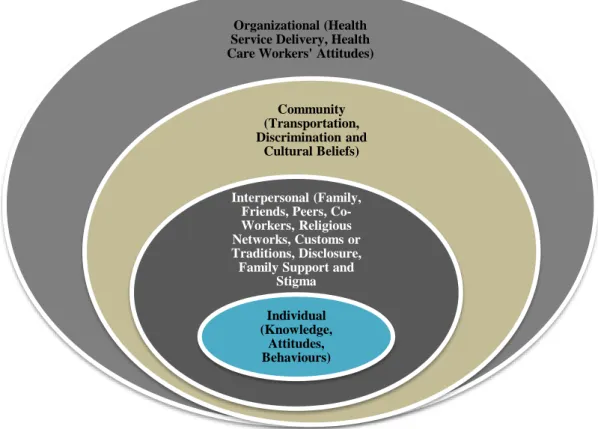
This paper explores the reasons that deter pregnant women living with HIV from immediate initiation of ART in the Hhohho Region, Swaziland, drawing from an adapted version of the Socio-Ecological Model (SEM)17 (Figure 1). The evidence generated from this study can help guide lifelong ART treatment, programme reorientation and implementation in the country. The SEM model illustrates a complex interplay of the individual level (attitude, behaviour and knowledge towards ART), the interpersonal level/social environment (processes including
culture, family, partner support, religious beliefs and stigma), the community level (transportation cost) and the organizational level (health care workers‘ skills, availability of service delivery and healthcare workers‘ attitude). The socio-ecological model provides a useful framework for achieving a better understanding of the reasons pregnant women living with HIV refuse uptake of ART, which can be used for developing targeted and culturally appropriate intervention strategies for Swazi women17.
Methods
The study was conducted in Hhohho, which is one of the four regions in Swaziland. Swaziland is a small, landlocked country in Southern Africa, with a population of 1,132,65718,19. About 63% of the population live below the poverty line18 with an unemployment rate of 41.7%19. The study was conducted in three health facilities in Hhohho and these are the Mbabane Public Health Unit (PHU), the Motshane clinic and the EMkhuzweni Health Centre. All the health facilities included in the study are high volume; two of which (PHU and Motshane clinic) are in the urban area of Mbabane, while the third (EMkhuzweni Health Centre) facility is in a rural area, 150 kilometers away from Mbabane city. The choice of these facilities for the study assumed that they were likely to experience high numbers of refusals to immediate ART initiation, since they are high volume facilities.
This study was conducted through qualitative methods employing the interpretivist paradigm, which holds the view that exploring and understanding the social world should be done through the collective lenses of the researcher and the participants20,21. The choice of this paradigm was informed by its belief that reality is subjective and multiple as seen from different perspectives22, thereby encouraging the researcher to explore the
phenomena through interacting with
The study design used a hybrid approach to grounded theory, in that some themes were deduced from the SEM, while others were inductively formulated from the data generated by the study. This design enabled the researchers to systematically collect and analyse data iteratively20,25. The researchers used the SEM to identify suitable literature and to develop questions for the interview guide, which in turn facilitated the analysis. Using the SEM (Figure 1), the research focused on exploring the individual, interpersonal, community and health service delivery factors preventing pregnant women living with HIV from immediate ART initiation in Hhohho Region, Swaziland. There were 16 pregnant women who were identified as meeting the criteria for inclusion in the study. Ten (10) of these women consented to participate in the study while six refused (five from urban areas and one from a rural area). The consenting women were interviewed individually, using the in-depth interview guide. Sampling followed a heterogeneous frame to ensure that participants had diverse characteristics, including geographic distribution. All interviews were conducted in SiSwati (the local language), face-to-face using a private room at the facilities and were audio recorded with the participants‘ consent. There were no obvious signs that conducting interviews at the facilities affected the study.
Audio recordings were transcribed word-for-word and translated from SiSwati to English. Transcripts and audio files were sent to the study supervisor to ensure rigour and as part of the analyst triangulation process21. The principal investigator simultaneously played the audio recording, while reading the transcripts, to improve the quality of transcription. The transcripts were printed, read, and re-read to create meaning, culminating in the identification of the patterns and themes21,23, through a manually conducted process. While saturation was not a guiding principle in the sampling for this study, theme saturation was serendipitously reached26,27. However, meaning saturation, whereby a richly textured understanding of issues is developed, was not determined26. The study obtained ethical approval from the University of KwaZulu–Natal (UKZN) Biomedical Research Ethics Committee
(BE423/17) and from the Swaziland Scientific Ethics Committee (SEC). Permission was obtained from the Ministry of Health Hhohho Regional Health Management Team.
Results
Demographic profiles of participants
Ten pregnant women aged 20 to 45 years, with gravida ranging from 1 to 5 participated in this study (Table 1). Only one participant had a primary level education and only two participants were married. Three participants were from the EMkhuzweni Health Centre, six were from the Mbabane Public Health Unit and one was from the Motshane clinic (Table 1). All participants reported that they had not been aware of their HIV positive status prior to their pregnancy. Three themes emerged from the analysis. These themes were the shock and perceived stigma of ART, the participants‘ conceptualisation of health and ART, and their fear of ART. The shock and perceived stigma are presented using the four SEM levels. The first two levels deal with individual and interpersonal level issues, respectively. On the other hand, the third and fourth levels focus on community and organisational level issues, respectively.
Shock and Perceived Stigma
The individual level
The results of this study revealed varied emotional responses, as the participants required time to deal with the shocking news of their HIV status, resulting in their delay or non-participation in immediate ART initiation. Participants expressed emotional upheavals, including the feeling of pain (Participants 1, 2, 4, 9), confusion (Participants 1 and 3), worries about the baby and how to inform their partner (Participants 3 and 8), and the shock of receiving an HIV positive diagnosis (Participants 6, 7, 10). These emotions affected the women‘s decisions regarding ART initiation.
Figure 1: The CDC Socio-Ecological Model: Framework for Disease Prevention. Source: Adapted from Gourlay et al.22
Table 1: Characteristics of Pregnant Women living with HIV in Hhohho Region, Swaziland
Participants Residence Age Gravida Educational level Marital status Aware of HIV+ status prior to pregnancy
P1 Urban 20 1 High school Not married No
P2 Urban 24 1 High school Not married No
P3 Urban 38 3 High school Not married No
P4 Urban 21 2 High school Not married No
P5 Urban 28 4 High school Not married No
P6 Urban 32 2 High school Not married No
P7 Urban 25 3 High school Not married No
P8 Rural 30 5 Primary school Married No
P9 Rural 22 1 High school Not married No
P10 Rural 45 4 High school Married No
―I did not believe them, even now I still do not… as I said, I do not trust them…...but immediately I [will] get [a] second opinion from another place, then I will begin the medication….‖ (Participant 5)
The interpersonal level/social environment
The study showed a wide range of responses at an interpersonal level. On different occasions the male partner‘s knowledge of his HIV status either facilitated or hindered the acceptance of their
female partner‘s HIV positive status (Participants 7, 10). While some communities
showed prejudice against people living
Organizational (Health Service Delivery, Health Care Workers' Attitudes)
Community (Transportation, Discrimination and
Cultural Beliefs)
Interpersonal (Family, Friends, Peers, Co-Workers, Religious Networks, Customs or Traditions, Disclosure, Family Support and
Stigma
Individual (Knowledge,
with HIV by mocking them, and gossiping about them (Participants 2-7, 9), others were
receptive to helping these women (Participants 8, 10).
―I don‘t know how I will inform my husband, and how he will treat me.‖ (Participant 8)
―I was afraid that my partner, whom I was staying with, would leave me and then how would I support the child?‖ (Participant 3)
―The person I‘m in a relationship with will not…. (Continues to cry) ………. will not, because he does not want even to go for the test (cries and speaks at the same time).‖
(Participant 5)
―Currently I do not have a job and am depending upon my partner financially, am afraid he may evict me… My husband had a tendency of saying if I can test HIV positive, I would go back home. So it was difficult for me to tell him when I discovered that I am HIV positive.‖ (Participant 8)
Knowing one‘s HIV status and the burden of disclosing it to the significant other, is a huge responsibility, given the unknown reaction of the person disclosed to. Trust is key to deciding who to disclose to (Participants 1-3, 6-7, 9-10).
―I would inform my mother, who would in turn report to my dad and they would both talk to me about the matter.‖ (Participant 1)
―It was difficult enough to disclose falling pregnant and being accepted by my family…. even worse now that I am infected with HIV infection, it was overburdening.‖ (Participant 4)
Disclosing one‘s HIV status to one‘s partner has many potential ramifications, including emotional abuse, social isolation and economic exclusion. This is particularly true for women who are economically dependent on their male partners for their livelihoods (Participant 3).
―Disclosing your status, especially to your partner, is sometimes hard. As the female I currently don‘t have a job and I‘m depending
upon my partner financially… if there was a way that the clinic offered some form of financial support after testing HIV positive, I would be able to support myself even after he had left me.‖ (Participant 3)
The community levels
Since ART initiation is an indirect form of disclosure of one‘s HIV status, fear of discrimination emerged as an important deterrent to pregnant women‘s immediate ART initiation.
―…I was just thinking that when people discover that I am taking ART they will gossip about me.‖ (Participant 9)
―This type of disease is not commonly accepted, if people see me taking ART then they would discriminate against me.‖
(Participant 2)
The organizational level
Participants‘ experiences about the helpfulness of counselling and education provided by the health care workers were consistent. They stated that they were provided with counselling, reassured that it is possible to live with the virus, and provided with education (Participants 4, 9-10).
―They said even if I am having HIV in my blood I must not despair because there is still life even when you have HIV.‖ (Participant 10)
―They said we are forced to take the pills if found to be HIV positive.‖ (Participant 6)
Participants shared sentiments that treatment given by health care workers varied across the different cadres, including nurses, lay counsellors and mentor mothers (Participants 1-4, 7-10). Some participants viewed health care workers as inconsiderate and rude which caused participants to choose not to initiate ART. Others felt that health care workers treated them well.
about my life and expose myself to the virus?‘… It‘s not the words per se, but the
tone in which they talk to you...if they could talk to us in a way that is comforting.‖
(Participant 4)
―They [health care workers] took good care of me at my facility, they continue to give me counselling.‖ (Participant 8)
Participants’ conceptualisation of health and
ART
The second theme that emerged from this study was the view that ART treatment is a gesture of illness, whereas they did not feel ill.
―When I am looking at myself, I see myself as healthy, why should I start medication when I am big or healthy….? Why am I not losing weight so that it can be evident that I am sick?‖ (Participant 9)
Some women were more concerned about their body image, hence they feared that taking ART would interfere with how they looked (Participants 3, 7, 10).
―…. knowing that once I start the medication my body structure will change as everyone else, I‘ve seen who is on the medication they change. It will make living in the community even harder as they will now be aware that I have already started the medication.‖
(Participant 3)
Fear of ART and its side effects
The final theme that emerged was that some participants feared that taking ART is a lifetime commitment and may still lead to death and/or the development of side-effects (Participants 1, 6).
―Once you begin them you drink them for life then you will eventually die on your own.‖
(Participant 1)
―I don‘t have much knowledge …it differs from person to person and also how they are built up physically, others start the medication
and do not become sick, but others begin the medication and then they start to be sick instantly.‖ (Participant 6)
Also, the lifetime commitment to ART was worrisome to some participants, particularly the need to take pills every day. This fear appeared to outweigh the potential benefits of immediate ART initiation (Participants 3-6).
―If there was another alternative compared to the pills, I would have already been initiated on it, because I have a difficult time with pills … I‘m not refusing to take them, it‘s just that sometimes I will forget to take them because I don‘t like taking pills.‖ (Participant 6)
Discussion
The WHO has recommended that countries implement lifelong ART treatment for pregnant and lactating women with HIV and AIDS, in order to reduce MTCT and mothers‘ mortality28,29
. Despite the noble basis of this recommendation, some HIV positive pregnant women continue to refuse ART initiation in Swaziland. The key reasons seen to be deterring women from immediate ART initiation included the shock and
perceived stigma, the participants‘
conceptualisation of health and ART and the fear of ART and its side effects. This study revealed that testing positive for pregnancy and then testing positive for HIV can be overwhelming, culminating in fear, pain, confusion, denial and disappointment, which in turn makes immediate ART uptake difficult. These were the feelings the women experienced, and they occur at multiple levels of the SEM. These results are comparable to the studies conducted in South Africa and Malawi, where women asked health care workers for more time to assimilate their HIV results and to confirm them in other health facilities17,30,31.
The shock and perceived stigma which manifested through a fear of being discriminated against and rejected by partners, family and community members, is consistent across sub-Saharan Africa (SSA)17,32-34. Fear of stigma has also been documented in other studies5,17,34,35. The
congruent with the results from South Africa, Malawi and Tanzania17,32,34,36, especially in cases where women were financially dependent on male partners37,38. Mothers are the first port of call in the disclosure trail, in line with cultural practices. Our study showed that denial, emotional pain and shock were the main deterrents to immediate ART initiation.
Another major barrier noted during our study was the scepticism about being subjected to lifelong ART, especially within the context that the participants reported not feeling sick. This too is congruent with results from other studies31,36. Similar to other studies, women were not keen on being initiated on ART, fearing that side-effects would interfere with their physiological processes, thereby affecting psychological sense of self17,34,37,39,40. This refusal by women to be initiated on lifelong ART requires urgent attention before affecting the broader population.
The strength of this study was its ability to reach out to women and open a conversation regarding their behaviours and beliefs about immediate ART initiation in a non-judgmental manner. Most studies would normally deal with issues affecting large populations, and intended for generalisation, thus marginalising the few and vulnerable people. The use of in-depth interviews enabled us to gather information that would not have been possible with questionnaires. Participants were able to express their emotions to an independent researcher, who was not part of any health facility.
Study Limitation
A limitation of the current study was its somewhat narrow focus on pregnant women living with HIV, aged 18 to 49 years old, and seen in the high-volume health facilities in the Hhohho region from October 2017 to March 2018. Teenage pregnancy is a challenge in Swaziland as it accounts for 24% of all pregnancies41, yet this group was excluded from the study. Furthermore, Manzini is the largest region yet it was excluded from the study on practical and logistical grounds. Future studies should consider covering the whole of Swaziland, including different age groups, such as teenagers.
Conclusion
This study explored the reasons deterring pregnant women living with HIV from immediate ART initiation in Swaziland, to enable the development of targeted and culturally appropriate intervention strategies for Swazi women. Using the SEM, this study explored multiple and complex factors involved in pregnant women‘s decision to refuse immediate ART initiation. The results of this study may not only be useful for Swazi women, but other women with similar experiences in comparable settings.
Contribution of Authors
Harriet T. Mamba led the conceptualisation and the design of the study, the collection and analysis of data, and the drafting of the manuscript. Khumbulani W. Hlongwana provided the overall scientific guidance to the conceptualisation and the design of the study, the development of study tools, the data analysis and write-up. All authors approved the submission of this manuscript.
Acknowledgement
The Authors would like to recognize the University of KwaZulu-Natal library for providing all relevant information needed, and the Hhohho regional management team for allowing us to use their facilities. Our greatest appreciation goes to the participants who agreed to partake in the study. Thank you for your patience and willingness. The study was self-funded.
References
1. HIV/AIDS JUNPO. Global AIDS response progress reporting 2014: construction of core indicators for monitoring the 2011 United Nations political declaration on HIV and AIDS. AIDS. 2014.
2. Meyers K, Qian H, Wu Y, Lao Y, Chen Q,Dong X, Li H, Yang Y, Jiang C and Zhou Z. Early Initiation of ARV During Pregnancy to Move towards Virtual Elimination of Mother-to-Child-Transmission of HIV-1 in Yunnan, China. PLoS ONE. 2015; 10: e0138104.
UNAIDS/JC2910E. 2017.
4. Vrazo AC, Sullivan D and Ryan PB . Eliminating Mother-to-Child Transmission of HIV by 2030: 5 Strategies to Ensure Continued Progress. Global Health: Science and Practice. 2018; 6: 249-56. 5. Duff P, Kipp W, Wild TC, Rubaale T and Okech-Ojony
J. Barriers to accessing highly active antiretroviral therapy by HIV-positive women attending an antenatal clinic in a regional hospital in western Uganda. Journal of the International AIDS Society. 2010; 13: 37.
6. Eaton JW, Rehle TM, Jooste S, Nkambule R, Kim AA, Mahy M and Hallett TB . Recent HIV prevalence trends among pregnant women and all women in sub-Saharan Africa: implications for HIV estimates.
AIDS. 2014; 28: S507-S14.
7. World Health Organization. Global Health Sector Strategy on HIV, 2016–2021. Draft for consultation. 2015.
8. Mofenson LM. New challenges in the elimination of pediatric HIV infection: the expanding population of HIV-exposed but uninfected children. Clinical Infectious Diseases. 2015: civ064.
9. World Health Organization. Guideline on when to start antiretroviral therapy and on pre-exposure prophylaxis for HIV. World Health Organization, 2015.
10. Ahmed S, Kim MH and Abrams EJ. Risks and benefits of lifelong antiretroviral treatment for pregnant and breastfeeding women: a review of the evidence for the Option B+ approach. Current opinion in HIV and AIDS. 2013; 8: 474-89.
11. HIV/AIDS JUNPO. The gap report. Geneva: UNAIDS; 2014.
http://www.unaids.org/en/resources/campaigns/201 4/2014gapreport/gapreport [accessed 23 March 2017].
12. Granich R, Gupta S, Hersh B, Williams B, Montaner J, Young B and Zunga JM. Trends in AIDS deaths, new infections and ART coverage in the top 30 countries with the highest AIDS mortality burden; 1990–2013. PLoS ONE. 2015; 10: e0131353. 13. Black S, Zulliger R, Marcus R, Mark D, Myer L and
Bekker LG. Acceptability and challenges of rapid ART initiation among pregnant women in a pilot programme, Cape Town, South Africa. AIDS Care. 2014; 26: 736-41.
14. Ferguson L, Grant AD, Watson-Jones D, Kahawita T, Ong'ech JO and Ross DA. Linking women who test HIV-positive in pregnancy-related services to long-term HIV care and treatment services: a systematic review. Conectando a las mujeres con una prueba positiva de VIH durante el embarazo a los servicios de larga duración de cuidados y tratamiento para VIH: revisión sistemática. 2012; 17: 564-80. 15. Swaziland MoH. ANNUAL HIV PROGRAMS
REPORT, Mbabane 2015.
16. Ministry of Health. Integrated Comprehensive HIV guidelines. In: Health Mo, (ed.). 2015 ed. Mbabane: Swaziland National AIDS program, 2015.
17. Gourlay A, Birdthistle I, Mburu G, Iorpenda K and Wringe A. Barriers and facilitating factors to the uptake of antiretroviral drugs for prevention of mother-to-child transmission of HIV in sub-Saharan Africa: a systematic review. Journal of the International AIDS Society. 2013; 16.
18. Ministry of Health Swaziland. PMTCT Report. In: Unit AsrH, (ed.). 2017.
19. Central Statistics Office Swaziland. Multiple indicator cluster survey. Mbabane ,Swaziland: United Nations children's fund, 2016.
20. Patton M. Qualitative Research and Evaluation Methods, 209-339. Thousand Oaks, CA: Sage. Un estudio cualitativo, 2002.
21. Polit DF and Beck CT. Nursing research: Generating and assessing evidence for nursing practice. Lippincott Williams & Wilkins, 2008.
22. Ulin PR, Robinson ET and Tolley E. Qualitative methods in public health. Med Sci Sports Exerc. 2005; 37: 1249.
23. Patton MQ. Qualitative evaluation and research methods. SAGE Publications, inc, 1990: 1204-1206,.
24. Quinn PM. Qualitative research and evaluation methods.
California EU: Sage Publications Inc. 2002:128-129.
25. Neuman LW. Social research methods: Qualitative and quantitative approaches. 2002.
26. Hennink MM, Kaiser BN and Marconi VC. Code Saturation Versus Meaning Saturation: How Many Interviews Are Enough? Qual Health Res. 2017; 27: 591-608.
27. Saunders B, Sim J, Kingstone T, Baker S, Waterfield J, Bartlam B, Burroughs H and Jinks C. Saturation in qualitative research: exploring its conceptualization and operationalization. Quality & Quantity. 1-15. 28. World Health Organization. WHO Country Cooperation
Strategy at a Glance: Benin. 2015.
29. World Health Organization. Global health sector strategy on HIV 2016-2021. Towards ending AIDS. 2016. 30. Katirayi L, Namadingo H, Phiri M, Bobrow EA,
Ahimbisibwe A, Berhan AY, Buono N, Moland KM and Tylleskär T. HIV-positive pregnant and postpartum women's perspectives about Option B+ in Malawi: a qualitative study. Journal of the International AIDS Society. 2016; 19.
31. Stinson K and Myer L. Barriers to initiating antiretroviral therapy during pregnancy: a qualitative study of women attending services in Cape Town, South Africa. African Journal of AIDS research. 2012; 11: 65-73.
32. Ngarina M, Tarimo EAM, Naburi H, Kilewo C, Mwanyika-Sando M, Chalamilla G, Biberfeld G and Ekstrom AM. Women's Preferences Regarding Infant or Maternal Antiretroviral Prophylaxis for Prevention of Mother-To-Child Transmission of HIV during Breastfeeding and Their Views on Option B+ in Dar es Salaam, Tanzania. PLoS ONE. 2014; 9: e85310.
90–90–90 targets. 2017.
34. Buregyeya E, Naigino R, Mukose A, Makumbi F, Esiru G, Arinaitwe J, Musinguzi J and Wanyenze RK. Facilitators and barriers to uptake and adherence to lifelong antiretroviral therapy among HIV infected pregnant women in Uganda: a qualitative study.
BMC Pregnancy and Childbirth. 2017; 17: 94. 35. Govindasamy D, Ford N and Kranzer K. Risk factors,
barriers and facilitators for linkage to antiretroviral therapy care: a systematic review. Aids. 2012; 26: 2059-67.
36. Iroezi ND, Hoffman RM, Mindry D, Kawale P, Chikowi G and Jansen PA. A qualitative analysis of the barriers and facilitators to receiving care in a prevention of mother-to-child program in Nkhoma, Malawi: original research article. African journal of reproductive health. 2013; 17: 118-29.
37. Kim MH, Zhou A, Mazenga, Ahmed S, Markham C, Zomba G, Simon K ,Kazembe PN and Abrams EJ. Why Did I Stop? Barriers and Facilitators to Uptake and Adherence to ART in Option B+ HIV Care in Lilongwe, Malawi. PLoS ONE. 2016; 11.
38. Clouse K, Pettifor A, Shearer K, Maskew M, Bassett J, Larson B, Van Rie A and Fox MP. Loss to follow‐
up before and after delivery among women testing HIV positive during pregnancy in Johannesburg, South Africa. Tropical Medicine & International Health. 2013; 18: 451-60.
39. Theilgaard ZP, Katzenstein TL, Chiduo MG, Pahl C, Gerstoft J, Lemnge MM and Tersbol BT. Addressing the fear and consequences of stigmatization-a necessary step towards making HAART accessible to women in Tanzania: a qualitative study. AIDS research and therapy. 2011; 8: 28.
40. Tweya H, Gugsa S, Hosseinipour M, Speight C, Ng'ambi W, Bokosi M, Chikonda J, Chauma A, Khomani P, Phoso M, Mtande T and Phiri S. Understanding factors, outcomes and reasons for loss to follow‐up among women in Option B+ PMTCT programme in Lilongwe, Malawi. Tropical Medicine & International Health. 2014; 19: 1360-6.