Support and security
in the community.
Financial statements 2009
Theco-operativemembership To find out more or become a member call0845 602 5786or visitco-operative.co.uk/membership Co-operative Financial Services Limited
Registered Office: New Century House, Manchester, M60 4ES. Registered Number: 29379R
We like our communications to have an impact on you – but not on the environment. Which is why this is printed using vegetable oil-based inks on 80% recycled paper (with 60% from post-consumer waste) with the remaining 20% produced from Forest Stewardship Council certified sources. This paper is made in a totally chlorine-free process.
Our business
purpose
To be a growing, pioneering financial
services business delivering benefits to
customers, members and communities
through commitment to value, fairness
and social responsibility.
Our
givens
•
we champion co-operative values
and principles and ethics;
•
we are financially prudent and strong;
•
we share profits with members; and
•
we only do business consistent
with our values and principles.
Our
vision
To be the UK’s most admired financial
Our
values
•
we put our members and
customers first in all we do;
•
we take personal and social
responsibility;
•
together we will create a great
place to work, grow and develop;
•
we strive relentlessly to be faster,
better, more successful; and
•
we are open and fair and
are committed to excellent
Our unique purpose, givens,
visions, and values mean that
we are committed to leading the
way on ethical and environmental
issues and responsibilities. We
work hard to deliver a customer
experience that is fair, easy,
We put our members and
customers first in all we do.
We take personal and
social responsibility.
Together we will create a great
place to work, grow and develop.
We strive relentlessly to be faster,
better, more successful.
We are open and fair and are committed
to excellent communication.
Chair’s statement
Chief executive’s overview
Business and financial review
Sustainable development
Board
Corporate governance report
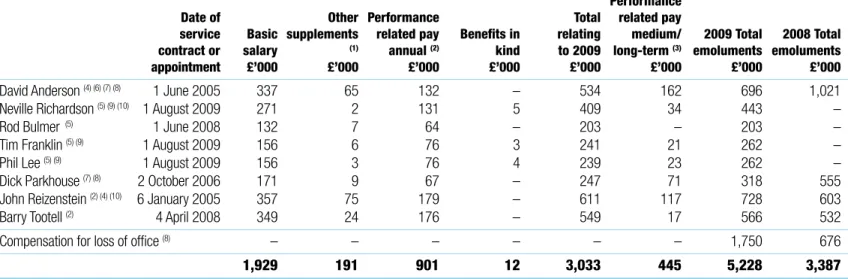
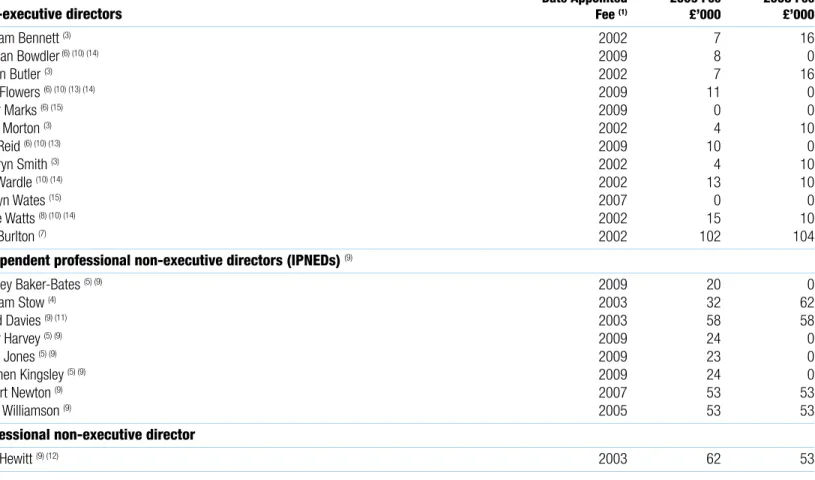
Remuneration report
Statement on principal risks
and uncertainties
Consolidated income statement
Consolidated statement of
comprehensive income
Consolidated balance sheet
Consolidated statement of changes
in equity
Basis of preparation and significant
accounting policies
Notes to the financial statements
08
09
16
22
27
29
36
45
48
50
51
53
54
58
Contents
“ We benefit from a long and distinguished
history, a firm grounding in our community
and a great reputation among people who
do business with us.”
Chair’s statement
The Co-operative Financial Services (CFS) was formed in 2002 from the bringing together of The Co-operative Bank and The Co-operative Insurance Society. This year, upon the merger with Britannia Building Society, the business has further developed its profile as the UK’s most diversified mutual financial services provider. Behind this process of evolution lies the strength that comes from being a key part of The Co-operative Group, the UK’s largest consumer co-operative.
Our position within The Co-operative Group opens up to our customers, and particularly to our growing body of members, the opportunity to benefit from a unique range of services including food stores, pharmacy, funeral directors, travel and, of course, financial services.
We also benefit from a long and distinguished history, a firm grounding in our community and a great reputation amongst people who do business with us. More importantly, in recent years we have begun to capitalise on that history and reputation to increase our profile and attract a whole new generation of consumers to the ‘co-operative difference’.
Nowhere has there been such a fertile ground for establishing our credentials, as the financial services arena. Difficult as the business climate has been, it has offered major opportunities for The Co-operative Financial Services to demonstrate to consumers the real, practical benefits of dealing with, and indeed becoming a member of, the Co-operative Movement. The ‘credit crunch’ has made consumers
increasingly appreciative of responsible stewardship and an ethically-led business strategy. By lending within the levels of customer deposits we have largely escaped the pitfalls of financial over-exposure, while the absence of publicly listed shares has allowed us to focus on the interests of our customers. As a result, switching of customer accounts from the so-called ‘big five’ banks to The Co-operative Bank increased significantly in 2009. Meanwhile our ethical policy has seen us reject over £1bn in lending that fails to meet our ethical guidelines; however our ethical approach has attracted significantly more than this in other areas.
Market commentators too, have recognised the value of the ‘co-operative difference’. As the year started, Which? Magazine voted The Co-operative Bank ‘Financial Services Provider of the Year’, while Business in the Community awarded us its new ‘Platinum Plus’ status as a socially responsible business – one of only seven businesses to receive this accolade.
While we have avoided the high-risk growth strategies of our competitors, The Co-operative Financial Services has been firmly focused on future
growth. The most significant development of 2009, both for our business and arguably the financial services sector, was our merger with the Britannia Building Society.
The first merger between a mutual and a co-operative, brought together two successful, member-run businesses with complementary, customer-centred values. Our customer proposition was strengthened as Britannia’s mortgage and savings experience complemented our banking, investment and general insurance offer. Furthermore, the Britannia branch network increased our branch presence by 200%, significantly raising both our footfall and high-street profile. In addition, the Co-operative membership was boosted by some 1.4m Britannia members – expanding the Group membership population by nearly 50%. A merger of two businesses is clearly a major undertaking. However, the Board and new leadership team have wasted no time in creating a shared corporate vision and values, and putting an integrated senior management structure in place. Colleagues across both businesses have worked together magnificently to create the systems and processes to allow us to meet our regulatory and legal requirements from day one.
For our customers, however, deliberately there has been little change. We were determined to deliver ‘business as usual’ even as the new organisation took shape, and a key priority throughout the second half of the year has continued to be that the customer comes first.
Over the next three years we are making significant investment in the infrastructure we need to make the customer experience fair, responsible, easy and personable for all our customers – whether face-to-face, by telephone or online. The opportunities, both for our customers and our business, are outstanding; but our growth strategy will always be driven by the desire to put the customer first in all things. We intend to grow at a pace and in a way that guarantees our customers an uninterrupted, seamless service.
This has been a year of impressive progress. Thanks to the Britannia merger, The Co-operative Financial Services has strengthened its presence and its customer proposition. A common leadership team, management structure, and refreshed purpose, vision, values and strategy are in place; while in the opinion of consumers and commentators alike, we continue to stand out from our competitors as a responsible, ethical business that treats its customers’ money and interests as its own.
As a result, The Co-operative Financial Services finds itself – almost uniquely in our market – on the verge of an unprecedented opportunity to create
a distinctive, competitive force in financial services. We have a clear vision for who we want to be and the financial stability, customer proposition and consumer profile to deliver that vision. The opportunity is ours to grasp; and we are ready to do so.
It would be remiss of me not to mention the Board of directors, which has also seen significant change during the year. In particular, I would like to express my appreciation to David Anderson, who stepped down earlier in the year as chief executive, having contributed greatly to The Co-operative Financial Services during his period in office, and who worked tirelessly towards the agreement of the merger. Additionally, I would like to express my thanks to the non-executive directors who have helped steer us through a momentous period in our history: Graham Bennett, Simon Butler, Terry Morton, Kathryn Smith and Graham Stow. I would also like to thank Dick Parkhouse (managing director, retail division, CFS) who also stepped down from the Board in 2009. I was, however, delighted to welcome new directors, in particular Neville Richardson, our new chief executive. Neville is joined by new executive members Rod Bulmer (managing director retail), Tim Franklin (chief operating officer), and Phil Lee (integration and change director). They were joined by a number of new non-executive directors, drawn both from The Co-operative Group and from the Britannia Board.
I would like to welcome Rodney Baker-Bates, Duncan Bowdler, Paul Flowers, Peter Harvey, Chris Jones, Stephen Kingsley, Peter Marks and Ben Reid, and wish them well as we move forward in the coming years.
Finally, this will be my last chair’s statement in the annual financial statements, as I will be stepping down from the Board later this year, having served as CFS chair since 2004. Arrangements are in hand for the appointment of my successor. There has been many and profound changes during my time with the Board. I wish to thank current and former colleagues for all their support and contributions. I wish the incoming chair and all others engaged in The Co-operative Financial Services every success in these exciting times for our truly successful co-operative business, of which we can be so proud.
Bob Burlton
Our givens are the non-negotiable principles on which we do business:
• we champion co-operative values and principles and ethics
• we are financially prudent and strong
• we share profits with members
• we only do business consistent with our values and principles.
Our vision is to become the UK’s most admired financial services business. The term ‘admired’ has been chosen carefully; we measure our success not purely in terms of profit but in terms of our service to and relationship with our customers, our people and our community.
Underpinning these relationships are our values – which describe the way we do business as a co-operative:
• we put our members and customers first in all we do
• we take personal and social responsibility
• together we will create a great place to work, grow and develop
• we strive relentlessly to be faster, better, more successful
• we are open and fair and committed to excellent communication.
Our performance against our vision and
values is a balance between our customers, people, processes and financial strength. Despite a year of continued economic turmoil,
during which the credit crunch became a global recession, The Co-operative Financial Services has taken a significant step toward its vision of being the UK’s most admired financial services business. As a key part of the country’s most broadly-based consumer co-operative we offer a member-owned, customer-led and ethically guided alternative to the shareholder-owned or government-owned financial services model.
The historic merger of The Co-operative Financial Services and Britannia Building Society – two values-driven, customer-owned businesses that avoided the worst effects of the global financial crisis – has created the most diversified mutual in UK financial services, uniquely positioned to offer a fair, easy, responsible and personal customer service.
Our purpose, givens, vision and values
Since the merger on 1 August 2009 The Co-operative Financial Services has already set out a strategy driven by a clear purpose, givens, vision and values that sit behind every business decision we undertake. The purpose of The Co-operative Financial Services is to be a pioneering business delivering sustainable financial services both for our members and for society as a whole.
“ Despite a year of continued economic
turmoil, during which the credit
crunch became a global recession,
The Co-operative Financial Services
has taken a significant step toward its
vision of being the UK’s most admired
financial services business.”
These awards have helped bring us to the attention of the wider consumer population. Current account sales have seen a 38% uplift at a time when many of our competitors are struggling to keep their existing customers. Meanwhile life and savings new business premiums have increased by 30% and general insurance gross written premium by 8%.
People
In order to deliver our customer promise, it is vital that we create a great place for our people to work, grow and develop. The business has moved fast in the period following the Britannia merger, to establish a new strategy and leadership structure, minimising the inevitable uncertainty that comes with any major change, while seeking to deliver ‘business as usual’ to our customers.
A commitment to excellent communication has been essential; the executive team spent much of November on the road, taking the business’ purpose, givens, vision and values to every colleague, helping them to understand our strategy and most importantly listening to their feedback on what it means to them. It is gratifying to note that colleague engagement levels remain extremely high across the business, with some 94% of colleagues stating that they are proud to work for The Co-operative Financial Services and over 91% stating that they are satisfied or very satisfied with CFS as an employer.
Processes
To support our people in delivering our customer promise, and to lay the foundations for sustainable long-term growth, we are investing significantly in the transformation of our systems and process infrastructure. 2010 will see the first phase implementation of a major programme to transform our banking systems infrastructure with the launch of a new, more customer-centred business banking service.
Financial strength
Our strategy is to generate underlying growth whilst maintaining both core financial strength and award-winning levels of customer service. Our liquidity position remains excellent, with a customer-fundingratio of 104% (excluding securitised assets); while our capital ratio stands at a healthy 13.5%. We have also maintained our focus on control of expenditure continuing the excellent cost control of both pre-merged businesses, with pro-forma 12 month operational costs maintained at prior year levels. Our business is determined to achieve commercial success within a framework of financial prudence and strength.
Customers
The Co-operative Financial Services offers a clear, simple customer promise – one that is fair, easy, responsible and personal. This proposition is proving particularly attractive, both to existing customers and those seeking a different relationship with their financial services provider.
Among existing banking customers, satisfaction with front-line delivery remains consistently high, with branch service attracting ‘satisfied/very satisfied’ scores of as high as 97%, telephone service scores up to 89%, financial adviser ratings of 84%, and online ratings of 93%. These ratings demonstrate our singular focus on putting our customers first. Within our insurance business, customer satisfaction continues to compare favourably with industry norms, with general insurance customer satisfaction nearly nine percentage points higher than the Top Five market share score.
Meanwhile among our corporate customers, 90% are satisfied with their relationship manager, while 84% would recommend us to an associate. During 2009 we have also been recognised by both customers and market commentators as a champion of co-operative principles. At the start of 2009 The Co-operative Bank was named ‘Financial Services Provider of the Year’ by Which? Magazine; and as the year drew to a close we received the UK Customer Experience Award as ‘Best Large Company’. In the intervening months we received a number of other accolades:
• The Co-operative Bank and smile took two of the top three spots at the Which? inaugural People’s Choice awards, while smile and Co-operative Bank current accounts topped the Which? customer satisfaction charts with 91% and 84% satisfaction ratings respectively;
• the Co-operative Insurance won a platinum award
for Motor Claims customer satisfaction from Consumer Intelligence;
• Platform was named ‘Best Intermediate Lender’
by Your Mortgage Magazine; and
• our corporate banking operation was named small/
mid-sized debt provider of the year. Crucially as a business that seeks to take both personal and social responsibility, The Co-operative Financial Services also became one of only seven businesses to be awarded the new ‘Platinum Plus’ rating from Business in the Community.
During a year in which much of our focus was on delivering a ground-breaking merger while maintaining ‘business as usual’ it is to the credit of colleagues across the business that profits have not only been maintained but improved. Our underlying like-for-like profitability has increased by 3.4% to £174.3m. These results will support continued investment whilst, as a member-owned business we will continue to share the profits with a membership that has itself increased by 1.4m as a result of our merger.
Building a co-operative vision for the future
We are in the process of creating something special within UK financial services. We are transforming our business through an unprecedented programme of investment in our systems and processes, on behalf of our customers and our people.
Over the next three years The Co-operative Financial Services will transform itself into a single business delivering a full range of services across all channels to suit our customers’ needs.
We will continue to focus on stability and core strength rather than opportunism; building on strong performance in 2009 to deliver further benefits for members, customers and society. Above all we will continue to offer consumers a viable alternative to traditional financial services – a model that is fair, easy, responsible and personal.
We are under no illusions as to the continuing challenge of a difficult market environment, but I believe that our key qualities of customer focus, colleague engagement and financial stability put us in a strong position to weather these storms while taking further, significant steps towards the achievement of our vision.
Neville Richardson
Chief executive
“ Our strategy is to generate underlying
growth whilst maintaining both core
financial strength and award-winning
levels of customer service.”
The executive committee
Tim Franklin
Karen Moir
Phil Lee Mike Fairbairn
“ The Co-operative Financial Services
offers a clear, simple customer
promise – one that is fair, easy,
responsible and personal.”
Neville Richardson, chief executive
Rod Bulmer
Barry Tootell
John Reizenstein
Financial strength is essential to deliver
on our pledge to put our members
Highlights
Profit before taxation of £212.8m was £148.7m higher than in 2008. The 2009 result includes the profits of the merged Britannia business from 1 August 2009.
Total operating result for 2009 was £177.2m compared with £147.0m in 2008. On a like-for- like basis the operating result has increased from £168.5m in 2008 to £174.3m (an increase of 3.4%). These results reflect the business’ success in maintaining profitability despite the continuing weakness of the financial services market, while underlying capital and liquidity positions continue to provide the foundations for stable growth. In addition to consistent profit performance, The Co-operative Financial Services has continued to hold robust levels of capital and excellent liquidity and funding levels. The Co-operative Bank (the Bank) has a capital ratio of 13.5% after fair- value merger adjustments.
The tier 1 ratio is 9.0% with a core tier 1 ratio of 8.7%. These ratios have all increased since 2008 again demonstrating the strength of the merged business. Meanwhile the Bank has maintained its high level of customer deposits with a year end customer-funding ratio of 104% (excluding securitised assets).
This balance of capital, liquidity and profit stability enabled the ‘merger from strength’ between two strong businesses to create a distinctive, new, member-owned financial services provider. Colleagues and customers alike have responded positively to the merger, which has been achieved without any significant impact on customer service levels, reflecting The Co-operative Financial Services’ determination, even while laying the foundations for long-term business growth, to put the interests of the customer first.
In 2009 CFS paid an interim dividend of £21.2m and, subject to approval at the Annual General Meeting, will pay a final dividend of £33.9m to its parent The Co-operative Group. This payment supports the overall group membership scheme as well as our leading social goals and community involvement activities.
In addition, in 2009 a distribution of profit has been made to individual members of The Co-operative Group based on their account holdings with the Bank of £7.8m and their general insurance business with the Co-operative Insurance of £3.0m. The Britannia Building Society cessation financial statements for the period to 31 August 2009 included £18.9m in respect of the Britannia Membership Reward scheme which is due to be distributed to ex-Britannia members as part of a £20m payment early in 2010.
The Co-operative Financial Services (CFS) emerged relatively unscathed from the global crisis prompted by the ‘credit crunch’ and the ensuing worldwide recession. This was no accident – our business is underpinned by a set of principles we call givens, amongst which is an absolute commitment to be financially prudent and strong.
Indeed, financial strength is essential to deliver on our pledge to put our members and customers first in all that we do. This is reflected in our continued strong levels of liquidity, capital, profitability and retail funding. As many competitors are forced to consider retrenchment, The Co-operative Financial Services has been able to set out a strategy for growth, underpinned by significant capital reserves – our business model demonstrates that ambition and prudence are not mutually exclusive.
The merger of The Co-operative Financial Services with Britannia Building Society has created the UK’s most diversified, mutual financial services provider. Merging two complementary businesses driven by shared givens and values, offers the UK consumer a member-owned, customer-led and ethically-guided alternative to the shareholder-owned or state-owned model so publicly called into question by the ‘credit crunch’. Moreover, the merger delivers increased reach, diversity and opportunity without impairing the financial stability of the business or the interests of our customers.
Our
business and financial review
2009 2008 Change Change £m £m £m % Income 1,128.2 1,055.6 72.6 6.9% Costs (562.6) (470.1) (92.5) (19.7%) Claims (280.8) (265.0) (15.8) (6.0%) Impairment (107.6) (173.5) 65.9 38.0% Operating result 177.2 147.0 30.2 20.5% Significant items (53.8) (78.0) 24.2 31.0%
Short-term investment fluctations 4.9 12.2 (7.3) (59.8%)
Share of post-tax losses from joint ventures (0.1) – (0.1) –
Financial services compensation (3.7) (10.5) 6.8 64.8%
scheme levies
Fair value amortisation 99.1 – 99.1 –
Membership dividend (10.8) (6.6) (4.2) (63.6%)
Profit before taxation 212.8 64.1 148.7 232.0%
Income and operating results show growth of 6.9% and 20.5% respectively. These figures include five months of post-merger Britannia results. Costs show an increase of 19.7%, reflecting the additional costs from 1 August of the Britannia business, and in part the initial costs of merging the two businesses. As can be seen on the like-for-like proforma results table, however, on a like-for-like basis costs have actually fallen by 1.3%. Impairment losses on loans and advances were lower than 2008 because, while provisions against the corporate portfolio have marginally increased, the impairment recorded against the investment portfolio in 2008 has not recurred. Britannia net assets have been restated to fair value on merger. This includes adjustments to reflect the interest rates charged and received on both assets and liabilities where a different rate may be prevalent in today’s market. These initial adjustments unwind over future periods and in 2009 represent a credit to the income statement of £99.1m. The initial fair-value adjustments also recognise any latent risk inherent within the Britannia asset base and provide cover against impairment losses in future periods, and in 2009 results in a credit of £87.7m within the 2009 operating result.
Significant costs of £53.8m (2008: £78.0m) have been incurred on a major programme of investment and integration. In addition Britannia incurred merger costs of £26.9m in 2009 prior to the merger.
Like-for-like comparison
To provide a more meaningful comparison of business performance, ‘like-for-like’ results have been presented which include results of the Britannia business on an annual basis for both 2009 and 2008. The table below shows a reconciliation between the ‘statutory operating result’ and the operating profit on a like-for-like basis.
The accounting policies have been aligned resulting in a restatement of the Britannia result prior to merger by £15.9m in 2009 and £(21.5)m in 2008. The impairment provisioning has also been aligned following the merger resulting in a restatement of the opening balance sheet by an additional £86.1m.
Like-for-like proforma results
Like-for-like income has been adversely affected by a combination of the low interest rate environment and the economic recession. The impact of this has been reflected through narrowing margins and floors on savings balances, partially offset by improved mortgage margins and higher net secured lending. In addition, the economic recession has driven changes in customer behaviour resulting in lower credit card spending and balances.
Costs, on a like-for-like basis have shown a 1.3% reduction year-on-year. This reflects a policy of careful cost control and has been delivered despite the challenges of successfully merging The Co-operative Financial Services with Britannia Building Society. Total like-for-like impairment losses have reduced by 17.7%. The 2008 impairment charge included provisions against investment portfolios which have not recurred, which has been partly offset by higher impairment against the corporate portfolio in 2009.
2009 2008 Change Change
£m £m £m %
Operating result on a statutory basis 177.2 147.0 30.2 20.5%
Britannia operating result prior to merger 68.9 43.0 25.9 60.2%
Accounting policy differences 15.9 (21.5) 37.4 (174.0%)
Fair-value merger adjustments (87.7) – (87.7) –
Like-for-like operating result 174.3 168.5 5.8 3.4%
2009 2008 Change Change £m £m £m % Net income 1,385.6 1,424.4 (38.8) (2.7%) Costs (692.9) (702.2) 9.3 1.3% Claims (280.8) (265.0) (15.8) (6.0%) Impairment (237.6) (288.7) 51.1 17.7% Operating result 174.3 168.5 5.8 3.4%
Short-term investment fluctations 4.9 12.2 (7.3) (59.8%)
Financial services compensation (1.9) (30.3) 28.4 93.7%
scheme levies
Share of post-tax losses from joint ventures (0.2) 0.6 (0.8) (133.3%)
Significant items (53.8) (78.0) 24.2 31.0%
Merger costs (26.9) – (26.9) –
Membership dividend (29.7) (25.0) (4.7) (18.8%)
Profit before taxation 66.7 48.0 18.7 39.0%
Customer loans have increased significantly to £34.1bn (2008: £10.3bn) as a result of the merger. On a like-for-like basis customer assets have remained stable in difficult markets demonstrating our support for UK consumers and business while retaining our strong liquidity and capital position. Our liquidity has been supported by strong growth in customer deposits as consumers continue to be attracted by the CFS mutual and ethical position and competitive pricing. Customer deposits have consequently increased significantly to £32.5bn (2008: £11.7bn), which on a like-for-like basis represents a growth of 2.6%.
Like-for-like proforma results
Our businesses
CFS consists of two main segments – retail and corporate and markets.
The retail business offers a range of financial products and services to individuals, households and small businesses throughout the UK. Retail includes the following businesses: retail banking, trading as The Co-operative Bank, Britannia and smile; and CIS General Insurance Ltd (CISGIL). The long-term business fund, while not included in shareholder results within CFS (since the business is run in the interests of the policyholders), is treated as part of retail for the purposes of this report.
Corporate and markets (CAM) is the business-to-business part of CFS and includes the following commercial areas: corporate banking, The Co-operative Asset Management (tCAM), Platform, Optimum, treasury and business services. The other area of CFS represents the earnings on the free shareholder capital of CFS. This capital is held centrally to ensure the efficient use of capital by retail and CAM.
Like-for-like operating result
The retail business remained profitable despite the low interest rate environment and the economic recession, which saw like-for-like profits fall from £109.3m to £12.2m.
CAM profits increased on a like-for-like basis from a loss of £4.4m to a profit of £113.2m. This was driven by improved margins and rigorous cost control but also by lower impairment provisions than 2008. In overall terms the maintenance of consistent profitability despite difficult markets, which impacted aspects of our business in different ways,
demonstrates the value of our diversity of earnings.
Retail
Total operating result reduced to £12.2m in 2009 compared to £109.3m in 2008. The results for the year, primarily in the retail bank, have been impacted by the low interest rate environment and the economic recession.
The income position in 2009 reflects the low interest rate environment and the consequent impacts from narrowing interest rate margins and floors on savings balances, partially offset by improved mortgage margins and higher net secured lending. In addition, the impact of the economic recession and resulting changes in customer behaviour has driven lower credit card spending and balances. 2008’s figures included one-off proceeds of £9.5m from the flotation of Visa Inc.
Net earned premiums are stable year-on-year. The latter part of 2009 was far stronger in terms of gross written premium than the equivalent period in 2008, and will predominantly fall into the 2010 financial statements. 2009 2008 Change Change £m £m £m % Retail 12.2 109.3 (97.1) (88.8%) CAM 113.2 (4.4) 117.6 – Other 48.9 63.6 (14.7) (23.1%) Operating result 174.3 168.5 5.8 3.4% 2009 2008 Change Change £m £m £m %
Net interest income 349.9 447.5 (97.6) (21.8%)
Net earned premium 375.4 382.8 (7.4) (1.9%)
GI investment returns and other 47.6 44.9 2.7 6.0%
Non-interest income 158.7 186.5 (27.8) (14.9%) Net income 931.6 1,061.7 (130.1) (12.3%) Operating costs (559.1) (575.5) 16.4 2.8% Claims (280.8) (265.0) (15.8) (6.0%) Impairment losses (79.5) (111.9) 32.4 29.0% Operating result 12.2 109.3 (97.1) (88.8%)
Operating costs have reduced due to tight controls over spending and improved staff retention resulting in lower recruitment and training costs.
Impairment losses have improved, despite the deteriorating economic climate, reflecting investment in improved operational processes, tightened lending criteria and lower unsecured balances. The quality of the mortgage book remains good with a combined average loan-to-value of 42%.
Like-for-like operating results
Current accounts
The strong current account growth experienced in 2008 has continued through 2009 with year-on-year sales volumes up 38% (including a significant upturn in customers switching accounts from other providers). The Co-operative Bank’s market share for new current accounts has doubled to 4%. Current account balances ended the year 21% higher than 2008.
Accolades achieved during the year included the ‘Which? Best Buy’ status for Current Account Plus and Money Mail’s ‘Best Packaged Account Provider’.
Unsecured lending
CFS continues to offer loans to new customers, against a backdrop of restricted customer access to credit. 2009 new lending is 3.4% higher than 2008 and credit card sales are also up 11.1%.
The credit card business has acquired six new partners including NHS Direct and the AA. Partner satisfaction remains in excess of 90%.
Mortgages
Mortgage customer satisfaction remains high with 91% of newly-acquired Britannia mortgage customers likely to recommend Britannia, while Bank customer satisfaction scores have increased to 74.7% compared to 69.6% in 2008. These satisfaction levels were reflected in the successful retention of over 80% of new borrowers following the end of their introductory period.
Mortgage customer satisfaction was also reflected in a range of industry awards including ‘Best Direct Mortgage Lender 2009’ (Your Mortgage); ‘Best Discount Rate Mortgage Product’ (What Mortgage); and ‘Best Lender for Discount Rates’ (Moneywise Mortgage Awards).
Savings
The business continues to benefit from a strong balance sheet position, underpinned by continuing robust customer-funding ratios. Customers have already been given cross-channel access to a number of savings products post merger, while 2009 has been a record year for investment and protection business written by AXA financial planning managers based in the Britannia branch network.
Customer satisfaction has improved during 2009 with overall satisfaction among Britannia savers at 80.4% and 87.6% of customers likely to recommend Britannia to other consumers. Bank savings customer satisfaction levels (as reported by the Which? Customer Satisfaction survey) were at 61.1% as of December 2009, 5.1% ahead of the market. As we move into 2010, CFS has agreed to support the Government and industry efforts to take forward the Dormant Accounts Scheme, by preparing a plan for the establishment of a Central Reclaim Fund on behalf of the UK financial services industry. The business intends to apply for authorisation to establish and administer the Central Reclaim Fund, subject to the initiative going ahead as planned.
General insurance
The general insurance business had a successful year delivering gross written premium of £424.3m, an increase of £29.9m (7.6%). Retention rates have remained broadly stable, despite economic conditions, reflecting the loyalty of our customer base, the potential of the co-operative brand and success of retention initiatives. An increasingly multi-channel distribution model sees business coming equally from face-to-face, direct, internet based sales, and national brokers.
Customer satisfaction with our products is at 74.9%, nearly 9% higher than the average for the Top five in the market. We won the ‘Best Direct Motor Insurance Provider 2009 awarded by Your Money, the ‘Corporate and Social Responsibility Project of the Year’ award at the British Insurance Awards, and have been awarded a claims platinum award.
Long-term business
The long-term business, run solely for the benefit of policyholders (and hence not included in the operating results table on page 16), saw sales figures increase 13% on 2008 levels, with new business profitability reaching £10.3m compared to £1.6m in 2008. The present value of new business premiums for 2009 rose to £606m, an increase of 30% compared to 2008.
Improved sales were achieved against a backdrop of a planned reduction in the number of financial advisors over the year. Two new, sustainability-focused unit trusts were launched during the year and generated over £40m in new investment. Meanwhile the business is continuing to expand unit trust distribution to independent financial advisers and other intermediaries in the wider investment market.
Maintenance expenses fell by 8.5% from £69.5m in 2008 to £63.6m in 2009, as a result of cost efficiencies and a reduction in financial adviser numbers.
CIS was top quartile for customer advocacy in the 2009 ABI Customer Impact Survey, where two-thirds of customers were ‘very likely’ or ‘extremely likely’ to recommend CIS to others (recent customers were even more emphatic with a score of 80%). The 2009 report can be found on CFS’ ‘Good With Money’ website, while the 2010 report will be published in June.
Corporate and markets (CAM)
Following the merger, the CAM segment within CFS comprises the combined corporate banking and treasury activities of Britannia and CFS, the intermediary mortgage activities of Britannia, the asset management business of CFS and a number of fee-for-service businesses such as customer foreign exchange.
Optimum
Optimum, which has an asset portfolio of £9.1bn, has delivered a strong arrears performance with total arrears stock peaking in April 2009 and falling by 10% by the year-end. The specialist book is performing well, and remains the focus of strong management actions. During the year significant improvements have been made to arrears collections capability through our arrears improvement programme. Optimum has also increased its use of receivers under the Law of Property Act, pre-arrears counselling and the government mortgage rescue scheme where appropriate.
In 2010 the arrears improvement programme will deliver further improvements in the arrears management process and the merger fair-value adjustments also provide a high degree of insulation against future credit losses.
Treasury
Treasury have successfully maintained high levels of liquidity and ensured that the business benefits from diversified funding sources. Treasury performance reflects significant improvements in investment provisions, and strong interest income performance arising from the low interest rate environment. CFS operates a centralised governance and control model covering all liquidity risk management activities. Treasury maintains a liquidity pool which protects against unforeseen events in the financial markets. The liquidity pool consists of Central Bank balances and UK Government backed investments. Principal sources of wholesale funding are repurchase agreements (repos), subordinated debt and money market borrowing. Treasury investment assets were used to secure funding via repo activity and CFS continued to benefit from securitisation and covered bond capabilities.
Of particular significance is the fact that in February 2010, despite an ongoing difficult market, The Co-operative Bank completed a £2.5bn prime mortgage securitisation transaction, which was well received by the market. This is an important demonstration of the flexible range of funding sources that treasury can access and the strength of our name in the wholesale market.
CAM like-for-like operating result
2009 saw a significant increase in CAM profitability compared with 2008 with profits increasing on a like-for-like basis to £113.2m from a loss of £4.4m in 2008.
CAM net income rose year-on-year reflecting growth in the corporate book and a strong performance in the other operating segments. Impairment in the CAM business fell as there was a lower impact in 2009 of charges against investment assets compared to 2008, only partly offset by an increase in corporate impairments. The business remained vigilant in controlling its operating costs allowing a small increase in cost base of only £5.9m year on year.
Corporate banking
Corporate banking has achieved a strong
performance in a challenging economic environment and has continued with a policy of controlled growth in assets, supporting existing customers and taking selective new business opportunities. The business has achieved significant growth in term deposits with further growth and retention being the key focus for 2010. Asset margins have remained strong and increased in the year, particularly for new lending, offset by increased funding costs.
The business is now operating from 20 corporate banking centres. The increased access to local support has helped to keep customer satisfaction strong.
The corporate banking assets comprise a diversified portfolio with protection provided by fair-value merger adjustments which cover the credit risk of former Britannia commercial loans.
Platform
Platform retains its positioning in the market as an all status lender although its target portfolio is prime lending. As part of the merger, a new operating unit, Optimum, was established to focus on the management of pre-2009 intermediary lending and purchased mortgage books. This allows Platform to focus on new originations and management of those assets. Strong margins have been achieved on prime and specialist lending alongside controlled asset growth with a prudent approach to credit.
The Co-operative Asset Management (tCAM)
tCAM has been an important part of CFS for many years, managing our insurance assets and unit trusts. Since August 2009 tCAM has been separately capitalised and FSA authorised in order to enable us to offer our asset management expertise to external customers via intermediary platforms and in the institutional marketplace. tCAM has a unique offering based on integration of its socially responsible investment process with investment decision making. tCAM has successfully launched two new funds this year, the Sustainable Diversified Trust and the Sustainable World Trust, to broaden our range of unit trusts and offer truly ethical investment opportunities to our customers.
Summary and outlook
Despite the continuing pressures on the UK market, and the significant investment of time and resources required to merge two businesses into a single organisation, CFS has continued to ‘buck the trend’. Profits have been maintained at encouraging levels across all business areas, underpinned by market-leading customer satisfaction and widespread recognition as a prudent, financially stable service provider. Like-for-like operating results are up 3.4% to £174.3m and bottom line like-for-like profit before tax is up 39.0% to £66.7m.
Our reputation for prudence and financial stability is strongly underpinned by a capital position that sets the platform for future growth without compromising customer interests. Like-for-like costs have been reduced by 1.3% even as the merger of our two heritage businesses has progressed at pace. Strong liquidity and capital reserves mean that CFS is in a position to pursue a strategy of growth and investment over the coming years, without compromising the interests of our customers. Over the next three years the business will carry out a major programme of investment. As the UK’s most diversified mutual financial services business the challenge is to integrate the range of customer access points in order to offer a single, seamless customer proposition. As UK consumers increasingly question the financial services ‘status quo’, our member-owned, customer-led and ethically-guided business model is well placed to establish itself as the way of the future.
2009 2008 Change
£m £m £m
Net interest income 245.0 217.2 27.8
Non-interest income 151.6 74.8 76.8
Net income 396.6 292.0 104.6
Operating costs (126.4) (120.5) (5.9)
Impairment losses (157.0) (175.9) 18.9
Operating result 113.2 (4.4) 117.6
“ It is estimated that at least 100,000
young people in the UK are benefiting
from The Co-operative Group’s
community projects.”
At The Co-operative Financial Services (CFS), we have a proud history of corporate social responsibility, and an on-going commitment to managing and developing the business in a sustainable manner, as set out in our sustainable development policy.
The merger of CFS with Britannia has created one of the world’s most diversified mutual financial institutions, which offers members and customers a trusted alternative to shareholder-owned banks, at a time when the finance sector has continued to face widespread challenges and public distrust. A ‘flight to trust’ was a key driver for a 38% increase in Co-operative Bank current account sales in 2009. Our trusted ethical approach saw The Co-operative Bank emerge, in the 2009 Concerned Consumer Index, as the bank that customers are most likely to buy products and services from and recommend to family and friends.
CFS is led by the views of members, customers and other stakeholders, and is committed to delivering value to them in a socially responsible and ecologically sustainable manner. Pursuing social responsibility is not simply a ‘nice to do’, it is one of the five values which provide direction to CFS, and progress towards it is deemed critical to the success of the enlarged business.
Our sustainability performance is measured against a wide range of economic, social and environmental indicators, and is reported in The Co-operative Group’s Sustainability Report; an annual, independently-audited publication, which is signed off by The Co-operative Group Board. In 2009, our sustainability report was named the most open and honest at the International Corporate Register Reporting Awards, and was heralded as demonstrating best practice and international leadership by the report’s independent auditors. CFS was one of only seven businesses to achieve a ‘Platinum Plus’ ranking in the Business in the Community (BITC) Corporate Responsibility Index.
This new ranking was introduced to differentiate the clear leaders in corporate responsibility from others in their sectors and attests to the quality of CFS’ corporate responsibility strategy, management, reporting and performance.
For the sixth consecutive year, The Co-operative Bank was ranked top in a survey of the UK general public’s awareness of social, environmental and ethical financial services providers. At the British Insurance Awards, The Co-operative Insurance won the ‘Corporate Social Responsibility Project of the Year’ award, in recognition of the business’ wide-ranging ethical and environmental initiatives. The Co-operative Group also won BITC’s Environmental Leadership Award for the way in which environmental strategy has been embedded into core business processes, and became the first organisation to win the Renewable Energy Association’s Pioneer Award twice. Community
Following extensive member consultation, a new Co-operative Group community plan was launched in February 2009, setting our community involvement priorities as tackling global poverty, combating climate change and inspiring young people.
It is estimated that at least 100,000 young people in the UK are benefiting from The Co-operative Group’s community projects. A new grants scheme, ‘the Truth about Youth’, was launched by The Co-operative Foundation in 2009, to support young people in making a positive contribution in their communities. During 2009, grants were made in three of the Group’s seven democratic regions, and will be made in each remaining region during 2010.
As part of the ‘inspiring young people’ priority, during 2009, CFS colleagues spent 2,200 hours coaching a total of 3,000 students as part of our Fit4Finance scheme to improve the financial skills and awareness of secondary school students. Since 2004, colleague volunteers have donated over 8,200 hours of their time, helping approximately 850 primary school
children each year, through the ‘Number Partners’ programme; a national scheme that aims to improve numeracy skills, develop student confidence and motivation, and provide an insight into business. In addition, during 2009, 456 colleagues volunteered for our ‘Enterprise for Education Project’, enabling almost 3,000 students aged 7-19 from schools across the North West to benefit from their expertise in business and finance, and improve their aspirations and future employability.
CFS has also shown a significant commitment to The Co-operative Academy of Manchester which is a project to rescue an underachieving school in the North West region, CFS’s managing director of retail has given his own time and engaged many colleagues to support the project and is playing an active part in the set-up and on-going success of this academy. The Co-operative Bank’s pioneering work with prisoners continued through 2009. The initiative provides soon-to-be-released prisoners from 30 prisons across the UK with basic bank accounts, which can often greatly enhance their chances of holding down a job or securing accommodation. A report produced for the project in December 2009, found that for ex-offenders, who opened a bank account before release, re-offending rates are reduced by around a third.
Through the projects detailed above, as well as through a range of other initiatives, CFS committed a sizeable percentage of its pre-tax profits to the co-operative community in 2009. Across the Group, our colleagues and members make a huge contribution to the success of our sustainability and community investment programmes, and raised an additional £3.7m across The Co-operative family of businesses for 2009’s Charity of the Year, the Royal National Institute for the Deaf.
Ethical finance
CFS has long been ethically guided when it comes to finance, with unique, customer-mandated ethical policies, implemented by The Co-operative Bank and The Co-operative Asset Management, launching in 1992 and 2005 respectively. Following an extensive customer consultation, in which a record 80,000 customers participated, The Co-operative Bank’s Ethical Policy was re-launched in February 2009, with an agenda-shaping commitment to international development, animal welfare and the environment. Existing and potential corporate and business banking customers are screened to identify any business practices that pose conflicts with the policy, which, from August 2009, has extended across the enlarged business.
The Bank’s Ethical Policy, contains a commitment to support renewable energy and microfinance, in line with an overwhelming mandate from customers. During 2009, funding was provided for four wind farms, a hydroelectric scheme and two combined heat and power projects. The Co-operative Bank has also created a US$50m microfinance fund, which provides loans to small businesses in poor countries around the world, providing opportunities for recipients to trade their way out of poverty. The Co-operative Asset Management launched two new sustainable trusts in 2009, the Sustainable Diversified Trust and the Sustainable World Trust. Their launch reflects growing investor interest in lower-risk investments in sustainable business, and together with our established Sustainable Leaders Trust, greatly expands our offering to the responsible investor. CFS was a lead sponsor of the second annual National Ethical Investment Week, during November 2009. Organised by the UK Sustainable Investment and Finance Association, the week aims to raise awareness and grow the markets for green and ethical investment.
Environment
Combating climate change is our top environmental priority, and we take a holistic approach to addressing it – tackling our direct impacts as a business, investing in renewable energy and energy efficient technologies, funding carbon offset projects and campaigning for change.
The Co-operative’s Toxic Fuels campaign, in partnership with WWF-UK, aims to combat an emerging global trend to extract oil from unconventional sources, such as tar sands. In line with our Ethical Engagement Policy, The Co-operative Asset Management has engaged directly with oil companies and other investors to highlight the commercial risks involved in exploiting toxic fuels. In December 2009, 2,500 Co-operative members and their families joined The Wave, a march in London calling for a safe and fair deal ahead of the UN climate change summit in Copenhagen. This was the biggest mobilisation of our membership base in recent times and helped make The Wave the largest climate change protest ever held in the UK. CFS was the first financial services organisation in the world to secure ISO14001 certification for its environmental management systems across all its business activities. This certification will be extended across the whole of the new business in 2010. The coming together of CFS and Britannia has created a stronger, more diverse, co-operative offering. With values at the heart of the enlarged business, the merger paves the way for our leadership on sustainability and ethics to have an even greater positive impact.
“ The Bank’s Ethical Policy contains
a commitment to support renewable
energy and microfinance, in line
with an overwhelming mandate
from customers.”
Ben Reid
Our board members
Tim Franklin
Phil Lee Paul Hewitt
Bob Burlton Piers Williamson Rod Bulmer Len Wardle Neville Richardson Paul Flowers Peter Marks
“ The opportunities, both for our
customers and our business, are
outstanding; but our growth strategy
will always be driven by the desire
to put the customer first in all things.”
Bob Burlton, chair
John Reizenstein Bob Newton Chris Jones Steve Watts David Davies Duncan Bowdler Martyn Wates Rodney Baker-Bates Barry Tootell Stephen Kingsley Peter Harvey
The Board
The CFS Board
Non-executive directors:
Bob Burlton (BSc (Hons), Cert Dip). Age 61. Joined the Board in 2002 and appointed chair in 2004. President of Consumer Co-operatives Worldwide since 2005. Chair of The Co-operative Bank plc and non-executive director of Co-operative Insurance Society Limited and CIS General Insurance Limited.
Rodney Baker-Bates (MA, FCA, AIMC, FCIB). Age 65. Joined the Board in 2009*. Directorships also held at Assura Group plc, Bedlam Asset Management plc, Dolphin Square Trust Limited, EG Solutions plc, G’s Group Holding Limited, Stobart Group plc. Non-executive director of The Co-operative Bank plc, Co-operative Insurance Society Limited and CIS General Insurance Limited.
Duncan Bowdler (BSc (Hons)). Age 51. Joined the Board in 2009. Trade liaison manager. Member of the Co-operative Group North West and North Midlands Regional Board. Non-executive director of Co-operative Group Limited, The Co-operative Bank plc, Co-operative Insurance Society Limited and CIS General Insurance Limited.
David Davies (BSc (Econ), FIA). Age 62. Joined the Board in 2003 and is the senior independent director. Chair of Sun Life Assurance Company of Canada (UK) and Nortel Networks Pension Scheme in the UK, and non-executive director of Interglobal Insurance Company Limited. Non-executive director of The Co-operative Bank plc, Co-operative Insurance Society Limited and CIS General Insurance Limited. Paul Flowers (BA (Hons)) Age 59. Superintendent Methodist minister/Bradford city councillor. Joined the Board in 2009. Member of the Co-operative
Group North Regional Board. Non-executive director of Co-operative Group Limited, The Co-operative Bank plc, Co-operative Insurance Society Limited and CIS General Insurance Limited.
Peter Harvey (ACIB, Dip FS). Age 54. Joined the Board in 2009*. Consultant to Berwin Leighton Paisner LLP. Also non-executive director at Marshalls Holdings Limited and a member of the supervisory board and audit committee of Surrey Cricket Club Limited. Non-executive director of The Co-operative Bank plc, Co-operative Insurance Society Limited and CIS General Insurance Limited.
Paul Hewitt (MA, ACA, Dip German (Open)). Age 54. Joined the Board in 2003. Non-executive director of Kiln Group, Collins Stewart plc, and the Personal Accounts Delivery Authority. Chair of Portrait Software plc and the Good Care Group Limited. Industrial partner with Lyceum Capital, a mid market private equity firm. Non-executive director of The Co-operative Bank plc, Co-operative Insurance Society Limited and CIS General Insurance Limited.
Chris Jones (LLB). Age 57. Joined the Board in 2009*. Member of the Institute of Credit Management, the Law Society and a Fellow of the Royal Society of Arts and of the Association of Business Recovery Professionals. Runs Tourmalet Consulting, specialising in business turnaround. Non-executive director of Agenda Management Services Limited, Trango Ltd, The Business Desk and Armitage Jones LLP. Non-executive director of The Co-operative Bank plc, Co-operative Insurance Society Limited and CIS General Insurance Limited. Chair of Illius Properties Limited.
Stephen Kingsley (BSc (Hons), (FCA)). Age 57. Joined the Board in 2009*. Over 35 years experience in financial services primarily auditing and consulting. Has held senior positions at Arthur Andersen and AON Corporation. Currently a senior managing director at FTI Consulting, the global expert services firm. Non-executive director of The Co-operative Bank plc, Co-operative Insurance Society Limited and CIS General Insurance Limited.
Peter Marks Age 60. Joined the Board in 2009. Chief executive of Co-operative Group Limited. Named Orange Leader of the Year 2009 in the National Business Awards. Entire working life spent within the co-operative movement. Instrumental in bringing about a number of major co-operative mergers over the past decade. Non-executive director of The Co-operative Bank plc, Co-operative Insurance Society Limited and CIS General Insurance Limited.
Bob Newton (BSc, FIA, CDir). Age 60. Joined the Board in 2007. Retired from the insurance industry in 2006, since when he has built a portfolio of business and pro-bono interests. Holds non-executive directorships with UIA (Insurance) Limited, and AI Claims Solutions plc. Non- executive director of The Co-operative Bank plc, Co-operative Insurance Society Limited and CIS General Insurance Limited.
Ben Reid (FCCA). Age 55. Joined the Board in 2009. Chief executive of The Midcounties Co-operative. Regional chair of the Learning and Skills Council and also chair of Walsall Hospitals NHS Trust. Non-executive director of Co-operative Group Limited, The Co-operative Bank plc, Co-operative Insurance Society Limited and CIS General Insurance Limited.
The Board
Len Wardle (BA). Age 65. Joined the Board in 2002. Chair of Co-operative Group Limited and member of the South East Regional Board. Held management positions in local government and latterly was a Fellow at the University of Surrey in the School of Management. Director of Communicate Mutuality Limited. Non-executive director of The Co-operative Bank plc, Co-operative Insurance Society Limited and CIS General Insurance Limited.
Martyn Wates (ACA, ATII, BA (Hons)). Age 43. Joined the Board in 2007. Chief financial officer, Co-operative Group Limited. Has held various senior finance positions within the co-operative movement. Director of various internal subsidiaries and non-executive director of The Co-operative Bank plc, Co-operative Insurance Society Limited and CIS General Insurance Limited.
Steve Watts (MA (Cantab), MA (Econ), BA (Hons)). Age 58. Joined the Board in 2002 and appointed deputy chair in September 2009 and member of the Central and Eastern Regional Board. Pricing, research, and information officer within the Directorate of Employment and Skills at Cambridge Regional College. Deputy chair of Co-operative Group Limited, chair of Co-operative Insurance Society Limited and CIS General Insurance Limited, and non-executive director of The Co-operative Bank plc.
Piers Williamson (BA (Hons) ACIB, MCT). Age 48. Joined the Board in 2005. Over 25 years experience of the UK, US and European financial markets. Holds non-executive directorships with various Industrial and Provident Societies and funding vehicles associated with the Housing Finance Corporation, where he is chief executive. Non-executive director of The Co-operative Bank plc, Co-operative Insurance Society Limited and CIS General Insurance Limited.
Executive directors:
Neville Richardson (BA (Hons), FCA). Age 52. Joined the Board in 2009*. Chief executive. Prior to joining the group was chief executive of Britannia Building Society. Director of Mutuo (Communicate Mutuality Limited). Member of the Court of the University of Lancaster and of the Building Societies Association council. Also chief executive of The Co-operative Bank plc, Co-operative Insurance Society Limited and CIS General Insurance Limited.
Rod Bulmer (BA (Hons) MSc). Age 40. Joined the Board in 2009. Managing director, retail. Joined Co-operative Financial Services in October 2007 and became sales director in July 2008. Executive director of The Co-operative Bank plc, Co-operative Insurance Society Limited and CIS General Insurance Limited. Also chair of The Co-operative Academy of Manchester.
Tim Franklin (ACIB). Age 48. Joined the Board in 2009*. Chief operating officer. Formerly managing director of member business at Britannia Building Society. Executive director of The Co-operative Bank plc, Co-operative Insurance Society Limited and CIS General Insurance Limited. Phil Lee (BSc, CA). Age 54. Joined the Board in 2009*. Integration and change director. Formerly managing director of Britannia Capital Investment
Group. Executive director of The Co-operative Bank plc, Co-operative Insurance Society Limited and CIS General Insurance Limited. John Reizenstein (MA (Cantab)). Age 53. Joined the Board in 2003. Managing director, corporate and markets. Member of the Financial Reporting Review
Panel. Executive director of The Co-operative Bank plc, Co-operative Insurance Society Limited and CIS General Insurance Limited. Chair of The Co-operative Asset Management Limited.
Barry Tootell (BA, FCA). Age 48. Joined the Board in 2008. Chief financial officer. Qualified accountant with over 20 years of finance and control experience. Executive director of The Co-operative Bank plc, Co-operative Insurance Society Limited and CIS General Insurance Limited. Chair of CFS Management Services Limited.
Corporate governance report
UK Combined Code on corporate governance
The CFS Group mainly comprises Co-operative Financial Services Limited, Co-operative Insurance Society Limited (CIS), CIS General Insurance Limited (CISGIL) and The Co-operative Bank plc (the Bank). The latter is a listed company and its compliance with the Combined Code (the Code) is detailed in its financial statements. The other three are Industrial and Provident Societies. Although compliance with the Code is not mandatory for an Industrial and Provident Society, the CFS Group believes it is appropriate to comply in so far as that the Code is applicable to an Industrial and Provident Society and the purpose of this report is to give an overview of the compliance of the CFS Group as a whole. CFS believes that it fully complies with the principles of the Combined Code, with the exception of the level of independent board representation.
Board composition and independence
Following the merger with Britannia on 1 August 2009, the Board currently comprises 16 non-executive directors and six executive directors.
The Code requires at least half of the Board, excluding the chair, to be independent non-executive directors. In accordance with the Code, it is for the Board to consider whether a director is independent in character and judgment and whether there are any relationships or circumstances which are likely to affect, or could appear to affect, the director’s judgment. The Board has concluded that, looking across the wider Co-operative Group, that the individual members, elected by and from the Co-operative Group’s seven regions to stand as directors (unless colleagues within the last five years) should be defined as independent while those appointed directors representing independent society members of the Co-operative Group could not be so categorised in the co-operative context. This is because the latter represent significant ‘shareholders’ with material business relationships.
Included within the Board members are seven independent professional non-executive directors, Rodney Baker-Bates, David Davies, Peter Harvey, Chris Jones, Bob Newton, Stephen Kingsley and Piers Williamson. David Davies is the senior independent director. In addition there are three independent non-executive directors elected by and from the members of the Co-operative Group that the Board have determined to be independent as described above. These are Len Wardle, Paul Flowers and Steve Watts. Duncan Bowdler is an employee of the Co-operative Group.
Bob Burlton and Ben Reid represent independent society members of the Co-operative Group. Peter Marks and Martyn Wates hold executive appointments in the Co-operative Group (Peter Marks is the Group chief executive). Paul Hewitt was, until 28 July 2007, deputy chief executive of the Co-operative Group. These directors cannot therefore be considered to be independent.
The Board believes it has sufficient independent representation having ten independent non-executive directors (excluding the chair). The Board believes that all the non-executives have considerable experience and make valuable contributions to the operation of CFS.
The non-executive directors constructively challenge and help develop proposals on strategy and bring strong, independent judgment, knowledge and experience to the Board’s deliberations. The non-executive directors are of sufficient calibre and number that their views carry significant weight in the Board’s decision making. Appointments to the CFS Board are made by the Co-operative Group Board. The CFS Rules were amended in July 2009, to make provisions for the transfer of engagements with Britannia. Under the CFS Rules, each non-executive director is appointed for a term of three years commencing on the day following the Annual General Meeting for the year in which the director is appointed. The directors are eligible for re-appointment at the end of each term of office. None of the former Britannia directors are required to be re-elected during the three years following the merger date (1 August 2009). The Co-operative Group Board may resolve to reappoint any of the independent professional non-executive directors at or before the date their contracts expire for a further three-year term. It is the normal policy of the Board not to allow a professional non-executive director to serve for more than 9 years in aggregate.
For the recruitment of non-executive directors, external recruitment consultants are retained.
Roles and responsibilities of the CFS Board
The directors are committed to leading and controlling the CFS effectively. The CFS Board is responsible for the success of CFS within a framework of controls, which enables risk to be assessed and managed. It is responsible for setting strategy, maintaining the policy and decision making framework in which this strategy is implemented, ensuring that the necessary financial and human resources are in place to meet strategic aims, monitoring performance against key financial and non-financial indicators, overseeing the system of risk management and for setting values and standards in governance matters.
The responsibility of the CFS Board is to direct the business of the CFS and in particular to:
• ensure that the CFS’s affairs are conducted and managed in accordance with its rules and the best interests of its stakeholders and in accordance with co-operative values and principles;
• agree objectives, policies and strategies and monitor the performance of executive management; • approve the annual budget and business plan;
• approve the reported financial statements and dividends;
• monitor, through various committees, the key significant risks facing CFS; • establish Board committees and agree their terms of reference; and • approve the delegated financial authorities.