PHARMACOLOGIC SEX HORMONE USE BEFORE AND IN EARLY PREGNANCY IN RELATION TO BIRTH AND EARLY CHILDHOOD
ANTHROPOMETRIC OUTCOMES
Elizabeth T. Jensen
A dissertation submitted to the faculty at the University of North Carolina at Chapel Hill in partial fulfillment of the requirements for the degree of Doctor of Philosophy in the
Department of Epidemiology in the Gillings School of Global Public Health.
Chapel Hill 2013
Approved by: Julie Daniels
Matthew Longnecker Whitney Robinson Til Stürmer
ABSTRACT
Elizabeth T. Jensen: Pharmacologic sex hormone use before and in early pregnancy in relation to birth and early childhood anthropometric outcomes
(Under the direction of Julie Daniels)
Objective: Possible adverse effects resulting from use of hormonal contraceptives have been studied extensively, yet few studies have been conducted evaluating the association between hormonal contraceptive use and offspring anthropometric indices and most studies have been unable to explore formulation-specific effects.
Methods: Using data from a large, prospective pregnancy cohort study (n=44,734), with linkage to a national prescription registry, we evaluated the association between use of hormonal contraceptives (defined from dispensed prescription data) prior to and in early pregnancy (characterized by last date of use relative to conception, 12 - >4 months before, 4 - >1 months before, 1 - > 0 months before, and 0-12 weeks after) and preterm birth, small for gestational age, and overweight or obesity at age 3. We characterized use of a hormonal contraception by type (combination oral, progestin-only oral, vaginal ring, transdermal, and injectable) and specific progestin component.
overweight or obesity at age 3 (adjusted OR: 0.75, 95% CI: 0.53, 1.08) and a weak, positive association with use of a progestin-only oral contraceptive in early pregnancy (adjusted OR: 1.26, 95% CI: 0.79, 2.02). Observed associations were robust to sensitivity analyses.
ACKNOWLEDGEMENTS
I acknowledge the contribution of my dissertation committee members in providing guidance in the conduct of my research. Specifically, I offer gratitude to Dr. Matthew Longnecker, who was my primary mentor and provided many hours of consultation and discussion on this research; Dr. Julie Daniels, my Committee Chair, who provided critical input on the development of my research question and who helped me navigate completion of my research in a timely manner; Drs. Whitney Robinson and Til Stürmer, who were instrumental in my thinking through some of the more complex methodological challenges of my research; and Dr. Carmen Williams, who provided support in my understanding of possible biological mechanisms underlying my research questions.
In addition to my dissertation committee members, I acknowledge the contribution of my Norwegian collaborators; Dr. Rolv Skjaevern, Dr. Dag Moster, Dr. Petur Juliusson, Kristine Vejrup, and Dr. Per Magnus. Their input into the development of my proposal, support in obtaining the necessary data for completion of the study, and suggestions for the manuscripts was invaluable.
For my family, Chris, Ian, Emma, and Audrey, I offer my heartfelt appreciation for the many sacrifices they made for me to pursue my training in Epidemiology. My success in completing this research is as much mine as it is theirs.
TABLE OF CONTENTS
LIST OF TABLES ... ix
LIST OF FIGURES ... xii
LIST OF ABBREVIATIONS ... xiii
INTRODUCTION ... 1
CHAPTER 1: SIGNIFICANCE AND INNOVATION... 3
1.1 Significance ... 3
Biological rationale ... 3
Endogenous sex hormones in early pregnancy ... 5
Hormonal contraception and the menstrual cycle ... 6
Metabolic effects of hormonal contraceptives ... 7
Metabolic disruption of early embryo development ... 7
Dose and biological activity ... 8
Summary of existing literature ...12
1.2 Innovation ...15
CHAPTER 2: APPROACH ...17
2.1 Study design ...17
2.2 Study population ...17
2.3 Study inclusionary/exclusionary criteria ...19
2.4 Outcome and exposure assessment ...19
Exposure assessment ...20
2.5 Data analyses ...25
Data preparation ...25
Exposure-outcome analyses ...26
2.6 Study biases ...27
Confounding ...27
Loss to follow up or out-selection bias ...29
Selection bias due to missing covariate data ...29
2.7 Public health relevance ...30
2.8 Study limitations and other considerations ...31
CHAPTER 3: HORMONAL CONTRACEPTIVE USE IN RELATION TO PRETERM BIRTH AND SMALL FOR GESTATIONAL AGE...32
3.1 Introduction ...32
3.2 Methods ...34
Primary analyses ...34
Sensitivity analyses ...38
3.3 Results ...40
3.4 Discussion ...48
CHAPTER 4: MATERNAL HORMONAL CONTRACEPTIVE USE AND OFFSPRING OVERWEIGHT OR OBESITY ...52
4.1 Introduction ...52
4.2 Methods ...54
Primary analyses ...58
Subgroup analyses ...59
Sensitivity analyses ...59
4.3 Results ...61
Sensitivity analyses ...64
4.4 Discussion ...65
CHAPTER 5: CONCLUSION ...71
5.1 Summary of results ...71
5.2 Limitations and strengths ...73
Limitations ...73
Strengths ...79
5.3 Additional analyses ...80
Characterizing timing of exposure ...80
Last date of use ...81
Self reported exposure ...82
5.4 Future directions ...83
5.5 Public health impact ...84
APPENDIX ...86
LIST OF TABLES
Table 1.1. Potential daily human exposure to various estrogens ... 9 Table 1.2. Relative binding affinities for estradiol competitors ...10 Table 1.3. Mean and peak serum concentrations of 17β-estradiol and
progesterone over one menstrual cycle and during early pregnancy ...11 Table 1.4. Maximum area under the curve (AUC) and mean daily
serum concentrations of ethinyl estradiol and progestin concentrations
for two oral contraceptives...11 Table 1.5. Summary of literature for oral contraceptive (OC) use and
selected birth outcomes ...14 Table 2.1: Characteristics of 26,777 participants in MoBa and 226,057
births in Norway 2000–2003 ...18 Table 2.2. Description of variables in linked file ...22 Table 3.1. Study population characteristics among women
participating in the Norwegian Mother Child Prospective Cohort Study
(2004-2008) ...41 Table 3.2. Hormonal contraceptive use and gestational length at birth
by period of last use, progestin type, and route of administration in the
Norwegian Mother Child Prospective Cohort Study (2004-2008) ...43 Table 3.3. Hormonal contraceptive use and preterm birth by period of
last use, progestin type, and route of administration in the Norwegian
Mother Child Prospective Cohort Study (2004-2008) ...46 Table 4.1: Study and baseline population characteristics among
women participating in the Norwegian Mother Child Prospective
Cohort Study (2004-2008) ...62 Table 4.2. Association between hormonal contraceptive use in early
pregnancy and offspring overweight or obese in the Norwegian
Mother Child Prospective Cohort Study (2004-2008) ...63 Table 4.3. Sensitivity analyses for early pregnancy exposure to oral
contraceptives and overweight or obesity in the Norwegian Mother
Child Prospective Cohort Study (2004-2008) ...65 Table 5.1. Distribution of study covariates by self-reported use of
hormonal contraceptives ...82 Table S3.1. Study population characteristics by type of hormonal
Table S3.2. Covariate balance by combination oral contraceptive use
within decile rank for exposure within 12 months before conception ...88 Table S3.3. Hormonal contraceptive use and weight for gestational
age at birth ...89 Table S3.4. Hormonal contraceptive use by progestin type and route
of administration and small for gestational age ...90 Table S3.5. Sensitivity analysis for combination oral contraceptive use
and preterm birth with restriction to nulliparous pregnancies ...91 Table S3.6. Sensitivity analysis for combination oral contraceptive and
preterm birth with vaginal ring users as the comparator group ...92 Table S3.7. Sensitivity analysis for association between combination
oral contraceptive use and preterm birth with propensity score
analysis approach ...93 Table S4.1. Distribution of hormonal contraceptive use by exposure
period ...94 Table S4.2. Covariate distribution by contraceptive formulation and
route of administration for use at any time within 12 months of
conception ...95 Table S4.3. Distribution of hormonal contraceptive use for baseline
population, study population, and proportion retained at follow-up ...96 Table S4.4. Association between hormonal contraceptive use within 1
month of conception and offspring overweight or obese ...97 Table S4.5. Association between hormonal contraceptive use within 4
months of conception and offspring overweight or obese ...98 Table S4.6. Association between hormonal contraceptive use within
12 months of conception and offspring overweight or obese ...99 Table S4.7. Association between hormonal contraceptive use in early
pregnancy and offspring overweight or obese by progestin type ... 100 Table S4.8. Association between hormonal contraceptive use within 1
month prior to conception and offspring overweight or obese by
progestin type... 101 Table S4.9. Association between hormonal contraceptive use within 4
months prior to conception and offspring overweight or obese by
Table S4.10. Association between hormonal contraceptive use within 12 months prior to conception and offspring overweight or obese by
progestin type... 103 Table S4.11. Sensitivity analyses employing multiple imputation-GEE
models ... 104 Table S4.12. Sensitivity analyses employing inverse probability
LIST OF FIGURES
Figure 1.1 Endogenous sex hormones in early pregnancy ... 6 Figure 2.1. Study data sources ...21 Figure 2.2. DAG for early pregnancy use of hormonal contraceptives
LIST OF ABBREVIATIONS
ART Assisted reproductive technology BMI Body mass index
DAG Directed acyclic graph DDD Defined daily doses DES Diethylstilbestrol
DNBC Danish National Birth Cohort EE Ethinyl estradiol
FSH Follicle-stimulating hormone GnRH Gonadotropin-releasing hormones HcG Human chorionic gonadotropin IUD Intrauterine device
LBW Low birth weight
LGA Large for gestational age LH Luteinizing hormone LMP Last menstrual period
MBRN Medical Birth Registry of Norway
MoBa Norwegian Mother and Child Cohort Study NorPD Norwegian Prescription Database
OC Oral contraceptive PTB Preterm birth
INTRODUCTION
Worldwide, the prevalence of childhood overweight and obesity increased from 4.2 percent in 1990 to 6.7 percent in 2010.(1-3) Children who are overweight or obese are more likely to be overweight or obese into adulthood and to suffer from obesity-precipitated morbidity and mortality. Experiments on animals have shown a positive association
between exogenous estrogen exposure in utero and metabolic disruption in the offspring, including offspring development of overweight or obesity. These studies generally address the risk of low-dose exposure to environmental sources of estrogen-mimicking compounds, including exposure in early gestation prior to uterine implantation. Animal data have
demonstrated that exposure to environmental toxicants with estrogen-like effects result in alterations to both follicular development and embryonic quiescence. Experimental data also suggests that the maternal metabolic environment may alter follicular and embryonic development. These alterations may influence embryonic viability and adiposity in later life. Pharmacologic sex hormones such as hormonal contraceptives have metabolic effects in women. Hormonal contraceptives contain estrogenic and progestogenic compounds and may influence follicular development and embryonic development directly or through altered maternal metabolism.
opportunity to assess the influence of in utero exposure to exogenous sex hormones on birth outcomes and childhood overweight or obesity. In the present study we assessed the association of exogenous sex hormone exposure during follicular development and early embryonic development on anthropometric measures at birth and at age 36 months. Specifically, we assessed the association between exposures within the discrete periods of 12 months before conception, 4 months before conception, 1 month before conception, and within 12 weeks after conception, on offspring weight for gestational age, gestational length, and Body Mass Index (BMI) at 36 months of age.
Study Aims:
Aim 1: Evaluate the potential association between hormonal contraceptive use and birth outcomes, including weight for gestational age, small for gestational age, gestational length, and preterm birth
Aim 2: Evaluate the potential association between hormonal contraceptive use and offspring body mass index, overweight or obesity at 36 months of age
CHAPTER 1: SIGNIFICANCE AND INNOVATION
1.1 Significance
Worldwide, as of 2010, an estimated 43 million children were overweight or obese. The prevalence of childhood overweight and obesity has increased from 4.2 percent in 1990 to 6.7 percent in 2010.(1-3) In Norway, where the present study took place, it is estimated that 17% of school-aged children are overweight or obese.(4) Children who are overweight or obese are more likely to be overweight or obese in adulthood and to suffer from obesity-precipitated morbidity and mortality.(5, 6) Extensive efforts have been made to stem the rising tide of obesity, primarily in the form of interventions targeted to increase physical activity and improve dietary behaviors of populations at risk of or already overweight or obese. These efforts have met with limited success, suggesting that either diet and exercise patterns cannot fully explain the increase in overweight and obese or the interventions themselves are inadequate in modifying individual behaviors. It is likely that the etiology of overweight and obese is extremely complex and no single pathway exists in the
development of overweight or obese. There has been increasing interest in developmental origins of disease, including development of overweight and obese. The proposed study explored whether exposure to exogenous sex hormones, specifically use of hormonal contraceptives, was associated with altered birth and early childhood anthropometric indicators.
Biological rationale
insults incurred in very early life, in the first few days post-conception or possibly even before conception. The normal hormonal milieu in menstruating women and in early pregnancy serves as a framework for understanding the possible effects of hormonal contraceptives on offspring outcomes. The menstrual cycle and follicular development
In a typical menstrual cycle, the hypothalamus secretes gonadotropin-releasing hormones (GnRH), which in turn stimulates and modulates pituitary secretion of
gonadotropins (follicle stimulating hormone and luteinizing hormone). Ovarian follicles respond to the gonadotropins by synthesizing estradiol and progesterone. Estradiol regulates LH secretion in a complex fashion that leads to the LH surge at midcycle. At the midpoint of the menstrual cycle, LH surges and stimulates ovulation. Following ovulation, the follicle converts to a corpus luteum and begins secreting progesterone. The
progesterone level peaks 3-4 days after ovulation and remains elevated until about 14 days post-ovulation. If pregnancy occurs, human chorionic gonadotropin sustains the corpus luteum for 6-7 weeks. If pregnancy does not occur, the corpus luteum decreases in volume and production of progesterone diminishes and estradiol, progesterone, and LH reach their lowest levels in the cycle. In response, FSH production increases and a new menstrual cycle begins. The increase in FSH promotes maturation of ovarian follicles by binding to receptors in the granulosa cells surrounding the oocytes. This in turn promotes cell differentiation and mitosis and an increase in the number of granulosa cells. These
granulosa cells then secrete the estradiol that leads to suppression of FSH and secretion of LH in the pituitary gland.(7)
recruited 10-12 months prior to ovulation. Intra-ovarian signaling molecules regulate
follicle/oocyte growth. Specifically, signaling molecules generated by growing follicles act on non-growing follicles to suppress their growth. This complex milieu is fine-tuned to support a restricted number of follicles to grow and from which the oocyte destined to ovulate will be chosen while the others undergo atresia. These same regulatory signals ensure that most primordial follicles do not grow and are thereby reserved for future recruitment.(8) In animal
models, the recruitment of a follicle for selection as a dominant follicle and oocyte maturation has been influenced by exposure to endocrine disrupting chemicals.(9-13) Endogenous sex hormones in early pregnancy
In a normal pregnancy, the fertilized oocyte implants in the endometrium of the uterus and begins secreting human chorionic gonadotropin (hCG). HCG sustains the corpus luteum for an additional 6-7 weeks which provides sustained release of
progesterone.(7) At about 6 weeks gestation the placenta takes over production of progesterone and endogenous levels of both progesterone and estradiol increase dramatically (Figure 1.1).(14)
Figure 1.1 Endogenous sex hormones in early pregnancy
Progesterone is the most abundant and potent progestin in humans. Other, less active forms of progestin include 17α-hydroxyprogesterone and 10α-hydroxyprogesterone. 17β- estradiol is the most abundant and biologically active form of estrogen in humans. Estriol and estrone are less abundant and less active forms of estrogen.(15) Early pregnancy progesterone levels range from 10-35 ng/mL through about 10 weeks of gestation at which point levels rise through the remainder of pregnancy, peaking at a concentration of 100-300 ng/mL. Concentration of 17β-estradiol gradually increases throughout pregnancy, from conception onward, with levels at conception less than 0.4 ng/mL, increasing to a range of 6-30 ng/mL at term.(16)
Hormonal contraception and the menstrual cycle
increasing the number of intracellular progesterone receptors, thus increasing the opportunity for progesterone binding and subsequent signaling.(7, 17)
Metabolic effects of hormonal contraceptives
Oral contraceptives can alter lipid profiles, specifically increasing very low-density lipoprotein cholesterol levels and increasing total triglycerides.(18-20) Oral contraceptives also increase blood glucose levels, increase insulin levels, increase plasma cortisol levels (20) and induce a state of insulin resistance.(18, 19) Interestingly, some of the metabolic changes elicited by hormonal contraceptives are similar to the metabolic changes that occur in women who are overweight or obese, specifically increased total cholesterol (21) and increased insulin resistance.(22) These effects have been the source of debate on the safety of oral contraceptives, particularly for women at risk of venous thrombosis and particularly for combination formulation oral contraceptives with an estrogen component. Oral contraceptives are contraindicated for some women. For example, oral contraceptive use is strictly contraindicated in women over the age of 35 who smoke.(7)
Metabolic disruption of early embryo development
Hormonal contraceptive-induced changes in maternal metabolic milieu may alter early embryonic development. In early embryogenesis, alterations in the environment of the embryo, before implantation has occurred, may result in increased metabolic activity of the embryo. This increased metabolic activity may lead to embryonic demise.(23, 24) In more subtle alterations of the environment, it may lead to altered growth and development of the embryo.(25)
embryos, periconception exposure to a high protein diet increased embryonic mitochondrial activity and increased embryonic levels of reactive oxygen species.(27) In another study of the effects of maternal obesity, obese mice, relative to normal weight mice, had an
increased number of apoptotic follicles in the ovaries, smaller and fewer oocytes, and
smaller pups at birth. By 13 weeks post-birth, these pups were significantly larger than pups born to normal weight mice.(28) Rapid growth, following suppressed growth in early
development, may contribute to the subsequent higher weight of offspring born to exposed mice.
Dose and biological activity
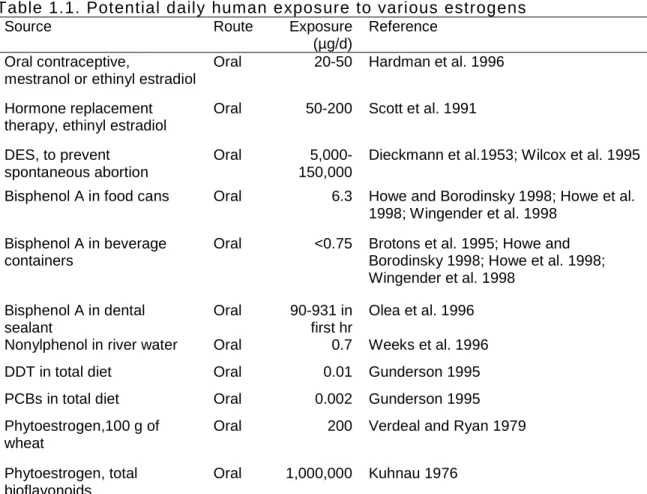
Table 1.1. Potential daily human exposure to various estrogens
Source Route Exposure
(µg/d)
Reference Oral contraceptive,
mestranol or ethinyl estradiol
Oral 20-50 Hardman et al. 1996
Hormone replacement therapy, ethinyl estradiol
Oral 50-200 Scott et al. 1991
DES, to prevent spontaneous abortion
Oral
5,000-150,000
Dieckmann et al.1953; Wilcox et al. 1995
Bisphenol A in food cans Oral 6.3 Howe and Borodinsky 1998; Howe et al. 1998; Wingender et al. 1998
Bisphenol A in beverage containers
Oral <0.75 Brotons et al. 1995; Howe and Borodinsky 1998; Howe et al. 1998; Wingender et al. 1998
Bisphenol A in dental sealant
Oral 90-931 in first hr
Olea et al. 1996 Nonylphenol in river water Oral 0.7 Weeks et al. 1996
DDT in total diet Oral 0.01 Gunderson 1995
PCBs in total diet Oral 0.002 Gunderson 1995
Phytoestrogen,100 g of wheat
Oral 200 Verdeal and Ryan 1979
Phytoestrogen, total bioflavonoids
Oral 1,000,000 Kuhnau 1976
Source: Commission on Life Sciences. Hormonally active agents in the environment, National Academies Press; 1999.(29)
However, simply evaluating exposure does not take into consideration the biological availability and subsequent action of the substance once it is absorbed. There are many factors that influence the biological effects that these exposures may have on the host. Endogenous steroid hormones bind their receptors and the hormone-receptor complex then either stimulates or represses gene transcription. Hormonally active agents can have similar effects or they can interfere with endogenous hormones, for example, by binding the
Biological activity is also influenced by the half-life of the agent. An agent with a low binding affinity, but longer half-life, may have stronger biological influence than an agent with higher affinity and shorter half-life.(29) The binding affinity of ethinyl estradiol, the synthetic estrogen in most oral contraceptives, is similar to that of 17β-estradiol, the most biologically active form of endogenous estrogen.(30) Environmental sources of estrogen-like compounds have lower relative binding affinities for the estrogen receptor (Table 1.2).(31)
Table 1.2. Relative binding affinities for estradiol competitors*
Chemical name
RBA† (%)
Log RBA
Affinity strength* Endogenous estrogens
17β - Estradiol 100.000 2.00 Strong Estrone 7.309 0.86 Strong Estriol 9.719 0.99 Strong Pharmacologic estrogens
Diethylstilbestrol (DES) 399.556 2.60 Strong Ethinyl estradiol 190.063 2.28 Strong Mestranol 2.264 0.35 Strong Environmental toxicants
Bisphenol A 0.008 -2.11 weak Bisphenol B 0.086 -1.07 moderate o,p-DDT 0.001 -2.85 weak 2,3,4,5 – Tetrachloro-4-biphenylol (a PCB) 0.228 -0.64 moderate
*Adapted from Blair et al., 2000 (31) †
Relative Binding Affinity - defined as IC50 for 17β-estradiol ÷ IC50 of competitor, where IC50 is the molar concentration at which there is 50% inhibition of estradiol binding
Some studies have suggested that there is a non-monotonic association between environmental sources of hormone-like exposures and adverse effects in offspring. These studies generally assess the association between very high levels of exposure.(32) The level of exposure in the present study of sex hormone exposure, while significantly greater than exposures incurred environmentally, are likely low-dose exposures relative to the exposures that demonstrate non-monotonic effects.
high as levels encountered through endogenous levels of circulating hormones. The tables below (Tables 1.3 and 1.4) describe the mean serum concentrations of 17β-estradiol and progesterone in pregnant and non-pregnant, menstruating women, and ethinyl estradiol and progestin concentrations in women using oral contraceptives.
Table 1.3. Mean and peak serum concentrations of 17β-estradiol and progesterone over one menstrual cycle and during early pregnancy
17β-Estradiol (pmol/L)
Progesterone (nmol/L) Menstrual cycle (no OC)*
peak† mean daily concentration
914.8 352.7
40.3 12.0
Early pregnancy‡ 1640 49
*
Adapted from Stricker et al., 2006 (33) †
Peak estradiol concentration for women spontaneously ovulating is mid-cyle, one day prior to the LH peak, for progesterone the peak concentration is post-ovulation, in the mid-luteal phase
‡
At 5 weeks gestation (34)
Table 1.4. Maximum area under the curve (AUC) and mean daily serum concentrations of ethinyl estradiol and progestin concentrations for two oral contraceptives*
Formulation Ethinyl estradiol (pmol/L) Progestin (nmol/L)
90 mcg levonorgestrel and 20 mcg ethinyl estradiol
maximum AUC0-24 hours
mean daily concentration
251.0 2491.0/24 hours
100.8
18.2 236.8/24 hours
9.9 1mg norethindrone acetate and
35 mcg ethinyl estradiol
maximum AUC0-24 hours
mean daily concentration
381.2 3876.5/24 hours
161.5
34.7 297.4/24 hours
12.4
*Estimated from drug label data(35)
estrogenic agents of hormonal contraceptives are imperfect in their approximation of endogenous 17β-estradiol.
Summary of existing literature
Experiments on animals have shown a positive association between exogenous perinatal estrogen exposure and metabolic disruption in the offspring, including offspring development of overweight or obesity. These studies generally address the risk of low-dose exposure to environmental sources of estrogen-mimicking compounds.(36-38) For
example, neonatal (days 1-5) exposure to 1mg/kg diethylstilbestrol (DES) in mice resulted in an initial period of depressed growth, followed by increasing adiposity through 4 months of age.(39)
Similarly, in another animal model of sows administered varying doses of 17β -estradiol during pregnancy, a period of depressed growth in the offspring, followed by
increased growth was observed. At slaughter, ~60 days of age, the proportion of fat mass in piglets from exposed sows was significantly higher than in male piglets from control
sows.(40) At least one study, in a mouse model, found an association between exposure in early gestation, prior to uterine implantation, and subsequent offspring obesity.(41)
Table 1.5. Summary of literature for oral contraceptive (OC) use and selected birth outcomes
Reference Exposure(s) Outcome(s) Study design Primary result(s) Rothman K.
NEJM 1977(45)
Self-reported OC use before pregnancy (n=~2,000 for non-users and n=~3,000 for former users)
Twinning, birth weight, fetal loss, still birth collected from birth records Prospective study, self-administered survey
Small reduction in mean birthweight for former versus non-users (p=0.03)
Vessey M. et al. BJOG 1979(43)
Planned versus unplanned pregnancies for OC users (n~1,800 for planned and n=39 for unplanned). Sex ratio, anomalies, still birth, miscarriages, birth weight, LBW Prospective study of women recruited through family planning clinics
9.9% LBW in parous unplanned OC user versus 2.0% planned OC user
Alberman E. et al. IJE 1980(46)
Self-reported OC use before pregnancy (n=2,256 for users, n=2,964 for never users) Congenital anomalies, mean birth weight, stratification by smoking Cross-sectional, self-administered survey Mean birthweight 3,398 g vs 3,410 g non-smokers and 3,292 g versus 3,351 g smokers
Polednak A. et al. Teratology 1983(44)
Self-reported OC use in year before (n=665 users and n=716 non-users), around LMP (n=100), after LMP (n=23) Mean birthweight, proportion LBW Cross– sectional, telephone-based survey
Trend toward smaller birthweights as exposure approached and surpassed LMP
Pardthaisong T. et al. AJE 1991(47)
Family planning clinic documentation of depo-provera (n=1,573) and OC use (n=601) in pregnancy as compared to former users (n=2,578) Still birth, termination of pregnancy, miscarriage, ectopic pregnancy, multiples, LBW Prospective study using medical records, face-to-face interviews, and birth records
1.5 OR (95% CI: 1.2, 1.9) for LBW for depo-provera users versus former users and 1.5 (95% CI: 1.2-2.0) for LBW for OC users versus former users Mucci L. et
al. BJOG 2004(48)
Self-reported OC use before pregnancy (n=205 users and n=55 for non-users, identified at time of birth)
LBW,
preeclampsia, birthweight, gestational length, maternal serum levels of estriol and progesterone Prospective study using maternal interview, birth records, maternal blood draws in pregnancy Higher birthweight (+200.7 grams) in ever versus never users, no difference in
gestational length, increased levels of estriol and
progesterone at 27 weeks
Ahn H. et al. Human and Experimental Toxicology 2008(49)
Self-reported use of OC 4 weeks before or after conception (n=120) age and gravidity matched (n=240) to women undergoing risk counseling for use of non-teratogenic drugs
PTB, LBW, LGA, congenital anomalies, birth weight, gestational length Prospective cohort
No difference in mean birthweight, gestational length, preterm deliveries, LBW, LGA or birth defects
Chen X. et al. EJOG and Reproductive Biology 2009(50)
Prescription drug database account of OCs dispensed at 0-30 days, 31-60, and 61-90 days prior to LMP, individually matched to subjects (1:4 match)
LBW, PTB, Post-term birth as documented in Saskatchewan Health database Administrative health records study using pharmacy and health registry data
1.2 Innovation
There is evidence to support a mode of action for exogenous sex hormone exposure in causing overweight and obesity in animal models, possibly through metabolic disruption in early embryonic development, but human epidemiologic evidence was nonexistent. Thus, this research took the next step, applying epidemiologic approaches to determine if there is evidence that exogenous sex hormones contribute to the increased prevalence of
overweight and obesity. Environmental sources of exogenous hormone exposures are ubiquitous, but confer extremely low-dose exposures. An epidemiologic study of the
association resulting from higher dose, pharmaceutical-based use of sex hormones in early pregnancy offered a cost efficient means for studying the potential for harm resulting
through lower level exposures.
Few children are exposed to pharmacologic sources of sex hormones in early pregnancy. Although the number of infants conceived through assisted reproductive methods (ART) is increasing, in the United States only 1 percent (2006) of infants born result from use of ART methods.(51) The incidence of oral contraceptive failure varies by country(52) but is estimated to be about 9 percent in the United States.(53, 54) However, of those pregnancies resulting from failed oral contraceptives, many will be intentionally
terminated in early pregnancy,(53) further reducing the number of infants whereby effects of exogenous sex hormones can be studied. Consequently, most observational studies are underpowered for assessing the association of pharmacologic sex hormone exposure in
utero and offspring overweight or obesity. Large cohort studies offer the opportunity to
study exposures that are of relatively low incidence, while increasing the potential that there will be sufficient power for adjustment for possible confounders or assessment of possible effect modifiers.
environmental sources) dose exposures to sex hormones would lend credence to the hypothesis that low doses, such as those encountered through environmental toxicants, increase risk. This study also yields etiologic clues into the disparity in health outcomes, such as elevated lipid profiles, increased blood pressure, lower birth weight, and shorter gestation,(55, 56) for infants conceived through sex hormone-based assistive reproductive treatments. Most importantly, this epidemiologic study contributes to an improved
CHAPTER 2: APPROACH
2.1 Study design
This study was a secondary analysis of a large, population-based, prospective cohort study, whereby we assessed the association between pharmacologic sex hormone use in early pregnancy and birth outcomes, including small for gestational age, weight for
gestational age, preterm birth, and gestational length, and altered weight for height status at 36 months of age, including BMI and overweight or obesity.
2.2 Study population
The Norwegian Mother and Child Cohort Study (MoBa) is a prospective, population-based pregnancy cohort study conducted by the Norwegian Institute of Public Health.(57, 58) The MoBa cohort dataset was the primary source of data for this study and was used to define many of the study variables, either in conjunction with other data sources or in
isolation. MoBa study participants were recruited from 1999 through 2008 through mailed invitation and enrolled at the routine ultrasound examination offered to all pregnant women in Norway at 17-19 weeks of gestation. Approximately 42 percent of all pregnant women in Norway, who reached at least 16 weeks of gestation, were invited to participate in the study. Of these, about 40 percent consented to participate. Informed consent was obtained from each MoBa participant upon recruitment. The Regional Committee for Medical Research Ethics in Southeastern Norway approved the study. At enrollment, participants were asked to provide a blood plasma specimen and to complete an initial, self-administered
by self-administered questionnaires at regular intervals and by linkage to national health registries. The cohort includes over 108,000 children, over 90,000 mothers, and 71,000 fathers. To date, there are approximately 40,000 children with completed 36-month questionnaires.
The Medical Birth Registry of Norway (MBRN) data was used in this study to define study outcomes (Aim 1) and to estimate the date of conception. MBRN data are available in the MoBa cohort database, through linkage of MoBa data with the MBRN, made possible by the unique personal identifier assigned to all Norwegians. All data in MBRN are collected on a standardized birth notification form completed by the midwife or physician attending the birth. Compared to the source population of all pregnancies in Norway, the MoBa cohort is slightly healthier (Table 2.1).
Table 2.1: Characteristics of 26,777 participants in MoBa and 226,057 births in Norway 2000–2003*
MoBa cohort Total population Parity (%) 0 1 2+ 40.3 36.9 22.8 40.7 35.7 23.6 Maternal age (%)
<20 20-24 25-29 30-34 35+ 1.2 11.1 34.7 37.5 15.5 2.4 14.9 34.2 33.2 15.3 Preeclampsia (%)
Yes 3.8 3.9
Gestational age (days)
Mean (SD) Median 277.3 (14.7) 280 276.8 (15.0) 279 Preterm birth (%)
Yes 7.2 7.7
Birthweight (grams) Mean (SD) Median 3587 (626) 3630 3538 (632) 3575 Low birth weight (%)
Yes 4.6 5.1
*Source: Magnus et al. 2006(57)
before, 1 month before conception, and within 12 weeks after conception (for women enrolled 2004 or later). By Norwegian law, as of January 1, 2004, all pharmacies must provide electronic data for all prescriptions dispensed. NorPD contains individual-level data on all medications prescribed and dispensed through pharmacies to non-institutionalized individuals in Norway. Classification of drugs is based on the Anatomical Therapeutic Chemical (ATC) classification system.(59) The Norwegian Institute of Public Health has data quality assurance measures for the data collection that include routine evaluation of data completeness and errors. In Norway, between 2004-2006 and based on data collected through the NorPD, an estimated 5.2%, 0.2%, and 0.1% of women during their 1st, 2nd, and 3rd trimesters of pregnancy, respectively, were dispensed pharmacologic sex hormones. During the 1st trimester, 1.5% of women were using sex hormones for contraception and 2.6% were using sex hormones in association with assisted reproductive therapy.(60) In the three months prior to conception, 11.5% of women used pharmacologic sex hormones.
2.3 Study inclusionary/exclusionary criteria
For the purposes of this study, we included all pregnancies conceived after January 1, 2004, resulting in a singleton live birth and without evidence of having received infertility treatment for the index pregnancy. We also excluded pregnancies to women with a history of chronic hypertension and, for assessing the relationship between hormonal contraceptive use and offspring overweight or obesity, infants who died in the first year of life.
2.4 Outcome and exposure assessment
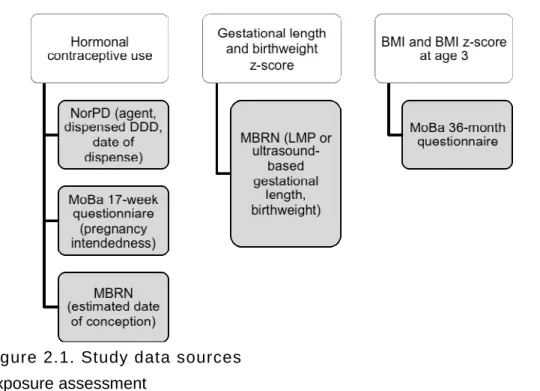
categorical measure of underweight or normal weight versus overweight or obese). Because childhood obesity status may be influenced by gestational length at birth,(61) we also examined the association between hormonal contraceptive use and preterm birth, both as a categorical measure of preterm birth and as a continuous measure of gestational length. Multiple data sources informed the exposure-outcome analyses (Figure 2.1).
Exposure assessment
There were two possible sources of information for hormonal contraceptive use for this study -- self-reported use as reflected on the MoBa questionnaire administered at 17 weeks and the NorPD indicated dispensing of hormonal contraceptives. Ultimately, we chose using the NorPD for assessing exposure to hormonal contraceptives, as there were several limitations to using the self-reported data.
Women had the option of selecting both the combination and progestin-only pill in the year prior to pregnancy. Women did not differentiate between which forms of oral contraceptive they used in the 4 months before pregnancy. Although we could have imputed the type of contraceptive used at 4 months by carrying forward the type of oral contraceptive used in the 12 months before conception, misclassification in characterization of exposure could have occurred in using this approach. It is possible that some women will have been uncomfortable self-reporting oral contraceptive use at the time of pregnancy. Other limitations in using self-reported exposure were that use of some forms of hormonal contraceptives was not collected. Furthermore, there is a potential that some women may not have accurately remembered the type of contraceptive used. Finally, self-reported data would have precluded assessing for potential associations by hormonal contraceptive formulation, including evaluation by progestin type.
Linkage to NorPD provided the date(s) and specific formulation of oral
Table 2.2. Description of variables in linked file
Variable Description Valid values
Prescriber
Prescriber's serial number
Number is generated from prescriber's ID number in health personnel's register
Serial number - unique for every dispensing.
Prescriber's profession Physician, dentist, veterinary surgeon, nurse, midwife, optician, other profession, profession lacking
Prescriber's specialty General practitioner, children's illnesses, internal medicine
Patient
Patient's residential municipality number
Patient's place of residence at time of dispensing of drug. Municipality number contains 4 digits, first two for county, last two for municipality.
0101, 0104, 0211, 0301 etc
Patient's residential municipality name
Halden, Moss, Vestby, Oslo
etc. Patient's residential
county number
Patient's place of residence at time of dispensing of drug.
01,02,03, etc Patient's residential county name Dispensed prescriptions
Dispensing number Serial number for individual dispensed prescriptions
Numerical, number of digits will vary
Dispensing date yyyy-mm-dd
Number of packs Dispensed number of packs Numerical, with decimals Number of DDD Dispensed number of DDD Numerical, with decimals
Drug
Drug's description Name, strength and format Alphanumerical Size of packet Number of tablets, gram, ml, etc Numerical
Packaging unit Dosage format
Strength of drug 25mg, 1g, 0.5mg/ml, 2500IU/syringe etc ATC code Drug's ATC code 1. - 5 Alphanumerical
DDD Defined daily dosage (DDD) for ATC code Numerical, up to 3 decimals DDD unit Unit of measurement for DDD g, mg, IU etc
Dispensing group Prescription category set by Norwegian Medicine Agency
Norwegian Prescription Category (A, B, C, F(OTC)) Pack's recommended
retail price (RRP) at point of sale
Pharmacy retail price at point of sale Norwegian kroner 00.00
Source: National Institute of Public Health, Oslo, Norway
≥2 weeks from the ultrasound-based estimate of gestational length, in which case we used the ultrasound based measure.(63) We then constructed an exposure window for each hormonal contraceptive prescription filled using the date that the prescription was filled and the number of defined daily doses dispensed (day’s supply). We characterized exposure into discrete categories by last date of use relative to conception; specifically last use 12 - >4 months before, 4 - >1 months before, and 1 - > 0 months before, and 0 -12 weeks after. These exposure categories roughly correspond to the periods of primordial follicular growth (12 months before), secondary and primary follicular growth (4 months before), ovulation (1 month before), and early embryo development (up to 12 weeks after conception).
Use of the NorPD to characterize exposure was not without limitations. In using NorPD, we could not know about, or be able to characterize, exposure according to how well women adhered to guidelines for prescription use. Women may have had varying levels of exposure, depending on how closely they followed the prescription regime. Outcome assessment
Aim 1 (Birth) - For Aim 1, we evaluated the association between hormonal contraceptive use and birth weight for gestational age and length of gestation. These outcomes were characterized as follows:
Birthweight for gestational age z-score:
Birthweight and gestational age at birth were recorded on the MBRN. After
identifying and excluding observations with biologically implausible values (gestational age <22 weeks or > 45 weeks or birthweight <1000 grams for infants born at ≥37 weeks),
birthweight for gestational age was characterized as both a continuous measure (birthweight for gestational age z-score), and categorically as small versus average or large for
Gestational length:
As described previously, we used the last menstrual period (LMP)-based estimated gestational length unless the LMP-based gestational length was missing or ≥2 weeks from the ultrasound-based estimate of gestational length, in which case we used the ultrasound based measure.(63) Last menstrual period (LMP) derived due dates (Naegele’s rule) can be inaccurate due to varying menstrual cycle lengths, uncertainty of LMP, and
non-menstrual bleeding not associated with menses (from OC use or mid-cycle bleeding). Ultrasound-based due dates can also be inaccurate as reference values are based on expected fetal size values using LMP. For fetuses that are either small or large for
gestational age, ultrasound-based due dates will be biased.(66) Preterm birth was defined as delivery before 37 completed weeks of pregnancy,(67) assessed from the gestational length in days.
Aim 2 (36 months of age) - For Aim 2 we evaluated the association between
hormonal contraceptive use and BMI z-score at age ~36 months. BMI was characterized as follows:
BMI as a continuous measure:
• Length/height-for-age z-score (ZLEN) ZLEN<-6 or ZLEN >6 • Weight-for-length/height z-score (ZWFL) ZWFL<-5 or ZWFL>5 • BMI-for-age z-score (ZBMI) ZBMI <-5 or ZBMI >5(68)
We included children with documented height and weight measurements between 30 months and 42 months of age.
Overweight or obese at 36 months:
We characterized children as overweight or obese using BMI cutpoints for
overweight or obesity as established by the International Obesity Task Force (IOTF). The IOTF generated standard definitions for defining overweight or obese in children using pooled data collected from nationally representative data from cross sectional surveys on growth in Brazil, Great Britain, Hong Kong, the Netherlands, Singapore, and the United States.(70) The BMI cutpoints are based on child sex and age and, projected out to adulthood, correspond to adult overweight or obese.
2.5 Data analyses
This was an epidemiologic study of the association between hormonal contraceptive use before and in early pregnancy and offspring anthropometric indicators at birth and at 36 months of age. We hypothesized that hormonal contraceptives would have a negative inverse association with neonatal anthropometric measures and gestational length (Aim 1) and a positive association with offspring BMI, odds of overweight or obese at 36 months of age (Aim 2).
Data preparation
personal identifier assigned for the purposes of this study), we inspected the data for
biologically implausible values for study covariates and set to missing those values deemed implausible.
Exposure-outcome analyses
Aim 1 (birth)-We used generalized linear models to assess the relationship between hormonal contraceptive use and continuously measured birth outcomes. Specifically, we fit a linear model (identity link) to assess the association between exogenous sex hormone exposure and birth weight for gestational length z-score and length of gestation. A binomial distribution, logistic model (logit link) was used to estimate the odds for preterm birth as compared to full term birth.
Aim 2 (age 3)-We used generalized linear models to assess the relationship between exogenous sex hormones and offspring obesity. We fit a linear model to assess the association between exogenous sex hormone exposure and body mass index z-score at age 36 months and a logistic model to estimate the odds for overweight or obese versus normal weight
.
Aims 1 and 2 -Covariate-outcome relationships were explored non-parametrically first, to determine whether covariates should be characterized continuously, using quadratic terms, through use of an indicator variable, or with splines.
disparate, we reported results separately across maternal BMI and/or offspring sex categories. All models used Generalized Estimation Equations (GEE) to obtain robust variance estimators and account for multiple children in the study from the same family. All analyses were conducted using SAS 9.3 (SAS Inc, Cary, NC).
2.6
Study biases
Confounding
The association between hormonal contraceptive use and offspring anthropometric indicators is likely confounded by multiple factors that are direct or indirect antecedents of both the exposure and outcome. Women who conceive while taking an oral contraception are unique in that they may either have poor adherence to taking the oral contraceptive and/or they are highly fecund. With perfect use, the ‘failure’ rate for oral contraceptives is <1%.(54) Fecundity, among women not currently using a hormonal contraceptive, is associated with maternal age, prior oral contraceptive use, irregular or long menstrual cycles,(72, 73) heavy smoking,(72, 74) heavy alcohol use, pre-pregnancy BMI,(72) and some health conditions (polycystic ovarian syndrome, endometriosis, autoimmune disease,(75) and history of cancer treatment).(76)
Studies on hormonal contraceptive adherence cite parity,(77) unawareness of the potential benefits of oral contraception outside of prevention of pregnancy,(78, 79) experiencing side effects,(78, 80) and ability to access prescriptions(77) as factors contributing to prescription adherence.
confounders.(81) Figure 2.2 illustrates a DAG representing the possible relationship between hormonal contraceptives and offspring overweight or obesity.
Figure 2.2. DAG for early pregnancy use of hormonal contraceptives and overweight or obesity
In this DAG, there were several minimally sufficient sets that could have been used to minimize the potential for confounding as introduced by these maternal characteristics.
These included any of the following:
1. Adherence, Fecundity, Maternal age, Parity, Pre-pregnancy BMI, Maternal smoking 2. Adherence, Fecundity, Hormonal contraceptive use before conception
3. Maternal alcohol use, Fecundity, Maternal Age, Maternal education, Hormonal contraceptive use before conception, Pre-pregnancy BMI
4. Fecundity, Maternal age, Maternal education, Hormonal contraceptive use before conception, Pre-pregnancy BMI, Maternal smoking
5. Maternal education, Parity, Pre-pregnancy BMI, Maternal smoking
To identify which minimally sufficient set to use, we considered which of the measures had the most validity and/or reliability, and which measures had the strongest
Overweight or obese Pre-pregnancy
BMI
Maternal education
Prescription adherence
Parity
Maternal age Fecundity
Marital status Maternal
smoking
Maternal alcohol use
HC use after conception
association with the exposure and outcome. MoBa does not include a measure of adherence -- this is an unmeasured variable in this DAG. Time to conceive could have served as a proxy for fecundity. However, all women who conceive while taking an oral contraceptive have had a time to conceive of 0. Conditioning on time to conceive might create convergence issues due to non-positivity or insufficient overlap in distribution of covariates. Given these factors, we selected the set including maternal education, parity, pre-pregnancy BMI, and maternal smoking, for our minimally sufficient adjustment set. Loss to follow up or out-selection bias
In assessing the association between hormonal contraceptive use and offspring overweight or obesity there was the potential for out-selection bias, resulting from loss to follow-up. If out-selection is associated with covariates that are causal of the exposures of interest (or with factors associated with the exposure) and also associated with the outcome, there is a potential for introducing collider stratification bias when limiting a sample
population to the risk set remaining after selection has occurred.
Simply adjusting on factors associated with selection may also introduce collider stratification bias if there are unmeasured factors associated with selection. Therefore, we used a multiple imputation approach(82) to impute 10 data sets with imputed follow-up data for offspring BMI. We modeled the association between hormonal contraceptive exposure and offspring overweight or obesity for each of the imputed datasets. The model results for each data set were then synthesized to obtain final estimates for the multiple imputation approach. As an alternative approach to multiple imputation, we also conducted a
sensitivity analysis using inverse probability weighting to account for loss to follow-up.(83) Selection bias due to missing covariate data
covariate data by first constructing a predictive model for missingness, using covariates and outcomes selected for inclusion in the study. If missing completely at random, missingness will not bias estimates but could increase variance. If missing at random, whereby
missingness is conditional on one or more covariates under observation, both estimates and variance could be biased. Under the assumption that there were not unobserved study variables influencing missingness (in which case multiple imputation would be
inappropriate), we could have used multiple imputation to impute the missing data.(82) Analyses would then be carried out using data with and without imputations to assess the sensitivity of the study estimates to imputing missing covariate data.
2.7 Public health relevance
This was an epidemiologic study of the influence of pharmacologic sex hormone exposure, specifically hormonal contraceptives, on offspring birth outcomes and early childhood measures of BMI, overweight or obesity. Although there is considerable concern for the possible risks of exogenous sex hormone exposures conferred through
environmental sources, these exposures are small and the effects are difficult to assess in human populations. This study explored the risk of pharmaceutical-based sex hormones in their own right, but also as a proof of principle for understanding the potential for harm from lower dose exposures.
and obesity may be rooted in insults incurred during fetal development. This study
evaluated the association between before and in early pregnancy, exogenous sex hormone exposure and altered growth as indicated through offspring anthropometric indicators.
2.8 Study limitations and other considerations
This study had a limitation of exploring pharmacologic sex hormone effects before and during early pregnancy only. Although early pregnancy exposure confers the highest potential for relative increase in sex hormones, in that this is the period of pregnancy when endogenous levels are still relatively low, this study did not assess the risk of relatively low dose exposures aggregated over time throughout pregnancy, such as those experienced through environmental sources. It also did not assess the effects of exposure on later onset (after age 3) overweight or obesity. A proposed mechanism underlying this study, described previously, suggests that early, preimplantation exposure, may lead to downstream effects on fetal development, gestational length, and offspring growth. However there may be other mechanisms, possibly outside this window of exposure that could lead to long-term effects on fetal and postnatal growth. An absence of an association between pharmacologic sources of sex hormones and offspring growth indicators at one point in time does not preclude the possibility that exogenous sex hormone exposures could confer risk for altered growth trajectory of the developing fetus, neonate, or child.
Although use of prescription registry data offers considerable detail in the timing and formulation of the agents prescribed, there is considerable opportunity for misclassification of use. The extent to which women adhered to the guidelines for taking the prescription is unknown. The likelihood for misclassification, likely over-reporting of use, may increase as the date of conception approaches given the likelihood that many women will have
CHAPTER 3: HORMONAL CONTRACEPTIVE USE IN RELATION TO PRETERM
BIRTH AND SMALL FOR GESTATIONAL AGE
3.1 Introduction
Outcomes at birth, including preterm birth and small for gestational age at birth, can serve as markers of impaired or altered fetal growth and development. The cascade of events leading to parturition are not well understood but are believed to involve signaling from both the mother and the fetus.(84) Being small for gestational age, particularly for infants born at the extreme lower end of the distribution, can indicate impaired growth during fetal development.(85) Exposure to exogenous sources of hormonally active agents,
especially during developmentally sensitive periods, may contribute to altered growth and development.
Animal models provide evidence that developmentally sensitive periods begin even before conception.(9-13) The metabolic activity of preimplantation embryos can be changed as a consequence of alterations in their environment.(23, 24) Even subtle environmental alterations may lead to altered growth and development of the embryo, early parturition and preterm delivery.(25)
Much of the literature concerning exposure to hormonally active agents has been centered on exposure to environmental compounds that may have endocrine effects. However there are pharmacologic sources of hormonally active agents too, the most obvious being hormonal contraceptives.
component only. Possible adverse effects in pregnancy, resulting from use of hormonal contraceptives have been studied. The results of these studies have been largely
inconclusive, with no consistent pattern emerging for effects of hormonal contraceptive use on pregnancy outcomes.(43-48) Many of these studies have focused on low birth weight, an imperfect measure of fetal growth and development.(86) Hormonal contraceptives contain, most commonly, a synthetic estrogen and progestin component. Some forms of hormonal contraceptives contain a progestin component only. The potential for exposure to these exogenous hormones to adversely affect pregnancy has been studied, but no consistent patterns of association have emerged.(43-48) Many of these studies have focused on low birth weight, which does not appropriately represent fetal growth and development across all gestational ages, and did not account for different hormones comprising the
contraceptives.(86)
To our knowledge, there are no studies of the association between hormonal contraceptive use and birth outcomes whereby exposure to hormonal contraceptives was evaluated according to progestin type. We are also not aware of any studies evaluating birth outcomes for users of the progestin-only oral contraceptive. Given the differences in metabolic effects from hormonal contraceptive formulations with varying progestin
components,(18-20, 87) and the relationship between maternal metabolic factors and offspring birth outcomes, evaluating the association between hormonal contraceptive by progestin type is warranted.
hormonal contraceptive could be characterized with finer detail than has been described previously.
3.2 Methods
Primary analyses Study population:
MoBa study participants were recruited from 1999 through 2008. Women were identified for eligibility when scheduling the routine prenatal ultrasound offered free of charge to all pregnant women in Norway at 17-20 weeks of gestation. Women were then mailed an invitation to participate before the scheduled ultrasound, with informed consent and enrollment taking place at the ultrasound examination. All hospitals with at least 100 births per year participated in the study recruitment and enrollment. Approximately 42 percent of all pregnant women in Norway were invited to participate in the study. Of these, 39 percent consented to participate. At enrollment, participants were asked to provide a blood sample and to complete an initial, self-administered questionnaire to provide data on demographic characteristics, reproductive health history, disease and medication history, lifestyle factors, and socioeconomic status. Follow-up is ongoing and is conducted through self-administered questionnaires at regular intervals and by linkage to national health registries.
All MBRN birth registry data are collected on a standardized birth notification form completed by the midwife or physician attending the birth. Prescription data from NorPD contains individual-level data on all medications prescribed and dispensed through
pharmacies to non-institutionalized individuals in Norway. By Norwegian law, as of January 1, 2004, all pharmacies must provide electronic data for all prescriptions dispensed.
questionnaire or the MBRN. We additionally excluded pregnancies to women who had documented pre-pregnancy chronic hypertension (n=527). As the NorPD registry was not initiated until January 1, 2004, we further restricted our study population to pregnancies of women enrolled at least 12 months after the date on which the NorPD registry began collection of data on prescription fills (n=48,615). We excluded pregnancies with missing covariate data (n=4,191). The final study population included 44,734 pregnancies to 42,155 women (Figure 3.1).
All Norwegian residents are assigned a personal identifier number. Linkage of the MoBa questionnaire, MBRN, and NorPD data files were possible through this identifier. The Figure 3.1. Study population selection
University of North Carolina at Chapel Hill and the National Institute of Environmental Health Sciences Institutional Review Boards and the Norwegian Southeastern Regional Ethics Committee reviewed and approved this study.
Exposure:
Hormonal contraceptive use in early pregnancy and prior to conception was characterized according to the Anatomical Therapeutic Chemical (ATC) Classification System.(59) We characterized exposure by type and route of administration (combination oral contraceptive, progestin-only oral contraceptive, vaginal ring, transdermal, injectable, implant, and hormonal-based intrauterine device) and by type, route, and progestin component. All hormonal contraceptives with an estrogen component (combination oral contraceptives, vaginal ring, and the transdermal contraceptive) contained ethinyl estradiol, but there were eight different progestin types used solely or in combination with ethinyl estradiol, including desogestrel, drospirenone, levonorgestrel, norelgestromin,
norethisterone, lynestronol, medroxyprogesterone, and etonogestrel.
Date of conception was estimated by subtracting 17 days(62) from the total number of days of gestation (to account for the follicular phase prior to conception) and then
subtracting this value from the date of birth. We used the last menstrual period (LMP)-based estimated gestational length unless the LMP-(LMP)-based gestational length was missing or
≥2 weeks different from the ultrasound-based estimate of gestational length, in which case we used the ultrasound based measure.(63) We then constructed an exposure window for each hormonal contraceptive prescription filled using the date that the prescription was filled and the number of defined daily doses dispensed (day’s supply). We characterized
hormonal contraceptive use within any of the exposure periods assessed. For example, women whose last date of use was 1, 4, or 12 months before conception were not included in the analysis evaluating use within 12 weeks after conception.
Most oral contraceptives were dispensed in 3-month supply (82%) or 6-month supply (15%). For pregnancies with more than one type of hormonal contraceptive prescribed, we assigned exposure type according to the type of contraceptive used closest to the estimated date of conception. Because many women may stop taking their hormonal contraceptive in order to achieve conception, we characterized women as exposed in early pregnancy only if they reported on the 17-week questionnaire that the pregnancy was unplanned and they had ≥ 1 day(s) supply of hormonal contraceptive at or after the day of conception as defined above.
Outcome:
Preterm birth was defined as delivery before 37 completed weeks of pregnancy,(67) assessed from the gestational length in days. Small for gestational age (SGA) was
characterized as having been born at <3rd percentile for weight for gestational age.(64) Weight for gestational age percentile was calculated from a population standard as described by Mikolajczyk et al.(65) Birthweight z-score was calculated by subtracting the observed birthweight from the expected birthweight based on the population standard distribution and then dividing this value by the standard deviation for each gestational age. Covariates:
Covariate selection was informed through construction of a directed acyclic
maternal education (>4 years of university or technical, 4 year university or technical degree, 3 years of college preparatory high school, 3 years of technical high school, 1-2 years of high school, <9 years of secondary school, other).(78, 79)
Analysis:
Our primary analyses were concerned with assessing the association between hormonal contraceptive use, by type (combination versus progestin-only) and route (oral, vaginal, transdermal, and injectable), and preterm birth or SGA within the discrete
categories of within 12 months, 4 months, and 1 month before conception and within 12 weeks after conception. For each exposure period, any contraceptive with < 10 exposed cases were combined into a single “other” exposure category. We used generalized linear models with a logit link, and generalized estimation equations (GEE) with an independent correlation matrix(89) to estimate associations between exposures and outcomes using robust standard errors, accounting for lack of independence between siblings.
We conducted tests of homogeneity to evaluate whether different progestins in the contraceptive formulation were differently associated with preterm birth or SGA. We used generalized linear models to obtain the log likelihood for three, nested models; first modeling any hormonal contraceptive use in each of the exposure periods as compared to no use at any of the exposure periods, second, hormonal contraceptive use by type and route as compared to no use, and third, contraceptive use by type, route and progestin formulation as compared to no use. We conducted likelihood ratio tests to assess whether the model fit improved from characterizing exposure with increasing detail. All analyses were conducted using SAS v9.3 (SAS Inc., Cary, North Carolina).
Sensitivity analyses
Examination of the covariate distribution among pregnancies with hormonal
(Appendix, Supplementary Table S3.1). There were also differences in the characteristics of women using different types of hormonal contraceptives. For example, while 71% of combination oral contraceptive users were nulliparous, just 17.2% of progestin-only oral contraceptive users were nulliparous. These differences suggest that prescribing patterns may differ based on individual factors, thus raising the concern for confounding by
indication. We explored the robustness of our results through sensitivity analyses designed to mitigate the potential for confounding by indication.
First, because combination oral contraceptive users were much likely to be nulliparous than progestin-only oral contraceptive users, we restricted our analysis to nulliparous pregnancies only. This approach was intended to reduce the potential for confounding based on differences in prescribing patterns for women who were parous. Next, we compared the association comparing combination oral contraceptive use to vaginal ring use (Appendix, Supplementary Table S3.1), because these two groups were socio-demographically most similar. Finally, we conducted a propensity score analysis to reduce residual confounding associated with use of combination oral contraceptives as compared to no use of a hormonal contraceptive.
used GEE models to assess the relationship of combination oral contraceptive use with preterm birth, with inclusion of an indicator term for rank, and obtained a pooled estimate of the association across strata. In addition to the term for rank, these models included all of the potential confounders from the primary analyses models.(90-92) In evaluating the covariate balance within propensity score rank for exposure within 12 months, the distribution of study covariates was similar within rank (Appendix, Supplementary Table S3.2).
3.3 Results
Table 3.1. Study population characteristics among women participating in the Norwegian Mother Child Prospective Cohort Study (2004-2008)
Study population*
n=44,734
Characteristic %
Maternal age (years)
14-19 0.9
20-29 42.1
30-39 54.9
40-49 2.1
Maternal BMI (kg/m2)
<18.5 3.2
18.5-24.9 66.0
25.0-29.9 21.7
≥30.0 9.0
Parity
0 47.1
1 35.5
2 13.7
3 2.8
4 or more 0.9
Maternal education
More than 4 years of university or technical 27.2
4 year university degree, regional technical 40.8
3 years high school, junior college 13.4
Technical high school 11.2
1-2 years high school 3.9
9-year secondary 2.2
Other 1.4
Maternal smoking (at 17 weeks)
None 79.3
Quit 14.5
*Represents unique pregnancies conceived without infertility treatments, resulting in a singleton live birth, with a date of birth ≥12 months after NorPD registry began (January 1, 2004)