TRANSPORTATION ENVIRONMENTS:
THE POLITICS, ECOLOGY, AND INFRASTRUCTURE OF THE PANAMA CANAL
Ashley David Carse
A dissertation submitted to the faculty of the University of North Carolina at Chapel Hill in partial fulfillment of the requirements for the degree of Doctor of Philosophy in the Department Anthropology.
Chapel Hill 2011
Approved by
Peter Redfield
Carole Crumley
Arturo Escobar
Julie Velásquez Runk
ii
ABSTRACT
ASHLEY CARSE: Transportation Environments: The Politics, Ecology, and Infrastructure of the Panama Canal
(Under the direction of Peter Redfield and Carole Crumley)
Many of us think of the Panama Canal as an excavated channel between the
Atlantic Ocean and Pacific Ocean that was finished nearly a century ago. Open nearly
any historical work on the canal and you will read about a monumental engineering
project completed in 1914 by virtue of political will, technological innovation, and
migrant labor. The protagonists of these accounts – typically politicians, engineers, and
thousands of laborers – overcame significant obstacles and united the oceans, fulfilling a
colonial dream of interoceanic transit and cementing a modern vision of global
connection. I argue that this narrative, which might be called the “big ditch” story, is not
inaccurate, but is too restrictive. This is to say that a focus on historical excavation elides
the ongoing political, ecological, and infrastructural work across the region around the
waterway that makes interoceanic transportation possible. My dissertation, which draws
on ethnographic fieldwork and archival research conducted in Panama and the United
States, reveals a constantly changing canal in which concrete and steel forms are bound
up with water, soil, forests, and social life. This built environment is highly politicized,
given shape through the diverse, sometimes oppositional projects that have been pursued
by United States and Panamanian state institutions, capitalists, scientists, and people
whose livelihoods depend directly on the land. The four main body chapters of the
dissertation each examine a different aspect of changing political, ecological, and
iv
(water, bananas, concrete, and forests) and a related theme (control/excess,
governance/margins, politics/mobility, nature/infrastructure). Through these case studies,
vi
ACKNOWLEDGEMENTS
I am grateful to the people and institutions in the United States and Panama that made
this work possible. I thank my family for their support and love through this journey. I
also thank Sara for her love, wisdom, wit, and patience while reading multiple drafts of
everything I wrote and inevitably asking: “Yeah, but what’s at stake here?” I thank my
dissertation co-advisors, Peter Redfield and Carole Crumley, for shepherding me through
the dissertation process and providing sage guidance along the way. I also thank Arturo
Escobar, Julie Velásquez Runk, and Wendy Wolford for making this project inestimably
better and collectively teaching me so much over the years. In Panama, I especially
thank Stanley Heckadon-Moreno and Francisco Herrera for teaching me about their
country and a commitment to fostering anthropology on the isthmus. My dissertation
research and writing were supported by a Fulbright Student Award, Smithsonian
Short-term Research Fellowship, Wenner-Gren Dissertation Fieldwork Grant, UNC Mellon-Gil
Dissertation Fellowship for Latin America, and UNC Dissertation Completion
Fellowship. Without those institutions, none of this would have been possible. Finally,
and most importantly, I would like to thank the people in Panama who put up with my
strange questions, looked out for me, and made research a great experience. Mil gracias.
.
TABLE OF CONTENTS
LIST OF TABLES ... IX
LIST OF FIGURES ... X
I. INTRODUCTION ... 1
Why is the Panama Canal Anthropological? ... 3
From Forests to Infrastructure (The Machete and the Freighter) ... 8
Panama, the Transport Economy, and Ethnographic Field Sites ... 11
The Political Ecology of Infrastructure ... 18
Map of the Dissertation ... 36
II. WATER: CONTROL AND EXCESS ACROSS THE PANAMA CANAL’S WATER MANAGEMENT NETWORK ... 42
Organization of the Chapter ... 48
Control: The Lock Canal Decision and its Implications... 49
Excess: Limon and the “Lost Towns” of the Chagres River ... 60
Conclusion ... 78
III. BANANAS: INFRASTRUCTURE, GOVERNANCE, AND LABOR AT THE MARGINS OF THE US CANAL ZONE ... 79
Bananas and the Margins of Transportation Networks ... 82
Transportation and Agrarian Economies along the Chagres River ... 87
The “Agricultural Possibilities” of the Canal Zone ... 91
The Canal Zone “Thrown Open” to Agriculture ... 97
Conclusion ... 115
viii
Organization of the Chapter ... 125
The Anthropology of Roads ... 126
Construction of the Transístmica (Trans-Isthmian Highway) ... 131
Life Along the Transístmica ... 141
Conclusion ... 152
V. FORESTS: MAKING NATURAL INFRASTRUCTURE IN THE PANAMA CANAL WATERSHED ... 154
Organization of the Chapter ... 159
Nature and/as Infrastructure ... 160
Assembling the Panama Canal’s Water Management Network... 161
Making the Panama Canal Watershed ... 163
The Politics of Natural Infrastructure ... 177
Conclusion ... 186
VI. CONCLUSION... 189
LIST OF TABLES
x
LIST OF FIGURES
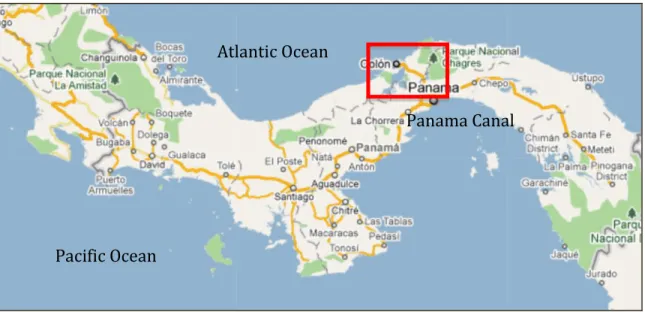
Figure 1.1: Map of Panama and the study area ... 12
Figure 2.1: Map of the Panama Canal watershed ... 48
Figure 2.2: Community of Limon with Gatun Lake in the background ... 62
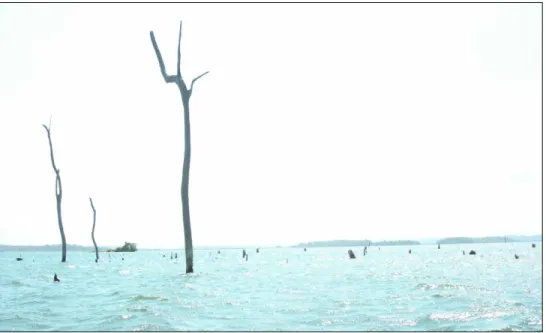
Figure 2.3: Dead forests break the surface of Gatun Lake. ... 69
Figure 3.1: Banana corm (rhizome) on a farm near the Panama Canal today. ... 109
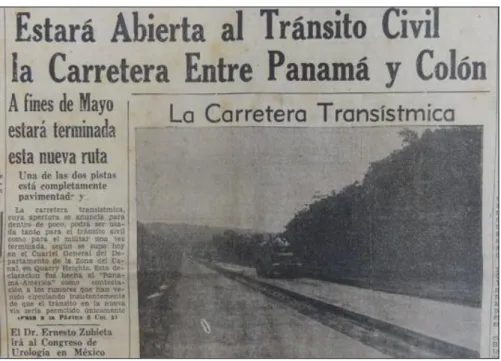
Figure 4.1: Traffic on the Panama Canal and the Trans-Isthmian Highway. ... 120
Figure 4.2: Rural roads near the Panama Canal vary in terms of maintenance. ... 128
I. INTRODUCTION
The Panama Canal is a critical international trade route and pathway for global
commerce. Yet, despite the critical transportation services that the waterway provides,
most accounts focus on the heroic tale of its construction.1 Consequently, many of us
imagine the Panama Canal as an excavated channel between the Atlantic and Pacific
Oceans that was finished nearly a century ago. Open nearly any historical work on the
canal and you will read of a monumental engineering project completed in 1914 by virtue
of American political will, technological innovation, and migrant labor. The protagonists
of these accounts – politicians, engineers, and thousands of laborers – overcame obstacles
and united the oceans, fulfilling an old colonial dream of interoceanic transit and a
modern vision of global connection. This narrative – let’s call it the “big ditch” story – is
not inaccurate, but it is too restrictive in spatial, temporal, and ecological terms.
My dissertation reveals a different Panama Canal: a work in progress where
concrete and steel forms are bound up with water, soil, and forests. This carefully
managed environment is also politicized, given shape through the diverse, sometimes
oppositional projects pursued by US and Panamanian state institutions, capitalists,
1The public’s continued fascination with the construction of the Panama Canal is illustrated by the
2
scientists, and smallholder agriculturalists. The dissertation, a historical ethnography of
canal landscapes, is a work of environmental anthropology in dialogue with human
geography, environmental history, and science and technology studies. I draw on data
collected through ethnographic research in Panama and archival research in the US and
Panama to examine how diverse groups have lived, worked, and made sense of this built
environment. Therefore, the dissertation is largely narrated by people who have known
these landscapes most intimately – campesino farmers, state functionaries, and natural scientists, to name a few – and also by people who have acted upon them at a distance.
As my emphasis on infrastructure and ecology suggests, the protagonists here are
not exclusively human. This move reflects the environmental tradition in anthropology,
engages a recent ontological turn in social theory,2 and reflects my research findings. In
interviews and archival documents, people consistently describe canal landscapes in
active terms: that is, as ecologies with the potential to exceed human control. Through a
political-ecological and infrastructural analysis of the relationships between the Panama
Canal and its hinterlands, my research explores the organization of transportation
environments in general and examines what everyday life is like for people living at the
margins of large technical systems. Three main questions have guided my research and
writing: 1) What projects of technical, political, and ecological reorganization have been
implemented at a regional scale to facilitate transportation across Panama? 2) What new
connections between humans and environments in Panama have been enabled through
transportation infrastructure? 3) What existing connections have been disrupted?
WHY IS THE PANAMA CANAL ANTHROPOLOGICAL?
The Panama Canal seems, at first, like strange ground for anthropology: too large,
too technical, and insufficiently human. But the themes that run through the dissertation
– environment, technology, and development – have been persistent, if unstable,
anthropological concerns. As an object, then, the canal allows us to reflect on the
changing theoretical relationships among these themes in the discipline. Consider, for
example, the research programs of mid-to-late-twentieth century cultural ecology and
ecological anthropology. Inspired by and writing against the legacy of Julian Steward,
these scientific anthropologies focused on subsistence systems in small, rural, and often
indigenous communities in the pursuit of generalizable rules about how societies adapt to
their environments. Steward’s cultural ecology posited a relationship between the
environment, exploitative technology, and the forms of social organization necessary to
bring technologies to bear on the environment. More specifically, the social organization
of labor (the “cultural core”), shaped by available technologies, was understood to be the
axis on which the nature-culture relationship turned.3 For example, Steward argued that
the Western Shoshone were distributed across the landscape in clusters of nuclear
families because they occupied a resource-poor environment, their exploitative
technology “was of the simplest sort known” (bows, digging sticks, stone-flake knives,
etc.), and their labor was organized around hunting and gathering. The group’s cultural
features and social organization were considered adaptations to exploitable resources.4
The heuristic utility of cultural-ecological models held so long as the scale of
3The first step in Stewardian cultural ecology was to analyze “the interrelationship of exploitative or
productive technology and environment.” (1955, 41).
4
research and analysis could be reconciled with the economic geography of an actually
existing community. Cultural ecologists perceived the nature-culture relationship to
become diffuse and less amenable to scientific inquiry as subsistence economies became
more connected with extra-local markets in terms of anthropological understanding,
actual commercial activity, or both. Steward hypothesized that the adaptive effect of
environment on culture would decrease in proportion to social complexity and control of
the environment through technology. He wrote, “It makes a great deal of difference
whether a community consists of hunters and gatherers who subsist independently by
their own efforts or whether it is an outpost of a wealthy nation, which exploits local
mineral wealth and is sustained by railroads, ships, or airplanes. In advanced societies,
the nature of the culture core will be determined by a complex technology and by
productive arrangements which themselves have a long cultural history.”5
Steward wrote those lines a half-century after the US government began work on
the Panama Canal in 1904, marking the beginning of a decade-long construction project
described at the time as modern man’s ultimate triumph over nature.6
The US Canal
Zone, a transportation enclave forcefully established by a wealthy nation across a newly
sovereign Central American republic,7 was emblematic of an expanding network of
modern transportation technologies that created anthropogenic, or second, nature.8 In
5Steward 1955, 39.
6There are many popular triumphalist accounts of Panama Canal construction. Some exemplary titles
include: Our Canal in Panama: The Greatest Achievement in the World's History (Allen 1913) and America's Triumph at Panama (Avery 1913).
7Panama became independent from Colombia in 1903 with the tacit support of the US government. One
good historical work on the subject is LaFeber 1978.
8
Panama, the pursuit of transportation was a technical, environmental, and territorial
project. The Panamanian state granted the US “use, occupation, and control” of the
ten-mile-wide strip of territory later known as the Canal Zone in the Panama Canal Treaty of
1903. In Panama and elsewhere, new socio-ecological forms accreted along expanding
networks of railroads, roads, and canals,9 giving rise to the cultural hybridization that
North American anthropology at that time defined itself against as it sought to salvage or
document “real” native cultures.10
The Panama Canal, then, was an anti-anthropological
project insomuch as it was understood to link economies and erase cultural difference.
From the perspective of twenty-first century anthropology, it is easy to criticize
the bounded subsistence systems of cultural ecology as the byproduct of a selective
vision or willful reduction, rather than accurate representations of historical communities.
We know that the “pristine” cultures studied by early anthropologists were shaped
through interactions with global political economies.11 If culture is less stable and
recognizable than it once appeared, so, it would seem, is nature. Anthropological
approaches to “the environment” have fragmented as the perceived stability of a unitary
nature has been questioned. On the one hand, post-structural critics in the social sciences
and humanities have argued that nature, wilderness, and environment are
historical-cultural constructs.12 On the other hand, natural scientists have called for a “new
ecology” emphasizing non- or multi-equilibrium conditions, non-linearity, interactions
9See, e.g., Cronon’s (1991) environmental-historical analysis of Chicago via the transportation networks
that linked it to hinterlands in the upper Midwest of the US and to east coast markets.
10See, e.g., Kent Lightfoot’s (2005) discussion of cultural encounters in the missions of California and the
perception of “legitimate” Indians among anthropologists.
11Wolf 1982.
12The 1995 exchange between Cronon and Soule highlights the tensions and stakes in what might be
6
among discontinuous spatio-temporal scales, and increased consideration of human
political, social, and economic systems.13
Even as theorists interrogate nature from different philosophical, theoretical, and
political positions, few dispute that significant material changes have taken place around
us. Beginning with the environmental movement of the 1960s and 1970s, scholars,
activists, politicians, and others argued that development and modernization had gone
awry. Rather than emancipating humans from environmental constraints, as Steward had
hypothesized, environmentalists argued that modern technologies bound a global
population more tightly and precariously to what seemed to be a shrinking planet.14 By
1973, Clifford Geertz had abandoned cultural ecology for the open frontiers of
interpretive anthropology. His inversion of Steward’s development narrative that year
anticipated important shifts in anthropological and environmental thought:
It used to be thought that, although environment might shape human life at primitive levels, where men were, it was said, more dependent on nature, culture-evolutionary advance, especially technical advances, consisted of a progressive freeing of man from such conditioning. But the ecological crisis has divested us all of that illusion; indeed, it may be that advanced technology ties us in even more closely with the habitat we both make and inhabit, that having more impact upon it we in turn cause it to have more impact upon us.15
Geertz’s claim that technology binds us more closely to an environment of our
own making resonates with contemporary problems and anthropologies. Today, some
observers define breakdown as the “new normal,” forecasting an endless future of
enviro-techno-political disasters like floods, famines, and oil spills. Geertz speaks of humans
13Fiedler et al. 2001, Holling 1973, Gunderson and Holling 2002, Scoones 1999, Zimmerer 1994, 14
Perhaps the key work in modern Malthusian environmental discourse is Ehrlich 1968.
collectively, but some of “us” are tied more closely to the environment than others. The
effects of disasters are not borne evenly. As people in the most vulnerable and rapidly
changing areas struggle to live with new environments, anthropologists and others are
working to devise appropriate ways of theorizing, studying, and acting. I have
juxtaposed Steward’s cultural ecology and the infrastructural ecology exemplified by the
canal in order to locate the major themes of my research – environment, technology, and
development – within the genealogy of “environmental anthropology”16 and introduce
three analytic problems – scale, boundaries, and politics – that have troubled this subfield
and pushed it forward. I will return to these three problems throughout the introduction.
Anthropologists need more sophisticated analytical tools for thinking about
technology, nature, and culture for a new set of circumstances. Steward’s emphasis on
technology and labor as mediators of nature-culture relationships is a good starting point
if they are reconceptualized as relational, political, and historical materials – that is, as I
explain below, in terms of infrastructure. My theoretical objective in the dissertation is to
develop a political ecology of infrastructure through the case of the Panama Canal. Bringing technology back into environmental anthropology via infrastructure turns our
attention to technology as an integrated part of complex human-environmental systems.
The remainder of the introduction is organized as follows: First, I explain how I
came to conduct research in Panama and frame the dissertation project as I have.
Second, I discuss the past and present of the transport economy in Panama and describe
16I put environmental anthropology between quotation marks to flag that there was no subfield identified
8
the two communities where I conducted field research. I describe my field site selection
process, methodology, and community engagement. Third, I introduce the bodies of
literature that underpin this work – infrastructure studies and political ecology – and lay
out an analytic framework through a discussion of points of intersection between the two.
Fourth, I map the organization of the dissertation and summarize the four body chapters.
FROM FORESTS TO INFRASTRUCTURE (THE MACHETE AND THE FREIGHTER)
My dissertation project emerged from preliminary research on forest politics in
Panama. I arrived in Panama City in June 2006 with an invitation to collaborate with an
interdisciplinary team of natural and social scientists working at the Smithsonian Tropical
Research Institute on the PRORENA project (project for reforestation with native tree
species). My research focus at the time was the relationships among environmental
management, policy, and rural land use. I knew little about the canal and considered
dams, locks, and ships too “big” for anthropological research. My work with
PRORENA, which was limited to that summer, was to focus on the political, economic,
and social context of deforestation around the Panama Canal. It was thematically related
with my previous research on perceptions of and conflicts around forests plantations in
the Ecuadorian Andes, but the “context” was quite different. The environmental issues
that interested me were, it turned out, also infrastructural issues.
Fresh water is vital to the operation of the canal. Fifty-two million gallons of
managed water from the surrounding drainage basin, or Panama Canal watershed, flow
through a lock system and into the Atlantic and Pacific Oceans with each passing ship
in Panama today. But this is a relatively recent development. Over the past thirty-five
years, canal administrators, politicians, scientists, and media outlets have discursively
constructed the problem of deforestation within the watershed in such a manner that rural
ranchers and farmers – largely swiddenagriculturalists – are scripted as the key actors
behind a problem actually produced through the actions of multiple actors in Panama and
beyond17 (Chapter 4). Explanations have taken two forms since the 1970s. At first,
policymakers characterized farmers as irrational, environmentally-destructive actors. In
response to this framing and a changing intellectual climate, more sophisticated social
science analyses have situated land use decisions within a multi-scale political, economic,
and social context.18 What is obscured in both formulations, I later realized, is the critical
role of water management and transportation technologies in formatting relationships
between farmers and forests in Panama and networks of global producers and consumers.
Put simply, forest politics around the canal cannot be understood without attention
to the ecology of large technical systems. International development organizations,
conservation organizations, and the US and Panamanian states have channeled millions
of dollars into watershed research, management, and development because forests are
understood to regulate the flow of water into the network of streams, rivers, artificial
reservoirs, and locks that makes transportation across Panama possible. Attention to
infrastructural relationships reveals that the canal’s water scarcity issues are not absolute,
but defined through the relationship between traffic and the specific demands of the lock
17Myths about the inherent environmental destructiveness of swidden agriculture, as Michael Dove (1983),
points out, have often been used to facilitate the extension of state administration into new territories.
18See the work of Stanley Heckadon-Moreno (1984, 1985). He argues that if the farmer is the principal
10
system. More ships require more water, which means that administrators and engineers
must search for new ways of regulating and storing the flow of watershed rivers.
Technology and environmental politics are inextricably connected around the
Panama Canal. Reflecting on the rise of the watershed as a new administrative region
during the 1980s, Panamanian anthropologist Stanley Heckadon-Moreno wrote: “In
essence, the government decided that, in order to save the Canal, the forests had to be
protected from the machetes of the farmers.”19
Protect the canal from machetes? How
could such a simple, “local” technology threaten a modern, “global” commercial trade
route? How do we reconcile this surprising conjuncture with the hierarchical
assumptions that have long been embedded in anthropological thinking about technology
and the environment? After all, for nineteenth century anthropologists like Henry Louis
Morgan, technologies like the farmer’s machete and the canal’s freighter signaled distinct
stages along what was understood to be a ladder or hierarchy of cultural development.
Later, Julian Steward and Leslie White translated and applied Marx’s historical
materialism to subsistence societies at the margins of capitalism. These groups’
extractive technologies were understood to mediate between the spheres of nature and
culture. White, in particular, was reportedly fond of citing Marx’s statement that a hand
axe creates one kind of society and the steam mill another.20 Today, this distinction is
untenable. Technologies cross-cut and redraw cultural and environmental boundaries.
A key challenge facing contemporary environmental anthropology, then, is to
19
Heckadon-Moreno 1993, 138.
locate the hand axe and the steam mill – or, in the case of the Panama Canal, the machete
and the freighter – within the same analytical frame. Anthropologists have increasingly
embraced multi-sited research.21 Ethnographies of global connection, to use Anna
Tsing’s phrase,22
are the order of the day. These efforts have led to important insights,
but also raised difficult questions. How do we take cultural and ecological difference
seriously while also recognizing the importance of connection? How do we theorize
relationships that are irreducibly ecological, cultural, economic, political, technical, ad finitum, without writing about everything at once? How do we move beyond the vague space of assemblage to the particularities and potentialities of form, organization, and
design? I propose the political ecology of infrastructure as a framework for navigating
the ecology that binds and differentiates the ecologies of the machete and the freighter.
PANAMA, THE TRANSPORT ECONOMY, AND ETHNOGRAPHIC FIELD SITES
Panama occupies an isthmus connecting North and South America and dividing
the Atlantic and Pacific Oceans. The nation has a land area of approximately 29,000
square miles, just less than the US state of South Carolina.23 The canal is oriented
northwest-to-southeast and bisects mountains that run east-west along the spine of the
isthmus. These mountains, the cordillera central, are flanked by upland plains that descend to rolling hills and coastal plains. The coastal plains are the country’s best
agricultural land, but 75% of an estimated 3.5 million inhabitants live in urban areas,
particularly Panama City (population: ~1.4 million), which is located at the waterway’s
21
See Marcus 1995 on multi-sited ethnography and ethnography of the world system. See Gupta and Ferguson 1997 for a seminal challenge to understanding culture in terms of a spatially localized group of people and call to situate the local within transnational spaces.
22
Tsing 2005.
12
Pacific terminus, and its sprawling metropolitan area, including large bedroom
communities.24 Development also stretches along the canal to the Atlantic city of Colon
(population: ~50,000).
Figure 1.1: Map of Panama and the study area (Google Maps).
Panama has achieved stellar rates of economic growth in recent years. The
national economy expanded at a rate of 8% annually between 2005 and 2010, the fastest
rate in the Americas.25 Economic growth was driven by a robust service sector. In 2010,
the estimated gross domestic product by sector was: 77.6% service, 16.6% industry, and
5.8% agriculture.26 The direct revenues generated by the canal, which is administered by
an autonomous state agency called the Panama Canal Authority were 7.5% of gross
domestic product ($2 billion) in 2010.27 However, the canal’s overall economic impact is
24CIA World Factbook 2011. 25The Economist 2011. 39. 26
The Economist 2011. 39.
27The Economist 2011, 39.
Atlantic Ocean
Pacific Ocean
certainly larger. Pro-business governments have established a favorable tax and
investment environment – including one of the lowest levels of import tariffs in Latin
America – that has encouraged the expansion of the Colon free-trade zone and the
expansion of insurance, finance, and legal industries. The state’s focus on the
development of service sector institutions and infrastructure over other sectors has
benefited some groups of people more than others.
The Economist magazine recently compared Panama with another rising tropical transportation hub, Singapore, and pointed out a key difference between the nations.
While Singapore’s economic growth has been built upon high productivity – associated
with investment in education – Panama’s growth has come from the accumulation of
capital in the form of infrastructure. Panama committed $5.3 billion to expand the canal
(a project begun in 2007 and slated for completion in 2014) and another $13.6 billion for
domestic infrastructural development. The government also spends money on education,
but with comparatively poor results. Panama recently placed sixty-third out of sixty-five
economies on the PISA study, a test of fifteen-year-olds. Singapore placed fourth.
Unsurprisingly, potential investors perceive Panama to have a shortage of skilled labor
and oversupply of unskilled labor.28 Transportation generates economic growth at a
national scale, but employs only six percent of the population vs. the twenty-five percent
employed in agriculture.29 Moreover, Panama ranked third in income inequality in Latin
America – just behind Colombia, Bolivia, and Honduras.30
28CIA World Factbook 2011.
29Barry and Lindsay-Poland 1995, 72-73.
30This ranking is based on Gini coefficient calculations published in the 2010 UN Human Development
14
The uneven distribution of the economic benefits of transportation is a historical
problem in Panama. Interoceanic transportation has dominated the economy around the
Chagres River since the sixteenth century. Between 1550 and 1750, the isthmus was a
critical passage point for Spanish gold extracted from western South America and
shipped back to Spain.31 Panamanian historian Alfredo Castillero Calvo characterizes the
long-running relationship between Panama and the world system as transportismo. He argues that Panama is distinct from other Latin American countries because its economy
has been dedicated to transportation rather than natural resource extraction or
monoculture agriculture.32 This orientation has meant that populations and
political-economic institutions have been spatially concentrated within the transit zone and that the
regional economy has been marked by episodic cycles of boom and bust linked to outside
events. Another effect has been an entrenched oligarchy of a white, urban merchant class
with ties to foreign investment and trade. This situation was unusual in Latin America,
where most countries were dominated by a landowning elite during this period.33
Boosters of the transport economy have promised, but rarely delivered,
widespread benefits. Since the Spanish colonial system of ferias y galeones (trade fairs
unlike calculations based on the gap between mean and median income, it accounts for income
concentrated at different points in the distribution (United Nations Development Program 2010, 224).
31Castillero Calvo 1984. 32Castillero Calvo 1973.
33Panamanian historians have struggled with issues of sovereignty and nationalism, particularly defining a
and galleon ships), a few groups in Panama – the commercial class, storehouse owners,
and transport service providers – have disproportionately benefited from the construction
and institutionalization of transportation systems. This process was repeated during other
eras.34 Castillero Calvo writes about the persistence of transportismo in the wake of yet another unprecedented expansion of the Panamanian economy in the 1950s and 1960s, a
period also marked by increased landlessness and rural-urban migration. Drawing on
dependency theory and world system theory,35 he argues that a key node of world trade
was dangerously dependent on insecure global markets to meet internal needs for food
and manufactured goods. I sketch this history to situate my contemporary research.
My ethnographic research in Panama focuses on historical experience and
everyday life in two rural communities near the canal. I selected the communities in
order to understand different moments in regional history and relationships with canal
administrators. The first community, Limon, is situated on the east bank of Gatun Lake,
the massive artificial reservoir that stores water for canal use. The second, Boquerón, is
located on a tributary of the Chagres River in the mountainous headwaters of the canal.
Limon has approximately six hundred residents.36 Many of the older members of
this largely Afro-Panamanian population describe themselves as descendants of laborers
who worked on the Panama Railroad (1850-1855), the French canal project (1881-1889),
or US canal project (1904-1914). Like many artificial reservoirs, the creation of Gatun
34
McGuinness (2008) has made a similar argument about the spatially and temporally uneven benefits of transportation in his analysis of the effects of the mid-nineteenth century California gold rush in Panama.
35Cardoso 1979, Frank 1969, Prebisch 1972, Wallerstein 1974.
36Government of Panama 2000. The 2000 census counted 164 households and 574 residents in Limon, an
16
Lake led to widespread human displacement. In preparation for the flooding, US
administrators relocated what they called “native communities,” typically inhabited by
West Indians, Hispanic mestizos, Chinese, and Europeans, to lands above the level of the future lake. The history of Limon is therefore closely tied to the lake, its islands, and the
forgotten alluvial landscapes below its surface (Chapter 1). According to oral history, the
economy of the lake region was dominated by the export banana trade and subsistence
agriculture before the Second World War (Chapter 2). After the war, it became common
for community members – especially men – to work as laborers in the US Canal Zone,
but they continued to cultivate small farms. The relationship between this community
and canal administrators – at first North Americans and, today, elite Panamanians – is
complicated. From a hill above town, one can see cargo ships passing through the lake
with goods, commodities, and people bound for other places. Yet, in the community’s
collective memory, the best times were not transportation booms, but agricultural booms.
Boqueron had 130 residents in the 2000 census, making it even smaller than
Limon. The community was settled in the late-1950s by landless campesino farmers, largely from Panama’s rural interior – people with less direct historical connection to
transportation projects. The population increased through the 1960s and into the 1970s,
when the community became the site of an asentamiento, a politically contentious state project that promoted rural colonization, cooperative economic development, and public
service delivery.37 The physical nucleus of the community is a primary school, a public
health clinic, a communal house, and two churches, one evangelical and one Catholic, but
the houses stretch for miles along a gravel road that runs parallel to the Boqueron River
(Chapter 3). What makes Boqueron particularly interesting in terms of expanding canal
infrastructure is that it became an important site of contestation between rural people and
canal administrators as the community was enclosed within the new Chagres National
Park in the 1980s and the forests around it – which local people farmed – were legally
incorporated into the canal’s water management network (Chapter 4). Today, Boqueron
and neighboring communities are popular sites for sustainable development projects.
I lived in the two communities and Panama City for fourteen months while
conducting ethnographic research. Drawing on training in qualitative methods and
previous fieldwork experience, I completed over seventy semi-structured oral history
interviews focused on interviewees’ experiences with social, economic and
environmental change. The data that I collected through community-based fieldwork
provides a fine-grained understanding of the changing contours of everyday life around
the canal and highlights changing relationships among state agents, rural peoples, the
land, and infrastructure. I repatriated the narratives collected to the two communities by
writing collaborative local history documents and then facilitating community history
workshops, both in Spanish, during April and May 2009. Second, I conducted eight
months of archival research in Panama City and the US. At the Panama National
Library, I collected thousands of pages of state ministry reports related to environmental
management and development (agriculture, public works, natural resource management,
sanitation, etc.) and newspaper articles about pertinent historical events. At smaller
archives across the city, I collected relevant correspondence, which provided a more
18
institutions and the environment.38 The data that I collected through Panamanian archival
work demonstrates changing state plans for rural lands and citizens around the canal and
the specificities of the projects through which those visions were enacted. I also worked
at the National Archives II in Maryland. The official Panama Canal correspondence that
I collected at this facility provides a detailed picture of changing US state plans for the
rural areas of the Canal Zone, the human and environmental categories used within canal
institutions, and connections with transnational expert networks. Finally, I conducted
two months of institutional ethnography in Panama. The objective of this phase was to
do semi-structured interviews with environmental professionals who worked in rural
areas around the canal in order to link community-based research and archival materials.
THE POLITICAL ECOLOGY OF INFRASTRUCTURE
Through the analytical framework of the political ecology of infrastructure, I
strive to build upon political ecology’s persistent focus on the human-environmental
consequences of political-economic power relations and more recent concern with
discourse by highlighting the role of infrastructures in organizing, but not determining,
contemporary ecologies. As scholars of science and technology have shown, the study of
large technical systems – networks of pipes, cables, roads, and canals – illuminates the
lines of connection (and spaces of disconnection) that often format the resource access
and distribution problems at the core of political ecology research.39 Where does water
(not) run? Where are roads (not) built? Where does electricity (not) work? Thinking in
terms of infrastructure reminds us that individual technologies, or artifacts, are
38Panama Canal Authority Technical Resources Center, ANAM Library (Panamanian National
Environmental Agency), and the Belisario Porras Archive at the library of the University of Panama.
components of larger systems woven into the modern social and political fabric. These
systems materially inscribe human politics on the landscape in a manner that facilitates
the movement and livelihoods of some communities and restricts those of others.
Infrastructures channel flows of people, goods, and information, establishing new
spatial forms that are different from the political geography of the nation-state, even if
they continue to be shaped by the state.40 These connective tissues shape and transcend
individual experience. They format circulation across great distances, but are also vital
sites for the organization of everyday life. These are only a few of the ways in which
infrastructure helps us to reconceptualize three key themes that I have identified in
political ecology: scale, politics, and boundaries. My objective below is to highlight
absences and contributions useful for developing a political ecology of infrastructure. I
follow the genealogies with a brief summary of how I combine the literatures.
Political Ecology: Scale, Boundaries, and Politics
No unbroken line runs from early anthropological research of cultures and
environments to contemporary political ecologies. The anthropological traditions that
influenced early political ecology (culture areas, cultural ecology, and ecological
anthropology) were transformed through encounters with more radical scholarship (world
systems theory, radical peasant studies, dependency theory, and post-structuralism, to
name a few). My goal is to point out the continuities and discontinuities between
political ecology and older environmental anthropologies, particularly around the
problems of scale, boundaries, and politics. Again, these are the problems that we might
20
better navigate by conceptualizing technology in terms of infrastructure. They also
provide the theoretical background to situate why I have studied and written about the
Panama Canal as I have.
Political ecology was forged during the political and theoretical upheavals of the
1970s and 1980s when scholars conducting research in the rural, Global South questioned
the validity of the bounded human-environmental system.41 It was, at first, a
conscientious effort by anthropologists and geographers to attend to problems of scale
and politics in explanations of environmental degradation. One of the field’s early
analytical innovations was to situate local human-environment interactions within nested
scales of political, economic, and social power. However, both the system boundaries
that early political ecologists critiqued and the multi-scale framework they proposed were
both built upon the Western philosophical dualisms of subject-object, ideal-material, and
– of particular importance for political ecologists – nature-culture.42
In this section, I
highlight understandings of the nature-culture boundary in the environmental
anthropologies prior to political ecology because ideas about the character of this
relationship still shape pivotal theoretical debates. Early political ecologists sought to
explain environmental degradation, but, for early-twentieth century anthropologists, the
“environmental problem” was different. They wanted to understand culture, not nature.
The study of culture areas, formalized in work by Alfred Kroeber (1939) and
41Important transitional works between cultural ecology and political ecology include: Nietschmann 1973,
Watts 1983, and Wolf 1972.
42See Latour 1994 for an influential argument about how the purification of nature-culture led to the
Clark Wissler (1927), illustrates the tension between historical (diachronic) and
environmental (synchronic) approaches to understanding culture. I introduce political
ecology via the idea of culture areas because the key problematic – the spatio-temporal
distribution of culture – has persisted, even as research orientations and programs have
changed. Culture areas were spatial abstractions of the distribution of cultural features
(technology, political systems, magic, religion, etc.) across human groups. Kroeber,
Wissler, and others identified a correlation between patterns of cultural and natural
features, a finding that raised questions of human adaptation to the environment that were
politically troubling given the socio-political context of environmental determinism.43
Under the banner of Boasian historical particularism, most North American cultural
anthropologists understood cultural development in terms of historical diffusion, not the
environment. Kroeber, Franz Boas’s student, concluded, “cultures are rooted in
nature…[but] no more produced by that nature than a plant is produced or caused by the
soil in which it is rooted. The immediate causes of cultural phenomena are other cultural
phenomena."44 By isolating culture from nature and demarcating history and evolution,
Kroeber not only blocked environmental determinist interpretations of culture areas data,
but also the opposite interpretation: that indigenous people had played an active, if not
determinant, role in shaping their environments.45 Moreover, there was a politics to what
could be said about people and the environment, even if politics were not part of the
analysis, per se.
43
See Gould 1996 for a discussion of anthropological science, race, and environmental determinism.
44Kroeber 1939, 1.
45There are large historical and archaeological literatures on pre-contact landscape modification by
indigenous peoples in the Americas. See, e.g., Denevan 1983 and Mann 2006. The case of anthropogenic fire is illustrative example of how landscapes were produced at the intersection of human agency,
22
Julian Steward, one of Kroeber’s students, wanted to move beyond correlation to
explain the origins of the cultural patterns in relation to the natural world.46 Steward and the generation of anthropologists he influenced studied the interrelationship of
environment, technology, cultural features, and behavior patterns.47 For him, the
nature-culture relationship was dialectical and mediated by the social organization of labor and
exploitative technology – or the cultural core.48 But, like culture areas, cultural ecology
was dualistic. Steward believed that the environment had a creative role in human
affairs, but he was not an ecologist. Like Kroeber and Wissler, he was interested in
explaining cultural features. So, the scale of analysis was coterminous with the perceived
boundaries of a particular human group’s subsistence system. A new generation of
ecological anthropologists argued that cultural ecology lacked ecology.49 By privileging
the scale of human subsistence, they argued, cultural ecologists cut off webs of
relationships with non-human organisms and other human groups. Ecological
anthropologists borrowed concepts from the natural sciences – equilibrium, feedback,
niche, etc. – to locate humans within the ecosystem.
The shift from cultural ecology to ecological anthropology during the 1960s and
1970s illustrates the manner in which the scale and politics of research were bound up
with philosophical assumptions. Ecological anthropology took steps toward dissolving
the nature-culture boundary in favor of webs of mutual causality – ecosystems with
46Steward 1955, 36. 47Steward 1955, 40-41. 48
Steward 1955, Murphy 1977.
people in them.50 However, if borrowing from the natural sciences stimulated new
insights, it also encouraged new forms of biological reductionism. Concepts developed
to describe the behavior of non-human populations were applied, often crudely, to
complex human culture, history, and politics.51 At their most functionalist, ecological
anthropologists reduced cultural factors to adaptive significance. They also continued to
focus on localized adaptations to specific ecosystems. They included non-humans in
their analyses, but did not account for extra-local political-economies and technologies.
As I mentioned, political ecology – in its earliest, Marxian formation – emerged
as an effort to deal with these problems of scale and politics. Since then, major
theoretical contributions have included the development of new analytical frameworks –
nested scales, networks, and assemblages – for human-environmental research. These
frameworks have allowed scholars to critique hegemonic environmental narratives,
particularly the widespread belief that environmental degradation in the Global South is
driven by population growth and rural ignorance.52 In a seminal work, Piers Blaikie and
Harold Brookfield write that local environmental degradation took place within the
context of multi-scale, core-periphery relationships: “The complexity of these
relationships demands an approach which can encompass interactive effects, the
contribution of different geographical scales and hierarchies of socioeconomic
organizations (e.g. person, household, village, region, state, world) and the contradictions
between social and environmental changes through time.”53
For many scholars, however,
50Barth 1956, Geertz 1969, Rappaport 1968, Vayda 1974. 51Dove 2001, 2006, Watts 1983, 234-239.
52
See, e.g., the revisionist political ecologies of Fairhead and Leach 1996, Hecht and Cockburn 1989.
24
the theoretical and political problem with this approach was that it assigned capitalism a
totalizing power and assumed a structured, hierarchical relationship among nested
scales.54 The rural land manager was acted upon from above and denied agency.55
Consider, again, the case of the farmer’s machete as a threat to the Panama Canal
within this framework. It sits awkwardly among the nested scales. Which actor, scale, or
level can be said to control the relationship? In this case, ranked structure does not seem
to reflect the multi-directional, indeterminate character of the relevant power
relationships. The relationships between the transnational socio-technical networks
assembled to move a freighter and the trans-local networks that support rural agriculture
are clearly asymmetrical. Panama Canal administrators and state institutions can
mobilize resources to forcefully relocate farmers or enact projects to control their
behavior, but farmers are so distributed and the significance of each action so minor, that
such projects are, at best, limited by logistical constrains. Power, it seems, is neither here
nor there, but distributed. Where early political ecological chains of explanation render
the “local” an outcome of regional-global processes, infrastructure suggests heterarchical
political relations, meaning that power relations change with circumstances.56 I develop
this alternative approach to political ecology below, arguing that linkages like this
illustrate how power is distributed through relationships, including those built into the
environment as infrastructure, rather than affixed to a given hierarchical organization.57
54See review essays of the subfield’s emergence in Biersack 2006, Peet and Watts 2004, Robbins 2005. 55This was a political-ecological microcosm of the larger structure-agency debates taking place at the time. 56
Crumley 1987a, 1995, 2005, Kontopoulos 1993, McCulloch 1945.
Even as Marxian political ecology held sway, concerns about reflexivity and
discourse were ascendant in anthropology, influenced by broader trends in social theory,
especially literary theory.58 The post-structuralist turn in political ecology, often linked
with the 1990s work of Arturo Escobar, drew on Foucault and emphasized the discursive
construction of nature.59 The proponents of this “second-generation” political ecology
engaged epistemological debates around constructivism and anti-essentialism.60 The
environment was understood to be constituted through language, particularly the
discourses of modernist forms of knowledge like ecology and politically economy. What
is important to point out here is that, although (first-generation) Marxian and
(second-generation) post-structural political ecologies took distinct epistemological and political
stances, they share a dualist philosophy in which one sphere (nature) was understood to
be shaped by – or even collapsed into – the other (culture). This dichotomy was further
reified through polarizing conceptual and methodological debates concerning the
accuracy and politics of privileging one sphere or the other. Some scholars called for
more attention to politics (culture) and others to ecology (nature).61
Post-structuralist political ecologists emphasized other ways of knowing and
acting vis-à-vis nature as a viable political alternative to dominant frameworks,
particularly knowledge produced by social movements and indigenous peoples.62 The
emphasis on discourse opened up new ways of understanding politics and important lines
58Clifford and Marcus 1986, Clifford 1988. 59Escobar 1996, 1998.
60Escobar 2010, 91. 61
Paulson, et al. 2003, Vayda and Walters 1999, Walker 2005.
26
of research,63 but, like neo-Marxists, post-structuralists often assigned little agency to the
non-human world. This is to say that it was known, constructed, contested, commodified,
and constituted by humans, but rarely conceptualized as active or creative. Timothy
Mitchell addresses this problem in an essay entitled “Can the mosquito speak?,” arguing
that an emphasis on discourse can be politically limiting:
This kind of analysis leaves the world itself intact. Intentionally or not, it depends upon maintaining the absolute differences between representations and the world they represent, social constructions, and the reality they construct. It is an analysis that leaves the economists to carry on undisturbed, pointing out that they are not concerned with the history of representations, but with the underlying reality their models represent.64
Post-structuralism struggled, in other words, with an incapacity to make strong
truth claims about a reality that included, but was irreducible to, discourse. 65 Finding a
way out of this philosophical and political challenge has been a key concern in more
recent political ecology. In a 2010 article, Escobar reviews the development of a cluster
of overlapping “post-constructivist political ecologies” that are promising in this regard.
What does a post-constructivist political ecology look like? There are multiple answers
to this question. Many of these works embrace realism, but not in the same way. Aletta
Biersack, for example, argues that political ecology cannot afford to surrender realism.66
She seems to embrace the kind of critical realism championed by Tim Forsyth: an
approach that seeks to understand real environmental change through epistemological
63See Brosius’s (1999) review article on anthropological engagement with environmentalism. 64Mitchell 2002, 4-5.
65This argument turns on readings of post-structuralism. Insomuch as post-structuralist political ecology
was shaped by readings of Foucault, the distinction between constructivism and post-constructivism is fuzzy. In some readings Foucault, like Deleuze’s (1988), he is an ontologist, distinct from
post-structuralists like Derrida from whom everything is textual. Foucault insisted that the discursive always exists in relation to – and cannot be isolated from – the non-discursive. That said, many post-structural political ecologists did read Foucault in a way that privileged texts and discourse over materiality.
skepticism – the position that the real can never be understood in any final way – while
retaining a belief in biophysical reality beyond human experience.67 Scholars influenced
by science and technology studies have emphasized nature-culture hybrids constituted
through biological, discursive, scientific, and technical processes.68 This new literature,
Escobar writes, “builds on the efforts at working through the impasses and predicaments
created by constructivism, radicalizing them, while at the same time returning to
questions about ‘the real’.”69
A key concept in recent neo-realist (or post-constructivist)
political ecology inspired by Latourian actor-network-theory and Deleuze is the
nature-culture assemblage, a heterogeneous collection of elements including knowledges,
practices, values, legal regimes, and material structures, and non-human life.70
The explicit challenge to the nature-culture dichotomy and attendant embrace of
hybridity has been theoretically stimulating and methodologically frustrating. In a recent
review article, geographer Bruce Braun called for political ecologists to attend not only to
the existence of assemblages, but their organization.71 Anthropologists have long paid
attention to social organization around circulation,72 but have only recently begun to
address the infrastructures that make circulation possible.73 Assemblages, as Stephen
Collier and Aihwa Ong point out in a recent work on the subject, are not unstructured but
67See Forsyth 2001 on critical realism and political ecology. 68Braun 2008.
69Escobar 2010, 91.
70See, e.g., the different neo-realisms of DeLanda 2007, Deleuze and Guattari 1987, Latour 1999, 2005. In
political ecology, see the work of Escobar 2008, Helmreich 2003, Moore 2005, Raffles 2002.
71Braun 2008, 675.
72Appadurai 1986, Mauss 1990[1925].
73Anand 2011, Barnes 2010, Barry 2006, Collier and Lakoff 2008, Collier and Ong 2003, 2005, Harvey
28
given form through the specificities of infrastructures.
'Infrastructure' designates specific institutional, material, and social conditions through which the functioning of a certain technology, ethical regime, form of regulation, or mode of communication is either enabled or impeded. It inscribes the space and form of limited, finite, and localizable relationships and effects that occupy a certain space and concretely link -- or distinguish and divide -- various objects, spaces, techniques, individuals, and social groups. An infrastructure allows these elements to come into communication but does not necessarily organize them in terms of a common structural or logical principle.74
Collier and Ong do not discuss ecology, per se, but explain that the “complex
infrastructural conditions that allow global forms to function” interact with other
elements “in contingent, uneasy, unstable interrelationships.”75
In the discussion that
follows, I built upon their claim and show how an emphasis on infrastructure is useful for
thinking through problems of scale, boundaries, and politics in political ecology.
Infrastructure Studies
The term infrastructure came to English from French, where it referred to
substrate material below railroad tracks. The prefix infra- means below, beneath, or within. Structure has various meanings and, of course, carries significant intellectual baggage, but might be defined as the relation of the constituent parts of a whole as
determining its nature or character.76 The concept has been perhaps most widely used in
economics and planning, where it refers to capital investments that facilitate directly
productive economic activity or development.77 We typically imagine infrastructure as
the large technical systems (transportation, energy, water management, waste
74Collier and Ong 2003, 422. 75Collier and Ong 2005, 12. 76
Oxford English Dictionary 1989.
management, and communications) that facilitate the circulation and distribution of
people, materials, energy, and information across space. But, as scholars of science and
technology have shown, infrastructures are never purely hardware. They are sites where
“hard” technologies are interwoven with “soft” cultural, political, and economic systems.
The Panama Canal is an illuminating site to think about infrastructure, because
the waterway supports international commerce and, at the same time, is supported by its
own technological, human, and natural support systems. Science and technology studies
scholarship on the development of systems like the canal emerged in the mid-1980s
following the publication of Thomas Hughes’s influential history of electrification.78
Although it is beyond the scope of this introduction to review the large technical systems
literature inspired by Hughes’s work, it is important to highlight some of the salient
lessons that emerged. First, technologies are understood as parts of the larger wholes – or
systems – that support and sustain them.79 The entire system is the unit of analysis, not
an individual artifact. Second, technical systems emerge, stabilize, and develop.80 They
have life cycles that can be studied in historical time. Third, system builders –
individuals, teams, and institutions that create systems and make them work – design and
build projects with socio-technical content.81
Infrastructure studies builds upon the insights of the large technical systems
research and conceptualizes those systems in a manner more amenable to ethnographic
78Hughes 1983. 79Hughes 1987. 80
Hughes 1987, Mayntz and Hughes 1988, Summerton 1994.
30
research. The points listed above apply to infrastructure studies, but there are several
distinctions. First, the idea of a large technical system focuses attention on a hard
technological core,82 but today the term infrastructure often refers to the socio-technical
institutions that support education, governance, computing, and public health.83 Second,
infrastructures can be understood as shaping a relational space, rather than situated within a single scale or nested scales. Third, infrastructures are political. The values and priorities of past designers are embedded in socio-technical systems and quietly influence
the present. System design and maintenance both reflect and reproduce patterns of
inequality. Fourth, infrastructures cross and act as boundaries. Below, I develop these final three points specifically with regard to issues of scale, politics, and boundaries in
political ecology.84
Infrastructure and Scale-Making
Infrastructure studies scholarship has addressed issues of scale. Paul Edwards
writes “infrastructure, as both concept and practice, not only bridges…scales but offers a
way of comprehending their relations.”85
His method, mutual orientation, is a call to
study infrastructures at a variety of intersecting scales, from the micro-scale research
advocated by actor-network theorists and ethnographers to the macro-scale studies of
large technical systems scholars.86 Scales reflect, on the one hand, the epistemological
82Edwards 2003, 200.
83See, e.g., publications on the infrastructures of education (Twigg 1994), governance (Globerman and
Shapiro 2002), computing (Foster and Kesselman 2004), and public health (Baker et al., 2005).
84This is a heuristic strategy intended to clarify my main points. As will become clear through reading the
paragraphs below, issues around scale, politics, and boundaries are inextricable in practice.
85
Edwards 2003, 186.
decisions of the researcher. However, as scholars of complex systems have observed,
some patterns in the world are observable only at certain scales.87 How do we reconcile
this apparent contradiction between epistemology and ontology? I argue for attention to
scale-making practices and technologies rather than defining scale a priori.88 For Bruno Latour and Anna Tsing, scales are not neutral, but purposefully brought into being –
proposed, practiced, and transported.89 Tsing, in particular, argues that the linkages
between scale-making projects – in her case, finance capital, franchise cronyism, and
frontier culture – are sites for making sense of global connection.
I argue, drawing on Doreen Massey’s theory of relational space, or space-time,
that global connection should also be understood at the sites where the roads that support
Tsing’s frontier culture intersect with the agencies of rivers, rhizomes, and mosquitoes.90
For Massey, space is an ongoing production, a “constellation of on-going trajectories
…[that are] not only of the human but of the nonhuman too – the buildings, the trees, the
rocks themselves, all moving on, changing, becoming. It is the multiplicity of trajectories
that it is important to capture – not travelling across space conceived of as a continuous
surface, but travelling across stories.”91
Her relational space resonates with philosopher
of science Manuel DeLanda’s argument for a flat ontology in which each scale has “its
87See DeLanda 1997 and 2000, on scale and flat ontology.
88This speaks to central issues in the scale debates in human geography too extensive to engage here.
Reviews include, e.g., Brenner 2001, Marston et al. 2005, Smith 2000.
89See Tsing 2005, 57-60 and Latour 2005, 183-187.
90One of the problems with Latourian actor-network-theory is that, as Robert Kohler (1994, 6-7) points out,
although he urges scholars to take non-human actors seriously, he does not, for example, deal with the biology of viruses in his study of Pasteur.
32
own history, occurring at its own tempo, even if these histories interact.”92
What
emerges sounds like ecology, but a more heterogeneous and historical ecology than we
generally find in political ecology. In terms of empirical research, it recalls the
multi-scale historical ecology that Carole Crumley pioneered in Europe: reading landscapes
through the intersection of longue durée geological and climatic patterns, the recovered histories of forgotten roads and anthropogenic forests, and the intimate rhythms of
everyday life.93 I translate this eclectic sensibility to a different site and set of concerns.
Infrastructure and Politics
The infrastructural approach to politics, like scale, is relational. It focuses our
attention on the kind of politics that received little attention in political ecology before the
recent post-constructivist, or ontological, turn. Marxian political ecologists
conceptualized politics in structural terms defined by capitalist political economy. Power
acted downward upon rural people and local environments, leading to a politics of
domination and resistance. Post-structuralists, focused on the constitutive power of
discourse, emphasized the politics of possibility opened through other ways of knowing.
The political ecology of infrastructure engages what Annemarie Mol calls ontological
politics:
Ontological politics is a composite term. It talks of ontology – which in standard philosophical parlance defines what belongs to the real, the conditions of possibility we live with. If the term ‘ontology’ is combined with that of ‘politics’ then this suggests that the conditions of possibility are not given. That reality does not precede the mundane practices in which we interact with it, but is rather shaped within these practices. So the term politics works to underline this active mode, this process of
92
DeLanda 2000: 6.