Editorial for EJEL volume 13 Issue 5
Rikke Ørngreen and Karin Levinsen
EJEL Editors
E-Learning is dynamic and ever changing and there is an ongoing need for studies that enhance and improve Learning technically and pedagogically. This issue contains 8 papers all relating to the overall scope of doing e-Learning. The articles take different approaches to explore various ways of improving e-Learning from various points of perspectives: the personal and self-regulated learning of the students; ways for teachers to get insight into the students learning and institutional approaches to develop online-competent tutors.
Theodoros Karvounidis writes about the development of the framework: i-SERF (integrated-Self Evaluated and Regulated Framework) and a pilot study which utilizes this framework. The paper is primarily a thorough discussion and presentation of the i-SERF thinking framework, which consist of 2 layers. The first is an inner layer that concerns the educational perspectives, including the dynamic relationships and interactions of three primary forms of knowledge: Content, Pedagogy, and Technology. This inner layer also deals with the infra-structure, i.e. the technologies used to support these forms of knowledge. The second and outer layer focuses on evaluation and self-evaluation, hereunder a so-called self-feeding mechanism. As such the paper writes itself into the tradition of personal and self-regulated learning.
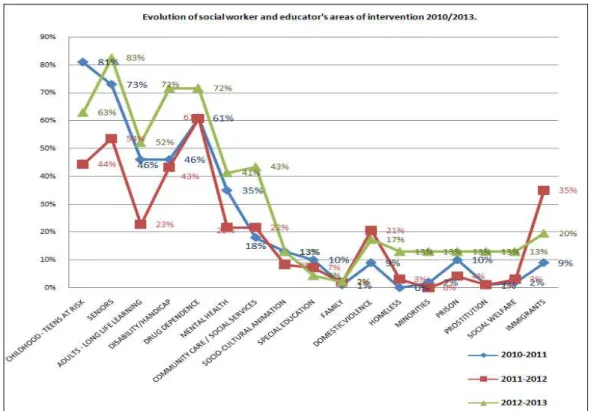
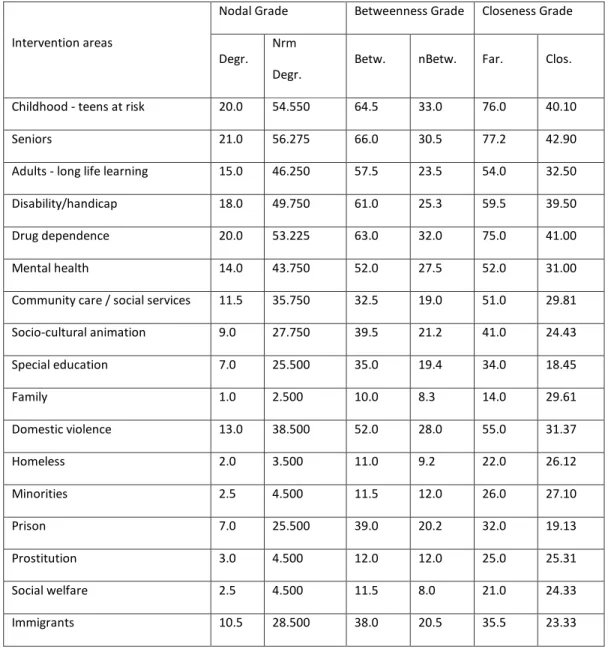
Vázquez-Cano, Meneses and Sánchez-Serrano take their point of departure in the challenge that ongoing changes in ICT demands updated methodological practices and content in Higher Education. They argue that all professionals with a university degree, regardless of the subject area, will have to demonstrate adequate competencies to implement plans and strategies using ICT tools in the socio-technological environment. The presented study explore Multimedia Concept Maps (MCM) and Online Discussion Forums as ICT tools to identify areas of intervention. The data material was produced over three academic years and analyzed using qualitative analysis (word frequencies and social network analysis). The authors conclude that design and implementation of MCMs and online discussion forums can contribute significantly to the development of generic and specific strategies in the European Higher Education Area such as: self-regulated learning, communicative, instrumental and interpersonal competencies.
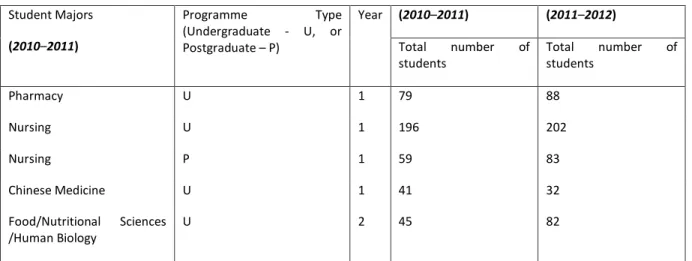
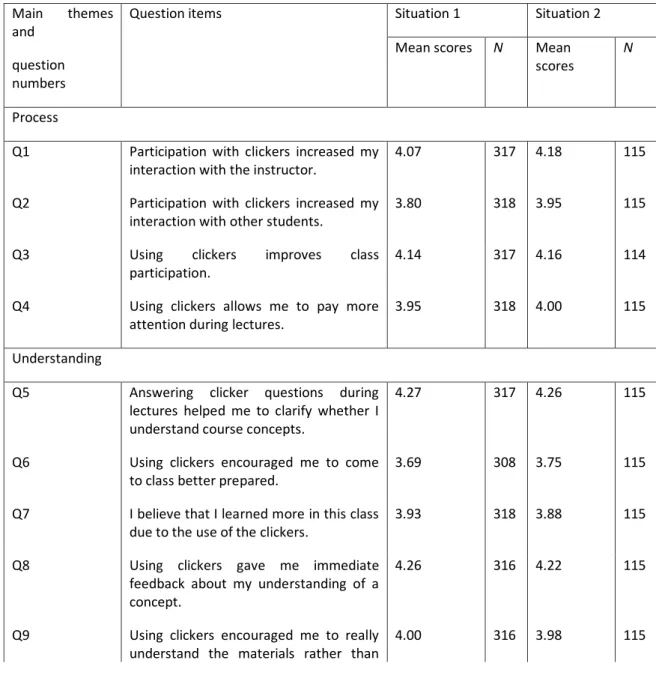
In their paper Hwang, Wong, Lam and Lam provide insights into an empirical study of two different forms of student response systems in class teaching. One is a traditional clicker and the other was using a mobile device. The authors found that students preferred the traditional clickers and discuss how and why the usability of such systems and the student preferences towards a specific system, are both pivotal factors for students learning experience.
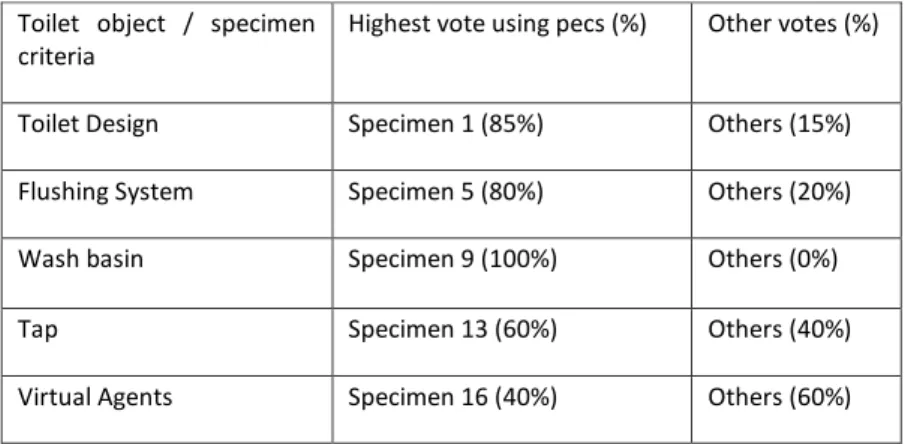
Ramachandiran, Jomhari, Thiyagaraja and Maria studies how Virtual Environments including virtual agents may enhance autistic children’s learning, when learning about ‘how to behave’ at specific places or scenarios. They argue that it is necessary to understand the e-learner in order to provide effective learning tools for autistic children, in particular when the focus is not only to develop their knowledge, but also their behaviours. A prototype of a toilet virtual environment with a virtual agent was designed for behavioural learning among autistic children and tested among 41 autistic children and their parents. The study provides insight into the users’ needs and preferences when designing learning environments for autistic children.
Stevenson, Hedberg, Highfield and Diao discuss mobile devices and the available apps on these devices, as used in learning processes. They do this through the provision of a state-of-the-art review. Here, a significant part of the recent literature is walked-through and they highlight relevant case studies, exploring the relationship between the technologies in use, and the media and visual literacies at play. The authors argue that educational institutions should focus less on infrastructure-led developments and look towards more learner-led solutions.
In his study, Almpanis explore the development needs of tutors who teach in blended and online environments in Higher Education Institutions in UK and the ways these institutions address these needs and deal with support regarding Technology Enhanced Learning. Using a mixed methods approach the study
ISSN 1479-4403 317 ©ACPIL
Reference this paper as Ørngreen R and Levinsen K “Editorial” The Electronic Journal of e-Learning Volume 13 Issue 5 2015, (pp317-318) available online at www.ejel.org
collects data among heads of e-Learning departments in various Higher Education Institutions in UK. The study found that the institutions perceived potential of technology to enhance the learning led to the adoption of a wide range of approaches to staff development in this particular area. However the study also found that successful implementation of Technology Enhanced Learning requires a coordinated institutional approach and a long-term investment.
The paper by Nitchot and Gilbert is an empirical study addressing the question of whether the Web contains pedagogical materials. The paper provides explanation of the competency models and structures and on the basis of this develops a competence-based system for recommending study materials from the web, and compares the results of using the competence-based system COSREW with the use of traditional search engines. The study concludes that the Web is currently not a good resource for a pedagogically informed competence-based system since Web pages predominantly comprise text-based subject matter content with little support for learning competence or capability.
In the last paper of this issue Al-Azawei and Lundqvist take their outset in current reseach that indicates that allthough distance-learning is related to positive core features its efficacy is not consistent across all learners. The study uses Technology Acceptance Model (TAM), one of the most commonly used models to examine factors that can help towards the prediction of user intention to accept technologies, or perceived satisfaction. Here Tam is used and extended to examine perceived satisfaction of an Arabic sample in a purposefully developed online learning course based on the Felder and Silverman Learning Styles Model (FSLSM) in order to reveal the pedagogical implications of learning styles on learner satisfaction. The study found that neither learning styles nor gender diversity had direct influence on the dependent factors. Accordingly, the research suggested that other variables may have to be integrated to enhance the power of the TAM-model.
Ahmed Al-Azawei and Karsten Lundqvist
ISSN 1479 4403 319 ©ACPIL Reference this paper as Karvounidis T, Himos K, Bersimis S and Douligeris C “i SERF: An Integrated Self Evaluated and
i SERF:
An
Integrated
Self Evaluated
and
Regulated
Framework
for
Deploying
Web
2.0
Technologies
in
the
Educational
Process
Theodoros Karvounidis1, Konstantinos Himos1, Sotirios Bersimis2 and Christos Douligeris1 1
University of Piraeus, Department of Informatics, Piraeus, Greece 2
University of Piraeus, Department of Statistics and Insurance Science, Piraeus, Greece [email protected]
[email protected] [email protected] [email protected]
Abstract: In this paper we propose i SERF (integrated Self Evaluated and Regulated Framework) an integrated self evaluated and regulated framework, which facilitates synchronous and asynchronous education, focusing on teaching and learning in higher education. The i SERF framework is a two layered framework that takes into account various elements of existing frameworks, introducing though as a new element the means of a self evaluation, self feeding and regulation mechanism. This mechanism is based on the performance of students, on the students’ answers to appropriately structured questionnaires and on the online monitoring of the supporting platform’s parameters. The outcome derived from a “self evaluation” process is then feeding i SERF in order to obtain self regulation, for the next deployment. In this way, i SERF remains alive and progressing. The proposed framework aims to offer the needed background for designing Web 2.0 educational platforms that may exhibit continuous improvement functions, providing in that way considerable benefits to both students and tutors in various fields. A pilot implementation, using an education oriented suite with enriched interactive elements supporting a variety of terminal devices, combined with a thorough assessment that utilizes advanced statistical tools has revealed the potentials of the platform to successfully deploy the principles of the i SERF framework to yield powerful learning experiences and high quality interactions between students and teachers.
Keywords: Education, Learning, Framework, Self evaluation mechanism, Web 2.0
1.
Introduction
Web 2.0 technologies encompass a variety of different meanings, including an increased emphasis on user generated content, data and content sharing, collaborative efforts, new ways of interacting with Web based applications, and the use of the Web as a social platform for generating, repositioning and consuming content (Harris & Rea, 2009). These technologies have been deployed widely since 2004 (O'Reilly, 2005) as part of the social networking revolution. The field of education could not remain unaffected as today’s learners demand from the educational institutions to continuously assess their pedagogical approaches to the learning and teaching process, both in face to face and in virtual classrooms (Huertas et al., 2007).
In the scientific literature, one can find several works which argue that technologies can never be neutral; they have specific affordances that might facilitate certain approaches and minimise others (Dron 2006; Feldstein & Masson 2006). The technology itself is neither good nor bad; it is the way that it is exploited that matters (Bates 2005; Nichols 2005). According to Bates (2005), a useful approach is to identify the kinds of learning that different media facilitate best, and under what conditions. The issue, then, is whether we are using technology to do the same things, or we take advantage of the unique capabilities of the technology to do things differently (Oblinger & Hawkins 2006). The successful incorporation of a new technological element or infrastructure in education pre supposes its effective integration with pedagogical knowledge and context (subject matter) specialties. Education though is a dynamic and open system with “material” transfers into or out of the system boundary, which remains progressive as long as it catches and re acts at all macroscopic and microscopic stimuli. Therefore, this process mandates the setting up of an evaluation and regulation mechanism which will continuously and appropriately feed the educational framework, aiming to improve the teaching and learning processes.
Even though the incorporation of Web 2.0 tools in education has been the focus of numerous studies in the literature, either focusing on individual components of social networking in educational settings, such as blogs and Wikis (Divitini et al., 2005), or operationally partnered with pedagogy and context in a Web 2.0 learning
Electronic Journal of e Learning Volume 13 Issue 5 2015
www.ejel.org 320 ISSN 1479 4403
framework (Bower et al., 2009; Wan, 2010; Glud et al. 2010), this evaluation and regulation mechanism is still non existing.
In this work, an integrated self evaluated and regulated framework, the i SERF (integrated Self Evaluated and Regulated Framework), is proposed which covers synchronous and asynchronous education, focusing on teaching and learning in higher education. The i SERF framework is a two layered framework that takes into account various elements of existing frameworks, introducing though as a new element the means of a self evaluation, self feeding and regulation mechanism. This mechanism is based on the performance of students, on the students’ answers to appropriately structured questionnaires and on the online monitoring of the supporting platform’s parameters. The proposed framework aims to offer the needed background for designing Web 2.0 educational platforms that may exhibit continuous improvement functions, providing in that way considerable benefits to both students and tutors in various fields.
The description of this work begins with an overview of the existing practices for Web 2.0 development in higher education. This includes an outline of existing frameworks via which web 2.0 may be deployed and a review of evaluation techniques of learning environments. A thorough description of the i SERF framework on a “layer basis” and the way it may be deployed is provided next. An outline of the pilot implementation follows, including a brief presentation of the experiment, an outline of the utilized technological infrastructure as well as some initial indicative results. The work finishes with conclusions and future steps.
2.
Background
Information
There are many types of Web 2.0 tools while new offerings appear very frequently. The challenge is to use these tools as well as other online teaching technologies to enhance learning and teaching, not just because they are available. Their effectiveness, though, cannot not be extensively revealed, if they are not deployed in a structured and systematic manner. As Harris & Rea (2010), point out what Web 2.0 technologies should be deployed in a way that enhances learning and teaching without hindering pedagogy. Regarding the necessity of this approach, Cole (2009) provides some important reflections. In particular, she argues that educational technology must support student needs by creating a balance between the needs of both lecturers and students. She also poses that technology needs to support a pre existing educational behaviour rather than try to import behaviour from other domains. She also points out that educational institutions must be clear about the intended outcomes of the technology used, and technological interactivity should not be confused with interactive learning. In other words, Cole claims that the on line learning platform that may host an educational activity must be able to efficiently and effectively manage the individual routines of the educational process and their interactions.
Glud et al. (2009) suggest a learning framework which concentrates on the learning control between teacher and learner. They identify three factors, namely infrastructure, learning process and resources/content plus the factor of motivation, referring to whose initiative a specific course is driven by: the learners’ or the institutions. Mirsha and Koehler (2006) propose the TPACK (Technological Pedagogical Content Knowledge) model, which attempts to capture some of the essential qualities of the teacher knowledge required for technology integration in teaching, while it addresses the complex, multifaceted, and situated nature of this knowledge. TPACK emphasizes on the importance and the dynamic relationship of the three primary forms of knowledge: content, pedagogy, and technology. Wan (2010), based on the analysis of three different models, proposed an integrated framework of using Web 2.0 technologies in e learning 2.0. The framework consists of Web 2.0 tools, e learning 2.0 applications and e learning 2.0 learning modes (informal and social). Bower et al. (2009), propose an approach to conceptualising Web 2.0 enabled learning design based on the TPACK model of educational practice. Their proposal includes a framework of typical use cases to illustrate the range of learning designs that may be applied for different purposes in order to promote a more expedient application of Web 2.0 technologies in teaching and learning.
3.
The
proposed
framework
The i SERF framework that has been utilized to study the incorporation of Web 2.0 tools in higher education is shown in figure 1.
It consists of two layers: The inner layer (layer 1) is the educational framework that encompasses the dynamic relationships and interactions of three primary forms of knowledge: Content, Pedagogy, and Technology. The composition of layer 1 takes into account concepts and elements of the frameworks described in section 2. The outer level (layer 2) refers to a newly introduced evaluation and self feeding mechanism of the “layer 1” structure, which is positioned as its macro environment. The “layer 2” pre supposes the live capturing of appropriately selected parameters from “layer 1” during the educational process. These parameters, which are connected to both technological and pedagogical factors, are automatically recorded and evaluated at specific time points of the educational process as well as upon the completion of a course. The outcome of the analysis of these parameters can be the derivation of new factors connected to various aspects of the educational process, the prioritization of the existing factors, or the likely elimination of factors that no longer affect the educational process as a consequence of the system’s evolution. In this way, the framework as a whole is being continuously “self regulated”, while it is used in the educational process. The analytical description of the two layers is given next.
Figure 1: The i SERF framework
3.1 Layer 1
Layer 1” (inner layer) contains four different components: the technological, the pedagogical, the content and the cognitive one, the dynamic relationship and interaction of which take into account the principles of all the previously mentioned literature as well as of the aforementioned frameworks.
3.1.1 Technological perspective of i SERF
Web 2.0 applications and services allow the publishing and storing of textual information of audio recordings (podcasts), of video material (vidcasts) and of pictures individually by users (blogs) as well as collectively (wikis). The challenge for the educational institutions is then to identify what is valuable in using these tools and to minimise what is not. According to Boulos (2006), although blog, wiki and podcast technologies in higher education have an immense impact, the combined use of them as 'mind tools' (Jonassen, 1999) may result in even stronger learning experiences. According to Jonassen et al (1999), 'mindtools' act as cognitive
Electronic Journal of e Learning Volume 13 Issue 5 2015
www.ejel.org 322 ISSN 1479 4403
reflection and amplification tools, aiding the construction of meaning, through the act of the self design of knowledge databases. A generic co relationship, a dependent positioning, and the potential for confluence of the three aforementioned Web 2.0 tools (wikis, blogs and podcasts), within a student centred learning environment has also been shown on Boulos et al., (2006).
The first component of the i SERF framework, which refers to the technological infrastructure, requires a Virtual Learning Environment (VLE) that allows the creation and formulation of a Personal Learning Environment (PLE) for the needs of synchronous and asynchronous learning. This component is based on the principles of social networking (Europe’s Information Society, 2009). Therefore, it should include all the aforementioned Web 2.0 tools in order to facilitate both the “horizontal” (among peers) and the “vertical” (educators with students and vice versa) communication and to support both static and social course content. A Blog in i SERF should be dedicated to a particular course, in order to facilitate the creation of an educator’s “e office”, providing announcements, annotated links for readings or references, posting of course material and time schedules, networking and personal knowledge sharing. With blogging educators can keep the students engaged by promoting their active participation (Ajjan & Hartshorne, 2008). Educators can also have an indication of the students' motivation, misconceptions, struggles, discomforts and learning experiences and they may proceed to necessary accommodations in the instructional activities (Yang, 2009). In this way, they can increase the students’ learning efficiency and satisfaction. Teachers are, thus, provided with the choice to transfer the “control of the learning experience” over to the students’ side and to re adjust motivation, an issue that has been raised by Glud’s et al framework. Of course, the final decision about the balancing control with the educational environment depends mainly on the pedagogical view of the activity as well as on the nature of the subject matter that is being processed.
Wikis have their place in i SERF as they provide an editable website that is created incrementally by visitors. Wikis can be used to facilitate computer supported collaborative learning (Augar et al., 2004), to enhance peer interaction and group work, and to facilitate the sharing and distribution of knowledge and expertise among a community of learners (Lipponen, 2002). Wikis enhance asynchronous communication and cooperative learning among students and promote cooperation rather than competition (De Pedro et al., 2006). Using a wiki as a writing tool maximizes the advantages of reflection, reviewing, publication, and of observing cumulative written results as they unfold (Fountain, 2005). Duffy and Burns (2004) list several possible educational uses of wikis, with group authoring being the most common pedagogical application. Cole (2009), at a failed action research experiment to integrate a wiki into an existing teaching format, reveals that the reasons of failure ranged from academic pressure from other courses (educational constraint) to ease of use concerns (technical constraint) to issues of self confidence (personal constraint) and, finally, to a total lack of interest. Hence, with a savvy learning design, the benefits of social interaction and active participation experienced by collaborating online may not be diminished by any of the encountered drawbacks.
Podcasting technology, allows the easy broadcasting of audio and audio visual files. It is expected that podcasting within i SERF will enable the dissemination of learner generated content to participants, which, in turn, will act as a catalyst and support for learning. The most popular use of podcasts in education is the provision of introductory or preparatory material before lectures, or, more commonly, the recording of lectures and their reproduction in order to be accessed by students because they were unable to attend the lectures physically, or to reinforce their learning. Therefore, the quality of the audio visual files that contain the live classroom material, in terms of content and presentation, determines the extent to which a podcast affects a lecture’s efficiency by reproducing it. Similarly, the “easiness” of access to a repository of podcasts also influences the students’ engagement to actively participate in a course, since podcasts require high speed Internet access for streaming or downloading. Fernandez et al.’s (2009) research work revealed that podcasting is a powerful tool as a complement to traditional course resources, but not regardless of them. Microblogging is one of the latest Web 2.0 technologies. The key elements of microblogging are online communication using 140 characters and the fact that it involves “following” someone. Microblogs cover the gap between blog and direct messaging. Popular microblogging platforms used in education include Twitter, Cirip, Edmodo and Plurk. As the technology of microblogging is adopted in a variety of contexts, its usefulness becomes increasingly compelling for educational actors. A list of basic functions that microblogging can provide are: outasking questions, giving opinions, changing ideas, sharing resources and reflection (Ebner et al., 2010).
Social bookmarking is the practice of saving bookmarks to a public Web site and “tagging” them with keywords. In education teachers and students can create lists of ‘bookmarks’ or ‘favourites’ (for instance reading lists or collections of resources) and they can store them centrally on a remote service, so that they are able to share them in a local or a wider educational community.
In all cases, RSS (Really Simple Syndication) feeds benefit educators by letting them syndicate content automatically.
Finally, the technological infrastructure should be capable of facilitating online lectures and supporting a live class. During the online lectures, the educators should have at their disposal a variety of synchronous technologies, including a slide presentation view with cursor, raise hand, public and private chat, audio and video conferencing, desktop sharing and shared whiteboard.
3.1.2 Pedagogical perspective
The second component deals with the pedagogical perspective of the framework. This component includes potential pedagogies, learning approaches and best practices in teaching and learning the deployment of which may enhance teaching and learning. Within the life cycle of a course, the nature of the activities may vary (for instance they may include theory or laboratory), which in turn influences the nature of the pedagogy to be applied from the teachers’ point of view and the learning practices from the students point of view. Since i SERF deals with online activities supported by the Web 2.0 technological infrastructure, the aim of this part of the framework is to define pedagogies and learning practices, which in their interaction with technology and context may yield better teaching and learning experiences.
There are various pedagogical theories and models that underpin the theoretical background of the use of Web 2.0 in education, some of which have been investigated even before the predominance of ICT. The most recent theories, the use of which may enhance the teaching and learning process on a Web 2.0 platform, are the theory of learning communities, the theory of Bandura (Social Learning Theory), the communities of practice and the virtual communities (Wenger & Snyder, 2000; Andreatos, 2008). In 2005, Siemens formulated a relatively new theory, called Connectivism (Siemens, 2005). Connectivism is a relatively new learning theory combining relevant elements of many learning theories, social structures and technology to create a powerful theoretical construct for learning in the digital age, including the fact that the acquired knowledge is constantly decreasing. The latter makes informal learning through personal social networks, communities of practice and the like very important in the workplace (Andreatos, 2007).
Constructionism, advocated by Seymour Papert, is particularly amenable to Web 2.0 approaches. Constructionist learning is inspired by the constructivist theory that individual learners construct mental models to understand the world around them. However, constructionism argues that learning can happen most effectively when students are also active in making tangible objects in the real world. Clements (2009), as cited by Bower (2009), describes virtual constructionism as “understanding the relationship between teaching and student learning, and integrating it effectively with e learning technologies to support students in constructing meaningful experiences”. Therefore, prior to practicing constructionist approaches in a Web 2.0 environment an understanding of the Web 2.0 tools that best apply to the accomplishment of a particular task is presupposed.
Behaviourism in a Web 2.0 environment has an important role, since the environment itself provides stimuli that cause the occurrence of behavioural consequences, observed over a Web 2.0 platform, not only for the user himself but also for the rest of the participants in the “mini” internet community of a university course. These consequences may have an effect on the learning process. Thus, teachers attending to the changes in the behaviour of users are in the position to directly diagnose their learning needs, encourage them, support them and guide them online. i SERF introduces a self evaluation mechanism (the detailed description of which is included in the “layer 2” description) which is based on the performance of students, on the students’ answers to appropriately structured questionnaires and on the on line monitoring of the supporting platform’s parameters. Therefore, the pedagogical implications of the behavioral learning processes are considered mandatory in the layer 1 learning process component.
Electronic Journal of e Learning Volume 13 Issue 5 2015
www.ejel.org 324 ISSN 1479 4403
Finally, a transmissive learning process, is included in the learning component of layer 1, whereas a stream of information is broadcast to students (Bower, 2009), either within the “online” class (synchronous) or via podcast technology (asynchronous).
Beyond the purely pedagogical approach, the optimal adoption of Web 2.0 should take into account existing best practices to achieve the full scale deployment of any proposed framework and to minimize the possibility of misleading conclusions. The literature is rich with “best practices” aiming to improve the students’ learning processes in higher education. Within the scope of i SERF, these practices may act complementarily to the aforementioned “established” learning theories while providing practical tips at instances that are not sufficiently covered by these theories. One widely accepted practice is the one of Angelo (1993), who suggests that students learn best when they receive feedback quickly and at regular intervals, that information that is organized in a personal way is more likely to be understood, preserved and recalled whenever necessary and that the assessment and evaluation method of the students’ performance strongly affects their study and learning process.
3.1.3 Knowledge and Cognitive Process Dimension
The third and fourth components correspond respectively to the knowledge dimension and the cognitive process dimension of the Anderson and Krathwohl Taxonomy of Learning, Teaching and Assessing (Anderson & Krathwohl, 2001), as elaborated by Bower et al. (2009) in their framework.
Following one of the biggest key ideas of Tim O’ Reilly, that of the “Individual Production and User Generated Content” (Anderson, 2007), Web 2.0 tools have lowered the entry barriers concerning the creation of information. Towards this goal, individuals are setting up their personal blogs, they post to blogs other than theirs, they participate in forums and they work collaboratively to create information via wikis. Content can be created from scratch or existing content may be edited and altered in several ways. Content can be used purely as data, as part of a process, or as an enabler of social software and social interaction (Franklin & Van Harmelen, 2007). From an educational point of view, the content is the specific knowledge that the learning design should address. Anderson and Krathwohl incorporate a knowledge dimension and a cognitive process dimension in a learning framework. Then they distinguishes knowledge according to the kind of the orientation of matter content as: Factual, Conceptual, Procedural and Metacognitive. The level of this cognitive process dimension includes: Remembering, Understanding, Applying, Analysing, Evaluating and Creating. These levels represent a continuum from lower order thinking skills to higher order thinking skills, with lower level thinking capacities being a necessary prerequisite for the corresponding higher order thinking skills to occur (Bower, 2009).
3.2 Layer 2
“Layer 2” (outer layer), incorporates the evaluation and the analysis of the “layer 1” structure.
3.2.1 Description of the Evaluation Strategy
As a base for establishing the evaluation procedure, the statistical process control (SPC) toolbox is used. This set of techniques has been extensively used for monitoring and controlling industrial processes. The monitoring and controlling of the process ensures that it operates at its full potential. At its full potential, the process can make as much as possible "conforming products" (output meeting specifications) with a minimum of "non conforming products". Today, the use of SPC techniques has been also extended in non industrial processes, since SPC can be applied to any process where output can be measured. Control charts are the key tools used in SPC, as they assist in the early detection and prevention of problems, rather than in the correction of problems after they have occurred. The evaluation strategy is described in the following paragraphs.
A. Evaluation System Characteristics
“Layer 2” presupposes the live capturing of appropriately selected parameters connected to both technological and pedagogical factors. These parameters are automatically recorded and evaluated at specific time points of the educational process as well as upon the completion of a course. The recorded parameters used for evaluation are divided into the following sub sets:
Sub set 1 includes parameters of the Web 2.0 platform related to the frequency, the duration and the type of its use by the students.
Sub set 2 includes parameters related to the performance of the students. The acquisition of this data is done using appropriate online tests (e tests), connected to the course material at specific time points.
Sub set 3 includes parameters related to the satisfaction of the students. The acquisition of this data is achieved using appropriate electronic questionnaires
Thus, the frequent capturing of data in various forms allows tutors to assess the students’ “behaviour”, “performance” and “satisfaction” within the course lifetime and to consider the possibility of proceeding in correcting actions, not only at the end of the course based on cumulative results but also in between, whenever that is considered necessary.
Of course, it is not always possible for the tutor to manage this vast amount of data. Thus, in order to achieve the self evaluation of the system, the recorded parameters are appropriately analysed using advanced statistical analysis techniques and state of the art statistical process control (SPC) techniques (Balakrishnan et al, 2009). SPC techniques have been embedded in the field of education after being properly adjusted, in order to monitor and control the individual performance of students, the satisfaction of the students from the platform and the use of the system by the students.
The specific SPC toolbox that is used for achieving the total monitoring of the educational procedure is the multivariate SPC toolbox (Bersimis et al. 2007; Koutras et al., 2006), and, in particular, the methodologies based on dimension reduction techniques. Multivariate SPC takes into account, apart from the marginal variability of each characteristic, the complex structure formed by the interactions between the monitored parameters.
The use of the SPC toolbox was born by the fact that every student has its own nominal level regarding a subject, a level that is related to this specific subject as well as to the result of a long term educational process. Moreover, the need of MSPC (Multivariate SPC) techniques is born by the fact that the class performance affects the individuals’ performance while the individuals’ performance affects class performance. Thus, using MSPC we may monitor simultaneously class as well as individuals’ performance.
B. Phases of the Evaluation
As in standard SPC practice, two distinct phases are used: Phase I and Phase II. In Phase I, the basic aim is to test historical data for identifying whether they were sampled from an in control process and to define the in control state. In Phase II, the basic aim is to test future data for specifying whether the process remains in control or has shifted to the out of control state. Specifically, every new observation or subgroup is tested and using of specific rules it is decided whether the state of the process has changed or not.
C. Phase I: Initialization of the Evaluation System
An initiation (Phase I) is required in order for the system to reach a nominal level (to define the in control state). This initiation may be achieved via a pilot implementation, in order to define an “in control state”. The pilot phase takes the place of Phase I analysis used in the SPC literature. The period of the pilot phase may be defined either as the first weeks of a specific class or as the usual results of the class in the previous years. In practice, all the parameters that are recorded during the pilot implementation are appropriately analysed and the “in control state” is estimated. The initialization of the evaluation system is done at both the student and the class levels.
Specifically, in the initialization phase the tutor gives to the students the regular tasks. The platform records the necessary data (frequency, duration and type of platform use, performance through short tests and satisfaction through questionnaires). Finally, the mean level for each student for all the parameters as well as the structure of the relations among the parameters are estimated. The mean level is represented by the mean vector
and the structure of the relations among the parameters is represented by the variance covariance vector.
X X Xp
p 1 2 ... 1
Electronic Journal of e Learning Volume 13 Issue 5 2015
www.ejel.org 326 ISSN 1479 4403
Each of the variables X1, X2, …, Xp represents one of the parameters recorded and analysed on line. The quantities S11, S12,…, Spp represent the covariance among two variables, that is the effect of one variable on the other (e.g. the effect of the frequency of the use of the platform on the performance of the individual student).
D. Phase II: Use of the Evaluation System during the Educational Process Evolvement
In each future time point, the values of the captured parameters for each student are continuously modelled and compared to the nominal levels estimated during Phase I. Moreover, the platform’s data as well as the questionnaires’ data are combined with the data provided by the e tests realizing a system that may capture the relation between the effort and the performance of the student. Then, appropriate control charts are used in order to identify possible unusual conditions as well as to interpret them (Maravelakis et al., 2002), in terms of finding the root of these unusual conditions. The identification of a problem and its interpretation are possible because each set of parameters reflects a different aspect of the learning attitude of an individual. Thus, if a control chart related to one student signals, then we may identify a student having a problem. Finally, if the number of students that present an abnormal behaviour is high, evidently the system needs to be improved (class performs abnormal). Thus, the framework as a whole is being continuously “self regulated”. Another improvement to the abovementioned procedure, could be the use of one sided control charts, since we are interested only in cases that either a student or the class getting worst.
E. Dashboard of the Evaluation System
A (n x p) dashboard is used for the dynamic handling of all the aforementioned parameters (Figure 2). In the horizontal dimension (n dimension) of the dashboard the names of the students are found, while in the vertical dimension (p dimension) the corresponding parameters.
Figure 2: Students Control Panel over Dashboard
3.2.2 Parameters of the System
As already mentioned the parameters used for evaluation are of three broad categories. The first category includes the extended set of parameters of the Web 2.0 platform used. The system monitors on a daily basis the following parameters: number of visits, time spent in the platform, average time during these visits, cumulative time over the platform, maximum time at one visit over the platform, time spent using each component (podcasts, forums, etc.) of the platform, etc. In this category we include parameters related to the class itself (for example the number of absences in a particular course). Then the data are aggregated on a weekly basis in order to be aligned with the lectures’ schedule. All these parameters are represented as a p1 dimensional random vector Ut,i, i=1,2,…,s, where s is the number of students in a class and t represents time (we may assume that the first time points can be used in order to estimate the nominal level of each student). The second category includes the periodic capturing of the performance of the students using appropriate fast e tests (on a weekly basis) and tasks. Each week, an e test is used in order to evaluate the effort that is put by each student. Additionally, the performance is evaluated by taking into account the grades per assignment. The performance of each student is represented as a p2dimensional random vector Yt,i, i=1,2,…,s, t=1,2,… The third category includes the periodic capturing of the satisfaction of the students using the pre programmed sampling of the electronic questionnaires. The students, on a monthly basis (the results are then conversed to a weekly basis), answer a structured questionnaire related to the satisfaction of the students from the platform as well as from the class itself.
Here we have to note that in order to reclaim the questionnaire data in the initialization phase an extended use of the multivariate analysis technique Factor Analysis is performed.
Specifically, in Phase I a historical data set is analysed and the most significant factors are accrued. Each factor is strongly related to a different aspect of the learning attitude of an individual. Since each factor is independent from the others, we may monitor and control more than one parameter in a single control chart for each individual, while additionally we may control the overall learning procedure. The satisfaction of each student is represented as a p3dimensional random vector Ft,i, i=1,2,…,s, t=1,2,…
By joining the random vectors U, Y, F, we create the random vector Xt,i having p dimensions that represents all the parameters. In Phase I we estimate the mean of X, say , which acts as the nominal level of each student.
3.2.3 Monitoring
In Phase II, monitoring is performed using the Shewhart type chi square multivariate control chart (CSCC), in which, for each time point t, a statistic of the form is calculated,
, (1)
where 薫拍 is the sample mean vector, 繰 is the sample covariance matrix and 薫痛 is the respective multivariate observation at time t for a certain student. Then, this statistic is plotted in a control chart with suitable control limits calculated from an appropriate F distribution. In case that for a certain time t we do not have the complete information we replace the missing value with the historical mean.
In figure 3 we present the control chart for a sample class for the duration of a year. In the x axis we represent the time (e.g. the lecture number) while in the y axis the values from equation (1). As we can see at the last time points we have large values of which means that there exist large differences from the nominal. The next step is to diagnose if these differences are due to improvement or due to deterioration. As already mentioned we could use an appropriate one sided control chart, since we are interested only in cases that either a student or the class getting worst. However, this is an open problem in the MSPC field.
,... , ), (
)
(XtXTS1 XtX t12
,... , ), (
)
Electronic Journal of e Learning Volume 13 Issue 5 2015
www.ejel.org 328 ISSN 1479 4403
Figure 3: The Chi square multivariate control chart (CSCC)
4.
Pilot
Implementation
In order to assess the effectiveness of i SERF, a pilot implementation has been carried out within a course lifetime in the Department of Informatics of a Greek university. At this aspect the pilot implementation aimed to investigate the lead factors, derived from selected parameters connected to the students’ behaviour, perceptions and satisfaction that may be taken into consideration in the incorporation of a Web 2.0 learning environment in the educational process driven by the i SERF framework. Moreover, the investigation included the study of the correlations of these factors and their effect on the students’ performance. Finally, we studied how the students’ activities on the online environment affected their performance. The full description of the pilot implementation has been presented in (Karvounidis et. al, 2014) and in (Karvounidis et. al, 2015), respectively.
The target group was IT students, who were considered to be academically more competent to new technologies compared to other target groups, and, hence, having higher expectations, since they do not judge only as users, but also as potential creators or enhancers of these technologies. The implementation plan included the splitting of the “audience” into two groups. Lectures were given once for both groups: The first group (Group A) was attending lectures in the classroom and used all the available at the university conventional and commonly used infrastructures for communicating and providing information and material for the successful completion of the course. The second group (Group B) was attending lectures “web based” via the electronic medium at the same time from a terminal device of their choice and using exclusively Web 2.0 tools to successfully fulfill the course requirements. The basic rule was that the two groups do not meet and work with each other within the framework of the particular course. All the participation rules were clearly stated during a presentation at the very beginning of the course. In order to reduce the possibility of “contamination” of the outcome of the experiment, the participation in the experiment was voluntary and the students consented that “rules” will not be violated.
For the evaluation of the results of the experiment, descriptive and inferential statistics methods (Johnson et al., 2007) in combination with the multivariate analysis technique “factor analysis” (Bartholomew et al., 2008) were used. The extraction method used was FA (using Principal Components Analysis method). The design of the questionnaires took into account findings and key points from the literature discussed in the background information. The questionnaires have also been based on existing best practices in accessing information and communication technologies in a university learning environment (such as Breen’s et al. (2001)). The Cronbach's alpha coefficient of reliability was used in order to measure the internal consistency of each used questionnaire.
The pilot implementation revealed that although the deployment of the i SERF framework did not directly affect the students’ performance, it is a tool acceptable by both students and faculty. The assessment on students’ perceptions on various aspects related to course deployment indicated viable satisfaction on the deployed process and, consequently, of the particular framework that the course was performed. Empirically,
0 5 10 15 20 25 30
1 3 5 7 9 11 13 15 17 19 21 23 25 27 29 31 33 35 37 39 41 43 45 47 49 TSQUARED 1|1
instructors have expressed their conformity on deploying the i SERF on the course within a Web 2.0 environment.
The study has also emerged significant correlations and interdependencies between the students’ activities over the used electronic medium (platform) and their performance in various time points within the course time line. More specifically, the performance has been found to be directly affected by the frequency of the interactions with the electronic medium (platform) at which the educational process has been carried out and indirectly by a variety of factors that aim to enhance their learning interest and experience. In conclusion, the outcome from the pilot implementation showed the Web 2.0 infrastructure is a tool that facilitates on line learning service delivery, driven of course by a proper framework that leverages the social interaction and active participation within the educational process.
As major limitation of the pilot implementation is considered the fact that the selected group was competent on IT – as expected from students of an Informatics Department. This may resulted on the one hand in valuable remarks regarding technical aspects, on the other hand though, it narrowed the view of the extent of comfortless of a less IT literate student. Ullrich et al. (2010) when applying Web 2.0 tools in language learning subject with less IT literate students than ours – observed that students were not “ready” to use them. In order to have a more complete view of the effectiveness of i SERF in a Web 2.0 based learning environment, the overall is currently being held with a different student body over a Statistics Department course.
5.
Conclusions
In this work, an integrated framework that covers synchronous and asynchronous education in a Web 2.0 learning environment has been proposed. Existing works, principles, views and strategies have been taken into consideration in the development of this framework. The proposed framework embeds self evaluation and regulation mechanisms that are based on the performance of students as well as on answers to appropriately structured questionnaires and on on line monitoring of the supporting platform’s parameters.
This research can also be used as the baseline for improving the higher educational process at various levels. It is very important to fully explore the deployment of the proposed framework, and to minimize the possibility of misleading conclusions. Using advanced technologies for online testing in a Web 2.0 environment and by combining knowledge and cognitive dimensions, the proposed framework could also provide, among other benefits, important information (metrics) for the adjustment of the examination tools used in the educational process. Finally he mechanism itself can also been improved in future a research with the implementation a self adaptive process monitoring system.
Acknowledgement
S. Bersimis is supported by the Greek General Secretariat for Research and Technology research funding action "ARISTEIA II".
References
Ajjan, H., & Hartshorne, R. (2008). Investigating faculty decisions to adopt Web 2.0 technologies: Theory and empirical tests. Internet and Higher Education, 11(2), pp. 71 80.
Anderson, L. & Krathwohl, D. (2001). A taxonomy for learning, teaching and assessing: A revision of Bloom's taxonomy of educational objectives. New York: Longman. 2001.
Angelo, T. A. (1993). A teacher’s dozen: Fourteen general, research based principles for improving higher learning in our classrooms. AAHE Bulletin, 45, pp. 3–13.
Andreatos, A. (2007). Virtual communities and their importance for informal learning, IJCCC, 2(1), pp. 39 47.
Andreatos, A. (2008). Use of wikis for the support of Project Base Laearning, 4th Conference in Teaching IT, Patras GR, pp.541 546.
Augar, N., Raitman, R. & Zhou, W. (2004). Teaching and learning online with wikis. Proceedings of the 21st Australasian Society for Computers in Learning in Tertiary Education (ASCILITE) Conference, Perth: December 5 8, pp. 95 104. Balakirjshnan, N., Bersimis, S. & Koutras, M. V. (2009). “Run and Frequency Quota Rules in Process Monitoring and
Acceptance Sampling. Journal of Quality Technology, 41(1), pp. 66 70.
Bartholomew D. J., Steele, F., Moustaki, I. and Galbraith, J. A. (2008). Analysis of Multivariate Social Science Data (2nd ed.). Chapman and Hall/CRC Statistics in the Social and Behavioral Sciences.
Electronic Journal of e Learning Volume 13 Issue 5 2015
www.ejel.org 330 ISSN 1479 4403
Bersimis, S., Psarakis S. & Panaretos, J. (2007). Multivariate Statistical Process Control Charts: An Overview. Quality and Reliability Engineering International, 23 (5), pp. 517 543.
Boulos, M.N.K., Maramba, I., & Wheeler, S. (2006). Wikis, blogs and podcasts: a new generation of Web based tools for virtual collaborative clinical practice and education. BMC Medical Education 2006, 6(41).
Bower M., Hedberg, J & Kuswara, A. (2009). Conceptualising Web 2.0 enabled learning designs. In Proceedings of ACSLITE 2009 Conference, pp. 1153 1162.
Breen, R., Lindsay, R., Jenkins, A. and Smith, P. (2001). The role of information and communication technologies in a university learning environment. Studies in Higher Education, Vol. 26 No. 1, pp.95–114.
Cole M. (2009), Using Wiki technology to support student engagement: Lessons from the trenches. Computers & Education, 52(1), pp. 141 146.
De Pedro, X., Rieradevall, M., López, P., Sant, D., Piñol, J., Núñez, L. & Llobera, M. (2006). Writing documents collaboratively in Higher education (I): Qualitative results from a 2 year project study, available at: http://ub.academia.edu/Xavi/Papers/577598/Writing_documents_collaboratively_in_Higher_education_using_Traditi onal_vs._Wiki_methodology_I_Qualitative_results_from_a_2 year_project_study (accessed23 July 2013).
Divitini, M., Haugalokken, O., & Morken, E. M. (2005). Blog to support learning in the field: Lessons learned from a fiasco. In Proceedings of the Fifth IEEE International Conference on Advanced Learning Technologies (ICALT’05), 5 8 July 2005, pp. 219 221.
Dron, J. (2006). 'Social software and the emergence of control'. In Proceedings Sixth IEEE International Conference on Advanced Learning Technologies (ICALT’06), Kerkrade, The Netherlands, July 5 7 2006, pp. 904 908.
Duffy, T. & Burns, A. (2006). The use of Blogs, Wikis and RSS in education: A conversation of possibilities. Proceedings of the Online Learning and Teaching Conference 2006, Brisbane: September 26, available at: http://eprints.qut.edu.au/5398/, (accessed 29 September 2012).
Ebner, M., Lienhardt, C., Rohs, M. & Meyer, I. (2010). “Microblogs in Higher Education – A chance to facilitate informal and process oriented learning?”. Computers & Education, 55 (1), pp.92–100.
Eurore’s Information Society. (2009). Safer Social Networking Principles for the EU, EU, available at: https://ec.europa.eu/digital agenda/sites/digital agenda/files/sn_principles.pdf, (accessed 29 November 2012). Feldstein, M. & Masson, P. (2006). Unbolting the chairs: Making learning management systems more flexible. eLearn
Magazine: Education and Technology in Perspective, 1, 2, available at: http://www.elearnmag.org/index.cfm , (accessed 29 September 2012).
Fernandez V., Simo P. & Sallan J M. (2009). Podcasting: A new technological tool to facilitate good practice in higher education, Computers & Education, 53, pp.385–392.
Fountain, R. (2005). Wiki pedagogy. Dossiers technopédagogiques. [Online], available at: http://profetic.org/dossiers/article.php3?id_article=969, (accessed29 September 2012).
Franklin, T. & Van Harmelen, M. (2007). Web 2.0 for Content for Learning and Teaching in Higher Education, available at: http://staff.blog.ui.ac.id/harrybs/files/2008/10/web 2 for content for learning and teaching in higher education.pdf (accessed 23 July 2013).
Glud, L. N., Buus, L., Ryberg, T., Georgsen, M. & Davidsen, J. (2010). Contributing to a Learning Methodology for Web 2.0 Learning – Identifying Central Tensions in Educationa Use of web 2.0 technologies, Proceedings of the 7th International Conference on Networked Learning 2010, 3 4 May 2010, Aalborg, Denmark, pp. 934 942.
Harris, A. L., Rea, A. (2009). Web 2.0 and Virtual Worled Technologies: A Growing Impact on IS Education. Journal of Information Systems Education, 20(2), pp. 137 143.
Huertas, M. A., Casado, C., Córcoles, C., Mor, E. & Guerrero Roldán, A. E. (2007). Social Networks for Learning: Wikis, Blogs and Tagging in Education, In Proceedings of EDEN 2007 Conference, available at: http://personal.uoc.edu/personalonto/files/mhuertass_eden2007.pdf, (accessed23 July 2013).
Jonassen D.H., Peck K.L., Wilson BG: Learning with Technology: A Constructivist Perspective Columbus, OH: Merrill Prentice Hall; 1999.
Johnson, R. A. & Wichern, D. W. (2007). Applied Multivariate Statistical Analysis (6th ed.). Prentice Hall. ISBN 0 13 187715 1, ISBN 978 0 13 187715 3.
Karvounidis T., Chimos ., Bersimis S. & Douligeris C. (2014). “Evaluating of the Use of Social Networking Technologies in Higher Education Using Students’ Perceptions and Performance”. Journal of Computer Assisted Learning, 30, pp. 577– 596.
Karvounidis T., Chimos ., Bersimis S. & Douligeris C. (2015). “Factors, Issues and Interdependencies in the Incorporation of a Web 2.0 Based Learning Environment in Higher Education”, to be submitted.
Koutras, M.V., Bersimis, S. & Antzoulakos, D.L. (2006). Improving the Performance of the Chi Square Control Chart via Runs Rules, Methodology and Computing in Applied Probability, 8 (3), pp. 409–426.
Lipponen, L. (2002). Exploring foundations for computer supported collaborative learning. Proceedings of the Computer supported Collaborative Learning Conference 2002, Boulder, CO: Jan 7 11, 72 81, 29 September 2012, available at: http://www.helsinki.fi/science/networkedlearning/texts/lipponen2002.pdf, (accessed 30 September 2012).
Maravelakis, P. E., S. Bersimis, S., Panaretos, J. & Psarakis, S. (2002). Identifying the Out of Control Variable in a Multivariate Control Chart. Communications in Statistics – Theory and Methods, 31(12), pp. 2391 2408.
Mishra, P., Koehler, M J. (2006). TPACK model of Educational practice, available at: http://tpack.org/, (accessed23 July 2013).
Nichols, M. (2005). Tensions in the convergence of technology and pedagogy, available at: http://knowledgetree.flexiblelearning.net.au/edition07/download/pra_nichols.pdf, (accessed 29 September 2012). O’ Rielly, T. (2005). What Is Web 2.0, available at: http://www.oreilly.com/pub/a/web2/archive/what is web 20.html,
(accessed 16 January 2015).
Siemens, G. (2005). Connectivism: A Learning Theory for the Digital Age. International Journal of Instructional Technology and Distance Learning. 2(1), available at: http://www.itdl.org/Journal/Jan_05/article01.htm, (accessed 23 July 2013). Ullrich, C., Shen, R. & Gillet, D. (2010). "Not Yet Ready for Everyone: An Experience Report about a Personal Learning
Environment for Language Learning", In Advances in Web Based Learning ICWL 2010. Berlin, Heidelberg. 6483, pp. 269 278. Springer Berlin / Heidelberg.
Wan L. (2010). Application of Web 2.0 Technologies in E Iearning Context. 2010 International Conference on Networking and Digital, Society, pp. 437 440.
Wenger, E. & Snyder, W. (2000). Communities of practice: The organizational frontier. Harvard Business Review, 78, pp. 139 145.
Yang, S. H. (2009). Using blogs to enhance critical reflection and community of practice. Educational Technology & Society, 12(2), pp. 11 21.
Analysis of Social Worker and Educator's Areas of Intervention
Through Multimedia Concept Maps And Online Discussion Forums
In Higher Education
Esteban Vázquez-Cano
1, Eloy López Meneses
2, and José Luis Sarasola Sánchez-Serrano
21
Spanish National University of Distance Education (UNED), Faculty of Education, Madrid,
Spain
2
Pablo Olavide University, Faculty of Social Sciences Seville, Spain
[email protected][email protected] [email protected]
Abstract: This diachronic study describes an innovative university experience consisting of the development of multimedia
concept maps (MCM) in relation to social educators and social workers main intervention areas and an active discussion in online forums about the results obtained. These MCMs were prepared by students who attended the Information Technologies and Communication course as part of the Degree in Social Education and dual Degree in Social Education and Work during the academic years 2010-13 at Pablo Olavide University (Seville-Spain). Following a methodological framework based on virtual, collaborative action-research, a qualitative analysis is implemented to analyze 213 MCMs created by students and their interventions in ad hoc online discussion forums with a twofold methodological approach: firstly a qualitative analysis of word frequencies in MCM through the use of Atlas-Ti software and secondly a forum discussion categorization through a reticular, category based social network analysis using UCINET and yED Graph Editor. Among the most relevant conclusions, we can highlight that a combination of MCMs and discussion forums are highly interactive and collaborative digital resources and are especially beneficial when applied to social studies. Students were able to identify and categorize key areas of social and educational intervention, including: seniors, children, teens and drug dependence, people with disabilities, adults, mental health, socio-community care, and immigrants.
Keywords: social educator, social worker, multimedia concept maps, forums, online discussion, Higher Education
1.
Introduction
Access to quality education is a fundamental right which has to face a paradigmatic change at the beginning of the XXI century. Recent Information and Communication Technologies' (ICTs) development needs new updated methodological practices and content according to the new information society (UNESCO, 2013). Thus, these practices contextualized in Higher Education are really important because all professionals with a university degree, regardless of the subject area, will have to demonstrate adequate competencies to implement plans and strategies using ICT tools in the socio-technological environment in which we live (Vázquez-Cano, López-Meneses and Fernández Márquez 2013). In the European Higher Education Area a methodological and assessment change is mandatory in order to enhance overall students' training by developing their technological, intellectual and social skills (Aguaded, López-Meneses and Jaen 2013). In this sense, the design and implementation of multimedia digital objects as well as online discussion forums can and should play an important role in methodological innovation and meta-cognitive strategies and processes, especially when applied to the understanding and conceptualization of social studies. Besides, when the design and development of these multimedia concept maps (MCMs) is embedded in active online learning communities, the collaborative learning is enhanced (LaPointe and Reisetter 2008). Because assessment is the fundamental driver of student learning (Boud and Falchikov 2007), the design of online assessment activities that drive desired learning outcomes is essential.
2.
Multimedia concept maps and online discussion forums to foster educational
innovation
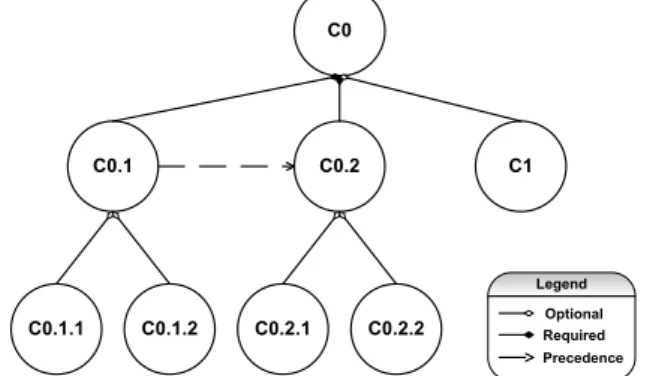
A concept map is a technique used to develop the ability of creative thinking and increase competition in order to construct knowledge in an organized and inclusive way (Muñoz, 2010). In this sense, Novak and Cañas (2008) show the three main elements of a conceptual map: concept, proposition and line linking. Concept is
ISSN 1479-4403 333 ©ACPIL
Reference this paper asVázquez-Cano E, López Meneses E, and Sarasola Sánchez-Serrano J L “Analysis of Social Worker and Educator's Areas of Intervention Through Multimedia Concept Maps And Online Discussion Forums In Higher Education” The Electronic Journal of e-Learning Volume 13 Issue 5 2015, (pp333-346) available online at www.ejel.org