Geeske Brecht ten Wolde
Does tailoring really make a difference?
The development and evaluation of tailored
interventions aimed at benzodiazepine cessation
proefschrift
ter verkrijging van de graad van Doctor aan de Universiteit Leiden,
op gezag van Rector Magnificus, prof.mr. P.F. van der Heijden, volgens besluit van het College voor Promoties te verdedigen op donderdag 18 september klokke 3 uur door
Geeske Brecht ten Wolde geboren te Soest
promotores Prof. dr. S. Maes
Prof. dr. A. Dijkstra (Rijksuniversiteit Groningen)
referent
Dr. W. Gebhardt
beoordelingscommissie
Prof. dr. B. van den Borne (Universiteit Maastricht) Prof. dr. W. van der Does
Prof. dr. B. Middelkoop Dr. M. van der Doef
colophon
Lay-out: Maarten Schrijvers, Qualisys ©
Photography: “cute little sheeps” by Regien Paassen | Dzain! © ([email protected])
Production: Optima Graphical Communication, Rotterdam
© Geeske B. ten Wolde, Amsterdam, 2008 All rights reserved
ISBN 978 90 8559 413 0
The studies described in this thesis were funded by the Health Care Insurance Board (CVZ).
Slapen is geen geringe kunst: je moet er de hele dag voor wakker blijven Friedrich Nietzsche
Contents
Chapter 1:
General introduction 1
Chapter 2:
Psychological determinants of the intention to educate patients about
benzodiazepines 19
Chapter 3:
The role of illness perceptions in benzodiazepine use in the Netherlands – a
longitudinal study 31
Chapter 4:
Social-cognitive predictors of intended and actual benzodiazepine cessation
among chronic benzodiazepine users 43
Chapter 5:
Long-term effectiveness of computer-generated tailored patient education on
benzodiazepines: a randomized controlled trial 59
Chapter 6:
Summary and general discussion 75
Nederlandse samenvatting 89
Dankwoord 94
General introduction
This chapter introduces benzodiazepine use and its associated problems. Although pharmacological treatment with benzodiazepines can be effective and may be the best treatment in certain categories of patients, in general, chronic use of benzodiazepines is not desirable. In addition, this chapter describes the studies that were conducted to investigate the problem of chronic use of benzodiazepines from a health psychological perspective. This chapter also describes the development of an intervention to reduce chronic use of benzodiazepines by using the Precede/Proceed model as a theoretical framework.
2
C
hapt
er 1
General Introduction
Benzodiazepine use and its associated problems
Benzodiazepines
Benzodiazepines are drugs with sedative, hypnotic, anxiolytic, anticonvulsant, amnestic and muscle relaxant properties (1). Benzodiazepines are often prescribed for short-term relief of severe, disabling anxiety or insomnia. All benzodiazepines have the same effect in the body and can therefore be used as a hypnotic (benzodiazepine used to treat insomnia) or anxiolytic (benzodiazepine used to treat anxiety). They are believed to act on the GABA receptor, the activation of which dampens higher neuronal activity. A large variety of benzodiazepines are available and they differ in the speed at which they are metabolized (in the liver) and eliminated from the body (in the urine). The speed of elimination is important in determining the duration of its effects. With most benzodiazepines, noticeable effects usually wear off within a few hours. Nevertheless, the active substances, as long as they are present, continue to exert subtle effects within the body. Thus, there are a large number of benzodiazepines, but every benzodiazepine can be used for the relief of anxiety as well as insomnia (2). However, in practice it turns out that Diazepam is mainly used to relieve anxiety, nervousness and tension, while Nitrazepam is mainly used to treat insomnia. These two types are the most commonly used benzodiazepines (3).
Prevalence
The use of benzodiazepines increases with age: half of the users are younger than age 65, twenty-five percent are between 65 and 75, and twenty-five percent are older than age 75. The prevalence of use among women is twice as high as the prevalence of use among men. Eighty per
cent of benzodiazepines are prescribed by general practitioners and of these
benzodiazepine prescriptions, more than eighty per cent are refills (4). Refills are repeat-requests handled by the medical staff of the general practitioner without consulting the general practitioner or medical specialist.
3
C
hapt
er 1
General Introduction
Characteristics of a benzodiazepine chronic user
Most patients who take benzodiazepines on a chronic basis are elderly females. Most of them are taking benzodiazepines as hypnotics. Chronic users are mainly patients having physical problems, patients having a mental illness or patients abusing other substances (10;11). Kan et al. (12) identified risk factors for becoming a chronic user and found that patients with a higher initial benzodiazepine dose, and a longer duration of benzodiazepine use, and younger patients were more likely to become chronic users. The substance
dependence criteria for benzodiazepine dependence of the DSM-III-R and
ICD-10 classifications were used. Also patients of non-native cultural origin or having a lower level of education were more likely to become chronic users of benzodiazepines. Personality characteristics such as fearfulness, passivity and dependency are also associated with chronic use of benzodiazepines (13).
Problems associated with chronic benzodiazepine use
Only short-term treatment with benzodiazepines appears to be effective in the treatment of sleeplessness and anxiety. Chronic use of benzodiazepines is not only ineffective; it is even associated with several negative health consequences, such as dependence, cognitive impairment, falls and accidents, and high expense. These adverse effects will be described in that order.
Dependence
First of all, patients can become dependent. There is however little consensus about the definition of dependence. Kan et al. (14) has looked at the DSM-III-R substance abuse criteria, and the indications are that 40% of outpatient benzodiazepine users are dependent (14). The criteria for substance dependence include tolerance, escalation of dosage and withdrawal symptoms in the case of stopping. Tolerance to benzodiazepines develops at different rates in varying degrees for various actions. Tolerance to hypnotics, for example, develops rapidly, within a few days or weeks in cases of regular use (15). Although some studies cast doubt on this (16), tolerance to anxiolytics has also been reported, but this develops less rapidly (17).
4
C
hapt
er 1
General Introduction
such as drug-seeking behaviour and continued use despite the adverse effects (20;23).
Cognitive impairment
Secondly, long-term use has been associated with cognitive impairment. A meta-analysis of thirteen studies which compared long-term benzodiazepine users with controls revealed that moderate to large deficits in different cognitive domains occur (24). For example, Westra and colleagues (25) investigated the influence of benzodiazepines on memory performance. They compared sixteen daily users of benzodiazepines diagnosed with a panic disorder to sixteen age- and education-matched, non-medicated panic disorder patients. Both groups were assessed on the basis of a memory task. The results indicated that benzodiazepine users showed significantly poorer memory performance than did controls. In another study (26), chronic use of benzodiazepines caused anterograde amnesia. Anterograde amnesia is a form of memory loss in which new events are not transferred from short-term memory to long-short-term memory. These patients could not remember what had happened or what was learned. After withdrawal from chronic use of benzodiazepines, patients were still cognitively impaired when compared with control groups. Other studies have shown that patients do not return to levels of functioning that matched benzodiazepine-free controls (27;28). The cognitive effects might improve in the long run, since the studies did not include long follow-ups.
Falls and accidents
Although there is a study which does not find an association between the use of benzodiazepines and accidents (Leveille et al (29) found no evidence of a dose-related effect with benzodiazepines: use of benzodiazepines had little association with increased risk for injurious collisions), most studies do. It is known that chronic use of benzodiazepines leads to sedation and has a relaxant effect on muscles, and this can lead to falls, fractures and road traffic and other accidents (30-32). The elderly are most vulnerable to these effects, especially if taking multiple medications (33). Benzodiazepines are on the whole safe drugs, even if taken in an overdose (34). Nevertheless, some studies have reported that benzodiazepines can be lethal in overdose (35;36) .
High expense
5
C
hapt
er 1
General Introduction
As mentioned above, chronic use of benzodiazepines can cause dependency, cognitive impairment, falls and accidents, which results in high costs for the health care system. Because of these problems associated with chronic use of benzodiazepines and because long-term use results in lack of efficacy due to tolerance, there is an urge to reduce the chronic use of benzodiazepines. Which treatment methods are used in the Netherlands in order to reduce the amount of benzodiazepines prescribed?
Cessation of benzodiazepine use – treatment methods
Different treatment strategies are known in order to decrease the amount of chronic use of benzodiazepines. In a meta-analysis, Oude Voshaar et al. (39) divided the available interventions into two different strategies: minimal interventions and systematic discontinuation programs. Minimal interventions, on the one hand, invite patients to quit their long-term benzodiazepine use on their own by making them aware of the negative consequences. Systematic discontinuation programs, on the other hand, are more intensive interventions in which patients gradually discontinue their doses under the guidance of a general practitioner or pharmacist. The main finding of the meta-analysis of Oude Voshaar (40) was that minimal interventions are effective strategies for reducing benzodiazepine consumption. Three minimal interventions were investigated having a pooled odds ratio of 2.8 relative to patients receiving usual care. Only one systematic discontinuation program was evaluated. This study (41) examined the effectiveness of a dose-reduction program in a randomized controlled trial. Three arms were compared: a dose reduction program, a dose reduction program combined with cognitive therapy and a control group receiving regular care from the general practitioner. It turned out that the two experimental groups showed greater reduction than the control group (respectively 62% and 58 % versus 21 % of the control group), with the finding of an odds ratio of 6.1 There were no significant differences between the two experimental groups. A problem of this extended discontinuation program was that the participation rate was low. Only 46 % completed the program.
6
C
hapt
er 1
General Introduction
were eliminated). After this intervention, use of benzodiazepine hypnotics was reduced by 46.5 %, and use of anxiolytics was reduced by 41.7 %.
Education is also important because it will result in more satisfied patients, patients will have a better understanding of the pros and cons of medication, and it will result in more compliance to treatment (47). It is also known that when general practitioners or pharmacists do educate, they can play a vital role in changing patients’ attitudes towards medicine use. For instance, it has been shown that pharmacists can play an important role in changing drug attitudes of depressive patients (48). Thus, we can conclude that educating the benzodiazepine user can have positive results in terms of the aim of reducing the amount of benzodiazepines.
The above shows the following two important notions. Namely, first of all, it appears that patients can be better educated in order to help them reduce chronic use of benzodiazepines. Secondly, general practitioners and pharmacists can educate their patients more often, since we know that 80 % of the prescriptions for benzodiazepines are refills. Thus, these patients are not seen by their general practitioners. Because of this, and because of the adverse effects and the lack of efficacy of benzodiazepines and the high costs of continued benzodiazepine use, there is a need to develop a tool that lightens the workload of these health practitioners, while at the same time educating patients about the disadvantages of benzodiazepine use. This tool might well be a computerized patient education program: a computer program that automatically produces educational letters. Among other health behaviours, computerized tailored information has been shown to lead to more behavioural changes as compared to no information and to similar but non-tailored interventions (49-52). Computer tailoring is aimed at a specific person, based on determinants of behavioural change, and is composed for one person in particular. Tailored information, therefore, mimics the process of individual counselling and feedback, to the extent that it can be provided through a written text. The expertise of the counsellor is documented in the computer program. In other words, computerized patient education involves adaptation of the content information to relevant patient characteristics, while at the same time it can be applied on a large scale. Computerized patient education brings with it, on the one hand, personalization, and on the other hand, applicability to large groups. If such a tool proved to be effective in terms of reducing benzodiazepines, it could be broadly implemented in the Dutch health care system without a great deal of effort on the part of the general practitioner or pharmacist.
A key to a solution
C
hapt
er 1
General Introduction
patients about how to reduce or quit their chronic use of benzodiazepines. However, it is necessary to use a theoretical framework that has been successful in developing interventions.
The Precede/Proceed model
Health educators have recognized the importance of careful theory-based intervention planning, because the effectiveness of health promotion interventions is influenced by the quality of their planning (53). Thus, in order to develop such a computer program which produces educational letters, it is important that it is based on a sound model. The project prescribed in the present thesis was therefore developed according to the principles of the Precede/Proceed model. A simplified version of the Precede/ Proceed planning model (54) was used as the framework for this thesis. The Precede/Proceed model has proven to lead to significant improvements in interventions for smoking cessation (55), in health promotion campaigns (56) and in intervention with pharmacists to encourage patients to regularly use their hypertension medication (57). The model consists of two phases. The Precede part describes several phases in analyzing the health problem. The Proceed phase focuses on intervention development and implementation (see figure 1).
Precede
Proceed
Problem analysis
Risk behavior analysis
Determinant analysis
Intervention development
Intervention implementation
Figure 1 Precede/Proceed Model for planned health promotion (43)
Phases I and II – Problem analysis and risk behaviour analysis
C
hapt
er 1
General Introduction
Phase III – Determinant analysis
The third step (i.e., Phase III – determinant analysis) in planned health promotion is to investigate the psychosocial determinants of chronic benzodiazepine use. In order to influence chronic use of benzodiazepines successfully, it is necessary to gain insight into the psychosocial determinants of the target groups when engaging or persisting in that particular behaviour. As mentioned in the previous section, there are three different parties involved in benzodiazepine use, namely general practitioners, pharmacists and patients. Psychosocial determinant analyses will be conducted among these groups. First of all, it is important to know which psychosocial determinants are related to the intention of the general practitioners and pharmacists to educate their patients about the disadvantages of benzodiazepine use (Chapter 2).
And in order to educate the patient properly, it is also important to know the determinants related to benzodiazepine use (Chapters 3 and 4). The determinants that turn out to be related to benzodiazepine use and cessation can then be used in the development of the computer program which produces tailored patient education letters (Phase IV). The tailored letters then contain information developed to change those determinants which are related to benzodiazepine cessation. In order to find out which determinants we have to target in the tailored letters, we used in this thesis determinants which are derived from two health theories, determinants which are frequently used to explain health behaviour (52;53).
Which determinants?
C
hapt
er 1
General Introduction
Attitude
Intention
Behaviour
Self-efficacy
Social norm
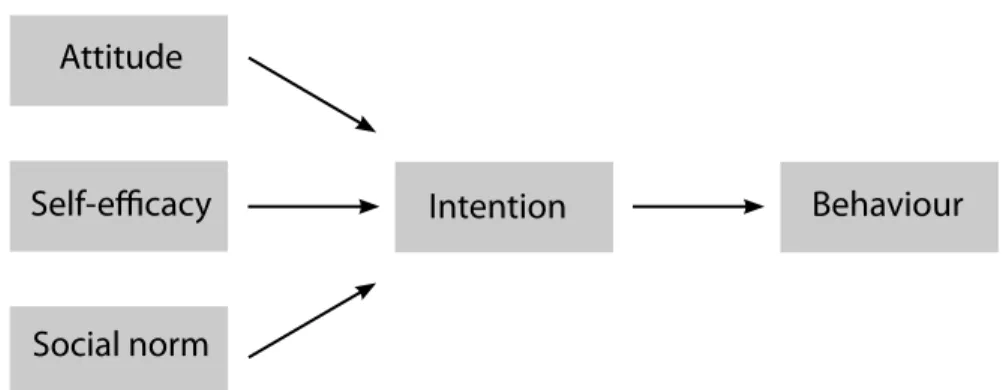
Figure 2 The main determinants derived from Theory of Planned Behaviour and Social Cognitive Theory (58;59)
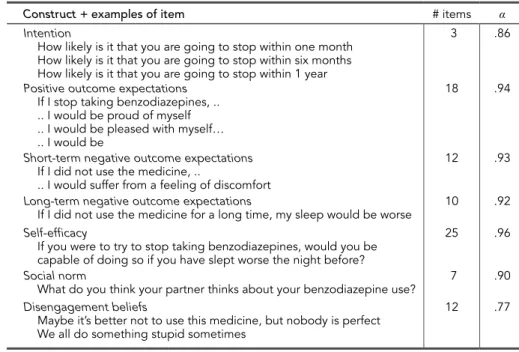
Thus, the three concepts (attitude, self-efficacy and social norm) predict one’s intention to perform a certain kind of behaviour. Intention is the major predictor of behavioural change. The different determinant analyses described in Chapters 2 and 4 used the above theory in order to find out the factors which are responsible for predicting the intention to educate and benzodiazepine cessation.
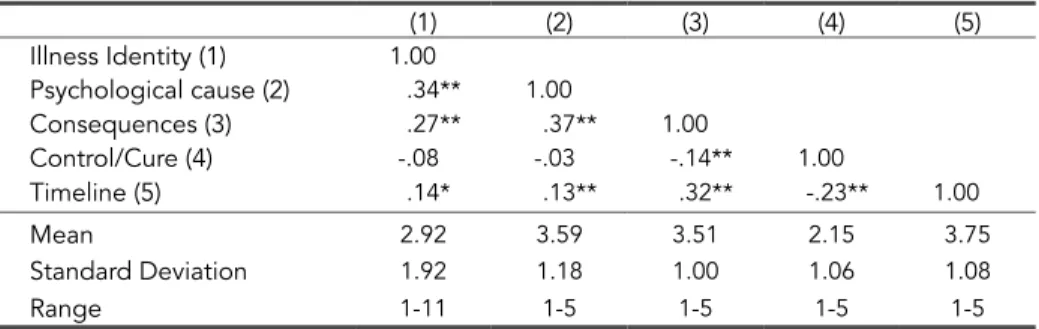
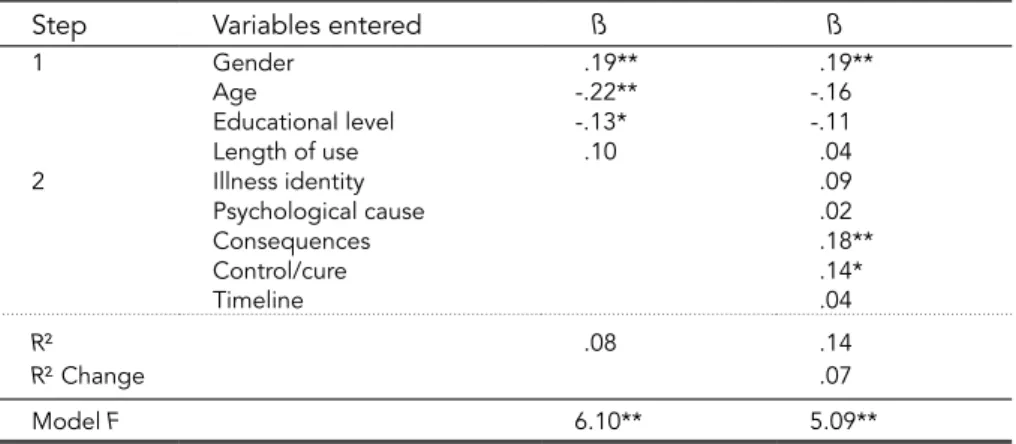
Besides the determinants described above, in chapter 3 we used another theory in explaining benzodiazepine use. A psychological model that has often been used to explain illness behaviour is the Common Sense Model (CSM) of Leventhal (61). According to the CSM, illness behaviour can be explained by patients’ own perceptions of their illness. The illness perceptions of the CSM include five key attributes: identity, cause, consequences, control or cure, and timeline. In the present study we will assess the illness perceptions with regard to the illness (or mental health problem) that motivated the initiation of the use of benzodiazepines. Identity refers to the specific set of complaints that signal the specific illness. Cause refers to a person’s beliefs about the origin of the illness that motivated the initiation of benzodiazepine use. Consequences are ideas about the short and long-term outcomes of the illness. Control or cure refers to beliefs about the extent to which one can control or cure the illness. Lastly, timeline concerns ideas about whether the illness is acute or chronic in nature.
10
C
hapt
er 1
General Introduction
not to use benzodiazepines.” Knowledge of the illness perceptions held by patients can also be used for the development of an intervention to stimulate patient education. A better understanding of the perceptions of patients may improve the quality of decision-making with regard to the most desired and appropriate treatment for a patient’s problems. These illness beliefs have been studied in chapter 3.
Phase IV – Intervention development
Phase IV in the Precede/Proceed model deals with intervention development (Chapter 5). On the basis of the results of the previous phases, an intervention can be developed which is aimed at changing behaviour. To capture the problem of chronic benzodiazepine use, three groups have to be targeted: general practitioners, pharmacists and patients. Interventions can be developed to target these three groups. However, this thesis will only focus on changing the behaviour of the patient. The results of chapter 2, which deals with the determinants related to the intention of the general practitioner and pharmacist, will not be used in the intervention. Changing behaviour can be achieved by changing the psychosocial determinants, that is, those determinants which have proven to be related to benzodiazepine use and cessation. Thus, the determinants that turned out to be related in Phase III described in chapter 3 and 4 are used for Phase IV: the development of the intervention. The next step is to describe the development of the intervention, computer-tailored education, in more detail.
Computer tailored education
Computer tailored education is aimed at a specific person and based on determinants of behavioural change (as described in phase III (chapters 3 and 4)). These determinants are assessed for everyone individually by means of a questionnaire. The computer-tailoring intervention is developed using the method of Dijkstra & De Vries (64). The tailoring included three mechanisms that have the potential to be effective; personalization, feedback and adaptation. Personalization was applied by starting with the participant’s surname (e.g., “Dear Ms. Brown,’) and by mentioning twice in the text the type of benzodiazepine that the individual used. Feedback was provided on statements made by patients in the individual assessment. For example: “You think that benzodiazepines really help you to get a good night’s sleep.” Feedback was also given on the determinants, which were measured in Phase III of the Precede/Proceed model (i.e. attitude, self-efficacy and social norm). Adaptation implies that information was adapted to the individual. For example, if self-efficacy is low, then the participant receives a message about how to increase his or her self-efficacy.
C
hapt
er 1
General Introduction
the individual item scores, the letters then contain specific combinations of information based on the different determinants (see also Figure 3).
Each letter started with an introduction explaining the goal and the rationale of the information. Subsequently, the three main determinants of discontinuing usage were addressed. The information was designed to: 1) increase the perceptions of the positive outcome expectations of discontinuing benzodiazepine use (for example, it was argued that patients may function better cognitively and may evaluate themselves more positively); 2) lower the perceptions of the positive outcome expectations of the use of benzodiazepines (this was done by explaining the development of tolerance and a possible placebo effect), and 3) increase self-efficacy expectations with regard to discontinuing usage (this was done by offering several skills to reach abstinence, such as making a plan to cut down benzodiazepine use and by offering alternatives in order to cope with worrying thoughts). Thee three mechanisms will also increase well-being, which will ultimately result in better decision-making by the patient
In this project, two different interventions will be examined: single tailored letters and multiple tailored letters. The single tailored letter intervention consisted of one letter of 5 to 6 pages of information (approximately 1200 words) in which all of these three psychological determinants were addressed in the above order of presentation. The multiple tailored letter intervention consisted of three letters of about 3 pages each (approximately 400 words),
Tailored Education:
Input
Computer
program
Output
Questionnaire
Decision rules
Messages
Tailored education
12
C
hapt
er 1
General Introduction
sent at intervals of one month. In the multiple tailored intervention, the first tailored letter was designed to increase the perceptions of the positive outcome expectations of discontinuing benzodiazepine usage and to lower the perceptions of the positive outcome expectations of the use of benzodiazepines. The second tailored letter was designed to increase self-efficacy expectations with regard to discontinuing usage, while the content of the third letter provided more skills for discontinuing usage, or provided a summary of the information in the first two letters, depending on the individual needs detected in the third assessment. In addition, in the introduction of the second and third letter, participants were provided with progress feedback: individual changes in benzodiazepine use were mentioned.
Phase V
Phase V deals with intervention implementation. If the intervention proves to be effective, the intervention will be ready for implementation. Before that, an implementation study is needed to find out how the intervention can best be implemented. Effective health education and promotion programs will have little impact if they are never used or if they are discontinued while still needed to create the desired health impact. In chapter 6, the issue of implementation of the computer program for tailored patient education will be briefly mentioned in Chapter 6. An inventory was conducted among different health care organizations in the Netherlands to find out the possibilities. A company can for example put the computer program on their website and invite their insured, for example, to visit their website. A qualitative study among general practitioners and pharmacists was conducted to find out if both groups are positive about the intervention and what would be the best way according to them to implement it.
Outline of this thesis
13
C
hapt
er 1
General Introduction
In the second part of this thesis, the solution aimed at the reduction of chronic use of benzodiazepines in the Netherlands will be examined, namely computer-generated tailored education letters about benzodiazepines. The results of this study will be presented in Chapter 5. This chapter describes a randomized-controlled trial among 508 benzodiazepine users in order to examine the effectiveness of two types of computerized patient education letters about benzodiazepines. Finally, Chapter 6 describes the implementation study which was conducted in order to find out the best way to implement the tailored education program (phase V of the Precede/Proceed model). This chapter also summarizes the main findings of this thesis, and the implications are discussed. Lastly, the limitations of our study and suggestions for future research are presented in this chapter.
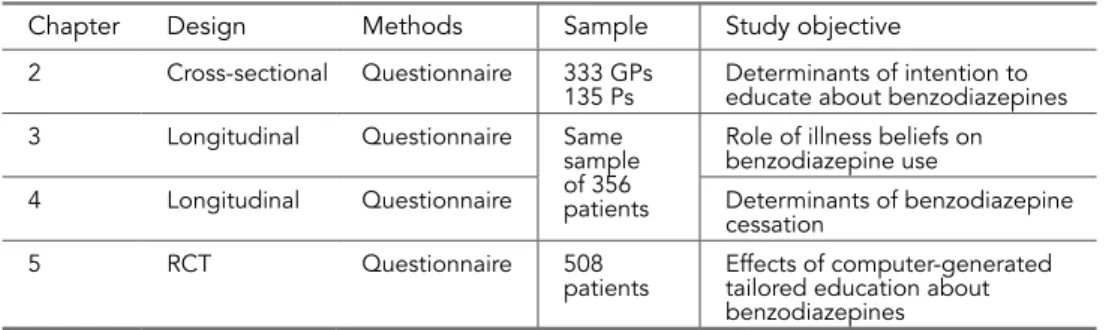
Because most of the chapters were written to be published as research papers, they are self-explanatory outside the context of this thesis. Due to this structure, some information may be redundant or may overlap. Table 1 provides an overview of the studies that were conducted in the context of the present thesis.
Table 1 Overview of the studies presented in this thesis
Chapter Design Methods Sample Study objective 2 Cross-sectional Questionnaire 333 GPs
135 Ps Determinants of intention to educate about benzodiazepines 3 Longitudinal Questionnaire Same
sample of 356 patients
Role of illness beliefs on benzodiazepine use
4 Longitudinal Questionnaire Determinants of benzodiazepine cessation
5 RCT Questionnaire 508
patients Effects of computer-generated tailored education about benzodiazepines
Note. GPs = General practitioners Ps = Pharmacists
Acknowledgements
The studies presented in this thesis were financially supported by the Dutch Council for Health Insurance.
References
(1) Coenen AML, Knuistingh Neven A. Benzodiazepinen [Benzodiazepines]. In: Knuistingh Neven A, editor. Modern Sleep Medicine. Alphen aan den Rijn: Van Zuiden Communications BV; 1999. p. 157-66.
(2) Ashton H. The diagnosis and management of benzodiazepine dependence. Curr Opin Psychiatry 2006;18(3):249-55.
(3) Matalon A, Yinnon AM, Hurwitz A. Chronic use of hypnotics in a family practice--patients’ reluctance to stop treatment. Fam Pract 1991;7(4):258-60.
(4) Stichting Farmaceutische Kengetallen. Data & Feiten 2005. 2005.
(5) GIP signaal - Gebruik van benzodiazepinen 1993-1998 [GIP-signal - Use of benzodiazepines 1993-1998]. Amstelveen; 2000.
14
C
hapt
er 1
General Introduction
(7) Knuistingh Neven A, Lucassen PLBJ, Bonsema K, Teunissen H, Verduin MM, Bouma M. NHG-standaard Slaapproblemen en slaapmiddelen. Huisarts & Wetenschap 2005;48:402-15.
(8) Ashton H, Golding JF. Tranquillisers: prevalence, predictors and possible consequences. Data from a large United Kingdom survey. Br J Addict 1989;84(5):541-6.
(9) Farmacie in cijfers [Pharmaceutical figures]. Den Haag: Stichting Farmaceutische Kengetallen [Foundation for Pharmaceutical Statistics]; 2007.
(10) Zandstra SM. Long-term benzodiazepine users in family practice: Differences from short-term users in mental health, coping behaviour and psychological characteristics. 2004.
(11) Clark RE, Xie H, Brunette MF. Benzodiazepine prescription practices and substance abuse in persons with severe mental illness. J Clin Psychiatry 2004;65(2):151-5. (12) Kan CC, Hilberink SR, Breteler MHM. Determination of the main risk factors for
benzodiazepine dependence using a multivariate and multidimensional approach. Comprehensive-Psychiatry 2004;45(2).
(13) Salinsky JV, Dor CJ. Characteristics of long-term benzodiazepine users in general practice. J R Coll Gen Pract 1987;37(298):202-4.
(14) Kan CC, Breteler MH, Zitman FG. High prevalence of benzodiazepine dependence in out-patient users, based on the DSM-III-R and ICD-10 criteria. Acta Psychiatr Scand 1997;96(2):85-93.
(15) Kales A, Kales JD. Sleep laboratory studies of hypnotic drugs: efficacy and withdrawal effects. J Clin Psychopharmacol 1983;3(2):140-50.
(16) Lader MH. Limitations on the use of benzodiazepines in anxiety and insomnia: are they justified? Eur Neuropsychopharmacol 2000;9 Suppl 6:S399-S405.
(17) Petursson H, Lader MH. Benzodiazepine dependence. Br J Addict 1981;76(2):133-45.
(18) Poyares D, Tufik S, Guilleminault C, Ohayon MM. Chronic benzodiazepine usage and withdrawal in insomnia patients. J Psychiatr Res 2004;38(3):327-34. (19) Griffiths RR, Weerts EM. Benzodiazepine self-administration in humans and
laboratory animals--implications for problems of long-term use and abuse. Psychopharmacology (Berl) 1997;134(1):1-37.
(20) Salzman C. Addiction to benzodiazepines. Psychiatr Q 1999;69(4):251-61. (21) Ashton H. Protracted Withdrawal Symptoms from Benzodiazepines. Psychiatr Ann
1995;25:158-65.
(22) Ohayon MM, Coquerel A, Lemoine P, Billard M, Kullmann B, Caulet M, et al. Are prescribed medications effective in the treatment of insomnia complaints? J Psychosom Res 2000;47(4):359-68.
(23) de las Cuevas C, Sanz E, de la Fuente J. Benzodiazepines: more “behavioural” addiction than dependence. Psychopharmacology (Berl) 2003;167(3):297-303. (24) Barker MJ, Greenwood KM, Jackson M, Crowe SF. Persistence of cognitive effects
after withdrawal from long-term benzodiazepine use: a meta-analysis. Archives of Clinical Neuropsychology 2004 Apr;19(3):437-54.
(25) Westra HA, Stewart SH, Teehan M, Johl K, Dozois DJ, Hill T. Benzodiazepine Use Associated With Decreased Memory for Psychoeducation Material in Cognitive Behavioral Therapy for Panic Disorder. Cognitive-Therapy-and-Research 2004;28(2):193.
(26) Curran HV. Tranquillising memories: a review of the effects of benzodiazepines on human memory. Biol Psychol 1986;23(2):179-213.
(27) Pomara N, Berchou RC, Newton RE, Stanley M, Stanley B, Block R, et al.
Increased sensitivity of the elderly to the central depressant effects of diazepam. J Clin Psychiatry 1985;46(5):185-7.
(28) Stewart SA. The Effects of Benzodiazepines on Cognition. Journal of Clinical Psychiatry 2005;66 (Suppl2).
15
C
hapt
er 1
General Introduction
(30) Wagner AK, Walker AM, Ross-Degnan D, Gurwitz JH, Zhang F, Soumerai SB, et al. Benzodiazepine use and hip fractures in the elderly: who is at greatest risk? Arch Intern Med 2004;164(14):1567-72.
(31) Walsh JM, Atkins R, Soderstrom CA, Flegel R, Cangianelli LA, Kerns TJ. Epidemiology of alcohol and other drug use among motor vehicle crash victims admitted to a trauma center. Traffic Inj Prev 2004;5(3):254-60.
(32) Movig KLL, van Egmond T, Egberts ACG, de Gier JJ, Mathijssen MPM, Nagel PHA, et al. Psychoactive substance use and the risk of motor vehicle accidents. Accid Anal Prev 2004;36(4):631-6.
(33) Madhusoodanan S, Bogunovic OJ. Safety of benzodiazepines in the geriatric population. Expert Opin Drug Saf 2004;3(5):485-93.
(34) Gaudreault P, Verdy I, Guay J, Thivierge RL. Benzodiazepine poisoning. Clinical and pharmacological considerations and treatment. Drug Saf 1991;6(4):247-65. (35) Stenhouse G, Grieve JH. Drug-related deaths in Grampian, Scotland. Scott Med J
2004;48(4):111-3.
(36) Isbister GK, Whyte IM, O’Regan L, Sibbritt D. Alprazolam is relatively more toxic than other benzodiazepines in overdose. Br J Clin Pharmacol 2004;58(1):88-95. (37) Gezondheidsraad: Kerncommissie MTA. Naar een doelmatig gebruik
van benzodiazepines. Den Haag: Gezondheidsraad; 1998. Report No.: Publicatienummer 1998/20.
(38) Stichting Farmaceutische Kengetallen. Data & Feiten [Facts & figures] 2007. (39) Oude Voshaar RC, Gorgels WJMJ, Mol AJJ, Couvée JE, van Balkom AJLM, Zitman
FG. Behandelmethoden om langdurig benzodiazepinegebruik te staken [Treatment modalities to discontinue long-term benzodiazepine use]. Tijdschrift voor
Geneeskunde 2001;137(45):1347-50.
(40) Oude Voshaar RC, Couvée JE, Van Balkom AJLM, Mulder PGH, Zitman FG. Strategies for discontinuing long-term benzodiazepine use. British Journal of Psychiatry 2006;189:213-220.
(41) Oude Voshaar RC, Gorgels WJMJ, Mol AJJ, Van Balkom AJLM, Van de Lisdonk EH, Breteler MHM, Van den Hoogen HJM, Zitman FG. Tapering off long-term benzodiazepine use with or without group cognitive-behavioural therapy: three-condition, randomised controlled trial. Britsh Journal of Psychiatry 2003;182:498-504.
(42) Oude Voshaar RC, Couve JE, van Balkom AJ, Gorgels WJ, Mol AJ, Zitman FG. [Treatment methods for discontinuation of long-term benzodiazepine use]. Ned Tijdschr Geneeskd 2001;145(28):1347-50.
(43) Terzano MG, Ferini-Strambi L, Mondini S, Parrino L, Cirignotta F. Studio Morfeo 2: Survey on the management of insomnia by Italian general practitioners. Sleep Med 2006.
(44) Ten Wolde GB. Nog veel ruimte voor verbetering - voorlichting over benzodiazepinen [A lot to improve - education about benzodiazepines]. Pharmaceutisch Weekblad 2004;139(45):1494-6.
(45) Mechanic D. How should hamsters run? Some observations about sufficient patient time in primary care. BMJ 2001; 323(7307):266-268.
(46) Jorgensen VRK. An approach to reduce benzodiazepine and cyclopyrrolone use in general practice: A study based on a Danish population. CNS Drugs 2007; 21(11):947-955.
(47) Ong LM, Lammes FB, de Haes JC, Hoos AM. Doctor-patient communication: a review of the literature. Soc Sci Med 1995; 40(7):903-918.
(48) Brook O, Van Hout H, Nieuwenhuyse H, Heerdink E. Impact of coaching by community pharmacists on drug attitude of depressive primary care patients and acceptability to patients; a randomized controlled trial. Eur Neuropsychopharmacol 2003; 13(1): 1-9.
16
C
hapt
er 1
General Introduction
(50) Kroeze W., Brug J., Werkman A. A systematic review of randomized trials on the effectiveness of computer-tailored education on physical activity and dietary behaviors. Ann Behav Med 2006; 31: 205-23.
(51) Oenema A., Tan F., Brug J. Short-Term Efficacy of a Web-Based Computer-Tailored Nutrition Intervention: Main Effects and Mediators. Ann Behav Med 2005; 29: 54-63.
(52) Dijkstra A., De Vries H., Roijackers J. Long-term effectiveness of computer-generated tailored feedback in smoking cessation. Health Educ Res 1998;13(2). (53) Kok G, Schaalma H, Brug J. De theorie van planmatige gezondheidsvoorlichting
[The theory of planned health education]. In: Brug J, Schaalma H, Kok G, Meertens RM, Van der Molen HT, editors. Gezondheidsvoorlichting en gedragsverandering [Health promotion and behavioral change].Assen: Van Gorcum & Comp. BV; 2000. p. 15-32.
(54) Green LW, Kreuter MW. Health promotion and planning: An educational and ecological approach. 3rd ed. Mayfield: Mountain View; 1999.
(55) Tremblay M, O’Loughlin J, Makni H, Gervais A, Lacroix C, Paradis G. Physicians Taking Action Against Smoking: an intervention program to optimize smoking cessation counselling by Montreal general practitioners. CMAJ 2001;165(5):601-7. (56) Wright A, Jorm AF, Pennell K, McGorry PD, Harris MG. Development and evaluation
of a youth mental health community awareness campaign - The Compass Strategy. BMC Public Health 2006;6:215.
(57) Chabot I, Milot A, Moisan J, Grgoire JP. Pharmacist intervention program for control of hypertension. Ann Pharmacother 2003;37(9):1186-93.
(58) Ajzen, I. (1991). The theory of planned behavior. Organizational Behavior and Human Decision Processes, 50, 179-211.
(59) Bandura, A. (1986). Social foundations of thought and action: A social cognitive theory. Upper Saddle River, NJ, US: Prentice-Hall, Inc.
(60) Godin G, Kok G. The theory of planned behavior: A review of its applications to health-related behaviors. Am J Health Prom 1996; 11(2): 87-98.
(61) Leventhal H, Brissette I, Leventhal EA. The common-sense model of self-regulation of health and illness. New York, NY, US: Routledge: 2003
(62) Hagger MS, Orbell S. A meta-analytic review of the common-sense model of illness representations. Psychology-and-Health 2003;18(2).
(63) Kaptein AA, Scharloo M, Helder DI, Kleijn WC, Van Korlaar IM, Woertman M. Representations of chronic illness. New York, NY, US: Routledge: 2003. (64) Dijkstra A, De Vries H. The development of computer-generated tailored
CHAPTER 2
Psychological determinants of the
intention to educate patients about
benzodiazepines
General practitioners and pharmacists do not properly educate their patients about the disadvantages of benzodiazepines. In order to increase and improve education, this study will investigate which psychological factors (i.e., beliefs, outcome expectation, social norm and self-efficacy) predict the intention to educate. A cross-sectional survey study was conducted in which 339 general practitioners and 149 pharmacists in the Netherlands completed a questionnaire. Results show that the above-mentioned factors play an important role in forming intentions to educate. However, differences exist between general practitioners and pharmacists. General practitioners and pharmacists intend to educate in cases where they think that benzodiazepines have well-defined disadvantages, when the education they undertake leads to success, when they feel pressure to educate from their surroundings and when they are capable of educating. These findings contribute to a better understanding of patient education and are of great value in developing new interventions to improve education.
Geeske B. Ten Wolde, Arie Dijkstra, Pepijn van Empelen, Arie Knuistingh Neven, Frans G. Zitman.
20
C
hapt
er 2
Psychological determinants of the intention to educate patients
Introduction
Benzodiazepines are commonly prescribed drugs aimed at the short-term relief of severe, disabling anxiety or insomnia. The use of benzodiazepines has only been proven effective when used short term (1-5). Long-term use is not only non-effective, it can even be problematic because it is related to several negative health effects such as addiction, falls, hip fractures, phases of depression and impaired cognition (6-17). Because of this, guidelines for general practitioners have been established, for example, by the Dutch College of General Practitioners (NHG) regarding how and when to prescribe benzodiazepines to patients. Benzodiazepines for sleep disorders, for instance, are recommended for at most ten to fourteen days (18).
Despite these recommendations, 10-15% of the population uses benzodiazepines on a regular basis, and 3% uses them chronically (19). The elderly are the most common users: 42% of all users are 65 or older. They take 2.9 times more benzodiazepines than their younger counterparts. Those who are 75 years or older take even four times as much (20;21). The number of prescriptions for benzodiazepines in 2003 was almost eleven million and continues to grow by one percent each year (22;23). In addition, other European and non-European countries like the United States have to contend with widespread use of benzodiazepines (24). Given the long-term adverse effects of benzodiazepine use and the high costs associated with the high number of prescriptions, it is essential that both prescriptions for benzodiazepines be reduced and that patients be well informed about the (in)effectiveness and (adverse) effects of long-term benzodiazepine use.
The latter is often lacking: it is known that the education offered by health practitioners to patients is often inadequate and that alternatives like counselling or referral to other services are not offered in most instances (25;26). Two groups can be distinguished in patient education: general practitioners and pharmacists. Although they have different roles, they areAlthough they have different roles, they are both responsible for informing and educating patients about the use of drugs. In the Netherlands pharmacists and general practitioners need to comply with the same law of medicine (27). (27).
Today, it is known that education about the disadvantages of benzodiazepine use is often non-existent: 80% of prescription refills are handed out by the assistant instead of general practitioners seeing the patient themselves (22). As a result, most patients are not educated at all. This is surprising because education would result in more satisfied patients, along with a better understanding of the pros and cons of medication, and more compliance to treatment (28-30). It is also known that when they do educate, general practitioners and pharmacists can play a vital role in changing patients’ attitudes towards medicine use. For instance, it has been shown that pharmacists can play an important role in changing the drug attitudes of depressive patients (31). Thus, we can conclude that educating by both general practitioners and pharmacists the benzodiazepine user can have positive results in terms of the goal of reducing the amount of benzodiazepines.
21
C
hapt
er 2
Psychological determinants of the intention to educate patients
that they lack the time (30;32-34). In addition to this, the workload of the general practitioner is even higher when health problems are psychological or social in nature, as these problems take up more time than physical problems (35;36). This is the case with benzodiazepines: the reasons why patients start taking benzodiazepines mostly stem from stress, trauma or acute anxiety (30). High prescription levels of benzodiazepines are also related to the uncertainty of general practitioners about suggesting alternatives (30;37). And they are unwilling to raise the issue of benzodiazepine withdrawal because they view an intervention as pointless (30). Although pharmacists, on the other hand, are eager to undertake an extended role in health education, it is still uncommon for them to educate their patients, like drawing attention to leaflets displayed, or to actively provide patients with verbal education. Besides this, they are not always certain in educating patients about the effects and possible disadvantages of drugs in general (38;39). In order to stimulate patient education by both general practitioners and pharmacists about benzodiazepine use it is important to develop an intervention that is based on the psychological causes behind educating behaviour. It is important, therefore, for an intervention to be developed that targets these psychological causes related to educating patients.
Behaviour change – from not educating patients to educating them properly – starts with the formulation of the intention to educate. Intentions to perform specific behaviours have been shown to be the most powerful psychological predictors of actual behaviour (40;41). To distil the psychological determinants of the intention to educate, we will make use of psychological determinants derived from different models (i.e., Theory of Planned Behaviour (42), Protection Motivation Theory (43), and Social Cognitive Theory (44)). These models have been shown to have good predictive value in a diversity of behaviours such as individual health behaviour like tobacco use (45) and drinking behaviour (46;47), but also in predicting behaviour of individuals at other societal levels such as teachers providing sex education (48) or predicting the intention to vote for law enforcement by politicians (49). The above models all acknowledge that intention is the most proximal determinant of behaviour and that intention is in turn predicted by beliefs, outcome expectations (positive and negative), social norm and self-efficacy. Therefore, the aim of this study is to assess the psychological factors that predict the intention of general practitioners and pharmacists to educate their patients about benzodiazepine use.
Method
Participants and design
22
C
hapt
er 2
Psychological determinants of the intention to educate patients
Questionnaire
The questionnaire assessed demographic data such as age, the amount of time the general practitioners and pharmacists were active in their profession, the number of patients they had in their files, and the number of prescriptions were handed over.
Intention, beliefs, outcome expectations, social norm and self-efficacy were measured on a five-point scale: ‘definitely not’ (1), ‘probably not’ (2), ‘neutral’ (3), ‘probably yes’ (4), and ‘definitely yes’ (5). Intention was measured with two questions. The two questions were: ‘In the next twelve months are you planning to educate patients who start taking benzodiazepines or renew their use, about the disadvantages of benzodiazepines?’ and ‘In the next twelve months are you planning to educate patients who are already taking benzodiazepines?’
Beliefs, outcome expectations, social norm and self-efficacy were measured as follows. The beliefs regarding benzodiazepine use were response-efficacy and disadvantages. Response-efficacy was measured with two items, for example, ‘Benzodiazepines are not effective’. Disadvantages were measured by three items. One example was ‘Patients who use benzodiazepines for more than three months become addicted to them’. The psychological factors towards patient education were outcome expectations, social norm and self-efficacy. Positive outcome expectations were measured by three items. One item was ‘If I educate my patients about the disadvantages of benzodiazepines, they will benefit from that’. Negative outcome expectations were also measured by means of three items. One example was ‘If I educate my patients about the disadvantages of benzodiazepines, this will present a risk for the doctor-patient relationship’. Three items refer to social norm. One example is ‘Do you think that KNMP (Royal Dutch Pharmaceutical Society, an association for and by pharmacists in the Netherlands) or NHG (Dutch College of General Practitioners) expects you to educate about benzodiazepines’. Lastly, self-efficacy was measured by one item ‘It is difficult to educate patients about the disadvantages of benzodiazepines’ (recoded).
Results
A total of 339 general practitioners (34%) and 149 (25%) pharmacists completed and returned the questionnaires. The mean age of the general practitioner was 48.5 years and that of the pharmacist was 39 years. Their average practice experience was 17.3 and 12.5 years respectively. An average of 2,545 patients were enrolled at the general practice. At the pharmacy, there were 10,037 patients with 80,653 prescriptions dispensed per year.
Reliability analyses showed that Cronbach’s Alpha’s were low to high: intention (2 items,
α
=.66), response-efficacy (2 items,α
=.76), disadvantages (3 items,α
=.62), positive outcome expectations (3 items,α
=.75), negative outcome expectations (3 items,α
=.63), and social norm (3 items,α
=.58).23
C
hapt
er 2
Psychological determinants of the intention to educate patients
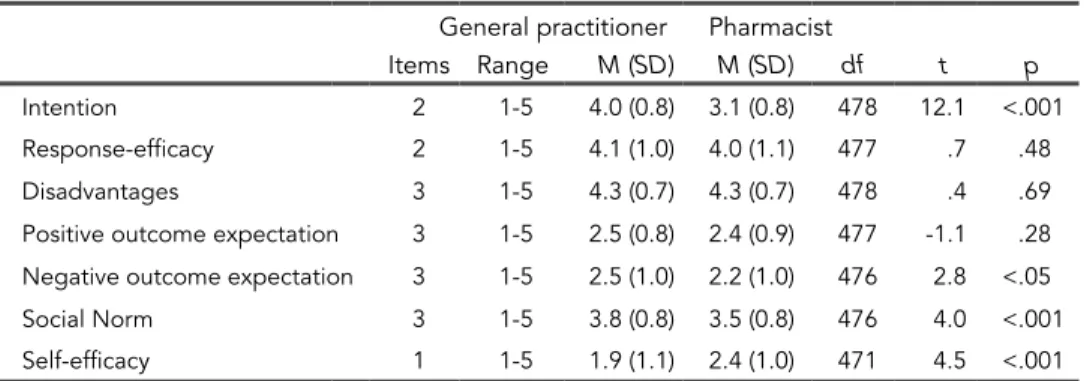
differences were found for intention (t(478)=12.1; p<.001), negative outcome expectations (t(476)=2.8; p<.05), social norm (t(476)=4.0; p<.001) and self-efficacy (t(471)=4.5; p<.001). These differences suggest that general practitioners have a more positive intention (95.5% of the general practitioners were intending to educate in contrast to 72.1% of the pharmacists), that they expect more negative outcomes when they do educate, that they experience a more positive social norm and that they feel more capable of educating their patients than do pharmacists. They did not differ significantly on both sets of beliefs on the effects of benzodiazepines (response efficacy and disadvantages), nor on positive outcomes they expect from educating patients.
Table 1 Differences in mean scores (M) and standard deviations (SD) on the psychological factors between general practitioners and pharmacists
General practitioner Pharmacist
Items Range M (SD) M (SD) df t p
Intention 2 1-5 4.0 (0.8) 3.1 (0.8) 478 12.1 <.001 Response-efficacy 2 1-5 4.1 (1.0) 4.0 (1.1) 477 .7 .48 Disadvantages 3 1-5 4.3 (0.7) 4.3 (0.7) 478 .4 .69 Positive outcome expectation 3 1-5 2.5 (0.8) 2.4 (0.9) 477 -1.1 .28 Negative outcome expectation 3 1-5 2.5 (1.0) 2.2 (1.0) 476 2.8 <.05 Social Norm 3 1-5 3.8 (0.8) 3.5 (0.8) 476 4.0 <.001 Self-efficacy 1 1-5 1.9 (1.1) 2.4 (1.0) 471 4.5 <.001
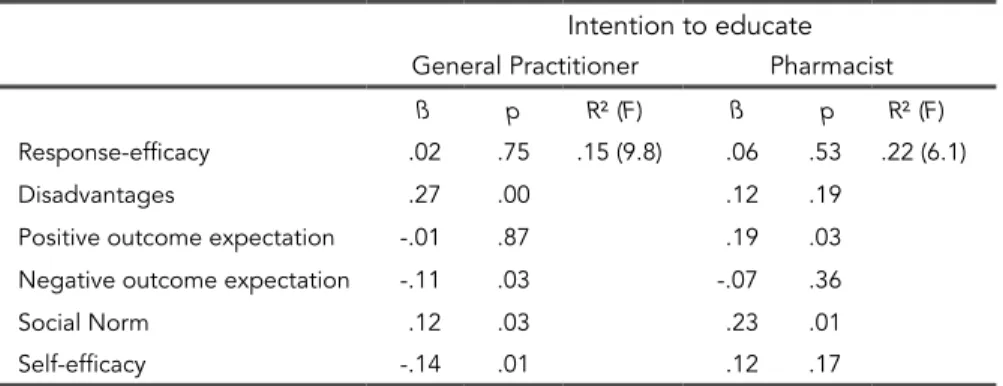
Separate regression analyses were conducted for general practitioners and pharmacists whereby intention was regressed on response efficacy, disadvantages, outcome expectations (positive and negative), social norm and self-efficacy (Table 2). For the general practitioners, the regression of intention to educate explained a variance of R2=.15, with disadvantages,
negative outcome expectations, social norm and self-efficacy being significant determinants. When we looked at the pharmacists, the regression yielded an R2 of .22, with only positive outcome expectations and social norm being
24
C
hapt
er 2
Psychological determinants of the intention to educate patients
Table 2 Regression of intention on the psychological factors for general practitioners and pharmacists.
Intention to educate
General Practitioner Pharmacist
ß p R² (F) ß p R² (F) Response-efficacy .02 .75 .15 (9.8) .06 .53 .22 (6.1)
Disadvantages .27 .00 .12 .19
Positive outcome expectation -.01 .87 .19 .03 Negative outcome expectation -.11 .03 -.07 .36
Social Norm .12 .03 .23 .01
Self-efficacy -.14 .01 .12 .17
Discussion
In the present study predictors of intended benzodiazepine education were examined among general practitioners and pharmacists. The main findings were that beliefs, outcome expectations (positive and negative), social norm and self-efficacy played a role in forming intentions to educate. However, differences existed among practitioners. In the case of general practitioners, intention was predicted by beliefs, negative outcome expectations, social norm and self-efficacy, whereas intention of pharmacists to educate was only predicted by positive outcome expectations and social norm. These findings suggest that when persuading/reinforcing general practitioners and pharmacists to educate, different information needs to be provided to each group in order to ensure patient education.
25
C
hapt
er 2
Psychological determinants of the intention to educate patients
Practice implications
Because it is now known that beliefs, outcome expectations, social norm and self-efficacy are responsible for the intention to educate, this knowledge can be used in order to get the general practitioner and pharmacist to be more motivated in educating their patients. These determinants must now be translated into practical strategies. First of all, in order to get the general practitioners and pharmacists to realise the importance of educating, it is necessary to increase their awareness by extending their knowledge about the desirability of patient education on benzodiazepine use. Beliefs and outcome expectancies can change due to new persuasive arguments, and as a result of the enhancement of the salience of information already possessed and along with linking beliefs with personal values (50). This can be achieved, for example, by information leaflets, pamphlets, seminars, lectures and so on. From this study, it is particularly important to keep the differences between these two kinds of practitioners in mind. For the general practitioners it is especially important to reduce negative outcome expectations by telling them that education will not harm the relationship with others (such as the relationship with the patient or pharmacist) and that education will not require too much time and effort on the long-term. For the pharmacist, on the other hand, it is particularly important to promote the positive outcomes of educating by for example underlining the fact that education will result in less benzodiazepine use, that patients will have a lower risk of falling and that the patient will benefit as a result.
Secondly, methods of influencing social norms are anchored in providing information on group norms (51). General practitioners and pharmacists are also likely to increase or sustain their education efforts towards benzodiazepine users when important social influences are activated, such as professional federations like the Royal Dutch Pharmaceutical Society and the Dutch Society of General Practice. These federations can put policies into place, which ensure that (recurrent) patient education and monitoring becomes part of daily practice. And finally, methods for self-efficacy enhancement include skills training, mastery experience and modelling. All this must be combined with feedback and reinforcement. It is widely known that in order to increase confidence (i.e., self-efficacy) people need encouragement and successful experiences (52).
The present findings have addressed determinants that need to be targeted in order to facilitate an intervention that ensures patient education of general practitioners and pharmacists. Additional factors such as, for example, environmental factors, need to be formulated in further studies. These will then contribute to a deeper understanding of how benzodiazepine education interventions can be best implemented. Thus, more research is necessary.
26
C
hapt
er 2
Psychological determinants of the intention to educate patients
work be taken off the practitioners’ hands. A tool which educates patients automatically would therefore be handy. It is known that writing a standard letter to patients already reduces benzodiazepine intake (56-59). However, personalized letters produced by a computer program, meaning without even seeing the patient, appear to be even more effective (60).
Limitations
Caution is warranted in interpreting the results of this study. First, low to high Cronbach’s Alphas were found and low variances were found in the scales representing intention to educate and psychological factors predicting intention to educate. This may be due to the fact that the number of items for each factor was limited. This was done intentionally to increase response rate as it is known that health practitioners are not likely to participate (61). The questionnaire was therefore minimized to attract them. The sample used in this study might also cause a stir. Around 70% of those who received questionnaires did not respond. However, according to Swanborn, a response rate of 30% is not bad for this type of research in the Netherlands (62). Also, it is known that response rates among health practitioners are low due to time constraints, among other things (61). Also comparing our participants with the Dutch population it is known that a general practitioner in the Netherlands has on average 2,053 patients per practice (63). According to the Foundation for Pharmaceutical Statistics (22) Dutch pharmacies on average attend to 8,700 patients per pharmacy and process 73,800 prescriptions a year. It thus looks like we were dealing with a representative sample. Most importantly, studies are still important in order to identify common problems in health care systems (64). This also applies to the present study: it tries to find an answer to why general practitioners and pharmacists do not educate as they should.
Conclusion
In the present study predictors of intended benzodiazepine education were examined among general practitioners and pharmacists. The main findings were that beliefs, outcome expectations (positive and negative), social norm and self-efficacy played a role in forming intentions to educate. However, differences existed among practitioners. This study is the first Dutch study that has mapped the psychological factors of intention to educate patients about benzodiazepines. A start has thus been made in understanding the motives of general practitioners and pharmacists when it comes to educating.
Acknowledgement
27
C
hapt
er 2
Psychological determinants of the intention to educate patients
References
(1) College voor Zorgverzekeringen (2000). Gebruik van benzodiazepinen 1993–1998 [Use of benzodiazepines 1993-1998]. Geneesmiddelen Informatie Project (GIP-Geneesmiddelen Informatie Project (GIP-signaal).
(2) Holbrook AM, Cheng C, King D, Crowther R, Lotter A. Meta-analysis ofLotter A. Meta-analysis of
benzodiazepine use in the treatment of insomnia. CMAJ 2000; 162(2):225-233. (3) Holbrook AM, Cheng C, King D, Crowther R, Lotter A. The diagnosis and
management of insomnia in clinical practice: a practical evidence-based approach. CMAJ 2000; 162(2):216-220.
(4) Kupfer DJ, Reynolds CF. Management of insomnia. N Engl J Med 1997; 336(5):341-346.
(5) Lader MH. Limitations on the use of benzodiazepines in anxiety and insomnia: are they justified? Eur Neuropsychopharmacol 2000; 9 Suppl 6:S399-S405.
(6) Ashton H. The Treatment of Benzodiazepine Dependence. Addiction 1994; 89:1535-1541.
(7) Ashton H. Protracted Withdrawal Symptoms from Benzodiazepines. Psychiatr Ann 1995; 25:158-165.
(8) Ashton H. The diagnosis and management of benzodiazepine dependence. Curr Opin Psychiatry 2005; 18(3):249-255.
(9) Barker MJ, Greenwood KM, Jackson M, Crowe SF. Persistence of cognitive effects after withdrawal from long-term benzodiazepine use: a meta-analysis. Arch ClinArch Clin Neuropsychol 2004; 19(3):437-454.
(10) Gorgels WJ, Breteler MH, Van de Lisdonk EH, Oude Voshaar RC, Mol AJ, Zitman FG. Het langdurig gebruik van benzodiazepinen [Long-term use of benzodiazepines]. Ned Tijdschr Geneeskd 2001; 145(28):1342-1346.Ned Tijdschr Geneeskd 2001; 145(28):1342-1346. (11) O’Connor KP, Marchand A, Bélanger L, Mainguy N, Landry P, Savard P et al.O’Connor KP, Marchand A, Bélanger L, Mainguy N, Landry P, Savard P et al..
Psychological distress and adaptational problems associated with benzodiazepine withdrawal and outcome: A replication. Addict Behav 2004; 29(3):583-593. (12) Salzman C. Addiction to benzodiazepines. Psychiatr Q 1999; 69(4):251-261. (13) Schweizer E, Rickels K, De Martinis N, Case G, Garcia-Espana F. The effect
of personality on withdrawal severity and taper outcome in benzodiazepine dependent patients. Psych Med 1998; 28(3):713-720.Psych Med 1998; 28(3):713-720.
(14) Wan H, Warburton EC, Zhu XO, Koder TJ, Park Y, Aggleton JP et al. Benzodiazepine impairment of perirhinal cortical plasticity and recognition memory. Eur J Neurosci 2004; 20(8):2214-2224.
(15) Westra HA, Stewart SH, Teehan M, Johl K, Dozois DJ, Hill T. Benzodiazepine Use Associated With Decreased Memory for Psychoeducation Material in Cognitive Behavioral Therapy for Panic Disorder. Cogn Ther Res 2004; 28(2):193.
(16) Kan CC, Breteler MH, Zitman FG. High prevalence of benzodiazepine dependence in out-patient users, based on the DSM-III-R and ICD-10 criteria. Acta Psychiatr Scand 1997; 96(2):85-93.
(17) Ashton H. The diagnosis and management of benzodiazepine dependence. CurrCurr Opin Psychiatry 2006; 18(3):249-255.
(18) Knuistingh Neven A, Lucassen PLBJ, Bonsema K, Teunissen H, Verduin MM, Bouma M. NHG-standaard Slaapproblemen en slaapmiddelen [Sleepproblems and benzodiazepines]. Huisarts Wet 2005; 48:402-415.
(19) Gezondheidsraad: Kerncommissie MTA. Naar een doelmatig gebruik van
benzodiazepines [To an efficient way of using benzodiazepines]. Publicatienummer 1998/20. 1998. Den Haag: Gezondheidsraad.
(20) Stichting Farmaceutische Kengetallen. Data & Feiten [Facts & Figures] 2003. (21) Stichting Farmaceutische Kengetallen. Data & Feiten [Facts & Figures] 2004. (22) Stichting Farmaceutische Kengetallen. Data & Feiten[Facts & Figures] 2005. (23) Stichting Farmaceutische Kengetallen. Farmacie in cijfers [Pharmaceutical
28
C
hapt
er 2
Psychological determinants of the intention to educate patients
(24) Zandstra SM, Furer JW, Van de Lisdonk EH, Van’t Hof HM, Bor JH, Van Weel CZandstra SM, Furer JW, Van de Lisdonk EH, Van’t Hof HM, Bor JH, Van Weel C et al. Different study criteria affect the prevalence of benzodiazepine use. Soc Psychiatry Psychiatr Epidemiol 2002; 37(3): 139-144. 2002; 37(3): 139-144. 139-144.
(25) Barat I, Andreasen F, Damsgaard EM. Drug therapy in the elderly: what doctors elderly: what doctors believe and patients actually do. Br J Clin Pharmacol 2001; 51(6):615-622. (26) Barter G, Cormack M. The long-term use of benzodiazepines: patients’ views,
accounts and experiences. Fam Pract 1997; 13(6):491-497. (27) Ministery of Health, Welfare and Sport. Wet op de Geneeskundigeport. Wet op de Geneeskundige
Behandelovereenkomst [Law on the agreement of treatment of medicines]. July 2007.
(28) Di Blasi Z, Georgiou A, Kleijnen J, Harkness E, Ernst E. Influence of context effects(28) Di Blasi Z, Georgiou A, Kleijnen J, Harkness E, Ernst E. Influence of context effects Di Blasi Z, Georgiou A, Kleijnen J, Harkness E, Ernst E. Influence of context effects on health outcomes: a systematic review. Lancet 2001; 357(9258):757-762.utcomes: a systematic review. Lancet 2001; 357(9258):757-762. (29) Ong LM, Lammes FB, de Haes JC, Hoos AM. Doctor-patient communication: a
review of the literature. Soc Sci Med 1995; 40(7):903-918.
(30) Parr JM, Kavanagh DJ, Young RM, McCafferty K. Views of general practitioners and benzodiazepine users on benzodiazepines: A qualitative analysis. Soc Sci Med 2006; 62(5): 1237-1249.
(31) Brook O, Van Hout H, Nieuwenhuyse H, Heerdink E. Impact of coaching by community pharmacists on drug attitude of depressive primary care patients and acceptability to patients; a randomized controlled trial. Eur Neuropsychopharmacol 2003; 13(1): 1-9.
(32) Kapur N, Appleton K, Neal RD. Sources of job satisfaction and psychological distress in GPs and medical house officers. Fam Pract 2000; 16(6):600-601. (33) Mechanic D. How should hamsters run? Some observations about sufficient
patient time in primary care. BMJ 2001; 323(7307):266-268.
(34) Commonwealth Fund / Harvard / Harris. The Commonwealth Fund 2000 International Health Policy Survey of Physicians. 2000. New York.
(35) Zantinge EM, Verhaak PFM, Bensing JM. The workload of GPs: patients with psychological and somatic problems compared. Fam Pract 2005; 22(3):293-297. (36) Deveugele M, Bensing J, De Maeseneer J, Derese A, Van den Brink Muinen A.
Consultation length in general practice: cross sectional study in six European countries. BMJ 2002; 325(7362):472.
(37) Dempsey OP, Moore H. Psychotropic prescribing for older people in residential care in the UK, are guidelines being followed? Primary Care and Community Psychiatry 2005; 10(1): 13-18.
(38) Van Bergeijk D, Van Geffen ECG, Van Hulten RP. Knelpunten bij voorlichting in de apotheek [Bottlenecks in education at the pharmacy]. University of Utrecht JuneUniversity of Utrecht June 2005, ISBN 90-74772-70-6..
(39) Bensing JM, Visser A, Saan H. Patient education in The Netherlands. Pat Educ Couns 2001; 44(1):15-22.
(40) Armitage CJ, Conner M. Efficacy of the theory of planned behaviour: A meta-(40) Armitage CJ, Conner M. Efficacy of the theory of planned behaviour: A meta-analytic review. Br J Soc Psychol 2001; 40(4): 471-499.
(41) Godin G, Kok G. The theory of planned behavior: A review of its applications to(41) Godin G, Kok G. The theory of planned behavior: A review of its applications to health-related behaviors. Am J Health Prom 1996; 11(2): 87-98.
(42) Ajzen I. Attitudes, personality, and behavior. Chicago, IL, US: Dorsey Press: 1988. ISBN 02560693520256069352
(43) Rogers RW. A protection motivation theory of fear appeals and attitude change. J Psychol: Interdisciplinary and Applied 1975; 91(1): 93-114.
(44) Bandura A. Social foundations of thought and action: A social cognitive theory. Upper Saddle River, NJ, US: Prentice-Hall, Inc: 1986. ISBN 013815614X ISBN 013815614X (45) Dijkstra A, De Vries H, Kok G, Roijackers J. Self-evaluation and motivation to
change: Social cognitive constructs in smoking cessation. Psychol Health 1999; 14(4): 42-45.