i
TREATMENT TO PREVENT HIV TRANSMISSION IN SERODISCORDANT COUPLES IN HENAN, CHINA
M. Kumi Smith
A dissertation submitted to the faculty at the University of North Carolina at Chapel Hill in partial fulfillment of the requirements for the degree of Doctor of Philosophy in the
Department of Epidemiology in the Gillings School of Global Public Health.
Chapel Hill 2014
iii
ABSTRACT
M. Kumi Smith: Treatment to Prevent HIV Transmission in Serodiscordant Couples in Henan, China
(Under the direction of William C. Miller)
Suppressive antiretroviral therapy (ART) can prevent sexual HIV transmission by reducing viral concentration in the blood and genital tract of infected partners. Whether or not this effect can be achieved in the non-trial settings is a matter of debate. Aim 1 assessed the effect of ART on HIV transmission risk between partners in an open cohort of serodiscordant Chinese couples, past analyses of which have resulted in contradictory findings. Public health data collected for disease control purposes was used to analyze seven years of follow-up data for an open cohort of 4916 previously untreated HIV serodiscordant couples. Using marginal
iv
significantly associated with higher risk of HIV transmission (HR=1.24, 95% CI, 1.27-4.03), particularly among those assigned to village HIV care centers (HR=2.26, 95% CI, 1.27-4.03). Adjusted Cox proportional hazards models found that living farther (>10 kilometers, km) from the clinic was associated with HIV transmission risk (HR=1.18, 95% CI, 0.44-3.1). We
v
ACKNOWLEDGEMENTS
M. Kumi Smith was supported by the DHHS/NIH/NIAID (T32 AI 007001) from 2011 to 2013, and by the Fulbright-Hays Doctoral Dissertation Research Abroad fellowship from 2014 for the research and writing of this dissertation. She also received funding support from the UNC Carolina Asia Center Pre-Dissertation Asia Travel Award and the UNC Department of
vi
TABLE OF CONTENTS
LIST OF TABLES………...viii
LIST OF FIGURES ... ix
LIST OF ABBREVIATIONS ... x
CHAPTER 1: Specific Aims ... 11
References ... 14
CHAPTER 2: Background ... 15
Tables & Figures ... 31
References ... 34
CHAPTER 3: Research Design & Methods ... 43
Tables & Figures ... 56
References ... 60
CHAPTER 4: Aim 1 ... 61
Tables & Figures ... 72
CHAPTER 5: Aim 2 ... 80
Tables and Figures ... 92
CHAPTER 6: Discussion ... 101
vii
References ... 110
APPENDIX 1. Neighbor Joining Tree... 112
APPENDIX 2. Maximum likelihood tree ... 114
APPENDIX 3. Patient Interview Guide... 116
viii
LIST OF TABLES
Table 2.1. Summary of ecological studies ... 31 Table 2.2. Studies of HIV serodiscordant couples ... 32 Table 3.1. Description of tiers of care in study prefecture... 56 Table 4.1. Characteristics of the 4916 HIV serodiscordant couples included
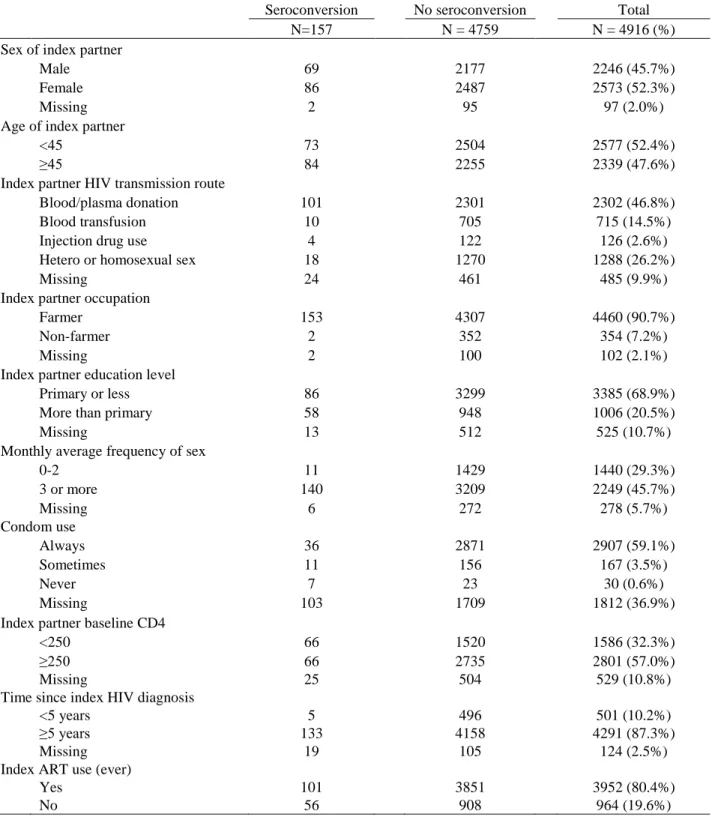
in the final analysis ...72 Table 4.2. Incidence of HIV seroconversion in non-index partners by key
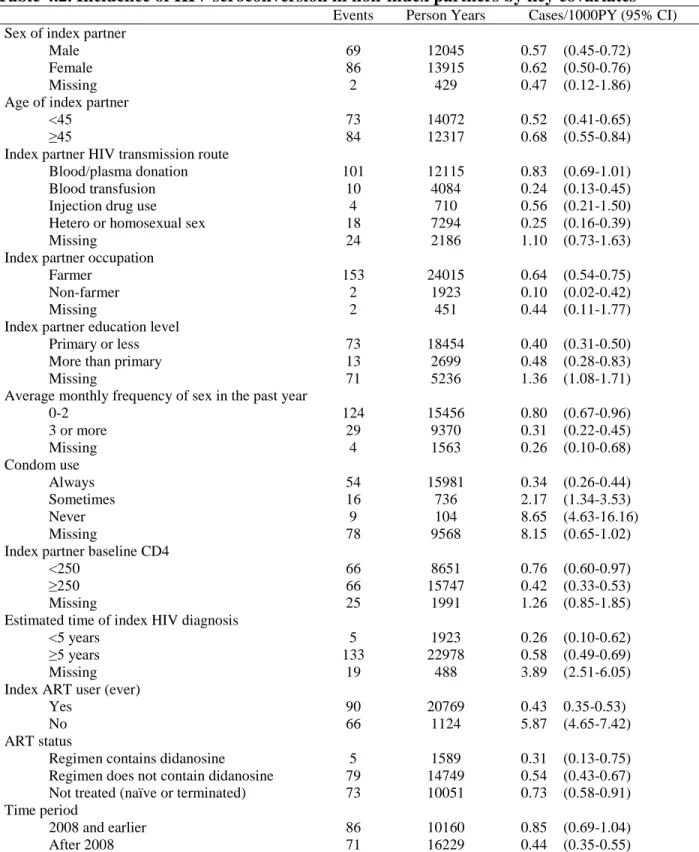
covariates ...73 Table 4.3. Hazard ratios comparing ART exposed and unexposed
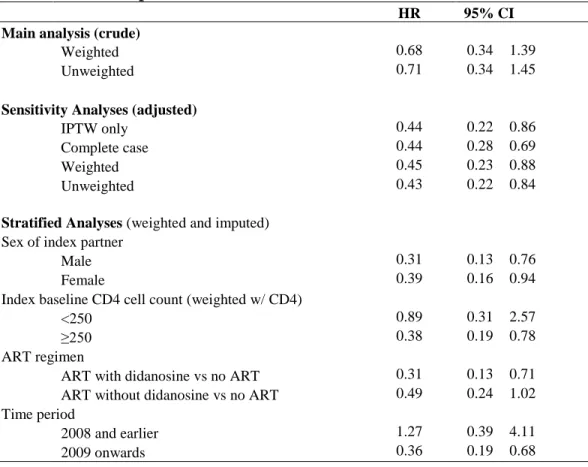
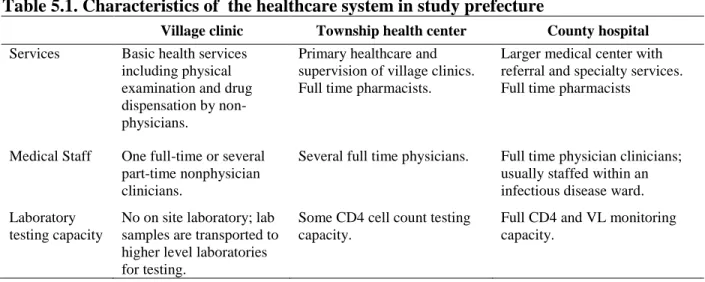
serodiscordant couples ...74 Table 5.1. Characteristics of the healthcare system in study prefecture ... 92 Table 5.2. Characteristics of each tier of HIV care centers in the study prefecture ... 93 Table 5.3. Characteristics of the 3939 HIV serodiscordant couples included in
the final analysis ...94 Table 5.4. Hazard ratios comparing HIV transmission risk in serodiscordant
couples by distance to, and patient load of, HIV care center ...95 Table 5.5. Mean time to HIV transmission among serodiscordant couples ... 96 Table 6.1. Review of serodiscordant couple studies on treatment as prevention
ix
LIST OF FIGURES
Figure 3.1: Map of study prefecture……….……….55 Figure 3.2: New User Design………56
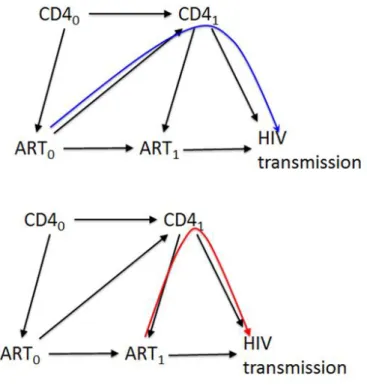
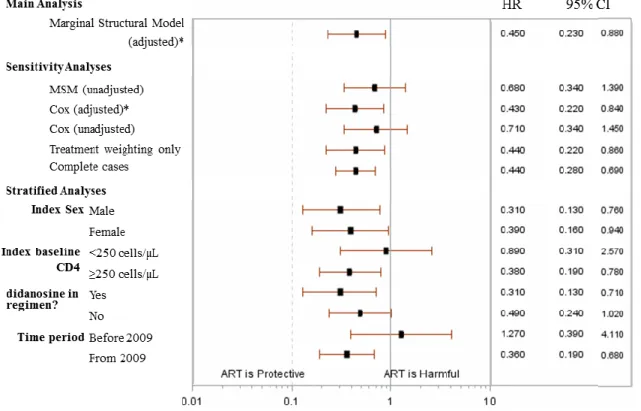
Figure 3.3: Theoretical causal graph demonstrating time-varying confounding………..57 Figure 4.1: Hazard ratios and 95% confidence intervals for effect of ART on
HIV transmission ………..………..72 Figure 4.2: Weighted Kaplan Meir survival curves………...74
Figure 5.1: Distribution of HIV care centers and median distance by county in study
x
LIST OF ABBREVIATIONS
AIDS Acquired Immune Deficiency Syndrome CI Confidence Interval
HIV Human Immunodeficiency Virus HR Hazard Ratio
11
CHAPTER 1: SPECIFIC AIMS
Antiretroviral therapy (ART) administered in clinical trial settings can effectively reduce heterosexual HIV transmission risk by suppressing the amount of virus in the blood and genital tract of the infected partner.1 Whether or not this effect can be achieved in the real world is a matter of debate. Critics argue that the requirements of durable and reliable viral suppression— optimal drug regimens, routine lab monitoring, timely treatment of other infections, etc.— make this strategy unrealistic for immediate use in resource constrained settings.2–4 Supporters
maintain that the preventive benefit of ART in the real world is already reflected in patterns of transmission at the population level5 and in the experiences of several cohorts of heterosexual couples where only one partner is HIV infected (known as “serodiscordant couples”).[Muessig, in press] Though most such studies confirm the promise of ART as a prevention tool, these reports of serodiscordant couples from China and Uganda found no statistically significant difference in transmission rates between treated and untreated couples followed from 2006 to 2008, weakening the central tenet of the treatment as prevention strategy.6 Follow-up of the Chinese cohort has been ongoing, and an analysis of data from 2008 and 2011 found that ART was instead protective against transmission,7 raising further questions about the relationship between ART exposure and HIV transmission in non-trial settings.
Unlike most of the other studies reporting protective effects of ART, the Chinese patients were not managed under special conditions but were rather recipients of routine medical care. Decentralization of HIV treatment to community health centers has been crucial to China’s rapid
12
outcomes across local care settings. Receiving primary care at village level clinics (as opposed to at a town or county healthcare centers) was recently found to be predictive of virological failure in a random sample of rural HIV patients in China, as was exposure to ART regimens containing the antiviral agent didonosine.9 Additionally, members of the original Chinese couples cohort participating in recent qualitative interviews reported widely different experiences regarding availability and accessibility and quality of HIV care. A successful treatment as prevention program will require that ART delivered under real-world conditions like rural China provides adequate viral suppression for its use as a prevention tool. The Chinese leadership has already demonstrated initiative in using treatment to prevent HIV, underscoring the importance of understanding why ART failed to provide consistent protection against HIV transmission in this cohort.
We hypothesized that ART can reduce risk of HIV transmission, and that its efficacy may vary across key factors such as choice of antiviral agents or characteristics of the HIV care delivery model. To test this hypothesis, we investigated how these factors may have shaped the efficacy of ART on HIV transmission risk in the Chinese cohort by 1) refining our exposure variable to incorporate information on the specific agents and patterns of antiviral use and 2) developing new variables to measure characteristics of patients’ designated HIV care centers. By accounting for systems-level features and by using the entire observation period (2006-2012), this analysis provides a more comprehensive picture of ART efficacy on HIV prevention in rural China. Specifically we proposed to:
13
to build a comprehensive database from which to estimate the effect of ART on HIV transmission over the entire observation period. We validated outcomes in the national epidemiology database and exposures in the national HIV treatment database.
Aim 2. Determine the impact of a) distance to index partners’ designated HIV care center, and of b) the patient volume at each HIV care center, on the preventive effect of ART on HIV transmission. We used geospatial methods to measure the travel distance between patients’ homes and their designated HIV care center, and assessed patient load per clinician to
examine their impact on the protectiveness of ART against sexual HIV transmission.
This dissertation improves upon the existing understanding of the efficacy of ART for HIV prevention outside of trial settings, and features of healthcare systems in resource
14 References
1. Cohen MS, Chen YQ, McCauley M, et al. Prevention of HIV-1 Infection with Early Antiretroviral Therapy. N Engl J Med. 2011;365(6):493-505.
2. Wilson DP. Data are lacking for quantifying HIV transmission risk in the presence of effective antiretroviral therapy. AIDS. 2009;23(11):1431-3.
3. Calmy A, Klement E, Teck R, Berman D, Pécoul B, Ferradini L. Simplifying and adapting antiretroviral treatment in resource-poor settings: a necessary step to scaling-up. AIDS. 2004;18(18):2353-60.
4. Vitoria M, Vella S, Ford N. Scaling up antiretroviral therapy in resource-limited settings: adapting guidance to meet the challenges. Curr Opin HIV AIDS. 2013;8(1):12-8.
5. Smith MK, Powers KA, Kashuba ADM, Cohen MS. HIV-1 treatment as prevention: the good, the bad, and the challenges. Curr Opin HIV. 2011;6(4):315-325.
6. Wang L, Ge Z, Jing L, et al. HIV transmission risk among serodiscordant couples: a retrospective study of former plasma donors in Henan, China. J Acquir Immune Defic Syndr. 2010;55(2):232-238.
7. Wang L, Smith MK, Li L, et al. Heterosexual transmission of HIV and related risk factors among serodiscordant couples in Henan province, China. Chin Med J (Engl).
2013;126(19):3694-3700.
8. Zhang F, Haberer J, Wang Y, et al. The Chinese free antiretroviral treatment program: challenges and responses. AIDS. 2007;21 Suppl 8:S143-8.
15
CHAPTER 2: BACKGROUND Significance
The concept of using ART to reduce infectiousness of HIV infected individuals is based on over two decades of clinical and epidemiological research.1 Early intuition about the
importance of viral suppression to prevent HIV transmission2 and results of early randomized control trials (RCT) showing that ART could stop mother-to-child transmission3 provided a theoretical foundation for the use of ART for HIV prevention. Risk of sexual HIV transmission has been most closely linked with HIV RNA concentrations in the blood,4–6 which is a relatively reliable proxy for viral concentrations in the genital tract.7,8 ART for prevention of sexual HIV transmission hinges on the ability of antiretroviral agents to penetrate the male and female genital tracts9,10 and reduce viral shedding in these compartments. Treatment with ART can reduce (though not always eliminate11) HIV shedding in cervicovaginal secretions12,13 and semen,14,15 but factors such as co-occurring STIs,16 drug resistant viral variants in the genital tract,17,18 or choice of antiretroviral agent19 have all been associated with higher viral quantities in the genital tract of ART treated individuals.
This body of research provides convincing evidence of the plausibility of using ART to control the amount of virus shed in the genital tract of treated individuals. Understanding the true implications of suppressive ART for prevention of sexual transmission, however, requires
16 modeling studies) and in HIV serodiscordant couples.
Ecological studies
Analysis of changes in regional HIV epidemics in the presence of ART have been used to assess whether a treatment as prevention policy—generally described as frequent universal testing coupled with ART initiation immediately following diagnosis, and high degrees of viral suppressions for treated individuals20—could be expected to slow population level HIV
transmission. These studies take advantage of “natural experiments” found in settings like San
Francisco or British Columbia (Table 1), where existing HIV control strategies have already achieved testing and treatment coverage rates to which future treatment as prevention strategies aspire. By examining the association between changes in ecological measures of population level infectiousness and HIV transmission in the community, these analyses can provide some
understanding of the potential of a concerted treatment as prevention strategy.
Methodological limitations of these analyses, however, demand caution in interpretation of results.21 First, associations between ecological measures can detect relationships only at the group level and lack the person-level details necessary for testing etiological hypotheses.22,23 Moreover statistical associations do not show causation, and observed trends could be due to factors other than population level suppression due to ART. Rising incidence in the very communities where a treatment as prevention strategy would be expected to be the most
17
riskier modes like anal sex or needle sharing.28–30 Though some of these trends are widely acknowledged, only one of the reports described below formally controls for it in a regression model.31 Conversely, some of the studies attribute observed declines in HIV incidence, particularly among people who inject drugs, to widespread ART uptake, without
acknowledgement of the role that other programs like safe injection sites or needle exchange may have played in the observed trends.26 Though any of these competing theories can provide plausible explanation for the lack of effect observed in some communities, the lack of data on these factors limits our ability to assess their impact on the associations of interest.
All but two of the above studies25,32 arrive at the same conclusion that increased population exposure to ART leads to lower HIV transmission. Although ecological studies can play an important role in the development of new HIV prevention strategies, they are methodologically limited to building justification of further formal scientific inquiry into population-level effects of the potential policies in question. They are therefore the first of many steps in the path from science to policy.
Mathematical models
Mathematical models have been used to quantify and project dynamics of HIV epidemics in the presence of ART. In the absence of empirical data, mathematical modeling can be a powerful tool to inform public health decisions by calculating intervention impact,
cost-effectiveness, or resource allocation. However, these models are bounded by many assumptions. We are aware of over 30 separate mathematical models that have been used to quantify and predict the population level impact of ART on HIV transmission, summarized in several
18
evidence that rapid ART scale-up could dramatically reduce37–45—or even eliminate46—sexual HIV transmission, model plausibility can sometimes be a function of its ability to account for myriad contextual factors expected to affect program outcomes. More sophisticated models have accounted for factors such as changes in sexual behavior in response to treatment;47–55 sexual network patterns,52,56 sub-optimal ART efficacy from inadequate coverage, adherence, or efficacy;57–59 drug resistant HIV strains;40,60 differential infectiousness according to disease stage;50,61,62 and the limitations of suppressive ART provision in resource poor settings.56,61,63 Predictably, the results of these models have been less optimistic.
Wide variation in model results can be attributed to the heterogeneity across model complexity as well as the diversity of the underlying assumptions fed into them. An informed tradeoff between simplicity and plausibility is central to effective application of their results; exceedingly complex models have limited generalizability and interpretability, but predictions generated by overly simplistic ones may be less informative. Harmonization across model choice and inputs is a central goal of modeling teams like the HIV Modeling Consortium at the Imperial College and South Africa Center for Epidemiological Modeling and Analysis, in order to build consensus on the fundamental elements of a successful treatment as prevention program.
HIV Serodiscordant Couples Studies
19
protective effect of ART on transmission is possible (Table 2).
However the complexity of this research design faces several barriers to valid estimation of true transmission risk. For one, investigators cannot exclude the possibility that infections observed in non-index partners are acquired outside the partnership, which past research has found to be the case in up to 30% of observed events.64,65 Sophisticated techniques of molecular virology to verify linkage between viral sequences of both partners can validate outcomes, but may be beyond the budget or technological capacity of many research teams. Second, cohorts may over-represent less vulnerable couples that are able to sustain discordancy far longer than those couples with “high and fast transmitters”66
that become concordant before having an opportunity to enroll in such studies. Oversampling of less infective index cases or less
susceptible partners may lead to underestimation of transmission risk.67 Finally, results of these all of these studies are only generalizable to individuals in stable heterosexual relationships, though several large scale trials among male homosexual couples68,69 and injection drug users70 are underway to close this information gap.
These concerns notwithstanding, evidence from these studies form compelling evidence that ART may prevent HIV transmission. First among them is the HPTN 052 trial whose findings that early ART reduces HIV transmission risk by 96% provides “gold standard” evidence of ART’s protective effect.10
20
effect of treatment against sexual transmission. Meta-findings of these studies are summarized in two recent reports.67,81
The results of the both studies which reported no protective effect of ART both arise from analyses of the experiences of serodiscordant couples in resource poor areas of Uganda79 and rural China.80 Debate on these findings have revolved around the utility of findings from rural settings that commonly lack routine viral load testing and where reliable ART delivery is limited by fundamental resource constraints.82,83 Though more details from the Ugandan cohort are forthcoming, ongoing follow-up of the Chinese couples cohort—hereafter the “Henan couples,” for the name of the study prefecture—have found that between 2008 and 2011, ART was instead highly protective against transmission,84 raising further questions about the relationship between ART and HIV transmission in non-trial settings. Closer examination of these seemingly
conflicting results from the Zhumadian cohort is the subject of this dissertation.
Treatment as Prevention in the Real World
21
Chinese patients were less able to durably suppress their viral levels and prevent transmitting to their partners may be less surprising than useful for highlighting important gaps between clinical science and the real world.
The Henan couples present a scientifically compelling opportunity to assess the efficacy of ART for prevention in such settings because of the lack of other HIV risks that might
otherwise undermine outcome assessment. As a rural district in a socially conservative rural community, divorce or marital separation are uncommon, and multiple sexual partnerships are thought to be less common than in urban areas.87 Prevalence of other risk factors driving HIV infection in the non-index partner including injection drug use, male sex with other men, or sex with commercial sex workers are also low in Henan as compared to other regions in China.88 Government crackdowns in the late 1990’s also eliminated the practice of unregulated blood collection common in the early 1990’s, which was responsible for much of the primary HIV
infection in this population.89
22
effect expanded testing and treatment in sex workers, homosexual men, and heterosexual
serodiscordant couples.90,91 Findings from the research proposed here can therefore play a timely and critical role in ensuring that China’s future treatment as prevention programs can effectively
be carried out in the real world.
Predictors of Virological Failure in Former Plasma Donors
Despite its early denial about the HIV epidemic, since 2001 the Chinese government has
taken decisive steps to address its HIV problem, most notably through the launch of a national
free treatment program to subsidize ART for all eligible patients.92 The program is widely noted
both for its scale – about 78.5% of the estimated population of eligible patients are currently on
treatment88 – as well as its success – mortality rates among treated patients have fallen from 39.3
to 14.2 deaths per 100 person years through 2009.93
With expanded ART access, however, has also come an inevitable rise in population level rise of drug resistance. The rapid pace of program scale-up, and evolving guidelines that expanded the size of China’s treatment eligible population—the minimum threshold for initiation
rose from 200 to 350 CD4 cells/µL in 200894—has meant that program coverage outpaced the program ability to deliver high quality service across the system. Care providers in resource poor rural areas also receive very little specialized training in AIDS care,95 and care seeking behavior is often hampered by fear of stigmatization from the community96 or even providers
themselves.97 Laboratory resources are also few, in 2011 only 30% of treated HIV patients had received a viral load test in the last year.93 Suboptimal regimens and few resources for adherence counseling have contributed to rising prevalence of drug resistant strains in China—some
23
therapeutic outcomes and risk of transmission to sexual partners of these unsuppressed individuals.
Heterogeneity in treatment outcomes across demographic, geographical, and HIV risk factor subgroups suggest that treatment environment plays an important role in suppressive ART. In terms of treatment response, former plasma donors fare better than most other HIV infected sub-populations, but their risk of virological failure is nevertheless high, and has been associated with factors including lack of adherence counseling99 tier of HIV are setting,100 and exposure to certain antiviral agents .95
Innovation
A great deal of interest drives HIV research to close the gap between clinical science and effective HIV prevention in the real world. Several large scale community randomized trials for treatment as prevention are underway to provide foundations of evidence for implementation of treatment as prevention policy.101 Such studies are costly and slow moving, however, and in the meantime thoughtful use of observational data to examine ongoing effects in the community, may help close some key gaps in our understanding. Antiretrovirals and other HIV care services provided through China’s free program also provide a realistic representation of conditions in
which many global populations without routine ART access may experience with program roll-out. In these ways, experiences of these couples may not only inform prevention potential of ART for couples in other parts of China, but also for those in other developing countries.
24
acceptable retention rates for such a low-cost study (over 78% over the entire observation period), all strengthen validity of estimates from this cohort. Rigorous surveillance of the epidemic by local health authorities has also generated a rich database of clinical outcomes in treated individuals as well as results from routine screenings of their uninfected partners.
Primary methodological innovations of this study include measurement of ART as a time-varying variable and the use of marginal structural models to control for time varying confounding with the use of treatment and censoring weights. A secondary innovation is the use of existing geospatial data to calculate distances from patients’ homes to their primary HIV care
centers as a proxy for healthcare access.
Finally, this study also proposes an innovative and international partnership between HIV researchers in the US and China. The international collaboration between experts at the
University of North Carolina Chapel Hill and the National Center for STD/AIDS in Beijing are conducted in the spirit of efforts by both sides to collaborate on large-scale research projects on health sciences, particularly in the field of HIV and STDs.
Preliminary Studies
Four past investigations of ART efficacy against HIV transmission have been conducted in this same study population, findings from which have all shaped this dissertation.
Phylogenetic Linkage of HIV Transmission Events
The first was a pilot study of phylogenetic linkage analysis of transmission events
25
2006 and 2008. Amplification of any target sequence (gag, pol, or env) had a success rate of 67%, but success of amplification for all three sequences was only 40.%. After aligning gag region sequences with reference sequences from the Chinese National AIDS Reference Laboratory,
using Multiple alignment program for amino acid or nucleotide sequences software (MAFFT 6.0;
http://mafft.cbrc.jp/alignment/software/), distances between sequences were calculated with
Molecular Evolutionary Genetics Analysis (MEGA 5.05) using the Kimura 2-parameter model,
and neighbor joining phylogenetic trees with bootstrap support were inferred using
neighbor-joining and consensus methods.
Results of the neighbor joining and maximum likelihood phylogenetic trees (Appendix 1)
were visually inspected for partners who were grouped together on a mono-phyletic branch with
a high bootstrap value (>80). According to these criteria, four out of six (4/6) of the Henan
couples were linked. Given the small sample size, the fact that we could only consider only a
single gene (gag), and the lack of information about sample collection dates, meaningful interpretation of these results was not possible. Nor was a larger scale project using stored
samples from Henan considered logistically feasible logistical challenges of phylogenetic
analyses. Validation of the outcome for this dissertation was therefore limited to evidence from
self-reported epidemiological data.
The Henan Couples: Studies 1 and 2
Two past analyses have analyzed the efficacy of ART on HIV transmission in the same population of HIV serodiscordant couples in Henan. The first analysis, “Study 1,” analyzed data
26
regimens, and exposure misclassification as possible explanations. Using the same methods, Study 2 found instead found that ART was highly protective against HIV transmissions in these same couples.
Divergent results between the two studies may have ben due to differences in sample selection and methods of effect measure estimation. Regarding sample selection, Study 1 used only 35% of eligible couples who were available for analysis in 2008, possibly due to time constraints imposed by the one-time addition of 29 extra survey questions used to assess patient quality of life. Study 2 only analyzed data from the 2007 onwards and largely relied on data collected after the establishment of the web-based reporting system in 2008. It therefore theoretically reflects the experiences of the same couples as in Study 1; however, no formal linkage to records from Study 1 was made.
Choice of statistical model and exposure assessment may have been inadequate for controlling several sources of bias. Traditional multivariate Cox models adjusted for CD4 and viral load which appropriately adjusts for confounding at baseline but which fails to address time varying confounding. In addition, ART exposure was measured as a time fixed “ever vs. never” exposure which may severely misclassify exposure status of couples who initiated ART later in the observation period.
Methods used for this dissertation were chosen expressly chosen for the purpose of addressing these analytical shortcomings.
Qualitative Sub-study on Facilitators and Barriers to HIV Care
27
patients and providers from the study prefecture in Henan.. Interview guides were designed to identify facilitators and barriers to routine HIV care, which we theorized would affect treated index partners’ ability to sustain virological suppression and therefore reduce risk of HIV transmission his or her sexual partners. Interview guides were developed based on results of a literature review in English and Chinese on barriers to ART adherence in rural or developing country settings. Key informants including experts at the national and local level CDC, as well as experts on qualitative research methods in Chinese settings (Drs Yingying Huang, Gail
Henderson, and Kathryn Muessig), provided input on these materials and guidance on study design, participant sampling schemes, and provided feedback on pilot interviews. Preliminary interview guides (Appendix 2) were pre-tested with two patient volunteers and one physician at the Zhumadian City infectious disease hospital. Participants provided verbal consent to have their interviews recorded, transcribed, and reviewed by study staff to assess interview quality and to inform future methods. Pilot interview content was reviewed and discussed by the study team to edit the interview guide for improved flow, culturally appropriate phrasing, and possible probing questions for key content areas. The content of pilot interviews was not directly included in the analysis.
For the full study, HIV infected participants of the annual serodiscordant couple survey who had ever received ART were approached through primary HIV/AIDS care clinician (patients) by research staff to gauge interest in participating in in-depth, semi-structured
28
interviews in closed, unmarked clinic examination rooms, conducted in Mandarin Chinese and audio recorded unless otherwise specified (two participants declined audio recordings, for which notes were taken). Interviews for patients addressed participants’ experiences with routine care seeking for HIV related medical needs, barriers and facilitators to ART adherence, and attitudes and opinions about preventing HIV transmission to sexual partners. Providers were asked about their own barriers or facilitators to helping their HIV patients sustain viral suppression, including their own attitudes towards HIV, personal experiences with stigma, and perceptions of
institutional support for their work. In accordance with locally acceptable practices, participants were compensated with a 33ML bottle of cooking oil valued at about 70RMB (about 11USD) for their time and effort. Sampling was designed to maximize representativeness of patient and physician experiences from both high and low HIV prevalence settings. 15 patients and 4 providers were interviews in two high prevalence counties, and 9 patients and 5 providers were selected from a low prevalence county. Transcribed and translated recordings of interviews as well as interview notes were reviewed to generate a set of general impressions and preliminary coding notes. These were summarized into two major themes, described below.
The first theme was that of clinic resources available to HIV patients at their designated HIV care centers. This theme emerged through direct observation over the course of multiple site visits to HIV care centers across the study prefecture. Free ART and HIV care in rural areas of China is delivered through the existing three-tiered healthcare system made up of village clinics, township healthcare centers, and county hospitals. County-level health authorities described to us how they adapted this system to meet the needs of HIV patients by identifying subsets of
29
are provided electronic access to the national ART and HIV surveillance databases for direct data reporting. Antiretroviral drugs and HIV care is free to patients only at his or her designated HIV care center, with more severe cases referred up to higher tiers of care. Those who opt for HIV care outside of this referral chain must bear all medical costs themselves. According to county health officials, the decision of which specific healthcare clinics will specialize in HIV care is based on the geographic distribution of HIV patients in each county. Although all HIV care centers theoretically have the same basic capacity, we observed stark differences across tiers of care in terms of factors such as the overall level of medical training among clinic staff, and in-house laboratory testing capacity. The availability of HIV related resources and services therefore varied widely depending on whether the designated HIV care center was a village, township, or county-tier healthcare centers.
The second theme regarding travel distance to patients’ designated HIV care centers, emerged through the course of in-depth interviews. Patients living in the same village as their designated HIV care center described the convenience of being able to walk to collect their prescriptions or to receive treatment and care for acute events. By contrast, those living farther from their designated HIV care centers described longer travel distances as a hindrance for accessing routine and emergency care, particularly if arrangements such as child care or transportation had to be made. Patients who received HIV care locally also described their providers as members of their own social community, whereas those receiving care at higher tier centers described feeling more anonymous to their providers.
30
31
Tables & Figures
Table 2.1. Summary of ecological studies
Author (year)
Study Location
Exposure: population level infectiousness
Outcome: HIV transmission
Assessment Measure Assessment Measure Katz M et
al. (2002)25 San Francisco, USA Population in clinical care
Annual prevalence of ART use in HIV infected bi/homosexual men identified in HIV/AIDS registry Convenience sample of bi/homosexu al men
Incidence estimated from 1) HIV testing clinic and 2) STI clinic, using incidence estimation algorithm Wood E et al. (2009)31 Vancouver, Canada Convenience sample of injection drug users Biannual median community viral load
Convenience sample of injection drug users
Annual testing in a cohort of HIV negative injection drug users Castel AD et al. (2011)32 Washington D.C., USA Population in clinical care
Annual mean and total community viral load; portion with
undetectable viral load
Sentinel surveillance
Annual numbers of newly diagnosed cases
Das M et al. (2010)102 San Francisco, USA Population in clinical care
Annual mean and total community viral load
Sentinel surveillance
Annual numbers of newly reported HIV diagnoses; annual incidence from surveillance data using serological testing algorithm Fang C et
al. (2004)103
Taiwan (national)
Time period Time period (pre- versus post-ART period)
Sentinel surveillance
Surveillance data used to calculate average annual HIV transmission rate (new /prevalent cases) Jin F et al.
(2010)104 Sydney, Australia No direct assessment Comparisons to previously reported portions of treated homosexual men in with undetectable VL
Convenience sample of homosexual men
Per-contact probability of transmission in
bi/homosexual men
Law M et al. (2011)105 Australia (national) Population in clinical care
Annual portion of treated patients with undetectable VL
No direct assessment
Reference to previous publication describing HIV incidence trends during same period Montaner
J et al. (2010)106 British Columbia, Canada Population in clinical care
Annual numbers of HIV patients receiving HAART; annual mean community viral load
Sentinel surveillance
New HIV positive tests per 100 population
Porco et al. (2004)107 San Francisco, USA Probability sample of bi/homosexual men Predicted per-contact infectivity based during the pre- and post-ART period
Probability sample of homosexual men
Annual testing in a cohort of HIV negative
bi/homosexual men Tanser F et al (2013)108 KwaZulu-Natal, S Africa Population based cohort
Population level ART coverage rates
Population based cohort
Results of
32 Table 2.2. Studies of HIV serodiscordant couples
Author (Year)
No of couples
Study design & population Trans-mission in treated couples Trans-mission in untreated couples Conclusions Birungi Jel al. (2012)79 586
Prospective cohort of clients of an AIDS support organization and their negative partners
9/352 8/234
ART was not associated with reduced risk of HIV transmission in serodiscordant couples in a rural program in Uganda without viral load testing.
Castilla J et al. (2005)71
393
Retrospective study of HIV clinic patients and their seronegative partners
2/80 27/313
Combined ART according to current guidelines have a great potential for preventing HIV transmission to sexual partners.
Cohen M et al, (2011)10 1763 Serodiscordant couples prospectively enrolled in randomized control trial to compare early vs delayed ART
1/866 27/877a
Early ART was associated with 96% reduction in risk of HIV transmission as compared to regular ART. del Romero J et al. (2010)75 625
Prospective study of couples recruited through HIV+ patients at an HIV/STI clinic
0/191b 5/341
Heterosexual infectivity of HIV-1 I individuals taking effective antiretroviral treatment is low.
Donnell et al. (2010)109
3381
Prospective study of HIV+ and HSV+ individuals and their HIV- partners from the Partners in Prevention HSV/HIV Transmission Study
1/349 c 102/3032c
Molecular virology to established linked transmissions. Provision of ART to HIV-1 infected patients could be an effective strategy to achieve population-level reductions in HIV-1 transmission.
Jia Z et al. (2012)72
38862
Retrospective analysis of all HIV infected individuals identified in the national
surveillance database who have negative partners
0/112 5/227
Transmission risk reduced 35% in the first year of treatment, an effect which becomes non-significant after the fourth year of treatment.
Melo M et al. (2008)76
93
Prospective study of HIV clinic patients and their seronegative partners
0/41 6/52
Transmitters showed significantly higher median viral loads, suggesting that heterosexual transmission of HIV is more a function of viral load than gender of index case. ART use may play a role in the prevention of HIV-1 heterosexual transmission.
Mussico et al. (1994)73
436
Retrospective study of HIV+ clinic and HIV surveillance center clients and their seronegative partners
6/64 6/52
ART in HIV-1 infected men reduces, but does not eliminate, heterosexual transmission of infection.
Reynolds et al. (2010)74
250
Retrospective study of serodiscordant couples offered free ART if eligible
0/32 42/218
33 Sullivan
et al. (2010)77
2993
Prospective cohort of serodiscordant couples initiated on ART if eligible
4/808 b 264/2125
ART was associated with a 94% reduction in transmission; ART initiation is a critical component of a package of biomedical and behavioral prevention services.
Wang et al. (2010)80
1927
Retrospective analysis of former plasma donors and their seronegative spouses
18/540 66/1303
Transition events occurred with equal frequency in couples regardless of whether the partner was provided ART.
Wang et al. (2013)84
4499
Prospective cohort of former plasma donors and their seronegative spouses
77/3505 23/583
Trends in declining HIV incidence over time was significantly associated with ART in the index partner.
Watera et al. (2009)78
138
Prospective cohort of couples identified at HIV testing center
0/45 3/93
ART seems to be associated with a particularly low risk of HIV transmission.
34 References
1. Cohen MS, Gay C. Treatment to Prevent Transmission of HIV-1. Clin Infect Dis. 2010;50(s3):S85-S95.
2. Henry K, Chinnock B, Quinn R, Fletcher C, Miranda P, Balfour H. Concurrent zidovudine levels in semen and serum determined by radioimmunoassay in patients with AIDS or AIDS-related complex. JAMA. 1988;259(20):3023-3026.
3. Siegfried N, Merwe L, Brocklehurst P, Sint T. Antiretrovirals for reducing the risk of mother-to-child transmission of HIV infection. Cochrane Database Syst Rev.
2011;(7):CD003510.
4. Quinn TC, Wawer M, Sewankambo N, et al. Viral load and heterosexual transmission of human immunodeficiency virus type 1. Rakai Project Study Group. N Engl J Med. 2000;342(13):921-929.
5. Fideli US, Allen S, Musonda R, et al. Virologic and immunologic determinants of heterosexual transmission of human immunodeficiency virus type 1 in Africa. AIDS Res Hum Retroviruses. 2001;17(10):901-910.
6. Tovanabutra S, Robison V, Wongtrakul J, et al. Male viral load and heterosexual transmission of HIV-1 subtype E in northern Thailand. J Acquir Immune Defic Syndr. 2002;29(3):275-283.
7. Kalichman S, Berto G, Eaton L. Human Immunodeficiency Virus Viral Load in Blood Plasma and Semen: Review and Implications of Empirical Findings. Sex Transm Dis. 2008;35(1):55-60.
8. Coombs R, Reichelderfer P, Landay A. Recent observations on HIV type-1 infection in the genital tract of men and women. AIDS. 2003;17(4):455-480.
9. Taylor S, Pereira A. Antiretroviral drug concentrations in semen of HIV-1 infected men. Sex Transm Infect. 2001;77(1):4-11.
10. Cohen MS, Chen YQ, McCauley M, et al. Prevention of HIV-1 Infection with Early Antiretroviral Therapy. N Engl J Med. 2011;365(6):493-505.
11. Coombs R, Speck C, Hughes J, et al. Association between culturable human
immunodeficiency virus type 1 (HIV-1) in semen and HIV-1 RNA levels in semen and blood: evidence for compartmentalization of HIV-1 between semen and blood. J Infect Dis. 1998;177(2):320-330.
35
13. Cu-Uvin S, Caliendo A, Reinert S, et al. Effect of highly active antiretroviral therapy on cervicovaginal HIV-1 RNA. AIDS. 2000;14(4):415.
14. Vernazza P, Troiani L, Flepp M, et al. Potent antiretroviral treatment of HIV-infection results in suppression of the seminal shedding of HIV. The Swiss HIV Cohort Study. AIDS. 2000;14(2):117-121.
15. Gupta P, Mellors J, Kingsley L, et al. High viral load in semen of human
immunodeficiency virus type 1-infected men at all stages of disease and its reduction by therapy with protease and nonnucleoside reverse transcriptase inhibitors. J Virol.
1997;71(8):6271-6275.
16. Sadiq S, Taylor S, Kaye S, et al. The effects of antiretroviral therapy on HIV-1 RNA loads in seminal plasma in HIV-positive patients with and without urethritis. AIDS.
2002;16(2):219-225.
17. Eron J, Vernazza P, Johnston D, et al. Resistance of HIV-1 to antiretroviral agents in blood and seminal plasma: implications for transmission. AIDS. 1998;12(15):F181-9. 18. Si-Mohamed A, Kazatchkine M, Heard I, et al. Selection of drug-resistant variants in the
female genital tract of human immunodeficiency virus type 1-infected women receiving antiretroviral therapy. J Infect Dis. 2000;182(1):112-122.
19. Pereira A, Smeaton L, Gerber J, et al. The Pharmacokinetics of Amprenavir, Zidovudine, and Lamivudine in the Genital Tracts of Men Infected with Human Immunodeficiency Virus Type 1 (AIDS Clinical Trials Group Study 850). J Infect Dis. 2002;186(2):198-204. 20. Wilson DP. HIV Treatment as Prevention: Natural Experiments Highlight Limits of
Antiretroviral Treatment as HIV Prevention. PLoS Med. 2012;9(7):e1001231.
21. Smith MK, Powers KA, Miller WC, Muessig KE, Cohen MS, Miller M. HIV Treatment as Prevention: The Utility and Limitations of Ecological Observation. PLoS Med. 2012;9(7):e1001260.
22. Piantadosi S, Byar D, Green S. The ecological fallacy. Am J Epidemiol. 1988;127(5):893-904.
23. Morgenstern H. Ecologic studies in epidemiology: concepts, principles, and methods. Annu Rev Public Health. 1995;16:61-81.
36
25. Katz M, Schwarcz S, Kellogg T, et al. Impact of highly active antiretroviral treatment on HIV seroincidence among men who have sex with men: San Francisco. Am J Public Health. 2002;92(3):388-394.
26. Grulich A, Wilson DP. Is antiretroviral therapy modifying the HIV epidemic? Lancet. 2010;376(9755):1824-author reply 1825.
27. Shelton J, Halperin D, Wilson DP. Has global HIV incidence peaked? Lancet. 2006;367(9517):1120-1122.
28. Muessig KE, Powers KA, Lo Y-RR, et al. Does ART prevent HIV transmission among MSM? AIDS. 2012;26(18):2267-73.
29. Wilson DP. Evidence is still required for treatment as prevention for riskier routes of HIV transmission. AIDS. 2010;24(18).
30. Kelley C, Haaland R, Patel P, et al. HIV-1 RNA Rectal Shedding Is Reduced in Men With Low Plasma HIV-1 RNA Viral Loads and Is Not Enhanced by Sexually Transmitted Bacterial Infections of the Rectum. J Infect Dis. 2011;204:761-7.
31. Wood E, Kerr T, Marshall B, et al. Longitudinal community plasma HIV-1 RNA concentrations and incidence of HIV-1 among injecting drug users: prospective cohort study. BMJ. 2009;338:b1649.
32. Castel A, Befus M, Willis S, et al. Use of the community viral load as a population-based biomarker of HIV burden. AIDS. 2012;26(3):345-353.
33. Blower S, Bodine E, Kahn J, McFarland W. The antiretroviral rollout and drug-resistant HIV in Africa: insights from empirical data and theoretical models. AIDS. 2005;19(1):1-14.
34. Baggaley R, Ferguson N, Garnett G. The epidemiological impact of antiretroviral use predicted by mathematical models: a review. Emerg Themes Epidemiol. 2005;2:9.
35. Cambiano V, Phillips A. Modelling the impact of treatment with individual antiretrovirals. Curr Opin HIV AIDS. 2011;6(2):124-130.
36. Eaton J, Johnson L, Salomon J, et al. HIV treatment as prevention: systematic comparison of mathematical models of the potential impact of antiretroviral therapy on HIV incidence in South Africa. PLoS Med. 2012;9(7):e1001245.
37
38. Lima V, Johnston K, Hogg R, et al. Expanded access to highly active antiretroviral therapy: a potentially powerful strategy to curb the growth of the HIV epidemic. J Infect Dis. 2008;198(1):59-67.
39. Charlebois E, Das M, Porco T, Havlir D. The Effect of Expanded Antiretroviral Treatment Strategies on the HIV Epidemic Among Men Who Have Sex With Men in San Francisco. Clin Infect Dis. 2011;52(8):1046-1049.
40. Blower S, Gershengorn H, Grant R. A tale of two futures: HIV and antiretroviral therapy in San Francisco. Science. 2000;287(5453):650-654.
41. Heymer K-J, Wilson DP. Treatment for prevention of HIV transmission in a localised epidemic: the case for South Australia. Sex Heal. 2011;8(3):280-294.
42. Dangerfield B, Fang Y, Roberts C. Model-based scenarios for the epidemiology of HIV/AIDS: the consequences of highly active antiretroviral therapy. Syst Dyn Rev. 2001;17(2):119-150.
43. Auvert B, Males S, Puren A, Taljaard D, Caraël M, Williams B. Can highly active
antiretroviral therapy reduce the spread of HIV?: A study in a township of South Africa. J Acquir Immune Defic Syndr. 2004;36(1):613-621.
44. Salomon J, Hogan D. Evaluating the impact of antiretroviral therapy on HIV transmission. AIDS. 2008;22 Suppl 1:S149-59.
45. Salomon J, Hogan D, Stover J, et al. Integrating HIV prevention and treatment: from slogans to impact. PLoS Med. 2005;2(1):e16.
46. Granich R, Gilks C, Dye C, Cock K, Williams B. Universal voluntary HIV testing and immediate antiretroviral therapy--author’s reply. Lancet. 2009;373(9657):48-57. 47. Law M, Prestage G, Grulich A, Ven P, Kippax S. Modelling the effect of combination
antiretroviral treatments on HIV incidence. AIDS. 2001;15(10):1287.
48. Long E, Brandeau M, Owens D. The cost-effectiveness and population outcomes of expanded HIV screening and antiretroviral treatment in the United States. Ann Intern Med. 2010;153(12):778-789.
49. Law M, Prestage G, Grulich A, Ven P, Kippax S. Modelling HIV incidence in gay men: increased treatment, unsafe sex and sexually transmissible infections. AIDS.
2002;16(3):499-501.
50. Xiridou M, Geskus R, Wit J, Coutinho R, Kretzschmar M. Primary HIV infection as
38
51. Xiridou M, Geskus R, Wit J, Coutinho R, Kretzschmar M. The contribution of steady and casual partnerships to the incidence of HIV infection among homosexual men in
Amsterdam. AIDS. 2003;17(7):1029-1038.
52. Boily M-C, Bastos F, Desai K, Mâsse B. Changes in the transmission dynamics of the HIV epidemic after the wide-scale use of antiretroviral therapy could explain increases in sexually transmitted infections: results from mathematical models. Sex Transm Dis. 2004;31(2):100-113.
53. Bezemer D, Wolf F, Boerlijst M, et al. Despite HAART, HIV-1 Is Once again Spreading Epidemically among Men Having Sex with Men in the Netherlands. 14th Conf
Retroviruses Opportunistic Infect. Feb 16-19, 2010; San Francisco, CA. Abstract #151.
54. Wilson DP, Law M, Grulich A, Cooper D, Kaldor J. Relation between HIV viral load and infectiousness: a model-based analysis. Lancet. 2008;372(9635):314-320.
55. Clements M, Prestage G, Grulich A, Ven P, Kippax S, Law M. Modeling trends in HIV incidence among homosexual men in Australia 1995-2006. J Acquir Immune Defic Syndr. 2004;35(4):401-406.
56. Gray R, Li X, Wawer M, et al. Stochastic simulation of the impact of antiretroviral therapy and HIV vaccines on HIV transmission; Rakai, Uganda. AIDS. 2003;17(13):1941-1951.
57. Bendavid E, Brandeau M, Wood R, Owens D. Comparative effectiveness of HIV testing and treatment in highly endemic regions. Arch Intern Med. 2010;170(15):1347-1354. 58. Tchetgen E, Kaplan E, Friedland G. Public health consequences of screening patients for
adherence to highly active antiretroviral therapy. J Acquir Immune Defic Syndr. 2001;26(2):118-129.
59. Walensky R, Paltiel A, Losina E, et al. Test and treat DC: forecasting the impact of a comprehensive HIV strategy in Washington DC. Clin Infect Dis. 2010;51(4):392-400. 60. Blower S, Ma L, Farmer P, Koenig S. Predicting the impact of antiretrovirals in
resource-poor settings: preventing HIV infections whilst controlling drug resistance. Curr Drug Targets Infect Disord. 2003;3(4):345-353.
61. Dodd P, Garnett G, Hallett T. Examining the promise of HIV elimination by “test and treat” in hyperendemic settings. AIDS. 2010;24(5):729-735.
39
63. Baggaley R, Garnett G, Ferguson N. Modelling the impact of antiretroviral use in resource-poor settings. PLoS Med. 2006;3(4):e124.
64. Trask S, Derdeyn C, Fideli U, et al. Molecular epidemiology of human immunodeficiency virus type 1 transmission in a heterosexual cohort of discordant couples in Zambia. J Virol. 2002;76(1):397-405.
65. Wawer M, Gray R, Sewankambo N, et al. Rates of HIV-1 transmission per coital act, by stage of HIV-1 infection, in Rakai, Uganda. J Infect Dis. 2005;191(9):1403-1409. 66. Shiboski S, Padian N. Epidemiologic evidence for time variation in HIV infectivity. J
Acquir Immune Defic Syndr Hum Retrovirol. 1998;19(5):527-535.
67. Baggaley R, White R, Hollingsworth T, Boily M-C. Heterosexual HIV-1 infectiousness and antiretroviral use: systematic review of prospective studies of discordant couples. Epidemiology. 2013;24(1):110-121.
68. Roger A, Bruun T, Cambiano V, et al. HIV transmission risk through condomless sex if HIV+ partner on suppressive ART: Partner Study. In: Conference on Retroviruses and Opportunistic Infections. Boston, MA; 2014.Abstract #153LB.
69. Friend DR, Clark JT, Kiser PF, Clark MR. Multipurpose prevention technologies: products in development. Antiviral Res. 2013;100 Suppl:S39-47.
doi:10.1016/j.antiviral.2013.09.030.
70. Miller WC, Hoffman IF, Burns DN. HPTN 074: Integrated Treatment and Prevention for People Who Inject Drugs: A Vanguard Study for a Network-Based Randomized HIV Prevention Trial Comparing an Integrated Intervention Including Supported Antiretroviral Therapy to the Standard of Care. Available at:
http://www.hptn.org/research_studies/hptn074.asp.
71. Castilla J, Romero J, Hernando V, Marincovich B, García S, Rodríguez C. Effectiveness of highly active antiretroviral therapy in reducing heterosexual transmission of HIV. J Acquir Immune Defic Syndr. 2005;40(1):96-101.
72. Jia Z, Mao Y, Zhang F, et al. Antiretroviral therapy to prevent HIV transmission in serodiscordant couples in China (2003-11): a national observational cohort study. Lancet. 2013;382(9899):1195-203.
73. Musicco M, Lazzarin A, Nicolosi A, et al. Antiretroviral treatment of men infected with human immunodeficiency virus type 1 reduces the incidence of heterosexual transmission. Italian Study Group on HIV Heterosexual Transmission. Arch Intern Med.
40
74. Reynolds S, Makumbi F, Nakigozi G, et al. HIV-1 transmission among HIV-1 discordant couples before and after the introduction of antiretroviral therapy. AIDS. 2011;25(4):473-477.
75. Romero J, Castilla J, Hernando V, Rodríguez C, García S. Combined antiretroviral treatment and heterosexual transmission of HIV-1: cross sectional and prospective cohort study. BMJ. 2010;340:c2205.
76. Melo MG, Santos BR, Cassia Lira R, et al. Sexual transmission of HIV-1 among serodiscordant couples in Porto Alegre, southern Brazil. Sex Transm Dis.
2008;35(11):912-5.
77. Sullivan P, Kayitenkore K, Chomba E, Karita E. Reduction of HIV transmission risk and high risk sex while prescribed ART: results from discordant couples in Rwanda and Zambia. AIDS Res Hum Retroviruses. 2010.
78. Watera C, Mutonyi G, Levin J, et al. Changes in reported sexual behaviour and incidence of HIV infection in a cohort of HIV discordant couples in Kampala, Uganda . 5th IAS Conf HIV Pathog Treat. 2009:1.
79. Birungi J, Wang H, Ngolobe MH, et al. Lack of effectiveness of antiretroviral therapy (ART) as an HIV prevention tool for serodiscordant couples in a rural ART program without viral load monitoring in Uganda. 19th International AIDS Conference. July 22-27 2012; Washington DC. Abstract #TUAC0103.
80. Wang L, Ge Z, Jing L, et al. HIV transmission risk among serodiscordant couples: a retrospective study of former plasma donors in Henan, China. J Acquir Immune Defic Syndr. 2010;55(2):232-238.
81. Loutfy MR, Wu W, Letchumanan M, et al. Systematic review of HIV transmission between heterosexual serodiscordant couples where the HIV-positive partner is fully suppressed on antiretroviral therapy. PLoS One. 2013;8(2):e55747.
82. Cohen MS. Commentary: HIV Treatment as Prevention : To be or not to be ? 2010;55(2):137-138.
83. Montaner JSG, Hogg R, Cohen MS. HIV Treatment as Prevention: In the Real World the Details Matter. J Acquir Immune Defic Syndr. 2011;56(3):e101.
84. Wang L, Smith MK, Li L, et al. Heterosexual transmission of HIV and related risk factors among serodiscordant couples in Henan province, China. Chin Med J (Engl).
2013;126(19):3694-3700..
41
86. Calmy A, Klement E, Teck R, Berman D, Pécoul B, Ferradini L. Simplifying and adapting antiretroviral treatment in resource-poor settings: a necessary step to scaling-up. AIDS. 2004;18(18):2353-60.
87. Yingying H, Smith MK, Suiming P. Changes and correlates in multiple sexual
partnerships among Chinese adult women--population-based surveys in 2000 and 2006. AIDS Care. 2011;23 Suppl 1:96-104.
88. Dou Z, Chen RY, Xu J, et al. Changing baseline characteristics among patients in the China National Free Antiretroviral Treatment Program, 2002-09. Int J Epidemiol. 2010;39 Suppl 2:ii56-64.
89. Wu Z, Rou K, Detels R. Prevalence of HIV infection among former commercial plasma donors in rural eastern China. Health Policy Plan. 2001;16(1):41-46.
90. Zhao Y, Poundstone K, Montaner JSG, Wu Z. New policies and strategies to tackle HIV/AIDS in China. Chin Med J. 2012; 125(7):1331-7.
91. Wu Z. Treatment as Prevention in China. WHO Informal Work Meeting on Antiretorviral Treat as HIV Prev Implement Res China. 2012.
92. Wu Z, Sullivan S, Wang Y, Rotheram-Borus M, Detels R. Evolution of China’s response to HIV/AIDS. Lancet. 2007;369(9562):679-690.
93. Zhang F, Dou Z, Ma Y, et al. Effect of earlier initiation of antiretroviral treatment and increased treatment coverage on HIV-related mortality in China: a national observational cohort study. Lancet Infect Dis. 2011;11(7):516-524.
94. Zhang F, Haberer JE, Wang Y. National Free HIV Antiretroviral Treatment Handbook. 2nd Ed. Beijing, China: People’s Medical Publishing House; 2008.
95. Ma Y, Zhao D, Yu L, et al. Predictors of virologic failure in HIV-1-infected adults receiving first-line antiretroviral therapy in 8 provinces in China. Clin Infect Dis. 2010;50(2):264-271.
96. Fredriksen-Goldsen KI, Shiu C-S, Starks H, et al. “You must take the medications for you and for me”: family caregivers promoting HIV medication adherence in China. AIDS Patient Care STDS. 2011;25(12):735-41.
97. Li L, Wu Z, Wu S, Zhaoc Y, Jia M, Yan Z. HIV-related stigma in health care settings: a survey of service providers in China. AIDS Patient Care STDS. 2007;21(10):753-62. 98. Li H, Wang Z, Wang X, et al. Occurrence of human immunodeficiency virus-1 resistance
42
99. Ruan Y, Xing H, Wang X, et al. Virologic outcomes of first-line HAART and associated factors among Chinese patients with HIV in three sentinel antiretroviral treatment sites. Trop Med Int Heal. 2010;15(11):1357-1363.
100. Liu J, Cui W, Sun G, et al. [Study on the situation of antiretroviral therapy against
HIV/AIDS in Henan province based on the CD4+ T cells count and virus load]. Zhonghua Liu Xing Bing Xue Za Zhi. 2010;31(9):1013-1016.
101. Smith MK, Powers KA, Kashuba ADM, Cohen MS. HIV-1 treatment as prevention: the good, the bad, and the challenges. Curr Opin HIV. 2011;6(4):315-325.
102. Das M, Chu PL, Santos G-M, et al. Decreases in Community Viral Load Are Accompanied by Reductions in New HIV Infections in San Francisco. PLoS One. 2010;5(6):e11068.
103. Fang C-T, Hsu H-M, Twu S-J, et al. Decreased HIV transmission after a policy of providing free access to highly active antiretroviral therapy in Taiwan. J Infect Dis. 2004;190(5):879-885.
104. Jin F, Jansson J, Law M, Prestage G. Per-contact probability of HIV transmission in homosexual men in Sydney in the era of HAART. AIDS. 2010;24:907-913.
105. Law M, Woolley I, Templeton D, et al. Trends in detectable viral load by calendar year in the Australian HIV observational database. J Int AIDS Soc. 2011;14:10.
106. Montaner JSG, Lima V, Barrios R, et al. Association of highly active antiretroviral therapy coverage, population viral load, and yearly new HIV diagnoses in British Columbia, Canada: a population-based study. Lancet. 2010;376(9740):532-539. 107. Porco T, Martin J, Page-Shafer K, et al. Decline in HIV infectivity following the
introduction of highly active antiretroviral therapy. AIDS. 2004;18(1):81-88. 108. Tanser F, Bärnighausen T, Grapsa E, Zaidi J, Newell M-L. High coverage of ART
associated with decline in risk of HIV acquisition in rural KwaZulu-Natal, South Africa. Science. 2013;339(6122):966-971.
43
CHAPTER 3: RESEARCH DESIGN & METHODS
The study design, study populations, and outcome assessments for the first and second aim were identical, and so are only described briefly for the second aim. Separate exposures that were used for Aim 2 are described in that section.
Study Setting and Population
Our study prefecture is located in the south of Henan, a rural province in the central plains region of China (Figure 3.1). The HIV epidemic in Henan Province is largely attributed to unsanitary blood/plasma selling practices prevalent in the mid-1990’s which resulted in the largest known cohort of individuals infected through commercial blood selling in the world.1 By the time government crackdowns effectively ended these practices in 2000, entire villages of former donors had been infected with HIV, with estimates of the total number of HIV infected in Henan in 2004 ranging from 50 to 170 thousand.2,3 Among all prefectures with reported HIV cases, those living in our study prefecture made up 19,927 or 38.1% of all cases reported in the province at the time2 (Figure 3.1).
44
16 years of age, 3) in a stable marriage (no separation or divorce), 4) in a HIV serodiscordant couple at the time of enrollment and 5) willing to provide informed consent. HIV status of both partners was confirmed at enrollment through enzyme-linked immunosorbent assay (ELISA; Wantai, Beijing, China) conducted by county-level CDC’s, and positive test results are confirmed by Western Blot assay (Wantai, Bejing, China) carried out at the prefectural CDC laboratories.
Couples took part in an annual survey questionnaire in which partners were interviewed separately in face-to-face interviews with trained county-level CDC staff in their native dialect. Participants provided information on demographic characteristics, behaviors including
extramarital sex and condom use, medical histories including sexually transmitted infection (STI) diagnoses, and history of, or plans for migration to other cities or provinces. HIV infected index partners provide additional information on HIV/AIDS related medical history including dates of ART initiation, regimen changes, or termination. Routine patient follow-up dictated regular CD4 testing for all HIV infected individuals, conducted at the county level CDC with guidance from the prefectural health authorities. According to national guidelines, viral load testing was only conducted for individuals after ART initiation, making this information unavailable for all unexposed person years. Non-index partners underwent HIV testing at each annual survey, and individuals who tested positive are referred to their county-level CDC for posttest counseling and screening for treatment eligibility. Beginning in 2008 a centralized web-based reporting system was established to facilitate data collection and to allow direct enrollment of newly identified serodiscordant couples.
45
The average age of index partners in 2008 was 44.2 ± 7.69 years (range 30-69). 90.4% of them reported “farmer” as their occupation, and 83.6% reported sexual intercourse in the past 3 months.
HIV/AIDS Care Delivery in Henan
Henan was one of the earliest pilot sites for China’s national ART program, which began
in 2002. Early pilot sites were strategically located in regions hardest hit by the blood selling epidemic, in order to channel lifesaving drugs directly to patients in this region who had been infected longer and were therefore in most advanced stages of disease. To facilitate rapid distribution of ART and other HIV care, policy makers used a decentralize model to deliver services to even remote rural areas through the existing three-tier healthcare system of village, township, and county level healthcare centers4 (Table 3.1). To accommodate the uneven geographic distribution of persons living with HIV, county level health officials designated specific facilities to specialize in HIV care and treatment based on the prevalence patterns of their county. Designated HIV care centers were fitted with additional capacity for dispensing ART and for filing electronic case reports and patient charts to the national health authorities. In addition clinical staff received training in HIV/AIDS care, sometimes through collaborations with international organizations. HIV patients were eligible for fully subsidized care at their designated HIV care center, with more severe cases referred up to higher tiers of care. HIV care (but not ART) sought outside of this vertical referral chain was possible if patients were willing to bear the entire cost themselves. The tier of clinic to which patients of a given county were assigned depended on the officials’ reasoning of the most cost effective and convenient
46
The diversity of AIDS delivery models is best captured through a description of its extremes. In the highest prevalence settings, a larger number of healthcare facilities are designated as AIDS care centers, and, as the most prevalent type of healthcare facility, village clinics can be expected to make up the majority of such facilities, and, higher-level AIDS facilities will almost
exclusively handle only the most critical cases. By contrast in lower prevalence counties, fewer facilities are designated as AIDS care centers but will also more likely be to a higher-level facilities such as a town or county level center. Through this model optimizes healthcare access for the patient population at large, it also inevitably disadvantages a minority of patients
unfortunate enough to live far from his or her designated HIV care center.
The conceptual model of healthcare access as a multifaceted interplay between client and system is complicated in China by the government’s policy approach of channeling resources
down to localities through the top-down state system. Although Chinese HIV patients without the economic means to pay for their healthcare at better care centers of choice, as a group they still exercise demand and choice, creating for a unique dynamic between patient demand for quality care and system supply of the “five A’s--availability, accessibility, affordability,
acceptability, and accommodation.5 A better characterization of this dynamic is one of the key goals of Aim 2.
Drug Regimens of the Free ART Program
47
former. As more antiviral agents came off patent domestically produced generic version of indinavir became available. In addition starting in 2005 the China Ministry of Health began to import branded versions of efavirenz and lamivudine.6
Aim 1 Study Design and Methods Study Design
Our first aim was to determine the efficacy of ART on HIV transmission in
serodiscordant couples in Henan who participated in at least two annual study visits between 2006 and 2012. We hypothesized that exposure to ART regimens by the index partner reduced the hazard of HIV seroconversion in the non-index partner as compared to couples whose index partners were exposed to ART.
Bias from differences in underlying risk rates between new and prevalent users of drug have been identified as key sources of bias in past pharmacologic analyses.7 We found that ART users who had initiated ART before study enrollment had a slightly lower risk of HIV
48 to continue therapy until they were censored.
Primary exposure
The primary exposure was ART in the index partner, which was measured as a time varying variable in which changes in exposure status are reflected in the values in each time interval within which the exposure status remains constant. Information on patient ART regimen was extracted from the annual serodiscordant couple survey, and validated against information from the national treatment base. In cases where information from the two sources conflicted, preference was given to the data from the national database.
Primary Outcome
The primary outcome for this analysis was HIV seroconversion in the initially uninfected partner among enrolled couples who participated in at least two annual study visits between 2006 and 2012. Seroconversion was calculated as the midpoint between the date of the last HIV-negative or indeterminate antibody test, and three months before the date of the first positive HIV antibody test, to provide an average window period for seroconversion. Couples
49 Statistical Analysis
A time-dependent marginal structural Cox proportional hazards model was used to estimate the causal effect of ART on HIV transmission in this cohort. Marginal structural models provide valid estimates of treatment effects from observational data when the effect of time varying exposures may be confounded by time-varying covariates that are simultaneously intermediate variables. The models are weighted with the inverse probability of each patient receiving treatment in order to eliminate associations between prior exposure and other risk factors for the outcome. By delinking the propensity for treatment initiation from the variables that predict both initiation and risk of the outcome, these weights can address confounding by indication when exposures and risk factors are both time-varying. As a consequence, these variables are implicated in confounding whether they are included or excluded from the final models Figure 3.2 provides a hypothetical example of how time-varying exposures and covariates can result in conflicting model building criteria, showing how possible causal pathways from ART0 and ART1 to HIV transmission travel through unconfounded and
confounded pathways through CD41, respectively. For these reasons, whether or not the final
model includes CD41, the estimates generated by a standard Cox model of the effect in question
in above will be biased.
To eliminate time-varying confounding by indication, the contribution of each subject i to the risk set calculation at each time interval was calculated using the following stabilized weight formula:
∏ ̅ ̅ ) )
∏ ̅ ̅ ) ̅ ̅ )
where Ak represents time dependent treatment on day k, and Lk represents vector for all