ExtEndEd rEport
Minimal to no transfer of certolizumab pegol into
breast milk: results from CRADLE, a prospective,
postmarketing, multicentre, pharmacokinetic study
Megan EB Clowse,
1Frauke Förger,
2Caroline Hwang,
3John thorp,
4radboud JEM dolhain,
5Astrid van tubergen,
6Laura Shaughnessy,
7Jeff Simpson,
7Marie teil,
8nathalie toublanc,
9Maggie Wang,
7thomas W Hale
10AbstrACt
background Women with chronic inflammatory diseases face uncertainty regarding the safety of biologics during breast feeding. CrAdLE was the first industry-sponsored study to evaluate certolizumab pegol (CZp) concentrations in human breast milk and estimate average daily infant dose (AdId) of maternal CZp.
Methods CrAdLE (nCt02154425) was a pharmacokinetic study of lactating mothers receiving CZp. After ≥3 CZp doses, breast milk samples were collected across one dosing period (14 days for 200 mg every 2 weeks [Q2W]; 28 days for 400 mg every 4 weeks [Q4W]). optimal analytical methods were developed to determine CZp and polyethylene glycol (pEG) levels in breast milk. AdId and relative infant dose (rId) were estimated. Safety events in mothers and infants were assessed.
results 19 CZp-treated mothers were screened; 17 entered the sampling period: 16 on 200 mg Q2W, 1 on 400 mg Q4W. 77/137 (56%) breast milk samples had no measurable CZp. For 4/17 mothers, all samples were below the lower limit of quantification (LLoQ). Estimated AdId was 0–0.0104 mg/kg/day; median rId: 0.15%. pEG was undetectable in 134/137 samples (results could not be determined in three samples). Infants of CZp-exposed mothers had a safety profile consistent with that of unexposed similar-age infants.
Conclusion When quantifiable, CZp concentrations were <3× LLoQ (<1% plasma concentration observed with therapeutic dose), indicating no/minimal CZp transfer from plasma to breast milk. rId was 0.15% of maternal dose; <10% is considered unlikely to be of clinical concern. no pEG transfer was observed. CZp absorption by infants via breast milk is unlikely due to its low oral bioavailability and Fc- free molecular structure. these findings are reassuring and support continuation of CZp treatment during breast feeding.
trial registration number nCt02154425; results.
IntroduCtIon
Women with chronic inflammatory diseases, such as rheumatoid arthritis (RA), ankylosing spondy-litis (AS), axial spondyloarthritis (axSpA), psori-atic arthritis (PsA), and Crohn’s disease (CD) often experience postpartum flares.1–4 Treatment of these conditions frequently involves monoclonal antibodies, such as anti-tumour necrosis factor (anti-TNF), and diffusion of these molecules into
breast milk has been reported.5 6 Existing evidence on anti-TNF transfer into breast milk lacks robust and systematic sample collection and assays vali-dated in breast milk; reports are restricted to a few studies with a limited number of patients receiving infliximab,7 adalimumab,7 8 etanercept9 or certoli-zumab pegol (CZP).10 11 The lack of systematic collection of breast milk samples throughout dosing intervals, coupled with the absence of drug-spe-cific assays validated in breast milk, suggests that existing data cannot be confidently translated into evidence-based clinical practice. Consequently, women treated with monoclonal antibodies who are considering breast feeding, as well as their physicians, face uncertainty regarding drug safety.12
Breast feeding is extremely important to child health and development.13 14 Immunological and anti-inflammatory agents are passed on to the infant via breast milk, allowing development of protective mechanisms against several diseases.15 In addition to creating an emotional bond between mother and child at an early stage, breast feeding has been asso-ciated with a decreased risk for sudden infant death syndrome16 and other conditions.17 Despite these benefits, the conflict between the risks of maternal medications needed for postpartum disease flare and ensuring optimal child nutrition through breast feeding presents a complex challenge.
Although biologics generally have very low oral bioavailability due to their large molecular size and the proteolytic environment in the diges-tive system,18 the neonatal Fc receptor on human intestinal epithelial cells may promote uptake of undigested immunoglobulins (IgGs). CZP, the only PEGylated anti-TNF without an Fc region, has demonstrated efficacy for the treatment of RA,19 CD,20 axSpA21 and PsA.22 Physiologically, only minimal amounts of CZP are likely to cross into breast milk and be absorbed by the infant, due to its large molecule size and the replacement of the Fc portion with polyethylene glycol (PEG).23
The primary aim of CRADLE (NCT02154425), the first industry-sponsored, multicentre study to evaluate transfer of a biologic into breast milk, was to determine the concentrations of CZP in mature breast milk and to calculate the average daily infant dose (ADID), which is the daily CZP dose poten-tially ingested by the infant. Including multiple predefined sampling time points throughout the dosing interval allowed full characterisation of the to cite: Clowse MEB,
Förger F, Hwang C, et al. Ann Rheum Dis 2017;76:1890–1896. Handling editor tore K Kvien
►Additional material is published online only. to view please visit the journal online (http:// dx. doi. org/ 10. 1136/ annrheumdis- 2017- 211384).
1duke University School of
Medicine, durham, north Carolina, USA
2department of rheumatology
and Immunology and Allergology, Inselspital, University Hospital and University of Bern, Bern, Switzerland
3Keck Hospital of USC, Los
Angeles, California, USA
4University of north Carolina at
Chapel Hill, Chapel Hill, north Carolina, USA
5University Medical Centre
rotterdam, rotterdam, the netherlands
6Maastricht University Medical
Center, Maastricht, the netherlands
7UCB pharma, raleigh, north
Carolina, USA
8UCB pharma, Slough, UK 9UCB pharma SA, Braine,
Belgium
10texas tech University School of
Medicine, Amarillo, texas, USA
Correspondence to dr Megan EB Clowse, duke University School of Medicine, trent drive durham, north Carolina 27710, USA; megan. clowse@ dm. duke. edu
CZP pharmacokinetics (PK) in mature milk at steady state. The exploratory aim was to determine the breast milk concentrations of PEG. The relative infant dose (RID), which estimates the theoretical infant dose as a percentage of the weight-normalised maternal dose was calculated post hoc. Safety events in mothers and infants were examined.
MetHods
study design and patients
CRADLE (NCT02154425) was a prospective, postmarketing, multicentre PK study to measure the CZP concentration in breast milk. It enrolled lactating mothers, at least 6 weeks post-partum with no upper age limit for infants, receiving commercial CZP for an approved indication (RA, CD, AS/axSpA and PsA), as prescribed by their treating physician. Importantly, the decision to treat with CZP and to breastfeed were made prior to and independently from study participation. CZP was not provided by the study sponsor.
No exclusions were made regarding multiple births, but women who were pregnant, or planned to become pregnant during study duration, were ineligible to participate. Mothers with positive or indeterminate tuberculosis (TB) testing, active or latent TB infection or at high risk of TB infection were excluded, as were mothers who had received treatment with any biologic or anti-TNF other than CZP within five half-lives prior to collection of the first milk sample. Also excluded were mothers of premature infants (<37 weeks gestation). Mothers were withdrawn if they took any biological disease-modifying drug other than CZP during the sampling period. In addition, mothers with active mastitis were excluded from the sampling period until resolution.
The study was designed as a ‘milk-only’ study in accordance with the 2005 US Food and Drug Administration (FDA) draft guidance24 and was conducted between September 2014 and October 2015 by six investigators: three in the USA, one in Switzerland and two in the Netherlands. In addition to tradi-tional site-based enrolment, an open enrolment model was used in the USA and Canada, with remote oversight by a participating investigator. This enabled remotely located mothers to take part in the study without the burden of travel, thus allowing the study to reach more mothers meeting enrolment criteria than
through traditional site-based enrolment alone. The study design and protocol were approved by the local ethics committee or institutional review board (IRB) at each participating site, or by a central IRB, as applicable. All mothers provided written informed consent to participate.
study procedures
Mothers received commercial CZP on either the 2-weekly dose (CZP 200 mg every 2 weeks [Q2W]) or the 4-weekly dose regimen (CZP 400 mg every 4 weeks [Q4W]). After at least three CZP doses, when plasma CZP concentration in the mothers was considered at steady-state, mature breast milk samples were collected across a single dosing period. For mothers on CZP 200 mg Q2W, samples were collected on days 0, 2, 4, 6, 8, 10, 12 and 14; for mothers on CZP 400 mg Q4W, an additional sample was collected on day 28 (figure 1). All mothers were to dose on the same day as the first sample collection, with date and time of dosing being recorded by the home healthcare nurse. Predose samples were those collected on days 0 and 14 for mothers on CZP 200 mg Q2W, and on days 0 and 28 for mothers on CZP 400 mg Q4W. Compliance with CZP therapy was not mandated in the study; however, at day 0, all mothers were confirmed to have received at least three doses of CZP prior to the beginning of the sampling period.
In-home nursing visits for milk sample collection minimised the burden on mothers and were carried out at all study sites, using the same procedure: at each visit and at approximately the same time of day, milk was pumped from both breasts until completely emptied (accommodating the mothers’ schedule), using the electronic breast pump (Medela Advanced Personal Double Pump) provided by the sponsor. Milk from both breasts was mixed by the home healthcare nurse, before 5 mL were placed on dry ice and shipped to the central laboratory (Quintiles; Atlanta [USA sites] or Edinburgh, UK [European sites]). During each visit, the nurse confirmed whether the infant had received any other nutrition in the prior 2 days to explore whether there was any difference between women who breast fed exclusively and those that supplemented breast feeding with other nutrition sources (eg, formula milk). To avoid interference by PEG-con-taining creams, mothers were only permitted to use PEG-free nipple/breast creams provided by the sponsor.
Samples were subsequently analysed at Covance Inc. (Chan-tilly, Virginia, USA). CZP concentration in breast milk was measured using an electro-chemiluminescence immunoassay, in which CZP was captured by a TNF-coated multiarray elec-trode and detected with an anti-PEG antibody, prior to reading on a Meso Scale Discovery (MSD; Rockville, Maryland, USA) platform.25 The assay is CZP-specific and, due to the technical advantages of the MSD methodology (high sensitivity, large dynamic range, small sample volume26 27), >10 times more sensi-tive (lower limit of quantification [LLOQ]: 0.032 µg/mL) than the previous ELISA used in other CZP PK studies.11 28 29 The assay was validated in milk; CZP stability in milk was confirmed.
The concentrations of total PEG (ie, PEG present as intact CZP or in deconjugated form) were determined by a validated assay using nuclear magnetic resonance spectroscopy (LLOQ: 0.5 µg/mL).30
study endpoints
The primary objectives were to determine CZP concentrations in breast milk and to calculate the ADID of maternal CZP. The exploratory objective was to assess the concentration of total PEG in breast milk. A post hoc variable, RID, was calcu-lated.31 RID is the infant dose as a per cent of the weight-related maternal dose and is widely used by lactation specialists, paedia-tricians and neonatologists to assess risk to infants.31 32 Analysis of the PK parameters was performed using Phoenix WinNonlin V.6.4 (Certara, USA).
The safety analysis included adverse events (AEs) in all mothers who received at least one dose of CZP and the infants of all participating mothers from the time of informed consent through safety follow-up (up to 5 weeks±5 days after the final sample was obtained). Patient consent was obtained after delivery, up to 10 weeks before day 0. Prior to sampling on day 0, eligibility was reconfirmed. During each sampling visit, patients were given the opportunity to report AEs spontaneously, and a general prompt using open-ended questions was also given. If an AE was reported during the in-home visit, the home healthcare nurse contacted the principal investigator to speak directly with the patient for further assessment.
AEs of interest included any opportunistic infections, malig-nancies (including unspecified), major adverse cardiac events, haematopoietic cytopaenias, serious bleeding, hepatic events and injection reactions (local or systemic).32 AEs were coded using MedDRA V.18.1.
statistical analysis
No formal sample size calculations were performed, as no statis-tical hypotheses were being tested. The planned sample size for the study was 16 mothers; approximately twice the minimum number of subjects considered sufficient by the FDA for a ‘milk-only’ study.24 Summary statistics were reported for quantitative variables and frequency tables for qualitative data. Statistical analysis was performed using SAS V.9.3. All summaries of PK variables were based on the values observed at each visit: no imputation was used.
In addition to CZP concentrations, three measures of CZP transfer were considered: (1) the average daily CZP concentra-tion in breast milk (Cave), (2) ADID and (3) RID. Cave is calcu-lated by non-compartmental analysis from the concentration versus time profile over the dosing interval, using the actual sampling days. ADID is the dose of CZP ingested by a child based on Cave and the estimated daily volume of milk ingested. As per the 2005 FDA draft guidance,24 the standardised milk
consumption of a fully breastfed 2-month-old infant (150 mL/ kg/day) was used to calculate the ADID over a dosing interval (14 or 28 days) from the study data:
Estimated ADID (mg/kg/day)=Caverage×150mL/kg/day The exploratory post hoc variable, RID, was calculated as follows31:
RID(%)= Maternal doseADID(mg/(kg/day)
mg/kg/day)×100
RID was not calculated when all results were below the lower limit of quantification (BLQ), as was the case in four mothers.
Subgroup analyses were performed, based on the mothers’ indications (RA, CD and PsA) and on the use of supplemental nutrition (non-exclusive vs exclusive breast feeding) for the PK parameters. Subgroup analyses were not performed on groups with fewer than three patients (axSpA).
results Patients
Between 8 September 2014 and 30 October 2015, 19 mothers were screened; 18 received commercial CZP and met the inclusion criteria (one mother was prescribed CZP prior to screening, but did not receive CZP and was therefore ineli-gible). One mother failed screening and discontinued the study due to an AE of herpes zoster. All 17 mothers who entered the sampling period completed the study (no missed visits);
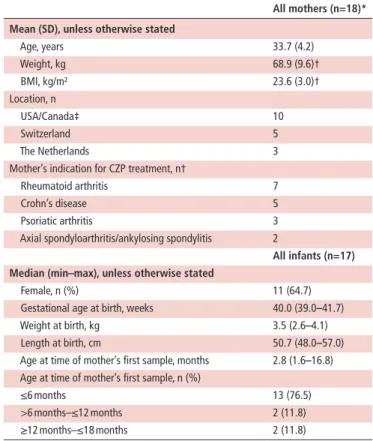
table 1 Demographics and baseline characteristics of mothers and infants
All mothers (n=18)* Mean (sd), unless otherwise stated
Age, years 33.7 (4.2)
Weight, kg 68.9 (9.6)†
BMI, kg/m² 23.6 (3.0)†
Location, n
USA/Canada‡ 10
Switzerland 5
The Netherlands 3
Mother’s indication for CZP treatment, n†
Rheumatoid arthritis 7
Crohn’s disease 5
Psoriatic arthritis 3 Axial spondyloarthritis/ankylosing spondylitis 2
All infants (n=17) Median (min–max), unless otherwise stated
Female, n (%) 11 (64.7)
Gestational age at birth, weeks 40.0 (39.0–41.7) Weight at birth, kg 3.5 (2.6–4.1) Length at birth, cm 50.7 (48.0–57.0) Age at time of mother’s first sample, months 2.8 (1.6–16.8) Age at time of mother’s first sample, n (%)
≤6 months 13 (76.5)
>6 months–≤12 months 2 (11.8) ≥12 months–≤18 months 2 (11.8) *Includes one screen failure.
†n=17.
‡One Canadian patient enrolled under the central USA site, which was approved by the Canadian central IRB.
100% of planned samples were collected. Seven mothers (38.9%) were diagnosed with RA, 5 (27.8%) with CD (two of which also had rheumatic diseases), 3 (16.7%) with PsA and 2 (11.1%) with axSpA. The demographics and baseline char-acteristics of all mothers screened and of all infants of partici-pating mothers are shown in table 1. The mothers’ indications for CZP treatment and their infants’ age at the time of first sampling are listed in online supplementary table 1.
Pharmacokinetic results
One hundred thirty-seven breast milk samples were collected from 17 mothers (16 on CZP 200 mg Q2W, one on CZP 400 mg Q4W). All samples had CZP concentrations that were minimal or BLQ. Importantly, 77/137 (56%) samples had no
measurable CZP (table 2). Four of the 17 women, including one on CZP 400 mg Q4W, did not have measurable CZP levels in their breast milk at any time point. In the remaining 13 mothers with a measurable concentration during at least one time point, the highest CZP concentration was 0.076 µg/mL, less than three times LLOQ (0.032 µg/mL).
The estimated ADID ranged from 0 to 0.0104 mg/kg/day; median estimated ADID was 0.003503 mg/kg/day (table 3). Additional CZP PK parameters are shown in table 3. The RID, calculated post hoc,31 32 ranged from 0.04% to 0.30%; median RID was 0.15%.
PK parameters were similar for women with different indica-tions as well as between mothers using supplemental nutrition and those breast feeding exclusively.
table 2 Concentrations of CZP (μg/mL) in breast milk after administration of CZP dose in mothers
Mother number
relative time (days)
0 2 4 6 8 10 12 14 28
17 BLQ BLQ BLQ BLQ BLQ BLQ BLQ BLQ BLQ
4 BLQ BLQ BLQ BLQ BLQ BLQ BLQ BLQ –
13 BLQ BLQ BLQ BLQ BLQ BLQ BLQ BLQ –
14 BLQ BLQ BLQ BLQ BLQ BLQ BLQ BLQ –
7 BLQ BLQ BLQ BLQ BLQ 0.035 BLQ BLQ –
6 BLQ BLQ 0.044 0.048 BLQ BLQ BLQ BLQ –
8 BLQ BLQ 0.035 0.034 0.043 BLQ BLQ BLQ –
10 BLQ BLQ BLQ 0.033 0.042 0.042 BLQ BLQ –
12 BLQ BLQ 0.034 0.037 0.033 BLQ BLQ BLQ –
2 BLQ BLQ 0.035 0.037 0.041 BLQ 0.043 BLQ –
11 BLQ BLQ 0.051 0.038 0.042 BLQ 0.033 BLQ –
15 BLQ BLQ 0.041 0.034 0.033 BLQ 0.037 BLQ –
16 0.040 0.033 0.036 0.037 0.043 BLQ BLQ BLQ –
3 BLQ 0.032 0.049 0.053 0.037 0.037 0.033 0.033 –
9 0.039 0.040 0.047 0.045 0.042 0.043 0.038 0.035 –
1 0.057 0.051 0.066 0.065 0.062 0.056 0.052 0.041 –
5 0.056 0.069 0.074 0.076 0.076 0.069 0.069 0.060 –
White coloured areas depict CZP concentration Less than 3×LLOQ (<0.096 μg/mL). Grey coloured areas depict CZP concentration Less than 2×LLOQ (<0.064 μg/mL). Dark grey coloured areas depict CZP concentration BLQ (<0.032 μg/mL). Days 0 and 14 are predose for mothers on the CZP 200 mg Q2W dosing regimen. Days 0 and 28 are predose for the mother on the CZP 400 mg Q4W dosing regimen.
For reference, the mean 12-week CZP plasma Ctrough value, that is, the trough concentration at steady-state, reported from non-pregnant patients with RA receiving CZP 200 mg Q2W in the RAPID2 trial was 15.7 µg/mL (95% CI 14.0 to 17.7).28
BLQ, below the lower limit of quantification, <0.032 µg/mL; CZP, certolizumab pegol; LLOQ, lower limit of quantification; Q2W, every 2 weeks; Q4W, every 4 weeks; RA, rheumatoid arthritis.
table 3 Pharmacokinetic parameters of CZP in breast milk after administration of CZP
Parameter n Geo. mean (Geo. CV (%))
Median (min–max) All mothers: both CZP 200 mg Q2W and CZP 400 mg Q4W dosing regimens
Estimated average daily infant dose (mg/kg/day) 17 0.00426 (59.4) 0.003503 (0–0.0104)
Cave (μg/mL) 17 0.0248 (58.0) 0.02335
(0.00744–0.0693)
tmax (day) 13 – 5.051
(2.89–11.9)
Mothers on CZP 200 mg Q2W dosing regimen only
AUCT (day* μg/mL) 13 0.398 (59.4) 0.4249
(0.104–0.970)
Cmax (μg/mL) 16 0.0383 (50.3) 0.04285
PEG concentration was analysed in 137 samples; 134 samples had no quantifiable PEG; three samples were classed as not reportable (online supplementary table 2).
safety
The safety analysis included 18 CZP-exposed mothers and 17 infants. AEs are shown in table 4. One mother discontinued the study during the screening period due to an AE of herpes zoster. Overall, 10 mothers (55.6%) experienced 14 AEs, and 8 infants (47.1%) experienced 11 AEs.
AEs in mothers and infants were mostly mild to moderate in intensity (mothers: three mild [16.7%] and six moderate [33.3%]; infants: six mild [35.3%] and two moderate [11.8%]). One severe AE (5.6%) was reported in one mother: a breast abscess, which occurred during the screening period and was resolved prior to sampling. Five AEs in four mothers were classified as drug-related: two (11.1%) upper respiratory tract infections, and one each (5.6%) of herpes zoster, CD flare and pneumonia. Nasopharyngitis in one infant (5.9%) was consid-ered mild in intensity and classified as drug-related by the prin-cipal investigator, based on the known CZP safety profile.33 No serious AEs were reported in the infants. Overall, events in the mothers were consistent with the known CZP safety profile, and the events observed in infants were consistent with those in unexposed infants of similar age.34–36
dIsCussIon
CRADLE was the first industry-sponsored clinical lactation study evaluating the transfer of a biologic into mature breast milk of women with chronic inflammatory diseases. Because low levels of IgGs have been shown to diffuse into breast milk,5 it is important to measure the relative abundance of therapeutic antibodies in breast milk.32 This study found minimal transfer of CZP into breast milk, with an infant receiving, on average, 0.15% (RID) of the maternal dose.
While prior studies entailed case reports with few milk samples obtained at varying times after dosing,37 38 CRADLE was designed to fully characterise the CZP PK profile in mature milk at steady-state. Following the FDA recommendation and in line with the 2005 guidance for industry,24 the study was designed as a ‘milk-only’ study. The rationale was that the CZP PK profile was already well established28 and that lactation was not expected to substantially change its PK. In addition, this ‘milk-only’ study design avoided additional burden on mothers and their babies: milk sampling did not occur earlier than 4–6 weeks postpartum to ensure that lactation and feeding patterns were well established, mature milk was being produced and maternal physiology had largely returned to pre-pregnancy state.
CZP concentration was BLQ in 56% of milk samples. When measurable, CZP concentrations were less than 3× LLOQ, with a marginal maximum concentration (0.0758 µg/mL). This is equivalent to less than 1% of the expected mean CZP plasma table 4 Adverse events (AEs) occurring in mother-infant pairs
Mothers Infants
Mother (n=18)* no. of Aes in mother (n) Ae Infant (n=17)* no. of Aes in infant (n) Ae
1 None 1 2 Lichen striatus
Upper respiratory tract infection
2 1 breast abscess‡ 2 None
3 None 3 1 Gastro-oesophageal reflux
disease
5 1 Rash 5 1 Nasopharyngitis
7 1 Upper respiratory tract infection 7 1 Upper respiratory tract
infection
8 2 Candida infection 8 1 Candida infection
Crohn’s disease flare
10 1 Viral upper respiratory tract infection 10 None
11 1 Headache 11 None
13 1 Psoriatic arthritis flare 13 None
14 2 Nipple disorder 14 2 Vomiting
Headache Nasopharyngitis
15 None 15 1 Nasopharyngitis
16 2 Upper respiratory tract infection 16 2 Upper respiratory tract infection
Pneumonia Nasopharyngitis
SF† 2 Herpes zoster N/A
Galactostasis
Total number of mothers experiencing any AE 10 Total number of infants experiencing any AE 8
Total number of AEs 14 Total number of AEs 11
The safety analysis included all mothers who received at least one dose of CZP and the infants of all mothers who participated in the study. The safety follow-up period extended up to 5 weeks (±5 days) after the final sample was collected. AEs in mother-infant pairs were not necessarily associated temporally.
Bold text indicates serious adverse event (SAE). *Mother-infant pairs are numbered as per table 2.
†SF, screen failure: mother discontinued from study due to AE of herpes zoster during screening period. ‡Breast abscess during screening period, which resolved prior to sampling.
trough concentration for a CZP-treated adult,28 39 indicating no to minimal transfer of CZP from plasma to breast milk. No transfer of total PEG from plasma to breast milk was observed.
The estimated daily dose of CZP ingested by breastfed infants over the dosing interval was minimal, with maximum ADID of 0.0104 mg/kg/day. The median CZP RID was 0.15%. The number of medications available to breast feeding mothers requiring drug therapy is increasing, and RID is a useful param-eter for assessing drug safety in breastfeeding by providing a standardised means of referencing infant to maternal exposure on a dose/weight basis.31 An RID <10% is considered safe by lactation specialists, with the estimate evaluated against the potential toxicity of the drug.31 32 40 Examples of drugs consid-ered safe when breast feeding include analgesics (ibuprofen and acetaminophen), antibiotics (penicillins and cephalosporins), antidepressants (citalopram and sertraline) and anticoagulants (heparin and dalteparin) (RID <10%).40
Subgroup analyses suggest that transfer of CZP into breast milk is independent of the mother’s indication and CZP dosing regimen. Additionally, no difference between subgroups was observed regarding CZP transfer into milk of exclusively breastfeeding mothers versus those who supple-mented nutrition.
Although there were no enrolment restrictions for patient numbers for the two dosing regimens, 16/17 patients were on the single dose regimen, as per physician discretion. To our knowledge, this does not impact the results’ relevance.
Enrolment for studies of this nature is challenging, given the unique barriers to participation, such as ethical, legal and medical considerations associated with this sensitive patient population. The CRADLE open enrolment, combined with the traditional site-based model, and including in-home nursing services, allowed mothers to participate without the burden of travel. This operational model was essential to the successful completion of the study.
We acknowledge that no preterm babies were included in this study, although it is well known that prematurity is an under-lying risk for women with inflammatory diseases, particularly those with high disease activity.41 It is noteworthy that while valuable data might be obtained from studying drug absorp-tion in premature babies, due to the possible differences in their digestive tracts from full-term infants,42 such an analysis would have been outside the scope of this study.
Similarly, milk collection from mothers immediately after birth was not included for a number of reasons: due to the very limited volume of breast milk/colostrum available at this time, obtaining these samples would be challenging and, in addition, the study did not wish to disrupt the initial mother/infant bonding. These limitations raise awareness for the need of further research into drug transfer from mother to infant.
No new CZP safety issues were identified. AEs in mothers were consistent with the current CZP safety profile, while events in infants were consistent with those occurring in unex-posed infants of similar age. For reference, incidence for minor infections in infants is 6–8 times per year for upper respira-tory tract infection/nasopharyingitis34 35 and 2%–5% for oral candidiasis.36
In conclusion, these findings suggest that the level of CZP ingested by the suckling infant is minimal and indicate that continuation of CZP treatment is compatible with breast feeding. The robust clinical evidence from the CRADLE study allows breastfeeding women with chronic inflammatory diseases and their treating physicians to make informed decisions regarding their postpartum treatment.
Acknowledgements We are indebted to the mothers, and their infants, for their altruistic participation in this study. We thank the nurses and the investigator teams, the study coordination team including Samia Elyakhlifi and Lien Heinzen, UCB pharma, and nicole Hurst, ppd. We also acknowledge Amanda Golembesky, phd, UCB pharma, raleigh, USA, and Gerry parker, phd, UCB pharma, Slough, UK, for their contributions; ’Matladi n. ndlovu, MSc, phd, UCB pharma, Brussels, Belgium, for publication critical review coordination; and Sana Eljamel, MBChB, Julia Bárdos, phd, and danalyn Byng from Costello Medical Consulting, Cambridge, UK, for medical writing and editorial assistance in preparing this manuscript for publication, based on the authors’ input and direction.
Contributors Substantial contributions to study conception/design or acquisition/analysis/interpretation of data: MEBC, FF, CH, Jt, rJEMd, Avt, LS, JS, Mt, nt, MW and tWH; drafting of the publication or revising it critically for important intellectual content: MEBC, FF, CH, Jt, rJEMd, Avt, LS, JS, Mt, nt, MW and tWH; final approval of the publication: MEBC, FF, CH, Jt, rJEMd, Avt, LS, JS, Mt, nt, MW and tWH.
Funding UCB pharma funded this study and manuscript. UCB pharma reviewed only for scientific and legal accuracy.
Competing interests MEBC has received research support from Janssen and pfizer and is a consultant for UCB pharma; FF has received research grants from UCB pharma and is a consultant for and/or has received speakers’ fees from Mepha, roche and UCB pharma; CH has received research support from AbbVie and UCB pharma and is a consultant for Janssen; Jt has received research grants from UCB pharma and is a consultant for Genentech/roche and UCB pharma; rJEMd has received unrestricted research grants from UCB pharma; Avt has received research grants and/or clinical trial support from AbbVie, Celgene, Janssen Cilag, MSd, novartis, pfizer and UCB pharma, has received speakers’ bureau from Janssen Cilag, MSd and pfizer and is a consultant for and/or has served on advisory boards for AbbVie, Janssen Cilag, novartis and pfizer; LS, JS, Mt, nt and MW are employees of UCB pharma; tWH is a consultant for UCB pharma.
Patient consent this article does not contain personal medical information about any identifiable living individual.
ethics approval the study design and protocol were approved by the local ethics committee or institutional review board (IrB) at each participating site, or by a central IrB, as applicable.
Provenance and peer review not commissioned; externally peer reviewed. open Access this is an open Access article distributed in accordance with the Creative Commons Attribution non Commercial (CC BY-nC 4.0) license, which permits others to distribute, remix, adapt, build upon this work non-commercially, and license their derivative works on different terms, provided the original work is properly cited and the use is non-commercial. See: http:// creativecommons. org/ licenses/ by- nc/ 4. 0/
© Article author(s) (or their employer(s) unless otherwise stated in the text of the article) 2017. All rights reserved. no commercial use is permitted unless otherwise expressly granted.
RefeRences
1 de Man YA, dolhain rJ, van de Geijn FE, et al. disease activity of rheumatoid arthritis
during pregnancy: results from a nationwide prospective study. Arthritis Rheum
2008;59:1241–8.
2 Kurizky pS, Ferreira CC, nogueira LS, et al. treatment of psoriasis and psoriatic arthritis
during pregnancy and breastfeeding. An Bras Dermatol 2015;90:367–75.
3 ostensen M, Husby G. A prospective clinical study of the effect of pregnancy on
rheumatoid arthritis and ankylosing spondylitis. Arthritis Rheum 1983;26:1155–9.
4 Kane S, Lemieux n. the role of breastfeeding in postpartum disease activity in women
with inflammatory bowel disease. Am J Gastroenterol 2005;100:102–5.
5 Jatsyk GV, Kuvaeva IB, Gribakin SG. Immunological protection of the neonatal
gastrointestinal tract: the importance of breast feeding. Acta Paediatr Scand
1985;74:246–9.
6 Baker tE, Cooper Sd, Kessler L, et al. transfer of natalizumab into breast milk in a
mother with multiple sclerosis. J Hum Lact 2015;31:233–6.
7 Fritzsche J, pilch A, Mury d, et al. Infliximab and adalimumab use during
breastfeeding. J Clin Gastroenterol 2012;46:718–9.
8 Ben-Horin S, Yavzori M, Katz L, et al. Adalimumab level in breast milk of a nursing
mother. Clin Gastroenterol Hepatol 2010;8:475–6.
9 Keeling S, Wolbink GJ. Measuring multiple etanercept levels in the breast milk of a
nursing mother with rheumatoid arthritis. J Rheumatol 2010;37:1551.
10 Förger F, Zbinden A, Villiger pM. Certolizumab treatment during late pregnancy in patients with rheumatic diseases: Low drug levels in cord blood but possible risk for
maternal infections. A case series of 13 patients. Joint Bone Spine 2016;83:341–3.
11 Mahadevan U, Wolf dC, dubinsky M, et al. placental transfer of anti-tumor
necrosis factor agents in pregnant patients with inflammatory bowel disease. Clin
12 Götestam Skorpen C, Hoeltzenbein M, tincani A, et al. the EULAr points to consider for use of antirheumatic drugs before pregnancy, and during pregnancy and lactation.
Ann Rheum Dis 2016;75:795–810.
13 Lawrence rM, Lawrence rA. Breastfeeding: more than just good nutrition. Pediatr Rev
2011;32:267–80.
14 Johnston M, Landers S, noble L, et al. Breastfeeding and the use of human milk.
Pediatrics 2012;129:e827–41.
15 office of the Surgeon G, Centers for disease C, prevention and office on Women’s
H. publications and reports of the Surgeon General. The Surgeon General's Call to
Action to Support Breastfeeding. rockville (Md): office of the Surgeon General (US), 2011.
16 Hauck Fr, thompson JM, tanabe Ko, et al. Breastfeeding and reduced risk of sudden
infant death syndrome: a meta-analysis. Pediatrics 2011;128:103–10.
17 Ip S, Chung M, raman G, et al. Breastfeeding and maternal and infant health
outcomes in developed countries. Evid Rep Technol Assess 2007:1–186.
18 Zelikin An, Ehrhardt C, Healy AM. Materials and methods for delivery of biological
drugs. Nat Chem 2016;8:997–1007.
19 Keystone E, Heijde d, Mason d, et al. Certolizumab pegol plus methotrexate is
significantly more effective than placebo plus methotrexate in active rheumatoid arthritis: findings of a fifty-two-week, phase III, multicenter, randomized, double-blind,
placebo-controlled, parallel-group study. Arthritis Rheum 2008;58:3319–29.
20 Sandborn WJ, Feagan BG, Stoinov S, et al. Certolizumab pegol for the treatment of
crohn’s disease. N Engl J Med 2007;357:228–38.
21 Landewé r, Braun J, deodhar A, et al. Efficacy of certolizumab pegol on signs and
symptoms of axial spondyloarthritis including ankylosing spondylitis: 24-week results
of a double-blind randomised placebo-controlled phase 3 study. Ann Rheum Dis
2014;73:39–47.
22 Mease pJ, Fleischmann r, deodhar AA, et al. Effect of certolizumab pegol on signs
and symptoms in patients with psoriatic arthritis: 24-week results of a phase 3
double-blind randomised placebo-controlled study (rApId-psA). Ann Rheum Dis
2014;73:48–55.
23 Israel EJ, taylor S, Wu Z, et al. Expression of the neonatal fc receptor, Fcrn, on human
intestinal epithelial cells. Immunology 1997;92:69–74.
24 Food and drug Administration. Guidance for industry: clinical lactation studies-study
design, data analysis, and recommendations for labeling, 2005.
25 Smeraglia J, Silva Jp, Jones K. Improving the sensitivity and specificity of a bioanalytical
assay for the measurement of certolizumab pegol. Bioanalysis 2017.
26 dudal S, Baltrukonis d, Crisino r, et al. Assay formats: recommendation for best
practices and harmonization from the global bioanalysis consortium harmonization
team. Aaps J 2014;16:194–205.
27 Kruse n, Schulz-Schaeffer WJ, Schlossmacher MG, et al. development of
electrochemiluminescence-based singleplex and multiplex assays for the
quantification of α-synuclein and other proteins in cerebrospinal fluid. Methods
2012;56:514–8.
28 Lacroix Bd, parker GL. S1029 dosing with Certolizumab pegol (CZp) 200 mg every 2 weeks (Q2w) provides higher plasma trough concentrations than 400 mg every 4
weeks (Q4w). Gastroenterology 2010;138:S-163–4.
29 Wade Jr, parker G, Kosutic G, et al. population pharmacokinetic analysis
of certolizumab pegol in patients with Crohn’s disease. J Clin Pharmacol
2015;55:866–74.
30 Alvares rd, Hasabnis A, prosser rS, et al. Quantitative detection of pEGylated
biomacromolecules in biological fluids by nMr. Anal Chem 2016;88:3730–8.
31 Hale t, Hartmann pE. Textbook of human lactation. Amarillo, texas: Hale publishing,
2007.
32 Bennett pn, Astrup-Jensen A, Bates CJ, et al. Drugs and human lactation: a
Comprehensive Guide to the content and consequences of drugs, micronutrients, radiopharmaceuticals and environmental and occupational chemicals in human milk. 2nd ed: Elsevier Science & technology, 1996.
33 Bykerk Vp, Cush J, Winthrop K, et al. Update on the safety profile of certolizumab
pegol in rheumatoid arthritis: an integrated analysis from clinical trials. Ann Rheum
Dis 2015;74:96–103.
34 Cotton MF, Innes S, Jaspan H, et al. Management of upper respiratory tract infections
in children. South African Family Practice 2008;50:6–12.
35 Worrall G. Common cold. Can Fam Physician 2011;57:1289–90.
36 Krol dM, Keels MA. oral conditions. Pediatr Rev 2007;28:15–22.
37 Stengel JZ, Arnold HL. Is infliximab safe to use while breastfeeding? World J
Gastroenterol 2008;14:3085–7.
38 ostensen M, Eigenmann Go. Etanercept in breast milk. J Rheumatol
2004;31:1017–8.
39 Sandborn WJ, Lee Sd, randall C, et al. Long-term safety and efficacy of certolizumab
pegol in the treatment of Crohn’s disease: 7-year results from the prECiSE 3 study.
Aliment Pharmacol Ther 2014;40:903–16.
40 rowe H, Baker t, Hale tW. Maternal medication, drug use, and breastfeeding. Child
Adolesc Psychiatr Clin N Am 2015;24:1–20.
41 Elliott AB, Chakravarty EF. Management of rheumatic diseases during pregnancy.
Postgrad Med 2010;122:213–21.
42 neu J, Koldovsky o. nutrient absorption in the preterm neonate. Clin Perinatol