The Effect of Music on Tibial Accelerations in Recreationally Active Runners
Colin B. O’Leary
A thesis defense submitted to the faculty of the University of North Carolina at Chapel Hill in partial fulfillment of the requirement for the degree of Master of Arts in the Department of
Exercise and Sport Science (Exercise Physiology).
Chapel Hill 2014
Approved by:
iii
ABSTRACT
COLIN BURKE O’LEARY: The Effect of Music on Tibial Accelerations in Recreationally Active Runners
(Under the direction of Anthony Hackney)
The purpose of this study was to examine the effects of music on the peak tibial acceleration (PTA) and loading rate (LR) during running, along with other secondary physiological stresses. Thirty college-aged recreationally active subjects completed one continuous 30-minute treadmill bout at a self-selected intensity, with 15 minutes spent
iv
ACKNOWLEDGEMENTS
v
TABLE OF CONTENTS
ACKNOWLEDGEMENTS ... iv
LIST OF FIGURES ... viii
LIST OF TABLES ... ix
CHAPTER I ... 1
BASIS FOR STUDY ... 1
Introduction ... 1
Purpose ... 2
Research hypotheses ... 3
Definition of terms ... 3
Delimitations ... 4
Limitations ... 4
Significance of study ... 5
CHAPTER II ... 6
LITERATURE REVIEW ... 6
Introduction ... 6
Music ... 6
Use of Music ... 6
Characteristics of Music ... 7
Effect of Music on Performance and Physiological Variables ... 9
Effect of Music on Cortisol ... 10
vi
Effect on Attentional Focus ... 12
Music and Biomechanics ... 14
Tibial Acceleration ... 15
Relationship with Ground Reaction Forces ... 15
Running Injuries ... 17
Summary ... 18
CHAPTER III ... 20
METHODOLOGY ... 20
Subjects ... 20
Protocol ... 21
Music Selection ... 21
Treadmill Running ... 22
Tibial Acceleration Assessment ... 23
CHAPTER IV ... 27
RESULTS ... 27
Subject Characteristics ... 27
Tibial Acceleration ... 27
Physiological and Psychological Response ... 28
Salivary Cortisol ... 28
CHAPTER V ... 30
DISCUSSION ... 30
Introduction ... 30
Tibial Acceleration Response ... 31
Physiological Response ... 36
vii
Limitations and Future Research ... 42
Conclusion ... 43
APPENDICES ... 44
Appendix A: Sample Size Calculations ... 44
Appendix B: Music Playlist ... 45
Appendix C: Medical History Questionnaire ... 46
Appendix D: Physical Activity Readiness Questionnaire ... 49
Appendix E: Data Collection Sheets ... 50
Appendix F: Indications of Terminating Exercise ... 51
Appendix G: Raw Cortisol Data ... 52
viii
LIST OF FIGURES
Figure 1: Conceptual framework of asynchronous music and exercise ... 8
Figure 2: Exercise protocol overview ... 23
Figure 3: Experimental set up for tibial accelerometer ... 24
Figure 4: Screenshot of Labview batch-processing program ... 25
ix
LIST OF TABLES
CHAPTER I BASIS FOR STUDY Introduction
Music and portable music players have become ubiquitous in the lives of most
adolescents and young adults, as studies have found upwards of 90% of adolescents now listen to music using portable music devices (Vogel et al., 2009). In the exercise world, music is usually played using portable music players, such as iPods or other MP3 players. Additionally, there are now devices that play music and use technologies, like NikePlus, which also allow people to track their daily exercise routines (Besharat, 2010). This omnipresent ability to listen to music while exercising is thought to increase the adherence to exercise regimens (Annesi, 2001).
2
activity (Karageorghis, Vlachopoulus, & Terry, 2000). The distraction effect of asynchronous music may also produce an ergogenic effect on the movement of exercise (Elliot et al., 2005).
Considering the possible neurological alterations that lead to increased physical work, endurance, and reductions in fatigue, the distraction effect of loud music might also affect the biomechanics of running. This distraction effect may change the biomechanics in a way that alters tibial accelerations, and therefore, the force of landing or ground reaction forces (GRFs). Listening to loud music may also make it difficult to hear one’s footsteps. This also may cause a loss of control in regulating how hard the foot strikes the ground and force attenuation in the lower extremity. Only one study has examined GRFs in regards to music and exercise (Fujarczuk, 2006). Music increased the loading rate (LR) but not the maximal GRFs during the step aerobic exercise (Fujarczuk, 2006).
Tibial accelerometers have become more common in running biomechanics research and are lightweight, can measure multiple strides, be used during treadmill tasks, and are highly correlated to force platform derived data during running tasks (Sinclair et al., 2013). Both prospective (Davis et al., 2004) and retrospective (Milner et al., 2006) studies have found higher rates of stress fracture injuries in runners with greater tibial accelerations. Considering this link, research examining how music affects the biomechanics, especially during the stance and braking phases of running, is needed.
Purpose
3
2. A secondary purpose was to assess the acute effects of asynchronous music on cortisol, HR, RPE, and FS. These variables were used to assess whether music has a physiological and psychological effect.
Research hypotheses
1. Runners listening to music would have greater tibial accelerations and loading rates due to music’s distracting effect, which decreases the attention paid to the existing feedback the body receives from the lower limbs concerning their biomechanics and force of impact.
2. Cortisol, HR, and FS are expected to be slightly augmented from listening to music, due to the chosen music’s stimulatory effect, while RPE is expected to be attenuated due to music’s distracting effect.
Definition of terms
1. Asynchronous Music – music used during exercise as a distracter, which is not consciously used to match to the movement of exercise
2. Feeling Score (FS) – An objective scale, related to the rating of perceived exertion scale, that assesses feelings of wellbeing during exercise.
3. Ground Reaction Forces (GRFs) – forces placed on the body during the contact phase of gait, specifically during foot strike.
4
5. Peak Tibial Acceleration (PTA) – maximum acceleration occurring during the early stance phase of running, usually occurring within 50 ms of foot strike (Crowell & Davis, 2011)
6. Rating of perceived exertion (RPE) – An objective scale of feeling of exertion during exercise
7. Synchronous Music – music that is consciously used to match exercise movement to a specific beat or tempo
8. Tempo – The speed or pace of a given musical piece that is often expressed in beats per minute (bpm).
Delimitations
1. Subjects will be recreationally active young adults between the ages of 18 and 25 years who run three times per week in running for a total of less than 120 minutes at moderate intensity.
2. Subjects will arrive at the laboratory for each exercise trial after fasting for at least 2 hours.
3. Obese (BMI >30 kg/m2) subjects, pregnant women, and subjects who have incurred a musculoskeletal injury in the last 6 months prior to participation will be excluded.
4. Subjects will only wear traditional (non-minimalist/barefoot) running shoes (i.e. Nikes, Brooks, Asics, etc.).
Limitations
5
3. Subjects may not comply with the dietary and lifestyle guidelines set out before each exercise trial.
4. All subjects will listen to the same music playlist, which could be a non-preferred music choice, negatively affecting performance.
Significance of study
6 CHAPTER II LITERATURE REVIEW Introduction
This review will begin with what is currently known about the characteristics and use of music. The review will then transition into the effects of music on the performance, physiological, and psychological factors of exercise. The effect of music on many physiological and performance variables has been previously reviewed (Karageorghis & Priest, 2012a; Karageorghis & Priest, 2012a). This review will briefly mention the benefits of using music, but will mainly focus on the effect of music on physiological and psychological variables relating to rating of perceived exertion (RPE) and attentional feedback/awareness and how these factors could affect the biomechanics of running. Unless otherwise stated, this review will focus on the use of asynchronous music, or music that is not used to synchronize movements. The review will finish with a review of tibial acceleration and its relationship to both GRFs and its use for injury analysis and risk assessment.
Music
Use of Music
7
the web, which allow runners to tune their workouts with specific music characteristics. Cross branding between MP3 players, HR monitors, and GPS devices is also occurring. This gives runners even more control and perspective into their workouts (Besharat, 2010). Considering the ubiquitous use of music within the current culture, research on music and exercise is important for quantifying the effects of music for the individual.
Characteristics of Music
There are two types of music used in exercise settings, synchronous and asynchronous music (Karageorghis et al., 2007). Synchronous music is used during repetitive activities. It allows an athlete to consciously sync their movements to the rhythm of the music. On the other hand, asynchronous music is not used to consciously synchronize movements and acts more as a distracter. Mainstream music, such as music played on the radio, would be considered asynchronous music and is the type predominantly used in research.
8
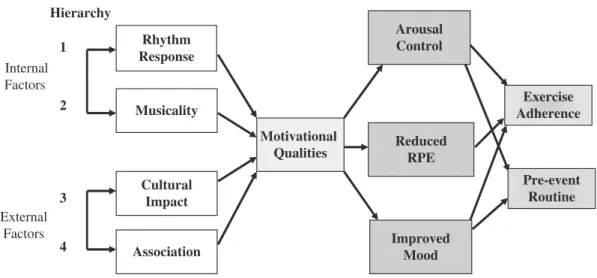
Because rhythm response and musicality objectively denote audible properties of the musical stimulus, they are known asinternal factorswhereas cultural impact and association are referred to as external factors. In the field of psychomusicology, the termsintrinsic and extrinsic,intrinsic and ecological, andcongeneric and extrageneric factors have been used in a similar manner (see North & Hargreaves, 2008). Music selections that exploit cultural and personal associations are likely to yield significant benefits, particularly in terms of cognitive and affective consequences. Although the
Rocky example predominantly entails a cultural association, a personal association
can occur when a piece of music reminds an exerciser about an aspect of their own lives that is emotionally significant (see e.g., Priest & Karageorghis, 2008). It is important to clarify that whereas it would be easy to confuse rhythm response with the innate predisposition of humans to synchronise their movements to music rhythms (see Karageorghis & Terry, 1997, p. 56), the term was operationalised more generally in the 1999 model to refer to the stimulative effects of musical rhythm on the human body (cf. Hevner, 1937).
The four factors are hierarchically related, with rhythm response being the most important and association being the least important. The findings of both Crust (2008) and Priest and Karageorghis (2008) support the general structure of this hierarchy. Notably, the term motivational qualities was defined in terms of the beneficial consequences of listening to it. Such effects appear as outputs in the 1999 model, therefore motivating music is that which controls arousal, reduces perceptions of exertion and improves mood. Herein lies a criticism of the model: motivational music was also defined in terms that render it directly comparable with Hevner’s (1937) definition of stimulative music, that is, with a fast tempo and prominent beat. Hence, while motivational music would be expected to heighten arousal, it would not lower it as the term ‘arousal control’ would suggest.
Ultimately, motivational music use was thought to promote two chronic benefits: increased exercise adherence among exercise participants and a more effective pre-event routine for athletes. The tenets of the model, particularly the four-factor structure of motivational qualities, were validated through the development of a
Hierarchy Rhythm Response Musicality Cultural Impact Association Motivational Qualities Arousal Control Exercise Adherence Improved Mood 1 2 3 4 Reduced RPE Pre-event Routine Internal Factors External Factors
Figure 1. Conceptual framework for the prediction of responses to motivational asynchro-nous music in exercise and sport. (Adapted from Karageorghis, Terry, & Lane, 1999. Reproduced with permission from Taylor and Francis, http://www.tandfonline.com)
46 C.I. Karageorghis and D.-L. Priest
Figure 1: Conceptual framework of asynchronous music and exercise. (Adapted from Karageorghis et al., 2012a)
Tempo is considered the most important factor in determining an individual’s response to music (Holbrook & Anand, 1990). There is a preference for faster tempo music, due to the increases in physiological arousal with this type of music (Karageorghis, Jones, & Stuart, 2007). Fast music of a high intensity or volume is the most appropriate for moderate exercise, as it helps propel the exerciser (Edworthy & Waring, 2006). Slower tempo music appears to be the least preferred tempo when comparing fast, moderate, and slow tempo at moderate intensities (Karageorghis, Jones, & Low, 2006). The recommendation for tempo is a beats per minute rate between 125-140 (Karageorghis et al., 2012).
9
following the above recommendations, exercisers can benefit from the effects of music. By following these recommendations, future researchers will be able to compare their results to previous studies using music.
Effect of Music on Performance and Physiological Variables
The effects of asynchronous music on enhancing performance have been well reviewed (Karageorghis & Priest, 2012a). Music elicits an improvement in exercise performance by either delaying fatigue or increasing work capacity. This effect results in elevated levels of endurance, power, productivity, or strength (Karageorghis & Priest, 2012a). Music results in an increase in self-selected intensity (Abraham & Thomas, 1999). Subjects can also exercise for longer periods before exhaustion while listening to music (Bharani et al., 2004; Copeland & Franks, 1991; Elliot et al., 2004). These studies were both running and cycling tasks with different types of music, suggesting the effects of music are not limited to specific conditions.
Music can also lower heart rate and blood pressure (Ghaderi, Rahimi, & Azarbajyjani, 2009; Szmedra and Bacharach, 1998). Both studies suggested that music allowed the subjects to relax, which increased their blood flow and muscle recovery. However, measures of blow flow or muscle recovery measures were not evaluated in either study. Other studies have examined the possibility of heart rate syncing to the tempo or beat of the music (Karageorghis & Priest, 2012a). But there does not seem to be any relationship between music tempo and heart rate.
10
efforts does not exhibit any differences between conditions (Boutcher et al., 1990; Tenenbaum et al., 2004).
The effects of music also seem to vary due to the training status of the exerciser. Studies support music as being more beneficial for untrained individuals compared to trained athletes (Brownley, McMurray, & Hackney, 1995; Mohammadzadeh, Tertibiyan, & Ahmadi, 2008). At both low- and high-intensity conditions, untrained subjects experience a larger increase in positive feeling states in response to stimulative music during exercise and into recovery. Stimulative music may actually be detrimental to trained individuals at high intensities (Brownley et al., 1995). Trained individuals may focus more on the running and the specifics of the motion, which asynchronous music can disrupt.
Effect of Music on Cortisol
11
motivational music at 30 minutes post-exercise. Yet, it is important to note that the motivational group’s running time was 41.7% longer than the relaxation group (p<0.01). Since the duration of exercise affects cortisol release, the differences might simply be an effect of exercise duration. This study also utilized a between group music design, which could confound the results due to the subjects’ previous training history and diet. Considering the lack of agreement in the literature, the current study will include an exploratory analysis of cortisol, using salivary measurement techniques to allow for easier sampling and a continuous protocol. The protocol in the current study will also have a set running duration and use a repeated measures design.
Effect on Rating of Perceived Exertion
Multiple studies have exhibited 10% reductions in RPE when exercising with music compared to control conditions (Bharani et al., 2004; Nethery, 2002; Potteiger et al., 2000; Szmedra & Bacharach, 1998). Most suggest a dissociation or distraction effect of music leads to this improved physiological functioning during exercise. Along with reductions in RPE, music has positive effects on enjoyment of exercise, even when working at a higher work rate (Miller et al., 2010; Elliot et al., 2004). However, much like with the other physiological variables, there is less of an effect on RPE at higher exercise intensities (Tenenbaum et al., 2004).
12
The differences in RPE between these studies could be due to the differences in musical selection or the type and intensity of exercise. But these studies suggest music may motivate individuals without them being consciously aware of the greater workload.
This reduction in RPE and increase in enjoyment add to the chance that people exercising with music will more likely adhere to regular exercise (Annesi, 2001). Considering the rise of obesity, metabolic, and cardiovascular diseases in the United States (Ogden et al., 2012), this increased adherence due to music could be important for the current health crisis.
Effect on Attentional Focus
13
and psychological cues affected by music will influence RPE. However, when individuals are working at near maximal aerobic capacity, physiological cues will predominate and have a greater influence than music on RPE. This suggests music can occupy an individual’s attention and generate positive feelings, reducing RPE at lower intensities.
Nethery and colleagues (1991) added to this model by suggesting that the cognitive processing of sensations is heightened by the capacity of the central nervous system to transfer sensory information from perception to the level of the consciousness. This means that a limited channel capacity, such as when an individual is listening to music and running, affects bringing a sensation into full awareness, such as fatigue. Others have suggested that as a task becomes more complex and novel, signals involved with effort would be preferentially processed, which reinforces the notion that at higher exercise intensities music will have less of an effect (Pennebaker & Lightner, 1980).
This effect on attentional focus can also lead to a state of body and mind described as a flow state (Karageorghis et al., 2007). This state can be explained as the total absorption into an activity, to the point were time appears to either speed up or slow down. This state leads to a state of awareness where the mind and body act together to complete a task, with very little regard for signals from the sensory. Results of past work indicate that music can have a positive impact on the development of the flow state if it can affect an individual’s attentional focus (Pates et al., 2003).
non-14
preferred music can have the opposite effect and should be avoided, as it can shift the focus to internal sources increasing RPE (Nakamura et al., 2010; Tenenbaum et al., 2004). This study will use currently popular music, and may also use the degree of preference of the chosen music as a covariate to help mitigate the possibility of the music condition being affected by negative feelings.
Music and Biomechanics
Multitudes of research have been published concerning the effect of music on performance, physiological, and psychological factors. Yet little research has examined the effects of music on biomechanics. In one of the few music and biomechanics papers, music altered stride interval dynamics, as overground walking with music led to more deviations in stride interval time series compared to overground walking without music (Sejdic et al., 2012). Participants reported that the music caused them to lose concentration at times during the task. This could be due to the increased amount of external distracting cues from the music, which is in line with Rejeski’s parallel-processing model (1985). Music can also increase walking speeds and induce synchronization of walking pace to the beat of the music (Styns et al., 2007). Other studies suggest music induces a rhythmic auditory stimulation, which affects the motor system through the auditory rhythm or tempo or music, changing an individual’s walking gait (Prassas et al., 1997).
15
motion. However, considering Sejdic et al.’s (2012) results concerning an increase in nonstationary walking, music may alter running gait. Listening to music could lead to an increase in injury risk from the lack of perception from internal cues, such as from fatiguing muscles, muscle spindles, and golgi tendon organs. Overtime, these slight changes may become problematic, as an exerciser continues to ignore these essential physiological cues. Research has also not taken into account that it is hard to hear when the foot strikes the ground when listening to music, possibly altering the contact phase of gait. Future research is needed to establish if music affects the biomechanics of running, especially the forces of the contact phase of gait.
Tibial Acceleration
Relationship with Ground Reaction Forces
The gold standard for ground force identification during running is derived from force platform data. However, the use of force platforms is usually confined to specific sport or gait laboratories. Force platforms also restrict the number of analyzed consecutive gaits cycles due to the limited size and number of platforms. The use of force platforms may also distort a runner’s natural gait, as the runner must fully contact the platform during each trial to achieve a full assessment of the foot contact and forces involved with it.
16
can quantify the shock attenuated during fatigued running (Mercer et al., 2003; Mizrahi et al., 1997) and examine both the prospective and retrospective risk of stress fractures (Davis et al., 2004; Milner et al., 2006). Tibial accelerometers do not need to be bone-mounted to attain accurate results, as skin-mounted accelerometers are just as effective (LaFortune, Hennig, & Valiant 1995). Using accelerometers placed on the tibia may be advantageous for estimating GRFs since the accelerometer can be placed close to the foot and does not inhibit the natural stride of the runner.
Considering the prevalence of information coming from GRFs, but the less applied nature of force platforms, it is important to assess if tibial accelerometers can be used in place of force platforms. Yet, few studies have examined the relationship between tibial acceleration and GRFs (Elvin et al., 2007; Sinclair et al., 2013).
Sinclair and colleagues (2013) compared gait data from tibial accelerometers and force platforms during a running task. They found a strong correlation (r2 =0.92) between the duration of the stance phase when comparing the two methodologies using five subjects. This suggests that gait events can be reliably and accurately detected using a tibial accelerometer. However, the authors caution the use of accelerometers, stressing the proper mounting of the device, as the mounting and position can influence the signal (Sinclair et al., 2013). This study also only compared the time of the gait events and did not try to compare the quantified accelerations to the GRFs from the force platform.
17
landing task like running. However, further research is still needed examining the specific relationship between GRFs and tibial accelerations during running, especially over a large number of discrete events (i.e. foot strikes).
Running Injuries
During running, the body experiences vertical forces about 2.5 times body weight. Most repetitive injuries, such as stress fractures, are due to the total load placed upon the tissue. This makes assessing biomechanics important for quantifying the risk of stress fractures and other repetitive loading running injuries. Stress fractures are among the five most common injuries, accounting for 50% of all injuries sustained by runners (McBryde, 1984). The tibia is the most common site of stress fractures in runners (Matheson et al., 1987). Stress fractures force runners to refrain from running and other impact related activities for up to 8 weeks (Beck, 1998). This can lead to large decrements in cardiovascular and muscular function and performance (Coyle et al., 1985). Reoccurrence rates for developing another stress fracture are also high, at upwards of 36% (Hauret et al., 2001). This makes the assessment of possible risk factors, particularly through field-based methods such as tibial accelerometers, important for injury prevention.
18
(Milner et al., 2006). Considering music might affect running biomechanics, music could potentially affect the risk of developing a stress fracture due to changes in biomechanics. Another possible mechanism for stress fracture injury is fatigue (Mercer et al., 2003; Mizrahi et al., 1997). Fatigue reduces shock attenuation, or the process of absorbing impact energy (Mercer et al., 2003; Mizrahi et al., 1997). Specifically, long distance running involves a gradual increase in the impact loading on the lower legs during a run (Mizrahi et al., 2000). Bone overuse injuries are related to fatiguing muscles due to either a loss of shock-absorbing capacity of muscle or because of compensations in movement patterns due to the change in muscle ability (Mercer et al., 2003). The poor shock attenuation in the leg will increase the attenuation demands placed on the knee and hip joints, leading to further injuries. Since music enhances submaximal performance by allowing someone to exercise longer and harder, listening to music could lead to greater muscular fatigue. This could be unbeknownst to the runner due to lessened attentional feedback (from the music), resulting in a repetitive loading injury.
Summary
19
20 CHAPTER III METHODOLOGY
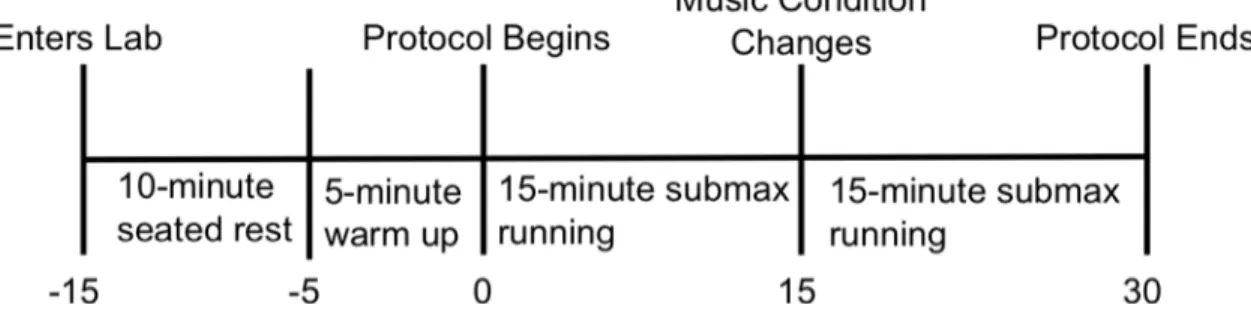
This study required each subject to make one laboratory visit. The visit consisted of an orientation, physical screening, and the treadmill running testing. The treadmill testing consisted of 30 minutes of running at a self-selected speed. Subjects wore in-ear headphones during the entire duration of the study but only listened to music during 15 minutes of the trial. Tibial accelerations were assessed to characterize the changes in biomechanics.
Subjects
21 Protocol
Each subject reported to the Applied Physiology Laboratory at UNC – Chapel Hill on one occasion wearing the appropriate athletic clothing and conventional (non-minimalist or non-'barefoot') running shoes. The beginning of the testing session was used to obtain written consent, fill out a medical history form (Appendix D) and Physical Activity Readiness Questionnaire (PAR-Q) (Appendix E), and familiarize subjects with the testing procedures. If the subject meets the inclusion criteria, then the testing session included the experimental procedure. Subjects were asked to refrain from strenuous exercise, caffeine, and alcohol at least 24 hours before the testing session. Subjects were also asked to eat a balanced diet 24 hours before the test and be 3-4 hours post-prandial and well hydrated before the treadmill test.
Music Selection
22 Treadmill Running
The exercise session was conducted on a standard (non-instrumented) Quinton MODEL Q65 treadmill (Cardiac Science Corporation, Bothell, WA). Before beginning the treadmill running session, subjects’ height (Stadiometer, Perspective Enterprises, Portage, MI, USA) and weight (Mechanical scale, Detecto, Webb City, MD, USA) were recorded. Subjects were also fitted with a Polar heart rate monitor (Polar Electro Inc., Lake Success, NY) that they wore throughout the test. Resting heart rate (HR) was assessed after 10 minutes of seated rest.
23
ran without any potentially distracting visual or auditory stimuli. Subjects were allowed to drink water ad libitum throughout the treadmill protocol.
After completion of the 30-minute treadmill run, the treadmill was slowed and the subjects were allowed to cool down at a walk for 3-5 minutes. Once the subjects sufficiently cooled down (HR <100 bpm), they were allowed to leave the laboratory.
Figure 2: Exercise protocol overview Tibial Acceleration Assessment
24 Figure 3: Experimental set up for tibial accelerometer
25
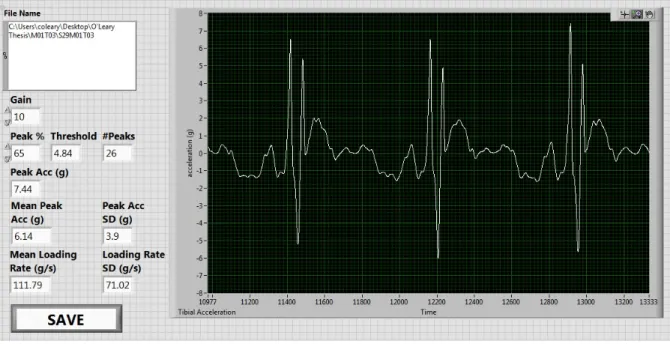
represent foot strikes, no peak could be selected within the 200-millisecond timeframe after the first peak was selected. The average PTA and LR for the five 20-second segments for each condition per subject were then averaged together, taking in account the number of peaks per trial, to generate a grand mean for both the music and no music conditions. If there were less than ten peaks during one of the epochs, due to large outliers, then that epoch was discarded and only four 20-second epochs were used for analysis.
Figure 4: Screenshot of Labview batch-processing program used to analyze tibial accelerometer data. Screenshot is zoomed in to show three individual peaks.
Salivary Cortisol Sampling
26
of saliva was collected into a polypropylene cup for each sample. Collected saliva samples were transferred into cryo-freeze tubes and stored at -80° Celsius for later analysis.
Saliva cortisol levels were assessed using an expanded range high sensitivity enzyme immunoassay (ELISA) kit (Salimetrics, State College, PA). Saliva specimens were assayed using a pooled means method. Each individual sample was centrifuged and then 20 µl of each sample was pipetted into one comprehensive tube for each sample condition. Therefore, there were six pooled mean tubes (M1-Pre, -Mid, -Post; M2-Pre, -Mid, -Post). Each pooled mean tube was assayed in quintuplicate. Six individual subjects that were either responders or non-responders were also assayed in the same ELISA.
Statistical Analysis
All statistical analyses were performed using SPSS statistical software (version 19.0, Chicago, IL). Significance was set a priori at α<0.05. All values are displayed as means ± standard deviations (SD), unless otherwise noted. After using appropriate sample size calculation software, it was determined that at least 20 subjects were needed for statistical significance at a power level (ß) of 0.80 and α level of 0.05 (Appendix A).
27 CHAPTER IV
RESULTS Subject Characteristics
Thirty volunteers (23 women, 7 men, 167.0 ± 8.6 cm, 59.8 ± 9.6 kg), ages 18-24 (19 ± 1 y) participated in the study. Subjects were untrained (less than 120 minutes/week) for at least the six months prior to participation, but were recreationally active in nature (90 ± 24 min/week of aerobic exercise). Subjects ran at self-selected comfortable pace (9.8 ± 1.0 km/h) during the trial, which elicited an exercise intensity of 79.2% ± 11.0% based on the Karvonen HR reserve equation (Karvonen & Vuorimaa, 1988). They also found the music to be enjoyable (4.2 ± 0.5 on 5 point Likert scale, with 5 being ‘enjoyed a lot’ and 1 being ‘did not enjoy at all’).
Tibial Acceleration
Table 1 exhibits mean ± SD of PTA, LR, and number of peaks per 20-second epoch. There was no difference between the two music conditions for PTA (p=0.76), LR (p=0.41), or number of peaks (p=0.29).
Table 1: Tibial acceleration measurements during 30-minute exercise session with 15 minutes spent both with and without music (mean ± SD)
Measure Music No Music
PTA (BW) 0.62 ± 0.23 0.61 ± 0.22
LR (BW/s) 16.37 ± 8.30 15.84 ± 6.25
Number of peaks 23.0 ± 4.7 22.6 ± 5.4
28 Physiological and Psychological Response
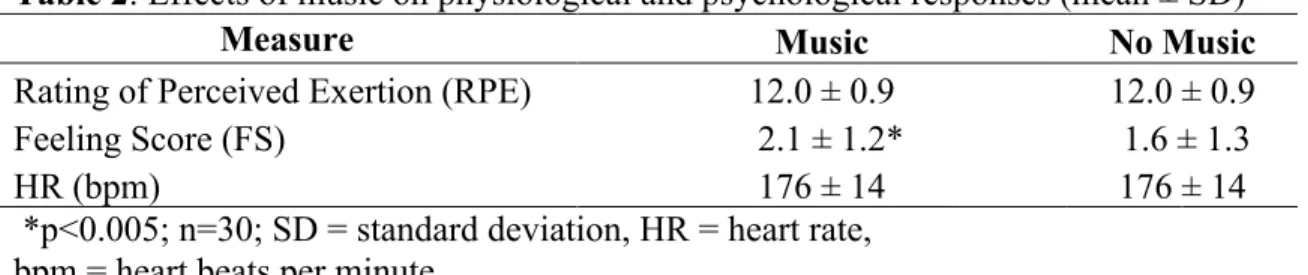
Table 2 exhibits mean ± SD HR, RPE, and FS responses. The only difference between music and no music conditions was a greater FS during the music condition (p<0.005). Neither HR (p=0.88) nor RPE (p=0.67) were different between the music and no music conditions.
Table 2: Effects of music on physiological and psychological responses (mean ± SD)
Measure Music No Music
Rating of Perceived Exertion (RPE) 12.0 ± 0.9 12.0 ± 0.9
Feeling Score (FS) 2.1 ± 1.2* 1.6 ± 1.3
HR (bpm) 176 ± 14 176 ± 14
*p<0.005; n=30; SD = standard deviation, HR = heart rate,
bpm = heart beats per minute
Salivary Cortisol
29
Before Middle After
Sampling Time
-0.1 0.0 0.1 0.2 0.3 0.4 0.5 0.6 0.7
C
or
tis
ol
(u
g/
dL
)
Music - No Music No Music - Music
30 CHAPTER V DISCUSSION Introduction
The primary purpose of this study was to examine the acute effects of asynchronous music on PTA and LR produced during a 30-minute bout of submaximal treadmill running. It was hypothesized that runners listening to music would be associated with greater PTA and LR due to the distracting effect of music, which decreases the attention paid to the existing feedback received by the central nervous system. A secondary purpose of this study was to assess if music had physiological and psychological effects on the subject through the monitoring of salivary cortisol, HR, RPE and FS. Cortisol, HR, and FS were hypothesized to be slightly augmented when listening to music, due to the chosen music’s stimulatory effect. RPE was hypothesized to be attenuated due to music’s distracting and uplifting effect.
31 Tibial Acceleration Response
Examining the effect of listening to music on tibial acceleration was the primary purpose of this study. It was hypothesized that PTA and LR would be augmented during the music condition, as the listener would be distracted by the music and also be unable to hear his or her foot strikes. However, the results of this study do not support the initial hypothesis, as both PTA and LR were not different between music and no music conditions.
No previous research was found that examined the effects of music on biomechanics during a running task. However, some studies have examined the effects of music on LR and gait during physical activity (Fujarcuk, 2006; Sejdic et al., 2012; Styns et al., 2007) or examined PTA and LR during treadmill running (Crowell & Davis, 2011; Mercer et al., 2003; Schaffner et al., 2005). Fujarczuk (2006) examined the effect of different music tempos on GRFs and LRs during step aerobics. The tempo of the music affected LR, with greater LRs being evident at faster music tempos around 138 BPM. Unfortunately, the study by Fujarczuk (2006) did not include a no music condition, as all groups listened to some form of music. In the current study, all the songs had similar tempos, ranging from 126-136 (Appendix B), and the effects of different tempos was not analyzed. Considering Fujarczuk’s study (2006) exhibited differences in LR at higher tempos, it could be hypothesized that the presence of fast music could affect LR compared to having no music. However, this was not supported by the results of the current study, as LR was not different between music conditions.
32
using force platforms (Schaffner et al., 2005). These LRs are also not like the LRs reported in the current study. The differences could be due to the use of force platforms, rather than accelerometers. Research has shown there is a relationship between data derived from accelerometers and force platforms (r = .76-.96) (Hennig & LaFortune, 1991; Sinclair et al., 2013). Yet this relationship is not perfect and should be interpreted cautiously.
Other studies have examined PTA and LR in regards to treadmill running using tibial accelerometers (Crowell & Davis, 2011; Mercer et al., 2003; Shung, Oliveria, & Nadal, 2009). The PTA in the current study, when converted to g’s, was within the SD of the PTA reported in other studies (Crowell & Davis, 2011; Mercer et al., 2003; Shung et al., 2009). However, the LRs were not similar between our study and Shung et al.’s (2009), as their results demonstrated LRs about two times greater than the current study. Both Crowell and Davis (2011) and Mercer et al. (2003) used somewhat similar tibial acceleration methods to the current study. However, they placed their accelerometer on the distal tibia, closer to the ankle joint, which could have produced different results. The current study used a proximal tibial placement because of safety and reproducibility reasons, as none of the subjects had worn an accelerometer. The researchers did not want tripping to be an issue or for subjects to worry about the accelerometer impeding their natural gait. The plastic mount for the accelerometer was also fitted for a wider surface, which made the proximal tibia a more suitable location. Future research should examine if there is any difference between the locations of tibial accelerometer placement, as LRs derived from accelerometers may be dependent on accelerometer placement.
33
stride interval dynamics, as music led to a more nonstationary stride interval time series. The researchers surmised that gait is susceptible to the rhythmic sensory cuing (tempo/beat) of music. Likewise, Styns and colleagues (2007) found music increases walking speed and induces synchronization of walking pace to the music tempo. Both of these studies imply music is able to alter gait by causing a loss of concentration during the task, with concentration diverted to listening to music. However, the results of current study suggest running is less affected by music, possibly because it is a more complex task that requires more neural control and mental concentration.
There are a few possible reasons why the tibial acceleration data did not confirm the initial hypothesis. Music has been postulated to provide performance and psychological benefits through a diversion of attentional focus or dissociation effect (Nethery, 2002; Nethery et al., 1991; Rejeski, 1985). This effect is great enough to reduce RPE, along with increasing FS, time to exhaustion, and power during endurance exercise tasks (Karageorghis & Priest, 2012a), especially in untrained participants (Brownley et al., 1995; Mohammadzadeh et al., 2008). However, based on the results of this study, the dissociation effect of music is not great enough to affect the neural pathways controlling running locomotion. Afferent signals from proprioceptors regarding fatigue and muscle function could be preferentially processed in spite of the extra musical stimuli. This could be because of the large gross muscle actions involved with running utilize large neural ensembles that are more robust to small changes in afferent stimuli (i.e from music) (Pedersen et al., 1998).
34
though it was within the recommended range set out by Karageorghis and colleagues (2012). Allowing participants to choose what songs they listened to, possibly from a list of pre-approved songs, could have produced different results, although this decreases the amount of control in the study.
Another possible reason why there was no difference between music and no music conditions could be due to the exercise intensity during the trial. While subjects were asked to pick a running speed that was comfortable, many subjects appeared to be tired by the end of 30 minutes (all runners completed the 30 minute trial). Subjects exercised at ~79% intensity, based on the Karvonen HR reserve method, which is on the border between moderate and intense exercise. Music has less of an effect at higher exercise intensities when compared to low to moderate intensities (Boutcher & Trenske, 1990; Tenenbaum et al., 2004). Pennebaker & Lightner (1990) suggest that as a task becomes more complex and novel, signals involved with effort will be preferentially processed. This could mean that at higher exercise intensities an individual will deviate less from their natural running form since they are paying less attention to the music and concentrating more on running.
35
peaks were excluded by not allowing any peaks 200-ms after the initial peak). Therefore, some 20-second epochs with large outliers did not have the sufficient amount of peaks necessary to be include in the analyses, and may have increased PTA and LR, due to the conservative approach used during batch-processing.
The effect of music may be more evident during a movement that is less confined than running on a treadmill. Running outdoors, where runners can self-select their running pace, may allow for more variability in gait, which is augmented by music. Individuals may also have not been familiar with running on a treadmill. This could lead to subjects paying more attention to their running form, due to anxiety about tripping and falling. Using subjects more versed in treadmill running may help remove any possible anxiety, allowing the subject to relax and dissociate from the exercise task. However, untrained subjects were chosen because of their propensity to be affected more by music than trained runners, even during treadmill running tasks (Brownley et al., 1995; Mohammadzadeh et al., 2008). This possible issue could be fixed by using a telemetered accelerometer and overground running which would allow the subject to not be confined to the treadmill or a single force platform. Another possibility would be to use an instrumented treadmill with imbedded force platforms, which would eliminate the need for the accelerometer. Testing could then be performed on two separate days, since positioning the accelerometer in exactly the same spot would not be a concern.
36
difference could also be due to other methodological reasons, such as the music selection, accelerometer set up, batch-processing analysis, or the one-day, continuous protocol used in this study. Considering that this appears to be the first study to quantify the effect of music on running biomechanics, additional research is still needed to confirm these results.
Physiological Response
It was hypothesized HR and FS would be augmented and RPE would be attenuated while listening to music during the exercise session. Based on the results of this study, the hypothesis concerning FS was confirmed, as there was greater FS during the music condition. Both the HR and RPE hypotheses were refuted, as HR and RPE were not different between the two music conditions. Unlike the lack of research regarding tibial accelerations, there is ample research on the physiological and psychological exercise response to music.
37
the previous findings of FS being positively affected when listening to music during aerobic exercise.
Feeling score, and therefore mood, was elevated during the music condition for multiple reasons. Listening to music during exercise may have generated positive emotional states, rather than only acting as a distractor to the exercise (Boutcher & Trenske, 1990). The music may have been associated with previous events. Multiple subjects made comments regarding past experiences with certain songs both during and after the exercise session. These associations could have been positive in nature, allowing the subject to focus attention away from the fatiguing exercise. The untrained nature of the subjects may have also played a role in the elevated feeling score, as untrained subjects derive greater psychological benefits from music. Trained individuals view music as more of a negative external distractor (Brownley et al., 1995). While subjects were instructed to truthfully report FS, they may not have wanted to upset the researchers by reporting FS values lower than zero if they were not enjoying the music.
Unlike FS, RPE did not change between the two music conditions. The literature on music and RPE is equivocal, as almost half of the reviewed studies exhibited no difference between music conditions, while the other half found decreases in RPE. No reviewed study found music increased RPE compared to no music conditions.
38
RamezanPour et al., 2012) all decreased RPE in studies using exercise protocols ranging from 30 minutes of submaximal (40%VO2max) to cycling at 80-85% of maximum HR until
exhaustion. Yet, many of these same musical choices did not affect RPE in other studies using a similar range of intensities (Brownley et al., 1995; Copeland & Franks, 1991; Edworthy & Waring, 2006; Elliot et al., 2005; Nakamura et al., 2010). In summary, music has a slightly greater affect on RPE during submaximal conditions, with faster music decreasing RPE depending on personal preference for the music, along with the length and intensity of the protocol.
The music in the current study was upbeat, fast, and popular in nature. However, this study used a continuous running protocol, with 15 minutes spent either listening or not listening to music. This is in contrast to the commonly utilized protocol, in which subjects report to the laboratory on separate days, with different music conditions on each day. The single day protocol, coupled with the moderate/high exercise intensity, are possible reasons why there was no difference in RPE between conditions. The single day protocol increased the internal validity of the study, as all measurements were made using similar conditions, but may not be as applicable to the real world since individuals rarely usually choose one music condition for the entire exercise session. Using this design, subjects may not have been allowed to fully adjust to either music condition and my still have been influenced by the other condition.
39
collect both RPE and FS, future research should continue to evaluate both variables, as the combination may help researchers better understand the perception of the exercise.
Like RPE, there was no difference in HR between the two music conditions in the current study. This is not surprising because HR is closely related to and is one of the underlying physiological factors linked to RPE (Borg, 1982). Within the literature, the majority of studies conclude that music does not affect HR (Boutcher & Trenske, 1990; Brownley et al., 1995; Copeland & Franks, 1991; Nakamura et al., 2010; Nethery, 2002; Potteiger et al., 2000; Szabo & Leigh, 1995; Seath & Trow, 1995; Yamashita et al., 2006). This is in agreement with the results of the current study. However, three studies found that loud, fast and exciting music increased HR when performing both short submaximal (Edworthy & Waring, 2006) and maximal exercise bouts (Copeland & Franks, 1991; RamezanPour et al., 2012). On the other hand, one study (Szmedra et al., 1997) found classical music decreased HR, during a submaximal protocol (70%VO2max). Other studies using classical music did not find a reduction in HR (Potteiger et al., 2000; Szabo & Leigh, 1999). It appears that loud, fast, and upbeat music may influence HR when undergoing shorter exercise protocols (i.e. <12 minutes), but not during longer submaximal protocols.
40
The study design was not chosen to test these secondary variables (HR, RPE, FS), as it was designed to assess tibial accelerations. These secondary variables were recorded to help establish if music had a more global effect and indicate that there was not a fatigue effect, as counterbalancing negated this bias. So even though a continuous running protocol was used, the fact that FS was still different between music conditions signifies music has a strong effect on FS. This appears to be more robust than the effect of music on either HR or RPE. Future researchers should therefore utilize FS when quantifying the effects of music during any type of exercise or music intervention.
Salivary Cortisol Response
Salivary cortisol was hypothesized to be augmented when listening to music due to music’s stimulatory effect. However, salivary cortisol was not different between any means, as there was no effect of time or music condition.
41
motivational group’s running time was 41.7% longer than the relaxation group (p<0.01). Since the duration of exercise affects cortisol release, the differences might simply be an effect of exercise duration. The music selected for the current study was considered stimulatory or fast because of its >125 bpm tempo rate, prominent rhythmic qualities, and stimulatory lyrics adequate for repetitive tasks such as running (Karageorghis et al., 2012). Therefore, the motivational or fast music results from the previous two studies would be the best comparison. However, considering the differences between the exercise protocols, type of cortisol sampling, and the lack of standardization of when subjects came in to do their testing in this study (due to the diurnal variation of cortisol), it is difficult to compare the absolute values and results across these studies.
The effect of exercise also did not seem to be either intense enough or long enough in duration to elicit an overall change in cortisol from pre to post exercise. Previous studies found that salivary cortisol did not change after 30 minutes of submaximal exercise, but did increase at greater intensities (Van Bruggen et al., 2011). The exercise intensity used in the current study probably fell in between these two intensities as individuals exercised at 79% of their HR reserve, which equates to about 70% VO2max.
42
a rise in the cortisol response that would affect the serum-salivary dynamic, ultimately affecting the salivary output. Salivary cortisol is strongly correlated to serum cortisol (Van Bruggen et al., 2011) and is easily collected during continuous endurance exercise, especially when using untrained runners. Yet, studies have found differences in post-exercise serum and salivary cortisol due to a delay in serum cortisol moving to the salivary glands (O’Connor & Corrigan, 1987). However, neither the exercise intensity nor duration in this study were great enough to elicit a rise in the cortisol response that would affect the serum-salivary dynamic, ultimately affecting the salivary output. Therefore, using salivary cortisol should be considered when wanting to approximate the biologically active proportion of cortisol in the blood and limit the technical difficulties of collecting samples during exercise.
Limitations and Future Research
43
imbedded force platforms. This would allow for subjects to not have to wear an accelerometer or have to complete both music conditions during the same day or exercise trial. An instrumented treadmill would also allow for the measurement of stride frequency, which could help assess the entrainment effect of music. Using a telemetered accelerometer and overground running would also be a place for future research that would add to the real-world applicability of this type of research. Other limitations of the study include subjects not being able to choose their own music and the Labview batch-processing program, which may not have characterized all the foot strikes during each 20-second epoch or may have included some false peaks. Future research may also want to let subjects select music from a list of pre-approved songs within a range of music tempos (i.e. 125-140 bpm), especially if the research design is not focused on assessing the effect of small changes in music tempo on biomechanics. Further investigation of the difference between placing the tibial accelerometer on the distal or the proximal anteriomedial aspect of the tibia is also needed. Conclusion
44
APPENDICES*
Appendix A: Sample Size Calculations
A sample size calculation was carried out using appropriate sample size applications (Dupont & Plummer, 2010). Prior data that used tibial accelerations and two conditions, along with reporting clinically significant findings (Milner et al., 2006), indicate that the difference in the response of matched pairs is normally distributed with standard deviation 2.2 peak acceleration units. If the true difference in the mean response of matched pairs is 1.90 peak acceleration units, which was reported previously (Milner et al., 2006), the current will need to study at least 20 subjects to be able to reject the null hypothesis that this response difference is zero with probability (power) 0.8. The Type I error probability associated with this test of this null hypothesis is 0.05. We will recruit 10 more subjects to make sure that the appropriate power is achieved if the difference between the two groups is different in this study, which is possible due to the fact that the effect of music on tibial acceleration magnitudes during running have not been investigated.
45
Appendix B: Music Playlist
Artist Song Song Time Beats Per Minute
Foster the People Pumped Up Kicks 4:00 130
Capital Cities Safe and Sound 3:13 126
Icona Pop I Love It 2:42 126
Imagine Dragons Radioactive 3:08 136
Calvin Harris Sweet Nothing 3:25 128
46
Appendix C: Medical History Questionnaire
Subject ID: _______________________________________________ Date______________ Email: ___________________________________ Cell Phone ____________________ Other Phone ________________ Home
Address_____________________________________ Person to contact in case of emergency
__________________________________________
Emergency Contact Phone ______________________ Birthday
(mm/dd/yy)____/_____/_____
Personal Physician ____________________________ Physician’s Phone_______________
Gender ________ Age ______(yrs) Height ______(ft)______(in) Weight______(lbs)
Does the above weight indicate: a gain____ a loss____ no change____ in the past 6 months?
If a change, how many pounds?___________(lbs)
A. JOINT-MUSCLE STATUS (!Check areas where you currently have problems)
Joint Areas Muscle Areas
( ) Wrists ( ) Arms
( ) Elbows ( ) Shoulders
( ) Shoulders ( ) Chest
( ) Upper Spine & Neck ( ) Upper Back & Neck
( ) Lower Spine ( ) Abdominal Regions
( ) Hips ( ) Lower Back
( ) Knees ( ) Buttocks
( ) Ankles ( ) Thighs
( ) Feet ( ) Lower Leg
( ) Other_______________________ ( ) Feet
( ) Other___________________
PRE
47
B. HEALTH STATUS (!Check if you currently have any of the following conditions)
( ) High Blood Pressure ( ) Acute Infection
( ) Heart Disease or Dysfunction ( ) Diabetes or Blood Sugar Level Abnormality
( ) Peripheral Circulatory Disorder ( ) Anemia ( ) Lung Disease or Dysfunction ( ) Hernias
( ) Arthritis or Gout ( ) Thyroid Dysfunction
( ) Edema ( ) Pancreas Dysfunction
( ) Epilepsy ( ) Liver Dysfunction
( ) Multiply Sclerosis ( ) Kidney Dysfunction ( ) High Blood Cholesterol or ( ) Phenylketonuria (PKU) Triglyceride Levels ( ) Loss of Consciousness ( ) Allergic reactions to rubbing alcohol
C. PHYSICAL EXAMINATION HISTORY
Approximate date of your last physical examination _________________________ Physical problems noted at that time ______________________________________ Has a physician ever made any recommendations relative to limiting your level of physical exertion? _________YES __________NO
If YES, what limitations were recommended?
___________________________________________________________________________ D. CURRENT MEDICATION USAGE (List the drug name and the condition being managed)
MEDICATION CONDITION
__________________________ ____________________________________ __________________________ ____________________________________ __________________________ ____________________________________
E. PHYSICAL PERCEPTIONS (Indicate any unusual sensations or perceptions. !Check if you have recently experienced any of the following during or soon after physical activity (PA); or during sedentary periods (SED))
PA SED PA SED
( ) ( ) Chest Pain ( ) ( ) Nausea
( ) ( ) Heart Palpitations ( ) ( ) Light Headedness ( ) ( ) Unusually Rapid Breathing ( ) ( ) Loss of Consciousness
( ) ( ) Overheating ( ) ( ) Loss of Balance
( ) ( ) Muscle Cramping ( ) ( ) Loss of Coordination
( ) ( ) Muscle Pain ( ) ( ) Extreme Weakness
48
( ) ( ) Other________________________ ( ) ( ) Mental Confusion
F. FAMILY HISTORY (!Check if any of your blood relatives . . . parents, brothers, sisters, aunts, uncles, and/or grandparents . . . have or had any of the following)
( ) Heart Disease
( ) Heart Attacks or Strokes (prior to age 50)
( ) Elevated Blood Cholesterol or Triglyceride Levels ( ) High Blood Pressure
( ) Diabetes
( ) Sudden Death (other than accidental)
G. EXERCISE STATUS (Please provide a precise estimation of your previous exercise habits)
Do you regularly engage in aerobic forms of exercise (i.e., jogging, cycling, walking, etc.)? YES NO
In the past 6 months, how many minutes per week do you spend performing
this type of exercise? ______ minutes
Do you regularly lift weights? YES NO
In the past 6 months, how many minutes per week do you spend performing
this type of exercise? ______ minutes
Do you regularly play recreational sports (i.e., basketball, racquetball, volleyball, etc.)? YES NO
In the past 6 months, how many minutes per week do you spend performing
49
50
Appendix E: Data Collection Sheets
Data Collection Sheet
Subject ID: ______________________ Date & Time: _________________ Height: __________________ Weight: ______________________ Resting Heart Rate: _________________
Current training level (minutes per week): __________ Speed (mph): _____________ First condition (circle): M or C
Time (minutes)
Heart Rate (bpm)
RPE
FS
Acceler
3
6
9
12
15
18
21
24
27
30
51
52
Appendix G: Raw Cortisol Data
Salivary Cortisol F(2,12) = .27964, p=.761
PRE MID POST
Music 1st .362 ± .110 .274 ± .030 .329 ± .050
Music 2nd .258 ± .110 .267 ± .030 .297 ± .050
Mean ± SD
95% Confidence Intervals
PRE MID POST
53
REFERENCES
Abraham, A., & Thomas, C. S. (1999). The effects of music tempo on self-selected exercise intensity in active female college students. Medicine and Science in Sports and Exercise, 31(5), S315.
Annesi, J. (2001). Effects of music, television, and a combination entertainment system on distraction, exercise adherence, and physical output in adults. Canadian Journal of Behavioral Science, 33(3), 193-202.
Beck, B. R. (1998). Tibial stress injuries. an aetiological review for the purposes of guiding management. Sports Medicine (Auckland, N.Z.), 26(4), 265-279.
Besharat, A. (2010). How co-branding versus brand extensions drive consumers' evaluations of new products: A brand equity approach. Industrial Marketing Management; Building, Implementing, and Managing Brand Equity in Business Markets, 39(8), 1240-1249. Bharani, A., Sahu, A., & Mathew, V. (2004). Effect of passive distraction on treadmill
exercise test performance in healthy males using music. International Journal of Cardiology, 97(2), 305-306.
Borg, G. A. (1982). Psychophysical bases of perceived exertion. Medicine and Science in Sports and Exercise, 14(5), 377-381.
Boutcher, S. H., & Trenske, M. (1990). The effects of sensory deprivation and music on perceived exertion and affect during exercise. Journal of Sport& Exercise Psychology, 12, 167-176.
Brownley, K. A., McMurray, R. G., & Hackney, A. C. (1995). Effects of music on physiological and affective responses to graded treadmill exercise in trained and untrained runners. International Journal of Psychophysiology: Official Journal of the International Organization of Psychophysiology, 19(3), 193-201.
Copeland, B. L., & Franks, B. D. (1991). Effects of types and intensities of background music on treadmill endurance. The Journal of Sports Medicine and Physical Fitness, 31(1), 100-103.
54
Crewther, B. T., Heke, T., & Keogh, J. W. (2011). The effects of training volume and competition on the salivary cortisol concentrations of olympic weightlifters. Journal of Strength and Conditioning Research / National Strength & Conditioning Association, 25(1), 10-15.
Crowell, H. P., & Davis, I. S. (2011). Gait retraining to reduce lower extremity loading in runners. Clinical Biomechanics (Bristol, Avon), 26(1), 78-83.
Curran, M. L. (2012). Effects of synchronous music in sport and exercise: A meta-analytic review and field studies of ultra-distance athletes. (Unpublished Doctoral Dissertation). University of Southern Queensland, England.
Davis, I., Milner, C., & Hamill, J. (2004). Does increased loading during running lead to tibial stress fractures? A prospective study. Medicine and Science in Sports and Exercise, 35(Supplement), S58.
Edworthy, J., & Waring, H. (2006). The effects of music tempo and loudness level on treadmill exercise. Ergonomics, 49(15), 1597-1610.
Elliot, D., Carr, S., & Savage, D. (2004). Effects of motivational music on work output and affective responses during submaximal cycling of a standardized perceived intensity. Journal of Sport Behavior, 27, 134-147.
Elliott, D., Carr, S., & Orme, D. (2005). The effect of motivational music on sub-maximal exercise. European Journal of Sport Science, 5(2), 97-106.
Elvin, N. G., Elvin, A. A., & Arnoczky, S. P. (2007). Correlation between ground reaction force and tibial acceleration in vertical jumping. Journal of Applied Biomechanics, 23(3), 180-189.
Fujarczuk, K. (2006). Ground reaction forces in step aerobics. Acta of Bioengineering and Biomechanics, 8(2),111-118.
Ghaderi, M., Rahimi, R., & Azarbayjani, M. (2009). The effect of motivational and relaxation music on aerobic performance, rating perceived exertion and salivary cortisol in athlete meals. South African Journal for Research in Sport, Physical Education & Recreation, 31, 29-38.
Hardy, C. J., & Rejeski, W. J. (1989). Not what, but how one feels: The measurement of affect during exercise. Journal of Sport & Exercise Psychology, 11(3), 304-317.