S T U D Y P R O T O C O L
Open Access
Rationale, design and methods for the
RIGHT Track Health Study: pathways from
childhood self-regulation to cardiovascular
risk in adolescence
Laurie Wideman
1*, Susan D. Calkins
2, James A. Janssen
1, Cheryl A. Lovelady
3, Jessica M. Dollar
2, Susan P. Keane
4,
Eliana M. Perrin
5and Lilly Shanahan
6Abstract
Background:Cardiovascular risk factors during adolescence—including obesity, elevated lipids, altered glucose metabolism, hypertension, and elevated low-grade inflammation—is cause for serious concern and potentially impacts subsequent morbidity and mortality. Despite the importance of these cardiovascular risk factors, very little is known about their developmental origins in childhood. In addition, since adolescence is a time when individuals are navigating major life changes and gaining increasing autonomy from their parents or parental figures, it is a period when control over their own health behaviors (e.g. drug use, sleep, nutrition) also increases. The primary aim of this paper is to describe the rationale, design and methods for the RIGHT Track Health Study. This study
examines self-regulation as a key factor in the development of cardiovascular risk, and further explores health behaviors as an explanatory mechanism of this association. We also examine potential moderators (e.g. psychosocial adversities such as harsh parenting) of this association.
Method/design:RIGHT Track is a longitudinal study that investigates social and emotional development. The RIGHT Track Health Study prospectively follows participants from age 2 through young adulthood in an effort to understand how self-regulatory behavior throughout childhood alters the trajectories of various cardiovascular risk factors during late adolescence via health behaviors. Individuals from RIGHT Track were re-contacted and invited to participate in adolescent data collection (~16.5, 17.5 and 18+years old). Individuals completed assessments of body composition, anthropometric indicators, fitness testing (via peak oxygen consumption), heart rate variability during orthostatic challenge, 7-day accelerometry for physical activity and sleep, 24-h dietary recalls, and blood analysis for biomarkers related to metabolic syndrome, inflammatory status and various hormones and cytokines. Individuals also completed extensive self-report measures on diet and eating regulation, physical activity and sedentary behaviors, sleep, substance use, medical history, medication use and a laboratory-day checklist, which chronicled previous day activities and menstrual information for female participants.
Discussion:Insights emerging from this analysis can help researchers and public health policy administrators target intervention efforts in early childhood, when preventing chronic disease is most cost-effective and behavior is more malleable.
Keywords:Longitudinal cohort, Childhood self-regulation, Cardiovascular risk factors, Adolescent health behaviors, Diet, Physical activity
* Correspondence:[email protected]
1Department of Kinesiology, University of North Carolina Greensboro,
Greensboro 27402, NC, USA
Full list of author information is available at the end of the article
Background
Obesity is a key risk factor for cardiovascular disease (CVD), and while obesity rates have remained relatively stable in children and adolescents in the past few years [1, 2], the obesity and overweight prevalence in adoles-cents aged 12–19 is still quite high (17.3 % for obesity (BMI≥95th percentile) [1], and 32.2 % for overweight and obesity combined (≥85th percentile) [1]). Over-weight and obesity status among young people is often accompanied by increases in other traditional cardiovas-cular risk factors, such as elevated lipids, altered glucose metabolism, and hypertension [3–9]. Systematic eleva-tions of these factors constitute the metabolic syndrome, which is a robust predictor of morbidity and mortality in later life [10–17]. Alarmingly, estimated rates of meta-bolic syndrome in adolescents have more than doubled from 4.2 % in the early 90’s to 10.1 % in a more recent study [18]. Although it is not as extensively studied, ele-vated systemic low-grade inflammation is a correlate of obesity even at young ages [19]. Indeed, it is an inde-pendent marker of cardiovascular and metabolic disease risk [10–17, 19–21] and predicts adult CVD independ-ent of metabolic syndrome [22–24]. Such elevated in-flammation is relatively stable [25–27] and associated with vascular changes involved in atherosclerosis, which appear to be reversible during the early life course [28–32]. Thus, cardiovascular risk factors dur-ing adolescence—including obesity, elevated lipids, al-tered glucose metabolism, hypertension, and elevated low-grade inflammation—is cause for serious concern. Cardiovascular risk factors initiate and contribute to chronic disease processes and robustly predict subse-quent morbidity and mortality by young adulthood or even earlier [33–38]. Despite the importance of these cardiovascular risk factors to health, most are rarely studied during adolescence, and very little is known about their developmental origins in childhood.
Although most research has focused on cardiovascular risk factors beginning in midlife or later, adolescence is emerging as a key period for potential increases in cardio-vascular risk. Recent data from representative samples in-dicate that rates of several cardiovascular risk factors (e.g., hypertension, obesity, elevated low-grade inflammation) rise during adolescence,reaching relatively high levels by young adulthood [12, 18, 25, 39–41], and self-report of perceived health also declines beginning in mid-adolescence [42, 43]. In response to these trends, research studies focusing on prevention and intervention have ex-amined and attempted to mitigate several early sources of cardiovascular risk factors; including “obesogenic” envi-ronments (neighborhood, home, childcare, school), media influences and other cultural and community factors as well as family factors, such as parental knowledge, atti-tudes, and modeling [44–47]. This work has contributed
to immense progress in this field, and, quite possibly to the leveling off or even declining rates of pediatric obesity in the past 10 years [48–51]. Nevertheless, the prevalence of obesity remains high, offering an enduring impetus for more efficient translation of research-based interventions into professional practice guidelines that reduce obesity.
Research-based interventions with high levels of con-trol for multiple variables are often expensive and bur-densome for participants, limiting their utility for large scale dissemination. Ground-breaking new research sug-gests that deficits in self-regulation (sometimes also referred to as self-control) during childhood could be key to predicting adult disease risk, even when account-ing for other risk factors such as poverty or low IQ [52]. Yet virtually no research to date has investigated whether this childhood individual-level risk factor is as-sociated with increases in cardiovascular risk during adolescence and via which mechanisms. Adult chronic disease is concentrated among people who exhibited childhood deficits in self-regulation (SR) [52]. We use the term SR to refer to a specific set of processes or con-trol mechanisms that function at the biological, emo-tional and behavioral level and enable individuals to manage arousal, attention, emotion, behavior, and cogni-tion in adaptive ways [53–55]. Based on research among adults, both SR and cardiovascular risk factors appear to be associated with health behaviors (e.g., substance use, exercise, nutrition, and sleep). Given that SR emerges early and undergoes substantial development across childhood and into adolescence, an understanding of childhood emotional, behavioral, and physiological pre-cursors to adolescent cardiovascular risk factors would inform and fine-tune prevention and intervention efforts that are aimed at disrupting pathways to adolescent car-diovascular risk, and ultimately at reducing the likeli-hood of adult CVD. This prospective-longitudinal study tracks changes in cardiovascular risk factors during late adolescence, a time during which parental control de-creases dramatically, and SR may become more influen-tial with respect to an individual’s health behaviors.
whether health behaviors mediate the childhood SR to adolescent cardiovascular risk factor pathways; 3) to estab-lish directionality between health behaviors and cardiovas-cular risk factors and among indicators of cardiovascardiovas-cular risk during adolescence; and; 4) to test whether early SR to adolescent cardiovascular risk associations are moder-ated by the presence or absence of additional vulnerability factors, such as psychosocial adversity (e.g. poverty, harsh parenting).
Methods/design
All procedures described in this manuscript have been approved by the University of North Carolina Greens-boro Institutional Review Board (#11-0360; PI Wideman and #09-0427; PI Calkins) and the University of North Carolina Chapel Hill Institutional Review Board (#12-1817; PI: Shanahan). Pilot testing started in Fall 2012 and data collection for the first assessments with the current study protocol began in Spring 2014.
Sample description
The current study recruits adolescents from three co-horts of individuals who are part of the ongoing, longitu-dinal study known as RIGHT Track, which investigates social and emotional development. The goal of the ori-ginal recruitment was to obtain a sample of children who were at risk for developing future externalizing behavior problems and who were representative of the surrounding community in terms of race and socioeco-nomic status (SES). All cohorts were recruited through child day care centers, the County Health Department, and the local Women, Infants, and Children (WIC) pro-gram in central North Carolina (see Fig. 2 for setting). Potential participants for cohorts 1 and 2 were recruited at 2-years of age (cohort 1: 1994-1996 and cohort 2: 2000-2001) and screened using the Child Behavior Checklist (CBCL 2-3) [56], completed by the mother, in order to over-sample for externalizing behavior prob-lems. Children were identified as being at risk for future
externalizing behaviors if they received an externalizing T-score of 60 or above. Efforts were made to obtain ap-proximately equal numbers of males and females. This recruitment effort resulted in a total of 307 children. Co-hort 3 was initially recruited when infants were 6 months of age (in 1998) for their level of frustration, based on la-boratory observation and parent report, and were followed through the toddler period (see Calkins et al. 2002 [57], for more information). Children from Cohort 3 whose mothers completed the CBCL at 2-years of age (N= 140) were then recruited for the larger study. Of the entire sample (N= 447), 37 % of children were identi-fied as being at risk for future externalizing problems. There were no significant demographic differences be-tween cohorts with regard to gender,χ2(2, N= 447) = .63, p= .73, race,χ2(2,N= 447) = 1.13,p= .57, or 2-year SES,F (2, 444) = .53,p= .59.
Of the 447 originally selected participants, six were dropped because they did not participate in any data col-lection at 2 years old. An additional 12 families partici-pated at recruitment, did not participate at the 2-year assessment, but did participate at later years. At 4 years of age, 399 families participated. Families lost to attrition included those who could not be located, moved out of the area, declined participation, or did not respond to phone and letter requests to participate. At age 5 years, 365 families participated, including four who did not participate in the 4-year assessment and at 7 years of age, 350 families participated, including 19 who did not participate in the 5-year assessment. Families with lower 2-year SES, t (432) = -2.61, p< .01, were less likely to participate in the 7-year assessment. At age 10, 357 fam-ilies participated, including 31 famfam-ilies who did not participate in the 7-year assessment. Independent of pre-vious participation, attempts were made to recruit all families at every time point. Figure 3 provides detailed participation information at each age and statistical comparisons for participants versus non-participants based on key demographic variables.
Historic data utilized in the current study
Historic data that were collected as part of the original RIGHT Track longitudinal study [NIMH 55625, NIMH 55584 & NIMH 58144] will be utilized as predictors in the current study to answer our specific aims. Measures of childhood adversity were collected at various time points throughout childhood (Table 1) and will be used to assess the role of vulnerability factors in predicting cardiovascular risk in adolescence. The following section includes a brief description and key references for other historic variables that will be used in the current study. For a detailed list of manuscripts that have utilized this historic data, please see Additional file 1.
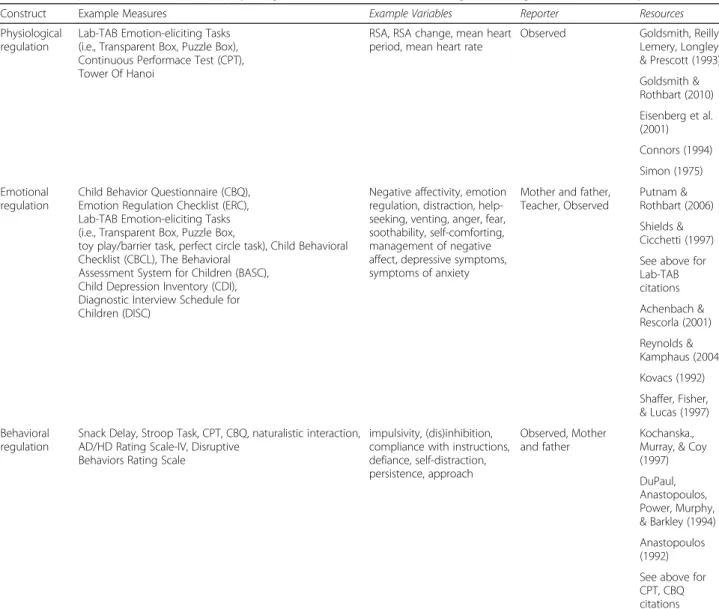
The primary construct of interest from the childhood data is self-regulation. Self-regulation refers to the ability to modulate arousal and behavior in the context of specific environmental demands and these control processes func-tion at the physiological, attenfunc-tional, emofunc-tional, behavioral, cognitive, and social level [55]. Table 2 provides examples of the measures of physiological, emotional, and behavioral regulation that were assessed from ages two through ten. We also provide a more detailed explanation of the assess-ments of these constructs in the text that follows.
Physiological Self-regulation; Investigations of physio-logical markers of self-regulation have underscored the importance of the parasympathetic nervous system for regulating cardiac output under conditions of challenge [58]. Specifically, the myelinated vagus nerve, originating in the brainstem nucleus ambiguus, provides input to Fig. 3Sample attrition summary for childhood self-regulation assessments.
Table 1Examples of different historic measures of childhood adversity collected as part of the RIGHT Track study, measures at ages 2, 4, 5, 7, and 10 years old
Constructs Example Measures Example Variable Reporter Resources
Low
socioeconomic status
Parental education and employment Hollingshead index Mother and father Hollingshead (1975)
Physical aggression, verbal aggression, discipline strategies, negative control, punitive reactions
Mother, father, observed
Harsh parenting
Conflict Tactics Scale, Iowa Family Interaction Rating Scales: Instrument, Alabama Parenting Questionnaire, Home Observation for Measurement of the Environment (HOME), Coping with Children’s Negative Emotions Scale
Physical aggression, verbal aggression, discipline strategies, negative control, physical control, punitive reactions
Mother, father, observed (in laboratory), observed (in home)
Bradley, & Caldwell (1979)
Straus (1979)
Melby & Conger (2001)
Smith, Calkins, Keane, Anastopoulos &, Shelton. (2004)
Fabes, Eisenberg, & Bernzweig (1990)
Fabes, Poulin, Eisenberg, & Madden-Derdich (2002).
Table 2Example measures of childhood physiological, emotional, and behavioral regulation a ages 2, 4, 5, 7, and 10 years old
Construct Example Measures Example Variables Reporter Resources
Physiological regulation
Lab-TAB Emotion-eliciting Tasks (i.e., Transparent Box, Puzzle Box), Continuous Performace Test (CPT), Tower Of Hanoi
RSA, RSA change, mean heart period, mean heart rate
Observed Goldsmith, Reilly,
Lemery, Longley, & Prescott (1993)
Goldsmith & Rothbart (2010)
Eisenberg et al. (2001)
Connors (1994)
Simon (1975)
Emotional regulation
Child Behavior Questionnaire (CBQ), Emotion Regulation Checklist (ERC), Lab-TAB Emotion-eliciting Tasks (i.e., Transparent Box, Puzzle Box,
toy play/barrier task, perfect circle task), Child Behavioral Checklist (CBCL), The Behavioral
Assessment System for Children (BASC), Child Depression Inventory (CDI), Diagnostic Interview Schedule for Children (DISC)
Negative affectivity, emotion regulation, distraction, help-seeking, venting, anger, fear, soothability, self-comforting, management of negative affect, depressive symptoms, symptoms of anxiety
Mother and father, Teacher, Observed
Putnam & Rothbart (2006)
Shields & Cicchetti (1997)
See above for Lab-TAB citations
Achenbach & Rescorla (2001)
Reynolds & Kamphaus (2004)
Kovacs (1992)
Shaffer, Fisher, & Lucas (1997)
Behavioral regulation
Snack Delay, Stroop Task, CPT, CBQ, naturalistic interaction, AD/HD Rating Scale-IV, Disruptive
Behaviors Rating Scale
impulsivity, (dis)inhibition, compliance with instructions, defiance, self-distraction, persistence, approach
Observed, Mother and father
Kochanska., Murray, & Coy (1997)
DuPaul, Anastopoulos, Power, Murphy, & Barkley (1994)
Anastopoulos (1992)
the sinoatrial node of the heart, producing dynamic changes in cardiac activity that allow the organism to transition between sustaining metabolic processes and generating more complex responses to the environment [59]. Of particular interest has been measurement of vagal regulation of the heart (indexed by decreases in re-spiratory sinus arrhythmia (RSA)) when the organism is challenged. Decreases in RSA when the individual is challenged, or vagal withdrawal, is linked to behavioral processes that are regulatory in nature [57, 60].
Physiological regulation procedures. Baseline RSA and RSA change, or vagal withdrawal, were assessed during engagement in developmentally appropriate tasks at each age. Of particular interest to studies of self-regulation is the collection of children’s RSA in a base-line task and tasks that elicit frustration.
At the 2-, 4-, and year visits, children watched a 5-min segment of a neutral video about a puppy that ex-plores its neighborhood to obtain baseline/resting RSA. At ages 7 and 10, children sat quietly to obtain baseline RSA. Children also participated in an age appropriate frustration/challenge task at each time point (Laboratory Temperament Assessment Battery: Locomotor Version 2.0; [61]). At age 2, children were given a toy or cookies in a locked box that they could not open. After 2 min, the experimenter came back in the room and helped the child to get the toy or cookies. At age 4, children were instructed to draw perfect circles and were told repeat-edly for 3.5 min that the circles were not perfect; posi-tive feedback was provided on the last circle drawn. At age 5, children participated in a task where an experi-menter was to divide candy between themselves and the child. The experimenter gave themselves more candy than the child and also took the child’s candy and ate it. At ages 7 and 10 years, children participated in both be-havioral and cognitive frustration tasks. For example, children put together towers of increasing difficulty, depicted in a picture, and participated in a Stroop color-naming interference task where the child was asked to read words by noting the color the word was printed in and not the word. Children also completed a task at ages 7 and 10, in which the child was presented a puzzle in a large box that was to be completed without looking at it; children could cheat by lifting a cloth that covered the front of the box.
Respiratory Sinus Arrhythmia (RSA). To collect heart rate data, the experimenter placed three disposable pediatric electrodes in an inverted triangle on the child’s chest. The electrodes were connected to a preamplifier, the output of which was transmitted to a vagal tone monitor (Ages 2, 4, 5, 7, & 10 years (cohort 1): VTM-I, Delta Biometrics, Inc., Bethesda, MD; Age 10 cohorts 2 and 3: Biolog 399x; UFI; Morro Bay, CA) for R-wave de-tection. A data file containing the interbeat intervals
(IBIs) for the period of collection was transferred to a laptop computer for later artifact editing (resulting from child movement) and analysis. At ages 2, 4, 5, 7, and 10 years (cohort 1) measures of children’s RSA were ob-tained by editing IBI files using MXEDIT software (Delta Biometrics, Bethesda, MD). Cardio Batch/Edit software (Brain-Body Center, University of Illinois at Chicago, Chicago) was used to edit files for the 10 year visit for cohorts 2 and 3. Both software programs used the Porges (1985) [62] method of analyzing IBI data to cal-culate RSA. This method applies an algorithm to the se-quential heart period (HP) data. The algorithm uses a moving 21-point polynomial to detrend periodicities in heart period that are slower than RSA. Then, a bandpass filter extracts variance in HP within the frequency band of spontaneous respiration, 0.24–1.04 Hz (ages 2, 4, 5, and 7) or 0.12–1.00 Hz (age 10). The natural log of this variance is taken and reported in units of ln (msec)2. To edit the files, the data were scanned for outlier points, relative to adjacent data. These outliers were replaced by dividing or summing them so that they would be more consistent with the surrounding data.
RSA was calculated every 30 s and the average across the 30-s epochs for each task is typically used in analyses. RSA change scores were computed by subtracting the frustration task RSA from baseline RSA [63–65]. Positive change scores reflect a decrease in RSA from baseline to the challenge task indicating RSA withdrawal.
Cardiovascular risk markers
Late adolescents report to the Exercise Physiology Laboratory at the University of North Carolina Greens-boro at approximately ages 16.5 [also called Time 1 visit (T1)], 17.5 [also called Time 2 visit (T2)] and 18 or older [also called Young Adult visit (YA)] for assessment of various cardiovascular risk factors and health behaviors. The study design was chosen to minimize participant burden at the T2 visit, when significant data collection was still occurring for the original RIGHT Track longi-tudinal study on self-regulatory behaviors. Prior to ar-rival in the laboratory for the cardiovascular risk marker visit, participants are asked to abstain from vigorous ex-ercise and alcohol consumption for the previous 24 h. In addition, all participants are asked to abstain from smok-ing the day of testsmok-ing and to abstain from food for the 2 h prior to testing [66]. All participants are instructed to maintain adequate hydration in the 24 h prior to testing and water intake is encouraged prior to this testing ses-sion. Immediately prior to the start of the heart rate variability (HRV) data collection at the YA visit, partici-pants are asked to void, since bladder distention has been shown to markedly alter sympathetic activity [67].
detail to the parent(s) (at T1 and T2 only) and to the adolescent. Consent and assent for the historic RIGHT Track assessments was provided for each set of testing procedures when the procedures occurred; this model of consent and assent is maintained at the T1 and T2 visits. At the YA visit, only participant consent is obtained.
Biomarker Collection and Analyses; Adolescents are fasted from food, but allowed ad libitum water for at least 10 h prior to their visit. They are asked to limit their physical activity for this same time frame. To limit the influence of acute inflammation on our biomarkers, adolescents are immediately rescheduled if they report: 1) any illness in the past week or surgery in the past month; 2) immunizations within the past 2 weeks; or, 3) use of antibiotics, corticosteroids or other prescription anti-inflammatories within the past 10 days. Adolescents are semi-reclined (head and feet with similar elevation) in a blood draw chair. Whenever possible, blood is col-lected from an antecubital site, but when necessary, ra-dial or hand venipuncture procedures are used. In all cases, blood is collected using pediatric gauge butterfly needles and a vacutainer system and universal precau-tions and OSHA guidelines are followed for blood hand-ling. When necessary, pain reduction techniques such as use of the Buzzy® are employed to minimize patient
anxiety. A total of 10 ml of blood is collected in serum separator tubes identified with only a subject ID and date. Blood is allowed to coagulate at room temperature for 20 min and spun at 4 °C for 15 min at 3000 rpm. To limit freeze/thaw cycling, serum is divided into multiple aliquots of 500-1000 μl and stored at -80 °C until analysis.
Inflammatory biomarkers and hormone levels in serum are analyzed by the Cytokine Analysis Facility at the University of North Carolina at Chapel Hill using the Multi-Plex (Bio-Rad, Hercules, CA) and the Spectra-Max M2 ELISA plate reader. Samples are analyzed in duplicate with appropriate quality controls and all sam-ples from a single individual are run in the same ELISA plate to minimize inter-assay variability and to insure comparability of assays across ages. Lipid profiles and glucose are assayed in the UNC Greensboro Exercise Physiology Laboratory using commercially available ELISA systems and the EPOCH plate reader (BioTek, Winooski, VT). Specifically, lipid profiles (total choles-terol, triglycerides, low-density lipoproteins and high-density lipoproteins) are assayed using colorimetric reagents (Wako USA, Richmond, VA) and glucose is assayed using a colorimetric assay (Caymen Chemical, Ann Arbor, MI). As outlined above for the inflammatory biomarkers, all samples from a given individual are assayed in the same ELISA plate.
Obesity Indices; At all data collection points, height is measured to the nearest 0.1 cm with a wall mounted, calibrated stadiometer (SECA, Chino CA) and weight is measured to the nearest 0.1 kg with a balance-beam scale (Detecto-medic, Brooklyn NY). Body mass index (BMI) is calculated using the standard formula [weight (kg)/height (m2)] and BMI percentiles were assigned by sex and age (in months) according to the most recent Center for Disease Control growth charts [68]. Healthy weight was defined as BMI >5th percentile and < 85th percentile for age and sex, overweight defined as values between the 85th and 95th percentile, and obesity de-fined by a BMI at the 95th percentile or greater [69]. Waist circumference (WC) and hip circumference (HC) are measured to the nearest 0.1 cm using a Gulick ten-sion-tape measure by a sex-matched research assistant in a private location in the laboratory. WC is taken at the smallest part of the abdominal area (“natural waist”) and HC is taken at the maximal extension of the buttocks as outlined in the anthropometric standardization man-ual [70]. Both lying and standing sagittal abdominal diameter (SAD) are taken at the L4-L5 vertebral level to the nearest 0.1 cm using a Holtain-Kahn abdom-inal caliper (Croswell, UK).
At the YA visit only, the BODPOD (Cosmed, Concord, CA, USA), is used to assess body composition. The BODPOD is an air displacement plethysmography
Table 3Assessment of cardiovascular risk markers and health
behaviors in the RIGHT Track health study by time point of the study
Construct/Assessment T1 T2 YA
Cardivascular Risk Markers
BMI and overweight / obesity status x x x
Anthropomorphic indicators (e.g., waist circumference, hip circumference, sagittal abdominal diameter )
x x x
Blood pressure and pre-/hypertension status x x x
Serum markers of metabolic syndrome (e.g., x x x
Serum pro-inflammatory markers (e.g., C-reactive protein)
x x x
Serum anti-inflammatory markers x x x
Body composition (e.g., body fat, fat mass, percent body fat)
x
Peak oxygen consumption x
Heart rate variability during exercise and orthostatic challence
x
Self-Reported Health Behaviors(e.g., physical
activity, eating behaviors, sleep, substance use)
x x x
Objectively Assessed Health Behaviors
24-h Dietary Recalls (e.g.., Healthy Eating
Index, total fruit and sodium intake, empty calories)
x x
7-day Accelerometry (e.g., low intensity, moderate, vigorous physical activity; sedentary time; sleep patterns)
device that has been shown to be a valid and reliable tool for the measurement of body density across a range of individuals, including those who are overweight or obese, and is considerably less burdensome on partici-pants than hydrostatic weighing [71, 72]. Standard manu-facturer calibration procedures for volume are used with the scale calibrated daily using a 20 kg calibration weight. Participants enter the chamber wearing minimal clothing (spandex shorts, bra), and a swimming cap covering their hair where possible. Standard measurement procedures are followed. The subject’s thoracic lung volume is mea-sured using the BODPOD breathing circuit system with calculations for body composition then performed using age and race appropriate algorithms built into the BOD-POD system. The primary outcome variables are lean body mass, fat mass and percent body fat.
Blood Pressure; Upon arrival at the laboratory and after obtaining consent/assent, participants rest quietly for 5 min with arm supported at heart level and feet on the floor, as outlined by the Seventh Report of the Joint National Committee on Prevention, Detection, Evalu-ation and Treatment of High Blood Pressure [73]. Man-ual cuff blood pressure measurements are repeated two times with at least 5 min between measures. Resting heart rate is also taken twice at this time.
Peak Exercise Test (Fitness); A graded exercise test is performed in our study sample as a measure of cardio-vascular fitness and to assess the heart rate and auto-nomic response to exercise at the YA visit only. Given the additional components of the exercise testing para-digm that are part of the visit (i.e. the HRV assessment), the duration of the exercise test has to be similar across participants. Yet, the duration of many traditional graded exercise tests is highly dependent on individual fitness level, making many of these inappropriate choices for the current study. The goal of the pilot testing was to find a protocol that would result in an individual attaining vol-itional fatigue in 10–12 min following the onset of exer-cise. Pilot testing determined that a Modified Treadmill Protocol should be used for our adolescent population.
The actual exercise testing protocol consists of an ini-tial 3 min period with the goal of developing comfort with the treadmill and achieving a self-determined speed (walking or jogging) that one would anticipate being able to maintain for at least 10–15 min. At the end of the 3-min period, the treadmill speed remains constant for the remainder of the test, with the incline increasing by 3 % every 2 min after that point (0 % @ 3 min, 3 % @ 6 min, 6 % @ 9 min, and onwards) until volitional fatigue, or test termination by the research staff. Certified ACSM Clinical Exercise Physiologists are responsible for con-ducting the exercise testing. Participant health informa-tion is adjudicated by study staff with reference to the ACSM Guidelines for Exercise Testing and Prescription
[74]. Because there is no medical supervision, some indi-viduals may only be cleared for sub-maximal exercise testing in this environment. These participants will undergo the same testing procedures; however, the test is terminated when 85 % of the age-predicted maximal heart rate is reached.
Expired air is collected through a Hans Rudolph mouth-piece and gas analysis is performed using the Parvo Medics TrueOne 2400 (Parvo, USA). Standard gas and flow calibration procedures are completed prior to every test following manufacturer instructions. Five minutes of seated resting breathing prior to the test allows the partici-pant to get accustomed to breathing with the mouthpiece. During the exercise test, heart rate is monitored real-time using the Polar V800 (Polar, Finland), and the Rating of Perceived Exertion (RPE), obtained at the end of each stage [75]. Peak oxygen consumption, defined as the high-est value attained during thigh-esting, is the primary outcome for the exercise test. This measure is a robust indicator of overall health status and is a promising, yet rarely used marker of CVD risk in this population. Heart rate recov-ery dynamics are assessed by monitoring heart rate in a seated position for 10 min following the cessation of exer-cise. Participants who complete a sub-maximal versus peak exercise test will be treated separately in analyses that utilize the exercise data.
CA, USA) collects the data real-time, and exported data is processed and analyzed for time, frequency and non-linear domains using Kubios software (University of Eastern Finland). Artifacts are removed using manual checks, and artifact correction and de-trending is com-pleted with the Kubios software. The orthostatic chal-lenge is completed both pre-exercise and approximately 20 min post exercise. During the exercise portion of the visit, heart rate and HRV are also assessed using a Polar RS800CX (Polar, Finland). Data files are downloaded using the Polar ProTrainer 5 software (Polar, Finland) and exported to Kubios for further cleaning, processing and analysis.
Health behaviors
Dietary Recall & Analyses; At T1 and YA, dietary recalls are assessed by the Nutrition Obesity Research Center (NORC) at the University of North Carolina Chapel Hill. Dietary intake data is collected and analyzed using the Nutrition Data System for Research (NDSR) software developed by the Nutrition Coordination Center (NCC), University of Minnesota, Minneapolis, MN. Three 24-h dietary recalls are collected by telephone (2 weekdays and one weekend day). To increase the accuracy of re-call, a trained interviewer conducts the sessions using a multiple-pass procedure for recalling food intake [77]. First, a list of all foods and beverages consumed in the past 24 h is obtained from the participant. Next, this list is reviewed with the participant for completeness and accuracy. Then the amount consumed and the method of preparation of each item is collected. Finally, the de-tailed information is reviewed again with the participant for completeness and correctness. The recall is then reviewed by the NORC coordinator using the quality as-surance guidelines of NDSR. This method has been vali-dated against doubly-labeled water as an accurate measure of energy intake [78]. To reflect the market-place throughout the study, dietary intake data is ana-lyzed using multiple versions of the Nutrition Data System for Research software. Installation of software upgrades are based on the currently available version and timed so that data collection is not disrupted. Final calculation is completed using the most current NDSR version. The NDSR time-related database updates only analytic information and maintains nutrient profiles in the original version used for data collection.
Data from the 3 days of recall is averaged to determine the quality of the diet, using the Health Eating Index (HEI) 2010 score [79]. The HEI is based on the dietary recommendations of the 2010 Dietary Guidelines for Americans. It consists of 12 components: total fruit, whole fruit, total vegetables, greens and beans, whole grains, dairy total protein foods, seafood and plant pro-teins, fatty acids, refined grains, sodium, and empty
calories to assess the quality of the diet. A score is assigned to each component and then summed (range of total score: 0 to 100). The HEI scores are calculated from the nutrient and food group outputs as described by Wiltheiss et al. [80]. Data from the NDSR is also used to assess energy and other nutrient intake.
Health Behavior Questionnaires; At all adolescent data collection time points (T1, T2 and YA), individuals complete several self-report measures of health behav-iors (see Table 4 for details). In addition, at T2 only, par-ticipants complete a sports history questionnaire to collect information on sport engagement at younger ages and the primary reasons for continued engagement ver-sus attrition from sport activity. The sports history ques-tionnaire is currently being validated in our RIGHT Track Health sample. At T1 and T2 only, parents also complete modified items from the Behavioral Risk Factor Surveillance System (BRFSS) about their own diet and exercise behaviors.
activity, so a 24 h protocol may assist in ensuring the ac-curacy of measurement [84]. With several years of data collection required for the present study, and the advan-cing nature of techniques in the processing and analyses of accelerometry derived information, it is currently un-known which algorithms and methods will be used as our final outcomes. All accelerometry files will be batch processed at the end of the data collection utilizing cur-rently accepted and validated standards. It is expected that time spent in sedentary (sedentary time), in low in-tensity physical activity (LPA) and in
moderate-to-vigorous physical activity (MVPA) will be computed using established thresholds (sedentary time: <100 cpm, LPA: 100–2295 cpm, MVPA:≥2296 cpm) [85, 86].
Control Variables and Potential Confounds: At each age, participants bring their prescribed medications to the laboratory; interviewers record dosage, frequency of use, and reason for use. Glucocorticoids, anti-inflammatory and immunosuppressant drugs are of special interest with respect to inflammation, although aggregate measures of any medication use tend to be robustly associated with in-flammatory markers in adolescents [27]. We also
Table 4Key self-reported measures of adolescent health behaviors collected at adolescent time points (Time 1, Time 2 and Young
Adult)
Measure Subscales Resources
Diet and Eating Regulation
Three-Factor Eating Questionnaire Restraint Stunkard & Messick (1985)
Disinhibition
Hunger
Adolescent Food Habits Questionnaire Adolescent healthy eating behavior (global summary scale indicative of consumption of specific foods, food purchases and preparations; items refer to both healthy & unhealthy behaviors.)
Johnson, Wardle, & Griffith (2002)
Physical Activity and Sedentary Behaviors
Godin Leisure-Time Exercise Questionnaire Light Godin & Shephard (1985); Jacobs et al. (1993)
Moderate
Strenuous
Total
“Sweat-Breaking”Physical Activity
Sedentary Behavior Total inactive hours Gortmaker et al. 1999; Utter et al 2003; Harvard
School of Public Health Nutrition Dept WebPage; http://regepi.bwh.harvard.edu/health
Hours of TV/DVD/video viewing
Hours of computer use
Hours of sedentary electronic games
Sleep
Pittsburgh Sleep Quality Index Sleep Quality Buysse, Reynolds, Monk, Berman, & Kupfer (1988)
Sleep Latency
Sleep Duration
Habitual Sleep Efficiency
Sleep Disturbance
Use of Sleep Medication
Daytime Dysfunction
Global Score
Instruments Assessing Multiple Health Behaviors
Youth Risk Behavior Survey Tobacco Use Brener, Collins, Kann, Warren, & Williams (1995);
Centers for Disease Control and Prevention (2012) Alcohol & Other drug use
Dietary Behaviors
administer a“Laboratory Day Checklist” which measures sleep, exercise, and substance use in the 24 h before the laboratory visit. Females are also asked to report the first day of their last menstrual period, information about their typical menstrual cycles, and use of hormonal contracep-tives. We also assess family history of health, with a special focus on autoimmune, inflammatory, and cardiovascular health conditions. The laboratory day checklist is adminis-tered before the blood draw and closely assesses any med-ical conditions that would preclude us from conducting the draws (e.g., blood disorders). In addition to these control variables, a number of constructs that could be as-sociated with self-regulation, health behaviors, and cardio-vascular risk markers are assessed, including somatic symptoms with the Children’s Somatization Inventory (CSI-24) and depressive symptoms with the Short Mood and Feelings Questionnaire. In addition, the original on-going longitudinal RIGHT Track study assessed a wealth of self-regulation and psychological variables during ado-lescence (i.e., ages 15.5 and 17.5) that can be included as control variables in our analyses.
Discussion
The main aim of the RIGHT Track Health Study is to examine the role of childhood physiological, behavioral, and emotional self-regulation in the development of adolescent cardiovascular risk factors and to test the role of health behaviors in these associations. This current study leverages an ongoing 15+-year study with a prospective-longitudinal community study extending from childhood onwards and uses high-quality, repeated multi-method, biobehavioral measures of emotional, be-havioral, and physiological SR and high-quality, repeated multi-method measures of psychosocial adversity. Dur-ing adolescence, the RIGHT Track Health Study adds valid, longitudinal assessments of CVR and health be-haviors. The current paper provides basic methods for collecting original/historic measures on this sample (starting at the age of 2 years) and detailed information on the cardiovascular risk and health behavior data assessed during adolescence and into young adulthood.
The fine-grained study of childhood self-regulation, health behaviors and adolescent cardiovascular risk has been limited by both a dearth of longitudinal data and a lack of extensive measures of these constructs. One of the strengths of the RIGHT Track Health Study is the inclusion of multiple data collection time points during childhood and an assessment of self-regulation in terms of physiological, emotional, and behavioral domains, which allows this study to test whether poor self-regulation between ages 2 to 10 manifests itself in increases in cardiovascular risk in late adolescence. Fur-ther, we can test whether specific domains of self-regulation (behavioral, emotional or physiological) play a
unique role in cardiovascular risk or whether the accu-mulation of self-regulatory deficits across domains is more significant.
In addition, we will have multiple biomarker data col-lections within late adolescence and young adulthood, developmental periods when most individuals are navi-gating major life changes (e.g., changes in social and family relations and schooling) and gaining increasing autonomy from their primary caregivers. During this time, health behaviors likely increasingly reflect a young person’s own choices and become increasingly stable with age. Indeed, the childhood self-regulation→ adoles-cent health behavior links that we examine here may be critical in long term cardiovascular and other health outcomes. Our data will allow us to test whether health behaviors in adolescence, including exercise, nutrition, sleep and substance use mediate linkages from self-regulation in childhood to cardiovascular risk in adoles-cence and to investigate the directionality of the link between health behaviors and cardiovascular risk during this developmental period.
An additional major strength of the current study is the longitudinal assessment of childhood adversity (i.e. poverty, harsh parenting). Psychosocial adversity is asso-ciated with both poor self-regulation and later cardiovas-cular risk [87–90]. Our study will test whether children with regulatory difficulties who are also exposed to childhood adversity have higher levels of cardiovascular risk. We will also explore patterns of this relationship for males and females and for European and African American individuals.
The RIGHT Track Health Study data will provide valuable information for youth health care and may in-form policy makers about the specific health behaviors (e.g. diet, physical activity, sleep, substance use) that are most influenced by early childhood regulatory abilities. In addition, assessing the trajectories of these cardiovas-cular risk factors from childhood to adolescence may in-dicate critical‘windows’for reducing certain risk factors.
In summary, individuals in the RIGHT Track Health Study are prospectively followed from age 2 through young adulthood in an effort to understand how self-regulatory behavior throughout childhood alters the tra-jectories of various cardiovascular risk factors during late adolescence via health behaviors. Insights provided by these data could contribute to our understanding of chronic disease prevention early in life when interven-tion efforts are most cost-effective and behavior may be more malleable [91].
Additional file
Additional file 1:RT Empirical Publications List. (DOCX 22 kb)
Abbreviations
BMI, body mass index; CVD, cardiovascular disease; HC, hip circumference; HEI, healthy eating index; HP, heart period; HRV, heart rate variability; LPA, low intensity physical activity; MVPA, moderate-to-vigorous physical activity; NDSR, nutrition diet system for research; NORC, Nutrition Obesity Research Center; RPE, rating of perceived exertion; RSA, respiratory sinus arrhythmia; SAD, sagittal abdominal diameter; SES, socioeconomic status; SR, self regulation; T1, time 1; T2, time 2; WC, waist circumference; YA, young adult
Acknowledgements
We would like to thank the RIGHT Track families for their continued involvement in the study and for their time and effort. We would also like to thank the many research staff and graduate students that have contributed to the success of this longitudinal study.
Funding
This study is currently funded by the Eunice Kennedy Shriver National Institute of Child Health & Human Development of the National Institutes of Health under award number R01HD078346 [PI; Shanahan] and by NIH award number DK56350 to the Nutrition Obesity Research Center (NORC) at the University of North Carolina Chapel Hill . The historic data collection was funded by NIMH 55625, NIMH 55584 & NIMH 58144 [PI; Calkins]. The content is solely the responsibility of the authors and does not necessarily represent the official views of the National Institutes of Health.
Authors’contributions
Laurie Wideman (LW), was responsible for study design, grant writing and was the primary author of the current manuscript; Susan D Calkins (SDC), was responsible for the historic study design, grant writing for the historic studies and the current study and final review and approval of the current manuscript; James A Janssen (JAJ), contributed to the current study design and preparation of the current manuscript; Cheryl A Lovelady (CAL), contributed to the current study design, grant writing for the current study and final review and approval of the current manuscript; Jessica M Dollar (JMD), was responsible for historic data collection, current study design and preparation of the current manuscript; Susan P Keane (SPK), contributed to the historic study design and grant writing, grant writing for the current study and final review and approval of the current manuscript; Eliana M Perrin (EMP), contributed to the current study design and grant writing and final review and approval of the current manuscript & Lilly Shanahan (LS), contributed to the current study design, was the primary author of the grant
and contributed to preparation of the current manuscript. All authors read and approved the final manuscript.
Competing interests
The authors have no competing interests to report.
Ethics approval & consent
All individuals are consented at every visit. All procedures described in this manuscript have been approved by the University of North Carolina Greensboro Institutional Review Board (#11-0360; PI Wideman and #09-0427; PI Calkins) and the University of North Carolina Chapel Hill Institutional Review Board (#12-1817; PI Shanahan).
Author details
1Department of Kinesiology, University of North Carolina Greensboro,
Greensboro 27402, NC, USA.2Department of Human Development and
Family Studies, University of North Carolina Greensboro, Greensboro 27402, NC, USA.3Department of Nutrition, University of North Carolina Greensboro, Greensboro 27402, NC, USA.4Department of Psychology, University of North
Carolina Greensboro, Greensboro 27402, NC, USA.5Division of General
Pediatrics and Adolescent Medicine, Department of Pediatrics, University of North Carolina Chapel Hill, Chapel Hill 27599-7225, NC, USA.6Department of Psychology and Neuroscience, University of North Carolina Chapel Hill, Chapel Hill 27599-3270, NC, USA.
Received: 24 April 2016 Accepted: 18 May 2016
References
1. Skinner AC, Skelton JA. Prevalence and trends in obesity and severe obesity among children in the United States, 1999-2012. JAMA Pediatr. 2014;168(6): 561–6.
2. Ogden C, Carroll M, Kit B, Flegal K. Prevalence of childhood and adult obesity in the United States, 2011-2012. JAMA. 2014;311(8):806–14. 3. Freedman DS. Clustering of coronary heart disease risk factors among
obese children. J Pediatr Endocrinol Metab. 2002;15(8):1099–108. 4. Gidding SS, Bao W, Srinivasan SR, Berenson GS. Effects of secular trends in
obesity on coronary risk factors in children: The Bogalusa Heart Study. J Pediatr. 1995;127(6):868–74.
5. Kirk S, Zeller M, Claytor R, Santangelo M, Khoury PR, Daniels SR. The relationship of health outcomes to improvement in BMI in children and adolescents. Obes Res. 2005;13(5):876–82.
6. Savoye M, Shaw M, Dziura J, Tamborlane WV, Rose P, Guandalini C, Goldberg-Gell R, Burgert TS, Cali AM, Weiss R, et al. Effects of a weight management program on body composition and metabolic parameters in overweight children: A randomized controlled trial. JAMA. 2007;297(24): 2697–704.
7. Skinner AC, Mayer ML, Flower K, Perrin EM, Weinberger M. Using BMI to determine cardiovascular risk in childhood: How do the BMI cutoffs fare. Pediatrics. 2009;124(5):e905–912.
8. Bekkers MB, Brunekreef B, Koppelman GH, Kerkhof M, de Jongste JC, Smit HA, Wijga AH. BMI and waist circumference: Cross-sectional and prospective associations with blood pressure and cholesterol in 12-year-olds. PLoS One. 2012;7(12):e51801.
9. Skinner AC, Perrin EM, Moss LA, Skelton JA. Cardiometabolic risks and severity of obesity in children and young adults. N Engl J Med. 2015;373(14): 1307–17.
10. Duncan GE, Li SM, Zhou XH. Prevalence and trends of a metabolic syndrome phenotype among U.S. adolescents, 1999-2000. Diabetes Care. 2004;27(10):2438–43.
11. Ford ES. Risks for all-cause mortality, cardiovascular disease, and diabetes associated with the metabolic syndrome: A summary of the evidence. Diabetes Care. 2005;28(7):1769–78.
12. Ford ES, Capewell S. Coronary heart disease mortality among young adults in the U.S. from 1980 through 2002: Concealed leveling of mortality rates. J Am Coll Cardiol. 2007;50(22):2128–32.
14. Weiss R, Dziura J, Burgert TS, Tamborlane WV, Taksali SE, Yeckel CW, Allen K, Lopes M, Savoye M, Morrison J, et al. Obesity and the metabolic syndrome in children and adolescents. N Engl J Med. 2004;250(23):2362–74. 15. Cook S, Auinger P, Li C, Ford ES. Metabolic syndrome rates in United States
adolescents, from the National Health and Nutrition Examination Survey, 1999-2002. J Pediatr. 2008;152(2):165–70.
16. Cook S, Weitzman M, Auinger P, Nguyen M, Dietz WH. Prevalence of a metabolic syndrome phenotype in adolescents: Findings from the third National Health and Nutrition Examination Survey, 1988-1994. Arch Pediatr Adolesc Med. 2003;157(8):821–7.
17. de Ferranti SD, Gauvreau K, Ludwig DS, Neufeld EJ, Newburger JW, Rifai N. Prevalence of the metabolic syndrome in American adolescents: Findings from the Third National Health and Nutrition Examination Survey. Circulation. 2004;110(16):2494–7.
18. Miller JM, Kaylor MB, Johannsson M, Bay C, Churilla JR. Prevalence of metabolic syndrome and individual criterion in US adolescents: 2001-2010 National Health and Nutrition Examination Survey. Metab Syndr Relat Disord. 2014;12(10):527–32.
19. Skinner AC, Steiner MJ, Henderson FW, Perrin EM. Multiple markers of inflammation and weight status: Cross-sectional analyses throughout childhood. Pediatrics. 2010;125(4):801–19.
20. Going SB, Lohman TG, Cussler EC, Williams DP, Morrison JA, Horn PS. Percent body fat and chronic disease risk factors in U.S. children and youth. Am J Prev Med. 2011;41(4 Suppl 2):S77–86.
21. Shanahan L, Freeman J, Bauldry S. Is very high C-reactive protein in young adults associated with indicators of chronic disease risk?
Psychoneuroendocrinology. 2014;40:76–85.
22. Ridker PM. C-reactive protein and the prediction of cardiovascular events among those at intermediate risk: Moving an inflammatory hypothesis toward consensus. J Am Coll Cardiol. 2007;29(21):2129–38.
23. Ridker PM, Buring JE, Cook NR, Rifai N. C-reactive protein, the metabolic syndrome, and risk of incident cardiovascular events: An 8-year follow-up of 14 719 initially healthy American women. Circulation. 2003;107(3):391–7. 24. Ridker PM, Buring JE, Shih J, Matias M, Hennekens CH. Prospective study of
C-reactive protein and the risk of future cardiovascular events among apparently healthy women. Circulation. 1998;98(8):731–3.
25. Ishii S, Karlamangla AS, Bote M, Irwin MR, Jacobs DRJ, Cho HJ, Seeman TE. Gender, obesity and repeated elevation of C-reactive protein: Data from the CARDIA cohort. PLoS One. 2012;7(4):e36062.
26. Miller GE, Freedland KE, Carney RM, Stetler CA, Banks WA. Pathways linking depression, adiposity, and inflammatory markers in healthy young adults. Brain Behav Immun. 2003;17(4):276–85.
27. Shanahan L, Copeland WE, Worthman C, Erkanli A, Angold A, Costello EJ. Sex-differentiated changes in C-reactive protein from ages 9 to 21: The contributions of BMI and physical/sexual maturation.
Psychoneuroendocrinology. 2013;38(10):2209–17.
28. Kapiotis S, Holzer G, Schaller G, Haumer M, Widhalm H, Weghuber D, Jilma B, Röggla G, Wolzt M, Widhalm K, et al. A proinflammatory state is detectable in obese children and is accompanied by functional and morphological vascular changes. Arterioscler Thromb Vasc Biol. 2006;26(11):2541–6.
29. Lim SM, Kim HC, Lee HS, Lee JY, Suh M, Ahn SV. Association between blood pressure and carotid intima-media thickness. J Pediatr. 2009;154(5):667–71. 30. Reinehr T, Kiess W, de Sousa G, Stoffel-Wagner B, Wunsch R. Intima media thickness in childhood obesity: Relations to inflammatory marker, glucose metabolism, and blood pressure. Metabolism. 2006;55(1):113–8.
31. Cook DG, Mendall MA, Whincup P, Isasi CR. C-reactive protein concentration in children: Relationship to adiposity and other cardiovascular risk factors. Atherosclerosis. 2000;149(1):139–50.
32. Wunsch R, de Sousa G, Toschke AM, Reinehr T. Intima-media thickness in obese children before and after weight loss. Pediatrics. 2006;118(6):2334–40. 33. Hartiala O, Magnussen CG, Kajander S, Knuuti J, Ukkonen H, Saraste A, Rinta-Kiikka I, Kainulainen S, Kähönen M, Hutri-Kähönen N, et al. Adolescence risk factors are predictive of coronary artery calcification at middle age: The cardiovascular risk in young Finns study. J Am Coll Cardiol. 2012;60(15):1364–70.
34. Janssen I, Katzmarzyk PT, Srinivasan SR, Chen W, Malina RM, Bouchard C, Berenson GS. Utility of childhood BMI in the prediction of adulthood disease: Comparison of national and international references. Obes Res. 2005;13(6):1106–15.
35. Juonala M, G MC, Berenson GS, Venn A, Burns TL, Sabin MA, Srinivasan SR, Daniels SR, Davis PH, Chen W, et al. Childhood adiposity, adult adiposity, and cardiovascular risk factors. N Engl J Med. 2011;365(20):1876–85.
36. Llewellyn A, Simmonds M, Owen CG, Woolacott N. Childhood obesity as a predictor of morbidity in adulthood: a systematic review and meta-analysis. Obes Rev. 2015;17(1):56–67.
37. Reilly JJ, Kelly J. Long-term impact of overweight and obesity in childhood and adolescence on morbidity and premature mortality in adulthood: systematic review. Int J Obes (Lond). 2011;35(7):891–8.
38. Reilly JJ, Methven E, McDowell ZC, Hacking B, Alexander D, Stewart L, Kelnar CJ. Health consequences of obesity. Arch Dis Child. 2003;88(9):748–52. 39. Hatzenbuehler ML, McLaughlin KA, Slopen N. Sexual orientation disparities
in cardiovascular biomarkers among young adults. Am J Prev Med. 2013; 44(6):612–21.
40. Nguyen QC, Tabor JW, Entzel PP, Lau Y, Suchindran C, Hussey JM, Halpern CT, Harris KM, Whitsel EA. Discordance in national estimates of hypertension among young adults. Epidemiology. 2011;22(4):532–41.
41. Rosner B, Cook NR, Daniels S, Falkner B: Childhood blood pressure trends and risk factors for high blood pressure: The NHANES experience 1988-2008. Hypertension2013, [Epub ahead of print].
42. Bauldry S, Shanahan MJ, Boardman JD, Miech RA, Macmillan R. A life course model of self-rated health through adolescence and young adulthood. Soc Sci Med. 2012;75(7):1311–20.
43. Cui W, Zack M. Trends in health-related quality of life among adolescents in the United States, 2001-2010. Prev Chronic Dis. 2013;10:E111.
44. Perrin EM, Finkle JP, Benjamin JT. Obesity prevention and the primary care pediatrician’s office. Curr Opin Pediatr. 2007;19(3):354–61.
45. Schwartz RP, Vitolins MZ, Case LD, Armstrong SC, Perrin EM, Cialone J, Bell RA. The YMCA Healthy, Fit, and Strong Program: A community-based, family-centered, low-cost obesity prevention/treatment pilot study. Childhood Obes. 2012;8(6):577–82.
46. Burdette HL, Whitaker RC. A national study of neighborhood safety, outdoor play, television viewing, and obesity in preschool children. Pediatrics. 2005; 116(3):657–62.
47. Ciampa PJ, Kumar D, Barkin SL, Sanders LM, Yin HS, Perrin EM, Rothman RL. Interventions aimed at decreasing obesity in children younger than 2 years: A systematic review. Arch Pediatr Adolesc Med. 2010;164(12):1098–104. 48. Ogden CL, Carroll MD, Curtin LR, Lamb MM, Flegal KM. Prevalence of high
body mass index in US children and adolescents, 2007-2008. JAMA. 2010; 303(3):242–9.
49. Ogden CL, Carroll MD, Flegal KM. High body mass index for age among US children and adolescents, 2003-2006. JAMA. 2008;299(20):2401–5. 50. Ogden CL, Carroll MD, Kit BK, Flegal KM. Prevalence of obesity and trends in
body mass index among US children and adolescents, 1999-2010. JAMA. 2012;307(5):483–90.
51. CDC. Obesity prevalence among lowincome, preschoolaged children -New York City and Los Angeles County, 2003-2011. Morb Mortal Wkly Rep. 2013;62(2):17–37.
52. Moffitt TE, Arseneault L, Belsky D, Dickson N, Hancox RJ, Harrington H, Houts R, Poulton R, Roberts BW, Ross S, et al. A gradient of childhood self-control predicts health, wealth, and public safety. Proc Natl Acad Sci. 2011; 108(7):2693–8.
53. Calkins S. Conceptual and methodological challenges to the study of emotion regulation and psychopathology. J Psychopathol Behav Assess. 2010;32:92–5. 54. Baumeister R, Vohs K, editors. Handbook of self-regulation: research, theory
and applications. New York: Guilford; 2004.
55. Calkins SD, Fox NA. Self-regulatory processes in early personality development: a multilevel approach to the study of childhood social withdrawal and aggression. Dev Psychopathol. 2002;14(3):477–98. 56. Achenbach T. Manual for the child behavior checklist/2-3 and 1992 profile.
Burlington: University of Vermont Department of Psychiatry; 1992. 57. Calkins SD, Dedmon SE, Gill KL, Lomax LE, Johnson LM. Frustration in
infancy: implications for emotion regulation, physiological processes, and temperament. Infancy. 2002;3(2):175–97.
58. Porges SW. The Polyvagal Theory: phylogenetic contributions to social behavior. Physiol Behav. 2003;79(3):503–13.
59. Porges SW. The polyvagal perspective. Biol Psychol. 2007;74(2):116–43. 60. Perry NB, Calkins SD, Bell MA. Indirect effects of maternal sensitivity on
infant emotion regulation behaviors: The role of vagal withdrawal. Infancy. 2015;21(2):128–53.
61. Goldsmith HH, Rothbart MK. The laboratory temperament assessment battery (LAB-TAB). Madison: University of Wisconsin; 1993.
63. Calkins SD, Keane SP. Cardiac vagal regulation across the preschool period: Stability, continuity, and implications for childhood adjustment. Dev Psychobiol. 2004;45(3):101–12.
64. Blair C, Peters R. Physiological and neurocognitive correlates of adaptive behavior in preschool among children in Head Start. Dev Neuropsychol. 2003;24(1):479–97.
65. Porges SW, Doussard-Roosevelt JA, Portales AL, Greenspan SI. Infant regulation of the vagal“brake”predicts child behavior problems: a psychobiological model of social behavior. Dev Psychobiol. 1996;29(8):697–712. 66. Rossi P, Andriesse GI, Oey PL, Wieneke GH, Roelofs JM, Akkermans LM.
Stomach distension increases efferent muscle sympathetic nerve activity and blood pressure in healthy humans. J Neurol Sci. 1998;161(2):148–55. 67. Fagius J, Karhuvaara S. Sympathetic activity and blood pressure increases
with bladder distension in humans. Hypertension. 1989;14(5):511–7. 68. Kuczmarski RJ, Ogden CL, Guo SS, et al. 2000 CDC growth charts for the
United States: Methods and development. National Center for Health Statistics. Vital Health Stat 11(246). 2002.
69. Barlow S, Committee E. Expert committee recommendations regarding the prevention, assessment, and treatment of child and adolescent overweight and obesity: Summary report. Pediatrics. 2007;120:S164–92.
70. Callaway C, Chumlea W, Bouchard C, Himes J, Lohman T, Martin A, Mitchell C, Mueller W, Roche A, Seefeldt V. Circumferences. In: Lohman T, Roche A, Martorell R, editors. Anthropometric standardization reference manual. Champaign: Human Kinetics Books; 1988.
71. Fields DA, Goran MI, McCrory MA. Body-composition assessment via air-displacement plethysmography in adults and children: a review. Am J Clin Nutr. 2002;75(3):453–67.
72. Ginde SR, Geliebter A, Rubiano F, Silva AM, Wang J, Heshka S, Heymsfield SB. Air displacement plethysmography: validation in overweight and obese subjects. Obes Res. 2005;13(7):1232–7.
73. National High Blood Pressure Education P. The seventh report of the joint national committee on prevention, detection, evaluation, and treatment of high blood pressure. Bethesda: National Heart, Lung, and Blood Institute (US); 2004. 74. ACSM. Guidelines for exercise testing and prescription. Baltimore: Lippincott
Williams & Wilkins; 2010.
75. Borg GA. Psychophysical bases of perceived exertion. Med Sci Sports Exerc. 1982;14(5):377–81.
76. Malik M, Kautzner J, Hnatkova K, Camm AJ. Identification of
electrocardiographic patterns. Pacing Clin Electrophysiol. 1996;19(2):245–51. 77. Blanton CA, Moshfegh AJ, Baer DJ, Kretsch MJ. The USDA Automated
Multiple-Pass Method accurately estimates group total energy and nutrient intake. J Nutr. 2006;136(10):2594–9.
78. Moshfegh AJ, Rhodes DG, Baer DJ, Murayi T, Clemens JC, Rumpler WV, Paul DR, Sebastian RS, Kuczynski KJ, Ingwersen LA, et al. The US Department of Agriculture Automated Multiple-Pass Method reduces bias in the collection of energy intakes. Am J Clin Nutr. 2008;88(2):324–32.
79. Guenther PM, Casavale KO, Reedy J, Kirkpatrick SI, Hiza HA, Kuczynski KJ, Kahle LL, Krebs-Smith SM. Update of the healthy eating index: HEI-2010. J Acad Nutr Diet. 2013;113(4):569–80.
80. Wiltheiss GA, Lovelady CA, West DG, Brouwer RJ, Krause KM, Ostbye T. Diet quality and weight change among overweight and obese postpartum women enrolled in a behavioral intervention program. J Acad Nutr Diet. 2013;113(1):54–62.
81. Chinapaw MJ, de Niet M, Verloigne M, De Bourdeaudhuij I, Brug J, Altenburg TM. From sedentary time to sedentary patterns: accelerometer data reduction decisions in youth. PLoS One. 2014;9(11):e111205. 82. Taylor RW, Williams SM, Farmer VL, Taylor BJ. The stability of sleep patterns
in children 3 to 7 years of age. J Pediatr. 2015;166(3):697–702.e691. 83. Tudor-Locke C, Barreira TV, Schuna JM, Jr., Mire EF, Chaput JP, Fogelholm M,
Hu G, Kuriyan R, Kurpad A, Lambert EV, et al. Improving wear time compliance with a 24-hour waist-worn accelerometer protocol in the International Study of Childhood Obesity, Lifestyle and the Environment (ISCOLE). Int J Behav Nutr Phys Act. 2015;12:11.
84. Herrmann SD, Barreira TV, Kang M, Ainsworth BE. Impact of accelerometer wear time on physical activity data: a NHANES semisimulation data approach. Br J Sports Med. 2014;48(3):278–82.
85. Evenson KR, Catellier DJ, Gill K, Ondrak KS, McMurray RG. Calibration of two objective measures of physical activity for children. J Sports Sci. 2008;26(14): 1557–65.
86. Trost SG, Loprinzi PD, Moore R, Pfeiffer KA. Comparison of accelerometer cut points for predicting activity intensity in youth. Med Sci Sports Exerc. 2011;43(7):1360–8.
87. Evans GW, Fuller-Rowell TE, Doan SN. Childhood cumulative risk and obesity: The mediating role of self-regulatory ability. Pediatrics. 2012;129(1):e68–73. 88. Matthews KA, Gallo LC. Psychological perspectives on pathways linking
socioeconomic status and physical health. Annu Rev Psychol. 2011;62:501–30. 89. Appleton AA, Buka SL, McCormick MC, Koenen KC, Loucks EB, Kubzansky
LD. The association between childhood emotional functioning and adulthood inflammation is modified by early-life socioeconomic status. Health Psychol. 2012;31(4):413–22.
90. Danese A, Moffitt TE, Harrington H, Milne BJ, Polanczyk G, Pariante CM, Poulton R, Caspi A. Adverse childhood experiences and adult risk factors for age-related disease: Depression, inflammation, and clustering of metabolic risk markers. Arch Pediatr Adolesc Med. 2009;163(12):1135–43.
91. Doyle O, Harmon CP, Heckman JJ, Tremblay RE. Investing in early human development: Timing and economic efficiency. Econ Hum Biol. 2009;7(1):1–6.
• We accept pre-submission inquiries
• Our selector tool helps you to find the most relevant journal
• We provide round the clock customer support
• Convenient online submission
• Thorough peer review
• Inclusion in PubMed and all major indexing services
• Maximum visibility for your research
Submit your manuscript at www.biomedcentral.com/submit