MEDIA INFRASTRUCTURE: ACCESS, MOBILITY, AND SOCIAL FORMATIONS
Sindhu Zagoren
A dissertation submitted to the faculty at the University of North Carolina at Chapel Hill in partial fulfillment of the requirements for the degree of PhD in the Communications
Studies Department in the College of Arts and Sciences.
Chapel Hill 2014
Approved by: Lawrence Grossberg Kenneth Hillis Jeremy Packer John Pickles
iii ABSTRACT
Sindhu Zagoren: Media Infrastructure: Access, Mobility, and Social Formations (Under the direction of Lawrence Grossberg)
Through an analysis of communication infrastructure, this dissertation offers a study of the overarching systems that shape our communicative processes, and the ways these processes are commodified. Infrastructural systems always combine both “hard” material apparatuses and “soft” forms and uses, and as such they can offer a way to examine the interrelation of content and conduits. Innovations in communication infrastructure, both hard and soft, mobilize communication in new ways. The forms of communication mobility are material practices that create and shape space by adding meanings and values to it. Access to these communicative spaces is structured through technological and social systems, which position communicative space as a natural resource. This resource is then struggled over, and most often privatized, through the institution of cultural forms. These forms define access to communicative resources through a process of commodification, which generates value from these resources by retroactively structuring them as limited. The result of the commodification of communicative resources generated by infrastructural innovations is particular media formations, wherein infrastructures are assumed to generate discrete communication forms that are intrinsically related to their material apparatuses.
iv
v
ACKNOWLEDGEMENTS
vi
vii
TABLE OF CONTENTS
LIST OF FIGURES………...x
CHAPTER 1: THE RELATIONSHIP BETWEEN ACCESS AND INFRASTRUCTURE………1
Creating Access……….1
Mobility……….2
Space………..9
Resource and Property……….16
Situating the project……….20
Outline of the Dissertation………...27
CHAPTER 2: THEORIZING THE MATERIALITY OF MEDIA: INFRASTRUCTURE AND SOCIAL FORMATIONS………..36
Introduction………..36
Property………40
Legitimating Private Property: Property as Text……….43
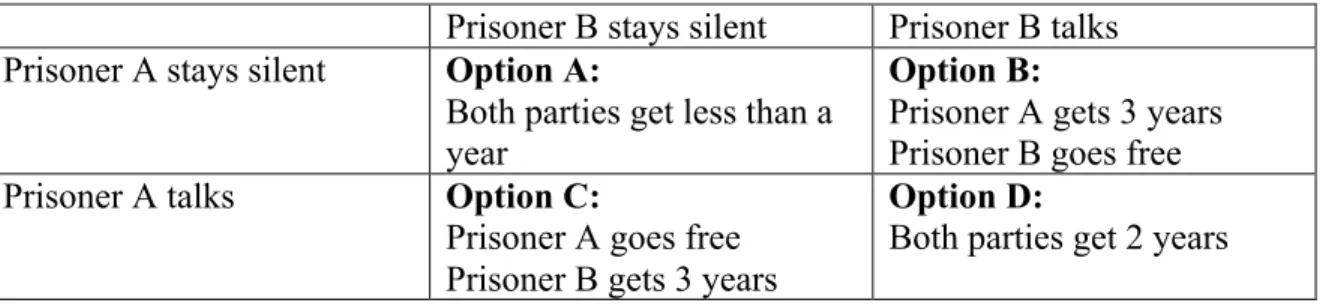
Paradoxes of Private Property: The Self-Interested Subject, the Prisoners Dilemma, and the Tragedy of the Commons……….45
The Communicative Commons………...53
viii
CHAPTER 3: WE WANT THE AIRWAVES: TERRITORIALIZING
THE ELECTROMAGNETIC SPECTRUM………69
Introduction………..69
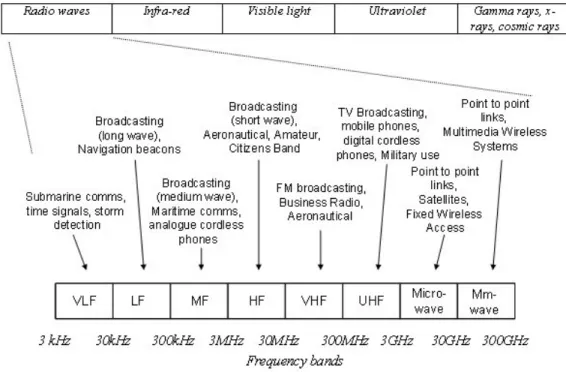
A Note on the Electromagnetic Spectrum………...73
New Forms of Mobility: Wireless Telegraphy and Non-Commercial Broadcasting………79
Radio as Point-to-Point Communication……….80
Radio as Non-Commercial Broadcasting………86
Formations of Space: Early Regulations and the First World War……….91
Military Control During World War I……….95
Legitimating Corporate Control of the Spectrum………99
The Creation of RCA……….101
Cross-Licensing Agreements……….106
The Hoover Radio Conferences……….109
CHAPTER 4: THERE’S A WORLD GOING ON UNDERGROUND: CABLE INFRASTRUCTURE AND THE CULTURAL FORMS OF TELEVISION………..116
Introduction………116
The Networks: From Radio to Television……….119
The Formation of the National Broadcasting Corporation………120
Broadcasters and Telecommunication Carriers……….125
The “Mom and Pops” and the Emergence of CATV……….129
Access Television: Reclaiming the Streets………136
Challenge for Change………138
The Portapak………..140
ix
Public Access Today………..148
Public Access in the Internet Age………..151
CHAPTER 5: HYBRID INFRASTRUCTURES: DATA CONSUMPTION MOBILE DEVICES IN THE CLOUD………..154
Introduction………154
The Cowboy Years (~1996-1991)……….159
The World Wide Web (1991-2004)………...165
Web Infrastructure, Open Access, and the Beginnings of Net Neutrality………168
From the Web to the Cloud: Social Networks, Data Centers and Mobile Devices (2004-2014)……….178
Web 2.0………..178
Cloud Infrastructure………...180
We have Never Been Neutral: Contemporary Struggles over Internet Resources……...………...184
Scarcity………..191
CHAPTER 6: CONCLUSION………..196
x
LIST OF FIGURES
Figure 2.1: The Prisoners’ Dilemma………48
Figure 3.1: Frequencies and Wavelength in the Electromagnetic spectrum………74
Figure 3.2: Radio Waves………..74
1
CHAPTER 1: THE RELATIONSHIP BETWEEN ACCESS AND INFRASTRUCTURE
Creating Access
The way that we have access to media how we watch television, listen to the radio,
go online is the end result of a long series of negotiations and conflicts. However, these
processes are all too often forgotten by the time that policy controlling access to mediation is enacted, and the way that a given medium is used is usually considered inherent in its nature. This is part of a larger problem facing media studies: often the definitions of media we use
are too simple and tend to fetishize the end result of mediation as defining a medium. The
changing nature of media seems to be moving at a faster pace than the theoretical frameworks we have at our disposal to study them. This is in part because so much contemporary work within media studies tends to ignore the material aspects of mediation itself and instead focuses on the end results of a series of processes, which are then dubbed discrete media. Debates over access that only look at these end results, such as current debates over net neutrality for the Internet, cannot sufficiently address the power struggles that went into the making of a particular medium in its current formation. Arguing for increased access to a medium without examining how those points of entry have been produced in the first place remains inadequate to the specificities of the relevant medium.
2
infrastructure, and how these resources get brought back into hegemonic understandings of property. I argue that large-scale systems of media infrastructure reframe space and time in order to produce a resource, which exists as a form of commons, but then gets
reterritorialized by various institutions. This occurs in a four-part process: First,
technological objects and processes are mobilized; second, this mobilization produces new articulations of space; third, these articulations of space become understood as a resource; and fourth, this resource is struggled over and controlled by re-constructing it within a property regime that effectively restricts access. This is a materialist understanding of the way that mediation works, and it offers ways of looking at practices of mediation and communication that have not often been taken up within media studies.
Mobility
Communication is about extension. It is about how we live beyond ourselves in relation to our collective environment. Communication moves something of ourselves beyond ourselves, which is both material and immaterial. We move meaning beyond ourselves, and what enables the movement of meanings are material practices that move material things. For example, when we speak we move air; when we write we move pen and paper; when we use radio we move electromagnetic frequencies. But communication is also immaterial. It involves both the transmission of meanings and the connection between people (Carey, 1989); it is fundamentally about moving meanings beyond ourselves, and in so doing creating a space in which shared meanings can circulate. !
3
culture !not communication as information (a transmission approach), but as confirmation of
the order of things (Carey, 1989: 19). The shared root of communication with common !and
community !is emphasized here. One of the few assertions of Marshall McLuhan endorsed
by Carey is that the one thing of which the fish is unaware is water, the very medium that
forms its ambience and supports its existence !(Carey, 1989: 24). For Carey, the medium in
which humans exist is communication, and this is why, in his estimation, Dewey says, Of all
things communication is the most wonderful !(cited in Carey, 1999: 19). Dewey tries to take
that which has become so common it has been forgotten and draw attention to it !make it
wondrous. There is something in the meaning making of communication that renders the wondrousness of its functioning unnoticed. Just as the fish cannot be aware of the water, communication is so much a part of human existence that it is impossible to imagine existence without it. In fact, communication is the very terrain on which that existence is imagined. Communication involves sending out and receiving (transmission), but it is also reinforces and confirms (ritual). Within a ritual approach, communication is culture in both the general sense and in the biological sense: communication is the environment in which we live.!
The way communication becomes our environment is through the construction of a shared map of meaning (Hall, 1997; Grossberg et al., 2006) within which people coexist. People already exist within a world of shared meaning that they take for granted, and without this common reality, communication would be impossible. This system of shared meaning
4
Hall, this common picture of reality is a “shared conceptual map” which allows human to
make sense of the world in meaningful ways (Hall, 1997: 18). Communication is both the basis of this map of meaning as well as the means of reaffirming and reproducing these ways of seeing the world. Communication in this sense is the basis of culture, where culture is the medium that allows us to make sense of the world we live in.
All communication is mediated there is no pure communication that can function
without passing through a conduit (even if that conduit is a vacuum), and without being structured into systematic codes of understanding. Infrastructures are the technological
systems that allow for this mediation. They include hard infrastructures such as bridges,
roads, electric grids, wires, satellites, and cellular towers, as well as soft infrastructure such
as languages, cultural forms, and algorithmic organization of information (Larkin, 2008: 5-6). However, such distinctions tend to obscure the way that infrastructures are more than the hardware, or even the software, of meaning making. Infrastructures always include some
elements of both hard matter and soft meaning. Even language itself is a form of
infrastructure, which allows our thoughts to be shaped and moved.1 Infrastructures are the systems and networks that enable a society to function. They are always social and shared, and they are always infused with structures of power. Both hard and soft infrastructures reflect existing social systems and have the potential to create new ones. These
5
infrastructural systems constitute the possibility of new forms and materialities of communication.
Innovations in communication infrastructures, whether hard or soft, are about
innovation in mobility: The ability to move both meanings and practices. Communication is both material and immaterial, so innovations in communication infrastructure also move things that are both material and immaterial. Infrastructure allows for more than simply moving a message from point A to point B. Such an understanding of infrastructure assumes
a transmission view of communication, in which communication is understood as the
transmission of signals or messages over distance for the purpose of control !(Carey, 1989:
15). A transmission approach to communication would say that infrastructure moves
encoded messages (a sender transmits something to a receiver, and the stuff !through which
the message passes is the infrastructure). A ritual view of communication can offer a quite
different view, however; here communication is not the act of imparting information but the
representation of shared beliefs !(Carey, 1989: 18). Drawing on a ritual view of
communication allows us to see infrastructures as more than transmitters of messages; infrastructures enable cultural communicative practices, and are also produced by these practices. Infrastructures are material and cultural representations of already existing forms of expression, which in turn enable the conditions of possibility for new forms of expression.!
Meanings and practices are moved through infrastructure, yet how these meanings and practices function culturally is linked to the infrastructure that allows for their
6
messages can be received; i.e. innovations in infrastructure produce the contexts that allow
for innovations in cultural forms. Cultural forms are how the products of media
technologies and organizations are structured; how their languages and meanings are
structured into codes (Grossberg et al., 2006: 15, italics in original). They are the ways that
we are able to understand the information being moved by our technologies. In this way a cultural form combines both a transmission and a ritual approach to communication, since it is about how meaning is transmitted, but it is also about how those meanings are understood as part of a cultural context that they reinforce. Cultural forms are the products that media
organizations make, understood as forms rather than objects, i.e. they are formats, structures,
ways of telling stories (Grossberg et al., 2006).
Innovations in communication infrastructure are most often based on expanding existing cultural forms. However, this is a reciprocal process insofar as these innovations allow for the reimagining of technological potential and the evolution of new cultural forms, which can then provide the impetus for further infrastructural innovation. Innovations in infrastructure always allow for more than the previous forms and provide the contexts in which new forms can be imagined. For example, radio was initially conceived as an
extension of telegraphy. The development of wired telegraphy made it possible to imagine a system wherein the same forms of communication would be available wirelessly. There were also limits to the wired communication that the telegraph allowed for, especially with regard to communication at sea. So there was both an idea of, and need for, generating the
new technological systems of wireless telegraphy radio communication. However, this
7
cultural forms, most notably broadcasting, which was seen by many early developers of radio technologies as a technological hindrance to their desired objective of creating a wireless point-to-point communication system that would parallel the telegraph. So while the idea for commercial broadcasting was not present at the onset of the technological developments necessary for radio communication, these technological developments created the conditions of its possibility.
In our capitalist society, these cultural forms are actively shaped as commodities by the institutions that generate them. The way that forms of communicative practices are produced as commodities is in part through the necessity that they be moved via
infrastructure, and the nature of that infrastructure will actively shape the formation of the particular commodity it is supposedly being designed to move. For example, the
development of oil as a resource for consumption, replacing previous household fuels such as whale fat or coal, was a result not only of the discovery of great reserves of oil in Texas, but
also of entrepreneurs who had the resources to develop the infrastructure the pipelines to
distribute the material. Only because of the possibility of distribution was oil able to become a commodity.
We will see struggles over the commodification of cultural forms in each of the case studies in this dissertation. The development of radio technology was very much a struggle over the forms that radio would take, and this is demonstrated in the shift from hobbyist broadcasting to commercial broadcasting. When television cables were laid under the streets of Manhattan, media activists envisioned new practices that television could enable and fought to keep some new uses engendered by these infrastructural innovations
8
amounts of data; yet how that information is sorted, categorized, and accessed is hotly contested by public advocates, powerful telecommunications corporations, and media activists. The way we access our communicative commodities also shapes what those commodities are, and even their status as commodities. The forms do not precede the
technological possibilities of their distribution; rather, the distribution and reception contexts precede the structure of the form, which is struggled over and most often commercialized. This process, according to Hall (1981), is then retroactively dubbed as cultural change and technological progress:
Cultural change is a polite euphemism for the process by which some cultural forms and practices are driven out of the centre of popular life, actively marginalized. Rather than simply falling into disuse through the Long March to modernisation, things are actively pushed aside, so that something else can take their place (227-228).
Infrastructures represent active overall systems of technology, where technology is both a set of material objects as well as a process through which we attain our desires; infrastructure is the means through which these objects and processes are mobilized. Infrastructure allows for multiple possibilities and potentialities of forms of mobility. However, who and what is mobilized, and in what manner, is always a site of contestation.
As Carey says,! Technology, the hardest of material artifacts, is thoroughly cultural from the
outset: an expression and creation of the very outlooks and aspirations we pretend it merely
demonstrates !(1989: 9). When a new communication technology is implemented at an
9 Space
Communication is about movement, and movement is about space. Space and time
are always articulated together because they are different facets of the same thing !our
material environment and the ways we experience it. Space is always temporal and time cannot exist in the absence of space. Space is always space-time, since it is experiential rather than objective. Harold Innis (1968) has argued that we are living in a space-biased culture. Innis proposed that one of the effects of media is that they create cultural biases towards either space or time. Time-biased media, such as stone tablets, papyrus, and oral communication structures, last through long durations of time, but they cannot traverse great distances. Space-biased media, such as electronic media from the telegraph onwards, move easily across great expanses of space, but they do not endure. The three case studies in this dissertation involve electronic media, and in accordance with Innis, I argue that they
emphasize space more than time. In this sense, the mobility of communication is spatial, and produces new forms of space. !
There are no objective meanings of time or space that can be divorced from material
practices (Harvey, 1990). In order to understand space, one has to look at material practices and processes, and the way that communication is mobilized is through material practices that form space. They are not the only material practices that produce space, but they are some of them, and they produce and structure some spaces. What forms of communication
mobility do is rearticulate the ways that humans make use of the world they move a
10
For the message of any medium or technology is the change of scale or pace or pattern that it introduces into human affairs. The railway did not introduce movement or transportation or the wheel or road into human society. But it accelerated and enlarged the scale of previous human functions, creating totally new kinds of cities and kinds of work and leisure (8).
Here message functions differently than content. Rather than information passed on to an
individual receiver, McLuhan is addressing something that significantly alters the time, space, and structure of human affairs. This change of scale or pace then reflects back onto
existing social structures. In essence, the message of technology, McLuhan argues, is not
the information itself that is moved (which could be understood by a transmission approach), but rather social and cultural changes brought on by the use and development of those
technologies. In this space-biased culture, these social and cultural changes in pace and scale
can be best understood as changes in space. While McLuhan s understanding of what a
technology s message is remains useful, much of his work fetishizes discrete media as
stand-alone systems. This is especially apparent in his work on hot and cold media (1994: 22-40). I instead focus on infrastructure as systems that combine technological objects and cultural practices to shape what later become thought of as discrete media.
11
as well as our relationship to public space. According to the Harvard School of Design s
anthology on shopping:
The escalator profoundly modifies architecture it denies the relevance of both compartments and floors. The success and rapid acceptance of the escalator, which effectively enabled the department store at the beginning of the twentieth century, is due to its effortless transformation of virtual space into retail area. As an instrument of smoothness, the escalator triggered a vast new domain of construction, which through the very smoothness of connection we now inhabit almost without thought, and without any sense of its true scale or radicality. Paradoxically, the most radical architecture has been the most popular and the least noticed (Weiss and Leong, 2001b: 337).
Likewise with the air conditioner:
By making interior space larger, more comfortable, more controlled, and more difficult to escape, and by combining in a single whole activities that used to be dispersed, air conditioning radically altered the way that time was spent in public. Shopping time was not only prolonged as department stores and shopping centers began their steady encroachment on public activity, capitalized on as a domain to be optimized and exploited: greater comfort plus greater willingness to spend more time indoors equals greater likelihood to spend money. Increasing sales rather than providing comfort became the mantra for the air-conditioning industry during the postwar period, to the point that mechanical cooling would be accepted as an
inevitable necessity. Cold air became so fundamental, in fact, that temperature would prove one of the few constants in the spaces of shopping (Weiss and Leong, 2001a: 93).
What these excerpts demonstrate is that both air conditioning and the escalator had a direct
impact upon the scope and scale of shopping spaces i.e. the birth of the modern shopping
mall. The content the stuff being moved is people s bodies in the case of the escalator,
and air in the case of the air conditioner. However the message of these media is the rearticulation not only of the practices that are now available within space, but of how the space of the shopping mall itself can function. The configuration of the mall simultaneously impacts human actions and behaviors as exemplified by an array of new social practices
12
cites. This is analogous to previous centuries, when the picture window and the sidewalk were innovations that rearticulated shopping practices and allowed for the expansion of the bourgeoisie within urban spaces. What is being mobilized (air, people, goods, money, practices) does not exist in isolation from the infrastructure that allows for its mobilization. And the result of this mobilization is a change in the pace and scale of human affairs, the consequence of which is added meaning and value to already existing spaces. So the
medium is the message, and that message is how media become active agents in restructuring
scale, pace, and pattern (things that I tie to mobility), and, I argue, this message is
fundamentally spatial.
Modern communication i.e. electronic communication since the telegraph is often
understood through a transmission view of communication, which interprets communication as moving across space. This is because, as Carey (1989) points out, even though these new
electronic forms of communication allowed symbols to move independently and faster than
transportation (Carey, 1989: 204), the analogy of communication as transportation as the
movement of information across space persists. For some media theorists, electronic
communication brought about a change in pace of this movement (Virilio 1977; McLuhan 1994); electronic communication allows for faster movement across space. However,
drawing on a ritual understanding of communication in which see communication as the
construction of and maintenance of an ordered, meaningful cultural world that can serve as a
control and container for human action (Carey, 1989: 18-19), I argue that these changes in
13
the ways that space is used and occupied. Here space is understood as communicative: it is
an understanding and situating of oneself in relation to one s environment meaningfully
through processes of communication. This space is always also material; it includes wires under our streets and electromagnetic frequencies running through the air.2 If space cannot be known except through material practices (Harvey 1990), and if space is never passive (Massey 2005), then our experience of space is always colored by its uses. Our uses,
practices, and experiences of space change space, and one such change is additive. Much in the way a ridged surface will have a larger surface area than a smooth surface, using space in new ways creates more layers of possibilities for use and experience. Space is not a blank canvas; it is manifested through our material practices. Our networks of communication
infrastructure, which enable communicative movement movement of meanings across
space are also productive of new layers of space, and these layers deepen the meanings and
values of space.
What technological mobility in general does is make new space by layering the uses
of existing spaces. As we extend ourselves into our environments which is a fundamentally
technological process we create movement. This movement entails a passing of material or
energy (which on a fundamental level are the same thing) from one point to another, and this
passing generates a medium something through which something else passes. The space
only becomes space by moving across or through it. Mediation rearticulates the meanings of space, changing what the space can be used for, and the material practices enabled by that
14
space, which in effect creates new spatial layers. James Carey (1989) offers an example of
this process in his essay Technology and Ideology. Prior to the advent of the telegraph,
communicative forms already allowed for movement over space (the railroad for instance), but the telegraph allowed for a different pace and scale. The telegraph changed both the
nature of communication the nature of language, of ordinary knowledge, of the very
structures of awareness (1989: 204) and how control was exerted upon the landscape as
control of physical processes. Carey also notes how this technological innovation was part of creating a grid of space and time that could be used to control and coordinate activities. This is superimposed over previous modes and understandings of space and time that do not cease to exist but are layered over.
Further developments in electronic communication added to these spatial layers. Radio and the advent of broadcasting made it possible to access the electromagnetic spectrum (EMS) outside of the wires of the telegraph. Radio technologies enabled
electromagnetic waves to move across spaces that had previously only been moved across by mechanical waves (such as sound waves), without interfering with those mechanical waves. It was the equivalent of putting a highway over a country road, only the highway was not detectable or usable without external technology. The electromagnetic spectrum has always existed, but for most of human history we did not know it was there. The EMS is
everywhere, all the time. All of visible light is part of the EMS, so everything we see is
because of the electromagnetic spectrum. But until it was discovered by early pioneers of
radio, and radio waves were made useful, this layer of space wasn t there. When we began to
space-15
time. With the advent of the radio, our space (the environments in which we live) was filled with a seemingly magical ether that allowed for new kinds of communication, and this in turn allowed for new kinds of control.
When television cables were laid under the streets of Manhattan, more channel space
was made available a new way of configuring electromagnetic frequencies allowed for
more TV channels. The infrastructure for this new channel space also impacted the material space of the city. These cables added a layer of material below the streets, and a layer of meanings above, and these layers cannot be understood independently of each other. Cyberspace is adding yet another layer of space. At its inception we used computers to interconnect with each other in this imagined cyber-world (Gibson, 1984). When we access cyberspace using phones and other mobile devices, we add information into this digital world, and this information reflects back on how we experience our material world. Google Glass, for example, is literally mapping cybernetic information onto our surroundings, layering it with meanings which were already there but to which we now have new forms of access. Technologies reproduce and extend abilities within our bodies to experience the
world. The movement of messages across space can be understood through transmission
communication as information. However, the creation of new layers of space can be better
interpreted through Carey s (1989) understanding of communication through a ritual view.
Such a ritual approach understands communication as culture as the environment in which
16
space, where space is understood and made sensible through the production of shared maps of meaning.
Resource and Property
Doreen Massey (2005: 4) argues that the ways we imagine space have effects. How we use space also produces it. Our technologies allow us access to communicative spaces, but they also create these spaces, and once we have access to these spaces they become
understood as resources as things we can use. Space is a resource because it is about use,
and a resource is by definition something we can make use of. These layers of use and meaning, which deepen and complicate space by adding to it, are communicative resources, and these communicative resources become property, and then private property.
The mobilization of media technology produces new layers of space, and these layers
are understood as resources as serving human ends. Who has access to these resources, and
whether these resources are made into and understood as private or public property, become sites of struggle. Contestation over access has always been part of the social uses of media, in part because new media (by which I mean media innovations over time, not simply contemporary digital media) by its nature rearticulates space. Oftentimes this is seen as an opening or expansion, which I have referred to as layering. However, these new spatial resources, which emerge with new technologies, become understood most often as limited natural resources. Understanding these communicative resources as limited means they can
be subject to the logic of a tragedy of the commons, and this in turn justifies a combination
17
interests, then the resource held in common will be depleted to the disadvantage of all, hence commons (i.e. commonly held property) will always end tragically.3 New technologies and developments in media infrastructure often open up a resource that is initially held in
common, but that common space is usually enclosed by interests that wish to maintain or
expand private ownership and specific capitalist business models.
Property is a social claim about access to a resource. While in its contemporary usage
property is often equated with the thing itself the object owned is property legally
speaking, ownership is always a right to something (Macpherson 1976). There have
historically been different kinds of property regimes (socially shared ways of understanding property): feudal property; bourgeois property; state property; etc. However, the two general categories that are most useful in understanding contemporary property struggles today are common property, which guarantees each individual that he will not be excluded from the use or benefit of something; and private property, which guarantees that an individual can exclude others from the use or benefit of something.4 How communicative resources become property, and what kind of property, is contested with each new innovation in infrastructure.
Both the type of property and the justification for restricting access via property rights can take a number of different forms. In the case of the electromagnetic spectrum, this form is a pseudo-public/private ownership based upon the logic of the tragedy of the commons.
3 I go into greater detail about the nature of limited natural resources and the tragedy of the commons in the next chapter on materiality and property.
18
When looking at the communicative resources being generated by the laying of cable under the city streets, activists were able to use the physical location of the infrastructure as
justification for claiming public access to channel space they tied the material of the
infrastructure that created the resource to the resource it generated. In the case of
cyberspace, we are still negotiating how that space is changing. There have been regulations like net neutrality that attempted to preserve forms of common access, but as changing technologies alter cyberspace, what that access looks like, and who has access to what, is changing.
The dominant narrative of resource management, including communicative resources, within United States capitalism is that resources within a society must be privately (usually corporately) owned to prevent the tragedy of the commons. Justification for this sort of private ownership entails strict regimes of private property that foreclose the possibility of common ownership. Such regimes of private property always privilege certain ideas and people over others. Industries want control over resources and they want them structured in a way that is conducive to their particular capitalist models of business, ownership, and
privatization. This then becomes a site of struggle in which hegemonic constructions of power come into question and are reworked (and often reproduced). Most often
communicative resources become understood as private property through various efforts of large-scale institutions, especially the state, the military, and large corporations. Private ownership that restricts access is not an innate feature of these communicative-spatial
19
This dissertation intervenes into this argument, and its foundation in the tragedy of the commons as it as applied to media commons, through a close engagement with the specificities of the materiality of media. If we can reexamine communicative infrastructure, we might be able to preserve some of the common space that emerges with every new media technology, which all too often goes through a process of enclosure. Examining how this process has been enacted and interrupted before can help to reconceive the present media landscape. Envisioning these technologies in a particular way has enabled the development of non-capitalist media spaces within a capitalist structure, as was the case when people advocated for access television. Further exploring how private property regimes were imposed upon communicative resources, as well as undermined, can offer new ways of understanding how telecommunication industries are foreclosing access to communication resources via the architecture of their physical technologies. Control over communicative resources is always contested. Communicative resources are spatial and space is neither passive nor monolithic. It is layered and complex, embodying the stories and struggles that went into its production (Massey, 2005). Our acts of communication, and the infrastructures (both hard and soft) that allow for our communicative practices, are thus structured into particular formations that perpetuate certain regimes of both property and power. My dissertation highlights moments of possibility where communicative resources could have
potentially been utilized in another manner moments where certain cultural forms weren t
20 Situating the Project
My work is framed within Media Studies and Cultural Studies and draws from
several methodological traditions. This project seeks to diagram access as it is structured and produced by the materiality of infrastructure. This addresses what can be gleaned about the nature of communication apparatuses by looking at the materiality of mediation itself. As such, I look at how the ways that we have access to media are the end result of a series of articulations. Through unpacking these articulations I reposition media as an object of study. This is part of a larger problem facing media studies: often the definitions of media we use
are too simple and tend to fetishize the end result of mediation as defining a medium.
Hence radio, television, and the Internet are often studied as discrete media. In today s
convergent media environment, these previous distinctions between media don t make very
much sense. Am I still reading a newspaper if I only get it online? What does it mean that I
say I ve been watching a lot of TV when everything I watch is actually on my computer,
and no longer on a television?
21
the larger contexts in which these formations emerged in the first place. However, if the object of study is shifted to include institutions, content, technology, forms and uses in order to look at the overarching systems of communication, then one can begin to examine the conditions of possibility that construct the object of study in the first place.
I draw on theoretical sources within Media and Cultural Studies in order to synthesize an analysis that situates infrastructure in relation to constructions of mobility, space, and resource. Cultural Studies seeks to understand cultural practices as they exist within everyday life, and as part of existing structures of power. This project takes into account theoretical perspectives, such as those of Michel Foucault and Antonio Gramsci, which take empirical evidence from various contexts in order to challenge dominant ways of
understanding why things are the way they are. Reality is the production of relationships, and these theorists seek to explicate the underlying diagrams of possibility that make these allow for these relationships. Their work intertwines empirical observations about the world with a larger theoretical framework in order to offer new insights into how power is working in specific contexts.
Both Foucault and Gramsci operate under two main premises that I share: power is implicit within how society is structured, and the way that society is structured is not a given. For Gramsci (1971, 2002), this is a theory of hegemony, which allows for Marxist
materialism without reduction into economic determinism. Both Gramsci and Foucault investigate power as the end result of a series of procedures and mechanisms. Rather than
looking at power as an isolated object that is applied to human social systems, Foucault s
22
particular ways they did. Both theorists are interested in analyzing how the history of human affairs has manifested as productive of contemporary structures of power.
From Gramsci I take a certain understanding of how hegemony is constructed and contested over time. I apply this to the materiality of mediation by examining three different conjunctures wherein consensus has been developed around the meanings of a set of material practices. Gramsci incorporates a particular understanding of agency within human history. While he does not deny that agency exists, it is not necessarily correlated to individual
actions, and the consequences of individuals actions are not predetermined by their intents.
When looking at large scale systems of infrastructure, I explore how consensus was
developed around particular forms of access. These forms of consensus, I argue, are not the result of predetermined technological limitation, nor of individual motivations, but rather they are about the confluence of multiple sets of interests and social struggles.
Foucault, like Gramsci, does not assume that the social and political structures that govern our lived realities are given. From Foucault I draw on a particular way of telling a story: you start with the end and work backwards to try to figure out how you got there. Primarily drawing from his lectures at the College de France, and in particular from Security, Territory, Population, my project likewise seeks to explain the procedures that affix power.
Therefore this work sets out to explore a set of mechanisms and procedures that have the
role or function and theme, even when they are unsuccessful, of securing power (Foucault,
2007: 2).
23
and Cultural Studies: British Cultural Studies, Canadian Media Theory, and a more recent body of work within cultural studies that explores media as a set of material practices. British cultural studies, in particular the works of E.P. Thompson, Raymond Williams, and
Stuart Hall, offer an approach to situating the contemporary conjuncture. Thompson s work
in Customs in Common, on the history of the commons within England, serves as a way to unravel how the understanding of property is tied to social and political systems. This is
furthered by Williams work in Television: Technology and Cultural Form (1974), which
both lays out his theories of mobile privatization and problematizes notions of content in isolation from the systems that produce it. From Stuart Hall I take a notion of cultural change and apply it to shifting forms of access to mediation. Relating back to both Foucault
and Gramsci, Hall s notions of change and agency are central to this project. Certain
practices and uses of communicative systems are actively pushed aside, and the struggles over their potential are lost; yet our techno-cultural narrative dubs these as footnotes in a streamlined procession toward technological progress. This dissertation unpacks three points at which certain cultural forms and practices became dominant in order to examine the ways
in which things might have been otherwise. In doing this, the object of my media study is
resituated so that I am not studying the effects of mediation, but the very processes that go into creating mediation in the first place.
24
formations, and this brought him to a study of technology. While McLuhan is perhaps the
most noted student of Innis s, Carey draws explicitly on Innis in order to refute some of what
he saw as McLuhan s positivistic claims and reposition the study of communication and
media within concepts of community and ritual (Carey 1968: 307). However, what Carey
took for McLuhan s positivism his focus on sensory experience and its ability to interpret
the world as meaningful I interpret as materialism. McLuhan analyzes the ways in which
our ability to understand our world is intertwined with our technology. Carey, too, is concerned about the ways the symbolic create conditions of possibility for the material. My
project bridges McLuhan s idea of the message with Carey s notion of communication as
confirmation by drawing on a shared curiosity about what communication media do in a way that centers technology not as an independent agent, but as an extension of man.
For Carey, a pragmatist, thought is social, or public, for two reasons. First, because it relies on symbols that exist in the public, symbols that are publicly available (accessed): here,
expression is comprised of symbols of. Second, we live together within the environments
created by those symbols: symbols for, which produce the realities they describe. This
reality must be constantly built and repaired. In this way,
Carey is able to connect, without reducing, the worlds of cultural meaning and
experience, with the spatio-temporal organization of society. Carey is concerned with the ways symbolic and ritual systems constitute the possibilities of material ways of life (Grossberg, 2009: 79).
This is why the study of communication involves studying models of communications
themselves studying communication as symbols for and symbols of. Carey stresses that
25
of communication. Since the models are ways of understanding how communication produces reality, we are creating a reality based on anxiety and power struggles. A ritual model would emphasize the commonness of communication, and could repair community.
Carey s work, like my own, seeks to explain how communicative practices and technologies
work to organize our social existence.
My work addresses and operates within the current materialist turn in
communication studies. I combine what I see as material media histories with emergent materialist media studies. Media historians such as Lynn Spigel, and Anna McCarthy, examine how the material manifestations of media organize space and social systems.
Spigel s work in Make Room for TV (1992), and Welcome to the Dream House (2001) looks
at how media, and in particular television, changed social forms and practices. By repositioning media criticism away from media content, Spigel is able to offer a material analysis of the objects and practices of television, such as the placement of televisions within homes, control over the dial, and the suburbs and their relationship to mediation. McCarthy (2001) also looks at material practices of engagement with television, specifically the
location of TVs in non-domestic spaces, and their relationship to the creation of certain kinds of publics. These works have informed contemporary materialist approaches to media. This turn, coming in part out of the spatial turn of the preceding ten years, examine how
technologies understood as technical media environments in which we are increasingly
immersed play a fundamental role in the composition of historical forms of sensation,
cognition, experience, consciousness and subjectivity (Packer, 2012: 11). Within this
26
on Eric Michaels (1994) ethnographic research with the Warlpiri people of Australia as a predecessor, analyzes how technological practices problematize the idea of discrete media,
and how infrastructural systems are often obfuscated to preserve power hierarchies. Hay s
work (2012) examines the ways that spaces are produced and navigated through engagement with technology and way that the material and immaterial interact in co-constitutive ways.
Each of these theorists work examines how the material practices of engaging with media
change and shape our everyday life. The intellectual pursuits they have opened up question the materiality of mediation itself, rather than the codes and contents of media. They have all sought to examine media without fetishizing content. Using their work as a basis, this project intervenes into rethinking what infrastructure and media do, and how they are co-constitutive of our lived environments.
I tie this sort of media analysis to political economic work on property and the commons, including work by C.B. Macpherson (1976), Elinor Ostrom (1991), and Carol M.
Rose (1994). Macpherson s political economic theory examines the ways in which property
has historically structured access to resources, in order to examine how it exists within contemporary systems of capitalism. Ostrom, in her seminal work Governing the Commons: The Evolution of Institutions for Collective Action (1991), analyzes resource management and collective decision-making. She challenges the assumption that individually rational decisions will produce collectively beneficial results, and puts forward a model of collective
action that challenges the tragedy of the commons. Rose asserts a theory of property from
27
tying these analyses to the materiality of mediation, my dissertation examines the ways in which our communicative technologies influence and are influenced by systems of property and understandings of resource.
By bringing together theories of power and political economy with technology studies, policy analysis, and media history, my work explores how electronic media create communicative resources, and the ways that media infrastructures have impacted the evolution of digital technologies, media institutions, and socialchange. I also look at how different forms of media activism and advocacy have made interventions into policy decisions in the past as a means to rethink how we might come up with new media models within the present moment, both nationally and internationally. I argue that mediation has a material existence that is produced by and is productive of content, technology, and
institutions, and this materiality can provide a basis for rethinking the ways we understand media, resources, and community. My dissertation contends that communication
infrastructures are fundamentally collective and productive of shared communicative resources, but the negotiations that structure access to these systems tend toward
privatization. In order to understand how this process is working in today s convergent
media environment, my dissertation examines how our points of entry into different kinds of media infrastructure are initially produced.
Outline of the Dissertation
This dissertation explores the conditions of possibility the rules, regulations, norms,
etc. of how we think of media, rather than explaining what they are. It adds to the
28
distinguish among distinct media. I address what can be gleaned about the nature of
communication apparatuses by looking at the materiality of the mediation itself through
how it rearticulates mobility, time and space, and resource in order to better understand
how these technological frameworks are contested sites of power.
Chapter two, Theorizing the Materiality of Media: Media and Social Formations,
positions the materiality of media within contemporary understandings of property. This chapter is dedicated to exploring the relationship between two abstract concepts: property, which is not a thing but a right of access; and communicative commons, which are shared resources generated through communicative practices, both material and immaterial. This is done in order to explore how the communicative commons are struggled over and controlled. This chapter is broken up into three parts. The first gives an explanation of how property has come to function within private property regimes as a result of the advancement of
capitalism. Today private property operates within what Rose (1994: 5) calls a
meta-property regime a socially held understanding of meta-property that does not itself function like
private property. This section also unpacks the tragedy of the commons as a way of
understanding resources and their relationship to property. The second section of this chapter explores different forms of commons in order to establish how our communicative practices function as resources, which are initially held in common. Here I argue that communication is always a collective process, which is at its basis generative and shared, but often
commodified. The last section of this chapter opens into a broader discussion of how technology works within private property regimes, and how this can offer an alternative to
29
disarticulate its relationship to the idea of space. I examine how land comes to be understood
as property in order to understand property itself as a technology as a means of humans
extending themselves into their lived environments via fundamentally communicative practices that alter not only the perceptions of material reality, but how that reality in fact functions.
The next three chapters are case studies of how emergent technologies have operated as part of a process that constructed communicative resources as both common and private
property. In my three case studies, We Want the Airwaves: Territorializing the
Electromagnetic Spectrum, Cable: There s a World Going on Underground, and Hybrid
Infrastructures: Data Consumption and Mobile Devices in the Cloud, I examine how
infrastructural systems produce new communicative potential, which is then retroactively constructed as a limited resource in order to legitimate corporate and state controls. The case studies in this dissertation give three examples of the four-part process that I argue
communication technologies go through: the mobilization of technological processes; the rearticulation of time and space; the creation of a resource; and the construction of that resource as property. By examining the struggles involved in the political and economic histories of once-emergent technological systems, and their relationship to contemporary understandings of the structure and use of the electromagnetic spectrum (EMS) and digital spaces, this project works to redefine common access and its relationship to contemporary media infrastructure.
30
Internet, mobile phone networks, and cloud computing are likewise going through this four-part process in order to reterritorialize cyberspace. I do this in order to offer up better ideas about how to think through media policy. Most media policy already assumes that electronic media are discrete material objects with set practices. These practices access communicative resources in such a way that they come to be understood as limited natural resources that require management. This is what the Federal Communications Commission is charged to
do: manage a public resource the electromagnetic spectrum for the common good. How
they go about this i.e. whether this is best done by industry management, state, or
non-profit organizations has been the subject of much criticism and debate. I, however, want to
ask another series of questions: how did the electromagnetic spectrum come to be a resource in the first place? How is structuring access to this resource part of controlling its function within contemporary capitalism? And how is the nature of the EMS as a resource changing
with today s digital technologies?
The third chapter is a case study that looks at how commercial broadcasting came to be the dominant cultural form of radio transmissions in the United States. It begins by
briefly explaining some of the basic aspects of the electromagnetic spectrum, which served as the basis of much early radio experimentation. The chapter then describes two earlier uses of radio transmissions prior to World War I: radio as point-to-point communication, i.e.
wireless telegraphy; and radio as non-commercial broadcasting. I then explore the
31
greater access to the electromagnetic spectrum as a communicative resource. This state intervention, however, reasserted government control over this resource, limiting access at the same time that it created it, by dictating who could use the spectrum and in what ways. This became even more apparent after the war when the U.S. Navy found itself in control of vast amounts of spectrum space as well as all of the technological apparatuses to access that territory. The final section of this chapter looks at how the U.S. Navy and the Hoover Administration worked to cede portions of this control to commercial interests, and
legitimate both this governmental and corporate control through asserting an understanding
of the electromagnetic spectrum as a common resource that was falling prey to a tragedy of
the commons. Despite struggles to the contrary, corporate and state interests marginalized
other communicative practices in favor of the emergent cultural form of commercial broadcasting. This process was then retroactively justified by claiming it helped avoid a
tragedy.
The case study in chapter four examines discourses that surrounded wired communication infrastructure for television distribution. It explores the history and
implications of systems of cable as they were laid within the public right of way at the onset of cablecast television, and how this inspired the emergence of community access television. The first section of this chapter examines how policies that governed cable infrastructure were historically based upon regulations of the rail system and the telegraph, thus designating cable infrastructures as common carriers. However, the use of cable to distribute television blurred the distinctions between common carriers and broadcasters, challenging both models
32
of mediation by creating both more channel space and a new physical location of the means of distribution. The second half of this chapter examines how media activists have attempted to reclaim some common media space (in this case, access to broadband television services) by using a legal paradigm that relies upon the physical structures of cable technology (infrastructure as an apparatus of resource). These material changes became the basis of an alternative media movement for Public, Educational, and Government (PEG) access
television. Advocates for PEG access television have been able to articulate a particular
formation of media green space (in reference to the town commons) based on the physical
infrastructures of cable television conduits within public space, which has successfully stopped the complete enclosure of the media commons to private interest, although this is a constant battle.
Chapter five, my final case study, focuses on how the hybrid infrastructures necessary
for accessing the Internet from software interfaces like the World Wide Web and apps, to
home computers and mobile devices, to broadband wires and server farms are reshaping
access to the Internet, and how we think of cyberspace as a resource. This chapter critiques contemporary debates over net neutrality through an examination of the convergent and multifaceted infrastructure of networked technologies, and by examining how cloud computing is changing access to the Internet and to other more broadly defined
33
has been understood as a resource has changed, as have the cultural forms, the processes of commodification, and the legislation enacted to manage the communicative resources of the Internet. In particular I examine current struggles around net neutrality, the principle that all material on the Internet should be treated in a non-discriminatory manner. The principle of net neutrality, which first emerged as a way of preserving access to the Web, has distinct limitation when applied to the cloud. Net neutrality is based on the idea that the Internet should function in some capacity as a common carrier. However, this designation is based
on the idea of the Internet as a specific kind of medium: basically a series of tubes through
which content flows. This legislation held up well enough when dealing with existent
cultural forms such as webpages, e-mail, blogs, e-mags, etc. However, new ways of
accessing Internet resources, such as social media like as Facebook and Twitter, apps (as
opposed to webpages), and new devices such as Google Glass, have challenged what the Internet as a medium does, and who controls its infrastructure. If we are to fully understand the social-political implications of current Internet debates, I argue it is necessary to explore how the Internet first came to be understood as a resource. Current debates over net
neutrality and access to wireless networks inadequately address, and therefore fall short of, providing an adequate critique for access.
34
are still battling common carrier designations and still attempting to dictate how access to their networks are structured. On the other hand, however, companies such as Google and Facebook are pushing for ever-increasing flows of data to be shared and stored. These technological corporations are not using scarcity to exert control over a spatial resource, but rather are reconceiving how cyberspace is itself an expanding resource and how to control it. Although there are still discourses around scarcity, especially having to do with broadband space, cyberspace is an area of possibility, and potentially offers a new communicative
commons. However, if the tragedy of the commons is no longer the controlling narrative
justifying management of this communicative resource, then, I ask, what are the new forms of control and property opened up by these infrastructural changes?
In each case study we see a new way that electric/electronic communication has generated communicative resources through the implementation of a new infrastructural system, and the struggles over control of these resources. In case studies one and two the control was exerted thorough a narrative of scarcity. While such narratives are still present in cyberspace, this seems to be manifesting resource in a different manner: the enormous
amassing of personal information. However, questions about access, ownership, and property remain. While the communicative resources of cyberspace are still being formed
and shaped, the same sorts of institutional power structures telecommunications
corporations and the state are still dominating how access to these resources will be shaped.
The conclusion of my dissertation asserts that there is something we can learn through understanding the relationship between technology, communication and
35
study the arrival of new technology, always based upon older technologies, opens access to new forms of mediated communication; yet how that access is structured in turn shapes the uses of those media. This is a site of struggle in which hegemonic constructions of power come into question and are reworked (and often reproduced). Commercial broadcasting foreclosed most of the space available to independent non-commercial radio operators. This hyper-commercialized model was also the basis of how access to television channels was distributed. The emergence of the then-new technology of cable as a means of distributing television disrupted this commercial model, and opened a communicative resource from which activists were able to maintain a media commons. There has been very little work done, however, to use this television model toward preserving the commons of the Internet.
This is in part due to the fact that the Internet is often seen as a scarcity-fighting machine
(Andrejevic, 2013: 10), and as such it has been hailed by many as fulfilling the dream of media access advocates. But such a theory disarticulates the use of the Internet from the physical infrastructures that support it, and therefore does not adequately assess how those who control these infrastructures are commodifying its communicative resources. If we can reexamine this technological infrastructure, as activists were able to do forty years ago, we
might be able to preserve some of this common space that has emerged with new media.
36
CHAPTER 2: THEORIZING THE MATERIALITY OF MEDIA: INFRASTRUCTURE AND SOCIAL FORMATIONS
The first man who, having fenced in a piece of land, said "This is mine," and found people naïve enough to believe him, that man was the true founder of civil society. From how many crimes, wars, and murders, from how many horrors and misfortunes might not any one have saved mankind, by pulling up the stakes, or filling up the ditch, and crying to his fellows: Beware of listening to this impostor; you are undone if you once forget that the fruits of the earth belong to us all, and the earth itself to nobody (Rousseau, 1754: 875).
Introduction
The most difficult thing about doing a radically material analysis of media is that the closer one examines the material, the less it exists. This chapter looks at the relationship between two tenuously material “things” – property and communication – in order to put forward a materialist conception of mediation as a way out of “tragic” understandings of media resources. Communication is based in material practices, but how practices become resources, and what types of resources they become, are sites of contestation.
Communication is the symbolic and ritual system that constitutes the possibilities of material ways of life (Grossberg, 2009: 79), yet it is itself also material, and because it is material it is always tied to infrastructures. Communication infrastructures are the overarching
37
possibility of new forms of communication and ways of thinking about communication in general.1
Communication is generative; the more communication is used the more strongly present and rooted it is. One of the fundamental things that communication does is reinforce shared systems of meaning. This reaffirming of a sense of reality is what a ritual view of communication can offer us (Carey, 1989). In this way communication works as a shared map of meaning – it makes our spatial environments meaningful and understandable, and therefore navigable. As noted in the introduction, space is not a passive blank slate on which history occurs. Space is layered and made meaningful through material processes and practices, and some of these processes are acts of communication. By making our spatial environments meaningful, communication is cultural. However, by asserting meaning upon space and thereby maintaining ways of understanding reality, communication is also
ideological, and it is precisely the generative and reaffirming aspects of communication that make it ideological. This communicative double bind is also why communication is so important, and why it matters what kinds of ideas we have about communication.
Innovations in communication, enabled by infrastructures, reinforce previous uses of, and ideas about, communication, but also produce the potential for new ideas and uses. The usefulness of something is what defines it as a resource, and current ideologies position most useful material as limited natural resources. Communication, in contrast, is material, but does not necessarily function as a limited resource, since it is generative and reinforcing. It is
38
a renewable resource that can be regenerated by human action, but which is ideologically positioned as a limited resource.
In this dissertation I draw attention to moments of possibility where communication could have produced other kinds of resources – resources that function in common rather than privately. To this end I examine how communicative commons become alienable property, and how this property becomes commodified. Property, like communication, is not properly a “thing,” but a right of access. Yet communicative spaces like the electromagnetic spectrum, or cyberspace, have become valuable properties, and part of their value is the result of their being managed as if they were non-renewable natural resources: naturally occurring useful materials of which there are only limited amounts, and which cannot be produced or reproduced through human innovation. This type of resource, it is often argued, must be controlled by private interests in order to avoid a tragedy of the commons: if there is a limited resource held in common, and individuals follow what is in their own reasonable best interests, then the resource held in common will be depleted to the disadvantage of all.
Because communication is a generative resource it undermines traditional economic notions of supply and demand, as well as tragic models of resource management. Within capitalist regimes of private property, however, the confirming and expansive properties of communication are territorialized and commodified. This is done through discursive
processes that enclose common elements of communication by structuring communication as a spatial resource, which is commodified within regimes of private property. Private
39
for systems of social control and organization, and understanding communicative resources as private property normalizes certain ideological representations of reality. It matters what kind of property regimes communication itself is made into, since communication is the condition of possibility of any regime of property.
When looking at the history of electronic media, we can see a series of efforts to structure access to communication, and thereby control its potential to function in common. The case studies in this dissertation highlight how this process of enclosure happens: an innovation (or series of innovations) mobilizes communication in a new way, which allows for new cultural forms and communicative practices. These changes in communication rework our relationship to our lived environments, which is manifested through new or changed layers of space. This space is then struggled over and made to appear retroactively as if it had always been a limited resource, and therefore must be managed by the private sector with some state intervention in order to assure best use practices.
The first part of this chapter examines the nature of property, by addressing how property has been manifested at different times historically, and how the origins of property rights have been defined. This section clarifies the relationship between discourses of
property and materiality by exploring how property comes to be understood as a thing, rather than a right, as well as how it has come to exist in its current dominant formation as a