Hormone Therapy for the Primary Prevention
of Chronic Conditions in Postmenopausal Women
Evidence Report and Systematic Review
for the US Preventive Services Task Force
Gerald Gartlehner, MD, MPH; Sheila V. Patel, BSPH; Cynthia Feltner, MD, MPH; Rachel Palmieri Weber, PhD, MSPH;
Rachel Long, PharmD, BCPS, CPP; Kelly Mullican, PharmD, CPP; Erin Boland, MSPH; Linda Lux, MPA; Meera Viswanathan, PhD
IMPORTANCEPostmenopausal status coincides with increased risks for chronic conditions such
as heart disease, osteoporosis, cognitive impairment, or some types of cancers. Previously, hormone therapy was used for the primary prevention of these chronic conditions.
OBJECTIVETo update evidence for the US Preventive Services Task Force on the benefits and
harms of hormone therapy in reducing risks for chronic conditions.
DATA SOURCES MEDLINE, Cochrane Library, EMBASE, and trial registries from June 1, 2011,
through August 1, 2016. Surveillance for new evidence in targeted publications was conducted through July 1, 2017.
STUDY SELECTIONEnglish-language randomized clinical trials reporting health outcomes.
DATA EXTRACTION AND SYNTHESISDual review of abstracts, full-text articles, and study
quality; meta-analyses when at least 3 similar studies were available.
MAIN OUTCOMES AND MEASURESBeneficial or harmful changes in risks for various
chronic conditions.
RESULTSEighteen trials (n = 40 058; range, 142-16 608; mean age, 53-79 years) were included.
Women using estrogen-only therapy compared with placebo had significantly lower risks, per 10 000 person-years, for diabetes (−19 cases [95% CI, −34 to −3]) and fractures (−53 cases [95% CI, −69 to −39]). Risks were statistically significantly increased, per 10 000 person-years, for gallbladder disease (30 more cases [95% CI, 16 to 48]), stroke (11 more cases [95% CI, 2 to 23]), venous thromboembolism (11 more cases [95% CI, 3 to 22]), and urinary incontinence (1261 more cases [95% CI, 880 to 1689]). Women using estrogen plus progestin compared with placebo experienced significantly lower risks, per 10 000 person-years, for colorectal cancer (−6 cases [95% CI, −9 to −1]), diabetes (−14 cases [95% CI, −24 to −3), and fractures (−44 cases [95% CI, −71 to −13). Risks, per 10 000 person-years, were significantly increased for invasive breast cancer (9 more cases [95% CI, 1 to 19]), probable dementia (22 more cases [95% CI, 4 to 53]), gallbladder disease (21 more cases [95% CI, 10 to 34]), stroke (9 more cases [95% CI, 2 to 19]), urinary incontinence (876 more cases [95% CI, 606 to 1168]), and venous
thromboembolism (21 more cases [95% CI, 12 to 33]).
CONCLUSIONS AND RELEVANCEHormone therapy for the primary prevention of chronic
conditions in menopausal women is associated with some beneficial effects but also with a substantial increase of risks for harms. The available evidence regarding benefits and harms of early initiation of hormone therapy is inconclusive.
JAMA. 2017;318(22):2234-2249. doi:10.1001/jama.2017.16952
Editorialpage 2187
Related articlepage 2224and
JAMA Patient Pagepage 2265
Supplemental content
Related articlesat
jamacardiology.com jamainternalmedicine.com
Author Affiliations:RTI International–University of North Carolina at Chapel Hill Evidence-based Practice Center (Gartlehner, Patel, Feltner, Weber, Long, Mullican, Boland, Lux, Viswanathan); Department for Evidence-based Medicine and Clinical Epidemiology, Danube University Krems, Krems, Austria (Gartlehner); RTI International, Research Triangle Park, North Carolina (Patel, Boland, Lux, Viswanathan); Cecil G. Sheps Center for Health Services Research, University of North Carolina at Chapel Hill (Feltner, Weber); Department of Medicine, University of North Carolina at Chapel Hill (Feltner); Eshelman School of Pharmacy, University of North Carolina at Chapel Hill (Long, Mullican).
T
he onset of menopause coincides with an increased risk for common, preventable diseases such as cardiovascular dis-ease, osteoporosis (and subsequent fractures), cognitive impairment, and some types of cancers. Before publication of the Women’s Health Initiative (WHI) in 2002,1hormone therapy was commonly prescribed for primary prevention of these conditions in women with and without menopausal symptoms. Hormone therapy has various forms, doses, and regimens of estrogen with or with-out progestin.2
Women who have not had hysterectomies use a com-bination therapy of estrogen plus progestin to prevent endome-trial proliferation and endomeendome-trial cancer; women who have had hysterectomies use only estrogen.
Natural menopause occurs at a median age of 51.3 years, and questions persist whether the initiation of hormone therapy at a younger age than in the WHI trials (mean age, 63 years) could re-duce the risk of cardiovascular disease,3,4
dementia,5
and mortality6 (a concept often referred to as the timing hypothesis).
This review updates evidence on benefits and harms of hor-mone therapy for the primary prevention of chronic conditions to inform a recommendation by the US Preventive Services Task Force (USPSTF). In 2013, the USPSTF recommended against the use of hor-mone therapy for the primary prevention of chronic conditions (grade D recommendation).
Methods
Scope of Review
This review updates a previous review for the USPSTF on this topic.7
Detailed methods are available in the full evidence report at
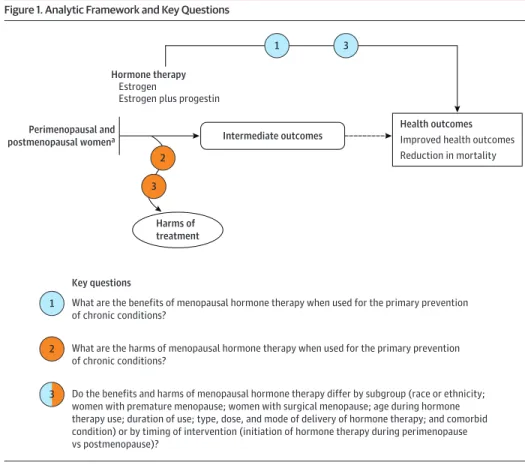
https://www.uspreventiveservicestaskforce.org/Page/Document /final-evidence-review/menopausal-hormone-therapy-preventive -medication1.Figure 1presents the analytic framework and key questions (KQs) that guided the review.
Data Sources and Searches
MEDLINE (via PubMed), the Cochrane Library, EMBASE, and Inter-national Pharmaceutical Abstracts were searched for English-language articles published from June 1, 2011, through August 1, 2016. Targeted searches were conducted for unpublished literature (ClinicalTrials.gov, the Health Services Research Projects in Process, the World Health Organization International Clinical Trials Registry Platform, NIH Reporter, [email protected]). This search included relevant citations from the previous review,7
reference lists of other pertinent review articles, and literature suggested by peer reviewers or public comment respondents. The eMethods in theSupplement
present detailed search strategies for electronic databases. Between August 2016 and July 2017, ongoing surveillance through article alerts and targeted searches of journals with high im-pact factors helped ensure inclusion of major studies affecting the conclusions or understanding of the evidence and the related USPSTF recommendation.
Study Selection
Two investigators independently reviewed titles, abstracts, and full-text articles to determine eligibility using prespecified criteria for each KQ (eTable 1 in theSupplement). Conflicts were resolved by discus-sion and consensus.
The review included studies of generally healthy perimeno-pausal and postmenoperimeno-pausal women who were eligible for hor-mone therapy. Women with and without menopausal symptoms were included if the focus of the analysis was on either the primary prevention of chronic conditions or harms of hormone therapy. In some cases the review included populations for which use of hor-mone therapy was intended for secondary prevention if there was an additional focus of the analysis on primary prevention or harms. The review examined use of systemic therapy (ie, pill, patch, or injection) with estrogen-only formulations or combination prepa-rations of estrogen plus progestin of 1 year or more for the primary prevention of chronic conditions. Medications had to have been ap-proved by the US Food and Drug Administration for this purpose and had to be available for use in the United States (Table 1).
For all KQs, the review included trials enrolling women from pri-mary care settings but not inpatient or institutional settings such as nursing homes or similar facilities.
With respect to geography, the review included studies con-ducted in the United States or in countries designated by the United Nations Development Programme as having a very high Human Development Index.11
Data Extraction and Quality Assessment
For each included study, 1 investigator abstracted information about design, population, intervention, comparator, outcome, timing, and setting. A second investigator reviewed for completeness and ac-curacy. Differences were resolved by consensus or adjudication by a third senior investigator. Two investigators independently as-sessed the quality of each study as good, fair, or poor using USPSTF predefined criteria.12
Individual study quality ratings are provided in eTable 2 in theSupplement.
Data Synthesis and Analysis
The review includes qualitative synthesis for each KQ. Assessing the number of trials available and their clinical and methodological hetero-geneity (following established guidance13) helped determine whether meta-analyses were appropriate. When at least 3 similar trials were available, quantitative synthesis of studies with random-effects models was conducted, using the inverse-variance–weighted method (DerSimonian and Laird). For all quantitative syntheses, the χ2
statis-tic and theI2
statistic (the proportion of variation in study estimates attributable to heterogeneity rather than chance) were calculated to assess statistical heterogeneity in effects between studies.14
The outcome measure for all quantitative analyses was the rela-tive risk of a beneficial or harmful change in risks (eg, increase or re-duction of cardiovascular events). Absent meta-analytic esti-mates, relative risks of outcomes of interest were based primarily on a recent publication summarizing results of the WHI trials.15
Thefore, effect estimates might differ slightly from hazard ratios re-ported in earlier WHI publications.
All quantitative analyses were based on Comprehensive Meta-Analysis Version 3 (Biostat Inc). Statistical significance was as-sumed when 95% CIs of pooled results did not cross the null (ie, 1). All testing was 2-sided.
The strength of evidence was rated for each major outcome using the domains set out in guidance from the Agency for Healthcare Research and Quality.16
strength-of-evidence grades. Strength-of-evidence grades reflect the confidence that the reviewers have that various estimates of effect are close to true effects with respect to the KQs in a systematic review.
Results
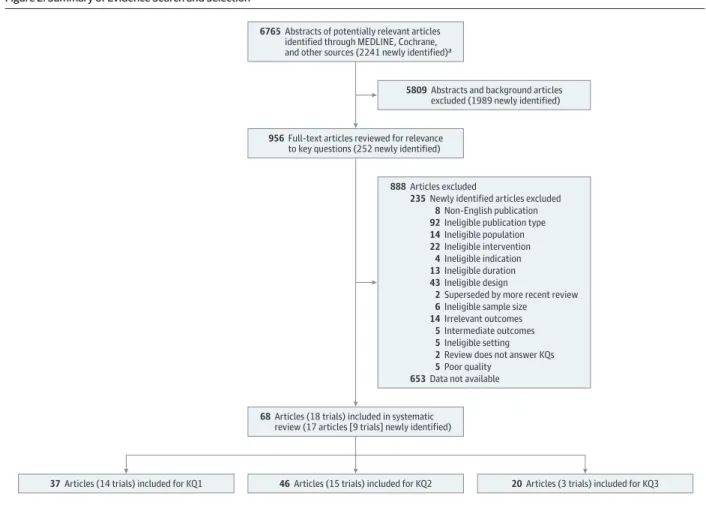
The searches identified 2241 citations (Figure 2). Overall, 68 articles from the previous review7
and this update represented a total of 18 good- or fair-quality trials. Included articles provided data on 40 058 perimenopausal and postmenopausal women comparing the ef-fects of estrogen, either alone or in combination with progestin, with placebo for the primary prevention of chronic conditions. Of the 18 included trials, 13 were conducted in the United States. The remain-ing trials came from Australia, Canada, Estonia, New Zealand, and the United Kingdom. The duration of follow-up in the trials averaged 3.5 years. The mean age of women participating in trials ranged from 5317 to 7918
years. The majority of participants were white; proportions of women of other races/ethnicities ranged from 1%19
to 41%.20
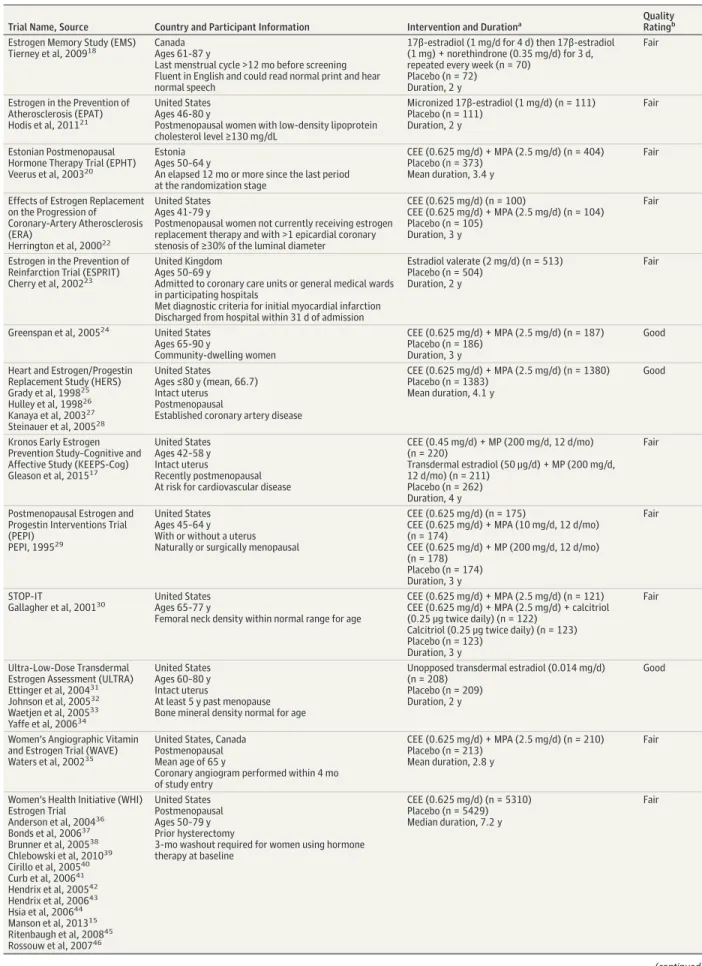
Table 2summarizes the main characteristics and quality rat-ings of eligible trials. Of these trials, 5 were rated as of good quality and 13 as of fair quality. Three trials (described in Table 2) met eligi-bility criteria24,30,35
; however, they did not stratify results by regi-men (ie, estrogen only or estrogen plus progestin), so their find-ings could not be used for our analyses.
The WHI trials were the only studies powered to assess the ef-fectiveness of hormone therapy for the primary prevention of various chronic conditions.15
They enrolled generally healthy post-menopausal women aged 50 to 79 years and compared oral conju-gated equine estrogen (0.625 mg/d), with or without
medroxypro-gesterone (2.5 mg/d), with placebo. The WHI trials had the longest follow-up among included trials (median of 7.2 years for the estrogen-only trial; 5.6 years for the estrogen plus progestin trial). Outcome-specific evidence from the WHI and other trials are available in eTables 3 through 18 in theSupplement.
Benefits of Menopausal Hormone Therapy
Key Question 1.What are the benefits of menopausal hormone therapy when used for the primary prevention of chronic conditions?
Estrogen Only
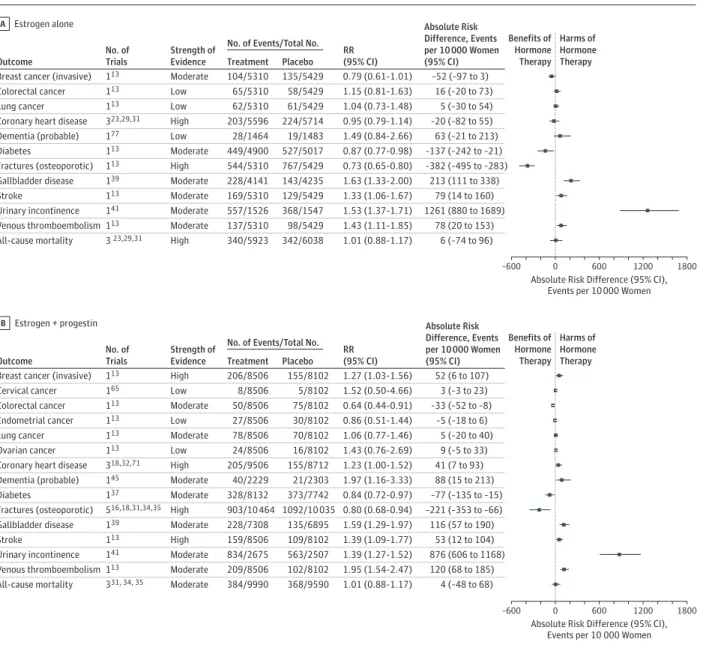
For women using estrogen only, the risks for osteoporotic frac-tures and diabetes, and the long-term risk for breast cancer, were statistically significantly reduced. Long-term observational follow-up studies of the WHI showed that, except for a reduced risk of invasive breast cancer, beneficial effects did not persist after stopping hormone therapy. Outcomes with no statistically signifi-cant reductions in risk included colorectal cancer, lung cancer, coro-nary heart disease, probable dementia, quality of life, and all-cause mortality. Some of these nonsignificant outcomes, however, had wide confidence intervals encompassing both clinically relevant ben-efits and harms, leading to inconclusive results.Table 3presents the estimated increases or reductions of events for various outcomes per 10 000 person-years for women who received estrogen-only therapy compared with those who received placebo. Estimates are based on meta-analyses of included trials or, if meta-analyses were not feasible, on results from the largest and most reliable trial (usually the WHI).Figure 3depicts the corresponding absolute risk differences with 95% CIs.Table 4summarizes the underlying strength of evidence.
Figure 1. Analytic Framework and Key Questions
Key questions
1 What are the benefits of menopausal hormone therapy when used for the primary prevention of chronic conditions?
What are the harms of menopausal hormone therapy when used for the primary prevention of chronic conditions?
2
Do the benefits and harms of menopausal hormone therapy differ by subgroup (race or ethnicity; women with premature menopause; women with surgical menopause; age during hormone therapy use; duration of use; type, dose, and mode of delivery of hormone therapy; and comorbid condition) or by timing of intervention (initiation of hormone therapy during perimenopause vs postmenopause)?
3
Health outcomes
Improved health outcomes Reduction in mortality
Perimenopausal and postmenopausal womena
Harms of treatment
2 3
Intermediate outcomes Hormone therapy
Estrogen
Estrogen plus progestin
1 3
Evidence reviews for the US Preventive Services Task Force (USPSTF) use an analytic framework to visually display the key questions (KQs) that the review will address to allow the USPSTF to evaluate the effectiveness and safety of a preventive service. The questions are depicted by linkages that relate interventions and outcomes. A dashed line indicates a relationship between an intermediate outcome and a health outcome that is presumed to describe the natural progression of the disease. Further details are available in the USPSTF procedure manual.8
The WHI (n = 10 739)15
reported statistically significant reduc-tions in risk for osteoporotic fractures among women taking estro-gen-only therapy compared with women taking placebo (−53 frac-tures per 10 000 patient-years [95% CI, −69 to −39]). Likewise, based on WHI data (n = 9917), the incidence of diabetes was sig-nificantly reduced in women taking estrogen-only therapy (−19 cases per 10 000 patient-years [95% CI, −34 to −3]).15,37
Five randomized clinical trials15,21-23,29,36,48,49,61,77,79
with data on more than 13 000 women reported breast cancer incidence. Trial results were not pooled, primarily because of heterogeneity in study duration and outcome measures. In the WHI (n = 10 739), estro-gen alone produced a nonsignificant decrease in invasive breast can-cer risk compared with placebo during the 7.2-year (median) inter-vention phase (−7 cases per 10 000 patient-years [95% CI, −14 +0.4]).15,48
Between-group differences became statistically signifi-cant during cumulative (trial and postintervention phase; median, 13 years) follow-up (hazard ratio [HR], 0.79 [95% CI, 0.65-0.97]).15
Estrogen plus Progestin
Women taking combination therapy experienced statistically sig-nificant reductions in risk for colorectal cancer, osteoporotic frac-tures, and diabetes compared with women in the placebo groups (Figure 3). Except for a lower risk of colorectal cancer, beneficial as-sociations did not persist after stopping hormone therapy. No sta-tistically significant differences for cervical cancer, endometrial can-cer, lung cancan-cer, ovarian cancan-cer, quality of life, and all-cause mortality were found. Some of these nonsignificant outcomes, however, had
wide confidence intervals encompassing both clinically relevant ben-efits and harms, leading to inconclusive results (Table 3 and Figure 3). Table 5summarizes the underlying strength of evidence.
Four trials (the WHI [n = 16 608],1,15,54,61,67
the Estrogen Memory Study [EMS; n = 142],18
the Heart and Estrogen Replacement Study [HERS; n = 2763],80
and the Women’s International Study of Long Duration Estrogen After Menopause [WISDOM; n = 4385]19
) with data on more than 20 000 women reported on the incidence of colorec-tal cancer. During the WHI intervention phase, women receiving com-bination therapy experienced a statistically significant reduction in risk for colorectal cancer (−6 cases per 10 000 patient-years [95% CI, −9 to −1]). The HERS trial reported a numeric decrease in the risk of colo-rectal cancer with use of estrogen plus progestin during 4.1 years of follow-up (HR, 0.69 [95% CI, 0.32-1.49]); EMS (n = 142) and WISDOM (n = 4385) had too small sample sizes and were of too short duration to have adequate power to detect differences in rates of colorectal cancer (<2 years; zero events in EMS and 4 events in WISDOM).
Estrogen plus progestin therapy protected against incident dia-betes among women in HERS (n = 2029)27
and the WHI (n = 15 874).60 In the WHI, the larger of the 2 trials, new diabetes diagnoses were sig-nificantly reduced in women receiving hormone therapy compared with women receiving placebo (−14 cases per 10 000 patient-years [95% CI, −24 to −3]).15,60
Five trials (n = 20 499) reported on fractures: EMS (n = 142),18 the Estonian Postmenopausal Hormone Therapy Trial (EPHT; n = 777),20 theEstrogenReplacementandAtherosclerosisStudy(ERA;n = 209),22 HERS (n = 2763),80
and the WHI (n = 16 608).1,15,52,67 In our
Table 1. Systemic Hormone Therapies Approved by the US Food and Drug Administration2,10
Hormone Therapy Category and Generic Name
Brand
Name Product Type Dosagea
Estrogen-Only Formulations
Estradiolb Alora Patch 0.025 mg to 0.1 mg, worn for 24 h twice weekly
Climara Patch 0.025 mg to 0.1 mg, worn for 24 h once weekly Estrace Pill 0.5 mg/d to 2 mg/d
Estraderm Patch 0.05 mg to 0.1 mg, continuously or cyclicallyc
Menostar Patch 0.014 mg, worn for 24 h once weekly
Minivelle Patch 0.025 mg/24 h to 0.1 mg/24 h, worn for 24 h twice weekly Vivelle Patch 0.0375 mg to 0.1 mg daily
Vivelle-Dot Patch 0.025 mg to 0.1 mg, worn for 24 h twice weekly Estradiol acetateb Femtrace Pill 0.45 mg/d to 1.8 mg/d, daily
Esterifield estrogenb Menest Pill 0.3 mg/d to 1.25 mg/d, cyclicallyc
Estropipated Ogen Pill 0.75 mg/d to 3 mg/d
Conjugated estrogense Premarin Pill, injection 0.3 mg/d cyclically, single 25-mg injectionc
Synthetic conjugated
estrogensf Enjuvia Pill 0.3 mg/d
Combination Estrogen + Progestin Formulations
Estradiol + drospirenoneb,g
Angeliq Pill Drospirenone (0.25 mg/d to 0.5 mg/d) + estradiol (0.5 mg/d to 1 mg/d)
Estradiol + norethindrone acetateb,f
Activella Pill Estradiol (0.5 mg/d to 1 mg/d) + norethindrone (0.1 mg/d)
Combipatch Patch Estradiol (0.05 mg) + norethindrone (0.14 mg to 0.25 mg), worn for 24 h once weekly Estradiol +
norgestimateb,g
Prefest Pill Repeat estradiol (1 mg/d) for 3 d, followed by estradiol (1 mg/d) + norgestimate (0.09 mg/d) for 3 d Estradiol +
levonorgestrelb,g ClimaraPro Patch Estradiol (0.045 mg) + levonorgestrel (0.015 mg),worn for 24 h once weekly
Conjugated estrogen + MPAg Prempro Pill Conjugated estrogen (0.625 mg/d) + MPA (5 mg/d)
Ethinyl estradiol + norethindrone acetateb,f
Femhrt Pill Ethinyl estradiol (0.0025 mg/d) + norethindrone acetate (0.5 mg/d)
Abbreviation: MPA, medroxyprogesterone acetate. aDosages are based on the package
inserts for the brand-name formulations.
bEstradiol can be from natural sources or prepared synthetically. c
Cyclically indicates “within a cycle,” eg, repeat 3 weeks of treatment and 1 week off.
dNatural estrogenic substance prepared from purified crystalline estrone.
eConjugated estrogens, such as conjugated equine estrogens, are derived wholly or partially from the urine of pregnant mares or from synthetic estrone and equilin. fSynthetic conjugated estrogens are
prepared using plant sources, such yams and soy, and use only synthetic resources. g
random-effects meta-analysis (eFigure 1 in theSupplement), combina-tion therapy was associated with a statistically significant risk reduccombina-tion for fractures (−44 cases per 10 000 patient-years [95% CI, −71 to −13]).
Harms of Menopausal Hormone Therapy
Key Question 2.What are the harms of menopausal hormone therapy when used for the primary prevention of chronic conditions?
Estrogen Only
Women receiving estrogen-only therapy had statistically signifi-cant increases in risk for gallbladder disease, stroke, urinary incon-tinence, and venous thromboembolism (Table 3 and Figure 3; Table 4 summarizes the strength of evidence). Increased risks did not per-sist after stopping hormone therapy.
The Postmenopausal Estrogen/Progestin Interventions Trial (PEPI; n = 349)29
and the WHI (n = 8376)40
reported increased risks for gallbladder disease in women receiving estrogen-only therapy. In the WHI, the increased risk was statistically significant (30 more cases per 10 000 patient-years [95% CI, 16 to 48]).
Of 3 trials assessing the risk of stroke (Estrogen in the Prevention of Atherosclerosis Trial [EPAT; n = 222],21
ERA [n = 205], and the WHI [n = 10 739]15,48
), only the WHI provided statistically significant results.
Estrogen-only therapy led to a statistically significant increase in risk for stroke (11 more cases per 10 000 patient-years [95% CI, 2 to 23]). Two trials (the Ultra-Low-Dose Transdermal Estrogen Assess-ment [ULTRA; n = 239]33
and the WHI [n = 3073]42
) with data on more than 3200 continent women found higher risks of urinary in-continence (self-reported) in the treatment groups for all time points (1261 more cases per 10 000 patient-years [95% CI, 880 to 1689]). Based on the WHI (n = 10 739) results,15women randomized to estrogen-only therapy had a statistically significant increase in risk of venous thromboembolism compared with those randomized to placebo (11 more cases per 10 000 patient-years [95% CI, 3 to 22]). To balance benefits and harms, the WHI used a global index based on beneficial and harmful events. For estrogen-only therapy, the global index did not show a statistically significant difference in overall beneficial or harmful events (HR, 1.03 [95% CI, 0.93-1.13]).
Estrogen plus Progestin
Women receiving combination therapy had statistically significant in-creases in risk for invasive breast cancer, probable dementia, gallblad-der disease, stroke, urinary incontinence, and venous thromboem-bolism compared with women receiving placebo (Table 3 and Figure 3; Table 5 summarizes the strength of evidence).
Figure 2. Summary of Evidence Search and Selection
6765Abstracts of potentially relevant articles
identified through MEDLINE, Cochrane,
and other sources (2241 newly identified)a
46Articles (15 trials) included for KQ2 20Articles (3 trials) included for KQ3
37Articles (14 trials) included for KQ1
5809Abstracts and background articles
excluded (1989 newly identified)
888Articles excluded
235Newly identified articles excluded
8Non-English publication
92Ineligible publication type
14Ineligible population
22Ineligible intervention
4Ineligible indication
13Ineligible duration
43Ineligible design
2Superseded by more recent review
6Ineligible sample size
14Irrelevant outcomes
5Intermediate outcomes
5Ineligible setting
2Review does not answer KQs
5Poor quality
653Data not available
956Full-text articles reviewed for relevance
to key questions (252 newly identified)
68Articles (18 trials) included in systematic
review (17 articles [9 trials] newly identified)
Six articles from the Women’s Health Initiative reported results of unblinded, long-term postintervention follow-up. These articles were used in addressing key questions (KQs) 1 and 2 only.
Table 2. Characteristics of Randomized Clinical Trials of Use of Hormone Therapy
Trial Name, Source Country and Participant Information Intervention and Durationa
Quality Ratingb
Estrogen Memory Study (EMS) Tierney et al, 200918
Canada Ages 61-87 y
Last menstrual cycle >12 mo before screening Fluent in English and could read normal print and hear normal speech
17β-estradiol (1 mg/d for 4 d) then 17β-estradiol (1 mg) + norethindrone (0.35 mg/d) for 3 d, repeated every week (n = 70)
Placebo (n = 72) Duration, 2 y
Fair
Estrogen in the Prevention of Atherosclerosis (EPAT) Hodis et al, 201121
United States Ages 46-80 y
Postmenopausal women with low-density lipoprotein cholesterol level ≥130 mg/dL
Micronized 17β-estradiol (1 mg/d) (n = 111) Placebo (n = 111)
Duration, 2 y
Fair
Estonian Postmenopausal Hormone Therapy Trial (EPHT) Veerus et al, 200320
Estonia Ages 50–64 y
An elapsed 12 mo or more since the last period at the randomization stage
CEE (0.625 mg/d) + MPA (2.5 mg/d) (n = 404) Placebo (n = 373)
Mean duration, 3.4 y
Fair
Effects of Estrogen Replacement on the Progression of Coronary-Artery Atherosclerosis (ERA)
Herrington et al, 200022
United States Ages 41-79 y
Postmenopausal women not currently receiving estrogen replacement therapy and with >1 epicardial coronary stenosis of ≥30% of the luminal diameter
CEE (0.625 mg/d) (n = 100)
CEE (0.625 mg/d) + MPA (2.5 mg/d) (n = 104) Placebo (n = 105)
Duration, 3 y
Fair
Estrogen in the Prevention of Reinfarction Trial (ESPRIT) Cherry et al, 200223
United Kingdom Ages 50–69 y
Admitted to coronary care units or general medical wards in participating hospitals
Met diagnostic criteria for initial myocardial infarction Discharged from hospital within 31 d of admission
Estradiol valerate (2 mg/d) (n = 513) Placebo (n = 504)
Duration, 2 y
Fair
Greenspan et al, 200524 United States
Ages 65-90 y
Community-dwelling women
CEE (0.625 mg/d) + MPA (2.5 mg/d) (n = 187) Placebo (n = 186)
Duration, 3 y
Good
Heart and Estrogen/Progestin Replacement Study (HERS) Grady et al, 199825
Hulley et al, 199826
Kanaya et al, 200327
Steinauer et al, 200528
United States Ages ≤80 y (mean, 66.7) Intact uterus Postmenopausal
Established coronary artery disease
CEE (0.625 mg/d) + MPA (2.5 mg/d) (n = 1380) Placebo (n = 1383)
Mean duration, 4.1 y
Good
Kronos Early Estrogen Prevention Study–Cognitive and Affective Study (KEEPS-Cog) Gleason et al, 201517
United States Ages 42–58 y Intact uterus
Recently postmenopausal At risk for cardiovascular disease
CEE (0.45 mg/d) + MP (200 mg/d, 12 d/mo) (n = 220)
Transdermal estradiol (50 μg/d) + MP (200 mg/d, 12 d/mo) (n = 211)
Placebo (n = 262) Duration, 4 y
Fair
Postmenopausal Estrogen and Progestin Interventions Trial (PEPI)
PEPI, 199529
United States Ages 45–64 y With or without a uterus Naturally or surgically menopausal
CEE (0.625 mg/d) (n = 175)
CEE (0.625 mg/d) + MPA (10 mg/d, 12 d/mo) (n = 174)
CEE (0.625 mg/d) + MP (200 mg/d, 12 d/mo) (n = 178)
Placebo (n = 174) Duration, 3 y
Fair
STOP-IT
Gallagher et al, 200130
United States Ages 65–77 y
Femoral neck density within normal range for age
CEE (0.625 mg/d) + MPA (2.5 mg/d) (n = 121) CEE (0.625 mg/d) + MPA (2.5 mg/d) + calcitriol (0.25 μg twice daily) (n = 122)
Calcitriol (0.25 μg twice daily) (n = 123) Placebo (n = 123)
Duration, 3 y
Fair
Ultra-Low-Dose Transdermal Estrogen Assessment (ULTRA) Ettinger et al, 200431
Johnson et al, 200532
Waetjen et al, 200533
Yaffe et al, 200634
United States Ages 60–80 y Intact uterus
At least 5 y past menopause Bone mineral density normal for age
Unopposed transdermal estradiol (0.014 mg/d) (n = 208)
Placebo (n = 209) Duration, 2 y
Good
Women’s Angiographic Vitamin and Estrogen Trial (WAVE) Waters et al, 200235
United States, Canada Postmenopausal Mean age of 65 y
Coronary angiogram performed within 4 mo of study entry
CEE (0.625 mg/d) + MPA (2.5 mg/d) (n = 210) Placebo (n = 213)
Mean duration, 2.8 y
Fair
Women’s Health Initiative (WHI) Estrogen Trial
Anderson et al, 200436
Bonds et al, 200637
Brunner et al, 200538
Chlebowski et al, 201039
Cirillo et al, 200540
Curb et al, 200641
Hendrix et al, 200542
Hendrix et al, 200643
Hsia et al, 200644
Manson et al, 201315
Ritenbaugh et al, 200845
Rossouw et al, 200746
United States Postmenopausal Ages 50–79 y Prior hysterectomy
3-mo washout required for women using hormone therapy at baseline
CEE (0.625 mg/d) (n = 5310) Placebo (n = 5429) Median duration, 7.2 y
Fair
Six trials (the WHI [n = 16 608],1,15,47,53,61,66,67,79 HERS [n = 2763],80
PEPI [n = 700],29
EPHT [n = 777],20
ERA [n = 209],22
and WISDOM [n = 4385]19
) reported on breast cancer incidence based on data from more than 25 000 women. Trial results were not Table 2. Characteristics of Randomized Clinical Trials of Use of Hormone Therapy (continued)
Trial Name, Source Country and Participant Information Intervention and Durationa
Quality Ratingb
WHI Estrogen Trial postintervention and postintervention extension phases
Chlebowski et al, 201047
LaCroix et al, 201148
Manson et al, 201315
9666 participants from WHI (90%) had any postintervention follow up and 7645 (71%) consented to participate in the extension phase
CEE (0.625 mg/d) (n = 5310) Placebo (n = 5429) Mean duration, 6.6 y
Fair
WHI Estrogen + Progestin Trial Anderson et al, 201249
Anderson et al, 200350
Canonico et al, 201451
Cauley et al, 200352
Chlebowski et al, 200353
Chlebowski et al, 200454
Cirillo et al, 200540
Cushman et al, 200455
Hays et al, 200356
Hendrix et al, 200357
Hendrix et al, 200542
Hsia et al, 200458
Manson et al, 200359
Manson et al, 201315
Margolis et al, 200460
Prentice et al, 200961
Rossouw et al, 20021
Rossouw et al, 200746
Tang et al, 201162
Toh et al, 201063
Wassertheil-Smoller et al, 200364
United States Postmenopausal Ages 50-79 y
3-mo washout period for women using hormone therapy at baseline
CEE (0.625 mg/d) + MPA (2.5 mg/d) (n = 8506) Placebo (n = 8102)
Median duration, 5.6 y
Fair
WHI Estrogen + Progestin postintervention and postintervention extension phases
Chlebowski et al, 200965
Chlebowski et al, 201047
Gramling et al, 200966
Heiss et al, 200867
Manson et al, 201315
15 747 participants from WHI (95%) had any postintervention follow-up and 12 788 (77%) consented to participate in the extension phase
CEE (0.625 mg/d) + MPA (2.5 mg/d) (n = 8506) Placebo (n = 8102)
Median duration, 8.2 y
Fair
Women’s Health Initiative Memory Study (WHIMS)—Estrogen Espeland et al, 200468
Shumaker et al, 200469
United States
WHI participants enrolled in estrogen-only trial Ages 65-79 y
Free of probable dementia
Able and willing to undergo annual cognitive assessment
CEE (0.625 mg/d) (n = 1464) Placebo (n = 1483) Duration, 5.2 y
Good
WHIMS—Estrogen + Progestin Culhane, 200370
Rapp et al, 200371
Shumaker et al, 200372
United States
WHI participants enrolled in estrogen + progestin trial Age >65 y
Free of probable dementia
Able and willing to undergo annual cognitive assessment
CEE (0.625 mg/d) + MPA (2.5 mg/d) (n = 2229) Placebo (n = 2303)
Duration, 5.4 y
Good
Women’s Health Initiative Memory Study of Younger Women (WHIMSY) Espeland et al, 201373
United States Postmenopausal Ages 50-55 y
3-mo washout period for women using hormone therapy at baseline
CEE (0.625 mg/d) + MPA (2.5 mg/d) (n = 696) Placebo (n = 630)
Duration, 7.2 y
Fair
Women’s Health Initiative Study of Cognitive Aging
(WHISCA)—Estrogen Espeland et al, 201074
Resnick et al, 200975
United States
WHIMS estrogen-only trial participants Free of probable dementia
At 1 of 14 WHIMS centers
CEE (0.625 mg/d) + MPA (2.5 mg/d) (n = 434) Placebo (n = 452)
Duration, 2.7 y
Good
WHISCA—Estrogen + Progestin Espeland et al, 201074
Resnick et al, 200676
United States
WHIMS estrogen + progestin trial participants Free of probable dementia
At 1 of 14 WHIMS centers
CEE (0.625 mg/d) + MPA (2.5 mg/d) (n = 690) Placebo (n = 726)
Duration, 3 y
Good
Women’s International Study of Long Duration Estrogen After Menopause (WISDOM) Vickers et al, 200719
United Kingdom Postmenopausal Ages 50–69 y
CEE (0.625 mg/d) + MPA (2.5-5.0 mg/d) (n = 2196) Placebo (n = 2189)
Duration, 1 y
Fair
Abbreviations: CEE, conjugated equine estrogen; MP, cyclic micronized progesterone; MPA, medroxyprogesterone acetate; USPSTF, US Preventive Services Task Force.
a
Duration of follow-up and duration of active treatment (except for the Women’s Health Initiative follow-up study, for which “duration” indicates follow-up only).
b
pooled because of heterogeneity in study duration and outcome measures. During the intervention phase of the WHI, women as-signed to estrogen plus progestin had a statistically significant in-crease in risk of invasive breast cancer (9 more cases per 10 000 per-son-years [95% CI, 1 to 19]).15
The risk of invasive breast cancer remained significantly increased during a median postintervention follow-up of 8.2 years (HR, 1.32 [95% CI, 1.08-1.61]). The HERS trial also reported that more women randomized to estrogen plus pro-gestin developed breast cancer during the 4.1-year (mean) interven-tion phase than did the women receiving placebo, but the results were not statistically significant (HR, 1.38 [95% CI, 0.82-2.31]).80
The other trials reported inconclusive findings.
A meta-analysis of 3 trials (EPHT,20 PEPI,29
and the WHI1 ) with data on 18 081 women yielded a numerically higher risk of coro-nary events in women treated with combination therapy than in those receiving placebo (8 more cases per 10 000 patient-years [95% CI, 0 to 18]) (eFigure 2 in theSupplement).
One WHI trial (WHI Memory Study [WHIMS]72
) evaluated the risk of probable dementia or mild cognitive impairment among 4532 women taking estrogen plus progestin during 5.4 years of follow-up. WHIMS was limited to women aged 65 to 79 years at baseline who were free of probable dementia. Women using estrogen plus progestin had a higher risk of probable dementia than those receiving placebo (22 more cases per 10 000 patient-years [95% CI, 4 to 53]). WHIMS did not find an elevated risk of mild cog-nitive impairment.72
Based on the WHI data, risks for gallbladder disease (21 more cases per 10 000 patient-years [95% CI, 10 to 34]), stroke (9 more cases per 10 000 patient-years [95% CI, 2 to 19]), urinary inconti-nence (876 more cases per 10 000 patient-years [95% CI, 606 to 1168]), and venous thromboembolism (21 more cases per 10 000 patient-years [95% CI, 12 to 33]) were also statistically significantly increased among women taking estrogen plus progestin com-pared with women taking placebo (Figure 3). Because of small sample sizes, other trials produced inconclusive results with wide confidence intervals encompassing beneficial and harmful effects on these outcomes.
The WHI global index balancing benefits and harms was asso-ciated with 20 additional adverse events per 10 000 person-years for estrogen plus progestin therapy (HR, 1.12 [95% CI, 1.02-1.24]).15
Difference in Benefits and Harms by Subgroup
Key Question 3.Do the benefits and harms of menopausal hor-mone therapy differ by subgroup (race or ethnicity; women with pre-mature menopause; women with surgical menopause; age during hormone therapy use; duration of use; type, dose, and mode of de-livery of hormone therapy; and comborbid condition) or by timing of intervention (initiation of hormone therapy during perimeno-pause vs postmenoperimeno-pause)?
Subgroups
Trials did not report results for most of the subgroups. Subgroup analyses were restricted to age, race/ethnicity, and a limited num-ber of comorbidities or risk factors. In general, tests of interactions did not detect any statistically significant subgroup effects for most outcomes of interest. An exception is the interaction with age. Analy-ses that compared younger (50 to 59 years) with older (70 to 79 years) women using estrogen-only therapy yielded statistically
sig-nificant trends for increasing risks by age for myocardial infarction (HR, 0.55 [95% CI, 0.31-1.00] vs HR, 1.24 [95% CI, 0.88-1.75];P= .02 for trend),15
colorectal cancer (HR, 0.71 [95% CI, 0.30-1.67] vs HR, 2.24 [95% CI, 1.16-4.30];P= .02 for trend),15
and all-cause mortal-ity (HR, 0.70 [95% CI, 0.46-1.09] vs HR, 1.21 [95% CI, 0.95-1.56]; P= .04 for trend).15
Such subgroup differences, however, are based on relatively few events and should be interpreted cautiously. For example, only 48 women in the 50- to 59-year-old age group expe-rienced a myocardial infarction. eTable 19 in theSupplement pre-sents the strength of evidence for subgroup results.
Timing of Intervention
Post hoc subgroup analyses of WHI data regarding the association of timing of hormone therapy (ie, initiation during early or late post-menopause) with benefits and risks found that time since meno-pause did not have a statistically significant association with the risk of coronary heart disease in women using estrogen-only therapy.61 For combination therapy, one post hoc subgroup analysis found that women who began therapy within 10 years of menopause did not have the elevated risk for myocardial infarction, unlike women who started therapy more than 20 years after menopause (HR, 0.91 [95% CI, 0.54-1.52] vs HR, 1.99 [95% CI, 1.32-3.02];P= .01).15 How-ever, another post hoc subgroup analysis took hormone therapy use of women before enrollment into the WHI into consideration and reported that coronary risks did not differ between early and late initiation of hormone therapy.61
For several outcomes, no statistically significant differences were found between women using hormone therapy and women receiving placebo. For estrogen-only therapy, no statistically sig-nificant differences were found for probable dementia, breast Table 3. Estimated Event Rate Increase (Harm) or Decrease (Benefit) per 10 000 Person-Years Associated With the Use of Hormone Therapy
Outcome
Event Rate Difference, per 10 000 Person-Years (95% CI)
Estrogen Only Estrogen + Progestin
Breast cancer (invasive) −7 (−14 to 0.4) 9 (1 to 19) Cervical cancer NAa 1 (−1 to 4)
Colorectal cancer 2 (−3 to 10) −6 (−9 to −1) Endometrial cancer NAa −1 (−3 to 3)
Lung cancer 1 (−4 to 8) 1 (−4 to 7) Ovarian cancer No data 2 (−1 to 6)b
Coronary heart disease −3 (−12 to 8) 8 (0 to 18) Dementia (probable) 12 (−4 to 41) 22 (4 to 53) Diabetes −19 (−34 to −3)b −14 (−24 to −3)b
Fractures (osteoporotic) −53 (−69 to −39)b −44 (−71 to −13)
Gallbladder disease 30 (16 to 48)b 21 (10 to 34)b
Stroke 11 (2 to 23) 9 (2 to 19) Urinary incontinence 1261 (880 to 1689) 876 (606 to 1168) Venous thromboembolism
(DVT or PE)
11 (3 to 22) 21 (12 to 33) All-cause mortality 1 (−10 to 14) 1 (−9 to 12)
Abbreviations: DVT, deep vein thrombosis; NA, not applicable; PE, pulmonary embolism.
aNot applicable to women after hysterectomy.
cancer, colorectal cancer, lung cancer, coronary heart disease, quality of life, and all-cause mortality. For estrogen plus progestin therapy, no statistically significant differences were found for cer-vical cancer, endometrial cancer, lung cancer, ovarian cancer, quality of life, and all-cause mortality. eTable 19 in theSupplement
presents the strength of evidence of these findings.
Discussion
Table 4 and Table 5 present summaries of the evidence for this review. Women taking hormone therapy to prevent chronic
condi-tions may experience some benefits (eg, reduced risks for fractures and diabetes) but also several important harms (eg, higher risks for stroke, thromboembolic events, gallbladder disease, and urinary incontinence). The WHI global index that balanced benefits and harms of hormone therapy found no significant difference for estrogen-only therapy but found significantly more harmful events for combination therapy. These results pertain to asymptomatic women who use hormone therapy for the purpose of preventing chronic conditions. A recently published long-term follow-up study of the WHI trials, however, showed that the exposure to hormone therapy during the WHI intervention phases (5.6 years for estrogen-only therapy and 7.2 years for estrogen plus progestin) Figure 3. Absolute Risk Reductions or Increases for Women Treated With Estrogen Alone and With Estrogen Plus Progestin
–600 0 600 1200 1800
Absolute Risk Difference (95% CI), Events per 10 000 Women Estrogen alone
A
Benefits of Hormone Therapy
Harms of Hormone Therapy No. of
Trials
Strength of Evidence
No. of Events/Total No.
Treatment Placebo Outcome
RR (95% CI)
Absolute Risk Difference, Events per 10 000 Women (95% CI)
Absolute Risk Difference, Events per 10 000 Women (95% CI)
113 Moderate 104/5310 135/5429
Breast cancer (invasive) 0.79 (0.61-1.01) –52 (–97 to 3)
113 Low 65/5310 58/5429
Colorectal cancer 1.15 (0.81-1.63) 16 (–20 to 73)
113 Low 62/5310 61/5429
Lung cancer 1.04 (0.73-1.48) 5 (–30 to 54)
323,29,31 High 203/5596 224/5714
Coronary heart disease 0.95 (0.79-1.14) –20 (–82 to 55)
177 Low 28/1464 19/1483
Dementia (probable) 1.49 (0.84-2.66) 63 (–21 to 213)
113 Moderate 449/4900 527/5017
Diabetes 0.87 (0.77-0.98) –137 (–242 to –21)
113 High 544/5310 767/5429
Fractures (osteoporotic) 0.73 (0.65-0.80) –382 (–495 to –283)
139 Moderate 228/4141 143/4235
Gallbladder disease 1.63 (1.33-2.00) 213 (111 to 338)
113 Moderate 169/5310 129/5429
Stroke 1.33 (1.06-1.67) 79 (14 to 160)
141 Moderate 557/1526 368/1547
Urinary incontinence 1.53 (1.37-1.71) 1261 (880 to 1689)
113 Moderate 137/5310 98/5429
Venous thromboembolism 1.43 (1.11-1.85) 78 (20 to 153)
3 23,29,31 High 340/5923 342/6038
All-cause mortality 1.01 (0.88-1.17) 6 (–74 to 96)
–600 0 600 1200 1800
Absolute Risk Difference (95% CI), Events per 10 000 Women Estrogen + progestin
B
Benefits of Hormone Therapy
Harms of Hormone Therapy No. of
Trials
Strength of Evidence
No. of Events/Total No.
Treatment Placebo Outcome
RR (95% CI)
113 High 206/8506 155/8102
Breast cancer (invasive) 1.27 (1.03-1.56) 52 (6 to 107)
165 Low 8/8506 5/8102
Cervical cancer 1.52 (0.50-4.66) 3 (–3 to 23)
113 Moderate 50/8506 75/8102
Colorectal cancer 0.64 (0.44-0.91) –33 (–52 to –8)
113 Low 27/8506 30/8102
Endometrial cancer 0.86 (0.51-1.44) –5 (–18 to 6)
113 Moderate 78/8506 70/8102
Lung cancer 1.06 (0.77-1.46) 5 (–20 to 40)
113 Low 24/8506 16/8102
Ovarian cancer 1.43 (0.76-2.69) 9 (–5 to 33)
318,32,71 High 205/9506 155/8712
Coronary heart disease 1.23 (1.00-1.52) 41 (7 to 93)
145 Moderate 40/2229 21/2303
Dementia (probable) 1.97 (1.16-3.33) 88 (15 to 213)
137 Moderate 328/8132 373/7742
Diabetes 0.84 (0.72-0.97) –77 (–135 to –15)
516,18,31,34,35 High 903/10 464 1092/10 035
Fractures (osteoporotic) 0.80 (0.68-0.94) –221 (–353 to –66)
139 Moderate 228/7308 135/6895
Gallbladder disease 1.59 (1.29-1.97) 116 (57 to 190)
141 Moderate 834/2675 563/2507
Urinary incontinence 1.39 (1.27-1.52) 876 (606 to 1168)
113 Moderate 209/8506 102/8102
Venous thromboembolism 1.95 (1.54-2.47) 120 (68 to 185)
331, 34, 35 Moderate 384/9990 368/9590
All-cause mortality 1.01 (0.88-1.17) 4 (–48 to 68)
113 High 159/8506 109/8102
Stroke 1.39 (1.09-1.77) 53 (12 to 104)
A, Follow-up periods for all outcomes are 7.1 years except for fractures (7.2 years), probable dementia (5.2 years), and urinary incontinence (1 year). B, Follow-up periods for all outcomes are 5.6 years except for fractures (5.0 years), coronary heart disease (5.1 years), probable dementia (4 years), and urinary incontinence (1 year). Relative risks (RRs) were calculated to determine absolute risk reductions and increases presented in this Figure
because it is unclear whether the proportional hazards assumption is always met in trials of long-term hormone therapy. Estimates of RRs might differ from hazard ratios of trials presented in the text. Estimates using 1 trial are based on the best available single study. The quality of each study was assessed as good, fair, or poor using USPSTF predefined criteria.12
T able 4 .Summar y o f E vidence: E strog en-Only T rials (K e y Que stions 1 and 2) a No . o f Studies and Obser v ations Summar y o f Findings by Outcome Consistency and Precision R epor ting Bias B ody of E vidence Limitations EPC Assessment of Strength of E vidence Menopausal W omen Posthysterectomy 5 RCT s 15,21-23,36,48,49,61,77 ; 239 e v ents in 10 739 w omen contribute to effect estimate (based on 1 RCT 15 ) Inv asiv e breast cancer (follo w-up, 7.2 y): nonsignificant lo w e r risk with HT (HR, 0.79; 95% CI, 0.61-1.02) Consistent Imprecise Undetected Three studies follo w e d u p par ticipants for a relativ ely shor t dur ation (2-3 y) Moder ate 4 RCT s 21,22,29,44 ; 422 e v ents in 11 310 w omen contribute to effect estimate (based on 3 RCT s 21,29,44 ) Coronar y hear t disease (follo w-up, 6.8 y in meta-analysis): no significant risk reduction or increase with HT (RR, 0.95; 95% CI, 0.79-1.14) Consistent Precise Undetected None High 1 RCT 68,69,78 ; 4 7 e v ents in 2947 w omen contribute to effect estimate Probable dementia (follo w-up, 5.2 y): no significant risk increase or reduction with HT (HR, 1.49; 95% CI, 0.83-2.66) NA Imprecise Undetected None Lo w 1 RCT 15,37 ; 976 e v ents in 9917 w omen contribute to effect estimate Diabetes (follo w-up, 7.1 y): risk reduction with HT (HR, 0.86; 95% CI, 0.76-0.98)
NA Reasonably
precise Undetected Diabetes is self-repor ted Moder ate 2 RCT s 15,22,48,50 ; 1227 e v ents in 10 739 w omen contribute to effect estimate (based on 1 RCT 15 ) F ractures (follo w-up, 6.8 y): significant risk decrease with HT (HR, 0. 70; 95% CI, 0.63-0.79) Consistent Precise Undetected None High 2 RCT s 29,40 ; 371 e v ents in 8376 w omen contribute to effect estimate (based on 1 RCT 40 ) Gallbladder e v ents (follo w-up, 7.2 y): significant risk increase with HT (HR, 1.67; 95% CI, 1.35-2.06
Consistent Reasonably
precise Undetected Gallbladder disease is self-repor ted Moder ate 3 RCT s 21,22,48 ; 298 e v ents in 10 739 w omen contribute to effect estimate (based on 1 RCT 15 ) Strok e (follo w-up, 7.2 y): significant increase with HT (HR, 1.35; 95% CI, 1.07-1.70)
Consistent Reasonably
precise Undetected Three studies follo w e d par ticipants for a relativ ely shor t dur ation (2–3 y) Moder ate 2 RCT s 33,42 ; 925 e v ents in 3073 w omen contribute to effect size (based on 1 RCT 42 ) Urinar y incontinence (follo w-up, 1 y): significant risk increase with HT (RR, 1.53; 95% CI, 1.37-1.71) Consistent Precise Undetected Urinar y incontinence is self-repor ted Moder ate 2 RCT s 21,48 ; 144 (D VT ) and 91 (PE) e v ents in 10 739 w omen contribute to effect estimates (based on 1 RCT 15 ) V enous thromboembolism (follo w-up, 7.1 y): nonsignificant increased risk of PE (HR, 1.35; 95% CI, 0.89-2.05) and significant increased risk of D V T (HR, 1.48; 95% CI, 1.06-2.07) in the WHI
Consistent Reasonably
was not associated with increased or decreased risks of all-cause, cardiovascular, or cancer mortality during a cumulative follow-up of 18 years.81
A major point of discussion in recent years has been whether the overall net benefit of hormone therapy use may be increased if therapy is started early during menopause transition or early post-menopause. This approach is often referred to as the timing hypothesis (ie, a critical window for favorable outcomes of hor-mone therapy treatment).3
The hypothesis proposes that hor-mone therapy given at or soon after menopause reduces the risks of cardiovascular disease,4
mortality,6
and dementia,5 but the potential beneficial effects will be attenuated or not experienced when hormone therapy is initiated several years after menopause. Current evidence on the effect of timing of initiation, however, is inconclusive.
A recent Cochrane review assessed the timing hypothesis by stratifying trials in a meta-analysis according to when any hormone therapy was started (the review did not stratify between estrogen-only and combination therapy).82
If this information was not avail-able, the authors used the mean age of participants at baseline as surrogates, which is a substantial limitation of that review. Results provided some support of the timing hypothesis. All-cause mortal-ity was lower in the subgroup of studies in which treatment was started within 10 years of menopause compared with studies in which more than 10 years had elapsed (P= .01). Likewise, the risk of coronary heart disease was lower in women who began hor-mone therapy early (P= .02). Nevertheless, because of issues of po-tential ecological fallacy, findings of such study-level analyses have to be viewed cautiously.
Another study sometimes viewed as supporting the timing hy-pothesis is the Danish Osteoporosis Prevention Study (DOPS).83
That study was not considered in the main synthesis because of poor qual-ity attributable to lack of blinding of outcomes assessors. In addi-tion, its findings are limited by the small number of events and the imprecision of the estimates. For example, during 10 years of treat-ment, only 49 cardiovascular events took place.
Limitations
This review and the underlying evidence base have several limita-tions. First, the trials were restricted to those published in English. Because of the large number of included trials, however, we be-lieve that inclusion of studies not published in English would not affect our conclusions.
Second, most included trials had high attrition or low adher-ence to medications; this was true even for the WHI, in which 40% to 50% of participants discontinued their medications during the trial. Nevertheless, secondary analyses of the WHI limited to adher-ent women (ie, censoring women within 6 months of their report-ing less than 80% adherence to study pills) were generally similar to intention-to-treat results15
but with stronger findings. Third, low event rates also limited conclusions for some out-comes. For example, in the WHI Estrogen plus Progestin Trial, only 40 women developed ovarian cancer. Likewise, event rates for cer-vical and endometrial cancers were low, rendering wide confi-dence intervals that encompassed clinically meaningful differ-ences in risks. Thus, confidence in conclusions about benefits and risks of hormone therapy for some outcomes (cervical, endome-trial, and ovarian cancer) is low.
T able 5 .Summar y o f E vidence: E strog en Plus Prog e stin T rials (K e y Que stions 1 and 2) a No . o f Studies and Obser v ations Summar y o f Findings by Outcome Consistency and Precision R epor ting Bias B ody of E vidence Limitations EPC Assessment of Strength of E vidence Menopausal W omen Posthysterectomy 1 RCT 15 Qualit y o f life (follo w-up, 5.2 y): similar scores on most items of the RAND-36 NA Precise Undetected None Moder ate Menopausal W omen With Intact Uterus 5 RCT s 1,15,19,20,29,47,53,61,66,67,80 ; 420 e v ents in 19 371 w omen contribute to effect estimates (based on 2 RCT s 15,80 ) Inv asiv e breast cancer (follo w-up, 4.1-5.6 y): significant risk increase with HT (HR, 1.24; 95% CI, 1.01-1.53) in WHI and nonsignificant increase with HT in HERS I (HR, 1.38; 95% CI, 0.82-2.31)
Consistent Reasonably
T able 5 .Summar y o f E vidence: E strog en Plus Prog e stin T rials (K e y Que stions 1 and 2) a(continued) No . o f Studies and Obser v ations Summar y o f Findings by Outcome Consistency and Precision R epor ting Bias B ody of E vidence Limitations EPC Assessment of Strength of E vidence 2 RCT s 29,40 ; 363 e v ents in 14 203 w omen contribute to effect estimate (based on 1 RCT 40 ) Gallbladder e v ents (follo w-up, 5.6 y): significant risk increase with HT (HR, 1.59; 95% CI, 1.28-1.97) Consistent Precise Undetected None Moder ate 3 RCT s 15,18,20,64 ; 330 e v ents in 17 385 w omen contribute to effect estimates (based on 2 RCT s 15,20,64 ) Strok e (follo w-up, 3.4-5.6 y): significant increase with HT in WHI (HR, 1.37; 95% CI, 1.07-1.76) Risk of any cerebro v ascular e v ent: significant increase with HT in EPHT (HR, 1.06; 95% CI, 0.07-17.2)
Consistent Reasonably
precise Undetected Outcome measures heterogeneous; 1 trial repor ted on strok e incidence and another repor ted on composite risk of v arious cerebro v ascular e v ents (eg, strok e, TIA) High 2 RCT s 28,42 ; 1397 e v ents in 5182 w omen contribute to effect size (based on 1 RCT 42 ) Urinar y incontinence (follo w-up, 1 y): significant risk increase with HT (RR, 1.39; 95% CI, 1.27-1.52) Consistent Precise Undetected Urinar y incontinence is self-repor ted Moder ate 4 RCT s 18,20,22,55 ; 182 (D VT ) and 124 (PE) e v ents in 16 602 w omen contribute to effect estimates (based on 1 RCT 15 ) V enous thromboembolism (follo w-up, 5.6 y): significant risk increase of PE (HR, 1.98; 95% CI, 1.36-2.87) and D V T (HR, 1.87; 95% CI, 1.37-2.54) with HT in WHI at follo w-up
Consistent Reasonably
precise Undetected Three studies follo w e d u p par ticipants for a relativ ely shor t dur ation (2-3 y) Moder ate 3 RCT s 22,67,80 ; 752 e v ents in 19 580 w omen contribute to effect estimate All-cause mor talit y (follo w-up, 5.2 y in meta-analysis): no significant risk increase or reduction with HT (RR, 1.01; 95% CI, 0.88-1.17)
Consistent Reasonably
Fourth, the majority of women (around 80%) were white. Sub-group analyses did not did identify differences in beneficial or harmful effects among ethnic groups, but such analyses were likely underpow-ered. Moreover, the majority of findings came from the WHI, which tested only 1 dose, formulation, and route of administration of hormone therapyineachtrial(oralconjugatedequineestrogen[0.625mg/d]with or without medroxyprogesterone [2.5 mg/d]). Whether different for-mulations have different risk-benefit profiles remains unclear.
Conclusions
Hormone therapy for the primary prevention of chronic conditions in menopausal women is associated with some beneficial effects but also with a substantial increase of risks for harms. The available evi-dence regarding benefits and harms of early initiation of hormone therapy is inconclusive.
ARTICLE INFORMATION
Accepted for Publication:November 1, 2017.
Author Contributions:Dr Gartlehner had full access to all the data in the study and takes responsibility for the integrity of the data and the accuracy of the data analysis.
Concept and design:Gartlehner, Feltner, Viswanathan.
Acquisition, analysis, or interpretation of data: Gartlehner, Patel, Feltner, Weber, Long, Mullican, Boland, Lux, Viswanathan.
Drafting of the manuscript:Gartlehner, Patel, Feltner, Weber, Boland, Viswanathan. Critical revision of the manuscript for important intellectual content:Gartlehner, Patel, Feltner, Weber, Long, Mullican, Lux, Viswanathan. Statistical analysis:Gartlehner, Patel, Viswanathan. Obtained funding:Feltner, Weber, Viswanathan. Administrative, technical, or material support:Patel, Weber, Long, Mullican, Boland, Lux, Viswanathan. Supervision:Gartlehner, Patel, Viswanathan.
Conflict of Interest Disclosures:All authors have completed and submitted ICMJE Form for Disclosure of Potential Conflicts of Interest and none were reported.
Funding/Support:This research was funded under contract HHSA-290-2012-00015-I, Task Order 6, from the Agency for Healthcare Research and Quality (AHRQ), US Department of Health and Human Services, under a contract to support the US Preventive Services Task Force (USPSTF).
Role of the Funder/Sponsor:Investigators worked with USPSTF members and AHRQ staff to develop the scope, analytic framework, and key questions for this review. AHRQ had no role in study selection, quality assessment, or synthesis. AHRQ staff provided project oversight, reviewed the report to ensure that the analysis met methodological standards, and distributed the draft for peer review. Otherwise, AHRQ had no role in the design and conduct of the study; collection, management, analysis, and interpretation of the data; and preparation, review, or approval of the manuscript findings. The opinions expressed in this document are those of the authors and do not reflect the official position of AHRQ or the US Department of Health and Human Services.
Additional Contributions:We gratefully acknowledge the following individuals for their contributions to this project and deeply appreciate their considerable support for and commitment to this work, including AHRQ staff (Tina Fan, MD, MPH, Howard Tracer, MD, Tracy Wolff, MD, MPH) and RTI International–University of North Carolina EPC staff (Kathleen N. Lohr, PhD, Carol Woodell, BSPH, Lynn Whitener, DrPH, MSLS, Loraine Monroe, and Sharon Barrell, MA). We also acknowledge the contributions of members of the USPSTF. The USPSTF members, expert
consultants, peer reviewers, and federal partner reviewers did not receive compensation for their contributions. Ms Woodell, Dr Whitener, Ms Monroe, and Ms Barrell received compensation for their role on this project.
Additional Information:A draft version of the full evidence report underwent external peer review from 4 content experts (Cindy Farquhar, MD, MPH [University of Auckland]; JoAnn Manson, MD, MPH, DrPH [Brigham and Women’s Hospital]; Anita Nelson, MD, and Susan Reed, MD, MPH [University of Washington School of Medicine]) and 4 federal partner reviewers from the National Institutes of Health. Comments from reviewers were presented to the USPSTF during its deliberation of the evidence and were considered in preparing the final evidence review.
Editorial Disclaimer:This evidence report is presented as a document in support of the accompanying USPSTF Recommendation Statement. It did not undergo additional peer review after submission to JAMA.
REFERENCES
1. Rossouw JE, Anderson GL, Prentice RL, et al; Writing Group for the Women’s Health Initiative Investigators. Risks and benefits of estrogen plus progestin in healthy postmenopausal women: principal results from the Women’s Health Initiative randomized controlled trial.JAMA. 2002;288(3): 321-333.
2. US Food and Drug Administration. Menopause—medicines to help you.
https://www.fda.gov/ForConsumers/ByAudience /ForWomen/ucm118627.htm. Accessed April 24, 2015.
3. Whitmer RA, Quesenberry CP, Zhou J, Yaffe K. Timing of hormone therapy and dementia: the critical window theory revisited.Ann Neurol. 2011; 69(1):163-169.
4. Hodis HN, Mack WJ, Henderson VW, et al; ELITE Research Group. Vascular effects of early versus late postmenopausal treatment with estradiol.
N Engl J Med. 2016;374(13):1221-1231.
5. Rocca WA, Grossardt BR, Shuster LT. Oophorectomy, estrogen, and dementia: a 2014 update.Mol Cell Endocrinol. 2014;389(1-2):7-12.
6. Salpeter SR, Cheng J, Thabane L, Buckley NS, Salpeter EE. Bayesian meta-analysis of hormone therapy and mortality in younger postmenopausal women.Am J Med. 2009;122(11):1016-1022.
7. Nelson HD, Walker M, Zakher B, Mitchell J. Menopausal Hormone Therapy for the Primary Prevention of Chronic Conditions: Systematic Review to Update the 2002 and 2005 U.S. Preventive Services Task Force Recommendations: Evidence Synthesis No. 93. Rockville, MD: Agency for
Healthcare Research and Quality; 2012. AHRQ publication 12-05168-EF-1.
8. US Preventive Services Task Force. Methods and processes.https://www .uspreventiveservicestaskforce.org/Page/Name /methods-and-processes. 2016. Accessed May 23, 2016.
9. Harlow SD, Gass M, Hall JE, et al; STRAW 10 Collaborative Group. Executive summary of the Stages of Reproductive Aging Workshop + 10: addressing the unfinished agenda of staging reproductive aging.Menopause. 2012;19(4):387-395.
10. McEvoy GK, ed.AHFS Drug Information(r). 58th ed. Bethesda, MD: American Society of Health-System Pharmacists; 2016.
11. United Nations Development Programme. Human Development Report 2015: work for human development.http://hdr.undp.org/sites/default /files/2015_human_development_report.pdf. 2015. Accessed April 4, 2016.
12. Harris RP, Helfand M, Woolf SH, et al; Methods Work Group, Third US Preventive Services Task Force. Current methods of the US Preventive Services Task Force: a review of the process.Am J
Prev Med. 2001;20(3)(suppl):21-35.
13. West SL, Gartlehner G, Mansfield AJ, et al. Comparative Effectiveness Review Methods: Clinical Heterogeneity. Rockville, MD: Agency for Healthcare Research and Quality; 2010. AHRQ publication 10-EHC070-EF.
14. Higgins JP, Thompson SG. Quantifying heterogeneity in a meta-analysis.Stat Med. 2002; 21(11):1539-1558.
15. Manson JE, Chlebowski RT, Stefanick ML, et al. Menopausal hormone therapy and health outcomes during the intervention and extended poststopping phases of the Women’s Health Initiative randomized trials.JAMA. 2013;310(13): 1353-1368.
16. Berkman ND, Lohr KN, Ansari MT, et al. Grading the strength of a body of evidence when assessing health care interventions: an EPC update.J Clin
Epidemiol. 2015;68(11):1312-1324.
17. Gleason CE, Dowling NM, Wharton W, et al. Effects of hormone therapy on cognition and mood in recently postmenopausal women: findings from the randomized, controlled KEEPS-Cognitive and Affective Study.PLoS Med. 2015;12(6):e1001833.
18. Tierney MC, Oh P, Moineddin R, et al. A randomized double-blind trial of the effects of hormone therapy on delayed verbal recall in older women.Psychoneuroendocrinology. 2009;34(7): 1065-1074.
a randomised controlled trial of hormone replacement therapy in postmenopausal women. BMJ. 2007;335(7613):239.
20. Veerus P, Hovi SL, Fischer K, Rahu M, Hakama M, Hemminki E. Results from the Estonian Postmenopausal Hormone Therapy Trial [ISRCTN35338757].Maturitas. 2006;55(2):162-173.
21. Hodis HN, Mack WJ, Lobo RA, et al; Estrogen in the Prevention of Atherosclerosis Trial Research Group. Estrogen in the prevention of atherosclerosis: a randomized, double-blind, placebo-controlled trial.Ann Intern Med. 2001;135 (11):939-953.
22. Herrington DM, Reboussin DM, Brosnihan KB, et al. Effects of estrogen replacement on the progression of coronary-artery atherosclerosis.
N Engl J Med. 2000;343(8):522-529.
23. Cherry N, Gilmour K, Hannaford P, et al; ESPRIT Team. Oestrogen therapy for prevention of reinfarction in postmenopausal women: a randomised placebo-controlled trial.Lancet. 2002;360(9350):2001-2008.
24. Greenspan SL, Resnick NM, Parker RA. The effect of hormone replacement on physical performance in community-dwelling elderly women.Am J Med. 2005;118(11):1232-1239.
25. Grady D, Applegate W, Bush T, Furberg C, Riggs B, Hulley SB. Heart and Estrogen/progestin Replacement Study (HERS): design, methods, and baseline characteristics.Control Clin Trials. 1998;19 (4):314-335.
26. Hulley S, Grady D, Bush T, et al; Heart and Estrogen/progestin Replacement Study (HERS) Research Group. Randomized trial of estrogen plus progestin for secondary prevention of coronary heart disease in postmenopausal women.JAMA. 1998;280(7):605-613.
27. Kanaya AM, Herrington D, Vittinghoff E, et al; Heart and Estrogen/progestin Replacement Study. Glycemic effects of postmenopausal hormone therapy: the Heart and Estrogen/progestin Replacement Study: a randomized, double-blind, placebo-controlled trial.Ann Intern Med. 2003;138 (1):1-9.
28. Steinauer JE, Waetjen LE, Vittinghoff E, et al. Postmenopausal hormone therapy: does it cause incontinence?Obstet Gynecol. 2005;106(5, pt 1): 940-945.
29. Writing Group for the PEPI Trial. Effects of estrogen or estrogen/progestin regimens on heart disease risk factors in postmenopausal women: the Postmenopausal Estrogen/Progestin Interventions (PEPI) Trial.JAMA. 1995;273(3):199-208.
30. Gallagher JC, Fowler SE, Detter JR, Sherman SS. Combination treatment with estrogen and calcitriol in the prevention of age-related bone loss.J Clin
Endocrinol Metab. 2001;86(8):3618-3628.
31. Ettinger B, Ensrud KE, Wallace R, et al. Effects of ultralow-dose transdermal estradiol on bone mineral density: a randomized clinical trial.Obstet
Gynecol. 2004;104(3):443-451.
32. Johnson SR, Ettinger B, Macer JL, Ensrud KE, Quan J, Grady D. Uterine and vaginal effects of unopposed ultralow-dose transdermal estradiol.
Obstet Gynecol. 2005;105(4):779-787.
33. Waetjen LE, Brown JS, Vittinghoff E, et al. The effect of ultralow-dose transdermal estradiol on urinary incontinence in postmenopausal women.Obstet Gynecol. 2005;106(5, pt 1):946-952.
34. Yaffe K, Vittinghoff E, Ensrud KE, et al. Effects of ultra-low-dose transdermal estradiol on cognition and health-related quality of life.Arch
Neurol. 2006;63(7):945-950.
35. Waters DD, Alderman EL, Hsia J, et al. Effects of hormone replacement therapy and antioxidant vitamin supplements on coronary atherosclerosis in postmenopausal women: a randomized controlled trial.JAMA. 2002;288(19):2432-2440.
36. Anderson GL, Limacher M, Assaf AR, et al; Women’s Health Initiative Steering Committee. Effects of conjugated equine estrogen in postmenopausal women with hysterectomy: the Women’s Health Initiative randomized controlled trial.JAMA. 2004;291(14):1701-1712.
37. Bonds DE, Lasser N, Qi L, et al. The effect of conjugated equine oestrogen on diabetes incidence: the Women’s Health Initiative
randomised trial.Diabetologia. 2006;49(3):459-468.
38. Brunner RL, Gass M, Aragaki A, et al; Women’s Health Initiative Investigators. Effects of conjugated equine estrogen on health-related quality of life in postmenopausal women with hysterectomy: results from the Women’s Health Initiative randomized clinical trial.Arch Intern Med. 2005;165 (17):1976-1986.
39. Chlebowski RT, Anderson GL, Manson JE, et al. Lung cancer among postmenopausal women treated with estrogen alone in the Women’s Health Initiative randomized trial.J Natl Cancer Inst. 2010;102(18):1413-1421.
40. Cirillo DJ, Wallace RB, Rodabough RJ, et al. Effect of estrogen therapy on gallbladder disease. JAMA. 2005;293(3):330-339.
41. Curb JD, Prentice RL, Bray PF, et al. Venous thrombosis and conjugated equine estrogen in women without a uterus.Arch Intern Med. 2006; 166(7):772-780.
42. Hendrix SL, Cochrane BB, Nygaard IE, et al. Effects of estrogen with and without progestin on urinary incontinence.JAMA. 2005;293(8):935-948.
43. Hendrix SL, Wassertheil-Smoller S, Johnson KC, et al; WHI Investigators. Effects of conjugated equine estrogen on stroke in the Women’s Health Initiative.Circulation. 2006;113(20):2425-2434.
44. Hsia J, Langer RD, Manson JE, et al; Women’s Health Initiative Investigators. Conjugated equine estrogens and coronary heart disease: the Women’s Health Initiative.Arch Intern Med. 2006;166(3): 357-365.
45. Ritenbaugh C, Stanford JL, Wu L, et al; Women’s Health Initiative Investigators. Conjugated equine estrogens and colorectal cancer incidence and survival: the Women’s Health Initiative randomized clinical trial.Cancer Epidemiol
Biomarkers Prev. 2008;17(10):2609-2618.
46. Rossouw JE, Prentice RL, Manson JE, et al. Postmenopausal hormone therapy and risk of cardiovascular disease by age and years since menopause [published correction appears inJAMA. 2008;299(12):1426].JAMA. 2007;297(13):1465-1477.
47. Chlebowski RT, Anderson GL, Gass M, et al; WHI Investigators. Estrogen plus progestin and breast cancer incidence and mortality in postmenopausal women.JAMA. 2010;304(15): 1684-1692.
48. LaCroix AZ, Chlebowski RT, Manson JE, et al; WHI Investigators. Health outcomes after stopping conjugated equine estrogens among
postmenopausal women with prior hysterectomy: a randomized controlled trial.JAMA. 2011;305 (13):1305-1314.
49. Anderson GL, Chlebowski RT, Aragaki AK, et al. Conjugated equine oestrogen and breast cancer incidence and mortality in postmenopausal women with hysterectomy: extended follow-up of the Women’s Health Initiative randomised placebo-controlled trial.Lancet Oncol. 2012;13(5): 476-486.
50. Anderson GL, Judd HL, Kaunitz AM, et al; Women’s Health Initiative Investigators. Effects of estrogen plus progestin on gynecologic cancers and associated diagnostic procedures: the Women’s Health Initiative randomized trial.JAMA. 2003;290 (13):1739-1748.
51. Canonico M, Plu-Bureau G, O’Sullivan MJ, et al. Age at menopause, reproductive history, and venous thromboembolism risk among postmenopausal women: the Women’s Health Initiative Hormone Therapy clinical trials.Menopause. 2014;21(3):214-220.
52. Cauley JA, Robbins J, Chen Z, et al; Women’s Health Initiative Investigators. Effects of estrogen plus progestin on risk of fracture and bone mineral density: the Women’s Health Initiative randomized trial.JAMA. 2003;290(13):1729-1738.
53. Chlebowski RT, Hendrix SL, Langer RD, et al; WHI Investigators. Influence of estrogen plus progestin on breast cancer and mammography in healthy postmenopausal women: the Women’s Health Initiative randomized trial.JAMA. 2003;289 (24):3243-3253.
54. Chlebowski RT, Wactawski-Wende J, Ritenbaugh C, et al; Women’s Health Initiative Investigators. Estrogen plus progestin and colorectal cancer in postmenopausal women.
N Engl J Med. 2004;350(10):991-1004.
55. Cushman M, Kuller LH, Prentice R, et al; Women’s Health Initiative Investigators. Estrogen plus progestin and risk of venous thrombosis.JAMA. 2004;292(13):1573-1580.
56. Hays J, Ockene JK, Brunner RL, et al; Women’s Health Initiative Investigators. Effects of estrogen plus progestin on health-related quality of life.
N Engl J Med. 2003;348(19):1839-1854.
57. Hendrix SL. The Women’s Health Initiative estrogen plus progestin trial: the study and how it changes our practice.J Am Osteopath Assoc. 2003; 103(2)(suppl 2):S3-S5.
58. Hsia J, Criqui MH, Rodabough RJ, et al; Women’s Health Initiative Investigators. Estrogen plus progestin and the risk of peripheral arterial disease: the Women’s Health Initiative.Circulation. 2004;109(5):620-626.
59. Manson JE, Hsia J, Johnson KC, et al; Women’s Health Initiative Investigators. Estrogen plus progestin and the risk of coronary heart disease.
N Engl J Med. 2003;349(6):523-534.
60. Margolis KL, Bonds DE, Rodabough RJ, et al; Women’s Health Initiative Investigators. Effect of oestrogen plus progestin on the incidence of diabetes in postmenopausal women: results from the Women’s Health Initiative Hormone Trial.
Diabetologia. 2004;47(7):1175-1187.
61. Prentice RL, Manson JE, Langer RD, et al. Benefits and risks of postmenopausal hormone therapy when it is initiated soon after menopause.