IMPLEMENTING ANTIBIOTIC STEWARDSHIP IN THE PEDIATRIC EMERGENCY DEPARTMENT
Elizabeth Miller Walters
A Doctorate of Nursing Practice Project submitted to the faculty at the University of North Carolina at Chapel Hill in partial fulfillment of the requirements for the degree of
Doctorate of Nursing Practice in the School of Nursing.
Chapel Hill 2018
ii © 2018
iii ABSTRACT
Elizabeth Miller Walters: Implementing Antibiotic Stewardship in the Pediatric Emergency Department
(Under the direction of Jennifer D’Auria)
Antibiotic resistance, an increasing threat in healthcare, is driven by the misuse of antibiotics. It is critical to follow clinical practice guidelines for diagnosis and management of infections, so that antibiotics are used only when appropriate. Urinary tract infection (UTI) is one of the most common pediatric infections and effective management requires appropriate
diagnostic methods and treatment. The literature suggests that there is variation in practice with specimen collection for pediatric emergency department patients when UTI is suspected. Furthermore, there is a wide variation in treatment with broad and narrow spectrum antibiotics (Copp, Yiee, Smith, Hanley, & Saigal, 2013; Coutinho, Stensland, Akhavan, Jaydevan, & Stock, 2014; Selekman, Allen, & Copp, 2016; Percival et al., 2015). The pediatric emergency
department at UNC Hospitals did not have a standard protocol for the diagnostic testing or treatment of uncomplicated UTI. There was an opportunity to improve practice at the pediatric emergency department by standardizing uncomplicated UTI diagnostic testing and treatment according to local bacterial resistance patterns.
iv
of uncomplicated pediatric UTI was implemented at UNC Hospitals Pediatric Emergency Department for patients ages 3 months to 12 years with suspected UTI.
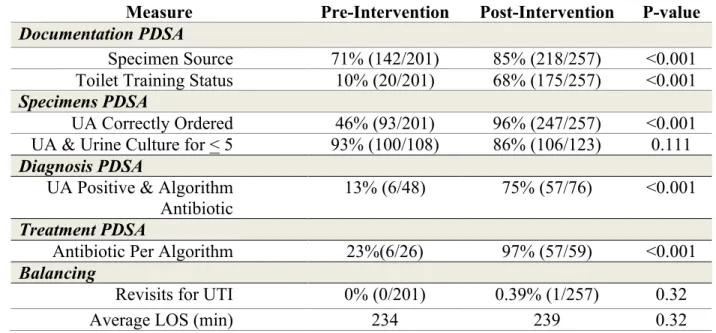
During the QI project, 458 children were assessed for UTI and 75 children diagnosed with UTI. The QI project resulted in sustained improvements in provider adherence to: correctly ordered specimens, correct management of positive urinalysis results and use of recommended antibiotics (Table 1). Balancing measures showed no significant differences between pre- and post-intervention periods (Table 1).
v
TABLE OF CONTENTS
LIST OF FIGURES ... vii
LIST OF ABBREVIATIONS ... viii
CHAPTER 1: IMPLEMENTING ANTIBIOTIC STEWARDSHIP IN THE PEDIATRIC EMERGENCY DEPARTMENT ... 1
Problem Description ... 1
Purpose of the Project ... 3
Literature Review ... 4
Gaps in the Literature and Future Inquiry ... 9
Summary ... 10
Theoretical Framework ... 10
Specific Aims ... 13
Methods... 13
Context ... 13
Results ... 27
Discussion ... 38
vi
APPENDIX A: UNC PEDIATRIC OUTPATIENT ANTBIOGRAM ... 46
APPENDIX B: DATA COLLECTION TOOL ... 47
APPENDIX C: SAMPLE SIZE CALCULATION ... 49
APPENDIX D: UTI ALGORITHM ... 50
APPENDIX F: INOGRAPHIC ... 53
vii
LIST OF FIGURES
Table 1: Demographics Pre and Post-Intervention ... 29
Table 2: Summary of Provider Adherence Measures at Pre- and Post-Intervention ... 30
Figure 1: Specimen Source Documented as Clean Catch or Catheterization:
Statistical Process Control Chart ... 31
Figure 2: Toilet Training Status Documented: Statistical Process Control Chart ... 32
Figure 3: Correct Urinalysis Specimen Ordered: Statistical Process Control Chart ... 33
Figure 4: Urinalysis and Urine Culture Ordered for Patients < 5 Years Old:
Statistical Process Control Chart ... 34
Figure 5: Positive UA with Algorithm Empiric Treatment: Statistical Process Control Chart .... 35
Figure 6: Antibiotic Choice Algorithm Recommended: Statistical Process Control Chart ... 36
viii
LIST OF ABBREVIATIONS
AAP American Academy of Pediatrics
CDC Centers for Disease Control and Prevention CPG Clinical Practice Guideline
UA Urinalysis
1
CHAPTER 1: IMPLEMENTING ANTIBIOTIC STEWARDSHIP IN THE PEDIATRIC
EMERGENCY DEPARTMENT
Antibiotic use and misuse leads to the development of antibiotic-resistant bacteria and untreatable infections (Pew Charitable Trust, 2016). Antimicrobial stewardship aims to promote judicious use of antimicrobials by reducing inappropriate and unnecessary use (May et al., 2013). It is estimated that antibiotic-resistant bacteria cause over two million infections and 23,000 deaths in the United States each year (Centers for Disease Control and Prevention [CDC], 2013). Further, the White House (2015) has issued a call for action to reduce the use of unnecessary antibiotics and has set a goal of a 50% reduction in unnecessary antibiotic use in all outpatient settings, including emergency departments, by 2020.
Problem Description
Urinary tract infections (UTIs), which require antibiotic therapy, are common in children. Concerns regarding the use of antibiotics in children include the high prescribing rates in this population, limited number of safe antibiotics for children, and frequency of adverse drug events (CDC, 2015a; Pew Charitable Trust, 2016; Shehab et al., 2016). Annually, 3% of children are affected by UTIs and there are over 1.5 million visits to emergency departments for pediatric UTIs in the United States (Copp, Shapiro, & Hersh, 2011; Freedman, 2005). UTIs are the third most common reason for seeking emergency care in children less than one year of age (Weiss, Weir, Stocks, & Blanchard, 2014). The number of children presenting to the emergency
2
2015). In addition, the costs associated with emergency care of children with UTI have risen 18% each year, on average, from 2006 until 2011 (Sood et al., 2015).
Pediatric UTI is an important target for antibiotic stewardship efforts in the emergency department. Antimicrobial stewardship is an assortment of strategies including surveillance of infections, data transparency, education, continuous program evaluation and clinical practice guidelines that results in best practice and optimization of antibiotics (May et al., 2013). Several professional organizations have developed clinical practice guidelines (CPGs) to assist
practitioners in the appropriate diagnosis of infection and approach to prescribing antibiotics (Jenkins et al., 2013). The American Academy of Pediatrics (AAP) has developed a CPG for the appropriate diagnosis and treatment of UTI in children 2 to 24 months of age (CDC, 2016a; Roberts, 2011). However, application of diagnostic and treatment guidelines for UTIs in children is challenging in the emergency department setting. A recent study noted only 66% concordance with diagnostic components of the AAP UTI guidelines in the emergency department (Copp et al., 2013). These gaps may result in missed or false-positive diagnoses of UTI. A recent study found that the translation of a CPG into a simple algorithm and dissemination of that algorithm via education to the entire staff at multiple points improved rates of AAP UTI guideline
3
important diagnosis, and concerns with the inability to follow up with patients (May et al., 2013; May et al., 2014). Emergency department providers may therefore have difficulty implementing CPGs that fail to account for these unique challenges (Ebben et al., 2013; May et al., 2013; May et al., 2014). Watson et al. (2016) specifically called for improvement in adherence to the AAP UTI guidelines in the emergency department. When designing interventions aimed at improving CPG concordance and antibiotic stewardship, it is important to be mindful of the challenges of the setting to providers.
Purpose of the Project
The purpose of this Doctor of Nursing Practice (DNP) project was to assess the impact of the implementation of an evidence-based standardized clinical decision support tool focused on the diagnosis and treatment of uncomplicated UTI in children aged 3 months to 12 years in the Pediatric Emergency Department at UNC Hospitals. The primary aim of this project was to improve provider adherence to clinical criteria for the diagnosis and treatment of uncomplicated UTI in children, including the appropriate prescribing of recommended narrow-spectrum
4
improve antibiotic prescribing practices, standardize diagnostic practices, and prevent side effects associated with antibiotic use.
Literature Review
Antimicrobial stewardship is the organized effort to improve the prescription of antimicrobials by providers and use by patients to ensure that antibiotics are only used and prescribed when needed (Sanchez, Fleming-Dutra, Roberts, & Hicks, 2016). It also includes efforts to prevent delayed and missed diagnoses leading to the inappropriate underuse of antibiotics (Sanchez et al., 2016). Further, antimicrobial stewardship aims to ensure that the correct antimicrobial, dose and duration are selected when antibiotics are warranted (Sanchez et al., 2016). Because evidence-based CPGs for the management of infections published by
academic societies such as the AAP emphasize accurate diagnosis and appropriate treatment, improving concordance with such CPGs is an important antimicrobial stewardship activity.
The literature for support of antibiotic stewardship and interventions related to antibiotic stewardship is robust (CDC, 2015b). The emergency department setting has unique needs for antibiotic stewardship interventions (May et al., 2013). There are several themes identified in the literature regarding the application of CPGs for the diagnosis and treatment of infections in various outpatient settings, including the emergency department. This review of the literature discusses the following key themes: concordance, translation and dissemination of CPGs. Concordance of Clinical Practice Guidelines
5
composition of the expert group; standards for systematic review; standards for grading the evidence; standardized and clear articulation of the recommendations; time for external review and comment; and a process for periodically updating.
Incorporating CPGs into practice is challenging but essential for the success of antibiotic stewardship (CDC, 2015b). Gaps exist between evidence-based recommendations and clinical practice (Copp et al., 2013; Ebben et al., 2013; Hurlimann et al., 2015; Percival et al., 2015; Selekman et al., 2016; Simon, Lukacs, & Mendola, 2011). A recent systematic review examined clinical practice in the emergency department and demonstrated wide variation in adherence to CPGs (Ebben et al., 2013). Copp et al. (2013) found that providers showed adherence to the AAP UTI guidelines only two-thirds of the time. It is imperative to identify the factors that prevent adherence to CPGs to improve implementation in clinical practice and promote antibiotic stewardship.
6
Pediatricians consistently report not complying with the AAP UTI guidelines for diagnostic testing in clinical practice (Coutinho et al., 2014; Selekman et al., 2016). Reasons given by providers for not following the AAP UTI guidelines included the invasive nature of testing for UTI and that the testing approach in young children is upsetting to parents (Coutinho et al., 2014). Most pediatricians reported they performed UA and urine culture for diapered children, but only performed sterile urine collection in 80% of girls and 70% of boys (Selekman et al., 2016). Because providers report challenges with the appropriate diagnostic testing for UTI in children, it is important to evaluate successful interventions for compliance with diagnostic testing.
7
should be as specific as possible to the targeted patient population (Dahle et al., 2012; Roberts, 2011).
Translation of Clinical Practice Guidelines
CPGs are often long and complex documents, and providers may find CPGs cumbersome and too general to implement into practice (Ebben et al., 2013; Selekman et al., 2016). There has been success in implementing CPGs when they are translated into clinical decision support tools like algorithms and clinical pathways (Geurts et al., 2014; Holstiege, Mathes, Pieper, 2014; May et al., 2014; Percival et al., 2015). Although there is an abundance of literature regarding success with translating CPGs into clinical decision support tools in general, there is limited literature focused on translating the AAP UTI guidelines into clinical decision support tools.
Interventions aimed at increasing the use of CPGs include setting-specific clinical decision support tools that translate CPGs into easy-to-use diagnostic and treatment algorithms or clinical pathways. For example, clinical pathways have been successful in improving
antibiotic stewardship for community-acquired pneumonia in emergency departments (Almatar et al., 2016; Ostrowsky et al., 2013). The findings of Percival et al. (2015) supported improved guideline concordance with treatment for UTI using an institution-specific clinical pathway in an adult emergency department. Algorithms for diagnostic testing of UTIs have improved
guideline-concordant diagnostic testing for pediatric emergency department patients (Geurts et al., 2014). Providers reported that algorithms, order sets and pocket guides were useful for improving antibiotic stewardship (May et al., 2014).
Dissemination of Clinical Practice Guidelines
8
change. Several studies have addressed the importance of disseminating new and best practice in antibiotic stewardship to providers (Ebben et al., 2013; Geurts et al., 2014; Hingoriani,
Mahmood, & Alweis, 2015; Lugtenberg et al., 2014; May et al., 2014; Percival et al., 2015; Selekman et al., 2016; Slekovec et al., 2012). Multiple strategies for the dissemination of best practice in antibiotic stewardship include provider education, audit and feedback of provider performance, and visual reminders of best practice (CDC, 2015b). The findings of studies that have focused on dissemination have found the most effective strategy to be a combination or bundle of these interventions (Ambroggio et al., 2013; Almatar et al., 2016; Arnold & Straus, 2005; Hingoriani et al., 2015; Geurts et al., 2014; Lugtenberg et al., 2014; Percival et al., 2015; Selekman et al., 2016; Weddle, Goldman, Myers, & Newland, 2016).
Provider education. Layered provider education is effective in dissemination of best practice regarding antibiotic stewardship (Almatar et al., 2016; Ambroggio et al., 2013; Greuts et al., 2014; Hingoriani et al., 2015; Lugtenberg et al., 2014; May et al., 2014; Weddle et al., 2016). Greuts et al. (2014) found that comprehensive education to providers in multiple sessions,
varying formats, and at varying times improved concordance with the diagnostic portion of the AAP UTI guideline. In that study, education was provided about the clinical pathway for appropriately diagnosing UTI using the AAP UTI guidelines for the entire emergency
9
CPGs, including UTI. Provider education for best practice should incorporate diverse platforms to capture all learners.
Audit and feedback. Audit and feedback of providers’ performance with CPGs are effective and recommended strategies to improve compliance and individual provider practice (Almatar et al., 2016; CDC, 2015b; Hingoriani et al., 2015; Hurlimann et al., 2015). Providers reported a preference for individualized audit and feedback with compliance data (Lugtenberg et al., 2014). Improved concordance with community acquired pneumonia CPG was noted amongst emergency department providers using audit and feedback of compliance (Almatar et al., 2016).
Visual reminders. Visual reminders like posted algorithms, antibiotic stewardship posters, clinical pathway quick reference guides, and badge cards are also recommended strategies, in conjunction with others, for dissemination of best practice (Almatar et al., 2016; CDC, 2015b; Greuts et al., 2014). Emergency department providers reported that pocket guides are useful for antibiotic stewardship practices (May et al., 2014). Provider educational posters, displayed in primary care exam rooms, resulted in a 10% decrease in inappropriate antibiotic prescriptions for acute respiratory infections in a practice cluster-randomized trial (Meeker et al., 2014). Visual reminders alone or combined with other strategies can improve compliance with CPGs and antibiotic stewardship.
Gaps in the Literature and Future Inquiry
10
implemented in the both the adult and pediatric emergency department settings. However, there have been no studies to examine sustainability of these programs in the emergency department.
Summary
The significance of appropriate antibiotic stewardship and adhering to CPGs in the
emergency department is evident. Concordance with the AAP UTI guidelines can be improved in emergency departments (Copp et al., 2013; Greuts et al., 2014). Successful guideline
implementation strategies include translating CPGs into clinical decision support tools, like clinical pathways and diagnostic and treatment algorithms. Translating CPGs into clinical decision support tools for the emergency department has significant support and is effective (Ebben et al., 2013; May et al., 2014). Although one best strategy for disseminating best practice is not identified, combinations of provider education, provider audit and feedback of diagnostic and prescribing practices and the use of visual reminders have shown success in improving concordance with CPGs (Ambroggio et al., 2013; Almatar et al., 2016; Hingoriani et al., 2015; Geurts et al., 2014; Lugtenberg et al., 2014; Percival et al., 2015; Selekman et al., 2016; Weddle et al., 2016).
Theoretical Framework
11
Within Lewin’s Change Theory, there are three stages by which change may occur: unfreezing, change, and refreezing. The unfreezing stage involves creating an environment amenable to change and allows for the possibility of letting go of current behavior or practice (Hellriegel & Slocum, 1976; Lewin 1958). Unfreezing can be achieved using three methods: (a) increasing driving forces to direct behavior away from old patterns that are counterproductive, (b) decreasing restraining forces that direct behavior away from equilibrium, or (c) or employing a combination of those methods (Hellriegel & Slocum, 1976; Lewin 1958). Unfreezing is
integral to creating an environment prepared for change (Hellriegel & Slocum, 1976; Lewin 1958). The second stage of Lewin’s Change Theory involves a process of change in feelings, thoughts and/or behaviors to create a more productive pattern (Hellriegel & Slocum, 1976). Refreezing, the third stage, addresses sustainability of change and involves establishing the change as the new equilibrium or way of operating (Hellriegel & Slocum, 1976).
Application of Lewin’s Change Theory
This project included implementing an emergency department specific algorithm of the AAP UTI guideline into practice, which essentially required changing provider behavior to implement a new process for the diagnosis and treatment of pediatric UTI in clinical practice. The current practice is provider-dependent and is not standardized for diagnosis and treatment of pediatric UTI. Lewin’s Change Theory uses a systematic approach to implementing change and helps to address driving and restraining forces to change.
12
system’s goal of interdisciplinary improvement projects, use of evidence-based practice, and the potential cost savings. Additionally, this project was the first that met all of the core elements of outpatient antibiotic stewardship at any of UNC Hospitals’ outpatient areas, another system driving force (Sanchez et al., 2016).
Restraining forces. Resistance to change is a restraining force that is evident in health care settings, especially in respect to adhering to CPGs. Established practice habits may be difficult to change, even in the face of new evidence. The unique setting of the pediatric emergency department provides many obstacles to changes in practice: frequent rotation of providers and trainees, diverse set of presenting problems with a wide range of urgency, prioritization of expediency, and inability to follow up with patients over time.
Unfreezing. During unfreezing a quality improvement team of key stakeholders were identified and brought together. Engagement of key representative stakeholders identified key barriers to obtaining appropriate urine specimens and choosing appropriate antibiotics. Gaps identified in the current process during observation of current processes and baseline data and engagement with key stakeholders were addressed. The algorithm was developed during the unfreezing stage based on the needs assessment of the pediatric emergency department and evidenced based resources.
13
Refreezing. The refreezing stage involves ensuring the change is the new equilibrium (Hellriegel & Slocum, 1976). This was done by providing ongoing feedback of adherence to algorithm suggested practices. During this stage, the development of automated reports on performance was evaluated and found to be not available from the health system.
Specific Aims
The overall aim of this quality improvement project was to standardize diagnostic testing and treatment for pediatric emergency department patients, aged 3 months to 12 years old, with a diagnosis of suspected uncomplicated UTI by implementing an evidence-based algorithm based on a combination of CPGs that were adapted for UNC Hospitals’ Pediatric Emergency
Department (Roberts, 2011; Shaw et al., 2014; Taxier et al., 2015). The primary measures were to increase the percent of targeted patients with suspected UTI having appropriately ordered and collected specimens to 100% by the end of the project and to increase the proportion of targeted patients receiving algorithm recommended antibiotic at discharge to 80% by the end of the project. We hypothesized that, among patients in the target population, there would be no change in ED length of stay and no change in the proportion of patients who revisit the emergency department within 72 hours.
Methods
The methods described below are the recommendations for reporting quality
improvement work from the Revised Standards for Quality Improvement Reporting Excellence SQUIRE 2.0 (Goodman et al., 2016).
Context
14
Setting. This quality improvement project was conducted at the Pediatric Emergency Department at UNC Hospitals. Approximately 14,000 patients per year are treated in the Pediatric Emergency Department. It is one of five level 1 pediatric trauma centers in the Southeast, as recognized by the American College of Surgeons; it is the only level 1 pediatric trauma center in the Raleigh-Durham area. The pediatric emergency department is currently staffed by physicians from the UNC School of Medicine (Department of Pediatrics, Family Medicine, and Anesthesia). Resident physicians and medical students rotate in four-week blocks. There are seven attending physicians, who are board-certified in Pediatric Emergency Medicine and members of the Division of Pediatric Emergency Medicine. There are currently no
physician’s assistants or nurse practitioners working in the department. The Pediatric Emergency Department is separate from the main emergency department with a separate waiting room and includes 10 beds and 1 pediatric trauma bay. There are 22 members of the core group of registered nurse staff for the pediatric emergency department who have completed additional training for pediatrics. The Pediatric Emergency Department is 7 days per week and 24 hours per day.
Patients. Eligible patients included children aged 3 months to 12 years who were evaluated for suspected uncomplicated UTI in the Pediatric Emergency Department at UNC Hospitals or discharged with suspected uncomplicated UTI. Exclusion criteria included the diagnostic and treatment outcomes for children with: (a) known genitourinary anomalies (e.g. indwelling catheter, history of major urologic surgery within the last 90 days, history of
neurologic conditions that affect urinary function, history of UTI within the last 30 days), (b) an anatomical or other absolute contraindication to urethral catherization, (c) Grade V
15
transplantation). Other exclusion criteria included admission or observation for a psychiatric or other mental health diagnosis, trauma, or inpatient admission for any reason.
Interventions
This project had two main interventions: algorithm development and algorithm
implementation. The quality improvement project occurred over the year of 2017. Baseline data was collected from January through May 25, 2017. The project launched on May 25, 2017. The project was completed on December 31, 2017.
Algorithm development. The diagnostic and treatment recommendations made in the UNC-specific algorithm for uncomplicated UTI in infants 3-24 months of age were based on the AAP UTI clinical practice guidelines (Roberts, 2011). For ages not covered by the AAP UTI guidelines (>24 months) a combination of two evidence-based pathways were used to inform UNC algorithm development: the UTI clinical pathways developed by Seattle Children’s and Children’s Hospital of Philadelphia (CHOP) (Shaw et al., 2014; Taxier et al., 2015). The existing policies and laboratory information for UNC Hospitals were reviewed and included for relevance with the expertise of the pediatric infectious disease physician team, as well as physicians in pediatric emergency medicine and general pediatrics.
Diagnosis of UTI in children generally requires the presence of pyuria, or evidence of inflammation in a urinalysis (UA), and urine culture, which identifies causative pathogens. UA is completed rapidly, while urine culture requires up to 72 hours. The algorithm specifically
16
pyuria (Roberts, 2011; Shaikh et al., 2016). In the pediatric emergency department, it was also routine to obtain a urine Gram stain for each UTI workup. However, the urine Gram stain is less sensitive and less specific than the UA and may provide misleading results while increasing cost (Cantey, Gaviria-Agudelo, TeKippe & Doern, 2015). Thus, the algorithm recommended that clinicians obtain a UA and urine culture but not a urine Gram stain (Cantey et al., 2015; Roberts, 2011; Shaikh et al., 2016).
Appropriate specimen collection is dependent on the child’s toilet training status. Fully toilet-trained children can provide a midstream clean catch urine specimen (Shaw et al., 2014; Taxier et al., 2015). Non-toilet-trained children must have a sterile specimen collected either via a urethral catheterization or, uncommonly, a suprapubic catheterization (Roberts, 2011). The AAP UTI guidelines recommend only sterile specimen collection (i.e. urethral catheterization or suprapubic catheterization) for young children 2-24 months of age. The CHOP and Seattle Children’s pathways recommend midstream clean catch urine collection for those children who are fully toilet-trained (defined as daytime dryness without accidents) (Shaw et al., 2014; Taxier et al., 2015). The UNC algorithm requires sterile specimen collection for children who are not fully toilet-trained (diapered or incontinent), using the CHOP and Seattle Children’s definition. The UNC algorithm suggests midstream clean catch or sterile specimen collection for children who are fully toilet-trained. Alternative methods, such as collection by bag placed over the perineum, are considered non-sterile and unacceptable for the evaluation of UTI.
17
team, laboratory, and existing policies define positive urinalysis in these terms. A positive UA leads to a recommendation to treat with empiric antibiotics. A borderline UA category is defined as greater than or equal to five white blood cells per high power field or bacteriuria; no nitrites; and less than or equal to trace leukocyte esterase. A borderline UA leads to the recommendation to initiate empiric antibiotics if there is a high suspicion of UTI or the patient is less than one year old. Otherwise, the algorithm recommends waiting for urine culture results. A negative UA is defined as less than five white blood cells per high power field, less than or equal to trace leukocyte esterase, no bacteriuria, and no nitrites (Roberts, 2011).
Empiric antibiotic treatment must be driven by the local pediatric outpatient sensitivity patterns according to the AAP UTI guidelines (Roberts, 2011). The local outpatient pediatric antibiogram is attached as Appendix A. Over 85% of all of UNC’s pediatric outpatient urine isolates are Escherichia coli, of which 95% are susceptible to oral cephalosporins. Cephalexin (brand name: Keflex) is the recommended first-line antibiotic due to its narrow spectrum, low cost, and high urinary concentrations (Kimberlin, Brady, Jackson, & Long, 2015; Roberts, 2011; Taxier et al., 2015). Cephalexin is recommended at 50-75 mg/kg/day in 3-4 divided doses, maximum daily dose of 4,000 mg, for 10 days (Kimberlin et al., 2015). The treatment for patients with a contraindication to cephalosporin, such as allergy, includes
trimethoprim-sulfamethoxazole (TMP-SMX, brand name: Bactrim) 8 mg/kg/day in 2 divided doses for 10 days or ciprofloxacin (brand name: Cipro) 15 mg/kg/dose twice daily for 10 days (Kimberlin et al., 2015; Roberts, 2011; Shaikh & Hoberman, 2017).
18
uropathogen of at least 50,000 colony-forming units per milliliter (CFU/mL); (b) for midstream clean catch specimens, positive culture is defined as growth of a single uropathogen of at least 100,000 CFU/mL (Roberts, 2011; Shaw et al., 2014). In accordance with AAP UTI guidelines, Lactobacillus species, coagulase-negative staphylococci and Corynebacterium species are not considered uropathogens (Roberts, 2011). Susceptibility testing generally requires 48-72 hours at UNC Hospitals.
The emergency department employs one full-time equivalent registered nurse to review all positive microbiological cultures and perform follow up. If a causative pathogen is not susceptible to the current antibiotic treatment or the patient is not currently receiving antibiotics, the culture nurse reviews the case with a pediatric provider to determine a plan of care and then follows up with the patient or family. The culture nurse documents the change in course of treatment in the electronic medical record and the follow up with the family as a “telephone encounter.” This mechanism is important to ensure that patients are receiving targeted treatment for their particular pathogen (Roberts, 2011; Shaw et al., 2014; Taxier, 2015).
19
physicians, attending pediatric emergency physicians, the pediatric clinical practice nursing group, and both core and microbiology laboratory leadership.
Algorithm implementation was guided by the principles of Lewin’s Change Theory and by the quality improvement approach of plan, do, study, act (PDSA) cycles (Institute for Healthcare Improvement [IHI], 2018a). A key driver diagram was developed by the
implementation team. Each PDSA cycle used the same approach: multiplatform education for all disciplines, dedicated measures for improvement, feedback of PDSA cycle specific measures on biweekly basis posted in the unit and sent via electronic mail to all end users and implementation team, written accolades for staff and team members helping meet the project goals, and at least twice weekly in person opportunities for feedback and questions to DNP project leader for both night and day shifts and all disciplines. The sequence of the PDSA cycles (documentation, specimens, diagnosis, and treatment) followed the sequence of the algorithm.
Launch. During the preparation for the launch of the algorithm into practice, baseline data were collected and reviewed. Planning for the launch of the quality improvement project was completed with the implementation team. During the launch week, presentations were made to the entire pediatric residency group, the pediatric emergency medicine group, and the pediatric clinical practice nursing group. Pocket guides were distributed at each of the launch week
20
awareness of the project, address any concerns and answer questions. This allowed the DNP project leader to provide education for all shifts and disciplines of the emergency department.
Documentation PDSA. The first PDSA cycle focused on key elements of documentation in the electronic medical record for this project. The measures for this PDSA cycle included “specimen source documented as clean catch or catheterization” and “toilet training status documented.” A smart phrase for documentation was created for nursing documentation of specimen source, toilet training status and clean catch or catheterization instruction to patients or families. The smart phrases were made available to all nursing staff of the emergency
department, reminders were put on documentation computers, and on pocket guide badge cards. During the documentation PDSA, the DNP project leader spent the daily sessions with the nursing staff reminding them of the smart phrase and how to use it for documentation. For the providers, education with screen shots of the electronic medical record were sent and circulated of which boxes to click when ordering the specimens. This was reinforced with providers during the DNP project leaders daily in person time during this one week PDSA cycle.
Specimens PDSA. The second PDSA focused on specimens. For providers, it focused on the correct specimens to order. The measures for this cycle for providers included “correct urinalysis specimen ordered” and “urinalysis and urine culture complete for patients under age five.” This two week long cycle began with education electronically mailed to all ordering providers on service in the pediatric emergency department followed with five in person sessions each session had a three to five-minute review of key points of the targeted education and then concerns were addressed by the DNP project leader.
21
month. This PDSA was also timed to start the same week as the incoming interns. The DNP project chair and pediatric antibiotic stewardship medical director were able to secure time during the interns’ orientation to discuss antibiotic stewardship and this project. The measure for this cycle was “positive urinalysis and algorithm recommended empiric antibiotic ordered.” During this month-long PDSA cycle, initial education was electronically mailed and the DNP project leader came to the emergency department ten times to address the PDSA and concerns. A laminated reminder card for the correct specimens to order and dosages for algorithm
recommended antibiotics were also placed on the provider computers in the workroom.
Treatment PDSA. The final PDSA focused on treatment with algorithm-recommended antibiotics and following up on culture results. The measure for this PDSA cycle was “antibiotic choice algorithm recommended.” This two-week long PDSA, focused for providers, included initial education electronically mailed, followed by four in-person sessions by the DNP project leader.
Measures
Each of the four PDSA cycles (documentation, specimens, diagnosis, treatment) included specific measures. For the documentation PDSA cycle, “specimen source” and “toilet training status” documentation were tracked. For the specimens PDSA cycle, “correct urinalysis ordered” and “urinalysis and urine culture ordered for patients under the age of five” were tracked. For the diagnosis PDSA, “positive urinalysis and algorithm recommended empiric antibiotic ordered” was tracked. For the treatment PDSA, “antibiotic choice algorithm recommended” was tracked.
22
cases reviewed. Interpretation of quantitative culture results is dependent on specimen source. The operational definition for this measure was: (numerator) the number of patients aged 3 months-12 years, who meet inclusion criteria for the Pediatric Emergency Department (ED) Uncomplicated UTI Algorithm and had either urine culture or urinalysis completed, that had specimen source documented in EMR as clean catch or catheterization; (denominator) total number of patient aged 3 months -12 years, who met inclusion criteria for Pediatric ED Uncomplicated UTI Algorithm and had either a urine culture or urinalysis completed.
Toilet training status documented. This measure was chosen to study the process of improvement in documentation to measure use of the smart phrase for nursing documentation. Documenting toilet training status is important because appropriate specimen collection is dependent on toilet training status. Clean catch is appropriate for children who are toilet-trained; for non-toilet-trained children, specimens must be collected via catheterization. The operational definition for this measure was: (numerator) number of patients aged 3 months-12 years, who meet inclusion criteria for Pediatric ED Uncomplicated UTI Algorithm, who had toilet training status documented in EMR; (denominator) total number of patients ages 3 months to 12 years, who met inclusion criteria for Pediatric Uncomplicated UTI Algorithm.
Correct urinalysis ordered. This measure was chosen to study the process of
improvement with standardization of the diagnostic testing for this quality improvement project. There were a number of different urinalysis orders available in the electronic medical record, such as urinalysis alone and urinalysis with reflex to culture. In some cases, orders of urinalysis with reflex to culture plus urine culture resulted in performance of duplicate urine cultures. The algorithm specifically recommended urinalysis alone. This measure examined provider
23
measure was: (numerator) number of patients aged 3 months-12 years, who meet inclusion criteria for Pediatric ED Uncomplicated UTI Algorithm and had a urinalysis ordered and completed per the recommendations in the Pediatric ED Uncomplicated UTI Algorithm (i.e. urinalysis, no urine gram stain, no urinalysis with reflex to culture); (denominator) total number of patient aged 3 months-12 years, who met inclusion criteria for Pediatric ED Uncomplicated UTI Algorithm and had urinalysis completed that was any of the following: urinalysis, urinalysis with reflex to culture or urine gram stain.
Urinalysis and urine culture ordered for patients less than or equal to age five. This measure was chosen to study the process of improvement for the standardization of diagnostic testing during the project. It is infeasible to use a single specimen to perform a screening
24
Positive urinalysis and algorithm-recommended empiric antibiotic ordered. This measure was chosen to examine the effects of the algorithm on standardizing the diagnosis of pediatric UTI. This measure examined provider compliance with application of the “positive UA” definition and if empiric antibiotics were ordered based on the recommendations of the algorithm. The operational definition was: (numerator) number of patients aged 3 months- 12 years, who meet inclusion criteria for Pediatric ED Uncomplicated UTI Algorithm, with a positive UA (defined by Pediatric Ambulatory UTI Clinical Algorithm) and empiric treatment with cephalexin (or approved second line agent with contraindication to cephalexin or treating more than one infection with appropriate antibiotic); (denominator) total number of patients aged 3 months to 12 years, that met inclusion criteria for Pediatric ED Uncomplicated UTI Algorithm with a positive UA (defined by Pediatric Ambulatory UTI Clinical Algorithm).
Antibiotic choice algorithm-recommended. This measure was chosen to examine the standardization of antibiotic treatment from this quality improvement project. It was also a measure of provider buy-in of the project. If providers were ordering the more narrow-spectrum algorithm recommended antibiotic for treatment of pediatric UTI then there was provider buy-in. The operational definition was: (numerator) antibiotic ordered for patients aged 3 months- 12 years is cephalexin or pathway recommended second line agent if contraindication or appropriate antibiotic if treating more than one infection that meet inclusion criteria for Pediatric ED
Uncomplicated UTI Algorithm; (denominator) total number of antibiotics ordered for patients aged three months to twelve years that met the inclusion criteria.
25
Revisits related to UTI. This measure was chosen to ensure that the recommended antibiotic in the algorithm was not causing unintended adverse events (e.g. treatment failures or allergic reactions). The operational definition was: (numerator) the number of patients aged three months to twelve years, who met inclusion criteria for Pediatric ED Uncomplicated UTI
algorithm that revisited the ED with chief complaint related to previous UTI visit; (denominator) total number of patients aged three months to twelve years who met the inclusion criteria for Pediatric ED Uncomplicated UTI Algorithm.
ED length of stay. This measure was chosen to ensure that the algorithm was not causing the length of stay to increase for included patients. The operational definition was: average length of stay, in minutes, for patients ages three months to twelve years who met the inclusion criteria for Pediatric ED Uncomplicated UTI Algorithm.
Analysis
For each PDSA cycle a mix of process measures and outcome measures were included. The measures were studied with statistical process control charts and t-tests were performed on measures pre-and post-intervention (Table 1). Rules for determining special causes with
statistical process control charts (Shewhart Rules for Special Causes) included: one point outside plus or minus the third sigma limit, eight successive points above or below the center line, six or more increasing or decreasing points denoting a trend, two out of three successive points
between the third sigma limit and the upper control limit or beyond, and fifteen consecutive points plus or minus one sigma limit around the center line (IHI, 2018b).
Data Collection
26
clinical, and administrative data from UNC Health Care System (UNC Translational and Clinical Sciences Institute, 2016). Records were identified for review when a child between 3 months and 12 years visited the UNC Hospitals Pediatric ED and had a urinalysis of any type ordered. The DNP project leader collected data from the BO report and stored this data in the secure Research Electronic Data Capture (REDCap) database. Further data abstraction was performed using Epic (Epic Systems, Verona, WI), the electronic medical record used by UNC Hospitals for the duration of the project. Included patients were identified using specific fields from the electronic medical record bi-weekly implementation period. A bi-weekly reporting schedule was chosen to allow prompt data analysis and feedback of results via statistical process control charts. Data were routinely examined for accuracy and completeness. The REDCap database has built-in hard stops for missing data and quality controls. All existing REDCap quality control reports were run and discrepancies were addressed. Only the DNP project leader completed data collection.
The data collection tool included demographic data, specimen information, treatment and revisit information (see Appendix B). The data collection tool was adapted into a REDCap secure electronic database that allows for completely deidentified data exports.
Sample Size Calculation
27 Ethical Considerations
This quality improvement project was deemed exempt status on 3/8/17 by the UNC-Chapel Hill IRB and approved by the Nursing Research Council at UNC Hospitals on 4/6/17.
Results
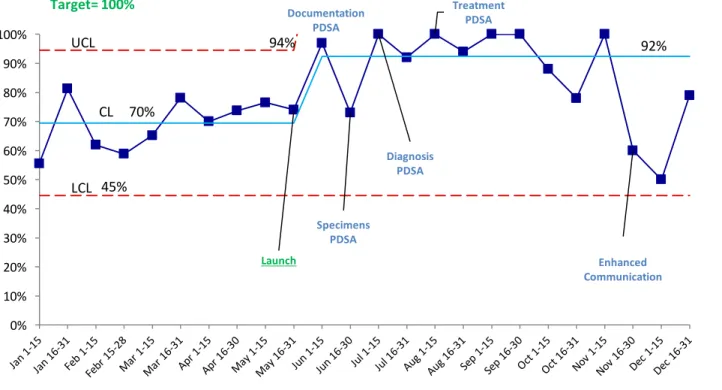
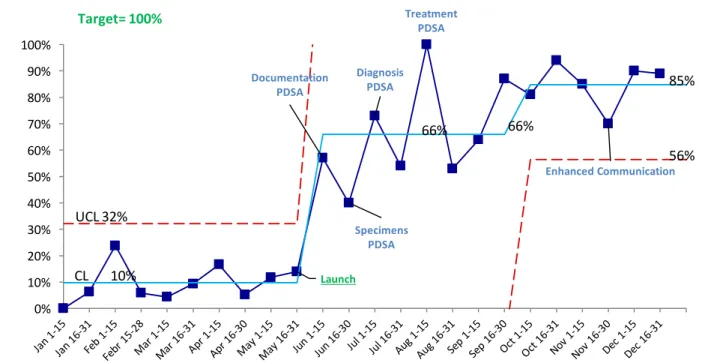
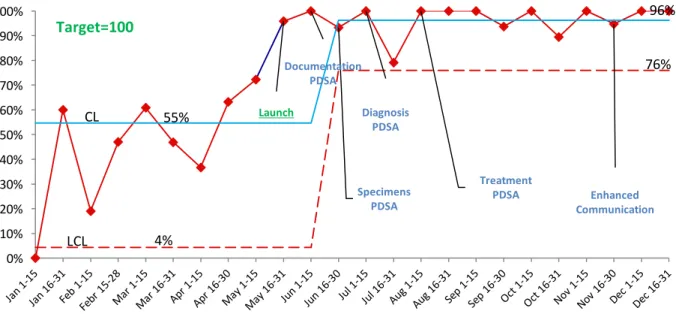
During this quality improvement project, 458 children were assessed for UTI and 75 were diagnosed by a provider with UTI. Demographic data for the project is presented in Table 1. Provider adherence to the algorithm was improved across all four PDSA cycles: documentation, specimens, diagnosis and treatment with no change in balancing measures. Documentation of specimen source by providers improved from 71% to 85% (p<0.001) and toilet training status improved from 10% to 68% (p<0.001) from pre- to post- intervention (Table 2). Control charts demonstrated that key elements of documentation improved and sustained by providers for seven months after the initial launch (Figures 1 and 2). Specimen ordering was standardized with correct urinalysis ordered improved from 46% to 96% (p<0.001) from pre-to post intervention (Table 2) and this was sustained by providers for six months after the specimen focused
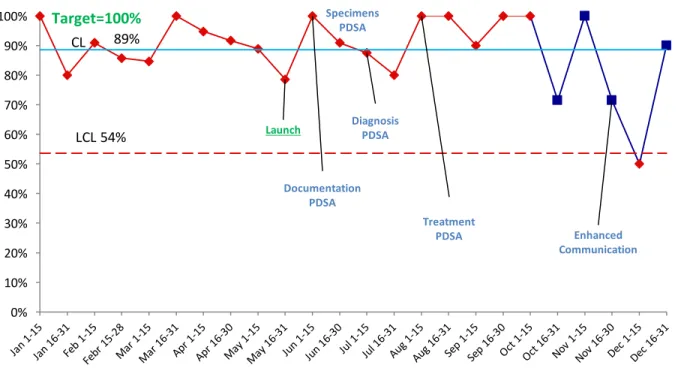
interventions (Figure 3). The “urinalysis and urine culture ordered for patients less than or equal to age five years” measure was unchanged from pre-to post intervention (Figure 4).
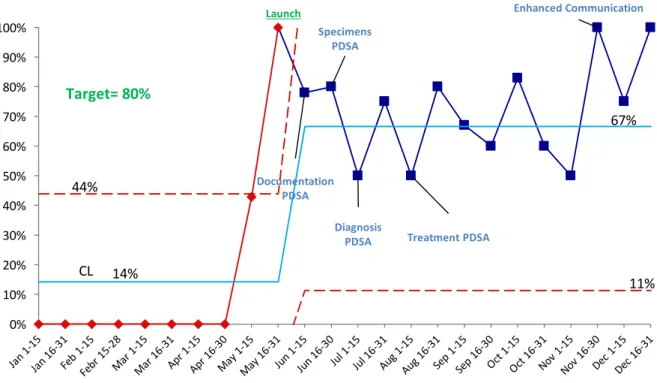
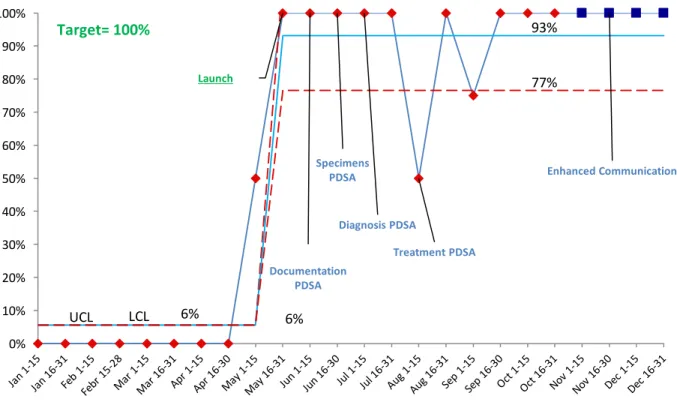
Standardization of diagnosis and empiric treatment improved as evidenced by progress in the measure positive urinalysis and algorithm recommended empiric antibiotic ordered from 12.5% to 75% (p<0.001) pre-to post intervention and sustained for six months after the diagnosis and treatment focused interventions (Figure 5). Treatment was standardized as evidenced by
28
29 Table 1: Demographics Pre and Post-Intervention
Demographics Pre-Intervention Post-Intervention
n 201 257
Age Mean (Standard Deviation) 5.4 (3.9) 5.7 (3.9) Female Gender 74.6% (150) 66.5% (171)
Race
White or Caucasian 29.4% (59) 35.4% (91) Black or African American 19.9% (40) 20.2% (52)
Asian 1.5% (3) 2% (5)
American Indian or Alaska Native 0.5% (1) 0% (0)
Other/Unknown 48.8% (98) 42% (108)
Ethnicity
Hispanic or Latino 42.3% (85) 34.2 (88)
30
Table 2: Summary of Provider Adherence Measures at Pre- and Post-Intervention
Measure Pre-Intervention Post-Intervention P-value
DocumentationPDSA
Specimen Source 71% (142/201) 85% (218/257) <0.001 Toilet Training Status 10% (20/201) 68% (175/257) <0.001
Specimens PDSA
UA Correctly Ordered 46% (93/201) 96% (247/257) <0.001 UA & Urine Culture for < 5 93% (100/108) 86% (106/123) 0.111
Diagnosis PDSA
UA Positive & Algorithm Antibiotic
13% (6/48) 75% (57/76) <0.001
TreatmentPDSA
Antibiotic Per Algorithm 23%(6/26) 97% (57/59) <0.001
Balancing
Revisits for UTI 0% (0/201) 0.39% (1/257) 0.32
31
Figure 1: Specimen Source Documented as Clean Catch or Catheterization: Statistical Process Control Chart
Launch
Documentation PDSA
Specimens PDSA
Diagnosis PDSA
Treatment PDSA
Enhanced Communication
UCL 94%
CL 70%
92%
LCL 45%
0% 10% 20% 30% 40% 50% 60% 70% 80% 90% 100%
32
Figure 2: Toilet Training Status Documented: Statistical Process Control Chart
Launch
Documentation PDSA
Specimens PDSA Diagnosis
PDSA
Treatment PDSA
Enhanced Communication
UCL 32%
CL 10%
66% 66%
85%
56%
0% 10% 20% 30% 40% 50% 60% 70% 80% 90% 100%
33
Figure 3: Correct Urinalysis Specimen Ordered: Statistical Process Control Chart
Launch
Documentation PDSA
Specimens PDSA Diagnosis
PDSA
Treatment
PDSA Enhanced
Communication
CL 55%
96%
LCL 4%
76%
0% 10% 20% 30% 40% 50% 60% 70% 80% 90% 100%
34
Figure 4: Urinalysis and Urine Culture Ordered for Patients < 5 Years Old: Statistical Process Control Chart
Launch
Documentation PDSA
Specimens PDSA
Diagnosis PDSA
Treatment
PDSA Enhanced
Communication
CL 89%
LCL 54%
0% 10% 20% 30% 40% 50% 60% 70% 80% 90%
35
Figure 5: Positive UA with Algorithm Empiric Treatment: Statistical Process Control Chart
Launch
Documentation PDSA
Specimens PDSA
Diagnosis
PDSA Treatment PDSA
Enhanced Communication
44%
CL 14%
67%
11%
0% 10% 20% 30% 40% 50% 60% 70% 80% 90% 100%
36
Figure 6: Antibiotic Choice Algorithm Recommended: Statistical Process Control Chart
Launch
Documentation PDSA
Specimens PDSA
Diagnosis PDSA
Treatment PDSA
Enhanced Communication
UCL 6%
93%
LCL 6%
77%
0% 10% 20% 30% 40% 50% 60% 70% 80% 90% 100%
37
Figure 7: Antibiotic Choices for Pediatric UTI, Bar Graph by Month, Counts
2
9
12
5 5 6
8 8 9
1 2
3
1
1
1
1
1
2
2
2
1
1
1
1
1
1
1
J A N F E B M A R A P R M A Y J U N J U L A U G S E P O C T N O V D E C
2017
38 Discussion
The purpose of this one-year quality improvement project was to assess the impact of an evidence-based algorithm on the standardization of the diagnosis and treatment of pediatric UTI in the pediatric emergency department at UNC Hospitals. The aims of this project included improving provider adherence to clinical criteria regarding diagnosis and treatment of
uncomplicated UTI in children, including the appropriate prescribing of recommended narrow-spectrum antibiotics (Roberts, 2011; Shaw et al., 2014; Taxier et al., 2015). There were sustained improvements in provider adherence measures related to diagnostic testing and treatment
recommendations during the four PDSA cycles focused on each arm of the algorithm (documentation, specimens, diagnosis and treatment).
The diagnosis of UTI is complex and challenging for providers. The symptoms of UTI are nonspecific, particularly in younger children. Providers must obtain specimens properly and interpret both the UA and urine culture correctly. This is further complicated by the inherent delay in urine culture results. Misinterpretation of results can result in overuse of antibiotics or failure to make an important alternative diagnosis. This quality improvement project
39
The selection of oral antibiotics for treatment of outpatient UTI varies widely (Copp, Shapiro & Hersh, 2011). Prior to implementation of the algorithm, a wide variety of antibiotics were being prescribed to treat pediatric UTI in this setting, including cefdinir, amoxicillin, cefixime, ciprofloxacin and Bactrim (Figure 7). The AAP UTI guidelines recommend using the local antibiogram to guide empiric antibiotic choices (Roberts et al., 2011); the
pre-implementation variability in management suggests that this was not the case. After
implementation, standardization of antibiotic choice was achieved (Figure 7). There were no measureable adverse effects from this more narrow-spectrum choice; revisits related to UTI were rare and did not change (Table 1). Anecdotally, the providers who participated in the project reported that having a standard of care for treatment for pediatric UTI was helpful to their clinical decision making. Many providers also reported that by participating in this project they changed their practice to prescribe cephalexin for pediatric outpatients with UTI across other clinical settings beyond the emergency department.
Lewin’s Change Theory provided a framework for planning and evaluating quality improvement interventions related to antibiotic stewardship interventions and standardizing provider diagnostic and treatment decisions for pediatric UTI in the emergency department (Hellriegel & Slocum, 1976). Restraining forces that prevent change in the academic pediatric emergency department include wide variety of presenting complaints, 24-hour rotational
40
not a member of the emergency department staff, had to learn the culture of practice among team members during the unfreezing stage. Building trust with the medical and nursing staff was a key factor for successfully implementation of the project. Some strategies the DNP project leader used included: asking for the staffs’ opinions on key decisions, using the project champions for dissemination of key information, and having the project champions coach or provide in-person feedback to staff. The DNP project leader visited the unit regularly to solicit feedback on the project. The hours between 6 AM and 8 AM were selected for most visits because of the low volume and inclusion of both day- and night-shift nurses and physicians. An additional
restraining force was a shared electronic medical record across the entire system, which limited the ability to make rapid changes to the electronic medical record that aligned with PDSA cycles. Ideally, many of the educational work-arounds developed for this project could have been simple changes in the electronic medical record. The implementation team has suggested proposed changes to the electronic medical record from this project. Many of the restraining forces of this project have brought to light unit and system level issues that are currently being addressed by the implementation team or UNC Hospitals leadership.
41
The pediatric emergency department has also completed team-based training supported by UNC Healthcare Systems that focuses on communication and teamwork. These driving forces aided the success of the improvement team for this quality improvement project.
Many of the reasons why this project was successful was because the team worked together to continually drive the change forward. The project implementation team used quality improvement methodology tools including PDSA cycles, coaching, and internal staff champions to drive change. Coaching involved having the project champions reach out individually to staff members who were not adhering to the new protocol. For example, if a resident physician did not prescribe the algorithm recommended antibiotic, the resident physician coach would reach out to them to inquire about reasoning for non-concordant prescribing. These coaching moments provided insight into provider behavior and how the team could address any findings from a systematic perspective. Coaching moments were always addressed to be learning opportunities for the implementation team, never as punitive for the staff person. Further, the team reviewed all process, outcome and balancing measures bi-weekly during implementation and monthly during the sustainability phase. Each team member’s familiarity with the data also allowed for insightful planning of next steps and future PDSA cycles. The continuous movement forward of change included team members’ dedication to the project, being familiar with the measures and key drivers, and commitment to coaching and educating the staff and providers.
42
UTI. Provider adherence behavior changed during this quality improvement project and the new equilibrium included the recommendations made from this clinical algorithm.
The findings of this quality improvement project supported that implementation of an evidence based algorithm improved provider adherence with CPGs for pediatric UTI. After the four PDSA cycles, documentation, specimen ordering, standardization of diagnosis and
treatment improved among providers in the UNC Hospitals pediatric emergency department setting. A systematic approach to diagnosis and treatment of pediatric UTI resulted in
improvement in consistently ordered urinalysis and algorithm recommended antibiotics that was sustained for six months following the last PDSA cycle. Previous publications have focused on either appropriate specimen collection and ordering of narrowing antibiotic treatment, but not both concurrently (Coutinho et al., 2014; Lavelle, 2016; Selekman et al., 2016; Simon et al., 2011). We found that implementing a simple algorithm allowed for standardization of pediatric UTI diagnosis and treatment, and this easily integrated into the fast-paced ED environment. To our knowledge, this is one of the first quality improvement studies that focused on
implementation of a low-cost algorithm to standardize the diagnosis and treatment of pediatric UTI in the emergency department setting.
Limitations
There were several limitations to this quality improvement projectThe project addressed a
single, pediatric-specific emergency department in an academic medical center. Community
hospitals and general emergency departments that care for children may encounter different
barriers. An additional limitation was the relatively short length of follow up to determine
43
would be followed longitudinally to examine sustainability as well as the cost savings associated
with improved provider adherence.
The staffing models in the emergency department led to the inability to optimally educate all care providers. For example, the pediatric ED occasionally uses moonlighting physicians from other specialties to fill schedule gaps. There was no centralized mechanism to educate the moonlighting physician pool. Thus, the inability to educate the entire physician team on the initiative caused some lapses in adherence, due to team members not being aware of the initiative. The effect of moonlighting physicians was particularly evident during early August, when they were often paired with first-year residents in their first rotation in the emergency department. This is noted in a dip of the measure “antibiotic choice algorithm recommended” to 50%, when it had been at 100% for several bi-weekly data points. Future improvement efforts in this setting should include efforts to reach the pool of moonlighting physicians.
Sustainability
The improvement team has developed a robust sustainability plan. The pediatric UTI algorithm developed in this project has been posted on the pediatric emergency medicine’s internal website. This allows for it to be accessed by all care providers whenever it needs to be referenced. Also, all pediatric UTI educational resources have been posted on the resident
44
collection for the two key process indicators. Along with monitoring these two key process indicators, the emergency department team will continue on the quality improvement work that was started with this project. The team will request changes to the electronic medical record, continue educating new staff and physicians on the initiative, and continue driving process changes based on the two measures they are choosing to monitor. The pediatric antibiotic stewardship providers will review the algorithm annually and make any required updates based on the latest literature.
Conclusions
This project has shown that the implementation of a simple, low-cost evidence-based algorithm, can be effective for improving provider adherence to antibiotic stewardship efforts, especially when tailored to a specific department or unit’s workflow. Returning to Lewin’s Change Theory, findings of this project demonstrated that during the refreezing stage a new equilibrium was achieved with specimen ordering and antibiotic choice for pediatric UTI in the emergency department (Hellriegel & Slocum, 1976). There is potential for the methods of this project to be applied in other clinical areas, including primary care or specialty care outpatient areas or for the algorithm to be adapted for a wider age range of patients. This is the first quality improvement project to both address standardization of specimen collection and treatment for pediatric UTI in the emergency department setting and our finding support that this can be done with no adverse outcomes. Standardization and adherence to evidence based practice in
45
46
47
49
APPENDIX C: SAMPLE SIZE CALCULATION
The standard deviation of the distribution of pediatric UTI in emergency departments can be found in an article authored by Sood et al., (2015). The graph below from Sood et al. (2015) shows the distribution of total UTI associated pediatric ED visits between 2006 and 2011, using the estimated annual percent change. The 95% confidence interval is 2% to 4.3% (Sood et al., 2015).
If the outcome follows a normal distribution, then a 95% confidence interval means that value will fall within 1.96 standard deviations of the estimate. So, in this case, the mean is the
midpoint of the two values and is 3.15%. The standard deviation is 0.59% (i.e. 4.3 - 3.15 = 1.15, and 1.15/1.96 = 0.59)
Using a 95% confidence interval, and a margin of error of +/- 5%, the sample size calculation is:
(Z-score)² * StdDev*(1-StdDev) (margin of error)²
(1.96)² * 0.0059(0.9941) = 9.02 (0.05)²
50
53
APPENDIX F: INOGRAPHIC
Management of Uncomplicated UTI in Pediatric
Ambulatory Patients
Use Keflex & Don't Reflex
UTI in Children Treated in the ED
The Right Specimen
The Right Treatment
Pediatric Antibiotic Stewardship Program
Antibiotic Resistant Bacteria Cause over 2,000,000
Infections Each Year & Over 23,000 Deaths
The Right Diagnosis
1.5 Million emergency room visits for pediatric UTI annually in U.S. Rates of visits to emergency room for pediatric UTI rising 3% annually Costs associated with emergency care of children with UTI rising 18% annually in U.S.
Collect UA & Urine Culture
Sterile specimens (urinarycatheterization) for diapered or incontinent children
Clean catch for toilet trained children
Positive Culture:
≥ 50, 000 CFUs / ml of a single uropathogen for sterile specimen > 100,000 CFUs/ml of single uropathogen for clean catch specimen
88% of UNC's outpatient pediatric urine isolates are E.coli Narrow spectrum treatment with 1st generation cephalosporin of Keflex (cephalexin) is recommended first line treatment
Keflex (cephalexin) is excreted 90% in urine. It is inexpensive, widely available and palatable for pediatric patients.
Do not obtain UA with Reflex or Urine Gram Stain
Document clean catch or catheterization, not urine voided
Positive UA + Nitrites OR > Trace LE OR
> 5 WBC AND Bacteriuria
Borderline UA > 5 WBC OR Bacteriuria AND
No Nitrites OR < Trace LE
54
REFERENCES
Almatar, M., Peterson, G. M., Thompson, A., McKenzie, D., Anderson, T., & Zaidi, S. T. (2016). Clinical pathway and monthly feedback improve adherence to antibiotic guideline recommendations for community-acquired pneumonia. PLoS One, 11(7), e0159467. doi:10.1371/journal.pone.0159467
Ambroggio, L., Thomson, J., Murtagh Kurowski, E., Courter, J., Statile, A., Graham, C., . . . White, C. M. (2013). Quality improvement methods increase appropriate antibiotic prescribing for childhood pneumonia. Pediatrics, 131(5), e1623-1631.
doi:10.1542/peds.2012-2635
American Academy of Family Physicians. (2017). Clinical practice guideline manual. Retrieved from http://www.aafp.org/patient-care/clinical-recommendations/cpg-manual.html
Arnold, S. R., & Straus, S. E. (2005). Interventions to improve antibiotic prescribing practices in ambulatory care. Cochrane Database Systematic Reviews, (4), Cd003539.
doi:10.1002/14651858.CD003539.pub2
Cannon, L., & Zwemer, E. (2016). UNC Children’s Hospital clinical algorithm for children with first urinary tract infection (UTI). Retrieved from
https://www.med.unc.edu/pediatrics/about/quality/documents/q-uti-pathway_03_17_2016
Centers for Disease Control and Prevention. (2013). Antibiotic resistance threat in the United States. Retrieved from http://www.cdc.gov/drugresistance/pdf/ar-threats-2013-508.pdf
Centers for Disease Control and Prevention. (2015a). Get smart: Know when antibiotics work. Fast facts about antibiotic resistance. Retrieved from
http://www.cdc.gov/getsmart/community/for-hcp/outpatient-hcp/pediatric-treatment-rec.html
Centers for Disease Control and Prevention. (2015b). Interventions that work. Retrieved from http://www.cdc.gov/getsmart/community/improving-prescribing/interventions/index.html Centers for Disease Control and Prevention. (2016a). Pediatric treatment
recommendations. Retrieved from http://www.cdc.gov/getsmart/community/for-hcp/outpatient-hcp/pediatric-treatment-rec.html
Centers for Disease Control and Prevention. (2016b). Overview and evidence to support stewardship. Retrieved from http://www.cdc.gov/getsmart/healthcare/evidence.html Copp, H. L., Shapiro, D. J., & Hersh, A. L. (2011). National ambulatory antibiotic prescribing
55
Copp, H. L., Yiee, J. H., Smith, A., Hanley, J., & Saigal, C. S. (2013). Use of urine testing in outpatients treated for urinary tract infection. Pediatrics, 132(3), 437-444.
doi:10.1542/peds.2012-3135
Coutinho, K., Stensland, K., Akhavan, A., Jayadevan, R., & Stock, J. A. (2014). Pediatrician noncompliance with the American Academy of Pediatrics guidelines for the workup of UTI in infants. Clinical Pediatrics, 53(12), 1139-1148. doi:10.1177/0009922814536263 Dahle, K. W., Korgenski, E. K., Hersh, A. L., Srivastava, R., & Gesteland, P. H. (2012). Clinical
value of an ambulatory-based antibiogram for uropathogens in children. Journal of Pediatric Infectious Disease Society, 1(4), 333-336. doi:10.1093/jpids/pis055 Ebben, R. H., Vloet, L. C., Verhofstad, M. H., Meijer, S., Mintjes-de Groot, J. A., & van
Achterberg, T. (2013). Adherence to guidelines and protocols in the prehospital and emergency care setting: A systematic review. Scandinavian Journal of Trauma Resuscitation and Emergency Medicine, 21, 9. doi:10.1186/1757-7241-21-9
Freedman, A. L. (2005). Urologic diseases in North America Project: Trends in resource utilization for urinary tract infections in children. Journal of Urology, 173(3), 949-954. doi:10.1097/01.ju.0000152092.03931.9a
Geurts, D. H., Vos, W., Moll, H. A., & Oostenbrink, R. (2014). Impact analysis of an evidence-based guideline on diagnosis of urinary tract infection in infants and young children with unexplained fever. European Journal of Pediatrics, 173(4), 463-468.
doi:10.1007/s00431-013-2182-5
Goodman, D., Ogrinc, G., Davies, L., Baker, R., Barnsteiner, J., Foster, T. C., … Thor, J. (2016). Explanation and elaboration of the SQUIRE (Standards for quality improvement
reporting excellence) guidelines, V.2.0: Examples of SQUIRE elements in the healthcare improvement literature. British Medical Journal Quality & Safety, 0, 1-24. Doi:
10.1136/bmjqs-2015-00448
Hadjipanayis, A., Grossman, Z., Del Torso, S., van Esso, D., Dornbusch, H. J., Mazur, A., . . . Montini, G. (2015). Current primary care management of children aged 1-36 months with urinary tract infections in Europe: Large scale survey of paediatric practice. Archives of Disease in Childhood, 100(4), 341-347. doi:10.1136/archdischild-2014-306119
Hellriegel, D., & Slocum, J.W. (1976). Organizational behavior contingency views. St. Paul, MN: West
Hingorani, R., Mahmood, M., & Alweis, R. (2015). Improving antibiotic adherence in treatment of acute upper respiratory infections: A quality improvement process. Journal of
56
Holstiege, J., Mathes, T., & Pieper, D. (2015). Effects of computer-aided clinical decision support systems in improving antibiotic prescribing by primary care providers: A
systematic review. Journal of the American Medical Informatics Association, 22(1), 236-242. doi:10.1136/amiajnl-2014-002886
Hurlimann, D., Limacher, A., Schabel, M., Zanetti, G., Berger, C., Muhlemann, K., & Kronenberg, A. (2015). Improvement of antibiotic prescription in outpatient care: A cluster-randomized intervention study using a sentinel surveillance network of physicians. Journal of Antimicrobial Chemotherapy, 70(2), 602-608.
doi:10.1093/jac/dku394
Institute for Healthcare Improvement. (2018a). Plan-Do-Study-Act Worksheet. Retrieved from http://www.ihi.org/resources/Pages/Tools/PlanDoStudyActWorksheet.aspx
Institute for Healthcare Improvement. (2018b). Using run and control charts to understand variation. Retrieved from
http://www.ihi.org/education/WebTraining/OnDemand/Run_ControlCharts/Pages/default .aspx
Institute for Healthcare Improvement. (2018c). Science of improvement: Establishing measures. Retrieved from
http://www.ihi.org/resources/Pages/HowtoImprove/ScienceofImprovementEstablishingM easures.aspx
Institute of Medicine. (2011). Clinical practice guidelines we can trust. Retrieved from http://www.nationalacademies.org/hmd/~/media/Files/Report%20Files/2011/Clinical-
Practice-Guidelines-We-Can-Trust/Clinical%20Practice%20Guidelines%202011%20Insert.pdf
Jenkins, T. C., Irwin, A., Coombs, L., Dealleaume, L., Ross, S. E., Rozwadowski, J., . . . Price, C. S. (2013). Effects of clinical pathways for common outpatient infections on antibiotic prescribing. The American Journal of Medicine, 126(4), 327-335.e312.
doi:10.1016/j.amjmed.2012.10.027
Kimberlin, D. W., Brady, M. T., Jackson, M. A., & Long, S. S. (Eds.). (2015). Antimicrobial agents and related therapy. Red Book: 2015 Report of the Committee on Infectious
Diseases (30th ed.) (pp. 871). Elk Grove Village, IL: American Academy of Pediatrics Lavelle, J. M., Blackstone, M. M., Funari, M. K., Roper, C., Lopez, P., Schast, A., …Shaw, K.
N. (2016). Two-step process for ED UTI screening in febrile young children: Reducing catheterization rates. Pediatrics, 138(1), e1-e6. Doi: 10.10542/peds.2015-3023