STUDY OF THE
IMMUNOMODULATORY
ACTIVITY OF A POLYHERBAL DRUG
1
Dr. Rema Razdan, PhD, 2Sutirtha Roy, M. Pharm 1
Al Ameen College of Pharmacy, Dept. of Pharmacology, Hosur Road, Bangalore- 560027, Karnataka, India.
2
Visvesvarapura Institute Of Pharmaceutical Sciences, Banashankari 2nd stage, Bangalore 560070, Karnataka, India.
Summary
NRZTCDP is a polyherbal formulation, which is known to afford protection to human physiological system against diverse stressors. The present study was undertaken to investigate the immunomodulatory activity of the drug NRZTCDP in rats. It was tested at two dose levels of 45 mg/ kg, p.o. and 90 mg/ kg; p.o. Levamisole (25 mg/ kg, p.o.) was used as the reference standard. The extent of protection against immunosuppression was evaluated after 8 days of respective drug administration, by measuring macrophage phagocytic activity and carbon clearance. The adhesion of neutrophils to nylon fibers, which correlates to the process of migration of cells in blood vessels, was also carried out. The polyherbal formulation showed significant immunomodulatory activity by increasing the number of peritoneal macrophages, rate of carbon clearance, and the percent neutrophil adhesion to nylon fibers.
Key words
Immunomodulatory, Levamisole, Immunosuppression.
Running title
Introduction
There are comprehensive experimental and clinical evidences that various aspects of the immune, behavioral and endocrine systems are severely compromised following exposure to chronic stress 1-2. The immune system plays an important role in biological adaptation, contributing to the maintenance of homeostasis. This experimental work accounts for the improvement of defense mechanism of the host. An attempt was thus made to study the immunomodulatory activity of the polyherbal formulation. The activity was studied out by evaluating the immunopotentiating cells in mice by the peritoneal macrophage count. The in vivo phagocytosis was studied by carbon clearance assay and neutrophil adhesion test in mice.
Materials and Methods
Plant Material
The polyherbal drug under evaluation was developed and provided by M/S Natural Remedies, Bangalore. It contains the extracts of Withania somnifera, Emblica officinalis, Ocimum sanctum and few other related medicinal plants.
Animals
Male Swiss albino mice weighing between 20-25 g were procured from IISc, Bangalore. The animals were housed in polypropylene cages under standard conditions of temperature (22±3° C) and relative humidity (30-70%) with a 12:12 light: dark cycle. The animals were fed with standard pellet diet (Amrut feeds Ltd. Bangalore.) and water ad libitum. The Institutional Animal Ethics Committee (IAEC) of Visveswarapura Institute of Pharmaceutical Sciences approved the proposal.
Chemicals
Dose selection
Based on the clinical dose (3-6 grams daily) the polyherbal formulation, NRZTCDP was tested at two dose levels of 45 mg/ kg, p.o. and 90 mg/ kg, p.o. based on the human to mice conversion factor3. The standard Levamisole was tested at 25-mg/ kg, p.o.
The dried powder of polyherbal formulation was suspended in 0.3 %W/V sodium carboxy methyl cellulose (SCMC).
Grouping and treatments of experimental animals
Three sets (Set-I, Set-II and Set-III) of animals were used for all the experiments; the animals of each set were divided into 4 groups having 6 animals in each group. Group I was the control group, animals were administered the vehicle (0.3% W/V SCMC) p.o. Group II animals were administered with polyherbal formulation (lower dose, 45mg/ kg) p.o. Group III animals were administered with polyherbal formulation (higher dose, 90mg/ kg) p.o. Group IV was the standard control group, animals were administered the reference standard (Levamisole, 25mg/ kg) p.o.
Peritoneal macrophage count
The animals of all the groups of Set-I were treated with their respective drugs orally for 8 days. Peritoneal macrophages were collected from the animals of all the groups on 8th day by washing peritoneal cavity with chilled phosphate buffered saline (PBS) (pH 7.2). The peritoneal fluid was incubated at 37º C for 1 hr in a glass test-tube. The supernatant was then discarded and cold 2% W/V EDTA was added and kept at 4 º C for 30 min. It was then centrifuged (1000 rpm for 10 min.) and the pellet was suspended in 1mL PBS. Counting was done using a haemocytometer in presence of 1% W/V neutral red in PBS4-8. Carbon clearance assay
µl sample was mixed with 0.1%W/V sodium carbonate solution (2 ml) and its absorbance was determined 9 at 660 nm.
The phagocytic index K was calculated using the following equation:
K = (Log e OD1 - Log e OD2) / 15
Where OD1 and OD2 are the optical densities at 0 and 15 min., respectively.
Neutrophil adhesion test
The animals of all the groups of Set-III were treated with respective drugs orally for 14 days. On the 14th day of drug treatment, blood samples were collected by puncturing the retro orbital plexus into heparanized vial and analyzed for total leucocyte counts (TLC) and differential leucocyte counts (DLC) by fixing blood smears and staining with Field stain I and II- Leishman’s stain. After initial counts, blood samples were incubated with 80mg/ ml of nylon fibers for 15 min. at 37º C. The incubated blood samples were again analyzed for TLC and DLC. The product of TLC and % neutrophil gives neutrophil index (NI) of blood sample. Percent neutrophil adhesion was calculated as shown below 11.
NI u – NI t
Neutrophil adhesion (%) = x 100 NI u
Where
NI u = Neutrophil index of untreated blood sample. NI t = Neutrophil index of treated blood sample.
Results
Peritoneal macrophage count
Table 1: Effect of the polyherbal drug on peritoneal macrophage count in mice
Group Design of Treatment Macrophage count (cells/mm3)
1. Control 3836 ± 258.3
2. Polyherbal formulation
(45 mg/kg) p.o. 3879 ± 396.7 ns
3. Polyherbal formulation
(90 mg/kg) p.o. 4948 ± 192.4 *
4. Levamisole (25 mg/kg) p.o. 2933 ± 242.1 ns
One way ANOVA followed by Dunnett’s multiple comparison test; values are expressed as mean ± SEM, n = 6. *P< 0.05 and ns P> 0.05 Vs control.
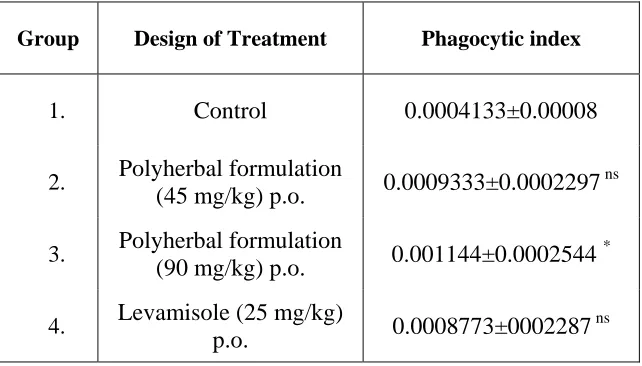
Table 2: Effect of the polyherbal drug on carbon clearance in mice
Group Design of Treatment Phagocytic index
1. Control 0.0004133±0.00008
2. Polyherbal formulation
(45 mg/kg) p.o. 0.0009333±0.0002297 ns
3. Polyherbal formulation
(90 mg/kg) p.o. 0.001144±0.0002544 *
4. Levamisole (25 mg/kg)
p.o. 0.0008773±0002287
ns
Carbon clearance assay
The results reveal that with all the treatments the rate of clearance of carbon particles was increased in mice when compared to vehicle; but the increase was significant only with higher dose of polyherbal formulation (90 mg/ kg) and not with lower dose of polyherbal formulation (45 mg/ kg) as well as the standard Levamisole (25 mg/kg). (Table 2.)
Neutrophil adhesion
Treatment with lower and higher doses of polyherbal formulation i.e. 45 mg/ kg and 90 mg/ kg respectively as well as with the standard Levamisole. 25-mg/ kg significantly increased the percent neutrophil adhesion in mice when compared to the vehicle control. (Table 3.)
Table 3: Effect of the polyherbal drug on percent neutrophil adhesion in mice
TLC (103/mm3)
(A)
Neutrophil (%)
(B)
Neutrophil index (A x B)
Group Treatment Design of
UB FTB UB FTB UB FTB
Neutrophil adhesion (%) 1. Control 8.28 ± 0.546 7.05 ± 0.404 38.67 ± 1.430 32.17 ± 1.190 322.6 0 ± 28.72 0 228.2 0 ± 19.22 0 28.87 ± 1.896 2. Polyherbal formulation (45mg/kg) p.o. 10.90 ± 1.273 8.87 ± 1.238 41.17 ± 4.324 25.50 ± 4.137 459.1 0 ± 80.13 0 221.0 0 ± 47.80 0 49.99 ± 6.914 *
3. Polyherbal formulation (90mg/kg) p.o. 9.60 ± 0.888 7.25 ± 0.898 46.17 ± 1.641 28.17 ± 2.023 447.0 0 ± 48.96 210.6 0 ± 37.11 54.30 ± 3.889 **
4. Reference std Levamisole (25mg/kg) p.o. 9.11 ± 0.752 7.73 ± 0.767 54.83 ± 2.822 33.67 ± 3.528 509.6 ± 64.73 268.5 ± 44.29 48.61 ± 4.246 *
UB: Untreated blood; FTB: Fiber treated blood
Discussion
Polyherbal formulation are becoming increasingly popular for a variety of disease and infective conditions, primarily influencing the host defense mechanism. Immunomodulatory agents of plant origin enhance the immune responsiveness of an organism against a pathogen by nonspecifically activating the immune system.
NRZTCDP is a polyherbal formulation containing the extracts of Withania somnifera, Emblica officinalis, Ocimum sanctum and few other related medicinal plants. These plants have been individually shown to possess immunomodulatory activity 12-14. Glycowithanolides and a mixture of sitoindosides IX and X isolated from Withania Somnifera was believed to produced statistically significant mobilization and activation of peritoneal macrophages, phagocytosis, and increased activity of the lysosomal enzymes 15.
Emblica officinalis a rich source of vitamin C has been used in Ayurveda as a potent rasayana. The rasayanas are used to promote health and longevity by increasing host defense mechanism. A variety of literatures are available on the occurrence and health benefit of vitamin C. In addition to vitamin C, Emblica officinalis have reported the presence of low molecular weight hydrolysable tannins (emblicanin-A, emblicanin-B, puniglucanin and pedunculagin), flavonoid rutin, trigallolyl glucose and phyllembic acid 17. Emblica officinalis was reported to have anticancer, immunopotentiating, adaptogenic, hepatoprotective and antioxidant properties 14,16.
Ocimum sanctummodulates the humoral immune responses by
acting at various levels in the immune mechanisms such as antibody production, release of mediators of hypersensitivity reactions, and tissue responses to these mediators on the target
organs 13.
formulation, as the major constituents of the polyherbal formulation are Withania somnifera, Emblica officinalis, and Ocimum sanctum.
Macrophages have a major role in modulating the immune system. Phagocytosis of pathogens by macrophages initiates the immune responses, which in turn orchestrates the adaptive response. The primary target of most of the immunomodulatory compound is believed to be macrophages, which play a key role in the generation of immune response 4-6. Nitric oxide has been determined to have a significant effect on macrophage cytotoxicity against microorganisms and tumor cells. Iuvone et al demonstrated Withania Somnifera increased Nitric oxide production in mouse macrophages in a concentration-dependent manner 15. The above statement was further proven in the present study as the polyherbal formulation at higher dose (90mg/ kg p.o) significantly increased the number of macrophage after 8 days of drug administration. Thus the polyherbal formulation at higher dose (90 mg/ kg p.o.) significantly activated macrophages and enhanced their function. This is further proved by the significant rise in carbon clearance with higher dose of polyherbal formulation (90mg/ kg p.o.), indicating stimulation of reticuloendothelial system 10. In the present study polyherbal formulation when orally administered, significantly increased the adhesion of neutrophils to nylon fibers in a dose dependent manner when compared to untreated control, which correlates to the process of migration of cells in blood vessels, indicating possible immunostimulant effect.11.
The activity of polyherbal formulation was compared with Levamisole. The polyherbal formulation at higher dose (90 mg/ kg. p.o) showed greater effect than Levamisole.
References
1. Bhattacharya S K, Bhattacharya A, Chakrabarti A. Adaptogenic activity of Sistone, a polyherbal formulation of Ayurvedic rasayanas. Indian J Exp Biol. 2000; 38: 119-128.
2. Costa E, Guidotti A, Trends Pharmacol Sci. 1996; 17: 192.
3. Ghosh M N. Fundamentals of experimental pharmacology. 2nd ed. Calcutta: scientific book agency: 1984.
4. Roitt I, Grostoff J, Male D. Immunology. Mosby publication, London. 1998.
5. Hudson L, Frank, Hay C. Practical immunology. 3rd ed. Black well publications. Oxford university press, London. 1991.
6. Lydyard P M, Whelan A, Fanger M W. Instant notes on immunology. 1st ed. Viva books private limited. 2000. 7. De P, Dasgupta S C, Gomes A. Immunopotentiating and
immunoprophylactic activities of IMMUE- 21, a polyherbal product. Indian J Pharmacol. 1998; 30: 163-168.
8. Das M, Dasgupta S C, Gomes A. Immunomodulatory activity of common Indian toad (Bufo melanostictus, schneider) skin extract. Indian J Pharmacol. 1998; 30: 311-317.
9. Jayathirtha M G, Mishra S H. Preliminary immunomodulatory activities of methanol extracts of Eclipta alba and Centella asiatica. Phytomedicine. 2004; 11: 361-365.
10. Selvi K S, Suthanthirajan N, Namasivayam A. Reticuloendothelial function in acute noise stress. Indian J physiol Pharmacol. 1992; 36( 4 ) : 279-281.
11. Fulzele S V, Satturwar P M, Joshi S B, Dorle A K. Study of the immunomodulatory activity of Haridradi ghrita in rats. Indian J Pharmacol. 2003; 35: 51-54.
13. Mediratta P K, Dewan V, Bhattacharya S K, Gupta V S, Maiti P C, Sen P. Effect of Ocimum sanctum Linn. on humoral immune responses. Indian J Med Res. 1988; 87:384-6.
14. Sai Ram. M, Neetu D, Deepti P, Vandana M, Ilavazhagan G, Kumar D, Selvamurthy W. Cytoprotective activity of Amla (Emblica officinalis) against chromium (VI) induced oxidative injury in murine macrophages. Phytotherapy Research. 2003; 17: 430-433.
15. Gupta G L, Rana A C. PHCOG MAG.: Plant Review Withania somnifera (Ashwagandha): A Review. Pharmacognosy Reviews. 2007; 1: 129-136.
16. Jeena K J, Joy K L, Kuttan R. Effect of Emblica officinalis, Phyllanthus amarus and Picrorrhiza kurroa on N-nitrosodiethylamine induced hepatocarcinogenesis. Cancer Lett. 1999; 136: 11-16.
17. Arulkumaran S, Ramprasath V R, Palanivelu S, Panchanatham S. Free radical quenching and immunomodulatory effect of a modified siddha preparation, Kalpaamruthaa, Journal of health science. 2007; 53: 170-176.
Address for correspondence Dr. Rema Razdan
Professor-Dept. of Pharmacology Al Ameen College of Pharmacy Hosur Road
Bangalore- 560070 Karnataka, India.
Phone: +91-9886034280 Fax: +91-80-22225834