Evolution of elevated-temperature strength and creep resistance during multi-step heat treatments in Al-Mn-Mg alloy
G. S. Wang1, 2, K. Liu3*, S. L. Wang1, 2
1Key Laboratory of Electronmagnetic Processing of Materials, Ministry of Education, Northeastern
University, Shenyang, P. R. China, 110004
2School of Materials Science and Engineering, Northeastern University,
Shenyang, P. R. China, 110004
3Department of Applied Science, University of Quebec at Chicoutimi,
Saguenay, QC, Canada, G7H 2B1
* Corresponding author: [email protected]; Tel.:1-4185455011 ext. 7112
Abstract:
Present work has systematically investigated the evolution of dispersoid and elevated-temperature properties including the strength and creep resistance during the
various multi-step heat treatments in Al-Mn-Mg 3004 alloys. Results show that only α-Al(MnFe)Si dispersoid is observed in the studied temperature range (up to 625°C) and
it coarsens with increasing temperature to 500°C but dissolves at 625°C. The evolution of elevated-temperature strength and creep resistance is greatly related to the temperature of
each step during the multi-step heat treatments. Generally, lower temperature at the first-step heat treatment leads to higher properties while the properties decrease with
increasing temperature of last-step heat treatment. Suitable models have been introduced to explain the evolution of strength and the creep threshold stress at elevated-temperature during the various heat treatments.
Keywords: Al-Mn-Mg alloy; Dispersoids; Heat treatment; Elevated temperature;
Strength; Creep resistance. 1. Introduction
Nowadays, the applications of dispersoid-strengthen aluminum alloys are increasing in the automotive and aerospace industries due to the formation of thermal-stable dispersoids at elevated temperature (250-350°C) [1, 2]. It is reported that the coherent or semi coherent Al3M dispersoids can precipitate and thermal stable up to 250-350°C
through the addition of transition and rare earth elements, such as individual or combined addition of Sc, Zr and Er [3-6] . However, the high cost of these elements limits their wide application.
In the decades, the dispersoids have also been reported to precipitate in Al-Mn 3xxx alloy during the proper heat treatment and the precipitation behavior of dipsersoids has been fully investigated. It is reported that the yield strength of 3003 at room temperature (RT) after 375°C/24h has been improved to 80 MPa compared with 52MPa after
600°C/24h due to precipitation of dispersoids [7]. Recently, present authors have systematically studied the evolution of dispersoids at relative lower heat treatment temperature (300-425°C) and their influence on elevated-temperature properties in
Al-Mn-Mg 3004 alloys [6, 8-12]. It is found that high volume fraction and well distributed α-Al(MnFe)Si dispersoids are observed after treated at 375°C for 48h, leading to the
remarkable improved YS and creep resistance at elevated-temperature. However, the applied heat treatment in above literature is limited to one-step at relative low temperature and limited open literature has been published about the evolution of dispersoids and elevated-temperature properties during the heat treatments at high temperature as well as multi-step heat treatments.
On the other hands, creep resistance is considered to be one of the most significant parameters in alloy application at elevated temperature [13-15]. Generally, the dislocation creep occurs in aluminum alloys at 250-350°C and the stress exponent and creep threshold stress has been well developed to explain the controlling mechanism during the creep test in aluminum alloys, especially in 1XXX alloys [16-19]. However, most of these literatures focus on the nano-scale precipitates or particles and the influence of bigger dispersoids (˃ 50 nm in diameter) on creep resistance has been less dealt with. Besides, little work has been performed on the creep resistance in Al-Mn 3xxx alloys and the evolution of creep threshold stress during the heat treatment is not fully discovered.
Therefore, in order to fully investigate the evolution of dispersoids during the various heat treatments and their influence on elevated-temperature strength and creep behaviors, the wide-temperature-range and multi-step heat treatments have been applied on Al-Mn-Mg 3004 alloy in present work and the strength and creep behaviors at 300°C have been measured and characterized. Meanwhile, suitable models are established to evaluate the relationship between dispersoids and elevated-temperature properties. 2. Experimental
2.1 Alloy preparation
Experimental 3004 alloy was prepared with commercially pure Al (99.7%) and pure Mg (99.9%), Al-25%Fe, Al-50%Si and Al-25%Mn master alloys. The chemical composition of the experimental 3004 alloy is Al-1.2%Mn-1.1%Mg-0.6%Fe-0.25%Si analyzed using optical emission spectrometer (OES).
In each test, approximately 3 kg of material was prepared in a clay-graphite crucible using an electric resistance furnace. The temperature of the melt was maintained at ~750°C for 30 min. The melt was degassed for 15 min and then poured into a permanent mold preheated at 250°C. The dimension of cast ingots was 30mm×40mm×80mm. 2.2 Heat treatment
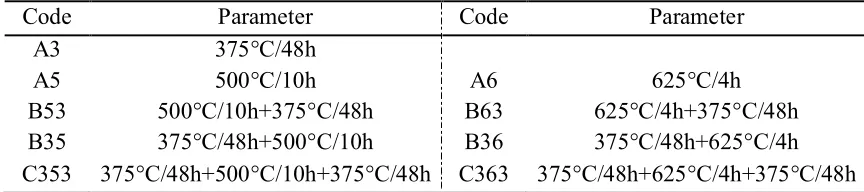
range of 300-425°C. Therefore, another two higher temperature (500°C and 625°C) has been selected in present work and the condition of 375°C/48h is considered to be the base heat treatment in multi-step heat treatments. The heat treatments are performed in a programmable electric furnace with the temperature controller (± 2°C) and circulating air. The heating rate was set as 5°C/min. After each step, the ingots were directly quenched into water at RT. More detail of heat treatments are shown in Table 1.
Table 1 Parameters of heat treatments used in this study
Code Parameter Code Parameter
A3 375°C/48h
A5 500°C/10h A6 625°C/4h
B53 500°C/10h+375°C/48h B63 625°C/4h+375°C/48h
B35 375°C/48h+500°C/10h B36 375°C/48h+625°C/4h
C353 375°C/48h+500°C/10h+375°C/48h C363 375°C/48h+625°C/4h+375°C/48h Note: “A” means single-step heat treatment while “B” and “C” stands for two-step and three-step heat treatment while the “3”, “5”and “6” represent the heat treatment of “375°C/48h”, “500°C/10h”, and “625°C/4h”.
2.3 Evolution of alloy properties
The precipitation behavior of dispersoids during precipitation treatment and thermal holding were evaluated by EC, Vickers microhardness and YS. EC was measured using a Sigmascope SMP10 electrical conductivity unit at RT, and the average value of 5 measurements was recorded for each sample. The mechanical property (YS) was obtained from compression tests performed on a Gleeble 3800 machine. Cylindrical specimens with a length/diameter ratio of 1.5 (i.e., 15 mm in length and 10 mm in diameter) were machined and tested at both RT and an elevated temperature (300°C) following the ASTM E9-89a standard. The total deformation of the specimens was set to 0.2, and the strain rate was fixed at 10-3 s-1. For the compression test at 300°C, the specimen was heated to 300°C with a heating rate of 2°C/s and held for 3 minutes to stabilize. An average value of YS was obtained from 3 tests.
In addition, creep tests were performed at 300°C and specimens were the same size as the Gleeble samples. Creep behaviors were tested at a constant load of 38 MPa while another two loads (28 and 32 MPa) has been applied for the creep threshold stress and stress exponent. For each condition, 3 tests were repeated to confirm the reliability of the results.
2.4 Microstructure observation
dispersive x-ray spectrometer (EDS) and electron backscatter diffraction (EBSD) was used to examine the intermetallics and grain structure of the alloy under different conditions. A transmission electron microscope (TEM, JEM-2100) operated at 200kV was used to observe the distribution of dispersoids. The thickness of the TEM sample was measured with electron energy loss spectroscopy (EELS).The size and number density of dispersoids were measured using Clemex PE 4.0 image analysis software with the TEM images. In this study, the volume fraction of particle free zone (PFZ) was converted from the area fraction of PFZ measured in image analysis from optical images according to the Delesse’s principle [20, 21] while the volume fraction of dispersoids was calculated according to the model introduced in the literature [22] and shown in Eq. (1):
= (1 − ) (1) where is the average equivalent diameter of dispersoids; t is the TEM foil thickness; AA
is the area percentage of dispersoids from TEM observation; APFZ is the area percentage
of the particle free zone (PFZ) from OM measurements; and is the average shape factor of dispersoids.
3. Results and Discussion
3.1 Precipitation of dispersoids during the heat treatment
Though the Al6(MnFe) dispersoids have been reported to form when treated at
600°C in 3103 alloy [23], however, dispersoids after all the heat treatments performed in present work are identified as α-Al(MnFe)Si even at 600°C. As an example, Fig. 1 shows the dispersoids precipitated after A6 with the highest “H” temperature (625°C) and TEM-EDS result. As shown in Fig. 1a, the dispersoids can be present with different morphology, such as cubic and platelet-like. However, the TEM-EDS result (Fig. 1b) shows that all the dispersoids are composed of Mn, Fe and Si, identifying the dispersoids as α-Al(MnFe)Si. One of the likely reasons for free of Al6(MnFe) dispersoids in present
work is the higher Si content in experimental 3004 alloy (0.25%) than the 3103 alloy in the literature (0.05%), which promotes the precipitation of α-Al(MnFe)Si dispersoids.
Therefore, all the dispersoids talked about in the following part are referred to α-Al(MnFe)Si dispersoids.
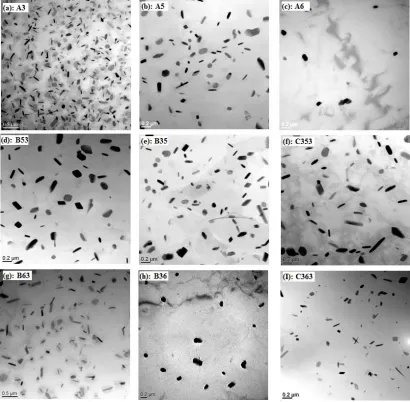
Fig. 2 shows the distribution of dispersoids under single heat treatments (A3, A5 and A6). It displays that the finer α-Al(MnFe)Si dispersoids are uniformly precipitated after A3 (375°C/48h). Besides, only low volume fraction of PFZ can be observed surrounding the intermetallic particles (interdentritic zone) after A3, which can be attributed to the depletion of Mn near the intermetallics due to the formation of primary Al6(MnFe) and
dispersoids happens at 500°C compared with 375°C. However, little dispersoids can be observed with further increasing temperature to 625°C. As shown in Fig. 2c, only fragmented intermetallics are present in the Al matrix after A6 (625°C/4h). In the literature, it is reported that the α-Al(MnFe)Si dispersoids begin to dissolve at 600°C [22-24], hence it is reasonable for the dispersoids to dissolve into the matrix at 625°C.
Fig. 1 Dispersoids after A6 and the TEM-EDS result
Fig. 2 Distribution of dispersoids after single-step heat treatment
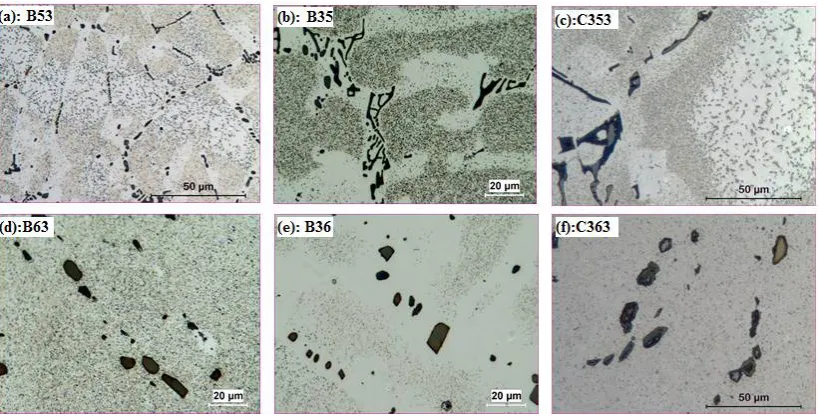
The distribution of dispersoids after two-step and three-step heat treatments is shown in Fig. 3. Generally, coarsening of dispersoids happens when treated at 500°C, either under two or three steps heat treatment compared with A3. Besides, the volume fraction of PFZ increases after two or three steps heat treatment at 500°C. As shown in Table 2, the volume fraction of PFZ slightly increases from 32 vol. % in A5 to 37 vol. % in B35 but rapid to 45 vol. % in C353 and further to 55 vol. % in B53. The slightly increase in PFZ from A5 to B35 is mainly due to the dispersoids coarsening and more PFZ is shown in interdendrite zone (Fig. 3b). However, it can be found the volume fraction of bigger dispersoids in the center of dendrite arms increases after B53 (Fig. 3a) and C353 (Fig. 3c), leading to the higher volume fraction of PFZ.
However, the distribution of dispersoids after treated at 625°C is more complicit. As shown in Fig. 3d, the dispersoids are observed to distribute everywhere and PFZ is disappeared after B63, which is probably attributed to uniform soluted Mn atom in matrix
(375°C) and then dissolve into matrix in the second step at higher temperature (625°C) followed by the re-precipitate of uniformly-distributed dispersoids in the third step at lower temperature (375°C). However, it seems that the volume fraction of dispersoids after C363 is a little lower than B63, which is probably caused by decreasing soluted Mn concentration from incompletely dissolved dispersoids in second step, which is also shown in Fig. 3e. It is observed that there is still low volume fraction of dispersoids remaining after B36 (Fig. 3e) due to the incompletely dissolved dispersoids.
but much lower volume fraction of dispersoids have been shown in TEM observation (Figs. 4g and 4i). The lower volume fraction after B63 and C363 under TEM is probably related to the phase transformation of intermetallics at high temperature. It is reported that Al6(MnFe) would transform to α-Al(MnFe)Si intermetallics at 600°C and the Mn/Fe
ratio increases with holding time [25]. Therefore, partial Mn atoms diffuse to α-Al(MnFe)Si intermetallics during the phase transformation at high temperature, leading
to the decreased soluted Mn concentration in matrix. Therefore, the drive force for the precipitation of dispersoids decreases with the decreasing supersaturation of Mn in matrix but Mn is uniformly distributed in the matrix. Therefore, dispersoids precipitate uniformly due to the homogenized Mn atom, in matrix but with lower volume fraction from lower Mn concentration in Al matrix in the last step at lower temperature (375°C) and it presents as the uniform distributed dispersoids in optical microscope without PFZ.
Table 2 Characters of dispersoids and PFZ during heat treatment
Code
Dispersoids PFZ
Code
Dispersoids PFZ
Equivalent
diameter nm
Volume fraction Vol.%
Volume
fraction Vol. %
Equivalent
diameter nm
Volume fraction Vol.%
Volume fraction Vol. % A3 67(11)* 2.95(0.68) 28(3)
A5 107(14) 1.58(0.52) 32(4) A6 102(12) 0.27(0.13) – B53 112(15) 1.36(0.62) 55(8) B63 82(15) 0.87 (0.15) 10(5) B35 105(12) 1.67(0.54) 37(6) B36 106(14) 0.51(0.21) – C353 111(21) 1.61(0.48) 45(7) C363 83(12) 1.21(0.15) 8(6) *Note: standard deviation is shown in bracket
3.2 Compression Yield Strength
As shown in Figs. 2-4, great changes happen on characters of dispersoids during the heat treatment, which will definitely affect the mechanical properties of alloys. Fig. 5 shows the typical true strain-stress curves of alloy after single step heat treatment (A3, A5 and A6) at both RT and 300°C.
Table 3 YS and EC after various heat treatments Code EC
(% IACS)
YS (RT) (MPa)
YS (300oC)
(MPa)
Code EC (% IACS)
YS (RT) (MPa)
YS (300oC)
(MPa) A3 37.8 (0.3)* 107.9(3.5) 78.3(0.6)
A5 39.2(0.5) 77.7 (2.3) 61.7(0.9) A6 26.9 (0.8) 86.2(1.8) 59.3(1.6) B53 38.1(0.6) 75.8(1.8) 58.2(0.5) B63 38.3(0.5) 82.3(2.5) 60.9(1.4) B35 38.9(0.5) 79.1(2.1) 63.9(1.1) B36 27.9(0.5) 84.5(2.1) 61.9(1.9) C353 37.9(0.2) 76.4(2.6) 58.6(0.5) C363 38.1(0.6) 82.4(1.9) 62.3(1.5) *Note: standard deviation is shown in bracket
As shown in Table 3, EC is mainly controlled by the last step, which is similar to the literature [24]. For instance, EC of A3, B53, B63, C353 and C363 is similar, which is around 38 %IACS. For the evolution of YS, it can be found that it decreases with increasing temperature, such as the descending YS in A3, A5 and A6. Besides, the first-step temperature plays a significant role in YS in multi-first-steps heat treatment, in which that YS is higher with lower first-step temperature than with higher first-step temperature. This can be proved from the YS between B35 and B53, B36 and B63 in Table 3.
In order to explain the evolution of YS at both RT and 300°C, two principal processes involved during the heat treatment have been considered in present work: precipitation of dispersoids at lower temperature (375°C and 500°C) for dispersoid strengthening and dissolution of dispersoids at high temperature (625°C) for solid-solution strengthening. Therefore, the evolution of YS can be estimated with the synergetic effect of these two factors.
According to the literature, the contribution of dispersoids to the YS of alloys (σD)
can be estimated with Ashby-Orowan equation [7, 26]:
= .
( ) / ln ( )( ) / (1)
Where, M is the Taylor factor, G is the temperature-dependent matrix shear modulus (given as G=25.4[1-0.5(T-300)/933] [27]) while b, ν γ and f is the burgers vector of dislocation, poison ratio, radius and volume fraction of dispersoids , respectively.
On the other hand, the solid-solution strengthening from Mn atom is reported to have a liner relationship with soluted Mn concentration as [28]:
= (2)
Where, H and α is constant, which is 18.35 and 0.9 for soluted Mn atom under at RT while 10 and 0.8 at 300oC under the applied condition in present work (stain rate at 10-3 s
-1 and total stain at 0.2%) [1, 28-30]. C is the concentration of soluted Mn atom is Al
matrix and can be estimated using EC by neglecting the contribution of Fe and Si on EC due to their low solubility with the following equation [22]:
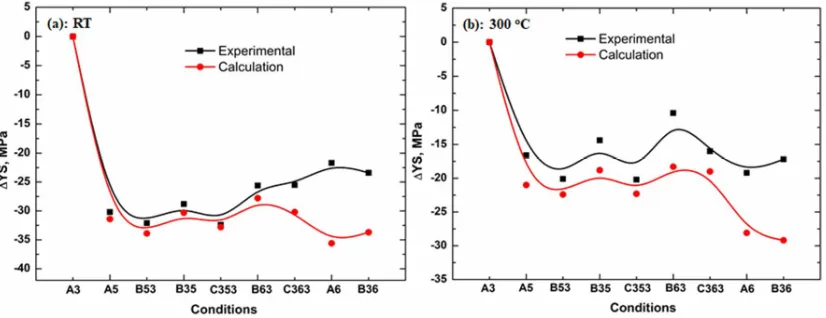
With above equations and characters of dispersoids in Table 2, the contribution of solid-soluted atom and dispersoids on YS can be estimated and the differences in YS (ΔYS) between A3 and other heat treatments have been calculated in present work and the comparison between calculated data and the experimental data is shown in Fig. 6. It can be seen that the tendency of evolution of YS at both RT and 300°C is the same between experimental and calculation data. However, the match between experimental and calculation is closer at RT (Fig. 6a) than at 300°C (Fig. 6b), which can be attributed to the more active on the movement of dislocation at 300°C. Besides, a bigger difference between calculated and experimental data is observed in the conditions of A6 and B36, in which the Mn is fully soluted in matrix at higher temperature (625°C) at both RT and 300°C, which are the last two points in Fig. 6. The reason is unclear but it is likely due to the formation of “solute drag” from Mn and Mg atoms [31-33], which hinders the movement of dislocation and then lead to the further increase of strength.
Fig. 6 Difference of YS between A3 and other heat treatments at RT and 300°C
3.3 Creep resistance
A3, which has the finest but the highest volume fraction of dispersoids, further confirming the significant positive influence of dispersoids on the creep resistance.
Fig. 7 Creep curves after various heat treatments involved at 500°C (a) and 625°C (b) According to the compression creep condition applied in present work, the creep mechanism is primarily controlled by the glide and climb of dislocations during creep [34]. However, the difference between various heat treatments is hard to distinguish. Besides, threshold stress σth and true stress exponent n are reported to be two significant
parameters to characterize the creep resistance. Therefore, A3, A5 and A6 have been performed the step-load creep test. The threshold stress σth is calculated as the stress level
when minimum strain rate (ε) is extrapolated to 10-10 s-1 and true stress exponent is the slope of lnε-ln(σ-σth) curve [35] and the results are shown in Fig. 8.
Fig. 8 Threshold stress σth (a) and stress exponent n (b) in A3, A5 and A6
As shown in Fig. 8a, σth increases in the order of A5 (13.3 MPa) to A6 (15.6 MPa)
is calculated to be in the range of 4-5 (Fig. 9b), which indicates that the creep is controlled by the dislocation glide or/and climb at elevated temperature [37, 38], confirming the dislocation-control creep mechanism in present work.
Since the creep is confirmed to be controlled by the dislocation glide or/and climb, the factors which can affect the movement of dislocation will have the influence on creep behavior, such as the grain boundary, intermetallics, dispersoids and soluted atoms in present work. From the EBSD measurements, the grain size is found to be similar after all the heat treatments, which is in the range of 340-360 μm. Besides, the intermetallics also show a similar volume fraction (3.8- 4.2 vol. % measured with image analysis). Therefore, the difference in creep resistance, such as σth, is mainly controlled by the
characters of dispersoid and solute level of atoms.
According to the literature, the contribution of dispersoids to σth can be estimated by
the Orowan stress model in the following equation [27]:
= − 1 (4)
On the other hand, the influence of soluted atoms σth can be expressed in the
equation [39]:
= ( ) (5)
Where, K is a constant. G, b, γ and C have the same meaning with Eqs. (1) - (3) while R is the gas content and T is the absolute temperature. Q is the interaction energy between soluted atom and dislocation, which can be calculated as following [40]:
= 2 ( − ) (6)
Similar to the evolution of YS, the difference of σth between A3, A5 and A6 has
been calculated: 6.6 MPa between A3 and A6 while 2.3 MPa between A3 and A5, which is close to the experimental data (6.8 MPa between A3 and A6 and 2.3 MPa between A3 and A5), indicating the applicability of model to predict the creep behavior of 3004 alloy in present work. Therefore, the creep threshold stress σth in other heat treatments has also
been calculated using this model and shown in Table 4.
Table 4 Calculated creep threshold stress (σth) during heat treatments
Code B35 B53 C353 B36 B63 C363
σth (MPa) 13.4 12.8 13.1 15.3 14.2 14.5
As shown in Table 4, it can be found that σth varies with heat treatments though with
first-step heat treatments is higher than with higher temperature, which is indicated by the higher creep threshold stress in B35 and B36 than B53 and B63, respectively.
4. Conclusions
(1) Coarsening of dispersoids takes place with increasing temperature from 375°C to 500°C while the dissolution of dispersoids happens with further increased temperature to 625°C. The behaviors including size and distribution of dispersoids as well as the PFZ during various heat treatments have been fully characterized.
(2) The evolution of elevated-temperature strength and creep resistance is greatly related to the temperature of each step during the multi-step heat treatments. The temperature of the first-step heat treatment plays a significant role, in which higher alloy properties can be obtained with lower-temperature heat treatment as the first step while they decrease with increasing temperature of last-step heat.
(3) The creep behavior under all the studied heat treatments is defined as dislocation-controlled mechanism with the stress exponent between 4 and 5 but the creep threshold stress is varying with the heat treatment, which is calculated to be 13-23 MPa.
(4) Suitable models have been preliminarily established to relate the evolution of strength and creep resistance to the behavior of dispersoids and solid-solution level of elements during the studied multi-step heat treatments.
Acknowledgments
The authors would like to acknowledge the financial support of the Natural Sciences and Engineering Research Council of Canada (NSERC) and Rio Tinto Aluminum through the NSERC Industry Research Chair in the Metallurgy of Aluminum Transformation at University of Quebec at Chicoutimi and The Doctoral Start-up Fund of Liaoning Province (No. 20170520403) in Northeastern University.
Author Contributions: G. S. Wang, K. Liu and S. L. Wang conceived and designed the
experiments; G. S. Wang and K. Liu performed the experiments; K. Liu analyzed the data; G. S. Wang wrote the paper and K. Liu modified the paper.
Conflicts of Interest: The authors declare no conflict of interest.
References
[2] I.J. Polmear, M.J. Couper. Design and development of an experimental wrought aluminum alloy for use at elevated temperatures. Metall. Trans. A,1988, 19, 1027-1035. 10.1007/BF02628387.
[3] M.E. Van Dalen, T. Gyger, D.C. Dunand, D.N. Seidman. Effects of Yb and Zr microalloying additions on the microstructure and mechanical properties of dilute Al–Sc alloys.Acta Mater.,2011, 59, 7615-7626.10.1016/j.actamat.2011.09.019.
[4] J. Lai, Z. Zhang, X.G. Chen. The thermal stability of mechanical properties of Al– B4C composites alloyed with Sc and Zr at elevated temperatures. Mater. Sci. Eng., A,
2012, 532, 462-470.10.1016/j.msea.2011.11.013.
[5] A.R. Farkoosh, X. Grant Chen, M. Pekguleryuz. Dispersoid strengthening of a high temperature Al–Si–Cu–Mg alloy via Mo addition. Mater. Sci. Eng., A, 2015, 620, 181-189.http://dx.doi.org/10.1016/j.msea.2014.10.004.
[6] K. Liu, H. Ma, X.G. Chen. Enhanced elevated-temperature properties via Mo addition in Al-Mn-Mg 3004 alloy. J. Alloys Compd. , 2017, 694, 354-365.
http://dx.doi.org/10.1016/j.jallcom.2016.10.005.
[7] Y.J. Li, A.M.F. Muggerud, A. Olsen, T. Furu. Precipitation of partially coherent α-Al(Mn,Fe)Si dispersoids and their strengthening effect in AA 3003 alloy. Acta Mater.,
2012, 60, 1004-1014.10.1016/j.actamat.2011.11.003.
[8] K. Liu, X.-G. Chen. Evolution of microstructure and elevated-temperature properties with Mn addition in Al-Mn-Mg alloys. J. Mater. Res. , 2017, 32, 2585-2593. doi:10.1557/jmr.2017.239.
[9] K. Liu, X.G. Chen. Development of Al–Mn–Mg 3004 alloy for applications at elevated temperature via dispersoid strengthening. Mater. Des., 2015, 84, 340-350.
http://dx.doi.org/10.1016/j.matdes.2015.06.140.
[10] K. Liu, X.G. Chen. Evolution of Intermetallics, Dispersoids, and Elevated
Temperature Properties at Various Fe Contents in Al-Mn-Mg 3004 Alloys. Metall. Mater.
Trans. B,2015, 47B, 3291-3300.10.1007/s11663-015-0564-y.
[11] K. Liu, X.G. Chen. Influence of heat treatment and its sequence on
elevated-temperature properties of Al-Mn-Mg 3004 alloy. Mater. Sci. Eng. A,2017, 697, 141-148.
https://doi.org/10.1016/j.msea.2017.05.027.
[12] K. Liu, A.M. Nabawy, X.-G. Chen. Influence of TiB2 nanoparticles on the
elevated-temperature properties of Al-Mn-Mg 3004 alloy. Trans. Nonferrous Met. Soc. China,
2017, 27, 771-778.DOI: 10.1016/S1003-6326(17)60088-8.
[13] J. Cadek. Creep in precipitation- and dispersion-strengthened alloys (a review).
Kovove Mater. ,1991, 29, 385-398.
[14] K.E. Knipling, D.C. Dunand, D.N. Seidman. Criteria for developing castable,
creep-resistant aluminum-based alloys - A review. Z. METALLKD, 2006, 97, 246-265. 10.3139/146.101249
[15] A.W. Zhu, B.M. Gable, G.J. Shiflet, E.A. Starke Jr, in: P.J. Gregson, S. Harris (Eds.)
Aluminium Alloys 2002 Their Physical and Mechnaical Properties: Proceedings of the 8th International Conference ICAA8, Cambridge, 2002, pp. 21-30.
[16] K.E. Knipling, D.C. Dunand. Creep resistance of cast and aged Al–0.1Zr and Al–
0.1Zr–0.1Ti (at.%) alloys at 300–400 °C. Scr. Mater., 2008, 59, 387-390.
[17] M.E. Krug, D.C. Dunand. Modeling the creep threshold stress due to climb of a dislocation in the stress field of a misfitting precipitate.Acta Mater.,2011, 59, 5125-5134.
http://dx.doi.org/10.1016/j.actamat.2011.04.044.
[18] E.A. Marquis, D.C. Dunand. Model for creep threshold stress in
precipitation-strengthened alloys with coherent particles. Scr. Mater., 2002, 47, 503-508.
http://dx.doi.org/10.1016/S1359-6462(02)00165-3.
[19] D.N. Seidman, E.A. Marquis, D.C. Dunand. Precipitation strengthening at ambient
and elevated temperatures of heat-treatable Al(Sc) alloys. Acta Mater., 2002, 50, 4021-4035.10.1016/S1359-6454(02)00201-X.
[20] P.X. Liu, Y. Liu, R. Xu. Microstructure quantitative analysis of directionally
solidified Al-Ni-Y ternary eutectic alloy. Trans. Nonferrous Met. Soc. China, 2014, 24,
2443-2451.
[21] E.R. Weibel, H. Elias, Quantitative methods in morphology, Springer-Verlag, Berlin;
New York, 1967.
[22] Y.J. Li, L. Arnberg. Quantitative study on the precipitation behavior of dispersoids in
DC-cast AA3003 alloy during heating and homogenization. Acta Mater., 2003, 51, 3415-3428.http://dx.doi.org/10.1016/S1359-6454(03)00160-5.
[23] Y. Li, L. Arnberg, Precipitation of Dispersoids in DC-Cast AA31O3 Alloy during
Heat Treatment, Essential Readings in Light Metals,in: F. Grandfield, D.G. Eskin (Ed.)^(Eds.) John Wiley & Sons, Inc., Hoboken, NJ, USA, 2013, pp. 1021-1027.
[24] H.-W. Huang, B.-L. Ou. Evolution of precipitation during different homogenization
treatments in a 3003 aluminum alloy. Mater. Des., 2009, 30, 2685-2692. 10.1016/j.matdes.2008.10.012.
[25] Y.J. Li, L. Arnberg. Evolution of eutectic intermetallic particles in DC-cast AA3003
alloy during heating and homogenization. Mater. Sci. Eng., A, 2003, 347, 130-135. 10.1016/s0921-5093(02)00555-5.
[26] A.M.F. Muggerud, E.A. Mørtsell, Y. Li, R. Holmestad. Dispersoid strengthening in
AA3xxx alloys with varying Mn and Si content during annealing at low temperatures.
Mater. Sci. Eng., A,2013, 567, 21-28.10.1016/j.msea.2013.01.004.
[27] R.A. Karnesky, L. Meng, D.C. Dunand. Strengthening mechanisms in aluminum
containing coherent Al3Sc precipitates and incoherent Al2O3 dispersoids. Acta Mater.,
2007, 55, 1299-1308.http://dx.doi.org/10.1016/j.actamat.2006.10.004.
[28] E.L. Huskins, B. Cao, K.T. Ramesh. Strengthening mechanisms in an Al–Mg alloy.
Mater. Sci. Eng., A,2010, 527, 1292-1298.http://dx.doi.org/10.1016/j.msea.2009.11.056.
[29] S. Kahl, H.-E. Ekström, J. Mendoza. Tensile, Fatigue, and Creep Properties of
Aluminum Heat Exchanger Tube Alloys for Temperatures from 293 K to 573 K (20 °C to 300 °C).Metall. Mater. Trans. A,2014, 45, 663-681.10.1007/s11661-013-2003-5.
[30] Q. Zhao, Department of Materials Science and Engineering, Norwegian University
of Science and Technology, Trondheim, 2013.
[31] A.V. Kazantzis, Z.G. Chen, J.T.M. De Hosson. Deformation mechanism of
aluminum–magnesium alloys at elevated temperatures. J. Mater. Sci., 2013, 48, 7399-7408.10.1007/s10853-013-7555-7.
[32] C. Shi, X.G. Chen. Effect of vanadium on hot deformation and microstructural
evolution of 7150 aluminum alloy. Mater. Sci. Eng., A, 2014, 613, 91-102.
[33] O.D. Sherby, A. Goldberg, O.A. Ruano. Solute-diffusion-controlled dislocation creep in pure aluminium containing 0.026 at.% Fe. Philos. Mag., 2004, 84, 2417-2434. 10.1080/14786430410001690006.
[34] G.E. Dieter, Mechanical metallurgy, McGraw-Hill, New York, 1986.
[35] S.P. Deshmukh, R.S. Mishra, K.L. Kendig. Creep behavior and threshold stress of an
extruded Al–6Mg–2Sc–1Zr alloy. Mater. Sci. Eng., A, 2004, 381, 381-385.
http://dx.doi.org/10.1016/j.msea.2004.05.025.
[36] A.R. Farkoosh, X.G. Chen, M. Pekguleryuz. Interaction between molybdenum and
manganese to form effective dispersoids in an Al–Si–Cu–Mg alloy and their influence on creep resistance. Mater. Sci. Eng., A, 2015, 627, 127-138.
http://dx.doi.org/10.1016/j.msea.2014.12.115.
[37] Y. Li, S.R. Nutt, F.A. Mohamed. An investigation of creep and substructure
formation in 2124 Al. Acta Mater., 1997, 45, 2607-2620.
http://dx.doi.org/10.1016/S1359-6454(96)00367-9.
[38] F.A. Mohamed, K.-T. Park, E.J. Lavernia. Creep behavior of discontinuous SiC
Al composites. Mater. Sci. Eng., A, 1992, 150, 21-35. http://dx.doi.org/10.1016/0921-5093(90)90004-M.
[39] Z. Lin, Y. Li, F.A. Mohamed. Creep and substructure in 5 vol.% SiC-2124Al
composite. Mater. Sci. Eng., A, 2002, 332, 330-342. http://dx.doi.org/10.1016/S0921-5093(01)01760-9.
[40] H. Watanabe, T. Mukai, K. Higashi. Influence of Temperature and Grain Size on
Threshold Stress for Superplastic Flow in a Fine-Grained Magnesium Alloy. Metall.