Original Research Article
A cross sectional study on optimal infant and young child feeding
practices with reference to WHO indicators in a rural
area of Puducherry
Arulprasad Radjasegarane, Anandaraj Rajagopal*, Prakash Mathiyalagen, Kavita Vasudevan
INTRODUCTION
The under-five population of India is 112.8 million.1 The first two years of life provide a critical window of opportunity for ensuring appropriate growth and development of the child through optimal feeding.2 Suboptimal feeding in infancy and early childhood not only leads to malnutrition but also results in impaired cognitive and social development and poor school
performance in later life.3 Surprisingly the total percent of children aged 6-23 months receiving adequate diet is only 9.6%.4 Complementary feeding introduced in infants between 6 to 8 months has decreased from 52.6% to 42.7% during the last ten years.4
According to National Family Health Survey-4 (NFHS-4) data, the prevalence of children under five years of age who are with wasting and stunting are 21% and 38.4%
ABSTRACT
Background: Optimal infant and young child feeding practices (IYCF) are essential to address the increasing burden of malnutrition and for the overall development of the children. The present study was conducted to estimate the proportion of optimal infant and young child feeding practices among rural children aged 0 to 23 months and study the associated socio demographic factors.
Methods: A community based cross-sectional study was conducted among 360 children in the age group of 0 to 23 months in a rural field practice area of a medical college in Puducherry. Data on IYCF practices were collected using a standardized tool developed by WHO. Core and optional IYCF indicators were calculated. Chi-square test and Fishers’ exact test were used as tests of significance.
Results: Almost 88.0% of infants were initiated early on breastfeeding and 90.8% were exclusively breastfed for six months. Children who were continuously breastfed at one year and two years were 77.4% and 22.4% respectively. About 75.0% were introduced with solid or semisolid foods at 6 to 8 months of age. Among children aged 6 to 23 months, 77.3% had the recommended minimum dietary diversity, 81.3% had the minimum meal frequencies, while 57.7% received the minimum acceptable diet and only 39.4% consumed iron rich foods. Gender was significantly associated with the practice of continued breastfeeding at one year, adequate minimum dietary diversity and minimum meal frequency.
Conclusions: The core and optional IYCF indicators were acceptably good in the initial six months of life but thereafter showed suboptimal levels, which should be emphasized among the mothers or primary care givers.
Keywords: Breast feeding, Core and optional indicators, Infant and young child feeding, Puducherry
Department ofCommunity Medicine, Indira Gandhi Medical College and Research Institute, Puducherry, Tamil Nadu, India
Received: 30 January 2019 Accepted: 06 March 2019
*Correspondence: Dr. Anandaraj Rajagopal, E-mail: [email protected]
Copyright: © the author(s), publisher and licensee Medip Academy. This is an open-access article distributed under the terms of the Creative Commons Attribution Non-Commercial License, which permits unrestricted non-commercial use, distribution, and reproduction in any medium, provided the original work is properly cited.
respectively.4 The proportion of children under five years who are severely wasted has increased from 6.4% in 2005 to 7.5% in 2015.4 Almost 60% of all under five deaths are directly or indirectly related to malnutrition, of which two-third of these deaths are associated with inappropriate feeding practices.3 Exclusive breast feeding and introduction of complementary feeding at appropriate age will address the current burden of malnutrition in India. Improving infant and young child feeding (IYCF) practices in children 0 to 23 months of age is therefore essential in overall development of children.
The decline in the optimal feeding practices and increasing trend in the burden of malnutrition need to be addressed. Identifying various factors which influence infant and young child feeding practices in a community is important so as to build appropriate strategies to improve these practices. Hence the present study was carried out to estimate the proportion of optimal infant and young child feeding practices with reference to WHO indicators among rural children aged 0 to 23 months and to study the socio demographic factors associated with these practices.
METHODS
This community based cross-sectional study was conducted for a period of four months from June to September 2018 in the rural field practice area of a medical college in Puducherry. Considering the NFHS-4 data in Puducherry wherein the prevalence of total children in the age group of 6 to 23 months in rural area receiving an adequate diet as 37.7%, the sample size obtained with an absolute precision of 5% was 360.5 Simple random sampling technique was used to select two sub-centers among four, under the field practice area, which consisted of seven villages and all the eligible children in these villages were included in the study. Ethical approval was obtained from the institute ethics committee before the start of the study (IEC/PP/2018/08/128).
House to house visit was made and women in the age group of 15 to 49 years who had at least one live birth in the past two years and consenting for the study were included. Houses which were locked even after three visits were excluded. After obtaining informed consent, the data on IYCF practices were collected by direct-interview method using a standardized tool developed by WHO.6 This tool assesses IYCF practices on the previous 24 hours for children aged 0 to 23 months using eight core and seven optional indicators. If the mother was not available, the primary caregiver of each child was interviewed using the questionnaire after determining the eligibility of the child. Separate IYCF modules were completed if there were more than one eligible child in the same house. The questionnaire consisted of two parts, the first part consisted of questions on socio demographic variables and the second part consisted of questions on breastfeeding and infant and young child feeding
practices. After collecting the data, core and optional indicators of infant and young child feeding practices were calculated as per the WHO guidelines.6
The collected data was subjected to double data entry in MS Excel by two independent data entry operators and were matched for any discrepancies. The data was then analyzed using SPSS version 20.0. Frequencies and percentages were calculated for categorical data. Chi-square test or Fisher’s exact test, whichever applicable, were used as tests of significance for analyzing categorical data. A p value of less than 0.05 was considered as statistically significant.
RESULTS
A total of 360 infants and young children within 24 months of age were assessed for their feeding practices. About 49.2% of children were males and 50.8% were females. Majority of the mothers (97.8%) were literate and 91.7% were homemakers. About 26.1% of mothers were aged 30 years or above. Almost 73.9% of their family belonged to lower socio economic status according to Modified B.G. Prasad classification. Most of the children (98.1%) were of birth order less than two (Table 1).
Table 1: Socio-demographic characteristics of the study population (n=360).
Socio-demographic characteristics N (%)
Gender of the child Male 177 (49.2) Female 183 (50.8) Education of the
mother
Literate 352 (97.8) Illiterate 8 (2.2) Occupation of the
mother
Employed 30 (8.3) Unemployed 330 (91.7)
Socio-economic status Upper 94 (26.1) Lower 266 (73.9)
Birth order ≤2 353 (98.1)
>2 7 (1.9)
Maternal age (in years) <30 ≥30 266 (73.9) 94 (26.1)
Core indicators N (%) Optional indicators N (%)
Early initiation of breast feeding 317 (88) Children ever breastfed 360 (100)
Exclusive breast feeding 99 (90.8) Continued breastfeeding at 2 years 13 (22.4)
Continued breastfeeding at 1 year 48 (77.4) Age appropriate breast feeding 252 (70)
Introduction of solid, semi-solid or soft foods 27 (75) Predominant breastfeeding under 6 months 102 (93.6)
Minimum dietary diversity 194 (77.3) Bottle feeding 83 (23)
Minimum meal frequency 204 (81.3) Milk feeding frequency for non-breastfed children 85 (95.5)
Minimum acceptable diet 145(57.7)
Consumption of iron-rich foods 99 (39.4)
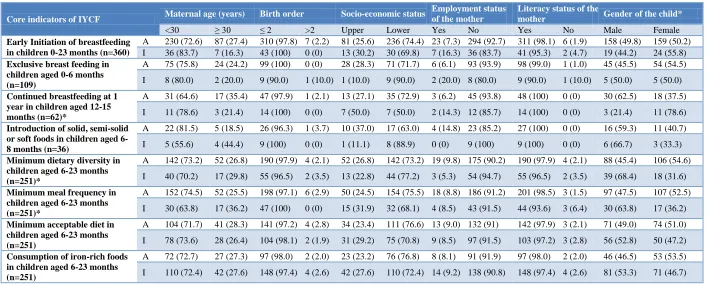
Table 3: Association of socio-demographic variables with the core IYCF indicators.
Core indicators of IYCF Maternal age (years) Birth order Socio-economic status
Employment status of the mother
Literacy status of the
mother Gender of the child*
<30 ≥ 30 ≤ 2 >2 Upper Lower Yes No Yes No Male Female
Early Initiation of breastfeeding in children 0-23 months (n=360)
A 230 (72.6) 87 (27.4) 310 (97.8) 7 (2.2) 81 (25.6) 236 (74.4) 23 (7.3) 294 (92.7) 311 (98.1) 6 (1.9) 158 (49.8) 159 (50.2) I 36 (83.7) 7 (16.3) 43 (100) 0 (0) 13 (30.2) 30 (69.8) 7 (16.3) 36 (83.7) 41 (95.3) 2 (4.7) 19 (44.2) 24 (55.8) Exclusive breast feeding in
children aged 0-6 months (n=109)
A 75 (75.8) 24 (24.2) 99 (100) 0 (0) 28 (28.3) 71 (71.7) 6 (6.1) 93 (93.9) 98 (99.0) 1 (1.0) 45 (45.5) 54 (54.5) I 8 (80.0) 2 (20.0) 9 (90.0) 1 (10.0) 1 (10.0) 9 (90.0) 2 (20.0) 8 (80.0) 9 (90.0) 1 (10.0) 5 (50.0) 5 (50.0) Continued breastfeeding at 1
year in children aged 12-15 months (n=62)*
A 31 (64.6) 17 (35.4) 47 (97.9) 1 (2.1) 13 (27.1) 35 (72.9) 3 (6.2) 45 (93.8) 48 (100) 0 (0) 30 (62.5) 18 (37.5) I 11 (78.6) 3 (21.4) 14 (100) 0 (0) 7 (50.0) 7 (50.0) 2 (14.3) 12 (85.7) 14 (100) 0 (0) 3 (21.4) 11 (78.6) Introduction of solid, semi-solid
or soft foods in children aged 6-8 months (n=36)
A 22 (81.5) 5 (18.5) 26 (96.3) 1 (3.7) 10 (37.0) 17 (63.0) 4 (14.8) 23 (85.2) 27 (100) 0 (0) 16 (59.3) 11 (40.7) I 5 (55.6) 4 (44.4) 9 (100) 0 (0) 1 (11.1) 8 (88.9) 0 (0) 9 (100) 9 (100) 0 (0) 6 (66.7) 3 (33.3) Minimum dietary diversity in
children aged 6-23 months (n=251)*
A 142 (73.2) 52 (26.8) 190 (97.9) 4 (2.1) 52 (26.8) 142 (73.2) 19 (9.8) 175 (90.2) 190 (97.9) 4 (2.1) 88 (45.4) 106 (54.6) I 40 (70.2) 17 (29.8) 55 (96.5) 2 (3.5) 13 (22.8) 44 (77.2) 3 (5.3) 54 (94.7) 55 (96.5) 2 (3.5) 39 (68.4) 18 (31.6) Minimum meal frequency in
children aged 6-23 months (n=251)*
A 152 (74.5) 52 (25.5) 198 (97.1) 6 (2.9) 50 (24.5) 154 (75.5) 18 (8.8) 186 (91.2) 201 (98.5) 3 (1.5) 97 (47.5) 107 (52.5) I 30 (63.8) 17 (36.2) 47 (100) 0 (0) 15 (31.9) 32 (68.1) 4 (8.5) 43 (91.5) 44 (93.6) 3 (6.4) 30 (63.8) 17 (36.2) Minimum acceptable diet in
children aged 6-23 months (n=251)
A 104 (71.7) 41 (28.3) 141 (97.2) 4 (2.8) 34 (23.4) 111 (76.6) 13 (9.0) 132 (91) 142 (97.9) 3 (2.1) 71 (49.0) 74 (51.0) I 78 (73.6) 28 (26.4) 104 (98.1) 2 (1.9) 31 (29.2) 75 (70.8) 9 (8.5) 97 (91.5) 103 (97.2) 3 (2.8) 56 (52.8) 50 (47.2) Consumption of iron-rich foods
in children aged 6-23 months (n=251)
A 72 (72.7) 27 (27.3) 97 (98.0) 2 (2.0) 23 (23.2) 76 (76.8) 8 (8.1) 91 (91.9) 97 (98.0) 2 (2.0) 46 (46.5) 53 (53.5) I 110 (72.4) 42 (27.6) 148 (97.4) 4 (2.6) 42 (27.6) 110 (72.4) 14 (9.2) 138 (90.8) 148 (97.4) 4 (2.6) 81 (53.3) 71 (46.7) A= Adequate presented in number (percentage); I= Inadequate presented in number (percentage).
Proportion of children aged 0 to 23 months who were appropriately breastfed was 70.0%. Bottle feeding was practiced in 23.0% of the children. About 93.6% of the infants under six months were predominantly breastfed. Non-breastfed children of age 6 to 23 months who had received at least two milk feedings in the previous day were 95.5%. Median duration of breast feeding in the present study was eight months.
Table 3 shows the association of core IYCF indicators with socio demographic variables. About 62.5% of the boys continued to receive breast milk at one year, as compared to only 37.5% of the girls. Gender was found to be significantly associated with the practice of continued breastfeeding at one year (p<0.00). Adequate minimum dietary diversity was received by 54.6% of girls as compared to only 45.4% of boys which was found to be significantly associated (p<0.00). Almost 52.5% of the girls received adequate minimum meal frequency as compared to only 47.5% of boys. Gender was found to be significantly associated with adequate minimum meal frequency (p=0.04). Apart from gender, other socio demographic variables were not significantly associated with the core IYCF indicators.
DISCUSSION
The present study was an attempt to gather evidence with regard to infant and young child feeding practices in community settings using standardized methods recommended by the WHO, allowing to plan and implement appropriate measures. WHO guidelines recommend that initiation of breastfeeding should begin soon after birth.7 In the present study initiation of breastfeeding within one hour after birth was 88% which was higher as compared to NFHS-4 data in rural areas of Puducherry (53.2%).5 This higher proportion of early initiation of breastfeeding could be probably attributed to effective antenatal advice delivered by healthcare providers leading to increased knowledge regarding importance of early initiation of breastfeeding.
Children below six months who were exclusively breastfed were 45.5% according to NFHS-4 data in Puducherry, but the present study showed a higher proportion of 90.8%.5 Studies conducted in other parts of the country reported lower rates for exclusive breastfeeding ranging from 41.7% to 72%.8-10 The higher proportion of exclusive breastfeeding in the present study indirectly highlights the role of health care providers in promotion of breastfeeding by frequent antenatal and postnatal visits which probably had a positive impact on exclusive breastfeeding. Majority of the mothers in the present study were literates and most of them were homemakers which could also be the other attributable reason. Children who were continuously breastfed at one year were 77.4% in the present study which is similar to other study by Khan et al (72.1%).11 This was lower as compared to other study from West Bengal, which showed that 97.9% of children were continuously
breastfed till one year of age.12 Children who were breastfed at two years of age further dropped down to 22.4% in the present study.
Children aged 6 to 23 months who had adequate levels of minimum dietary diversity were 77.3% in the present study. Other studies had reported varied rates between 6% and 64.7%, but were generally low compared to the present study.13,14 Minimum dietary diversity depends on the availability of diverse food groups and cultural factors influencing on the feeding practices resulting in varied rates across the country.15 Minimum meal frequency in the present study was observed to be 81.3%, whereas studies by Khan et al and Davalgi et al reported lower rates of 48.6% and 48.0% respectively.11,16 In contrast, a study done in Gujarat observed that 95.6% of breast-fed children were fed at least the minimum number of times recommended.17
Minimum acceptable diet is a summation indicator of both minimum dietary diversity and minimum meal frequency and indirectly reflects the true picture of IYCF practices. Though the optimal levels of minimum acceptable diet were higher in the present study when compared to the national data, more than 40% of the study subjects did not receive the minimum acceptable diet. Almost three-fourth of infants at 6 to 8 months of age in the present study were introduced with age appropriate solid, semisolid or soft foods, which was similar to the result obtained from NFHS-4 data, Puducherry which had reported 76.8%.5 Iron rich foods were consumed by only 39.4% of the children aged 6 to 23 months in the present study which was approximate to the study by Kapur et al which had noticed 45%, but higher than other studies conducted by Aguayo et al (12.1%) and Bentley et al (15%).13,18,19 More than half of the children in our country are anaemic.20 In this context, sub-optimal level of consumption of iron rich foods in the present study is not appreciable.
Gender of the child was found to be significantly associated with the practice of continued breastfeeding at one year in the present study. Minimum dietary diversity and Minimum meal frequency were also significantly associated with gender of the child in the present study. In India, gender of the child is a significant barrier influencing complementary feeding practices which has been documented in earlier studies.14,21
Use of a standardized and validated questionnaire and being carried out in the community setting unlike other studies done at health facilities were some of the strengths of this study. This study was conducted only in the identified villages of the rural health center. Hence generalizability to other areas cannot be ensured, which could be a limitation.
recommended minimum dietary diversity while half the children were not fed with minimum acceptable diet. It is evident that the practices regarding breast feeding were optimal but feeding practices pertaining to 6 to 23 months remain deficient. Hence we recommend that optimal feeding practices should be emphasized among mothers or primary care givers of children aged above six months by utilizing the contact sessions of mothers with the health system during immunization clinics, well baby clinics and village health nutrition days.
ACKNOWLEDGEMENTS
The authors would like to acknowledge the medical officer in-charge of the study setting, medico social workers and above all the study participants without whom this research is incomplete.
Funding: No funding sources Conflict of interest: None declared
Ethical approval: The study was approved by the Institutional Ethics Committee
REFERENCES
1. Population in five year age-group by residence and sex. New Delhi; Office of the Registrar General and Census Commissioner, Ministry of Home Affairs. Government of India, 2011. Available at: http://www.censusindia.gov.in/2011census/C-series/C-14.html. Accessed on 3 December 2018. 2. Sangra S, Kumar D, Dewan D, Sangra A. Reporting
of core and optional indicators of infant and young child feeding practices using standardized the WHO formats from a rural population of Jammu region. Int J Med Sci Public Health. 2017;6(11):1-7. 3. National Guidelines on Infant and Young Child
Feeding. Ministry of Women and Child Development Food and Nutrition Board, Government of India, 2006. Available at: http://www.wcd.nic.in/sites/default/files/nationalgui delines.pdf. Accessed 24 December 2018.
4. National Family Health Survey (NFHS-4), India, 2015-16. Available at: http://rchiips.org/NFHS/ factsheet_NFHS-4.shtml. Accessed 24 December 2018.
5. National Family Health Survey (NFHS-4), State Fact Sheet, Puducherry, India, 2015-16. Available at: http://rchiips.org/NFHS/factsheet_NFHS-4. shtml. Accessed 24 December 2018.
6. World Health Organization. Indicators for assessing infant and young child feeding practices, Part 2 Measurement. Geneva, Switzerland: WHO press, World Health Organization; 2010: 14-5
7. Ten steps to successful Breastfeeding- UNICEF/WHO Baby Friendly Hospital Initiative (BFHI). Available at: https://www.who.int/ nutrition/bfhi/ten-steps/en/. Accessed 24 December 2018.
8. Joseph N, Unnikrishnan B, Naik VA, Mahantshetti NS, Mallapur MD, Kotian SM, et al. Infant rearing practices in south India: A longitudinal study. J Fam Med Primary Care. 2013;2(1):37-43.
9. Mukhopadhyay DK, Sinhababu A, Saren AB, Biswas AB. Association of child feeding practices with nutritional status of under-two slum dwelling children: A community-based study from West Bengal, India. Indian J Public Health. 2013;57(3):169-72.
10. Vijayalakshmi S, Patil R, Datta SS, Narayan KA, Stephen F. Feeding Practices and Morbidity Pattern of Infants in a Rural Area of Puducherry-A Follow Up Study. J Community Med Health Educ. 2014;4(4):304.
11. Khan AM, Kayina P, Agrawal P, Gupta A, Kannan AT. A study on infant and young child feeding practices among mothers attending an urban health center in East Delhi. Indian J Public Health. 2012;56(4):301-4.
12. Sinhababu A, Mukhopadhyay DK, Panja TK, Saren AB, Mandal NK, Biswas AB. Infant-and young child-feeding practices in Bankura district,West Bengal, India. J Health Popul Nutr. 2010;28(3):294–9.
13. Aguayo VM, Nair R, Badgaiyan N, Krishna V. Determinants of stunting and poor linear growth in children under 2 years of age in India: an in-depth analysis of Maharashtra’s comprehensive nutrition survey. Matern Child Nutr. 2016;12(1):121–40. 14. Katara PS, Patel SV, Kantharia SL, Mazumdar VS,
Shah MB. Study on feeding practices among children 6 months to 2 years and its effect on their nutritional status in urban slums. Natl J Community Med. 2013;4(3):475–8.
15. Sharma M, Sharma S. Infant feeding practices in rural women of Kangra district of H.P. Himachal J Agric Res. 2003;29(2):79–83.
16. Davalgi S, Vidya GS. A study to know infant and young child feeding practices of mothers attending mother and child health clinic at a tertiary care teaching hospital, Davangere, India. Int J Community Med Public Health. 2015;2(4):478-83. 17. Chandwani H, Prajapati A, Rana B, Sonaliya K.
Assessment of infant and young child feeding practices with special emphasis on IYCF indicators in a field practice area of rural health training centre at Dabhoda, Gujarat, India. Int J Med Sci Public Health. 2015;4(10):1414–9.
18. Kapur D, Sharma S and Agarwal KN. Dietary intake and growth pattern of children 9–36 months of age in an urban slum in Delhi. Indian Pediatr. 2005;42:351–6.
19. Bentley A, Das S, Alcock G, More NS, Pantvaidya S, Osrin D. Malnutrition and infant and young child feeding in informal settlements in Mumbai, India: findings from a census. Food Sci Nutr. 2015;3(3):257–71.
anemiamuktbharat.info/dashboard. Accessed 28 December 2018.
21. Chhabra P, Gupta A. Infant and young child feeding practices and its determinants in an urbanized village of Delhi. Int J Med Public Health. 2015;5(3):228–31.