Original Research Article
A brief analysis of food practices and food taboos on women health in
Andhra Pradesh, India
Delliswararao Konduru*, Rajesh Gururaj Kundargi
INTRODUCTION
According to the Anthropology, food is an integral part of every culture. It is a symbol of language in some cultures. In other cultures it is an economic resource. According to the Park, and others “food means not only proteins, fat, minerals, vitamins, and other nutrients, more than that, it is a part of security and civilization.1,2 It is the main energy source of the every human being. Due to their customs and beliefs, the people are eating and avoiding some of foods in certain time periods. Because they believe that in a certain period of time food acts as a hot food, meanwhile the same food is becomes a cool food after a certain period. In some cultures and in religions some food taboos and food practices paid a key role on
their people’s health. Especially in women’s health the food practices and food taboos are plays a major role.3,4
According to the Gluckman et al and Cecilia van hollen “a women dietary intake before, during pregnancy and through lactation is influenced by her socio–cultural environment. Some traditional health care beliefs and food practices favoured, in different cultures appear to address specific environmental challenges”.5,6 The
cultural beliefs and practices can markedly influence women’s health and childbirth experiences. Even immigrants also to a new country often attempt to balance the values of their cultural heritage with the host societies.7 The traditional beliefs and practices may not always flow the bio medical norms of women and maternal nutrition for optimal foetal growth and obstetric
ABSTRACT
Background: The cultural beliefs, food taboos play a key role on women and child health in India. Those food practices and taboos directly impact on women and children health. Moreover, these are one of the causes for malnutrition in women and child; sometimes it also leads to death.
Methods: The methodology of this study is qualitative study. The primary data collected in Srikakulam and Visakhapatnam districts of Andhra Pradesh, through in-depth-interviews with the help of semi structured interview guides. The selection of the informants is based on simple random selection.
Results: All informants are women and they all are home makers only. They not do participant any income generation activities. Seventy five percentages (75%) of the informants are lives in below poverty line, and twenty five percentages (25%) of women are in above poverty line.
Conclusions: The cultural beliefs and practices play a role in the distribution of nutrition messages to the community. Those beliefs are affecting to the pregnant women and on their infants. It’s also affects to the community. Many of these beliefs and practices have been passed down for generations.
Keywords: Taboos, Anaemia, Pregnancy, Hot–cold therapy, Food–fads Department of Anthropology, Pondicherry University, Pondicherry, India
Received: 24 July 2019
Revised: 19 October 2019
Accepted: 05 November 2019
*Correspondence:
Delliswararao Konduru,
E-mail: [email protected]
Copyright: © the author(s), publisher and licensee Medip Academy. This is an open-access article distributed under the terms of the Creative Commons Attribution Non-Commercial License, which permits unrestricted non-commercial use, distribution, and reproduction in any medium, provided the original work is properly cited.
out comes, yet it is important to recognize and respect these beliefs.8 While guiding women towards optimum nutrition and away from the harmful practices or prohibitions, food taboos exist in virtually all human societies, which may be considered unsuitable by one group, may be perfectly acceptable to another. In many cases the “taboo” food is not something that would be considered as an essential for pregnant women, but also it is among few other sources of essential nutrition in their normal diet. For example in several cultures adhere to a practice of restricting certain fishes from the pregnancy diet. By India’s for immigrant women of Indian descent, there is a belief that pregnancy generates a “hot” state, and food that are considered “cold”, are desirable in order to achieve a balance. Hot foods should be avoided to reduce the risk of miscarriage, but these foods are given in the last stages of pregnancy. To facilitate labor, these terms do not relate to the temperature or spiciness of the food but rather to its perceived nature. Most spices are considered hot; some of these perceptions of hot and cold foods vary by region in India. Some foods considered hot in one region and in some regions it is a “cold” food. According to the Indian customs and traditions, hot foods is prohibited in pregnancy, such as meat, chicken, eggs, fishes, ghee, pluses, onions, garlic, dates, jaggery, sugar, alcohol, coffee, tea, most spices, papaya, pumpkin, wheat, rice, yoghurt, curd. Coming to cold foods mostly consumed during the pregnancy, that is milk, buttermilk, coconut, green leafs, vegetables, bananas, wheat, rice, maize.5 In certain cultures, women’s practice post-partum food restrictions (also known as confinement diets) and behaviour of delivery women in several Asian countries such as China, Korea, Thailand, and Singapore, India are known to perform a traditional post-partum practice called as “doing the month or sitting month”. During this month, women lie in the bed continually, with doors and windows closed. These women are advised to consume plenty of eggs, meat, chicken soup, brown sugar water, and millet every day, often with large amounts of ginger and garlic. While simultaneously avoiding any raw cold foods such as fruits and vegetables, they are believed to be unfavourable for post-partum recovery. Indians believes that the state of hotness generated by pregnancy is balanced by the consumption of cold foods has a post-partum counterpart. It is believed that delivery brings about weakness, so to return a new mother to a state of balance; it is desirable to include milk, ghee, nuts, and jagerry in the diet, to avoid consuming of cold foods and cold water. The people believe that dry ginger helps to control post-partum bleeding and acts as a uterine cleaning agent. Many cultures, particularly the lower educated segments of the population maintain a practice of withholding colostrums and giving newborns pre lactation feeds that often include honey, sugar water, and this practice continues today in the society.5 Foods are a part of culture and it is highly influence on the health.7,9 As per National Family Health Survey – IV (NFHS), in India’s 22.9 percent of women under the age of 15-49 years, were suffered with malnutrition. 31.7 percent of schedule tribal women are suffering with nutritional problem and 16.3 percent of st’s women are suffering
with severe malnutrition problem in India. 43.8 percent of children below 5 yrs in schedule tribes are stunt in India. 45.3 percent of schedule tribe’s children were underweight in India. According to NFHS, in India 58.4 percent of children below 5 years of age were suffering with anaemia. While 63.1 percent of st’s children in India has suffered with anaemia in Andhra Pradesh, 28.8 percent of schedule tribes are in under nutrition, and 12 percent of schedule tribes of Andhra Pradesh have malnourished. Where as in Andhra Pradesh 50.2 percent of schedule tribes were suffering with general anaemia, 19.1 percent of tribal people are suffering with moderate anaemia. 2.5 of vulnerable people of Andhra Pradesh have malnourished.7,9 The above statistics reveals that, the present health condition of women in India as well as Andhra Pradesh. The present study is discussed about the relationship between food and culture, food taboos and its impacts on women health.
Objectives
The main aim of the study is to understand food practices of the society. Another objective of this study is the cultural beliefs, taboos related to food and their impacts on women health among the society.
METHODS
Study design
The methodology of the study is “qualitative study”. The data was analyzed through descriptive analysis. The data collection consist both primary and secondary data. The secondary data is collected from various books and eminent journals.
Sample size and selection
Total sample size is 30 samples and the selection of the informants is based on simple random sampling.
Study population
The primary data is collected from districts of Srikakulam and Visakhapatnam, in Andhra Pradesh, India. That is through participant observation and In-Depth Interviews (IDI’s) with the help of semi structured interview guides; the researchers are taken informant consent at the time of each interview from the informants. Informants all are married women only; they have a more knowledge and experience of older and modern people food fads and food taboos. They all are having a more than one children.
Study period
Exclusion criteria
Women under 20 years of age and unmarried women are excluded.
Statistical tools
Authors are used only MS-Excel for data tables and graphical analysis.
RESULTS
Table 1 shows the attributes such as informants, district, state and the age, their occupation, and their economic, educational status.
Figure 1 explains the socio-economic details of informants with help of graphical chart.
Table 1: Socio-economic details of informants (n=30).
No. of
informants Name of district
State of the informants
Age of the
informants (yrs) Present work
Economic class 3 Srikakulam Andhra Pradesh 25 Housewife BPL
2 Srikakulam Andhra Pradesh 25 Housewife APL
4 Srikakulam Andhra Pradesh 28 Housewife BPL
3 Srikakulam Andhra Pradesh 36 Housewife BPL
3 Srikakulam Andhra Pradesh 48 Housewife BPL
4 Visakhapatnam Andhra Pradesh 23 Housewife BPL
6 Visakhapatnam Andhra Pradesh 37 Housewife APL
4 Visakhapatnam Andhra Pradesh 44 housewife BPL
1 Visakhapatnam Andhra Pradesh 52 Housewife BPL
Figure 1: Socio-economic details of informants.
Note: 1-BPL, 2-APL; 1-literate, 2-illiterate; 1-Srikakulam, 2-Visakhapatnam; 1-housewife.
Economic status
They not do participant any income generation activities. Seventy percentages (75%) of the informants are lives in below poverty line and nearly thirty percentages (25%) of women are in above poverty line.
Gender
All informants are married women and they all are home makers only.
Age group
According to the informants the age of all informants is between the 20 to 55 years, the lowest age of informant is 23 yrs and highest age of informant is 52 yrs.
Education
means 13 women are illiterates. Some more findings are given in Table 2.
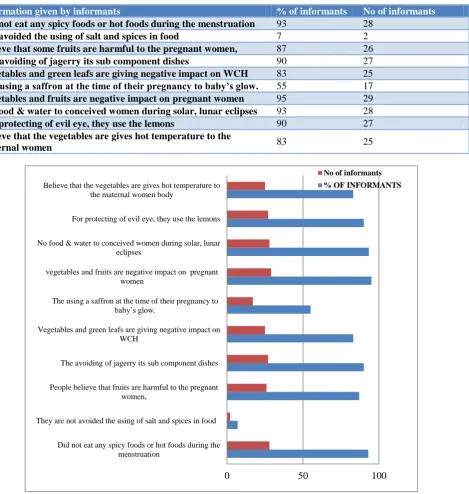
Table 2 shows the informant’s views and opinions during the In Depth Interviews -IDI’S and Women and Child Health (WCH).
Table 2: Informants views and opinions during interviews.
Information given by informants % of informants No of informants
Did not eat any spicy foods or hot foods during the menstruation 93 28
Not avoided the using of salt and spices in food 7 2
Believe that some fruits are harmful to the pregnant women, 87 26
The avoiding of jagerry its sub component dishes 90 27
Vegetables and green leafs are giving negative impact on WCH 83 25
The using a saffron at the time of their pregnancy to baby’s glow. 55 17
Vegetables and fruits are negative impact on pregnant women 95 29
No food & water to conceived women during solar, lunar eclipses 93 28
For protecting of evil eye, they use the lemons 90 27
Believe that the vegetables are gives hot temperature to the
maternal women 83 25
Figure 2: Informants responses during interviews.
Figure 2 explains the graphical analysis of informants views.
Percentage are calculated as given below:
Percentages=No. of respondents / total Informants ×100
Total informants=30.
Between the values of 0.5 to 0.9 are taken into a full value, it means more than 0.5 points are considered as a 1.0.
DISCUSSION
93% (28) of informants said that, when the first menstrual cycle started (puberty time), they are did not eat any spicy foods or hot foods during the menstruation. Because at
0 50 100
Did not eat any spicy foods or hot foods during the menstruation
They are not avoided the using of salt and spices in food People believe that fruits are harmful to the pregnant
women,
The avoiding of jagerry its sub component dishes Vegetables and green leafs are giving negative impact on
WCH
The using a saffron at the time of their pregnancy to baby’s glow.
vegetables and fruits are negative impact on pregnant women
No food & water to conceived women during solar, lunar eclipses
For protecting of evil eye, they use the lemons Believe that the vegetables are gives hot temperature to
the maternal women body
the time of first menstrual cycle heavy bleeding happens due to hormonal imbalance, so the people considered that hot foods are not good to the women on that period and they use turmeric powder as an antibiotic. At that time, the elders of the family are gave only cereals, grams or dals, curd, sweets, milk and allied products as a food. They consider it’s a cold food. Remaining 7% (2) of informants are said that, they are not avoided the using of salt and spices in food during their first menstrual time.
According to the 87% of informants, it means 26 informants describe that pineapple, papaya fruits are not giving to the pregnant women. Because they believe that above fruits are harmful to the pregnant women, especially papaya leads to miscarriage of pregnancy. But after delivery the people are serving more papaya to maternal women, because on that time papaya helps to produce more lactating milk to infant. So people believe that pineapple and papaya fruits are hot foods.
27 means 90% of informants said that the consumption of jagerry and its sub component dishes is not allowed up to the 6th month of pregnancy, after the 6 months the elders of the family allows to eat the jagerry and its allied foods to pregnant women. After the delivery of the baby the family members of the informants are gave jagerry tea, without milk to the maternal mothers because they believe that the jagerry works like a hot food. So it is harmful when women were pregnancy, and it is good for the health after the delivery. All the informants are explained that, the usage of lady’s fingers/okras, cabbage, broccoli, onions, eggs, pumpkin, sorrel leaves, peas, are not allowed to pregnant women.
According to the 25 informants it means 83% informants are said that, the vegetables and green leafs are giving negative impact on women and child health, they believes that these foods are hard and it’s not digest easily, so its harm to the pregnant and their off spring.
In India the people are giving saffron with milk to pregnant women, because they believe that if she takes saffron then the outcome baby is more glows and healthy, that’s why people more prefer to giving the saffron to their women and kins. But in this study only 55 % of informants it means 17 were said they used saffron at the time of their pregnancy to baby’s glowing, in Gujarat and other North West states in India. Some nutritious foods like dhal’s, cereals, green leafs, are avoiding by the maternal women.
The consumption of Malabar spinach, snake gourd, bottle gourd, and bitter gourd jack fruit is prohibited during the pregnancy days in rural India. Here more than 95% of informants believe that the above said vegetables and fruits are gives a negative impact on women health, and its shows like a pessimistic force between mother and infant.
All the 93.33% informants’ means 28 informants said that, the conceived women are not allowed to take any type of food and even water during the solar and lunar eclipses. Because they believe that if people eat the food on the solar and lunar eclipse it is harmful to child health. According to the Hindu mythology on that time the sun and moon are also in dangerous position, hence the food is also poisonous. If we eat that food then it may be leads to miscarriage and women death, that why the people are avoiding the food on eclipse time.
More than 90% informants are said that, they are given a lemon or knot a lemon to the conceived women wearing saree, because they believe that it is protects from the evil eye, black magic and even sorcery.
25 informants (83%) said that, at the time of post-partum period (after the delivery), the maternal women are allowed to eat the following vegetables, i.e., ridge gourd, ivy gourd, green leafs, little gourd, cluster beans, amaranth tender, fenugreek leaves, coriander leaves, raw banana etc. they are believe that these vegetables are gives hot temperature to the body.
still suggested during pregnancy, however over usage of predatory fish and marine mammals should be avoided.5
Lack of sufficient food is not the only a cause of malnutrition in developing countries like India. Too often there is starvation in the midst of plenty. People choose poor diets when good ones are available because of cultural influences which is vary widely from one country to another country, and one region to another region. These may be stated as food habits, customs, beliefs, traditions and attitudes etc.11,12 The food habits are among the oldest and most deeply entrenched aspects of any culture. They have deep psychological roots and are associated with love and affection, warmth, self-image and social prestige. The family plays an important role in shaping the food habits, and these habits are passed from one generation to another.1,13,14 Rice is the staple cereal in the eastern and southern states of India and wheat is the staple food in the northern states. So even in critical situations also the people of southern states in India refuses to the buy and eating of wheat because it was not their staple cereal.5 But present, the small changes are happening due to their health consequences. The crux problem is that many customs and beliefs apply most often to vulnerable groups, such as infants, toddlers, expectant and lactating women.15,16 In western states of India like Rajasthan and Gujarat, valuable foods such as dhal’s, rice, fruits are avoided by the nursing mother. There is a widespread belief in those states that if a pregnant woman eats more, then her baby will be big body and delivery is difficult.11 Certain foods are considered as “forbidden” and harmful for the child. There are also certain beliefs about hot and cold foods, light and heavy foods. Religion is a powerful influence factor that influence on the food habits of the people in the selection of foods, personal likes and dislikes play an important role. These are called as “Food Fads”. These food-fads are one of the causes for the nutritional deficiencies.1
Recommendations
Every society or an individual have a right to preserves their cultural beliefs and practices. But it’s not to harm to anybody either physically or mentally. The govts should also take certain measures to preserve the ancient cultural practices and beliefs in an appropriate manner.
The governments give a full-fledged awareness on health and hygiene practices to rural and vulnerable peoples. Training on health seeking behaviour to the women, especially in rural and adivasi villages is more important.
More training is important to Asha, Anganwadi workers; Auxiliary Nurse Midwifery’s (ANM’s) regarding nutrition, child illness, maternal health care practices, and anaemia treatment and so on, because they are the key health informers in rural and tribal areas.
The biologists and nutritionists find out the good nutrition food in simple and low cost, locally availability. Develop the nutritious seeds, with growing on all climatic conditions.
Using of milk and other calcium rich foods and iron rich foods like green vegetables, fruits is more helpful for good health of Women in any category. Subsequently, supplement the missing nutrients through medication.
CONCLUSION
The cultural beliefs and practices play a role in the distribution of nutrition messages to the community. Those beliefs are affecting to the pregnant women and on their infants. It’s also affects to the community. Many of these beliefs and practices have been passed down for generations. Without any scientific or validated health reasons behind them, postpartum food restrictions and food practices may also affect the mothers and infants health following delivery. Interventions and educational support are also needed in order to improve the quality of maternal diet, in particular from those who are still practicing cultural traditions that may be harmful to the mothers and their offspring’s health outcomes.The food-fads are one of the causes for the nutritional deficiencies.
Health seeking behaviour and changing of harmful traditional cooking practices like draining of rice water after the cooking, deep peeling of vegetables and so on is important for good health. Avoiding of modern child rearing practices like bottle feeding, adopting of modern commercial refined feeding foods are also an important for healthy children in India.
ACKNOWLEDGEMENTS
We are thankful to R. Barghav Ram, Yashmine Tabasoom, for their co-operation in collection and analysis of data. Sincere thanks to publishers for accepting and publishing of my research paper.
Funding: No funding sources Conflict of interest: None declared Ethical approval: Not required
REFERENCES
1. Park K. Nutrition and Health. In: “Textbook of preventive and social medicine”. Jabalpur, Madhya Pradesh, India: M/s. Banarsidas Bhanot Publishers; 2013: 563-620.
2. Foster GM, Anderson BG. Anthropology and Nutrition. In: Medical Anthropology, Newyork, USA: Newyork Wiley Publications; 1978: 253-281. 3. Agarwal D. Health, Disease and cure: cultural ideas
4. Quadt SA. Nutrition in Medical Anthropology, In: Handbook of Medical Anthropology. Johnson CF ed. London, UK: Praeger Publishers; 1996: 272-293. 5. Gluckman P, Hanson M, Seng CY, Bardsley A. Cultural and Traditional Food Practices in Pregnancy and Breast Feeding. In: Nutrition and lifestyle for pregnancy and breastfeeding, Oxford University press, UK; 2015: 248-253.
6. Cecilia van hollen. Bangles of Neem. Bangles of Gold. In: “Birth on the threshold”. California, USA: University of California press; 2003: 76-112. 7. Ministry of tribal affairs, Govt of India, Reports
2015-16. Available at: https://tribal.nic.in/. Accessed on 9 March 2019.
8. Jose JM, Fathima FN, Joseph ST, Fernandez AC, Siangshai S, Vadakkan N, et al. “Knowledge regarding reproductive health among women of reproductive age group in three sub-centre areas of a primary health center, Sarjapur, Bengaluru, Karnataka: a cross sectional study”. Int J Community Med Public Health. 2019;6(9):4082-7. 9. National Family Health Survey Reports 2015-2016
Available at: http://rchiips.org/NFHS/factsheet_ NFHS-4.shtml/. Accessed on 25 May 2019.
10. Konduru D, Kundargi RG. A Study of Nutritional Disorders: Special Reference to Sabarkantha District, Gujarat, India. Int J Scienti Technol Res. 2019;8(8):1594-9.
11. Meithuanlungpou G, Singh KN. Dietary habits and nutritional deficiencies among the Maram Naga children of Manipur. Indian Anthropol Assoc. 2015;45(2):11-24.
12. Venkaiah K, Damayanti K, Nayak MU, Vijayaraghavan K. "Diet and nutritional status of adolescents in India". Eur J Clin Nutr. 2002;56(11):1119-25.
13. Samakya VS, Subramanyam NT. An Anthropological Analysis of Evil Eye, Evil Spirits, and Ancestral Spirits Afflictions: Parengi Porja Tribal Women Views About Illness Etiologies’ and its Treatment Practices. The Oriental Anthropologist. Sage Publications; 2019: 1-11. 14. Neogy S. Gender inequality, mother's health and
unequal distribution of food from a care project in India. Taylor and Francis Ltd; 2010: 479-489.
15. Mishra A. Special issue on Anthropology and Public Health: An Introduction. Indian Anthropologist. 2013;43(1):1-15.
16. Nag M. Beliefs and practices about food during pregnancy: Implications for maternal nutrition. Economic Political Weekly. 1994: 2427-2438. 17. Varadarajan A. Food Practices and Food Taboos
during Pregnancy and Lactation among Tribal’s of Andhra Pradesh. Int Res J Soc Scie Puducherry. 2010;3(2):147–55.
18. Helman CG. “Diet and Nutrition”. In: Helman’s “Culture, Health, and Illness: an introduction for health”. London, UK: Butterworth-Heinemann Publishers; 1990: 31-54.
19. Doshi SL. Food and Nutrition: Cultural Patterns of Cereal Food Interaction. In: Anthropology of food and nutrition, Rajasthan, India: Rawat Publishers; 1995: 481-510.
20. Rajpramukh KE. Medical Anthropology: Scope, Perspectives and Methodology. In: Medical Anthropology. Associate Publishers. India; 2008: 15-40.
21. Jamil KM, Rahman AS, Bardhan PK, Khan AI, Chowdhury F, Alam S, et al. Micro Nutrients and Anaemia. J Health Population Nutr. 2008;26(3):340-55.
22. Pant P. India: Food and the making of the nation. India International Centre Quarterly; 2013: 1-34. 23. Shankar M, Reddy B. Anaemia in Pregnancy Still
Major cause Of Morbidity and Mortality: Insights from Koppal District, Karnataka, India”. Published By: Reproductive Health Matters. 2012;20(40):67-9. 24. Blim M. Culture and Economy. In: Carrier JG, ed. A Hand Book of Economic Anthropology. United Kingdom: Elgar Publishing Ltd; 2005: 307-323. 25. Shea R. Effects of preceding birth intervals on
neonatal, infant and under-five years’ mortality and nutritional status in developing countries: Evidence from the demographic and health surveys. Int J Gynaecol Obstetrics. 2005;89(S1):7-24.