Original Research Article
Awareness about tuberculosis among nurses working in
a tertiary care hospital in Solan, Himachal Pradesh
Kamaljit Singh
1, Dikshita
2, Panya
2, Aditi
2, Herleen Pabla
3, Sumit Chawla
4*
INTRODUCTION
Tuberculosis (TB) is an airborne infectious disease caused by organisms of the Mycobacterium tuberculosis complex. Although primarily a pulmonary pathogen, M. tuberculosis can cause disease in almost any part of the body. Infection with M. tuberculosis can evolve from containment in the host, in which the bacteria are isolated within granulomas (latent TB infection), to a contagious state, in which the patient will show symptoms that can include cough, fever, night sweats and weight loss. Only
active pulmonary TB is contagious. In many low-income and middle-income countries, TB continues to be a major cause of morbidity and mortality, and drug-resistant TB is a major concern in many settings.
Though India is the second-most populous country in the world, one-fourth of the global incident TB cases occur in India annually. According to global TB report 2016, out of the estimated global annual incidence of 10.4 million TB cases, 2.8 million were estimated to have occurred in India.1
ABSTRACT
Background: Tuberculosis has remained a disease of public health importance since ages and is known to inflict large quantum of socioeconomic cost on the society. Since nurses are in direct contact with both hospitalised and ambulatory patients, they are likely to play a vital role in the effective implementation of the RNTCP. The present study attempts to evaluate the awareness of nurses about TB.
Methods: This cross sectional study was conducted in a tertiary care institute, Maharishi Markandeshwar Medical College and Hospital, Kumarhatti, Solan for period of 1 year. Data was collected from 180 staff nurses and appropriate statistical tests were applied for evaluation of the same.
Results: Knowledge regarding the predisposing factors causing the disease, first line drugs under DOTS treatment, full form of DOTS, patient wise boxes and about the side effects of the treatment were comparatively low among the subjects.
Conclusions: Nurses are directly handling and managing patients but the knowledge and awareness of tuberculosis was not satisfactory among them. Therefore efforts must be made to organize regular workshops and periodic seminars to upgrade their knowledge.
Keywords: Tuberculosis awareness, Nurses awareness, Tuberculosis, DOTS awareness
1
Associate Professor, 4Assistant professor, Department of Community Medicine, Dr. Yashwant Singh Parmar Government Medical College, Nahan, Himachal Pradesh, India
2MBBS Interns, MM Medical College, Kumharhatti, Solan, Himachal Pradesh, India
3MBBS Student, Government Medical College and Hospital Sector 32, Chandigarh, India
Received: 29 April 2019
Revised: 08 June 2019
Accepted: 11 June 2019
*Correspondence:
Dr. Sumit Chawla,
E-mail: [email protected]
Copyright: © the author(s), publisher and licensee Medip Academy. This is an open-access article distributed under the terms of the Creative Commons Attribution Non-Commercial License, which permits unrestricted non-commercial use, distribution, and reproduction in any medium, provided the original work is properly cited.
Since inception of RNTCP (Revised National Tuberculosis Control Programme) in 1997 and covering the whole country by March 2006, the RNTCP has made significant progress in TB control over the last decade through the countrywide DOTS implementation.2
Under the RNTCP, besides the concept of DOTS (directly observed treatment short course), much emphasis has been placed on health education and counselling of tuberculosis patients. Since nurses are in direct contact with both hospitalised and ambulatory patients, they are likely to play a vital role in the effective implementation of the RNTCP. A Study from south India found 50.2% TST (Tuberculin Skin Testing) positive in nursing students which was strongly associated with time spent in health care, after adjusting for age at entry into healthcare.3 A study from North India showed that substantial numbers of nurses still have inadequate
knowledge regarding the causative factors for
tuberculosis, the importance of sputum examination in diagnosis, Mantoux testing, the correct dosages of
routinely used short-course chemotherapy drugs,
minimum duration of short-course chemotherapy, instructions at discharge, and health education for patients and family members.4
Among healthcare workers in developing countries, nurses spend a large amount of time in direct contact with tuberculosis (TB) patients, and are at high risk for acquisition of TB infection and disease. Knowledge and awareness of nurses will play pivotal role in TB control and better management practices.
The present study attempts to evaluate the awareness of nurses about this disease of great public health concern in a tertiary care hospital in district Solan (HP).
METHODS
Study area
The study was conducted in a tertiary care institute, Maharishi Markandeshwar Medical College and Hospital, Kumarhatti, Solan for the purpose of teaching, training and research activities for medical undergraduates.
The district is sharing borders with Ambala and Panchkula district of Haryana State to the South and Ropar district of Punjab State to the west. It is bounded by Shimla district on north and Sirmaur District in the east. Bilaspur district in the west and Mandi District in north-east touches the boundary of Solan district. It is a hilly district with elevation ranges from 300 to 3,000 metres above sea level. Solan District occupies an area of approximately 1936 square kilometres.
Sample size
The Maharishi Markandeshwar Medical College and Hospital is a tertiary referral institute with 415 beds. The
institute has a DOTS centre and DMC and around 250 nurses work in various departments. Nurses from all departments, such as medicine, surgery and gynaecology, laboratories, radiology etc will be interviewed.
Study design
The study was an observational study with cross-sectional design (analytical study).
Study period
The study was carried out for 3 months from 1st Jan 2017 to 31st Mar 2017.
Study population
Nurses from all departments, such as medicine, surgery,
gynaecology, laboratories, radiology etc were
interviewed.
Exclusion criteria: Those not willing to participate.
Data collection
Data was collected on pre-designed, pre-tested and semi structured schedule by the interview technique by the investigator himself (Annexure I).
Written and informed consent was taken from all the
subjects before initiating the interview. The
confidentiality of the information was assured. Ethical approval was taken from Institutional Ethics Committee.
Data analysis
Collected data was entered in the MS Excel spreadsheet, coded appropriately and later cleaned for any possible errors. Analysis was carried out using SPSS (statistical package for socialstudies) for Windows version 20.0 and onlineGraphPad software (prism 5 for windows) version 5.01. Clear values for various outcomes was determined before running frequency tests.
Categorical data was presented as percentages (%). Pearson’s chi square test was used to evaluate differences between groups for categorized variables.
Normally distributed data was presented as means and standard deviation, or 95% confidence intervals (CI). Student’s t test for independent samples was used for comparison between quantitative variables. All tests were performed at a 5% level of significance, thus an association was significant if the p value was less than 0.05.
RESULTS
Kumarhatti, Solan for the purpose of teaching, training and research activities for medical undergraduates.
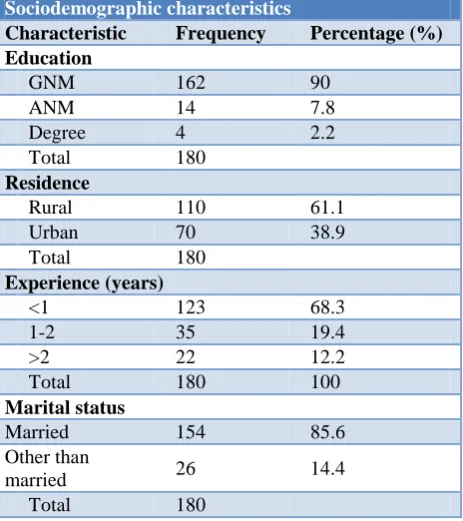
Table 1: Distribution of study subjects according to sociodemographic profile.
Sociodemographic characteristics
Characteristic Frequency Percentage (%) Education
GNM 162 90
ANM 14 7.8
Degree 4 2.2
Total 180
Residence
Rural 110 61.1
Urban 70 38.9
Total 180
Experience (years)
<1 123 68.3
1-2 35 19.4
>2 22 12.2
Total 180 100
Marital status
Married 154 85.6
Other than
married 26 14.4
Total 180
Table 1 shows the socio demographic profile of the subjects. According to the educational status, a vast majority of nurses were GNM (90%) followed by ANM (7.8%) and degree holders (2.2%). As per residence, nurses living in rural areas were more (61.1%) as compared to those living in urban areas (38.9%). Majority of them had a work experience of <1 year (68.3%) followed by those with a work experience of 1-2 years (19.4%) and then those with >2 years of work experience (12.2%). Majority of the nurses (85.6%) were married.
Table 2 shows the knowledge of nurses about tuberculosis. Majority of the nurses (85.6%) knew that TB is caused by a bacteria whereas a few of them (14.4%) told that virus was the causative agent. Regarding the mode of spread of TB, most of them (60%) knew that TB spreads by inhalation whereas many of them (40%) gave incorrect answers. With reference to the predisposing factors, only 2.8% nurses gave the correct answer while 97.2% of them gave incorrect answer. Most of the nurses (47.8%) told sputum examination as the most important investigation for TB followed by Mantoux test (36.7%), X-ray (11.1%). The route of administration of BCG vaccine was said as intradermal (71.7%), subcutaneous (20.5%) and intramuscular (7.8%). With reference to the time duration after which Mantoux test is read, 48.9% nurses said it to be after 48-72 hours followed by 24-48 hours by 25% , 12-24 hours by 16.7% and >72 hours by 9.4% nurses. According to
their knowledge regarding the methods of sputum disposal, one third (33.3%) gave the answer burying, 30% said it to be cresol. One fifth (20%) gave the answer as burning while 16.1% gave boiling as their answer.
Table 2: Knowledge of study subjects regarding tuberculosis.
Frequency Percentage
(%) Causative organism
Bacteria 154 85.6
Virus 26 14.4
Total 180
Mode of spread
Aware 108 60
Unaware 72 40
Total 180
Predisposing factors of TB
Aware 5 2.8
Unaware 175 97.2
Total 180
Most important investigation
Sputum Examination 86 47.8
X-ray 20 11.1
Montoux 66 36.7
All the above 8 4.4
Total 180
Route of administration of BCG
Intradermal 129 71.7
Subcutaneous 37 20.5
Intramuscular 14 7.8
Total 180
Test read after (Mantoux test)
12-24 hrs 30 16.7
24-48 hrs 45 25.0
48-72 hrs 88 48.9
>72 hrs 17 9.4
Total 180
Methods of sputum disposal
Burning 36 20
Burying 60 33.3
Boiling 29 16.1
Cresol 54 30
Did not know 1 0.6
Total 180
Table 3: Distribution of study subjects according to tuberculosis training.
Frequency Percentage (%)
TB Training
Yes 45 25
No 135 75
Total 180
Felt need for any TB training
Yes 158 87.8
No 22 12.2
Total 180 100
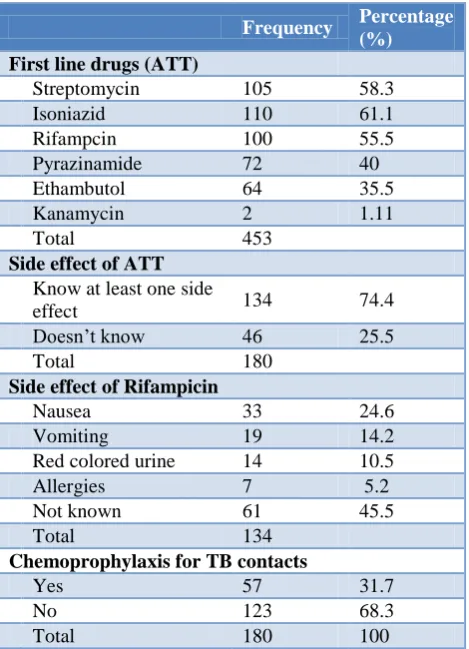
Table 4: Knowledge about drugs used in Tuberculosis.
Frequency Percentage
(%) First line drugs (ATT)
Streptomycin 105 58.3
Isoniazid 110 61.1
Rifampcin 100 55.5
Pyrazinamide 72 40
Ethambutol 64 35.5
Kanamycin 2 1.11
Total 453
Side effect of ATT
Know at least one side
effect 134 74.4
Doesn’t know 46 25.5
Total 180
Side effect of Rifampicin
Nausea 33 24.6
Vomiting 19 14.2
Red colored urine 14 10.5
Allergies 7 5.2
Not known 61 45.5
Total 134
Chemoprophylaxis for TB contacts
Yes 57 31.7
No 123 68.3
Total 180 100
Table 4 shows the knowledge of study subjects regarding the drugs used in the treatment of tuberculosis. knowledge regarding the first line TB drugs revealed that 58.3% nurses knew that one of the 1st line TB drug is Isoniazid (61.1%), streptomycin (58.3%), rifampicin (55.5%) and followed by pyrazinamide (40%) and ethambutol (35.5%). As far as the side effects of the treatment are concerned, majority 74.4% were aware of side effect of Anti TB drugs. But only 10.5% of the nurses knew that rifampicin causes red coloured urine. Regarding the chemoprophylaxis given in TB, 31.7% nurses knew about it while a majority of them (68.3%) had never heard about it.
Table 5 shows the knowledge of nurses regarding DOTS. Majority of them (73.9%) did not know about the full form of DOTS and only 26.1% of them knew about it. As far as their knowledge regarding the duration of DOTS is concerned, majority (71.1%) of the total nurses correctly stated that the minimum duration of treatment is 6 months, whereas 28.9% of them did not have knowledge regarding it. According to the colour coding of the boxes, 28.3% nurses correctly told about the red colour patient wise box given to category I patients while 40% correctly told about the blue colour patient wise box given to II patients.
Table 5: Knowledge and awareness about DOTS.
Frequency Percentage (%)
DOTS full form
Know 47 26.1
Does not know 133 73.9
Total 180
DOTS duration for categories (months)
Know 128 71.1
Does not know 52 28.9
Total 180
Red colour box is given to which category of TB patients
Category I 51 28.3
Category II 75 41.7
Category III 32 17.8
Category IV 6 3.3
Does not know 16 8.9
Total 180
Blue colour box is given to which category of TB patients
Category I 37 20.6
Category II 72 40.0
Category III 44 24.4
Category IV 10 5.6
Does not know 17 9.4
Total 180
DISCUSSION
study conducted by Anita RK et al among 400 nurses about 48% of the nurses were not exposed to any training specific for tuberculosis in their entire span of working.6,7 Our study showed that only 30% of the nurses had perception that disinfection by Cresol was the proper method of sputum disposal which is much less in comparison to a cross-sectional study conducted by Kaur et al among 50 DOTS providers out of which 7 were nurses.8 In that study a much higher proportion, that is, about 71.4% of the nurses knew about the proper disposal of sputum, while 28.6% of them did not have an idea about it. When the knowledge about precautions which should be advised to a TB patient was assessed, multiple responses among nurses were found. Nearly, 84.4% of the nurses believed that spread of TB can be controlled by covering mouth while coughing, whereas 10% of nurses advised that the patient should not spit in public places and 3.3% of them felt that proper sputum disposal was a effective precaution. The results of the study conducted by Amarpreet Kaur et al among 50 DOTS providers of which 7 were nurses, showed that 71.4% of the nurses were aware that covering of mouth while coughing was an effective precaution to be advised to the patient and 28.6% weren’t aware of it.8
In our study, more than 2/3rd respondents i.e. 71.1% had good knowledge about the minimum duration of DOTS which is more as compared to the study conducted by Siraj Ahmad et al aproximately half (53.1%) of the nurses had good knowledge of tuberculosis under RNTCP (regarding the duration of DOTS treatment and drugs used) while 46.9% had poor knowledge.9
Surprisingly, majority of the nurses weren’t fully aware of all the 1st line TB drugs. Again multiple responses were evaluated among nurses. Majority of them (61.1%) were aware of isoniazid while 55.5% were only aware of rifampicin as the 1st line drug. In a study conducted by Siraj Ahmad et al approximately half of them (53.1%) of the nurses had good knowledge of tuberculosis diagnosis under RNTCP (regarding the duration of DOTS treatment and drugs used) while 46.9% had poor knowledge.9 Regarding knowledge about side effect of anti-tubercular treatment, majority 74.4% of the nurses had knowledge about the side effects. A cross sectional study conducted by Amarpreet Kaur et al in Patiala, 71.4% nurses knew that nausea was a side effect of Anti-tubercular drugs, while 28.6% did not know about the various side effects of ATT drugs.8 Another cross-sectional study was conducted by Anita RK et al (2010, Chandigarh) among 400 nurses. Half of the nurses expressed that they have learnt about side effects of ATT.7
CONCLUSION
Nursing staff showed good response on questions regarding causative agent, mode of spread of tuberculosis and route of administration of BCG. Knowledge regarding the predisposing factors causing the disease,
first line drugs under DOTS treatment, full form of DOTS, patient wise boxes and about the side effects of the treatment were comparatively low among the subjects.
This cross-sectional study highlighted that the knowledge and awareness of tuberculosis was not satisfactory among nurses who directly handle and manage patients and remain in contact with patients. There is also an immediate need for repeated trainings for tuberculosis as one of the major steps to curb the spread of the disease.
ACKNOWLEDGEMENTS
We thank the nurses for their support and cooperation.
Funding: No funding sources Conflict of interest: None declared
Ethical approval: The study was approved by the Institutional Ethics Committee
REFERENCES
1. World Health Organization (WHO) Global
Tuberculosis Report 2016. Geneva: 2016. Available at: http://www.who.int/iris/bitstream/10665/91355/ 1/9789241564656_eng.pdf?ua=1. Accessed on 2 January 2019.
2. Central TB Division, Directorate General of Health
Services, Ministry of Health and Family Welfare, Government of India. TB India 2010 RNTCP Status report. 2010. Available at http://www.tbcindia. org/pdfs/TB%20India%202010.pdf. Accessed on 2 January 2019.
3. Christopher DJ, Daley P, Armstrong L, James P, Gupta R, Premkumar B, et al. Tuberculosis infection among young nursing trainees in South India. PLoS One. 2010;5(4):e10408.
4. Singla N, Sharma PP, Jain RC. Awareness about tuberculosis among nurses working in a tuberculosis hospital and in a general hospital in Delhi, India. Int J Tuberc Lung Dis. 1998;2(12):1005-10.
5. Christopher DJ, James P, Daley P, Armstrong L, Isaac BTJ, Thangakunam B, et al. High annual risk of tuberculosis infection among nursing students in South India: a cohort study. PLoS One. 2011;6(10): e26199.
6. Chavan PV, Datta D, Patil RS, Daniel AJ.
Awareness about RNTCP and DOTSGuidelines among Health Care Professionals of a Tertiary Care Hospital of South India. Nat J Community Med. 2014;5(1):77-8.
7. Anita RK, Mahal R, Behera D, Sarin R. A study to
assess learning need, knowledge and attitude of nurses regarding tuberculosis care under RNTCP in two tertiary care tuberculosis institutions of Delhi, India. Asian J Nur Edu Res. 2014;4:30-4.
Unit of Patiala. Online J Health Allied Scs. 2012;11(2):3.
9. Ahmad S, Maqusood M, Natha H, Izharulhak M.
Assessment of knowledge regarding tuberculosis among health care professionals at a tertiary care hospital in North India. Int J Curr Res. 2015;7:16939-43.