Research Article
In vivo anti-inflammatory
characterization of crude extract and
solvent fractions of Viola serpens
Rukhsana Ghaffar
1,2*, Muhammad Saeed
1, Manzoor Ahmad
3, Haroon
Khan
4and Shujaat Ahmad
51. Department of Pharmacy UOP, Peshawar, KP-Pakistan
2. Department of Pharmacy UOM, Chakdara, Dir (Lower), KP-Pakistan 3. Department of Chemistry UOM, Chakdara, Dir (Lower), KP-Pakistan 4. Department of Pharmacy AWKU, Mardan, KP-Pakistan
5. Department of Pharmacy SBBU, Sheringal, Dir (Upper), KP-Pakistan
*Corresponding author’s email: [email protected]
Citation
Rukhsana Ghaffar, Muhammad Saeed, Manzoor Ahmad, Haroon Khan and Shujaat Ahmad. In vivo
anti-inflammatory characterization of crude extract and solvent fractions of Viola serpens. Pure and Applied Biology. Vol. 6, Issue 1, pp18-31. http://dx.doi.org/10.19045/bspab.2016.50162
Received: 10/11/2016 Revised: 07/12/2016 Accepted: 15/12/2016 Online First: 21/12/2016
Abstract
The aim of this research activity was the in vivo evaluation of anti-inflammatory effect and acute toxicity of the crude methanol extract of Viola serpens and its various fractions. For acute toxicity test a dose of 2 g/Kg was found to be safe. The Wistar albino rats were used for the models of Carrageenan-induced paw edema (CIPE), histamine induced paw edema (HIPE) and xylene induced ear edema (XIEE). In CIPE and HIPE models all the fractions and the crude extract mostly showed more significant responses in all the three test doses from the 2nd till the 5th hour. These effects may be the results of certain compounds which may resists or inhibit the
histamine, prostaglandins or mediators of the mast cells. Similarly, in model of XIEE both the crude extract and n-hexane fraction showed significant inhibition (P< 0.05) in a dose dependent way. Whereas, the other tested fractions showed topically subsided effect at 300 mg/kg, suggesting that fractions act by inhibiting the enzyme phospholipase A2 (PLA2).
Keywords: Anti-inflammatory; Acute toxicity; Carrageenan; Histamine and xylene
Introduction
Viola serpens Wall (V. serpens) belongs to the family Violaceae which consists of about twenty-three genera and 930 species [1]. There are total 500 reported species of viola, out of which 17 are found in Pakistan [2]. V.
serpens commonly known as
Gul-e-banafsha [3] is found mostly in mountains at an elevation of around 800-3000 m [4]. Various species Viola genus are distributed in Pakistan, Kashmir, India, Afghanistan,
Ghaffar et al.
existence of glycosides, flavonoids, alkaloids, saponins and tannins along with methyl salicylate, mucilage, sugars and violin gum in the plant [6, 7, 11]. Its constituents responsible for the antioxidant activity are ascorbic acid, peroxidase, ascorbate oxidase and catalase [12].
The present study was conducted to prove the anti-inflammatory potentials of Viola serpens as the same activity has already been reported from the other species such as Viola betinocifolia[13].
Material and methods Plant collection
The plant collection was done from District
Shangla (Village, Puran), Khyber
Pukhtunkhwa, Pakistan, (April, 2011). Dr. Mohammad Ibrar, Professor Department of Botany, UOP identified the plant specimen. A specimen with voucher # Bot.20158 (PUP) was deposited in department’s herbarium. The whole plant collected was weighted before and after drying at ambient temperature.
Extraction and fractionation
The shade dried powdered plant 10 kg was macerated with 25 L methanol at room temperature for 10 days with vigorous stirring on daily basis. Whatmann filter paper was used to obtain the residue soluble in methanol which was first filtered through a colorless thin cloth layer in the separating funnel was collected and dried (706 g). Chloroform was then added with the layer separated from n-hexane layer and shaken vigorously. Chloroform being a dense. Filtrates were dried by a rotary evaporator (R-210, Buchi, Switzerland) at 40-45oC and fitted with a re-circulating chiller (NESLAB instruments). Crude methanol extract was obtained from the procedure (1.57 kg) which was treated with various solvents (based on polarity) for fractionation. A 5L separating funnel was used for fractionation of the crude methanol extract of the plant (1.32 kg). 1L distilled water along with 1.5L
n-hexane was used in a separating funnel (shacked vigorously) and fixed on stand till the immiscible layers appearance. n-Hexane accumulated as an upper solvent was collected as a lower layer with dried mass of 17 g. The same process was followed for ethyl acetate and n-butanol obtaining masses of 22.7 g and 35 g respectively. The finally left fraction was recovered and concentrated as an aqueous fraction (45 g).
Experimental animals
Albino mice (20.0-25.0 g) were obtained from NIH (National Institute of Health Islamabad). Standard laboratory conditions and required formulated diet were provided to the animals with open access to fresh water.
Acute toxicity
The crude methanol extract of the whole plant at three different doses ranging from 1g/kg to 2 g/kg were used for determination of the acute toxicity. The mice were uniformly grouped into three, comprising six mice each. Treated the negative controlled group with distilled water (10 ml/kg) whereas rest of the two groups with the crude methanol extracts (1 mg/kg and 2 mg/kg). Animals’ observation was done in 24 hrs after the administration of the test doses. The initial 4 hrs observations of the animals were for the acute toxicity effect. After 24 hrs the no of death if any were identified [13].
Anti-inflammatory activity
Crude methanol extract as well as other fractions were tested for anti-inflammatory effect. The activity of crude extract and different fractions were determined by three different protocols in order to make clear the
mechanism involved in the
anti-inflammatory potentials of the plant.
Carrageenan induced paw edema (CIPE)
selected. They were divided into fourteen groups. Each group included 6 mice (n=6). Group I (negative control) was given normal saline 10 ml/kg, while Group II (positive control) was given diclofenac sodium at a dose of 10 mg/kg. The crude methanol extract and various fractions were given to rest of the groups, III-XIV at a dose of 100, 200 and 300 mg/kg respectively. After 30 min of the test samples administration each mouse was injected Carrageenan (1%) in sub-planter tissue of right hind paw. Plethysmometer (LE 7500 plan lab S.L) was used for measurement of anti-inflammatory potentials for a total duration of 5 hrs (0, 1, 2, 3, 4 and 5 hrs) [13]. Percent inhibition of edema was calculated by using the formula: % Inhibition = A-B/B X100
Where A and B represents edema volume of negative control, paw edema of tested groups.
Histamine-induced paw edema (HIPE)
The HIPE trial was adopted according to the authentic protocol [14]. The test sample includes the oral administration of indomethacin (10 mg/kg) and distilled water
10ml/kg. Histamine (0.1 ml) was
administered in sub-plantar injection to the tissue of right hand paw after one hour of test samples administration. After histamine injection, paw thickness was noted (at 30 min interval) for 3hrs. The % inhibition was calculated by using the formula:
% Inhibition = A-B/B X100
Where A and B represents edema volume of negative control, paw edema of tested groups.
Xylene induced ear edema (XIEE)
Ear edema test induced by xylene was conducted as per the authentic protocol [15, 16]. The test samples include oral administration of Ibuprofen (100mg/kg,
positive- control) to test mice (BALB/C mice, 25-30g). Plant crude extract and fractions, 100, 200 and 300 g/kg was used (p.o).The test animal after an hour, received 20 μl (0.02 ml) of xylene on the right ear lobe at both the posterior as well on the anterior surfaces. Left ear lobe was taken as control. An hour after the application of xylene, sacrificed the treated mice and via cork borer (3 mm diameter), took circular sections of the ear and weighed. Calculated the weight in percent of ear edema by comparing with the weight of untreated left ear.
Results and discussion
Anti-inflammatory effects of the crude extract/fractions of V. serpens in CIPE in mice.
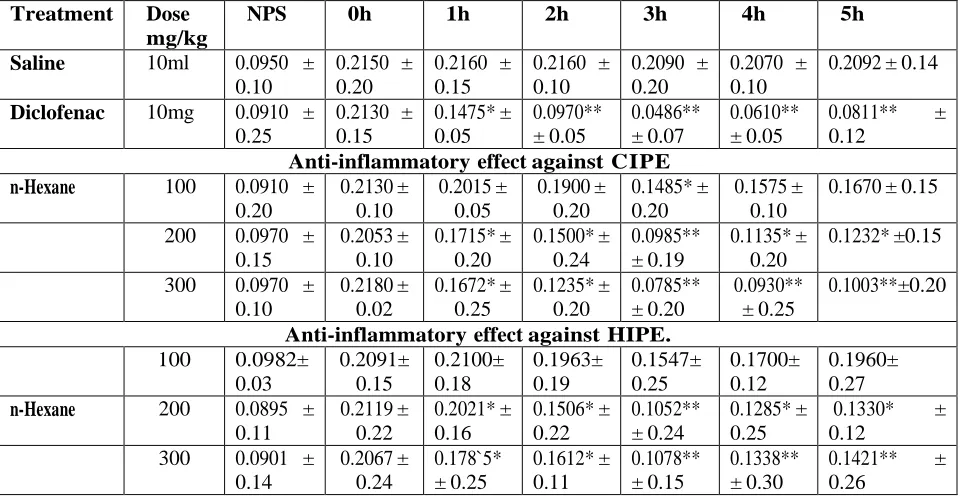
The activity of crude extract of V. serpens at various doses during different assessment times is shown inTable 1-5 and Figure 1. It exhibited significant inhibitory activity of CIPE only at 3rd h at 100 mg/kg i.p.
However, it showed marked
anti-inflammatory effect after 2nd h of injection and remained significant till 5th h at 200 and 300 mg/kg i.p. The crude extract was then fractionated into various fractions which showed different anti-inflammatory effects at different doses. The Hex fraction showed maximum effect against the CIPE at a dose of 100 to 300 mg/kg i.p in 2nd and 3rdh. Whereas, the effectiveness of the carageenan induced anti-inflammatory effect remained till the 5th hour of injection. The chloroform and aqueous fractions showed significant effect only at 200 and 300 mg/kg in the 3rd h of induced inflammation. Ethyl acetate
fraction showed anti-inflammatory
potentials at 300 mg/kg in the 2nd h.
Ghaffar et al.
1h 2h 3h 4h 5h
0 20 40 60 80
100 100 200 300 Diclofenic
*
**
*
**
***
***
**
*
***
**
*
* *
**
n-Hexane fraction
%
P
ro
te
c
ti
o
n
1h 2h 3h 4h 5h
0 20 40 60 80 100
100 200 300 Diclofenic
* *
***
**
***
***
* *
%
P
r
o
te
c
ti
o
n
Ethyl acetate fraction
1h 2h 3h 4h 5h
0 20 40 60 80 100
100 200 300 Diclofenic
*
**
***
**
***
***
*
%
P
r
o
t
e
c
t
i
o
n
Aqueous fraction
Figure 1. Anti-inflammatory effect of the crude extract/ fractions of V. serpens on carageenan induced inflammation
1h 2h 3h 4h 5h
0 20 40 60 80
100 100 200 300 Diclofenic
* *
*
** **
***
***
**
*
*
***
*
*
***
%
P
r
o
te
c
ti
o
n
Crude Extract
1h 2h 3h 4h 5h
0 20 40 60 80 100
100 200 300 Diclofenic
*
**
*
***
***
***
* Chloroform fraction
%
P
r
o
te
c
ti
o
Table 1. Anti-inflammatory effect against CIPE and HIPE in mice for V. serpens crude extract
Treatment Dose
mg/kg
NPS 0h 1h 2h 3h 4h 5h
Saline 10ml 0.0950 ±
0.10
0.2150 ±
0.20
0.2160 ± 0.15
0.2160 ± 0.10
0.2090 ± 0.20
0.2070 ± 0.10
0.2092 ±
0.14
Diclofenac 10mg 0.0910 ±
0.25
0.2130 ±
0.15
0.1475* ± 0.05 0.0970** ± 0.05 0.0486** ± 0.07 0.0610** ± 0.05
0.0811** ± 0.12
Anti-inflammatory effect against CIPE
100 0.0915 ±
0.10
0.2134 ±
0.10
0.2018 ± 0.15
0.1803 ± 0.10
0.1408* ± 0.10
0.1572 ± 0.15
0.1590 ±
0.20
Crude extract 200 0.0965 ±
0.13
0.2050 ±
0.11
0.1700* ± 0.19 0.1495* ± 0.21 0.0901** ± 0.17 0.1130* ± 0.19
0.1230* ±
0.13
300 0.0970 ±
0.11
0.2178 ±
0.05
0.1670* ± 0.18 0.1233* ± 0.22 0.0702** ± 0.18 0.0830** ± 0.25
0.1003** ± 0.19
Anti-inflammatory effect against HIPE
100 0.0970±0. 05 0.2001± 0.05 0.2005± 0.19 0.1966± 0.25 0.1850± 0.25 0.1960± 0.05 0.1990± 0.35
Crude extract 200 0.0955 ±
0.10
0.2055 ±
0.20
0.1614* ± 0.15 0.1510* ± 0.20 0.0990** ± 0.23 0.1083* ± 0.25
0.11087* ± 0.10
300 0.0962 ±
0.15
0.2087 ±
0.30
0.1180* ± 0.55 0.1150* ± 0.10 0.0803** ± 0.20 0.0921** ± 0.30
0.1231** ± 0.30
Values are reported as mean ±SEM for group of six mice each for carrageenan and Histamine by applying ANOVA followed by Dunnett tests for data analysis. Significant and satisfactory values are represented by asterisks from the control. *P<0.05 or **P<0.01
Table 2. Anti-inflammatory effect against CIPE and HIPE in mice for V. serpens
n-hexane fraction
Treatment Dose
mg/kg
NPS 0h 1h 2h 3h 4h 5h
Saline 10ml 0.0950 ±
0.10
0.2150 ± 0.20
0.2160 ± 0.15
0.2160 ± 0.10
0.2090 ± 0.20
0.2070 ± 0.10
0.2092 ± 0.14
Diclofenac 10mg 0.0910 ±
0.25
0.2130 ± 0.15 0.1475* ± 0.05 0.0970** ± 0.05 0.0486** ± 0.07 0.0610** ± 0.05
0.0811** ±
0.12
Anti-inflammatory effect against CIPE
n-Hexane 100 0.0910 ±
0.20 0.2130 ± 0.10 0.2015 ± 0.05 0.1900 ± 0.20 0.1485* ± 0.20 0.1575 ± 0.10
0.1670 ± 0.15
200 0.0970 ±
0.15 0.2053 ± 0.10 0.1715* ± 0.20 0.1500* ± 0.24 0.0985** ± 0.19 0.1135* ± 0.20 0.1232* ±0.15
300 0.0970 ±
0.10 0.2180 ± 0.02 0.1672* ± 0.25 0.1235* ± 0.20 0.0785** ± 0.20 0.0930** ± 0.25 0.1003**±0.20
Anti-inflammatory effect against HIPE.
100 0.0982± 0.03 0.2091± 0.15 0.2100± 0.18 0.1963± 0.19 0.1547± 0.25 0.1700± 0.12 0.1960± 0.27
n-Hexane 200 0.0895 ±
0.11 0.2119 ± 0.22 0.2021* ± 0.16 0.1506* ± 0.22 0.1052** ± 0.24 0.1285* ± 0.25
0.1330* ±
0.12
300 0.0901 ±
0.14 0.2067 ± 0.24 0.178`5* ± 0.25 0.1612* ± 0.11 0.1078** ± 0.15 0.1338** ± 0.30
0.1421** ±
0.26
Ghaffar et al.
Table 3. Anti-inflammatory effect of chloroform fraction of V. serpens in CIPE and HIPE in mice
Treatment Dose mg/kg
NPS 0h 1h 2h 3h 4h 5h
Saline 10ml 0.0950±
0.10 0.2150± 0.20 0.2160± 0.15 0.2160± 0.10 0.2090± 0.20 0.2070± 0.10 0.2090± 0.14 Diclofenac 10mg 0.0910±
0.25 0.2130± 0.15 0.1475* ± 0.05 0.0970** ± 0.05 0.0486** ± 0.07 0.0610** ± 0.05 0.0811** ± 0.12 Anti-inflammatory effect against CIPE
Chloroform 100 0.0917± 0.11 0.2135± 0.15 0.2020± 0.13 0.1976± 0.17 0.1610*± 0.11
0.1669 ± 0.15 0.1699± 0.15 200 0.0972± 0.10 0.2001± 0.20 0.1811* ± 0.21 0.1702*± 0.15 0.1433** ± 0.12
0.1692* ± 0.19 0.1734*± 0.17 300 0.0999± 0.21 0.1788± 0.23 0.1627* ± 0.14 0.1601*± 0.20 0.1386** ± 0.19 0.1630** ± 0.19 0.1688** ± 0.21 Anti-inflammatory effect against HIPE
Chloroform 100 0.0964±0.
05 0.2112 ± 0.05 0.2120± 0.19 0.1989± 0.25 0.16702 ± 0.25 0.1761± 0.05 0.1805± 0.35 200 0.0955± 0.10 0.2050± 0.20 0.2003* ± 0.15 0.1770*± 0.20 0.1483** ± 0.23 0.1709*± 0.25 0.1790*± 0.10 300 0.0962± 0.15 0.2085± 0.30 0.1831* ± 0.55 0.1697*± 0.10 0.1432** ± 0.20 0.1670** ± 0.30 0.1699** ± 0.30 Values are reported as mean ±SEM for group of six mice each for carrageenan and Histamine by applying ANOVA followed by Dunnett tests for data analysis. Significant and satisfactory values are represented by asterisks from the control. *P<0.05 or **P<0.01
Table 4. Anti-inflammatory effect of Ethyl acetate fraction of V. serpens in CIPE and HIPE in mice
Treatment Dose mg/kg
NPS 0h 1h 2h 3h 4h 5h
Saline 10ml 0.0950
± 0.10
0.2150 ± 0.20
0.2160 ± 0.15 0.2160 ± 0.10 0.2090 ± 0.20 0.2070± 0.10 0.2090± 0.14
Diclofenac 10mg 0.0910
± 0.25
0.2130 ± 0.15 0.1475* ± 0.05 0.0970** ± 0.05 0.0486** ± 0.07 0.0610** ± 0.05 0.0811** ± 0.12 Anti-inflammatory effect against CIPE
Ethyl Acetate
100 0.0888 ±
0.21
0.2100 ± 0.19
0.2029 ± 0.11 0.1991 ± 0.12 0.1665* ± 0.20 0.1865± 0.11 0.2011± 0.19
200 0.0972 ±
0.13
0.2021 ± 0.19 0.1811* ± 0.22 0.1732* ± 0.20 0.1500** ± 0.16 0.1692*± 0.13 0.1734*± 0.12
300 0.0892 ±
0.18
0.1868 ± 0.19 0.1699* ± 0.22 0.1598* ± 0.23 0.1416** ± 0.16 0.1689** ± 0.14 0.1723** ± 0.17 Anti-inflammatory effect against HIPE
Ethyl Acetate 100 0.0932± 0.02 0.2109± 0.10 0.2021± 0.20 0.1980± 0.22 0.1773± 0.10 0.1859± 0.12 0.1970± 0.33 200 0.09032 ± 0.13
0.2067 ± 0.18 0.1810*± 0.22 0.1751*± 0.25 0.1642± 0.18 0.1752± 0.22 0.1820± 0.09 300 0.09319 ± 0.11
Table 5. Anti-inflammatory effect against CIPE and HIPE in mice for V. serpens aqueous fraction
Treatment Dose mg/kg
NPS 0h 1h 2h 3h 4h 5h
Saline
10ml 0.0950 ± 0.10
0.2150 ± 0.20
0.2160 ± 0.15
0.2160 ± 0.10
0.2090 ± 0.20
0.2070 ± 0.10
0.2090 ± 0.14 Diclofenac
10mg 0.0910 ± 0.25
0.2130 ± 0.15
0.1475* ± 0.05
0.0970** ± 0.05
0.0486** ± 0.07
0.0610** ± 0.05
0.0811** ± 0.12 Anti-inflammatory effect against CIPE
100 0.0864 ± 0.03
0.2092 ± 0.19
0.2101 ± 0.20
0.1833 ± 0.13
0.1571* ± 0.22
0.1782 ± 0.10
0.1968 ± 0.11 Aqueous
200 0.0921 ± 0.12
0.2090 ± 0.21
0.2152* ± 0.12
0.1705* ± 0.24
0.1423** ± 0.14
0.1680* ± 023
0.1902* ± 0.16
300 0.0906 ± 0.15
0.2099 ± 0.17
0.2012* ± 0.19
0.1643* ± 0.16
0.1230** ± 0.13
0.1598** ± 0.15
0.1860** ± 0.14 Anti-inflammatory effect against HIPE
100 0.0961± 0.02 0.2009± 0.02 0.2013± 0.19 0.1993± 0.15 0.1603± 0.25 0.1803± 0.05 0.1995± 0.30
Aqueous
200 0.0894 ± 0.13 0.2003 ± 0.23 0.1959 ± 0.15 0.1823± 0.21 0.1530 ± 0.23 0.1721 ± 0.21 0.1920 ± 0.20
300
0.0905 ± 0.13
0.2011 ± 0.32
(6.4%)
0.1901 ± 0.55 (12%)
0.1603 ± 0.14 (25%)
0.1413 ± 0.20 (34.6%)
0.1550 ± 0.24 (25.12%)
0.1828 ± 0.28 (12.6%)
Anti-inflammatory effects of crude
extract/ fractions of V. serpens on (HIPE) in mice
The effect of the crude extract of V. serpens in HIPE at various doses (100, 200 and 300 mg/kg i.p) in various durations (1-5 h) is presented in the table 1-5 and figures 2. The crude extract at a dose of 200 and 300 mg/kg showed more pronounced anti-inflammatory effects on the 2nd to the 5th
hour of histamine induced edema injection. The significance level reached the maximum in the 3rd hour and then decreased slowly till
the 5th hour. The hydro-methanol extract was then subjected to various fractions,
exhibiting different inhibitory effects. In
fractions maximum anti-inflammatory
activity against the HIPE was produced by the n-hexane fraction at 200 mg/kg in the 3rd h of HIPE with percent inhibition 46.70%. The significant anti-inflammatory effect started from the 2nd h and lasted till 5th h of edema induction. On other hand chloroform and aqueous fractions showed significant activity at 200 and 300 mg/kg on the 3rd h of
Ghaffar et al.
1h 2h 3h 4h 5h
0 20 40 60 80
100 100 200
300 Diclofenic
***
**
* *
* *
**
**
***
* ** *
***
n-Hexane fraction
%
P
r
o
te
c
ti
o
n
1h 2h 3h 4h 5h
0 20 40 60 80
100 100 200 300 Diclofenic
*
**
***
******
**
%
P
r
o
te
c
ti
o
n
Ethyl acetate fraction
1h 2h 3h 4h 5h
0 20 40 60 80 100
100 200 300 Diclofenic
***
**
* *
**
***
***
*
%
P
r
o
te
c
ti
o
n
Aqueous fraction
Figure 2. Anti-inflammatory effect of the crude extract/fractions on HIPE in mice
Anti-inflammatory effects of the crude extract/ fractions of V. serpens on Xylene induced ear edema: (XIEE) in mice
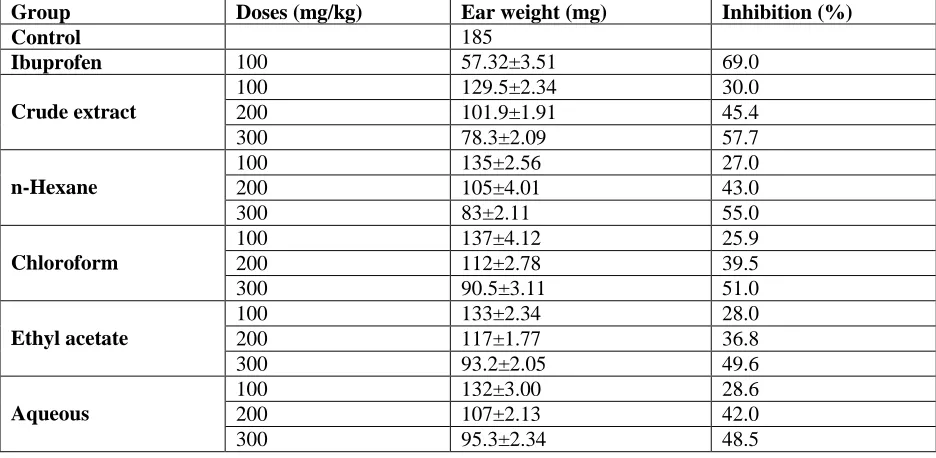
Results of the above mentioned activity are presented in the table 6 and the percent inhibition in the figures 3. The crude
1h 2h 3h 4h 5h
0 20 40 60 80 100
100 200 300 Diclofenic
*
**
** **
* * *** ***
***
***
***
***
**
Crude Extract
%
P
r
o
te
c
ti
o
n
1h 2h 3h 4h 5h
0 20 40 60 80 100
100 200 300 Diclofenic
*
**
***
***
***
***
* * Chloroform Fraction
%
P
r
o
te
c
ti
o
extract/subsequent fractions of V. serpens were subjected for the anti-inflammatory effect by using XIEE protocol. Three test doses were selected (300, 200 and 100 mg/kg oral administration) for
anti-inflammatory effective results
determination. The crude extract showed maximum inhibitory effect (57.6 %) at 300 mg/kg. The activity of crude extract was significant in a dose dependent way. Upon treatment with different solvents the fractions obtained showed different anti-inflammatory effects. The most effective and significant fraction considered was the n-hexane which also showed significance in a dose dependent way with the maximum percent inhibition value of 55 % at 300 mg/kg. This was followed by the chloroform and ethyl acetate fractions and then by the aqueous fraction whose considerable effects were shown at 200 and 300 mg/kg with a maximum inhibition values of 51, 49 and 48.5 % respectively. Inflammation being a complex process has direct association with pain which may involve increase in: vascular permeability, cells migration
(mononuclear and granulocytes) and
proliferation of granulomatous tissue.
Anti-inflammatory compounds act through
different mechanisms. Either by blocking the pro-inflammatory mediators (directly via enzyme like COX-2 inhibition) or enzyme expression is decreased such as anti-inflammatory steroidal compounds or substrate levels are decreased like reduction in the release of arachidonic acid. The release of stored mediators/blockage of interaction of receptors mediators (histamine antagonists receptor). Immuno-stimulation is also one of the mechanism i.e phagocytosis activation as well as maturation of myeloid cells which ultimately response to the challenge of allergen [17]. The plant extract/ fractions of V. serpens demonstrated its
effectiveness against the induced
inflammation protocols that are CPE, HPE and XEE.
Carrageenan being a choice of phlogistic agent is used for anti-inflammatory drugs
testing and having an extensive
measurement of reproducibility [18]. It is a biphasic model, with the early phase including 1–2 h, mediated mostly by the release of serotonin, histamine and prostaglandins increased level. The late phase includes the release of prostaglandin whereas kinine release in between the two
phases [19, 20]. The enzyme
cyclooxygenase (COX) catalyse the
biosynthesis of Prostaglandins (PGs) metabolites of (metabolite of arachidonic acid) in the early phase [21]. COX-1 (constitutive form of COX) is involved in cellular function housekeeping [22]. COX-2 (inducible isoform) increases response to various tissue inflammatory stimuli [21]. COX-3 is determined in the heart tissue and brain cortex [23].In CIPE protocol the crude extract and n-hexane fractions were effective against the inflammation challenge from the 2nd till the 5th h at 200 and 300 mg/kg. whereas the chloroform, aqueous and ethyl acetate fractions also showed significant effects and reduced paw edema in the 3rd h at 300 mg/kg i.p. The crude
extract and the n-hexane fraction of V.serpens are effective in both the phases whereas the rest of the fractions showed significant effets only in the late phase. Histamine being a fundamental amine and
mediator that is associated with
Ghaffar et al.
The XIEE in mouse is a testing and investigating procedure for acute anti-inflammatory activity response, resulting in sever vasodilation and skin oedem (ear) [28-30]. Xylene tropical application on ear leads to an immediate mouse ear irritation resulting in the fluid accumulation (edema
formation) and acute response of
inflammation [31]. Anti-inflammatory steroidal and non-steroidal anti-phlogistic agents are evaluation by this method especially the ones inhibiting phospholipase A2 [32]. The results obtained from the study showed that the ear edema in the crude extract as well in the fractions subsided in a dose dependent manner (crude extract and n-hexane). Whereas, in the other fractions significance is found only at high dose in 300 mg/kg i.p. Thus, the effectiveness of V. serpens in the model suggests that the plant extract and its fractions possibly acts by inhibiting the enzyme phospholipase A2 (PLA2) [28]. Phytochemically, different groups of compounds are reported to be present in viola species including triterpenoids, cyclotide, alkaloids and
flavonoids [33]. Triterpenoids are one of the important contributors of anti-inflammatory activity [17, 34]. Along with this the presence of inflammation sites in high concentration oxidant and free radicals also contributes to the anti-inflammatory process and play an important role in avoiding the process of inflammation [35]. V. serpens
also contain various phenolic compounds [36] and possess antioxidant activity along with the triterpenes (anti-inflammatory compounds) which may be the major contributors for its anti-inflammatory activity. Flavonoid and glycosides also contribute significantly in the analgesic as well as anti-inflammatory action [37]. In the present study the isolated flavonoids 1-6 from the chloroform fraction of the plant also showed marked scavenging effect against DPPH so this may also give a solid scientific background to the plant as a strong anti-inflammatory agent. Moreover, further work in future is required to be focused on this plant as an anti-inflammatory agent to make its use more authentic and more common with the scientific knowledge.
Table 6. Effect of the crude extract along with the subsequent fractions of V. serpens on XIEE in mice
Group Doses (mg/kg) Ear weight (mg) Inhibition (%)
Control 185
Ibuprofen 100 57.32±3.51 69.0
Crude extract
100 129.5±2.34 30.0
200 101.9±1.91 45.4
300 78.3±2.09 57.7
n-Hexane
100 135±2.56 27.0
200 105±4.01 43.0
300 83±2.11 55.0
Chloroform
100 137±4.12 25.9
200 112±2.78 39.5
300 90.5±3.11 51.0
Ethyl acetate
100 133±2.34 28.0
200 117±1.77 36.8
300 93.2±2.05 49.6
Aqueous
100 132±3.00 28.6
200 107±2.13 42.0
1 0 0 2 0 0 3 0 0 D ic lo 0
2 0 4 0 6 0 8 0
*
*
*
*
*
*
*
*
*
%
P
r
o
t
e
c
t
io
n
H e x a n e
1 0 0 2 0 0 3 0 0 D ic lo
0 2 0 4 0 6 0 8 0
*
*
*
*
*
*
%
P
r
o
t
e
c
t
i
o
n
E th y l a c e ta te
1 0 0 2 0 0 3 0 0 D ic lo 0
2 0 4 0 6 0 8 0
*
*
*
*
*
*
%
P
r
o
t
e
c
t
io
n
A q u e o u s
Figure 3.Anti-inflammatory effect of the crude extract/ fractions of V.serpens on XIEE
Conclusion
It is concluded from the results that the crude extract and the different fractions of V.
serpens contain anti-inflammatory activity in a dose-dependent manner. This provides a solid background to the traditional uses of
1 0 0 2 0 0 3 0 0 D ic lo
0 2 0 4 0 6 0 8 0
*
*
*
*
*
*
*
*
%
P
r
o
t
e
c
t
io
n
C r u d e e x tr a c t
1 0 0 2 0 0 3 0 0 D ic lo 0
2 0 4 0 6 0 8 0
*
*
*
*
*
*
%
P
r
o
t
e
c
t
i
o
n
Ghaffar et al.
the drug as an effective anti-inflammatory drug. The presence of certain compounds in the plant are responsible for resisting/ inhibiting the release of histamine, prostaglandins or mediators of the mast cells (histamine, PG and 5-HT) and enzyme phospholipase A2 (PLA2). Further study of compounds isolation can authenticate more the use of the plant in the clinical side.
Authors’ contributions
Conceived and designed the experiments: R Ghaffar & M Saeed, Performed the experiments: R Ghaffar, Analyzed the data: R Ghaffar, H Khan & S. Ahmad, Contributed reagents/ materials/ analysis tools: R Ghaffar, M Saeed & M Ahmad, Wrote the paper: R Ghaffar, M Saeed, M Ahmad, H Khan & S Ahmad.
References
1. Robert B (2010). Distribution and chemical diversity of cyclotides from violaceae UPPSALA University. Annual report.
2. Qaiser M and Omer S (1985). Flora of Pakistan Islamabad. Agr Res Council 28.
3. Naain SC (1999). A Handbook of Medical and Aromatic Plants of Himachal Pardesh 431-432.
4. Witkowska BE, Bylka W, Matlawska I, Goslinska O & Muszynski Z (2005). Antimicrobial activity of Viola tricolor herb. Fitoterapia 76: 458-461.
5. Toiu A, Parvu AE, Oniga L & Tamas M (2007). Evaluation of anti-inflammatory activity of alcoholic extract from Viola tricolor. Revista medico-chirurgicală̆ a Societă̆ţ̜ii de Medici şi Naturalisti din Iasi 111: 525-529.
6. Abbasi AM, Khan M, Ahmad M, Zafar M, Jashan S & Sultan S (2010). Ethnopharmacological application of medicinal plants to cure skin diseases and in folk cosmetics among the tribal communities of North-West Frontier
Province, Pakistan. J Ethnopharmacol 128- 322.
7. Kuma S, Gupta RC, Kumari S, Sharma K & Sharma VK (2013). Ethnobotanical study on some wild medicinal plants
from district Sirmaur, Himachal
Pradesh, India. Plant Sci Feed 3: 4. 8. Arshad M & Ahmad M (2004).
Medico-Botanical Investigation of Medicinally Important Plants from Galliyat Areas, NWFP (Pakistan). Ethnobot Leaflets 1: 123-27.
9. Sabeen M & Ahmad SS (2009). Exploring the Folk Medicinal Flora of Abbotabad City, Pakistan. Ethenobot Leaflets 13: 810-33.
10.Atara S & Amca B (2012). Larvicidal Activities of Different Parts of Melia azedarach Linn. against Culexquin quefasciatus Say. (Diptera: Culicidae). J curr Pharma Res 4: 67-73.
11.Pratik A, Roshan KC, Deepika K, Dinesh T, Rajan S, Tirtha MS & Rajendra G (2011). Phytochemical
Screening and Anti-Microbial
Properties of Medicinal Plants of
Dhunkharka Community,
Kavrepalanchowk, Nepal. Int J
Pharma Bio Arch 1663-1667.
12.Vukics V, Ker A, Bonn GK & Guttman A (2009). Major flavonoid components of heartsease (Viola tricolor L.) and their antioxidant activities. Anal Bio Anal Chem 390: 1917-1925.
13.Naveed M, Mohmmad S, Gilani N, Ikram-ul H & Haroon K (2013).
Analgesic and anti-inflammatory
profile of Viola betonicifolia whole plant.Tropica. J Pharma Res 11: 963-969.
15.Dai Y, Liu LH & Kou JP (1995). Anti-inflammatory effect of aqueous extract of Wu-HU-Tang. China Pharm Uni 6: 362-364.
16.Amin N, Qadir MI, Khan TJ, Abbas G, Ahmad B, Janbaz KH & Ali M (2012). Anti-bacterial activity of Vacuum liquid chromatography (VLC) isolated fractions of chloroform extracts of seeds of Achyranthes aspera. J Chem Soc Pak 34: 589-592.
17.Safaihy H & Sailer ER (1997). Anti-inflammatory actions of pentacyclic triter- penes. Planta Medica 63: 487– 493.
18.Winter CA & Poster CC (1957). Effect of alteration in side chain up on anti-inflammatory and liver glycogen activities in hydrocartisone ester. J AmerPharmacol Soc 46: 515-519. 19.Brito ARMS & Antonio MA (1998).
Oral anti-inflammatory and
antiulcerogenic activities of a hydroalcoholic extract and partitioned
fractions of Turnera ulmifolia
(Turneraceae). J Ethnopharmacol 61: 215-228.
20.Zhou M, Wang H, Suolangjiba KJ & Yu B (2008). Antinociceptive and anti-inflammatory activities of Aquilaria sinensis (Lour.) Gilg. Leaves extract. J Ethnopharmacol 117: 345-350.
21.Teather LA, Packard MG & Bazan NG (2002). Post-training cyclooxygenase- 2 (COX-2) inhibition impairs memory consolidation. Learn Memory 9: 41– 47.
22.Herschman HR (1996). Prostaglandin synthase 2. Biochim Biophysica Acta 1299: 125-140.
23.Chandrasekharan NV, Daı H, Roos KLT, Evanson NK, Tomsik J, Elton TS, & Simmons DL (2002). COX 3, a cyclooxygenase-1 variant inhibited by
acetaminophen and other
analgesic/antipyretic drugs: cloning,
structure and expression. Proceedings of the National Academy of Science USA 99: 13926–13931.
24.Cuman RKN, Bersani-Amadio CA & Fortes ZB (2001). Influence of Type 2 diabetes on the inflammatory response in rats. Inflamm Res 50: 460-465. 25.Linardi A, Costa SKP, DeSilva GR &
Antunes E (2002). Involvement of kinins, mast cells, and sensory neurons in the plasma exudation and paw edema induced by staphylococcal entrotoxin B in the mouse. Euro J Pharmacol 399: 235-242.
26.Young JM, Spires DA, Bedord CJ, Wagner B, Ballaron SJ & Deyoung
LM (1984). The mouse ear
inflammatory response to topical arachidonic acid. J Investig Dermatol 82: 367-371.
27.Rao V, Kartik R, Ojha SK, Amresh & Rao GMM (2005). Antiinflammatory and antinociceptive activity of stem juice powder of Tinospora cordifolia
Miers in experimental animals.
Hamdard Med 102-106.
28.Atta AH & Alkofahi A (1998). Antinociceptive and Antiinflammatory effects of some Jordanian medicinal plant extract. J Ethnopharmacol 60(2): 117-24.
29.Kim HD, Cho HR, Moon SB, Shin HD,
Yang KJ, Park BR, Jang HJ, Kim LS, Lee HS & Ku SK (2007). Effects of
beta-glucan from Aureobasidium
pullulans on acute inflammation in mice. Arch of Pharmacol Res 30: 323– 328.
30.Xiao-Jia HU, Hui-Zi JIN, Wen-Zheng XU, Ming C, Xiao-Hua L, Wei Z, Juan S, Chuan Z & Wei-Dong Z (2008). Anti-inflammatory and Analgesic Activities of Edgeworthia chrysantha
and Its Effective Chemical
Ghaffar et al.
31.Okoli CO, Akah PA, Nwafor SV, Anisiobi AI, Ibegbunam IN & Erojikwe O (2006). Anti-inflammatory activity of hexane leaf extract of Aspilia africana C.D. Adams. J Ethnopharmacol 109: 219-225.
32.Zaninir JC, Medeiros YS, Cruz AB, Yunes RRA & Calixto JB (1992). Action of compounds from Mandevilla velutina on croton oil induced ear edema in mice; A comparative study with steroidal and non-steroidal anti-inflammatory drugs. Phytother Res 6: 1-5.
33.Naveed M, Mohmmad S, Adhikari A & Haroon K (2013b). Isolation of a new bioactive cinnamic acid derivative from the whole plant of Viola betonicifolia. J Enzym Inhib Med Chem 28: 979-1001.
34.Andrikopoulos NK, Kaliora AC,
Assimopolou NA & Papapeorgiou VP (2003). Biological activity of some
naturally occurring resins, gums and pigments against in vitro LDL oxidation. Phytother Res 7: 501–507. 35.Salvemini D, Wang ZQ, Bourdon DM,
Stern MK, Currie M.G & Man- ning PT (1996). Evidence of peroxynitrite involvement in the carrageenan- induced rat paw oedema. Europ J Pharmacol 303: 217–220.
36.Anu K, Chauhan PK, Bhardwaj VS, Ramesh K & Ankur T (2011). In vitro Antioxidant & Phytochemical Investigations of Ethanolic extracts of Viola serpens & Morus nigra. J Chem Pharm Res 3(4):166-171.
37.Datta BK, Datta SK, Chowdhury MM, Khan TH, Kundu JK, Rashid MA, Nahar L & Sarker SD (2004). Analgesic, anti-inflammatory and CNS depressant activities of sesquiterpenes and a flavonoid glycoside from
Polygonum viscosum. Pharmazie