Volume 2008, Article ID 842029,10pages doi:10.1155/2008/842029
Research Article
Optimization-Based Image Segmentation by
Genetic Algorithms
S. Chabrier,1C. Rosenberger,2B. Emile,3and H. Laurent3
1Laboratoire Terre-Oc´ean, Universit´e de la Polyn´esie Francaise, B.P. 6570, 98702 Faa’a, Tahiti, Polyn´esie Franc¸aise, France 2Laboratoire GREYC, ENSICAEN-Universit´e de Caen-CNRS, 6 Boulevard du Mar´echal Juin, 14050 Caen cedex, France 3Institut PRISME, ENSI de Bourges-Universit´e d’Orl´eans, 88 Boulevard Lahitolle, 18020 Bourges cedex, France
Correspondence should be addressed to H. Laurent,[email protected]
Received 24 June 2007; Revised 12 November 2007; Accepted 8 February 2008
Recommended by Ling Guan
Many works in the literature focus on the definition of evaluation metrics and criteria that enable to quantify the performance of an image processing algorithm. These evaluation criteria can be used to define new image processing algorithms by optimizing them. In this paper, we propose a general scheme to segment images by a genetic algorithm. The developed method uses an evaluation criterion which quantifies the quality of an image segmentation result. The proposed segmentation method can integrate a local ground truth when it is available in order to set the desired level of precision of the final result. A genetic algorithm is then used in order to determine the best combination of information extracted by the selected criterion. Then, we show that this approach can either be applied for gray-levels or multicomponents images in a supervised context or in an unsupervised one. Last, we show the efficiency of the proposed method through some experimental results on several gray-levels and multicomponents images.
Copyright © 2008 S. Chabrier et al. This is an open access article distributed under the Creative Commons Attribution License, which permits unrestricted use, distribution, and reproduction in any medium, provided the original work is properly cited.
1. INTRODUCTION
Segmentation is an essential step in image processing since it conditions the quality of the resulting interpretation. Lots of approaches have been proposed and a dense literature is available [1–4]. In order to extract as much information as possible from an environment, multicomponents images can be used. In the last decade, multicomponents images segmentation has received a great deal of attention for remote sensing and industrial applications because it significantly improves the discrimination and the recognition capabilities compared with gray-levels images segmentation methods. To process these images, there are two types of segmentation methods: the scalar and the vectorial approaches. The first one consists in merging the segmentation result of each band [2, 5, 6]. The second one tries to generalize the classical segmentation process of one-component images [7].
Some works have applied genetic algorithms (GA) to image processing [8] and to segmentation particularly [9–
12]. As segmentation can be seen as a process which finds out the optimal regions partition of an image according to a criterion, GA are well adapted to achieve this goal. Indeed, GA are particularly efficient when the search space is really
important and when the criterion to optimize is numerically complicated which is always the case in image processing. The main advantages of using GA for segmentation lie in their ability to determine the optimal number of regions of a segmentation result or to choose some features such as the size of the analysis window or some heuristic thresholds.
Segmentation method
Unsupervised evaluation
Statistical measures
Figure1: Principle of unsupervised evaluation criteria of an image segmentation result.
clustering of textured images. The fuzzy C-means algorithm was used to generate a fine segmentation result. Andrey [15] suggested an original approach as no objective fitness function is needed to evaluate segmentation results. Li and Chiao [16] proposed a genetic algorithm dedicated to texture images where the fitness function is based on texture features similarity. Melkemi et al. [17] use genetic algorithms to combine different segmentation results obtained by different agents. A recent work proposed by Lai and Chang uses a fitness function that can be considered as an evaluation criterion in a hierarchical process [18]. No study of the used fitness function has been done in order to quantify its reliability.
The most important components of the proposed meth-ods concern both the modelling of the problem with GA and the definition of the fitness function. GA can be used to find out the optimal label of each pixel, to determine the optimal parameters of a segmentation method (number of regions, e.g.), or to merge regions of a fine segmentation result. Concerning the fitness function, it can be an unsupervised quantitative measure of a segmentation result or a supervised one using some a priori knowledge.
In this paper, we deal with a general scheme for gray-levels and multicomponents image segmentation that involves a GA. GA is used here as an optimization method for the optimal combination of segmentation results whose quality is quantified through an evaluation criterion. We define a general scheme to define segmentation methods by optimization. Note that we try in this paper to evaluate the reliability of the fitness functions we used in our method.
We illustrate the proposed method by defining different types of fitness functions inSection 2. The first one uses the value of an unsupervised evaluation criterion computed on a segmentation result. The second one uses a semisupervised evaluation criterion by taking into account a local ground truth when it is available. The last one shows the generaliza-tion for multicomponents images. InSection 3, we describe the optimization process with GA. We show the efficiency of the proposed method through experimental results on
gray-levels and multicomponents images in Section 4. In
Section 5, we conclude and give some perspectives.
2. FITNESS FUNCTIONS
The developed method consists in looking for the optimal combination of segmentation results by taking into account an evaluation criterion and by using a genetic algorithm. We define in the following subsections some evaluation criteria for different purposes concerning the segmentation process.
2.1. Evaluation principles
Numerous works deal with the problem of the evaluation of a segmentation result [19,20]. Zhang [21] presents a possible classification of the evaluation criteria in three groups:
(i) the “analytical methods” which permit to character-ize an algorithm in terms of principles, needs, com-plexity, convergency, stability, and so forth, without any reference to a concrete implementation of the algorithm or testing data,
(ii) the “empirical goodness methods” also called unsu-pervised criteria which compute a fitness metric on a segmentation result. They do not necessitate any knowledge on the segmented images to assess and their principles consist in an estimation of the quality of a segmentation result according to some statistics computed on each region, class, texture or fuzzy set detected, mostly often by using a statistical point of view (seeFigure 1),
(iii) the “empirical discrepancy methods” also called supervised criteria which compute some measures of dissimilarity between a segmentation result and the desired segmentation result (seeFigure 2). They thus assess the quality of a segmentation result by using an a priori knowledge. This knowledge can be a segmentation result used as a reference which is called ground truth (GT) or some knowledge on the elements to recognize.
Our center of interest is to evaluate the quality of a segmentation result, thus the analytical criteria are not studied in this paper. Moreover, we have chosen for this study to focus on criteria which assess region segmentation results because it is a complex problem. In the next section, we study some unsupervised evaluation criteria.
2.2. Unsupervised evaluation
Table1: Value of the SRCCVinetof each criterion of the comparative study.
Criteria Inter Rosenberger Zeboudj Intra-inter Intra Borsotti
Overall SRCCVinet 66.09% 57.75% 49.40% 36.62% 31.32% 24.53%
Uniform SRCCVinet 73.72% 50.70% 88.45% 65.97% 52.18% 65.73%
Mixed SRCCVinet 71.83% 55.80% 54.51% 32.21% 33.51% 29.21%
Textured SRCCVinet 74.61% 64.98% 32.23% 23.46% 20.01% 11.10%
Textured2 SRCCVinet 33.62% 61.33% 15.12% 32.27% 15.68% 11.20%
Segmentation method
Supervised evaluation Metric
Expert drawing
Figure2: Principle of supervised evaluation criteria of an image segmentation result.
the creation of a similarity measure able to compare the evaluation behavior of the experts and of a criterion to study. Thus, a similarity rate of correct comparison criterion (SRCC) has been defined [22]. It computes the similarity of judgment given by an evaluation criterion and an expert. From this study, the Vinet’s criterion has been determined as the one with the best behavior according to the human experts.
In the following part of this paper, we briefly present the results of a comparative study of unsupervised evaluation criteria [23] by using the Vinet’s criterion as a reference in the case of synthetic images for which the ground truth is well known.
A set of synthetic images including 14 subsets of images having, respectively, from 2 to 15 classes was created.Figure 3
presents some examples of the ground truths used to create the images. Thus, each subset has a fixed number of classes and is made up of 600 images with a proportion of textures going from 0 to 100% by step of 25%.Figure 4presents some examples of synthetic images created by using this process.
We used three segmentation methods: the Fuzzy C Means method (FCM) [24], a relaxation of this segmentation result and the mean shift algorithm (EDISON) [25]. In addition to these three segmentation results, an obvious synthetic segmentation result was added: the ground truth used to create the subset of synthetic images. This result is the best possible one. Figure 5 presents an example of segmentation results obtained by using these methods on an image (the number of classes is supposed to be known for the segmentation method).
We selected, from the state of art [21,26], six unsuper-vised evaluation criteria of gray level image segmentation results into regions or classes.
(i) Zeboudj’s contrast (Zeboudj) [27]: this measure takes into account the internal and external contrasts of the regions measured in the neighborhood of each pixel. (ii) Levine and Nazif ’s interclass contrast (Inter) [28]: this criterion computes the sum of contrasts of the regions balanced by their surfaces.
(iii) Levine and Nazif ’s intraclass uniformity (Intra) [28]: this criterion computes the sum of the normalized standard deviation of each region.
(iv) Combination of intraclass and interclass disparities (Intra-inter) [28]: this indicator combines similar versions of the Levine and Nazif interclass and intraclass measures.
(v) Borsotti’s criterion (Borsotti) [29]: this measure is based on the number, the surface, and the variance of the regions.
(vi) Rosenberger’s criterion (Rosenberger) [26]: the origi-nality of this criterion lies in its adaptive computation according to the type of region (uniform or textured). In the textured case, the dispersion of some textured parameters is used and in the uniform case, gray levels parameters are computed.
The Vinet’s criterion [30] proved to be the closest one to the human judgement with a similarity rate of correct comparison (SRCC) of 86% in the supervised case [22]. This criterion was thus selected as our reference and was computed on the whole set of segmentation results obtained on the images set (the associated ground truth is always avail-able because we use synthetic images). The similarity rate of correct comparison with the Vinet’s criterion (SRCCVinet) was computed for the different criteria on different images subsets. The objective was to compare the classification of the various segmentation results for each image by the unsupervised evaluation criteria and the one established by the Vinet’s criterion. The results were computed on the whole images set (overall SRCCVinet) and on images subsets considering only uniform images (Uniform SRCCVinet), only textured images (Textured SRCCVinet), uniform and tex-tured images (Mixed SRCCVinet), and textex-tured images with similar mean gray level between all the regions (Textured2 SRCCVinet). The results are presented inTable 1.
3 classes 6 classes 9 classes 11 classes 14 classes Figure3: Examples of ground truths used for the creation of the synthetic set of images.
3 classes 6 classes 9 classes 11 classes 14 classes
Figure4: Examples of synthetic images from the images set.
Original image FCM FCM + relaxation EDISON Ground truth
Figure5: Example of an image with 6 classes and its segmentation results with paired gray levels.
Original image Local ground truth Figure 6: Example of a local ground truth: 3 sets are defined meaning that pixels in these regions should belong in the same class.
superior to 88%. The Inter criterion is recommended in the case of mixed images and for most textured ones. It has a mean SRCCVinet of more than 71% on the images sets corresponding to these cases. Finally, the Rosenberger’s criterion is the only discriminating criterion for the study of segmentation results of images having textured classes with the same average of gray levels with a SRCCVinet of more
than 61%. If one takes into account the whole images set, the Inter criterion appears to be the most efficient but presents a SRCCVinetof only 66%.
2.3. Supervised evaluation
In order to define the level of precision of the segmentation result, we can use a local ground truth. A local ground truth is defined as a small set of pixels with a known class. It is used in the optimization process by computing the correct classification rate (Vinet’s measure) on each cluster of the local ground truth. An example of a local ground truth is given in Figure 6. In this case, we set some examples of regions in an image.
We call GT the local ground truth used in our method. Given a segmentation result, we can compute the correct classification rate for each cluster of GT. We define the following criterion,
RIs, GT= 1
NbGT Nbclass
i=1
RateCi, (1)
Ci. The correct classification rate for each pixel of GT is
integrated into this criterion. The higher this value is, the more the result corresponds to the needed level of precision. If Nbclass equals to zero, the segmentation process will be unsupervised. The local ground truth can be seen as local constraints set by a user. The R(Is, GT) term evaluates the adequation of the segmentation result to GT (that means that all the clusters of GT in the final segmentation result must be as homogeneous as possible).
A new criterion can be defined by taking into account some constraints on the level of precision of the segmenta-tion result
SCRIs, GT=CRIs+RIs, GT, (2) where CR(Is, GT) is one of the unsupervised criteria detailed inSection 2.2. The SCR(Is, GT) criterion is a semisupervised one.
2.4. Generalization to the multicomponents case
We define in this section the generalization of an unsu-pervised evaluation criterion for multicomponents images. The objective is to evaluate different segmentation results (obtained by using different parameters) by combining the values of an evaluation criterion by considering each band.
Three simple fusion methods are used: the minimum, the maximum, and the average value of the criterion computed on each band. In order to compare the different evaluation methods in the multicomponents case, we used 20 synthetic images with 5 components. Each image is segmented with the MLBG method (K-means for the segmentation of multicomponents images) [31] using 32 different parameter settings. Vinet’s measure is used again as an objective function and allows us to sort each segmentation result. For each unsupervised evaluation method, each fusion method gives a sorting of the 32 segmentation results for each image. So judged, the best evaluation method associated with the best fusion process is the one corresponding to the best sorting which means that it is the most similar to the Vinet’s measure for the 20 images. To compare two sorting of segmentation results, we take into consideration the sum of each difference between the position in the sorting obtained by using the Vinet’s measure and an other evaluation criterion.
Table 2 shows that there is no fundamental difference between the three fusion operators (mean, minimum, maxi-mum). The best evaluation criterion in the multicomponents case, in sense of our approach, is the Rosenberger’s criterion with the fusion method based on the mean.
We applied this criterion in the multicomponents case.
Figure 7presents three segmentation results of an MRI image with 4 bands obtained by the MLBG method with different parameters (windows size and others). The Rosenberger’s criterion associated with mean fusion can sort the different segmentation results. The presented result 3 is defined as the best one (criterion: 0.731), before result 2 (criterion: 0.66), and finally result 1 (criterion: 0.649). This sorting of these segmentation results is difficult to validate with the visual perception even if the last result seems to be more precise.
Table 2: Distance between criteria and Vinet with 3 fusion approaches.
Mean Minimum Maximum
Zeboudj 187 187 170
Inter 137 143 121
Intra 187 187 187
Intra-inter 209 209 209
Borsotti 149 145 149
Rosenberger 51 52 56
3. OPTIMIZATION METHOD: A GENETIC ALGORITHM
Genetic algorithms determine the optimal value of a cri-terion by simulating the evolution of a population until survival of best fitted individuals [32]. The survivors are indi-viduals obtained by crossing-over, mutation, and selection of individuals from the previous generation. We think that GA is a good candidate to find out the optimal combination of segmentation results for two main reasons. The first one is due to the fact that an evaluation criterion is not very easy to differentiate. GA is an optimization method that does not necessitate to differentiate the fitness function but only to evaluate it. Second, if the population is enough important considering the size of the search space, we have good guarantees that we will reach the optimal value of the fitness.
A genetic algorithm is defined by considering five essential data:
(1)genotype: the segmentation result of an image I is considered as an individual described by the class of each pixel,
(2)initial population: a set of individuals characterized by their genotypes. It is composed of the segmentation results to combine,
(3)fitness function: this function enables us to quantify the fitness of an individual to the environment by considering its genotype. The evaluation criteria described in the previous sections can be used as a fitness function in the unsupervised case or in and in the semisupervised cases,
(4)operators on genotypes: they define alterations on genotypes in order to make the population evolve during generations. Three types of operators are used:
(a) individual mutation: individual’s genes are modified in order to be better adapted to the environment. We use the nonuniform mutation process which randomly selects one chromo-somexi, and sets it as equal to a nonuniform random number,
x i=
⎧ ⎨ ⎩
xi+bi−xif(G) if r1<0.5,
Band 1 Band 2 Band 3 Band 4
Result 1 Result 2 Result 3
Figure7: Three segmentation results of a MRI image with 4 bands.
where
f(G)=
r2
1−GG
max
b
r1,r2: numbers in the interval [0, 1]
ai,bi: lower and upper bound of
chromosomexi G: the current generation
Gmax: the maximum number of generations
b: a shape parameter
(4)
(b) selection of an individual: individuals that are not adapted to the environment do not survive to the next generation. We used the normal-ized geometric ranking selection method which defines a probabilityPifor each individualito be selected as follows:
Pi= q(1−q)
r−1
1−(1−q)n, (5) where
q: the probability of selecting the best individual
r: the rank of individual, where 1 is the best
n: the size of the population
(6)
(c) crossing-over: two individuals can reproduce by combining their genes. We use the arithmetic crossover which produces two complementary linear combinations of the parents;
X=aX+ (1−a)Y,
Y=(1−a)X+aY, (7)
where
X,Y : genotype of parents
a: a number in the interval [0, 1]
X,Y: genotype of the linear combinations
of the parents
(8) (5)stopping criterion: this criterion allows to stop the evolution of the population. We can consider the stability of the standard deviation of the evaluation criterion of the population or set a maximal number of iterations (we used the second one with the number of iterations equal to 1000).
Given these five information, the execution of the genetic algorithm is carried out in four steps:
(1) definition of the initial population (segmentation results) and computation of the fitness function (evaluation criterion) of each individual,
(2) mutation and crossing-over of individuals, (3) selection of individuals,
(4) evaluation of individuals in the population,
(5) back to Step 2 if the stopping criterion is not satisfied.
4. EXPERIMENTAL RESULTS
In this paper, we show the results of two types of exper-iments. First, we use the previously presented method to segment gray levels images by combining several segmenta-tion results. Second, we present some genetic segmentasegmenta-tion results of multispectral images. These images were acquired with a CASI (Compact Airborne Spectrographic Imager).
Original image CAR Segmentation result 1 (NC=5)
Segmentation result 2 (NC=10) Segmentation result 3 (NC=12)
Segmentation result 4 (NC=15) Final result (NC=6) Figure8: Unsupervised segmentation result of image CAR.
4.1. Genetic segmentation of gray levels images
First of all, we show the unsupervised genetic segmentation result of one gray levels image called CAR (see Figure 8). This image was segmented using the K-means algorithm with mean and variance as attributes with different numbers of clusters NC (5, 10, 12, 15) which constitutes the initial population for the GA. In this case, the genotype of an individual is a vector of size 262144 (the size of each image is 512×512 pixels). A gene corresponds to the label of each pixel in the considered segmentation result. Final result shows the efficiency of the proposed method. If we look at the tree in left of the CAR image, we see that this textured region is not oversegmented like in the segmentation results we used in the initial population. An important point is that we did not specify in this experiment the number of clusters we wanted. It has been automatically determined (NC=6).
Table 3 gives some statistics about the GA for the
previous segmentation result. We show here the ability
CAR image (a)
Result (b)
AERIAL image (c)
Result (d)
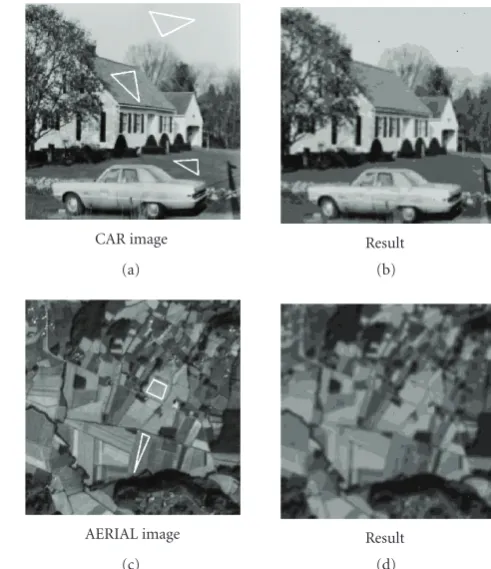
Figure 9: Supervised segmentation results of two gray-levels images.
of the GA to determine the best individual with a few iterations. The value of the evaluation criterion of the best segmentation result significantly increases. Note that we obtain a good stability of the results for different executions of this algorithm after 100 iterations.
We also present the supervised segmentation results of two images by using the developed method (seeFigure 9). We define, for each original image, a local ground truth in order to obtain a precise segmentation result. The local ground truth defines some regions which must be present in the final result. As for example, we define three regions in
Figure 9(a) and two inFigure 9(c), so we want in the final result that pixels in these regions belong to the same class. As we can see in the segmentation result (Figure 9(b)), the sky is represented by a single cluster as the roof of the house and the major part of the grass. For the image (c) ofFigure 9, we select some fields in order to make the interpretation of the culture inside each field easier.
The initial population is composed of segmentation results obtained by using the K-means algorithm with mean and variance as attributes with different numbers of clusters (5, 10, 12, 15). Segmentation results are visually correct.
Table 4gives the values of several optimized criteria. The
(a) (b) (c)
(d) (e) (f)
Figure10: Unsupervised segmentation result of a CASI multispectral image, (a) image component 1, (b)–(e) segmentation results of components 1, 6, 7, and 9, (f) final segmentation result of the multicomponents image by merging with the proposed method the segmentation result of each component.
Band A1 (a)
Band A9 (b)
Local ground truth (c)
Segmentation result (d)
Band B1 (e)
Band B9 (f)
Local ground truth (g)
Table3: Statistics for the initial and final population for the image CAR.
Information Image CAR
Initial population
Average value of criterion CR 0.1827
Highest value of criterion CR 0.1844
Lowest value of criterion CR 0.1809
Standard deviation of criterion CR 0.010
Final population
Average value of criterion CR 0.1986
Highest value of criterion CR 0.1986
Lowest value of criterion CR 0.1986
Standard deviation of criterion CR 5.2e-08
to the unsupervised criterion which quantifies the global quality of a segmentation result (Rosenberger’s criterion). Finally, the last criterion gives the correct classification rate if we only consider the local ground truth. One can notice that the values of each criterion are coherent. The correct classification rate has a high value which shows the ability of the proposed method to fit the level of precision of a segmentation result.
We compared the supervised approach and the unsu-pervised one by segmenting the same image AERIAL. The evaluation results are detailed inTable 5. These results show that the evaluation criterion CR is higher in the unsupervised case. This reveals the ability of the unsupervised approach to determine the optimal value of CR while the use of a ground truth allows us to match the level of precision of the segmentation result.
4.2. Genetic segmentation of multispectral images
In this section, we present the unsupervised segmentation result of a multispectral image composed of 9 bands (wave-length in nm: 551.1, 571.5, 600.9, 636.5, 677.7, 696.5, 715.4, 749.5, 799.9) using the proposed method (see Figure 10). Each component of this image was also segmented using the K-means algorithm with mean and variance as attributes. The final result is correct and combine well information from each component. The application for this image was to compute the biomass of algae lying on the beach. The use of multispectral data provides us a better discrimination of algae by taking account visible and also near infrared information. As for example, the white square detected in the segmentation result in Figure 10(c) on the top right is present in the final result while it was not really visible in
Figure 10(d).
We present also the supervised segmentation result of two multispectral images with a similar protocol. We show the two most different components of these images (which correspond to components 1 and 9). We define for each original image a local ground truth in order to obtain a precise segmentation result. For Figure 11(a), the local ground truth corresponds toFigure 11(c). We select 2 types of field and an area corresponding to some hedges. Each component brings an additional piece of information, the problem for these images is to take them into account in the final result. As we can see in Figures 11(d) and
Table4: Values of the evaluation criterion for results ofFigure 9.
Final result D(Is) D(Is) CR(Is) R(Is, GT)
CAR 0.0045 0.3321 0.1638 98.4%
AERIAL 0.0040 0.2803 0.138 93.6%
Table5: Values of the evaluation criterion by using the supervised and unsupervised approaches to segment AERIAL.
Method D(Is) D(Is) CR(Is) R(Is, GT)
Supervised 0.004 0.2803 0.138 93.6%
Unsupervised 0.003 0.448 0.225 —
11(h), the segmentation results are visually correct and correctly integrate additional information from the different components. As for example, the dark region in the center of the segmentation result (d) is correctly detected while it is not visible in the component A9 (but visible in A1).
5. CONCLUSION AND PERSPECTIVES
Many works in the literature focus on the definition of evaluation metrics that enable to quantify the performance of an image processing algorithm. These evaluation criteria can be used to define new image processing algorithms by optimizing them. Genetic algorithms can be used for this application.
In this paper, we focused on the interest of genetic algorithms for image segmentation. We showed that this kind of approach can be applied either for gray-levels or multicomponents images. The developed method uses the ability of GA to solve optimization problems with a large search space (label of each pixel of an image). The developed method can also integrate some a priori knowledge (such as a local ground truth) if it is available. Its efficiency was illustrated through some experimental results on several CASI multispectral images.
REFERENCES
[1] N. R. Pal and S. K. Pal, “A review on image segmentation techniques,”Pattern Recognition, vol. 26, no. 9, pp. 1277–1294, 1993.
[2] C. Kermad and K. Chehdi, “Multi-bands image segmentation: a scalar approach,” inProceeding of the 13th IEEE International Conference on Image Processing (ICIP ’00), vol. 3, pp. 468–471, Vancouver, BC, Canada, September 2000.
[3] J. Fan, D. K. Y. Yau, A. K. Elmagarmid, and W. G. Aref, “Automatic image segmentation by integrating color-edge extraction and seeded region growing,”IEEE Transactions on Image Processing, vol. 10, no. 10, pp. 1454–1466, 2001. [4] M. Zhang, L. O. Hall, and D. B. Goldgof, “A generic
knowledge-guided image segmentation and labeling system using fuzzy clustering algorithms,” IEEE Transactions on Systems, Man, and Cybernetics, Part B, vol. 32, no. 5, pp. 571– 582, 2002.
[5] F. Huet and S. Philipp, “A multi-scale fuzzy classification by knn: application to the interpretation of aerial images,” in Proceedings of the 14th International Conference on Pattern Recognition (ICPR ’98), vol. 1, pp. 96–98, Brisbane, Australia, August 1998.
[6] S. M. Schweizer and J. M. F. Moura, “Hyperspectral imagery: clutter adaptation in anomaly detection,”IEEE Transactions on Information Theory, vol. 46, no. 5, pp. 1855–1871, 2000. [7] A. Winter, H. Maˆıtre, N. Cambou, and E. Legrand, “An
original multi-sensor approach to scale-based image analysis for aerial and satellite images,” in Proceedings of the IEEE International Conference on Image Processing (ICIP ’97), vol. 2, pp. 234–237, Santa Barbara, Calif, USA, October 1997. [8] Y. Delignon, A. Marzouki, and W. Pieczynski, “Estimation of
generalized mixtures and its application in image segmenta-tion,”IEEE Transactions on Image Processing, vol. 6, no. 10, pp. 1364–1375, 1997.
[9] B. Bhanu and S. Lee,Genetic Learning for Adaptive Image Segmentation, Kluwer Academic Publishers, Norwell, Mass, USA, 1994.
[10] D. N. Chun and H. S. Yang, “Robust image segmentation using genetic algorithm with a fuzzy measure,”Pattern Recognition, vol. 29, no. 7, pp. 1195–1211, 1996.
[11] P.-Y. Yin, “A fast scheme for optimal thresholding using genetic algorithms,”Signal Processing, vol. 72, no. 2, pp. 85– 95, 1999.
[12] M. Gong and Y.-H. Yang, “Genetic-based multiresolution color image segmentation,” inVision Interface Conference (VI ’01), pp. 141–148, Ottawa, Ontario, Canada, June 2001. [13] J. H. Holland,Adaptation in Natural and Artificial Systems: An
Introductory Analysis with Applications to Biology, Control, and Artificial Intelligence, The MIT Press, Cambridge, Mass, USA, 1975.
[14] M. Yoshimura and S. Oe, “Evolutionary segmentation of tex-ture using genetic algorithms towards automatic decision of optimum number of segmentation areas,”Pattern Recognition, vol. 32, no. 12, pp. 2041–2054, 1999.
[15] P. Andrey, “Selectionist relaxation: genetic algorithms applied to image segmentation,”Image and Vision Computing, vol. 17, no. 3-4, pp. 175–187, 1999.
[16] C.-T. Li and R. Chiao, “Multiresolution genetic clustering algorithm for texture segmentation,”Image and Vision Com-puting, vol. 21, no. 11, pp. 955–966, 2003.
[17] K. E. Melkemi, M. Batouche, and S. Foufou, “A multia-gent system approach for image segmentation using genetic algorithms and extremal optimization heuristics,” Pattern Recognition Letters, vol. 27, no. 11, pp. 1230–1238, 2006. [18] C.-C. Lai and C.-Y. Chang, “A hierarchical evolutionary
algorithm for automatic medical image segmentation,”Expert Systems with Applications. In press.
[19] R. Rom´an-Rold´an, J. F. G ´omez-Lopera, C. Atae-Allah, J. Mart´ınez-Aroza, and P. L. Luque-Escamilla, “A measure of quality for evaluating methods of segmentation and edge detection,”Pattern Recognition, vol. 34, no. 5, pp. 969–980, 2001.
[20] C. Rosenberger, S. Chabrier, H. Laurent, and B. Emile, “Advances in image and video segmentation,” inUnsupervised and Supervised Image Segmentation Evaluation, Y.-J. Zhang, Ed., pp. 365–3923, Tsinghua University Press, Beijing, China, 2005.
[21] Y. J. Zhang, “A survey on evaluation method for image segmentation,”Pattern Recognition, vol. 29, no. 8, pp. 1335– 1346, 1996.
[22] S. Chabrier, B. Emile, and H. Laurent, “Psychovisual evalu-ation of an image segmentevalu-ation result,” inProceedings of the 8th International Conference on Signal Processing (ICSP ’06), Guilin, China, November 2006.
[23] S. Chabrier, B. Emile, C. Rosenberger, and H. Laurent, “Unsu-pervised performance evaluation of image segmentation,” EURASIP Journal on Applied Signal Processing, vol. 2006, Article ID 96306, p. 12, 2006.
[24] J. Bezdeck,Pattern Recognition with Fuzzy Objective Function Algorithms, Plenum Press, New York, NY, USA, 1981. [25] D. Comaniciu and P. Meer, “Mean shift: a robust approach
toward feature space analysis,”IEEE Transactions on Pattern Analysis and Machine Intelligence, vol. 24, no. 5, pp. 603–619, 2002.
[26] C. Rosenberger, Mise en oeuvre d’un syst`eme adaptatif de segmentation d’images, Ph.D. thesis, Universit´e de Rennes 1, Rennes, France, Decembre 1999.
[27] R. Zeboudj,Filtrage, seuillage automatique, contraste et con-tours: du pr´e-traitement `a l’analyse d’image, Ph.D. thesis, Universit´e de Saint Etienne, Saint Etienne, France, 1998. [28] M. D. Levine and A. M. Nazif, “Dynamic measurement of
computer generated image segmentations,”IEEE Transactions on Pattern Analysis and Machine Intelligence, vol. 7, no. 2, pp. 155–164, 1985.
[29] M. Borsotti, P. Campadelli, and R. Schettini, “Quantitative evaluation of color image segmentation results,” Pattern Recognition Letters, vol. 19, no. 8, pp. 741–747, 1998. [30] L. Vinet,Segmentation et mise en correspondance de r´egions de
paires d’images st´er´eoscopiques, Ph.D. thesis, Universit´e de Paris IX Dauphine, Paris, France, 1991.
[31] C. Rosenberger and K. Chehdi, “Unsupervised segmentation of multi-spectral images,” inProceedings of the International Conference on Advanced Concepts for Intelligent Vision Systems (Acivs ’03), Ghent, Belgium, September 2003.