Arnab et al. World Journal of Pharmaceutical and Medical Research
INTELLIGENCE QUOTIENT DEVELOPMENT IN RELATION TO PHYSICAL
GROWTH, DEVELOPMENT AND NUTRITIONAL STATE IN EARLY CHILDHOOD: A
SYSTEMATIC REVIEW
Nilita Das1, Debnath Choudhuri2 and Dr. Arnab Ghosh*1 1
Biomedical Research Laboratory, Department of Anthropology, Visva Bharati University, Santiniketan, West Bengal, India.
2
Department of Biochemistry and Nutrition, All India Institute of Hygiene and Public Health, Kolkata, West Bengal, India.
Article Received on 12/05/2017 Article Revised on 01/06/2017 Article Accepted on 22/06/2017
INTRODUCTION
Growth and development is one of the human body’s most complex processes. Each body part has its own unique growth patterns.[1] Monitoring health status, detection of growth achievements or failure, and determining the efficacy of interventions for a population can be performed by assessing the physical growth.[2] Thus, monitoring physical growth and development is an important component of primary health care in pediatrics.[3] Children’s development is affected by psychosocial and biological factors.[4] and by genetic inheritance. Thus, early years of life are a period of considerable opportunity for growth as well as vulnerability of harm. The cumulative experience of buffers or burdens is a more powerful determinant of children’s developmental well-being than single risk or protective factors.[5] Early developmental opportunities can establish a critical foundation for children’s academic success, health, and general well-being.[6]
Neuro-developmental sequences can be described broadly in terms of the traditional developmental mile-stones which provide a systematic approach to observe the progress of the children over time. Children younger than 5 years in developing countries are exposed to multiple risks[7] like poverty, malnutrition, poor health, and non-stimulating home environments, which detrimentally affect their cognitive, motor, and
social-emotional development. Poverty and its attendant problems are major risk factors.[8-12] Two factors with available worldwide evidence—the prevalence of early childhood stunting and the number of people living in absolute poverty is used as indicators of poor development. Studies showed that both indicators are closely associated with poor cognitive and educational performance in children and use them to estimate that over 200 million children under 5 years are not fulfilling their developmental potential.[7]
Growth potential in pre-school children is similar across countries,[13,14] and stunting in early childhood is caused by poor nutrition and infection rather than by genetic differences. Patterns of growth retardation are also found to be similar across countries.[15] But, there are few national statistics on the development of young children in developing countries to identify and review whether childhood growth and developmental process affects intelligence and/or behavior development. Both the interaction of biology and the social environment endeavour a powerful influence on a child’s swiftness to learn and on success in school, both antecedents to health outcomes in later life.[16,11]
Children’s development consists of several inter-dependent domains, including sensory-motor, cognitive, and social-emotional, all of which are likely to be
wjpmr, 2017,3(6), 116-123 SJIF Impact Factor: 4.103
Review Article ISSN 2455-3301
WJPMR
WORLD JOURNAL OF PHARMACEUTICAL AND MEDICAL RESEARCH
www.wjpmr.com
*Corresponding Author: Dr. Arnab Ghosh
Biomedical Research Laboratory, Department of Anthropology, Visva Bharati University, Santiniketan, West Bengal, India.
ABSTRACT
High prevalence of suboptimal physical growth and development and nutrition in young children and current limited knowledge of the effect on Intelligence Quotient (IQ) development, a systematic review of the subsequent association between physical growth-development and IQ development in early childhood is needed. Present study addresses the important knowledge gaps by systematically reviewing the current available literature on the relationship between physical growth and development with IQ development in early childhood (6 months to 12 years). We observed that birth weight, catch-up growth for undernourished, Height-for-age z score (HAZ), Weight-for-age z score (WAZ) and nutrition in early life (including breastfeeding and diet pattern) manifested a significant association with cognitive performance especially IQ score (grade, mathematical score, vocabulary test).
Arnab et al. World Journal of Pharmaceutical and Medical Research
affected. Further, besides nutrition, it is likely that environmental factors, i.e., socio-economic status, learning environment, stimulation at home, family size, recurrent infection etc. also play important role in mental development. The discrepancy between their current developmental levels and what they would have achieved in a good nurturing environment with adequate stimulation and nutrition indicates the degree of loss of potential. In later childhood these children will subsequently have poor levels of cognition and education, both of which are linked to later earnings. Furthermore, improved parental education, particularly of mothers, is related to reduced fertility,[17,18] and improved child survival, health, nutrition, cognition, and education.[18-22] Thus, the failure of children to fulfill their developmental potential and achieve satisfactory educational levels plays an important part in the intergenerational transmission of poverty. In countries with a large proportion of such children, national development is likely to be affected.
Recent advances in brain research have proven that an infant’s environment has a dramatic affect on brain-building and healthy development. It is this early stage of brain development that results in how and how well one thinks and learns—both as children and as adults. The early years are the ―prime time‖ for a developing brain. This intense period of brain growth and network building capacity happens only once in a lifetime so as caregivers and parents, people have this brief but unique opportunity to encourage the formation of brain circuitry in our infants.
The first few years of life are particularly important because vital development occurs in all domains.[5] The brain develops rapidly through neurogenesis, axonal and dendritic growth, synaptogenesis, cell death, synaptic pruning, myelination, and gliogenesis. These morphological events happen at different times[23] and build on each other, such that small deviation in these processes can have long-term effects on the brain’s structural and functional capacity. Brain development is modified by the quality of the living environment. Research showed that early under-nutrition, iron-deficiency, environmental toxins, stress, and poor stimulation and social interaction can affect brain structure as well as functions, and have long-lasting cognitive and emotional effects.[24-28] Early cognitive and social-emotional developments are strong determinants of school progress in developed countries.[29-31] Longitudinal studies in developing countries that linked early child development and later educational progress identified two studies; In Guatemala, preschool cognitive ability predicted children’s enrolment in secondary school[32] and achievement scores in adolescence.[33] In South Africa, cognitive ability and achievement at the end of grade one predicted later school progress in school children.[34]
Poor children are more vulnerable to inadequate development outcomes[7] and significant developmental delay i.e. cognitive, language, physical and socio-emotional by socio-economic gradient was evident in several countries.[35,36] In Colombia, the socio-economic gap in children’s receptive and expressive language skills widened between 14 to 42 months.[37] Children with lower birth weight have lower school performance attainments & earning.[38,39]
Failure to complete primary education[40] (Millennium Development Goal 2) gives some indication of the extent of problem of poor cognitive development, although school and family characteristics also play a part. In developing countries, an estimated 99 million children of primary-school age are not enrolled, and of those enrolled, only 78% complete primary school.[35] Most children who fail to complete are from sub-Saharan Africa and south Asia. Only around half of the children enroll in secondary schools. Furthermore, children in some developing countries have much lower achievement levels than children in developed countries in the same grade.[41]
Thus, given the high prevalence of suboptimal physical growth and development and nutrition in young children and current limited knowledge of the effect on IQ development, a systematic review of the subsequent association between physical growth-development and nutrition state with IQ development in early childhood is needed. Present study addresses the important knowledge gaps by systematically reviewing the current available literature in last 5 years on the relationship between physical growth and development and different nutrition state with optimum IQ development in early childhood (6 months to 12 years).
Search Strategy
In accordance with the preferred reporting items for systematic reviews and meta-analysis (PRISMA) statement,[42] present systematic review conducted on young children’s physical growth & development and different nutrition state in relation to their intelligence quotient. To identify relevant studies, PubMed, PubMed Central, Google Scholar were searched using key words ―intelligence‖, ―intelligence quotient‖, ―children’s growth‖, ―childhood development‖, ―studies on IQ test‖, ―randomized controlled trails‖, ―cross-sectional studies‖, ―nutrition status‖, ―child nutrition‖.
Inclusion and Exclusion Criteria
Arnab et al. World Journal of Pharmaceutical and Medical Research
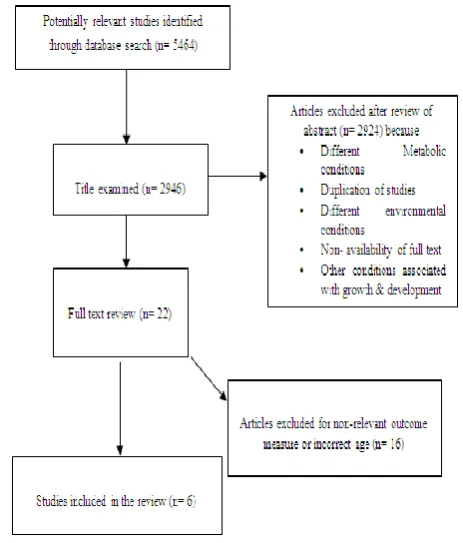
Figure 1: Search strategy for Physical growth and development.
Figure 2: Search strategy for different nutritional state.
Outcome measures: Studies including any standardized outcome measures of cognitive performance with IQ were included. Studies solely examining fatigue or employing only qualitative measures of cognitive performance were excluded. Studies individually containing physical growth & development or intelligence quotient were excluded. Studies explaining
IQ outcome measures by using available standardized method are included, so nuro-imeging is not the part of current review.
Manipulations: Any types of genetically modified health or mental condition, different environmental exposures were excluded. Studies were not excluded on the basis of nutritional status for example studies that include poverty state, malnutrition & diet was included. Studies like single case reports, dissertations, meeting abstracts were excluded.
DISCUSSION
The goal of the study was to review the literature from last 5 years that how physical growth & development and different nutrition state are associated with IQ development in children from 6 months to 12 years. Evidence suggests that human physical growth & developmental quotient and different nutrition state have strong association with cognitive development, especially IQ development in children at their early ages. Early childhood years are critical for both life-style disease prevention and overall school performance in later life. The inadequacy of literature in this area needs more intense research with strong methodology. In addition, studying this, interventionists and/or child care programmers may emphasize on early deficits in linear growth and cumulative prenatal and postnatal malnutrition to develop early child care settings.
Arnab et al. World Journal of Pharmaceutical and Medical Research
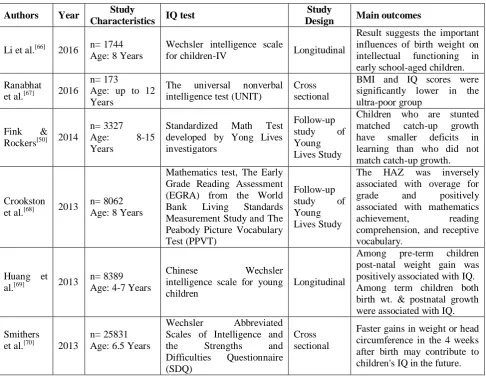
Table 1: Studies on IQ development in relation to physical growth & development.
Authors Year Study
Characteristics IQ test
Study
Design Main outcomes Li et al.[66] 2016 n= 1744
Age: 8 Years
Wechsler intelligence scale
for children-IV Longitudinal
Result suggests the important influences of birth weight on intellectual functioning in early school-aged children.
Ranabhat
et al.[67] 2016
n= 173
Age: up to 12 Years
The universal nonverbal intelligence test (UNIT)
Cross sectional
BMI and IQ scores were significantly lower in the ultra-poor group
Fink & Rockers[50] 2014
n= 3327 Age: 8-15 Years
Standardized Math Test developed by Yong Lives investigators
Follow-up study of Young Lives Study
Children who are stunted matched catch-up growth have smaller deficits in learning than who did not match catch-up growth.
Crookston et al.[68] 2013
n= 8062 Age: 8 Years
Mathematics test, The Early Grade Reading Assessment (EGRA) from the World Bank Living Standards Measurement Study and The Peabody Picture Vocabulary Test (PPVT)
Follow-up study of Young Lives Study
The HAZ was inversely associated with overage for grade and positively associated with mathematics achievement, reading comprehension, and receptive vocabulary.
Huang et
al.[69] 2013
n= 8389 Age: 4-7 Years
Chinese Wechsler intelligence scale for young children
Longitudinal
Among pre-term children post-natal weight gain was positively associated with IQ. Among term children both birth wt. & postnatal growth were associated with IQ.
Smithers
et al.[70] 2013
n= 25831 Age: 6.5 Years
Wechsler Abbreviated Scales of Intelligence and the Strengths and Difficulties Questionnaire (SDQ)
Cross sectional
Faster gains in weight or head circumference in the 4 weeks after birth may contribute to children's IQ in the future.
Four published longitudinal studies showed that early stunting predicted later cognition, school progress, or both. Stunting at 24 months was related to cognition at 9 years in Peru[51] and, in the Philippines to intelligent quotient (IQ) at 8 and 11 years, age at enrolment in school, grade repetition, and dropout from school.[52,53] In Jamaica, stunting before 24 months was related to cognition and school achievement at 17–18 years and dropout from school.[54] In Guatemala, height at 36 months was related to cognition, literacy, numeracy, and general knowledge in late adolescence,[55] and stunting at 72 months was related to cognition between 25–42 years. Two other longitudinal studies from Brazil[56] and South Africa[57] stunting between 12 and 36 months were related to later measures of cognition or grade attainment.
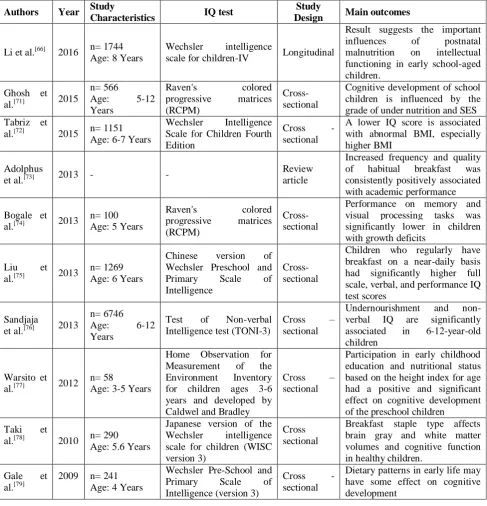
Smithers et al., the only study of our knowledge has analyzed dietary pattern trajectories from 6 to 24months of age and cognitive abilities at age 8 and 15 years. They observed long-term effect of dietary pattern at early years of life and later cognitive development including school performance that better nutrition at early life exerts better cognition.[58] Some evidence suggested that effects may be more apparent in undernourished children
Arnab et al. World Journal of Pharmaceutical and Medical Research
eating behavior. Future research can support the association, improvement in the area of child eating
behavior and healthy diet practice would be possible.
Table 2: Studies on IQ development in relation to nutritional state. Authors Year Study
Characteristics IQ test
Study
Design Main outcomes
Li et al.[66] 2016 n= 1744 Age: 8 Years
Wechsler intelligence
scale for children-IV Longitudinal
Result suggests the important influences of postnatal malnutrition on intellectual functioning in early school-aged children.
Ghosh et
al.[71] 2015
n= 566
Age: 5-12 Years
Raven's colored progressive matrices (RCPM)
Cross- sectional
Cognitive development of school children is influenced by the grade of under nutrition and SES Tabriz et
al.[72] 2015 n= 1151
Age: 6-7 Years
Wechsler Intelligence Scale for Children Fourth Edition
Cross - sectional
A lower IQ score is associated with abnormal BMI, especially higher BMI
Adolphus
et al.[73] 2013 - -
Review article
Increased frequency and quality of habitual breakfast was consistently positively associated with academic performance
Bogale et
al.[74] 2013
n= 100 Age: 5 Years
Raven's colored progressive matrices (RCPM)
Cross- sectional
Performance on memory and visual processing tasks was significantly lower in children with growth deficits
Liu et
al.[75] 2013
n= 1269 Age: 6 Years
Chinese version of Wechsler Preschool and Primary Scale of Intelligence
Cross- sectional
Children who regularly have breakfast on a near-daily basis had significantly higher full scale, verbal, and performance IQ test scores
Sandjaja
et al.[76] 2013
n= 6746 Age: 6-12 Years
Test of Non-verbal Intelligence test (TONI-3)
Cross – sectional
Undernourishment and non-verbal IQ are significantly associated in 6-12-year-old children
Warsito et
al.[77] 2012
n= 58
Age: 3-5 Years
Home Observation for Measurement of the Environment Inventory for children ages 3-6 years and developed by Caldwel and Bradley
Cross – sectional
Participation in early childhood education and nutritional status based on the height index for age had a positive and significant effect on cognitive development of the preschool children
Taki et
al.[78] 2010 n= 290
Age: 5.6 Years
Japanese version of the Wechsler intelligence scale for children (WISC version 3)
Cross sectional
Breakfast staple type affects brain gray and white matter volumes and cognitive function in healthy children.
Gale et al.[79]
2009 n= 241 Age: 4 Years
Wechsler Pre-School and Primary Scale of Intelligence (version 3)
Cross - sectional
Dietary patterns in early life may have some effect on cognitive development
CONCLUSION
We observed that birth weight, catch-up growth for undernourished, Height-for-age z score (HAZ), Weight-for-age z score (WAZ) and nutrition in early life (including breastfeeding and diet pattern) manifested a significant association with cognitive performance especially IQ score (grade, mathematical score, vocabulary test). Since there are racial/ethnic disparities in early life risk factors for such as childhood obesity, feeding practices, and many of the same children are at higher risk for poor cognitive and academic
Arnab et al. World Journal of Pharmaceutical and Medical Research
development and nutrition to IQ development. Physical growth & development, different nutritional influence and preschooler’s academic performance with overall future outcomes need to be emphasized more so that it could provide additional motivations for policy makers to promote healthier childhood.
Limitations
This review is limited to last 5 years of studies which are published in English; other informative studies in other languages could be missed. Many studies are left behind due to the non-availability of full text to support the review. Study design and measurement tools varied widely which immediately affect our ability to make direct comparison between studies. Cognitive outcome measures are not uniform like some measure academic scores, or others focus into mathematical test scores. Also, many factors like genetic or environmental may influence the outcome. Unfortunately with small sample size, many studies may not been able to present the potentially confounding variables. IQ measurements were done by standardized test methods available in present time, so to establish any fact by nuro-imeging is not part of these studies which may reflect as a strong limitation of current review.
REFERENCES
1. Bong YB, Shariff AA, Mohamed AM, Merican AF. Growth curves for school children from Kuching, Sarawak: a methodological development. Asia Pac J Public Health, 2015; 27: NP1217-NP1227.
2. de Onis M, Siyam A, Borghi E, Onyango AW, Piwoz E, Garza C. Comparison of the World Health Organization growth velocity standards with existing US reference data. Pediatrics, 2011; 128: e18-e26.
3. Ayatollahi SM. A critical appraisal of human growth studies in Iran. Med J Islam Repub Iran, 1993; 6: 311-319.
4. Wachs TD. Necessary but not sufficient: the respective roles of single and multiple influences on individual development. Washington DC: American Psychological Association, 2000.
5. Shonkoff, JP and Phillips, D. From neurons to neighborhoods. Washington, DC: National Academy Press, 2000.
6. vanLandeghem K, Curgins D, Abrams M. Reasons and strategies for strengthening childhood development services in the healthcare system. Portland, ME. National Academy for State Health Policy, 2002.
7. Grantham-McGregor S, Cheung YB, Cueto S, Glewwe P, Richter L, Strupp B. International Child Development Steering Group. Developmental potential in the first 5 years for children in developing countries. Lancet, 2007; 369: 60-70. 8. Mistry RS, Biesanz JC, Taylor LC, Burchinal M,
Cox MJ. Family income and its relation to preschool children’s adjustment for families in the NICHD
study of early child care. Dev Psychol, 2004; 40: 727–45.
9. Bradley R, Corwyn R. Socioeconomic status and child development. Ann Rev Psychol, 2002; 53: 371–99.
10. NICHD Early Child Care Research Network. Before Head Start: income and ethnicity, family characteristics, child care experiences and child development. Early Educ Dev., 2001; 12: 545–76. 11. Brooks-Gunn J, Duncan GJ. The effects of poverty
on children. Future Child, 1997; 7: 55–71.
12. Rutter M. Pathways from childhood to adult life. J Child Psychol Psychiatr, 1989; 30: 23–51.
13. Ivanovic DM, Perez HT, Olivares MD, Diaz NS, Leyton BD, Ivanovic RM. Scholastic achievement: a multivariate analysis of nutritional, intellectual, socioeconomic, sociocultural, familial, and demographic variables in Chilean school-aged children. Nutrition, 2004; 20: 878–89.
14. Vazir S, Naidu AN, Vidyasagar P. Nutritional status, psychosocial development and the home environment of Indian rural children. Indian Pediatr, 1998; 35: 959–66.
15. Hamadani JD, Fuchs GJ, Osendarp SJ, Huda SN, Grantham-McGregor SM. Zinc supplementation during pregnancy and effects on mental development and behavior of infants: a follow-up study. Lancet,2002; 360: 290–94.
16. Hertzman C. The biological embedding of early experience and its effects on health in adulthood.
Ann N Y Acad Sci., 1999; 896: 85–95.
17. Maitra P. Effect of socioeconomic characteristics on age at marriage and total fertility in Nepal. J Health Pop Nutr.,2004; 22: 84–96.
18. Lam D, Duryea S. Effects of schooling on fertility, labor supply, and investments in children, with evidence from Brazil. J Hum Res., 1999; 34: 160– 192.
19. Frankenberg E, Mason W. Maternal education and health-related behaviors: a preliminary analysis of the 1993 Indonesian Family Life Survey. J., 1995; 1: 21–44.
20. Hatt LE, Waters HR. Determinants of child morbidity in Latin America: a pooled analysis of interactions between parental education and economic status. Soc Sci Med.,2006; 62: 375–86. 21. Psacharopoulos G. The determinants of early age
human capital formation: evidence from Brazil.
Econ Dev Cult Change,1989: 37: 683–708.
22. Rosenzweig MR, Wolpin KI. Are there increasing returns to the intergenerational production of human capital—maternal schooling and child intellectual achievement. J Hum Res.,1994; 29: 670–93. 23. Thompson RA, Nelson CA. Developmental science
and the media: early brain development. Am Psychol,2001; 56: 5–15.
Arnab et al. World Journal of Pharmaceutical and Medical Research
25. Meaney M. Maternal Care, gene expression, and the transmission of individual differences in stress reactivity across generations. Ann Rev Neurosci, 2001; 024: 1161–92.
26. Morgan R, Garavan H, Smith E, Driscoll L, Levitsky D, Strupp B. Early lead exposure produces lasting changes in sustained attention, response initiation, and reactivity to errors. Neurotoxicol Teratol,2001; 23: 519–31.
27. Rodier P. Environmental causes of central nervous system mal development. Pediatrics, 2004; 113: 1076–83.
28. Webb S, Monk C, Nelson C. Mechanisms of postnatal neurobiological development: implications for human development. Dev Neuropsychol, 2001; 19: 147–71.
29. Currie J, Thomas D. Early test scores, socioeconomic status and future outcomes. Cambridge: National Bureau of Economic Research, 1999. Working Paper, 6943.
30. Pianta RC, McCoy SJ. The first day of school: The predictive validity of early school screening. J Appl Dev Psychol,1997x; 18: 1–22.
31. Feinstein L. Inequality in the early cognitive development of children in the 1970 cohort.
Economica,2003; 70: 73–97.
32. Stith AY, Gorman KS, Choudhury N. The effects of psychosocial risk and gender on school attainment in Guatemala. Appl Psychol, 2003; 52: 614–29. 33. Gorman KS, Pollitt E. Does schooling buffer the
effects of early risk? Child Dev.,1996; 67: 314–26. 34. Liddell C, Rae G. Predicting early grade retention: A
longitudinal investigation of primary school progress in a sample of rural South African children.
Br J Educ Psychol,2001; 71: 413–28.
35. Paxson C, Schady N. Cognitive Development among Young Children in Ecuador: The Roles of Wealth, Health, and Parenting. J Human Res., 200; 42(1): 49-84.
36. Naudeau S, Martinez S, Premand P and Filmer D. Cognitive Development among young children in low-income countries: No Small Matter. Washington DC: The World Bank. 2011. E-book. 37. Rubio-Codina, Attanasio O, Meghir C, Varela N,
Grantham-McGregor S. The Socio-Economic Gradient of Child Development: Cross-Sectional Evidence from Children 6-42 Months In Bogota. Inter-American Development Bank. Idb working paper series no. Idb-wp-527.
38. Olds DL, Robinson J, O’Brine R, Luckey DW, Pettitt LM, Henderson CR, Ng KR, Sheff KL, Korfmacher J, Hiatt S, Talmi A. Home visiting by paraprofessionals and by nurses: A randomized controlled trail. Pediatrics, 2002; 110(3): 486-496. 39. Case A, Fertig A, Paxson C. The lasting impact of
childhood health and circumstance. Journal of Health Economics, 2005; 24: 365–389.
40. Millennium Development Goals Report. United Nations, New York. 2015; at
http://www.un.org/millenniumgoals/2015_MDG_Re port/pdf/MDG%202015%20rev%20(July%201).pdf. 41. UNESCO. EFA Global Monitoring Report 2005.
Paris, France: UNESCO. 2005.
42. Liberati A, Altman DG, Tetzlaff J et al., The PRISMA statement for reporting systemic reviews and meta-analyses of studies that evaluate health care interventions: explanation and elaboration.
Annals of Internal Medicine, 2009; 151(4): 65-94. 43. Moock PR, Leslie J. Childhood malnutrition and
schooling in the Terai region of Nepal. J Dev Econ,
1986; 20: 33–52.
44. Brooker S, Hall A, Bundy DAP, et al. Short stature and the age of enrolment in primary school: studies in two African countries. Soc Sci Med., 1999; 48: 675–82.
45. Sigman M, Neumann C, Jansen AA, Bwibo N. Cognitive abilities of Kenyan children in relation to nutrition, family characteristics, and education.
Child Dev., 1989; 60: 1463–74.
46. Johnston FE, Low SM, de Baessa Y, Macvean RB. Interaction of nutritional and socioeconomic status as determinants of cognitive development in disadvantaged urban Guatemalan children. Am J Phy Anthropol,1987; 73: 501–06.
47. Webb KE, Horton NJ, Katz DL. Parental IQ and cognitive development of malnourished Indonesian children. Eu J Clin Nutr.,2005; 59: 618–20.
48. Drewett R, Wolke D, Asefa M, Kaba M, Tessema F. Malnutrition and mental development: is there a sensitive period? A nested case-control study. J Child Psychol Psychiatr, 2001; 42: 181–87.
49. Hamadani JD, Fuchs GJ, Osendarp SJ, Khatun F, Huda SN, Grantham-McGregor SM. Randomized controlled trial of the effect of zinc supplementation on the mental development of Bangladeshi infants.
Am J Clin Nutr.,2001; 74: 381–86.
50. Fink G and Rockers PC. Childhood growth, schooling and cognitive development: further evidence from the Young lives study. 2014. Am J Clin Nutr., 100: 182-188.
51. Berkman DS, Lescano AG, Gilman RH, Lopez SL, Black MM. Effects of stunting, diarrhoeal disease, and parasitic infection during infancy on cognition in late childhood: a follow-up study. Lancet,2002; 359: 564–71.
52. Daniels MC, Adair LS. Growth in young Filipino children predicts schooling trajectories through high school. J Nutr.,2004; 134: 1439–46.
53. Mendez MA, Adair LS. Severity and timing of stunting in the first two years of life affect performance on cognitive tests in late childhood. J Nutr.,1999; 129: 1555–62.
Arnab et al. World Journal of Pharmaceutical and Medical Research
55. Behrman, JR, Hoddinott J, Maluccio JA, et al. What determines adult cognitive skills? Impacts of pre-school, schooling and post-school experiences in Guatemala. 2006. Working draft October 2005. 56. Victora CG, Barros FC, Lima RC, et al. The Pelotas
birth cohort study, Rio Grande do Sul, Brazil, 1982– 2001. Cad Saude Publica, Rio de Janeiro, 2003; 12: 41–56.
57. Richter LM, Yach D, Cameron N, Griesel RD, De Wet T. Enrolment into Birth to Ten (BTT): population and sample characteristics. Paediatr Perinat Epidemiol,1995; 9: 109–20.
58. Smithers LG, Golley RK, Mittinty MN, Brazionis L, Northstone K, Emmett P et al. Do dietary trajectories between infancy and toddlerhood influenceIQ in childhood and adolescence? Results from a prospective birth cohort study. PLoS One,
2013; 8(3): e58904.
doi:10.1371/journal.pone.0058904.
59. Kleinman RE, Hall S, Green H, Korzec-Ramirez D, Patton K, Pagano ME et al. Diet, breakfast, and academic performance in children. Ann Nutr Metab,
2002;46: 24–30.
60. Lucas A, Morley R, Cole TJ. Randomised trial of early diet in preterm babies and later intelligence quotient. Brit Med J., 1998; 317: 1481-1487. 61. Nyaradi A, Oddy WH, Hickling S, Li J and Foster
JK. The relationship between nutrition in infancy and cognitive performance during adolescence.
Frontiers Nutr., 2015; 2: e1- e8. doi: 10.3389/fnut.2015.00002/.
62. Belfort MB, Rifas-Shiman SL, Kleinman KP, et al. Infant feeding and childhood cognition at ages 3 and 7 years: effects of breastfeeding duration and exclusivity. JAMA Pediatr, 2013; 167(9): 836–844. 63. Smithers LG, Kramer MS, Lynch JW. Effects of
breastfeeding on obesity and intelligence: causal insights from different study designs. JAMA Pediatr, 2015; 169(8): 707-708.
64. Martin A, Saunders DH, Shenkin SD, Lifestyle intervention for improving school achievement in overweight or obese children and adolescents.
Cochrane Database Syst., 2014; 3: Cd009728. 65. Taveras, E.M., Gillman, M.W., Kleinman, K.P.,
Rich-Edwards, JW, Rifas-Shiman, S.L. Reducing racial/ethnic disparities in childhood obesity: the role of early life risk factors. JAMA Pediatr, 2013; 167(8): 731–738.
66. Li et al. Effect of prenatal and postnatal malnutrition on intellectual functioning in early school-aged children in rural western China. 2016. Medicine, 95: 31.
67. Ranabhat C, Kim CB, Park MB, Kim CS and Freidoony L. Determinants of Body Mass Index and Intelligence Quotient of Elementary School Children in Mountain Area of Nepal: An Explorative Study.
Children, 2016;3: 1-15.
68. Crookston et al. Postinfancy growth, schooling, and cognitive achievement: Young Lives. 2013. Am J Clin Nutr, 98: 1555-1563.
69. Huang C, Martorell R, Ren A and Li Z. cognition and behavioural development in early childhood: the role birth weight and postnatal growth. Int J Epidem,
2013; 42: 160-171.
70. Smithers LG, Lynch JW, Yang S, Dahhou M, Kramer MS. Impact of neonatal growth on IQ and behavior at early school age. Pediatrics, 2013; 132: e53-60.
71. Ghosh S, Chowdhury SD, Chandra AM and Ghosh T. Grades of undernutrition and socioeconomic status influence cognitive development in school children of Kolkata. Am J Phys Anthropol, 2014; 152(2): 278-285.
72. Tabriz AA et al. Relation of intelligence quotient and body mass index in preschool children: a community-based cross-sectional study: Nutrition & Diabetes, 2015; 5: e176.
73. Adolphus K, Lawton CL and Dye L. The effects of breakfast on behavior and academic performance in children and adolescents. Frontiers in Human Neuroscience, 2013; 7: 1-28.
74. Bogale et al. Nutritional status and cognitive performance of mother-child pair in Sidama, Southern Ethiopia. 2013. Matern Child Nutr., 9(2): 274-284.
75. Liu J, Hwang WT, Dickerman B and Compher C. Regular breakfast consumption is associated with increased IQ in kindergarten children. 2013. Early Hum Dev., 89 (4): 257-262.
76. Sandjaja, Poh BK, Rojroonwasinkul N et al. Relationship between anthropometric indicators and cognitive performance in Southeast Asian school aged children – On behalf of the SEANUT study group. Birtish J Nutr., 2013; 110: S57-S64.
77. Warsito O, Khomsan A, Hernawati N and Anwar F. Relationship between nutritional status, psychological stimulation, and cognitive development in preschool children in Indonesia.
Nutr Res Prac, 2012; 6(5): 451-457.
78. Taki Y, Hashizume H, Sassa Y, Takeuchi H, Asano M et al. Breakfast staple types affect brain gray matter volume and cognitive function in healthy children. PLos One, 2010; 5(12): e15213.