COMPARATIVE MORPHOLOGICAL ANALYSIS OF
NEOMYSIS INTEGER
(LEACH, 1815) IN 2006–2007 PERIOD
Anna Grzeszczyk-Kowalska¹, Juliusz C. Chojnacki¹, Małgorzata Raczyńska¹, Mariusz Raczyński²
1 Department of Marine Ecology and Environmental Protection, Faculty of Food Sciences and Fisheries, West
Pomeranian University of Technology in Szczecin, Kazimierza Królewicza str. 4, 71-550 Szczecin, Poland, e-mail: [email protected], [email protected], [email protected]
² Department of Fisheries Management, Faculty of Food Sciences and Fisheries, West Pomeranian University of Technology in Szczecin, Kazimierza Królewicza str. 4, 71-550 Szczecin, Poland, e-mail: mariusz.raczynski@ zut.edu.pl
INTRODUCTION
The order Mysidacea (shrimp-like crustaceans) is prevalent in surface waters from the latitudes of 80° N to 80° S, in fresh, brackish, saline, coastal, oceanic, and estuarine waters [Mauchline 1980, Tat-tersall and TatTat-tersall 1951]. In 1977 Mauchline and Murano [1977] published a list in which they de-scribed 765 species from the family Mysidae. Me-land [2002] wrote about over 1,000 species which belonged to approximately 160 genera; this num-ber is expected to grow as sampling and taxonomic identification techniques improve and new habitats are discovered. One of the most commonly occur-ring representatives of Mysidacea of the genus Neo-mysis (Czerniawski) is Neomysis integer (Leach, 1815). Chojnacki [1991], Rudstam et al. [1986], and Wiktor [1961] investigated many aspects of this species in the coastal waters of the Baltic.
In 1873 Möbius was the first to observe and describe the characteristics of thisspecies in the Volume 14, No. 3, July 2013, pp. 31–43
DOI: 10.5604/2081139X.1056036 Research Article
ABSTRACT
This paper presents the results of a detailed comparative description of the morpho-logical characters of N. integer obtained during eight research seasons in 2006–2007 period from the region stretching from Świnoujście to Darłowo. An attempt was made to assess the suitability of the studied characters for establishing to which populations individuals belong, to identify secondary sex traits and to detect differences in the body shape of these shrimp-like crustaceans. Most of the measurable characters in all of the samples discrimination analysis indicated the characters which differentiated the compared groups were telson length, lower abdomen width, exopodite uropod length, cephalothorax width below the carapace, cephalothorax width above the cara-pace and the height of fourth and fifth abdominal segment connections.
Key words: Neomysis integer, Pomeranian Bay, Baltic Sea, morphometry.
Received: 2013.05.07 Accepted: 2013.06.10 Published: 2013.07.10
as of epibenthic crustaceans [Mauchline 1980]. In the coastal waters of the Baltic Sea, this spe-cies is a food component of juvenile Platichthy-idae, GobiPlatichthy-idae, sea trout, herring, sprats, perch and pikeperch [Lindén et al. 2003, Mauchline 1971, Shvetsova et al. 1992, Szypuła et al. 1997, Węsławski 1981, Wiktor 1961].
The aim of the study was to compile a com-prehensive, comparative description of the mor-phological characters of N. integer obtained during eight research seasons in the 2006–2007 period from the coastal zone specifically in es-tuarine waters from Świnoujścia to Darłowo. Additionally, an attempt was made to assess the suitability of the studied morphological charac-ters of N. integer to determine the populations in-dividuals belong to, in order to identify secondary sex characteristics and to detect differences in the body shape of N integer from different seasons and regions of southern Baltic.
MATERIALS AND METHODS
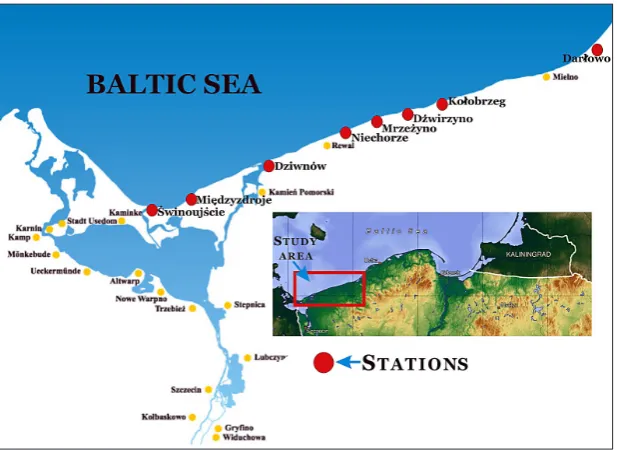
Twelve permanent sampling sites distributed in the coastal zone of the Pomeranian Bay in the southern Baltic were designated for the qualitative study of N. integer populations. The sites were lo-cated adjacent to the estuaries of more important West Pomeranian rivers or, as in the case of the town of Międzyzdroje, in the vicinity of signifi-cant submerged constructions, which in this in-stance was the pier. One site was located near the town of Niechorze when the canal that links Lake
Liwia Łuża with the sea was not blocked by sand; if it was blocked there would be two sites – one in the west and one in the east. The locations of the sampling sites are presented in Figure 1.
The study material was collected from the water column at depths of 0.5 to 1 m with a spe-cially constructed drag. The drag netting mesh size was 1 mm. The material collected was rinsed on a sieve with a mesh bar length of 0.5 mm, and then preserved in a 30 % solution of ethyl alco-hol denatured with pyridine. The material was sorted, classified into systematic groups, and then identified to the genus, and, when possible, to the species using a Nikon C-DSS230 stereo micro-scope. Depending on density, the samples contain-ing Mysidacea were diluted in a Folsom splitter [Mc Even et al. 1954] two to four times to obtain a representative sub-sample containing at least 100 individuals. All of the N. integer individuals caught were identified using keys compiled by Köhn et al. [1992] and Mańkowski [1955], in both of which the principle qualifying criteria for given species were the build of the telsons and scales.
The N. integer material used for further mor-phological study and analysis numbered 2894 individuals. The sampling sites and sampling sea-sons were assigned acronyms for statistical analy-sis and are presented in Tables 1 and 2.
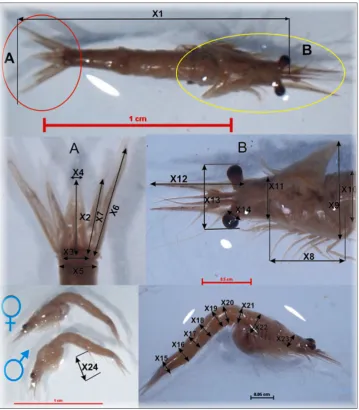
Twenty-three linear measurements were taken of N. integer female individuals and 24 of N. in-teger male individuals in each sample accord-ing to the methodology presented below, which is a modification and extension of the method by Mauchline [1971]. The measurements were
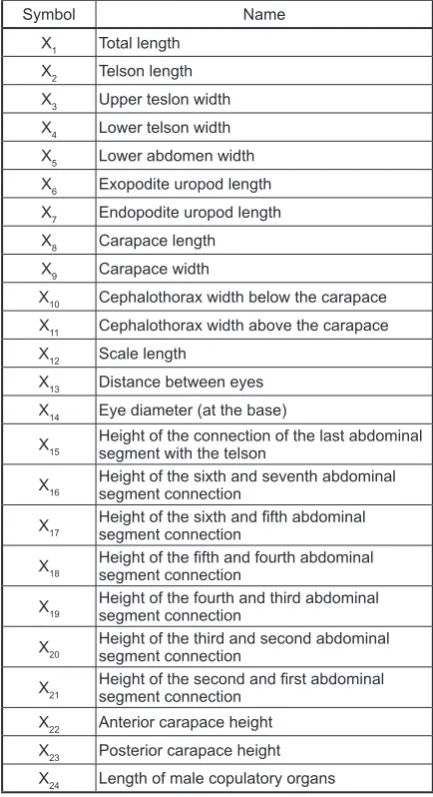
performed on the crustaceans which had been straightened in a Petri dish containing a small vol-ume of water under a Nikon stereo microscope coupled with a Nikon DS-U2 microscope camera controller. The images were sent from the cam-era to the computer coupled with it, and then pro-cessed using image analysis NIS 32. The scheme of the linear measurements is presented in Figure 2, and the symbols of the studied characters are presented in Table 3.
STATISTICAL ANALYSIS OF RESULTS
All of the measurable characters studied were not only analyzed in terms of differences stem-ming from sampling site and the sex of individu-als, but also with regard to the season in which the samples were collected. Initially, one of the methodological concepts of this study was also to compare individuals according to length classes. However, after an introductory analysis it was determined that samples from each subsequent study season comprised individuals from new generations of N. integer. In this case, the
fur-ther division of samples into length classes would have excessively complicated the resulting data sets later used in the statistical tests.
The criteria described above for dividing results permitted designating 13 comparative groups linked to sampling sites with sub-divisions by sex, and 50 groups according to sampling sea-son. The analyzed material did not always include at least 31 individuals, which would permit it to
Table 1. Sampling site acronyms assigned for tests and statistical analysis
Table 2. Sampling season acronyms assigned for tests and statistical analyses
Station Symbol
Świnoujście west. Ś.w.
Świnoujście east. Ś.e.
Międzyzdroje M.
Dziwnów east. D.e.
Niechorze N.
Mrzeżyno west. M.w.
Mrzeżyno east. M.e.
Dźwirzyno west. Dź.w.
Dźwirzyno east. Dź.e.
Kołobrzeg east. K.e.
Darłowo west. Da.w.
Darłowo east. Da.e.
Season Symbol Season Symbol
Spring 2006
(12–13.05.2006) Sp2006 Winter – spring 2007(06–07.03.2007) WSp2007 Summer 2006
(28–29.06.2006) S2006 (24–25.04.2007)Spring 2007 Sp2007
Autumn 2006
(16–17.09.2006) A2006 (20–21.06.2007)Summer 2007 S2007
Late autumn 2006
(19–20.10.2006) LA2006 (14–15.09.2007)Autumn 2007 A2007
Symbol Name
X1 Total length
X2 Telson length
X3 Upper teslon width
X4 Lower telson width
X5 Lower abdomen width
X6 Exopodite uropod length
X7 Endopodite uropod length
X8 Carapace length
X9 Carapace width
X10 Cephalothorax width below the carapace
X11 Cephalothorax width above the carapace
X12 Scale length
X13 Distance between eyes
X14 Eye diameter (at the base)
X15 Height of the connection of the last abdominal segment with the telson
X16 Height of the sixth and seventh abdominal segment connection
X17 Height of the sixth and fifth abdominal segment connection
X18 Height of the fifth and fourth abdominal segment connection
X19 Height of the fourth and third abdominal segment connection
X20 Height of the third and second abdominal segment connection
X21 Height of the second and first abdominal segment connection
X22 Anterior carapace height
X23 Posterior carapace height
X24 Length of male copulatory organs
be a statistically large enough sample (n > 30). Thus, the samples were redivided, what permitted obtaining more optimal statistical analysis. Sam-pling sites where and seasons in which there were fewer than 30 individuals were ignored in further analysis, thus, two additional data sets were cre-ated on which all of the statistical analyses were conducted.
The results of the measurable values were processed statistically with Excel 2000, and sta-tistical analysis was done with STATISTICA 5.1. G by StatSoft. The raw measurement results were expressed in absolute values with the aim of using them in further analysis transformed to relative lengths and described as percentage coefficients calculated relative to the total length (x1).
The following were applied in the primary analysis of the results: average value (x), stand-ard deviation (S), standstand-ard error (m), and the
coef-ficient of variation (V). The correlation between total length and body weight was examined. Sev-eral different statistical tests were applied to deter-mine if statistically significant differences existed among the N. integer groups examined, including the differences between males and females.
The variation coefficient, which is the rela-tive measure of the distribution of a number set, was calculated with the following formula [Ruszczyc 1981]:
V =
S
×100 x (%) where: V – coefficient of variation,x – arithmetical average, S – standard deviation,
Ruszczyc [1981] reports the variation coeffi-cient is important for comparisons when its value exceeds 10 %. It is very important that characters
with high variation coefficients are not suitable for comparisons aimed at demonstrating the sig-nificance of differences. Since there is a lack of studies focusing on the morphometrics of the N. integer species, the statistical analysis methodol-ogy applied in the present study was based on au-thors’ judgments. The results obtained indicated that N. integer body parts grow allometrically, which is a typical of body growth among crus-taceans [Kossakowski 1967, De Giosa and Cz-erniejewski 2010]. This meant that the value of the variation coefficient for the individual char-acters studied ranged from several to even 70%. This is why the significance of coefficient V for N. integer was 20%, which is twice as that in the analysis by Ruszczyc [1981].
The description of variation in the group of individuals based on the analysis of just one or two characters can be incomplete. Some charac-ters in the population can be stable, while others can vary within a wide range depending on the sizes of the individuals examined. It is possible that the characters examined separately do not ex-hibit significant dependencies, which is why they are usually omitted in a univariate analysis, and only when viewed multi-dimentionally do they acquire significant informational power. A richer picture of variation is obtained when many char-acters are analyzed simultaneously. This method is known as multivariate analysis, a statistical technique that permits determining the type and range of variation in a set.
In order to confirm whether statistically sig-nificant differences occurred among the various characters analyzed in the data sets (all individu-als in the samples, from sampling sites where at least 30 individuals had been collected, in seasons in which at least 30 individuals had been col-lected, and divided according to sex), the results were subjected to analysis of variance (ANOVA/ MANOVA), described by the following formula [Sokal and Rohlf 1998]:
Yijk = μ + αi + βj + (αβ)ij + εijk where: μ – mean population value
α, β – impact of appropriate factor αβ – impact of the interaction of appropri-ate factors
εijk – impact of random factors specific to the k element in a sub-group (i, j)
( i = 1, 2, ..., p; j = 1, 2, ..., q; k = 1, 2, ..., m) If the analysis of variance did not detect sta-tistical significance between or among the
char-acters examined, no further tests were applied. However, when the zero hypothesis regarding the equality of means in groups was rejected by analysis of variance, the question arises about which of the compared populations is responsible for the rejection of the zero hypothesis? It is also worthwhile discovering which of the n means dif-fer between one another and which are equal. This is why special post-hoc tests, known as multiple comparison tests, were applied to examine the dif-ferences in the means of the various groups more precisely. In this instance Tukey’s test was used.
The stepwise discriminant analysis module in STATISTICA was applied to explain morpho-logical differences by detecting the most differ-entiating characters in the populations studied and to discriminate between the sexes and with regard to seasonal variability among the various groups ofN. integer. The main aim of these analy-ses was to determine which variables, or charac-ters, discriminate between two or more naturally emerging groups. In other words, this refers to determining whether groups differ in terms of the mean of a given character, and then utilizing that variable to predict inclusion in that group. The aim of this analysis was to identify characters that are of diagnostic significance, and those that are not important to the emergence of groups, such as secondary sex traits, or changes in body shape that result from the size of the examined individ-ual or the season of the year [Reist 1986].
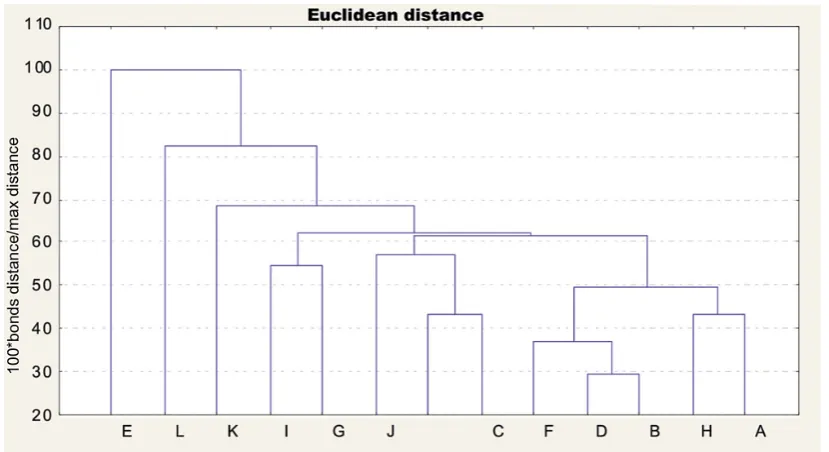
Hierarchical agglomeration methods (cluster analysis) were used to illustrate possible differ-ences between the mean values of the characters analyzed between sampling sites and seasons and in consideration of gender. This is the geometric distance in multi-dimensional space expressed in dendrograms in which the measure of distance among the analyzed objects is the Euclidean dis-tance. It is calculated as follows:
Distance (x,y) = [∑and (xi – yi)2]½
where: x, y – objects for which distance is calcu-lated
RESULTS
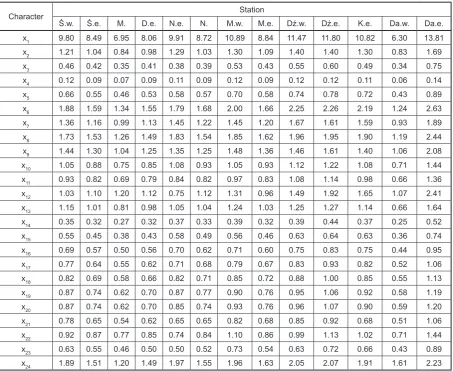
(Table 4). All of the measurable values were ana-lyzed statistically.
Test of the significance of differences among measurable characters among groups
Comparing the results of two-factor analysis of variance (ANOVA) at particular levels of di-vision of the studied individuals (all individuals in the samples, sites where at least 30 individuals were collected, in seasons in which at least 30 in-dividuals were collected in the samples) led to the observation that the number of characters differ-entiating the groups lessened with more precise divisions. The smallest number of differences was noted in study seasons divided by sex. This division system confirmed the method for com-paring characters which was based on identifying precisely which segment of the studied popula-tion is responsible for the noted differences.
The results of the two-factor analysis of vari-ance indicated there was no character that did not
differ significantly statistically from all the indi-viduals from the 13 sites; however, one of these characters, namely lower abdomen width (x5), had a very low coefficient of variation value. The post-hoc test also indicated that scale length (x12) differed decidedly among the following sites: Ś.w., Ś.e., M. and M.w., M.e., Dź.w., Dź.e., K.e., while at site N.e. there was no difference in the values of this character in relation to other sites. The values of the exopodite uropod length (x6) were similar at virtually all sites, and they dif-fered decidedly only between sites D.e. and M.w. After excluding sites with abundances of fewer than 30 individuals, it was noted that all of the characters, with the exception of distance between the eyes (x13), still differed significantly statistically, including character x5, which had a very low coefficient of variation value. Con-sidering the results of the post-hoc test for scale length (x12), differences among the Ś.w., Ś.e., M and Dź.e., K.e, Da.e. sites were noted as well as among the M., D.e. and M.w., M.e., Dź.w. sites.
Table 4. Mean lengths (mm) of the studied characters of N. integer at various sampling sites in 2006 and 2007
Character Station
Ś.w. Ś.e. M. D.e. N.e. N. M.w. M.e. Dź.w. Dź.e. K.e. Da.w. Da.e. x1 9.80 8.49 6.95 8.06 9.91 8.72 10.89 8.84 11.47 11.80 10.82 6.30 13.81
x2 1.21 1.04 0.84 0.98 1.29 1.03 1.30 1.09 1.40 1.40 1.30 0.83 1.69
x3 0.46 0.42 0.35 0.41 0.38 0.39 0.53 0.43 0.55 0.60 0.49 0.34 0.75
x4 0.12 0.09 0.07 0.09 0.11 0.09 0.12 0.09 0.12 0.12 0.11 0.06 0.14
x5 0.66 0.55 0.46 0.53 0.58 0.57 0.70 0.58 0.74 0.78 0.72 0.43 0.89
x6 1.88 1.59 1.34 1.55 1.79 1.68 2.00 1.66 2.25 2.26 2.19 1.24 2.63
x7 1.36 1.16 0.99 1.13 1.45 1.22 1.45 1.20 1.67 1.61 1.59 0.93 1.89
x8 1.73 1.53 1.26 1.49 1.83 1.54 1.85 1.62 1.96 1.95 1.90 1.19 2.44
x9 1.44 1.30 1.04 1.25 1.35 1.25 1.48 1.36 1.46 1.61 1.40 1.06 2.08
x10 1.05 0.88 0.75 0.85 1.08 0.93 1.05 0.93 1.12 1.22 1.08 0.71 1.44
x11 0.93 0.82 0.69 0.79 0.84 0.82 0.97 0.83 1.08 1.14 0.98 0.66 1.36
x12 1.03 1.10 1.20 1.12 0.75 1.12 1.31 0.96 1.49 1.92 1.65 1.07 2.41
x13 1.15 1.01 0.81 0.98 1.05 1.04 1.24 1.03 1.25 1.27 1.14 0.66 1.64
x14 0.35 0.32 0.27 0.32 0.37 0.33 0.39 0.32 0.39 0.44 0.37 0.25 0.52
x15 0.55 0.45 0.38 0.43 0.58 0.49 0.56 0.46 0.63 0.64 0.63 0.36 0.74
x16 0.69 0.57 0.50 0.56 0.70 0.62 0.71 0.60 0.75 0.83 0.75 0.44 0.95
x17 0.77 0.64 0.55 0.62 0.71 0.68 0.79 0.67 0.83 0.93 0.82 0.52 1.06
x18 0.82 0.69 0.58 0.66 0.82 0.71 0.85 0.72 0.88 1.00 0.85 0.55 1.13
x19 0.87 0.74 0.62 0.70 0.87 0.77 0.90 0.76 0.95 1.06 0.92 0.58 1.19
x20 0.87 0.74 0.62 0.70 0.85 0.74 0.93 0.76 0.96 1.07 0.90 0.59 1.20
x21 0.78 0.65 0.54 0.62 0.65 0.65 0.82 0.68 0.85 0.92 0.68 0.51 1.06
x22 0.92 0.87 0.77 0.85 0.74 0.84 1.10 0.86 0.99 1.13 1.02 0.71 1.44
x23 0.63 0.55 0.46 0.50 0.50 0.52 0.73 0.54 0.63 0.72 0.66 0.43 0.89
The lack of differences for character x13 con-firmed during the analysis of variance is an excel-lent illustration of the post-hoc test.
In groups only divided by season with more than 30 individuals in the sample, statistically sig-nificant differences were again noted for all of the characters examined. The post-hoc test indicated there were no differences in scale length (char-acter x12) among sites M., D.e. and Dź.e., K.e, Da.e. However, differences in carapace height (x23) occurred between site M.w. and sites M.e., Dź.w., Dź.e.
The ANOVA test conducted between sexes, excluding juvenile stages, for individuals from all the sites permitted concluding that among all the characters compared only five did not exhibit statistically significant differences (x8, x10, x18, x20, x23).
Test for significant differences of measurable characters among groups – females
The results of two-factor analysis of variance indicated a lack of statistically significant char-acters among females from the 13 sites. Only one character, lower abdomen width (x5), had a very low coefficient of variation value, which was identical for all the individuals in the sample.
After excluding the sampling sites with fewer than 30 individuals per sample, all of the charac-ters still differed significantly statistically, includ-ing character x5, which had a very low coefficient of variation value.
In groups that excluded season and with sam-ples numbering more than 30 N. integer individu-als, again statistically significant differences were noted for all characters examined. The post-hoc test indicated a lack of differences in carapace width (character x9) among sites Ś.w., Ś.e., M. and a high similarity in the values of this charac-ter at sites Ś.w. and Da.e. in comparison with the other sites. No regularities describing the differ-ences in the values of character x10 (cephalotho-rax width below the carapace) at the various sites were noted.
Test for significant differences of measurable characters among groups – males
The results of two-factor analysis of variance indicated that when only males were considered, as was the case with females, no characters were confirmed to be statistically significantly different in the 13 sampling sites. Three characters (x2, x5,
x10) had very low coefficient of variation values. The distribution of the values of the characters examined at the various sites exhibited consid-erable similarity to other sites for character x12 (scale length), particularly for N.e. and N and, to a lesser degree for Da.w. The value of character x13 (distance between the eyes) was virtually similar at all of the sites studied.
After excluding the sampling sites with fewer than 30 individuals per sample, it was noted that among nine sites only two characters (x13 and x15) did not differ statistically significantly. Simi-larly to the previous case, for character x12 (scale length) highlighted sites Ś.e. and M.w., while the values of character x13 (distance between the eyes) were similar at all sites.
After excluding season from groups with more than 30 N. integer individuals in the sample it was observed that, with the exception of char-acters x7 (endopodite uropod length) and x23 (posterior carapace height), all of the remaining characters exhibited significant differences. In this data group, as many as five characters had very low coefficient of variation values. With re-gard to the post-hoc test for character x12 (scale length), two sites were similar – Ś.w. and Ś.e. and M. and D.e. Character x23 is a typical example of values that were very similar in all the sampling sites.
Test for significant differences of measurable characters among seasons
The results of two-factor analysis of variance indicated that among the eight study seasons com-pared only one character (x21 – height of the first and second abdominal segment connection) did not differ significantly statistically. The post-hoc test, however, indicated that the values for indi-vidual characters were highly variable depending on season. In the case of character x11 (cephalo-thorax width above the carapace) the values were practically unchanged among seasons Sp2006, S2007, A2007, LA2006, while the values from WSp and Sp 2007 were decidedly different from those in the other seasons. The heights of the first and second abdominal segment connection (x21) were virtually unchanged in all seasons.
Conducting the ANOVA test between the sexes, excluding juvenile stages, for all individu-als in all seasons permitted determining that of all the characters compared only six did not exhibit statistically significant differences.
charac-ters that did not exhibit statistically significant differences. However, after analyzing these same dependencies, but only for males, two characters (x7 and x21) did not differ significantly statisti-cally. The post-hoc test performed for this group indicated high variation in the values of the stud-ied characters in different seasons. A typical ex-ample of this variation was character x3 (upper teslon width). Even character x7, which did not exhibit high variability, differed substantially among some seasons.
Results of discriminant function analysis
The analysis of results following the applica-tion of the discriminant funcapplica-tion indicated that their accuracy for the classification matrix was within the range of 38–70%. It is worth consid-ering whether accuracy of approximately 39% is sufficient for conducting further analysis; how-ever, in this instance many of the characters had coefficients of variation above 10, and this im-pacted the results of the classification. Because of the program limitations of the function applied, the result obtained did not permit excluding these characters from the final analysis, and this is why they are identified as the most differentiating of various groups. The coefficient of variation value for character x12 (scale length) was in excess of 35%. After excluding those with coefficients V>20m, the greatest share in the studied groups identified were:
• comparisons of sampling sites: x3 – Upper teslon width x5 – Lower abdomen width
x10 – Cephalothorax width below the cara-pace
x18 – Height of the fifth and fourth abdominal segment connection
x24 – Length of male copulatory • comparisons of sampling sites by sex: x3 – Upper teslon width
x7 – Endopodite uropod length
x10 – Cephalothorax width below the cara-pace
• comparisons of sampling sites by sex for fe-males:
x8 – Carapace length
x15 – Height of the connection of the last ab-dominal segment with the telson
• comparisons of sampling sites by sex for males:
x2 – Telson length
x18 – Height of the fifth and fourth abdominal segment connection
• comparisons of study seasons, including by sex:
x4 – Lower telson width x5 – Lower abdomen width
x10 – Cephalothorax width below the cara-pace
• comparisons of sex: x2 – Telson length x3 – Upper teslon width
x10 – Cephalothorax width below the cara-pace
x11 – Cephalothorax width above the cara-pace
x13 – Distance between eyes x14 – Eye diameter (at the base)
x21 – Height of the second and first abdominal segment connection
After the comparative analysis of differences obtained using this test, it can be concluded with high probability that width above the carapace and the distance between the eyes are secondary sex traits of Neomysis integer, while upper telson width and cephalothorax width below the cara-pace might also be secondary sex traits as well as characteristic traits of populations.
Cluster analysis
sampling sites together, with division of samples by sex, indicated that the strongest similarity be-tween males and females occurred at eastern Dzi-wnów site and among males in Niechorze site. The same sites with regard to just females formed two very similar groups: eastern Darłowo and Międzyzdroje and eastern Dziwnów and eastern Świnoujście. However, males were most similar at the Niechorze, eastern Dziwnów, and eastern Mrzeżyno and eastern Świnoujście sites.
The analysis of the results obtained among study seasons for all individuals confirmed in-teresting similarities among seasons S2006 and A2007 and A2006, and also between seasons S2007 and LA2006. After dividing the samples by sex, it was unequivocally confirmed high de-grees of similarity among individuals of the dif-ferent sex in the same season with a simultane-ously strong association with the seasons of WSp, Sp, and S in 2007. Given the similarity of the par-ticular body measurements only among females, the most distinguished seasons were WSp and Sp in 2007, and among males the summers of 2006 and 2007.
DISCUSSION
As has already been noted several times, all of the comparative analyses among the popula-tions examined in the present study were per-formed not only with consideration to the catch group as a whole, but also with sub-divisions by
season and sex. The intention for the compara-tive analysis criteria chosen for the present work was to identify differences that could stem from the length of the specimens in the studied sam-ples as well as those influenced by geographic and environmental variations. It appeared that the majority of results indicated the existence of dif-ferences among the groups compared in virtually every analysis.
The best diagnostic characters in systematic are those that are most stable throughout growth. In the case of the results presented in this paper, large quantity of statistically different characters was impacted by high variation coefficient, which was in turn impacted by two factors: small num-ber of individuals in the samples and wide size range of individuals in numerous samples. This is why characters with high coefficients of variation (V) were omitted from further considerations and comparisons. The data obtained in this manner were analyzed thoroughly.
As mentioned previously, the results obtained through analysis of variance indicated a vast number of differences in characters for sex, sea-son, and among sites. Not until performing dis-crimination analysis among the studied groups was it possible to establish that the characters which were decidedly different among the groups compared were as follows: x2, x5, x6, x10, x11, x18 (telson length, lower abdomen width, exopo-dite uropod length, cephalothorax width below the carapace, cephalothorax width above the
carapace, height of the fourth and fifth abdominal segment connections). The causes of these dif-ferences depended on several unrelated factors; however, it was not possible to detect or dem-onstrate decided differences among populations. Thus, the hypothesis proposed for this study was not confirmed.
Comparative data regarding variation in the measurable characters of different N. integer populations are not, in principal, available in the literature, and those data that do exist were ob-tained based on studies of small sample numbers or on those comprising exclusively females with full brood pouches [Remerie et al. 2005]; there-fore, the analyses of the causes and effects of the resulting differences were based largely on the results obtained from the authors’ own research.
Studies to date on the species N. integer have not discussed differences in body structure be-tween the sexes, which is why the finding from the current authors’ research of the difference in the height of the segment in males from which the copulatory organ emerges (x18) is very inter-esting. In sexually mature male N. integer indi-viduals this segment is larger, and this is probably because of the copulatory organ that, as an ad-ditional, highly mobile morphological element of structure of this segment, automatically increases it volume.
Differences in character x10, cephalothorax width below the carapace, is indirectly linked to sex. In large, sexually mature females measuring more than 11 mm, this character assumes much higher values than those noted in males and ju-venile females. The probable cause of this de-pendence is the occurrence of the brood pouch, or marsupium, in this location during matura-tion, which means that this element is heavier in comparison to those of other individuals. Si-multaneously, it is also a character that indicates differences between the sexes, but it also serves to identify to which generation of a year the indi-vidual belongs.
Another character, the value of which is linked strictly with size of the examined individual, and, thus, also of the generation to which the animal belongs, is the cephalothorax width above the car-apace (x11). The result of analysis suggested that a juvenile N. integer individual does not yet have a fully formed cephalothorax, which means that it has not yet assumed the characteristic teardrop shape, but still remains rectangular. Because of this, the percentage of cephalothorax width above
the carapace is higher in juvenile individuals, but the value of this character decreases along with body growth and subsequent values are lower.
sources of food exploited by these two forms of brook trout and the occurrence of specializations for different environments. Dynes and co-authors suggest that longer pre-dorsal length and shorter dorsal fin enable these fish to cruise better the pelagic waters in search of widely distributed mobile prey, while longer pectoral fins of the lit-toral form permit it to manoeuvre more slowly, but more precisely while searching for food and feeding in the benthic zone. Similar dependencies between pectoral fin length and food consump-tion have been noted in other fish species such as Arctic charr, Salvelinus alpinus [Malmquist 1992, cited in Dynes et al. 1999] and common sunfish, Lepomis gibbosus [Ehlinger 1990, cited in Dynes et al. 1999]. According to Robinson et al. [1993], environment is the main factor shaping individual forms, as is expressed in specific lo-cal adaptations, including spatial distribution and feeding habits, to various biotopes. In addition to adapting to various habitats, another possibility for the occurrence of morphological differences in fish is species phenotypic plasticity, which can modify their development depending on the en-vironment [Swain et al. 1991]. Gąsowska [1973] studied vendace and suggests that each lake in-habited by this species has its own form of this fish. Vendace from two similar, but geographi-cally distant, lakes exhibited greater similarity with regard to certain characters, than did the fish from closely situated lakes in which environmen-tal conditions differed. Kozikowska [1961] con-cludes that plastic characters are more susceptible to environmental impact, while meristic charac-ters are more resistant and exhibit higher degrees of stability, thus providing more information on the genotypes described by them.
The long-term studies of fish discussed above provide a good explanation of why differences were noted at the same sites in different seasons; for example, the spring generation was prob-ably brought into the eastern Dziwnów site with river waters, while the subsequent generation at the site either swam in from the open sea zone or had already occurred at the site after the chang-es caused by the dynamics of the water masschang-es. It also seems that character x5 (lower abdomen width) could have been strictly dependent on the condition of the crustaceans examined, and con-sequently on the environmental conditions shap-ing food availability.
As it has been mentioned above, unfortunately only one study found in the literature focuses on a
similar topic regarding N. integer, but the authors, Remerie et al. [2005], conducted their research on a much smaller scale than that presented in the current paper. Following statistical analysis (i.e., discrimination analysis), the authors designated four characters that are particular to the studied population – eye diameter at the base, corneal length, upper telson width, and telson tail seg-ment length. The results of these authors do not correspond with those of the present study even if upper telson length and eye diameter at the base (only for the sexes) were also designated by dis-crimination analyses in the present study. These results were omitted from further analyses be-cause of their relatively high coefficients of varia-tion (10-20%). Despite a lack of congruous stud-ies, Remerie et al. [2005] underscore the facts that the specifics of body build in this species strictly depends on the environmental conditions differ-ent N. integer populations inhabit.
The range of minute differences in the indi-vidual populations is evidence of the high degree of plasticity in the body proportions of N. integer, which are even more pronounced when particular generations are compared. With such pronounced distribution of the values of various characters, it is difficult to designate those that would indicate which population we are dealing with. Cluster analysis, or dendrograms, confirm this fact in-directly. None of the dendrograms indicate un-equivocally that any of the populations examined differ distinctly from others. The data obtained during the present study suggest that physiologi-cal differences are more important than morpho-metric differences.
CONCLUSIONS
The analysis of the material presented permit-ted formulating the following conclusions:
• Most of the measurable characters in all of the samples compares exhibited allometric growth, and the application of the ANOVA test indicated that most characters were statistical-ly significantstatistical-ly different in all of the groups compared. The high variation coefficient auto-matically excluded them from further analysis. • Modifying the results and applying
the carapace, cephalothorax width above the carapace, and height of the fourth and fifth ab-dominal segment connections.
• Sexually mature males had higher fourth ab-dominal segments, which can be considered to be a secondary sex characteristic, which is typical of N. integer in the Pomeranian Bay. • The appearance of the marsupium, or brood
pouch, beneath the carapace during female sexual maturation meant that this element of the body structure was more massive than those in males or juvenile females.
• Juvenile N. integer individuals had partially developed cephalothoraxes, which meant that they had not yet assumed the character-istic teardrop shape, but were still rectangular. Because of this, the percentage of the width above the carapace was greater in juveniles, but it decreased as the bodies grew.
• The differences between telson length, lower abdomen width, and the exopodite uropod length in the groups compared was probably linked to the varied locomotion capabilities of the populations examined. These are typi-cal differences in phenotype variation, upon which environmental conditions have a deci-sive impact.
• It is likely that the occurrence in the samples of individuals from different generations caused the problem of high and very high co-efficients of differentiation among practically all of the characters analyzed. This suggests that thebiometric analysis should be done in N. integer length classes.
REFERENCES
1. Chojnacki J.C. 1991. Population studies of Neomy-sis integer (Leach, 1815) from the marine coast of Wolin Island. Zesz. Nauk. AR w Szczecinie 143, 49-58.
2. De Giosa M., Czerniejewski P. 2010. Major axis approach to the statystical analysis of the growth of Chinese mitten crab (Eriocheir sinensis) in the Odra estuary (Poland). Oceanological and Hydro-biological Studies 40, 36-45.
3. Dynes J., Magnan P., Bernatchez L., Rodriguez M.A. 1999. Genetic and morphological variation between two forms of lacustrine brook charr, J. Fish Biol. 54, 955-972.
4. Fockedey N., Mees J. 1999. Feeding of the hyper-benthic mysid Neomysis integer in the maximum
turbidity zone of the Elbe, Westerschelde and Gi-ronde estuaries. J. Mar. Sys. 22, 207-228.
5. Gąsowska M. 1973. Comparative biometric stud -ies of vendace (Coregonus albula (Linnaeus 1758)) (Pisces, Coregoninae) from Polish lakes and some adjacent countries, Roczn. Nauk Rol. H-1, 95, 41-51.
6. Grabda E. 1985. Zoology, invertebrates. PWN Warszawa: Volume II, part 1, 345 pp.
7. Jażdzewski K., Konopacka A., Grabowski M. 2005. Native and alien malacostracen crustacean along the polish Baltic Sea coast in the twentieth century. Oceanological and Hydrobiological Stud-ies 34, 175-193.
8. Jerling H.L., Wooldridge T.H. 1995. Feeding of two mysid species on plankton in a temperate South African estuary. J Exp Mar Biol Ecol 188, 243-259.
9. Kinnison M., Unwin M., Boustead N., Quinn T. 1998. Population – specific variation in body di -mensions of adult chinook salmon (Oncorhynchus tshawytscha) from New Zealand and their source population, 90 years after inroduction. Can. J. Fish. Aquat. Sci. 55, 554-563.
10. Kossakowski J. 1967. Crayfish chelid growth. Pol -ish Agricultural Annual 90, H, 423-432.
11. Kozikowska Z. 1961. Environmental impact on fish morphology and biology. Vendace, perch; selected elements. Ecology of Poland. 9, PAN, Warszawa, 542-678.
12. Köhn J., Jones M.B., Moffat A. 1992. Taxonomy, biology and Ecology of (Baltic) Mysids (Mysida-cea: Crustacea). International Expert Conf. Hid-densee, Germany, 126 pp.
13. Lindén E., Lehtiniemi M. Viitasalo M. 2003. Pred -ator avoidance behaviour of Baltic littoral mysids
Neomysis integer and Praunus flexuosus. Marine Biology 143, 845-850.
14. Mańkowski W. 1955. Zooplankton Atlas. MIR, Gdynia. 51 pp.
15. Mauchline J. 1971. The biology of Neomysis inte-ger. J. mar. biol. Ass. U.K. 51, 347-354.
16. Mauchline J. 1980. The biology of mysids and eu-phausiids. In Blaxter J. H. S., F. S. Russel & M. Yonge (eds), Advances in Marine Biology (18). Academic press, London, 681 pp.
17. Mauchline J., Murano M. 1977. World list of My-sidacea, Crustacea. J Tokyo Univ Fish 64, 39-88. 18. Mc Even G., Johnson M., Folsom R. 1954. A statis
-tical analysis of the Folsom plankton sample split-ter, based upon test obserwations. Arch. Meteorol. Geophys. Bioklim. S.A.Meteorol. Goephys.,7, 502-527.
20. Mees J., Abdulkerim Z., Hamerlynck O. 1994. Life history, growth and production of Neomysis integer in the Westerschelde estuary (SW Nether-lands). Mar Ecol Prog Ser 109, 43-57.
21. Odum W.E., Heald E.J. 1972. Trophic analysis of an estuarine mangrove community. Bull. Mar. Sci. Gulf and Caribbean, 22, 671-738.
22. Reist J.D. 1986. An empirical evaluation of coef -ficients used in residual and allometric adjustment of size covariation. Can. J. Zool. 64, 1363-1368. 23. Remerie T., Bourgois T., Venreusel A. 2005. Mor
-phological differentiation between geographically separated populations of Neomysis integer and Mesopodopsis slabberi (Crusstacea, Mysida). Hy-drobiologia 549, 239-250.
24. Riddell B.E., Leggett W.C. 1981. Evidence of an adaptive basis for geographic variation in body morphology and time downstream migration of ju-venile Atlantic salmon (Salmo salar), Can. J. Fish. Aquat. Sci. 38, 308-320.
25. Robinson B.W., Wilson D.S., Margosian A.S., Lotito P.T. 1993. Ecological and morphological differentiation of pumpkinseed sunfish in lakes without bluegill sunfish, Evolutionary Ecology 2, 451-466.
26. Rudstam L.G., Hansson S., Larsson U. 1986. Abundance, species composition andproduction of mysid shrimps in a coastal area of the Northern Baltic Proper Ophelia 4, 225-238.
27. Ruszczyc Z. 1981: Methodology for zootechnical experiments. PWRiL. Warszawa, 428 pp.
28. Shvetsova G., Shvetsov F., Hoziosky S. 1992. Dis -tribution, abudance and annual production of My-sis mixta Lilljeborg in Eastern and Southeastern Baltic. ICES C.M. 1992/L, 24-29.
29. Sokal R. R., Rohlf F. J. 1998: Biometry. W.H. Free-man and Company, New York, 887 pp.
30. Swain P.D., Holtby L.B. 1989. Differences in morphology and behavior between juvenile Coho Salmon (Oncorhynchus kisutch) rearing in a lake and in its tributary stream, Can. J. Fish. Aquat. Sci., 46, 1406-1414.
31. Swain D.P., Riddel B.E., Murray C.B. 1991. Mor -phological differences between hatchery and wild populations of Coho Salmon (Oncorhynchus kisutch): Environmental versus genetic origin. Can. J. Fish. Aquat. Sci., 48, 1783-1791.
32. Szypuła J., Ostrowski J., Margoński P., Krajewska – Sołtys A. 1997. Food of Baltic herring and spra -tin the years 1995 – 1996 in light of the availabil-ity of components. Bull. Sea Fish. Inst., Gdynia, 2 (141), 61-72.
33. Tattersall W.M., Tattersall 0. S. 1951. The British Mysidacea. The Ray Society, London, 399-409. 34. Wiktor K. 1961. Observations of the biology of
Neomysis vulgaris (Thompson 1928) in the Szc-zecin Lagoon and the Pomeranian Bay. Przegl. Zool. 5, 36-42.