A Role of NGO'S in Youth Development and
Imparting Life Skill Education
Dr H.P.Jyothi
Assistant Professor, Department of Studies in Social Work University of Mysore, Manasagangothri, Mysuru - 570 006
Abstract - Life skills are a comprehensive set of universal cognitive and non-cognitive skills and abilities, connecting behavior, attitudes, and knowledge, which youth can develop and retain throughout their lives. Life skills increase young people’s well being and help them to develop into active and productive members of their communities. The present paper try to explore the constraints of the Government in offering the life skills in brief and try to provide elaborately the possible solutions to overcome the constraints. The paper throws light on the five types of life skills that are needed for the youth’s namely Social skills, Communication skills, Higher-order thinking, Self-control and Positive self-concept and further discuss the efforts of three important NGO projects in Karnataka State in which youths are involved to cater the needs of the life skills. The paper findings include the three best successful and sustainable models for youth development in offering the life skill education to youth. .
Key words: Life skills, youth, NGOs, best practices, model and leadership.
I. INTRODUCTION
Give me a handful of youths, I shall shake the world said Swami Vivekananda. The countries with the largest number of young people in 2010 include: India, China and the United States - observed by: Youth Demographics Worldwide (United Nations, Department of Economic and Social Affairs, Population Division, 2011.)
Youths are the strength of our proud nation – India. There contributions are expected by the families for their existence which are small but strong socially fabricated units of the Indian society. Irrespective of gender, religion, caste youths from their early age of 14 go in search of joining the workforce where unskilled works are available for minimum wages, daily wages and where self employment is possible. Unfortunately, the age of a youth/adult for voting and for all practical purposes is 18 as specified by our constitution, where as the children wear the hat of youths at the age of 14 and start working in hazardous situations, leaving their education is a bitter truth. Areas that require specific attention by nation while working with youths are: geographic transitions including youth migration, integrating the youth in urban areas, transition from school to work, youth unemployment, youth groups at risk and implementation of youth policies and programs.
India is a labor-intensive country where labor is cheap and unfortunately mechanization throws them unutilized. Hence all the chances are open for the youths either to sit idle talking about ideals or to get engaged in anti social activities which fetches them easy money, leaving them no time to think about what is right and wrong or to think whether their actions are good for themselves or for this country. Hence it is the responsibility of the governance to direct the youth force to right directions of getting livelihood skills and knowledge and developing leadership qualities and make them to consciously learn love, devotion, and respect for their nation – India. “India’s dream of becoming a super power will be realized by the strength of its youth” says Bharath Rathna awardee Dr C N R Rao, an eminent scientist.
Negative factors affecting the youth in India today include marginalization, lack of voice in the family, poor representation in decision making, limited recreational facilities and adverse technology influences.
II. REVIEW OF LITERATURE
OBJECTIVES OF THE STUDY
To know about the role of a Non - governmental organization in youth development. To study about youth development models and leadership styles offered by NGOs. To identify the types life skill education offered by the NGOs in Mysuru city.
III. METHODOLOGY
The researcher interviewed the head of the institutions of three NGOs namely Magic Bus, Mysuru, V LEAD, Mysuru and Reddy Foundation Mysuru, who explained in detail how the life skills categories by them have yielded results. The researcher interviewed the Co-coordinator of Nehru Yuvaka Kendra, Mysuru district. Five youths from each institution who were involved in these trainings were interviewed on random basis, of which three were girls and two boys. Thus in total 80 youths were interviewed of whom 20 youths from each organization selected. On random basis 10 boys and 10 girls respondents were selected from each organization. Informal discussions were held with the head of the institutions and a structured interview schedule was administered to the youths who all were college students.
IV. A BRIEF ORGANIZATION PROFILE AND RATIONALE TO SELECT THE ORGANIZATIONS FOR THE STUDY
NEHRU YUVAKA KENDRA
Nehru Yuva Kendra were established in the year 1972 with the objective of providing rural youth avenues to take part in the process of nation building as well providing opportunities for the development of their personality and skills. In the year 1987-88, Nehru Yuva Kendra Sangathan (NYKS) was set up as an autonomous organization under the Government of India, Ministry of Youth Affairs and Sports, to oversee working of these Kendras. NYKS is the largest grassroots level youth organization; one of its kind in the world. It channelizes the power of youth on the principles of voluntarism, self-help and community participation. Over the years, Nehru Yuva Kendra Sangathan has established a network of youth clubs in villages, where Nehru Yuva Kendras have been set up. NYKS has targeted to identify areas of harnessing youth power for development by forming Youth Clubs, which are village level voluntary action groups of youth at the grassroots level to involve them in nation building activities. The core strength of NYKS lies in its network of youth clubs. Youth Clubs are village based organizations working for community development and youth empowerment.
The basic objective for creation of youth clubs is to render community support through developmental initiatives involving activities with particular focus on youth empowerment. The implementation of programmes and activities of youth clubs is based on local needs and requirements by mobilizing resources from various government departments and other agencies, which include both national, State level and multilateral institutions. The youth clubs and its member volunteers form the base of the NYKS’s vast national rural network.
Objectives of NYKS are twofold:
1. To involve the rural youth in nation building activities.
2.
To develop such skills and values in them with which they become responsible and productive citizens of amodern, secular and technological nation.
Nehru Yuva Kendra Sangathan has been working in various fronts of youth development with a variety of youth programmes of the Ministry of Youth Affairs and certain special programmes in coordination and cooperation of other ministries. Main focus has been on developing values of good citizenship, thinking and behaving in secular ways, skill development and helping youth to adopt a productive and organized behaviour.
Magic Bus India Foundation is an organization that seeks to close this gap between poverty and opportunity. It enables children and youth in marginalized communities to become active and contributing members of society with dignified livelihood options or jobs. Ranging from education and gender equality to health and employability, important life skills are imparted to children by the youths of the ir own community, through various on field games and other activities. Magic Bus is a pioneer of these sports for development approach in India. Magic bus has created change for 2,50,000 young people through more than 8,000 youth leaders across the country. In Mysore, it has covered approximately 20,000 children through 400 youth leaders.
V-LEAD:
Swami Vivekananda Youth Movement (SVYM) is a development Organization, engaged in building a new civil society in India through its grassroots to policy level action in Health, Education and Community Development sectors. SVYM has its headquarters in Mysuru district of Karnataka State in Southern India. Acting as a key promoter-facilitator in the community’s efforts towards self-reliance and empowerment, SVYM is developing local, innovative and cost-effective solutions to sustain community-driven progress. V-LEAD is an initiative of Swami Vivekananda Youth Movement was established in 2002. V-LEAD has the vision of “Developing human and social capital for a resurgent India" by constantly enhancing the potential of individuals and institutions for the development sector. V-LEAD has been offering training to Youth, NGO’s, Government and Corporate sector, customizing various programs to suit specific needs on issues of management, community development and leadership. With a team comprising of people drawn from various walks of life and having the commitment to serve the society,
Youth Programs: Gen-Next: Gen-Next program which is a flagship program for V-LEAD focuses on the younger generation to make them efficient and productive human resource of our country through training on personality development of the youth. To boost the confidence level of students this will enable them to become good communicators and good decision makers. In engagement with Soften group V-LEAD imparted 7 skills for 7 institutions in 7 days spread in a year. The program is an endeavor to strengthen youth to make them efficient and productive human resource of our country through training on 7 crucial aspects of personality development viz. Leadership Skills, Communication Skills, Analytical Skills, Social Skills, Life Skills, Work Readiness, Understanding India
Reddy Foundation:
Dr Reddy’s Foundation started the skilling initiative in early 2000 at a time when very few agencies were thinking about “placement-based” skilling programs as a solution to help young unemployed youth from marginalized sections. The success of Livelihood Advancement Business School (LABS) soon made it the Foundation’s flagship program and it was adopted by many agencies in India as well as in other countries like Vietnam, Indonesia and Sri Lanka. Under skilling program 26,000 youths are been trained every year. In the last one and half decades, the Foundation his impacted 3.50 lakh youths through its flagship skilling program with an average placement rate of 70%. Integration of life skills is one of the key features of the skill set offered by the Foundation.
All the above organisation are working on the skill development of youths and strongly believe that youth should be provided with life skills. Hence these organisations were selected for the study.
Table I: Profile of the respondents:
Gender / Age 18 years 19 years 20 years Total
Boys 25 25 50 100
Girls 25 25 50 100
Total 50 50 100 200
Table II: The No. of respondents of the organizations
Organizations NYK Magic Bus V-LEAD Reddy
Foundation Total
Boys 10 10 10 10 40
Girls 10 10 10 10 40
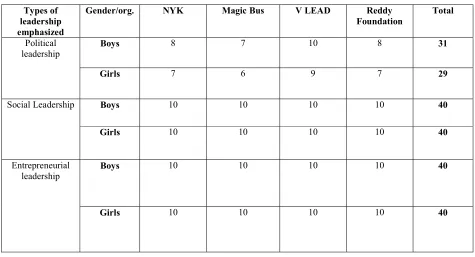
Table III: Types of Leadership needed for youths: Types of
leadership emphasized
Gender/org. NYK Magic Bus V LEAD Reddy
Foundation Total Political
leadership Boys 8 7 10 8 31
Girls 7 6 9 7 29
Social Leadership Boys 10 10 10 10 40
Girls 10 10 10 10 40
Entrepreneurial
leadership Boys
10 10 10 10 40
Girls 10 10 10 10 40
V. NEED FOR YOUTH DEVELOPMENT THROUGH THREE TYPES OF LEADERSHIP STYLES a. Political Leadership:
The respondents opined the political leaderships as of the key strategies to strengthen youths participation in
the panchayats/local bodies is to build the self confidence and morale, equip them with information, skills and tools that will help them to have an independent voice irrespective of caste and gender. Youth service programs empower young people to play an active role in development while gaining the experience, knowledge, and values necessary for employment and active citizenship. Youths need to learn strategies to activate the unresponsive institutions as well as poor governance. They will be motivated to be the self-starters, wherein they will create plans and set them in motion.b. Social Leadership :
The respondents opined the Social Leadership of Youths are expected to give such a social leadership that it help households avoid selling off assets, taking children out of school or postponing necessary medical care, all detrimental to their long term well-being. Many a time’s important government social security measures are misused and youth do nothing about it. Youths are expected in to monitor these programs and bring social justice. Besides, youths are expected to bring communal harmony and cohesiveness in the communities in which they live. They should intervene in situation of conflicts and civil unrest, also during natural disasters and climate change. They have to strive to bring in gender equality. Thus Youth’s well-being is influenced greatly by the larger freedoms within which they live and by their ability to respond to and recover from adverse events—natural or human made. .
c. Entrepreneurial Leadership :
improve on the viability of their enterprises, they will demand from the government to aggressively market the youth products and to provide necessary market information to the youth so as to gain competitive advantage in their areas of operation. Youths will be prepared for the demands and changes of the market in tune with what Peter F Drucker, Management Expert observed “The entrepreneur always searches for change, responds to it, and exploits it as an opportunity”.
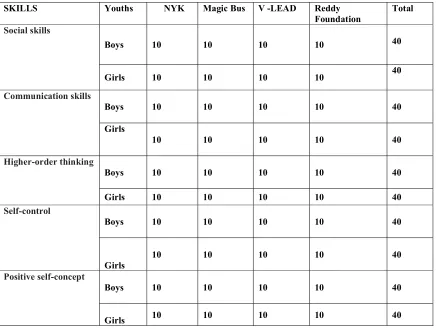
Table IV: LIFE SKILL EDUCATION: NEED AND IMPORTANCE
SKILLS Youths NYK Magic Bus V -LEAD Reddy Foundation
Total Social skills
Boys 10 10 10 10 40
Girls 10 10 10 10 40
Communication skills
Boys 10 10 10 10 40
Girls
10 10 10 10 40
Higher-order thinking
Boys 10 10 10 10 40
Girls 10 10 10 10 40
Self-control
Boys 10 10 10 10 40
Girls 10 10 10 10 40
Positive self-concept
Boys 10 10 10 10 40
Girls 10 10 10 10 40
It is well noted that for the question of need and importance of five types of life skills namely Social, communication, Higher order thinking, self control and positive self concept skills, all the respondents have opined that a participatory trainings were organized by their respective organization and the sessions on the skills were offered through experienced trainers and facilitators. However the head of the NGO institutions opined that the college students do not have time to attend these kinds of sessions, as they have to rush through their regular curriculum and semester system of examination. It is very difficult to get the college students for this reason. The Co coordinator of Nehru Yuvaka Kendra opined that it is very difficult to organize the rural youths for these kinds of sessions, which need minimum, three to five day residential training. The youths respond to entrepreneurial skill than life skill. Hence recently the organization has started to integrate the skills in the training, so that the youth does not miss out any skills. Further it is expressed that there are no competent resource persons and facilitators for the life skills sessions. Hence there is a need to organize the ToT (Training of Trainers)
VI. FINDINGS
With the study of the above organizations in Mysuru district, Karnataka State, the following findings of best practices and models are elucidated:
3. Youth development is understood to be Entrepreneurial development by the organizations and the youths. 4. Youth development means the development of political, social and Entrepreneurial leadership development
5. Youth development is possible through organizing sports and cultural events, through classroom participatory training sessions, practical sessions of entrepreneurship developments
6. The best and sustainable models included the development through sports events to the children through youth leaders who are provided with TOT on and life skills to integrate with sports events by Magic Bus, Entrepreneurial practical session and Life skills by Reddy Foundations to the rural and urban poor youths who have little education or no education. Classroom participatory training sessions for the college students on life skill through youth development program and Gen Next Program of V-LEAD.
7. Nehru Yuvaka Kendra (NYK) being a government initiative trying to emphasis on mobilizing youths from rural and urban poor. The NYK has promoted, formed and nurtured the yuvaka and yuvathi mandalis i.e. youth clubs separately for boys and girls. Through these clubs the youths are offered all kinds of trainings needed for them from time to time. Recently it has started to integrate life skills in its programs
8. Each organization has tried to emphasis one aspect for youth development whereas integrating the life skills as common feature.
9. The respondents response shows that irrespective of the aim and objective of the organization, the respondents strongly agree that they have like sessions on life skills as the discussions are helpful in their life situations.
VII. RECOMMENDATIONS
10. Life Skills Education to youths and to perceive them to be an inevitable for youth development is a relatively new concept and need to be disseminated across the country
11. Imparting life skills should be made a part of the curriculum from high school onwards to the Master degree students in schools
12. The rural youths, urban youths both boys and girls should be made to undergo a three to five day residential training on life skills which are relevant to the 21st century, in which the division of labour at home and outside should be equal to boys and girls . This mindset needs to be built among the youths.
13. The adolescent age group needs to be brought into the fold of training, as they become the youths. It is better to start the basics of life education for them.
14. The organizations are concentrating directly on the youths for their development through life skills where as efforts are needed to bring in the parents. Parents play a major role in developing adolescents and youths. Parenting literacy is very important to mitigate the relationship problems and conflict management.
15. The organizations have not yet conducted an impact study in depth, which if they do, they can improve upon the design of the training offered.
16. There are no trainers on the life skills subject. Hence ToT (Trainers Training) has to be organized.
17. The indicators for having learnt adopted and practiced in daily life situations need to be developed and recorded by the organization in the form of case studies and narrative reports which will help the public at large.
18. There are few literatures on the subject. Hence there is a scope for documentation in the form of books and articles
19. The literacy project in India has tried a lot of experiments, which can be taken as experience by all other stakeholders.
VIII. CONCLUSION
It is important for a country like India to develop youths with all freedom as emphasized by Dr Amarthya Sen, eminent Economist who observed in his work ‘Development as Freedom’ - five distinct freedoms: political freedom, economic facilities, social opportunities, transparency guarantees, and protective security. Freedom, he says, is a principle determinant of individual initiative and social effectiveness; it is good primarily because it enhances the ability of individuals to help themselves.
REFERENCES
[1] Bernhardt, A. C., Yorozu, R., & Medel-Añonuevo, C. (2014). Literacy and life skills education for vulnerable youth: What policy makers can do. International Review of Education, 60(2), 279-288.
[2] MOE, (2014) Implementation of Life Skills Education in schools Review report, Supported by UNFPA, Bhutan, 1-142.
[3] Nations, U. (2010). Department of Economic and Social Affairs, Populations Division (2011). World Population Prospects: The 2015 Revision
[4] UNESCO (2010). UIL Policy Brief 2: Youth Matters : Equipping Vulnerable young people with literacy and life skills.
[5] UNESCO, Family Health International India Country Office, NACO & USAID, (2012) Life Skill Education Tool Kit for orphans and
vulnerable children in India, 1-415.