School Library Specialists:
Effective
Instructional Leaders for P-12 School Library
Programs and Student Achievement
Brenda Pruitt-Annisette, MLS, Ed.D.
(Formerly) Assistant Professor and Coordinator
School Library Media Programs
Chicago State University
Chicago
Abstract
Descriptive study using a frequency scale survey to examine how 891 certified school librarians self- assess their delivery of instructional activities in the school library program. Three school library specific, instructional activities were identified: 1) literacy and inquiry; 2) collection development; and3) co-teaching/collaborating with classroom teachers). Data indicate that participants always: 1) deliver literacy and inquiry instruction – 11 percent of the time; 2) engage in collection development activities – 14 percent of the time; and 3) co-teach/collaborate alongside classroom teachers – 6 percent of the time. Findings may encourage more qualitative and quantitative on how graduate preparation program faculty examine selection processes used to identify school librarians and school library programs for field experiences and practicum placements sites for candidates. Implications for P-12 student achievement are discussed.
School Library Specialists: Effective Instructional Leaders for P-12 School Library Programs and Student Achievement
In addition, school librarians indirectly impact student achievement through quality print and non-print resources that they purchase and maintain in collections used to support P-12 curricula and instruction.
Loerstcher & Todd (2008) found that “The key role of the school librarian centers on pedagogical interventions that directly impacts on and shapes the quality of student learning and their engagement with information. To this end, explicit, systematic and planned pedagogical interventions must be the distinguishing and observable characteristics of the role of the school librarian.”
As school library candidates prepare to lead P-12 school libraries well into the 21st century, theory and instructional strategies should serve as foundations for successful careers in school librarianship. For these reasons, the primary focus of this investigation is on research that defines and supports: (a)instructional delivery;
(b) practicum/field experiences; and (c) graduate preparation programs. Secondly, given the paucity of
information on how certified school library practitioners assess their instructional delivery performances using specific, observable characteristics and activities utilized in their school library programs, this investigation should contribute relevant data to the field regarding library instruction. To be more specific, library instructional activities, supported by the American Association of School Librarians (AASL), which are used to engage and prepare learners to become: (1) avid readers; (2) critical thinkers; (3) skillful researchers; and (4) ethical users of information (AASL, 2009).
Since 2002, the Center on Education Policy (CEP), an independent nonprofit organization, conducted a comprehensive study of No Child Left Behind (NCLB). Findings from year 5 of NCLB implementation were based upon annual surveys of the 50 states, national representation from 349 responding school districts, case study interviews with local administrators in 17 school districts, and two roundtable discussions with representatives from two dozen education associations found that: 1). Most state and school district officials indicated that the NCLB highly qualified teacher requirements have had minimal or no impact on student achievement. (Only 6% of states and 4% of districts indicated that the requirements have improved achievement); and 2). The NCLB highly qualified teacher requirements have not had a major impact on teacher effectiveness in the view of state and district officials. (Only 8% of states and 6% of districts said that these requirements have improved teacher effectiveness to a great extent.)”
Recommendations developed by CEP, based on input from state and federal policy makers, were used to help strengthen “highly qualified‟ teacher requirements under NCLB. After two roundtable discussions and the previous four years of research on NCLB implementation, agreement was reached that would: (a) Encourage states to develop methods to measure effectiveness. (These measures could be incorporated into state teacher certification and licensure systems for veteran teachers.); and (b) Refine the current federal definition of a highly qualified teacher to address the special circumstances of certain kinds of teachers. (More flexibility regarding qualifications of these teachers should be built into the reauthorization of the Elementary and Secondary Act (ESEA).
Dr. Mary Kennedy (2008) argued that teacher quality has become a ubiquitous term that lacks a clear meaning. There are numerous dimensions to teacher quality, each of which may be important, for distinct reasons, to different people. What we lack is a strategy for organizing our assessments into a coherent system. She proposed three broad categories of teacher qualities. These qualities would be expressed through:
1. Personal Resources – those teachers bring with them to their jobs 2. Performance - those related to teachers‟ day-to-day work
3. Effectiveness – those that refer to teachers‟ impact on students.
A very narrow definition of effectiveness, such as raising student scores on achievement tests…might still find multiple qualities within this ostensibly narrow area. Teachers might be more effective in some subjects than in others, or they might be more effective with some types of students than with others (Kennedy 2008).
The John Dewey Collegiate Professor of Education and professor of public policy at the University of Michigan, David K. Cohen, made the following observation in 2011: “When inspectors visit construction sites to assess the quality of work, they do so against the building code, which typically is written out in detail and used to guide work and teach apprentices. When attending physicians supervise interns as they take patients’ histories or check their blood pressure, they compare the interns’ work with established procedures, many of which are written down and used to guide work and teach novices. In these cases, and many others, the assessment of quality in workers’ performance is framed by and conducted in light of occupational standards. That is not the case for teaching in the U.S. K-12 schools. There are no common standards against which teachers’ performance could be judged and no inspections of their performance in light of such standards. There have been standards of a sort (i.e., checklists of questionable quality), but they have not focused on performance in sufficient detail to discriminate acceptable from unacceptable work. If we want to understand teacher preparation, development, and assessment in the United States, we must explain this unusual situation.”
Under the federal law Every Student Succeeds Act (ESSA), the Department of Education, states and individual school districts partnered to achieve the following priorities:
Create incentives to attract talent to teaching;
Support and, especially, disseminate research;
Develop and diversity assessments school use to improve learning;
Conduct minimally invasive testing for accountability;
Ensure that public charter and regular public schools compete on a level field:
Create and support schools and university networks to improve practice, and
Rethink requirements of the time devoted to professional education, student seat time, and academic credit (McGill 2016)
Practicum experiences have been part of the American library educational experience for over one hundred years. The traditional benefit has been the opportunity for candidates to apply theoretical foundations learned in the classroom to real world schools and school children. As no good working chemist was ever made without the laboratory, so lectures and reading alone will not achieve the best results in training librarians without the seminars, problems, study of various libraries in successful operation, and chiefly actual work in a library” (Witucke, 1976). During the 1940s and 50s the debate over theory versus practice led to a further decline of the practicum as part of the library education curricula (Monroe, 1981). After World War II, the master‟s degree became the first professional qualification for librarians in the United States and was a distinct shift from placing importance on practical and technical aspects of librarianship to a more academic and theoretical approach (Grogan, 1983). Leonard and Pontau (1991) indicate that, Rothstein‟s 1967 survey of 36 library school catalogs showed that 28 percent of the schools required field work of students, although this requirement could be waived for those students who had considerable library experience. Grotzinger‟s 1969 survey of library school deans (with a follow-up in 1970) revealed that field experience had never been part of the graduate curriculum in 40.5 percent of the programs. Grotzinger concluded that, although the deans saw value in field work, the administrative and supervisory problems involved with such a program were viewed as outweighing its value. Witucke (1981) reports from “1971-1981 an increase in the percentage of schools offering an optional practicum, from 33 percent to 80 percent. At the same time, the percentage of schools requiring a practicum declined from 28 percent in 1967, to 11 percent in 1972, to 3 percent in 1975. In 1989, Coleman surveyed U.S. library schools on the availability of practicums. Responses were received from 59 of the 60 library schools in the country: 44 (or 74 percent) of the respondents stated that practicums are an option for students; only 6 (or 10 percent) stated that practicums are a requirement. When compared to Witucke‟s findings, these figures indicate a recent increase in the number of schools requiring a practicum and a decrease in those offering an optional practicum (Coleman, 1989).
The Association of Library Instructors for Information Science Educators (ALISE) developed a statistical report of course offerings by colleges and universities in 2015. Data from this study regarding school librarianship concentration and course offerings of field and practicum opportunities for candidates are summarized below:
81 schools offer coursework for librarianship careers
13 schools (16%) indicated field experiences and/or practicum opportunities were provided for school library candidates. (Full report is available at: alise 2015 statistical report.pdf)
“There are varying opinions surrounding the debate concerning the selection of appropriate pedagogical content and the appropriate length/nature of in school teaching experiences. Is it unrealistic to imply that the confidence building aspects of the practicum experience for teacher candidates is similar in theory (if not magnitude) to the confidence demonstrated by a medical student upon completing his/her residency? The residency takes longer, involves working with the best medical professionals in the field, ensures opportunities to serve in teaching hospitals that serve all segments of society, and weeds out those who are less committed to their craft and service to society” (Transforming Teacher Education 2010, 27).
The changing nature of the world in which we live makes it imperative that we become capable of knowing and working with our fellow citizens no matter their ethnic, cultural, racial, or other form of identity. Our planet is a small place and becoming smaller as technology and ease of travel brings us together into one global community…. As individuals and as a profession we need to offer leadership that assures our graduates are prepared to effectively guide the learning process of all students they have the opportunity to work with well into the twenty-first century (Kissock, 2000).
Kissock (2000) concluded from his research that, “Globally, prospective teachers enter teacher education programs within 100 km distance of their home, complete practicum experiences in the same region, and seek teaching positions nearby assuming they will be in classes like those they are familiar with. Teacher educators believe that they are preparing teachers to work in their local communities with little consideration to the diverse settings in which their graduates will actually work.”
Researchers (Wilson, Floden, & Ferrini-Mundy, 2001), in a report prepared for the U.S. Department of Education by the Center for the Study of Teaching and Policy in Collaboration with Michigan State University, asked the following: What kinds, timing, and amount of clinical training (“student teaching”) best equip prospective teachers for classroom practice?” They found that experienced and newly certified teachers alike see clinical experiences as a powerful-sometimes the single most powerful-element of teacher preparation and it was shown that there were significant shifts in attitudes among teacher candidates who worked under close supervision in real classrooms with children. For instance:
1. Field experiences were too often disconnected, or not well coordinated with, the university-based components of teacher education.
2. Field experiences, sometimes, were limited to mechanical aspects of teaching. 3. Finding placements were challenging,
4. Identifying schools that shared the educational perspectives with teacher education program could become an issue.
Recommendations from this research advocated the following:
1. Norms of schools in which prospective teachers are placed are crucial to shaping the experience
2. Stereotypical views of prospective teachers can shift when placed in classrooms that enable this to happen 3. Field experiences with focused, well-structured activities, more significant learning can occur.
4. Cooperating teachers have a powerful influence on the nature of the student teaching experience,
5. Future studies should include more sensitive measures that describe features of program content and quality. 6. Teacher preparation research must be explicit about connections to the improvement of student achievement and about the context in which graduates of teacher preparation are working.
A report prepared by Arthur Levine included surveys completed by administrators, school principals, and deans of teacher training institutions, as well as, 28 programs that covered a wide spectrum of teacher education standards reported the following:
1. Teacher education programs continue to teach outdated curricula that have failed to keep pace with demographics, technology, global competition, and pressures to raise student achievement.
2. Universities continue to treat teacher preparation programs as „cash cow‟ leading them to set low admission and graduation standards for student.
Dr. Levine and others offered a list of recommendations needed to improve teacher education training programs. Here is a summary of those recommendations:
1. Teacher education programs need to attract support from the nation‟s policy makers. 2. Training must be treated as a profession and not as a cash cow.
3. Universities need to change the focus from „quantity‟ and generating dollars to that of recruiting and training quality teacher candidates.
4. States must improve funding for teacher salaries, including tying salary scales to teacher qualifications and performance to reward the best teachers and keep them in the classrooms. (Honawar, 2006)
Similarly, the 2013 National edTPA Implementation Conference, convened by Stanford Center for Assessment, Learning, & Equity and American Association of Colleges for Teacher Education (AACTE), focused on teacher preparation including school librarianship. College and university faculty members participated in workshops where questions about how teacher education programs, policy, and practice would be impacted by the implementation of edTPA. Work sessions encouraged attendees to ask questions and to work collaboratively to unmask answers.
EdTPA proposes to provide an opening for graduate preparation programs to prepare educators, including school library specialist candidates with the ability to design, deliver, and assess instructional activities used to improve student achievement. As a model for teacher preparation program improvement, edTPA:
o Does not measure state standards. o Has an „educative‟ focus
o Provides summative assessment of teaching practice
o Compiles a collection of artifacts and commentaries that support quality teaching practices for candidates As reported by Snyder, de Brey, and Dillow (2015), the National Center for Education Statistics (NCES) projects record levels of total public elementary and secondary school enrollment from 2015 (50.3 million) through at least 2025 (51.4 million). Public elementary school enrollment (prekindergarten through grade 8) is projected to increase 2 percent between 2015 and 2025. Public secondary school enrollment (grades 9 through 12) is expected to increase 3 percent between 2015 and 2025. Overall, the total public-school enrollment is expected to increase 2 percent between 2015 through 2025, the last year for which NCES enrollment projections have been developed.
To meet future demands of P-12 schools by effective school library specialists and programs, research topics for consideration include:
1.Observational Studies – Require that graduate level graduate level teacher preparation programs evaluate the performance of their recent graduates. This could become an annual activity conducted the first year after graduation from the program. These data could serve as benchmarks for a national study (survey), involving school districts, local school communities, and the perceptions of graduates regarding their training and initial performance as practicing school librarians.
2.State Departments of Education – Require an internship (practicum experience) of 100 hours as the capstone experience for school librarians consistent in scope, time requirements, activities, and engagement, with staff and students, equal to the initial student teaching requirement. And,
3.State Departments of Education - Require colleges and universities offering coursework leading to candidates graduating as certified school librarians to track the progress of these graduates for a two-year period to track: (1) employment status; and (2) satisfaction with graduate level training and practicum experience. (Pruitt-Annisette, 2008).
The two-prongs of responsibility associated with school librarianship are: a) administration of a school library program; and b) instruction in a school library program. As previously stated, this study only considered the role of instruction. Research questions were designed to assess those variables associated with school library instruction:
1) co-teaching/collaboration with classroom; 2) delivery of literacy and inquiry skills; and 3) collection development.
1. How would you assess your instructional delivery regarding literacy and inquiry skills in your school library programs?
2. How would you assess your participation in co-teaching/collaborations with classroom teachers? 3. How would you assess your collection development activities in your school library program?
Characteristics (Variables) Defined -Chart A.
Chart A
Collection Development Selection of quality print and electronic resources purchased by the SLMS in collaboration with content specialists (classroom teachers) in support of curricula, instruction, research and student achievement. Literacy and Inquiry Instruction Skills and knowledge needed to make meaningful connections between what one knows and what one is trying to understand, apply, or communicate. Reading, writing, speaking, listening, and communicating are foundational but the term literacy, however has matured. An elastic definition of literacy now encompasses textual, digital, visual, media, informational, cultural, and global literacy under this broad learning umbrella
(Loerstcher et. al 2015
Co-Teaching Alongside Classroom Teacher Collaborative planning sessions whereby all teachers and library specialists work together to provide self-directed discovery and project learning experiences that are in tune with evolving technology opportunities, knowledge environments, and learner’s interests and
needs” (Loerstcher et. al 2015)
Graduate Preparation Programs Accrediting educator preparation programs (EPP) sanctioned by the Council for Accreditation of Educator Preparation (CAEP) or the American Library Association/American Association of School Librarians (ALA/AASL) leading to national library media specialist certification or state level endorsement.
Effective Promoting student learning; motivating students to engage in rigorous learning engagement (Kennedy 2008).
Practicum Experience Learning, administrative experiences and other unpaid professional teaching activities which earn a specified number of credits as part of the overall graduate level library school curriculum (rather than as part of any specific course) (Hastings & Squires, 2002). Highly qualified Requiring certification and licensure as a
prerequisite for school librarianship requirements
Variables as - Inputs (Independent) and Outcomes (Dependent) – Chart B
INPUTS OUTCOMES
Graduate Preparation Programs
Theory
Practice
Portfolio
Theory/Research
Collaborative/Co-Teaching
Inquiry/Literacy
Collection Development
Field Experiences-Observations
w/Certified SLMS*
in/Effective SLMP**
Practicum Placement – Implementation
Confidence Builder
Design, Deliver, and Assess student learning in SLMP
Self-reflect:
a. Student Performance
b. Instructional Impact/Changes
Instructional Activities in SLMP
Collaborative Planning/Co-Teaching
Literacy/Inquiry
Collection Development
Improved Academic Performance for P-12 Learners
Student Achievement
Teacher Satisfaction
Administrative Support/Satisfaction
Parent Support
*School Library Media Specialist **School Library Media Program
Methodology
A survey was designed to collect data captured from eight hundred and ninety-one school librarians. This descriptive analysis required participants to self-assess how they deliver instructional strategies in their school library program. This information will provide a measurement of the instructional components of program content and quality. Participants were certified P-12school librarians attending a training workshop/conference focusing on learning commons‟ concepts led by Dr. David Loertscher and Carolyn Koechlin, October 2015.Participants were currently practicing school librarians who were actively engaged in a professional development activity and were asked to complete a multi-item survey. Of interest to this investigation were survey items which could be used to measure how participants performed their instructional role as certified school librarians. Three questions were selected from a ten -item survey in which school librarians were asked to self-assess their performance implementing these specific school library program instructional activities:
1) literacy and inquiry
2) co-teaching/collaboration with classroom teachers, and 3) collection development activities
A 5-point Likert scale was used to capture responses from each participant. The labels were 1= Never to 5= Always. The following questions were posed:
Data Collection/Analysis
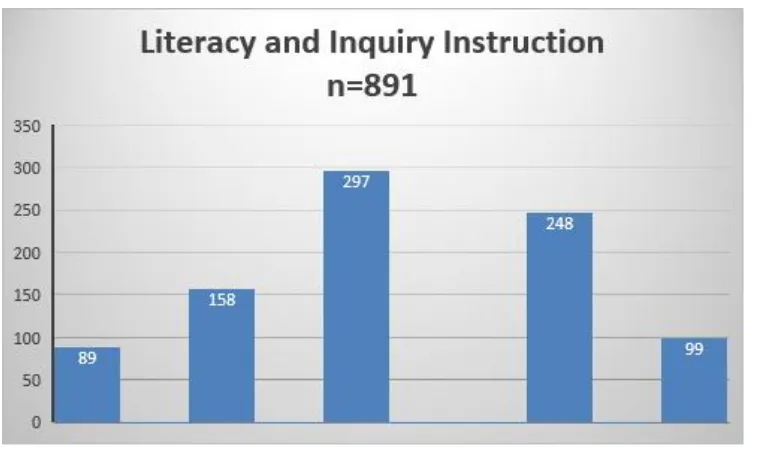
Table 1 – How often do you engage in literacy and inquiry instruction in your school library program?
Certified School Library Media Specialists (Literacy and Inquiry Instruction)
N Percent responding
__________________________________________________________________________
Never 89 9%
Rarely 158 19%
Sometimes 297 33%
Often 248 27%
Always 99 11%
_________________________________________________________________________________ Table 1 Data indicate that 247 respondents (28%) never or rarely deliver literacy and inquiry instruction. Data demonstrate that 545 respondents (60%) sometimes or often deliver literacy and inquiry instruction. Data show 99 respondents (11%) always deliver literacy and inquiry instruction.
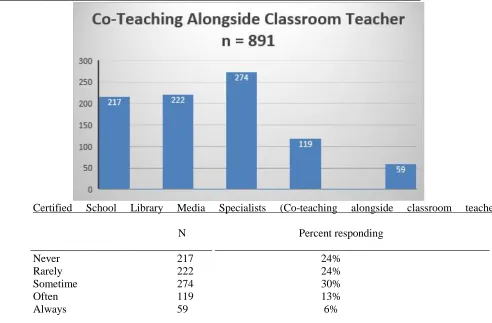
Table 2 How often do you engage in the instructional strategy of co-teaching alongside classroom teacher? _____________________________________________________________________________
Certified School Library Media Specialists (Co-teaching alongside classroom teacher)
N Percent responding
_________________________________ __________________________________________________
Never 217 24%
Rarely 222 24%
Sometime 274 30%
Often 119 13%
Always 59 6%
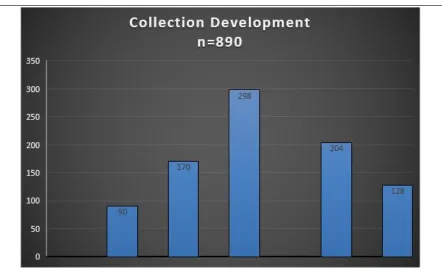
Table 3 -How often do you engage in collection development activities?
__________________________________________________________________________________
Certified School Library Media Specialists (Collection Development Activities)
N Percent responding
____________________________________________________________________________________
Never 90 11%
Rarely 170 20%
Sometimes 298 33%
Often 204 22%
Always 128 14%
____________________________________________________________________________________ Table 3 Data indicate that 260 respondents (31%) never or seldom engage in collection development activities.
Data show 502 respondents (55%) sometimes or often engage in collection development activities. Data indicate that 128 respondents (14%) always engage in collection development activities.
Table 3 data was of interest because it remains unclear how respondents could use data (input from content specialists) to guide strategies needed to build and maintain collections if they did not collaborate with teachers regularly. Or, “How would respondents use data (input from content specialists) to guide building and maintaining school library collections used to support teaching and learning?”
While 128 (14%) respondents always engage in collection development activities, it was startling to see that only 59 (6%) respondents always collaborate/co-teach alongside classroom teachers. These finding suggest that most respondents do not rely upon input from classroom teachers to guide the selection/purchase of library collections/resources used to engage and extend learning through research and informational readings. And raising an additional question, “What voices are guiding the work of certified school librarians around collection development which will ensure these resources are diverse, innovative, and relevant to the needs of the community of learners being served?”. Collection development is an indirect instructional activity performed by school librarians.
Significance of Study
Data collected, analyzed and discussed exposed that there were large percentages of certified school library specialists who teach little or nothing at all in their school library programs. Moreover, the uncertainty of not knowing how many school library candidates are assigned to field experiences and practicum placements with certified school librarians who fail to participate in effective instructional delivery in their school library is problematic for 21st century learning communities. The disconnect between certified school librarians who practice best instructional practices in their school library programs 100% of the time and those certified school librarians who rarely engage in the delivery of quality instruction in their schools raises an alarm for the profession and for P-12 public school students.
Instructional activities in school library programs are crucial to school wide efforts to meet academic performance goals set by school administrators for P-12 students. Consistent delivery of quality instruction in school library programs, by an effective school library specialist (instructional leader) does impact students, teachers, and school library professionals worldwide. Effective, certified school librarians provide support and partner with classroom teachers in collaborative efforts used to engage P-12 learners in the mastery of concepts, standards, and/or learning objectives. These partnership that should exist between two educators- teacher and school librarian- are often the difference between an effective school library program and one that fails to support the success of all P-12 learners, in all school communities. The differences and quality of support provided by the school librarian in allowing P-12 learners to demonstrate academic achievement is both direct and indirect. Both approaches are critical to the success of all P-12 learners.
Graduate preparation programs should not rely only upon federal programs, initiated by newly elected officials, as an opportunity to jump-start curricula design. All graduate level faculty must be willing to examine data regarding academic performance of P-12 learners served by certified school librarians and school library programs where candidates are placed during field experiences and practicum placements. These changes may require more time and effort on the part of graduate faculty to develop their own instructional acumen as it relates to P-12 learning in school libraries. The benefits of these changes may also necessitate additional changes and challenges for online preparation programs which support large, out-of-state, student enrollments. Faculty and/or budgets may not be adequate to ensure that onsite visits and online training of potential co-operating school librarians, in every state, is a possibility. Nevertheless, if school librarianship is to remain a constructive force in 21st century learning communities, the preparation of effective school librarian candidates, who deliver quality instruction to all learners, in all communities, should matter to all.
Limitations of Study
Conclusions/Future Implications
More qualitative and quantitative information about graduate level preparation program curricula for school library specialists, especially field placements and practicum experience, are needed.
This change could ensure that school library candidates are exposed to certified school librarians who engage in administrative and instructional tasks designed to support and to develop skills necessary for P-12 learners, in all communities, to become: 1) critical thinkers; 2) enthusiastic readers; 3) skillful researchers; and, 4) ethical users of information (AASL 2011). Field experiences and practicum placements provide unique opportunities for candidates to see best practices in school librarianship being delivered in authentic, P-12 school library settings. In the design of graduate preparation program curricula, the selection of school-based librarians able to demonstrate best instructional practices is critical to the long- term success of candidates. Graduate faculty, like the construction site supervisor must be able to identify unsatisfactory placement sites for their candidates. In 21st century, global learning communities, school librarian candidates must reach and teach all learners. It is of utmost importance that authentic learning takes place in school libraries where diverse learners are present and, often, represent most learners. Working with effective cooperating teachers from various cultures is critical to the development of highly qualified school librarians. School librarians must embrace the instructional leadership role of school librarianship and recognize that they are being held accountable for continuous academic improvement for all learners. Graduate program faculty must be willing to advise students towards other areas of librarianship (i.e., public, academic, archival, etc.) if the instructional demands of school librarianship offer too many challenges.
Teaching and instruction are keys to effective school library programs. To improve opportunities for school librarians and school library programs to thrive into the next century, I recommend the following to how school librarians are prepared to meet these challenges: Graduate Preparation Program Curricula–Evaluate and improve (as evidenced by on the job graduate performance data) field experiences and practicum placements. Candidates should be exposed to P-12 students and faculty in all communities. Candidates need to see how effective school librarians can deliver quality teaching and learning experiences in schools where there are limited funds, limited resources, and low student performance.
1. Graduate Program Faculty – Practice what we preach. Quality field and practicum experiences that are supported by effective school librarians will require graduate program faculty to have meaningful engagement with school district administrators. It may no longer be acceptable to have school library candidates self-select field experiences and practicum placements IF we have not done our due diligence to ensure the quality of school librarians in those placements. Also, it may no longer be acceptable for school districts to self-identify cooperating teachers. More, not fewer, graduate level faculty members are required if we are to be held accountable for products (graduates) we prepare to lead and teach in P-12 learners.
2. School Library Specialist Candidates – Embrace both prongs of school librarianship: administration and instruction. In schools, all instructional staff are accountable for student achievement. Funding request for resources should have a direct correlation to curricula and academic performance for all students. This includes the insatiable appetite for technology and software purchases which often fail to demonstrate a direct or indirect impact on student achievement. This phenomenon frustrates classroom teachers who are in search of instructional partners (effective school librarians!) and resources needed to improve teaching and learning for their students. We need classroom teachers to collaborate with school librarians and help us promote successful school library programs.
3. Cooperating/Supervisory School Library Teacher (Practitioners) – Prepare to enroll in „refresher‟ courses offered by ALA accredited colleges and universities and professional development opportunities within school districts and at state and local conferences which focus on teaching and learning. School library candidates should be placed with certified school librarians who are able to demonstrate in their own programs the importance of quality instructional activities used to improve teaching and learning for all students.
certifications (i.e., courses; field and practicum hours; name changes; etc.). Support the inclusion of a district and state level administrators solely committed to P-12 school library programs.
5. ALA/AASL – Support meaningful changes in how graduate programs prepare, graduate, and monitor school library specialists for a period of 2-3 years after graduation. We must measure what we value and make necessary changes as warranted by student achievement data.
To believe that all problems in P-12 education are the result of poorly devised field experiences and/or practicum placements for school library candidates is not the intent of this investigation. Hopefully, this investigation will become the impetus for much needed conversation about the importance of quality instruction, delivered by certified school librarians who are selected to serve as models for school library candidates during field experiences and practicum placements arranged by graduate preparation programs.
About the Author
Coordinator of School Library Media Programs at Chicago State University, Chicago, IL. Prior to this appointment, Dr. Pruitt-Annisette served for 16 years as a district level administrative as the P-12 School Library Media Coordinator for Fulton County Schools System in Atlanta, GA. She has completed a two-year term (2015-2017) as co-chair/chair of the School Library Special Interest Group (SL SIG) for the Association for Library and Information Science Education (ALISE). Dr. Pruitt-Annisette has completing a 4th term as an ALA Councilor-at- Large and her first term as a member of the ALA Resolution Committee. In addition, she holds active membership in ALA, ALSC, AASL, YALSA, BCALA, ACRL, Freedom to Read Foundation and the American Association of Colleges and Teacher Education (AACTE); serves as a site reviewer for the Council for the Accreditation of Educator Preparation (CAEP)and ALA/AASL SPA Reviewer; and has provided three years of service to edTPA as a trainer/supervisor for school library specialists.
Dr. Pruitt-Annisette resides in Stone Mountain, GA.
References
Berrett, Dan. (2013). States Demand that Colleges Show How Well Their Students Learn. The Chronicle of Higher Education Faculty (2013). October 28, 2013.
Center on Education Policy. (2007). Implementing the no child left behind teacher requirements. Retrieved March 10, 2014 from http://www.cep-dc.org/
Cohen, David K. (2011). Learning to Teach Nothing in Particular: A Uniquely American Educational Dilemma. American Educator. Winter 2010-2011, 44-46, 54
Coleman, G. (1989). The Role of the practicum in library schools. Journal of Education for Library and Information Science. Vol. 30. (Summer 1989), 19.
Dewey, John. http://www.azquotes.com/author/3918-John_Dewey
Empowering Student Learners: Guidelines for School Library Media Programs. (2009). Chicago: American Association of School Librarians, 5.
Grogan, D.J. (1983). Education for librarianship: Some persistent issues. International Review of Education and Training in Library and Information Science 1. March 1983, 13.
Honawar, V. (2006). Prominent teacher education assails field, suggest new accrediting body in report. Education Week. Retrieved March 10, 2014 from:
http://www.edweek.org/ew/articles/2006/09/20/04teachprep.h26.html
Kennedy, Mary (2008). Sorting out teacher quality. Phi Delta Kappan, 90(1), 59-63.
https://msu.edu/user/mkennedy/publications/docs/Teacher%20Quality/PDK/Kennedy%2008%20PDK.pdf (Retrieved online March 23, 2017).
Kissock, Craig. (2000). Using Practicum Experiences to Prepare Teachers for Work in Multi-Cultural Schools. A Paper presented at the International Council on Education for Teaching Republic of Namibia, July 17-21, 2000.
Leonard, Barbara & Pontau, Donna (1991). Sculpting future librarians through structured practicums: The Role of academic librarians. The Journal of Academic Librarianship, March 1991, 17.
Loertscher, D.V. & Koechlin, C. (2015). The Elementary School Learning Commons: A Manual. Salt Lake City, UT: Hi-Willow Research & Publishing.
Loertscher, D.V. & Todd, R. (2008). We boost achievement: Academic based practices for school library media specialists. Salt Lake City, UT: Hi-Willow Research and Publishing.
McGill, M. (2016). Making the most of ESSA. Education Week. Vol 35, No. 23, March 9. 2016. Pg.20.
Name and Number of Required Course in Different Concentrations: Table 111-41a. alise 2015 statistical report.pdf. Pgs. 264-286.
Pruitt-Annisette, B. (2008). Highly qualified school library media specialist: Perception of teacher preparation training requirements and the impact on P-12 student achievement. Dissertation. MI: UMI-Proquest,173.
Synder, Thomas D.; de Brey, Cristobal; and Dillow, Sally A. (2015). Digest of Education Statistics 2015. December 8, 2016. https://nces.ed.gov/programs/digest/d15/ (retrieved March 17, 2017).
Torres, Aubrey S. (2011). Hello, goodbye: Exploring the phenomenon of leaving teaching early. Journal of Educational Change (2013) 13:117-154.
2013 National edTPA Implementation Conference, convened by Stanford Center for Assessment, Learning, & Equity and American Association of Colleges for Teacher Education (AACTE), and held at the University of San Diego. November 1-2, 2013
Transforming Teacher Education through Clinical Practice: A National Strategy to Prepare Effective Teachers. Report of the Blue-Ribbon Panel on Clinical Preparation and Partnerships for Improved Student Learning. Commissioned by the National Council for Accreditation of Teacher Education (NCATE). Washington, DC: NCATE (November 2010), 1-30.
Wilson, S., Floden, R., and Ferrini-Munday, J. (2001). Teacher Preparation Research: Current Knowledge, gaps, and recommendations. A Research Report prepared for the U.S. Department of Education by the Center for the Study of Teaching and Policy in Collaboration with Michigan State University. February 2001. Pgs.ii-iii,iv.
Witucke, Virginia (1976). Library school policies toward preprofessional work experience. Journal of Education for Librarianship. Winter 1976, 162.