To Study effectiveness of cervical mobilization (SNAGS)
compared with isometric exercises on increasing ROM,
reducing pain and disability in patients with Mechanical Neck
Pain
Dr.Shaik Balkhis Banu
Shaik Rehana Banu
Shaik Chandini
Abstract
Background: Studies have shown that 45-71% recalls episodes of neck pain that affects their daily living activities. The causes and pathology of neck pain is complicated. The major contributory factor is bad postural habits.
Objective: To analyze effectiveness of cervical mobilization (SNAGS) compared with isometric exercises on increasing range of motion and reducing pain and disability in patients with mechanical neck pain.
Method
Design: Experimental study.
Setting: Hospitals and clinics in and around Bangalore. The oxford physiotherapy and rehabilitation centre. Duration: Two weeks.
Subjects: 40 mechanical neck pain patients of both genders between 25- 35 years of age, who satisfy selection criteria were the subjects of the study
Intervention: 40 subjects with mechanical neck pain were identified for study and randomly divided into two groups. Group A (n=20): cervical mobilization (SNAGS) and Group B (n=20): isometric exercises.
Outcome measures: Neck Disability Index (NDI), Visual Analogue Scale (VAS) and Goniometry.
Results: Individually each group showed significant improvement in the pre and post VAS and NDI values. There was significant difference in the delta values of VAS, NDI & Goniometry in both the groups. The difference in delta values of NDI,VAS & Goniometry showed that Group A showed more significant reduction in pain, disability and in range of motion with p value of <0.001.
Conclusion: There is significant reduction in pain disability and increase in range of motion in patients of mechanical neck pain treated with cervical mobilization (SNAGs) compared with isometric exercises.
Key words: Cervical mobilization (SNAGs), Neck Disability Index, Visual Analogue Scale, Goniometry
Lecturer Fathima College of Health Sciences
Introduction
Neck pain is a major hassle inside the society, with an increasing sedentary populace specifically with reliance on computer technology inside the paintings vicinity. one that makes use of laptop for plenty hours constantly, he (or) she can also note growing aches and pains in a few components of the body, generally musculoskeletal in nature.
Ache inside the neck has turn out to be one of the main issues these days. Neck flexion, ahead head posture, scapular retraction, forward hunch posture are some of the faulty postural alignment, resulting in neck pain due to extended cervical muscle activity to support head in ahead role and consequences in increase in fatigue.
Mechanical neck pain may be defined as pain secondary to overuse of a normal anatomic structure (or) pain secondary to injury (or) deformity of an anatomic structure.1
Epidemiological Surveys
Epidemiological surveys show that 45-71% of people recall an episode of neck pain that affected their activities of daily living. At any given time 9% of men 12% of women have neck pain complaints.
In some industries there is a strong evidence for the efficacy of exercises based intervention in improving function among neck pain patients.
Pain in the neck and its associated complication is a regular feature to any orthopaedic clinic. The causes and pathology of neck pain are complicated. However the major contributory factor is bad postural habits
Characteristics of Mechanical Neck Pain
Mechanical neck pain is the most common type. It is also called as simple (or) non- specific neck pain.2
Mechanical neck pain is caused by put on and tear on the components of the neck; mechanical pain typically starts off evolved from degenerative adjustments in the disc. Mechanical neck ache typically doesn’t purpose weak point (or) numbness inside the arm (or) hand due to the fact the hassle is not from strain at the spinal nerves.3
Mechanical neck pain reasons morning stiffness, pain on ahead flexion and also returning to erect role, pain is frequently aggravated by way of extension, lateral flexion, rotation and sporting activities. Pain normally turns into worse over the route of the day
Causes of Mechanical Neck Pain Stress - physical and emotional stresses.
Prolonged postures -Many people fall asleep on sofas and chairs and awake with sore necks. The motive of mechanical neck pain isn't always completely understood, but has been observed to be related to diverse anatomical structures, especially zygapophyseal or uncovertebral joints of the cervical spine.4
It is also associated with occupational factors such as static work tasks, awkward occupational posture, heavy lifting or physically demanding work.
Overuse - Muscular strains is one of the most common causes.5 Poor sleeping postures
Bad postural habits
Sustained, bad occupational posture (or) habitual wrong posture of the neck in relation to the thoracic spine and shoulder joint results in stretching of the soft tissues on one side and elongation (or) lengthening of the ones on the opposite side.
This can cause irritation and strain of the ligaments, muscles (or) joints precipitating cervical pain.
Affected person training may be an important factor in the non-surgical treatment of patients with segmental instability. Patients also need to be made privy to the importance of keeping muscle electricity and persistence, specifically in muscular tissues of the cervical backbone. Fatigue can adversely affect the capacity of the spinal muscular tissues to respond to imposed hundreds, and preferred strengthening programs had been proven to be effective in patients with neck ache.8
Criteria for Mechanical Neck Pain9
❖ Pain is usually cyclic and episodic.
❖ Morning stiffness (or) pain is common
❖ There is pain on forward flexion and often also on returning to erect position.
❖ Pain is often produced (or) aggravated by extension, lateral flexion, rotation and exercises.
Neck pain lasting less than 3 months duration.
research have verified that spinal manipulation aimed at the cervical spine is an powerful intervention for patients with mechanical neck ache however, we should keep in mind the threat-advantage ratio of those interventions. Although many pre manipulative screening processes were proposed to predict patients who can be at danger for severe injury, specifically of the vertebral artery, from cervical manipulation little evidence exists to aid these decision-making schemes in the capability to appropriately pick out those sufferers. Clinical evidence implicates cervical rotation close to the terminal variety of motion as the number one component for vertebral artery injuries after spinal manipulative processes.10 It has been observed that spinal guide approaches may want to activate descending inhibitory mechanisms resulting in hypoalgesic outcomes in remote regions.
Mulligan concept of mobilization with movements (MWMs), first utilized in cervical spine, carry the acronyms, SNAGS, stands for sustained herbal apophyseal glides, used to improve function, limit (or) pain in flexion, extension, rotation, facet flexion of cervical spine.Clinically, SNAGS on a painful mobile level may not always achieve a full pain free movement where as restricting the movement of a painful mobile segment (or) gliding a nearby stiff segment does achieve the desired result. His lop and Perrine in 1967 described isometric exercise as muscular contraction against a load which is fixed or immovable or is simply too much to overcome. Muller and Hettinger in 1954 performed a study that claimed that 1-6 seconds isometric contraction at two thirds maximum performed once each day for five days was sufficient for 5% strength gains per week.
In isometric exercise work out is much faster. One should hold a position for 6 – 8 seconds and perform 5 – 10 sets of exercise. So, each body part must be exercised in as little as a minute or so, presuming few seconds of rest between sets.
Anatomy Of Cervical Spine
Figure 1: Cervical spine
The cervical spine is made up of first seven vertebrae within the spine;
❖ It starts just beneath the skull and ends on the pinnacle of the thoracic spine. There are unique openings inside the vertebra for the arteries that deliver blood to the brain.
❖ The first two vertebral bodies in the cervical spine are called atlas and axis.
❖ The laminae are the components of the vertebrae that form the once more of the bony arch that surrounds and cover the spinal canal.
❖ There is a transverse system on every side of the arch where some of the muscular tissues of the spinal column are attach to the vertebrae.
❖ The spinous process is the bony portion of the vertebral body that can be felt as a series of prominence in the centre of the person’s neck and back.
Intervertebral disc
it is positioned in between every vertebrae and capabilities as a shock absorber and as joints; they are designed to take in the pressure carried via the backbone whilst permitting the vertebral our bodies to transport with respect to every other. They’re made of a robust outer ring of fibers called the annulus fibrosis and a soft center referred to as the nucleus pulpous. The outer layer annulus fibrosis enables to preserve the inner layer nucleus pulpous intact. The annulus is made of very sturdy fibers that join every vertebra together. The nucleus of the disc has a totally excessive water content making it very wet.
Facet joint
The data connect the bony arches of each of the vertebral our bodies. There are two side joints among each pair of vertebrae, one on every facet. Side joint connect every vertebra with the following vertebrae above and beneath. They’re more often than not designed to allow the vertebral bodies to rotate with recognize to every different.
Spinal cord and nerve roots
organization of nerves at stop of spinal wire referred to as cauda equina or horse tail. For the fast distance these nerves travel thru the spinal canal earlier than they exit out the neural foramen. The nerves in every vicinity of the spinal twine hook up with precise a part of the body. The nerve of the cervical backbone goes to the upper chest and arms, the nerves additionally convey electric signals back to the brain growing sensations.
Review Of Literature Prevalence of Neck Pain
1. Joseph Henry Leonard et al (2009): stated in an article improvement and assessment of neck ache and useful trouble scale: a validation look at in the Asian context and envisioned that 67% of individuals will suffer from neck pain at a few level of life. 2. Lucie Tobin (2007): stated in an article neck ache and what reasons neck ache that
about fifty percent of the population has evidence of degenerative modifications of their cervical backbone via the age of 50.
3. Dr.Deepak saran(2001-2006):Did a comprehensive, prospective study on the prevalence, predisposing factors, presenting features and outcome of treatment of repetitive strain injury(RSI) and found that the age between 18 to 52 are usually affected by neck pain and the median age is 27 years.
Manipulation
1.Roodt, maria Louisa Elizabeth (2009): Did a relative study of 3 different types of manual therapy techniques in the management of chronic neck pain(spinal manual therapy) SMT MET & PNF and concluded that all 3 treatment groups responded equally to the treatment.
2. Laurie la russo,ms els (2009): said in a piece of writing that studies currently published inside the annals of internal medicinal drug shows that manual remedy can be a more effective treatment for neck pain than both bodily remedy or traditional hospital therapy. 3. Raquel-martinez-segura pt et al (2006): Did a study to examine the immediate effect of neck pain and active cervical variety of motion after a single cervical high speed, low amplitude (HVLA) manipulation as compared with a manipulate mobilization method in mechanical neck ache topics and concluded that a single cervical high velocity low amplitude manipulation turned into greater powerful in decreasing neck pain at relaxation and in growing cervical range of motion.
Isometric Exercises
1.Pekka tkala et al (2006): Conducted a study on active neck muscle training in the treatment of chronic neck pain of the women and concluded that stretching and aerobic exercises alone proved to be much less effective than isometric training exercises.
Outcome Parameters Neck Disability Index
1. Mark Chancicna et al (2008): Conducted a study on validity of the neck disability index and neck pain and disability associated with chronic, non traumatic neck pain and concluded that NDI and NPAD include most of the functional problems common to the patient group and display good content validity.
2. Marianna n Trouli et al (2008): carried out a examine on translation of the neck disability Index and validation of the Greek model in a pattern of neck pain and concluded that they have amassed sufficient proof to expose that the Greek model of the neck disability index measures disability in sports of each day residing in sufferers with neck pain in a dependable, valid and responsive way. The questionnaire is considered a beneficial device for research and clinical settings in Greek primary fitness care. It’s also suitable for use in worldwide studies in view that its psychometric residences are comparable with different versions tested in one of kind international locations.
Goniometer
1. Cole et al (2005): Conducted a study on reliability of measurements of cervical spine range of motion- comparison of 3 methods and concluded that AROM measurements on the cervical spine made by the universal goniometer have good to high reliability.
2. Shabnam aggarwal (2005): Conducted a study on validation of the spin-T goniometer, a cervical range of motion device and concluded that the spin T- goniometer may be used as a valid measuring instrument for cervical range of motion.
Vas Scale
1. Gallagher et al (2002): Conducted a study on reliability and validity of a visual analogue scale for acute abdominal pain and concluded that the VAS is methodologically sound instrument for quantitative assessment of acute abdominal pain and for detecting clinically important changes in such pain.
2. Brian tip lady et al (1998): Conducted a study on validity and sensitivity of visual analogue scales in younger and older healthy subject’s age and ageing and concluded that the use of visual analogue scale is valid.
Research Methodology Population
Mechanical neck pain subjects between 25-35yrs of both genders. Source of Data
The oxford physiotherapy and rehabilitation centre. Bangalore. Outpatient clinics in and around Bangalore.
Sample Size Sample size is 40 Sampling Design
Simple Random sampling. Research Design
Experimental, pre and post test comparison. Selection Criteria
Inclusion Criteria
• Subjects with mechanical neck pain of less than 3months duration.
• Subjects between the ages of 25-35yrs.
Exclusion Criteria
• Any diagnosed cervical pathology like disc prolapse (or) fracture.
• Persons with rheumatoid arthritis.
• Ankylosing spondylitis.
• Tumours.
• Vertebro-basilar insufficiency symptoms.
• Recent undergone surgery. Materials Used
• Couch/ treatment table
• Towel
• Pillows
• Universal goniometer Tools
• Visual analogue scale (VAS).
• Neck Disability Index (NDI).
Cervical Range of Motion with Universal Goniometer Procedure
• Subjects were allocated randomly after getting informed consent.
• The subjects were positioned comfortably and assessed thoroughly about his /her condition.
• Pre treatment assessment includes evaluation of pain using VAS and disability using NDI and range of motion using universal goniometer.
• Subjects were divided into two groups by Random Sampling Method. Group – A (Experimental Group)
• Cervical mobilization (SNAGS) Group-B (Control Group)
• Isometric exercises. For Experimental Group Cervical mobilization (snags)
(1)Glides to increase rotation/or decrease pain associated with it:
• Patient is seated.
• Therapist behind the patient.
• Push on the spinous process with the medial border of the thumb. Reinforce with other thumb.
• Push up at a 45 degree angle in the direction of the eye ball.
• Other fingers are placed comfortably on each side of the neck (or) upper antero- lateral thorax.
• While glide is being maintained ask the patient to turn his/her head slowly in the restricted painful direction.
• Get the patient to apply over pressure and sustain for few seconds.
• Repeat several times (5reps (or) 6 reps) and reassess (ROM)
2) Glides to increase side flexion and /or decrease the pain related to it:
• Patient is seated.
• Place thumbs over the spinous process of the vertebrae (as the rotation) above the suspected site.
• Then tell patient to actively side flexes to the restricted/or painful area, and just before the movement is felt to take place beneath the thumbs, apply a sustained pressure up along the facet planes.
• Position for a few seconds.
(3) Glides to increase extension and/or decrease pain associated to it:
• Patient is seated.
• Therapist behind the patient.
• Thumbs placed on the upper spinous process of the cervical segment involved.
• Tell patient to extend his/her neck then push up along the facet treatment plane.
• Maintain glides until the neck returns to neutral position.
• The technique is repeated 6times and the movement reassessed. (4) Glides to increase flexion and/or decrease pain related to it:
• Patient is seated.
• Therapist behind the patient.
• One thumb reinforced by other thumb place over the superior spinal process of the spinal segment.
• Tell patient to flex his/her neck and push up along the treatment plane (towards eye ball).
• Several repetitions should be given. Isometrics
For neck flexion:
• Instruct the subject to perform isometric exercises and hold the contraction for 3-6sec without any movement.
• Perform 10repititions of each exercise, 3times a week for 2weeks. General instructions
• Breathe constantly; do not hold breath.
• Keep the neck aligned
• Stay in comfort range
Isometric exercise for neck flexors: Position; seated
Subjects were asked to place one hand on the waist, other with palm facing the forehead, gently press the head with resistance from the hand as though trying to look down.
For neck extension Position; seated
Subjects were asked to clasp the hands behind the head, pull the chin in and move the head back in to the hands.
For neck lateral rotation: Position; seated
Subjects were asked to put one hand on the waist and the other palm on the cheek and were asked to gently press the head in to the hand as though trying to bring the ear down to shoulder.
Research Design
(cervical mobilization (SNAGS)) and 20 patients in Group B-Control group (Isometric exercises)
Statistical Methods: Descriptive statistical evaluation has been achieved inside the present observe. Consequences on non-stop measurements are offered on mean SD (Min-Max) and effects on specific measurements are offered in wide variety (%). significance is classified at 5 % degree of importance. Mann Whitney U test (tailed, impartial) has been used to discover the significance of look at parameters on non-stop scale among group Wilcox on Signed rank check has been used to discover the importance of pre- and post-intervention of final results variables with in every group pupil t test has been used to discover the homogeneity of parameters on continuous scale and Chi-square /Fisher genuine test has been used to locate the homogeneity of samples on specific scale.
1. Mann Whitney U test
Z
Tobs T
T
Where TObs Sum of ranks in na Group A and nb Group B
Table 1: Age distribution of patients studied
Age in years
Control group Experimental group
No 5 No %
25-30 15 75.0 11 55.0
31-35 5 25.0 9 45.0
Total 20 100.0 20 100.0
Mean ± SD 29.30±2.45 29.85±2.74
Fem ale 50.0%
Male
Table 2: Gender distribution of patients studied
Gender
Control group Experimental group
No % No %
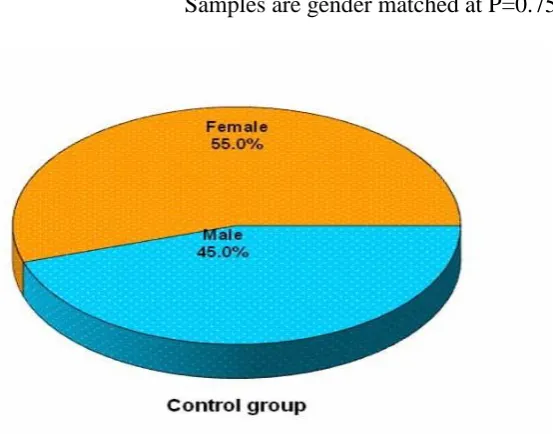
Male 9 45.0 10 50.0
Female 11 55.0 10 50.0
Total 20 100.0 20 100.0
Samples are gender matched at P=0.752
Graph 1 b: Gender distribution between groups
Table 2 and graphs 1b shows that gender distribution between the two groups was
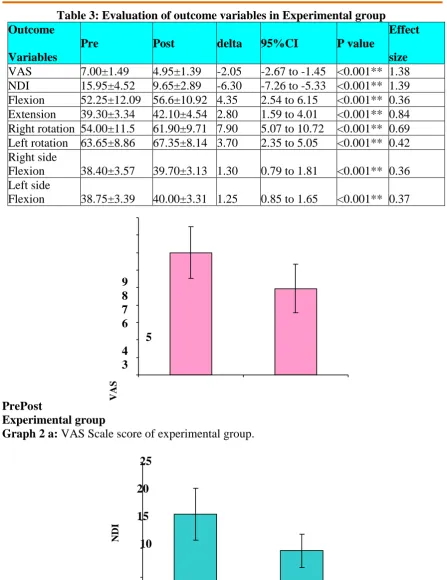
Table 3: Evaluation of outcome variables in Experimental group Outcome
Variables
Pre Post delta 95%CI P value
Effect
size
VAS 7.00±1.49 4.95±1.39 -2.05 -2.67 to -1.45 <0.001** 1.38
NDI 15.95±4.52 9.65±2.89 -6.30 -7.26 to -5.33 <0.001** 1.39
Flexion 52.25±12.09 56.6±10.92 4.35 2.54 to 6.15 <0.001** 0.36
Extension 39.30±3.34 42.10±4.54 2.80 1.59 to 4.01 <0.001** 0.84
Right rotation 54.00±11.5 61.90±9.71 7.90 5.07 to 10.72 <0.001** 0.69 Left rotation 63.65±8.86 67.35±8.14 3.70 2.35 to 5.05 <0.001** 0.42 Right side
Flexion 38.40±3.57 39.70±3.13 1.30 0.79 to 1.81 <0.001** 0.36
Left side
Flexion 38.75±3.39 40.00±3.31 1.25 0.85 to 1.65 <0.001** 0.37
9
8
7
6
5
4
3
PrePost Experimental group Graph 2 a: VAS Scale score of experimental group. 25
20
15
10
VAS
PrePost
2.b Experimental group.
Table 3 and graphs of 2 a, &b shows that Group A showed statistically significant difference in pre and post treatment scores of VAS at a p value of <0.001 and effect size 1.38, NDI at a p value of <0.001 with an effect size of 1.39 and range of motion at a p value of <0.001 with effect size of 0.36, 0.84, 0.69, 0.42, 0.36 and 0.37 respectively. From this study, it is shown that cervical mobilization (SNAGS) has brought about a significant improvement in experimental group when compared to control group in reducing pain disability and increase in range of motion of patients with mechanical neck pain, therefore it can be concluded that the cervical mobilization (SNAGS) can be used as an effective means of treatment in patients with mechanical neck pain.
Discussion
The study attempted to find out the effectiveness of cervical mobilization (SNAGS) compared with isometrics in reducing pain disability and increasing range of motion in patients with mechanical neck pain.
The study was carried out on 40 male and female subjects, age group between 25-35 years. The subjects were randomized into 2 groups i.e. Group A (cervical mobilization (SNAGS) and Group B (isometric exercises) with 20 patients in each group. Group A had10 males and 10 females, Group B had 9 males and 11females. The mean age between the groups A and B was 29.85 and 29.30 respectively.
Limitation Of The Study
❖ The study sample size was relatively small.
❖ The activity levels of the samples selected were not matched which might have altered the results of the study
❖ There was no follow up, so long term effects are not known.
❖ It was a short duration study. Recommendation
❖ The same study may be explored for specific neck pain conditions
❖ This study can also be done for radiating pain conditions.
❖ The study can be further carried out with exercises attending to stabilization of the cervical spine
References
1. Bernstein Wiesel boden, Neck pain medical drug and comprehension management 2001.
2. Neck pain in adults, www.patient.co.uk. EMIS and PIP2005.
3. Neck pain, Orthopaedics and orthopaedics and surgery products, ortho gate orthozilla search engine, (28july 2006).
4. Bogduk N, Aprill C. On the nature of neck pain discography and cervical zygapophyseal joints blocks. Pain 1993; 54:213-7.
5.Pierre cote DC. The factors associated with neck pain and its related disability in the Saskatchewan population. Spine (2000): vol.25 (9):1109-1117
6. Dr.Ray schilling M.D., Net health book.com (June 18, 2009) www.Net health
book.com/ rheumatological disease Neck pain.php.
7. Jayanth Joshi et al, Essential of Orthopaedics and applied physiotherapy, published by B.I. Churchill Living Stone pvt.ltd.1999, pp: 386.
8. Comer fords MJ et al, Functional stability Remaining: principles and strategies for managing mechanical dysfunction, Manual therapy 2001:6(1); 3-14.
9. David J Magee, Orthopaedic physical assessment, American Journal of medicine & rehabilitation .published by w.b.saunder, 77(4):316, jul/aug-1997.
bZlk iwoZ NBh 'krkCnh dk le; /kkfeZd n`f"V ls egku~ ifjorZu dk le; ekuk tkrk gSA bl le; ijEijkxr oSfnd /keZ ,oa lekt eas O;kIr dqjhfr;ksa] ik[kk.Mkssa] dqizFkkvksa] Nqvk&Nwr] Å¡p&uhp vkfn ds fojks/k esa xkSre cq) ds usr`Ro esa ,d vkUnksyu vkjEHk gqvkA xkSrecq) us viuh f'k{kkvksa ds ek/;e ls uohu /keZ dk izpyu fd;k tks vkxs pydj ,d vUrjkZ"Vªh; /keZ cu x;kA ;fn fo'o ds Åij muds ej.kksUrj izHkkoksa ds vk/kkj ij Hkh mudk ewY;kadu fd;k tk; rks os Hkkjr esa tUe ysus okys egkure~ O;fDr FksA1
ckS) /keZ vkn'kZ uSfrdokn ds vk/kkj ij mu fl)kUrksa dks ysdj mBk Fkk tks leLr ekuork ds fy, dY;k.kdkjh FkkA ^^nq%[k vkSj nq%[k dk fujks/k*** ;gh muds /keZ ds nks LrEHk FksA ijUrq ;s leL;k lkoZHkkSe leL;k gS u fd lkEiznkf;d leL;kA nq%[k fujks/k dk tks ekxZ rFkkxr us crk;k og oLrqr% uSfrd ekxZ vkSj lnkpkj dk ekxZ FkkA riL;k vkSj ;K dh uSfrd O;k[;k djds egkRek cq) us ftl /keZ dh LFkkiuk dh og loZxzkgh FkkA deZokn dh iw.kZ xfjek LFkkfir dj mUgksaus ekuo dks leLr cká cU/kuksa ls eqDr dj fn;kA euq"; gh viuk HkkX;fo/kkrk gSA mlds deZ gh mls eks{k fnyk ldrs gSA bl izdkj ds fopkj O;Dr dj mUgksaus ,d vksj Hkkjrh; uSfrd thou ij cy fn;k vkSj nwljh vksj ekuo vkSj eks{k ds chp [kM+s gq, vojks/kksa dks u"V djds ,dek= deZ dh gh e/;LFkrk Lohdkj dhA osnokn] czãokn] ;Kokn ,oa leLr :f<+oknksa dk ifjR;kx dj mUgksaus vius /keZ ds vfr izxfr'khy gksus dk ifjp; fn;k FkkA
xkSrecq) us eks{k dk }kj L=h&iq:"k] czkã.k] {kf=;] oS';] 'kwnz] ckyd] ;qok] o`) vkfn lHkh ds fy, [kksydj vius /keZ dks fo'kq) ekuoknh crk;kA “tkfr&ikfr er iwN vkpj.k iwN** dk mn~?kks"k ;qx&;qx rd ckS) /keZ ds fufoZ'ks"k ekuookn dh nqgkbZ nsrk jgsxkA egkRek cq) us ;g dgk fd ^^tks dksbZ tkfrokn esa Q¡ls gS] xks=okn esa Q¡ls gS] ekuookn esa Q¡ls gS] vkokg&fookg es Q¡ls gS] os vuqie fo/kkpj.k lEink ls nwj gSA**2 lcls igys mUgksaus
gh euq";&euq"; ds chp ds lkjs d`f=e vojks/kksa ds fojks/k esa vkokt mBk;h FkhA
xkSrecq) us nq%[k dks nwj djus ds fy, v"Vkafxd ekxZ crk;k tks furkar fo'kq) vkpkj rRoksa ls fufeZr FkkA mlesa u rks vf/kd 'kkjhfjd lq[k ds fy, vodk'k Fkk vkSj u vf/kd 'kkjhfjd nq%[k ds fy,A og nksuksa ds chp dk ekxZ FkkA blh dkj.k mls e/;e izfrink ¼e/;e ekxZ½ Hkh dgk x;k gSA3 egkRek cq) dh e/;ekxhZ eukso`fÙk muds
izR;sd dk;Z esa ifjyf{kr gksrk gSA mUgksus u ,dek= vU/kJ)k dks Lohdkj fd;k vkSj u ,d ek= tM+ fookfnrk dksA tuoknh gksus ds dkj.k mUgksaus vius vuqqukf;;ksa dks iwjh fopkj Lora=rk ns j[kh FkhA mUgksaus vius vuq;kf;;ksa ls dgk Fkk fd izR;sd /keZrRo dks Lo;a lksp le>dj xzg.k djsA os blfy, bls u xzg.k djsa fd mls rFkkxr us dgk gSA fopkj&Lora=rk ds iks"kd gksus ds lkFk gh mUgksusa rRdkyhu rkfdZdksa dks vuojr fookn dks Hkh gkfudj le>k vkSj mls grksRlkfgr fd;kA
ckS) /keZ furkUr dkj.koknh gS vkSj mldh ;g fo'ks"krk mls vgsrqokfn;ksa] fu;frokfn;ksa vkSj fujk'kkokfn;ksa ls i`Fkd djrh gSA ckS) /keZ ds vuqlkj lalkj esa tks /keZ gS og dkj.k ls mRiUu gksrk gSA ml dkj.k dks rFkkxr us dgk gS vkSj mldk tks fujks/k gS mls Hkh crk;k gSA4 mUgksaus vkuUn ls dgk Fkk fd tUe ds dkj.k tjkej.k gSA5
blh dkj.kokn dks ysdj ckS)/keZ ds izrhR;leqRikn dk fl)kUr izfrikfnr fd;k x;k FkkA izrhR;leqRikn izR;sd oLrq dh mRifÙk vkSj vuqRifÙk dk n'kZu gSA ekuo ds mRd"kZ ds fy, egkRek cq) us lHkh cká vkMEcjksa dk ifjR;kx dj ,dek= vUr%'kqf) ij tksj fn;kA
ckS) /keZ esas deZ dk vFkZ oSfnd deZdk.M u gksdj euq"; dh leLr dkf;d] okfpd vkSj ekufld ps"Vkvksa ls gSA ;gha deZ euq"; ds nq%[k&lq[k dk nkrk gSA cq) /keZ deZ iz/kku /keZ gS D;ksafd tks egRo vkfLrd /keksZa eas bZ'oj dk gS ogha egRo ckS) /keZZ esa deZ dk gSA Kku izkfIr deZ ds Åij gh vk/kkfjr gSA egkRek cq) us jkgqy ls dgk fd ^ftu fdUgha* Je.kksa ;k czkã.kksa us vrhrdky esas dk;Z&deZ] opu deZ vkSj eu&deZ ifj'kksf/kr fd;s] mu lcus blh izdkj ifjos{k.k dj dk;Z&deZ] opu&deZ vkSj eu&deZ ifj'kksf/kr fd;k tSls eSusA**6 egkRekcq) us dgk fd
^tkfr er iwN* vkpj.k iwN uhpdqy dk iq:"k /k`freku] Kkuoku vkSj ikijfgr eqfu gksrk gSA tks lR; ls nku neueqDRk osn ds vUr dks igq¡pk gS vkSj ftlus czãp;Z dks iwjk fd;k gS mls ;K esa izkIr ;K&miohr dgksaA deZ ds vk/kkj ij gh egkRek cq) us prqo.khZ 'kqf) dk izfriknu fd;k FkkA mudk mins'k Fkk fd tks Hkh euq"; pkgsa
“ia0 tokgj yky usg: egkfo|ky;] ck¡nk] mRrj izns”k”
og czkã.k gksa] oS'; gks vFkok 'kqnz gks] lE;d~ deZ djsxk og eks{k dk vf/kdkjh gksxkA7 bl izdkj ge ns[krs gS
fd vUr% 'kqf) vkSj lE;d~ deZ ds Åij tksj nsdj egkRek cq) us lekt esa uSfrd vkn'kZokn LFkkfir djus dh ps"Vk dhA
egkREkk cq) furkUr iz;kstuoknh FksA vr% mUgksaus mUgha fo"k;ksa ij mins'k fn;k tks euq"; ds ije dY;k.k ds fy, vko';d FksA yksd] tho vkSj ijekRek lEcU/kh vusd fooknksa dks mUgksusa O;FkZ le>k blfy, bl ij ckr djus ls euk dj fn;kA fuokZ.k cq) /keZ dk ije y{; gSA ijUrq bl /keZ esa fuokZ.k dk tks :i fu/kkZfjr fd;k x;k gS og vU; /keksZa esa izfrikfnr fuokZ.k ls fHkUu gSA ckS) /keZ esa fuokZ.k blh thou esa lEHko gS8 tcfd vU; /keksZa esa fuokZ.k
eqR;q ds i'pkr~ gh izkIr gks ldrk gSA bl izdkj ckS) /keZ ds izk;% leLr fl)kUrksa dh Hkk¡fr fuokZ.k Hkh thou dh leL;k gSA egkRek cq) fuokZ.k izkfIr ds ckn cgqr fnuksa rd thfor jgsaA okLro esa ckS) /keZ eas vFkZ ije~ Kku gSA og thou dh iw.kZ fo'kqf) gSA9 og foeqfDr dk nwljk uke gSA mls ik tkus ij euq"; tjk&ej.k ds pDdj ls NwV
tkrk gSA ;g ve`r gSA bls ikdj dqN Hkh ikuk 'ks"k ugh jgrk gSA ftl izdkj ikj pys tkus ij euq"; dks uko dh vko';drk ugh jgrh mlh izdkj fuo`Ur euq"; dks /keZ dh Hkh vko';drk ugh gSA10
egkREkkcq) us bZ'oj dks l`f"VdrkZ :i eas Lohdkj ugha fd;k D;ksfd ,slk djus ij mUgsa bZ'oj dks nqq%[k dh l`f"V djus okyk Hkh ekuuk iM+rkA furkUr deZoknh gksus ds dkj.k mUgksaus ekuo ds dY;k.k ds fy, bZ'oj lEcU/kh iz'uksa dks vuko';d le>kA blh ls mu ij os ekSu jgsA ijUrq bldk vFkZ ;g ugha gS fd os vuh'ojoknh gksA ;fn bZ'oj dks vfuoZuh; ije rRo ds vFkZ esa fy;k tk; rks pkokZdn'kZu dks NksM+dj dksbZ Hkh Hkkjrh;n'kZu vuh'ojoknh fl) u gksxkA ckS) /keZ Hkh ijerRo ds vfLrRo dh vksj ijks{k :i ls ladsr djrk gSA11 vr% bl
n`f"V ls og Hkh vuh'ojoknh ugha dgk tk ldrkA
egkREkk cq) dh n`f"V ls vkRek ds iz'u dks ysdj Hkh rRdkyhu lekt esa vfriw.kZ /kkj.kkvksa dk izpkj gks jgk FkkA vkREkk lEcU/kh iz'u dks ysdj lkjukFk esa mUgksaus iapoxhZ; fHk{kqvksa dks tks mins'k fn;k Fkk] og fou;fiVd ds egkoXx esa vUkUr yD[k.k lqÙk ds :i esa lajf{kr gSA blls rFkkxr us ik¡pksa LdU/kksa&:i] osnuk] laKk] laLdkj vkSj foKku dk fo'ys"k.k djds ;g er izLrqr fd;k fd buesa ls dksbZ Hkh vkREkk ugha gks ldrh D;ksafd ;s lc vfuO; gSa vkSj jksx ds v/khu gSA vr% ;s lc vukRe gSA egkRekcq) us 'kk'orokn vkSj vPNsnokn ds chp dk ekxZ ^e/;e izfrink* dk vuqxeu fd;kA mUgksaus u ;g dgk fd vkRek gS vkSj u ;g dgk fd vkREkk ugh gSA tgk¡ os vukReokn dk mYys[k djrs gS ogk¡ mudk vFkZ dsoy ;gh gS fd lEiw.kZ vuqHkwr txr esa vkREkk ugha gS D;ksafd ;g txr u'oj gS vkSj jksxks ds v/khu gSA okLro esa mUgksaus vkRek ds fo"k; ij fopkj djuk euk fd;k gS vkSj bls veufldj.kh; /keZ crk;k gSA12 vkRekokn vkSj vukREkokn ds >xM+s dks fuf'pr fd, fcuk Hkh mudk /keZ
fuokZ.knk;d FkkA
xkSre cq) us dgk fd euq"; ftu nq%[kksa ls ihfM+r gS] muesa cgqr cM+k fgLlk ,sls nq%[kksa dk gS] ftUgsa euq"; us
viuh vKkurk o”k ;k feF;k n`f"V;ksa ls iSnk dj fy;k gSA mu nq%[kksa dk izgk.k vius lgh Kku }kjk gh lEHko
gS] fdlh ds vk'khZokn ;k ojnku ls mUgsa nwj ugh fd;k tk ldrkA lR; dk Kku gh lE;d Kku gSA vr% lR; dh [kkst nq%[kksa ls eks{k ds fy, vfr vko';d gSA [kkst vKkr lR; dh gh dh tkrh gSA ;fn lR; fdlh 'kkL=] vkxe ;k mins'kd }kjk Kkr gks x;k gks rks mldh [kkst ughaA vr% cq) us vius iwoZorhZ yksxksa }kjk crk;s x;s lR; dks udkj fn;k vkSj vius fy, u;s fljs ls mldh [kkst dhA cq) Lo;a dgha izfrc) ugha gq, vkSj u gh vius f'k";ksa dks dgh izfrc) gksus fn;kA mUgksaus dgk fd esjh ckr dks Hkh blfy, pqipki u eku yks fd mls cq) us dgk gSA ml ij Hkh lansg djks fofHkUu ijh{kkvksa }kjk mldh ijh{kk djksA thou dh dlkSVh ij mUgas ij[kks] vius vuqHkoksa ls mldk feyku djks] ;fn rqEgsa lgh tku iM+s rks mUgsa Lohdk;Z djks vU;Fkk NksM+ nksA ;gh dkj.k Fkk fd ckS) /keZ jgL;e; vkMEcjksa ls eqDr gS vkSj ekuoh; laosnukvksa ls vksr&izksr ,oa lh/ks ân; dks Li'kZ djrk gSA13
xkSre cq) fo'o dY;k.k ds fy, eS=h Hkkouk ij cy nsrs gaSA Bhd oSls gh tSls egkohj Lokeh us fe=rk ds izlkj dh ckr dgh FkhA xkSre cq) ekurs gS fd eS=h ds eksxjkas dh egd ls gh lalkj esa ln~Hkko dk lkSjHk QSy ldrk gSA cq) dgrs gS fd cSj ls cSj dHkh ugha feVrkk gSA fe=rk ls gh cSj [kRe gks ldrk gSA fe=rk gh lukru fu;e gSA xkSre cq) ?k`.kk ds ?kkokas ij eksgCcr dk ejge yxkrs gSaA vkt csbekuh ds cktkj esa LokFkZ ds flDds py jgs gSaA ^ixM+h mNky* dh jktuhfr vuSfrdrk ds vkaxu esa vB[ksfy;ka dj jgh gSA vU;k; dh vkx esa bZeku dks bZa/ku cuk;k tk jgk gSA n;k dk ne ?kqV jgk gSA Ny&Nan dh Nqfj;ksa ls fo'ouh;rk dks ?kk;y fd;k tk jgk gSA ,slh fLFkfr ls eqfDr ds fy, xkSre cq) dh f'k{kkvksa dks vius vkpj.k esa ykuk vkt Hkh vko';d gSA14
Hkkjrh; lekt esa vusd o.kZ o tkfr;ka fo|eku gSA buds dkj.k Hkkjr esa vusd cqjkb;ka ,oa nks"k mRiUu gks x, gSA LoLFk lekt ds fuekZ.k ds fy, ;g ijeko';d gS fd Hkkjr ls o.kZ o tkfr;ka ds vk/kkj ij fd;s x, vizkd`frd foHkktu dks lekIr fd;k tk;A cq) dk lektn'kZu o.kZ vkSj tkfr ds vk/kkj ij fdlh Hkh izdkj dk foHkktu ugha ekurkA ckS) n'kZu dh n`f"V ls lHkh euq"; leku gSA tUe vFkok deZ ds vk/kkj ij euq"; esa fdlh izdkj dk Hksn ugha gSA ;fn lekt dks laxfBr LoLFk vkSj jksx jfgr jguk gS rks cq) ds f'k{kkvksa ds ekxZ ij pyuk vko';d gSA
ckS) /keZ us gh loZizFke Hkkjrh;ksa dks ,d ljy rFkk vkMEcjjfgr /keZ izznku fd;k ftldk vuqlj.k jktk&jad] Åap&uhp lHkh dj ldrs gSA /keZ ds {ks= esa blus vfgalk ,oa lfg".kqrk dk ikB i<+k;kA v'kksd] dfu"d] g"kZ vkfn jktkvksa esa tks /kkfeZd lfg".kqrk ns[kus dks feyrh gS og xkSre cq) dh f'k{kkvksa dk gh izHkko FkkA v'kksd us ;q) fot; dh uhfr dk ifjR;kx dj /kEefot; dh uhfr dks viuk;k rFkk yksd dY;k.k dk vkn'kZ leLr fo'o ds le{k izLrqr fd;kA
xkSre cq) dh f'k{kkvksa us yksxksa ds thou dk uSfrd Lrj Åapk mBkus esa egRoiw.kZ ;ksxnku fn;kA tu&thou esa lnkpkj ,oa lPpfj=rk dh Hkkoukvksa dk fodkl gqvkA xkSre cq) us uSfrdrk dks loksZPp izkFkfedrk nh Fkh rFkk og Kku ls Hkh c<+dj bls ekurs FksA xkSre cq) dk n'kZu ,oa mudh f'k{kkvksa us u dsoy Hkkjr vfirq fo'o ds ns'kksas dks vfgalk] 'kkfUr] cU/kqRo] lg&vfLrRo vkfn dk vkn'kZ crk;kA blds dkj.k gh Hkkjr dk fo'o ds ns'kksa ij uSfrd vkf/kiR; dk;e gqvkA xkSre cq) us ekuo tkfr dh lekurk dk vkn'kZ izLrqr fd;k FkkA15
bl izdkj ;g Li"V gksrk gS fd xkSre cq) us ftu f'k{kkvksa] fl)kUrksa ,oa vkn'kksZa dk izfriknu fd;k os vkt ds bl oSKkfud ;qx esa Hkh viuh ekU;rk cuk;s gq, gSA xkSre cq) dh f'k{kkvksa dks iwjs fo'o esa dk;kZfUor fd;k tk jgk gSA Hkkjr us jktfpUg ds :i esa ckS) izrhd dks xzg.k fd;k gS rFkk og 'kkfUr ,oa lg&vfLrRo ds fl)kUrksa dk iks"kd cuk gqvk gSA iap'khy dk fl)kUr ckS) /keZ dh gh nsu gSA vk/kqfud la?k"kZ'khy ;qx esa ge xkSre cq) ds fl)kUrksa ,oe~ mudh f'k{kkvksa rFkk Kku dk vuqlj.k djsa rks fu%lansg 'kkfUr ,oa ln~Hkko LFkkfir dj ldrs gSaA
,0,y0 ok'ke] noUMj nSV okt bf.M;k] i`"B 256- nh?kfudk; 1-3
/kEepDdifRr lqÙk ¼la;qDr fudk;½ fou;fiVd ¼egkoXx½
egkfunkulqRr lqRr ¼nh?kfudk;½
vEcyf}d&jkgqyokn] lqRrUr ¼efT>e fudk;½ 2-2 vaXxtlqRr ¼nh?kfudk; 3] 4½
vaxqRrjfudk; ¼frdfuikr½] lqRr fuikr ¼ikjk;.k iXxks½ pwy foeqg lqRr ¼lqRr fuikr½
efT>efudk; 1-3-2
11. Indian Philosophy by Radha Krishnan Vol. 1. p. 117 lCcklo lqRrUr ¼efT>efudk; 1-1-2½
13. Bharatdiscovery.org.
14. Hindi.webdunia.com
vk¡py dk “kfCnd vFkZ gS& tuin ;k {ks=A ftu miU;klksa esa fdlh fof”k’V {ks= ds tuthou dk lexz
fcEckkRed fp=.k gksrk gS] mUgsa vkapfyd miU;kl ;k dgkfu;k¡¡ dgh tkrh gSA bu dgkfu;ksa ;k miU;klksa dk ewy
mn~ns”; ml {ks= fo”ks’k dh lH;rk] laLd`fr] jgu&lgu] :f<+;ka] lkekftd ijEijk,a] yksd thou] R;kSgkj] ioZ]
Hkk’kk&cksyh] Hkwxksy] jktuhfrd] psru ,oa vkfFkZd] dfBukb;ksa dk fp=.k djuk gksrk gSA vkapfyd miU;kldkjksa esa Q.kh”ojukFk js.kq th dk izeq[k LFkku gSA os fgUnh ds vkapfyd miU;klksa esa ehy dk iRFkj ekus tkrs gSaA eSyk
vk¡py] ijrh ifjdFkk bldk lqUnj mnkgj.k gSA izd`fr dk ekuohdj.k mudh fo”ks’krk gS1& ^ijrh dk pIik&pIik
g¡l jgk gSA^2 js.kq th dh dgkfu;ka Hkh viuh lajpuk vkSj izd`fr f”kYi esa fgUnh dgkfu;ksa dh ijEij esa ,d vyx
vkSj ubZ igpku ysdj mifLFkr gksrh jgh gSA budh yxHkx gj dgkuh esa ik=ksa dh lksp ?kVukvksa ls iz/kku gksrh FkhA ^,d vkfne jkf= dh egd^ bldk vPNk mnkgj.k izLrqr djrh gSA oLrqr ,d ubZ dFkk&/kkjk dk izkjaHk bUgh dgkfu;ksa ls gksrk gSA3
fgUnh dFkk&lkfgR; ds egRoiw.kZ jpukdkj Q.kh”ojukFk js.kq th dk tUe 4 ekpZ 1921 dks fcgkj ds iwf.kZek ;k
ftyk ds vkSjkgh fgaxu xkWo esa gqvk FkkA neu vkSj “kks’k.k ds fo:) vkthou la?k’kZ djrs jgsA jktuhfr esa lfØ;
fgLlsnkjhA 1942 ds Hkkjrh; Lok/khurk laxzke esa ,d izeq[k lsukuh dh Hkwfedk fuHkk;sA 1950 esa usikyh turk dks
jk.kk”kkgh ds neu vkSj vR;kpkjksa ls eqfDr fnykus ds fy, ogk¡ dh l”kL= ØkfUr vkSj jktuhfr esa lfØ; ;ksxnku fn;sA 1952&53 esa nh?kZ dkyhu jksx xzLr gks x;s rri”pkr jktuhfr dh vis{kk lkfgR;&l`tu dh vksj mudk vf/kd >qdko gqvk vkSj 1954 esa cgqpfpZr miU;kl eSyk vk¡py dk izdk”ku gqvkA dFkk&lkfgR; ds vfrfjDr laLej.k] js[kkfp=] vkSj fjiksrktZ vkfn fo/kkvksa esa Hkh fy[ksA4
Q.kh”ojukFk js.kq th us 1936 ds vkl&ikl ls dgkuh ys[ku dh “kq:vkr dhA ijUrq os vifjiDo dgkfu;k¡ FkhA
1944 esa mUgksaus ^cV ckck^ uked igyh ifjiDo dgkuh fy[khA nwljh dgkuh ^igyoku dh <+ksyd^ 11 fnlEcj
1944 dks ^lkIrkfgd fo”ofe=^ esa NihA 1972 esa js.kq th us viuh vafre dgkuh ^fHkfÙkfp= dh e;wjh^ fy[khA
mudh vc rd miyC/k dgkfu;ksa dh la[;k 63 gSA ^Bqejh^ ^vfxu[kksj^ ^vkfne jkf= dh egd^ ^,d Jko.k nksigjh dh /kwi^ ^vPNs vkneh^ lEiw.kZ dgkfu;k¡ vkfn muds izfl) dgkuh laxzg gSA
mudh dgkuh ^ekjs x, xqyQke^ ij vk/kkfjr fQYe ^rhljh dle^ us Hkh mUgsa dkQh izflf) fnyokbZA bl fQYe dks flusek esa ehy dk iRFkj ekuk tkrk gSA5 mUgksaus vapy fo”ks’k dh Hkk’kk dk vf/kd ls vf/kd iz;ksx fd;k rkfd
ml tu leqnk; dks T;knk ls T;knk izekf.kdrk ls fpf=r fd;k tk ldsA js.kq th us viuh vusd jpukvksa esa
vk¡pfyd ifjos”k ds lkSan;Z mldh lthork vkSj ekuoh; laosnukvksa dks vf}rh; <ax ls of.kZr fd;k gSA n`”;ksa dks
fpf=r djus ds fy, mUgksaus xhr] y;] rky] ok|] <ksy] [katM+h] u`R;] yksd ukVd] tSls midj.kksa dk lqUnj
iz;ksx fd;k gSA js.kq th us feFkd yksd fo”okl] va/kfo”okl yksd xhr bu lHkh dks viuh jpukvksa esa LFkku fn;k
gSA mUgksaus ^eSyk vk¡py^ miU;kl esa vius vk¡py dk bruk xgjk o O;kid fp= [khapk gS] fd lpeqp ;g miU;kl fgUnh esa vk¡pfyd vkSiU;kfld ijEijk dh lkSan;Z cks/k dks le`) djus ds lkFk&lkFk vekuoh;rk ijk/khurk vkSj lkezkt;okn dk izfrokn Hkh djrk gSA6 bl miU;kl ds dsUnz esa gS fcgkj dk iwf.kZ;k ftyk tks
dkQh fiNM+k gSA js.kq th dgrs gSa&
^^blesa Qwy Hkh gS] “kwy Hkh] /kwy Hkh gS] xqykc Hkh] dhpM+ Hkh gS] panu Hkh] lqUnjrk Hkh gS] dq:irk Hkh eSa fdlh ls
Hkh nkeu cpkdj ugha fudy ik;k^^A
^eSyk vk¡py^ oLrq vkSj f”kYi nksauksa Lrjksa ij lcls vyx gSA blesa ,d u, f”kYi esa xzkeh.k thou dks fpf=r
fd;k x;k gSA bldh fo”ks’krk gS fd bldk uk;d dksbZ O;fDr vFkkZr dksbZ iq:’k ;k efgyk ugha oju~ iwjk dk iwjk
vk¡py gh bldk uk;d gSA blds vykok ijrh ifjdFkk ¼1957 bZ-½] iYVwckcw jksM ¼1960 bZ-½] nh?kZr;k ¼1964 bZ-½] tqywl ¼1965 bZ-½] fdrus pkSjkgs ¼1966 bZ-½] dyadeqfor ¼1972½ buds izflf) miU;kl gSA8
dFkk&lkfgR; ds vykok mUgksaus laLej.k js[kkfp= vkSj fjiksrkZt vkfn fo/kkvksa esa Hkh jpuk,¡ fy[khA muds laLej.k
Hkh dkQh e”kgwj gq,A ^vkRe ifjp;^ _.kty&/kuty] ou&rqylh dh xa/k ¼1984 bZ-½ Jqr vJqr iwoZ] muds izeq[k laLej.k gSA blds vfrfjDr os fnueku if=dk esa fjiksrkZt Hkh fy[krs FksA ^usiky dzkafr dFkk^ muds fjiksrkZt dk
mŸke mnkgj.k gSA
thou ds lka/;dky esa jktuhfrd vkUnksyu ls mudk iqu% xgjk tqM+ko gqvkA ts-ih- ds lkFk iqfyl neu ds
f”kdkj gq, vkSj tsy x,A lÙkk ds neupdz ds fojks/k esa in~eJh ykSVk nhA 11 vizSy 1977 dks vk¡pfyd
miU;kldkjksa esa ehy ds iRFkj dgus tkus okys Q.kh”ojukFk js.kq th dk fu/ku gks x;kA O;fDr vkSj d`frdkj nksuksa
gh :iksa esa js.kq th vizfre FksA9
MkW- v”kksd frokjh & izfr;ksfxrk lkfgR; js.kq th dk thou ifjp; & fofdihfM+;k
Q.kh”ojukFk js.kq dh Js’B dgkfu;k¡ & Hkkjr ;k;oj
jktdey izdk”ku &1&ch] usrkth lqHkk’k ekxZ] nfj;kxat] ubZ fnYyh&110002 Q.kh”ojukFk js.kq dh Js’B dgkfu;k¡ & Hkkjr ;k;oj
Q.kh”ojukFk js.kq & Hkkjr dks”k] Kku dk fgUnh egklkxj
ukjhokn vkSj ljksxslh
laxhrk dqekjh
L=h vf/kdkjks ds fy,] cPpks dh lqj{kk leL;k ds lek/kku ds fy,] leku dke ds fy, leku osru dh ek¡x ds fy,] Lora=rk vkSj fo’o ’kkfUr dh vkokt mBkus ds fy, fd,s x;s ladYiksa] nkf;Roksa dks ;kn fnykus ds fy, izfro"kZ 8 ekpZ dks varjkZ"Vªh; efgyk fnol euk;k tkrk gSA blds bfrgkl dk ;fn v/;;u djs rks ;g Li"V gksrk gS fd vkt fd fLFkfr rd igq¡pus ds fy, efgykvksa dks yEck la?k"kZ djuk iM+k vkSj vkt Hkh ukjh psruk ds Loj tkx`r gksus ds ckotwn Hkh fo’o dh lHkh ns’kks dh efgykvks dks leku O;ogkj rks nwj dkuwu esa Hkh lekurk ugha fey ikbZa gSA
ukjhokn
ukjhokn ’kCn dk iz;ksx lkekU;r% ml fopkj/kkjk vkSj vkanksyu ds fy, fd;k tkrk gS] ftldk mns’; lfn;ksa ls pys vk jgs iq:"k iz/kku lekt esa efgykvksa dks mfpr LFkku ;k eqfDr fnykuk gSA oLrqr% ukjhokn ,d ,slk fo’oO;kih vkanksyu gS tks ledkyhu lekt esa ukjh dh v/khuLFk vkSj ihfM+r fLFkfr dks lekIr djds mUgsa iq:"k ds led{k LFkku fnykus dk i{k/kj gSA dbZ ukjhoknh fo}kuksa dk eq[; tksj ySafxd vlekurk vkSj fL=;ksa ds vf/kdkj bR;kfn ij dsfUnzr gksrs gSa
ukjhokn og fopkj/kkjk gS tks ukjh dks mldk mfpr LFkku vkSj izfr"Bk fnykus dk i{k/kj gSA pkj lanHkksZ esa bldk iz;ksx fd;k tk ldrk gS &
1- ;g efgyk ds iq:"k ds izfr v/khurk vkSj efgyk dh fo’oO;kih mRihM+u dh izd`fr ds fo:) ,d nk’kZfud fl)kar gSA
2- ;g ,d lkekftd&jktuhfrd fl)kar gS tks leLr efgykvksa dks iq:"kksa ds izHkqRo vkSj ’kks"k.k ls eqDr djus dh vkdka{kh gSa
3- ;g ,d lkekftd vkanksyu gS ftldk vk/kkj L=h&iq:"k la?k"kZ gSA
4- ;g ,d fopkj/kkjk gS] tks lHkh ukjh fojks/kh fopkj/kkjkvksa vkSj O;ogkjksa ds foijhr gSA
L=h dh u;h ldkjkRed Hkwfedk dks vf/kd izHkkoh cukus ds fy, ukjh }kjk ukjh dk ’kks"k.k Hkh can gksuk pkfg,A viuh yk[kksa fiNM+h cguksa dks lkFk ysdj pyuk gksxk vU;Fkk dsoy f’kf{kr le`) vkSj mPp oxZ dh efgykvksa dh izxfr ds ek;us lafnX/k gksxsaA
ukjh psruk dk Loj
ukjh f’k{kk] fL+=;ksa dh etnwjh vkSj osru] xqykeh izFkk gVkus] fyaxoknh /kkj.kkvksa dk fu"ks/k] lkFk&lkFk dkuquh ,ao jktuhfrd vf/kdkj izkfIr ds fy, mBk psruk dk eq[; mns’; lexz ijEijkxr ekU;rkvksa] :f<+xr otZukvksa vkSj vR;kpkjksa ds izfr fonzksg dh psruk iq:"k }kjk fufeZr ’kks"kd laLFkkiukvksa ls vkfn ls eqDr gksA Hkkjrh; ifjos’k esa ukjhokn&ukjh tkxj.k o ukjh izsj.kk ds uke ls tkuk tkrk gS ftldh fn’kk dkuquh vf/kdkjksa dk le>nkjh iw.kZ lnqi;ksx vkSj lkekftd /kjkry ij mudk dk;kZUo;u] ?kj dk fodkl] fe= lgikBh] lgdehZ Hkkouk dk mUu;u vkSj ukjh dh ekuoh; :i esa ekU; (nklh&nsoh&HkksX;k&iwT;k dh ckrs ugha gks) ijLij le>nkjh ,ao lEeku dh ckr gksa
ekuq"kh] lgsth] vadqj] ladYi] lcyk efgyk la?k] ngst fojks/kh efgyk lfefr] efgyk n{krk lfefr] fnYyh LVsV efgyk QsMjs’ku] vf[ky Hkkjrh; tuoknh efgyk lfefr] okil vkWQ n ofdZax ohesu] L=h dsUnz] ukjh vR;kpkj fojks/kh eap] Jfed efgyk la?k] Hkkjrh; efgyk ifj"kn~ bR;kfn tSls vusd ukjh laxBu vkt viuh leL;kvksa ds fy, la?k"kZ dj jgs gSA oLrqr% jk"Vªh; vkSj varjk"Vªh; Lrj ij dbZ ljdkjh vkSj xSj ljdkjh laLFkk,a dke dj jgh gSA oLrqr% ukjhokn ukjh psruk dk Loj rHkh cusxk tc gj fdlh dk lkFk gksA
“rHkh c<+sxh jk"Vª izfr"Bk rc gh cusxk vuqdwy lekt efgyk vf/kdkjks dh Nk;k esa tc lq[kh gksxk gj tu ifjokj” efgyk l’kfDrdj.k
efgyk l’kfDrdj.k dk vFkZa gS ukjh ds varZeu dks txkukA mls vU;k; vkSj vR;kpkj ls tq>us ds fy, ’kfDr iznku djukA ukjh l’kfDrdj.k dk vFkZ iq:"kks ls fojks/k ikyu drbZ ugha gS cfYd bldk mns’; muls lg;ksx
izkIr djuk gSA ukjh fodkl dh xfr dks iq:"kksa ds cjkcj ykus ds fy, vkt ukjh l’kfDrdj.k dh vko’;drk gSA
fdlh Hkh ns’k ds lkaLd`frd fodkl dk fuekZ.k ukfj;ksa ij vf/kd fuHkZj djrk gS rHkh rks usiksfy;u cksukikVZ us dgk Fkk &“ rqe eq>s ,d ;ksX; ekrk ns nks] eSa rqEgs ,d ;ksX; jk"Vª nw¡xkA
orZeku ;kstuk
lksfu;k xk¡/kh us 31 vxLr 2013 dks vfgalk eSlsatj ;kstuk dk ’kqHkkajHk fd;kA mUgksusa efgyk l’kfDrdj.k ds fy, lkekftd Økafr dh ckr dh ftlds }kjk lekt dh ekufldrk vkSj iqjkuh lksp dks cnyk tk ldsA efgykvksa dh fLFkfr es lq/kkj ykus ds fy, ljdkj us gj {ks= esa vkj{k.k ykxw fd;k gSA dk;kZy; esa mudh lgHkkfxrk c<+kus ds fy, muds lqfo/kkvksa dks /;ku esa j[kdj fu;eksa esa cnyko Hkh fd;k] dqN u, fu;e Hkh cuk, gSa
Hkkjr esa ykxw egkRek xk¡/kh jk"Vªh; xzkeh.k jkstxkj xkjaVh ;kstuk‘eujsxk’ dks 25 vxLr 2005 dks vf/kfu;fer fd;k x;k FkkA eujsxk esa efgykvksa dh Hkkxhnkjh us efgyk l’kfDrdj.k] lekt esa efgyk vfLrRo vkSj ’kfDr laca/kksa esa cnyko dh igy dh gSA eujsxk us xkao esa vk/ks ls vf/kd ?kjks esa efgykvksa dks jkstxkj miyC/k djk dj mUgsa ,d mPp thou Lrj miyC/k djk;k gSa
bruh tkx:drk ykus ds ckotwn ljdkj }kjk efgyk mRFkku dh bruh ;kstukvksa ds ckotwn orZeku esa efgykvksa dh fLFkfr vR;ar fparuh; gSA Hkkjr csxkj] O;oklf;d ;kSu ’kks"k.k vkSj ;kSu mRihM+u dk ,d xarO; gSa bl voS/k O;kikj esa ?kjsyw ukSdj] vdq’ky etnwj] NksVs cPps] vxok dh xbZ cfPp;ksa vkSj efgykvksa dks tcju ’kkfey dj fy;k tkrk gSA gekjs Hkkjrh; lekt esa efgykvksa ds nks Li:i ns[kus dks feyrs gSA ,d og Lo:i ftls yksx **x`gy{eh” ds :i esa tkurs gS vkSj nwljk og Lo:i tks lekt esa jg jgs yksx iq:"koknh ekufldrk ds pyrs miHkksx dh oLrq ekudj udkj nsrs gSA ftUgs og os’;k dk uke nsrs gSA ftldk og miHkksx rks djrs gS ijaUrq mls lekt ds fdlh dksus esa NksM+ nsrs gSA os’;ko`fr viukus dks etcwj efgykvksa dks lekt }kjk Bqdjk, tkus ds ckn] xjhch csjkstxkjh] vkSj ,p0vkbZ0oh0 ,M~l tSlh tkuysok chekjh ds pyrs blh /ka/ks esa jgus ds fy, etcwj gksuk iM+rk gS vkSj va/kdkj Hkjh ftanxh thus ds fy, foo’k fd;k tkrk gSA bu efgykvksa dh foo’krk gksrh gS fd mUgsa vius ’kjhj dks “cspdj” bLrseky djds viuh jksth jksVh pykuh gksrh gSA
ljksxslh
flQZ os’;ko`fr esa gh ugh cfYd ljksxslh Hkh ,d ,slh izfØ;k gS ftlesa efgyk,¡ vkfFkZd etcwjh dks nwj djus ds fy, vius ’kjhj dk bLrseky djrh gSA osL;ko`fr esa fdlh iq:"k ds ;kSu lq[k ds fy, ,d efgyk ds ’kjhj dk bLrseky gksrk gS ogh ljksxslh esa ,d naifr ds larku lq[k dh izkfIr ds fy, ,d efgyk ds ’kjhj dk bLrseky gksrk gSA viuh ifjfLFkfr;ksa ls etcwj gksdj ,d efgyk vFkZ ykHk ds fy, vius ’kjhj dk ewY; fu/kkZfjr djrh gSA blesa HkkoukRed rRo dk vHkko jgrk gS tks fdlh Hkh n`f"V ls uSfrd ugha tku iM+rk gSA
“vFkZ ykHk” ljksxslh dks ,d O;kikj ds :i esa c<+kok ns jgh gSA blesa lsok Hkko dh Hkkouk lekIr gksrh tk jgh gS vkSj O;olkf;d ljksxslh :dus ds LFkku ij cgqr rsth ls c<+ jgh gSA blesa xqIr vkSj voS/k :i ls efgykvksa dk bLrseky fd;k tk jgk gSA ;g izfØ;k efgykvksa dh LokLF; vkSj lqj{kk dh mis{kk Hkh dj jgh gSA efgykvksa ds fy, thou lnk ls pqukSrhiw.kZ jgk gSA viuh thofodksiktZu ds fy,] xjhch vkSj csjkstxkjh ls tw>rh ftanxh dks cpkus ds fy, efgykvksa dks vius ekr`Ro Hkko dk lkSnk djus dk jkLrk viukus dks Hkh etcwj gksuk iM+rk gSA D;k gS ljksxslh
ljksxslh ,d efgyk ;k naifr ds chp dk vkil dk vkarfjd ,d ,xzhesaV gS tks viuk [kqn dk cPpk pkgrk gSA lkekU; ’kCnksa esa ljksxslh dk eryc gS fd cPps ds tUe rd ,d efgyk dh “ fdjk;s dh dks[k” veweu ljksxslh dh enn rc yh tkrh gS tc fdlh naifr dks cPps dks tUe nsus eas dfBukbZ vk jgh gksA ckj&ckj xHkZikr gks jgk gks ;k fQj ckj&ckj vkbZ0oh0,Q0 rduhd vlQy gks jgh gSA
ljy ’kCnks esa ,d vkSjr tks cka>iu ls xzLr gks ;k fdlh vU; dkj.k ls cPps dks tUe nsus esa vleFkZ gks mlds fy, lsokHkko ls ;k fdl vU; dkj.k ls fdlh nwljh L=h }kjk d`f=e :i ls xHkZ /kkj.k djuk vkSj cPps dks ml nEifr dks nsus ds fy, tUe nsus dh izfØ;k gh **ljksxslh** gSaA vkSj og L+=h tks nwljs naifRr ds fy, cPps dks tUe nsrh gS] “ ljksxsV enj” dgykrh gSA
O;olk;hdj.k
mls vius cPps ls izse gks tkrk gSA bruh izlo ihM+k lgus ds ckn Hkh tc cPps dk tUe gksrk gS rks ek¡ oks lkjhihM+k Hkwy tkrh gS vkSj viuk izse cPps ij U;ksNkoj dj nsrh gSA tUe ds lkFk gh ek¡ vkSj cPps ds chp ,d izse dk cU/ku gks tkrk gS tks vVwV gksrk gS ijUrq bl ljksxslh dh izfØ;k esa ek¡ cPps ds chp dk tUe ls gksus okyk izse cU/ku VwV tkrk gSA ek¡ ds nw/k ij cPps dk vf/kdkj gksrk gS ml ek¡ ds nw/k ls cPpk oafpr jg tkrk gSA lkFk gh ,d ekrk ds fy, ;s cgqr d"Vnk;h gS fd cPps dks tUe rks ns ijUrq mls viuk nw/k uk fiyk ldsa A ;s ,d L=h dks izd`fr ds fn, gq, vewY; migkj dk frjLdkj gS tks uSfrd n`f"V ls vR;ar gh fuUnuh; gSA ljksxslh esa vfodflr ns’kksa dh xjhc efgykvksa dk ’kks"k.k fd;k tkrk gSA xjhc efgyk,¡ viuh ;k vius ifjokj dh vkfFkZd t:jrksa dks iwjh djus ds fy, dHkh LosPNk ls ;k dHkh ikfjokfjd ncko esa vkdj vius ’kjhj dks cspus ds fy, rS;kj gks tkrh gSA nwljs ds cPps dks tUe nsus ds fy, igys rks MkWDVj mls nokvksa ds }kjk cPPsk dks tUe nsus ds fy, rS;kj djrk gSA fQj fdlh vkSj ds Hkzw.k dks vius xHkZ esa izR;kjksfir djokrh gSA ukS eghus vius xHkZ esa j[kus ds i'pkr izlo ihM+k lg dj mls tUe nsrh gSA bl izfØ;k esa mlds ’kjhj dks fdruh gkfu gqb bl ckr dh ijokg fd, fcuk gh viuh ifjokj dh vkfFkZd t:jrksa dks iwjk djrh gSa ijUrq ifjokj dh vkfFkZd t:jrksa ds fy, fdlh L=h ds ’kjhj dk lkSnk djuk vR;ar gh fuUnuh; gSA ljksxslh dh izfØ;k lkekftd uSfrdrk esa fxjkoV gSA
efgyk ds ’kjhj ls lacaf/kr dksbZ Hkh fo"k;] ;k cPps dks tUe nsus dk fo"k; gh gks] og efgyk ds vkRe&lEeku dk fo"k; gksrk gSA ljksxslh] ;/kfi mu naifr;ksa ds fy, ftuds cPps ugha gks ik jgs] pkgs dkj.k dqN Hkh gks] cgqr gh mi;ksxh jgk gS] ijUrq ;g ekuo ds vkRe lEeku ;k ekuoh; e;kZnk ds fo:) gSA bl izfØ;k esa ,d efgyk viuh dks[k dks vkfFkZd ykHk ikus ds fy, bLrseky djrh gS vkSj fdlh vU; ds cPps dks tUe nsus ds fy, vius xHkkZ’k; dks bUD;wcsVj (le; ls iwoZ tUes f’k’kq dks ftUnk j[kus dh e’khu) dh rjg O;ogkj esa ykrh gSA bl rjg ,d efgyk dk ’kkjhfjd mi;ksx djuk Hkkjrh; lekt vkSj laLd`fr ds fo:) gSA ljksxslh dh izfØ;k efgyk dh e;kZnk ds lkFk&lkFk Hkkjrh; lekt dh e;kZnk dks Bsl igq¡pkrk gSA Hkkjrh; lkekftd O;oLFkk vfr izkphu ,oa xkSjoiw.kZ gS vkSj vius Kkue; izdk’k ls og iFkHkz"V ekuork dks fujUrj jkg fn[kykrh vkbZ gSA fo}kuksa }kjk fpUru euu dj ljksxslh dh izfØ;k esa O;kIr O;kolf;drk vkSj uSfrdrk esa fxjkoV dks fu;af=r fd;k tk ldrk gS vkSj efgykvksa ds gksus okys ’kks"k.kij Hkh fu;a=.k ik;k tk ldrk gSA
lHkh efgyk,¡ ,d gh lekt dk fgLlk gS tks e;kZnk] uSfrdrk vkSj L=h dh ifo=rk ds i{k esa tedj <+ksy uxkM+s ctkrk gS tks ifo=rk dks L=h dk /keZ crkrk gS] tks yM+fd;ksa ds cnu ij NksVs diM+s ns[kdj rqud mBrk gS] tks efgykvksa ds lqj{kk dh nqgkbZ nsrk gSA ysfdu ;gh lekt vko’;drk ds vkxs ckSuk gks tkrk gS vkSj vko’;drk gh fdjk, dh dks[k nsdj nwljs ds fy, cPpk iSnk djrh gSA ml efgyk dks lEeku dh n`f"V ls vkt dk lekt ugha ns[krka
orZeku le; esa ljksxslh O;oLFkk us ukjhokn] ukjh l’kfDrdj.k ij cgqr gh cM+k iz’u fpUg yxk fn;k gS tgk¡ ukjhokn ukjh dks iq:"k ds led{k ykus dh ckr dgrk gSA ukfj;ksa dks iq:"k ds leku vf/kdkj fnykus ds fy, vkanksyu djrk gS] ijUrq bl lekt es rks ukfj;ksa esa Hkh lekurk ugha gSA ,d laiUu efgyk vxj ugha pkgrh fd larku iSnk djus ds fy, mldh fQxj [kjkc gks ;k mls izlo osnuk Hkqxruh iM+s rks og ml vHkkoxzLr efgyk dks /ku dk vHkkonwj djus ds fy, ljksxslh dk izLrko nsrh gSA ftls og nwljh efgyk viuh foo’krk o’k Lohdkj dj ysrh gSA ;gk¡ ,d vehj laiUu efgyk }kjk ,d xjhc ykpkj efgyk dk ’kks"k.k gksrk gSA nksuksa gh efgyk, ,d gh lekt dk fgLlk gS Hkxoku us mUgs leku cuk;k gS ij ,d ds }kjk nwljs dk ’kkjhfjd vkSj ekufld ’kks"k.k djuk mfpr tku iM+rk gS D;k \ ;gk¡ ij ukjh mRFkku ds fy, vkokt mBkus okys laxBu pqIih D;ksa yxk ysrs gSA lekt pqipki bl vuSfrdrk dks ns[krk jgrk gSA /ku dh vko’;drk ds lkeus uSfrdrk Hkh detksj iM+ tkrh gSA
djs] fookn u iSnk dj ns] ijUrq ;g ’kadk rks gennhZ ;k vkfFkZd enn ds foijhr gSA lp rks ;g gS fd bl ljksxslh izzfØ;k esa tks vkfFkZd :i ls etcwr gS mlh dk cksyckyk gSA
gekjs Hkkjrh; lekt esa ’kknh’kqnk efgyk,¡] vkSjr ds :i esa og cgqr cM+h ghuxzafFk dk f’kdkj gS fd mUgsa vius [kkunku dh oa’k ijaijk dks c<+kus ds fy, [kqn cPps dks tUe nsuk gSA vxj os ,slk ugha dj ikrh gS rks mUgs ghu Hkkouk dk cks> gksrk gS vkSj oks [kqn ds cPps dh pkg esa ljksxslh dh rjQ :[k djrh gSA ,slk ugh arks lqf"erk lsu fo’o lqUnjh dks ekr`Ro lq[k ds fy, fdlh ljksxsV dh vko’;drk ugha iM+rh\ mlus vfookfgr jgdj ,d ds ckn ,d nks cfPp;ksa dks xsn ysdj ekr`Ro lq[k izkIr fd;k blfy, vko’;drk gS Hkkjrh; efgykvksa esa tkx:drk ykus dh] muesa vkRefo’okl iSnk djus dh fd oks cPps iSnk djus ds fy, flQZ ugha gSA vxj fdlh dkj.k ls os ;k dksbZ vU; cPps dks tUe nsus esa leFkZ ugha gS rks blls mldh vfLerk dks Bsl ugha igq¡puk pkfg,A cka> efgyk ds eu esa fdlh izdkj dh ghu Hkkouk ugha gksuh pkfg,A ekr`Ro lq[k dh izkfIr ds fy, vukFkyk; ls cPps dks fy;k tk ldrk gSA ,d vukFk cPps dks ek¡&cki dk I;kj nsuk cgqr gh iq.; dk dke gSA ijUrq gekjk Hkkjrh; lekt :f<+oknh lksp j[krk gSA mlesa bl rjg dh tkx:drk ykus esa oDr yxsxk ij D;k rc rd xjhc efgykvksa dks ljksxsV cukdj mudk ’kks"k.k gksrk jgsxkA ;g lgh gS fd blls xjhc efgykvksa dks vkfFkZd enn fey tkrh gS ijUrq muds lkFk /kks[kk uk gks blfy, bl dkjksckj esa fu;e r; djus dh t:jr gSA Hkkjrh; ijEijkoknh yksxksa dk ekuuk gS fd vkt Hkys gh larku izkfIr gsrq vusd oSKkfud rduhds lqyHk gks vkSj dkuwu Hkh lgk;d gks] ijUrq vk/kqfudrk dh va/kh nkSM+ vkSj if’pe dh udy esa ges viuh lkaLd`frd ijEijkvksa vkSj mnkÙk thou ewY;ksa dks ugha Hkwyuk pkfg,a Hkkjrh; laLd`fr Hkksx foykl dh ugh] oju R;kx vkSj leiZ.k dh gSA D;k >qBs larku eksg esa ge vius jk"Vªh; drZO;ksa vkSj nkf;Roksa dh cfy p<+k nsxs ;k fQj ns’kj fgr esa iwjh fu"Bk vkSj mRlkg ds lkFk ,d ubZ vkn’kZ ijaijk dk lw=ikr djsxsa] tks clq/kSo dqVqEcde dh vo/kkj.kk dks fl) djsxhA
vfookfgr yM+fd;ksa ij izHkko
Hkkjr esa tgk¡ ljksxslh dk O;olk; tksjks ij gS ogh blds fy, vaMk.kq cspus dk O;kikj Hkh cgqr rsth ls gks jgk gSa vkt Hkkjr ds fofHkUu ’kgjksa esa u dsoy efgyk,¡ cfYd vfookfgr yM+fd;k¡ rd vaMk.kq cspdj dekbZ dj jgh gSA fofHkUu dkWystksa ;k fo’ofo|ky;ksa esa i<+us okyh Nk=k,¡ rd vius tsc [kpZ ;k ,s’k Hkjh ftanxh thus ds fy, vkboh,Q lsaVjksa ij vius vaMk.kq csp jgh gSaA lekt ds cqf)thoh oxZ }kjk ljksxslh ij dkuwu cukus ds lkFk&lkFk ,Xl Mksuj dks ysdj Hkh dkuwu cuk;k tkuk pkfg,A
fnYyh ds QfVZfyVh dsUnzksa esa vaMk.kq nku dh ek¡x cjkcj c<+ jgh gS vkSj cktkj esa ,d ljksxslh ds fy, LoLF; vaMk.kq dh dher 25000 ls 75000 :0 ds chp gSA vxj vaMk.kq nsusokyh yM+dh lqanj gS] xksjh peM+h dh gS vkSj rst&rjkZj gS rks og ,Xl ds fy, vf/kd dher olwyrh gSA ljksxslh ds fy, vkusokyh naifRr pkgrs gSA fd mudh larku cgqr laqnj gks rFkk mudk fnekx Hkh rst pyus okyk gksA QfVZfyVh dsUnzksa esa dbZ vfHkHkkod “C;wVh o czsu ds dkWfEcus’ku” okys vaMk.kq dh gh fo’ks"k ekax djrs gSa ijUrq de mez dh yM+fd;ksa ds vaMk.kq nku dk izHkko muds LokLF; ij Hkh iM+rk gS ftlls os vutku gSA bl O;kikj ij yxke yxkus okyk dksbZ dkuwu Hkh ugh gS vkSj bafM;u dkmafly QkWj esfMdy fjlpZ ds fn’kk funsZ’kksa dk Hkh [kqysvke mYya?ku gks jgk gSA ftl izdkj fdjk, dh dks[k dk [kqyk O;kikj gks jgk gS mlh izdkj vaMk.kqvksa dk HkhA
bl dk;Z esa uk flQZ yM+fd;k¡ cfYd yM+ds Hkh mrus gh lfØ; gks jgs gSA vxj iq:"k dk LieZ mi;qDr ugha gS vkSj dksbZ L=h ek¡ cuuk pkgrh gS rks og Mksuj ds LieZ ls ek¡ cu ldrh gSA bl dk;Z ds fy, yM+ds &yM+fd;k¡ fons’k Hkh tk jgss gSA QVhZfyVh VwfjTe ds tfj, fons’kksa esa fu%’kqYd ?kweus&fQjus vkSj jgus dk cksul iSdst ;qokvksa dks T;knk yqHkk jgk gSA
gekjs ’kks/k ds nkSjku dbZ iztuu dsUnzks us uke xqIr j[kus dh ’krZ ij crk;k gS fd muds ;gk¡ Ldqy dkWystksa dh dbZ yM+fd;k¡ vius vaMs dk nku djus vkrh gS vkSj cnys esa mudks vPNh jde Hkh fey tkrh gSA vius LokLF; ij iM+us okys nq"izHkkoksa ls vutku iSls dekus dh gksM+ esa yM+fd;k¡ bl O;kikj esa tksj &’kksj ls yxh gqbZ gSA ’kks/k dk;Z ds nkSjku ,d ckr tks lkeus vk;h gS og ;g gS fd ;g /ka/kk dksbZ NksVs eksVs Lrj ij ugha gks jgk] cfYd cM+s yksx Hkh blesa t:j ’kkfey gksxsa] ijUrq D;k /ku dekus dk rjhdk vklku gks rks mles auSfrdrk dk dksbZ egRo ugha gksuk pkfg,A
laLd`fr vkSj lH;rk] tks vius uSfrd ewY;ksa ds fy, nqfu;k esa lEekfur gksrk gS] os ewY; ljksxslh dh izfØ;k }kjk /kwfey gksrs utj vk jgs gSA
References
1- efgyk l’kfDrdj.k] jek 'kekZ] ,e0ds0 feJk] efgyk dk lkoZHkkSfed i`"B ua0&1&31 2- efgyk l’kfDrdj.k MkW0 'kf’k dyk flag ] i`"B&66&68
3- fgUnqLrku ]01 flracj 2013] ubZ fnYyh i`"B&14 ¼orZeku fLFkfr ½ 4- uoHkkjr VkbZEl 31 vxLr 2013] ubZ fnYyh i`"B&1 ¼orZeku fLFkfr ½ 5- ukjhoknh fl)kUr vkSj O;ogkj
6 Woman society and state, Dr. Ranjana Das. Peg. 114-118
7 Ekkuo vf/kdkj MkW0 lfjrk dqekjh & Section -7
8 ekuo lalk/ku MkW0 xaxk dqekj flUgk i`"B &45&84
9 izHkkr [kcj& 25 vcLr 2016
10. Surrogacy Risk and side effect/Surrogate.comhttp://surrogate. Com/surrogates /emotional
11. Surrogate mother hood: A violation of human rights, report presented at the council of Europe, Strasbourg, on 26 April, 2012. European centre for law and just5ice,
http://www.eclj.org
12. The French General Inspection of social affairs noted in its February 2011 report- pg 25-26
13. Janice C Ciccarelli & Linda J Beckman Navigating Rough waters An overview of Psychological Aspects of Surrogacy , 61 J Soc, ISSUES 21,22 (2005)
14. http://www.nbcsandiego.com/news/local/theresa-Erickson-Surrogacy-Abuse-Selling Babies-140942313.html
15. Rory Devine and R Stickney, Convicted Surrogacy Attorney: I'm Tip of Iceberg, NBC Son Diego (Feb29, 2013/5:42PM),
16. Alex Kuczynski, her body, my baby, N.Y. TIMES (NOV.28, 2008), http://www. nytimes.com/2008/11/30/magazine/ 30surrogate-t.html?pagewanted=all.
Women and Urban Informal Employment
Mr. Rakesh Ranjan
The Indian labour market is characterised by predominance of informal employment with more than 90 per cent of India’s informal workforce working as self-employed and casual workers. The worrying trend is the increasing rate of informal employment even in the organised sector. By highlighting some of the not so easily observable trends, the article tries to argue that the challenges to informalisation are multi-faceted and that a single tool like labour reforms alone cannot address it completely.
The need of the hour is to generate an enabling environment that will develop the urge of “formal” culture in the labour market.
The informal sector is commonly thought of as a site of low-skilled or unskilled work. The National Commission on Enterprises in the Unorganised Sector (NCEUS) took the position that the vast majority of the informal workforce is unskilled.
This conclusion relies on two empirical facts: the low levels of formal education and training among informal sector workers and low wages as well as low productivity prevailing in this sector. Our country’s socio-economic space is overwhelmingly informal whether it is relating to employment or other aspects of our life.
However we tend to overlook and underestimate the importance of this sector which is multi-dimensional in its structure.
According to ILO India Labour Market Update (2016) and NSSO data (2011-12), more than 90 percent of the employment in the agricultural sector and close to 70 percent in the non-agricultural sector falls under the informal category.
The Major Characteristics of the Unorganized Workers
1. The unorganized labour is overwhelming in terms of its number range and therefore they are throughout India.
2. As the unorganized sector suffers from cycles of excessive seasonality of employment, majority of the unorganized workers does not have stable durable avenues of employment. Even those who appear to be visibly employed are not gainfully and substantially employed, indicating the existence of disguised unemployment.
3. The workplace is scattered and fragmented.
4. There is no formal employer – employee relationship
5. In rural areas, the unorganized labour force is highly stratified on caste and community considerations. In urban areas while such considerations are much less, it cannot be said that it is altogether absent as the bulk of the unorganized workers in urban areas are basically migrant workers from rural areas.
6. Workers in the unorganized sector are usually subject to indebtedness and bondage as their meagre income cannot meet with their livelihood needs.
7. The unorganized workers are subject to exploitation significantly by the rest of the society. They receive poor working conditions especially wages much below that in the formal sector, even for closely comparable jobs, ie, where labour productivity is no
different. The work status is of inferior quality of work and inferior terms of employment, both remuneration and employment.
8. Primitive production technologies and feudal production relations are rampant in the unorganized sector, and they do not permit or encourage the workmen to imbibe and assimilate higher technologies and better production relations. Large scale ignorance and illiteracy and limited exposure to the outside world are also responsible for such poor absorption.
The Role of Human Capital in Contributing to Economic Development
Many workers in developing countries are confined to the informal economy because of limited educational opportunities and rudimentary work skills. The International Labor Organization described this workforce segment as ―low skill, low productivity, low wage, low investment‖ (International Labour Organization (ILO), 2007)
The informal sector contribution
The contribution of unorganized sector in net Domestic Product is 56.7% in 2015-16. Thus, the major chunk of NDP is provided by the unorganized sector.
Sector Share in Net Domestic Product (2015-16)
Source: NAS 2016
Main Industries of Informal Activities, Sector wise distribution of different industries (2015-16)
Industry Organized Sector (%
of NDP)
Unorganized Sector (%
of NDP) Total
Agriculture, forestry,
fishing 4.1 95.9 100.0
Mining, manufacturing, electricity and construction
60.5 39.5 100.0
Services 53.1 46.9 100.0
Total 43.3 56.7 100.0
Source: Calculated Using Unit Level data of NSSO Employment-Unemployment Survey 2015-16
Industry wise distribution of NDP in organised and unorganized sectors shows that in agriculture sector, the share of organized sector is only 4% whereas 96% share is contributed by the unorganized sector. Due to this reason, the informal activities are
Unorganise
d
57%
Organised43%
studied in the non agricultural sectors only. In mining, manufacturing sector 60% share in NDP is of organised sector while 40% shore is contributed by the unorganised sector. In service sector contribution of organized sector is 53% while 47% of the share is contributed by unorganised sector.
Social Security Measures
It is rightly true that when independent India’s constitution was drafted, social security was specially included in List III to Schedule VII of the constitution and it was made as the concurrent responsibility of the central and state governments. A number of directive principles of state policy relating to aspects of social security were incorporated in the Indian constitution. The initiatives in the form of Acts such as the Workmen’s Compensation Act (1923), the Industrial Disputes Act (1947), the Employees State Insurance Act (1948), the Minimum Wages Act (1948), the Coal Mines Provident Funds and Miscellaneous Provisions Act (1948), The Employees Provident Fund and Miscellaneous Provisions Act (1952), the Maternity Benefit Act (1961), the Seamen’s Provident Fund Act (1966), the Contract Labour Act (1970), the Payment of Gratuity Act (1972), the Building and Construction Workers Act (1996) etc. reveal the attention given to the organized workers to attain different kinds of social security and welfare benefits. Though it has been argued that the above Acts are directly and indirectly applicable to the workers in the unorganized sector also, their contribution is very negligible to the unorganized workers.
Inspite of the fact that not much has been done in providing social security cover to the rural poor and the unorganized labour force, the country has made some beginning in that direction. Both the central and state governments have formulated certain specific schemes to support unorganized workers which fail in meeting with the real needs and requirements of the unorganized sector labour force.
This becomes clear even when the highly proclaimed National Rural Employment Guarantee Act - 2005 (NREGA), though it is a breakthrough, doesn’t have common wage in different states and limits itself only to hundred day’s work for those registered worker under the Act. What about the rest of the days in an year? As per this Act, the work guarantee applies in rural areas only, what about the urban poor? And looking at the recent Unorganized Sectors’ Social Security Act (2008) , one really wonders if there is any provision for an unorganized worker in this Act other than some guidelines about the available social security schemes in the country.
How can it be called an Act unless it has the legal binding and provisions of rights to work and entitlements under it? Here as per the Act nothing is mentioned about what constitutes appropriate and adequate social security for the vast mass of unorganized workers and their dependents, what eligibility criteria, if any, ought to be prescribed, what will be the scale of benefits that the workers and their families are entitled to receive and under what conditions, what will be the funding arrangements that must be put in positions to meet the cost of social security and so on.