VOLUME 10 | ISSUE 1 | 2015 | 1
Effects of a training program to enhance
autonomy supportive behaviors among youth
soccer coaches
JODY LANGDON
1
, ROBERT SCHLOTE, BRANDONN HARRIS, GLENN BURDETTE, SARA ROTHBERGER
Georgia Southern University, United States
ABSTRACT
Langdon, J., Schlote, R., Harris, B., Burdette, G., & Rothberger, S. (2015). Effects of a training program to enhance autonomy supportive behaviors among youth soccer coaches. J. Hum. Sport Exerc., 10(1), pp.1-14. This study aimed to evaluate the prevalence and implementation of a training emphasizing the use of autonomy supportive coaching behaviors among youth soccer coaches in game-play situations as well as evaluating its effects on motivational processes among athletes. Participants included youth sport soccer coaches and their intact teams. Coaches received a series of autonomy-supportive coaching training interventions based on successful programs in general and physical education (Reeve, Jang, Carrell, Jeon & Barch, 2004; Cheon, Reeve & Moon, 2012). Athletes completed questionnaires to assess perceived autonomy support, basic need satisfaction, and motivation (Harris & Watson, 2011). Observations indicated coaches were not able to significantly modify their behaviors, yet reflectively reported modest implementation of autonomy supportive behaviors. Coaches believed the training influenced their coaching style/philosophy in regards to the coach-athlete relationship and communication styles, emphasizing choice and rationales. Continued research is needed to enhance use of autonomy supportive behaviors with volunteer coaches in a youth sport environment. Key words: AUTONOMY SUPPORTIVE COACHING, SELF-DETERMINATION THEORY, YOUTH SPORT.
1Corresponding author. 1332 Southern Drive, Statesboro, GA 30458, United States
E-mail: [email protected] Submitted for publication January 2014 Accepted for publication December 2014
JOURNAL OF HUMAN SPORT & EXERCISE ISSN 1988-5202
© Faculty of Education. University of Alicante
2 | 2015 | ISSUE 1 | VOLUME 10 © 2015 University of Alicante
INTRODUCTION
Self-determination theory (SDT; Deci & Ryan, 1987) provides potential explanations for what motivates athletes to participate in sport. For many youth athletes, their parents influence their entry into sport, but as they progress in their sport experience, a unique motivation forms that can be influenced by the coach, which can either prosper or inhibit their sport participation (Côté, 1999). Research in sport indicates the coach may have influence on athlete motivation and desire to persist in physical activity (Mageau & Vallerand, 2003; Prusak, Treasure, Darst & Pangrazi, 2004). Past investigations in SDT indicate that these social factors, including the influence of coaches, help to support satisfaction of basic needs, which in turn supports motivation (Vallerand, 2007). Within the youth sport context, these basic needs, autonomy (feelings of control), competence (ability to complete a task successfully), and relatedness (sense of belonging), can help foster motivation in youth athletes that is not only beneficial but persistent over time (Deci & Ryan, 1987; Deci & Ryan, 2000).
SDT indicates that motivation can be seen on a spectrum that includes amotivation, extrinsic and intrinsic motivation. Intrinsic motivation is regarded as the strongest form of self-determination (Deci & Ryan, 1987), while amotivation is considered to be the weakest or lack thereof. These motivations are so distinct from one another that studies have found that intrinsic motivation has a significant negative correlation with athlete burnout, while amotivation has a significant positive correlation with athlete burnout (Harris & Watson, 2011). In sport, an example of these motivations include being motivated for the pleasure and satisfaction gained by playing sport (intrinsic), playing to please others and/or achieving a goal through the form of an external reward (extrinsic), or having a lack of motivation (amotivation). Intrinsic motivation, when used properly, is a stronger determinant of participation over time. Oftentimes, coaches introduce external rewards such as playing time or reduced conditioning during practice as incentives to influence behavior, which may garner desired outcomes at first; however, over time this may eventually dissipate an athlete’s intrinsic motivation to maintain such behaviors (Deci, Koestner & Ryan, 1999).
As a socializing agent, a coach may influence basic need satisfaction and motivation through manipulating the climate (Coatsworth & Conroy, 2009; Almagro, Sanez-Lopez & Moreno, 2010). Research suggests that coaches who provide autonomy support will see higher levels of need satisfaction in their athletes (Deci & Ryan, 2000). Coatsworth & Conroy (2009) found that praising autonomous behaviors can predict need satisfaction, rather than competence and relatedness support. In particular, sincere praise, which promotes motivation and provides a greater identity of oneself, should be used compared to other forms of praise (Henderlong & Lepper, 2002). When coaches use a task-oriented climate by reinforcing effort, placing an importance on individual roles, and acknowledging progress, they can positively influence the basic needs of their athletes (Reinboth & Duda, 2006). Garcis-Mas and colleagues found that the enjoyment of their athletes was a combination of competence, internal satisfaction, and personal preferences for activities within their sport (Garcis-Mas et al., 2010). Some research suggests that the proper use of structure can act as a moderator of satisfaction of basic needs (Curran, Hill & Niemiec, 2013). Along with the satisfaction of basic needs, autonomy support can also increase intrinsic motivation, which in turn affects their adherence to practice (Almagro et al., 2010) in addition to reducing symptoms of burnout (Adie, Duda & Ntoumanis, 2008). Overall, past literature indicated the importance of using a variety of techniques to enhance the autonomous atmosphere coaches attempt to create within their team.
VOLUME 10 | ISSUE 1 | 2015 | 3 experienced professionals. Research has found that when students display autonomous behaviors, they pursue their interests, enjoy learning to please their curiosity, and make the choice to commit themselves to their studies (Ryan & Deci, 2000). Students who perceive their teachers to be autonomy supportive are more engaged, tend to have a preference for optimal challenges, are more intrinsically motivated, have a greater well-being, and have greater academic success (Reeve et al., 2004; Deci & Ryan, 2008: Guay, Ratelle & Chanal, 2008). However, Reeve and Jang (2006) stated that “teachers cannot directly give students a sense of autonomy” (p.217), and that rather “teachers can provide students with high-quality interpersonal relationships” (p.217). These relationships, supportive and attuned, allow for students to discover their own sense of autonomy. Coaches can foster the intrinsic motivation an athlete experiences in sport, particularly by creating an autonomy supportive climate in practice (Almagro et al., 2010).
Current research indicates that autonomy support has the capacity to nurture all three basic needs in both sport and physical education contexts (Standage, Duda & Ntoumanis, 2006; Cheon et al., 2012). Autonomy support yields many benefits in sport and physical activity such as increased intrinsic motivation, enjoyment, interest in activities, future participation, prosocial behaviors and successful competitive performance (Deci & Ryan, 1987; 2000; Ntoumanis, 2005; Gano-Overway et al., 2009; Halvari, Ulstad, Bagoien & Skjesol, 2009). Therefore, it is vital to constantly examine and monitor the autonomy supportive behaviors coaches provide to their athletes and the amount of perceived support the athletes receive. Within the youth sport context, autonomy support refers to the feelings of control an athlete has based on the behaviors that the coach presents to them (Deci & Ryan, 1987). Freedom of expression and action are two important aspects that athletes display when they perceive their coach to be autonomy supportive. Providing athletes choice, allowing them to voice their opinion, and solve problems with guidance rather than told the answers and praising athletes when they use an autonomous behavior such as verbally encouraging an athlete who makes their own decisions in practice are a few examples of how a coach can provide autonomy supportive behaviors (Coatsworth & Conroy, 2009).
Recent investigations in youth sport coaching have capitalized on the benefits of training coaches to be autonomy supportive (Duda, 2013). In evaluating the use of autonomy supportive behaviors, Tessier and colleagues implemented a training program that spanned over 3 countries and included 57 soccer coaches (Tessier et al., 2013). Evaluations of coaches indicated a modest use of need-supportive behaviors (including autonomy and relatedness support). Coaches used a higher percentage of controlling behaviors than autonomy supportive, while maintaining a similar percentage of relatedness supportive behaviors. Athletes participating in the project had high levels of participation in moderate-to-vigorous physical activity, which was positively associated with their overall self-esteem and subjective vitality (Papaioannou et al., 2013).
4 | 2015 | ISSUE 1 | VOLUME 10 © 2015 University of Alicante
While it is clear that autonomy support is an influencing factor of motivation and motivational consequences in sport (Mouratidis, Vansteenkiste, Lens & Sideridis, 2008; Gillet, Berjot, Vallerand & Amoura, 2012; Tessier et al., 2013), previous research has focused on non-competition settings such as practice. Studies have yet to be conducted on autonomy supportive coaching behaviors in a gameplay setting. Therefore, the purpose of the current study was to evaluate the use of autonomy supportive coaching behaviors across an entire sport season. A secondary purpose was to investigate differences in perceived autonomy support, basic need satisfaction, and motivation among youth sport athletes. We hypothesized that upon exposure to training materials on autonomy supportive coaching, participants’ levels of autonomy support, relatedness support, and structure would improve, while controlling behaviors and relatedness thwarting would decrease. With regards to the athletes, it was expected that changes in perceptions of autonomy support, satisfaction of basic needs, and motivation would improve across the sport season.
METHODS
Participants
Participants for the study included a total of 7 youth soccer coaches (5 males, 2 females) whose ages ranged from 20-48 years (M = 31.58, SD = 9.32) and their intact teams (N = 46 athletes; 71.7% male, 28.3% female). Coaches had an average of 6.43 years of previous coaching experience (SD = 6.44). Athletes’ average age was 8.22 years (SD = 1.87) and 76.1% were white, non-Hispanic, 10.9% black, 8.7% Hispanic, 2.2% Asian/Pacific Islander, and 2.2% multi-racial. As these coaches were volunteers, they had a wide range of occupations outside of their coaching responsibilities, as noted in Table 1.
Instrumentation
Observation of Coaching Behaviors. The Multidimensional Motivational Climate Observation System (Tessier et al., 2013) was used to evaluate the coaches’ use of varied environmental dimensions. With approval from the instrument developer, the system was modified for use in the present study by including the dimensions of autonomy support, controlling behaviors, relatedness supportive, relatedness thwarting, and structure. Information was also gathered regarding the extent to which coaches were empowering or disempowering towards their athletes. Similar to Tessier et al. (2013), raters were given a list of strategies that were indicative of the aforementioned environmental dimensions. For all dimensions, coaches were rated on their use of specific behaviors on a 4-point scale, with 0 indicating the behavior was not present and 3 indicating a strong emphasis on the use of the specific behavior. As both games and practices were observed in this study, the observation instrument was modified to reflect the different phases of practices (recording every 12 minutes for U8 teams and every 15 minutes for the U10 and U12 teams) and game-play (pre-game, first half of game-play, halftime, second half of game-play, and post-game). Scores at intervals for each coach were added to yield a total score for each observation.
VOLUME 10 | ISSUE 1 | 2015 | 5 Basic Need Satisfaction. The Basic Need Satisfaction in Relationships Questionnaire (La Guardia, Ryan, Couchman, & Deci, 2000) was used to assess athletes’ perceptions of basic need satisfaction from coaches. The questionnaire includes nine items highlighting the three basic needs of autonomy (e.g., “When I am with my coach, I feel free to be who I am”), competence (e.g., “When I am with my coach, I feel very capable and effective”), and relatedness (e.g., “When I am with my coach, I feel loved and cared about”). Responses are provided using a seven-point Likert-type scale, anchored by 1 (not at all true) and 7 (very true). After eliminating the negatively worded items, Cronbach’s alpha for all subscales were found to be .59 (autonomy), .76 (competence), and .74 (relatedness).
Athlete Perceptions of Coach Autonomy Support. The Coach Autonomy Support Questionnaire was used to assess athletes’ perceptions of their coach’s autonomy support Conroy & Coatsworth, 2007). Within this questionnaire, two dimensions are identified: interest in athletes’ input (e.g., “My coaches ask for my opinion about what I want to do in practice”) and praise for autonomous behavior (e.g., “My coaches praise me for the decisions I make in practice”). Each item is evaluated on a 7-point Likert-type scale, with 1 = not at all true, 4 = somewhat true, and 7 = very true. Cronbach’s alpha coefficients revealed adequate reliability for interest in athlete’ input (.82) and praise (.77).
Athlete Motivation. A modified version of the Sport Motivation Scale for use in youth sport8 was used to assess athletes’ motivation to participate in soccer. For this scale, three dimensions were utilized including intrinsic motivation, external regulation, and amotivation. Each items is evaluated on a 5-point Likert-type scale, with 1 = not at all, 2 = a little, 3 = somewhat, 4 = pretty much so, and 5 = very much so. Cronbach’s alpha coefficients revealed adequate reliability for intrinsic motivation (.70) and external regulation (.72); however, amotivation was found to be unreliable and was not used for analysis.
Procedure
The soccer season in the present study lasted a total of 12 weeks. Informed consent for coaches and parents were collected in the first two weeks of the season. Raters began observing coaches in the third week of the season and continued for six weeks. The structure of the season included three weeks of practice only, followed by six weeks of game-play. In some cases, practices occurred when teams had a “bye” week. Thus, the majority of the observations in the present study were conducted during game-play.
Training Protocol
6 | 2015 | ISSUE 1 | VOLUME 10 © 2015 University of Alicante
how well they were able to adhere to their practice plans, as well as what aspects of the training were most successful.
Data Analysis
Descriptive statistics were run on the observations of coaching behaviors and all athlete survey data. Reliability of survey data was verified through the use of Cronbach’s alpha, while inter-rater reliability of coaching observations was calculated using Pearson correlations. After combining observations into four separate time frames (based on weeks of the season), five separate repeated-measure ANOVAs were run to determine differences in the use of autonomy support, controlling, relatedness support, relatedness thwarting, and structure dimensions. Due to lack of observations of two coaches, only 5 of the 7 coaches’ data were used for this portion of the analysis. Paired-sample t-tests were used to determine significant differences in perceptions of autonomy support, basic need satisfaction, and intrinsic/extrinsic motivation from pre- to post-intervention. The alpha level for all statistical analyses was set to p < .05.
Coach reflections of the implementation of autonomy supportive behaviors were examined via content analysis. To this end, responses to specific reflective questions were grouped and reduced to a smaller number of themes by the primary researcher. To ensure credibility of themes, the other members of the research team examined these themes to establish agreement.
RESULTS
Coaching Behaviors and Athlete Perceptions
Descriptive statistics for use of behavior dimensions can be found in Table 1. As indicated, levels of autonomy supportive and relatedness supportive behaviors were moderate for this sample. Controlling behaviors were considered low in potency, when compared to the theoretical mean of the scale (Tessier et al., 2013). Relatedness thwarting was very low for this sample, while structure was very high. A repeated-measures ANOVA was used to measure potential changes in use of various behavior dimensions. Among all coaches, the results indicated that there were no significant changes in autonomy supportive behaviors,
F(3) = 1.812, p > .05, η2 = .312, controlling behaviors, F(3) = .902, p > .05, η2 = .184, relatedness thwarting, F(3) = 1.885, p > .05, η2 = .320, support, F(3) = 2.461, p > .05, η2 = .381 and relatedness support, F(3) = 2.899, p > .05.
Table 1. Characteristics and Means Comparison of Behavioral Dimension Use across Coach Participants
Variable
(N = 5) T1
(N = 5) T2
(N = 5) T3
(N = 5) T4
Mean SD Mean SD Mean SD Mean SD F η2
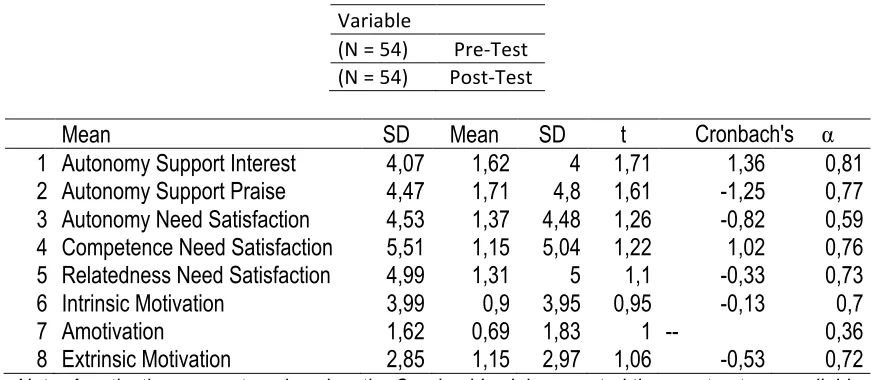
VOLUME 10 | ISSUE 1 | 2015 | 7 Descriptive statistics for perceived autonomy support, basic need satisfaction, and motivation can be found in Table 2. On average, athletes somewhat agreed that their coaches praised them for the choices made, attitudes displayed, and effort given. Athletes generally felt that their coaches did not give them too much choice, nor did they ask for athletes’ opinions. Need satisfaction, autonomy, competence, and relatedness were above the midpoint, indicating that athletes generally felt supported in all three areas. Athletes also had higher levels of intrinsic motivation and lower levels of extrinsic motivation. Paired-sample t-tests revealed no significant differences in autonomy, competence and relatedness, interest in athletes’ input, praise for autonomous behavior, intrinsic motivation, and extrinsic motivation (p > .05).
Table 2. Descriptive Statistics, Means Comparison and Internal Consistency among Athlete Variables
Variable
(N = 54) Pre-‐Test
(N = 54) Post-‐Test
Mean SD Mean SD t Cronbach's α
1 Autonomy Support Interest 4,07 1,62 4 1,71 1,36 0,81
2 Autonomy Support Praise 4,47 1,71 4,8 1,61 -1,25 0,77 3 Autonomy Need Satisfaction 4,53 1,37 4,48 1,26 -0,82 0,59 4 Competence Need Satisfaction 5,51 1,15 5,04 1,22 1,02 0,76 5 Relatedness Need Satisfaction 4,99 1,31 5 1,1 -0,33 0,73
6 Intrinsic Motivation 3,99 0,9 3,95 0,95 -0,13 0,7
7 Amotivation 1,62 0,69 1,83 1 -- 0,36
8 Extrinsic Motivation 2,85 1,15 2,97 1,06 -0,53 0,72
Note: Amotivation was not analyzed as the Cronbach's alpha reported the construct as unreliable
Content Analysis of Training Reflections
Coaches were asked to reflect on their implementation of different aspects of the online modules. Guiding questions helped coaches to explain how the following strategies were implemented during the soccer season and what was learned from these strategies: using TARGET, nurturing inner motivational resources, using non-controlling language, communicating value and explaining rationales, and acknowledging negative affect. Coaches were not asked to reflect on the use of patience since all coaches were able to use this strategy effectively.
Implementing the Strategies
8 | 2015 | ISSUE 1 | VOLUME 10 © 2015 University of Alicante
feedback was used to help encourage athletes to perform certain correct tasks again. In communicating values and explaining rationales, coaches felt they were able to implement this behavior by explaining why certain exercises and tasks were important, stopping game-play (via timeouts) to explain specific strategies, as well as giving athletes reasons why it was important to play every position:
“I implemented this strategy when the players did not want to practice defense. I want the players to be well rounded and able to play each position because they will use defensive skills while they are on the offensive. They can use what they learned as a defender to outsmart the defenders.”
Unlike the other behaviors, coaches reported mixed reviews when acknowledging and accepting expressions of negative affect in practice. Amongst the coaches, one reported that they would use this strategy when players would get frustrated when attempting to perform a certain task in practice. “I would tell them hey, it’s okay, that’s why we are practicing it”. One coach even explained that they were already using this strategy in practice prior to learning about this technique. Despite the success of other coaches, one coach believed that he had too much control and lacked the necessary skills to listen to the athletes.
Most Successful Use of Strategies
Coaches also reported which strategies were the most successful. Grouping seemed to be the most useful aspect of TARGET in that coaches were able to structure practice and game plans with athletes skill level in mind. This was especially true of the inexperienced coaches. When asked what inner motivational strategy the coaches had the most success with, they highlighted a variety of useful techniques. One coach described goal setting as a way to allow their athletes to feel autonomy supportive. They said that the players seemed to enjoy accomplishing a goal more when they set it themselves rather than the coach setting it for them or giving simple feedback on their performance. Allowing the players to have multiple options in certain drills was another technique that a coach found to be helpful. This allowed the athlete freedom on the field and rewarded them when a good decision was made. One of the coaches even allowed players to have input in future practice plans as well as allowing the athletes to ask questions. The most successful use of explaining rationales and communicating values was seen through proper task performance in games following practice sessions. One coach commented that when the athletes understood the reasoning behind the task or skill, they seemed to execute it better in games.
Another coach found the rationales to work with athletes “bunching up” around the ball:
“When I would tell them why they shouldn’t bunch up and in the game one of the kids missed a shot it bounced off the goal and another kid who was probably 20 ft. away was there to kick it nice and easy into the goal and that was easy to tell the kids on the sideline that’s what they should be doing and look what happens when they do it correctly, they score a goal”.
Coaches believed that after observing the athletes and their signs of negative affect, they are better equipped to handle such situations in the future. Making the drills more challenging or changing the drills when the athletes lose interest were very helpful in fostering the athletes motivation. The increased awareness of negative affect allowed the coaches to better understand when to talk to athletes, how to help them reach their goals, and to better understand how the athletes feel in certain situations.
Least Successful Use of Strategies
VOLUME 10 | ISSUE 1 | 2015 | 9 waiting for the athletes to answer questions, trying to avoid controlling language even when the players disobeyed and “goofed off”, and giving feedback that the kids were able to understand. Trying to maintain the interest of the athletes in situations where the athletes did not want to participate in the current drill was also difficult. There were times when the athletes only wanted to do shooting drills instead of passing or dribbling drills. Lastly, one coach said that his athletes were so used to him being in control, that it was hard for them to understand the idea of choice.
Adherence to Practice/Game Plans
Each strategy had a different level of adherence to the practice and game plans. Time management was mentioned as the biggest influence on the success of implementing strategies such as goal setting, choice, and altering drills to meet the needs of the athletes. Coaches did a great job of entertaining the interest of the athletes by allowing them to dictate the flow of the practice and provided a variety of activities to choose from. The athletes responded well to the rationales and negative affect displayed by the coaches. Some of the coaches struggled however when asking proper questions and allowing the athletes to figure out the answers themselves. It is also important to note that the league had a game-heavy schedule. Coaches were given the opportunity to implement these new strategies into games but were not able to have much time to practice them in non-game settings to see what works, and doesn’t work.
Lessons Learned from the Training
10 | 2015 | ISSUE 1 | VOLUME 10 © 2015 University of Alicante
aspect learned from acknowledging negative affect was that it is imperative that coaches acknowledge athlete’s frustrations. One coach felt that it was important to address these issues to allow players to refocus and regain motivation to continue in the activity. Similarly, two other coaches commented that is was important to emphasize the enjoyment of activity over success and failure in addition to understanding why athletes may lose focus in practice situations.
DISCUSSION
The purpose of this study was to extend current SDT research (Reeve, 2009; Gillet et al., 2012; Tessier et al., 2013) on autonomy supportive coaching behaviors by observing coaches’ behaviors during game play. Within youth sport, the context can include recreational leagues (as in the case of the current study) as well as academy-style leagues. There are stark differences between these leagues, especially with regards to the coaches’ previous experience and pay status. We felt it was important to conduct this investigation on volunteer coaches since they represent the overwhelming majority of youth sport coaches in recreational leagues, usually lack formal training in coaching, and may not always understand the most positive ways to influence athlete participation (Seefeldt, Ewing & Walk, 1992).
The major findings from this study indicate that coaches were not able to significantly modifying their coaching behaviors to be more autonomy supportive in game play. One caveat is that coaches already possessed moderate levels of autonomy and relatedness support. These findings seem to support observations found by Tessier et al. (2013), namely low potency for all behavioral dimensions except structure. Autonomy and relatedness support was mostly seen in pre-game, half time, and post-game segments. In these time frames, coaches were able to communicate with athletes about skills and strategies they were performing well in addition to providing general encouragement. Another explanation for the lack of change in behaviors could be that coach-participants did not complete the supplemental modules at the same time. Although all coaches within the same time frame completed the initial training session, individual supplemental modules were not completed consistently or at regular intervals. Every effort was made to contact coaches via email, phone, and in person, but these efforts were not always successful. A final consideration is the years of experience of the coaches involved in the study. On average, coaches had 6 years of coaching experience, although 3 out of the 7 had no previous experience. Anecdotally speaking, those without experience were able to use more of a variety of autonomy supportive behaviors than the experienced coaches. This mirrors findings from Su & Reeve (Ryan & Deci, 2000), whereby “Training programs were more effective for inexperienced trainees than for experienced professionals” (p.282), regardless of context.
VOLUME 10 | ISSUE 1 | 2015 | 11 issue to determine whether the valence of the directive (positive or neutrally charged instead of negative) has an effect on perceptions of autonomy satisfaction.
Although there were no significant changes in autonomy supportive behavior dimensions across the season, qualitative analysis of the coaches’ reflections revealed that they were able to implement many of the behavior dimensions with moderate success. Adapting their coaching philosophy was not an easy task and after some transitions, the coaches demonstrated improved behaviors. Allowing the athletes to have more choice during practice was one of the most commonly reported adjustments that coaches found to be beneficial. Providing options and different ways to complete a drill was both rewarding for the players and instilled confidence in them to make critical decisions. These results are similar to the benefits found across other studies examining the impact choice has on the outcomes (Deci & Ryan, 1987; Prusak & Darst, 2002; Prusak et al., 2004; Reinboth & Duda, 2006) Altering the types of verbal communication from coaches was also was improved. The changes in language of feedback as well as listening habits not only benefited the athletes, but also improved the quality of practice. The coaches reported that despite a slightly challenging period of modification, they believed that the athletes enjoyed practice more and saw an increase in mood, which is consistent in previous research (Ryan & Deci, 2000; Tessier et al., 2013). Coaches also improved their ability to adapt to the needs of the athletes. The coaches not only listened to the feedback of the players, but they acted upon that. Altering practice and game plans based on the feedback of the players is not an easy task (Conroy & Coatsworth, 2007). One coach explained that adapting their practice schedule to meet the desires of the athlete’s was one of their biggest obstacles. Instances like these provide evidence that the coaches’ attempts at completing autonomy supportive strategies did provide some positive outcomes, which is congruent with previous investigations.
There were no changes were seen in athlete perceived autonomy support, basic need satisfaction, and/or motivation. In evaluating the use of autonomy supportive behaviors and athlete perceptions, there seemed to be some agreement that the use of such behaviors was moderate. In other words, athletes perceived their coaches to sometimes use these behaviors. This is especially true of praising athletes for their choices, attitudes, and effort, whereas athletes perceived a low use of choice among coaches, which is in partial agreement with findings from Coatsworth & Conroy (2009). Further, athlete responses indicated that these coaches were satisfying their basic needs, although a comparison to the coach observations leaves much room for improvement. Looking at the frequency of responses to survey questions, it was apparent that athletes were highly motivated by the fun and enjoyment of soccer, while still possessing a moderate level of extrinsic motivation. As indicated by the poor reliability of the amotivation scale, athletes were not able to comprehend the idea of participating in an activity without a sense of motivation. One possible explanation for this occurrence can be attributed to the validity of the sport motivation scale when used in a population with an age range of 6-12. Although, in a previous study using the Sport Motivation Scale (SMS), Harris & Watson (2011) found the scale to be valid and reliable when working with a population similar to the current study’s age group (age < 13, M = 10.36). It may be that children at this age might not grasp the concept of how motivation can influence their behaviors to participate in sport. Also, due to the short time frame (5 weeks at most) between the administration of the initial surveys and the follow-up surveys, the athletes’ perceptions of their motivation may not have been enough time to foster a change.
Limitations
12 | 2015 | ISSUE 1 | VOLUME 10 © 2015 University of Alicante
short period of time for training (<1 hour) was not long enough to demonstrate effective results (Ryan & Deci, 2000). Each module is estimated to take less than an hour to complete and to be completed during the coaches’ free time. Since the coaches were volunteers to the study along with volunteering their time as a coach, their time obligations might be prioritized elsewhere. Although every coach completed the initial workshop training, only 5 of the 7 coaches fully completed the supplemental modules and none of the coaches completed each module by the proposed deadline. These modules play a significant part in their training and without them the intent of informing the coaches of effect autonomy supportive behaviors may have been negatively affected. The length of the season may also be a limitation. While autonomy support has been found to have a positive influence on coaches in short time frames, the current study looked primarily at game-play behaviors and may need more time to see a change. A possible explanation for this may be the perceived consequences of making a mistake, which can be detrimental to the outcome of a game, and thus many coaches may be hesitant to fully commit to autonomy supportive behaviors. Another limitation is the follow-up surveys of the athletes. Many of the athletes were administered the final surveys during gameplay while they were on the sideline. Due to the lack of practice time late in the season for some teams, game play was the only option for the researchers to ask the athletes to complete the surveys. Since some of the athletes completed the surveys during practice and others during gameplay, the results may have been influenced by the attention and motivation of the athletes to get back in the game. Age of the athlete and comprehension of survey items could also have had an effect on interpretation, especially with regards to negatively worded items on the basic need satisfaction questionnaire and items related to amotivation. Future research should continue to revise athlete questionnaires for younger age groups to effectively evaluate these motivational constructs.
CONCLUSIONS
In conclusion, results from this study suggest that there is much more work to be done to improve the autonomy supportive behaviors used by volunteer youth sport coaches. Findings indicate that youth sport coaches have the capacity to apply a moderate use of autonomy and relatedness supportive behaviors in game-play, while simultaneously providing high structure and low levels of relatedness thwarting behaviors. Future research should continue to investigate the utility of autonomy supportive training programs in recreational youth sport settings in addition to determining antecedents of coaches’ use of autonomy supportive behaviors, in accordance with findings from Stebbings, Taylor, Spray & Ntoumanis (2012). In addition, future research should continue to further revise and validate surveys that evaluate the various constructs of SDT for youth sport participants.
REFERENCES
1. Adie, J.W., Duda, J.L., & Ntoumanis, N. (2012). Perceived coach-autonomy support, basic need satisfaction and the well- and ill-being of elite youth soccer players: A longitudinal investigation.
Psy Sport Exercise, 13, pp.51-59.
2. Almagro, B.J., Saenz-Lopez, P., & Moreno, J.A. (2010). Prediction of sport adherence through the influence of autonomy-supportive coaching among Spanish adolescent athletes. J Sport Sci Med, 9, pp.8-14.
VOLUME 10 | ISSUE 1 | 2015 | 13 4. Coatsworth, J.D., & Conroy, D.E. (2009). The effects of autonomy-supportive coaching, need
satisfaction, and self-perceptions on initiative and identity in youth swimmers. Developmental Psychology, 45, pp.320-328.
5. Conroy, D.E., & Coatsworth, D.J. (2007). Assessing autonomy-supportive coaching strategies in youth sport. Psy Sport Exercise, 8, pp.671-684.
6. Côté, J. (1999). The influence of the family in the development of talent in sport. The sport Psychologist, 13, pp.395-417.
7. Cumming, S.P., Battista, R.A., Standage, M., Ewing, M.E., & Malina, R.M. (2006). Estimated maturity status and perceptions of adult autonomy support in youth soccer players. J Sport Sci, 24, pp.1039-1046.
8. Curran, T., Hill, A.P., & Niemiec, C.P. (2013). A conditional process model of children’s behavioral engagement and behavioral disaffection in sport based on self-determination theory. J Sport Exercise Psy,35, pp.30-43.
9. Deci, E.L., & Ryan, R.M. (1987). The support of autonomy and the control of behavior. Journal of Personality and Social Psychology, 53, pp.1024-1037.
10. Deci, E.L., & Ryan, R.M. (2000). The “what” and “why” of goal pursuits: Human needs and the self-determination of behavior. Psychological Inquiry, 11, pp.227-268.
11. Deci, E.L., & Ryan, R.M. (2008). Facilitating optimal motivation and psychological well-being across life’s domains. Canadian Psychology, 49, pp.14-23.
12. Deci, E.L., Koestner, R., & Ryan, R.M. (1999). A meta-analytic review of experiments examining the effects of extrinsic rewards on intrinsic motivation. Psychological Bulletin, 125, pp.627-668. 13. Duda, J.L. (2013). The conceptual and empirical foundations of empowering coaching: Setting the
stage for the PAPA project. Int J Sport Exercise Psy, 11, pp.311-318.
14. Gagné, M., Ryan, R.M., & Bargmann, K. (2003). Autonomy support and need satisfaction in the motivation and well-being of gymnasts. J Appl Sport Psychol, 15, pp.372–390.
15. Gano-Overway, L.A., Newton, M., Magyar, T.M., Fry, M.D., Kim, M., & Guivernau, M.R. (2009). Influence of caring youth sport contexts on efficacy-related beliefs and social behaviors.
Developmental Psychology, 45, pp.329-340.
16. Garcis-Mas, A., Palou, P., Gili, M., Ponseti, X., Borras, P.A., Vidal, J., … Sousa, C. (2010). Commitment, enjoyment and motivation in youth soccer competitive players. The Spanish Journal of Psychology, 13, pp.609-616.
17. Gillet, N., Berjot, S., Vallerand, R.J., & Amoura, S. (2012). The role of autonomy support and motivation in the prediction of interest and dropout intentions in sport and education settings. Basic and Applied Social Psychology, 34, pp.278-286.
18. Guay, F., Ratelle, C.F., & Chanal, J. (2008). Optimal learning in optimal contexts: The role of self-determination in education. Canadian Psychology, 49, pp.233-240.
19. Halvari, H., Ulstad, S.O., Bagoien, T.E., & Skjesol, K. (2009). Autonomy support and its links to physical activity and competitive performance: Mediations through motivation, competence, action orientation and harmonious passion, and the moderator role of autonomy support by perceived competence. Scandinavian Journal of Educational Research, 53, pp.533-555.
20. Harris, B.S., & Watson II, J.C. (2011). Assessing youth sport burnout: A self- determination and identity development perspective. J Clin Sport Psy, 5, pp.117-133.
21. Henderlong, J., & Lepper, M.R. (2002). The effects of praise on children’s intrinsic motivation: A review and synthesis. Psychological Bulletin, 128, pp.774-795.
14 | 2015 | ISSUE 1 | VOLUME 10 © 2015 University of Alicante
23. Mageau, G.A., & Vallerand, R.J. (2003). The coach-athlete relationship: A motivational model. J Sport Sci, 21, pp.883-904.
24. Mouratidis, A., Vansteenkiste, M., Lens, W., & Sideridis, G. (2008). The motivating role of positive feedback in sport and physical education: Evidence for a motivational model. J Sport Exercise Psy,
30, pp.240-268.
25. Ntoumanis, N. (2005). A prospective study of participation in optional school physical education using a self-determination theory framework. Journal of Educational Psychology, 97, pp.444-453. 26. Papaioannou, A.G., Appleton, P.R., Torregrosa, M., Jowett, G.E., Bosselut, G., Gonzalez, L., …
Zourbanos, N. (2013). Moderate-to-vigorous physical activity and personal well-being in European youth soccer players: Invariance of physical activity, global self-esteem and vitality across five countries. International J Sport Exercise Psy, 11, pp.351-364.
27. Prusak, K.A., & Darst, P.W. (2002). Effects of types of walking activities on actual choices by adolescent female physical education students. J Teach Phys Educ, 21, pp.230-241.
28. Prusak, K.A., Treasure, D.C., Darst, P.W., & Pangrazi, R.P. (2004). The effects of choice on the motivation of adolescent girls in physical education. J Teach Phys Educ, 23, pp.19-29.
29. Quested, E., & Duda, J.L. (2010). Exploring the social-environmental determinants of well- and ill-being in dancers: A test of basic needs theory. J Sport Exercise Psy, 32, pp.39-60.
30. Reeve, J. (2009). Why teachers adopt a controlling motivating style toward students and how they can become more autonomy supportive. Educational Psychologist, 44, pp.159-175.
31. Reeve, J., Jang, H., Carrell, D., Jeon, S., & Barch, J. (2004). Enhancing students’ engagement by increasing teachers’ autonomy support. Motivation and Emotion, 28, pp.147-169.
32. Reeve, J., & Jang, H. (2006). What teachers say and do to support students’ autonomy during a learning activity. Journal of Educational Psychology,98, pp.209-218.
33. Reinboth, M., & Duda, J.L. (2006). Perceived motivational climate, need satisfaction and indices of well-being in team sports: A longitudinal perspective. Psy Sport Exercise, 7, pp.269-286.
34. Ryan, R.M., & Deci, E.L. (2000). Self-determination theory and the facilitation of intrinsic motivation, social development, and well-being. American Psychologist, 55, pp.68-78.
35. Seefeldt, V., Ewing, M., & Walk, S. (1992). Overview of youth sports programs in the United States. Washington, DC: Carnegie Council on Adolescent Development.
36. Standage, M., Duda, J.L., & Ntoumanis, N. (2006). Students’ motivational processes and their relationship to teacher ratings in school physical education: A self-determination theory approach.
Res Q Exercise Sport, 77, pp.100-110.
37. Stebbings, J., Taylor, I.M., Spray, C.M., & Ntoumanis, N. (2012). Antecedents of perceived coach interpersonal behaviors: The coaching environment and coach psychological well- and ill-being. J Sport Exercise Psy, 34, pp.481-502.
38. Su, Y.L., & Reeve, J. (2011). A meta-analysis of the effectiveness of intervention programs designed to support autonomy. Educational Psychology Review, 23, pp.159-188.
39. Tessier, D., Sarrazin, P., & Ntoumanis, N. (2008). The effects of an experimental programme to support students’ autonomy on the overt behaviours of physical education teachers. European Journal of Psychology of Education, 23, pp.239-253.
40. Tessier, D., Smith, N., Tzioumakis, Y., Quested, E., Sarrazin, P., Papaioannou, A., … Duda, J.L. (2013). Comparing the objective motivational climate created by grassroots soccer coaches in England, Greece and France. Int J Sport Exercise Psy, 11, pp.365-383.