World Maritime University World Maritime University
The Maritime Commons: Digital Repository of the World Maritime
The Maritime Commons: Digital Repository of the World Maritime
University
University
World Maritime University Dissertations Dissertations
11-5-2017
The effective enforcement of national ship recycling regulations
The effective enforcement of national ship recycling regulations
in India
in India
Mohmmed Shahnawaz
Follow this and additional works at: https://commons.wmu.se/all_dissertations
Part of the Environmental Law Commons, and the Transportation Commons
Recommended Citation Recommended Citation
Shahnawaz, Mohmmed, "The effective enforcement of national ship recycling regulations in India" (2017). World Maritime University Dissertations. 568.
https://commons.wmu.se/all_dissertations/568
ii
WORLD MARITIME UNIVERSITY
Malmo, Sweden
THE EFFECTIVE ENFORCEMENT OF
NATIONAL SHIP RECYCLING REGULATIONS
IN INDIA
By
MOHMMED SHAHNAWAZ
,
India
A dissertation submitted to the World Maritime University in partial fulfilment of the requirement for the award of the degree of
MASTER OF SCIENCE
In
MARITIME AFFAIRS
(MARITIME SAFETY AND ENVIRONMENT ADMINSTRATION)
2017
iii ACKNOWLEDEMENT
At the outset, I would like to express my sincere gratitude to my country, and my
organization, the Indian Coast Guard for nominating me to this course. My sincere
gratitude to Mr. Yohei Sasakawa, the Chairman of the Nippon Foundation, who gave
me this valuable opportunity to study and research at the World Maritime University
without this support this study would not have been possible.
I would like thank and extend my heartfelt appreciation to my distinguished
supervisor, Dr. Raphael Baumler, who inspire and motivating me into the field of
research by providing me with valuable moral support, advice, suggestions, personal
contacts, personal experience and best resources available for successful completion
of the dissertation. His efforts to explain the various concepts and long discussions are
very important towards accomplishment of my dissertation.
I am thankful to entire faculty and staff of the World Maritime University for their
proactive support and guidance for completion of my work. Special thanks to the entire
library staff Christopher Hoebeke, Anna Volkova, Sara Hurst for providing me books,
materials and data required for my research. My thanks to ProfessorInger Battista for
language review of my work.
Special thanks to Henning Gramann, GSR Services GmbH, Jun Sun, IMO, Vivek
Menon, Sea health, Takeshi Naruse, ClassNK for their valuable support and guidance.
I am grateful to all individuals working in various institutions and organisations for
promptly replied to my queries and provided me their important suggestions and data.
My sincere thanks to all those who spared their valuable inputs by filling the
questionnaire.
I express my sincere gratitude to my friends and colleagues at World Maritime
University for their valuable support, encouragement and guidance. I am also thankful
Ekaterine Tavberidze sparing her valuable time for explaining me various economical
iv
Finally, my special gratitude and thanks to my parents, sisters, wife and son for their
v ABSTRACT
Title of Dissertation: The effective enforcement of National Ship
Recycling Regulations in India
Degree: MSc
The dissertation is a study of International and National regulatory instruments
applicable on ship recycling industry in India and other part of the world. Main
emphasis is on comparing these instruments with current available regulatory
framework in industry and evaluate aiming on their strong points and limitations.
A detail study is conducted on the present scenarios of the ship recycling industry in
the India and same time focus on present methods of ship recycling and the historical
development behind them. The investigation is focus on the substandard recycling
procedures, environmental hazards, generation of hazardous waste products and
harmful gaseous, occupational safety and health of workers involve in the industry.
The various regulatory instruments developed by IMO, EU and other countries are
explored with a view to introduce best green practices in the industry. In addition, the
actions taken by these bodies towards improvement of ship recycling practices is
evaluated and feasibility of introduction of same practices in Indian industry is
examined. A detail study is conducted regarding present regulatory framework
controlling ship breaking in India. The development of private standards to regulate
the ship breaking by the industry is studied and their effectiveness is examined.
Finally, the evaluation of significance of India’s role in making ship recycling as a
sustainable, safe and environmentally friendly activity. Further, India’s environmental
norms, Legal regulations and development policies on ship recycling are assessed and
analyse for development of industry, protection of environment and safety of workers.
KEYWORDS: India, ship recycling, regulatory instruments, occupational safety and
vi TABLE OF CONTENTS
DECLARATION ... ii
ACKNOWLEDEMENT ... iii
ABSTRACT ... v
LIST OF TABLES ... x
LIST OF FIGURES ... xi
1 INTRODUCTION ... 14
1.1 Background ... 14
1.2 1.2. Objectives and Structure ... 15
1.3 Limitation ... 15
1.4 Methodologies ... 16
2 THE SHIP RECYCLING INDUSTRY ... 17
2.1 Introduction ... 17
2.2 Ship Breaking Process... 17
2.2.1 Dismantling Process ... 20
2.3 The Major Ship Recycling Nations ... 20
2.4 Expected forecast in ship recycling in India ... 22
2.4.1 Empirical analysis. ... 23
2.5 Conclusion... 26
3 THE REGULATORY INSTRUMENTS FOR SHIP RECYCLING - INTERNATIONAL PERSPECTIVE ... 27
3.1 The International Labour Organisation ... 27
3.1.1 Introduction ... 27
3.1.2 Relevance of ILO in Ship recycling ... 27
3.1.3 OSH Management and ILO guidelines on shipbreaking ... 28
3.2 The Basel Convention on the Control of Transboundary Movements of Hazardous Wastes and their Disposal, 1989 ... 28
3.2.1 Introduction ... 28
3.2.2 Objectives ... 29
3.2.3 Importance of Environmentally sound management system (ESM) ... 29
vii
3.3.1 Prior Informed Consent (PIC) ... 30
3.3.2 Basel Convention and Ship Recycling - Brief overview ... 32
3.4 The Hong Kong Convention for the Safe and Environmentally Sound Recycling of Ships, 2009 ... 32
3.4.1 The main aims of convention ... 33
3.4.2 Core Objectives of HKC ... 33
3.4.3 Flag States – Responsibility ... 34
3.4.4 Role and Responsibilities of Port State ... 34
3.4.5 Ship-owners Responsibilities ... 35
3.4.6 Recycling State responsibilities ... 35
3.4.7 Ship Recycling Facility responsibilities ... 36
3.4.8 Challenges to the Hong Kong Convention ... 37
3.5 The Regional Approach for improving ship recycling industry ... 38
3.5.1 The European Union ... 38
3.5.2 Actions by EU for regulating Ship Recycling activity ... 39
3.6 Summary ... 40
4 PUBLIC AND PRIVATE FRAMEWORK IN INDIAN SHIP BREAKING INDUSTRY ... 42
4.1 Introduction ... 42
4.2 Stakeholders Analysis ... 42
4.2.1 Ship owners ... 43
4.2.2 Cash Buyers/ Ship brokers ... 43
4.2.3 Ship Recycler ... 43
4.2.4 NGOs, Environmental & Labour Rights ... 43
4.2.5 Associated Industries ... 44
4.2.6 Government and Administrative Agencies ... 44
4.2.7 Analysis of stakeholders relevant to Ship recycling ... 45
4.2.8 Explanation for ratings dimensions ... 48
4.3 Origins of present regulations in India ... 51
4.3.1 Clemenceau Case ... 51
4.3.2 Blue Lady Case ... 52
viii
4.5 Indian Shipbreaking Code 2013 ... 54
4.5.1 Approval process for ships and SRFs – Inspection and Control ... 54
4.5.1.1 Pre-assessment of the ship before beaching (Arrival and Anchoring) 54 4.5.1.2 Pre-beaching process ... 54
4.5.1.3 After Beaching Process ... 55
4.5.1.4 Cutting Operations ... 55
4.5.1.5 Closing of entire process ... 56
4.5.2 Ship Recycling plan ... 56
4.5.3 OSH and Welfare of Workers ... 57
4.5.4 Management of OSH ... 58
4.5.4.1 Employees Provident Fund ... 58
4.5.4.2 Employees State Insurance (ESI) ... 58
4.5.5 Protection and preservation of Environmental ... 58
4.5.6 Solid and Hazardous Waste Management ... 59
4.6 Development of private standards to control ship breaking activities – Shipping Companies and Classification Societies ... 59
4.6.1 Efforts by Maersk towards development of Responsible Ship Recycling Standards ... 60
4.6.1.1 Objectives of RSRS... 60
4.6.1.2 Health & Safety, Labour and Human Rights ... 60
4.6.1.3 Environment compliance approach ... 61
4.6.1.4 Anti-corruption ... 61
4.6.1.5 Subcontractors ... 61
4.6.2 Efforts by Classification Societies ... 61
4.6.2.1 Inventory of Hazardous Material ... 62
4.6.2.2 Efforts by ClassNK ... 62
4.6.2.3 IHM Services by DNV-GL ... 62
4.6.2.4 IHM services by Lloyds Register of Shipping ... 63
4.6.2.5 HKC, 2009 Certificate of compliance to the Yards ... 64
4.7 Conclusion... 64
ix
5.1 Challenges to the Ship Breaking Code ... 65
5.2 Environment Based Challenges ... 65
5.3 Worker’s welfare based challenges ... 66
5.3.1 Application of important labour laws ... 66
5.3.2 Prohibition of child labour ... 67
5.4 Difficulties in Implementation and Enforcement ... 68
5.4.1 Inspections Regime in Code ... 68
5.4.2 Inspection regime for workers ... 68
5.4.3 Inspection regime for environment ... 70
5.5 Recommendations ... 70
6 Conclusion ... 72
REFERENCES ... 74
Appendix 1 On Site Survey conducted at Alang ... 79
Appendix 2 Control of Hazardous Materials ... 84
Appendix 3 Minimum List of Items for the Inventroy of Hazardous Materials ... 86
Appendix 4 Benefits & Contributory Conditions ... 87
x LIST OF TABLES
Table 1: Resources required to produce 3 million tons of steel through steel plant. . 17
Table 2: Ship recycling activity world over view ... 21
Table 3: Regression analysis for identification of factors affecting ship breaking industry ... 24
Table 4: Time Line – HKC ... 32
Table 5: Stakeholder influence on Ship Recycling Industry ... 46
xi LIST OF FIGURES
Figure 1:Number of ships recycled in Alang Ship Breaking yard till Feb 17. ... 18
Figure 2: Major Ship Recycling Countries – Total Ships ... 19
Figure 3: The GT scrapped worldwide ... 21
Figure 4: The Ships scrapped worldwide 2016 ... 22
Figure 5: Demolition volume for last 10 years by shipbreaking countries. ... 25
Figure 6: PIC procedure – Step 1 (Notification) ... 30
Figure 7: IC procedure – Step 2 (Consent/ Issuance of Movement documents) ... 31
Figure 8: PIC procedure – Step 3 (Transboundary Movement) ... 31
Figure 9: Most popular end-of-life flags ... 39
Figure 10: An overview of key ship recycling industry stockholders ... 45
Figure 11: Stakeholder ratings for “Power” in Ship recycling ... 50
Figure 12: Stakeholder ratings for “Importance” in Ship recycling ... 51
Figure 13: Different Stakeholders of the Government in Shipbreaking industry ... 53
xii
LIST OF ABBREVIATIONS
ACB Asbestos Containing Material
AERB Atomic Energy Research Board
CRZ Coastal Regulation Zone
CSIR Council of Scientific & Industrial Research
DGFASL Directorate General Factory Advice Service and Labour Institute
DISH Director of Industrial Safety and Health
DWT Dead Weight Ton / Tonnage
EIP Environmental Impact assessment
EPFO Employees’ Provident Fund Organisation
ERPS Emergency preparedness and response plan
ESIC Employees’ State Insurance Scheme of India
ESM Environmentally Sound Management
ETA Estimated Time of Arrival
GEPIL Gujarat Environment Protection & Infrastructure Ltd
GPCB Gujarat Pollution Control Board
GT Gross Ton / Tonnage
HKC Hong Kong Convention
IHM Inventory of Hazardous Materials
ILO International Labour Organization
IMO International Maritime Organization
IN Indian Navy
LB Labour Bureau
LR Lloyd’s Register
MARPOL Marine Pollution
MEPC Marine Environment Protection Committee
MD Material Declarations
NGO Non-governmental organization
xiii
OSH Occupational Safety and Health
PA Port Authority
PCB Polychlorinated Biphenyl
PESO Petroleum & Safety Organization
RSRS Responsible ship recycling standards
SDoC Supplier’s Declaration of Conformity
SHE Safety, Health and Environment
SMB State Maritime Board
SoC Statement of Compliance
SoF Statement of Fact
SPCB State Pollution Control Board
SRFMP Ship Recycling Facility Management Plan
SRF Ship recycling facility
SSRP Ship Specific Recycling Plan
TSDF Treatment, Storage and Disposal Facilities
UNCLOS United Nations Convention on the Law of the Sea
UNCTAD United Nations Conference on Trade and Development
14
1 INTRODUCTION
1.1 Background
The ships are the main work horses of shipping industry. Once ships get old, they are
replaced by new ships and old one go for the ship recycling process. Ship recycling is
one of the best ways to dispose any product and around 95 percent of the parts and
equipment of a ship can be reused. There is no particular fixed age for ships to be
scrapped because physical deterioration is a steady process. A brief look at Lloyd’s
demolition register shows the picture that sometimes ships as old as 60 years and
sometimes as young as 10 years are scrapped. (Mishra & Mukherjee, 2009). The steel
obtained from the scrapped ships are of high quality and fulfil the requirements of steel
industries. The ship breaking industry has given birth to many subsidiary small
industries that deals with metal to furniture of the ships. Although there are many
serious concerns of pollution and OSH are attached, this industry is playing an
important role in providing sustainable support to millions of person and their families.
(Mishra & Mukherjee, 2009).
Worldwide more than 1000 ships are recycled every year and 95% of them are recycled
in Bangladesh, India, China, Pakistan and Turkey (UNCTAD 2016). Due to cheap
labour, big demand for scrap metal and low environmental concerns make these
countries top players in ship recycling. The ship recycling industry is a source of many
pollutants which affect the environment and have low safety standards. The Indian
Government, NGOs and civil society are very critical to pollution and fatal accidents
attributed to this industry. The ships are dismantled on open beaches without proper
handling of hazardous wastes, which are very harmful to the sensitive environment of
15
1.2 Objectives and Structure
The main objective of this study is to analyse and review various International and
national regulations which are applicable in the ship recycling industry, especially in
India and at the same time evaluate the effects of these instruments on the production
and development of the industry. Further, the dangers, environmental risks, generation
of hazardous wastes and the OSH issues associated with the industry will be examined.
The main objective of this dissertation is identification of gaps in various regulatory
instruments and measures to fill these gaps and ground implementation of these
instruments to improve the conditions in the industry.
Finally, India’s efforts, future plans and policies regarding the ship recycling industry
will be evaluated. This will help to identify how India is contributing to making ship
recycling a sustainable, safe and environmentally friendly industry.
The dissertation is divided into different chapters in a systematic sequence providing
answers to the following important questions.
1. What are the main issues regarding present conditions and standard procedure of the
ship recycling industry? (Chapter II)
2. Comparative analysis of the Basel Convention, Hong Kong Convention, 2009 and
Regional approach and challenges posed during ground implementation? (Chapter III)
3. How is the ship recycling industry regulated in India? By public and private
regulatory framework? (Chapter IV)
4. What are the various challenges associated with implementation of a new regulatory
instrument? (Chapter V)
1.3 Limitation
The research does not cover the management, financial and investment aspects of the
ship recycling industry. It will focus on overall general practices in the industry, and
how well it has to be regulated by national regulation. The issues of improvement of
national regulatory framework will be discussed viewing non ratification of the HKC
by India. The challenges posed by the introduction of the HKC in India will be
16
in the industry. This dissertation will concentrate on policies, legal domain and
practices in the Indian ship recycling industry. At the same time, it will address
innovative techniques and ideas that will bring revolutionary changes to the industry.
It will get some inspiration from best operational practices and environmental
protection measures, which if introduced will improve the industry. Therefore, it is an
effort to evaluate both domains. It will further carry out an analysis of the problems
faced by yards in introducing modern techniques for the ship recycling process.
1.4 Methodologies
The study was conducted by reviewing various documents, papers and specialized
books published on ship recycling. A qualitative research was conducted to understand
this topic. In order to understand and review different issues of regulatory framework
related to the industry, various resolutions, guidelines, conventions, research papers,
conference reports, various marine periodicals, specialized books and various other
documents published by IMO and the Government of India were studied. To find
critical reasoning of the topic various governmental policies and other official
documents which are available for the public were referred to. The data of various ship
recycling related activities used were obtained from the various individual via e-mail.
The latest development in the industry were obtained from ship recycling yard owners,
research academics, government officials, experts, worker’s associations, NGOs and
IMO officials via e-mail. The ship recycling in India is regulated by the Ministry of
Shipping and Gujarat Maritime Board, therefore both agencies were approached for
obtaining facts and figures. To understand the actual situation on ground a field
research was also conducted by interviewing 40 workers involved in ship recycling in
Alang. The questionnaire and details of the research is attached in Appendix1. Some
of the information is solely based on the author's analytical interpretation of
17
2 THE SHIP RECYCLING INDUSTRY
2.1 Introduction
The life cycle of a ship is divided into various stages from designing, ship building,
operations and finally scrapping. As of January 2017, there are 90,917 ships operating
in the world with a total tonnage of 1,552 million dwt (UNCTAD, 2016). Such a large
number of ships needs to be disposed of once their operational life is ended. Generally
scrapping of ships takes place under two conditions. First it takes place when the
operation cost becomes more than the revenue it is generating, such as repairs and
structure modifications and second, when the age of the vessel and market conditions
make ships operations non-profitable for owner (Moen, 2008). More than 90% of a
ship is made of steel and steel prices play very an important role in deciding the scrap
market (Demaria, 2010).
Table 1: Resources required to produce 3 million tons of steel through steel plant.
Resources Quantity Required
Iron Ore 13.9 Million Tones
Water 180 Million Tones
Electricity 6900 Million Tones
Land 15000 Hectares
Note: As per estimate 1 million tons of steel produce by ship recycling saves around 4 million tons of natural resource.
Source: (Mishra & Mukherjee, 2010)
2.2 Ship Breaking Process
The ship recycling industry fulfilled approximately 1% to 2% of India’s
domestic steel demand. Therefore, the industry played a very important role in
18
breaking yard is located in Alang in the Gujarat state of India. The yard is controlled
by GMB and around 40 thousand labourers work here. More than 400 ships are
dismantled here and produce approximately 4.5 million tons of steel annually (Gujarat
Maritime Board, 2017).
The unique geographical and climatic conditions make Alang beach an ideal location
for ship recycling. It has tidal range of average 13 meters’ difference. The beach has a
slope inclination of 10 degrees with a firm and hard bottom. The yards in Alang are
basically a piece of the open land called plot and there are nearly 180 active plots
engaged in ship recycling all along a stretch of 12 km long beach (Despande et al.,
2012). The suitable tidal condition, good value of scrap metal, cheap, experienced and
managerial workforce; and use of Oxy-LPG torches result in lower consumption of
energy for cutting the ships have made Alang the world’s biggest destination for ship
scrapping (Reddy et al., 2003).
Figure 1:Number of ships recycled in Alang Ship Breaking yard till Feb 17.
Source: (Steelmint, 2017)
The ship recycling process is divided into three different stages. The first is preparatory
stage, in which the ship is prepared for her final journey and all the equipment not
included in the contract and explosives are removed. In the case of a tanker, it must be
19
recognised organisation. The second stage is when the ship is delivered to the ship
recycling yard for final breaking. The ships are generally run at full speed towards the
beach during high tide. The main aim of the crew is to take the ship out of the water
as much as possible. Once out of the water, various scrap dealers will board the vessel
and start removing non fixed items from the ship. Once this operation is complete, a
final recycling plan will be prepared.
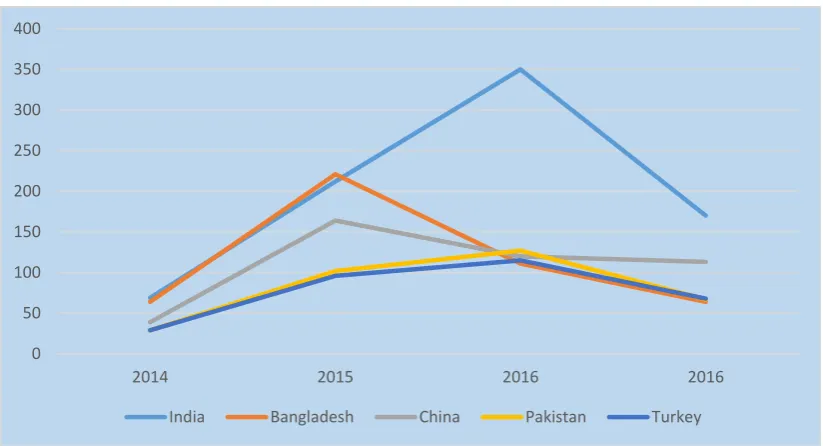
Figure 2: Major Ship Recycling Countries – Total Ships
Source: (Clarkson’s, 2016)
The ship has to be dismantled properly so as to make sure that it should not topple
over. Before the main cutting process starts the big opening are cut in the ship’s hull.
These openings act as a ventilation windows, which will reduce the presence of any
harmful gases in closed compartments. The big metal parts are cut and dropped on the
open land, which are further removed with the help of winches. The ship is gradually
moved upward out of the beach when it is slowly broken down. The duration of the
entire ship breaking procedure is depends on the length of the ship (Mishra &
Mukherjee 2009). Almost all parts of ships are recycled and reused in various
activities.
0 50 100 150 200 250 300 350 400
2014 2015 2016 2016
20 2.2.1 Dismantling Process
The dismantling process is as follows:
Initial Inspection: The harmful material need to be identified before
commencing the cutting process. This can be done in the initial inspection and
is very useful for avoiding any accident and explosions.
Removal of Liquids: The removal of ballast water, bilge water, fuel, oil residues and other chemical is very important to avoid its spillage on the beach
during the cutting process.
Removal of Equipment:All equipment of the ship is useful and having after
life. Therefore, systematically all movable equipment is removed first. This
provide access to those areas which were not accessible.
Preparation for cutting: The surface is prepared by removal of paint from metal by using wire brushes, hammers and chemical spray.
Cutting process: The cutting is done by use of oxy-acetylene torches also
called Oxygen fuel torches. The upper deck fitting and superstructure are cut
first, which make the ship lighter. Then with the help of shore based winches
the ship is pulled further out of the beach. Once the entire hull is exposed,
cutting of this part is also commenced. Finally, the bottom part and keel of the
ship is cut down.
2.3 The Major Ship Recycling Nations
The ship recycling industry is flourishing in developing economies due to cheap
labour, demand of steel and low environmental concerns. Due to this in the past two
decades, the industry shifted its location from developed nations to developing nations.
The industry is now mainly located in India, Bangladesh, China, Turkey and Pakistan.
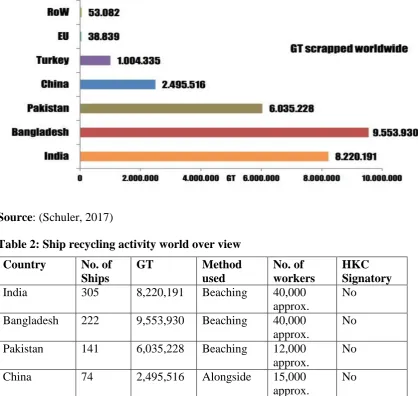
21 Figure 3: The GT scrapped worldwide
Source: (Schuler, 2017)
Table 2: Ship recycling activity world over view
Country No. of
Ships
GT Method
used
No. of workers
HKC Signatory
India 305 8,220,191 Beaching 40,000
approx.
No
Bangladesh 222 9,553,930 Beaching 40,000 approx.
No
Pakistan 141 6,035,228 Beaching 12,000 approx.
No
China 74 2,495,516 Alongside 15,000
approx.
No
Turkey 92 1,004,516 Dry Dock 2500
approx.
Yes
Rest of the world & EU
28 91,921 Dry Dock - -
22 Figure 4: The Ships scrapped worldwide 2016
Source: (Schuler, 2017)
2.4 Expected Forecast in Ship Recycling in India
In this part, quantitative methods will be used, more precisely, regression analysis to
identify and evaluate factors, which may affect demolition price in the Indian
ship-breaking market. As a sample, annual data, extracted from Shipping Intelligence
Network in the United Kingdom and World Bank for the period from 1999 to 2016 are
used, and as software, E-views application tool is used. The limitation of the study,
identified during this research is small sample of data - only seventeen observations.
This limitation exists because the first three variables can be found only per annum
basis (not quarterly or monthly). After analysing the market of the ship-breaking
industry, the following factors, which may affect demolition prices in Indian market,
were identified:
GDP of China: The demand of metals in China is very high due to
rapid industrialisation. The growth of China plays a very important role
in the prices of metal around the world.
305 222
141 74
92 22
6
0 50 100 150 200 250 300 350
India Bangladesh Pakistan China Turkey EU Rest to the World
23
GDP of India: There is massive infrastructure development taking place
in India and with a growth rate of 7%. This development required more
industrial metal, which in turn affected the prices of metal.
One-year time charter rate
Indian steel production volume
Steel production worldwide: Steel production is raw-material-intensive
in nature. Iron ore, steel scrap, and coking coal are the key raw materials
that go into steel production (X) (MT). Higher raw material pricing was
among the key drivers of steel prices in 2016. Seaborne iron ore prices
have almost doubled in the last year. That follows three consecutive
years in which prices have fallen. Prices hit $83.60 per ton on
December 12, 2016, the highest level since September 2014.
Iron ore production worldwide: Due to cutbacks in domestic steel production of China there is a decrease in import of iron ore in China.
2.4.1 Empirical analysis.
Due to conducting a test on multicollinearity, which explains the relationship between
variables, it was identified, that iron ore production worldwide highly correlated with
steel production, which means that those variables will tell the same story. So based
on the theory of regression analysis, one of those variables can be extracted from
24
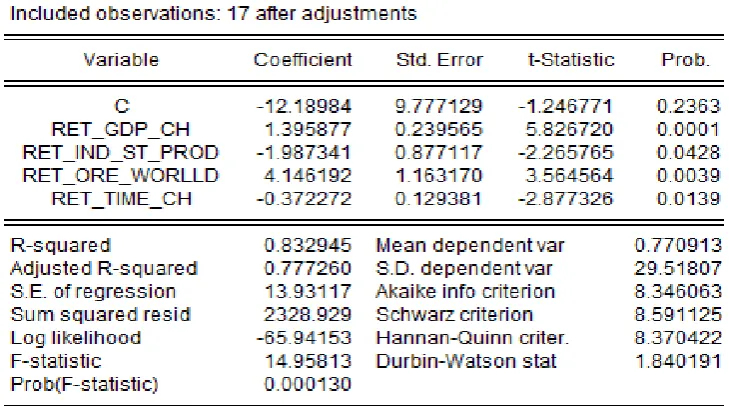
Table 3: Regression analysis for identification of factors affecting ship breaking industry
Source: (EViews 9.5, 2015) & Data source - (Clarkson’s, 2017)
During the process of running this regression, all the necessary steps were conducted
such as: Unit root test, Blue stage (checks on Heteroscedasticity, Normality and
Linearity), conducted Stability checks and all results were positive. Regarding the
interpretation of results of regression, out of 6 variables, only four significantly affect
the demolition price of the Indian ship-breaking industry. As can be seen, the adjusted
R-squared is equal to 0.777, which means that those four variables on 77 % explain
the behaviour of demolition prices. The Beta coefficient, which can be found next to
selected variables express the next idea: the GDP of China will increase on 1 unit, it
increases demolition price on 1.39 units. So there is the positive as well as the negative
meanings of the beta coefficient, which can be interpreted as: Increase in Indian steel
production on 1 unit will decrease demolition price on 1.98 units. Every year the
percent of the world fleet is going for a scrapping process keeps on fluctuating
25
and ageing is not the only reason for ships to be scrapped. The world economy is very
sensitive and difficult to predict. The statistics of the economy has to be studied to
actually understand what happened. So the prediction process should be seen as
reducing the risk, rather than taking it as a reference for the final decision. Thus,
scrapping end of the life vessels is a continuous process which provides a clear picture
regarding the fate of a vessel after completion of its operational life.
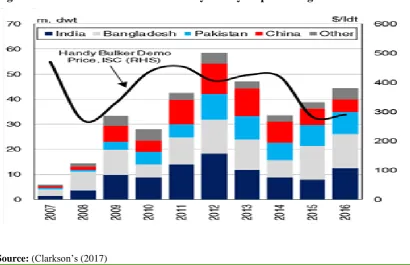
Figure 5: Demolition volume for last 10 years by shipbreaking countries.
Source: (Clarkson’s (2017)
26
2.5 Conclusion
The ship recycling industry play very important role by providing of metal resources
and other associated products. In India the industry is concentrated in Alang, Gujarat.
Geographical location, good value of scrap, low labour cost, use of basic technology
and low environmental standards are some of the contributing factors towards
development of this industry in India. The ship scrapping is well define process just
like ship building. But it is less regulated as compare to later. The world economical
patterns play a significant role in ship scrapping. Various factors like GDP of China
and India, prices and production of steel affects the industry in a big way. These all
27
3 THE REGULATORY INSTRUMENTS FOR SHIP RECYCLING
- INTERNATIONAL PERSPECTIVE
This chapter will cover various international and Indian legal framework in relation to
ship recycling. It will also focus on various regulatory instruments applicable for the
industry, some of which are already in force and some of which will be expected to be
implemented in the future.
3.1 The International Labour Organisation
3.1.1 Introduction
ILO was founded in 1919 just after World War I with a vision that universal peace can
be attained if people can get social justice. The main aim of ILO is to promote and
maintain peace by ensuring labour rights and social justice of workers all over the
world (ILO, 2017). The ILO has a unique tripartite structure where worker unions,
employers and governments have equal rights to raise their concerns. It helps in better
formulation of policies, labour standards and programmes (ILO, 2017).
3.1.2 Relevance of ILO in Ship Recycling
Shipbreaking is considered as a very hazardous occupation in the view of less salaries,
low safety, health and environment standards. Therefore, the ILO developed
guidelines “Safety and health in shipbreaking - Guidelines for Asian countries and
Turkey - 2004”. Occupational hazard is one of the major areas of concern for workers
in the ship recycling industry. The industry exposes workers to wide ranges of
workplace activities that cause diseases, ill health, injuries and death (ILO, 2004). The
workforce is a mix combination of migrant, casual and contract workers. These factors
make the enforcement and implementation of laws difficult as compared to other
28
3.1.3 OSH Management and ILO Guidelines on Shipbreaking
The ILO adopted a systematic approach to bring the working conditions up to
reasonable standards in shipbreaking facilities. The ILO approach is more focused on
investing in permanent structures, which can be easily reviewed, planned,
implemented and evaluated. This view is very important in achieving environmentally
sound conditions of occupational safety and health (ILO, 2004 para 4.1).Therefore, it
is important to implement OSH management systems. The designs of these systems
are guided by ILO according to their application at national level on the OSH
management system (ILO, 2001). A system should contain a dedicated OSH policy,
essential conditions for running the facility, i.e. responsibility, accountability, training,
documentation, distribution of information and communication. A separate hazard and
risk assessment plan, evaluation of OSH performance and improvement guidelines are
an important part of this management system (ILO 2004 para 4.1).
3.2 The Basel Convention on the Control of Transboundary Movements of
Hazardous Wastes and their Disposal, 1989
3.2.1 Introduction
To control the exports of harmful wastes, in 1989 the Basel Convention was
introduced. The shipping is an international industry and it is the common practice of
sending old ships for dismantling to other locations therefore, the application of the
Basel Convention on ship recycling was very difficult. In December 1999, a dedicated
Technical Working Group was established in joint cooperation with the IMO to discuss
the issues of ship recycling and to formulate some guidelines about this issue. Further,
in December 2002 at a Conference of Parties Six the technical guidelines on the
Environmentally Sound Management of the Full and Partial Dismantling of Ships
(TGDS) were adopted (Puthucherril, 2010). Finally, in the decision 7 of the COP 7 in
2004, the parties recognised that a ship once going for dismantling will become waste
29 3.2.2 Objectives
The main objective of the Convention is to safeguard the general well-being of human
beings and the environment from the effects of harmful wastes by strictly controlling
its generation. The Convention is mainly focused on following areas:
a. The reduction in generation of waste and promote ESM of the wastes at
disposal site (Article 4).
b. The interstate movement of wastes should only be allowed if it is regulated and
controlled in a recommended way (Article 11).
c. Establishment of a regulatory system where transboundary movements are
allowed. In Basel Convention, a ship when going for her end of life journey to the ship
breaking yard is considered as a waste {Article 2(1)}.
3.2.3 Importance of Environmentally Sound Management System (ESM)
The ship recycling specific ESM concepts were explained in the TGDS in 2002
(Wingfield 2012). In other words, the ESM is combination of practical standards,
regulatory instruments and effective control of the process of waste management.
Furthermore, according to the Convention the following actions should be to taken -
(a) Minimum generation of waste {Article 4(2) a}.
(b) Establishment of adequate disposal facilities preferably in the country of
origin of waste {Article 4(2) b}.
(c)Ensure the protection of the people engage in waste disposal and
management process and at the same time try to minimize the harmful effects
on their health {Article 4(2) c}.
(d) Safe transportation of wastes to avoid pollution during movement; at the
same time try to minimize these movements {Article 4(2) d}.
(e)Each parties should ensure that ESM procedures should be implemented in
all three states like export state, transit state and import state. In no point in
time should the responsibility of export state be transferred to the import or
30
3.3 Important Features of Convention
A party can deny import of waste on its land at any time. Once the party put a ban on
the import through proper notifications to other parties, then they should also put a ban
on export of such wastes to the party {BC,1989 art 4(1)(a)}.
3.3.1 Prior Informed Consent (PIC)
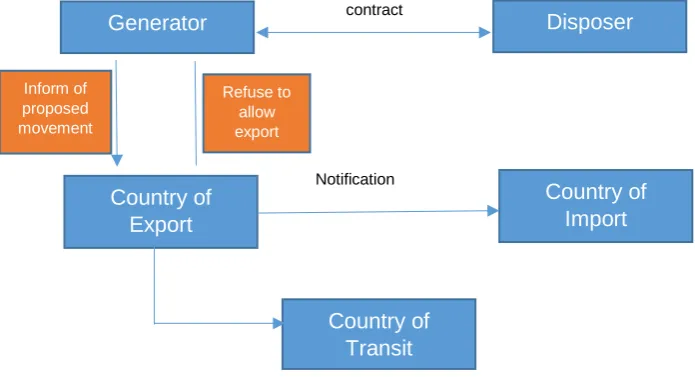
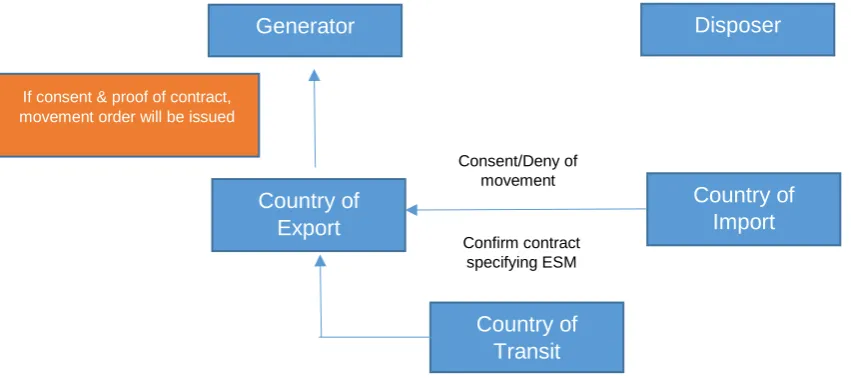
The Prior Informed Consent played very important role for movement of wastes. There
are four steps in the PIC process under the Basel Convention - notification, consent
and issuance of movement documents, transboundary movements and confirmation of
disposal (Bellefontaine et al., 2014). In short, the receiver must be fully aware and
informed about substances which should be recycled in its country. This principle has
been adapted and inserted in the HKC.
Figure 6: PIC procedure – Step 1 (Notification)
Source: (Wingfield, 2012)
Generator Disposer
Country of Export
Country of Transit
Country of Import
Inform of proposed movement
Refuse to allow export
31
Figure 7: IC procedure – Step 2 (Consent/ Issuance of Movement documents)
Source: (Wingfield, 2012)
Figure 8: PIC procedure – Step 3 (Transboundary Movement)
Source: (Wingfield, 2012)
Generator Disposer
Country of Export
Country of Transit
Country of Import
If consent & proof of contract, movement order will be issued
Consent/Deny of movement
Confirm contract specifying ESM
Generator Disposer
Country of Export
Country of Transit
Country of Import
32
3.3.2 Basel Convention and Ship Recycling - Brief overview
As already explained in the previous paragraphs, the convention bans the
transboundary movement of harmful wastes and end-of-life ships going for recycling,
as already explained in para 3.2.1, that a ship ‘may become waste’ once it is destined
for dismantling and same time maintained its status of being ship. However, it is a big
challenge to find out when and by whom a ship is declared to be destined for recycling.
The biggest problem is that the ship owners hardly disclose their intention for
dismantling and the location of recycling (Durak, 2009). The ships are always under
the jurisdiction of their flag states. Due to the concept of open registry, ships can very
easily change their flags. Due to this unique situation it becomes more difficult to
establish relation between flag state and owner’s country. Therefore, implement the
provisions of export state as per Basel Convention on the ships destined for
dismantling is difficult (Puthucherril, 2010).
3.4 The Hong Kong Convention for The Safe and Environmentally Sound
Recycling of Ships, 2009
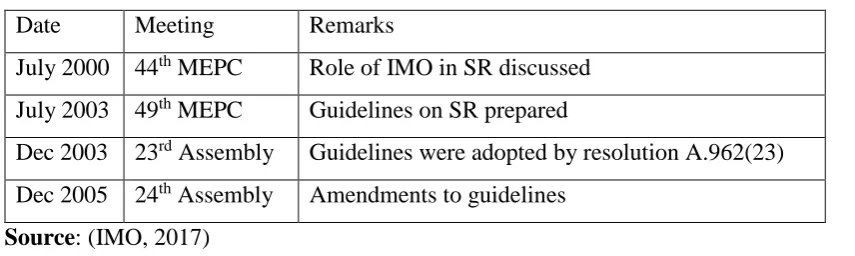
In October 2004, during the 7th meeting of the Conference of Parties of Basel
Convention, the IMO was invited to formulate a regulatory instrument for controlling
the Ship Breaking industry with the aim to fill the gaps left behind in the Basel
Convention (Mikelis, 2012 & Puthucherril, 2010).
Table 4: Time Line – HKC,2009
Date Meeting Remarks
July 2000 44th MEPC Role of IMO in SR discussed
July 2003 49th MEPC Guidelines on SR prepared
Dec 2003 23rd Assembly Guidelines were adopted by resolution A.962(23)
Dec 2005 24th Assembly Amendments to guidelines
33
In COP 7, the IMO adopted Resolution A.981(24) on 01 December 2005, Agenda item
11 (IMO, 2005). The aim of the resolution was to develop a new instrument with the
aim to regulate the design, construction, operation of ships and working of recycling
facilities. The IMO successfully prepared the convention and adopted the same on May
2009 in Hong Kong (IMO, 2017). The HKC is a product of joint cooperation of three
different bodies i.e. IMO, ILO and the Basel Convention. The main purpose of the
Convention is that it should be globally applicable and easily enforced (Durak, 2009).
There are twenty-one articles in the HKC. Four Chapter of the Annex covers the
technical details and there are totally seven appendices in the HKC.
3.4.1 The Main Aims of Convention
The main aims of HKC are as follows:
To give recognition to ship recycling industry and to adapt the right procedures for ship dismantling.
To work on the same principles of the Basel Convention by controlling the
movement of harmful wastes.
To work according the Rio Declaration, where states should not postpone cost
effective measures to protect the environment due to lack of scientific
knowledge (Rio Declaration on Environment and Development, 1992).
To “promote use of environmental friendly materials in ship building and repairs. To identify the risk involved in ship scrapping industry and phased
removal of ships that have reached their end of operational lives (HKC, 2009).
3.4.2 Core Objectives of HKC
It is obligation of all parties not to interpret any provision in such a way that its
34 3.4.3 Flag States – Responsibility
The HKC specifies the idea of Flag state in article 3.1.1, which states that “Ships flying
flag of the party or operating under its authority” similarly article 3.3 (sovereignty or
jurisdiction), article 5 (authority) and article 12.4 (Party) covered the term flag state in
different ways. The different terminology used for Flag state in the HKC creates legal
ambiguities and confusion. Article 1 of the HKC enacts the general obligation on each
Party to implement the provisions under this the Convention to protect environment
and human health during ship recycling activity. The article 1.2 gives state parties’
freedom to enacts stricter procedures for effective control. Similarly article 1.3
encourages the Parties to co-operate with each other for better implementation of the
Convention and article 1.4 puts more emphasis on development of better technology
for improving the activity. The responsibility of survey, certification and inspection by
the state party on its ships is covered in article 5 and article 8. In accordance with
article 10.1, wherever the violation occurs the Flag State has the authority and
jurisdiction over that ship. The flag state shall take appropriate action according to its
national law against such violation and inform the reporting state about status of case.
Article 12, of the HKC made it obligatory for Flag State to report to IMO about
following Information:
Total number of ships issued with IRRC;
Total number of ships recycled under its jurisdiction;
Report of violations:
Action taken against ships under its jurisdiction:
3.4.4 Role and Responsibilities of Port State
The responsibilities of Port State in the HKC are similar to that of the Flag State. The
Port State can inspect a ship for compliance of convention. The inspection should be
limited to check whether the ship is carrying a Certificate on IHM or an IRRC. Article
9.1 and 9.3 explains the powers of state in case of violations of HKC. The Port State
35
national law against any violation of convention under the jurisdiction of the Port State.
Under Article 11, the convention specify that Port State should conduct speedy
investigations to avoid delay to the ships. This undue delay will entitle ships for
compensation.
3.4.5 Ship-Owners Responsibilities
The HKC requires a ship owner to recycle his ship only at those recycling facilities
that are compliant by HKC. Before sending the ship for recycling, the operations
should be controlled in such a way that the ship should leave with minimum amount
of oil and products. He has to provide all information to recycling facility for
preparation of the recycling plan. The ship has to provide complete IHM (HKC,2009
Regulation 5). This inventory should be regularly updated by owner for full life of ship
(Regulation 5.3). The ship owners have obligation to inform the administration about
their intention to dismantle his ship.
3.4.6 Recycling State responsibilities
The recycling state has to ensure that the facility is operating as per the requirements
of HKC (HKC Regulation 15.1 & Jain et al., 2013). The state should use provisions of
inspection, monitoring, enforcement, power of entry and sampling. It can use the audit
scheme and the results of this audits should be submitted to IMO (Regulation 15.3).
Every recycling state shall nominate a Competent Authority, which will conduct site
inspection of facility, documents verification (HKC, Regulation 16). The state should
ensure that harmful material mentioned in Appendix -1 of HKC (see Appendix Error!
Reference source not found.) should not be used by any of shipbuilding yards. The
state should ensure that IHM need to be updated if any material listed in Appendix-2
of HKC (see AppendixError! Reference source not found. ) is used in any repair.
Recycling states are obliged to co-operate for any detection of violations by facility
and same time for effective implementation of provision of convention (HKC 2009,
36 3.4.7 Ship Recycling Facility Responsibilities
The Facility is required to prepare ship specific plan prior starting of recycling process.
The plan has to be prepared according to the information provided by ship-owner
(HKC, Regulation 9.1). The Ship Recycling Facilities can only accept ship for
recycling process if it complies with the Convention or meet the requirements of the
Convention (HKC, Regulation 17.2.1). It can only accept ships once they are
authorised to recycle (Regulation 17.2.2). The facility has to provide suitable
documents of its authorization to the ship-owner, who intend to recycle his ship at this
facility (HKC, Regulation 17.2.3). The facility has to prepared a Ship Recycling
Facility Plan (SRFP). This plan has to be adopted by Board or suitable governing body
of the Recycling Company. The plan should have a detailed policy which ensured
workers safety and human health and environment protection. The objectives of the
policy should be set to minimise and eliminate the harmful effects of Ship Recycling
on Human health and environment (HKC, Regulation 18.1). The plan should provide
clear identification of roles and responsibilities of employers and workers (HKC,
Regulation 18.3). The plan should have a training programme for workers, an
emergency preparedness and response plan, record keeping system of facility. A
reporting system should be incorporated in the plan for reporting various emissions,
discharges, incidents, accidents, occupational diseases, injuries causing damages to
workers and environment (HKC, Regulation 18.8.9). The facility has to establish the
measures which will prevent adverse effects to human health and environment caused
by explosions, fire, dangerous atmosphere in confined spaces, occupational diseases,
injuries, spills and emissions (HKC, Regulation 19). The facility has to ensure safe and
environmentally sound management of hazardous materials. The hazardous material
should be identified, removed, packaged and labelled by well trained and equipped
workers (HKC, Regulation 20). In order to deal with emergency situations, the facility
has to maintained an Emergency Preparedness and Response Plan. The location,
environment, size and nature of activities should be taken into account while preparing
this plan (HKC, Regulation 21). The facility has to ensure the safety and training of
37
familiarization about Ship Recycling operations (HKC, Regulation 22). The Ship
Recycling facility has to prepared a suitable mechanism for incident reporting (HKC,
Regulation 23).
3.4.8 Challenges to the Hong Kong Convention
There are different types of ship recycling methods around the world (beaching, in
closed yards, in sliding form, alongside, etc.). The most controversial method of ship
recycling is scrapping of the ships on the beach, widely known as “Beaching”. In this
the ships are getting dismantled in open intertidal beaches, where it is nearly
impossible to contain pollutants such as asbestos, toxic paints, metal parts, oil residues
and other hazardous substances on board. Due to continue tidal movement these
hazardous substances get transferred to sea and pollute it. In the case of fire and
explosion it is nearly impossible for fire-fighting trucks and ambulances to reach the
site of incident. The shifting of heavy metal plates is not possible because heavy cranes
cannot reach to the area of cutting view soft sea bed. Therefore, the facility uses manual
labours to shift these plates on their shoulders, which further leads to many fatalities
and injuries. It is nearly impossible to carry out effective waste management in
ecologically sensitive intertidal zones near beaches. The HKC has put no ban on
beaching, but adopted an indirect approach by promoting worker safety, training,
preparedness and response for emergency, monitoring and reporting of events (Jain et
al., 2013). In the preview of Convention, a recycling facility located in non-signatory
member state can recycle ships from party member state. This can be done easily by
changing the flag of ship to that non-member state (Jain et al., 2013).
According to T. G. Puthucherril, (2010) the final disposal and treatment of hazardous
material recovered from the ship after recycling process is barely considered in the
Convention and left to the ship recycling country (environmental sound management).
The Article 2.10 of Convention clearly explained the terms “Ship Recycling” as a
process of dismantling the ship in order to recover equipment, material and
components for reuse. It also covered storage and treatment of hazardous material but
38
stakeholders to take advantage of situation and not to be honest towards the aim of
environmentally sound and safe industry.
The HKC has given exemptions to some ships according to their role and operations.
The HKC is not applicable to war ships, auxiliary vessels or other ships operated by
government (Article 3.2). In addition, ships under 500 gross tonnage and ships
operating throughout their life in domestic waters are exempted from the purview of
the Convention (Article 3.3). It has seen that warships and naval vessels are the large
source of hazardous materials like asbestos and chemicals. Therefore, their recycling
process need to be more regulated. These exemptions are the major roadblock in the
process of complete removal of substandard practices in ship recycling industry. The
exemptions to any regulatory framework make it less effective because this increases
the chances of circumventing the provisions according to feasibility of individuals.
The Convention is silent about upgradation of ship recycling facilities by positive
investment and encouragement. Due to the large numbers of small yards involve in the
industry with very limited capital investment, it is difficult for them to introduce
environmentally sound and safe recycling practices. In absence any financial support
mechanisms, it is very difficult to motivate the big ship recycling states to sign the
Convention (Moen, 2008).
3.5 The Regional Approach for Improving Ship Recycling Industry
In this section, we will discuss the approaches adopted on regional level to address the
problems related to the Recycling Industry.
3.5.1 The European Union
Around 40% of world’s merchant fleet is owned by Europeans. Only 22% of vessels
are flying EU flags (Clarkson’s, 2017). It is common practice of changing the flag of
the ships when it is destined for scrapping to the countries with poor flag records.
These types of registries are used for avoid stringent environmental and worker’s
protection legislations which if implemented will lead to high operating cost. Around
73% of the world’s fleet are registered in the countries other than the native countries
39
the recycling of the ships. In 2016, nearly 40% of all end of life ships beached on the
beaches of South Asian countries were changed their flag just before recycling.
Particularly to the flags which are grey or black listed under Paris and Tokyo MoU.
These flags are having poor records and they offered quick, hassle free short term
registration without disclosure of owner's nationality. Sometimes these flags offer
special discounts on the last voyages perform by the ships to the recycling yards. In
2016, one third of total 78% of ships scrapped on beaches of south Asia were owned
by Europeans (Shipbreaking Platform, 2016).
Figure 9: Most popular end-of-life flags
Source: (Schuler, 2017)
3.5.2 Actions by EU for Regulating Ship Recycling Activity
As discussed earlier that it is very difficult to identify the ship-owners intentions about
scrapping. They easily avoid the regulations by changing the flag just before the
scrapping. By keeping these points into consideration the European Union proposed a
new regulation in March 2012, called Ship Recycling Regulation. The main objective
of regulation is reduced the negative impact of unsafe recycling activity on the member
states. Once the ships are covered under new regulation they will be excluded from
parameters of WSR (EC) 1013/2006. This will reduce the administrative burden and
provide legal clarity (European Commission 2016). According to the regulation it is
obligation of all member states that the vessels flying their flag may be recycled in
0 20 40 60 80 100 120 140 160
Panama St.Kitts & Nevis
Liberia Comoros Marshall Islands
Palau
Most popular end-of-life flags
40
safe and environmentally sound recycling facilities. These facilities need to be
included in the European List of Ship recycling facilities. To be included in the list,
the ship recycling facility has to fulfilled number of safety and environmental
requirements as mentioned in the regulation. These requirements were first issued on
April 2016 by commission as a technical guideline for operations. The facilities
located in any third countries are also eligible for inclusion into the list. The EU
flagged vessels are allowed for recycling into these facilities once they are included
into the list. The ship-owner has to notify the EU member state about his intention for
recycling of his vessel. He has to provide detail schedule of entire recycling process to
the state (European Commission 2016). According to the regulation if ship will be sent
for recycling within the six months after its sale to new owner then penalties will be
imposed on the last owner of the ship. The regulation encourage recycling facilities
located in Indian Subcontinent to adopt safe practices of industry and continue their
operations. It also discourages ship-owners to reflagged their ships just before
recycling and same time encourage them to notify their intention of recycling of ships
well in advance (Urano, 2012).
3.6 Summary
This chapter explained the main important international regulatory frameworks which
control the ship recycling industry and covering the background, aims, key objectives,
provisions and limitations of these instruments.
First, the perspective of ILO in ship breaking industry. The ILO recognised the
industry as a hazardous occupation on the basis of low safety and health standards.
Therefore, the ILO guidelines is a positive step to address this issue. There are many
existing labour laws enforced, but the main concern for ILO is right implementation
of laws and protection of workers. Therefore, ILO is working closely with all
stakeholders of the industry to improve the conditions of workers.
Secondly, from the waste control perspective there is Basel Convection, which control
the transferring of harmful waste from one location to another. The control measures
41
knowledge of ship owner’s intention and identification of export state makes
implementation of Basel Convention a difficult task. Whereas, the Hong Kong
Convention is ensuring that the ship recycling activity should be safe for human and
for environment. It is focusing more on the use of environmental sound and safe
procedures in the recycling industry. The yard required to prepared SRFP and Ship
specific SRP with the co-operation of ship owner. In this way the convention controls
the activities of yards towards green practices. There are many challenges to Hong
Kong Convention like no clear directives for Beaching methods, provisions of
exemption to Naval ships, no clear directives for final disposal of waste material
42
4 PUBLIC AND PRIVATE FRAMEWORK IN INDIAN SHIP BREAKING
INDUSTRY
In this chapter India’s approach towards improvement of the ship recycling industry
will be discussed. The formulation of new regulatory instruments will be discussed in
this chapter.
4.1 Introduction
The “Beaching” is the most common method used in India for ship recycling and is widely criticised because of hazards associated with worker’s health and the
environment. The Indian Lawmakers have made tremendous efforts to control these
hazards by regulating ship recycling activities. However, in 2013, India come up with
a new regulatory instrument called the Ship Breaking Code 2013, which is designed
to improve the working practices of the ship recycling industry (Poddar & Sood, 2015).
The ship recycling industry has many advantages if it is regulated properly and
efficiently. It provides useful metal in a sustainable way by reducing the pressure on
the mining sector. It is the most environment friendly and economically cheap way of
disposing the ships than other alternatives like mothballing process, where ship are
preserved for the any future needs. It is generally used for naval ships and is very
expensive (Bois, 2014).
4.2 Stakeholders Analysis
It is a methodology which is used to simplify organizational and policy reform.
According to stakeholders’ interest and influence to support or oppose the reforms we
can decide how to develop co-operation between them (Alcaide et al., 2017). This
section will try to explain the role of various stakeholders in the ship recycling industry
and understand their contribution towards creating an environmentally sound and safe
recycling industry. The success of any new project is depend upon the power and
influence of people associated with it. It is easy to bring new changes if by getting
43
will support the implementation of new standards. These are the main stakeholders
involves in Ship Recycling Industry of India -
4.2.1 Ship owners
The owner generally opts for one of the two methods for disposing of the vessel. Either
he will sell the ship directly to the recycling yard or he will use the services of a cash
buyer. The second procedure is most favourable among ship owners because here cash
buyers are paying in advance to the ship owners and provide financial security to them.
On other hand, selling directly to the yard on letter of credit is considered risky by ship
owners (Engels, 2013).
4.2.2 Cash Buyers/ Ship brokers
The shipbrokers act as a middleman in the sale of ships for recycling. His knowledge
of the ship recycling market situation and, ability to find potential buyers make him
first choice of the ship-owners for disposing of his ship. The cash buyers generally opt
for one of the two conditions when buying old ships, i.e. “As in where is” or “On
Delivery”. “As in where in” condition, the cash buyer takes over the ownership from
the last port of call to ship recycling yard. In this case, he changes the flag and crew of
the ship. In the case of “on delivery” the ship owner will take the ship directly to
recycling yard as per the guidance of the cash buyer for best rate (Engels, 2013).
4.2.3 Ship Recycler
The ship recycler on basis of information the provided by ship brokers and ship owners
calculates the price of the ship which directly depends upon type of scrap metal to be
recovered from the ship. Apart from purchasing the ship the yard has to pay for other
expenditures, for example taxes, rent, labour cost, duties, electricity, waste collection
and disposable cost (Sarraf, 2010). Therefore, the revenue generated by the yards are
dependent on operational cost and type of materials obtained from the ship.
4.2.4 NGOs, Environmental & Labour Rights
The NGOs have played a very important role in making the ship recycling industry
environmentally sound and safe. It is because of tireless efforts of these NGOs that
44
a very important role in creating awareness among the government and civil society
about the recycling industry.
4.2.5 Associated Industries
The development of local markets for the by-products obtained from ship recycling is
one of the important factors for a country to continue with this industry. The steel
industry in India is a beneficiary of ship recycling. Similarly ship recycling is the
biggest feeder of the second market, so any change in the operation of the industry will
impact other associated industries (Lee, 2012).
4.2.6 Government and Administrative Agencies
It is the responsibility of government to regulate the industry under their jurisdiction.
This can be done by introduction of new regulatory instruments and later
implementation of these instruments. The correct enforcement of regulations is an
important task of the government and this can be done by conducting regular
45
Figure 10: An overview of key ship recycling industry stockholders
Source: (Joshi et al., 2004 & Hiremath et al., 2017)
4.2.7 Analysis of stakeholders relevant to ship recycling
All major stakeholder with their roles, their effect on the industry and industry’s effect
on them are placed in Table 5, and dimension of stakeholders are presented in Table
6. In order to visualise the ratings presented in Table 6, the web diagram is provided
in Figure 11 and Figure 12. A systematic identification of stakeholders was made by
discussion with people from Industry, Government, working groups and relevant
organisations (Hiremath et al., 2017).
Ship recycling
industry labours
Unions
Governm ent
Society
Media
NGOs Env
NGOs Labour Local
Communi tes Investors,
insurers Class
Societies Ship
owners Ship breakers
Ship builders