University of Pennsylvania
ScholarlyCommons
Publicly Accessible Penn Dissertations
2006
Essays on the Replication of Organizational
Routines: The Effect of Templates on Knowledge
Transfer, the Mechanisms Underlying Knowledge
Transfer Methods, and Variation Through
Replication
Robert James Jensen
University of PennsylvaniaFollow this and additional works at:http://repository.upenn.edu/edissertations
Part of theManagement Sciences and Quantitative Methods Commons,Organizational Behavior and Theory Commons, and theSocial and Behavioral Sciences Commons
Recommended Citation
Essays on the Replication of Organizational Routines: The Effect of
Templates on Knowledge Transfer, the Mechanisms Underlying
Knowledge Transfer Methods, and Variation Through Replication
Abstract
The replication of organizational routines is at the heart of gaining competitive advantage through leveraging the most important firm resource, knowledge. This dissertation fills important gaps in the literatures on replication, knowledge transfer, and the Resource Based View by extending our understanding of the
dynamics of replication in three ways. First, it empirically tests the fundamental replication hypothesis that the use of a template in the replication process increases the effectiveness of the transfer. Second, it empirically explores the dimensions underlying various transfer methods, uncovering, in the process, the primary mechanisms involved in the replication process. Finally, it empirically explores the extent, effects, and causes of variation in replicator systems, concluding that the ability to manage variation is a key strategic capability in replicator firms. Concerning the first question, the effect of template use, the dissertation finds that template use increases the effectiveness of knowledge transfer. Concerning the second question, the underlying
mechanisms, it finds the primary mechanisms to be Reference and Persuasion. The dissertation validates these labels and finds that they have a differential impact on transfer difficulty depending on the stage of the transfer process in which they are applied. Concerning the third question, variation in replicator firms, the dissertation finds that replicator firms exhibit significant degrees of variation both within and between units. It also finds that adaptation of the standardized business model has a curvilinear relationship with performance with moderate degrees of adaptation positively related. However, adaptation of any degree early or late in a unit's life is detrimental. It also finds that the most significant sources of unit level variation are differences in organizational inputs and differences in local environments. In total, the dissertation contributes to the body of knowledge concerning replication not only by filling specific gaps but suggesting that replication
phenomena may be tractable to a variety of methods as all three essays are empirical in nature and use widely varying methods. Beyond the replication literature, the dissertation makes specific contributions to the larger body of literature on the Resource Based View, increasing our understanding of the dynamics of leveraging knowledge assets.
Degree Type Dissertation
Degree Name
Doctor of Philosophy (PhD)
Graduate Group
Keywords
social sciences, templates, knowledge transfer, franchising, organizational routines
Subject Categories
ESSAYS ON THE REPLICATION OF ORGANIZATIONAL ROUTINES: THE
EFFECT OF TEMPLATES ON KNOWLEDGE TRANSFER, THE
MECHANISMS UNDERLYING KNOWLEDGE TRANSFER METHODS, AND
VARIATION THROUGH REPLICATION
Robert James Jensen
A DISSERTATION
in
Management
For the Graduate Group in Managerial Science and Applied Economics
Presented to the Faculties of the University of Pennsylvania
in Partial Fulfillment of the Requirements for the Degree o f Doctor of Philosophy
2006
COPYRIGHT
Robert James Jensen
Dedication and Acknowledgements
This dissertation is dedicated to my wife, Ann, and my children, Jennifer, Sarah, and
Benjamin, who, with patience and incredible support, breathlessly awaited its completion
and to Gabriel Szulanski, my mentor and friend, who has walked selflessly with me on
the path of scholarship during the incubation and arrival of this work. I also wish to
acknowledge and thank my dissertation committee for their contributions and tremendous
advice. In alphabetical order they are Dan Levinthal, Nicolaj Siggelkow, Gabriel
ABSTRACT
ESSAYS ON THE REPLICATION OF ORGANIZATIONAL ROUTINES:
THE EFFECT OF TEMPLATES ON KNOWLEDGE TRANSFER, THE
MECHANISMS UNDERLYING KNOWLEDGE TRANSFER METHODS,
AND VARIATION THROUGH REPLICATION
Robert James Jensen
Sidney G. Winter
Deloitte and Touche Professor of Management
The replication o f organizational routines is at the heart of gaining competitive advantage
through leveraging the most important firm resource, knowledge. This dissertation fills
important gaps in the literatures on replication, knowledge transfer, and the Resource
Based View by extending our understanding of the dynamics of replication in three ways.
First, it empirically tests the fundamental replication hypothesis that the use of a template
in the replication process increases the effectiveness of the transfer. Second, it
empirically explores the dimensions underlying various transfer methods, uncovering, in
the process, the primary mechanisms involved in the replication process. Finally, it
concluding that the ability to manage variation is a key strategic capability in replicator
firms. Concerning the first question, the effect of template use, the dissertation finds that
template use increases the effectiveness of knowledge transfer. Concerning the second
question, the underlying mechanisms, it finds the primary mechanisms to be Reference
and Persuasion. The dissertation validates these labels and finds that they have a
differential impact on transfer difficulty depending on the stage of the transfer process in
which they are applied. Concerning the third question, variation in replicator firms, the
dissertation finds that replicator firms exhibit significant degrees of variation both within
and between units. It also finds that adaptation of the standardized business model has a
curvilinear relationship with performance with moderate adaptation positively related to
performance. However, adaptation of any degree early or late in a unit’s life is
detrimental. It also finds that the most significant sources of unit level variation are
differences in organizational inputs and differences in local environments. In total, the
dissertation contributes to the body of knowledge concerning replication not only by
filling specific gaps but suggesting that replication phenomena may be tractable to a
variety of methods as all three essays are empirical in nature and use widely varying
methods. Beyond the replication literature, the dissertation makes specific contributions
to the larger body of literature on the Resource Based View, increasing our understanding
Table of Contents
1. Theoretical Background... 1
1.1. The Exploitation of Knowledge A ssets...1
1.2. The Replication of Routines...2
1.3. Overview of Essays...9
2. Template Use and the Effectiveness of Knowledge Transfer... 12
2.1. The Advantages of Using Templates... 12
2.2. Setting... 15
2.3. Data Collection... 16
2.4. Analysis of the Effectiveness of Template U se...19
2.5. Analysis o f the Evidence... 31
2.6. Alternative Explanations... 34
2.7. Discussion and Conclusion...43
3. Reference and Persuasion: Knowledge Transfer Methods and Their Underlying Mechanisms... 54
3.1. Competitive Advantage and Knowledge Transfer Methods...56
3.2. Methods Used in the Intra-firm Transfer of Knowledge...59
3.3. D ata... 63
3.4. Analysis to Identify Underlying Mechanisms...66
3.5. Results...68
3.6. N omological Y alidation... 78
3.7. Discussion and Conclusion... 93
4. Variation through Replication: The Extent, Consequences, and Sources of Unit Variance under Replication Strategy...100
4.1. Introduction...100
4.2. The Extent of Variation in Replicator Firm s... 106
4.3. The Performance Consequences of Variation... 124
4.4. The Sources of Variation...139
4.5. Limitations...166
4.6. Strategic Implications... 167
4.7. Conclusion... 175
5. Appendices...179
5.1. Appendix A ...179
5.2. Appendix B ...182
List of Tables
Table 1: Extent of Wave I Adoption3 by Practice Where Data Available5... 21
Table 2: Extent of Wave I Success by Initiative... 22
Table 3: Extent of Wave II Adoption... 27
Table 4: Comparison of Wave I, Wave II, and Telesales Performance...32
Table 5: Correlation between Template Use and Knowledge Transfer Effectiveness...32
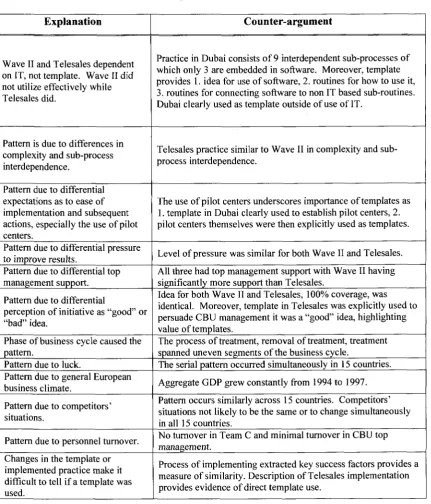
Table 6 : Summary of Alternative Explanations... 42
Table 7: Transfer Methods... 61
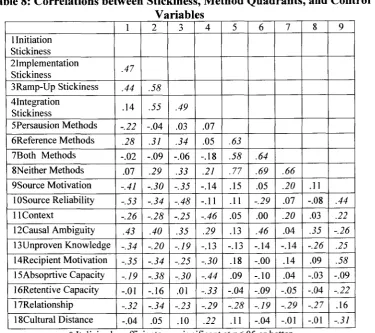
Table 8: Correlations between Stickiness, Method Quadrants, and Control Variables.... 86
Table 9: Regression of Method Quadrants on Stickiness...88
Table 10: Transfer Methods Prediction vs. A ctual... 91
Table 11: Effect on Unit Performance... 130
Table 12: Comparison of Census and Reduced Dataset... 149
Table 13: Range and Standard Deviation of Predictor Variables... 154
Table 14: Effect of Predictors on Deviation from Recommended Product M ix 155 Table 15: Effect o f Predictors on % of Revenue from Non-Standard Products... 157
Table 16: Relative Effect of Predictors on Adaptation... 162
Table 17: Correlation between Knowledge Transfer Methods...182
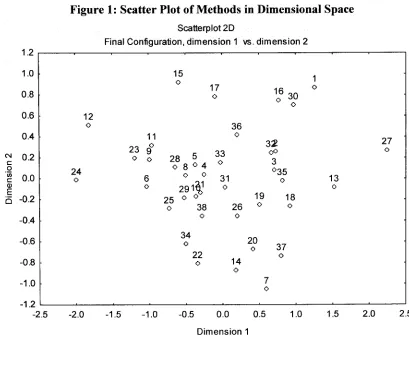
List of Figures Figure 1: Scatter Plot of Methods in Dimensional Space...69
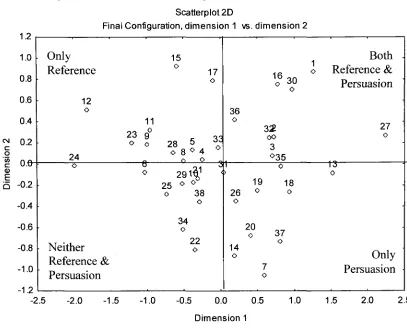
Figure 2: Four Quadrant Categorization of Transfer M ethods... 77
Figure 3: Patterns of Variation in Replicator Firms... 110
Figure 4: Variation in Deviation from Recommended Product Mix over Time... 118
Figure 5: Variation in % of Revenue from Non-Standard Products over T im e... 120
Figure 6: Variation in Performance over Time... 122
Figure 7: Variance by Level over Tim e... 123
Figure 8: Effect of Degree of Adaptation on Performance...132
Figure 9: Effect of Levels of Deviation on Performance over Age of U n it... 135
1. Theoretical Background
1.1. The Exploitation of Knowledge Assets
The resource based view of the firm, one of the dominant logics in the field of
strategy, suggests that preferential access, or differential firm possession, of rare,
valuable, inimitable, and non-substitutable resources is the primary determinant of firm
performance heterogeneity and hence, of competitive advantage (Barney, 1991;
Wemerfelt, 1984). Preferential access, a right of use that others do not have or do not
have as efficiently, allows a firm to exert a measure of control over the use of critical
resources, thereby forcing competitors to either pay more for the same resources or use
alternative, potentially substandard, ones. Many types of strategic resources (i.e.; land
and raw materials), however, are not easy to access on preferential terms with the
potential value often being bargained away in strategic factor markets (Barney, 1986).
In such an environment, knowledge assets contained within the firm, and hence
typically providing preferential access, are seen as fundamental sources of competitive
advantage. Indeed, the ability of firms to compete has been argued to be increasingly
identified with their ability to recognize such knowledge assets and exploit them within
the firm (Argote & Ingram, 2000; Eisenhardt & Martin, 2000; Gupta & Govindarajan,
2000; Zander & Kogut, 1995). The importance of knowledge use both for firms and for
society in general has been a long standing issue of importance in a number of disciplines
& Winter, 1982; Teece et al., 1990; Winter, 1987; Zander & Kogut, 1995). The internal mobilization of knowledge assets, in particular, has increased in importance within the
field of organizational studies with the rise of concepts such as organizational learning
(Argote, 1999; Garvin & Oliver, 2000; Levitt & March, 1988), the knowing-doing gap
(Pfeffer & Sutton, 2000), knowledge sharing (Dixon, 2000; Hansen, 1999), the internal
transfer of best practices (O'Dell et al., 1998; Szulanski, 1996), and the replication of organizational routines (Winter, 1995; Winter & Szulanski, 2001, 2002).
1.2. The Replication of Routines
While many types of knowledge assets may be important for gaining and
sustaining competitive advantage, Teece et al. (1997), following Nelson and Winter (1982), suggest that, due to causal ambiguity and inherent difficulty in imitating them,
those most clearly contributing are embedded in organizational routines. In some
industries, such as pharmaceuticals, intellectual property rights are sufficiently protected
that competitive advantage often appears to flow from technology rather than routines.
However, such competitive advantage is temporary without firm capabilities in R&D,
distribution, etc. which allow the firm to take advantage of its technological superiority.
As firm capabilities are often based on a set of organizational routines (Teece et al.,
1997) which embody the firm’s productive knowledge (Nelson & Winter, 1982),
coordinate relationships, connect specific resources, and allow a firm to conduct business
in an ongoing fashion (Argote & Ingram, 2000; Nelson & Winter, 1982), routines
While possession of superior routines, i.e.; those that produce superior
performance, is a necessary condition for sustained competitive advantage it likely is not
sufficient for most firms. Superior routines are often a product of a particular time and
place, developed in relation to specific occurrences and personnel (Amit & Schoemaker,
1993). As such, they tend to originate in specific locations and require transfer, or
replication, to other locations in order to exploit their value (Winter & Szulanski, 2002).
Even if a superior routine is developed centrally through R&D rather than evolving in a
particular unit it is often piloted first to prove its viability and then replicated in other
units (Leonard-Barton, 1995).
1.2.1. The Value of Replication
The value of replicating routines is particularly applicable to firms with multiple
units performing the same function, as superior performing routines developed in one
location are likely to be applicable elsewhere. Firms with multiple similar units are
commonplace including most large firms and multi-national firms that locate similar
manufacturing plants, sales offices, and HR and accounting functions, etc. in different
geographic locales. The value of replication is even more critical to the burgeoning
sector of organizations such as franchises and chain stores which grow specifically
through the geographic replication of similar units.
The value derived from replicating superior routines for a particular firm is clear
if one views the firm’s overall performance as a composite of the performance of
extent of the value added by headquarters, a large part of the overall firm performance
may be attributable directly to the individual units. At the very least, the performance of
a firm’s units directly influences the overall efficiency of the firm, which, in highly
competitive industries may well dictate the firm’s competitive position and in some cases
even survival. Given the existence of similar units within a firm, the transfer, or
replication, of superior routines from one unit to another may well be a primary tactic for
gaining and sustaining competitive advantage (O'Dell et al., 1998).
Indeed, the leveraging of organizational routines through replication, or re-use in
different geographic settings, is emerging in the strategy literature as a fundamental
source of competitive advantage (Argote & Ingram, 2000; Bradach, 1998; Kostova, 1999;
Rivkin, 2001; Teece et al., 1997; Winter, 1987, 1995; Winter & Szulanski, 2001). The literature on replication, however, is relatively young. While Nelson and Winter (1982)
first signaled the importance of replication decades ago only a relative few have echoed
that importance (e.g., Argote, 1999; Rivkin, 2001; Teece et al., 1997). Underscoring the potential value of the topic, however, are empirical studies which have indicated that
units in chain organizations tend to have increased survival (Baum & Ingram, 1998) and
production rates (Darr et al., 1995; Darr & Kurtzberg, 2000) due to inter-unit learning suggesting that replication is efficacious as a strategy. This is illustrated as well perhaps
by the growth of replicator organizations in the U.S. economy over the last three to four
decades. While the organizational form is relatively new it now accounts for over $1
and at least 10% of the U.S. private sector economy (business format franchising alone)
(Association, 2004). Such rapid proliferation suggests that not only is replication an
effective strategy but that it deserves closer academic scrutiny as well.
1.2.2. The Dynamics of Replication
An understanding of the process of replication is an intrinsic part its theory, as it
may explain how replication occurs and establish contingency factors that delineate
between poor and superior replication, between success and failure in exploiting internal
knowledge assets embedded in routines. Despite findings that most organizations
struggle with the internal transfer of knowledge (Galbraith, 1990; Gupta & Govindarajan,
2000; Ruggles, 1998), including the transfer of organizational routines (Anonymous,
1990; Kerwin & Woodruff, 1992; Szulanski, 1996), examinations of replication
dynamics, either theoretical or empirical, have been few and far between (Winter &
Szulanski, 2002).
Among those who have begun to explore the dynamics of replication, however, a
number are of particular note. Szulanski (1993; 1995b; 1996), for instance, explored
barriers to transfers of routines. He found that the factors that contribute the greatest to
transfer stickiness are causal ambiguity, absorptive capacity, and the relationship between
source and receiver. Kostova and Roth (2002) echoed the findings on source/receiver
relationships while also testing the additional role of the institutional context, finding that
similarity in institutions tends to increase adoption and internalization of transferred
practices from parent Japanese auto makers both altered their environments and the
practices themselves in order to achieve performance similar to the source units. Rivkin
(2001), using simulations, found that increased complexity, while deterring imitation also
created difficulty for replication. Szulanski again contributed by empirically investigating
the stages of transfer (2000b) and by exploring the incidence of replicator capabilities
developed by the headquarters of organizations that engage in repeated replication
(2000a).
Winter and Szulanski, in two different articles, provide a foundation for a theory
o f replication (Winter & Szulanski, 2001, 2002). Their conceptualization illustrates a
number of dimensions including intended vs. unintended, spatial vs. temporal, broad vs.
narrow, and true vs. false replications, includes an expansion of Szulanski’s earlier work
on replicator capabilities, introduces the role of the Arrow Core, and reintroduces the role
o f templates, the original routine used as a working example in the transfer, which was
first discussed in Nelson and Winter (1982). Finally, a few others have touched upon
factors that might influence intra-firm transfers of routines. For instance, both Bradach
(1998) and Sorenson and Sorensen (2001) found evidence that the presence of company
owned units increases adoption of routines by franchisees1.
1 There are other works such as Kogut and Zander (1992; 1993) and Zander and Kogut (1995) which may be o f relevance to the transfer o f organizational routines. However, most other articles dealing with intra firm transfers o f knowledge assets are specific to either technology transfers or transfers o f individual level knowledge rather than transfers o f routines. As W inter and Szulanski (2002) discuss, transfers o f
Clearly, the initial forays into the topic have laid a fairly substantial base upon
which to build including introducing a typology of replications, a temporal model of
transfer stages, foundational concepts such as template and Arrow Core, and delineating a
series of influential factors such as routine complexity, mutual adaptation, institutions,
and the presence of barriers to transfer. Despite this base, however, much work remains
to be done before the replication of organizational routines is adequately understood. For
instance, the central hypothesis in the extant replication literature is that the use of
templates increases the effectiveness of transferring organizational routines. This
hypothesis was first introduced by Nelson and Winter (1982) and remains a central factor
explaining competitive advantage between a firm and those who would imitate its
superior capabilities as preferential access to a template increases the ability to replicate
tacit and, potentially, causally ambiguous elements of the routine (Winter & Szulanski,
2001). To date, however, no direct test o f this central hypothesis has been conducted.
Likewise, while both the broader academic and practitioner literatures on
knowledge transfer have discussed various methods firms use in the transfer of
organizational practices, ultimately describing dozens of such methods, there is little to
no empirical understanding of the underlying purposes or mechanisms. Previous
theoretical work has suggested that one such underlying mechanism is the use of original
routines as a reference during the process of replication (Nelson & Winter, 1982). The
existence of this mechanism as well other potential mechanisms, which understanding is
Finally, another gap in the literature is an understanding o f variation in connection
with replication. Typically, replication has been conceived of as a simple process
entailing the repeated application of a clever routine, or set of routines, across geographic
space resulting in an extreme form of exploitation commonly referred to as “cookie-
cutter” strategy, i.e.; a strategy involving very little variation in similar units. Indeed,
while some have argued that while the initial creation of the routines for replication
involves a period of innovation and exploration (Winter & Szulanski, 2001), once that
period is complete the repeated exploitation of an existing business model is argued to
result in difficulties commonly associated with exploitation (Winter & Szulanski, 2001)
including competency traps (Lee et al., 2003; Levinthal & March, 1993), organizational inertia (Crossan & Berdrow, 2003; March, 1991), and the inability to adapt to changing
conditions (Miller, 1993).
Such a view, however, would suggest that most firms employing replication as a
strategy should expand rapidly and then stagnate and decay in existing markets with new
firms gaining market share at a brisk pace. Even a short survey of replicator firms and
industries where replication strategy dominates suggests that while the above pattern may
be true of some firms (as it is with firms employing other strategies as well) many
replicator firms appear to be vibrant over long periods of time and in many representative
industries there is relatively little chum among leading firms, suggesting the ability to
adapt to changing environments. Given that variation, either temporal or geographic, is a
closely study the extent, effect, and causes of variation in firms employing a strategy of
replication.
1.3. Overview of Essays
This brings us to the contents of the dissertation. The dissertation takes the form
of three separate essays addressing the gaps identified in the previous section. Each essay
will address a different gap and will include its own theoretical section reviewing the
literature appropriate to that aspect of replication. In addition each essay will include its
own methods section as each is empirical and based on a different dataset using different
methods. Each dataset is tailored specifically to the question addressed by that essay.
The use of different datasets indicates the generalized nature of the replication
concept. For instance, the first essay empirically examines three sequential transfers of
sales practices to 15 European countries. The second dataset empirically explores 122
transfers o f 38 administrative and technical routines to a sample of domestic and
international units in all world regions within eight different firms from different
industries. Finally, the third essay utilizes data derived from a large number of units from
a franchise organization operating in the service sector of the U.S. economy. If, after the
analyses are complete, aspects of replication are found to be significant in each of the
essays one could conclude that replication occurs across different types of practices, in
different countries, across various industries, and in traditional as well as franchise/chain
As the aspects of replication explored and the subsequent datasets vary so do the
methods employed. The purpose and use of each method is discussed in detail in the
methods section of the appropriate essay. The use of widely differing methods, however,
provides some evidence as to the robustness of the general replication concept to
different methods of inquiry. In brief, the methods employed include a naturally
occurring, repeated treatment quasi-experiment derived from an in-depth field
investigation, a multidimensional scaling and regression analysis of small N data derived
from a survey, and panel data and hierarchical linear modeling analyses using a large N
dataset.
The first essay directly tests the central replication hypothesis that use of
templates increases transfer effectiveness, providing an empirical foundation for a theory
of replication. The second essay then takes the current state of the knowledge transfer
literature and examines it in a context of replication by exploring the specific methods
used to replicate routines, examining underlying empirical dimensions and testing for
contingency effects concerning the timing of method use. The data from both the first
and second essays is derived from what Winter and Szulanski (2001) term narrow
replication, or the replication of specific routines rather than an entire unit comprised of
multiple, interdependent routines. Finally, the third essay addresses variation in
organizations that grow through broad-based replication, or the geographic replication of
franchise organization, examining the extent of both inter-temporal and geographic
2. Template Use and the Effectiveness o f Knowledge Transfer2
2.1. The Advantages of Using Templates
Leveraging knowledge assets contained within the firm is deemed fundamental to
realizing competitive advantage (Argote & Ingram, 2000; Eisenhardt & Martin, 2000;
Gupta & Govindarajan, 2000; Levitt & March, 1988; Zander & Kogut, 1995). Teece,
Pisano, and Shuen (1997), echoing Nelson and Winter (1982), suggest that the most
critical knowledge assets are embedded in organizational routines. A fundamental
hypothesis states that the use of templates, actual working instances of the firm’s
routines, increases the effectiveness of leveraging such assets through transfer (Nelson &
Winter, 1982). This claim, however, has been implicitly contested to varying degrees
with some claiming adherence to a template decreases performance (e.g., Kostova &
Zaheer, 1999) while others suggest it has little effect (e.g., Baden-Fuller & Winter, 2006).
In this chapter, we explore the connection between template use and the
effectiveness of knowledge transfer through an eight-year, real time investigation of three
transfer efforts within 15 Western European countries. The setting is Rank Xerox (now
Xerox Europe). Specifically, we focus on how reliance on a designated benchmark
impacts the extent of adoption of transferred practices, and their performance, at the
recipient site. To this effect we treat the evidence as a naturally occurring,
repeated-2 This essay represents one stage in a multi-stage, multi-participant research project. It began with Gabriel Szulanski’s dissertation work which involved a series o f companies including the focal firm here, Rank Xerox. A case study on Rank Xerox, published by INSEAD, resulted from this early work (Szulanski &
Casaburi, 2004a, 2004b; Szulanski et al., 2004). Gabriel was involved during all stages o f the project. I, as
treatment quasi-experiment (Cook et al., 1990). The chapter provides a replicable measure of template use as well as empirical grounds to evaluate the fundamental
connection between template use and knowledge transfer effectiveness.
It has been argued that firm capabilities are often based on a set of organizational
routines (Teece et al., 1997) that embody an important part of a firm’s productive knowledge (Nelson & Winter, 1982). Leveraging that knowledge is seen as essential to
realizing competitive advantage (Zander & Kogut, 1995). Leveraging such knowledge,
as Teece et al. (1997) argue, often entails re-using it in a different setting. Not only does
it make economic sense for a firm to leverage superior routines by re-using, or copying,
them rather than re-creating them de novo3 in each new setting, it makes sense to do so
before the firm’s competition does (Nelson & Winter, 1982; Rivkin, 2000; Teece et al.,
1997). A firm has an inherent advantage over potential imitators in re-using its own
routines because it generally has privileged access to them (Winter, 1995). In replicating
a routine the firm possessing it can directly observe it in its totality. An imitator, in most
cases, cannot directly observe the entire routine being copied, creating a distinct
disadvantage in being able to copy the less observable, yet potentially still essential,
aspects of the routine4.
3 The replication o f organizational routines may not be desirable in all locations as varying environmental conditions may change the key success factors o f any given routine. However, evidence suggests the advantage o f leveraging capabilities via replication o f successful routines tends to persist despite widely varying environmental conditions (Ingram & Baum, 1997; Szulanski & Jensen, 2006)
Nelson and Winter (1982) use the term template to designate working examples
o f organizational routines. Such templates contain the critical aspects of the routine,
along with the non-critical ones, providing the details and nuances of how the work gets
done, in what sequence, and how its various components and subroutines are
interconnected. Scrutiny of the template allows not only for an examination of factors
that may not be publicly available outside the firm but may also increase the likelihood
that aspects of the routine that are tacit (Polanyi, 1962) or causally ambiguous (Lippman
& Rumelt, 1982) are nonetheless transferred. Because the leveraging of knowledge
assets through the replication of firm routines involves the recreation of productive
knowledge from the source site, it follows that use of the original routine as a template
may facilitate the transfer of knowledge within the firm.
This claim, however, has been implicitly contested to varying degrees. For
instance, International Business scholars suggest that actual insistence on adhering too
close to a template decreases transfer effectiveness by inhibiting local adaptation (Bartlett
& Ghoshal, 1989; Prahalad & Doz, 1987) and increasing local resistance (Kostova &
Zaheer, 1999). Baden-Fuller and Winter (2006) offer two suggestive examples of
situations where transfer by principle seems superior to transfer by template. Rivkin
(2001) is skeptical about the possibility of deriving competitive advantage from the
reproduction of complex knowledge regardless of whether or not a template is used, only
complex knowledge, knowledge simple enough to achieve comparable results without
having to resort to the original template for diagnosis.
Not withstanding the potential practical and theoretical importance of templates
for realizing competitive advantage, systematic empirical evidence of the effect of
templates is scarce. Perhaps of special concern is the effective absence of an accepted
measure of template use.
2.2. Setting
To empirically examine the hypothesis that the use of templates increases the
effectiveness of knowledge transfer we report a case study that includes a repeated-
treatment quasi-experiment that occurred naturally at the Western European units of
Rank Xerox. Under substantial pressure from Xerox headquarters to increase financial
performance, in September 1992 Bernard Fournier, then CEO, launched a series of
initiatives to increase revenue by identifying, documenting, and transferring best
practices associated with sales and marketing processes. The initiative was headed by a
team of managers known internally as “Team C.”
While the first initiative, referred to as Wave I (launched early 1994), proved
successful, the launch of the second initiative, referred to as Wave II (late Autumn 1994),
stalled. The third initiative, Wave III, referred to internally as Telesales (pilot units
implemented-Autumn 1995, general implementation-Jan. 1996), was again successful.
2.3. Data Collection
We followed Yin (1989)during the initial data collection, employing, during this
stage of the research, a descriptive case study methodology aimed at accurately
describing the three transfers. This stage of the data collection occurred in real time, over
the entire eight year period. Full access was granted to us by the company. Team C’s
leader, Carlos Camarero, acted as host and main informant throughout the entire period.
Camarero facilitated access to all members of Team C as well as with senior managers of
many of the country business units (CBUs). We visited headquarters at least once a year
and several CBUs before, during, and after selected interventions and had access to
individuals and internal company documents as required to clarify ongoing findings.
Data on each “wave” was collected from multiple data sources including interviews,
direct observation, company documentation, a survey, and archival data.
Following the initial data collection, once members of Team C had approved our
depiction of events, we published a set of case studies detailing the three waves. At this
point we recognized that the data comprised a naturally occurring, repeated treatment
quasi-experiment following the methodology developed by Cook and Campbell (1979),
allowing us to test the longstanding and fundamental hypothesis of template use. With a
firm hypothesis in mind we then re-approached our sources to collect additional data on
the independent variable, template use. We collected additional firm archival data
consisting of every document the firm still possessed concerning Team C (nearly 5000
internally referred to as benchmark units, in the knowledge transfer process. Further
iterations back to the data sources were conducted in order to gather additional
information as necessary to address alternative explanations as they emerged. The
following two sections detail how we measured the two most critical variables, the use of
templates and the effectiveness of the knowledge transfer.
2.3.1. Template Use
In accordance with the definition of template offered earlier, a replication
initiative is said to have used a template when the practice, or routine, being replicated is
currently in existence, is composed of a single or connected series of processes, is
observable, and is consciously used in the replication process. A template is seen as not
being in use if any of the above are missing i.e.; the practice is either dormant or is still
an idea and has not been implemented yet (is not currently observable), the practice
consists of multiple, unconnected pieces (removing the possibility of observing the
interconnections between the subroutines), or the practice exists but is ignored during
replication. In this particular chapter the use of a template is recognized by the
designation of benchmark countries that possess the particular routine being transferred
and that are explicitly used during replication.
2.3.2. The Effectiveness of Knowledge Transfer
We utilize two measures of knowledge transfer effectiveness in this chapter.
First, we measure the level of adoption of each initiative by the recipient units. This
level of implementation at each site. Level of implementation within a particular unit can
be affected by other variables such as difficulty of transfer but also reflects the level of
effort put forth by the recipient. Adoption is a suitable preliminary measure of the
effectiveness of knowledge transfer as knowledge does not transfer at all if a recipient
unit does not undertake implementation of the routine in question. Level of
implementation was measured through internal company assessments of implementation
efforts which were jointly determined by headquarters and the recipient units. These
assessments were taken a year after implementation efforts began for each transfer
initiative.
Second, we measured the performance of the recipient units following
implementation of the transferred routine. If one assumes, as is the case with each
template in this chapter, that the routine being transferred was achieving superior results
compared to the routines previously in operation at recipient units, one should expect to
see an increase in performance in the recipient units along the dimensions critical to the
routine in question. As such, pre and post transfer measures of recipient unit
performance are a good gauge as to the effectiveness of the knowledge transfer effort.
Performance is measured using available quantitative indicators which included sales
force productivity, sales force coverage of potential customers, and the ratio of selling
2.4. Analysis of the Effectiveness of Template Use
What follows is a description of the practices and the process used to transfer
them. The description of each wave is followed by a discussion of the results of the
measurement o f the template and effectiveness variables for that wave.
2.4.1. Wave I
The first wave of the Team C initiatives (Wave I) began in 1993 with the
practices being presented for implementation in early 1994. For Wave I, Team C
searched for current, discrete best practices that could be relatively easily transferred and
implemented separately from one another. These best practices would be transferred to
other countries, with the originating country designated as the benchmark that others
could consult and emulate.
Of a total of 40 identified best practices, Team C selected 10 which were then
validated in-situ to ensure that they, in reality, produced superior results and were
potentially transferable. The team emerged from this effort with nine validated best
practices for revenue growth5. Top management dictated that each country fully
implement at least four of the nine.
Team C spent considerable time with each practice analyzing the key success
factors underlying the superior results, eventually reducing them to a manageable number
of factors that could be easily implemented. They prepared and distributed an
implementation manual written in easy-to-understand language. The manual first
presented the data showing the differences in performance between the benchmark
practices and those in other countries and then detailed the key success factors underlying
the practices and how to implement them. The book also included contact information
for each benchmark site so that recipient units could contact key people for help in
implementing each practice. Following distribution of the manuals, Team C leaders
visited each of the recipient countries multiple times to monitor implementation progress
and help with any emerging problems.
According to the definition of a template as an organizational routine comprising
a connected set o f processes that are functioning, recurrent sets of behaviors, Wave I
clearly used a template, or rather a set of templates. The nine practices were distinct,
separate sales practices, each currently in operation within a particular country unit which
was then specified as a benchmark unit and actively used to transfer the practice.
Adoption of Wave I practices was high. The countries were only required to
implement four o f the nine practices in order to reach internal implementation targets.
All fifteen countries involved with the transfers met the goal of implementing completely
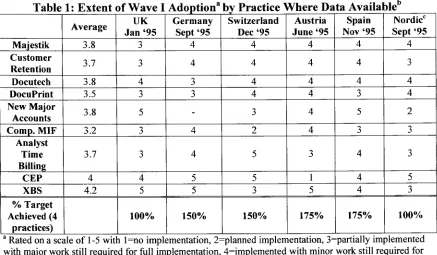
at least four practices within one year. Many implemented more. Table 1 shows the
Table 1: Extent of Wave I Adoption3 by Practice Where Data Available1
Average UK
Jan ‘95
Germany S ep t‘95
Switzerland Dec ‘95 Austria June ‘95 Spain Nov ‘95 Nordic0 S ep t‘95
Majestik 3.8 3 4 4 4 4 4
Customer
Retention 3.7 3 4 4 4 4 3
Docutech 3.8 4 3 4 4 4 4
DocuPrint 3.5 3 3 4 4 3 4
New Major
Accounts 3.8 5 - 3 4 5 2
Comp. MIF 3.2 3 4 2 4 3 3
Analyst Time Billing
3.7 3 4 5 3 4 3
CEP 4 4 5 5 1 4 5
XBS 4.2 5 5 3 5 4 3
% Target Achieved (4
practices)
100% 150% 150% 175% 175% 100%
‘ Rated on a scale o f 1-5 with l= no implementation, 2=planned implementation, 3=partially implemented with major work still required for full implementation, 4=implemented w ith minor work still required for full implementation, 5=completely implemented. Concerning % target achieved Rank Xerox considers 4s and 5s to indicate a practice having been implemented.
bAll 15 Rank Xerox European countries implemented at least four practices. Implementation data by practice is only available for nine.
°Nordic is the average for the geographic region comprising Sweden, Norway, Finland, and Denmark
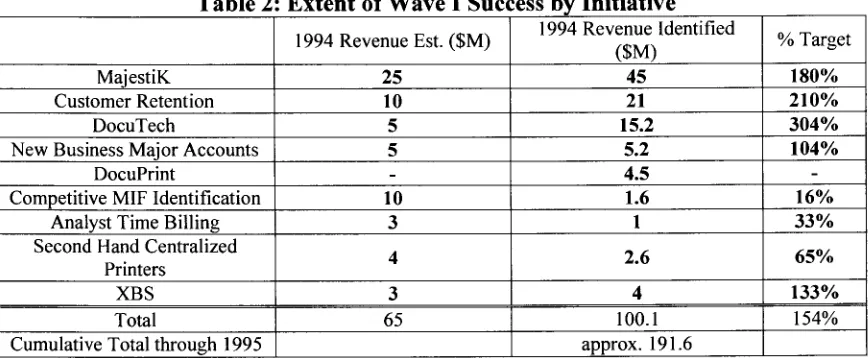
Not only was Wave I well implemented but the transferred practices performed
strongly in the recipient units. Overall, Wave I replicas generated over $100M in
additional revenue in 1994 and nearly another $100M in 1995, far outpacing initial
expectations. An example of performance gains was the increase in unit sales of color
copiers due to the transferred Wave I practices. Within one year of implementation
Switzerland was selling 328% more, Netherlands 300%, and Norway 152% more
(Stewart, 1996). Every transferred practice generated a substantial increase in revenue
average revenue increase exceeding the firm target by 154%6. Table 2 indicates the
aggregate revenue gains attributable to each of the nine practices. Such increases in
performance helped increase the average revenue per sales person from $368,000 in 1993
to $400,000 by the end of 1994 (statistically significant at the p=.02 level).
Table 2: Extent of Wave I Success by Initiative
1994 Revenue Est. ($M) 1994 Revenue Identified
($M) % Target
MajestiK 25 45 180%
Customer Retention 10 21 210%
DocuTech 5 15.2 304%
New Business M ajor Accounts 5 5.2 104%
DocuPrint - 4.5
-Competitive MIF Identification 10 1.6 16%
Analyst Time Billing 3 1 33%
Second Hand Centralized
Printers 4 2.6 65%
XBS 3 4 133%
Total 65 100.1 154%
Cumulative Total through 1995 approx. 191.6
2.4.2. Wave II
Inspired by the dramatic results of Wave I, beginning in the second half of 1994
Team C decided to escalate the exploitation of existing practices to a more sophisticated
level by defining an overarching best practice for the company's entire sales process. At
the core of the Wave II initiative was the idea of increasing salesperson coverage of
potential customers. Traditionally, Rank Xerox had rewarded sales people based on the
number of copiers sold per month. However, this led most sales people to focus their
efforts on selling to current customers who were about to upgrade or replace existing
equipment rather than focusing on prospecting potential customers. This tactic typically
ensured the sales people adequate sales per month but did not expand Rank Xerox’
market share which was only at approximately 15% in the European market. Internal
data, with the data adjusted for market size and photocopying volume, showed that
countries which focused more heavily on covering potential customers were substantially
more productive7. Team C concluded that an overarching best sales practice focused on
coverage could potentially triple the gains made with Wave I.
Measuring sales productivity by the coverage of prospective customers instead of
the number of copiers sold, however, entailed a basic shift that would alter not only how
sales activity was measured but daily sales person behaviors and how the CBUs were
assessed. Shifting the focus to coverage required changing more than just the incentive
structure. A focus on coverage also required better territory planning and more intensive
use of databases in order to track prospects and ensure that sales people were contacting
those who were about to replace equipment and who would potentially purchase enough
to make the call worthwhile. Likewise the targeting, lead generation, activity planning,
reporting, monitoring, and training had to be shifted to support the new focus. All total,
nine different interdependent activities, or sub-processes, had to be changed to adequately
support a strong focus on coverage.
In an effort to replicate the success of Wave I by again re-using internal
knowledge assets, Team C analyzed each of the countries looking for best practices that
corresponded with the individual sub-processes, finding these scattered randomly
throughout the countries. The assembly of the best-in-breed sales sub-processes resulted
in a composite process which, in essence, detailed new action plans for each aspect of the
Rank Xerox sales process. The different sub-processes were considered separate but
serial, and highly interdependent, modules which, when combined, comprised the new
sales model called the “Sales Force Management Activities Model.”
As with Wave I, an extensive book was then produced which detailed the superior
performance of the sub-processes, or modules, at the countries where they were currently
in operation and included key success factors and steps for implementing each sub
process. The book was written in easy to understand language but also in excruciating
detail and carefully described the plan for combining the modules into a coherent,
complete new sales process. Once the book was ready it was personally presented to the
management teams of each of the CBUs by Team C leadership in a series o f “road
shows” meant to increase motivation for implementing the new practice. As with Wave I,
Team C traveled extensively during the implementation process in order to monitor
progress and to encourage and help the countries overcome implementation problems.
Unlike Wave I, Wave II did not have a template to use. The definition of a
template requires that a practice be composed of a single or interconnected series of
existing in separate business units, did not exist as a unified, functioning whole in any
location. The model that unified them into a single routine was only a conceptual model
and had never been in use before. The news sales process had not been tested, was not
in operation, and therefore had no results to prove its viability. Ricardo Morais, a Team
C member explains, “We tried to do something ideal but totally logical. But that thing,
with those pieces, never existed [before] in that way.”
Also unlike Wave I, despite the potential for tremendous increases in revenue,
adoption of the new sales practice was low. Despite significant upper management
support, including a policy change to determine bonuses partly on implementation of
Wave II, few of the countries significantly adopted the practice. Some countries openly
g refused, but most feigned enthusiasm while only giving implementation a token effort .
Moreover, average sales force coverage, the key metric for Wave II, remained static and
sales force productivity actually declined. Within a year of launch the CEO declared the
project dead and the CBUs ceased even outward attempts to implement the project.
Of course, there was at least partial implementation of the new practice in many
locations. However, the new sales practice consisted of a series of nine interdependent
modules. For the practice to operate effectively all nine modules had to be implemented
satisfactorily. Over one year into the implementation effort only one country, Greece,
had sufficiently implemented more than 2/3 of the modules necessary to operate the
Wave II practice. The average level of implementation was under 40%. Furthermore,
regarding those who had reported full implementation of Wave II modules, upper
management suspected that many had not actually done so. Instead, it was strongly
suspected that in an effort to placate top management they had implemented cosmetic
changes only without making the fundamental changes necessary to fully implement the
modules. For instance a year into the implementation process, despite self-reports
showing moderate levels of implementation, only 1 0% of the salespeople were actually
using the database software central to Wave II success.
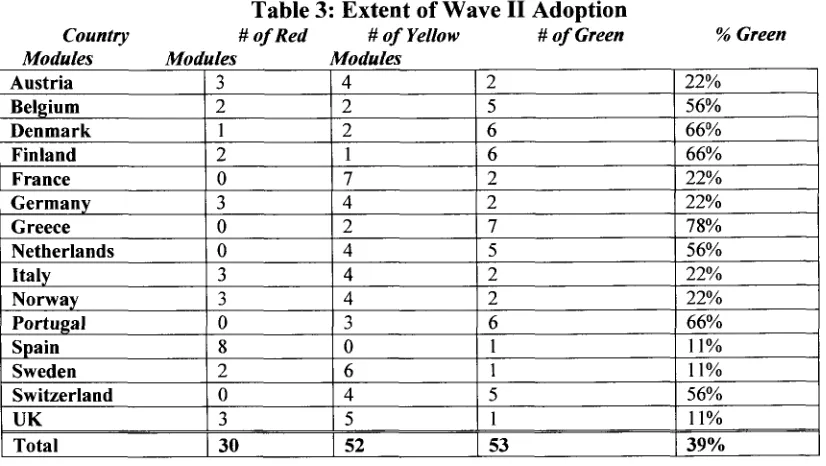
Table 3 shows the color-coded implementation self-reports submitted
approximately a year after the Wave II launch. Red indicates there are critical problems
with the implementation. Yellow indicates that significant improvement is required
before the practice can be considered to have been implemented. Green indicates that
implementation is progressing satisfactorily. The figures in the table represent the
number of modules in each color category. A full year into the implementation process
Table 3: Extent of Wave II Adoption
Country # o f Red # o f Yellow # o f Green % Green
Modules Modules Modules ____
Austria 3 4 2 22%
Belgium 2 2 5 56%
Denmark 1 2 6 66%
Finland 2 1 6 66%
France 0 7 2 22%
Germany 3 4 2 22%
Greece 0 2 7 78%
Netherlands 0 4 5 56%
Italy 3 4 2 22%
Norway 3 4 2 22%
Portugal 0 3 6 66%
Spain 8 0 1 11%
Sweden 2 6 1 11%
Switzerland 0 4 5 56%
UK 3 5 1 11%
Total 30 52 53 39%
2.4.3. Wave III - Telesales
During Wave II, on a separate assignment, the CEO suggested to Camarero, the
head of Team C, that he visit the Rank Xerox operations in Dubai, United Arab Emirates.
There, since 1993, the salespeople had contacted customers mostly by phone, primarily to
escape typical temperatures that exceed 44 degree Celsius, rather than face-to-face as
they did in Europe. The results were extraordinary. In late 1994 Camarero visited Dubai
to personally observe the operations. He was impressed with the results and, as
implementation of Wave II began to falter in 1995, he decided to analyze it further. In
his examination of the Telesales practice he discovered that it accomplished almost
exactly what he was trying to do with Wave II and in many of the same ways. Indeed the
Telesales practice in Dubai focused on coverage and incorporated all nine of the
piece of software. Indeed, through the use of the telephone as the primary mechanism for
customer contacts the results were even better than expected with Wave II. As Camarero
explained,
“We found out that [in Europe] our salespeople were averaging ten customer visits a day, but only one of them was effective. This way (i.e.; using Telesales) they could rapidly complete the effective transaction and had plenty of time left to average 2.5 effective transactions per day, thus doubling their productivity.”
Camarero decided to transfer the Telesales practice to the Western European
countries to restore the momentum lost in Wave II. Following the same method used in
Wave I and Wave II he extracted the key elements of the Dubai practice. He then put
together a book similar to that used in both waves detailing the extraordinary
performance of Dubai, describing the key factors o f the Telesales practice, and explaining
how to implement it.
The management in Dubai had embedded the elements having to do with database
management, reporting, and record keeping in a piece of software entitled TeleMagic,
making integration o f those three aspects of the sales process relatively easy. Team C
considered the IT aspect of the project to be an important enabler. As one Team C
member, Ricardo Morais, suggested, however, he never would have been able to use IT
as an effective enabler for the project if Dubai had not already been using TeleMagic.
Not only did Dubai’s use of TeleMagic provide the initial impetus for the use o f IT (the
understanding that one could use such software, which was commercially available, to
successfully connect the software with the less technological aspects of the practice. The
key success factors, while including IT, referred to all nine interdependent sub-processes
and Dubai was used as a referent multiple times to solve non-IT related implementation
problems.
For example, after implementation had been under way for a couple of months
they discovered that they didn’t know how to operate Telesales for salesmen responsible
for Key Accounts with major corporations. It didn’t seem to make sense to approach
large firms by telephone for sales often totaling tens of thousands of dollars. In response,
Camarero returned to Dubai. In Dubai those responsible for Key Accounts used the
telephone as much or more than those responsible for smaller firms because the units of
large corporations often buy separately and are headed by people who are too busy for
numerous personal visits.
The Telesales initiative was initially implemented in late 1995 in a series of pilot
implementations beginning in Lisbon, Birmingham, Lyon, Brussels, and Madrid. To
persuade the managers of these units to undertake the initiative, Camarero not only
shared with them data proving the superior performance of Dubai but he flew them to
Dubai personally to observe the practice in operation. The Telesales practice was
considerably more complex than the practices transferred in Wave I in that, like Wave II,
it involved a fundamental re-structuring of the sales force management process that rested
on a series o f interdependent modules, or sub-processes. As a consequence,
pilot units to begin to reproduce the superior results found at Dubai along with a number
of iterations back to Dubai to answer questions that were originally unforeseen.
After a few months, however, the transferred practice achieved comparable results
and the pilot units were designated as benchmarks for the rest of the corporation. As he
had in persuading the pilots, Camarero brought hundreds of managers to the pilot in
Lisbon to personally observe the operations in an explicit attempt to increase the
motivation to adopt the new practice. In his view Telesales materialized the theoretical
model of Wave II.
“It was an opportunistic exercise where theory turned into practice. It allowed potential recipients to see, eat, chew and touch the practice. It was seeing with their own eyes that 2+2=4, not just being told.”
Fulfilling the requirements of a template, the Telesales practice was, at the time of
the transfer, currently and consistently in operation as a functioning complete practice in
Dubai, the United Arab Emirates. It was not a set of discrete, independent practices as in
Wave I, but, unlike Wave II, the interdependent sub-practices in Telesales were in
operation as a combined whole. As with Wave I, both adoption and performance were
high. Within six months of launch the initiative had been fully implemented in all 15
Rank Xerox Western European countries. The Chairman’s Statement in Rank Xerox’s
1996 Annual Report noted that Telesales significantly improved sales coverage (a key
Telesales metric) and increased market share. Within a year of implementation average
(significant at the p= . 0 1 level when lagged to allow for issues of incomplete data for
1996). Sales productivity rose accordingly (significant at p<.001 level) while the ratio of
gross profit to sales expense doubled (significant at p< . 0 0 1 level) without a significant
loss of customers that might be expected if the practice only represented short term sales
at the expense of long term customer relations9.
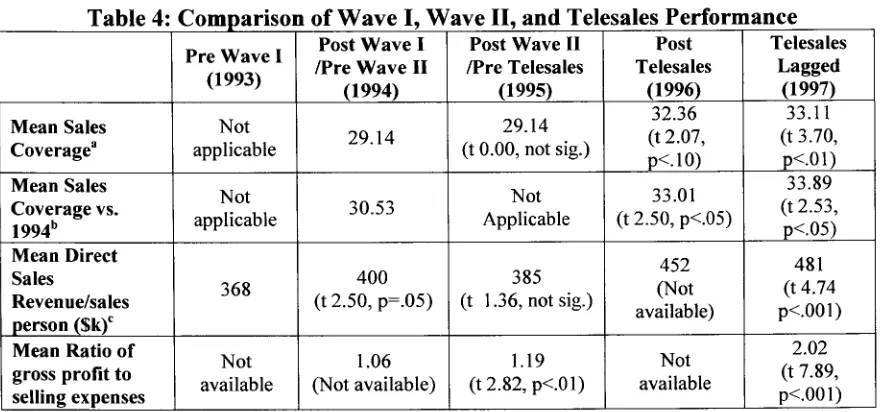
2.5. Analysis of the Evidence
Table 4 compares key performance metrics for pre and post implementation of the
three waves. The comparison highlights the conclusion that Wave II was not successful
while the other two initiatives were. Given the size and complexity o f the Telesales
initiatives we include the key metrics lagged one year as well. While technically one
would expect the same lagged effect for Wave II the lack of implementation forestalls
any such effect. Because relatively few, if any, implemented Wave II to any great degree
the effects seen in 1996 and 1997 can safely be ascribed to Telesales which was fully
implemented within 6 months of launch. T statistics comparing the means of the 15 major
Rank Xerox European countries across time periods as well as p values are reported
below the metric where available.
Table 4: Comparison of Wave I, Wave II, and Telesales Performance
Pre Wave I (1993)
Post W ave I /Pre Wave II
(1994)
Post Wave II /Pre Telesales (1995) Post Telesales (1996) Telesales Lagged (1997) Mean Sales Coverage3 N ot applicable 29.14 29.14 (t 0.00, not sig.)
32.36 (t 2.07, p < 1 0 )
33.11 (t 3.70, P<-01) Mean Sales Coverage vs. 1994b N ot applicable 30.53 Not Applicable 33.01 (t 2.50, p<.05)
33.89 (t 2.53,
P < 0 5 )
Mean Direct Sales
Revenue/sales person ($k)c
368 400
(t 2.50, p=.05)
385 (t 1.36, not sig.)
452 (Not available)
481 (t 4.74 p < 0 0 1 )
Mean Ratio of gross profit to selling expenses N ot available 1.06 (Not available) 1.19 (t 2.82, p<.01)
Not available
2.02 (t 7.89, p<.001) al 995 sales coverage data were available only by geographic region (Northern, Southern, and Central) except for the three largest countries (Germany, France, and the U.K) for a total sample size o f 7. In order to make comparisons with other periods sim ilar aggregate means are computed for geographic areas in other periods as well.
bComparisons for 1994 vs. 1996 and 1994 vs. 1997 include data for each country involved in the transfer effort, rather than regional aggregates, for a total sample size o f 15.
°Data for 1996 direct sales revenue is available only in aggregate form, not broken down by country.
Overlaying the patterns of template use, adoption and performance discussed
above produces the following:
Table 5: Correlation between Template Use and Knowledge Transfer Effectiveness
Wave I Wave II Telesales
Adoption High Low High
Performance Successful Unsuccessful Successful
Template Used? Yes N o Yes
All available indications suggest a clear correlation between template use and the
To further our analysis of the evidence we treat it as a naturally occurring,
repeated-treatment quasi-experiment. We do so to assess the extent to which the evidence
might be supportive of the basic claim that template use actually enhances the
effectiveness of the transfer, i.e.; to assess the degree to which the data may be suggesting
a causal relationship (Cook & Campbell, 1979).
Such an approach is applicable to situations when there is only one population
and where the treatment is applied, removed, and applied again to the entire population
(Cook et al., 1990). While the researcher is not expected to have control over the incidence of the treatment, he/she is expected to have rich access to data and exact
knowledge of when the treatment occurred (Cook, 1991). The specific design is known
as a repeated-treatment quasi-experiment (Shadish et al., 2001) or repeated-measures design (see Barlow and Hersen 1984 for an application in psychology; Trochim, 2001)10.
The quasi-experimental nature of the design increases the need to carefully weigh
potential alternative explanations.
The explanatory power of the design, which is depicted below, is enhanced by the
repeated incidence of the treatment. X indicates application of the treatment while /X
indicates its removal. The most interpretable outcome occurs when Oi (the first
observation) differs from O2, O3 differs from O4, and the O3-O4 difference is in the same
direction as the O1-O2 difference.
10 While we have portrayed the experiment as a set o f three waves, indicating an N o f three, the data actually comprises a set o f 15 countries across those three waves. This extends the observations across
additional units (see King et al., 1994), increasing the statistical validity o f the analysis (Shadish et al.,
O,
Xo2 /x o3
X04
The treatment in our chapter occurs when a template is used in the transfer. When
a template is used we will expect to see both higher adoption and better performance at
the recipient unit performance than when a template is not used. That is, we expect that
O2 (adoption and performance post Wave I) will be higher than Oi (adoption and
performance prior to Wave I) and that 04 (adoption and performance post Telesales) will
be higher than O3. This is clearly supported by the evidence (refer to table six).
2.6. Alternative Explanations
We now consider alternative explanations for the observed pattern. In order for
alternative explanations to template use to account for the observed pattern they must
either follow the same pattern of template use, i.e.; be applied, removed, and applied
again (Cook & Campbell, 1979; Eisenhardt, 1989; Yin, 1989), or there must be at least
one plausible explanation for each one o f the three phases of the experiment. To increase
the chances of generating a comprehensive set of alternative explanations we organize
plausible alternatives following the quasi-experimental logic suggested by Cook and
Campbell, (1979) categorizing them into selection, maturation, history, attrition,
instrumentation and testing (see Shadish, et al., 2001). Within these categories, we begin with the most plausible rival explanation and continue in decreasing order of plausibility.
2.6.1. Selection
One potential alternative explanation is the use or misuse of information
while Telesales was successful because of its innovative use of software. However, such
an explanation belies the fact that the Telesales transfer initiative succeeded not just
because of the TeleMagic software. Indeed the template, as it existed at Dubai, provided
not only the software but also the idea and proof that copy machines could be sold by
telephone, the scripts for how to actually sell by telephone, and an example of all nine
interdependent sub-processes working concurrently in a single practice. Contact software,
including TeleMagic, was available publicly but it is unlikely that a third party software
vendor could have provided the level of information necessary to recreate the superior
results obtained by the template site. Telesales was not reducible to software alone as
evidenced by the repeated iteration back to Dubai to solve implementation problems
unrelated to IT.
Connected to this potential explanation is one suggesting that the pattern is due to
differences in the level of complexity and interdependence among the three initiatives.
Wave I was likely simpler and consisted of completely separate, modular practices that
were extensions of existing practices, requiring only moderate levels of change. Wave II
was made up of nine interdependent practices that had to be implemented in serial
fashion ultimately requiring a large change in existing routines causing the differential
results11. The Telesales practice, however, effectively embodied the Wave II model.
While somewhat less interdependent (embedding three of the nine interdependent
modules in software) it still required the serial implementation of seven interdependent
modules and resulted in the same large scale change as Wave II. For complexity alone to
be an alternative explanation one would have to argue that the point of maximum
complexity, beyond which a practice cannot effectively be implemented, lies somewhere
between seven and nine serial, interdependent processes. While theoretically possible,
such a result seems unlikely.
Alternatively, the pattern of success may be due to Team C’s use of pilot centers
during the Telesales phase. While their use likely had an impact on knowledge transfer
effectiveness it underscores rather than negates the value of template use. One could
argue that even with a complex practice a pilot center is easier to establish as one has
tighter control and may be able to engage in more rapid experimentation in order to
achieved desired results. However, the practice at Dubai was transferred to six pilot
centers concurrently, all of them successful within a short period of time and the
description highlights the specific role o f the template in 1. persuading the heads of
CBUs to undertake a pilot and 2. providing a reference during the implementation of the
pilot centers as unforeseen problems arose. Furthermore, the pilots were then used as
templates during the process of transfer to the rest of the units. In a sense, pilot centers
may play a role of intermediate template. For instance, in this particular case there was
some question as to whether a practice from a small city like Dubai would work
effectively in large, European, urban centers. The use o f pilots allowed for the additional
testing of the knowledge embedded in the template routines before widespread