206 | P a g e
DATABASE MANAGEMENT SYSTEM WITH HIGH
PERFORMANCE COMPUTING SERVICES
Chava Bhanu Kiran
1, K Anadh Kumar
2, S V Achyuth Rao
31
M.Tech (CSE) Pursuing, 2Associate Professor, 3 Head of the Department. Department of CSE
Vikas College of Engineering and Technology, Nunna, Vijayawada, AP, Affiliated to JNTUK, India.
ABSTRACT
The web application is acting major role in real time and other database services where the data is altered by
the system. Here data is verified by the web technologies in the presence of web databases. Hence it is more
secure to upload data in the web applications and easy to implement the high performance of the system. This
data is capable for the web applications to provide the more security to the web databases and web services.
The information sent from the web services provide more privacy and accuracy in the web applications. Now a
day’s web services like telemedicine provide medical services. Here the data is transferred from the web
services to the high performance web technologies. The data is transferred from the web services in which the
web databases are given the high performance web services. In the proposed system the web services are more
secure to store the data in the web databases. There are so many web applications which are running in real
time and offer database services where the data or information alters and increses regularly. In this scenario
web database service plays a major role and provides a gradually improvement in supervising and controlling
the information veraciousness and data propagation. Now- a-Days web telemedicine database service act as
most significant for distributed system. On the other hand, the expanding intricacy and the quick development of
this present reality human services testing applications make it difficult to prompt the database authoritative
staff. In this paper, we construct a coordinated web information benefits that fulfill quick reaction time for
expansive scale Tele-well-being database administration frameworks. Our attention will be on database
administration with application situations in element telemedicine frameworks to build care confirmations and
abatement care troubles, for example separation, travel and time confinements. We propose three-fold
methodology in view of information fracture, database sites bunching and wise information appropriation. This
methodology decreases the measure of information relocated between sites amid applications execution,
accomplishes cost effective correspondences amid applications handling and enhances applications reaction
time and throughput. The proposed methodology is accepted inside by measuring the effect of utilizing our
registering administration systems on different execution highlights like interchanges expense, reaction time,
and throughput. The outer approval is accomplished by contrasting the execution of our way to deal with that of
different systems in the writing. The outcomes demonstrate that our coordinated approach altogether enhances
207 | P a g e
I. INTRODUCTION
The quick development and constant change of the genuine world programming applications have incited
scientists to propose a few registering administrations strategies to accomplish more proficient and powerful
administration of web telemedicine database frameworks (WTDS). Huge examination advancement has been
made in the previous couple of years to enhance WTDS execution. Specifically, databases as a basic part of
these frameworks have pulled in numerous scientists. The web assumes an imperative part in empowering
human services administrations like telemedicine to serve out of reach ranges where there is couple of
restorative assets. It offers an simple and worldwide access to patients' information without having to
collaborate with them in individual and it gives quick channels to counsel authorities in crisis circumstances.
Diverse sorts of persisting’s data, for example, ECG, temperature, also, heart rate should be gotten to by method
for different customer gadgets in heterogeneous correspondences situations. WTDS empower top notch nonstop
conveyance of persisting’s data wherever and at whatever point required. A few advantages can be
accomplished by utilizing web telemedicine administrations including: restorative meeting conveyance,
transportation cost funds, information stockpiling investment funds, and portable applications bolster that
overcome obstructions identified with the execution (e.g., data transfer capacity, battery life, also, capacity),
security (e.g., protection, and dependability), and environment (e.g., adaptability, heterogeneity, and
accessibility).
The goals of such administrations are to: (i) grow huge applications that scale as the extension and workload
increments, (ii) accomplish exact control and checking on medicinal information to create high telemedicine
database framework execution, (iii) give extensive information chronicle of therapeutic information records,
exact choice emotionally supportive networks, and trusted occasion based warnings in run of the mill clinical
focuses. As of late, numerous analysts have concentrated on outlining web medicinal database administration
frameworks that fulfill certain execution levels. Such execution is assessed by measuring the measure of
significant and unimportant information gotten to and the measure of exchanged medicinal information amid
exchanges' preparing time. A few procedures have been proposed keeping in mind the end goal to enhance
telemedicine database execution, upgrade therapeutic information dispersion, and control medicinal information
expansion.
These procedures trusted that superior for such frameworks can be accomplished by enhancing no less than one
of the database web administration administrations, to be specific database fracture, information dispersion, sites
bunching, conveyed storing, and database versatility. In any case, the immovable time multifaceted nature of
preparing substantial number of therapeutic exchanges and overseeing tremendous number of interchanges
make the outline of such techniques a non-minor errand. In addition, none of the existing strategies consider the
three-fold benefits together which makes them impracticable in the field of web database frameworks. Also,
utilizing numerous therapeutic administrations from distinctive web database suppliers may not fit the needs for
enhancing the telemedicine database framework execution. Moreover, the administrations from distinctive web
database suppliers may not be good or now and again it may expand the handling time due to the limitations on
the system. At long last, there has been need in the devices that bolster the outline, investigation and savvy
208 | P a g e
dependable joined systems that can deal with immense number of medicinal exchanges on expansive number of
web social insurance locales in close ideal polynomial time are key difficulties in the range of WTDS.
Information fracture, sites bunching, furthermore, information distribution are the fundamental segments of the
WTDS that keep on making incredible exploration challenges as their current best close ideal arrangements are
all NP-Complete.
To enhance the execution of restorative disseminated database frameworks, we consolidate information fracture,
sites grouping, and information dispersion figuring administrations together in another web telemedicine
database framework approach. This new approach plans to reduction information correspondence; expand
framework throughput, dependability, and information accessibility. The decay of web telemedicine database
relations into disjoint sections permits database exchanges to be executed simultaneously and henceforth
minimizes the absolute reaction time. Discontinuity commonly expands the level of simultaneousness and, in
this manner, the framework throughput. The advantages of creating telemedicine disjoint sections can't be
considered unless appropriating these sections over the sites, so they decrease correspondence expense of
database exchanges. Database disjoint sections are at first appropriated over consistent groups (a gathering of
sites that fulfill a certain physical property, e.g., interchanges cost). Dispersing database disjoint pieces to bunch
where an advantage designation is accomplished, as opposed to distributing the pieces to all sites, importantly
affect database framework throughput.
This kind of dispersion diminishes the number of interchanges required for question handling in terms of
recovery and overhaul exchanges; it has dependably a huge effect on the web telemedicine database framework
execution. In addition, appropriating disjoint parts among the sites where it is required most, enhances database
framework execution by minimizing the information exchanged and got to amid the execution time, diminishing
the stockpiling overheads, and expanding accessibility and unwavering quality as various duplicates of the same
information are apportioned. Database parceling methods go for enhancing database frameworks throughput by
diminishing the measure of immaterial information bundles (sections) to be gotten to and exchanged among
distinctive sites. Be that as it may, information fracture raises a few challenges; especially when web
telemedicine database applications have conflicting prerequisites that deflect breakdown of the connection into
totally unrelated sections.
Those applications whose perspectives are characterized on additional than one part may endure execution ruin.
For this situation, it may be important to recover information from two or more parts also, take their join, which
is unreasonable. Information discontinuity method depicts how every section is determined from the database
worldwide relations. Three primary classes of information discontinuity have been talked about in the writing;
level vertical, and half breed. In spite of the fact that there are different plans depicting information dividing,
few are known for the proficiency of their calculations furthermore, the legitimacy of their outcomes.
The Clustering system distinguishes gatherings of system locales in expansive web database frameworks and
finds better information disseminations among them. This system is considered to be a proficient technique that
has a noteworthy part in lessening the measure of exchanged and got to information amid preparing database
exchanges. As needs be, bunching systems help in disposing of the additional interchanges expenses in the
middle of sites and therefore upgrades dispersed database frameworks execution. On the other hand, the
209 | P a g e
arrangements unfeasible. In addition, a few imperatives about system availability and exchanges handling time
bound the pertinence of the proposed answers for little number of bunches. Information dispersion portrays the
method for assigning the disjoint parts among the web groups and their separate locales of the database
framework.
This procedure addresses the task of every information part to the circulated database sit. Information dispersion
related strategies go for enhancing circulated database frameworks execution. This can be expert by diminishing
the quantity of database parts that are exchanged and got to amid the execution time. Moreover, Data circulation
methods endeavor to build information accessibility, raise database unwavering quality, and lessen stockpiling
overhead. Nonetheless, the confinements on database recovery and overhaul frequencies in some information
distribution routines might contrarily influence the parts conveyance over the sites. In this work, we address the
past disadvantages and propose a three-fold approach that deals with the figuring web benefits that are required
to advance telemedicine database framework execution. The fundamental commitments are: Develop a fracture
processing administration system by part telemedicine database relationsinto little disjoint parts.
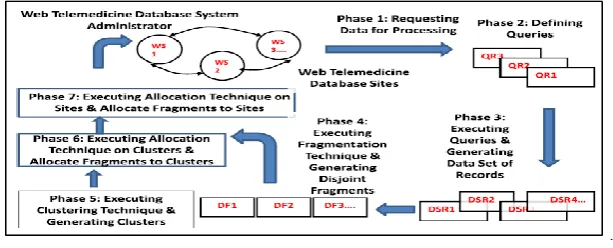
Fig. 1. IFCA computing services architecture.
In Fig. 1, the information solicitation is started from the telemedicine database framework destinations. The
asked for information is characterized as SQL inquiries that are executed on the database relations to create
information set records. Some of these information records may be covered or even excess, which build the I/O
exchanges handling time thus the framework interchanges overhead. To take care of this issue, we execute the
proposed fracture procedure which produces telemedicine disjoint pieces that speak to the base number of
information records. The web telemedicine database locales are assembled into bunches by utilizing our
grouping administration system as a part of a stage preceding information designation. The reason for this
grouping is to diminish the interchanges expense required for information distribution. As needs be, the
proposed allotment administration method is connected to dispense the created disjoint sections at the bunches
that show positive advantage allotment. At that point the sections are dispensed to the destinations inside of the
chose groups. Database overseer is in charge of recuperating any site disappointment in the WTDS.
II. RELATED WORK
Numerous exploration works have endeavored to enhance the execution of circulated database frameworks.
These works have for the most part researched discontinuity, portion what's more, here and there grouping
issues. In this segment, we present the primary commitments identified with these issues, talk about and contrast
210 | P a g e
There are so many web application which are running in real time and offer database services where the data or
information altered regularly and increases. In this scenario web database service plays a major role and
provides a gradually improvement in supervising and controlling the information veraciousness and data
propagation Now- a-Days web telemedicine database service act as most significant for distributed system On
the other hand, the expanding intricacy and the quick development of this present reality human services testing
applications make it difficult to prompt the database authoritative staff. In this paper, we construct a coordinated
web information benefits that fulfill quick reaction time for expansive scale Tele-wellbeing database
administration frameworks.
III. DATA FRAGMENTATION
Regarding discontinuity, the unit of information dissemination is a crucial issue. A connection is not proper for
dissemination as application perspectives are typically subsets of relations. In this manner, the region of
utilizations' gets to is characterized on the subordinate relations subsets. Consequently it is essential to separate
the connection into littler information parts what's more, consider it for circulation over the system destinations.
The creators considered every record in each database connection as a disjoint part that is subject for designation
in disseminated database destinations. In any case, expansive number of database parts is produced in this
strategy, bringing on a high correspondence cost for transmitting and preparing the parts. As opposed to this
methodology, the creators considered the entire connection as a part, not every one of the records of the part
must be recovered or overhauled, and a selectivity network that shows the rate of getting to a piece by an
exchange is proposed. In any case, this exploration experiences information repetition and pieces covering.
IV. CLUSTERING WEBSITES
Clustering service technique identifies groups of networking sites and discovers interesting distributions among
large web database systems. This technique is considered as an efficient method that has a major role in
reducing transferred and accessed data during transactions processing.
Moreover, grouping distributed network sites into clusters helps to eliminate the extra communication costs
between the sites and then enhances the distributed database system performance by minimizing the
communication costs required for processing the transactions at run time. In a web database system environment
where the number of sites has expanded tremendously and amount of data has increased enormously, the sites
are required to manage these data and should allow data transparency to the users of the database. Moreover, to
have a reliable database system, the transactions should be executed very fast in a flexible load balancing
database environment. When the number of sites in a web database system increases to a large scale, the
problem of supporting high system performance with consistency and availability constraints becomes crucial.
Different techniques could be developed for this purpose; one of them is websites clustering. Grouping websites
into clusters reduces communications cost and then enhances the performance of the web database system.
However, clustering network sites is still an open problem and the optimal solution to this problem is
NP-Complete. Moreover, in case of a complex network where large numbers of sites are connected to each other, a
211 | P a g e
The authors have proposed a hierarchical clustering algorithm that uses similarity upper approximation derived
from a tolerance (similarity) relation and based on rough set theory that does not require any prior information
about the data. The presented approach results in rough clusters in which an object is a member of more than
one cluster.
Rough clustering can help researchers to discover multiple needs and interests in a session by looking at the
multiple clusters that a session belongs to. However, in order to carry out rough clustering, two additional
requirements, namely, an ordered value set of each attribute and a distance measure for clustering need to be
specified. Clustering coefficients are needed in many approaches in order to quantify the structural network
properties. In the authors proposed higher order clustering coefficients defined as probabilities that determine
the shortest distance between any two nearest neighbors of a certain node when neglecting all paths crossing this
node. The outcomes of this method declare that the average shortest distance in the node’s neighborhood is
smaller than all network distances. However, independent constant values and natural logarithm function are
used in the shortest distance approximation function to determine the clustering mechanism, which results in
generating small number of clusters.
V. INFORMATION ALLOCATION (DISTRIBUTION)
Information portion portrays the method for appropriating the database sections among the groups and their
particular destinations in circulated database frameworks. This procedure addresses the task of system node(s) to
every section. Be that as it may, discovering an ideal information allotment is NP-complete issue. Appropriating
information sections among database sites enhances database framework execution by minimizing the
information exchanged and gotten to amid execution, decreasing the stockpiling overhead, also, expanding
accessibility and dependability where different duplicates of the same information are assigned. Numerous
information distribution calculations are depicted in the writing. The proficiency of these calculations is
measured in term of reaction time. Creators proposed an approach that handles the full replication of
information distribution in database frameworks. In this methodology, a database record is completely replicated
to every single taking part hub through the expert hub.
This methodology circulates the arrangements through sections with a round-robin procedure for grouping info
set officially requested by size, where the quantity of arrangements is about the same and number of characters
at each section is comparable. Be that as it may, this imitated mapping does not accomplish any execution pick
up while expanding the quantity of hubs. At the point when a non-already decided number of data groupings are
available, the replication model may not be the best arrangement and other discontinuity techniques must be
considered. In the creator has tended to the section allotment issue in web database frameworks.
He introduced a whole number programming plans for the non-excess rendition of the piece portion issue. This
plan is reached out to address issues, which have both capacity and handling limit limitations. In this technique,
the imperatives basically express that there has been precisely one duplicate of a section over all destinations,
which expand the danger of information irregularity and inaccessibility if there should be an occurrence of any
site disappointment. On the other hand, the section size is not tended to while the capacity limit imperative is
one of the significant goals of this methodology. Likewise, the recovery and redesign frequencies are not
212 | P a g e
destinations. In addition, this exploration is constrained by the way that none of the methodologies introduced
have been executed and tried on a genuine web database framework.
VI. CONCLUSION
In this work, we proposed another way to deal with advance WTDS execution. Our methodology coordinates
three upgraded registering administrations' methods to be specific, database fracture, system destinations
grouping and parts designation. We add to these methods to tackle specialized difficulties, like appropriating
information parts among various web servers, taking care of disappointments, and making tradeoff between
information accessibility and consistency. We propose an estimation model to register interchanges cost which
offers in finding some assistance with costing successful information designation arrangements. The oddity of
our methodology lies in the incorporation of web database destinations bunching as another segment of the
procedure of WTDS outline keeping in mind the end goal to enhance execution and fulfill a certain level of
value in web administrations. We perform both outer and inside assessment of our coordinated methodology. In
the inside assessment, we measure the effect of utilizing our procedures on WTDS furthermore, web
administration execution measures like correspondences taken a toll, reaction time and throughput. In the
outside assessment, we think about the execution of our methodology to that of different procedures in the
writing. The outcomes demonstrate that our coordinated approach essentially moves forward administrations
prerequisite fulfillment in web frameworks. This conclusion requires more examination and analyses. Hence, as
future work we plan to examine our approach on bigger scale systems including expansive number of locales
over the cloud. We will consider applying distinctive sorts of bunching and present inquiry based system to
perform more savvy information redistribution. At long last, we mean to present security worries that should be
tended to over information sections.
REFERENCE
[1] B. H. Guze, R. Estep, and C. Fisher, “Telemedicine: A review of its use and a proposal for applicationin
psychiatric consultation,” Med. Inform., vol. 20, no. 1, pp. 1–18, 1995.
[2] J. E. Cabral, Jr. and Y. Kim, “Multimedia systems for telemedicine and their communications
requirements,” IEEE Commun. Mag., July 1996, pp. 20–27.
[3] T. Paakkala, J. Aalto, V. K¨ah¨ar¨a, and S. Sepp¨anen, “Diagnostic performance of a teleradiologysystem
in primary health care,” Comput. Methods Programs Biomed., vol. 36, pp. 157–160, 1991.
[4] J. Viitanen, T. Sund, E. Rinde, J. Stoermer, M. Kormano, J. Heinila, J.Yliaho, and J. Ahonen,
“Nordicteleradiology development,” Comput.Methods Programs Biomed., vol. 37, pp. 273–277, 1992.
[5] H. K. Huang, “Teleradiology technologies and some service models,” Comput. Med. Imag. Graph.,vol.
20, no. 2, pp. 59–68, 1996.
[6] O. Ratib, Y. Ligier, and J. R. Scherrer, “Digital image management and communication in
medicine,”Comput. Med. Imag. Graph., vol. 18, no.2, pp. 73–84, 1994.
[7] H. K. Huang et al., “Implementation of a large-scale picture archiving and communication
213 | P a g e
[8] D. F. Leotta and Y. Kim, “Requirements for picture archiving andcommunications,” IEEE Eng.
Med.Biol.Mag. pp. 62–69, Mar. 1993.
[9] H. K. Huang, W. K. Wong, S. L. Lou, and B. K. Stewart, “Architecture of a comprehensiveradiologic
imaging network,” IEEE J. Select. Areas Commun., vol. 10, pp. 1188–1196, Sept. 1992.
[10] W. J. Chimiak, “The digital radiology environment,” IEEE J. Select.AreasCommun., vol. 10, pp.1133–
1144, Sept. 1992.
[11] Ismail Hababeh, Issa Khalil, and AbdallahKhreishah, “Designing High Performance Web-Based
Computing Services to Promote Telemedicine Database Management System”, IEEE TRANSACTIONS
ON SERVICES COMPUTING, VOL. 8, NO. 1, JANUARY/FEBRUARY 2015.
Author Details
Chava Bhanu Kiran pursuing M.Tech (CSE) from Vikas College of Engineering and
Technology, Nunna, Vijayawada, Krishna (D)-521212, Andhra Pradesh, Affiliated to
JNTUK, India.
Mr . K Anadh Kumar working as Associate Professor, Department of (CSE) from Vikas
College of Engineering and Technology, Nunna, Vijayawada, Krishna (D)-521212, Andhra
Pradesh, Affiliated to JNTUK, India.
Mr . S.V.Achyuth Rao Working as Head of the Department of (CSE) from Vikas College
of Engineering and Technology, Nunna, Vijayawada, Krishna (D)-521212, Andhra Pradesh,