Development of a Multiplex PCR for Identification of Vineyard Mealybugs
KENT M. DAANE,1,2MATHEW C. MIDDLETON,1RENE´ SFORZA,3MONICA L. COOPER,4VAUGHN M. WALTON,5DOUGLAS B. WALSH,6TANIA ZAVIEZO,7
ANDRODRIGO P. P. ALMEIDA1
Environ. Entomol. 40(6): 1595Ð1603 (2011); DOI: http://dx.doi.org/10.1603/EN11075
ABSTRACT A simple molecular tool was developed and tested to identify seven mealybug species found in North American vineyards:Pseudococcus maritimusEhrhorn,Pseudococcus viburni (Signo-ret),Pseudococcus longispinus(Targioni-Tozzeti),Pseudococcus calceolariae(Maskell),Planococcus ficus(Signoret),Planococcus citri(Risso), andFerrisia gilliGullan. The developed multiplex PCR is based on the mitochondrial cytochrome c oxidase subunit one gene. In tests, this single-step multiplex PCR correctly identiÞed 95 of 95 mealybug samples, representing all seven species and collected from diverse geographic regions. To test the sensitivity, single specimen samples with differentPl.ficus developmental stages (egg to adult female and adult male) were processed PCR and the resulting output provided consistent positive identiÞcation. To test the utility of this protocol for adult males caught in sex baited pheromone traps,Pl.ficusadult males were placed in pheromone traps, aged at a constant temperature of 26⫾2⬚C, and processed with the multiplex each day thereafter for 8 d. Results showed consistent positive identiÞcation for up to 6 d (range, 6 Ð 8 d). Results are discussed with respect to the usefulness of this molecular tool for the identiÞcation of mealybugs in pest management programs and biosecurity of invasive mealybugs.
KEY WORDS multiplex PCR, pest identiÞcation, vineyards,Planococcus, Pseudococcus
Over the past decade there has been increasing con-cern over mealybug infestations in vineyards in Eu-rope (Sforza et al. 2003), New Zealand (Charles et al. 2010); North America (Daane et al. 2008); South Af-rica (Walton and Pringle 2004); South AmeAf-rica (Ripa and Luppichini 2010); and elsewhere. Mealybug spe-cies commonly found in vineyards can feed on the vineÕs root, trunk, canes, leaves, or fruit clusters and, as the mealybug feeds, it eliminates carbohydrate-rich honeydew that can accumulate on the leaves and fruit clusters and serve as a substrate for sooty mold fungi (Charles 1982, Ben-Dov 1995). In most of the worldÕs wine grape regions, however, it is not the damage from mealybug feeding or contamination of fruit clusters that are of most concern, but the transmis-sion of viruses, particularly a complex of species collectively known as grapevine leafroll-associated
viruses (GLRaV) (de Borbon et al. 2004, Charles et al. 2009, Bertin et al. 2010, Tsai et al. 2010).
Currently, several mealybug species are known GLRaV vectors, includingPseudococcus maritimus Eh-rhorn,Pseudococcus viburni(Signoret),Pseudococcus longispinus(Targioni Tozzeti), Pseudococcus calceo-lariae (Maskell),Pseudococcus comstocki(Kuwana), Planococcus ficus(Signoret),Planococcus citri(Risso), Heliococcus bohemicus Sulc, and Phenacoccus aceris (Signoret) (Cabaleiro and Segura 1997, Engelbrecht and Kasdorf 1990, Golino et al. 2002, Sforza et al. 2003, Tsai et al. 2008). Of these,Ps. maritimus, Ps. viburni, Ps. longispinus, Pl. ficus,andPl. citrican be found in North American vineyards (Daane et al. 2008), along with the newly describedFerrisia gilliGullan (Gullan et al. 2003). In addition, Ps. calceolariae is an important GLRaV vector in New Zealand (Bell et al. 2009, Charles et al. 2009); whereasPs. calceolariaeis found in North America (McKenzie 1967), it is rarely found in vineyards. These species have different geographic ranges (Ben-Dov 1995, ScaleNet 2011), in part be-cause of biological constraints such as temperature tolerances (Gutierrez et al. 2008) but also because of geographic isolation among species and populations throughout the worldÕs grape-growing regions. For example, in most of North America,Ps. maritimusis the primary mealybug pest in vineyards (Geiger and Daane 2001, Grasswitz and James 2008), but in some parts of California and Mexico, the invasivePl. ficushas become the more important species (Castillo et al. 1Department of Environmental Science, Policy and Management,
University of California, Berkeley, CA 94720-3114.
2Corresponding author, e-mail: [email protected].
3USDAÐARS, European Biological Control Laboratory, CS 90013
Montferrier-sur-Lez, 34988 St. Gely du Fesc, France.
4University of California Cooperative Extension, Napa County,
Napa, CA 94559-1315.
5Department of Horticulture, Oregon State University, Corvallis,
Oregon 97331-7304.
6Department of Entomology, Washington State University,
Irri-gated Agriculture Research and Extension Center, Prosser WA 99350.
7Facultad de Agronomõ´a e Ingenierõ´a Forestal, PontiÞcia
Univer-sidad Cato´lica de Chile, Santiago, Chile.
2005, Daane et al. 2008) and is not found elsewhere in North America.
Preventing the spread of these mealybug species is an important quarantine issue, and early identiÞcation of new invasions is a key part of such a program. However, the rapid and accurate identiÞcation of mealybug species is not easily accomplished. Taxo-nomic separation can be difÞcult, particularly for the nymphal stages that are primarily involved with dis-persal (Beuning et al. 1999, Gullan 2000, Hardy et al. 2008). For example, many of the early North American records of mealybugs on grapes (Vitis spp.), pears (Pyrus spp.), and apples (Malus domesticaBorkh.) were described asPs. maritimus,and yet, of the 1,000 slides labeled as Ps. maritimus at the United States Museum of Natural History, there were at least 10 different species (Miller et al. 1984). It was particu-larly difÞcult to separate thePs. maritimusfromPs. viburni until the needed taxonomic descriptions of these closely related species were provided (Miller et al. 1984, Gimpel and Miller 1996). Separation between Pl. ficusandPl. citriprovides similar difÞculties (Ro-tundo and Tremblay 1982), and their taxonomic iden-tiÞcation is only through careful slide preparation to discern slight differences in the distribution and pres-ence of multilocular pores and tubular ducts on the adult females (Williams and Granara de Willink 1992). Molecular tools provide an additional method to separate mealybug species and aid in their classiÞca-tion (Hardy et al. 2008, Malausa et al. 2011). Polymer-ase chain reaction (PCR) was Þrst used to identify closely related mealybugs by Beuning et al. (1999) in New Zealand for three of the vineyard mealybug spe-cies (Ps. viburni, Ps. calceolariae,andPs. longispinus). Demontis et al. (2007) and Cavalieri et al. (2008) later described PCR-based separation of Pl. ficus and Pl. citri,which is invaluable for these two taxonomically similar species in regions where they overlap. Cava-lieri et al. (2008) used restriction fragment length polymorphism (RFLP) analysis of the mitochondrial gene cytochrome coxidase subunit I (COI) to distin-guish populations of Pl. ficusand Pl. citri,which al-lowed the identiÞcation of two species using only one PCR reaction but added a post-PCR step to the pro-tocol. Multiplex PCR offers another rapid identiÞca-tion process for multiple species, where a number of species-speciÞc primers are used in a single PCR re-action. This process was successfully used by Demon-tis et al. (2007) in Italy to separatePl. ficusandPl. citri, and by Saccaggi et al. (2008) in South Africa to sep-aratePl. ficus, Pl. citri,andPs. longispinus.Here, we sought to build upon these studies by developing a multiplex marker that could be used for the North American mealybug species that are either known vectors of GLRaVs or that are known to be isolated to a few geographic regions and considered to be inva-sive to other vineyard regions. We also tested the sensitivity of the multiplex PCR primers against indi-vidual mealybugs, different mealybug stages (egg to adult) and adult male mealybugs captured and aged in pheromone traps.
Materials and Methods
Mealybug Collection and DNA Extraction. The multiplex PCR integrity was tested using seven tar-geted mealybug species, collected from vineyards in Europe, Middle East, North America, South Africa, and South America (Table 1). The vineyard mealybug species used were Ps. maritimus, Ps. viburni, Ps. longispinus, Ps. calceolariae, Pl. ficus, Pl. citri, andF. gilli.In addition, nontarget specimens ofPs. comstocki (Kuwana),Phenacoccus gossypiiTownsend & Cock-erell, andPhenacoccus solenopsisTinsley were tested as negative controls. The multiplex PCR intraspeciÞc integrity also was tested with samples of the same species collected from different regions (Table 1). The initial taxonomic identiÞcation of specimens col-lected in North America were made by Kent Daane, Vaughn Walton, or Gillian Watson (Plant Pest Diag-nostics Branch, CA Department of Food and Agricul-ture); specimens collected by Rene´ Sforza in Eurasia were identiÞed by Dr. Jean-Franc¸ois Germain (Labo-ratoires Nationaux de la Protection des Ve´ge´taux, Montpellier, France); specimens from Argentina were supplied by Dr. Jose Luis Miano (Instituto Nacional de Tecnologõ´a Agropecuaria, Mendoza, sArgentina) and identiÞed by taxonomists in that organization; speci-mens collected by Tania Zaviezo in Chile were from an insectary colony; and specimens from Egypt were identiÞed by Dr. Majid Fallahzadeh (Department of Entomology, Islamic Azad University, Jahrom Branch, Fars, Iran). The vineyard mealybug species listed, as well as nontarget mealybug species, collected from the Þeld or supplied from an insectary colony were im-mediately placed in 95% ethanol, until they could be stored at⫺20⬚C. Voucher specimens are either ma-terial in 95% ethanol and stored at⫺20⬚C (placed at the University of California, Berkeley, Quarantine col-lection), slide mounted (in Balsam), or deposited as GeneBank sequences (Table 1).
Genetic Data for COI. For each multiplex PCR sample, one large (third-instar or adult female) mealy-bug was tested per sample per location, unless stated otherwise. For each sample, genomic DNA was ex-tracted with the DNeasy tissue kit (Qiagen, Inc., Va-lencia, CA).
Two representative sequences consisting of 588 bp from the mitochondrial COI gene were gathered from GenBank for Ps. viburni (EU267206-EU267207); Ps. longispinus(EU267194, DQ238222);Pl. ficus(DQ238220, EU250573);Pl. citri(EU267197, EU267198); andF. gilli (EU267202, EU267203). At the time of inquiry (Septem-ber 2009), GenBank COI sequences were not available forPs. maritimusandPs. calceolariae.For these species, data were obtained from a sample ofPs. maritimusfrom Fresno County, CA, and from a sample ofPs. calceolariae from Santiago, Chile (Table 1), using PCR with primers Pat 5⬘ TCC-AAT-GCA-CTA-ATC-CAT-ATT-A three Ôand Jerry 5Õ CAA-CAT-TTA-TTT-TGA-TTT TTT-GG 3⬘(Simon et al. 1994). AmpliÞcation was performed in a Biometra T- personal thermal cycler (Biometra Go¨ et-tingen, Germany). An initial denaturing step at 95⬚C for 5 min was followed by 33 cycles of 30 s at 94⬚C, 30 s at
47⬚C, and 1 min 30 s at 72⬚C; with a Þnal extension of 10 min at 72⬚C. All reactions usedTaqPCR Master Mix Kit (Qiagen) with a MgCl2concentration of 4 mM and 0.25 M of each primer. For each reaction, 1l of genomic DNA was used for a total reaction volume of 12.5l. PCR products were visualized after electrophoresis on a 1.2% agarose gels, stained with ethidium bromide, and cleaned using QIAquick PCR PuriÞcation Kit (Qiagen). PuriÞed PCR was submitted to the University of California, Berkeley DNA sequencing facility for direct sequencing of both strands using the ABI Big Dye V3.1 terminator sequencing reaction kit (Perkin-Elmer/ABI, Weiter-stadt, Germany) on an ABI 3707xl DNA Analyzer
(Per-kin-Elmer) with POP seven and a 50-cm array. DNA sequences were aligned manually in SeqMan two version 5.07 (DNASTAR, Madison, WI).
Multiplex-PCR.COI sequences from tested mealy-bugs were aligned in MEGA version 4.0.2 (Tamura et al. 2007) and species-speciÞc forward PCR primers (Table 2) were visually searched from within se-quence areas with a high number of mismatched bases between species. Primer design followed a combina-tion of criteria from Rugman-Jones et al. (2009) and Saccaggi et al. (2008) whereby: 1) complementary between primers is minimal, 2) the designed primers had at least one but no more than three G or C bases
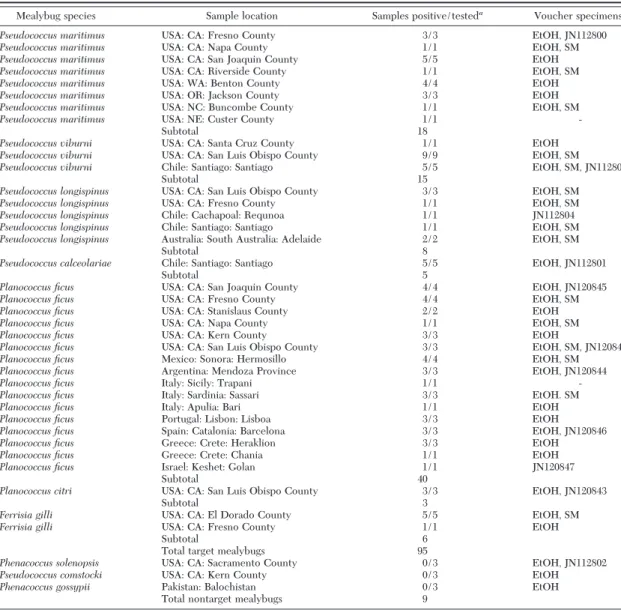
Table 1. Mealybug collections used to assess the multiplex PCR with listings of mealybug species, location of the sampled population (Country, State or Region/Province, County or City), the species-specific results of the PCR band, the number of sites sampled for each region, and the type of voucher material stored
Mealybug species Sample location Samples positive/testeda
Voucher specimensb
Pseudococcus maritimus USA: CA: Fresno County 3/3 EtOH, JN112800
Pseudococcus maritimus USA: CA: Napa County 1/1 EtOH, SM
Pseudococcus maritimus USA: CA: San Joaquin County 5/5 EtOH
Pseudococcus maritimus USA: CA: Riverside County 1/1 EtOH, SM
Pseudococcus maritimus USA: WA: Benton County 4/4 EtOH
Pseudococcus maritimus USA: OR: Jackson County 3/3 EtOH
Pseudococcus maritimus USA: NC: Buncombe County 1/1 EtOH, SM
Pseudococcus maritimus USA: NE: Custer County 1/1
-Subtotal 18
Pseudococcus viburni USA: CA: Santa Cruz County 1/1 EtOH
Pseudococcus viburni USA: CA: San Luis Obispo County 9/9 EtOH, SM
Pseudococcus viburni Chile: Santiago: Santiago 5/5 EtOH, SM, JN112803
Subtotal 15
Pseudococcus longispinus USA: CA: San Luis Obispo County 3/3 EtOH, SM
Pseudococcus longispinus USA: CA: Fresno County 1/1 EtOH, SM
Pseudococcus longispinus Chile: Cachapoal: Requnoa 1/1 JN112804
Pseudococcus longispinus Chile: Santiago: Santiago 1/1 EtOH, SM
Pseudococcus longispinus Australia: South Australia: Adelaide 2/2 EtOH, SM
Subtotal 8
Pseudococcus calceolariae Chile: Santiago: Santiago 5/5 EtOH, JN112801
Subtotal 5
Planococcus ficus USA: CA: San Joaquin County 4/4 EtOH, JN120845
Planococcus ficus USA: CA: Fresno County 4/4 EtOH, SM
Planococcus ficus USA: CA: Stanislaus County 2/2 EtOH
Planococcus ficus USA: CA: Napa County 1/1 EtOH, SM
Planococcus ficus USA: CA: Kern County 3/3 EtOH
Planococcus ficus USA: CA: San Luis Obispo County 3/3 EtOH, SM, JN120846
Planococcus ficus Mexico: Sonora: Hermosillo 4/4 EtOH, SM
Planococcus ficus Argentina: Mendoza Province 3/3 EtOH, JN120844
Planococcus ficus Italy: Sicily: Trapani 1/1
-Planococcus ficus Italy: Sardinia: Sassari 3/3 EtOH. SM
Planococcus ficus Italy: Apulia: Bari 1/1 EtOH
Planococcus ficus Portugal: Lisbon: Lisboa 3/3 EtOH
Planococcus ficus Spain: Catalonia: Barcelona 3/3 EtOH, JN120846
Planococcus ficus Greece: Crete: Heraklion 3/3 EtOH
Planococcus ficus Greece: Crete: Chania 1/1 EtOH
Planococcus ficus Israel: Keshet: Golan 1/1 JN120847
Subtotal 40
Planococcus citri USA: CA: San Luis Obispo County 3/3 EtOH, JN120843
Subtotal 3
Ferrisia gilli USA: CA: El Dorado County 5/5 EtOH, SM
Ferrisia gilli USA: CA: Fresno County 1/1 EtOH
Subtotal 6
Total target mealybugs 95
Phenacoccus solenopsis USA: CA: Sacramento County 0/3 EtOH, JN112802
Pseudococcus comstocki USA: CA: Kern County 0/3 EtOH
Phenacoccus gossypii Pakistan: Balochistan 0/3 EtOH
Total nontarget mealybugs 9
aEach sample represents a separate site, although different sites were often from within one region (e.g., different vineyards in Fresno
County) and some samples were provided through insectary colonies that were initiated with Þeld collected material from that location.
bVoucher material deposited as samples in 95% alcohol (EtOH), slide-mounts (SM) of adult mealybugs, DNA sequences deposited in
to promote speciÞc binding at the 3⬘end of the primer, 3) the primers should work at similar annealing tem-peratures, 4) species primers should have three or more base pair differences with all other species, and 5) designed primers should produce different sized PCR fragments that can be visualized with gel elec-trophoresis. Species speciÞcity of primers was con-Þrmed using Basic Local Alignment Search Tool on GenBank.
The multiplex universal reverse primer MB-R (Ta-ble 2), is a version of Pat (Simon et al. 1994), devel-oped for Pseudococcidae by using available mitochon-drial t-RNA leucine (UUR) data from GenBank. Genetic data (GenBank accession numbers in paren-theses) forPl. citri(AF483206),Maconellicoccus hir-sutus (Green) (AF483207), Melanococcus albizziae (Maskell) (AF483205), and Dysmicoccus brevipes (Cockerell) (AF483204) were aligned in MEGA ver-sion 4.0.2 (Tamura et al. 2007); the reverse primer was visually chosen using base conservation as criteria. The optimized multiplex-PCR ampliÞed 1l of tem-plate DNA (unknown concentration) from mealy-bugs. All reactions used the QIAGEN Multiplex PCR Kit (Qiagen) with a Þnal MgCl2concentration of 3
mM and 0.20M of each primer. AmpliÞcation was performed in a Biometra T- personal thermal cycler (Biometra, Go¨ettingen, Germany) with an initial ac-tivation of HotStarTaq DNA Polymerase (Qiagen) at 95⬚C for 15 min, followed by 30 cycles of 30 s at 94⬚C, 90 s at 53⬚C, and 90 s at 72⬚C, and then a Þnal extension of 10 min at 72⬚C. After ampliÞcation, 4l of each PCR product was visualized by electrophoresis on a 2% agarose gel stained with ethidium bromide.
The utility of the multiplex-PCR was tested on mealybug species from different locations (Table 1) and checked for the production of false positives using the three nontarget samples of Pseudococcidae, as well as a no mealybug (blank) control. For each sam-ple, a single adult mealybug was used. The entire identiÞcation protocol (including DNA extraction, PCR, and electrophoresis) was completed in 4 Ð5 h.
Size and Number of Mealybugs.Mealybugs range in size from⬍0.5 mm for the egg and crawler (unsettled Þrst-instar) to⬎5 mm for the adult female, with more than a 1,000-fold increase in body weight (K. M. Daane, unpublished data). It is the smaller eggs, Þrst instars, and adult males that are more difÞcult to iden-tify and have a greater need for PCR identiÞcation tools. Different stages ofPl. ficuswere used to
deter-mine if mealybug size, as representative of the amount of DNA available per sample, would impact the PCR results. A single egg; Þrst, second, and third instar; an adult female; and an adult male mealybug were each tested separately using the multiplex PCR, as de-scribed previously. As with all trials, a DNA sizing ladder (Invitrogen Corp., Carlsbad, CA) suitable for sizing double-stranded DNA from 50 to 800 bp was used. For reference on agarose gels, the 350 bp band is brighter than the other bands in the ladder. In addition, a DNA mass ladder (Invitrogen Corp., Carls-bad, CA) was used to estimate mass of DNA samples providing bands 200, 120, 80, 40, 20, and 10 ng. In these trials we kept the same elution volume regardless of the insect size (e.g., egg versus adult female). Five samples of each mealybug stage were analyzed.
Time (Degradation) Trails for Adult Male Cap-tures.Regulatory pheromone trapping forPl. ficus, Ps. maritimus,andPs. viburniis being conducted by state and university personnel in California, Oregon, Wash-ington, and Idaho, primarily to monitor for the inva-sivePl. ficus,but also to determine the presence of GLRaV vectors in vineyard regions. For these studies, the fast and accurate identiÞcation of aged adult male mealybugs caught in pheromone traps is important. Adult males caught in sex pheromone baited traps are not always collected immediately after trap capture, with pheromone traps typically checked every 7Ð14 d. Therefore, time degradation of samples of adult males caught in pheromone traps may impact the utility of the multiplex PCR. Differently aged adult males ofPl. ficuswere tested to estimate how long after trap cap-ture the multiplex PCR would provide consistent re-sults. Samples ofPl. ficusadult male mealybugs were collected from a colony at the University of California, Kearney Agricultural Center. The adult males were placed in the stickum of a Pherocon Delta IIID sticky trap (Suterra, Bend, OR), which is a kind of trap used with a sex pheromone lure to monitor male mealybug ßights (Walton et al. 2004). The male mealybugs, em-bedded in the trapÕs stickum, were held at room tem-perature (26⫾2⬚C) until analysis with the multiplex PCR. To assess the time period allowed for successful multiplex identiÞcation of pheromone trap collected males, genomic DNA extractions were performed on samples containing a single adult male mealybug and samples containing three adult males, at 24-h intervals until the multiplex PCR regularly failed to amplify the Pl. ficusspeciÞc band. Five samples were analyzed for
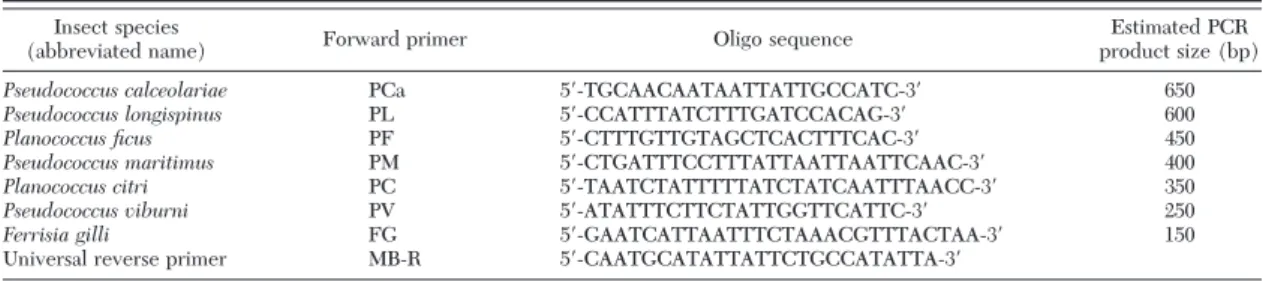
Table 2. Species specific oligonucleotide primers used in the multiplex PCR and the sizes of the PCR fragments
Insect species
(abbreviated name) Forward primer Oligo sequence
Estimated PCR product size (bp)
Pseudococcus calceolariae PCa 5⬘-TGCAACAATAATTATTGCCATC-3⬘ 650
Pseudococcus longispinus PL 5⬘-CCATTTATCTTTGATCCACAG-3⬘ 600
Planococcus ficus PF 5⬘-CTTTGTTGTAGCTCACTTTCAC-3⬘ 450
Pseudococcus maritimus PM 5⬘-CTGATTTCCTTTATTAATTAATTCAAC-3⬘ 400
Planococcus citri PC 5⬘-TAATCTATTTTTATCTATCAATTTAACC-3⬘ 350
Pseudococcus viburni PV 5⬘-ATATTTCTTCTATTGGTTCATTC-3⬘ 250
Ferrisia gilli FG 5⬘-GAATCATTAATTTCTAAACGTTTACTAA-3⬘ 150
each time period and sample size (one or three male mealybugs).
Results
Sequence ofPs.maritimusandPs.calceolariae.The primer pair of Pat and Jerry successfully PCR ampli-Þed and direct sequenced 700 bp of the COI gene for Ps. maritimusandPs. calceolariae.Sequence data for these mealybug species were used for the multiplex design and also submitted to GenBank forPs. mariti-musandPs. calceolariae(Table 1).
Multiplex.AmpliÞcation of the COI by using mul-tiplex PCR primers yielded species-speciÞc fragments (between 150 and 650 bp) that provided the direct diagnosis of the seven targeted mealybug species (Fig. 1). The reliability and reproducibility of the multiplex assay was demonstrated by running a panel of mealy-bugs from a broad geographic distribution, with the Þeld biology, or taxonomically determined species matching the PCR output. The method accurately identiÞed all samples (100% accuracy) ofPs. mariti-mus, Ps. viburni, Ps. longispinus, Ps. calceolariae, Pl. ficus, Pl. citriand F. gilli(Table 1). The nontarget mealybugs (Ps. comstocki, Ph. gossypii,and Ph. sole-nopsis) failed to generate any PCR signal and, there-fore, did not yield a false positive PCR band.
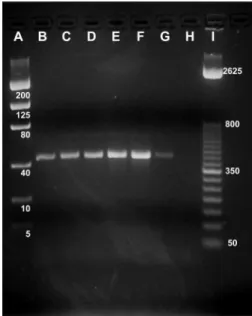
Size and Number of Mealybugs.Multiplex PCR re-liably produced distinct PCR bands forPl. ficusadult males and all immature female stages (Fig. 2). Evident band masses for individual crawlers (40 Ð 60 ng) and adult males (⬇10 ng) were weaker than the band mass for the adult female mealybug (150 Ð200 ng).
Time (Degradation) Trials for Adult Male Cap-tures.In repeated trials, multiplex PCR identiÞcation of trap collectedPl. ficusmales provided consistently ac-curate positive bands for males aged up to 6 d. There was degradation of the band strength, as measured by the mass ladder, and PCR bands were not always visible after 6 d of time in pheromone traps, with the longest clearly recognizable positive bands at 8 d (Fig. 3).
Discussion
We developed a multiplex PCR to identify key mealybug species found in North American vineyards. The multiplex PCR was developed from 588 bp of the COI gene region by using a combination of sequences deposited in GenBank and sequencing produced from our samples ofPs. maritimusandPs. calceolariae. Se-quences were aligned and species primers were cho-sen using sequence differences to produce seven for-ward primers paired with one universal reverse primer that diagnosed mealybugs through different size PCR products. The utility of these primers to discriminate against the targeted mealybug species was evaluated by collecting samples from a broad geographic range, and conÞrming their identiÞcation through multiplex PCR. Results indicate that the developed multiplex PCR accurately identiÞed the targeted mealybugs, which represented samples derived from a wide geo-graphic range. IdentiÞcation of mealybugs through classical taxonomic keys often require a high level of expertise and can be time consuming when, in some cases, immature stages must be reared to the adult stage for proper identiÞcation (Gullan 2000, Hardy et
Fig. 1. Sample gel from multiplex PCR testing different mealybug species showing (A) DNA mass ladder (in nano-grams), (B)Ps.calceolariae, (C)Ps.maritimus, (D)Pl.citri,
(E)Pl.ficus, (F)Ps.viburni, (G)Ps.longispinus, (H)F.gilli,
(I) negative water control, and (J) DNA sizing ladder (in base pairs).
Fig. 2. Sample gel from multiplex PCR testing different
Pl. ficusstages showing (A) DNA mass ladder (in
nano-grams), (B) adult male (C) Þrst-instar nymph, (D) second-instar nymph, (E) third-second-instar nymph, (F) adult female, (G) egg, (H) negative water control, and (I) DNA sizing ladder (in base pairs).
al. 2008). The developed molecular tool will help screen mealybugs in this and other circumstances. The primary use for the multiplex PCR may be related to biosecurity, particularly in those countries, states, provinces, or regions where regulations are in place to halt the spread of invasive pests. Such a molecular approach was developed for use in New Zealand to identifyPseudococcusspecies found on apple (Beun-ing et al. 1999).
Previous molecular tools were developed success-fully forPl. ficus, Pl. citri,andPs. longispinus(Demontis et al. 2007, Rung et al. 2008, Saccaggi et al. 2008). However, Ps. maritimus was not included in these earlier studies and this species is the primary mealybug found in North American vineyards. In addition,Ps. viburni has been reported in North American vine-yards and pome fruit orchards and is the key vineyard pest in many regions, such as South America (Ben-Dov 1995).Pseudococcus viburniandPs. maritimusare commonly misidentiÞed (Miller et al. 1984) and their inclusion in the current multiplex will be of beneÞt in North America and elsewhere. Also included werePl. citri, Pl. calceolariae,andF. gilli,which are all found in North America, particularly in California, and their inclusion completed the development of a molecular diagnostic tool for mealybugs collected in vineyards that are either known vectors of GLRaVs (Cid et al. 2010, Tsai et al. 2010) or that are known to be isolated to a few geographic regions and considered to be invasive to other vineyard regions. Therefore, primers were redesigned to account for the seven mealybug species tested, which created more pressure on each primer to show speciÞcity for one species. In addition, the redesigned primers provided better annealing with the DNA template and reduced chemical prop-erties of hairpin formations that can eventually hinder PCR reactions. The developed multiplex adds to other molecular identiÞcation tools for mealybugs found in citrus (Pieterse et al. 2010); pears (Rung et al. 2009, Park et al. 2010); and grapes (Demontis et al. 2007, Rung et al. 2008, Saccaggi et al. 2008, Bertin et al. 2010).
The speed, accuracy, reliability, and prevalence of molecular techniques indicate their value as a stan-dard tool for monitoring agricultural pests and assist-ing in research (Armstrong and Ball 2005). Testassist-ing can be relatively rapid and multiple samples can be screened at the same time. This test can aid in the screening of vine produce for infestation, taxonomic identiÞcation, and assist in research on the biology and ecology of vine-associated mealybugs. Two aspects of the developed multiplex PCR that would determine its utility are its ability to discern Þrst-instar mealybugs collected from the vine, as well as adult males caught in pheromone traps. UsingPl. ficus,the multiplex PCR provided a repeatable evident band for individual eggs and Þrst instars (40 Ð 60 ng) and adult males (10 ng), whereas the band mass for the adult female mealybug was clearly brighter (150 Ð200 ng). In this study, we used the same elution volume for all samples, regard-less of the insect size (e.g., egg versus adult). For greater band mass, a smaller elute volume could be used and we note that band mass should not be used to indicate mealybug stage.
It is the largely unidentiÞable smaller mealybug stages that present the greater use for the multiplex PCR. Mealybug sex pheromones developed for mealy-bugs are largely species speciÞc (e.g., Millar et al. 2002, Figade`re et al. 2007, Zou and Millar 2009, El-Sayed et al. 2010); however, for quarantine issues veriÞcation of trapped mealybugs is necessary, and some sex-pher-omone baited traps have collected nontarget adult male mealybugs (Bentley et al. 2008). The sensitivity of the multiplex PCR to identify adult males collected in pheromone traps was shown, with reliable identi-Þcation ofPl. ficusaged for 6 d in pheromone traps. After this time, the genomic DNA extraction failed to give a reliable DNA template, likely because of deg-radation. The trial was conducted with male mealy-bugs aged at room temperature and it is expected that ambient conditions may either accentuate or reduce the amount of time samples are viable for identiÞca-tion. For this reason, when possible the male
mealy-Fig. 3. Sample from multiplex PCR testing adult male mealybugs aged for different number of days in the stickum of a pheromone trap and a negative water control are shown by the horizontal label, the left-side vertical label is the DNA mass ladder (in nanograms), and the right-side vertical label is the DNA sizing ladder (in base pairs). In this sample, adult males aged at 7 d are quite discernable, whereas there is only a weak and questionable band at 8 d.
bugs should be removed from traps, placed preserved in 95% EtOH, and stored at⫺20⬚C (or lower) as soon as possible. When traps are checked every 7Ð14 d, these results also suggest a high probability of false negative PCR outcome.
False negative and false positive outputs are a po-tential problem for identiÞcation employing the mi-tochondrial COI locus through multiplex PCR. False negatives may occur when the specimen has not been properly preserved or when high intraspeciÞc varia-tion exists in a species causing a primer to fail. Data from other studies show intraspeciÞc variation of the COI is low and usually between 1 and 2% (Avise 2000), supporting development of species-speciÞc primers. In Pseudococcidae, COI data forPl. citriand Plano-coccus minor (Maskell) gathered from every conti-nent, excluding Antarctica, showed the average in-traspeciÞc pairwise distance to be 0.3% and 0.2%, respectively (Rung et al. 2008). Although this infor-mation does not provide estimates of genetic diver-gence among the other species of mealybugs included in this study, it suggests sequence divergences within Pseudococcidae species are low enough to support multiplex identiÞcation studies employing the COI gene.
False positives would arise if sequences did not show enough interspeciÞc variation in mealybugs to permit a putative species-speciÞc primer to fail by annealing with other closely related species. This is not a perceived problem as a large survey of COI pairwise distances for congeneric insect pairs from within the orders Coleoptera, Diptera, and Hymenop-tera typically average 8 Ð16% (Hebert et al. 2003), providing many suitable locations for species-speciÞc primer design. Of the sequences used in this study, the highest pairwise distance was 15.2% betweenPs. mari-timusandPs. calceolariaeand the lowest was 7% be-tweenPl. citriandPl. ficus,allowing ample sequence divergence for robust primer design. Regardless, to assess for false positives during multiplex PCR, we included three nontarget mealybugsPs. comstocki, Ph. Gossypii,andPh. solenopsisin our testing of species primers and found them to not be cross reactive. In addition to the false positive results, lower sequence divergence in closely related species is not a problem because of the sensitivity of a well developed PCR reaction. In our species primers, we permitted as few as three polymorphic sites in a primer, and this allowed the successful discrimination of species as in other multiplex studies with Pseudococcidae (Demontis et al. 2007, Saccaggi 2008). As new data are generated, a redesign of the multiplex key may be required to account for the diversity. To verify a negative result, the protocols for sequencing the COI provided in this study should clear up any ambiguity.
Acknowledgments
We thank Mark Battany (UC Cooperative Extension, San Luis Obispo Co.), Hannah Burrack (North Carolina State University), Kris Godfrey, and Gillian Watson (California Department of Food and Agriculture), Walt Bentley and
Peter Goodell (UC integrated pest management (IPM) Pro-gram), Nikos Rodiakis (NAGREF, Heraklion, Greece), Chris Storm (Vino Farms), Ed and Maxine Wehling (Wehling Farm), and Lynn Wunderlich (UC Cooperative Extension, El Dorado Co.) for some of the mealybug species tested; John Hutchins for Þeld work in California; Christina Wistrom (UC Berkeley) for helpful discussions with M. C. Middleton on molecular work. This research was funded by the United States Department of Agriculture NIFA-SCRI (award no. 2009-51181-06027, which included Daane, Almeida, Cooper, Walton, and Walsh), with additional support from the Amer-ican Vineyard Foundation, CA Table Grape Commission, and California Raisin Advisory Board (awards to Daane, Cooper, and Almeida), Oregon Wine Board, USDA Northwest Cen-ter for Small Fruits Research (award to Walton), and FONDECYT-Chile (Project 1080464, award to Zaviezo).
References Cited
Armstrong, K. F., and S. L. Ball. 2005. DNA barcodes for biosecurity: invasive species identiÞcation. Philos. Trans. R. Soc. Lond., Ser. B: Biol. Sci. 360: 1813Ð1823.
Avise, J. C. 2000. Phylogeography: the history and formation of species, Harvard University Press, Cambridge, MA.
Bell, V. A., R.G.E. Bonfiglioli, J.T.S. Walker, P. L. Lo, J. F. Mackay, and S. E. McGregor. 2009. Grapevine leafroll associated virus 3 persistence inVitis viniferaremnant roots. J. Plant Pathol. 91: 527Ð533.
Ben-Dov, Y. 1995. A systematic cataloque of the mealybugs of the world (Insecta: Homoptera: Coccoidea: Pseudo-coccidae, and Putoidae) with data on geographical dis-tribution, host plants, biology, and economic importance, Intercept Ltd., Hampshire, United Kingdom.
Bentley, W. J., L. G. Varela, F. G. Zalom, R. J. Smith, A. H. Purcell, P. A. Phillips, D. R. Haviland, K. M. Daane, and M. C. Battany. 2008. Grape: pest management guide-lines. University of California IPM Pest Management Guidelines: Grapes, Insects and Mites. Publ. 3448.
Bertin, S., V. Cavalieri, C. Graziano, and D. Bosco. 2010.
Survey of mealybug (Hemiptera: Pseudococcidae) vec-tors ofAmpelovirusandVitivirusin vineyards of north-western Italy. Phytoparasitica 38: 401Ð 409.
Beuning, L. L., P. Murphy, E. Wu, T. A. Batchelor, and B.A.M. Morris. 1999. Molecular-based approach to the differentiation of mealybug (Hemiptera: Pseudococci-dae) species. J. Econ. Entomol. 92: 463Ð 472.
Cabaleiro, C., and A. Segura. 1997. Field transmission of grapevine leafroll associated virus 3 (GLRaV-3) by the mealybugPlanococcus citri.Plant Dis. 81: 283Ð287.
Castillo, A.A.F., H. G. Herna´ndez, and K. M. Daane. 2005.
Los pijo harinosos de la vid, vol. No 9. ISBN No. 968-558-64-2, Instituto Nacional de Investigaciones Forestales, Agrõ´colas y Pecuarias. Libro Te´cnico, Mexico.
Cavalieri, V., G. Mazzeo, G. T. Garzia, E. Buonocore, and A. Russo. 2008. IdentiÞcation of Planococcus ficus and
Planococcus citri(Hemiptera: Pseudococcidae) by
PCR-RFLP of COI gene. Zootaxa 1816: 65Ð 68.
Charles, J. G. 1982. Economic damage and preliminary eco-nomic thresholds for mealybugs (Pseudococcus longispi-nusT.-T.) in Auckland vineyards. N.Z. J. Agric. Res. 25: 415Ð 420.
Charles, J. G., K. J. Froud, R. van den Brink, and D. J. Allan. 2009. Mealybugs and the spread of grapevine leafroll-associated virus 3 (GLRaV-3) in a New Zealand vineyard. Australas. Plant Pathol. 38: 576 Ð583.
Charles, J. G., V. A. Bell, P. L. Lo, L. M. Cole, and A. Chhagan. 2010. Mealybugs (Hemiptera: Pseudococcidae) and
their natural enemies in New Zealand vineyards from 1993Ð2009. N.Z. Entomol. 33: 84 Ð91.
Cid, M., S. Pereira, C. Cabaleiro, and A. Segura. 2010. Citrus mealybug (Hemiptera: Pseudococcidae) movement and population dynamics in an arbor-trained vineyard. J. Econ. Entomol. 103: 619 Ð 630.
Daane, K. M., M. L. Cooper, S. V. Triapitsyn, V. M. Walton, G. Y. Yokota, D. R. Haviland, W. J. Bentley, K. E. Godfrey, and L. R. Wunderlich. 2008. Vineyard managers and researchers seek sustainable solutions for mealybugs, a changing pest complex. Calif. Agric. 62: 167Ð176.
de Borbon, C. M., O. Gracia, and G.S.G. Talquenca. 2004.
Mealybugs and grapevine leafroll-associated virus 3 in vineyards of Mendoza, Argentina. Am. J. Enol. Vitic. 55: 283Ð285.
Demontis, M. A., S. Ortu, A. Cocco, A. Lentini, and Q. Migheli. 2007. Diagnostic markers forPlanococcus ficus (Signoret) andPlanococcus citri(Risso) by random am-pliÞcation of polymorphic DNA-polymerase chain reac-tion and species-speciÞc mitochondrial DNA primers. J. Appl. Entomol. 131: 59 Ð 64.
El-Sayed, A. M., C. R. Unelius, A. Twidle, V. Mitchell, L. A. Manning, L. Cole, D. M. Suckling, M. F. Flores, T. Zaviezo, and J. Bergmann. 2010. Chrysanthemyl 2-acetoxy-3-meth-ylbutanoate: the sex pheromone of the citrophilous
mealy-bug,Pseudococcus calceolariae.Tetrahedron Lett. 51: 1075Ð
1078.
Engelbrecht, D. J., and G.G.F. Kasdorf. 1990. Transmission of grapevine leafroll disease and associated closterovi-ruses by the vine mealybug,Planococcus ficus. Phytophy-lactica 22: 341Ð346.
Figade`re, B. A., J. S. McElfresh, D. Borchardt, K. M. Daane, W. Bentley, and J. G. Millar. 2007. Trans-alpha-necrodyl isobutyrate, the sex pheromone of the grape mealybug,
Pseudococcus maritimus. Tetrahedron Lett. 48: 8434 Ð
8437.
Geiger, C. A., and K. M. Daane. 2001. Seasonal movement and distribution of the grape mealybug (Homoptera: Pseudococcidae): developing a sampling program for San Joaquin Valley vineyards. J. Econ. Entomol. 94: 291Ð301.
Gimpel, W. F., Jr., and D. R. Miller. 1996. Systematic anal-ysis of the mealybugs in thePseudococcus maritimus com-plex (Homoptera: Pseudococcidae). International Con-tributions on Entomology 2: 1Ð163.
Golino, D. A., S. T. Sim, R. Gill, and A. Rowhani. 2002.
California mealybugs can spread grapevine leafroll dis-ease. Calif. Agric. 56: 196 Ð201.
Grasswitz, T. R., and D. G. James. 2008. Movement of grape mealybug,Pseudococcus maritimus,on and between host plants. Entomol. Exp. Appl. 129: 268 Ð275.
Gullan, P. J. 2000. IdentiÞcation of the immature instars of mealybugs (Hemiptera: Pseudococcidae) found on citrus in Australia. Aust. J. Entomol. 39: 160 Ð166.
Gullan, P. J., D. A. Downie, and S. A. Steffan. 2003. A new pest species of the mealybug genus FerrisiaFullaway (Hemiptera: Pseudococcidae) from the United States. Ann. Entomol. Soc. Am. 96: 723Ð737.
Gutierrez, A. P., K. M. Daane, L. Ponti, V. M. Walton, and C. K. Ellis. 2008. Prospective evaluation of the biological control of vine mealybug: refuge effects and climate. J. Appl. Ecol. 45: 524 Ð536.
Hardy, N. B., P. J. Gullan, and C. J. Hodgson. 2008. A clas-siÞcation of mealybugs (Hemiptera: Pseudococcidae) based on integrated molecular and morphological data. Syst. Entomol. 33: 51Ð71.
Hebert, P.D.N., S. Ratnasingham, and J. R. de Waard. 2003.
Barcoding animal life: cytochrome c oxidase subunit 1
divergences among closely related species. Philos. Trans. R. Soc. Lond., Ser. B: Biol. Sci. 270: S96 ÐS99.
Malausa, T., A. Fenis, S. Warot, J.-F. Germain, N. Ris, E. Prado, M. Botton, F. Vanlerberghe-Masutti, R. Sforza, C. Cruaud, A. Couloux, and P. Kreiter. 2011. DNA markers to disentangle complexes of cryptic taxa in mealybugs (Hemiptera: Pseudococcidae). J. Appl. Entomol. 135: 142Ð155.
McKenzie, H. L. 1967. Mealybugs of California with taxon-omy, biology and control of North American species. University of California Press, Berkeley and Los Angeles, CA.
Millar, J. G., K. M. Daane, J. S. McElfresh, J. A. Moreira, R. Malakar-Kuenen, M. Guillen, and W. J. Bentley. 2002.
Development and optimization of methods for using sex pheromone for monitoring the mealybugPlanococcus fi-cus (Homoptera: Pseudococcidae) in California vine-yards. J. Econ. Entomol. 95: 706 Ð714.
Miller, D. R., R. T. Gill, and D. J. Williams. 1984. Taxonomic analysis ofPseudococcus affinis(Maskell), a senior syn-onym ofPseudococcus obscurusEssig, and a comparison
with Pseudococcus maritimus (Ehrhorn) (Homoptera:
Coccoidea: Pseudococcidae). Proc. Entomol. Soc. Wash. 86: 703Ð713.
Park, D.-S., Y. J. Leem, K.-W. Hahn, S.-J. Suh, K.-J. Hong, and H.-W. Oh. 2010. Molecular identiÞcation of mealybugs (Hemiptera: Pseudococcidae) found on Korean pears. J. Econ. Entomol. 103: 25Ð33.
Pieterse, W., D. L. Muller, and B. J. van Vuuren. 2010. A molecular identiÞcation approach for Þve species of mealybug (Hemiptera: Pseudococcidae) on citrus fruit exported from South Africa. Afr. Entomol. 18: 23Ð28.
Ripa, R. S., and P. B. Luppichini. 2010. Management of vineyard pests (in Spanish), Instituto Investigaciones Agropecuarias, Miniserio de Agricultura, La Cruz, Chile.
Rotundo, G., and E. Tremblay. 1982. Hybridization and sex-pheromone responses in two closely related mealybug species (Homoptera: Pseudococcidae). Syst. Entomol. 7: 475Ð 478.
Rugman-Jones, P. F., J. G. Morse, and R. Stouthamer. 2009.
Rapid molecular identiÞcation of armored scale insects (Hemiptera: Diaspididae) on Mexican ÔHassÕ avocado. J. Econ. Entomol. 102: 1948 Ð1953.
Rung, A., S. J. Scheffer, G. Evans, and D. Miller. 2008. Mo-lecular identiÞcation of two closely related species of mealybugs of the genus Planococcus (Homoptera: Pseudococcidae). Ann. Entomol. Soc. Am. 101: 525Ð532.
Rung, A., D. R. Miller, and S. J. Scheffer. 2009. Polymerase chain reaction-restriction fragment length polymorphism method to distinguish three mealybug groups within the
Planococcus citri-P. minorspecies complex (Hemiptera:
Coccoidea: Pseudococcidae). J. Econ. Entomol. 102: 8 Ð12.
Saccaggi, D. L., K. Kruger, and G. Pietersen. 2008. A mul-tiplex PCR assay for the simultaneous identiÞcation of three mealybug species (Hemiptera: Pseudococcidae). Bull. Entomol. Res. 98: 27Ð33.
ScaleNet. 2011. (http://www.sel.barc.usda.gov/scalenet/ scalenet.htm).
Sforza, R., E. Boudon-Padieu, and C. Greif. 2003. New mealybug species vectoring grapevine leafroll-associated viruses-1 and-3 (GLRaV-1 and-3). Eur. J. Plant Pathol. 109: 975Ð981.
Simon, C., F. Frati, A. Beckenbach, B. Crespi, H. Liu, and P. Flook. 1994. Evolution, weighting, and phylogenetic utility of mitochondrial gene sequences and a compila-tion of conserved polymerase chain reaccompila-tion primers. Ann. Entomol. Soc. Am. 87: 651Ð701.
Tamura, K., J. Dudley, M. Nei, and S. Kumar. 2007. MEGA4: molecular evolutionary genetics analysis (MEGA) soft-ware version 4.0. Mol. Biol. Evol. 24: 1596 Ð1599.
Tsai, C., A. Rowhani, D. A. Golino, K. M. Daane, and R.P.P. Almeida. 2010. Mealybug transmission of grapevine lea-froll viruses: an analysis of virus-vector speciÞcity. Phy-topathology 100: 830 Ð 834.
Tsai, C. W., J. Chau, L. Fernandez, D. Bosco, K. M. Daane, and R.P.P. Almeida. 2008. Transmission of grapevine leafroll-associated virus 3 by the vine mealybug (Plano-coccus ficus). Phytopathology 98: 1093Ð1098.
Walton, V. M., and K. L. Pringle. 2004. A survey of mealy-bugs and associated natural enemies in vineyards in the
Western Cape Province, South Africa. South Afr. J. Enol. Vitic. 25: 23Ð25.
Walton, V. M., K. M. Daane, and K. L. Pringle. 2004. Mon-itoringPlanococcus ficusin South African vineyards with sex pheromone-baited traps. Crop Prot. 23: 1089 Ð1096.
Williams, D. J., and M. C. Granara de Willink. 1992. Mealy-bugs of Central and South America, CAB International, Wallingford, United Kingdom.
Zou, Y., and J. G. Millar. 2009. Synthesis of the pheromone of the longtailed mealybug, a sterically congested, irreg-ular monoterpenoid. J. Org. Chem. 74: 7207Ð7209. Received 13 March 2011; accepted 9 September 2011.